
Last updated September 12, 2026
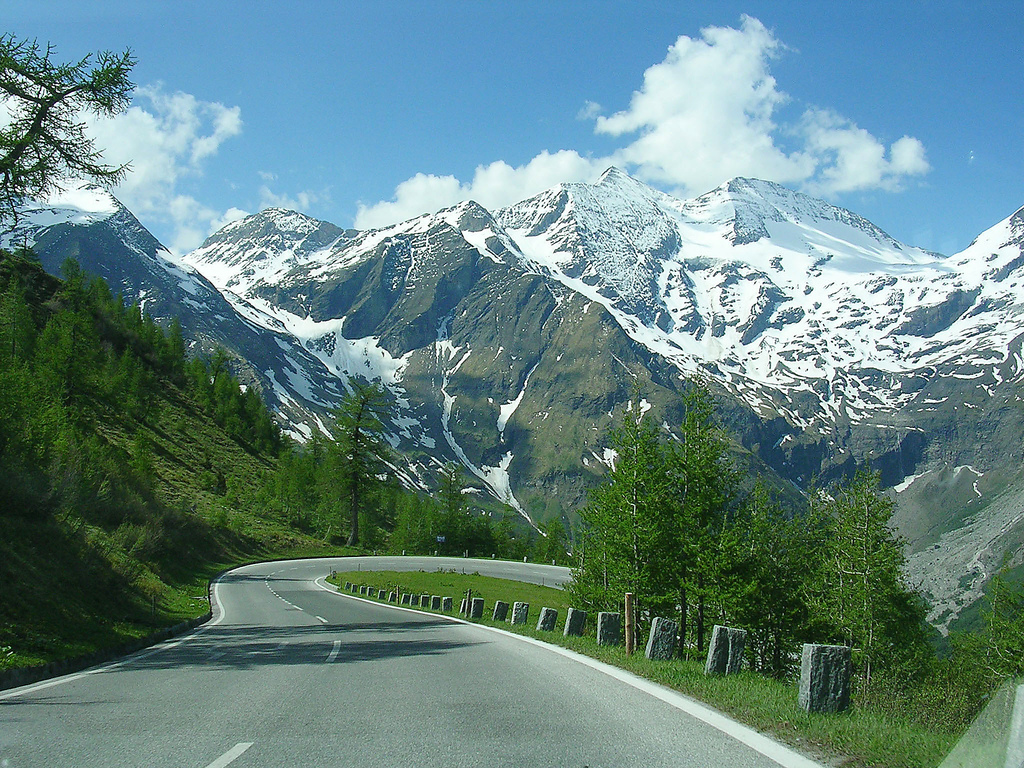
Grossglockner Climbing Guide: Austria’s Highest Peak, Normal Route & Difficulty
Grossglockner is Austria’s highest mountain and a genuine alpine climb—not a hike. The modern Kals normal route climbs from Lucknerhaus through Stüdlhütte and Ködnitzkees to the Erzherzog-Johann-Hütte/Adlersruhe, then crosses the Kleinglockner and Glocknerscharte to the 3,798 m summit. The historic 1800 first-ascent route is a different approach from the Heiligenblut side.
Reviewed August 18, 2026 · Official Grossglockner, Austrian Alpine Club and local IFMGA-guide sources
How hard is Grossglockner?
Grossglockner is a moderate alpine objective for trained mountaineers, but it is not a beginner hiking summit. The Kals normal route requires glacier travel on the Ködnitzkees, crampon movement, sure-footed scrambling, comfort with exposure and efficient roped movement on the upper mountain.
Local Grossglockner guides rate the normal route 3/5 and describe it as the technically easiest way to the summit. They still require strong fitness, sure-footedness, no fear of heights and some rock experience. The exposed Kleinglockner–Glocknerscharte–Grossglockner finish is where the mountain stops feeling like a simple glacier climb.
For climbers without functional glacier and rope skills, the sensible version is a guided ascent or an instructional program that teaches those skills before the summit attempt.
- Standard route: Kals/Lucknerhaus → Stüdlhütte → Ködnitzkees → Adlersruhe → summit.
- Historic route: Glocknerhaus → Salmhütte → Hohenwartscharte → Adlersruhe → summit.
- Technical crux: exposed upper ridge around Kleinglockner and Glocknerscharte.
- Season: usually mid-June into early October with hut/weather dependence.
- Guide ratio: local offices recommend smaller ratios in peak midsummer.
- No simple permit fee: verify road, hut and local conditions before travel.
Grossglockner Quick Facts
The mountain is famous because it combines national-high-point status with real glacier and ridge climbing in a comparatively compact Eastern Alps objective.
| Fact | Current planning answer |
|---|---|
| Elevation | 3,798 m / 12,461 ft |
| Location | Border of East Tyrol and Carinthia, Austria; Glockner Group, Hohe Tauern |
| First ascent | 28 July 1800; official Grossglockner history records five mountaineers reaching the summit |
| Modern normal route | Old Kals Route via Lucknerhaus, Stüdlhütte, Ködnitzkees and Adlersruhe |
| Historic first-ascent route | Bischof-Salm route via Glocknerhaus, Salmhütte, Hohenwartscharte and Adlersruhe |
| Local guide difficulty | 3/5 for both major normal-route approaches; technically easiest summit line from Kals |
| Highest hut | Erzherzog-Johann-Hütte / Adlersruhe at about 3,451–3,454 m |
| Typical summer window | Mid-June to early October, subject to hut opening and current mountain conditions |
Kals Normal Route vs the 1800 First-Ascent Route
They meet at Adlersruhe, but they are not the same approach and should not share the same historical label.
Modern classic: Old Kals Route
- Start: Lucknerhaus above Kals.
- Hut: Stüdlhütte, then Erzherzog-Johann-Hütte/Adlersruhe.
- Terrain: Ködnitzkees glacier, easy rock, Glocknerleitl, Kleinglockner and Glocknerscharte.
- Why it dominates: shortest and most established normal-route infrastructure.
- Official description: technically easiest way to climb Grossglockner.
Historic line: Bischof-Salm Route
- Start: Glocknerhaus on the Heiligenblut side.
- Hut: Salmhütte or Adlersruhe.
- Terrain: Leitertal, Hohenwartscharte, Hofmanns Glacier/Hofmannskees, Salmkamp, then Adlersruhe.
- History: this is the approach used in the 1800 first ascent.
- Modern use: still guided as a quieter historical alternative.
From Adlersruhe the two normal approaches join. The upper route climbs the Glocknerleitl, reaches the Kleinglockner, descends into the Glocknerscharte and then climbs the final ridge to the Grossglockner summit.
Grossglockner Difficulty: What the Normal Route Actually Demands
The altitude is moderate by Alps standards. The glacier and upper-ridge consequences are not.
Local guide offices ask for roughly 300–400 vertical metres per hour and a long summit-day reserve.
Roped movement and crampons are normal on the Ködnitzkees. Independent teams need real glacier competence.
The Kleinglockner and Glocknerscharte finish is short but serious and can be crowded.
Sure-footedness and some rock-climbing familiarity are expected even on the easiest normal line.
“Technically easiest” does not mean nontechnical.
The Kals guide office explicitly calls its route the technically easiest way up Grossglockner, yet still requires fitness, sure-footedness, no fear of heights and some rock experience. Add the glacier and upper ridge, and this remains a mountaineering objective.
Grossglockner Normal Route Step by Step
Exact snow, glacier and belay tactics change with conditions; the route skeleton below is the planning framework.
Kals → Summit Route Profile
The Austrian Alpine Club lists about 4 hours 30 minutes from Stüdlhütte to Grossglockner and about 2 hours 30 minutes from Stüdlhütte to Erzherzog-Johann-Hütte. Local Grossglockner route descriptions use a broader 6.5-hour ascent scale from the lower Kals approach, depending on the exact meeting/start point and team speed.
Grossglockner Huts: Stüdlhütte, Adlersruhe & Salmhütte
The old page understated the capacity of the Erzherzog-Johann-Hütte. The current ÖAV hut listings are more useful than rough estimates.
| Hut | Elevation | Current ÖAV capacity | Role |
|---|---|---|---|
| Stüdlhütte | 2,801 m | 122 mattress places | Main Kals-side staging hut; summer generally mid-June to mid-October. |
| Erzherzog-Johann-Hütte / Adlersruhe | ~3,451–3,454 m | 10 room beds + 120 mattress places | Highest hut in Austria; final common base below the summit ridge. |
| Salmhütte | 2,644 m | 28 room beds + 22 mattress places | Historic Heiligenblut-side base on the first-ascent route. |
How Much Does a Guided Grossglockner Climb Cost?
Use current local guide-office prices as a baseline, then add hut, food, travel and any pre-climb instruction.
Both the Heiligenblut guide office and Bergführer Kals publish these 2026 normal-route guide rates. The Kals service includes an IFMGA mountain guide plus rental crampons, harness and helmet; the Heiligenblut first-ascent-route service likewise includes guiding and technical rental equipment. Hut half-board, meals, personal travel and the guide’s hut/meal costs are separate.
Peak midsummer may mean a smaller guide ratio. Both local offices recommend reducing to a maximum of two clients per guide in the busiest late-July-to-late-August period when route traffic and upper-ridge management become more demanding.
Do not compare “guide price” with an all-in package.
The €310–€675 figures are professional guiding-service prices, not total trip prices. Your real Grossglockner budget depends on group size, hut nights, lodging before/after the climb, transport to Kals or Heiligenblut, meals, insurance and whether you need a glacier-skills day first.
Best Time to Climb Grossglockner
For the normal route, the operational summer season is roughly mid-June through early October, but the best date is the one with appropriate glacier, snow and weather conditions.
| Period | Typical planning character | Main issue |
|---|---|---|
| Mid-June–early July | Early summer snow and firn can be advantageous when firm | More snow cover, changing bridges, cold starts |
| July–August | Main guided season and deepest hut support | Congestion, thunderstorms, warm glacier afternoons |
| September | Cooler air and often fewer climbers | Shorter days, new snow, colder upper ridge |
| Early October | Possible with huts/guides still operating and good conditions | Seasonal shutdown and winter-like storms |
| Winter/spring | Separate ski-mountaineering objective | Avalanche terrain, winter navigation and specialist skills |
The Stüdlhütte’s current Austrian Alpine Club listing gives a general summer operation from mid-June to mid-October and a spring ski-touring operation from early March to mid-May. Local Grossglockner guide programs publish normal-route dates from mid-June into early October.
Weather & Current Conditions
Use the Austrian Alpine Club mountain forecast and current guide/hut reports—not a valley forecast from Kals or Heiligenblut—as your upper-mountain decision source.
Check before leaving the valley
- GeoSphere Austria / Alpenverein mountain forecast.
- Current hut opening and reservation status.
- Ködnitzkees condition and crevasse pattern.
- Upper-ridge snow or verglas.
- Thunderstorm and wind timing.
Reassess above the hut
- Actual snow firmness.
- Cloud growth and wind increase.
- Team pace vs turnaround time.
- Traffic on Kleinglockner/Glocknerscharte.
- Safe descent margin.
Current Austrian Alpine Club hut pages integrate the regional Zillertal Alps/Hohe Tauern mountain forecast. Use that forecast with same-day guide and hut information because glacier and upper-ridge conditions can change faster than a static guide can be updated.
Grossglockner Gear: What You Actually Need
Guided clients may receive some technical rental equipment, but independent teams need a complete glacier and alpine system.
| Category | Core equipment | Why |
|---|---|---|
| Feet | Mountaineering boots + compatible crampons | Firm snow, glacier and upper-mountain traction |
| Glacier system | Harness, rope, glacier-rescue hardware appropriate to team system | Crevasse travel on the Ködnitzkees |
| Protection | Helmet | Rock/ice fall and congested upper terrain |
| Ice tool | Mountaineering axe where conditions require | Snow slopes and fall management |
| Clothing | Layering system, shell, warm gloves, hat | Pre-dawn cold and rapid weather change |
| Navigation | Offline map, headlamp, backup power | Alpine start and poor-visibility descent |
For the underlying skills rather than a shopping list, use Glacier Travel, Crevasse Rescue Basics and the Mountaineering Gear Hub.
The Grossglockner First Ascent: What Happened
The first-ascent story is one of the mountain’s best differentiators—but it needs to be separated from the modern Kals route.
Official Grossglockner history records that Carinthian church leader Franz Xaver Count von Salm-Reifferscheid organized the attempt and had the Salmhütte established as a base at 2,644 m. On 28 July 1800, five mountaineers reached the summit via the Adlersruhe and placed the first summit cross.
The historical approach now marketed by Heiligenblut guides starts from the Grossglockner High Alpine Road at Glocknerhaus, follows the Leitertal to Salmhütte, crosses the Hohenwartscharte and Hofmanns Glacier/Hofmannskees area, then reaches Adlersruhe. From there it joins the modern Kals normal route for the final climb.
Why this matters for the guide
The history becomes clearer when the page says: “Grossglockner was first climbed in 1800 via the Bischof-Salm approach; today most climbers use the Kals normal route.” That is both more accurate and more useful than assigning the 1800 date to the modern Stüdlhütte approach.
Who Should Climb Grossglockner?
It works best as a transition from strong hiking/scrambling into real glaciated alpine climbing—not as a shortcut around learning alpine skills.
Good fit
- Fit mountain hikers with glacier instruction.
- Climbers comfortable with exposure and easy rock.
- Teams practicing roped glacier travel and crevasse rescue.
- Climbers progressing toward higher Alpine peaks.
Poor fit
- Hikers expecting a trail-only national high point.
- Independent teams with no glacier rescue system.
- Anyone with severe exposure anxiety.
- Parties unwilling to turn around for upper-ridge weather or congestion.
As a progression objective, Grossglockner teaches several systems that transfer well: hut-based alpine starts, crampon travel, glacier-rope discipline, short technical ridge movement, weather timing and efficient descent. It does not replicate the altitude of Mont Blanc or the sustained technical difficulty of the Matterhorn.
Continue Your Alpine Research
Grossglockner owns the Austria-high-point guide. These adjacent pages answer comparison, progression, weather and skills questions without duplicating the main-guide intent.
Alps Classics
Compare the major iconic Alpine objectives.
Explore → AustriaGrossvenediger
A lower-grade Austrian glacier summit in the Hohe Tauern.
Compare → ProgressionMont Blanc
Higher altitude and a much bigger Western Alps logistics system.
Compare → Technical step-upMatterhorn
More sustained climbing, route-finding and exposure.
Compare → Alpine classicEiger
Serious ridge and face climbing in the Bernese Alps.
Explore → Difficulty systemMountain Difficulty Ratings
Understand how alpine grades and terrain factors interact.
Learn →Build the Skills Behind the Summit
The normal route’s grade is only meaningful if your team can manage glacier travel and fast-changing mountain weather.
Glacier Travel
Rope spacing, movement, crevasse awareness and the systems that make a glacier route different from a hike.
Open Glacier Travel →Mountain Weather for Climbers
Use mountain forecasts, freezing level, wind and timing instead of relying on valley conditions.
Open Weather Guide →Grossglockner FAQ
Answers are aligned to the visible page and schema below.
How high is Grossglockner?
Grossglockner is 3,798 m / 12,461 ft high and is Austria’s highest mountain.
How difficult is Grossglockner?
Local guide offices rate the normal route 3/5. It is the technically easiest standard way to the summit but still requires strong fitness, glacier travel, crampons, sure-footedness and comfort with exposure.
What is the normal route on Grossglockner?
The classic Kals normal route starts at Lucknerhaus, climbs through Stüdlhütte and Ködnitzkees to the Erzherzog-Johann-Hütte/Adlersruhe, then crosses the Kleinglockner and Glocknerscharte to the summit.
Is the Kals normal route the 1800 first-ascent route?
No. The 1800 first ascent used the Heiligenblut-side Bischof-Salm approach via Glocknerhaus, Salmhütte, Hohenwartscharte and Adlersruhe. Today’s Kals route is the classic modern normal route.
How much does a Grossglockner guide cost in 2026?
Current local normal-route guide-office rates are €675 for one climber, €430 per person for two climbers and €310 per person for three climbers. Hut, food and travel costs are extra.
When is the best time to climb Grossglockner?
The normal summer season is generally mid-June into early October. July and August have the deepest hut and guide support, while September can be quieter but colder. Current snow, glacier and weather conditions decide the actual best window.
Can a fit hiker climb Grossglockner?
A fit hiker can progress to Grossglockner with glacier and alpine instruction or a qualified guide, but should not treat the mountain as a trail-only high point. The standard route includes glacier and exposed upper-ridge terrain.
What huts are used for Grossglockner?
The Kals route normally uses Stüdlhütte and the Erzherzog-Johann-Hütte/Adlersruhe. The historic Heiligenblut-side route uses Salmhütte and/or Adlersruhe.
How This Grossglockner Guide Was Verified
Route-history, hut-capacity and current-price claims are tied to primary Austrian sources instead of inherited estimates.
Primary sources
- Grossglockner official history — 3,798 m elevation, 28 July 1800 first ascent, distinction between the Old Kals route and Bischof-Salm first-ascent route.
- Bergführer Kals — normal-route requirements, 2026 guide pricing, service inclusions and guide-ratio recommendation.
- Bergführer Heiligenblut — first-ascent-route line, 2026 price and seasonal program.
- Austrian Alpine Club · Stüdlhütte — current hut capacity, access times and operating seasons.
- Austrian Alpine Club · Erzherzog-Johann-Hütte — capacity, access and weather gateway.
- Austrian Alpine Club · Salmhütte — current capacity and access.
Editorial rules
- Do not assign the 1800 first ascent to the modern Kals approach.
- Use current local guide-office rates instead of broad package estimates.
- Use ÖAV hut capacity instead of inherited “about 50/100 beds” claims.
- Separate static route character from current snow/glacier conditions.
- Do not present a guided rate as total trip cost.
- Recheck hut dates, guide prices and conditions before each season.
Austria’s Highest Mountain Is Accessible—But It Is Still Mountaineering.
Choose the Kals normal route for the most established summit system, the Bischof-Salm route for the historical line, and a qualified guide or formal instruction if your glacier and exposed-ridge skills are not already functional.
Which Grossglockner Route Should You Climb?
Grossglockner has more than thirty described lines. For planning, these four show the useful progression: the classic Kals normal route, the historic Bischof-Salm approach, the Stüdlgrat rock ridge and the serious Pallavicini ice couloir.
| Route | Grade | Scale / length | Main crux | Objective hazard | Descent | Hut / base | Best fit | Current access note |
|---|---|---|---|---|---|---|---|---|
| Old Kals Route Modern normal route | 3/5 | Approx. 16 km 1,900 m ascent ~6.5 h ascent scale | Kleinglockner → Glocknerscharte → final summit ridge. | Ködnitzkees crevasses, snow/ice condition, upper-ridge exposure, congestion and weather. | Reverse the normal route through Adlersruhe and Ködnitzkees. | Stüdlhütte 2,801 m; Erzherzog-Johann-Hütte / Adlersruhe ~3,451–3,454 m. | Best first Grossglockner. Fit climbers with glacier and exposed-ridge competence, or guided clients building those skills. | Lucknerhaus is reached via the Kalser Glocknerstraße. 2026 summer operations run through 11 October; verify road and hut status before arrival. |
| Bischof-Salm Route 1800 first-ascent line | 3/5 | 1,800 m ascent ~7.5 h ascent scale 1.5-day guided format | Hohenwartscharte, Hofmannskees and Salmkamp before joining the common upper route. | Longer approach, glaciated terrain, weather exposure and the same serious upper-ridge finish. | Current Heiligenblut guide program descends the same route. | Salmhütte 2,644 m or Adlersruhe. | Best historical choice. Climbers who want the 1800 first-ascent line and a quieter approach. | Approach begins at Glocknerhaus on the Grossglockner High Alpine Road. Current guided season: mid-June to early October. |
| Stüdlgrat Classic south ridge | 4/5 | Approx. 15.5 km 1,880 m ascent ~6 h climbing scale | Sustained exposed ridge climbing with sections around UIAA III+ / IV. | Crevassed Teischnitzkees approach, exposed rock, route timing and weather. | Descend the normal route via Adlersruhe and Ködnitzkees. | Stüdlhütte. | Best technical step-up. Climbers with real rock-climbing experience, crampon competence and very good fitness. | Kals / Lucknerhaus access. Stüdlhütte summer season is normally mid-June to mid-October; reserve early. |
| Pallavicini Couloir Classic alpine ice line | 5/5 | Approx. 13.5 km ~2,050 m ascent ~11 h route scale | Bergschrund, Cannon Barrel and sustained alpine ice around 55°. | Crevassed glacier, bergschrund, ice quality, mixed terrain and major rockfall risk in warm conditions. | Normal route to Adlersruhe, then Hofmannskees toward Franz-Josefs-Höhe or Ködnitzkees toward Kals, depending on conditions. | Glockner Bivouac / Franz-Josefs-Höhe approach. | Expert alpine ice climbers. Not a progression substitute for the normal route. | Current Kals guides favor late autumn or spring; summer commonly brings excessive rockfall hazard. |
Kals Normal Route
Choose this for your first Grossglockner. It has the strongest hut infrastructure, the most established guiding system and the clearest progression from glacier to exposed summit ridge.
Bischof-Salm Route
Choose this if the 1800 first-ascent story matters to you. It is longer and quieter, then joins the Kals route at Adlersruhe for the summit finish.
Stüdlgrat
Choose this when the ridge climbing itself is the objective. UIAA III+/IV terrain and an exposed alpine setting demand substantially more rock competence than the normal route.
Pallavicini
Choose this only with serious alpine-ice experience and the right seasonal conditions. The current guide office explicitly warns that summer rockfall can make the line unsuitable.
What Is Still Operating This Season?
The core summer-access infrastructure is still inside its published 2026 operating season, but Grossglockner is late enough in the year that hut dates and upper-mountain snow should be checked again immediately before departure.
Published 2026 summer season: 23 May–11 October. This is the normal road access for the Kals route and Stüdlgrat.
Stüdlhütte lists a summer season from mid-June to mid-October. Erzherzog-Johann-Hütte lists late June to late September.
From 1 September the Grossglockner High Alpine Road publishes 06:00–19:30 operating hours, with last entry at 18:45.
After You Choose the Route, Verify the System
Grossglockner planning gets easier once the route is fixed. Then the controlling questions are glacier competence, current weather, gear and regional progression.
Use Grossglockner as an Alpine Progression Peak
The normal route is a useful bridge from strong mountain hiking into glaciated alpine climbing. Use the pages below to choose whether your next step should add altitude, rock difficulty, glacier complexity or another Austrian objective.
Was this helpful?
🏔Related peaks nearby
🧭Explore & compare
Global Summit Guide is an independent mountaineering resource founded in 2026. The team combines first-hand trekking and climbing experience with in-depth research and professional health and nutrition review to help climbers choose objectives, prepare properly, and stay safe.
Health, altitude, and nutrition content is reviewed by Taylor Ludlow (Registered Nurse) and Brigg Hoopes (Nutritionist).
What We Don't Know Yet
Mountain information changes quickly. This box explains the limits of what this page can responsibly promise.
- Route conditions, trailhead access, crevasse exposure, stream crossings, and rescue access may vary from published planning guidance.
- Visa, passport, vaccination, border, insurance, and local transportation rules may change before your trip.
- Route conditions, snowpack, closures, and weather can change quickly after this page is updated.
- Permit rules, fees, quotas, and reservation windows may change between review cycles.
- Operator availability, pricing, guide ratios, and cancellation terms can change by season.
Verify current conditions with official land managers, guide services, local forecasts, and current route reports before booking or climbing.
Mountaineering, rock and ice climbing, glacier travel, and high-altitude activity are inherently dangerous and can result in serious injury or death. The information on Global Summit Guide is provided for general informational and educational purposes only and is not a substitute for professional instruction, qualified guiding, proper equipment, or your own judgment and experience.
Route conditions, weather, snowpack, permits, regulations, and hazards change constantly and may differ from what is described here. Details may be incomplete, out of date, or contain errors. Always verify current information with local authorities, certified guides, and official sources before making any decision in the mountains.
Nothing on this site is medical, legal, or financial advice. Our fitness, acclimatization, altitude, and nutrition content is general in nature; consult a qualified physician before beginning any strenuous exercise program or exposing yourself to high altitude.
You are solely responsible for your own safety and decisions. To the fullest extent permitted by law, Global Summit Guide and its team accept no liability for any loss, injury, damage, or expense arising from use of, or reliance on, this information. By using this site you acknowledge these risks and accept these terms.
Some links on this site may be affiliate links. If you buy through them we may earn a small commission at no extra cost to you; this never affects our recommendations.
Global Summit Guide recommendation path
Next Best Mountain to Research
Use these recommendations to continue the right planning path instead of stopping on one page.
Use current permit, weather, route, and operator information before booking or climbing.
Search Flights, Hotels & Rental Cars
Have the mountain or destination picked? Use Expedia to compare the flights, lodging and rental cars that fit your actual trip dates. For mountain travel, consider arriving early enough for delays and adding a buffer night after the climb before a fixed flight home.
Compare current flight, hotel and car options.
Affiliate disclosure: Global Summit Guide may earn a commission if you book through this link, at no additional cost to you.