<

Global Summit Guide · Pennine Alps · Canton Valais, Switzerland

Weisshorn — Switzerland

Complete guide: East Ridge Normal Route, North Ridge via Bishorn & the Schaligrat — the most beautiful mountain in the Alps, the Diamond of Valais, 3,100 m above Randa with no cable cars, no shortcuts, and the hardest Normal Route of any major Swiss 4,000er.

4,506 m / 14,783 ft Pennine Alps, Valais 5th Highest in Alps East Ridge AD No Cable Cars

Ultimate Weisshorn Guide: East Ridge, North Ridge & Full Logistics

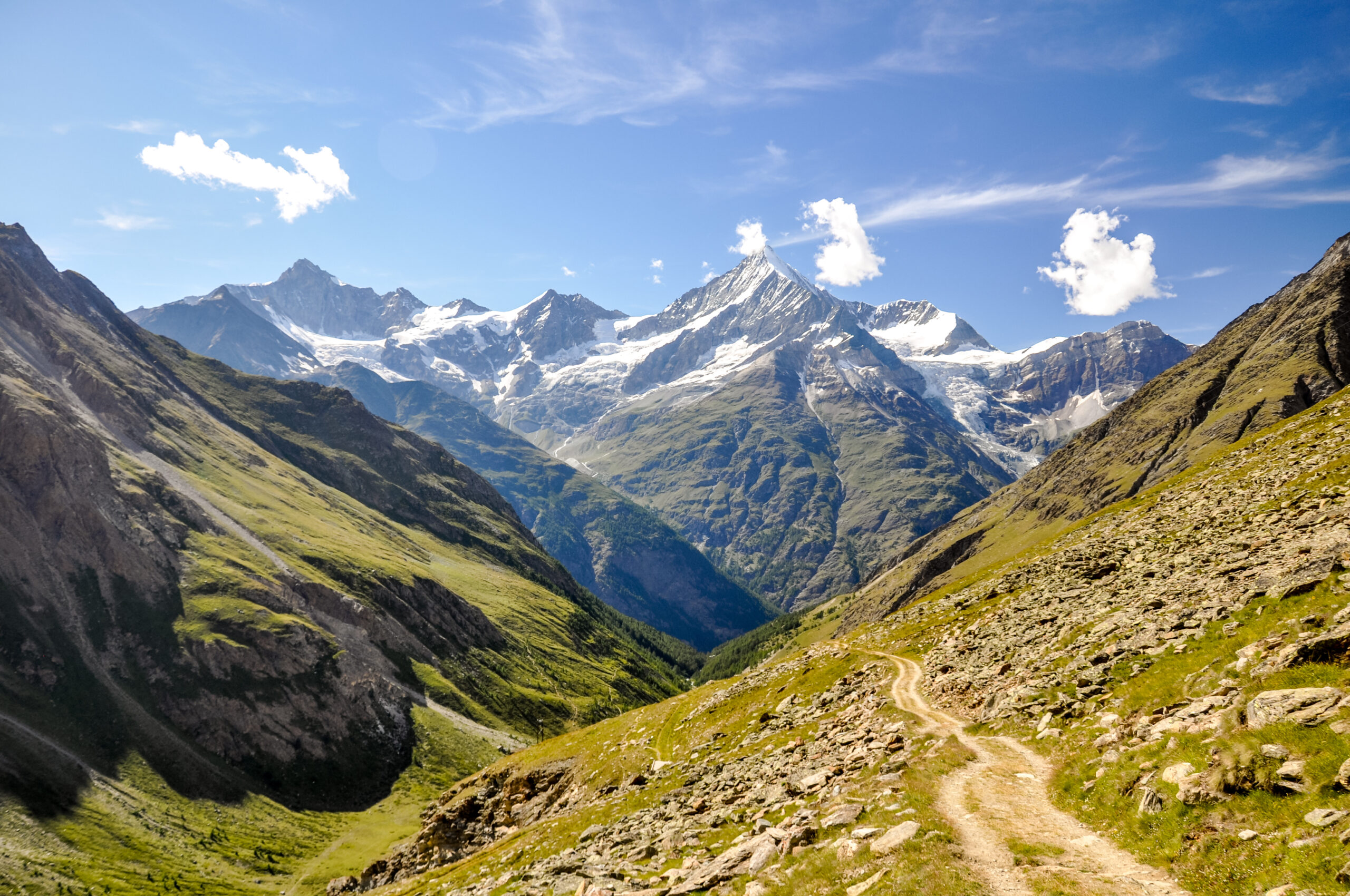
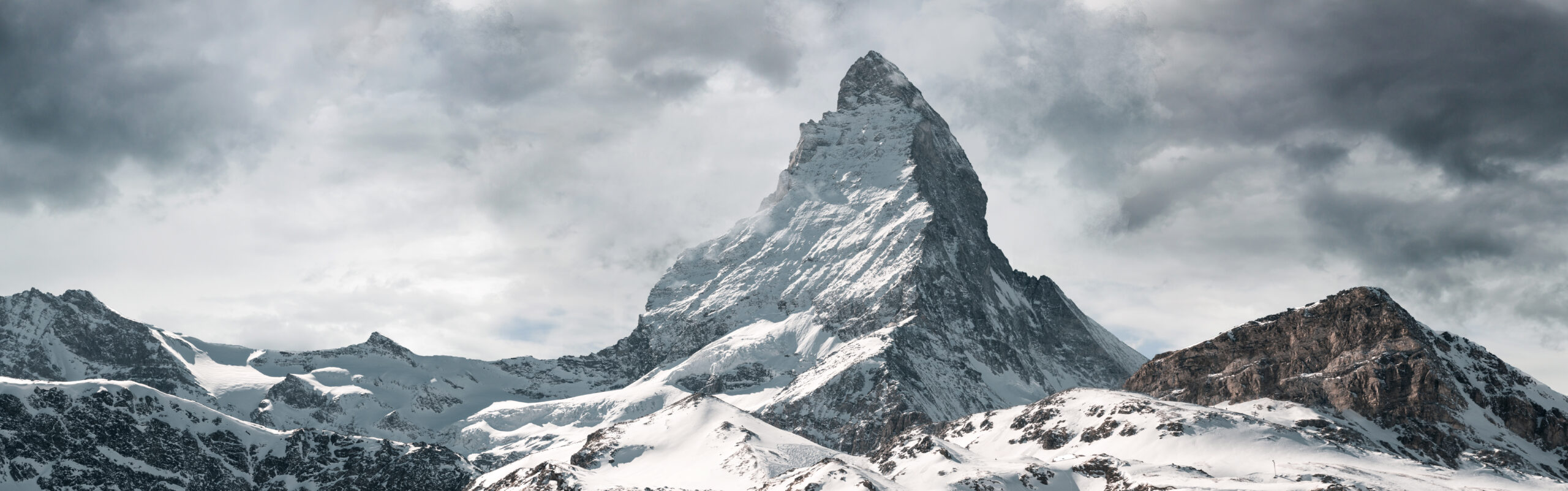
The Weisshorn (4,506 m / 14,783 ft) is widely regarded by experienced alpinists as the most beautiful mountain in the Alps. This is not a casual compliment — it is a considered verdict repeated independently by generations of Alpinists who have seen the mountain from the valley at Randa, from the summits of neighbouring peaks, and from the ridges of the mountain itself. Its three great ridges converge to a perfect pyramid summit in a shape so geometrically pure that one guide describes it as “a mountain that a child would draw.” It is called the “Diamond of Valais” for its sparkle and its exclusivity. The Matterhorn may be more famous. The Weisshorn is more beautiful.

At 4,506 m, the Weisshorn is the fifth highest peak in the Alps and the fourth highest entirely within Switzerland. It stands in the canton of Valais, separating the Val d’Anniviers to the west from the Mattertal to the east, with the village of Randa 3,100 m directly below — one of the greatest vertical faces above a valley settlement in the Alps. There are no cable cars, no gondolas, no lifts anywhere on the Weisshorn. Every metre is earned. The Normal Route via the East Ridge is graded AD (Assez Difficile) — harder than the Normal Route on the Matterhorn, significantly harder than Gran Paradiso, and one of the most demanding “normal routes” of any major Alpine 4,000er. The total descent from summit to Randa is 3,100 m, most of it in technical terrain.

The first ascent was made on August 19, 1861 by the Irish physicist John Tyndall with guides J.J. Bennen and Ulrich Wenger — during the golden summer of Alpine exploration. Tyndall’s account of the ascent, with its vivid description of exhaustion and his patriotic inner monologue on the summit ridge, is among the finest passages in Victorian mountaineering literature.

Weisshorn Quick Facts

CategoryDetails
Elevation4,506 m / 14,783 ft
LocationPennine Alps, Canton Valais, Switzerland — between Val d’Anniviers (west) and Mattertal (east)
Rank5th highest in the Alps · 4th highest in Switzerland · 2nd highest Swiss summit outside the main Alpine chain (after Dom)
Reputation“Most beautiful mountain in the Alps” (widely held among experienced alpinists) · “Diamond of Valais”
ShapeThree-ridged perfect pyramid — Rocky/grey on the Zinal (west) side; white/glaciated on the NE face (Randa side)
Name“White Peak” in German — refers specifically to the glaciated NE face visible from Randa; the western flank is actually grey rock
Vertical Relief3,100 m above the village of Randa directly below — one of the greatest valley-to-summit reliefs in Switzerland
Normal RouteEast Ridge (Ostgrat) — Grade AD — from Weisshorn Hütte (2,932 m) — 1,600 m gain — 7 hours
No LiftsNo cable cars, no gondolas, no lifts anywhere on the mountain — all under own steam from Randa
Total Summit Day~3,100 m descent from summit to Randa valley — 3-day program standard
Key HutWeisshorn Hütte (2,932 m) — 30 places — SAC hut — 4–5 hrs from Randa — June–September
North Ridge OptionAD+ — from Cabane de Tracuit (3,256 m) via Bishorn (4,153 m) — Grand Gendarme crux
First AscentAugust 19, 1861 — John Tyndall with guides J.J. Bennen & Ulrich Wenger
PermitsNone required
Best SeasonJune – September

John Tyndall, August 1861 — “The Quality of Not Knowing When to Yield”

The Failed Attempt, 1860

The year before the first ascent, C.E. Mathews made an attempt on the Weisshorn’s southern face with the legendary guides Melchior Anderegg and Johann Kronig. They left the Schallenbergalp huts at 1:30 AM on July 1, 1860, crossed the moraine, and gained the upper glacier as dawn broke. When the ridges came into view, they were “thickly coated over with fresh snow” and the mountain was a mass of ice. Guide Kronig asked Mathews to give up. They turned back and reached Zermatt after nineteen hours of walking, during which they were struck by avalanches and Mathews’ eyes were severely burnt by the snow glare. The mountain had repulsed its first serious challenger completely.

John Tyndall — First Ascent, August 18–19, 1861

John Tyndall (1820–1893) was not primarily a mountaineer — he was an Irish physicist of the first rank, whose discoveries on radiant heat, diamagnetism, and the scattering of light in the atmosphere (the “Tyndall effect”) put him among the leading scientists of Victorian Britain. But he was also a passionate Alpinist who made numerous significant climbs during the Golden Age, including multiple Matterhorn attempts. On August 18, 1861, he left Randa at 1:00 PM with guides J.J. Bennen (of Laax) and Ulrich Wenger (of Grindelwald). They bivouacked on the mountain and resumed at 3:35 AM on the 19th.

The ascent became increasingly difficult on the East Ridge. Tyndall later wrote in his account: “Sometimes it was a fair pull upwards, sometimes an oblique twist round the corner of a rock tower; sometimes it was the grip of the finger ends in a fissure and lateral shifting of the whole body in a line parallel to the crack. Many times I found myself with my feet highest and my head lowest.” They reached a dangerous thin ridge of snow, little wider than a hand’s breadth, with precipices on either side. Guide Bennen trod the snow down and saw that it was firm enough to cross. Tyndall followed.

Utterly exhausted, Tyndall summoned his reserves with a famous inner monologue: “I thought of Englishmen in battle, of the qualities which had made them famous: it was mainly the quality of not knowing when to yield — of fighting for duty even after they had ceased to be animated by hope. Such thoughts helped to lift me over the rocks.” After four hours of struggle on the upper ridge, they reached the summit. The return to Randa took until 11:00 PM — nearly 20 hours of almost constant hard work. It was, Tyndall wrote, a day that tested him to his absolute limits and remains one of the most compelling accounts of an Alpine first ascent in the Victorian era.

J.J. Bennen — The Greatest Guide of the Era

Johann Josef Bennen was by wide acclaim the finest mountain guide of the Golden Age. He partnered Tyndall on the Weisshorn first ascent and multiple Matterhorn attempts, where his skill and judgement set the standard for what a great guide could achieve. In February 1864 — just two and a half years after the Weisshorn — Bennen was killed in an avalanche on the Haut de Cry in the Valais, aged approximately 37. His death was mourned across the climbing world. Tyndall wrote a deeply personal tribute. The loss of Bennen removed what many considered the single most important guiding force in the development of high Alpine mountaineering.

Leslie Stephen — Second Ascent, 1862

The second ascent was made in 1862 by Leslie Stephen with guides Melchior Anderegg and Franz Biener. Stephen — then in his late twenties, later a distinguished Victorian man of letters — gained the highest point in 9.5 hours from his starting chalet, and returned to Randa the same evening. Leslie Stephen went on to become one of the founding figures of the Alpine Club and editor of the Dictionary of National Biography. He is perhaps most widely known today as the father of Virginia Woolf.

Golden Age Route Development

The Weisshorn attracted the finest Alpinists of the era. In 1871, the NE Face was first climbed by John Hawthorn Kitson with Christian Almer and Ulrich Almer. In 1877 the Schaligrat (SW Ridge) was partially opened; the complete Schaligrat was first climbed in 1895. Geoffrey Winthrop Young — one of the most distinguished British Alpinists of the Edwardian era — established both the Young Ridge (1900) and the famous NE Face rib (1909, with Oliver Perry-Smith and guide Joseph Knubel, D+, 1100 m). Young, who lost a leg in World War I yet continued climbing with a prosthetic limb, remains one of the most remarkable figures in Alpine history.

Randa & Zinal — Two Starting Points

The Weisshorn is accessed from Randa on the east (Mattertal / Zermatt valley) for the East Ridge Normal Route, and from Zinal on the west (Val d’Anniviers) for the North Ridge via Cabane de Tracuit.

🚌 Getting to Randa (East Ridge / Normal Route)

  • By rail from Zermatt: Randa is the stop on the Matterhorn Gotthard Bahn (MGB) line between Visp and Zermatt — approximately 20 minutes from Zermatt by train (~CHF 14.80 return). This is the standard approach: base in Zermatt (extensive services, hotels, gear shops) and take the morning train to Randa for the hut approach. The train runs frequently; no car is needed.
  • By car: Cars are not permitted in Zermatt. Drive to Täsch (parking garage, ~CHF 15/day) and take the shuttle train to Zermatt or Randa. From Visp (A9 motorway exit), Täsch is 20 km south through the Mattertal. From Zürich: ~3 hours via A2 and A9.
  • From the trailhead at Randa: The approach to the Weisshorn Hütte (2,932 m) begins directly from Randa railway station — T3–T4 difficulty, approximately 4–5 hours, 1,700 m gain. The trail passes through forest, across streams, and up to the hut above the Randa valley. Meet your guide at the hut at approximately 18:00 after an individual afternoon approach.
  • Airports: Zürich (ZRH) is the main international gateway — direct trains to Visp and onward to Randa via Brig take approximately 3–3.5 hours. Geneva (GVA) offers direct rail to Visp (~2.5 hours).

Getting to Zinal (North Ridge)

For the North Ridge via Cabane de Tracuit, drive or take buses to Zinal in the Val d’Anniviers — a beautiful valley west of the Mattertal accessible from Sierre on the A9 motorway. From Sierre, drive or take the PostBus up the valley approximately 25 km to Zinal. From the Zinal village, the approach to Cabane de Tracuit (3,256 m) takes approximately 4.5 hours (T4, 1,400 m gain).

All Trails & Routes on the Weisshorn

The SAC Route Portal notes directly: “All of its routes and climbs are long and very demanding.” There is no easy route on the Weisshorn. The Normal Route (East Ridge, AD) is harder than most Alpine 4,000m standard routes. Every option demands a well-conditioned, technically competent alpine team.

#RouteGradeCharacter & Key Notes
1 East Ridge — Normal Route (Ostgrat) AD · III− · 45° Standard route — Tyndall’s 1861 first ascent line. Weisshorn Hütte (2,932 m) → Flue Glacier → firn shoulder → “Breakfast spot” → Lochmatter Tower → sharp snow ridge → firn summit → rock steps to summit. 1,600 m gain from hut; 7 hrs; 45° on upper ridge; occasional III. Hardest Normal Route of any major Swiss 4,000er. 3-day program. No cable cars.
2 North Ridge (via Bishorn) AD+ · III+ · mixed From Cabane de Tracuit (3,256 m) via Bishorn (4,153 m). Two-section route: relatively easy 3 hours across snow to Bishorn summit; then highly exposed 5 hours along the north ridge with the Grand Gendarme as the major crux. Rock and ice mixed. Grade AD+, III+ on the Grand Gendarme. 8 hours total. Superb and aesthetic. The Zermatters guide considers this the more aesthetic of the two major routes.
3 Schaligrat (SW / Schali Ridge) D · IV From Schalijoch Bivouac (3,765 m) — 8-place emergency hut. Entirely rock climbing, no ice. D, IV; 6 hrs from the bivouac. Complex glacier approach from Weisshorn Hütte or from Zinal and Arpitetta hut. First complete ascent 1895 by Biner, Imboden & Broome. Serious, committing route for experienced alpinists.
4 Young Ridge / West Face (Younggrat) D− · IV− · rock Named for Geoffrey Winthrop Young. Rock climbing from Cabane d’Arpitetta to Grand Gendarme area. D-, IV-, 8 hours, 1,550 m. Predominantly rock; possible as return descent. First ascent 1906 by Geoffrey Winthrop Young & R.G. First serious NE face route; ascent of the famous rib in 1909 by Perry-Smith, Young & Knubel (D+).
5 NE Spur (Face) D+ · 55° · ice First ascent 1871 by Kitson & Almer brothers (NE Face); famous rib route 1909 by Perry-Smith, Young & Knubel. D+, 55° ice and snow, 1,100 m, 6 hrs for the face. Complex glacier approach. For specialist ice & mixed climbers only.

East Ridge & North Ridge — Full Descriptions

1

East Ridge — Normal Route (Ostgrat)

AD · 1,600 m from Hut · 7 Hours · 45° Upper Ridge · Tyndall’s 1861 Line
Start
Weisshorn Hütte (2,932 m)
Gain from Hut
1,600 m · 7 hours to summit
Key Features
Lochmatter Tower · sharp snow ridge · firn summit · 45°
Grade
AD · III− · 45°
Total Descent
3,100 m summit to Randa (Day 2–3)
Program
3 days: Randa → Hut → Summit+Hut → Randa
  • Weisshorn Hütte to glacier (pre-dawn start, ~3:00 AM): From the hut at 2,932 m, the route begins across tracks and onto the Flue Glacier. The pre-dawn start is essential to keep the snow firm on the upper ridge — the 45° firn shoulder and summit ridge are significantly more dangerous on softening afternoon snow. The initial glacier crossing has some crevasse sections; rope up immediately upon leaving the hut.
  • The firn shoulder and “Breakfast Spot”: The route ascends the glacier and reaches the firn shoulder, where the angle eases briefly and parties traditionally stop for the first real break of the day — the “Fru¨hstückplatz” or Breakfast Spot — before the full character of the East Ridge becomes clear above. Some reports note the Breakfast Spot at approximately 3,916 m as a natural psychological waypoint. The view up the remaining ridge from here is both inspiring and sobering.
  • The Lochmatter Tower: Above the firn shoulder, the ridge narrows and the Lochmatter Tower must be climbed or bypassed. This rocky feature on the East Ridge requires careful movement — generally Class II–III with some sections where, in Tyndall’s words, “the grip of the finger ends in a fissure and lateral shifting of the whole body in a line parallel to the crack” is required. Move carefully; the exposure on both sides of the ridge increases significantly here.
  • The sharp snow ridge — Tyndall’s thin crest: Above the tower, the ridge becomes a narrow snow arête with precipices on either side — the feature Tyndall described as “little wider than a hand’s breadth.” Guide Bennen stamped the snow firm before crossing; this remains the standard technique. The ridge is simultaneously one of the most dramatic and most beautiful sections of any major Alpine Normal Route. The exposure on both sides is extreme; move smoothly and confidently.
  • The firn summit and final rock steps: Above the crest, the route climbs the firn summit — a broad cone of snow/ice at 40–45° that requires steady crampon work — before a short final section of rock steps to the highest point. The summit of the Weisshorn at 4,506 m is a narrow, airy point with views of extraordinary range: the Dom and Täschhorn immediately across the Mattertal, the Dent Blanche, Zinalrothorn, Matterhorn, and on clear days the entire chain from Mont Blanc to Monte Rosa. Only 2–3 other parties typically stand here on a summit day — the Weisshorn is never crowded.
  • Descent — 3,100 m to Randa: The descent reverses the ascent route back to the hut. The 3,100 m total descent from summit to Randa valley is one of the most physically demanding finales in the Alps. Most parties descend from the summit to the hut on Day 2 and rest overnight, completing the 1,700 m descent to Randa on Day 3. Even the most fit parties should plan for Day 3 as the descent — attempting both the summit and the full valley descent in Day 2 is only for the extraordinarily strong.
2

North Ridge via Bishorn — The Aesthetic Traverse

AD+ · 8 Hours · Grand Gendarme Crux · From Cabane de Tracuit · Zinal Approach
Start
Cabane de Tracuit (3,256 m), Zinal side
Via Bishorn
4,153 m fore-summit — 3 hrs from Tracuit
Weisshorn Pass
Col between Bishorn & Weisshorn — second section start
Grand Gendarme
Key crux — III+ — must be climbed
Total Time
8 hours from Tracuit · very exposed second half
Grade
AD+ · III+ · mixed
  • Two-section route structure: The North Ridge route divides naturally into two sections. The first 3 hours from Cabane de Tracuit to the summit of Bishorn (4,153 m) are relatively easy — a broad snow ridge with few technical difficulties, often done as a standalone objective by parties not ready for the full Weisshorn. The Bishorn summit is a superb viewpoint for the north ridge of the Weisshorn above, and a good objective in its own right. The second section — from Bishorn down to the Weisshorn Pass and then up the full north ridge to the Weisshorn summit — is 5 very exposed hours of mixed terrain at AD+ standard.
  • The Grand Gendarme: The key technical feature of the North Ridge is the Grand Gendarme — a prominent rock tower on the ridge that must be climbed directly. The Grand Gendarme is Class III+ and is where the route achieves its maximum technical and physical difficulty. Bypasses exist but are rarely easier than the direct line. Experienced climbers find the Grand Gendarme genuinely satisfying; less experienced parties may struggle. Rope management on this feature requires care.
  • Exposure and aesthetics: The Zermatters guide notes the north ridge is “incredibly beautiful — mixed narrow icy slopes and rock.” One climber’s report states the views from the north ridge are “unbelievable.” The exposure on both sides of the north ridge throughout the upper half is significant; concentration must be maintained throughout the 5-hour second section.
  • Descent via East Ridge: Most parties descending after the North Ridge approach use the East Ridge for descent — reversing the Normal Route to the Weisshorn Hütte and descending to Randa. This means the round trip requires either crossing the valley from Randa to Zinal (train + buses, approximately 56 CHF) or organizing logistics in advance. Neither hut accepts credit cards.
3

Schaligrat (SW Ridge) — Overview

D · IV · Rock Only · No Ice · From Schalijoch Bivouac (3,765 m)
Grade
D · IV
Start
Schalijoch Bivouac (3,765 m) — 8-place emergency hut
Character
Entirely rock; no ice; 6 hrs from bivouac
Approach
Complex glacier approach from Weisshorn Hütte or Zinal
History
First complete ascent 1895 — Biner, Imboden & Broome
  • Character: The Schaligrat is the most technically demanding of the Weisshorn’s three major ridges for pure rock climbing. Grade D with IV moves, it involves sustained rock terrain at high altitude with no ice — unusual for a Valais 4,000m peak. The first complete ascent in 1895 came after the lower section was originally considered too difficult and dangerous; the upper section had been reached earlier via alternative lower approaches.
  • Approach: The Schalijoch Bivouac (3,765 m) is a small emergency hut holding 8 people, accessible via a complex glacier approach from either the Weisshorn Hütte side or from Zinal and the Cabane d’Arpitetta. The approach to the bivouac is itself committing and requires glacier skills. From the bivouac, the Schaligrat above involves 6 hours of continuous rock climbing to the summit.
  • For experienced climbers only: The Schaligrat is a route for parties who are comfortable leading and following on sustained IV at altitude, confident on high-altitude rock in variable conditions, and self-sufficient in terms of route-finding and rescue capability. It is rarely climbed and requires thorough research and ideally current beta from local guides.

The Weisshorn Hütte — Gateway to the Diamond of Valais

🏠 Weisshorn Hütte (2,932 m) — 30 Places — SAC Hut — Luzius Kuster’s 45-Year Legacy

The Weisshorn Hütte (2,932 m) is a small SAC hut with only 30 places, perched on the east flank of the Weisshorn above Randa in a spectacular position below the glaciers. It is the sole hut for the Normal Route and one of the key huts for the Schaligrat approach. Its small size means it is never crowded, and the atmosphere is consistently described as intimate and genuine — the experience of a serious alpine objective rather than a tourist mountain.

  • 45 years of wardenship: In 2011, warden Luzius Kuster celebrated his 45th year running the Weisshorn Hütte — having first arrived as a 20-year-old in 1966 and never left. The 2011 season was also the 150th anniversary of Tyndall’s first ascent, making it a triple celebration. The Kuster family (Renate & Luzius) have become part of the identity of the mountain itself; their decades of accumulated knowledge of route conditions is an invaluable resource for climbing parties.
  • Approach from Randa: The hut is 4–5 hours from Randa railway station on a T3–T4 trail, gaining approximately 1,700 m through forest and alpine terrain. The trail is well-marked. Arrive in the afternoon for a 6:00 PM meeting with your guide, dinner, and early sleep. The hut phone: 027-967-1262.
  • What to expect: Half board (dinner + breakfast) standard at approximately CHF 82/person including the guide. Small dormitory; alpine simplicity. Cash only — neither hut on the mountain accepts credit cards. Water costs approximately CHF 12 (as with most Swiss alpine huts).
  • Booking: Essential in peak season (July–August). Book via the SAC hut reservation system at sac-cas.ch or contact the hut directly. With only 30 places and a dedicated following, the Weisshorn Hütte fills quickly on good-weather windows.

Cabane de Tracuit (3,256 m): The hut for the North Ridge approach, accessed from Zinal in the Val d’Anniviers (4.5 hours, T4). Much larger (140 places). Open July–mid September. Book via SAC. Phone: 027-475-1500.

Classic Three-Day East Ridge Program

Day 1 Afternoon — Randa to Weisshorn Hütte

Randa station → Weisshorn Hütte (2,932 m) · T3–T4 · 4–5 hrs · 1,700 m gain
Take the morning train from Zermatt to Randa (20 min, ~CHF 7.40). Begin the approach trail directly from the Randa station. The trail climbs steeply through forest and alpine terrain — a T3–T4 approach with excellent views of the Weisshorn’s NE face above. Arrive at the hut in mid-afternoon. Meet your IFMGA-certified guide at 18:00. Equipment check, route briefing, three-course dinner, and early to bed. The hut environment on a pre-summit evening is one of the finest in the Alps: 30 people, a serious mountain overhead, the valley 1,700 m below.

Day 2, ~3:00 AM — Pre-Dawn Summit Push

Weisshorn Hütte → Flue Glacier → East Ridge → Summit (4,506 m)
Rise at ~2:30 AM. Gear up fully: crampons, ice axe, harness, helmet, layers. Depart at ~3:00 AM in the dark. Traverse the glacier, gain the firn shoulder, pass the Breakfast Spot at ~3,916 m as light begins. The Lochmatter Tower, the knife-edge snow crest, the firn summit, the final rock steps. Summit of the Weisshorn in the early morning with a panorama across the full Pennine Alps. Begin descent immediately. Return to hut by early afternoon — most parties reach the hut after 12–14 hours on the mountain. Rest, eat, sleep.

Day 3 Morning — Descent from Hut to Randa

Weisshorn Hütte (2,932 m) → Randa valley · 1,700 m descent · 3–4 hrs
After a leisurely breakfast (one of the great pleasures of the three-day program), descend the 1,700 m from the hut to Randa. The descent is straightforward but requires attention after the previous day’s exertion. The total summit-to-valley descent across the two days is 3,100 m — one of the greatest in the Alps. Reach Randa in time for the train back to Zermatt. Return to civilization and a well-earned Zürcher Geschnetzeltes or fondue.

No Permits — Hut & Transport Costs

ResourceDetailsCost
Climbing PermitNo permit required for any Weisshorn routeFree
Weisshorn Hütte (2,932 m)30 places; half board; cash only. Book via SAC or direct. Phone: 027-967-1262~CHF 82/person half board (incl. guide)
Cabane de Tracuit (3,256 m)140 places; for North Ridge approach via Zinal. Phone: 027-475-1500~CHF 60–70/person half board
Schalijoch Bivouac (3,765 m)Emergency 8-place hut; no warden; self-cateringLow/donation
Randa–Zermatt trainMGB railway; ~20 minutes from Randa to Zermatt~CHF 14.80 return
Täsch parkingCovered garage near Zermatt shuttle — cars not allowed in Zermatt~CHF 15/day
Equipment rentalAvailable in Zermatt sports shopsCHF 50–70/set

Note: Neither the Weisshorn Hütte nor the Cabane de Tracuit accepts credit cards. Bring sufficient Swiss Francs in cash for all hut expenses including water, meals, and overnight accommodation.

Best Time to Climb the Weisshorn

SeasonWindowProsWatch-outs
Summer ★ PrimaryLate June – mid-SeptemberWeisshorn Hütte open; good snow conditions on upper ridge; most stable weather windows; long daylight; confirmed great conditions from regular trip reportsAfternoon thunderstorms (typical Valais summer); summit before noon essential; snow bridges weaken late season; hut fills on good-weather windows — book ahead
Early JuneEarly–mid JuneFirmer snow conditions on upper ridge; fewer climbers; early season potentialMore snow on lower approach; hut may not yet be fully open; crampons from lower elevation
After mid-SeptemberLate SeptemberPossible in stable high pressureHut closing; snow on rock sections; shorter days; higher winter risk
Winter / SpringOct – MaySpecialist mountaineering/ski touring; small emergency hut openHut closed; deep snow; serious avalanche risk; specialist territory

Essential Gear for the Weisshorn

⛰ Technical

  • Crampons (12-point, front-pointing; 45° sections require solid crampon skills)
  • Ice axe — mandatory throughout (consider 2 axes for steepest sections)
  • Helmet — mandatory (rock sections)
  • Harness + belay device
  • Rope: 30–50 m — shared in team
  • Prussik cords (glacier crevasse rescue)
  • Glacier glasses & goggles (UV at 4,500 m)

🍨 Valais Alpine Conditions

  • Waterproof hardshell jacket + pants
  • Down jacket (extremely cold on NE face at altitude)
  • Warm mid-layers ×2
  • Expedition gloves + liner gloves
  • Balaclava + warm hat
  • Alpine or mountain boots (fully crampon-compatible)
  • Gaiters
  • Sunscreen SPF 50+ & lip balm

⛺ Hut Overnight

  • Sleeping bag liner (hut provides blankets)
  • Ear plugs (30-person dormitory)
  • Small summit daypack
  • Energy food + hot drink flask
  • Swiss Franc cash — no credit cards accepted
  • CHF 12 per litre of water budget

📡 Navigation & Safety

  • Headlamp + spare batteries (3:00 AM start)
  • GPS with downloaded route
  • SAC Route Portal offline data
  • Satellite communicator (mobile unreliable on upper mountain)
  • Emergency bivy sack
  • First aid kit incl. blister care (3,100 m descent!)

Difficulty & Safety Notes

The hardest Normal Route of any major Swiss 4,000er

The Zermatters mountain guide service is explicit: “Kilimanjaro and the Mont Blanc normal route are not comparable with the Weisshorn, as these are not rock tours.” The SAC states plainly: “All of its routes and climbs are long and very demanding.” The specific hazards:

  • The East Ridge AD grade is genuine: Unlike some peaks where the Normal Route is graded AD but rarely tests that grade in practice, the Weisshorn East Ridge consistently delivers on its AD rating. The narrow snow arête, the Lochmatter Tower, and the 45° firn summit are real technical challenges at real altitude. Parties must be able to move confidently on Class III rock, 45° ice, and exposed mixed terrain without hesitation.
  • Length and endurance: The total commitment — 4–5 hour approach, 7-hour summit day from the hut, 3,100 m total descent — makes the Weisshorn an extreme endurance challenge as well as a technical one. Physical conditioning must be exceptional. The descent to Randa is described as “a seemingly never-ending trudge” even by experienced parties. Plan Day 3 for the valley descent; do not attempt it the same day as the summit unless you are extraordinarily fit.
  • No shortcuts: With no cable cars anywhere on the mountain, there is no emergency shortcut. Every metre must be descended on foot. Rescue is expensive and takes time. Self-sufficiency and evacuation insurance are essential.
  • Weather: Afternoon thunderstorms are typical in the Valais in summer. Summit by noon; be below the exposed ridge sections by early afternoon. The exposed nature of the East Ridge and North Ridge makes lightning a serious danger. Descend immediately if a storm approaches while on the upper ridge.
  • Route-finding on descent: The East Ridge descent is “not well marked” and can be tricky to navigate in poor light or deteriorating conditions. Parties should note key landmarks on ascent for the descent. A guide who knows the route is a significant safety asset.
Disclaimer: This guide is educational. The Weisshorn is a committing, expert-level objective. Contact the Zermatters guide service or SAC Zermatt for current conditions. Evacuation insurance is strongly recommended.

Weisshorn Guide Services

Zermatters — Mountain Guide Service
Zermatt — IFMGA certified — Weisshorn specialists

The Zermatters guide service in Zermatt runs the definitive guided Weisshorn East Ridge program: Day 1 approach to hut, Day 2 summit, Day 3 descent. IFMGA-certified guides with current local knowledge. They explicitly require prior 4,000m experience (not just Matterhorn normal route) and recommend acclimatization on training peaks like the Breithorn Traverse beforehand.

Visit Website →
Swiss Mountain Guides (SAC)
Switzerland-wide · IFMGA certified · Valais specialists

The SAC (Swiss Alpine Club) maintains a comprehensive list of IFMGA-certified guides across the Valais, many of whom run Weisshorn programs. The SAC Route Portal provides current route conditions, hut bookings, and guide referrals for all Weisshorn routes.

SAC Route Portal →

Frequently Asked Questions About the Weisshorn

The Weisshorn’s claim to beauty rests on its combination of form and context. Its three ridges converge to a perfect pyramid summit at 4,506 m — a geometric purity that even the Matterhorn, with its asymmetric profiles from different directions, cannot match. It rises 3,100 m directly above Randa — one of the greatest vertical reliefs above a single village in the Alps — giving it an imposing scale visible from the valley floor. Its NE face is permanently glaciated white (the source of its name), while the western flank is grey and rocky, creating a visual drama of contrasts. And crucially, it is relatively uncrowded — the demanding access filters out casual visitors and means those who reach the summit have genuinely earned it. The Matterhorn may be the most photographed mountain in the Alps; the Weisshorn is the one that experienced climbers point at and say that one.
The Zermatters mountain guide service addresses this directly: the Weisshorn ascent is “significantly longer and more challenging than the Matterhorn.” The Hörnli Ridge (Matterhorn Normal Route) is typically graded AD with sections of III and is 1,220 m from the Hörnli Hütte. The Weisshorn East Ridge is graded AD with sections of III- but covers 1,600 m from the Weisshorn Hütte and involves more sustained mixed terrain, a narrower and more exposed crest in places, and a total descent to the valley of 3,100 m versus the Matterhorn’s descent via cable car option. The Matterhorn has more traffic and more fixed ropes; the Weisshorn has essentially none. One route report notes bluntly: “Compared to Matterhorn, this route is much longer and it’s more of a test of endurance than a sprint. I was much more exhausted at the end of it compared to my Matterhorn traverse.”
Johann Josef Bennen was by wide acclaim the finest mountain guide of the Golden Age of Alpinism — the decade of great first ascents in the early 1860s. He partnered John Tyndall on the Weisshorn first ascent (1861) and on multiple Matterhorn attempts, and was central to the development of high Alpine mountaineering technique. In February 1864, Bennen was killed in an avalanche while guiding a party on the Haut de Cry in the Valais — barely two and a half years after the Weisshorn triumph. He was approximately 37 years old. His death was mourned throughout the climbing world. Tyndall wrote a lengthy personal tribute. The loss was incalculable: Bennen was not merely skilled but possessed what contemporaries described as a special mountain instinct that set him apart from all other guides of the era. Edward Whymper, who later made the first ascent of the Matterhorn in 1865, had sought Bennen as a guide. By then, Bennen was gone.
The “Frühstückplatz” (Breakfast Spot) is a natural resting point on the East Ridge at approximately 3,916 m where the angle eases briefly before the upper ridge steepens to its full difficulty. It is where parties traditionally stop for the first food break of the summit day — having been moving since ~3:00 AM on a demanding route. Practically, it matters as a calibration point: parties who are on schedule and feeling strong at the Breakfast Spot have good prospects for the summit; parties who are already behind schedule or struggling at this point should seriously consider whether to continue. One trip report records reaching only this elevation (3,916 m) before turning around due to lost crampons. The Breakfast Spot is mentioned in multiple route accounts as a natural psychological watershed of the climb.
The name “Weisshorn” (White Peak) specifically describes the mountain as seen from Randa and the Mattertal to the east, where the NE face is permanently glaciated and appears brilliant white against the sky — always snow-covered and highly visible from the valley floor. The local Mattertal dialect name “ts Wiss’hore” confirms this. However, seen from the west — from Zinal and the Val d’Anniviers — the mountain is predominantly grey-brown rock. This dual character of the mountain (white on the Randa side, rocky on the Zinal side) is captured by the SAC: “Rocky on the Zermatt side, bright white on the Rhône Valley side — hence the name Weisshorn.” The white glaciated NE face is what gave the mountain its name and its visual identity from the Mattertal, even though much of the actual climbing terrain (including the East Ridge) is on mixed rock and ice terrain, not pure white snow.

Map of the Weisshorn & Live Weather

Summit location and live weather from the Weisshorn’s coordinates (46.100°N, 7.716°E). The map shows the summit, Randa (base village and East Ridge trailhead), and Zinal (Val d’Anniviers, for North Ridge approach).

Weisshorn — Summit Conditions

4,506 m / 14,783 ft · Diamond of Valais · Live from summit coordinates

Loading weather…

At-a-Glance Planning Snapshot

MountainWeisshorn — “Diamond of Valais” · “Most beautiful mountain in the Alps”
Elevation4,506 m / 14,783 ft — 5th highest in the Alps
LocationPennine Alps, Canton Valais, Switzerland — between Val d’Anniviers and Mattertal
Normal RouteEast Ridge (AD) — harder than Matterhorn Hörnli — no cable cars — 3 days
North RidgeAD+ — via Bishorn from Cabane de Tracuit (Zinal) — Grand Gendarme crux — 8 hrs
Total Descent3,100 m summit to Randa valley — split over Days 2–3
AccessRanda station (MGB railway, ~20 min from Zermatt) → Weisshorn Hütte (4–5 hrs T3–T4)
Key HutWeisshorn Hütte (2,932 m, 30 places) — Cash only — CHF 82/night half board
PermitNone required
Best SeasonLate June – mid-September
First AscentAugust 19, 1861 — John Tyndall with J.J. Bennen & Ulrich Wenger
Second Ascent1862 — Leslie Stephen (father of Virginia Woolf) with Anderegg & Biener
Tyndall’s Summit Thought“The quality of not knowing when to yield — of fighting for duty even after ceasing to be animated by hope”