
Last updated June 27, 2026
Best Ama Dablam Operators 2026: 10 Commercial Operators Compared
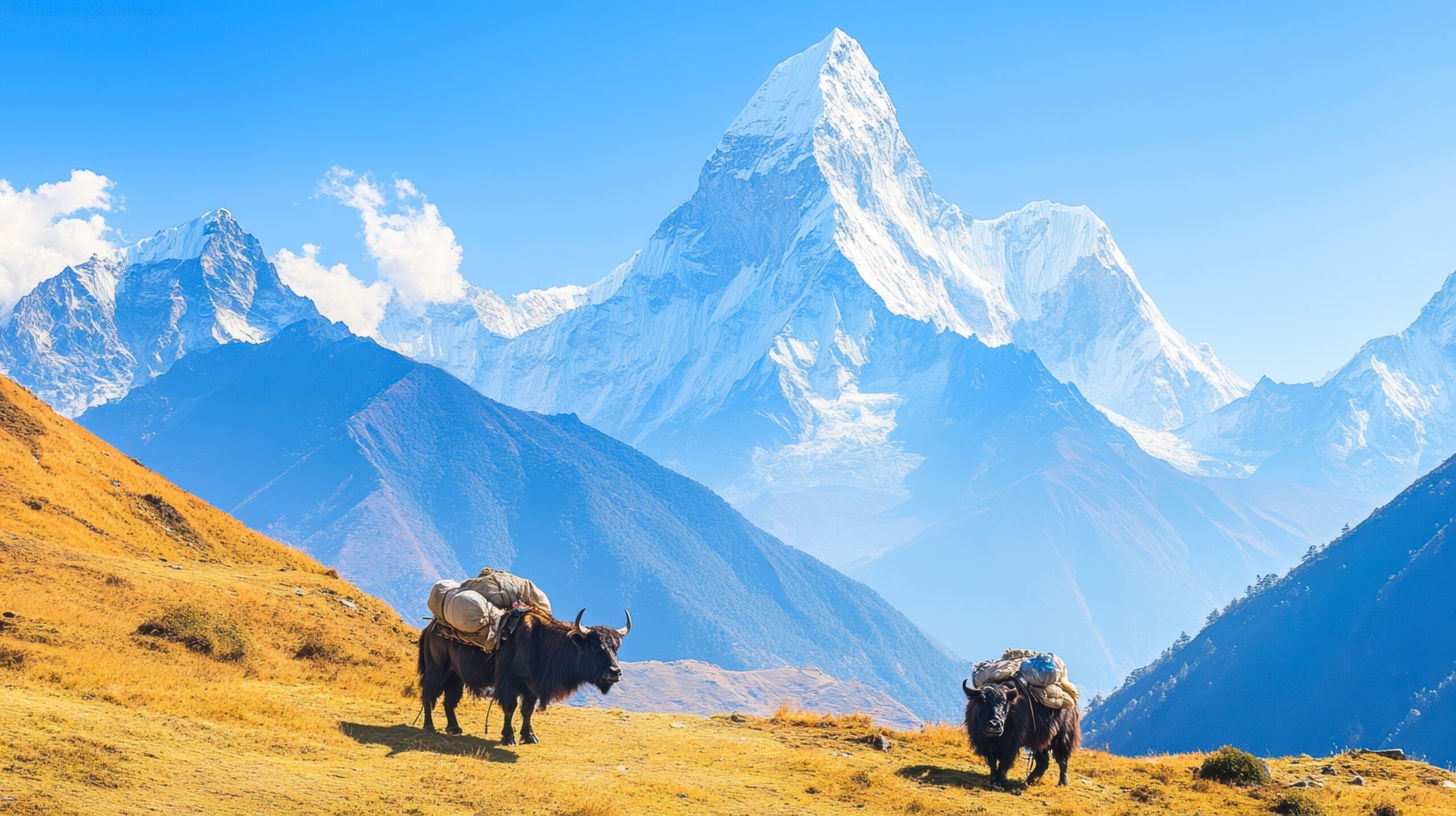
Ama Dablam (6,812 m) is the “Matterhorn of the Himalayas” — a sustained technical climb on the Southwest Ridge, ~20 km south of Everest. The field is structurally dual: established Nepali operators deliver Khumbu-direct logistics at Nepali-direct pricing, while Western operators add booking infrastructure and guide leadership at a premium. Here are the 10 operators that matter, with verified pricing, the route, prerequisites, and how to choose.
The Southwest Ridge involves sustained technical climbing on fixed ropes, mixed rock and ice, and exposed terrain throughout the upper mountain. Most reputable operators require two or more prior 6,000-meter summits (Lobuche East, Island Peak, Chulu West), multi-pitch rock or ice capability, comfort with fixed-rope ascending, and established fitness — some specify rock grades up to 5.9-5.10. Attempt accessible 6,000m peaks first; the prerequisite framework reflects genuine technical demands, not commercial gatekeeping.
Ten operators evaluated against our standard operator framework, adapted for Ama Dablam. Because all use the same Southwest Ridge with broadly similar fixed-rope infrastructure and base-camp logistics, evaluation focuses on commercial structure, guide-client relationship, and 8,000m-progression continuity rather than fundamentally different on-mountain experiences. Pricing is 2026-verified and varies by configuration — confirm directly before booking. Independent editorial; operator links are informational, not paid placements. Next review: September 2026.
Which Ama Dablam Operator Should You Choose?
The field is dual, and the route is the same for everyone — so the choice is really Nepali-direct value versus Western booking infrastructure. Seven Summit Treks is the best overall: Khumbu-direct logistics and 8,000m continuity at Nepali-direct pricing ($8K-$12.5K). Imagine Nepal is the best boutique Nepali option, and Pioneer the lowest-priced with a strong 8,000m pathway. Among Western operators, Adventure Consultants (IFMGA continuity), IMG (American Himalayan heritage), and Furtenbach (time-efficient flash) lead, at $14K-$22K. Pay the Western premium for English guide leadership and integrated logistics; go Nepali-direct for value with the same on-mountain operation.
📑 Contents
Why Ama Dablam & the Route
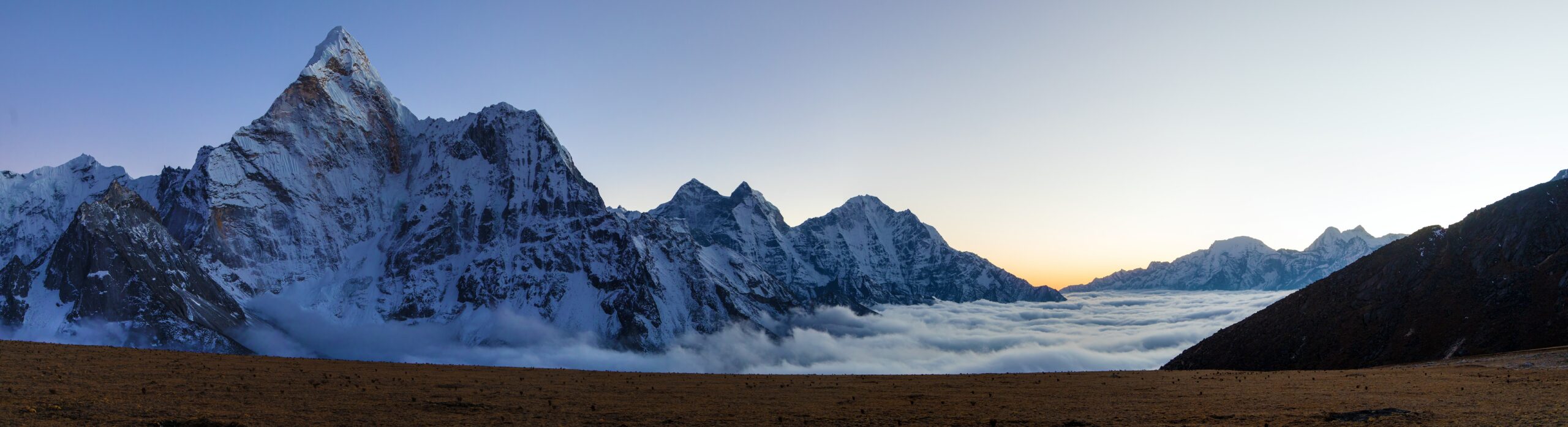
Ama Dablam earned the “Matterhorn of the Himalayas” name from its pyramidal summit and sustained technical demands. It rises dramatically above the Khumbu Valley with one of the most photogenic profiles in the range — visible throughout the Everest Base Camp trek. The name pairs Ama (mother) and Dablam (the pendant ornament Sherpa women wear): the long ridges are protective arms, the central hanging glacier the pendant.
Southwest Ridge
Above Camp 1, climbers are on fixed ropes throughout — frequently clipped in even moving around Camp 2 due to exposure. The route involves Grade IV mixed climbing, multi-pitch fixed-rope ascending, and exposed 40-degree snow-ice near the Dablam, the central hanging glacier. At 6,812 m it sits below the death zone, so most climbers carry no supplemental oxygen — the challenge is technical capability and altitude tolerance, which is exactly what makes it strong 8,000m preparation.
- Ama Dablam is the “Matterhorn of the Himalayas” — 6,812 m of sustained technical climbing on the Southwest Ridge, below the death zone.
- The field is dual: Nepali-direct $7,500-$12,500 vs Western $14,000-$22,000 for the same on-mountain operation.
- It is not a first major mountain — most operators require 2+ prior 6,000m summits and multi-pitch rock/ice capability.
- Best Nepali-direct: Seven Summit Treks, Imagine Nepal, Pioneer, Elite. Western continuity: Adventure Consultants, IMG, Furtenbach, Madison.
- Excellent 8,000m prep at ~10-25% of Everest cost; many climb it in autumn before Everest the following spring.
- Budget the summit bonus separately: ~$500-$700 per climbing Sherpa, $250 per cook/kitchen helper, in cash at base camp.
2026 Ama Dablam Operator Awards
Seven award positions reflecting the dual field — Nepali operators delivering Khumbu-direct expertise at Nepali-direct pricing, alongside Western operators delivering booking infrastructure and guide leadership at a premium.
| Award | Operator | Type | Why It Wins |
|---|---|---|---|
| 🏆 Best Overall | Seven Summit Treks | Established Nepali | Khumbu-direct logistics, experienced Sherpa team, and 8,000m continuity at Nepali-direct pricing |
| 🌐 Best Western Continuity | Adventure Consultants | International IFMGA | IFMGA leadership, honest pre-screening, and familiar structure from Aconcagua/Denali toward Everest |
| 🇺🇸 Best American Himalayan | International Mountain Guides (IMG) | American Himalayan | Long-tenured American operator with Ama Dablam-to-Everest/Lhotse/Cho Oyu continuity |
| ⚡ Best Time-Efficient (Europe) | Furtenbach Adventures | European time-efficient | ‘Flash’ methodology and hypoxic pre-acclimatization for limited-window climbers |
| 🧭 Best Nepali Boutique | Imagine Nepal | Boutique Nepali | Personalized Nepali-direct service, customized programs, direct leadership contact |
| 💎 Best American Premium | Madison Mountaineering | American premium | American premium booking infrastructure, guide leadership, and Seven Summits continuity |
| ◆ Best Nepali w/ 8000m Continuity | Pioneer Adventure | Established Nepali | Strong 8,000m track record supporting 6,000m-to-8,000m progression at the lowest tier |
Comparison Matrix — All 10 Operators
Western operators typically partner with established Nepali operators for in-country logistics; the pricing differential reflects Western overhead, not a different mountain experience. All pricing is 2026-estimated — verify directly before booking.
| Operator | Base | Type | 2026 Price | Operations |
|---|---|---|---|---|
| Seven Summit Treks | Nepal | Established Nepali | $8,000-$12,500 | Direct Nepali |
| Adventure Consultants | New Zealand | International IFMGA | NZD 18,000-24,000 | Western + Nepali partner |
| IMG | USA | American Himalayan | $15,000-$20,000 | Western + Nepali partner |
| Furtenbach Adventures | Austria | European time-efficient | €16,000-€21,000 | Western + Nepali partner |
| Imagine Nepal | Nepal | Boutique Nepali | $8,500-$12,000 | Direct Nepali |
| Madison Mountaineering | USA (Seattle) | American premium | $16,000-$22,000 | Western + Nepali partner |
| Pioneer Adventure | Nepal | Established Nepali | $7,500-$11,500 | Direct Nepali |
| Elite Expeditions | Nepal | Nepali commercial | $8,000-$12,000 | Direct Nepali |
| Alpenglow Expeditions | USA (Lake Tahoe) | American time-efficient | $15,000-$22,000 | Western + Nepali partner |
| Mountain Madness | USA (Seattle) | American heritage | $14,000-$19,000 | Western + Nepali partner |
The 10 Ama Dablam Operators In Depth
The same Southwest Ridge for everyone — so these profiles weigh commercial structure, guide-client relationship, and 8,000m-progression continuity, grouped by the dual field: Nepali-direct value, then Western booking infrastructure.
Nepali-Direct — Khumbu Logistics at Nepali Pricing
Seven Summit Treks (SST)
Nepal · Comprehensive Himalayan portfolio · Khumbu-direct
- Institutional Khumbu-direct expertise
- Nepali Sherpa team with cumulative Ama Dablam experience
- Established base-camp infrastructure
- Integrated 8,000m progression (Everest continuity)
- Strong value at Nepali-direct pricing
- Larger scale than boutique operators
- Western-style pre-trip support lighter than US/EU operators
- English-language depth varies
Best fit: Climbers wanting the best Nepali-direct value with a clear path to 8,000m peaks.
Read the full Seven Summit Treks (SST) profile →Imagine Nepal
Nepal · Boutique · Refined client engagement
- Boutique expedition culture with personal attention
- Nepali Sherpa team expertise
- Smaller scale = individualized preparation
- Customized program structure
- Direct communication with operator leadership
- Fewer scheduled departures than SST
- Less institutional infrastructure
- Western-style booking lighter
Best fit: Climbers prioritizing personalized Nepali-direct service over scale.
Read the full Imagine Nepal profile →Pioneer Adventure
Nepal · Strong 8,000m track record · Khumbu-direct
- Strong 8,000m track record alongside Ama Dablam
- Integrated portfolio for 6,000m-to-8,000m progression
- Lowest Nepali-direct pricing tier
- Sherpa expertise across peaks
- Less Western-style pre-trip support
- English-language depth varies
- Smaller North American/EU marketing presence
Best fit: Climbers using Ama Dablam as a stepping stone to 8,000m peaks at the lowest pricing.
Read the full Pioneer Adventure profile →Elite Expeditions
Nepal · Nepali commercial · 8,000m continuity
- Khumbu-direct Nepali expertise
- 8,000m continuity for progression
- Competitive Nepali-direct pricing
- Sherpa team depth
- Less boutique personalization than Imagine Nepal
- Western-style support lighter
- English-language depth varies
Best fit: Climbers wanting Nepali-direct expertise with a strong 8,000m pathway.
Read the full Elite Expeditions profile →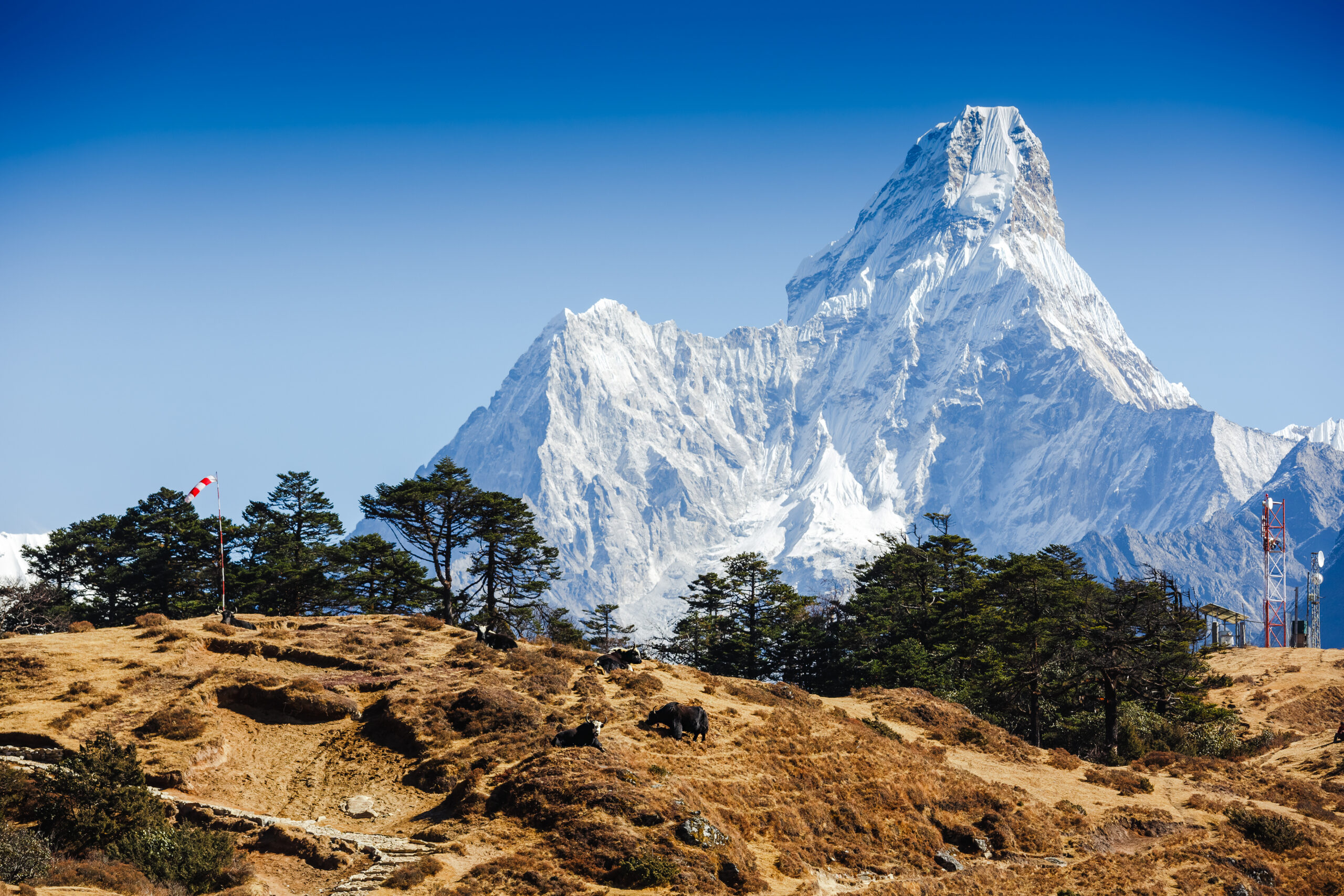
Western — Booking Infrastructure & Guide Leadership
Adventure Consultants
New Zealand · IFMGA · Western + Nepali partner
- NZ-based IFMGA operator with established Ama Dablam programs
- Comprehensive 8,000m portfolio
- Honest pre-screening (explicitly notes it’s not for novices)
- Familiar commercial structure across Aconcagua/Denali/Matterhorn toward Everest
- IFMGA-certified guide leadership
- Premium pricing
- On-mountain ops executed via Nepali partner
- NZD pricing and coordination for non-NZ climbers
Best fit: Climbers building international operator continuity from Aconcagua/Denali toward Everest.
Read the full Adventure Consultants profile →International Mountain Guides (IMG)
USA · Long-tenured American Himalayan · Western + Nepali partner
- One of the longest-tenured American Himalayan operators
- Comprehensive Ama Dablam/Everest/Lhotse/Cho Oyu programs
- American guide leadership integrated with a Nepali Sherpa team
- Operator continuity from Ama Dablam to 8,000m peaks
- Familiar American expedition culture
- Premium vs Nepali-direct
- On-mountain ops anchored by Nepali partner
- Popular programs book early
Best fit: US climbers wanting familiar American expedition culture and a path to Everest/Lhotse.
Read the full International Mountain Guides (IMG) profile →Furtenbach Adventures
Austria · ‘Flash’ methodology · Western + Nepali partner
- Flash methodology and pre-acclimatization compress the timeline further
- German/English client engagement
- Comprehensive logistics and forecasting
- European Himalayan portfolio continuity
- Upper-end pricing
- Pre-acclimatization requires disciplined preparation
- European base adds coordination complexity
Best fit: Time-constrained European climbers wanting the shortest in-country duration.
Read the full Furtenbach Adventures profile →Madison Mountaineering
Seattle, WA · American premium · Western + Nepali partner
- American premium booking infrastructure
- American guide leadership
- Comprehensive Himalayan and Seven Summits portfolio
- Refined pre-trip preparation framework
- 8,000m continuity
- Highest pricing tier
- Premium funds infrastructure, not different on-mountain ops
- Smaller scale than the largest operators
Best fit: US clients prioritizing American premium service and Seven Summits/8,000m continuity.
Read the full Madison Mountaineering profile →Alpenglow Expeditions
Lake Tahoe, USA · Flash methodology · Western + Nepali partner
- American rapid-ascent and pre-acclimatization methodology
- Compressed in-country duration
- American guide leadership
- Strong logistics and client support
- Premium pricing
- Pre-acclimatization requires preparation
- On-mountain ops via Nepali partner
Best fit: American climbers seeking flash methodology and a short in-country window.
Read the full Alpenglow Expeditions profile →Mountain Madness
Seattle, WA · Heritage operator · Western + Nepali partner
- Long American heritage operator
- Seven Summits and Himalayan continuity
- Established Ama Dablam programs
- American guide leadership
- Mid-premium pricing (below Madison/Alpenglow)
- Premium vs Nepali-direct
- On-mountain ops via Nepali partner
Best fit: American climbers wanting heritage-brand continuity across the Seven Summits and Himalaya.
Read the full Mountain Madness profile →Technical Prerequisites
Ama Dablam’s technical demands structurally distinguish it from non-technical 6,000m peaks. Most reputable operators publish specific prerequisite frameworks rather than accepting any 6,000m-experienced climber — evaluate your experience honestly before committing.
- Two or more 6,000m peak summits — Lobuche East, Island Peak, Chulu West, or similar Khumbu peaks
- Multi-pitch rock or ice capability — established belay/rappel technique, comfort on multi-pitch terrain
- Fixed-rope ascending technique — proficient jumar use across sustained pitches
- Crampon and ice axe technique — comfortable on 40-degree mixed snow-ice
- Established mountaineering fitness — multi-day high-camp rotations, summit-day endurance
- Some operators specify rock grades up to 5.9-5.10
Comparable Peaks for Preparation
Build the right foundation first: Lobuche East (6,119 m) and Island Peak (6,189 m) in the Khumbu offer similar fixed-rope and technical terrain; Chulu West (6,419 m) and Cholatse (6,440 m) add mixed-terrain experience. Aconcagua (6,961 m) builds altitude tolerance but not technical skills, and Mont Blanc (4,810 m) gives alpine technical experience at lower altitude. A realistic staged progression — multi-pitch capability, then one or two non-technical 6,000m peaks, then one or two technical 6,000m peaks, then Ama Dablam — typically takes working professionals 2-4 years.
2026 Ama Dablam Cost Breakdown
| Tier | Price | What’s Included |
|---|---|---|
| Nepali-direct program | $7,500-$12,500 | Permit (~$400/climber), Sagarmatha NP entry, Khumbu permits, Sherpa guide, base-camp logistics, rope-fixing, staff insurance, liaison officer |
| Western program | $14,000-$22,000 | Adds Western guide leadership, integrated travel coordination, structured pre-trip prep, English engagement, and 8,000m continuity – same on-mountain ops via Nepali partners |
| All-in (Nepali-direct) | ~$10,000-$16,500 | Program + flights to Kathmandu (~$1.5-2.5K), hotels, Lukla flight, insurance (min $50K heli evac), summit bonus (~$700), tips (~$200-400), gear |
| All-in (Western) | ~$17,000-$26,000 | Program + international travel logistics + the same incidentals, reflecting Western overhead |
Most operators follow a standardized framework: $500-$700 per climbing Sherpa on a successful summit, $250 per cook/kitchen helper, plus trek-guide and porter tips. It is mandatory and cultural, not discretionary — arrive in Kathmandu with cash for handover at base camp after a successful summit. For pricing context, Ama Dablam ($7.5K-$22K) runs roughly 10-25% of an Everest commercial expedition while building the specific technical and altitude skills 8,000m success requires.
Who Should Climb Ama Dablam in 2026?
- 8,000m aspirants building technical Himalayan experience — fixed-rope ascending, high-camp rotations, and operator relationships that translate directly to Everest/Cho Oyu/Manaslu success.
- Established alpine climbers with multi-pitch rock/ice capability and prior 6,000m experience, seeking an iconic technical objective.
- Climbers on a compressed timeline — the 25-30 day program (or flash variants) fits limited annual windows.
- First-time Himalayan or major-mountain climbers — build accessible 6,000m peaks, multi-pitch capability, and altitude tolerance first; operators may decline bookings without demonstrated experience.
- Climbers without a rock/ice background — fixed ropes don’t remove the need for genuine technique on sustained mixed terrain.
- Climbers wanting pure altitude without technical demands — Aconcagua or accessible trekking peaks fit better.
Methodology + Editorial Standards
How This Comparison Was Built
Sources
Operators’ published 2026 programs and pricing, Southwest Ridge route documentation, and consistent multi-season reporting. Because every operator climbs the same route with similar infrastructure, we weighted commercial structure, guide-client relationship, pre-screening honesty, and 8,000m-progression continuity.
Independence
Independent editorial. Global Summit Guide has not climbed Ama Dablam and is not sponsored by any operator listed; operator links are informational, not paid placements. Any Expedia links are for travel logistics (flights and Kathmandu hotels), not the climb.
Currency
2026 pricing is estimated and varies by configuration and exchange rate (note the NZD and EUR figures for Adventure Consultants and Furtenbach). Confirm program details directly before booking. Reviewed quarterly; next review September 2026.
Frequently Asked Questions
Who is the best Ama Dablam operator in 2026?
Seven Summit Treks is the best overall – Khumbu-direct logistics, an experienced Sherpa team, and 8,000m continuity at Nepali-direct pricing. Adventure Consultants is the best Western continuity choice, IMG the best established American Himalayan operator, and Imagine Nepal the best Nepali boutique option.
How much does it cost to climb Ama Dablam in 2026?
Nepali-direct operators charge about $7,500-$12,500 and Western operators $14,000-$22,000 for the same Southwest Ridge. All-in costs are roughly $10,000-$16,500 (Nepali-direct) or $17,000-$26,000 (Western), including flights, insurance, the summit bonus, and tips.
How hard is Ama Dablam?
It’s the ‘Matterhorn of the Himalayas’ – a sustained technical climb with fixed ropes throughout the upper mountain, Grade IV mixed rock and ice, and exposed 40-degree snow-ice near the hanging Dablam glacier; some operators specify rock grades up to 5.9-5.10. At 6,812 m it’s below the death zone, so supplemental oxygen isn’t typically required.
Is Ama Dablam a good first Himalayan peak?
No. It requires two or more prior 6,000m summits, multi-pitch rock or ice capability, and fixed-rope ascending technique. Build toward it through accessible and then technical 6,000m peaks like Island Peak, Lobuche East, and Chulu West first.
When is the Ama Dablam climbing season?
The primary season is autumn (September-November), with November the dominant departure month and typically the most stable weather and a heavily fixed route. Spring (March-May) is a secondary season.
How long does an Ama Dablam expedition take?
A standard program runs 25-30 days – much shorter than a 50-65 day 8,000m expedition. Time-efficient operators like Furtenbach and Alpenglow can compress the in-country duration further with flash and pre-acclimatization methodology.
What’s the difference between Nepali-direct and Western operators?
All climb the same Southwest Ridge with similar infrastructure. Nepali-direct operators ($7,500-$12,500) provide Khumbu-direct Sherpa logistics at lower cost; Western operators ($14,000-$22,000) add English guide leadership, integrated travel coordination, structured pre-trip prep, and 8,000m continuity, executing on-mountain ops through Nepali partners.
Is Ama Dablam good preparation for Everest?
Yes – it’s excellent 8,000m preparation. The sustained technical work at altitude develops fixed-rope ascending, high-camp rotations, and summit-day endurance, plus operator relationships, at roughly 10-25% of an Everest expedition’s cost. Many climbers do it in autumn before Everest the following spring.
About the Author
Continue Your Himalayan Research
Ready for Ama Dablam?
If you have the prior 6,000m summits and multi-pitch background, the operator choice is mostly value versus infrastructure — the route is the same beautiful, technical Southwest Ridge either way. Match the tier to your needs, confirm the prerequisites honestly, and budget the summit bonus in cash.
What to Climb Before Everest →All Operator Profiles →Was this helpful?
🏔Related operators
🧭Explore & compare
Global Summit Guide is an independent mountaineering resource founded in 2026. The team combines first-hand trekking and climbing experience with in-depth research and professional health and nutrition review to help climbers choose objectives, prepare properly, and stay safe.
Health, altitude, and nutrition content is reviewed by Taylor Ludlow (Registered Nurse) and Brigg Hoopes (Nutritionist).
What We Don't Know Yet
Mountain information changes quickly. This box explains the limits of what this page can responsibly promise.
- Guide-company prices, departure dates, guide ratios, included services, and cancellation rules can change without notice.
- Weather, snowpack, avalanche risk, road access, and route conditions can change quickly and may be different on your climbing dates.
- Fitness and altitude response vary by person; no guide, itinerary, or training plan can guarantee acclimatization or summit success.
- Comparisons simplify complex decisions; the better mountain depends on current conditions, skills, timing, budget, and risk tolerance.
- Visa, passport, vaccination, border, insurance, and local transportation rules may change before your trip.
Verify current conditions with official land managers, guide services, local forecasts, and current route reports before booking or climbing.
Mountaineering, rock and ice climbing, glacier travel, and high-altitude activity are inherently dangerous and can result in serious injury or death. The information on Global Summit Guide is provided for general informational and educational purposes only and is not a substitute for professional instruction, qualified guiding, proper equipment, or your own judgment and experience.
Route conditions, weather, snowpack, permits, regulations, and hazards change constantly and may differ from what is described here. Details may be incomplete, out of date, or contain errors. Always verify current information with local authorities, certified guides, and official sources before making any decision in the mountains.
Nothing on this site is medical, legal, or financial advice. Our fitness, acclimatization, altitude, and nutrition content is general in nature; consult a qualified physician before beginning any strenuous exercise program or exposing yourself to high altitude.
You are solely responsible for your own safety and decisions. To the fullest extent permitted by law, Global Summit Guide and its team accept no liability for any loss, injury, damage, or expense arising from use of, or reliance on, this information. By using this site you acknowledge these risks and accept these terms.
Some links on this site may be affiliate links. If you buy through them we may earn a small commission at no extra cost to you; this never affects our recommendations.
Global Summit Guide recommendation path
Next Best Mountain to Research
Use these recommendations to continue the right planning path instead of stopping on one page.
Use current permit, weather, route, and operator information before booking or climbing.