
Last updated October 5, 2026

How to Train for the Matterhorn: 16-Week Hörnli Ridge Plan
The Matterhorn is not a hiking-fitness problem with a few climbing moves added. The Hörnli Ridge demands sustained aerobic output, fast movement on exposed Grade III alpine terrain, confident climbing in mountain boots, crampon skill on rock and snow, efficient transitions and enough reserve to downclimb the entire route while tired.
Train to Move Fast and Precisely for an Entire Alpine Day—not to Win a Gym Test.
Current Zermatt guiding standards describe the Hörnli Ridge as an approximately 8–9 hour guided climbing day requiring very good endurance, experience on alpine rock through UIAA Grade III, confident crampon use on rocky terrain, prior acclimatization above 3,000 meters and mental composure on exposed passages.
That means a Matterhorn training plan needs five parts: aerobic endurance, uphill strength, technical climbing, descent efficiency and Alpine acclimatization.
If technical rock movement in mountain boots is not already part of your skill set, start earlier than 16 weeks. Fitness cannot compensate for slow movement on the ridge.
What the Hörnli Ridge Actually Demands
ZERMATTERS rates both endurance and technique highly and describes the route as exposed Grade III climbing with rock, ridge terrain, fixed ropes and a final snowfield.
Sustained movement
You need hours of continuous output rather than short bursts followed by long rests. Training should make a full Alpine day feel normal.
Grade III efficiency
The goal is not merely to complete Grade III moves. You need to move through them smoothly, quickly and with minimal hesitation in boots.
Exposure tolerance
Balance and technique deteriorate when a climber becomes tense. Training must include real exposure rather than only indoor climbing.
Crampons on mixed surfaces
Zermatt guides specifically require confidence using crampons on rocky ground, not merely flat snow.
Fast transitions
Harness, rope, crampon and clothing transitions need to happen efficiently without consuming large blocks of time.
A strong descent
Reversing the Hörnli terrain while tired is a core part of the climb. Summit fitness without descent fitness is incomplete preparation.
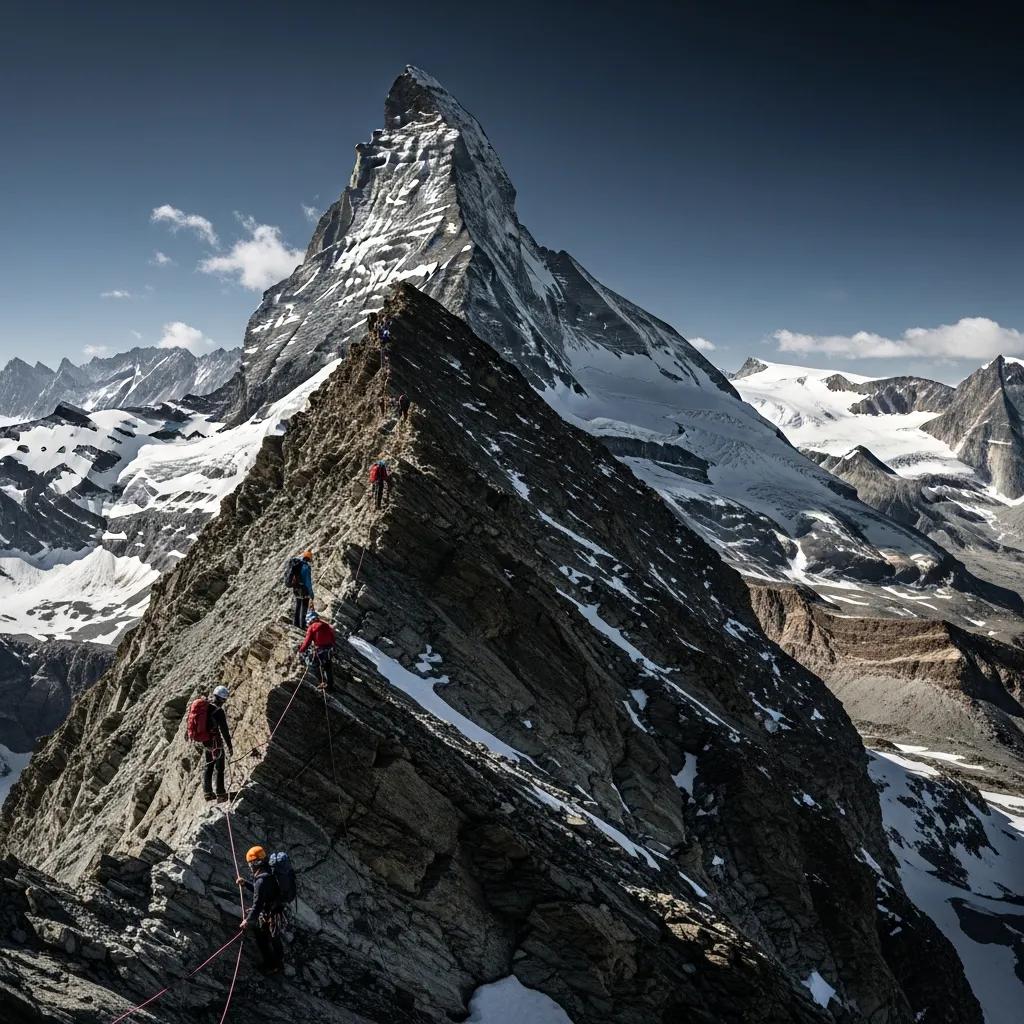
On the Matterhorn, Technical Speed Is Part of Safety.
The objective is not racing. It is eliminating wasted movement so that route-finding, congestion, changing weather and the descent do not push the day beyond your usable physical and mental reserve.
Matterhorn Readiness Standards
These are better checkpoints than arbitrary pull-up counts, running times or one-off vertical-speed records.
Can You Do All of This Without Being at Your Limit?
Use the Mountain Readiness Assessment to identify whether your current limitation is fitness, altitude, technical skill or mountain experience.
12, 16 or 24 Weeks?
The calendar should reflect your current climbing experience—not how soon you want to book the hut.
Foundation path
Best for strong hikers or general athletes who have fitness but still need significant outdoor climbing, boot technique and Alpine instruction.
- Months 1–2: aerobic base + climbing instruction.
- Months 2–4: outdoor rock and mountain movement.
- Final 16 weeks: Matterhorn-specific plan below.
Standard path
Best for someone with a solid aerobic base plus existing rock or Alpine experience who now needs Matterhorn-specific endurance and movement efficiency.
- Build volume gradually.
- Increase technical movement under fatigue.
- Finish with Alpine simulation days.
Accelerated path
Appropriate only for an active alpinist who is already climbing regularly, moving confidently in boots and arriving with recent Alpine mileage.
- Skip basic adaptation—not skill work.
- Move quickly into specificity.
- Protect recovery as volume increases.
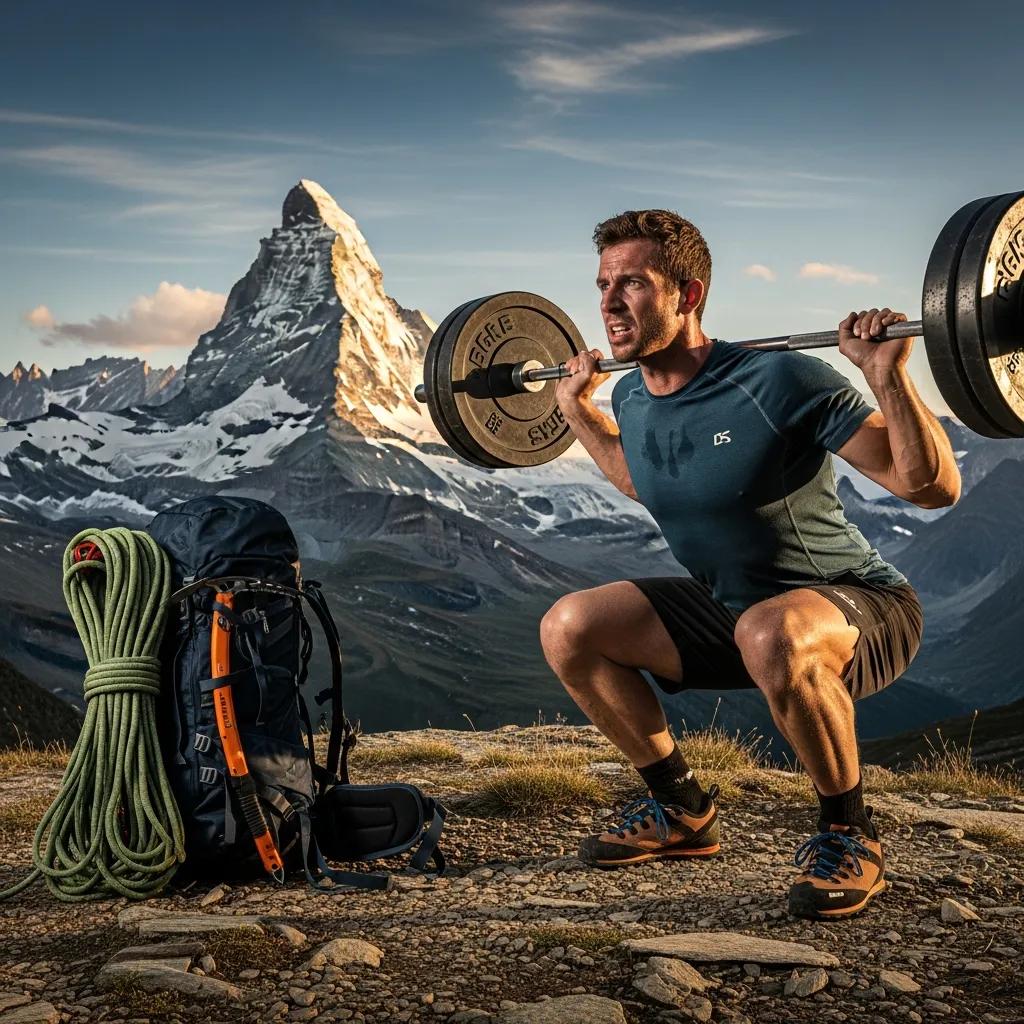
Build Enough Strength to Preserve Technique—not to Chase Maximum Gym Numbers.
Strong legs, calves, trunk and pulling muscles matter because they help you continue climbing accurately after hours of movement. Maximum-strength goals that disrupt climbing practice or endurance work are secondary.
The 16-Week Hörnli Ridge Training Plan
Use weekly volume as a framework, not a rigid prescription. Mountain days and technical quality matter more than hitting an exact number of minutes.
Establish consistent low-intensity volume while keeping climbing technique fresh. The goal is to finish these weeks feeling more durable, not exhausted.
- 3 aerobic sessions each week, mostly conversational pace.
- 1 longer hill or mountain day each weekend.
- 2 strength sessions: step-ups, split squats, hinge, calf work, pulling and trunk.
- 2 climbing sessions focused on volume and efficient footwork.
- Begin deliberate downclimbing on safe terrain.
Increase sustained climbing and begin making mountain boots a normal part of your technical movement.
- One long uphill endurance session each week.
- One shorter vertical session on stairs, steep trail or treadmill incline.
- Outdoor rock whenever possible.
- Practice easy scrambling and climbing in mountain boots.
- Introduce consecutive-day mountain work every second weekend.
- Strength drops slightly as mountain specificity increases.
These are the most important weeks. Fitness now needs to appear inside technical movement rather than existing separately from it.
- Long Alpine-style days with 8+ hours of movement where appropriate.
- Exposed scrambling and easy rock in boots.
- Downclimb substantial portions instead of always rappelling.
- Practice rope, clothing and crampon transitions under time pressure.
- Eat and drink while moving.
- Finish long days with controlled technique rather than depleted form.
Replace abstract training numbers with full-system tests.
- Complete one long technical day while deliberately maintaining pace.
- Complete a second day that tests climbing and downclimbing in boots.
- Run a full clothing, pack, food and hydration rehearsal.
- Schedule a guided preparation climb if you have not already done one.
- Do not add new strength work after the simulation peak.
Cut volume substantially while retaining short aerobic and technical sessions. You cannot gain meaningful new fitness now; you can arrive tired.
- Reduce total workload.
- Keep short easy climbing movement.
- No high-fatigue strength sessions.
- Resolve equipment, travel, hut and guide logistics.
The final week should improve acclimatization and confidence without creating residual fatigue.
- Arrive early enough to adapt above 3,000 m.
- Complete the preparation climb agreed with your guide.
- Recover before the Hörnlihütte approach.
- Review the live Hörnli Ridge conditions immediately before committing.
Technical Training That Actually Transfers to the Matterhorn
Difficulty is not just the hardest individual move. The Hörnli challenge is making thousands of correct movements quickly.
Grade III should feel routine
You should not be solving every move. Build enough climbing mileage that moderate exposed terrain feels familiar in mountain footwear.
Climb in boots
Rock shoes can build climbing skill, but Matterhorn preparation eventually has to include edging, smearing and stepping accurately in rigid mountain boots.
Rock + firn transitions
Practice secure crampon foot placement on appropriate mixed terrain with professional instruction where necessary.
Do not waste time at transitions
Harness, rope and fixed-rope systems should be familiar enough that basic handling does not consume your attention.
Stay relaxed
Exposed climbing is much more tiring when every move creates tension. Gradually increase exposure until composure is normal.
Follow efficiently
A guided Hörnli ascent is not a rock-climbing lesson. Your guide needs to be able to keep the rope moving.
For the actual route architecture, see the Matterhorn Route Comparison .
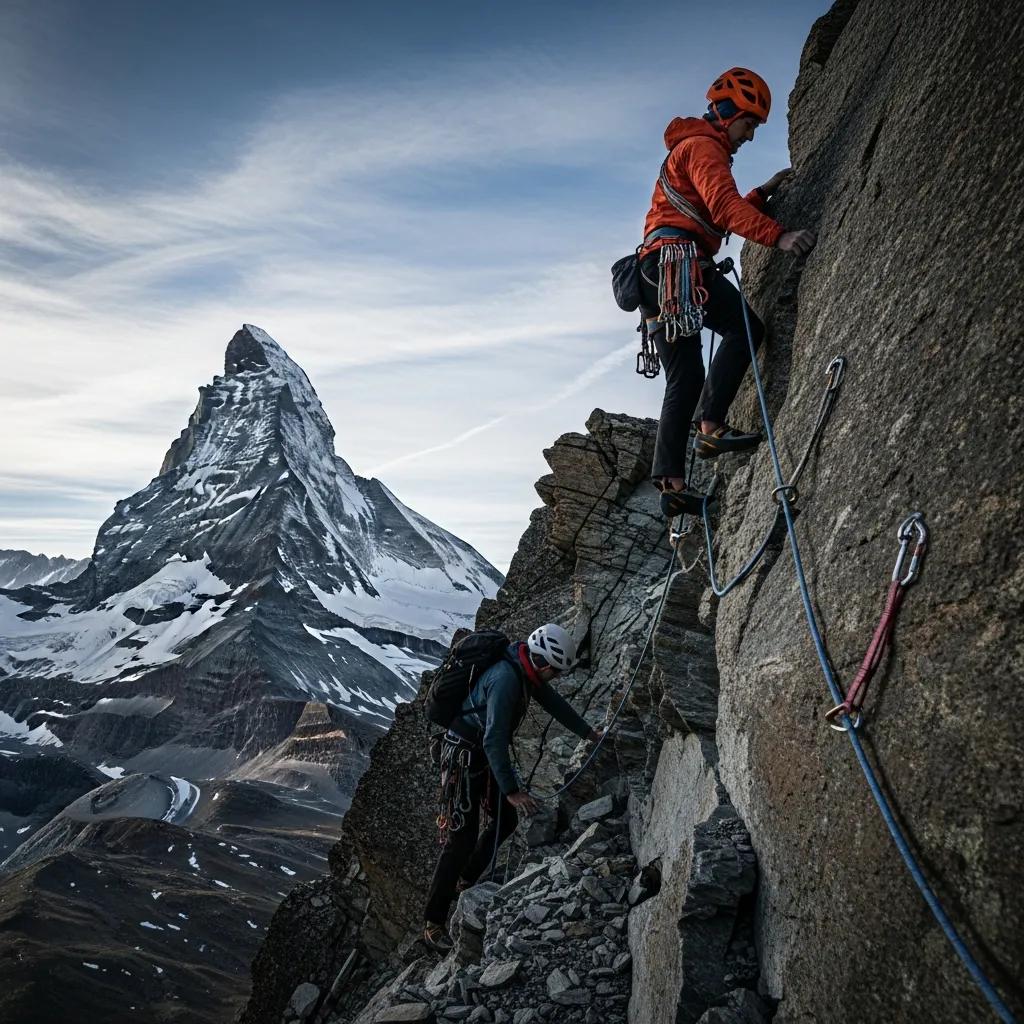
You Should Not Discover Your Boot Technique on Summit Day.
Training specificity matters. A climber who is excellent in rock shoes but awkward in rigid boots can lose enormous amounts of time on exactly the terrain where the Hörnli Ridge demands continuous movement.
Train the Descent as Seriously as the Ascent
ZERMATTERS currently describes roughly four hours up and four hours back to the hut. The descent therefore deserves its own training block rather than being treated as whatever happens after the summit.
Eccentric leg durability
Step-downs, controlled downhill hiking and long descents prepare the quadriceps to absorb repeated loading without destroying precision.
Downclimbing while tired
Practice reversing easy climbing moves instead of treating every downward section as a rappel problem.
Read Why Mountain Accidents Happen on Descent and make descent quality one of your readiness metrics.
Strength and Cardio Priorities
The training goal is durable relative strength and a large aerobic base, not bodybuilding mass or one-rep-max strength.
| Training quality | Why it matters | Useful sessions | Common mistake |
|---|---|---|---|
| Aerobic base | Supports hours of continuous movement and recovery between technical sections. | Easy running, cycling, incline walking, long hikes. | Doing every session hard. |
| Uphill endurance | Builds sustained climbing capacity without repeated stops. | Long hills, stairs, steep treadmill, mountain days. | Training only on flat roads. |
| Single-leg strength | Improves stepping, balance and fatigue resistance. | Step-ups, split squats, lunges. | Only bilateral gym lifts. |
| Posterior chain | Supports steep climbing and downhill control. | Deadlift variations, hip hinge, uphill hiking. | Adding more load than technique can support. |
| Calf / ankle endurance | Important for precise boot and crampon placement. | Calf raises, steep hiking, balance drills. | Ignoring foot and ankle fatigue. |
| Pulling endurance | Useful on steeper climbing and fixed-rope passages. | Pull-ups, rows, climbing mileage. | Treating upper-body strength as the main goal. |
| Trunk stability | Improves balance while carrying a pack and reaching on rock. | Loaded carries, anti-rotation work, climbing. | Only doing crunches. |
Train in the Boots and Crampons You Will Actually Use
Current Zermatt guidance explicitly expects crampon competence on rocky terrain. That should shape the last two months of preparation.
Make precision normal
Spend enough time in your summit boots that edging, high steps and downclimbing do not feel foreign.
Use professional instruction
Practice safe front-point and flat-foot movement, mixed-surface transitions and deliberate foot placement in an appropriate environment.
Keep it realistic
Train with the volume and load you will actually carry rather than turning every hike into heavy-pack conditioning.
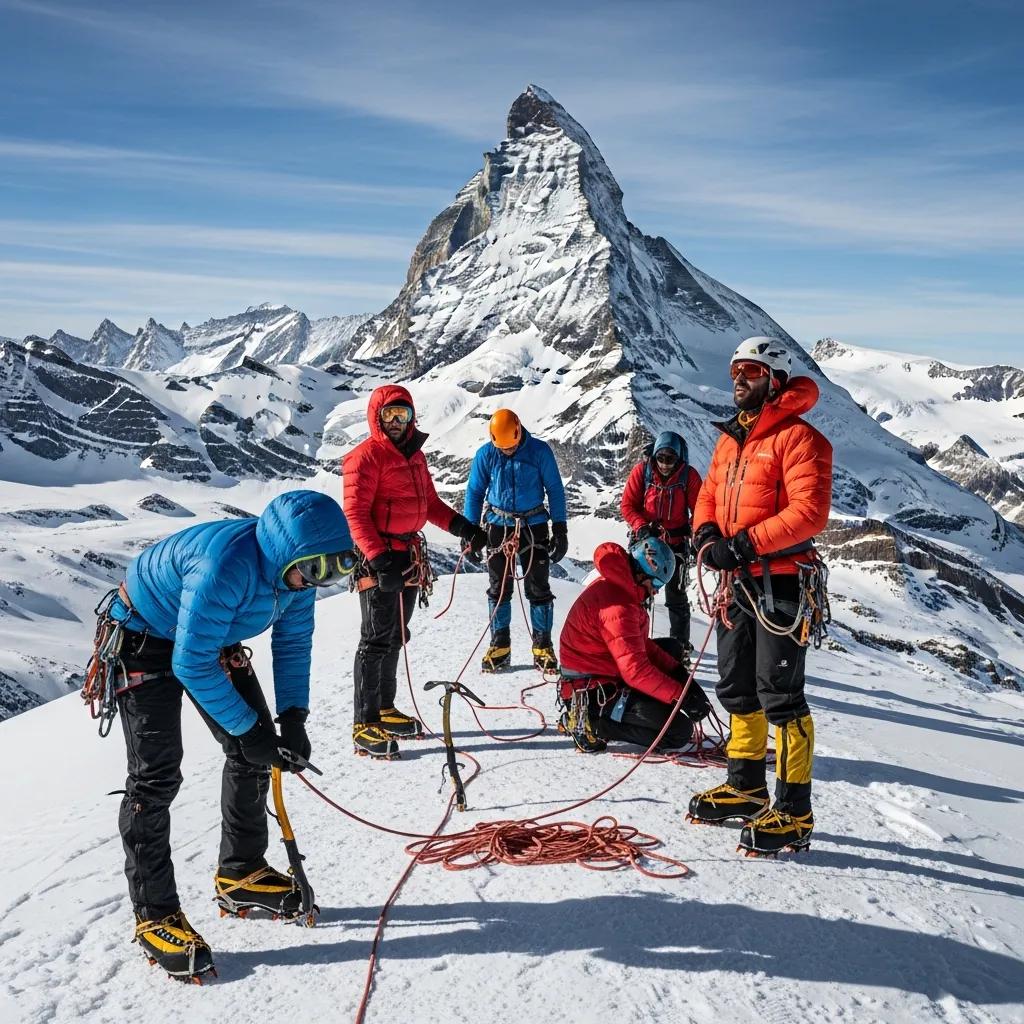
Every System You Can Make Automatic Preserves Attention for the Climbing.
Pack layout, gloves, crampons, food, water and clothing should all be rehearsed before Zermatt. Summit day is the wrong time to discover which pocket holds your gloves or whether your crampons fit your boots.
Three Matterhorn Simulation Tests
No single benchmark proves readiness. These three tests look for the combination of endurance, movement and recovery.
The long technical day
Complete a long mountain day that combines sustained vertical movement with technical scrambling or climbing.
Pass: technique remains controlled in the final quarter and you finish with meaningful reserve.
The boot-movement test
Spend several hours moving on appropriate rock and mountain terrain in the footwear you will use in the Alps.
Pass: precise foot placement feels natural rather than cautious and slow.
The descent test
After a substantial climb, descend technical terrain deliberately rather than choosing the easiest possible walk-off.
Pass: your movement remains accurate and mentally composed while tired.
Use Zermatt to Test Skills and Acclimatize
Current Zermatt guides recommend the Breithorn Traverse, Rimpfischhorn, Pollux and Riffelhorn as preparation options.
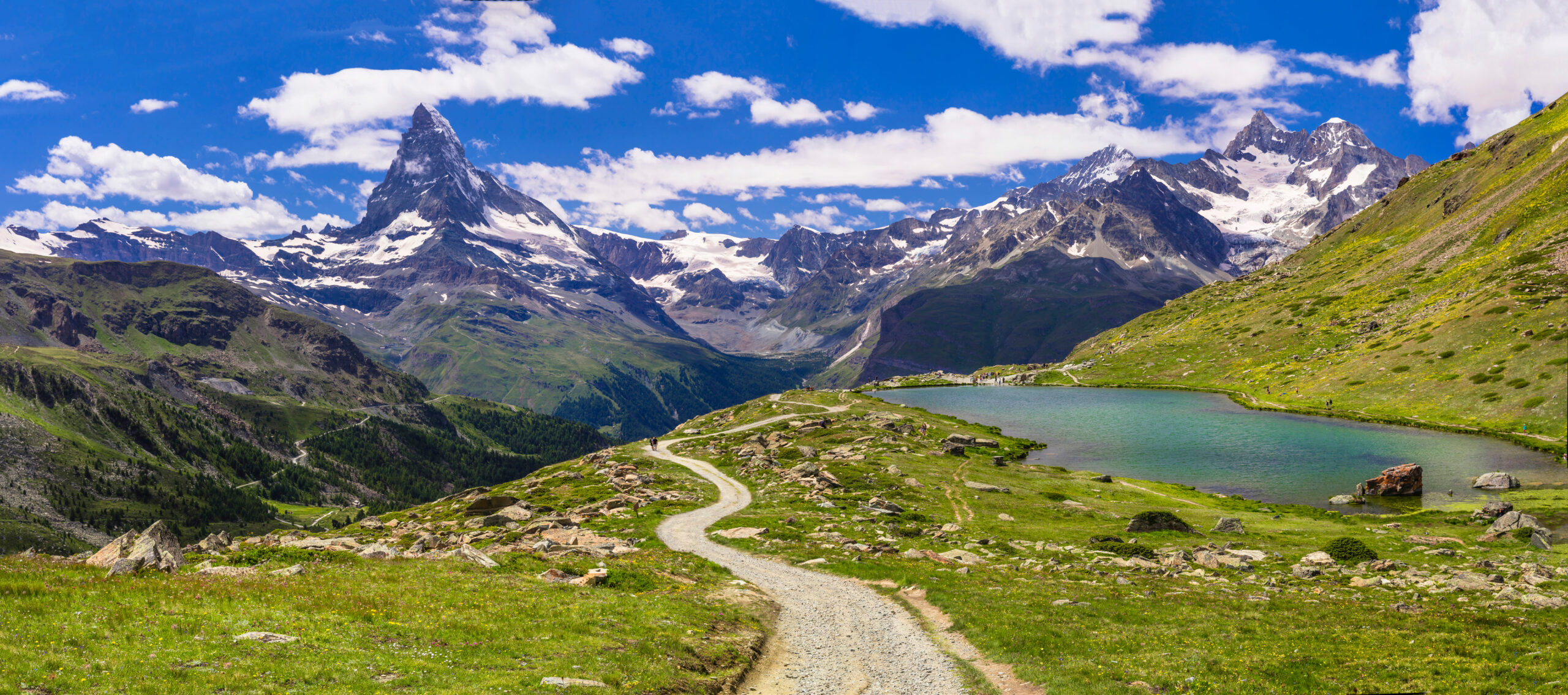
The Final Week Is for Confirmation—not Last-Minute Fitness.
Arriving in Zermatt early allows altitude adaptation, a preparation climb and condition assessment. It should not become an uncontrolled sequence of hard days that leaves you fatigued before the Hörnlihütte.
What to Do During Matterhorn Week
Fitness adaptations take longer than a few days. The final week should maximize freshness, acclimatization and confidence.
Acclimatize intelligently
Spend useful time at altitude and complete the planned prep climb with recovery before the Hörnli attempt.
Protect sleep and food
Maintain normal fueling and hydration. Do not arrive depleted because travel disrupted your routine.
Cram extra fitness
Hard intervals, heavy lifting and unnecessary long hikes can only create fatigue now.
Recheck the current Hörnli Ridge conditions before making the final go/no-go decision.
Matterhorn Training FAQ
The questions that matter most when turning general fitness into Hörnli-specific readiness.
How long should I train for the Matterhorn?
Sixteen weeks is a useful specific-training block for climbers who already have a solid aerobic base and relevant climbing experience. Strong hikers without Alpine climbing skills should allow roughly 24 weeks or more so technical instruction and progression climbs can happen before the final Matterhorn-specific phase.
How fit do you need to be for the Matterhorn?
Current Zermatt guiding standards call for very good fitness for long mountain tours. The guided Hörnli Ridge is currently rated at about 8–9 hours with substantial vertical movement. More important than one fitness number is the ability to maintain accurate climbing and downclimbing throughout that duration.
What climbing grade should I be comfortable with?
ZERMATTERS currently states that climbers should have experience with Alpine climbing up to UIAA Grade III. The useful training goal is to make that level feel efficient and controlled in exposed mountain terrain rather than treating Grade III as a one-move maximum.
Do I need to train in mountaineering boots?
Yes. The Hörnli Ridge requires precise climbing in mountain footwear. Rock shoes are useful for developing climbing technique, but the final preparation should include significant movement in the boots you will use on the mountain.
Do I need crampon experience for the Matterhorn?
Yes. Current Zermatt requirements specifically include confident crampon use on rocky ground, and the summit area can require crampons on snow, firn and mixed terrain.
Is running enough training for the Matterhorn?
No. Running can build aerobic fitness, but it does not train climbing in boots, exposure, crampon movement, downclimbing, rope transitions or technical movement while tired.
Why is downclimbing so important?
The Hörnli Ridge is normally descended by the same route. After reaching the summit, climbers must reverse exposed terrain with accumulated fatigue, making descent efficiency and concentration essential parts of readiness.
What are good preparation climbs for the Matterhorn?
ZERMATTERS currently recommends the Breithorn Traverse, Rimpfischhorn, Pollux and Riffelhorn. The best preparation objective depends on whether you need to improve technical rock movement, crampon skill, endurance, exposure tolerance or acclimatization.
How acclimatized should I be?
Current Zermatt requirements state that climbers should be acclimatized above 3,000 meters. A preparation climb immediately before the Matterhorn can test both altitude response and technical readiness.
Can a guide make up for weak technical skills?
No. Local route knowledge and professional rope management add important safety margin, but the climber still has to move efficiently and confidently enough for the guide to maintain a safe pace.
Turn Training Into a Complete Hörnli Ridge Plan
This URL should own training. Use the surrounding Matterhorn cluster for route, safety, guide and current-condition decisions.
Guide Standards Used for This Plan
Fitness and route-condition standards can change. Your actual guide’s readiness assessment takes priority over any online training plan.
ZERMATTERS — Matterhorn ascent via the Hörnli Ridge
ZERMATTERS — Riffelhorn Matterhorn training

Arrive in Zermatt Ready to Be Assessed, Not Hoping to Become Ready.
Build the aerobic engine at home. Build technical efficiency on real rock. Train downclimbing and crampon movement before the trip. Then use your preparation climb in Zermatt to confirm that pace, movement, exposure tolerance and altitude response are all ready for the Hörnli Ridge.
Was this helpful?
🏔Related training
🧭Explore & compare
Global Summit Guide is an independent mountaineering resource founded in 2026. The team combines first-hand trekking and climbing experience with in-depth research and professional health and nutrition review to help climbers choose objectives, prepare properly, and stay safe.
Health, altitude, and nutrition content is reviewed by Taylor Ludlow (Registered Nurse) and Brigg Hoopes (Nutritionist).
What We Don't Know Yet
Mountain information changes quickly. This box explains the limits of what this page can responsibly promise.
- Fitness and altitude response vary by person; no guide, itinerary, or training plan can guarantee acclimatization or summit success.
- Visa, passport, vaccination, border, insurance, and local transportation rules may change before your trip.
- Route conditions, snowpack, closures, and weather can change quickly after this page is updated.
- Permit rules, fees, quotas, and reservation windows may change between review cycles.
- Operator availability, pricing, guide ratios, and cancellation terms can change by season.
Verify current conditions with official land managers, guide services, local forecasts, and current route reports before booking or climbing.
Mountaineering, rock and ice climbing, glacier travel, and high-altitude activity are inherently dangerous and can result in serious injury or death. The information on Global Summit Guide is provided for general informational and educational purposes only and is not a substitute for professional instruction, qualified guiding, proper equipment, or your own judgment and experience.
Route conditions, weather, snowpack, permits, regulations, and hazards change constantly and may differ from what is described here. Details may be incomplete, out of date, or contain errors. Always verify current information with local authorities, certified guides, and official sources before making any decision in the mountains.
Nothing on this site is medical, legal, or financial advice. Our fitness, acclimatization, altitude, and nutrition content is general in nature; consult a qualified physician before beginning any strenuous exercise program or exposing yourself to high altitude.
You are solely responsible for your own safety and decisions. To the fullest extent permitted by law, Global Summit Guide and its team accept no liability for any loss, injury, damage, or expense arising from use of, or reliance on, this information. By using this site you acknowledge these risks and accept these terms.
Some links on this site may be affiliate links. If you buy through them we may earn a small commission at no extra cost to you; this never affects our recommendations.
Global Summit Guide recommendation path
Next Best Mountain to Research
Use these recommendations to continue the right planning path instead of stopping on one page.
Use current permit, weather, route, and operator information before booking or climbing.