
Last updated October 4, 2026
Matterhorn Permits & Logistics 2026: Hut Booking, Guide, Lifts & Zermatt
Swiss-side Matterhorn logistics are built around hut booking, guide arrangements, lift access, insurance and transport—not a separate summit-permit fee. ZERMATTERS currently lists the Matterhorn at CHF 1,550 for one participant with one mountain guide. The Hörnlihütte lists public dormitory beds at CHF 150 per person including dinner and breakfast, with 2026 bookings opening April 1. Unguided rope teams are explicitly included in the hut’s departure order, so a professional guide is not a blanket legal prerequisite—but local institutions strongly recommend guided climbing.
Reviewed August 19, 2026 · ZERMATTERS + Hörnlihütte + SAC + Zermatt Bergbahnen + Matterhorn Gotthard Bahn
Do you need a permit to climb the Matterhorn?
Official Swiss-side sources reviewed for 2026 do not list a separate Matterhorn summit permit or climbing-fee product. The practical requirements are accommodation, access, competence, insurance and—if you choose guided climbing—the guide booking. ZERMATTERS’ own departure order explicitly includes unguided rope teams after guided parties, confirming that unguided ascents are part of the operating system.
What many climbers call a “permit problem” is really a reservation and logistics problem. The normal Swiss ascent usually starts from the Hörnlihütte at 3,260 m, reached from Schwarzsee by a T3 approach of roughly 2 to 2½ hours and 700 vertical metres. Hut space, guide availability, preparation requirements and current route condition are the real bottlenecks.

A guide is strongly recommended by the Hörnlihütte and is the normal commercial model in Zermatt. ZERMATTERS currently takes one participant per mountain guide and lists the Matterhorn summit tour at CHF 1,550. That 1:1 ratio describes the local guided product; it should not be presented as a law banning independent rope teams.
- Swiss summit permit: no separate product listed.
- Local guided price: CHF 1,550.
- Guide ratio: 1 participant per guide.
- Hörnli dorm: CHF 150 pp with dinner/breakfast.
- Hörnli suite: CHF 500 for 2 guests.
- Booking open: April 1, 2026.
Matterhorn Permit Reality
The Swiss side is organized through normal Alpine access systems rather than a separate government summit permit.
| Question | 2026 answer |
|---|---|
| Separate Swiss Matterhorn summit permit? | No separate permit/fee product is listed in the official local climbing and hut systems reviewed. |
| Government summit royalty? | No Everest-style climbing royalty appears in the Swiss-side booking structure. |
| Guide legally mandatory? | No blanket guide mandate is reflected in the hut start system; unguided rope teams are explicitly included. |
| Guide strongly recommended? | Yes. The Hörnlihütte says it always recommends using a mountain guide. |
| Hut booking required? | Required if you plan to sleep at the Hörnlihütte; it is not itself a summit permit. |
| Insurance? | ZERMATTERS says insurance is the participant’s responsibility and recommends valid accident/evacuation coverage. |
The cleanest way to explain it
You do not buy a Matterhorn summit permit on the Swiss side. You organize the climb through hut accommodation, lift/approach access, guide booking if guided, insurance and current route suitability.
How Much Does a Matterhorn Guide Cost in 2026?
ZERMATTERS provides the cleanest local Zermatt benchmark for the standard Hörnli ascent.
ZERMATTERS’ current Matterhorn product is one climber per guide and approximately eight hours round trip from the hut. The published guided season runs from mid-July to mid-September, depending on route and summit conditions.
Preparation is part of the booking logic. ZERMATTERS says online Matterhorn booking is only possible with a preparatory tour so the guide can assess technical skill, stamina and sure-footedness. The company suggests objectives such as the Breithorn Traverse, Pollux or Riffelhorn for preparation.
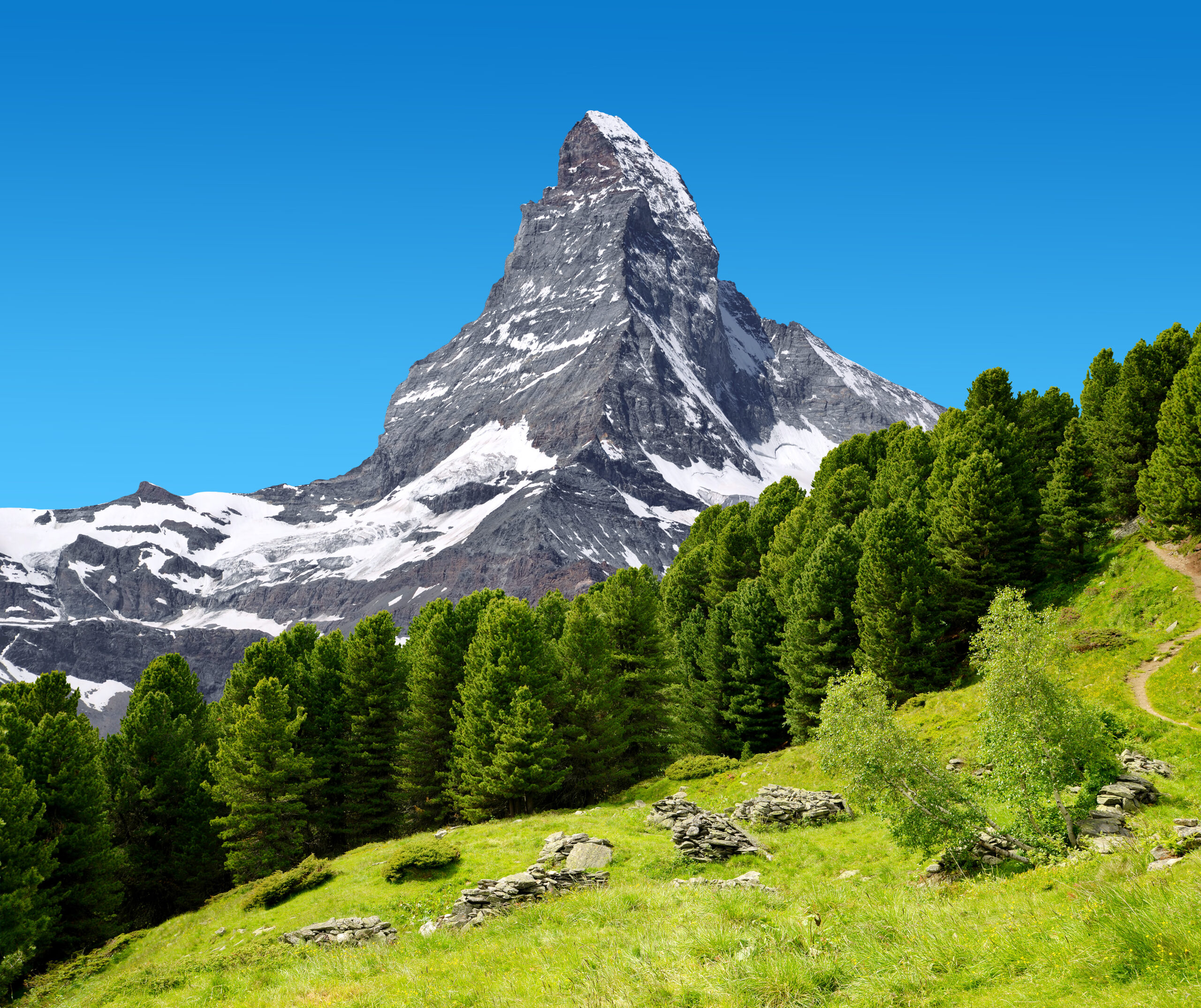
Hörnlihütte is a logistics bottleneck, not a summit permit.
For most normal-route climbers, the hut is the practical base of the summit day and should be secured before nonrefundable travel.
| 2026 Hörnlihütte item | Price / rule |
|---|---|
| Public dormitory | CHF 150 per person |
| Dorm capacity | Up to 8 beds per room |
| Dinner | Included |
| Breakfast | Included |
| Hiking tea | Included |
| Sleeping bag liner | Required; CHF 43 if purchased at reception |
| Private suite | CHF 500 for 2 guests, private shower/toilet |
| 2026 booking opening | April 1, 2026 |
| Normal staffed season | Late June through late September |
ZERMATTERS states that when its tour includes a hut night, it handles the hut reservation but cannot guarantee it until the hut confirms. If the climber already holds a reservation, the company asks to be told so it can reserve space for the guide. Hut overnight stays are not included in the ZERMATTERS Matterhorn tour price.
2026 Matterhorn Booking Sequence
The safest booking strategy avoids paying for travel before the critical mountain pieces line up.
The official Hörnlihütte booking system opened on April 1 for 2026. The guide product and hut inventory are separate systems, so a guide slot does not automatically mean a hut bed exists.
Schwarzsee Lift Cost
The standard Swiss approach is usually shortened with Zermatt’s lift system before the hike to the Hörnlihütte.
Current 2026 ticket signal
Zermatt Bergbahnen currently advertises Schwarzsee single/return tickets from CHF 38. Ticket cost varies by product and date, so use the live booking system rather than carrying an old CHF 60–80 estimate forward.
ZERMATTERS’ own Matterhorn page currently lists Zermatt–Schwarzsee round-trip transport from approximately CHF 32 and notes reductions with GA, Half-Fare or Swiss Travel Pass products. The difference illustrates why this cost should be presented as a live ticket item rather than one permanent number.
- Check operating dates.
- Check first lift timing.
- Check your discount card.
- Verify one-way vs return product.
- Do not assume the guide price includes the lift.
Schwarzsee to Hörnlihütte
The Swiss Alpine Club provides a useful official benchmark for the approach.
| Approach | SAC rating | Time | Vertical gain |
|---|---|---|---|
| Schwarzsee → Hörnlihütte | T3 | 2–2½ hours | 700 m |
| Furi / Zermatt-side approach | T3 | ~4 hours | ~1,420 m |
ZERMATTERS has clients make the hut approach independently on day one, then meet the guide around 18:00 at the hut. Summit day begins early the next morning, with the organized departure order around 03:30–04:00 depending on the season.
Täsch to Zermatt Logistics
If you arrive by car, the normal transfer point is the Matterhorn Terminal in Täsch.
Matterhorn Gotthard Bahn describes the Täsch terminal as the hub for arriving in car-free Zermatt. The shuttle runs every 20 minutes during the main daytime window, and the return journey currently costs CHF 17.20. The train ride itself takes about 12 minutes.
Can You Climb the Matterhorn Without a Guide?
The operating system explicitly accommodates unguided rope teams, but the competence threshold is high.
What supports independent climbing
- ZERMATTERS lists unguided rope teams in the hut departure order.
- The Hörnlihütte recommends a guide rather than presenting one as mandatory.
- SAC publishes the route as a standard alpine objective.
What competence is still expected
- Excellent endurance and acclimatization.
- Confident movement on exposed rock.
- Crampon and ice-axe competence.
- Fast route-finding on ascent and descent.
- Ability to reverse the route under time pressure.
Do not interpret this section as a recommendation to go unguided. The Hörnlihütte says it always recommends using a mountain guide, and ZERMATTERS describes the Matterhorn as one of the most demanding high-alpine tours in the Alps.
Insurance & Rescue Coverage
ZERMATTERS puts insurance responsibility on the participant and recommends valid accident and evacuation coverage.
General travel insurance may exclude roped alpine climbing.
Verify the policy remains valid above 4,478 m.
Confirm mountain rescue and evacuation wording, not just medical transport.
Understand what happens if weather, guide assessment or route condition cancels the climb.
Your policy and the guide company’s insurance are separate layers.
International climbers should confirm medical repatriation coverage.
Example 2026 Hörnli Logistics Budget
This is a simple local benchmark, not a complete Matterhorn vacation budget.
| Item | Current reference | Notes |
|---|---|---|
| ZERMATTERS Matterhorn guide | CHF 1,550 | 1 climber per guide. |
| Client Hörnlihütte dorm bed | CHF 150 | Dinner + breakfast included. |
| Guide hut overnight | ~CHF 150 | ZERMATTERS says budget from approx. CHF150 pp for client and guide. |
| Schwarzsee lift | From CHF 38 | Check exact current product and discount. |
| Täsch–Zermatt shuttle | CHF 17.20 return | If arriving by car via Täsch. |
| Rental technical gear | CHF 50–70 | ZERMATTERS current planning range. |
| Valley hotel | Dynamic | Book separately. |
| Preparation climb | Separate | Required for ZERMATTERS online Matterhorn booking. |
A bare local guided logistics subtotal can therefore move above CHF 1,900 before the preparation climb, valley hotel, food outside the hut, insurance and international travel. Use the dedicated Matterhorn cost guide if you need a full-trip budget.
Italian Lion Ridge Note
Do not transfer Swiss Hörnli hut, lift and guide arrangements to the Italian side.
The Lion Ridge approaches from Breuil-Cervinia and uses a different hut/logistics system. The Swiss-side no-separate-permit structure described on this page should not be treated as a complete statement of Italian-side administrative requirements. In addition, the 2026 season has seen side-specific guide-operation changes, so current Italian status should be checked separately.
Matterhorn Booking & Logistics Library
Use this page for the reservation system, then move into operators, route condition, weather, training and total cost.
Matterhorn Climbing Guide
Full route, difficulty, history and planning overview.
Open Matterhorn → GuidesMatterhorn Operators
Compare companies, guide models, programs and inclusions.
Compare guides → Current routeHörnli Conditions
Check current rock, snow, guide and route-operation status.
Check conditions → SeasonWeather & Best Season
Month-by-month timing, snow, wind and storm planning.
Plan timing → TrainingMatterhorn Training Plan
Build the pace and technical competence guides expect.
Train specifically → PreparationWhat to Climb First
Build the technical and altitude progression before the assessment climb.
Plan progression → ComparisonMont Blanc vs Matterhorn
See why Mont Blanc helps with altitude but does not replace Matterhorn-specific rock preparation.
Compare peaks → 2026 updatesMatterhorn Expedition Update
Major 2026 rockfall, guide pauses, accidents and season changes.
Open update →Verify the Guide and Verify the Route
The reservation only gets you to the mountain. The guide model and current conditions determine whether the plan is viable.
Matterhorn Operators
Compare local and international programs, ratios, preparation requirements and inclusions before paying a deposit.
Compare Operators →Hörnli Ridge Current Conditions
Check current snow, verglas, rockfall and guide operation before committing to the summit day.
Check Conditions →Matterhorn Permits & Logistics FAQ
These answers reflect the current Swiss-side 2026 operating system.
Do you need a permit to climb the Matterhorn?
Official Swiss-side sources reviewed for 2026 do not list a separate Matterhorn summit permit or climbing-fee product. Climbers instead arrange hut accommodation, access, guide services if guided, insurance and current route suitability.
Is a guide required to climb the Matterhorn?
A guide is strongly recommended but is not presented as a blanket legal requirement in the Swiss-side operating system. ZERMATTERS’ departure-order guidance explicitly includes unguided rope teams after guided parties.
How much does a Matterhorn guide cost in 2026?
ZERMATTERS currently lists its standard Matterhorn summit tour at CHF 1,550 for one participant with one mountain guide. Hut, lift and preparation-tour costs are additional.
How much is the Hörnlihütte in 2026?
The public dormitory is CHF 150 per person and includes dinner, breakfast and hiking tea. A sleeping bag liner is required. The private suite is CHF 500 for two guests.
When did 2026 Hörnlihütte booking open?
The official Hörnlihütte booking system states that 2026 booking was available from April 1, 2026.
How do you get from Zermatt to the Hörnlihütte?
Most climbers use the lift toward Schwarzsee and then hike to the Hörnlihütte. SAC rates the Schwarzsee approach T3 and gives approximately 2 to 2½ hours with 700 m of ascent.
How much is the Täsch to Zermatt shuttle?
Matterhorn Gotthard Bahn currently lists the return fare at CHF 17.20. The shuttle normally runs every 20 minutes in the main daytime period and the ride takes about 12 minutes.
Does the guide price include the Hörnli hut?
Not in the current ZERMATTERS Matterhorn product. The company says hut overnight stays are not included and estimates accommodation/half-board from about CHF 150 per person for both the client and guide.
How This Logistics Guide Was Verified
Local official sources are used for guide practice, hut tariffs, approach data, lift prices and valley transport.
Primary/current sources
- ZERMATTERS · Summit Tours — CHF 1,550 current Matterhorn product.
- ZERMATTERS · Matterhorn — 1:1 guiding, hut handling, preparation requirement, start order, extra costs and insurance.
- Hörnlihütte · Dorm Booking — CHF 150 public dormitory and April 1, 2026 booking opening.
- Hörnlihütte · Suite — CHF 500 private suite for two.
- Hörnlihütte · Climb — guide recommendation and experience expectations.
- Swiss Alpine Club · Hörnlihütte — T3 Schwarzsee approach, 2–2½ hours, 700 m.
- Zermatt Bergbahnen · Schwarzsee — current 2026 tickets from CHF 38.
- Matterhorn Gotthard Bahn · Zermatt Shuttle — CHF 17.20 return fare and frequency.
How to use the page
- Do not describe a hut booking as a government climbing permit.
- Do not describe 1:1 local guiding as a blanket legal requirement.
- Use guide/hut/lift prices as current source-specific numbers.
- Recheck availability before paying nonrefundable travel costs.
- Keep current route conditions on the Hörnli conditions page.
- Check Italian-side rules separately for the Lion Ridge.
The Matterhorn logistics rule to remember
No separate Swiss summit permit does not mean no logistics. The real system is guide availability, hut confirmation, preparation, lift access, insurance and a route that is actually in condition.
Secure the Guide and Hut First. Book the Rest Around Them.
The Swiss Hörnli climb is not controlled by a summit-fee permit. It is controlled in practice by competence, accommodation, guide availability, preparation and current mountain condition.
No Separate Swiss Summit Permit—But the 2027 Booking Calendar Now Matters
For the standard Swiss Hörnli Ridge, the key logistics are still guide availability, Hörnlihütte accommodation, lift access, Zermatt transport, insurance and current climbing conditions rather than a separate government summit-permit fee.
The 2026 summer climbing season has now ended and the Hörnlihütte is closed. Its official site currently states that 2027 reservations become available April 1, 2027, with the hut scheduled to operate from June 25 through September 18, 2027.
That makes the next important logistics decision a booking sequence: choose your guide and intended climbing window first, then coordinate the hut, Zermatt accommodation and transport around that plan.
Matterhorn Permit vs Hut vs Guide: Do Not Mix These Up
Much of the confusion around “Matterhorn permits” comes from treating several different reservation systems as though they were one government climbing permit.
| Item | What it is | Required? | Current benchmark |
|---|---|---|---|
| Swiss Matterhorn summit permit | Separate government permission or summit-fee product for the standard Swiss Hörnli ascent. | No separate product is currently listed in the Swiss-side system reviewed for this guide. | No separate summit-fee product |
| Hörnlihütte reservation | Overnight accommodation at 3,260 m immediately below the Hörnli Ridge. | The standard logistics choice for most climbers using the classic overnight summit schedule. | CHF 150 per person in public dormitory |
| Mountain guide | Professional 1:1 guiding for the Hörnli Ridge. | Strongly recommended; the Swiss-side system does not present a guide as a blanket legal requirement for every rope team. | ZERMATTERS currently lists CHF 1,550 |
| Schwarzsee lift | Mountain transport reducing the approach before the hike to the hut. | Normal logistical choice, not a climbing permit. | ZERMATTERS currently estimates about CHF 32 return |
| Täsch–Zermatt shuttle | Rail connection used because most private vehicles stop at Täsch. | Needed for travelers arriving through Täsch unless another valid transport arrangement applies. | CHF 17.20 return |
| Insurance | Personal rescue, medical and travel protection appropriate to technical Alpine climbing. | Contractual and personal-risk requirement varies by guide/provider. | Verify your exact climbing and rescue coverage |
Matterhorn 2027: What to Book, and When
Do not build the trip around airfare first and then discover that the guide or Hörnlihütte cannot match your dates.
Build the Climbing Plan
Choose the Hörnli Ridge or another route, identify qualified guide options, review prerequisite climbs, and establish the broad July– September window that fits your experience.
Coordinate the Guide
Contact guide services before the hut booking window if possible. A guide may coordinate the hut booking for a guided program, but confirm that explicitly rather than assuming it.
Hörnlihütte Reservations Open
The hut currently states that reservations for the 2027 season become available April 1. High-demand climbing dates should be treated as a coordination problem, not an afterthought.
Use Conditions, Not the Calendar
ZERMATTERS describes its classic guided Matterhorn window as roughly mid-July to mid-September and dependent on route and summit conditions. A reservation date alone does not make the ridge climbable.
Verify the Route
Check snow, verglas, rockfall, weather and current local-guide activity before committing to a summit attempt.
Check the Entire Chain
Guide, hut, Zermatt lodging, lifts, train access and insurance should work together. A cheap flight is not useful if the climbing logistics cannot support the same dates.
A “No Permit Fee” Mountain Can Still Be an Expensive Climb
The absence of a separate summit-fee product should not be mistaken for cheap logistics.
| Cost layer | Current planning figure | Important note |
|---|---|---|
| 1:1 Zermatt guide | CHF 1,550 | Current ZERMATTERS Matterhorn summit-tour price; hut and lift are additional. |
| Climber’s Hörnlihütte bed | CHF 150 | Public dormitory includes dinner, breakfast and hiking tea; sleeping bag liner required. |
| Guide’s hut accommodation | Budget separately | ZERMATTERS states that the climber and guide’s overnight stays are additional to the guiding fee. |
| Zermatt–Schwarzsee | About CHF 32 return | Current ZERMATTERS additional-cost benchmark; verify the exact Zermatt Bergbahnen fare when booking. |
| Täsch–Zermatt shuttle | CHF 17.20 return | Current Matterhorn Gotthard Bahn public fare. |
| Preparation climbs | Variable | Often the largest omitted logistics expense for climbers who are not yet Matterhorn-ready. |
| Zermatt lodging | Variable | Add weather-flex days rather than budgeting only for the perfect itinerary. |
Book the Logistics Around the Climbing Plan
This page should own permits, hut reservations and travel logistics. Route choice, conditions, operator selection and technical preparation belong on their dedicated pages.
Was this helpful?
🏔Related cost guides
🧭Explore & compare
Global Summit Guide is an independent mountaineering resource founded in 2026. The team combines first-hand trekking and climbing experience with in-depth research and professional health and nutrition review to help climbers choose objectives, prepare properly, and stay safe.
Health, altitude, and nutrition content is reviewed by Taylor Ludlow (Registered Nurse) and Brigg Hoopes (Nutritionist).
What We Don't Know Yet
Mountain information changes quickly. This box explains the limits of what this page can responsibly promise.
- Permit availability, reservation windows, quotas, and official fee rules may change after this page is updated.
- Total trip cost can change with flights, lodging, guide pricing, permits, gear rentals, transportation, and exchange rates.
- Visa, passport, vaccination, border, insurance, and local transportation rules may change before your trip.
Verify current conditions with official land managers, guide services, local forecasts, and current route reports before booking or climbing.
Mountaineering, rock and ice climbing, glacier travel, and high-altitude activity are inherently dangerous and can result in serious injury or death. The information on Global Summit Guide is provided for general informational and educational purposes only and is not a substitute for professional instruction, qualified guiding, proper equipment, or your own judgment and experience.
Route conditions, weather, snowpack, permits, regulations, and hazards change constantly and may differ from what is described here. Details may be incomplete, out of date, or contain errors. Always verify current information with local authorities, certified guides, and official sources before making any decision in the mountains.
Nothing on this site is medical, legal, or financial advice. Our fitness, acclimatization, altitude, and nutrition content is general in nature; consult a qualified physician before beginning any strenuous exercise program or exposing yourself to high altitude.
You are solely responsible for your own safety and decisions. To the fullest extent permitted by law, Global Summit Guide and its team accept no liability for any loss, injury, damage, or expense arising from use of, or reliance on, this information. By using this site you acknowledge these risks and accept these terms.
Some links on this site may be affiliate links. If you buy through them we may earn a small commission at no extra cost to you; this never affects our recommendations.
Global Summit Guide recommendation path
Next Best Mountain to Research
Use these recommendations to continue the right planning path instead of stopping on one page.
Use current permit, weather, route, and operator information before booking or climbing.
Search Flights, Hotels & Rental Cars
Have the mountain or destination picked? Use Expedia to compare the flights, lodging and rental cars that fit your actual trip dates. For mountain travel, consider arriving early enough for delays and adding a buffer night after the climb before a fixed flight home.
Compare current flight, hotel and car options.
Affiliate disclosure: Global Summit Guide may earn a commission if you book through this link, at no additional cost to you.