
Last updated October 4, 2026
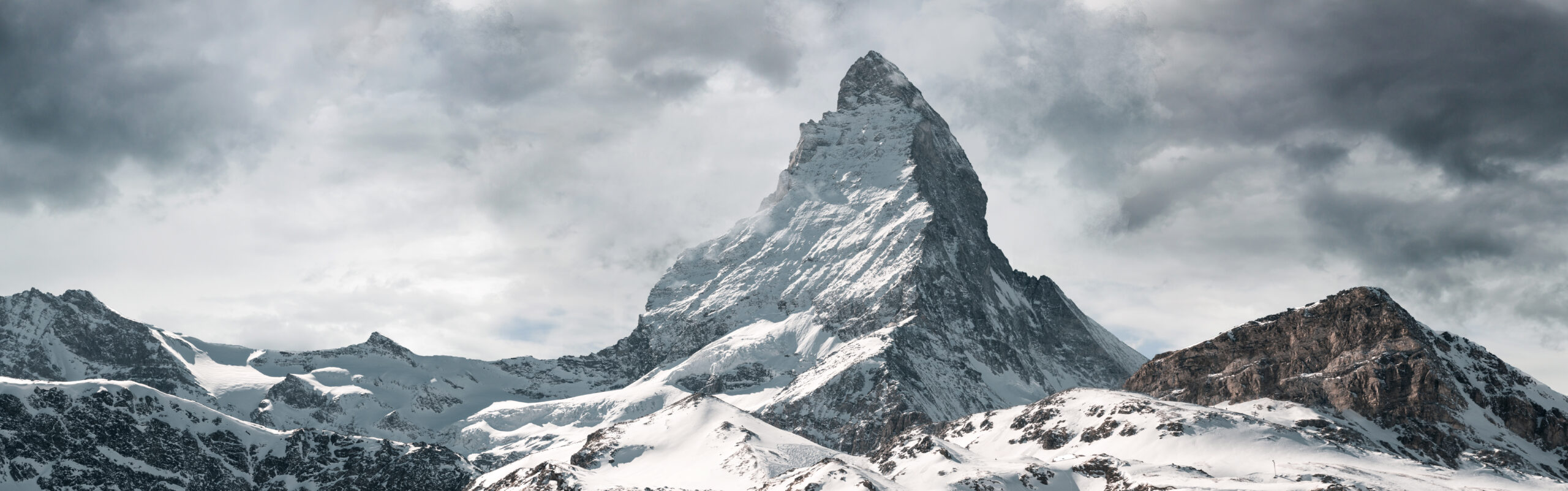
Best Time to Climb the Matterhorn: Weather by Month & Season
The best planning window for a standard Matterhorn ascent is usually mid-July through mid-September, with late July through early September the strongest center of the season. ZERMATTERS currently schedules guided Hörnli Ridge ascents from mid-July to mid-September when route and summit conditions permit. The calendar only gets you into the right season: fresh snow, verglas, wind, Föhn, thunderstorms and the overnight freeze still decide whether a particular day is suitable.
Reviewed August 19, 2026 · ZERMATTERS + Hörnlihütte + MeteoSwiss
What is the best time to climb the Matterhorn?
For most climbers, the best planning window is late July through early September. That sits inside the normal mid-July-to-mid-September guided season and usually offers the best overlap of staffed-hut operations, cleared lower rock, useful daylight and established guide activity.
There is no single “best month” that guarantees a dry Hörnli Ridge. A fresh storm can cover holds with snow in August, while an early-September high-pressure window can produce excellent climbing. The better rule is: choose the right season, build date flexibility, then use the best dry and stable window inside it.
The Hörnlihütte is open only in summer; its current 2026 information gives a June 26 opening and describes the staffed season as running from late June to late September. ZERMATTERS is more conservative for guided Matterhorn summit ascents: mid-July to mid-September, depending on route and summit conditions.
- Best overall planning period: late July–early September.
- Normal guided window: mid-July–mid-September.
- Early-season risk: residual snow and mixed terrain.
- Peak-season risk: storms, heat and congestion.
- Late-season risk: shorter days and fresh snow.
- Current route status: use the dated Hörnli conditions report.
Matterhorn Climbing Season Month by Month
The standard route is a rock-and-mixed ridge, so the key question is whether snow, ice and weather let the Hörnli climb like summer rock.
| Period | Likely route-weather character | Main concern | Planning verdict |
|---|---|---|---|
| June | Snow-covered rock and mixed terrain remain common | Residual winter surface | Too early for most |
| Early July | Drying trend can begin | Large year-to-year variability | Possible when confirmed |
| Mid–Late July | More established summer rock | Storms, heat, traffic | Strong |
| August | Often dry lower ridge | Congestion, warm nights, storms | Strong but busy |
| Late Aug–Early Sep | Cooler mornings; often dry between storms | Fresh snow can return quickly | Excellent when settled |
| Mid-September | Colder, shorter days | Snow and shrinking margin | Good when stable |
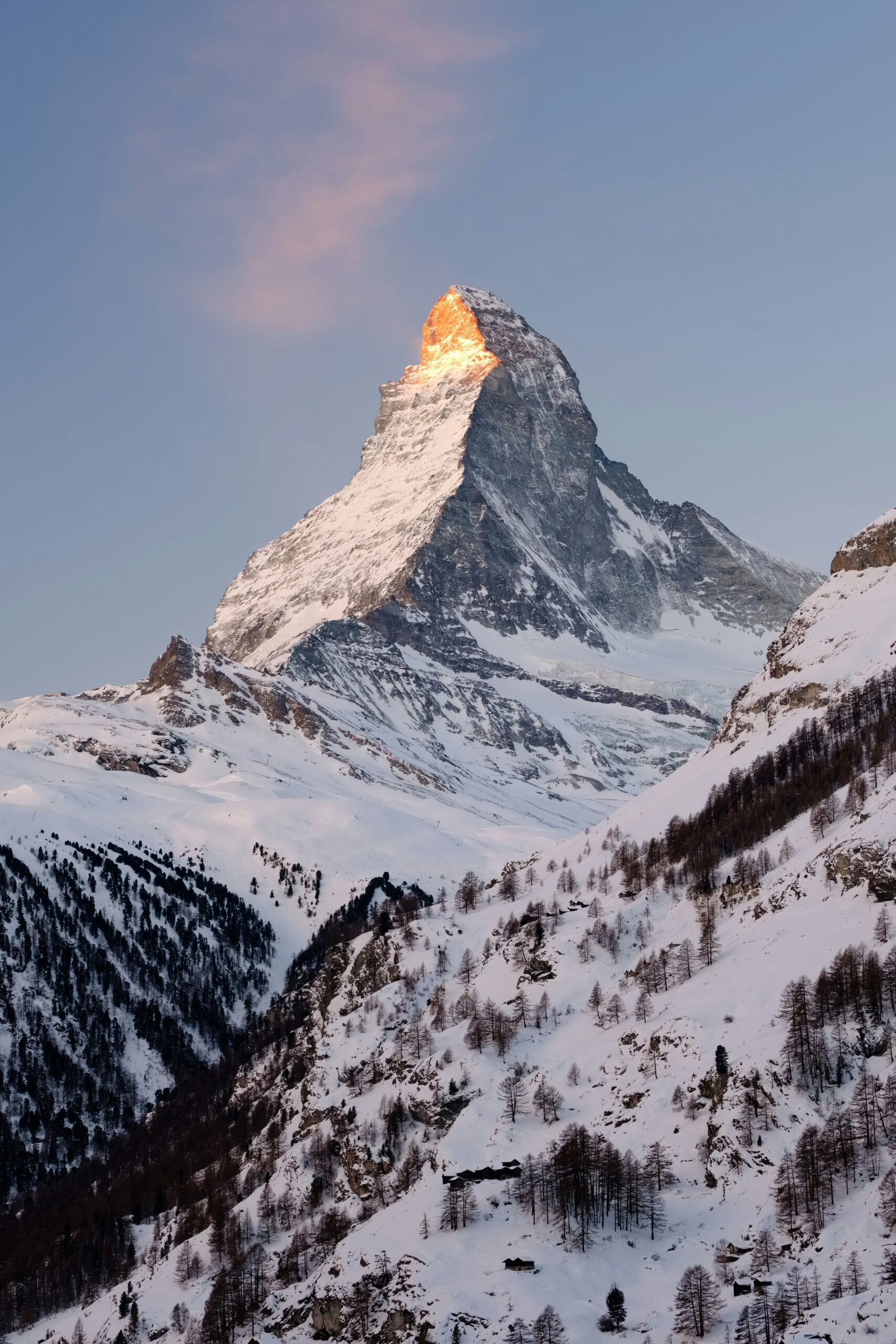
The best week matters more than the best month.
A dry, cool, settled early-September window can be better than a snowy or stormy week in August.
Matterhorn Weather Hazards
Temperature alone is a weak decision variable. Surface condition, ridge wind, visibility and timing matter more.
Covers holds and ledges, slows route-finding and can turn normal rock climbing into mixed terrain.
Thin ice can be harder to see than snow and can dramatically reduce friction on exposed rock.
Strong wind increases balance problems, cold stress and communication difficulty.
Lightning, hail, gust fronts and rapid visibility loss are serious on a long exposed ridge.
Warm nights can reduce refreezing and may increase loose-rock or meltwater-related instability.
Hides route landmarks and makes an already complex descent harder.
Can produce strong, dry cross-ridge wind even when the valley appears pleasant.
Usable weather can deteriorate during the full ascent-and-descent time window.
Read the Forecast at the Correct Elevation
The route spans nearly 2,900 vertical metres from Zermatt and more than 1,200 metres from the Hörnlihütte.
| Forecast level | Approx. elevation | Useful for | Cannot tell you alone |
|---|---|---|---|
| Zermatt | ~1,600 m | Valley precipitation trend, transport, broad storm signal | Summit wind or upper-ridge icing |
| Schwarzsee | ~2,550 m | Approach cloud base and lower-mountain weather | Surface above the hut |
| Hörnlihütte | 3,260 m | Overnight freeze, start conditions, hut wind | Full upper-ridge condition |
| Solvay area | ~4,003 m | Upper-ridge cloud, wind and fresh snow exposure | Lower-route rock condition |
| Matterhorn summit | 4,478 m | Summit wind, temperature and high cloud | Queues, rockfall or actual grip lower down |
Use a stack, not one forecast.
Start with MeteoSwiss for the regional mountain pattern and warnings. Then compare Zermatt-area mountain forecasts, summit-level wind, webcams, hut observations and the guide’s route report. Agreement across several elevations is more useful than one sunny icon for Zermatt.
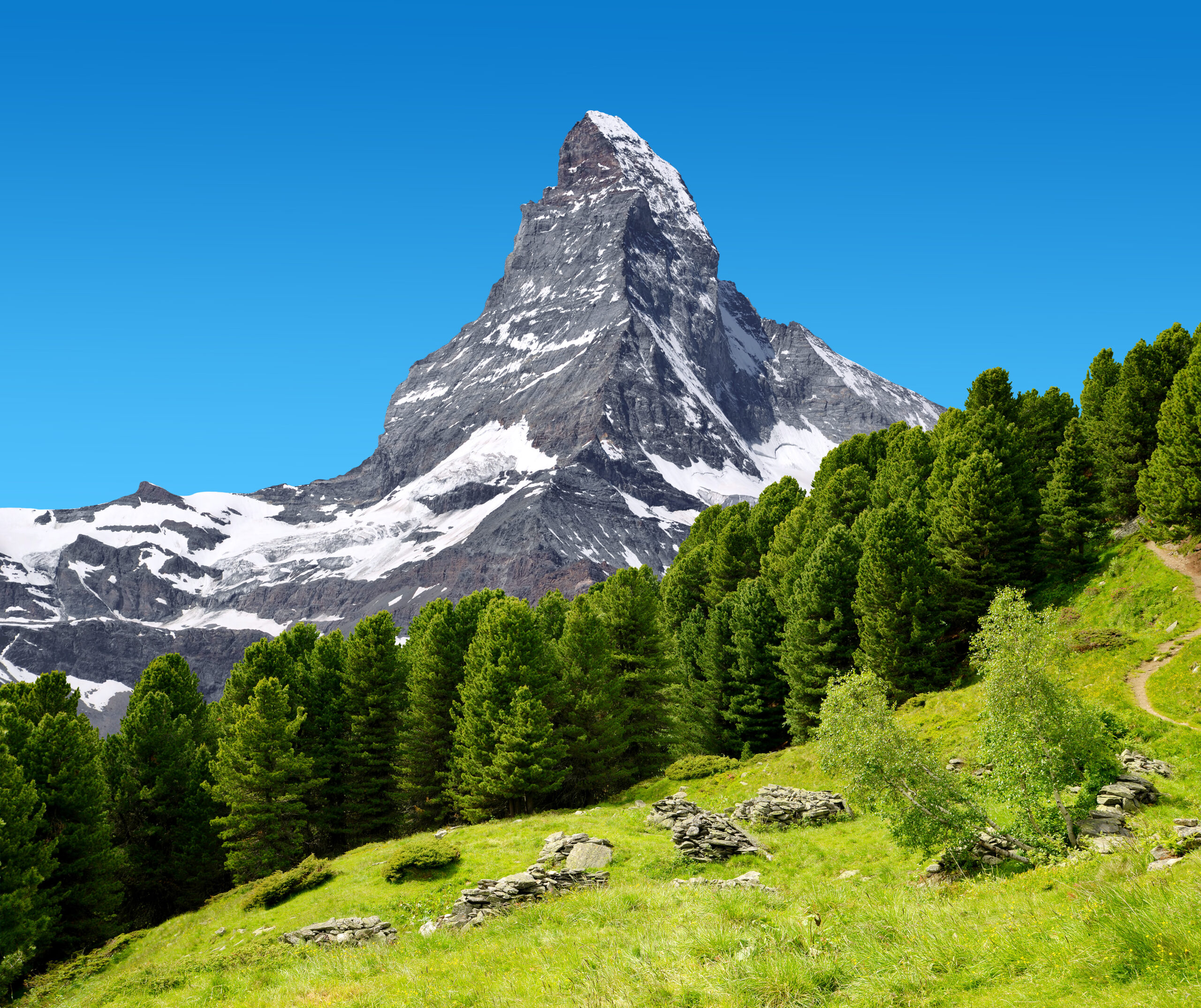
Dry rock is faster and more predictable.
Fresh snow or invisible ice can slow climbing, complicate route-finding and make the technical descent much more serious.
Fresh Snow, Rime & Verglas
A clear sky after a storm does not mean the Hörnli Ridge has returned to dry summer climbing.
Snow can fill ledges and hide holds; rime can coat exposed sections; thin verglas can remain where the rock looks clear from the valley. Drying time depends on snow depth, aspect, wind, cloud, temperature and overnight refreezing. There is no dependable universal rule such as “wait 24 hours after snow.”
Late July through early September is useful because long dry-rock periods are more likely than in June or late autumn. For a specific climb, the guide’s recent route observation is more valuable than the calendar.
Föhn Wind on the Matterhorn
Clear valley weather does not guarantee calm on an exposed ridge near the main Alpine crest.
MeteoSwiss describes Alpine Föhn as a cross-Alpine wind that can create strong winds, lee waves and abrupt differences between the two sides of the mountain chain. Upper Valais is one of Switzerland’s recognized Föhn regions. On the Matterhorn, the practical concern is whether ridge-level wind makes movement, balance and communication unacceptable.
Do not read Föhn from Zermatt street level.
Use MeteoSwiss Föhn signals and mountain-level wind forecasts. Calm air in the village can coexist with strong flow higher on the ridge.
Thunderstorms & Visibility
The Matterhorn is unforgiving because the technical descent is long and exposed.
MeteoSwiss notes that unstable summer southwesterly flows can produce showers and thunderstorms over Switzerland. A storm window matters even when the morning is clear because ZERMATTERS describes a prepared ascent as roughly four hours up and four hours back to the Hörnlihütte. The forecast must cover the entire ascent and descent, not merely the expected summit time.
Freezing Level, Warm Nights & Rockfall
Warm, dry weather is not automatically ideal if the mountain fails to refreeze overnight.
A high freezing level can leave snow soft and can increase meltwater through loose terrain. Prolonged warmth can also contribute to instability in Alpine terrain affected by degrading permafrost. Watch the overnight freeze as closely as the afternoon high.
| Signal | Why it matters | Response |
|---|---|---|
| Freezing level well above 4,000 m overnight | Less refreezing on snow/ice sections | Ask about current surface and rockfall observations |
| Strong overnight freeze | May improve firmness but can create hard ice/verglas | Confirm crampon transition and upper-ridge condition |
| Several hot days | Can increase loose-rock and melt-related concerns | Prioritize local reports over generic “dry weather” optimism |
| Cold front after heat | Can bring snow/rime rapidly | Reassess after passage |
Matterhorn Forecast-Checking Workflow
Confidence should increase as the climb approaches; the decision should remain reversible until the mountain is acceptable.
A useful workflow is less about finding a “perfect forecast” and more about identifying what would invalidate the plan. Strong ridge wind, new snow, thunderstorm timing, low visibility or a weak overnight freeze can each be enough to change the summit day.
How Much Schedule Flexibility Should You Build?
There is no single fixed reserve-day rule because guide availability, hut space and acclimatization all matter.
Better trip design
- Stay in Zermatt long enough to absorb a poor-weather day.
- Complete preparation climbs before the preferred Matterhorn window.
- Use flexible valley lodging where possible.
- Coordinate guide and hut changes before the trip.
Bad trip design
- One fixed summit date immediately before a flight.
- No alternate day after fresh snow.
- Acclimatization scheduled after the Matterhorn attempt.
- Pressure to climb because the hut is nonrefundable.
Continue Your Matterhorn Research
Use this page for seasonal weather. Use the adjacent pages for current status, routes, preparation and logistics.
Matterhorn Climbing Guide
Full route, difficulty, logistics and planning overview.
Open Matterhorn → Current conditionsHörnli Ridge Status
Current snow, rockfall, guide and route-operation reporting.
Check conditions → RoutesMatterhorn Routes
Hörnli, Lion, Zmutt and harder route families.
Compare routes → TrainingMatterhorn Training Plan
Build technical pace and endurance for a long ridge day.
Train specifically → GearMatterhorn Gear List
Boots, crampons, helmet, layers and alpine essentials.
Build the kit → LogisticsPermits & Hörnli Hut
Hut, access, guide and Zermatt logistics.
Plan logistics → ComparisonMont Blanc vs Matterhorn
Compare altitude, technical difficulty and progression.
Compare peaks → Regional pillarAlps Classics
Place the Matterhorn inside the classic-Alps progression.
Explore Alps →Interpret the Forecast Before You Trust It
Seasonal timing tells you when to travel. Weather interpretation tells you whether to climb.
Mountain Weather for Climbers
Understand wind, freezing level, fronts, precipitation and forecast uncertainty.
Open Weather Guide →Route-Finding & Navigation
Low cloud and fresh snow can make the Hörnli descent much harder to follow.
Open Navigation Guide →Matterhorn Weather & Best Season FAQ
These answers cover normal seasonal planning rather than current route status.
What is the best month to climb the Matterhorn?
Late July through August is the strongest planning center, while late August into early September can offer an excellent balance of cooler weather and fewer climbers. The best week matters more than the best month.
How long is the Matterhorn climbing season?
ZERMATTERS currently schedules guided Matterhorn ascents from mid-July to mid-September, depending on route and summit conditions. The Hörnlihütte has a broader staffed summer season from late June to late September.
Is August the best time to climb the Matterhorn?
August is one of the strongest months because operations are fully established and lower-ridge rock is often dry. It is also the busiest period and remains vulnerable to fresh snow, thunderstorms, Föhn wind and prolonged heat.
Can you climb the Matterhorn in June?
June is usually too early for the standard Hörnli summer ascent because residual snow and mixed terrain are common and normal guided operations have not fully begun.
Can you climb the Matterhorn in September?
Yes. Early to mid-September remains inside the normal guided season when the route is dry and stable. The tradeoff is shorter daylight, colder starts and a greater chance of fresh autumn snow.
What weather makes the Matterhorn dangerous?
Fresh snow, verglas, strong ridge wind, Föhn, thunderstorms, poor visibility and very high freezing levels can all make the Hörnli Ridge more serious or unsuitable.
Can I use the Zermatt forecast for the Matterhorn summit?
No. Zermatt is around 1,600 m while the summit is 4,478 m. Use mountain-level wind, temperature, precipitation and freezing-level forecasts together with hut, webcam and guide information.
How do I check current Matterhorn conditions?
Use the dated Matterhorn Hörnli Ridge Current Conditions report and confirm same-day status with your guide or local Zermatt sources. This page is for seasonal weather planning.
How This Matterhorn Weather Guide Is Built
Operating-season facts come from local Matterhorn institutions; weather interpretation uses MeteoSwiss and mountain-specific planning logic.
Primary/current sources
- ZERMATTERS · Matterhorn ascent — guided season from mid-July to mid-September, conditions permitting; approximately four hours up and four down.
- Hörnlihütte — 2026 opening from June 26 and 3,260 m hut elevation.
- Hörnlihütte Q&A — staffed summer season from late June until late September.
- MeteoSwiss · Föhn — Alpine Föhn mechanics and Upper Valais context.
- MeteoSwiss · Southwesterly flow — summer instability, showers and thunderstorms.
How to use the page
- Use month-by-month guidance for trip timing, not same-day route clearance.
- Read summit weather at summit elevation rather than using Zermatt alone.
- Treat fresh snow and verglas as surface problems that can outlast the storm.
- Use Föhn and storm forecasts to judge the entire ascent/descent window.
- Recheck current route status on the dated Hörnli conditions page.
- Use the guide’s same-day decision as the final operational filter.
Plan for Late July Through Early September—Then Wait for the Right Ridge.
The Matterhorn does not reward rigid dates. Choose the summer season, build enough flexibility to absorb a storm, and let dry rock, manageable wind and a stable forecast—not the calendar alone—determine the summit day.
Matterhorn: Best Time, Route & Conditions
Timing is one piece of the Matterhorn. See the full guide, the conditions and the training below.
Was this helpful?
🏔Related conditions
🧭Explore & compare
Global Summit Guide is an independent mountaineering resource founded in 2026. The team combines first-hand trekking and climbing experience with in-depth research and professional health and nutrition review to help climbers choose objectives, prepare properly, and stay safe.
Health, altitude, and nutrition content is reviewed by Taylor Ludlow (Registered Nurse) and Brigg Hoopes (Nutritionist).
What We Don't Know Yet
Mountain information changes quickly. This box explains the limits of what this page can responsibly promise.
- Weather, snowpack, avalanche risk, road access, and route conditions can change quickly and may be different on your climbing dates.
- Visa, passport, vaccination, border, insurance, and local transportation rules may change before your trip.
- Route conditions, snowpack, closures, and weather can change quickly after this page is updated.
- Permit rules, fees, quotas, and reservation windows may change between review cycles.
- Operator availability, pricing, guide ratios, and cancellation terms can change by season.
Verify current conditions with official land managers, guide services, local forecasts, and current route reports before booking or climbing.
Mountaineering, rock and ice climbing, glacier travel, and high-altitude activity are inherently dangerous and can result in serious injury or death. The information on Global Summit Guide is provided for general informational and educational purposes only and is not a substitute for professional instruction, qualified guiding, proper equipment, or your own judgment and experience.
Route conditions, weather, snowpack, permits, regulations, and hazards change constantly and may differ from what is described here. Details may be incomplete, out of date, or contain errors. Always verify current information with local authorities, certified guides, and official sources before making any decision in the mountains.
Nothing on this site is medical, legal, or financial advice. Our fitness, acclimatization, altitude, and nutrition content is general in nature; consult a qualified physician before beginning any strenuous exercise program or exposing yourself to high altitude.
You are solely responsible for your own safety and decisions. To the fullest extent permitted by law, Global Summit Guide and its team accept no liability for any loss, injury, damage, or expense arising from use of, or reliance on, this information. By using this site you acknowledge these risks and accept these terms.
Some links on this site may be affiliate links. If you buy through them we may earn a small commission at no extra cost to you; this never affects our recommendations.
Global Summit Guide recommendation path
Next Best Mountain to Research
Use these recommendations to continue the right planning path instead of stopping on one page.
Use current permit, weather, route, and operator information before booking or climbing.
Search Flights, Hotels & Rental Cars
Have the mountain or destination picked? Use Expedia to compare the flights, lodging and rental cars that fit your actual trip dates. For mountain travel, consider arriving early enough for delays and adding a buffer night after the climb before a fixed flight home.
Compare current flight, hotel and car options.
Affiliate disclosure: Global Summit Guide may earn a commission if you book through this link, at no additional cost to you.