
Last updated August 6, 2026
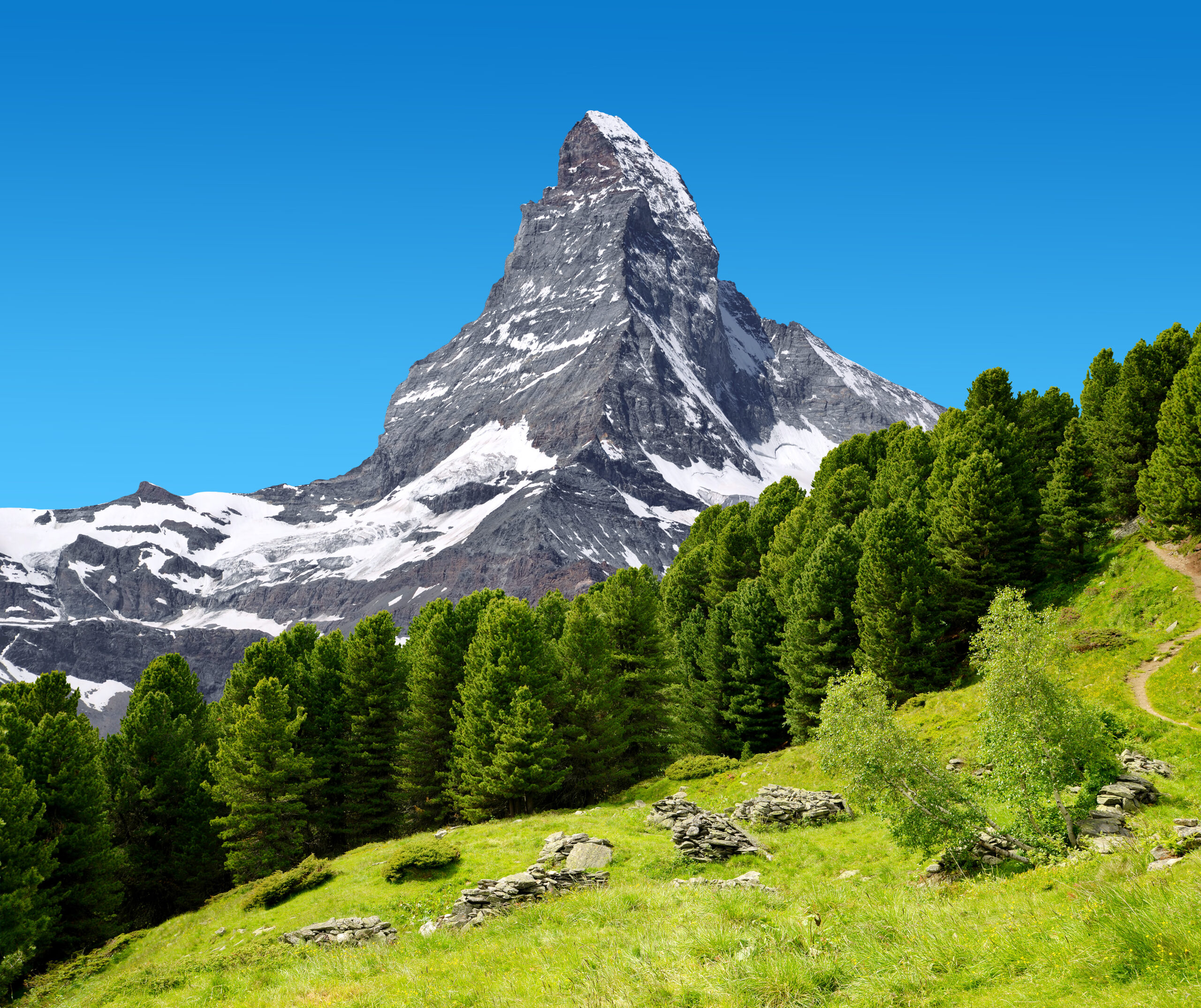
Best Matterhorn Operators 2026: 10 Guide Companies Compared
The Matterhorn is one of the most structurally demanding peaks to guide commercially: the Hornli Ridge requires a strict, mandatory 1:1 guide-to-client ratio, sustained Grade III+ climbing, and serious prior alpine experience. This is the independent 2026 comparison of the ten operators that matter, from Zermatt’s home-mountain cooperative to international IFMGA guides.
Updated August 6, 2026 · Reviewed quarterly · Approximately 15 minutes
On the Matterhorn, the choice is price and structure, not on-mountain quality.
Because IFMGA certification and the 1:1 Hornli ratio are standardized across every legitimate operator, on-mountain operations are close to identical. ZERMATTERS, Zermatt’s roughly 300-guide cooperative, is the best overall: home-mountain expertise at competitive Swiss pricing. Matterhorn Guides is the boutique independent for private ascents. International IFMGA operators deliver the same climb with English-language booking and operator continuity, at higher prices.
- Best overall: ZERMATTERS, the Zermatt cooperative.
- Best boutique: Matterhorn Guides, private ascents.
- Best international: Adventure Consultants or Alpine Ascents.
- The prerequisite: prior 4,000 m peaks and Grade III rock in boots.
- Plan for flexibility: climate-related closures are now a real factor.
Why the Matterhorn Is Different
Edward Whymper’s 1865 first ascent, and the four deaths on the descent, shaped the modern guide profession. The route’s demands shape the operator field today.
Mandatory 1:1 Ratio
One IFMGA guide per climber on the Hornli Ridge, universal across operators and the single biggest driver of cost.
Effect: full guide cost per climberSustained Grade III+
Over 1,000 m of mixed rock, snow and ice climbed roped together in boots, harder than an equivalent Mont Blanc climb.
Effect: real prerequisites applyClimate Volatility
Receding permafrost drove mid-season rockfall closures across 2023 to 2025, so flexibility is now part of planning.
Effect: verify status near departureCompressed Timeline
Full programs run 4 to 6 days with 2 to 3 acclimatization climbs, a rest day, summit day and a weather buffer; the Hornli ascent itself is about 2 days.
Effect: build in weather marginThe Matterhorn requires serious prior alpine experience
This is not an appropriate first major mountain. The Hornli Ridge is sustained Grade III+ with serious exposure over 1,000 m of gain, climbed roped together across mixed rock, snow and ice in mountain boots. You should have prior 4,000 m alpine peak experience, comfort with Grade III rock, established crampon and ice-axe technique, and demonstrated efficiency on exposed terrain.
Experience on non-technical altitude peaks such as Aconcagua, Kilimanjaro or Elbrus does not prepare you. Most commercial programs include 2 to 3 acclimatization climbs (Breithorn, Pollux, Castor) where guides assess capability before committing to the summit. See our fitness standards and the Matterhorn climbing guide.
Matterhorn Operator Comparison Matrix
Pricing reflects the mandatory 1:1 ratio and is 2026-estimated, so verify directly. On-mountain operations are standardized by IFMGA certification; the differentiators are commercial structure, base and price.
| Operator | Base | Type | Price (1:1) | Program Length |
|---|---|---|---|---|
| ZERMATTERS | Zermatt, CH | Zermatt cooperative | CHF 1,800-3,800 | 2-6 days with acclim |
| Matterhorn Guides | Zermatt, CH | Zermatt boutique | CHF 2,500-4,500 | Private programs |
| Adventure Consultants | Wanaka, NZ | International IFMGA | NZD 7,500-9,500 | 7 days with acclim |
| Alpine Ascents Intl. | Seattle, US | American IFMGA | $5,500-7,500 | 7 days with acclim |
| Chamonix Experience | Chamonix, FR | Chamonix commercial | €2,500-4,200 | 5-7 days with acclim |
| Jagged Globe | UK | UK Alpine specialist | £2,800-4,500 | 6-7 days with acclim |
| Compagnie des Guides | Chamonix, FR | French IFMGA heritage | €2,800-4,500 | 4-6 days with acclim |
| Icicle Mountaineering | UK | UK IFMGA | £3,200-4,500 | 6 days with acclim |
| Mountain Tracks | UK | UK Alpine specialist | £2,800-4,200 | 5-7 days with acclim |
| Mont Blanc Guides | Chamonix, FR | Chamonix IFMGA | €3,500-5,500 | 10-14 days dual |
Key takeaways
ZERMATTERS is the best overall value, the roughly 300-guide Zermatt cooperative formed in 2019. The 1:1 ratio is mandatory on the Hornli Ridge and prices the Matterhorn about 30 to 50 percent above an equivalent Mont Blanc climb. On-mountain operations are standardized by IFMGA certification, so the real choice is commercial structure (cooperative, boutique or international) and price. Serious prerequisites apply, and climate-related rockfall closures are now a real planning factor.
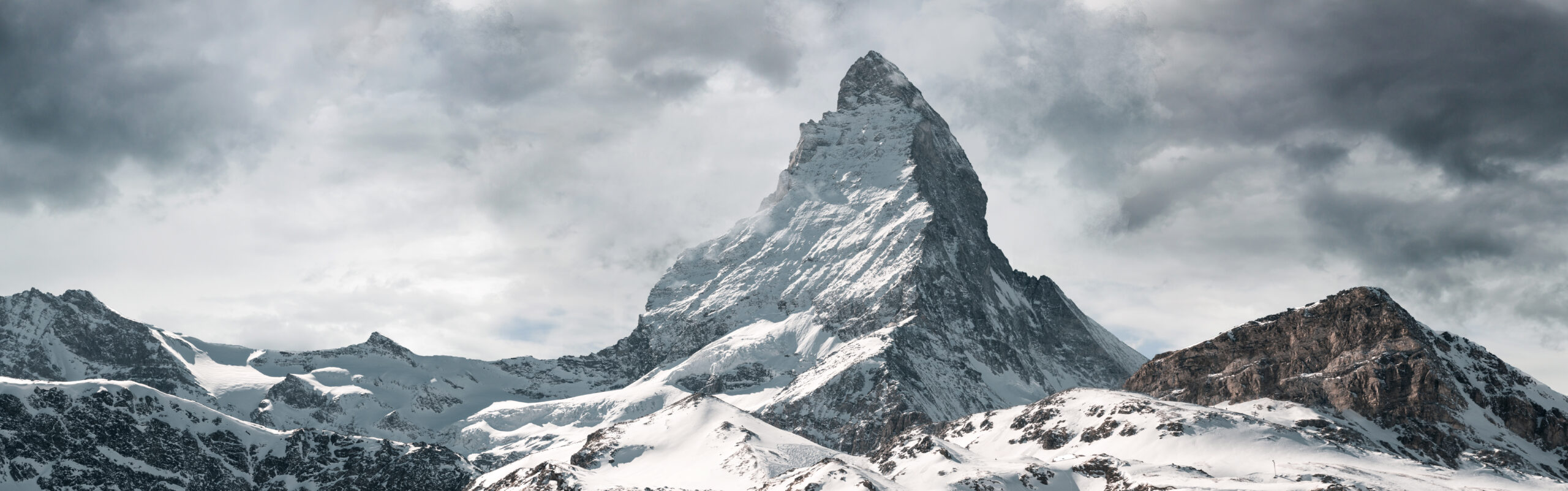
The Hornli Ridge is why operator choice is about price, not on-mountain quality.
Because there is no section where a guide can safely manage two clients at once, the 1:1 ratio is mandatory, and every legitimate operator runs IFMGA guides under the same rule. Most fatalities happen on the descent, which is why an early start and a guide empowered to turn around matter more than the logo.
The 7 Award Operators in Depth
Zermatt-direct home-mountain expertise and international IFMGA operators offering the Matterhorn within broader Alpine portfolios. Three further operators appear in the matrix above.
ZERMATTERS
- Home-mountain expertise; guides climb the Matterhorn many times per season
- Direct relationships with the Hornli Hut warden and current rockfall patterns
- Competitive Swiss pricing without international operator overhead
- Cooperative-style guide rotation rather than a single named guide, and it books out fast
Matterhorn Guides
- Zermatt’s first independent guide office, outside the cooperative
- Exclusively private, tailored ascents with one-guide continuity
- Same Zermatt-direct operational expertise and IFMGA certification
- No scheduled group departures; higher per-climber cost and smaller scale
Adventure Consultants
- Strong English-language client engagement and pre-trip support
- Operator continuity from Mont Blanc, Aconcagua, Denali and other peaks
- IFMGA standardization means on-mountain operations match Zermatt-direct
- Higher pricing and a New Zealand timezone for booking
Alpine Ascents International
- US-hour service and familiar American booking infrastructure
- Structured Alps programs within a broader Seven Summits progression
- IFMGA guide partnerships meeting the 1:1 Hornli ratio
- Premium pricing and American overhead over the same local guiding
Chamonix Experience
- Strong fit for Mont Blanc and Matterhorn dual-objective trips
- Integrated French Alps logistics across multiple iconic peaks
- English-language polish with European base pricing
- Not Zermatt-direct; coordinates into Zermatt for the Matterhorn leg
Compagnie des Guides de Chamonix
- The oldest mountain guides organization in the world, founded 1821
- Deep French-school IFMGA institutional history across the Alps
- Established Matterhorn programs alongside Mont Blanc
- Chamonix-based rather than Zermatt-direct; French-hour booking
Jagged Globe
- UK booking infrastructure, UK-hour service and Sterling pricing
- Established Matterhorn programs with structured pre-trip preparation
- Familiar UK commercial expedition culture
- UK overhead over the same local guiding; group-program structure
Three further operators worth considering
Icicle Mountaineering and Mountain Tracks (UK), and Mont Blanc Guides (Chamonix, for Mont Blanc and Matterhorn dual objectives) appear in the matrix above and each hold a full profile in the directory below.
The Hornli Ridge 1:1 Guide-Ratio Rule
The strict 1:1 guide-to-client ratio is the most consequential structural fact in commercial Matterhorn climbing. It shapes pricing, booking and operator selection.
Why 1:1 is mandatory
The Hornli Ridge is over 1,000 m of sustained mixed terrain: exposed rock, snow ridges and ice patches climbed in mountain boots while roped together. There is no terrain where a guide can safely manage two clients at once. If one climber loses their footing, the guide’s full attention is needed to arrest the fall. The Bergfuhrerverein Zermatt established the rule decades ago; it continues under ZERMATTERS and is universally observed by IFMGA guides. Operators quoting Matterhorn pricing that implies a 1:2 ratio should be treated with skepticism, since either they are not following IFMGA standards or the program does not include a guided Hornli ascent.
Pricing implication. The 1:1 ratio means you absorb the full guide cost per climber rather than sharing it, which prices commercial Matterhorn programs roughly 30 to 50 percent above an equivalent Mont Blanc climb, where 1:2 is standard.
Booking implication. Each guide can attempt the Hornli with one client per day at most, and weather windows are narrow, so peak-season places from mid-July to early September must be booked months ahead.
Acclimatization. Most programs include 2 to 3 days on smaller peaks, with the Breithorn at 4,164 m the typical warm-up, which also let the guide make a go or no-go call on your capability. Do not skip them.
Zermatt-Direct vs International Operators
The Zermatt-direct field is structurally different from how older guidebooks describe it.
The 2019 ZERMATTERS merger
For most of the 20th and early 21st centuries, two organizations dominated Zermatt guiding: the Bergfuhrerverein Zermatt (the Mountain Guide Association, founded 1858, the institution behind the 1:1 rule) and Alpin Center Zermatt (formed 2007 to professionalize the guide office). In 2019 they merged with the historic Zermatt Ski School to form the ZERMATTERS cooperative, roughly 300 mountain guides, ski instructors, and hiking and bike guides under one brand. Older sources may reference Bergfuhrerverein Zermatt or Alpin Center Zermatt as separate operators; in 2026, both point to ZERMATTERS.
What it means for operator selection
For most climbers, Zermatt-direct means ZERMATTERS plus a small number of independents, led by Matterhorn Guides. The differentiation is commercial structure, cooperative versus boutique private, not on-mountain differences: all Zermatt-direct operators run IFMGA-certified guides under the same 1:1 rule with the same Hornli Hut infrastructure. International IFMGA operators such as Adventure Consultants, Alpine Ascents and the Chamonix-based companies deliver the same on-mountain operations at higher pricing that reflects their booking infrastructure, travel coordination and overhead.
Climate Volatility and 2026 Route Conditions
The Matterhorn has seen increasing climate-related route instability since 2022. Understand it before booking.
Permafrost, rockfall and closures
The Matterhorn’s structural integrity relies partly on permafrost holding rock features in place. Receding permafrost releases previously frozen rock, raising rockfall risk during the climbing season, a trend well documented in glaciology research that produced multiple mid-season closures across 2023 to 2025.
In response, the Hornli Hut and Zermatt operators run enhanced protocols: daily morning condition assessments, earlier summit starts around 4:00 to 4:30 AM to clear the most exposed sections before solar warming, more conservative weather-window definitions, and tighter communication. Build schedule flexibility into your trip and verify route status close to departure through the Hornli Ridge conditions guide, and expect possible route changes or cancellations.
Most Matterhorn fatalities happen on the descent, not the ascent. The 1865 pattern still holds: climbers summit on momentum, then face the harder down-climb fatigued on the same exposed Grade III terrain. The prerequisite experience, an early start, and a guide empowered to turn around are what get climbers home, which is why operator quality and the 1:1 ratio matter so much here.
How to Choose Your Operator
The on-mountain climb is standardized, so choose on structure, base and price, then confirm the prerequisites honestly and build in flexibility.
Home-Mountain Expertise
ZERMATTERS, the Zermatt cooperative, at competitive Swiss pricing with unmatched Hornli familiarity.
One-Guide Continuity
Matterhorn Guides, boutique and private, for a customized ascent over cooperative rotation.
International IFMGA
Adventure Consultants or Alpine Ascents if you want continuity from other peaks, accepting the price premium.
Mont Blanc + Matterhorn
Chamonix Experience or Mont Blanc Guides for a combined French Alps and Matterhorn program.
Sterling Pricing
Jagged Globe, Icicle or Mountain Tracks for UK-hour service and Pound Sterling pricing.
Prerequisites and Flexibility
Confirm the experience honestly, build in weather and climate flexibility, and never skip the acclimatization climbs.
New to serious alpine climbing? Read how to choose an operator, check the honest Matterhorn success-rate data, study the Matterhorn climbing guide, prepare with the Hornli Ridge training plan, and weigh it against Mont Blanc versus the Matterhorn for your progression.
The Matterhorn Operator Directory
Each operator holds a dedicated profile with pricing, program structure, strengths and trade-offs. Open the one that fits your base, budget and format.
ZERMATTERS
Best overall value; ~300 IFMGA guides; CHF 1.8-3.8K.
→Matterhorn Guides
Private, one-guide continuity; CHF 2.5-4.5K.
→Adventure Consultants
Operator continuity across the Alps and Seven Summits; NZD 7.5-9.5K.
→Alpine Ascents International
US booking and Seven Summits progression; $5.5-7.5K.
→Chamonix Experience
Mont Blanc and Matterhorn dual objectives; €2.5-4.2K.
→Compagnie des Guides de Chamonix
The world’s oldest guides organization, founded 1821; €2.8-4.5K.
→Jagged Globe
UK booking, UK-hour service, Sterling pricing; £2.8-4.5K.
→Icicle Mountaineering
UK IFMGA programs with structured preparation; £3.2-4.5K.
→Mountain Tracks
UK Alpine specialist across multiple 4,000 m peaks; £2.8-4.2K.
→Mont Blanc Guides
Chamonix-based dual Mont Blanc and Matterhorn programs; €3.5-5.5K.
→Continue Your Matterhorn Planning
The operator decision sits inside a wider plan: the route, the success odds, and how the Matterhorn compares to its natural progression partner.
Matterhorn Climbing Guide
The Hornli Ridge route, huts, difficulty, season and preparation in full.
Open the guide → The oddsMatterhorn Success Rate
The honest summit-success data, what drives it, and how to read it.
See the analysis → ProgressionMont Blanc vs Matterhorn
Which to climb first, and how the two iconic 4,000 m peaks compare.
Compare the peaks →Matterhorn Operators FAQ
The questions climbers ask most about the best operator, the cost, the 1:1 ratio, the route and the season.
Who is the best Matterhorn operator in 2026?
ZERMATTERS is the best overall: Zermatt’s cooperative guide office, with around 300 IFMGA guides and home-mountain expertise at competitive Swiss pricing. Matterhorn Guides is the best independent boutique for private ascents, and international IFMGA operators such as Adventure Consultants and Alpine Ascents suit climbers who want operator continuity from other peaks, at higher prices.
How much does it cost to climb the Matterhorn in 2026?
Roughly EUR 1,800 to 7,500. Zermatt-direct operators run about CHF 1,800 to 4,500, while international operators cost more, such as Alpine Ascents at 5,500 to 7,500 US dollars and Adventure Consultants at 7,500 to 9,500 New Zealand dollars. The mandatory 1:1 ratio means you pay the full guide cost per climber, which prices the Matterhorn about 30 to 50 percent above an equivalent Mont Blanc program.
Why is the Matterhorn guide ratio 1:1?
The Hornli Ridge is over 1,000 m of sustained mixed terrain climbed roped together in boots, with no section where a guide can safely manage two clients at once. The Bergfuhrerverein Zermatt established the 1:1 rule and it continues under ZERMATTERS, universally observed by IFMGA guides. Operators quoting 1:2 Matterhorn pricing should be treated with skepticism.
Do you need experience to climb the Matterhorn?
Yes. It is not a first major mountain. The Hornli Ridge is sustained Grade III+ with serious exposure. You should have prior 4,000 m alpine peaks, comfort with Grade III rock in boots, established crampon and ice-axe technique, and efficiency on exposed terrain. Non-technical altitude peaks such as Aconcagua or Kilimanjaro do not prepare you.
What route do Matterhorn operators use?
Almost all use the Hornli Ridge, which accounts for roughly 80 percent of summits, from the Hornli Hut at 3,260 m, with the Solvay Hut at 4,003 m as emergency shelter and an early start around 4:00 to 4:30 AM. The Italian Lion Ridge, the Zmutt Ridge, and the North Face are for experienced or elite alpinists.
When is the Matterhorn climbing season?
July through September, most stable from mid-July to early September. Windows are narrow and the 1:1 ratio limits each guide to one client per day, so peak-season places book months ahead. Climate-related closures are increasingly possible, so verify route status close to departure.
Is the Matterhorn affected by climate change and closures?
Yes. Receding permafrost has raised rockfall risk and produced multiple mid-season closures across 2023 to 2025. Operators now run enhanced rockfall assessment, earlier starts, and more conservative weather windows. Build flexibility into your schedule and expect possible route changes.
Should I choose a Zermatt-direct or international operator?
On-mountain operations are essentially the same, since IFMGA guides, the 1:1 ratio and the same Hornli Hut are standard. Zermatt-direct operators such as ZERMATTERS and Matterhorn Guides offer home-mountain expertise and lower pricing, while international operators add booking infrastructure, English-language service and operator continuity at higher prices.
Methodology and Editorial Standards
What this comparison is based on, how operators were weighted, and what it does not claim to know.
How this comparison was built
- Operators’ published 2026 programs and pricing, the IFMGA guide directory, and Zermatt guiding and Hornli Hut sources.
- Because IFMGA certification and the 1:1 ratio standardize on-mountain operations, we weighted commercial structure, route-specific guide experience, climate-volatility flexibility, pricing and client fit.
- All ten operators were evaluated against the same eight-criteria framework, adapted for the Matterhorn.
- Pricing is 2026-estimated and verified against operator materials; it varies by season and configuration.
Independence and honesty
- Independent editorial. Global Summit Guide is not sponsored by any operator listed, and operator links are informational, not paid placements.
- Our team has not climbed the Matterhorn, so this is research-based rather than a first-hand account.
- The 1:1 ratio means the full guide cost per climber; treat all figures as a planning range.
- Reviewed quarterly; next review September 2026.
What we do not know yet
Operator programs, prices and route conditions change after publication.
- Guide-company prices, departure dates, included services and cancellation rules can change without notice.
- Climate-related route status changes frequently; verify close to departure.
- Weather, snowpack and rockfall conditions may differ on your climbing dates.
- Fitness and altitude response vary by person; no operator or itinerary can guarantee a summit.
Confidence: High for the route structure, the 1:1 rule and the operator field; medium for 2026 pricing and season-specific climate conditions.

Independent, research-based operator coverage
The Global Summit Guide Editorial Team, led by founder and head of research Travis Ludlow, builds independent operator comparisons from operator documentation, the IFMGA directory and Zermatt guiding sources, reviewed for safety by Dawson Ludlow. The team has not climbed the Matterhorn, and this coverage is independent and unsponsored, with zero paid placements.
Read the team background and editorial standards →Choose on Structure and Price. Then Earn the Prerequisites.
On the Matterhorn the operator decision is unusually clean: IFMGA certification and the 1:1 Hornli ratio standardize the climb, so pick ZERMATTERS for home-mountain value or a boutique or international operator for what you need, then build in flexibility for weather and climate closures and respect the descent.
Was this helpful?
🏔Related operators
🧭Explore & compare
Global Summit Guide is an independent mountaineering resource founded in 2026. The team combines first-hand trekking and climbing experience with in-depth research and professional health and nutrition review to help climbers choose objectives, prepare properly, and stay safe.
Health, altitude, and nutrition content is reviewed by Taylor Ludlow (Registered Nurse) and Brigg Hoopes (Nutritionist).
What We Don't Know Yet
Mountain information changes quickly. This box explains the limits of what this page can responsibly promise.
- Guide-company prices, departure dates, guide ratios, included services, and cancellation rules can change without notice.
- Total trip cost can change with flights, lodging, guide pricing, permits, gear rentals, transportation, and exchange rates.
- Gear requirements can change by season, route variation, weather window, personal cold tolerance, and guide-service requirements.
- Comparisons simplify complex decisions; the better mountain depends on current conditions, skills, timing, budget, and risk tolerance.
- Visa, passport, vaccination, border, insurance, and local transportation rules may change before your trip.
Verify current conditions with official land managers, guide services, local forecasts, and current route reports before booking or climbing.
Mountaineering, rock and ice climbing, glacier travel, and high-altitude activity are inherently dangerous and can result in serious injury or death. The information on Global Summit Guide is provided for general informational and educational purposes only and is not a substitute for professional instruction, qualified guiding, proper equipment, or your own judgment and experience.
Route conditions, weather, snowpack, permits, regulations, and hazards change constantly and may differ from what is described here. Details may be incomplete, out of date, or contain errors. Always verify current information with local authorities, certified guides, and official sources before making any decision in the mountains.
Nothing on this site is medical, legal, or financial advice. Our fitness, acclimatization, altitude, and nutrition content is general in nature; consult a qualified physician before beginning any strenuous exercise program or exposing yourself to high altitude.
You are solely responsible for your own safety and decisions. To the fullest extent permitted by law, Global Summit Guide and its team accept no liability for any loss, injury, damage, or expense arising from use of, or reliance on, this information. By using this site you acknowledge these risks and accept these terms.
Some links on this site may be affiliate links. If you buy through them we may earn a small commission at no extra cost to you; this never affects our recommendations.
Global Summit Guide recommendation path
Next Best Mountain to Research
Use these recommendations to continue the right planning path instead of stopping on one page.
Use current permit, weather, route, and operator information before booking or climbing.