
Last updated September 5, 2026
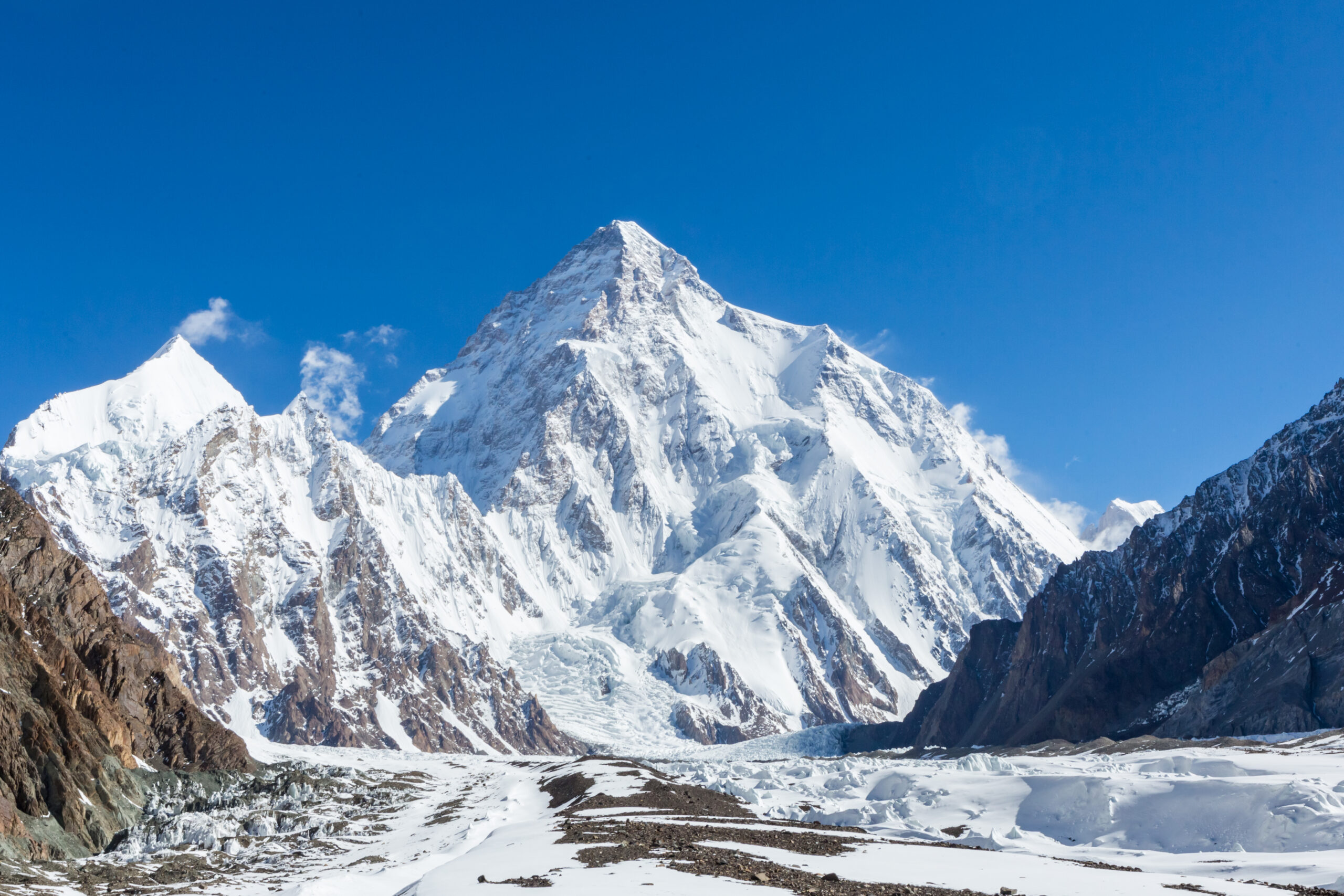
K2 vs Nanga Parbat: The Savage vs the Killer Mountain
They stand at opposite ends of Pakistan’s high country — K2 the ferocious king of the Karakoram, Nanga Parbat the lonely giant that anchors the western Himalaya. Both are among the deadliest mountains on Earth. Here’s how they compare on difficulty, death rate, and the histories behind their grim nicknames.
K2 (8,611 m) and Nanga Parbat (8,126 m) are two of the three deadliest 8,000-metre peaks, both in Pakistan, both feared for good reason. K2 is the harder climb — widely rated the most difficult 8,000er of all — and carries the slightly higher fatality rate. Nanga Parbat is the “Killer Mountain,” defined by the largest face on Earth and a death toll built over nearly a century. Neither is a mountain you approach without a deep 8,000-metre resume.
Harder to climb: K2 — generally considered the hardest of all fourteen 8,000ers.
Deadlier by rate: K2, marginally — roughly 23% fatality vs Nanga’s ~20% (though Annapurna tops both).
The bigger reputation: Nanga Parbat, the “Killer Mountain,” with ~70+ deaths and the world’s largest face.
Both demand: prior 8,000-metre experience, elite fitness, and total respect for the weather.
On this page
Which is harder to climb?
Among all fourteen 8,000ers, one name comes up first.
K2 is the answer to “what is the hardest 8,000-metre peak?” — and it isn’t especially close. Its normal route, the Abruzzi Spur, is a sustained technical climb with no easy sections, and high on the mountain it passes beneath the Bottleneck, a couloir overhung by an unstable serac that has killed climbers in single catastrophic events. Add the altitude, the cold, and weather that can trap a summit party for days, and K2 stands as the benchmark for 8,000-metre difficulty. Nanga Parbat is formidable — its scale is almost beyond comprehension — but its standard Kinshofer route, while serious and steep, is not quite the sustained technical test that K2’s is. If the question is pure difficulty, K2 wins.
Which is deadlier?
Both are near the top of the grimmest list in mountaineering.
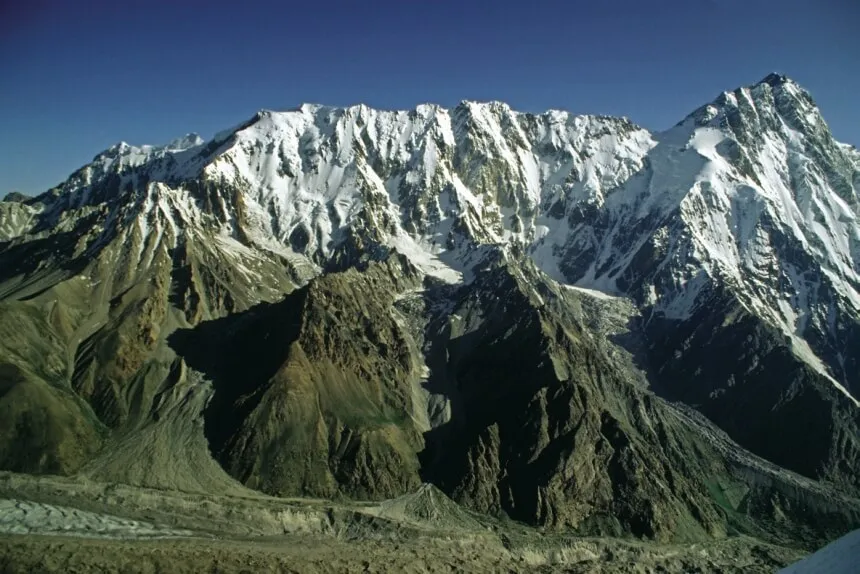
Nanga Parbat — the “Killer Mountain.”
By fatality rate, K2 is marginally deadlier — historically around 23 percent of summiteers have died, against roughly 20 percent on Nanga Parbat. But rate isn’t the whole story. Nanga Parbat’s reputation was forged in catastrophe: dozens of climbers died on it, especially on the German expeditions of the 1930s, before it was finally climbed in 1953, and its total death toll has climbed to around seventy or more. That history is why it, not K2, carries the name “the Killer Mountain.” One honest caveat for context: neither is statistically the single deadliest 8,000er — that title belongs to Annapurna, whose fatality rate is higher still. Between K2 and Nanga Parbat, though, K2 edges it by rate while Nanga owns the darker legend.
K2: the Savage Mountain
The mountaineer’s mountain — steeper, harder, and less forgiving than Everest.
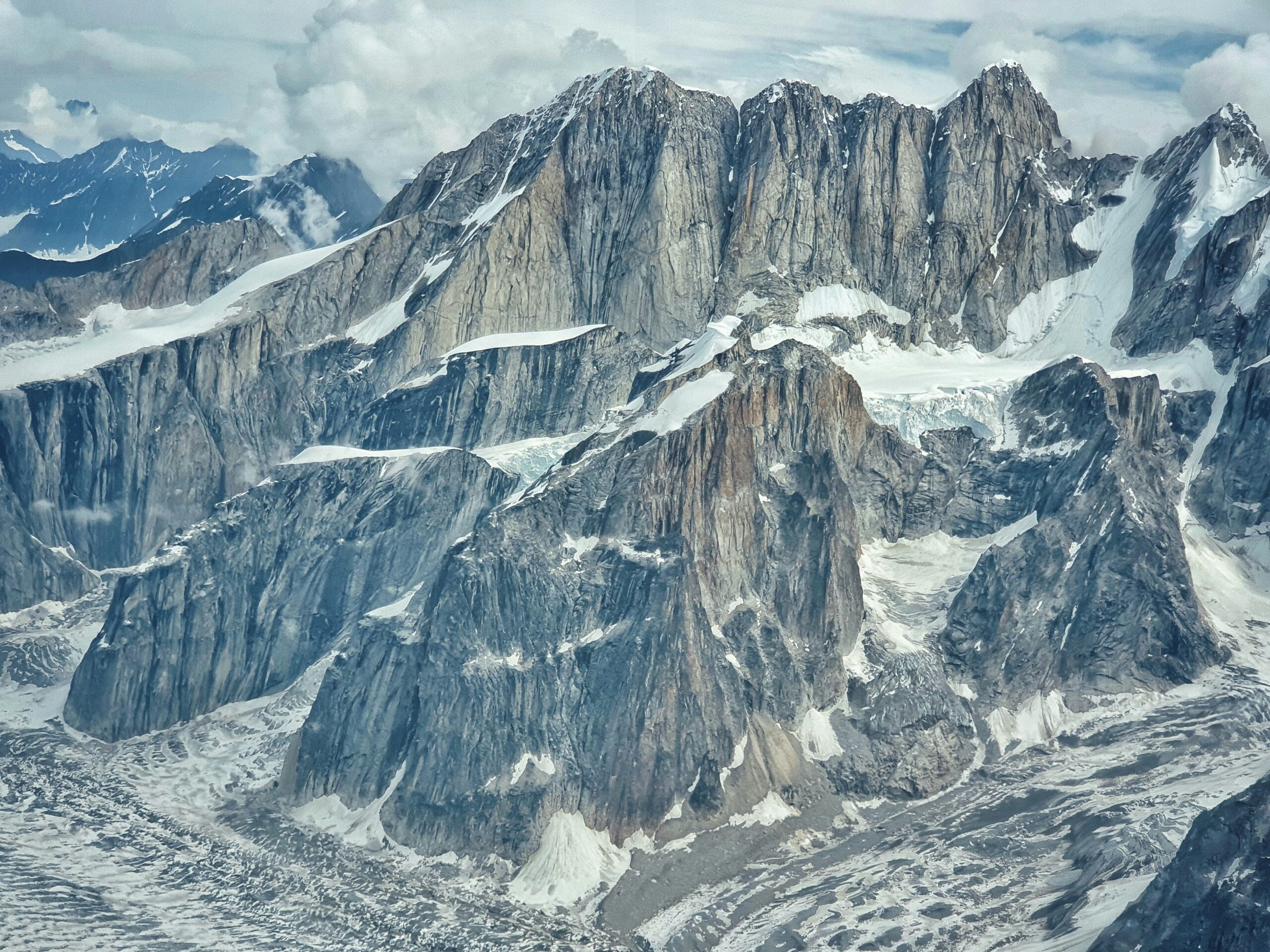
K2 — a near-perfect, brutally steep pyramid.
K2 is the second-highest mountain on Earth and, by common consent, the hardest of the 8,000ers. It rises as a steep pyramid at the head of the Baltoro Glacier on the Pakistan–China border, and every route on it is difficult. Unlike Everest, it has never had a straightforward commercial “trade route,” and it was the last 8,000er to be climbed in winter, in 2021. For the full picture of routes, seasons, and the Bottleneck, see our K2 climbing guide.
Nanga Parbat: the Killer Mountain
The lonely giant of the western Himalaya — and the largest face on Earth.
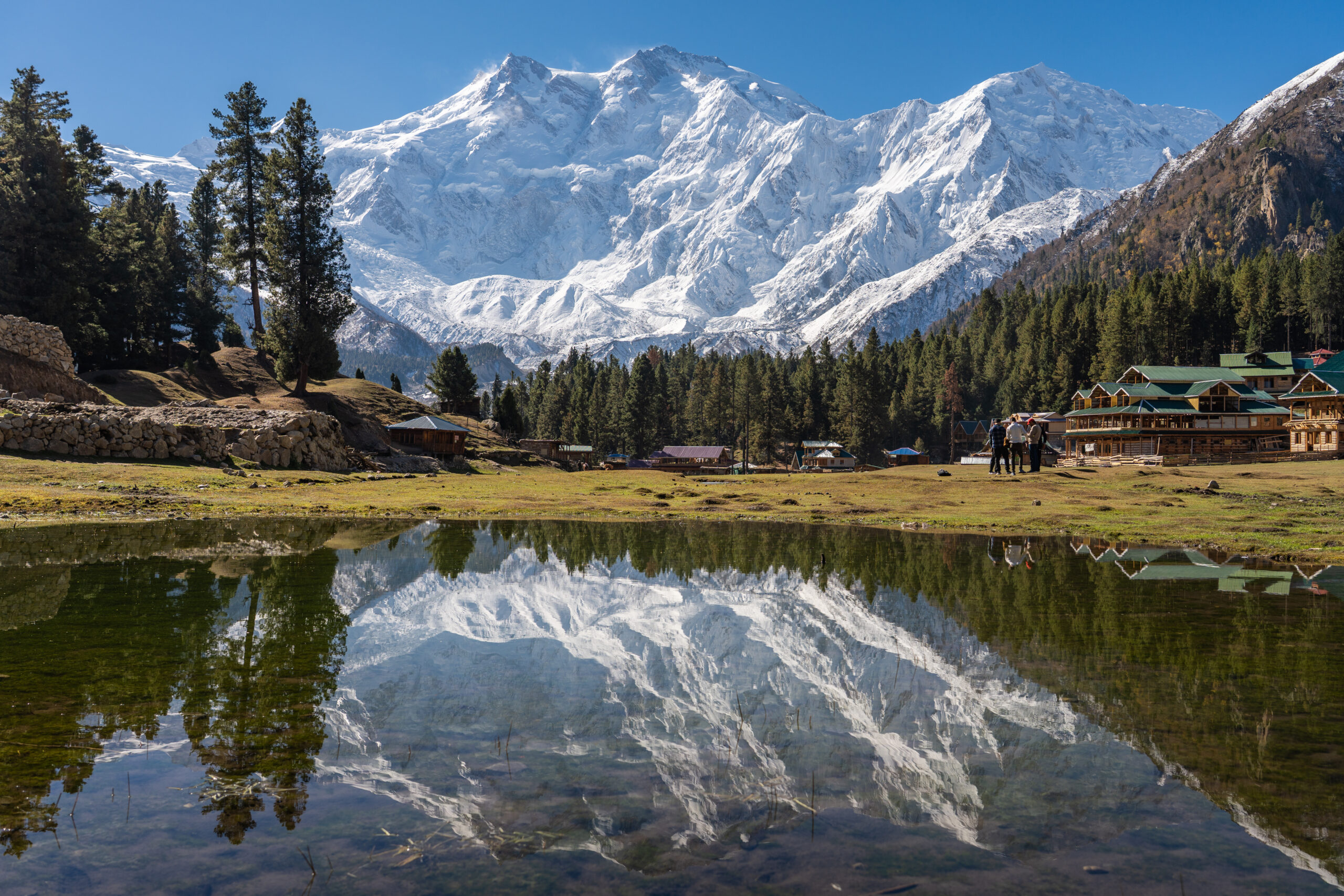
Nanga Parbat (8,126 m) — the western anchor of the Himalaya.
Nanga Parbat is the ninth-highest mountain in the world and the western anchor of the entire Himalayan chain. Its defining feature is the Rupal Face — at roughly 4,600 metres from base to summit, the largest mountain face on the planet. It was first climbed in 1953 by Hermann Buhl in one of mountaineering’s most famous solo summit pushes, and its early history of disaster gave it its name. Today it’s climbed mainly via the Kinshofer route on the Diamir Face. Our Nanga Parbat climbing guide and summit success-rate analysis cover it in depth.
Side by side
How Pakistan’s two great killers compare.
| K2 | Nanga Parbat | |
|---|---|---|
| Elevation | 8,611 m (28,251 ft) | 8,126 m (26,660 ft) |
| Rank | 2nd highest on Earth | 9th highest on Earth |
| Location | Karakoram — Pakistan / China | Western Himalaya — Pakistan |
| Nickname | The Savage Mountain | The Killer Mountain |
| Normal route | Abruzzi Spur | Kinshofer route (Diamir Face) |
| Signature feature | The Bottleneck — a hanging serac | The Rupal Face — the world’s largest face |
| Technical difficulty | Extreme — widely rated the hardest 8,000er | Very high, on an immense scale |
| Fatality rate | ~23% | ~20% |
| First ascent | 1954 (Italian expedition) | 1953 (Hermann Buhl, solo push) |
| First winter ascent | 2021 — the last 8,000er climbed in winter | 2016 |
Both mountains sit far beyond the reach of all but the most experienced high-altitude climbers. A realistic path to either runs through prior 8,000-metre summits, deep technical competence, and a hard-won understanding of how these ranges’ weather can turn. If you’re weighing them against the other giants, our 8,000ers ranked by difficulty and K2 vs Annapurna comparisons put both in context.
Frequently asked questions
Which is more dangerous, K2 or Nanga Parbat?
Both are among the deadliest 8,000ers. K2 carries a slightly higher fatality rate (~23%) and is the harder climb; Nanga Parbat (~20%), with a long history of catastrophe, earned the name “the Killer Mountain.” Neither is the single deadliest 8,000er, though — that’s Annapurna. Between these two, K2 is marginally deadlier by rate and the tougher summit.
Which is harder to climb, K2 or Nanga Parbat?
K2 — it’s widely regarded as the hardest of all fourteen 8,000ers, with sustained steep terrain, the Bottleneck serac hazard, and brutal weather. Nanga Parbat is extremely serious, defined by enormous faces, but K2’s normal route is the more technically demanding summit.
Why is Nanga Parbat called the Killer Mountain?
Through its early history: dozens died on it, especially on 1930s German expeditions, before it was first summited in 1953. Its immense faces — including the Rupal Face, the largest on Earth — and fearsome weather have kept the death toll high, at around 70 or more climbers.
What is the death rate on K2 and Nanga Parbat?
Historically about 23% of K2 summiteers and around 20% on Nanga Parbat have died — among the highest of any 8,000er. These rates shift as commercial expeditions add summits, but both remain far deadlier than Everest.
Are both K2 and Nanga Parbat in Pakistan?
Yes. K2 sits in the Karakoram on the Pakistan–China border, reached from the Baltoro Glacier. Nanga Parbat is the western anchor of the Himalaya, entirely within Pakistan and more accessible, near the Karakoram Highway.
Is K2 or Nanga Parbat the hardest 8,000m peak?
K2 is generally considered the hardest 8,000-metre peak to climb, ahead of Nanga Parbat and every other 8,000er, thanks to its sustained technical climbing, the Bottleneck serac, extreme altitude, and violent weather.
How we built this
This comparison is research-based — our team has not climbed either peak. It synthesizes established route literature, first-ascent and expedition history, and published elevation, fatality, and summit-success data, cross-checked against each mountain’s guide on this site. Altitude and health guidance is reviewed by Taylor Ludlow, RN. Fatality figures are historical estimates and shift over time; treat them as indicative, not exact.
The two faces of Pakistan’s high country
Explore the routes, seasons, and history of the Savage and the Killer — and see where they sit among the world’s hardest peaks.
Read the K2 guide →K2 vs Nanga Parbat: Pakistan’s Two Killers
Pakistan’s two most feared 8000ers, side by side. See them in the full set, or go deeper on each peak’s risk and route below.
Was this helpful?
🏔Related peaks nearby
🧭Explore & compare
Global Summit Guide is an independent mountaineering resource founded in 2026. The team combines first-hand trekking and climbing experience with in-depth research and professional health and nutrition review to help climbers choose objectives, prepare properly, and stay safe.
Health, altitude, and nutrition content is reviewed by Taylor Ludlow (Registered Nurse) and Brigg Hoopes (Nutritionist).
What We Don't Know Yet
Mountain information changes quickly. This box explains the limits of what this page can responsibly promise.
- Comparisons simplify complex decisions; the better mountain depends on current conditions, skills, timing, budget, and risk tolerance.
- Visa, passport, vaccination, border, insurance, and local transportation rules may change before your trip.
- Route conditions, snowpack, closures, and weather can change quickly after this page is updated.
- Permit rules, fees, quotas, and reservation windows may change between review cycles.
- Operator availability, pricing, guide ratios, and cancellation terms can change by season.
Verify current conditions with official land managers, guide services, local forecasts, and current route reports before booking or climbing.
Mountaineering, rock and ice climbing, glacier travel, and high-altitude activity are inherently dangerous and can result in serious injury or death. The information on Global Summit Guide is provided for general informational and educational purposes only and is not a substitute for professional instruction, qualified guiding, proper equipment, or your own judgment and experience.
Route conditions, weather, snowpack, permits, regulations, and hazards change constantly and may differ from what is described here. Details may be incomplete, out of date, or contain errors. Always verify current information with local authorities, certified guides, and official sources before making any decision in the mountains.
Nothing on this site is medical, legal, or financial advice. Our fitness, acclimatization, altitude, and nutrition content is general in nature; consult a qualified physician before beginning any strenuous exercise program or exposing yourself to high altitude.
You are solely responsible for your own safety and decisions. To the fullest extent permitted by law, Global Summit Guide and its team accept no liability for any loss, injury, damage, or expense arising from use of, or reliance on, this information. By using this site you acknowledge these risks and accept these terms.
Some links on this site may be affiliate links. If you buy through them we may earn a small commission at no extra cost to you; this never affects our recommendations.
Global Summit Guide recommendation path
Next Best Mountain to Research
Use these recommendations to continue the right planning path instead of stopping on one page.
Use current permit, weather, route, and operator information before booking or climbing.