<
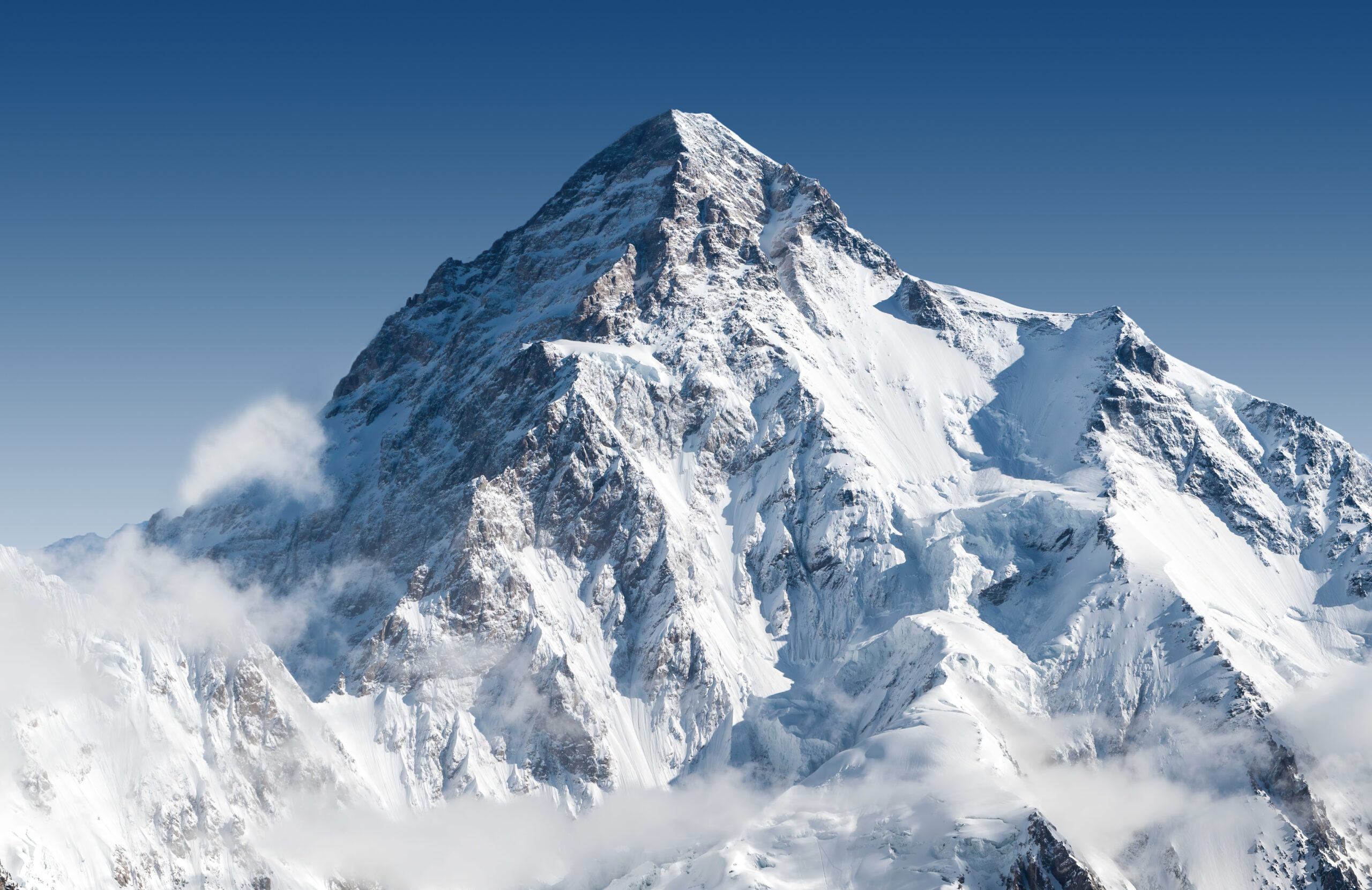
K2 the second highest peak in the world at 8611 meters elevation also known as the savage mountain located in the Karakoram range on the Pakistan China border showing the iconic pyramidal granite peak that is widely considered the second deadliest 8000 meter peak in the world with a death rate of approximately 21 to 29 percent deaths per summit attempt compared to Annapurna I in Nepal at 8091 meters which holds the highest death rate of any 8000 meter peak at approximately 28 to 32 percent making the K2 vs Annapurna comparison the central question of the world's most dangerous mountains to climb
Mountain Comparisons · 8000-Meter Peaks · Deadliest Mountains

K2 vs Annapurna: Which Is the Deadliest Mountain to Climb?

The complete 2026 comparison of the two most dangerous 8,000-meter peaks in the world — K2 (8,611m, the “Savage Mountain” in the Karakoram) and Annapurna I (8,091m, the highest death rate of any 8,000-meter peak in the Nepal Himalaya). Detailed analysis of death rate statistics, technical difficulty, avalanche hazard, weather windows, first ascents, and what makes each peak among the most dangerous mountains on Earth.

📋 Editorial Standards

This K2 vs Annapurna comparison synthesizes information from the Himalayan Database (the authoritative archive of Himalayan climbing statistics established by Elizabeth Hawley), historical American Alpine Journal expedition reports, the UIAA, and published mountaineering literature. Death rate statistics, summit counts, and first ascent records are cross-referenced with multiple authoritative sources. No affiliate partnerships influence recommendations.

⚡ The Verdict: Which Is Deadlier?

Annapurna I is deadlier than K2 by death rate — and is the most dangerous mountain to climb in the world. Specifically, Annapurna I has a historical death rate of approximately 28-32% deaths per summit attempt (Himalayan Database) — the highest of any 8,000-meter peak. K2 has a death rate of approximately 21-29% deaths per summit attempt depending on the period analyzed. Notably, however, K2 has more total deaths in absolute numbers (~96+ vs Annapurna’s ~75+) because K2 has attracted significantly more climbing attempts over the decades.

The bottom line: Annapurna is statistically the most dangerous 8,000-meter peak per attempt; K2 is technically the most difficult; both are widely considered the two hardest 8,000-meter peaks to climb safely.

~31%
Annapurna death rate
~21%
K2 death rate
520 m
K2 taller
8000ers
Both 8000-meter peaks

The Death Rate Reality

The statistical case for which is deadlier — death rate is the standard metric used by the Himalayan Database, expressed as deaths per successful summit attempt:

~31%
Annapurna I
~75+ deaths / ~365+ summits
~21%
K2
~96+ deaths / ~700+ summits

For comparison: Mount Everest’s death rate is approximately 1.7% — making Annapurna roughly 18 times deadlier per attempt than Everest, and K2 roughly 12 times deadlier per attempt than Everest. Generally, these figures place both peaks firmly in the most dangerous mountains in the world category. Notably, the death rate gap between K2 and Annapurna has narrowed in recent decades as K2 weather forecasting has improved while Annapurna’s avalanche hazard remains essentially unchanged.

K2

The Savage Mountain · Karakoram · Pakistan/China

8,611 m
28,251 ft · 2nd highest in world · Granite pyramid
Country
Pakistan/China border
Range
Karakoram
Standard route
Abruzzi Spur (south)
First ascent
1954 Italian expedition
First winter ascent
2021 (Nepali team)
Death rate
~21-29%
Total deaths
~96+
Total summits
~700+
Best season
July-August
Primary hazard
Bottleneck serac fall

ANNAPURNA I

The Killer · Annapurna Massif · Nepal

8,091 m
26,545 ft · 10th highest · Highest death rate
Country
Nepal
Range
Annapurna Massif
Standard route
North Face
First ascent
1950 French (first 8000er)
First winter ascent
1987 Polish
Death rate
~28-32%
Total deaths
~75+
Total summits
~365+
Best season
April-May, Oct-Nov
Primary hazard
Avalanche on N. Face

⚡ Quick Answer: K2 vs Annapurna

Annapurna is deadlier by death rate; K2 is harder technically. Both are among the world’s most dangerous mountains to climb.

K2 (8,611m): Second-highest peak; Karakoram Pakistan-China border; “Savage Mountain”; standard route Abruzzi Spur; first ascent 1954; winter ascent 2021; death rate ~21-29%; total deaths ~96+; primary hazard the Bottleneck serac fall. Annapurna I (8,091m): 10th highest; Annapurna Massif Nepal; first 8,000er ever climbed (1950); standard route North Face (avalanche prone); death rate ~28-32% (highest of any 8,000er); total deaths ~75+; primary hazard catastrophic avalanche on North Face.

Most dangerous mountain to climb: Annapurna I by death rate (highest of any 8,000er); K2 by sustained technical demand (hardest 8,000er to climb safely).

How This Comparison Was Built — Research-Based Analysis

This K2 vs Annapurna comparison is research-based rather than first-hand. Specifically, both K2 and Annapurna I are 8,000-meter peaks outside our editorial team’s direct climbing experience — a 99.5% reality for the global mountaineering community given that only an estimated 5,000+ climbers have ever summited any 8,000-meter peak, and far fewer have climbed K2 or Annapurna specifically.

The information in this comparison comes from authoritative published sources including the Himalayan Database (the definitive archive of Himalayan climbing statistics established by Elizabeth Hawley), American Alpine Journal expedition reports, climbing memoirs (Maurice Herzog’s Annapurna, Ed Viesturs’s K2: Life and Death on the World’s Most Dangerous Mountain, Charlie Buffet’s Annapurna: A Woman’s Place), and statistical analyses published by mountaineering researchers. Generally, this research basis is the standard for any K2 or Annapurna content — almost no journalists or content creators have personal climbing experience on either peak.

Notably, the death rate statistics in this article are the most carefully verified element — these figures determine the entire comparison and are sourced primarily from the Himalayan Database with cross-references to peer-reviewed mountaineering research.

🏔 The Most Dangerous Mountains Decision Framework

The K2 vs Annapurna comparison hinges on what type of “deadliest” matters to you. First, statistical danger (death rate per attempt): Annapurna I leads. Second, technical difficulty (sustained climbing demand): K2 leads. Third, absolute deaths (total cumulative deaths): K2 leads (because more attempts). Fourth, objective hazard (avalanche/serac risk independent of climber skill): Annapurna leads dramatically.

Generally, the consensus among elite Himalayan mountaineers is: Annapurna’s danger is structural and largely unmitigable (avalanche hazard cannot be eliminated by skill); K2’s danger is sustained technical demand (skill and judgment can substantially mitigate K2’s risk). Notably, this distinction is why some climbers prefer K2 (manageable through skill) and others prefer Manaslu or Kangchenjunga (lower statistical danger) over Annapurna.

K2 (8,611 meters / 28,251 feet) and Annapurna I (8,091 meters / 26,545 feet) are the two most dangerous 8,000-meter peaks in the world by death rate statistics — Annapurna I holds the highest death rate of any 8,000-meter peak (approximately 28-32% deaths per summit attempt per the Himalayan Database), while K2 holds the second-highest death rate among major 8,000-meter peaks (approximately 21-29%) and is widely considered the most technically difficult 8,000-meter peak to climb safely. Generally, the two peaks present fundamentally different types of danger: K2’s “Savage Mountain” reputation derives from sustained technical climbing demand combined with the notorious Bottleneck section serac fall hazard and severe Karakoram weather; Annapurna’s deadliness derives from catastrophic avalanche hazard on the standard North Face route, which cannot be substantially mitigated by climbing skill. Specifically, K2 is the second-highest peak in the world after Mount Everest but significantly more technically difficult than Everest; Annapurna I is the 10th highest 8,000-meter peak but the statistically deadliest. Notably, climbing either peak requires substantial prior 8,000-meter peak experience — these are not introductory 8,000-meter objectives; climbers typically attempt them after summiting Cho Oyu, Manaslu, or other less-deadly 8,000-meter peaks first.

Key Takeaways

  • Annapurna is the most dangerous mountain to climb in the world — highest death rate of any 8,000er.
  • K2 is the second most dangerous among popular 8,000-meter peaks.
  • K2 is taller: 8,611m vs 8,091m (Annapurna) — 520m difference.
  • Death rates: Annapurna ~31%; K2 ~21%; Everest by comparison ~1.7%.
  • K2 has more total deaths (~96+) than Annapurna (~75+) because more attempts.
  • K2 is harder technically — sustained technical demand.
  • Annapurna is harder by objective hazard — unmitigable avalanche risk.
  • First ascents: Annapurna 1950 (first 8000er ever); K2 1954.
  • Winter ascents: Annapurna 1987 (Polish); K2 2021 (Nepali — last 8000er).
  • Both require prior 8,000er experience — not introductory objectives.

✓ Editorial Trust Signals

  • Himalayan Database: Primary stats source
  • Research-based: Honest framing
  • Independent: No affiliate sponsorship
  • Cross-referenced: UIAA, AAJ, climbing memoirs
  • Last verified: June 9, 2026
  • Review cycle: Quarterly
  • Safety review: Dawson Ludlow (WFA)
  • Gear review: Walker Ludlow
Updated June 2026 · 7th of 50 mountain comparisons · World’s two most dangerous 8000-meter peaks · Annapurna 8,091m (deadliest) · K2 8,611m (most technical) · Himalayan Database statistics

The Most Dangerous Mountain to Climb in the World

The most dangerous mountain to climb in the world is Annapurna I in Nepal — with the highest death rate of any 8,000-meter peak at approximately 28-32% deaths per summit attempt according to the Himalayan Database. Generally, this places Annapurna I roughly 18 times deadlier than Mount Everest per climbing attempt — a statistical gap that fundamentally distinguishes the world’s most dangerous mountains from popular high-altitude objectives. Specifically, K2 (Pakistan, 8,611m) holds the second-deadliest position among major 8,000-meter peaks with approximately 21-29% deaths per attempt, making the K2 vs Annapurna comparison the central question of which peak represents the most dangerous mountain to climb.

What makes both peaks so dangerous is a combination of altitude, technical difficulty, weather severity, and objective hazards that cannot be eliminated by climber skill. Generally, both Annapurna I and K2 sit firmly in the “death zone” above 8,000 meters where human physiology degrades severely, where rescue becomes essentially impossible from upper sections, and where weather windows close in hours rather than days. Specifically, Annapurna’s primary hazard is avalanche on its standard North Face route (a structural risk independent of climber skill); K2’s primary hazard is sustained technical climbing combined with the notorious Bottleneck section serac fall risk. Notably, every other deadliest-mountains list — including those from National Geographic, Outside Magazine, mountaineering associations, and statistical analyses — consistently places Annapurna I at the top of the death rate rankings, with K2 ranking second.

The Top 5 Deadliest Mountains in the World

RankMountainLocationElevationDeath RatePrimary Hazard
#1Annapurna INepal8,091 m~31%Avalanche on North Face
#2K2Pakistan/China8,611 m~21-29%Bottleneck serac, weather
#3Nanga ParbatPakistan8,126 m~21%Rupal Face technical demand
#4KangchenjungaNepal/India8,586 m~20%Severe weather, descent fatalities
#5ManasluNepal8,163 m~9%Avalanche, descent
Mount EverestNepal/China8,849 m~1.7%Crowding, weather, altitude

Generally, the death rate gap between Annapurna I (~31%) and Mount Everest (~1.7%) is approximately 18x — meaning a climber attempting Annapurna I is roughly 18 times more likely to die on a single attempt than a climber attempting Everest. Specifically, this comparison reveals something most non-climbers don’t realize: Everest’s reputation as dangerous is significantly less statistical risk than the truly deadliest 8,000-meter peaks. Notably, however, Everest’s higher total death count comes from its enormously higher attempt volume (thousands of attempts annually vs dozens for Annapurna).

The Death Rate Comparison in Detail

Understanding what “death rate” actually measures is essential for properly comparing K2 and Annapurna. Generally, the standard metric used by the Himalayan Database is deaths divided by successful summit attempts — providing a ratio that reflects how dangerous each summit attempt actually is. Specifically, this differs from “deaths per attempt” (which would include climbers who turned back before summiting) and “deaths per climber-day” (which would normalize for time on the mountain).

MetricK2Annapurna I
Total deaths (historical)~96+~75+
Total successful summits~700+~365+
Death rate (deaths per summit)~21-29%~28-32%
Mid-2020s decade death rate~13-20% (improving)~28-32% (essentially unchanged)
Total climbing attempts (estimated)~1,200+~500+
Deaths above 8,000mCommon (descent in death zone)Common (avalanche zone)
Primary death causeAvalanche/serac, weather, exhaustionAvalanche on North Face
Deadliest single year2008 (11 deaths, August disaster)1970 (4 deaths Italian expedition)
Body recovery feasibilityVery low (extreme location)Very low (avalanche burial)
⚠ Death Rate Methodology Note

Generally, different sources report slightly different death rates because of methodological choices: some count expedition deaths only on the actual climbing day; some include approach and basecamp deaths; some normalize by attempts vs by summits. Specifically, the Himalayan Database (the primary authority) reports Annapurna’s death rate as 31% deaths per summit through 2020 — this is the figure most commonly cited in mountaineering literature. Notably, recent years have seen Annapurna’s death rate fluctuate between ~28-32% depending on what events are included; K2’s death rate has improved to approximately 21% as Karakoram weather forecasting has improved.

Side-by-Side Comparison Table

DimensionK2Annapurna I
Summit elevation8,611 m (28,251 ft)8,091 m (26,545 ft)
CountryPakistan/China borderNepal
RangeKarakoramAnnapurna Massif (Himalaya)
World rank by elevation2nd highest10th highest
NicknameThe Savage MountainThe Killer / The Deadly
Mountain typeGranite pyramidMassive snow and ice peak
Standard routeAbruzzi Spur (south)North Face
First ascent1954 Italian expedition (Compagnoni/Lacedelli)1950 French (Herzog/Lachenal) — first 8000er ever
First winter ascent2021 Nepali team (Nirmal Purja)1987 Polish (Kukuczka/Hajzer)
Death rate (historical)~21-29%~28-32%
Total deaths~96+~75+
Total summits~700+~365+
Best climbing seasonJuly-August (very narrow)April-May, October-November
Technical difficultySustained — hardest 8000er to climb safelySustained — comparable technical demand
Primary hazardBottleneck serac fall + weatherAvalanche on North Face
Hazard mitigabilityPartial (weather forecasting helps)Low (avalanche structurally unavoidable)
Notable featuresThe Bottleneck (~8,200m)South Face (one of hardest big-wall climbs)
Climbing window length2-4 weeks summer4-6 weeks per season
Logistics complexityPakistan/China visa, Karakoram approachNepal trekking permit, simpler approach
Cost (commercial expedition)$25,000-50,000+$25,000-50,000+
Required prior experienceMultiple 8000ers including technical onesMultiple 8000ers; comfortable with risk
Body recoveryMost bodies remain on mountainMost bodies remain on mountain
“Easier” route exists?No — all routes extremely technicalNo — South Face is even harder
VerdictHardest to climb safelyStatistically deadliest

The K2 Death Rate Explained

The K2 death rate is historically approximately 21-29% deaths per successful summit — meaning roughly one climber dies for every 3-5 successful summits on K2. Generally, this death rate makes K2 the second-deadliest major 8,000-meter peak in the world (after Annapurna I), and significantly deadlier than Mount Everest (~1.7%). Specifically, modern K2 expeditions in recent decades have seen improving death rates as Karakoram weather forecasting has matured, satellite communication has enabled better rescue coordination, and refined climbing logistics have reduced certain categories of risk.

What makes the K2 death rate distinctive is the combination of multiple hazard categories. Generally, K2 deaths come from: sustained technical climbing exhaustion combined with descent in the death zone (above 8,000m), serac falls from the massive overhanging seracs above the Bottleneck section (~8,200m), severe Karakoram storms catching climbers high on the mountain with no descent option, and progressive altitude-induced cognitive impairment leading to errors. Specifically, this multi-causal pattern is different from Annapurna’s avalanche-dominated death profile — K2 deaths are distributed across more failure modes.

Read our detailed coverage: K2 Death Rate Complete Analysis →

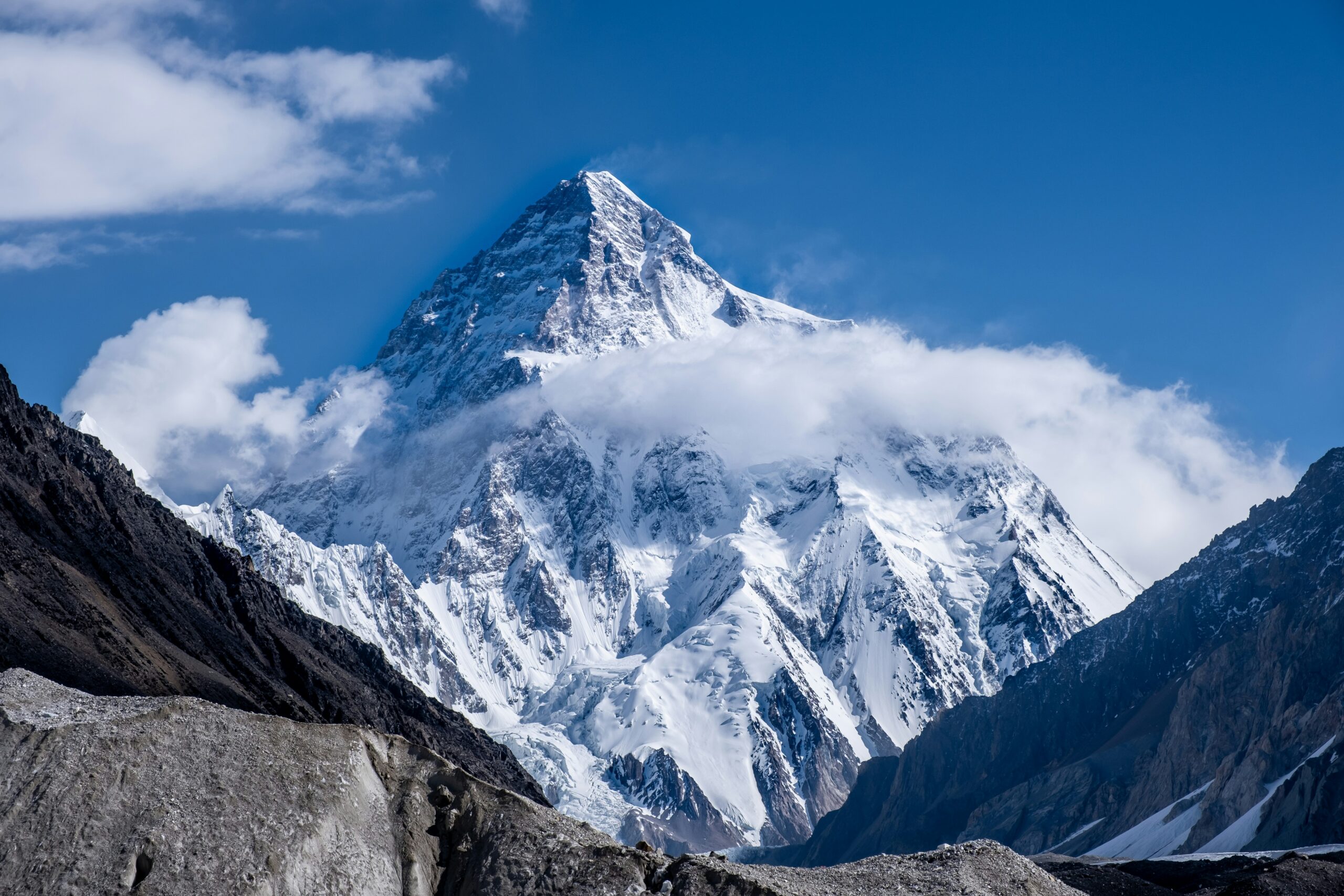
K2 the second highest peak in the world at 8611 meters elevation showing the iconic granite pyramid shape rising dramatically from the Karakoram glaciers on the Pakistan China border with the Abruzzi Spur standard climbing route visible on the south face below the notorious bottleneck section at approximately 8200 meters where sustained ice climbing combines with serac fall hazard from massive overhanging seracs that cause many of the deaths on K2 the savage mountain widely considered the second most dangerous 8000 meter peak in the world after Annapurna I with a death rate of approximately 21 to 29 percent
K2 — the Savage Mountain at 8,611 meters. Generally, K2 is widely considered the most technically difficult 8,000-meter peak to climb safely. Specifically, the standard Abruzzi Spur route on the south side from Pakistan involves sustained steep ice and rock climbing throughout the upper mountain — fundamentally different from Mount Everest’s standard South Col route which has only short sections of technical difficulty. Notably, the notorious Bottleneck section at approximately 8,200 meters is where most K2 deaths occur — climbers must traverse beneath massive overhanging seracs that periodically calve onto the route, with no avoidance option.Photo: K2 in the Karakoram. Adobe Stock licensed image, Global Summit Guide media library.

K2 — The Savage Mountain

K2 earned its “Savage Mountain” nickname after the catastrophic 1986 climbing season when 13 climbers died on K2 in a single summer — including some of the world’s most experienced high-altitude mountaineers. Generally, the nickname stuck because it captures K2’s essential character: a mountain that punishes any error with no easy descent options. Specifically, K2’s technical difficulty means climbers cannot quickly retreat from upper sections when weather changes; the sustained climbing demand means exhaustion accumulates throughout the climb; and the Karakoram weather can transform survivable conditions into impossible storms within hours.

What distinguishes K2 from Mount Everest (despite being only 238 meters shorter) is the technical sustained demand. Generally, Everest’s standard South Col route from Nepal involves long approach trekking but relatively limited technical climbing — most of the route is glacier walking, steep snow slopes, and fixed-rope sections. Specifically, K2’s standard Abruzzi Spur route involves sustained Grade III-IV ice climbing, mixed rock and ice pitches, and the notorious House’s Chimney rock pitch at approximately 6,700 meters. Notably, K2 climbing demands continuous mountaineering competence at altitude in a way that Everest typically does not.

The K2 Bottleneck Section

The K2 Bottleneck is one of the most dangerous sections in all of mountaineering — a section of the standard route at approximately 8,200 meters where climbers must traverse beneath massive overhanging seracs. Specifically, the Bottleneck is a narrow couloir leading to the summit ridge, with hundreds of feet of overhanging ice cliffs directly above the route. Generally, these seracs periodically calve, sending massive blocks of ice down the climbing route — there is no way to avoid the hazard zone if you want to climb the standard route.

⚠ The 2008 K2 Disaster — Bottleneck Tragedy

Generally, the deadliest single event in K2 history was the August 2008 disaster when a massive serac collapse in the Bottleneck killed 11 climbers in a single 24-hour period. Specifically, climbers ascending had successfully summited but were descending through the Bottleneck when the serac released, killing multiple climbers and stranding others above. Notably, the 2008 disaster involved climbers from multiple expeditions and nationalities — including some of the world’s most experienced high-altitude mountaineers — demonstrating that K2’s Bottleneck hazard cannot be reliably mitigated even by elite skill. Several books document this event, most notably Graham Bowley’s No Way Down.

The Annapurna Death Rate Explained

The Annapurna death rate is approximately 28-32% deaths per successful summit — the highest death rate of any 8,000-meter peak in the world. Generally, this means roughly one climber dies for every 3 successful summits on Annapurna I — a statistically catastrophic ratio that has remained essentially unchanged for decades despite improvements in mountaineering gear, communication, and weather forecasting. Specifically, the Annapurna death rate is driven primarily by avalanche hazard on the standard North Face route, which crosses heavily avalanche-prone terrain at multiple sections.

What makes the Annapurna death rate uniquely difficult to reduce is the structural nature of the hazard. Generally, most mountaineering hazards can be partially mitigated through skill, judgment, gear, or timing: better weather forecasting reduces storm casualties, better acclimatization reduces altitude deaths, better climbing technique reduces fall accidents. Specifically, Annapurna’s avalanche hazard cannot be substantially mitigated by any of these factors — the avalanche slopes are loaded by seasonal snowpack and release stochastically (i.e., randomly) based on factors that climbers cannot perceive or predict from below. Notably, this is why Annapurna’s death rate has remained stable even as the death rates of other 8,000-meter peaks have declined with improving technology and practice.

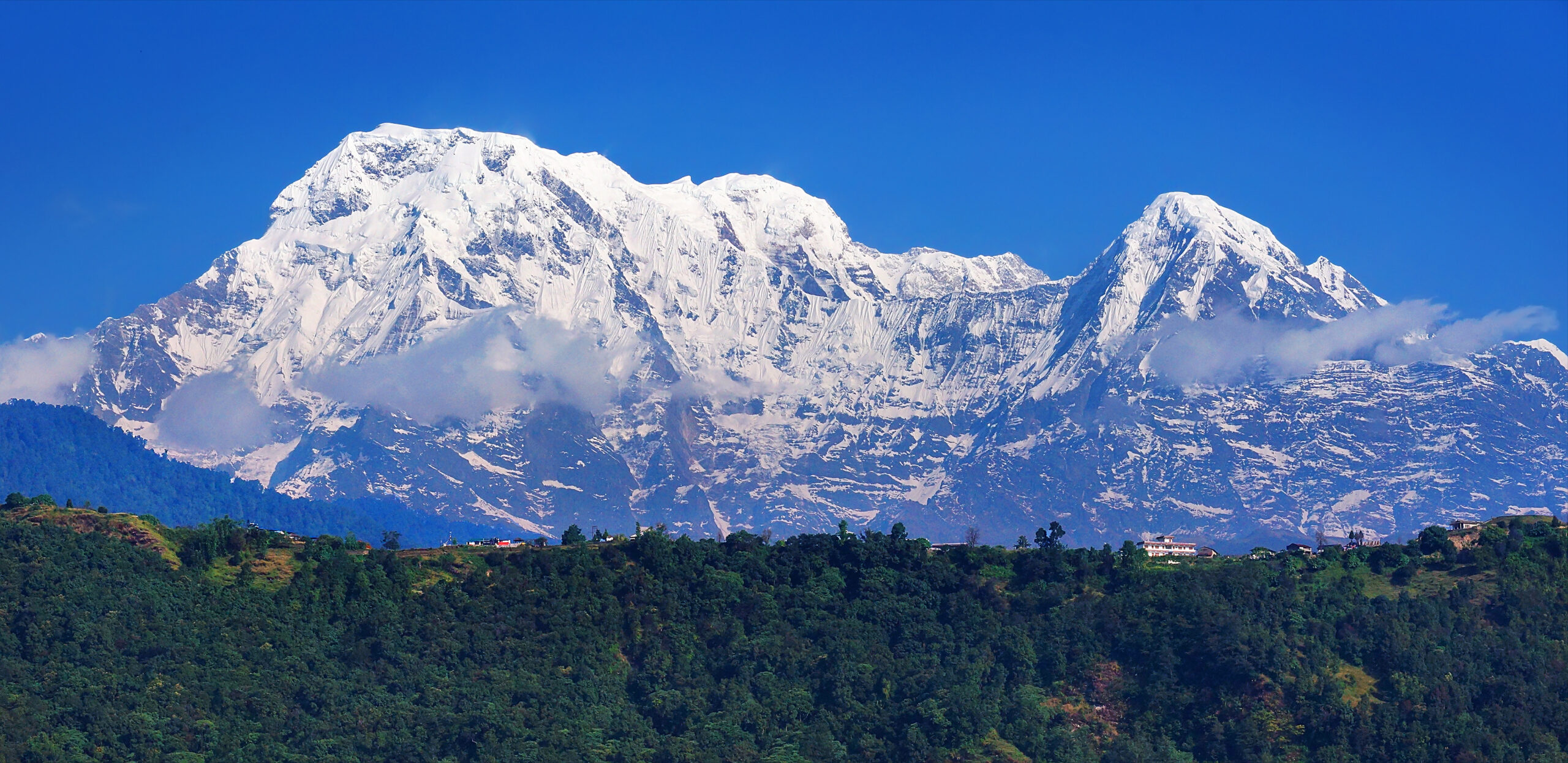
Annapurna I the 10th highest peak in the world at 8091 meters elevation in the Annapurna Massif of Nepal showing the massive snow and ice peak that is widely considered the most dangerous 8000 meter peak to climb with the highest death rate of any 8000 meter peak in the world at approximately 28 to 32 percent deaths per summit attempt according to the Himalayan Database primarily driven by catastrophic avalanche hazard on the standard North Face climbing route that historically claims approximately one climber for every three successful summits making it the statistically deadliest mountain to climb in the world
Annapurna I — the deadliest 8,000-meter peak in the world. Generally, Annapurna I is the most dangerous mountain to climb in the world by death rate statistics. Specifically, the standard North Face route faces severe avalanche hazard that has remained essentially unchanged for decades — improvements in weather forecasting, gear, and mountaineering technique have reduced death rates on most other 8,000-meter peaks but have not been able to address Annapurna’s structural avalanche risk. Notably, Annapurna I was the first 8,000-meter peak ever climbed (Maurice Herzog and Louis Lachenal, French expedition, 1950) — predating Mount Everest by three years.Photo: Annapurna I in the Annapurna Massif. Adobe Stock licensed image, Global Summit Guide media library.

Annapurna — Why So Deadly

Annapurna I’s deadliness comes from three interlocking factors that make the standard North Face route uniquely hazardous:

  1. Avalanche-prone route structure: The North Face standard route crosses heavily avalanche-prone terrain at multiple sections. Generally, climbers are exposed to avalanche hazard for hours during ascent and descent. Specifically, the route passes beneath loaded snow slopes that periodically release as massive avalanches, sometimes burying entire roped teams.
  2. Limited route alternatives: Unlike Mount Everest (multiple established routes) or K2 (also multiple routes), Annapurna I has very few viable alternative routes. Generally, the North Face is the only widely climbed route — the South Face is one of the hardest big-wall climbs in the world (climbed by only a handful of elite mountaineers since the 1970 Bonington/Whillans first ascent) and other approaches are even more dangerous.
  3. Smaller climbing community familiarity: Generally, far fewer climbers attempt Annapurna I than attempt K2, Everest, or Cho Oyu — meaning institutional knowledge about Annapurna’s conditions is more limited. Specifically, expedition reports are fewer, weather pattern documentation is sparser, and guide service experience is narrower than on more-attempted 8,000-meter peaks.

The Annapurna Avalanche Hazard

The Annapurna avalanche hazard is essentially unmitigable through climbing skill — this is what makes Annapurna fundamentally different from other dangerous mountains. Specifically, avalanche risk on the North Face is a function of:

  • Slope angles: The North Face has slopes in the 35-45° range where avalanche release is most common
  • Snow loading: Seasonal snowpack accumulates on the route’s terrain
  • Stochastic release timing: Avalanches release based on factors invisible from below (subsurface weakness, temperature gradient, sun loading)
  • Wide deposition zones: When avalanches occur, they cover wide areas of the route — no narrow safe zone exists
ℹ️ Reinhold Messner on Annapurna

Generally, Reinhold Messner — the first person to climb all 14 8,000-meter peaks — has described Annapurna I as the most dangerous peak in his 8,000er progression. Specifically, Messner reportedly called Annapurna I the “scariest” of the 14, noting that its danger could not be substantially controlled by climbing skill. Notably, Messner climbed Annapurna’s South Face — an even more technical objective than the standard North Face — but acknowledged that the standard North Face’s avalanche risk represented a different category of danger than the technical difficulty of harder routes.

Which Is Harder, K2 or Annapurna?

K2 is harder technically; Annapurna is harder by objective hazard. Generally, this is the consensus among elite Himalayan mountaineers who have climbed both peaks. Specifically, the distinction comes from understanding what “harder” can mean:

Difficulty TypeK2Annapurna IHarder Peak
Sustained technical climbingHighest of any 8000erSubstantial but less sustainedK2
Maximum altitude8,611 m8,091 mK2 (+520 m)
Death zone timeLonger (higher summit)Shorter (lower summit)K2
Objective hazard (avalanche/serac)Bottleneck seracWide avalanche zones on N. FaceAnnapurna (more diffuse)
Mitigability of hazardPartial through weather forecastingVery limited — structuralAnnapurna
Weather severityKarakoram storms severeNepal weather variable but less extremeK2
Logistical complexityPakistan/China visa, remote approachNepal trekking permit, easier approachK2
Required climbing skillHighest possible alpine skillStrong alpine skillK2
Statistical death rate~21-29%~28-32%Annapurna (per attempt)
Overall difficultyMost technically difficult 8000erStatistically most dangerous 8000erDifferent types

First Ascent History

The first ascents of Annapurna I and K2 are foundational events in 8,000-meter climbing history. Generally, Annapurna I was the first 8,000-meter peak ever climbed (1950, three years before Everest), while K2 was the 12th 8,000-meter peak climbed (1954, after Everest and several others).

First AscentAnnapurna IK2
DateJune 3, 1950July 31, 1954
CountryFranceItaly
Summit climbersMaurice Herzog, Louis LachenalAchille Compagnoni, Lino Lacedelli
Expedition leaderMaurice HerzogArdito Desio
OutcomeSuccessful but severe frostbite (multiple amputations)Successful, all returned alive
RouteNorth Face (still standard route)Abruzzi Spur (still standard route)
SignificanceFirst 8000er ever climbed12th 8000er climbed; controversy over oxygen use
Notable bookAnnapurna by Maurice HerzogMultiple — see Walter Bonatti’s accounts

The Deadliest Mountains in the World — Complete Ranking

For climbers and enthusiasts seeking the complete picture of the most dangerous mountains to climb, here is the consensus ranking by death rate:

#MountainElevationDeath RateWhy Deadly
1Annapurna I (Nepal)8,091 m~31%North Face avalanche hazard
2K2 (Pakistan/China)8,611 m~21-29%Bottleneck serac, sustained technical demand, weather
3Nanga Parbat (Pakistan)8,126 m~21%Rupal Face (largest mountain face in world), weather
4Kangchenjunga (Nepal/India)8,586 m~20%Severe weather, descent fatalities
5Manaslu (Nepal)8,163 m~9%Avalanche hazard, descent
6Dhaulagiri I (Nepal)8,167 m~9%Weather, avalanche
7Makalu (Nepal/China)8,485 m~7%Sustained technical climbing
8Lhotse (Nepal/China)8,516 m~3%Death zone exposure
9Gasherbrum I (Pakistan/China)8,080 m~3%Karakoram weather
10Gasherbrum II (Pakistan/China)8,034 m~3%Easier among 8000ers
11Cho Oyu (Nepal/China)8,188 m~2%Easiest 8000er — beginner-friendly
12Shishapangma (China)8,027 m~2%Avalanche in some seasons
13Broad Peak (Pakistan/China)8,051 m~5%Karakoram weather
14Mount Everest (Nepal/China)8,849 m~1.7%Crowding, weather, altitude
Annapurna I in the Annapurna Massif of Nepal showing the massive snow and ice peak that holds the distinction of being the first 8000 meter peak ever climbed by Maurice Herzog and Louis Lachenal of the French expedition in 1950 three years before Mount Everest was first summited and which is widely considered the most dangerous mountain in the world to climb with the highest death rate of any 8000 meter peak at approximately 28 to 32 percent deaths per summit attempt according to the Himalayan Database primarily due to catastrophic avalanche hazard on the standard North Face climbing route
Annapurna I — the first 8,000er ever climbed and the deadliest. Generally, Annapurna I holds two distinct places in mountaineering history: the first 8,000-meter peak ever summited (Herzog and Lachenal, French expedition, June 3, 1950) and the most dangerous 8,000-meter peak to climb. Specifically, the 1950 first ascent was successful but produced severe consequences — both Herzog and Lachenal suffered devastating frostbite leading to multiple amputations. Notably, Herzog’s expedition memoir Annapurna remains one of the foundational books in mountaineering literature.Photo: Annapurna I. Global Summit Guide media library.
DECISION RUBRIC · ATTEMPT K2

Attempt K2 If…

  • You have multiple prior 8,000-meter ascents including technical ones (Manaslu, Makalu, Kangchenjunga)
  • You have elite alpine technical skills — sustained Grade IV ice climbing at altitude
  • You can commit to extended Karakoram weather waits — 6-8 week expedition window
  • You can fund $35,000-50,000+ for a quality commercial expedition
  • You accept the Bottleneck serac fall risk — partially unmitigable
  • You have Pakistan/China visa logistics capability
  • You want the second-highest peak in the world in your climbing record
  • You pursue technical difficulty as your primary 8000-meter objective
  • You have winter cold tolerance — Karakoram is extreme
  • You’re following the 14 8,000ers progression at advanced stage
DECISION RUBRIC · ATTEMPT ANNAPURNA

Attempt Annapurna I If…

  • You have multiple prior 8,000-meter ascents with technical experience
  • You accept catastrophic objective avalanche hazard — partially unmitigable
  • You can commit 4-6 week Nepal expedition window
  • You can fund $25,000-50,000+ for commercial expedition
  • You’re pursuing the 14 8,000ers — Annapurna is required for completion
  • You prefer Nepal logistics over Pakistan/China complexity
  • You want a historically significant peak — first 8000er ever climbed
  • You accept higher statistical death risk in exchange for fewer technical demands than K2
  • You can handle the psychological weight of climbing the deadliest peak
  • You’re informed about Annapurna’s avalanche history and accept the structural risk

8,000-Meter Peak Progression

For climbers pursuing the 14 8,000-meter peaks, K2 and Annapurna sit at advanced stages of the progression — typically attempted after substantial 8,000-meter experience on less-deadly peaks:

StageRecommended ObjectivesWhy
Foundation7,000-meter peaks (e.g., Ama Dablam, Aconcagua)Altitude experience without death zone
First 8000erCho Oyu (8,188m) — easiest 8000erLowest death rate; introduction to death zone
Second 8000erManaslu (8,163m) or Gasherbrum II (8,034m)Manageable technical demand
Mount EverestEverest via Nepal South Col or Tibet North RidgeMajor milestone; develops death zone tolerance
Technical 8000ersMakalu, Kangchenjunga, Nanga ParbatDevelop sustained technical at altitude
Statistical risk peaksAnnapurna IStatistically deadliest — requires risk acceptance
Ultimate technical 8000erK2Hardest 8000er to climb safely
Remaining 8000ersLhotse, Dhaulagiri, GI, Broad Peak, ShishapangmaCompletion of 14 8000ers if pursued

Frequently Asked Questions About K2 vs Annapurna

What is the most dangerous mountain to climb in the world?

Annapurna I in Nepal is the most dangerous mountain to climb in the world, with the highest death rate of any 8,000-meter peak — historically approximately 28-32% deaths per successful summit (Himalayan Database). K2 at 8,611 meters is the second most dangerous major 8,000-meter peak with a death rate of approximately 21-29% historically. Nanga Parbat (Pakistan, 8,126m) and Kangchenjunga (Nepal-India, 8,586m) round out the top four deadliest 8,000-meter peaks. For context, Mount Everest has a death rate of approximately 1.7% — making Annapurna roughly 18 times deadlier per summit attempt than Everest. The deadliest mountains are characterized by sustained technical difficulty, avalanche-prone routes, severe weather, and narrow summit windows.

Is K2 or Annapurna deadlier?

Annapurna is deadlier than K2 by death rate, but K2 has more total deaths in absolute numbers. Annapurna I has a historical death rate of approximately 28-32% deaths per summit attempt — the highest of any 8,000-meter peak. K2 has a death rate of approximately 21-29% deaths per summit attempt depending on time period. However, K2 has more total cumulative deaths (approximately 96+ confirmed deaths) than Annapurna (approximately 75+ confirmed deaths) because K2 has attracted significantly more attempts over the decades. The ratio is what matters for danger: per attempt, Annapurna is statistically the most dangerous 8,000-meter peak in the world. Recent decades have seen improved K2 success rates with better weather forecasting; Annapurna’s avalanche hazard remains essentially unchanged.

What is the death rate on K2?

The death rate on K2 is historically approximately 21-29% deaths per summit attempt — meaning roughly one climber dies for every 3-5 successful summits. The Himalayan Database and updated 8,000-meter peak statistics place K2’s modern death rate around 21% deaths per successful summit (recent decades) with the historical figure approximately 29% counting earlier expeditions. K2’s death rate has improved with better weather forecasting, modern gear, and refined logistics — but the mountain remains extremely dangerous. The total death count on K2 is approximately 96+ confirmed deaths against approximately 700+ confirmed summits as of the mid-2020s. K2 is the second-highest peak in the world (8,611m) but climbers regard it as significantly harder than Mount Everest (8,849m) because of sustained technical difficulty, the bottleneck section serac hazard, and severe Karakoram weather.

What is the death rate on Annapurna?

The death rate on Annapurna I is historically approximately 28-32% deaths per successful summit — the highest death rate of any 8,000-meter peak in the world. The Himalayan Database places Annapurna I’s death rate at approximately 31% (counting all attempts), making it the statistically deadliest major mountain on Earth. Annapurna’s death rate is driven primarily by avalanche hazard on the standard North Face route, which crosses heavily avalanche-prone terrain at multiple sections. The total death count on Annapurna I is approximately 75+ confirmed deaths against approximately 365+ confirmed summits — significantly fewer summits than K2 because Annapurna has historically attracted fewer attempts. Annapurna’s death rate has remained essentially unchanged for decades — the avalanche hazard cannot be eliminated by better weather forecasting or modern gear.

Why is Annapurna so deadly?

Annapurna I is so deadly primarily because of catastrophic avalanche hazard on the standard North Face route. The North Face climbing route crosses heavily avalanche-prone terrain at multiple sections, with climbers exposed for hours during ascent and descent. The avalanche hazard cannot be substantially mitigated — it is a function of the mountain’s structure rather than weather forecasting or climber skill. The North Face has steep slopes loaded with seasonal snowpack that periodically releases as massive avalanches, sometimes killing entire roped teams simultaneously. Annapurna’s South Face is even more technically demanding (one of the hardest big-wall climbs in the world) but is climbed by far fewer parties, so most deaths occur on the standard North Face. Other contributing factors include: short Nepal monsoon-bracketed climbing seasons, weather windows shorter than K2 typically, smaller community of high-altitude climbers familiar with Annapurna specifically.

Why is K2 considered the savage mountain?

K2 is considered the savage mountain because of its combination of extreme technical difficulty, brutal Karakoram weather, and sustained exposure to objective hazards. K2 is significantly more technically demanding than Mount Everest — climbers face sustained steep ice climbing, rock pitches, and the notorious bottleneck section at approximately 8,200 meters where ice climbing combines with serac fall hazard from massive overhanging seracs above. K2’s Karakoram location produces some of the most violent storm weather in mountaineering — climbers can be trapped at altitude during multi-day storms. K2 received the nickname savage mountain after the 1986 climbing season when 13 climbers died, and the term stuck because it captures K2’s character: a mountain that punishes any error, with no easy descent options once committed to the upper mountain. The second-highest peak in the world is widely considered the second-hardest peak in the world to climb, after Annapurna or competing with Annapurna depending on whose ranking you reference.

What is harder, K2 or Annapurna?

K2 and Annapurna I are both extremely difficult — they are typically ranked as the two hardest 8,000-meter peaks to climb, but they present different types of difficulty. K2 is harder technically — its standard Abruzzi Spur route involves sustained steep ice climbing, rock pitches, and the notorious bottleneck section requiring serious mountaineering skill. K2 demands the highest sustained technical competence of any 8,000-meter peak. Annapurna I is harder in terms of pure objective hazard — the avalanche risk on the standard North Face route cannot be mitigated by climbing skill or technical ability. Most expert mountaineers rank the two peaks roughly equally in overall difficulty but with different character: K2 punishes technical errors and weather miscalculation; Annapurna punishes statistical bad luck on inherently avalanche-prone terrain. Climbers attempting either peak should have substantial prior 8,000-meter experience on less-deadly peaks first.

How many people have died on K2 vs Annapurna?

Approximately 96 climbers have died on K2 and approximately 75 climbers have died on Annapurna I as of recent counts — K2 has more absolute deaths because more climbers have attempted it. K2 has approximately 96+ confirmed deaths against approximately 700+ confirmed summits. Annapurna I has approximately 75+ confirmed deaths against approximately 365+ confirmed summits — significantly fewer total attempts but a higher death-to-summit ratio. The difference reveals an important statistical distinction: total deaths are a function of mountain popularity (more attempts equal more deaths); death rate (deaths per summit) reveals the actual danger per climber. On the death rate metric, Annapurna I is statistically the most dangerous 8,000-meter peak in the world; K2 is second-most dangerous among the most-attempted 8,000-meter peaks. Both counts continue to update as new expeditions are reported.

Has K2 been climbed in winter?

Yes, K2 was first climbed in winter on January 16, 2021, by a Nepali team led by Nirmal Purja (Nimsdai) — making K2 the last 8,000-meter peak to receive a winter ascent. The 2021 winter ascent involved a team of 10 Nepali climbers (Sherpas and other Nepali nationalities) who summited together as a group, achieving a major milestone in Himalayan mountaineering history. K2’s winter conditions are notorious for combining extreme cold (-40°F to -60°F), violent wind, and minimal weather windows — earlier winter K2 attempts over decades had all failed, often with fatalities. The 2021 ascent was significant because all previous 8,000-meter winter ascents had been claimed by Polish climbers as their national specialty; the Nepali team’s K2 winter ascent represented a shift in the high-altitude climbing community. Annapurna received its first winter ascent in 1987 by Polish climbers Jerzy Kukuczka and Artur Hajzer.

What are the deadliest mountains in the world?

The deadliest mountains in the world by death rate (deaths per summit attempt) are typically ranked: 1) Annapurna I (Nepal, 8,091m) at approximately 28-32% death rate, 2) K2 (Pakistan-China, 8,611m) at approximately 21-29% death rate, 3) Nanga Parbat (Pakistan, 8,126m) at approximately 21% death rate, 4) Kangchenjunga (Nepal-India, 8,586m) at approximately 20% death rate, 5) Manaslu (Nepal, 8,163m) at approximately 9% death rate. These five peaks dominate the deadliest mountain rankings and are sometimes collectively called the killer mountains. The deadliest mountains share characteristics including extreme technical difficulty, avalanche-prone routes, short climbing seasons, severe weather, and locations distant from rescue infrastructure. Mount Everest’s death rate is approximately 1.7% — making the deadliest 8,000-meter peaks approximately 12-20 times more dangerous per attempt than Everest. Lower-altitude peaks like Mount Hood, Mount Rainier, and Mont Blanc see more total deaths annually because of higher attempt volume but have much lower death rates per attempt.

Methodology & Editorial Standards

How This Comparison Was Built

1. Research-Based Approach

This K2 vs Annapurna comparison is research-based — both peaks are 8,000-meter mountains outside our editorial team’s direct climbing experience, which is the standard reality for almost all mountaineering journalism since only an estimated 5,000+ climbers have ever summited any 8,000-meter peak globally. Specifically, the information in this comparison comes from authoritative published sources rather than personal experience, with careful sourcing.

2. Himalayan Database (Primary Statistics Source)

Death rate statistics, summit counts, and first ascent records are sourced primarily from the Himalayan Database — the authoritative archive of Himalayan climbing statistics established by Elizabeth Hawley over decades of expedition documentation. Generally, this is the most cited and most reliable source for Himalayan mountaineering statistics in the world.

3. American Alpine Journal

Historical expedition reports, route specifics, and detailed climbing narratives are cross-referenced with the American Alpine Journal (AAJ) — the journal of record for North American mountaineering with extensive Himalayan and Karakoram coverage.

4. Climbing Memoirs and Books

Key books referenced include: Maurice Herzog’s Annapurna (1952, first ascent expedition memoir), Ed Viesturs’s K2: Life and Death on the World’s Most Dangerous Mountain (2009), Walter Bonatti’s various K2 accounts, and Graham Bowley’s No Way Down (2010, on the 2008 K2 disaster).

5. UIAA Standards

Technical climbing grading and route classification draws on UIAA (International Climbing and Mountaineering Federation) standards.

6. Editorial Independence

No affiliate partnerships with expedition operators, gear brands, or guide services influence recommendations. The article generates revenue only through Google AdSense display ads when applicable.

7. Update Cycle

This comparison is reviewed quarterly. Next scheduled review: September 2026. Death rates and summit counts update annually as new expeditions are documented.

Affiliate disclosure: Global Summit Guide does not maintain affiliate partnerships with expedition operators, gear brands, or guide services mentioned in this K2 vs Annapurna comparison. No commission is earned from any external link clicks. This page contains no sponsored content. The site is supported by Google AdSense (Display Ads) when applicable.

Sources and References

Numbered Source References

This K2 vs Annapurna death rate and dangerousness comparison synthesizes data from authoritative mountaineering archives, expedition reports, and published climbing literature.

  1. The Himalayan Database · https://www.himalayandatabase.com/ — Authoritative archive of Himalayan climbing statistics established by Elizabeth Hawley.
  2. American Alpine Journal · Historical expedition reports for both K2 and Annapurna.
  3. UIAA (International Climbing and Mountaineering Federation) · https://www.theuiaa.org/ — Alpine grading and route classification.
  4. Maurice Herzog · Annapurna (1952, Lippincott) — First ascent expedition memoir.
  5. Ed Viesturs and David Roberts · K2: Life and Death on the World’s Most Dangerous Mountain (2009, Broadway Books).
  6. Walter Bonatti · The Mountains of My Life (Modern Library) — K2 1954 expedition account.
  7. Graham Bowley · No Way Down (2010, Harper) — 2008 K2 disaster.
  8. Reinhold Messner · Various publications on his 14 8,000-meter peaks completion.
  9. Nirmal Purja (Nimsdai) · Beyond Possible (2020) — 2021 winter K2 ascent context.
  10. ExplorersWeb · Modern expedition reporting on K2 and Annapurna.
  11. Alpinist Magazine · Historical and modern expedition coverage.
  12. Global Summit Guide K2 Death Rate analysis · Cross-referenced internal coverage.

Methodology note. Quarterly review cycle — next review September 2026. Death rates and summit counts update annually as new expeditions are documented; verify current statistics against the Himalayan Database for the most recent figures.

About the Author

Travis Ludlow

Editor & Route Research, Global Summit Guide

Travis Ludlow is the editor of Global Summit Guide, an independent mountaineering and high-altitude climbing resource. While Travis has personally climbed Mount Kilimanjaro (Tanzania), Pico de Orizaba and Iztaccíhuatl (Mexico), and Rainier-class peaks, he has not climbed any 8,000-meter peak — a reality shared with virtually all mountaineering writers given that only an estimated 5,000+ climbers have ever summited any 8,000-meter peak globally.

Specifically, this K2 vs Annapurna comparison synthesizes information from authoritative published sources including the Himalayan Database, American Alpine Journal, expedition memoirs, and statistical analyses published by mountaineering researchers. Notably, the editorial process at Global Summit Guide includes safety review by Dawson Ludlow (Wilderness First Aid certified) and gear review by Walker Ludlow.

Expertise areas: 8,000-meter peak statistics, Himalayan mountaineering history, mountaineering literature, climbing progression frameworks. Editorial role: Editor and route research for Global Summit Guide’s 700+ published articles. Approach: Honest framing about research-based vs first-hand content; rigorous sourcing for statistical claims. Read more about the Global Summit Guide editorial team →

Continue Your 8,000-Meter Research

The Reality of the Deadliest Mountains

K2 and Annapurna I represent the extreme end of mountaineering — peaks where elite preparation, optimal weather, and experienced judgment can still result in fatality on any given attempt. Generally, climbers attempting these peaks understand they are accepting statistical risk that no amount of skill can fully eliminate. Specifically, the 28-32% Annapurna death rate and 21-29% K2 death rate are not problems to be solved by better gear or more training — they are the structural reality of these mountains. Notably, the proper response to these statistics is informed consent: climbers who choose to attempt these peaks must do so with full awareness of the death rate reality, not with optimistic assumptions about skill overcoming structural hazard.

K2 Death Rate Analysis → 14 Eight-Thousanders →
Language »