
Last updated September 10, 2026
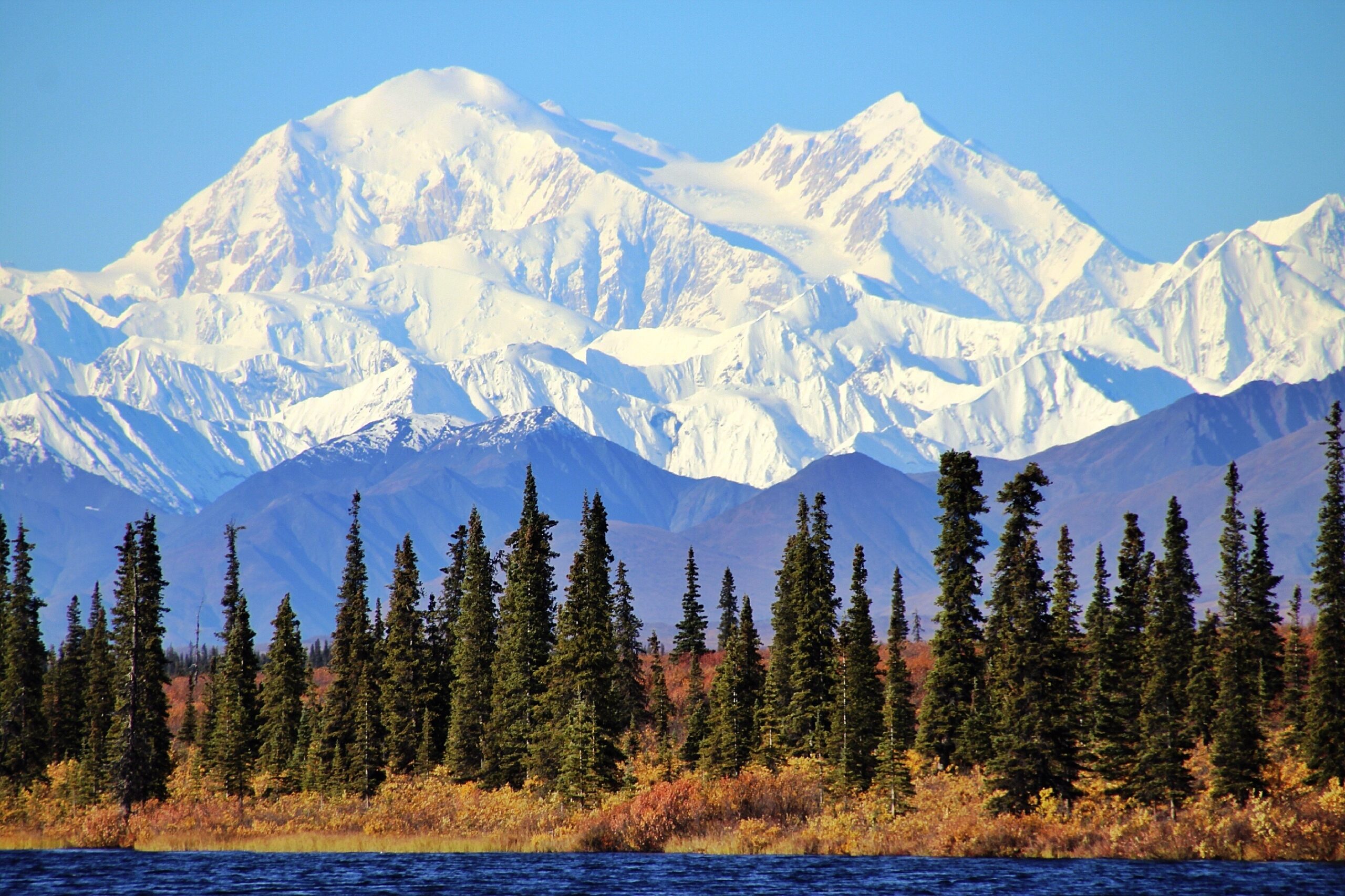
Denali vs Everest: Which Is Harder—and Which Should You Climb First?
Everest is harder overall. Denali is usually the harder daily physical grind under standard guided models. Everest adds 2,658.86 meters of elevation, prolonged death-zone exposure and oxygen-system complexity. Denali asks climbers to haul heavy personal and group loads by pack and sled, build camps, travel roped on a highly crevassed glacier and function for weeks in severe Alaska Range cold.
Reviewed August 19, 2026 · National Park Service + Nepal Department of Tourism + current GSG parent-guide definitions
Is Denali harder than Everest?
Everest is harder in absolute mountaineering terms because of extreme altitude. Its summit is 8,848.86 m, and the decisive summit push spends prolonged time above 8,000 m, where the body cannot fully acclimatize. Most commercial climbers also depend on a complex supplemental-oxygen system through the upper route.
Denali is often harder day to day. NPS describes the West Buttress as a highly crevassed glacier route with snow and ice climbing to about 40 degrees, fixed lines above the 14,200-foot camp, and upper-mountain sections where climbers may need to place protection. Standard guided teams still move substantial personal and shared expedition loads by pack and sled.
Denali normally comes first for a climber progressing toward Everest because it proves glacier competence, expedition load management, cold-weather systems and multi-week camp discipline. But Denali does not prove readiness for Everest’s death zone, oxygen systems or 7,000–8,000 m physiology.
- Harder overall: Everest.
- Harder daily workload: Denali.
- Greater self-sufficiency: Denali.
- Greater altitude burden: Everest.
- Greater oxygen complexity: Everest.
- Usually climbed first: Denali.
Denali vs Everest Difficulty Scorecard
The comparison becomes much clearer when “harder” is divided into the specific systems each mountain demands.
Bottom line
Denali can feel harder for more hours of more days because the climber works harder inside the expedition system. Everest is still the harder mountain overall because no Denali workload recreates the physiologic consequences of climbing to nearly 8,850 m.
Denali vs Everest at a Glance
Numbers are useful only when the definitions match.
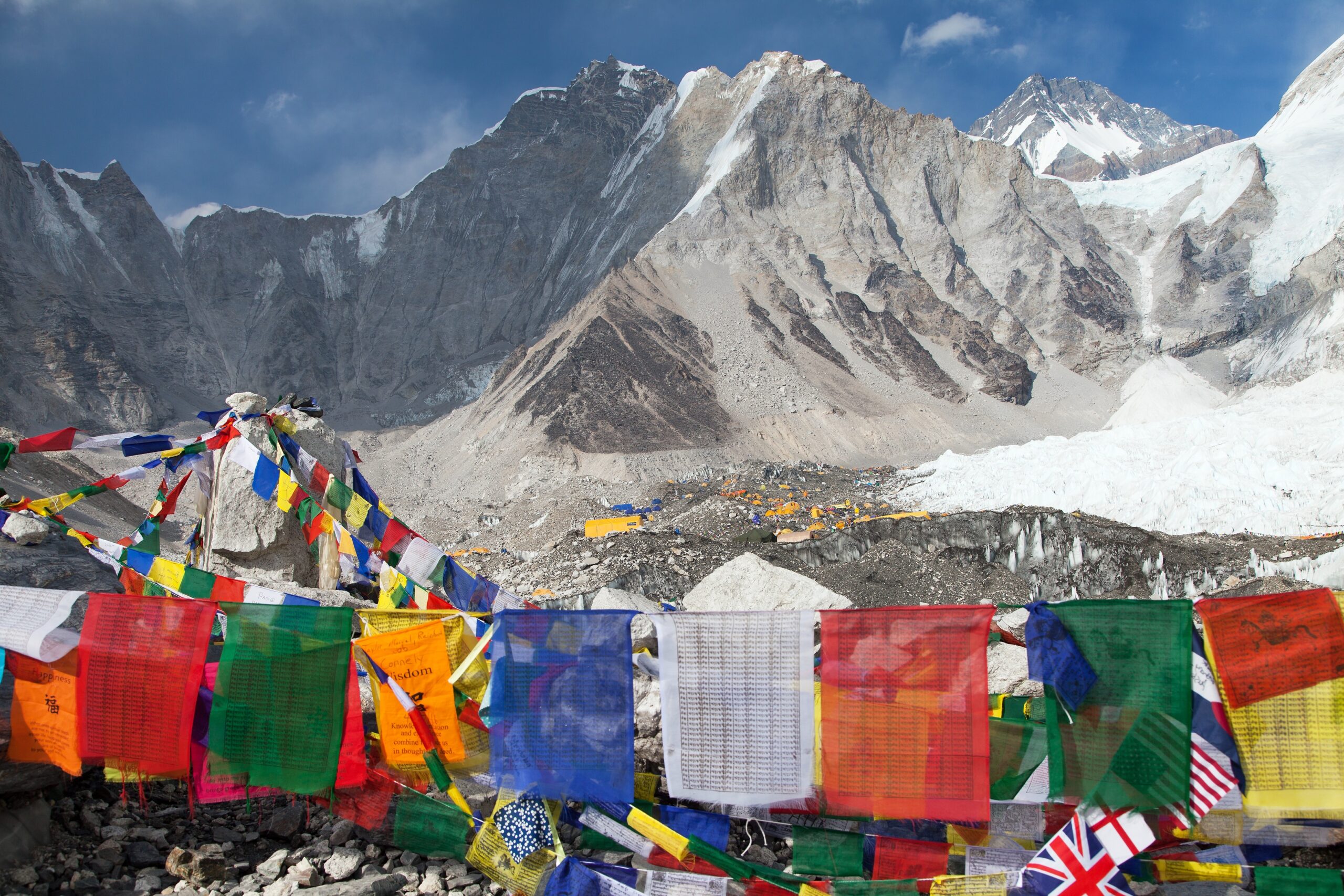
| Dimension | Denali | Everest |
|---|---|---|
| Elevation | 6,190 m / 20,310 ft | 8,848.86 m / 29,031.7 ft |
| Standard guided route | West Buttress | South Col from Nepal |
| Technical route character | Highly crevassed glacier, snow/ice to ~40°, fixed lines and exposed upper ridge | Glacier/icefall, fixed lines, Lhotse Face, South Col and death-zone summit ridge |
| Typical commercial duration | Roughly 3 weeks | Roughly 6–9 weeks |
| Supplemental oxygen | Not standard on West Buttress | Standard for most commercial summit attempts |
| Client load burden | Heavy pack + sled + shared expedition gear | Generally lower under full-service model; varies by operator tier |
| Camp labor | Clients share substantial responsibility | More pre-positioned high-camp support under full-service model |
| 2026 government climbing fee | $450 adult / $350 age 24 or younger + $15 park entrance | $15,000 spring normal-route royalty |
| Best preparation role | Major expedition foundation | End-stage high-altitude objective |
Guided Denali vs Full-Service Everest
The fairest practical comparison is not independent Denali against the most supported Everest package—or vice versa.
Guided Denali West Buttress
- Guides lead route, camp and safety decisions.
- Clients still haul personal and group loads.
- Pack-and-sled movement is central to the expedition.
- Teams construct and maintain camps.
- Glacier-rope travel and crevasse systems are foundational.
- No standard bottled-oxygen system.
Full-Service Everest South Col
- Nepali teams establish major route and camp systems.
- Fixed lines are used through most technical sections.
- High camps and oxygen are pre-positioned.
- Client carrying burden varies with support tier.
- Supplemental oxygen becomes a summit-system dependency.
- Support lowers workload; it does not remove death-zone risk.
“Sherpa” is an ethnic identity, not a synonym for porter. Everest teams employ Nepali guides and high-altitude workers from Sherpa and other communities for route fixing, carrying, camp stocking, oxygen management, guidance and rescue support. See What Do Sherpas Do on Everest?.
Denali can be a harder expedition workload. Everest is still the harder mountain.
The 8,848.86 m summit places the final climb and descent in a physiologic environment that Denali never reaches. Support can reduce carrying and camp labor; it cannot make the death zone equivalent to 6,190 m.
| Everest difficulty | Why Denali does not reproduce it |
|---|---|
| Death-zone exposure | Denali never exceeds 8,000 m; the body can acclimatize more completely at 6,190 m. |
| Oxygen dependence | Most commercial Everest strategies add masks, regulators, flow rates, bottle logistics and backup planning. |
| Longer acclimatization campaign | Everest normally requires a multi-week trek/rotation/recovery cycle before the summit window. |
| High-altitude decision degradation | Small delays and minor equipment problems become more consequential above 8,000 m. |
| Long summit/descent exposure | The final push occurs at an altitude where recovery is minimal and deterioration continues. |
The Everest parent guide owns full route, permit and current operating detail. The Everest Progression Plan owns the multi-year altitude build.
Denali’s Workload Starts on the Kahiltna Glacier
NPS describes the West Buttress as a highly crevassed glacier expedition with steep snow/ice and substantial upper-mountain consequence.
| Denali workload | Why it accumulates |
|---|---|
| Pack + sled hauling | Personal food, fuel, clothing and shared group equipment move up the mountain in stages. |
| Cache carries | Climbers often carry loads high, cache, descend and later move camp. |
| Camp construction | Teams dig platforms, build snow walls and maintain camp systems through storms. |
| Glacier systems | Roped travel and crevasse rescue competence remain central throughout the lower mountain. |
| Fixed lines | The headwall above 14,200 ft introduces steep fixed-line movement while already fatigued. |
| Autobahn / Denali Pass | NPS identifies this upper slope as historically the scene of more fatalities than any other Denali section. |
2026 Denali season snapshot
NPS’s preliminary 2026 season wrap-up recorded 976 registered Denali climbers, 582 summits (60%) and five West Buttress deaths. It also recorded 28 helicopter search-and-rescue events.
Those numbers are useful for understanding the 2026 Denali season, but they should not be directly compared with Everest unless the Everest dataset uses the same population, dates and denominator.
Denali Cold vs Everest Altitude
Neither mountain can be reduced to one thermometer or one elevation number.
Denali’s defining environment
- Subarctic latitude.
- Long exposure to severe cold and storms.
- High-latitude pressure effect makes the summit physiologically more serious than elevation alone suggests.
- Self-sufficient cold-weather camp management.
- Heavy equipment required to survive the environment.
Everest’s defining environment
- Far greater absolute elevation.
- Prolonged time above 7,000–8,000 m.
- Death-zone summit and descent.
- Oxygen-system dependence for most commercial climbers.
- Long acclimatization and recovery campaign.
Do not use a single “Denali feels like X meters in the Himalaya” conversion.
High latitude changes barometric pressure, but the exact physiologic comparison varies with season, atmosphere and model. The useful planning point is simply that Denali’s summit is physiologically harder than 6,190 m at lower latitude—without pretending that one fixed conversion is universal.
Denali vs Everest Cost & Permit Commitment
Separate government fees from operator prices and all-in trip cost.
| Cost layer | Denali | Everest |
|---|---|---|
| 2026 government climbing fee | $450 adult / $350 age 24 or younger | $15,000 spring normal-route royalty |
| Additional government entry | $15 park entrance unless covered by qualifying pass | Other Nepal/park/local fees handled through expedition structure |
| Commercial expedition cost | Typically far lower than Everest; operator/service level drives range | Much higher because of expedition staffing, oxygen, route support and logistics |
| Time away | Roughly 3 weeks plus travel/weather buffer | Roughly 6–9 weeks for standard South Col campaign |
NPS says Denali/Foraker climbers must register at least 60 days before the climb unless they qualify for a listed exception, pay the 2026 special-use fee and attend an in-person orientation in Talkeetna. Nepal’s Department of Tourism lists the Everest normal-route foreign-climber royalty at $15,000 in spring, effective since September 1, 2025.
For current all-in pricing, use the dedicated Denali guide and Everest cost breakdown.
Success & Risk: Why One Percentage Can Mislead
Denali and Everest public datasets are collected differently, so the page does not manufacture a single “safer mountain” percentage.
| Data question | Correct treatment |
|---|---|
| Denali 2026 summit result | NPS preliminary: 582 summits among 976 registered climbers = 60% for the 2026 season. |
| Everest success | State route, season, permits/people and whether support model is being filtered. |
| Mortality | Use the same denominator and cutoff date before comparing mountains. |
| Guided vs all-climber outcomes | Do not compare a selected guide-client group against every registered climber on another mountain. |
Use Denali Summit Success, Everest Summit Success and Death Rates by Mountain for denominator-specific data.
For most climbers: Denali first. Then add higher-altitude proof before Everest.
Denali is an excellent test of expedition systems. It is not a substitute for experiencing 7,000–8,000 m physiology, high-altitude oxygen systems and a much longer Himalayan expedition.
Skills That Transfer to Everest
Denali is valuable because it exposes weaknesses in expedition systems before a much larger Himalayan commitment.
| Transfers well | Still missing after Denali |
|---|---|
| Multi-week expedition routine | Death-zone physiology |
| Cold management | Supplemental-oxygen systems |
| Glacier travel and crevasse systems | Khumbu Icefall experience |
| Fixed-line efficiency | Extended 7,000–8,000 m exposure |
| Weather patience | Long Himalayan acclimatization rotations |
| Camp discipline and team contribution | High-altitude expedition with Nepali route-support system |
Use the Expedition Training Plans to separate Denali-specific load training from Everest-specific long-duration and altitude preparation.
Denali & Everest Research Library
This comparison owns “which is harder / which first.” Parent and child guides own detailed permits, routes, training and success data.
Denali Climb Guide
West Buttress, permit, cost, weather, gear and logistics.
Open Denali → Everest parentEverest Climb Guide
South Col route, permit, support, season and expedition planning.
Open Everest → ProgressionDenali Progression
Build glacier, load and cold systems before Alaska.
Plan Denali → ProgressionEverest Progression
Build the higher-altitude experience Denali alone cannot supply.
Plan Everest → DataDenali Summit Success
Season-specific and historical NPS success methodology.
Open Denali data → DataEverest Summit Success
Route, era and denominator-specific Everest outcomes.
Open Everest data → Earlier stepRainier vs Denali
Compare a foundational glacier climb with a major Alaska expedition.
Compare → CollectorSeven Summits Guide
See both mountains inside the continental-high-point progression.
Explore Seven Summits →Prepare for the Difference Between the Mountains
The best training link depends on whether the gap is expedition workload or Everest-specific support and altitude.
Expedition Training Plans
Use pack-and-sled specificity for Denali and a longer major-expedition build for Everest rather than one generic training plan.
Open Training Framework →What Do Sherpas Do on Everest?
Understand which route, camp, load and oxygen systems high-altitude workers manage—and which responsibilities remain with the client.
Open Support Guide →Denali vs Everest FAQ
These answers preserve the support-model distinction rather than pretending every expedition is equivalent.
Is Denali harder than Everest?
Everest is harder overall because its 8,848.86 m summit creates far greater extreme-altitude and death-zone stress. Denali is often harder day to day under standard guided models because climbers haul heavy pack-and-sled loads, build camps and take more responsibility for glacier-expedition systems.
Which is more technical, Denali or Everest?
The answer depends on route and support model. Denali’s West Buttress involves highly crevassed glacier travel, snow/ice climbing up to about 40 degrees, fixed lines and an exposed upper mountain. Everest’s South Col route relies heavily on fixed lines and route infrastructure but adds the Khumbu Icefall, Lhotse Face and death-zone summit terrain.
Why can Denali feel harder day to day?
Standard Denali teams repeatedly haul personal and shared loads using packs and sleds, build camps, manage caches and travel roped on the Kahiltna Glacier. A full-service Everest client normally carries less expedition freight because high-altitude support teams pre-position more equipment and oxygen.
Should I climb Denali before Everest?
For most climbers, yes. Denali is a strong test of glacier skill, cold management, expedition load hauling and multi-week camp discipline. It should be followed by higher-altitude and Everest-specific preparation because Denali does not reproduce 7,000–8,000 m physiology or oxygen-system demands.
How much is the Denali climbing fee in 2026?
NPS lists the 2026 mountaineering special-use fee at $450 per climber, or $350 for climbers age 24 or younger, plus a $15 park entrance fee unless covered by an eligible pass.
How much is the Everest permit in 2026?
Nepal’s Department of Tourism lists the foreign-climber spring royalty for the normal Everest route at $15,000 per person, effective from September 1, 2025.
Is Denali colder than Everest?
Denali’s subarctic latitude creates a severe sustained cold-management problem, while Everest’s defining environmental challenge is extreme altitude. A single temperature comparison does not capture the expedition systems each mountain requires.
What was Denali’s 2026 summit rate?
NPS’s preliminary 2026 season wrap-up reported 582 summits among 976 registered Denali climbers, or 60%. That figure should not be directly compared with an Everest percentage unless the Everest population and denominator are defined the same way.
How Global Summit Guide Compares Denali and Everest
Official route and permit sources define the fixed facts; support-model conclusions are labeled as comparisons rather than universal laws.
Primary sources
- National Park Service · Denali Mountaineering FAQ — West Buttress technical character, route use and 2026 fee details.
- National Park Service · Mountaineering — 2026 registration, 60-day rule, fee and orientation.
- National Park Service · 2026 Season Wrap-Up — preliminary 976 registered climbers, 582 summits, 60%, 28 helicopter rescues and five West Buttress deaths.
- Nepal Department of Tourism · Mountaineering Royalty — Everest normal-route royalty of $15,000 in spring for foreign climbers.
Comparison rules
- State the support model before comparing daily workload.
- Do not compare guided-client outcomes with all-climber outcomes.
- Do not mix deaths-per-summit with deaths-per-attempt.
- Do not use one fixed “Himalayan equivalent altitude” for Denali.
- Separate government permit/fee from operator price and all-in cost.
- Use Denali as an expedition foundation, not proof of death-zone readiness.
The most useful comparison sentence
Everest is harder overall; Denali is usually harder day to day. If that distinction is kept clear, the rest of the comparison—training, support, cost and progression—becomes much easier to understand.
Climb Denali First—But Don’t Mistake It for a Smaller Everest.
Denali proves whether your expedition systems survive cold, loads, glaciers and weeks of mountain living. Everest asks a different final question: whether those systems still work when the summit rises into the death zone.
Everest is 8,849 m; Denali is 6,190 m — and plenty of climbers who’ve done both say Denali was the harder daily grind. See Denali vs Everest: cold, latitude, self-sufficiency, and why “harder” depends entirely on what you mean.
Everest is 2,659 m higher than Denali — and many climbers who’ve done both found Denali the harder day-to-day mountain. Compare Denali vs Everest difficulty: extreme cold and 63°N latitude against pure altitude, and heavy self-supported loads against Sherpa-supported camps.
Compare, Then Plan the Climb
Go deeper on each mountain in this comparison — full guides, permits, routes and season.
Was this helpful?
🏔More comparisons
🧭Explore & compare
Global Summit Guide is an independent mountaineering resource founded in 2026. The team combines first-hand trekking and climbing experience with in-depth research and professional health and nutrition review to help climbers choose objectives, prepare properly, and stay safe.
Health, altitude, and nutrition content is reviewed by Taylor Ludlow (Registered Nurse) and Brigg Hoopes (Nutritionist).
What We Don't Know Yet
Mountain information changes quickly. This box explains the limits of what this page can responsibly promise.
- Comparisons simplify complex decisions; the better mountain depends on current conditions, skills, timing, budget, and risk tolerance.
- Visa, passport, vaccination, border, insurance, and local transportation rules may change before your trip.
- Route conditions, snowpack, closures, and weather can change quickly after this page is updated.
- Permit rules, fees, quotas, and reservation windows may change between review cycles.
- Operator availability, pricing, guide ratios, and cancellation terms can change by season.
Verify current conditions with official land managers, guide services, local forecasts, and current route reports before booking or climbing.
Mountaineering, rock and ice climbing, glacier travel, and high-altitude activity are inherently dangerous and can result in serious injury or death. The information on Global Summit Guide is provided for general informational and educational purposes only and is not a substitute for professional instruction, qualified guiding, proper equipment, or your own judgment and experience.
Route conditions, weather, snowpack, permits, regulations, and hazards change constantly and may differ from what is described here. Details may be incomplete, out of date, or contain errors. Always verify current information with local authorities, certified guides, and official sources before making any decision in the mountains.
Nothing on this site is medical, legal, or financial advice. Our fitness, acclimatization, altitude, and nutrition content is general in nature; consult a qualified physician before beginning any strenuous exercise program or exposing yourself to high altitude.
You are solely responsible for your own safety and decisions. To the fullest extent permitted by law, Global Summit Guide and its team accept no liability for any loss, injury, damage, or expense arising from use of, or reliance on, this information. By using this site you acknowledge these risks and accept these terms.
Some links on this site may be affiliate links. If you buy through them we may earn a small commission at no extra cost to you; this never affects our recommendations.
Global Summit Guide recommendation path
Next Best Mountain to Research
Use these recommendations to continue the right planning path instead of stopping on one page.
Use current permit, weather, route, and operator information before booking or climbing.
Explore Travel Options for Your Destination
Once your mountain, dates and route are taking shape, compare flights, hotels and other travel options that fit the trip.
Affiliate link. We may earn a commission at no additional cost to you.