
Last updated September 17, 2026

Aconcagua vs Everest: Difficulty, Cost, Risk & How They Compare
Aconcagua is one of the best high-altitude tests before Everest—but it is not a smaller version of Everest. Compare the two mountains by altitude, route style, skills, expedition length, cost, objective hazard, oxygen use and what Aconcagua can actually prove about your readiness.
Aconcagua is a proving ground. Everest is a different expedition category.
Everest is harder overall by a very large margin. Aconcagua’s Normal Route is a non-technical expedition to nearly 7,000 metres. Everest rises almost 1,888 metres higher, places the upper route inside the death zone above 8,000 metres, uses fixed lines and supplemental oxygen for most commercial clients, and depends on a much larger high-altitude support system.
That does not make Aconcagua easy. It is exactly high enough, long enough and exposed enough to answer important questions before Everest: Can you acclimatize near 7,000 metres? Can you stay functional through a multi-week expedition? Can you eat, sleep, hydrate, layer and make conservative decisions while cold, tired and hypoxic?
A successful Aconcagua expedition is useful evidence—not a graduation certificate for Everest. The right next step is to identify what Aconcagua did not test and build those missing systems before moving into an 8,000-metre objective.
Aconcagua vs Everest at a glance
The biggest mistake is comparing only elevation. Route systems, support, physiology, duration and consequences separate these mountains far more than the summit numbers alone.
| Factor | Aconcagua | Everest | What changes |
|---|---|---|---|
| Elevation | 6,961 m / 22,838 ft | 8,848.86 m / 29,032 ft | Everest is 1,887.86 m higher and extends deep into the death zone. |
| Standard commercial route | Normal Route via Horcones / Plaza de Mulas | South Col / Southeast Ridge from Nepal | Aconcagua is mostly trekking and high-camp movement; Everest is a fixed-line expedition route. |
| Technical character | Non-technical on the Normal Route | Moderate fixed-line systems with extreme consequence | Everest is not the world’s most technical mountain, but errors happen at much higher altitude. |
| Glacier / crevasse exposure | Normally limited on the Normal Route | Major exposure on the Nepal route, especially the Khumbu Icefall | Everest demands glacier and fixed-line competence that Aconcagua may not teach. |
| Typical expedition | About 18–21 days for a responsible first itinerary | About 6–9 weeks traditionally | Everest adds rotations, recovery, route timing and a longer summit-window wait. |
| Supplemental oxygen | Not normally used | Used by most commercial clients | Everest adds regulators, masks, cylinder staging, flow strategy and backup planning. |
| Primary support | Mules to base camp, guides, camp services | Nepali high-altitude staff, fixed ropes, oxygen, multiple stocked camps, larger logistics system | The Everest client operates inside a much larger expedition network. |
| Permit signal | 2026–27 summer tariff still requires current Mendoza verification | US$15,000 spring Nepal normal-route royalty | Do not compare permit fees with total trip prices. |
| Commercial price signal | Many complete trips roughly US$5K–15K | Published market roughly US$30K–300K+ | Everest cost changes dramatically with support, guide structure and oxygen. |
| Best progression role | High-altitude proving ground | Late-stage expedition objective | Aconcagua is a checkpoint; Everest should come after multiple categories of proven experience. |
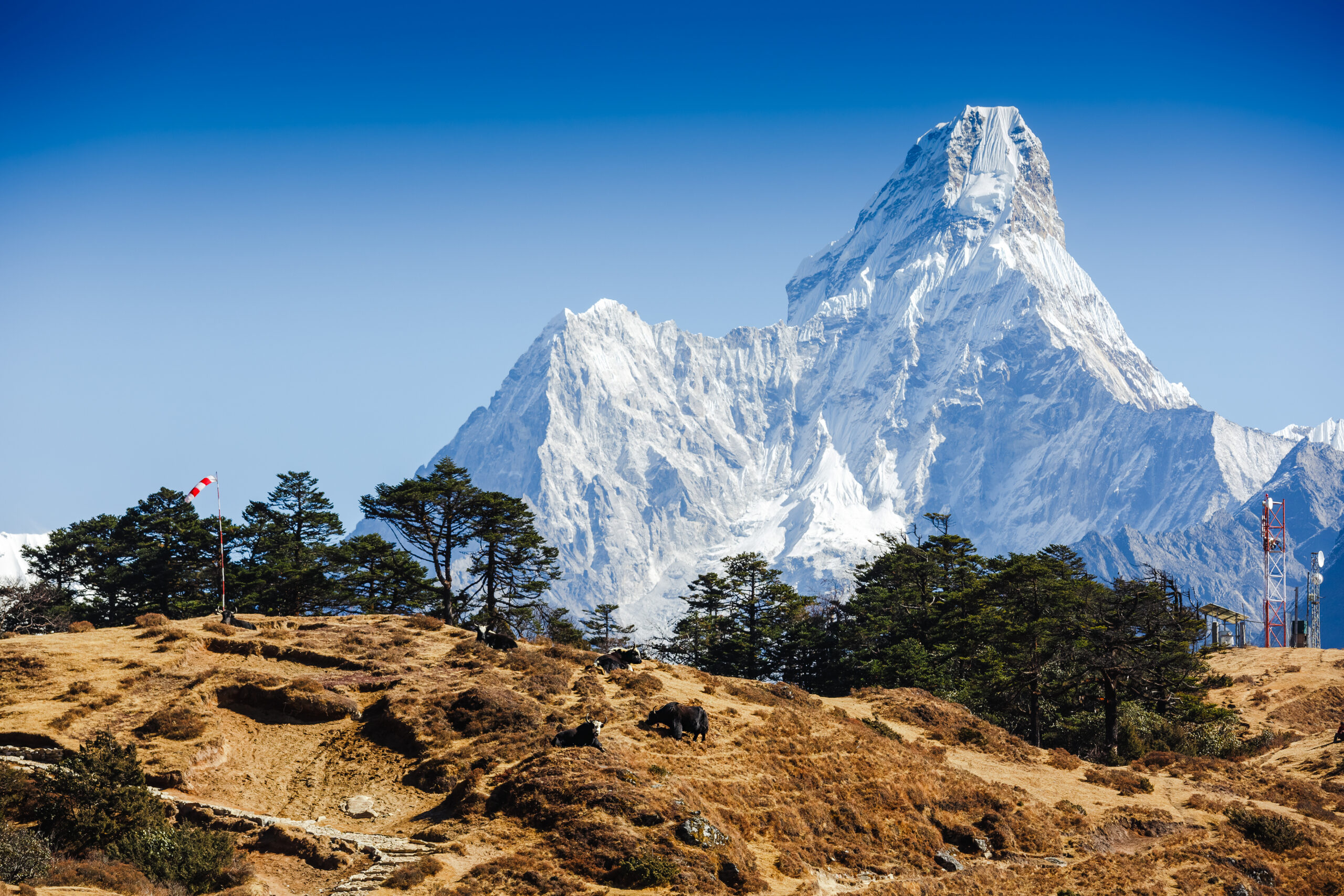
Everest does not just add height. It adds the death zone.
Aconcagua’s 6,961-metre summit is severe high altitude. Everest’s 8,848.86-metre summit extends nearly 1.9 vertical kilometres higher, with the decisive upper route above 8,000 metres where the body cannot fully acclimatize. That changes pace, recovery, cognition, oxygen strategy and the cost of every delay.
Everest: 8,848.86 m. Most commercial summit attempts use supplemental oxygen and fixed lines.
Non-technical altitude vs fixed-line expedition climbing
The standard routes are not comparable simply because neither is a cutting-edge technical face. Everest asks for far more movement systems and far less tolerance for mistakes.
The high-altitude expedition test
The Normal Route normally avoids sustained rock climbing and glacier-rope travel. The challenge is carrying, moving, sleeping and recovering progressively higher while the Andean environment becomes colder, windier and less forgiving.
- Long approach and staged acclimatization
- High camps and repeated load movement
- Dry cold, strong ultraviolet exposure and severe wind
- Long summit day close to 7,000 m
- Little room for poor hydration, appetite or pacing
The supported death-zone expedition
The South Col route is heavily supported and fixed, but that support does not make it simple. Climbers still need reliable crampon movement, ascender technique, transitions, cold self-care, oxygen-system discipline and the ability to descend while deeply fatigued.
- Khumbu Icefall crossings and crevassed terrain
- Fixed-line movement through the upper route
- Camp rotations and extended recovery cycles
- Supplemental oxygen for most commercial clients
- Death-zone summit and descent management
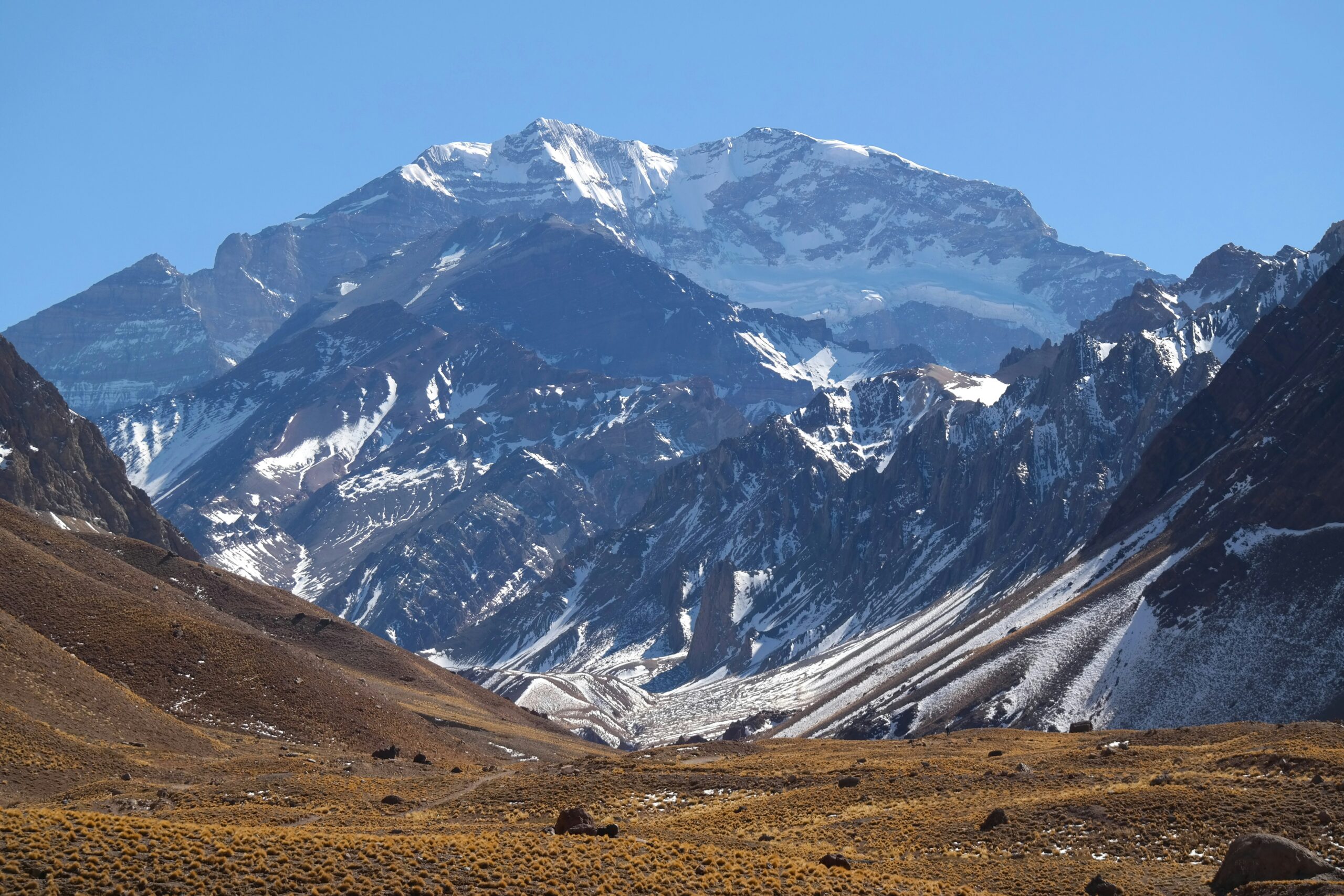
Aconcagua teaches altitude discipline
Its Normal Route is a strong test of acclimatization, weather patience, high-camp routines and how your body functions near 7,000 metres.
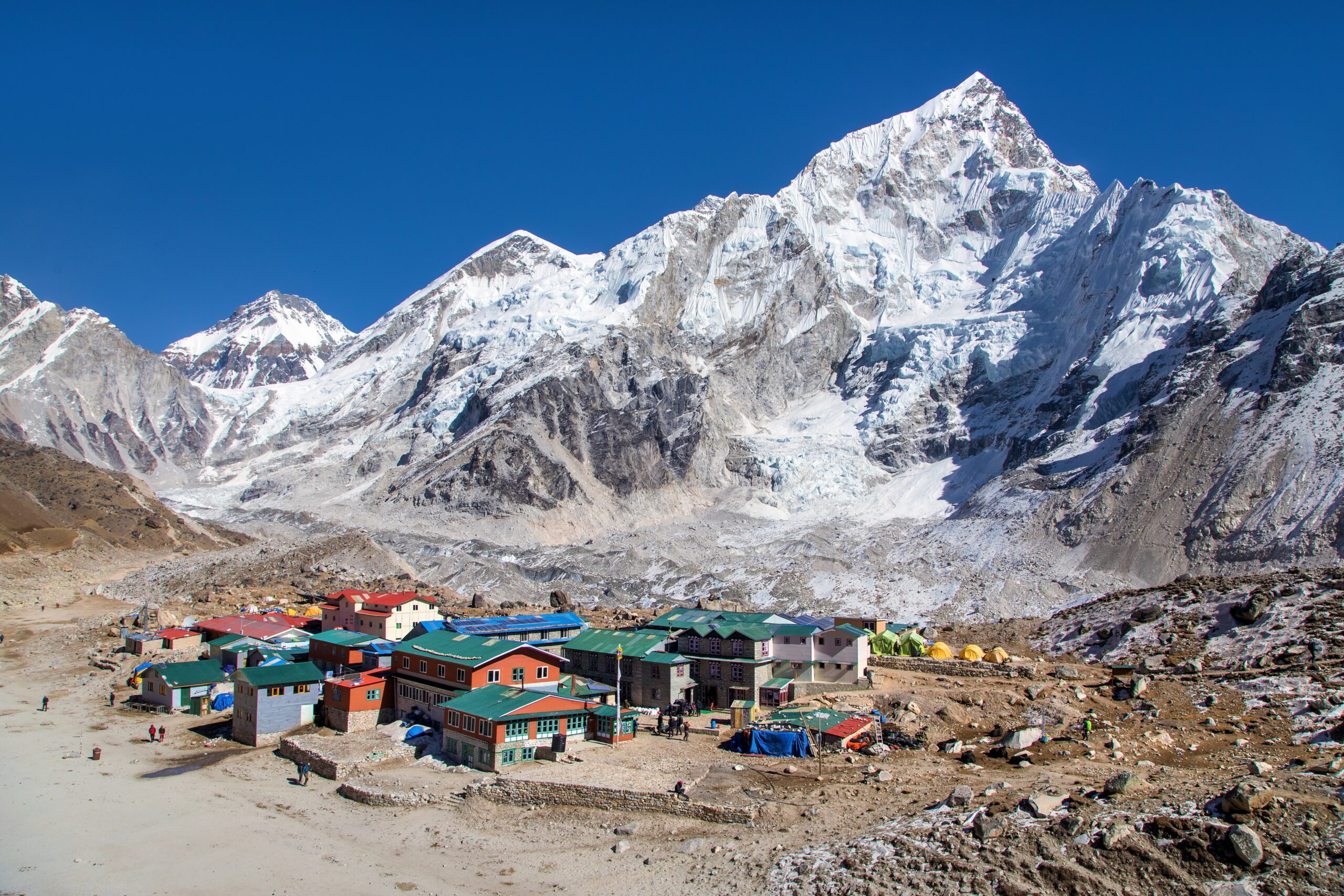
Everest adds a systems problem
Fixed lines, oxygen, route construction, camp stocking, high-altitude staff, weather calls and a long descent all interact.
Three weeks versus a six-to-nine-week campaign
Duration changes the mental and operational problem. Everest is not one summit push with extra days added—it is an extended expedition cycle.
Aconcagua days
A responsible first itinerary usually protects approach acclimatization, load carries, high-camp moves and at least some weather flexibility. Shorter programs compress the very margin that makes the mountain manageable.
Everest weeks
Traditional Everest programs include the Khumbu approach, acclimatization rotations, recovery, a long waiting phase, summit push and descent. Some pre-acclimatized programs are shorter, but they move preparation elsewhere rather than eliminating it.
Shared lesson
Both mountains reward patience. The calendar is not dead time: acclimatization, weather buffers and recovery are part of the climbing system, not inefficiencies to remove.
Everest costs several times more—and the permit is only one line item
Use dated, source-labeled numbers. Aconcagua’s next summer tariff still needs official confirmation; Everest’s Nepal spring royalty is already published.
| Budget layer | Aconcagua | Everest | How to read it |
|---|---|---|---|
| Government permit / royalty | 2026–27 summer tariff pending current Mendoza publication. 2025–26 full-season foreign Horcones reference was US$1,170 assisted / US$1,640 unassisted. | US$15,000 per foreign climber for Nepal normal route in spring; US$7,500 autumn; US$3,750 winter/summer. | Official government charge—not total expedition cost. |
| Published package / trip signal | Many complete trip models fall around US$5,000–15,000 depending on guide, logistics, gear and travel. | Published 2026 market roughly US$30,000–300,000+; Nepal South Side median reported at US$54,995. | Compare inclusions, not headline price. |
| What drives the price | Guide service, mules, base-camp logistics, permit, hotels, flights, insurance, gear. | High-altitude staffing, oxygen, camps, permit, food, communications, weather support, guide ratio, insurance, gear, travel. | Everest’s price reflects a much larger expedition system. |
| Budget mistake | Using last season’s permit fee as if it were current. | Adding the $15,000 royalty on top of a package that already includes it—or comparing operators without normalizing oxygen and staffing. | Require a written inclusion list. |
Aconcagua expedition cost
Build the all-in budget from operator, permit, Mendoza, flights, equipment, insurance, tips and contingency rather than using the guide quote alone.
Everest cost and permit guide
Separate the $15,000 Nepal royalty from the commercial expedition package, oxygen system, staffing, equipment, insurance, travel and contingency.
Everest adds objective hazards that Aconcagua’s Normal Route largely avoids.
Aconcagua’s main hazards are altitude illness, wind, cold exposure, exhaustion and delayed descent. Everest adds the Khumbu Icefall, heavily crevassed glacier terrain, serac exposure, fixed-line bottlenecks, prolonged death-zone time and oxygen-system dependence. Risk still varies by season, route, pace, operator and individual decisions; one historic fatality percentage cannot describe either mountain responsibly.
Aconcagua asks whether you can function high. Everest asks whether your whole system can function higher.
Everest readiness is not just stronger fitness. It is reliable execution inside a complex supported system while cognition, pace and recovery deteriorate.
Self-management without bottled oxygen
Most climbers experience the mountain on ambient air. That makes pace, hydration, appetite, sleep and honest symptom reporting the center of the altitude problem.
Oxygen becomes an operational system
Most commercial clients use supplemental oxygen. Allocation, masks, regulators, cylinder staging, flow decisions, backup plans and delays all become part of summit safety.
Support is not a replacement for competence
Fixed ropes and Sherpa support reduce some burdens, but climbers still need efficient movement, cold self-care, equipment familiarity, communication and conservative turnaround judgment.
Both require endurance. Everest requires a deeper skill and experience base.
Training can improve capacity; it cannot manufacture acclimatization history or replace experience with glacier, fixed-line and expedition systems.
Build a durable aerobic engine and load tolerance
- Long uphill aerobic work
- Progressive weighted carries
- Back-to-back endurance days
- Cold-weather systems practice
- Prior altitude exposure if possible
- Summit-day pacing discipline
Layer technical and expedition competence on top
- Strong endurance base
- Confident crampon movement
- Ascender and fixed-line transitions
- Glacier and crevasse systems
- Repeated high-altitude expedition experience
- Oxygen equipment familiarity where appropriate
The best training progression is capability-based. Use each preceding mountain to prove a missing skill instead of collecting random summits.
The summit is only half the decision
Aconcagua teaches the discipline of turning around before exhaustion destroys the descent. Everest raises the consequence of that lesson dramatically.
| Summit-day factor | Aconcagua | Everest |
|---|---|---|
| Starting environment | High camp in severe Andean cold and wind | Camp IV / South Col around 8,000 m for the standard Nepal route |
| Movement | Steep trail, scree or snow depending on conditions | Fixed-line ascent with multiple transitions and congestion potential |
| Key physiological problem | Extreme altitude near 7,000 m | Death-zone exposure above 8,000 m |
| Weather issue | Strong Andean wind, cold, rapid deterioration | Very narrow acceptable wind and weather windows high on the mountain |
| Descent lesson | Do not spend the entire energy reserve reaching the summit | The descent remains a major part of the objective while oxygen, temperature, fatigue and daylight margins shrink |
What does Aconcagua prove before Everest?
It can prove that your body, habits and judgment still work during a multi-week expedition near 7,000 metres. That is valuable evidence. It does not prove glacier competence, fixed-line efficiency, oxygen management, Khumbu Icefall experience or death-zone performance.
Useful readiness evidence
- You can tolerate and function near 7,000 m.
- You can live in expedition camps for multiple weeks.
- You can preserve pace when appetite and sleep deteriorate.
- You can manage cold, wind, layering and hydration under stress.
- You can respect a forecast and abandon a summit if the margin disappears.
- You understand that descent is part of the summit attempt.
Everest-specific gaps may remain
- Confident movement on heavily crevassed glacier terrain.
- Efficient fixed-line ascender and rappel transitions when exhausted.
- Experience in the Khumbu Icefall or an equivalent complex icefall.
- Management of supplemental oxygen and failures.
- Performance above 8,000 m.
- Judgment through a six-to-nine-week Himalayan expedition.
A responsible progression after Aconcagua
There is no single mandatory mountain sequence. Choose the next objective based on what your résumé still lacks.
High trekking or climbing objectives that teach pacing and acclimatization before a major expedition.
Use the Normal Route to test near-7,000m physiology, expedition patience, high-camp routines and turnaround discipline.
If ropes, crevasses, severe cold or heavier self-support are weak points, choose a mountain such as Denali or another appropriate glaciated expedition.
Add a technically appropriate 6,000- to 7,000-metre Himalayan objective that develops fixed-line efficiency and high-camp movement.
For climbers and operators who want additional evidence, a carefully selected 7,000- or 8,000-metre expedition can test higher-altitude systems before Everest.
Arrive with the relevant gaps already addressed so Everest is the next serious step—not the first place you learn a critical system.
See the complete What to Climb Before Everest progression guide →
Which mountain fits your current stage?
The useful question is not “Which mountain is better?” It is “Which objective matches the skills, altitude history, budget and expedition systems I have already proved?”
| If this describes you… | Research next | Why |
|---|---|---|
| Strong trekker, several 4,000–5,500m experiences, no major expedition | Aconcagua pathway | Aconcagua can be a logical first major near-7,000m expedition with proper training, acclimatization and support. |
| Aconcagua would be your highest and longest climb by far | Aconcagua first | Everest would introduce too many new systems at once. |
| Summited Aconcagua but have little glacier or fixed-line experience | Fill the gap | Add a glaciated and/or fixed-line objective before treating Everest as the next step. |
| Proven on major cold expeditions and Himalayan fixed lines, but limited extreme altitude | Higher-altitude evidence | Choose an objective that specifically tests the remaining altitude gap. |
| Repeated major expedition success, strong fixed-line skills, high-altitude résumé, operator accepts experience | Everest planning | Shift focus toward operator system, oxygen, medical screening, weather, insurance, logistics and turnaround policy. |
What is official, what is commercial, and what is editorial judgment?
Comparison pages are most useful when changing fees and rules are separated from stable mountain facts.
Primary / official anchors
- Nepal Department of Tourism: Everest foreign-climber royalty schedule effective September 1, 2025—US$15,000 spring normal route, US$7,500 autumn, US$3,750 winter/summer.
- Government of Mendoza: Aconcagua Provincial Park seasonal regulations and permit tariffs. The 2025–26 full-season decree is used only as historical reference until the 2026–27 summer tariff is confirmed.
- Established elevation: Everest 8,848.86 m; Global Summit Guide uses Aconcagua 6,961 m while Mendoza materials sometimes round to 6,962 m.
Commercial / market anchors
- Aconcagua cost ranges come from Global Summit Guide’s current operator and all-in budget research and should be treated as dated market examples.
- Everest market prices vary from lower-cost Nepali-supported expeditions to premium and private products. The current cost guide reports a 2026 Nepal South Side median of US$54,995 and a broad published span of roughly US$30,000–300,000+.
- Price is not a safety score. Compare guide assignment, staffing, oxygen, camps, medical support, forecasting, rescue planning and exclusions line by line.
Editorial boundary
This is a research-based comparison. Global Summit Guide does not claim that Travis Ludlow, Dawson Ludlow or another listed contributor has summited Aconcagua or Everest. First-hand experience on other high-altitude mountains can inform general expedition analogies, but it is not presented as equivalent to either climb.
The statement that Aconcagua is a useful stepping stone is a progression judgment based on the capabilities it tests—not a promise that an Aconcagua summit makes an individual ready for Everest.
Verify before booking
- Aconcagua 2026–27 summer permit tariff and insurance rules.
- Everest permit law for your actual expedition year.
- Operator-specific prerequisite standards.
- Current route access, Tibet status and seasonal conditions.
- Exact oxygen allocation, guide ratio and rescue insurance wording.
Aconcagua vs Everest FAQ
Short answers for the search questions climbers most often use when deciding whether Aconcagua belongs in an Everest progression.
Is Aconcagua or Everest harder?
Everest is harder overall. It is nearly 1,888 metres higher, includes prolonged movement above 8,000 metres, requires a more complex fixed-line expedition system, and normally involves supplemental oxygen for commercial clients. Aconcagua’s Normal Route is less technical, but altitude, wind, cold and expedition duration still make it a serious objective.
Should you climb Aconcagua before Everest?
For many climbers, yes. Aconcagua is a valuable way to test how you function near 7,000 metres during a multi-week expedition. Treat it as one important stepping stone rather than the only prerequisite.
Does summiting Aconcagua mean you are ready for Everest?
No. Aconcagua can validate altitude tolerance, expedition rhythm and high-camp self-management, but the Normal Route does not fully test glacier systems, fixed-line efficiency, oxygen management, Khumbu Icefall exposure or death-zone performance.
How much higher is Everest than Aconcagua?
Everest is 8,848.86 metres and Aconcagua is 6,961 metres. The difference is 1,887.86 metres, or about 6,194 feet.
How much does Aconcagua cost compared with Everest?
Current Global Summit Guide research places many complete Aconcagua trips around US$5,000–15,000 depending on support, gear and travel. Published Everest products span roughly US$30,000 to more than US$300,000; the current Everest cost guide reports a 2026 Nepal South Side median of US$54,995. Always normalize inclusions before comparing.
What is the Everest climbing permit fee?
Nepal’s Department of Tourism lists the normal-route royalty for foreign climbers at US$15,000 in spring, US$7,500 in autumn and US$3,750 in winter or summer. These rates have been effective since September 1, 2025.
What is the Aconcagua permit fee for 2026–27?
The new summer tariff should be confirmed from the Government of Mendoza before publishing a definitive current figure. Use 2025–26 official fees only as a historical planning reference until the 2026–27 season schedule is formally published.
Is Aconcagua technical?
The Normal Route is considered non-technical because it normally avoids sustained rock climbing and glacier-rope travel. It remains physically and physiologically difficult because of altitude, cold, wind, high camps and a long summit day.
What should you climb after Aconcagua before Everest?
Choose by the capability you still lack. If you need glacier and severe-cold experience, consider an appropriate glaciated expedition such as Denali. If fixed lines and Himalayan systems are weak points, add an appropriate Himalayan 6,000- or 7,000-metre climb. If extreme altitude is the remaining gap, discuss a higher-altitude progression with qualified operators and guides.
Use Aconcagua to learn. Do not use it to skip steps.
Aconcagua is one of the strongest altitude checkpoints on the road to Everest because it exposes weaknesses before the death zone, oxygen system and full Himalayan logistics are added. The smartest progression is not the fastest sequence—it is the one where each mountain proves a capability you will need on the next.
Build the Everest progression →Related Aconcagua & Everest guides
Each link below owns a narrower question so this comparison can stay focused on difficulty, readiness and progression.
Aconcagua vs Everest: The Altitude Ladder
The highest peak outside Asia against the highest on Earth is a key progression question. Read the related comparisons below.
Was this helpful?
🏔Related peaks nearby
🧭Explore & compare
Global Summit Guide is an independent mountaineering resource founded in 2026. The team combines first-hand trekking and climbing experience with in-depth research and professional health and nutrition review to help climbers choose objectives, prepare properly, and stay safe.
Health, altitude, and nutrition content is reviewed by Taylor Ludlow (Registered Nurse) and Brigg Hoopes (Nutritionist).
What We Don't Know Yet
Mountain information changes quickly. This box explains the limits of what this page can responsibly promise.
- Total trip cost can change with flights, lodging, guide pricing, permits, gear rentals, transportation, and exchange rates.
- Comparisons simplify complex decisions; the better mountain depends on current conditions, skills, timing, budget, and risk tolerance.
- Visa, passport, vaccination, border, insurance, and local transportation rules may change before your trip.
Verify current conditions with official land managers, guide services, local forecasts, and current route reports before booking or climbing.
Mountaineering, rock and ice climbing, glacier travel, and high-altitude activity are inherently dangerous and can result in serious injury or death. The information on Global Summit Guide is provided for general informational and educational purposes only and is not a substitute for professional instruction, qualified guiding, proper equipment, or your own judgment and experience.
Route conditions, weather, snowpack, permits, regulations, and hazards change constantly and may differ from what is described here. Details may be incomplete, out of date, or contain errors. Always verify current information with local authorities, certified guides, and official sources before making any decision in the mountains.
Nothing on this site is medical, legal, or financial advice. Our fitness, acclimatization, altitude, and nutrition content is general in nature; consult a qualified physician before beginning any strenuous exercise program or exposing yourself to high altitude.
You are solely responsible for your own safety and decisions. To the fullest extent permitted by law, Global Summit Guide and its team accept no liability for any loss, injury, damage, or expense arising from use of, or reliance on, this information. By using this site you acknowledge these risks and accept these terms.
Some links on this site may be affiliate links. If you buy through them we may earn a small commission at no extra cost to you; this never affects our recommendations.
Global Summit Guide recommendation path
Next Best Mountain to Research
Use these recommendations to continue the right planning path instead of stopping on one page.
Use current permit, weather, route, and operator information before booking or climbing.
Explore Travel Options for Your Destination
Once your mountain, dates and route are taking shape, compare flights, hotels and other travel options that fit the trip.
Affiliate link. We may earn a commission at no additional cost to you.