
Last updated September 23, 2026
High Route vs Thru-Hike vs Summit Trek: which adventure fits you?
They all mean weeks in the mountains, but they are not the same trip. A thru-hike tests endurance, a high route tests navigation and mountain sense, and a summit trek tests altitude. This guide compares the three across goal, length, terrain, and skill, and helps you choose the one that fits your ambitions, your time, and your experience. Distances in kilometres (miles); elevations in metres (feet).
People use “big hike” to mean wildly different trips. One friend spends five months walking from Mexico to Canada. Another spends ten days off-trail, navigating across granite basins with no path to follow. A third flies to Tanzania to stand on the roof of Africa. All three are serious mountain adventures, all three take weeks of your life, and choosing between them badly is how people end up on the wrong trip: bored on a route that never challenges them, or in over their head on one that does. The trick is to notice that each one tests something different.
Pick the challenge you actually want.
A thru-hike tests endurance: walking an established long trail end to end, for weeks or months. A high route tests navigation and mountain sense: an off-trail line that stays high on rugged, trail-less ground. A summit trek tests altitude: a walk whose whole purpose is a specific non-technical summit.
Ask yourself what you want to come home having proven – stamina, mountain craft, or the ability to go high – and the choice makes itself. This guide sits under our World’s Great High Routes pillar, where the routes themselves are compared.
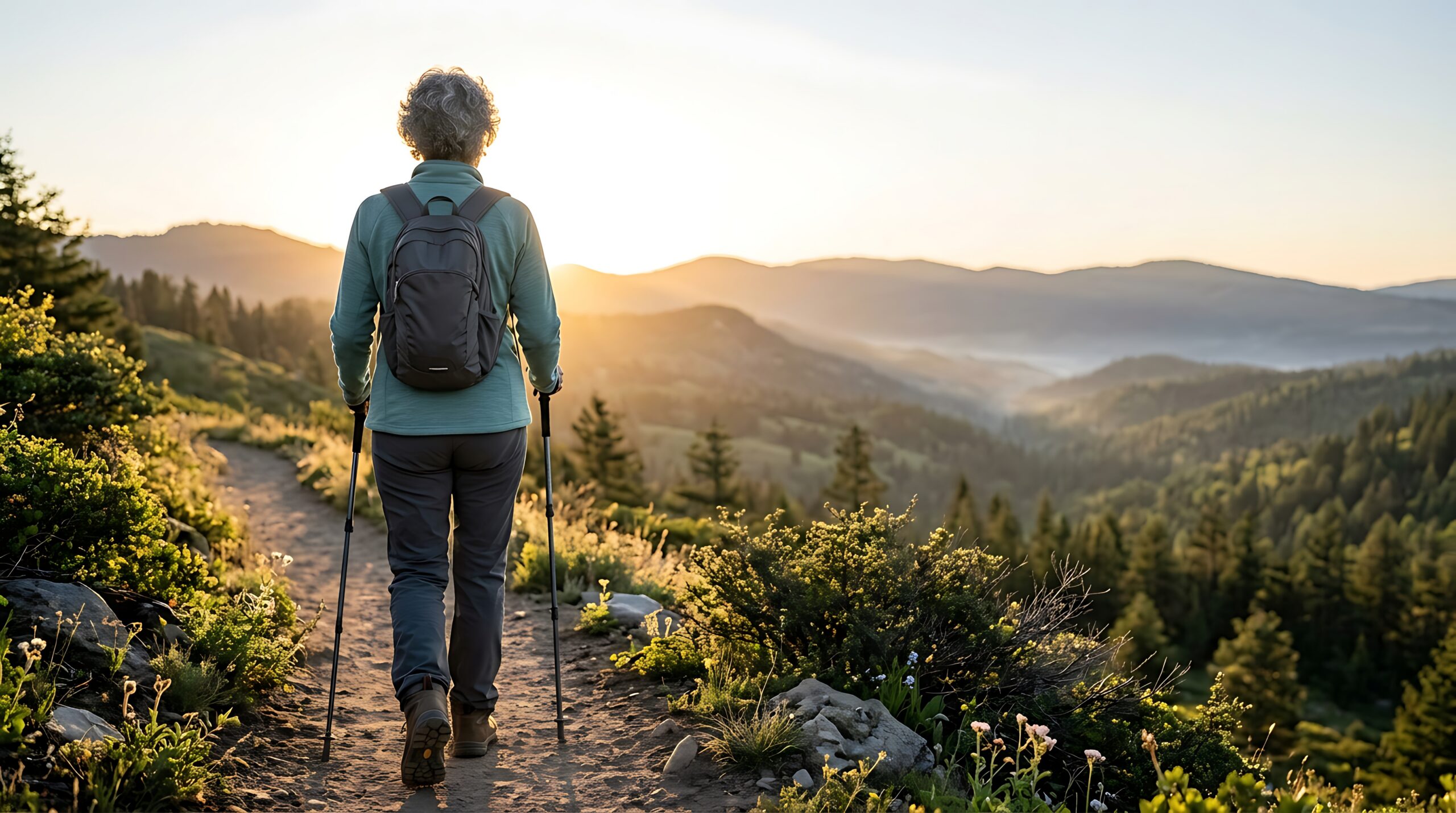
Thru-hike
Finish a famous long trail, end to end.
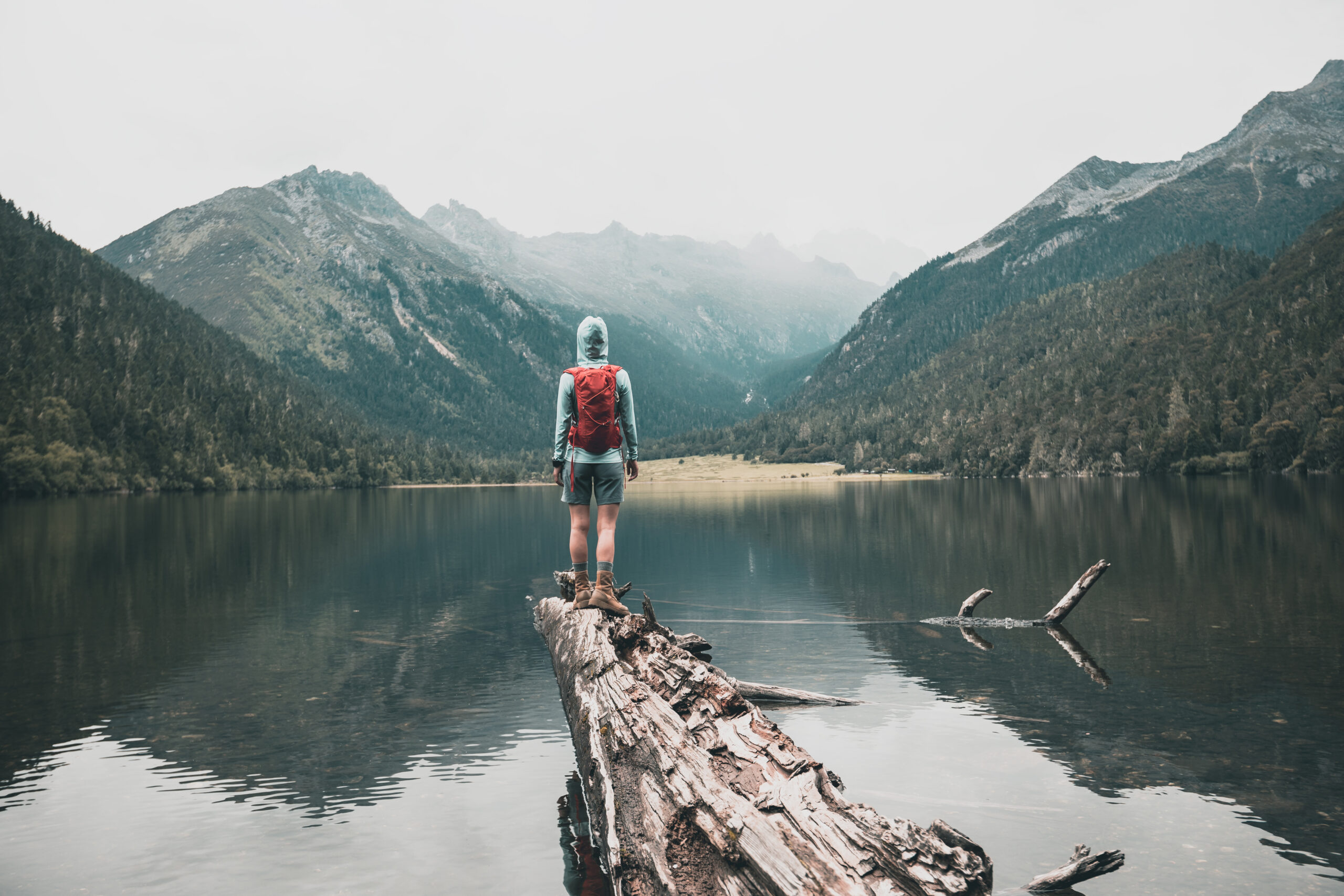
High route
Stay high, off-trail, on your own line.
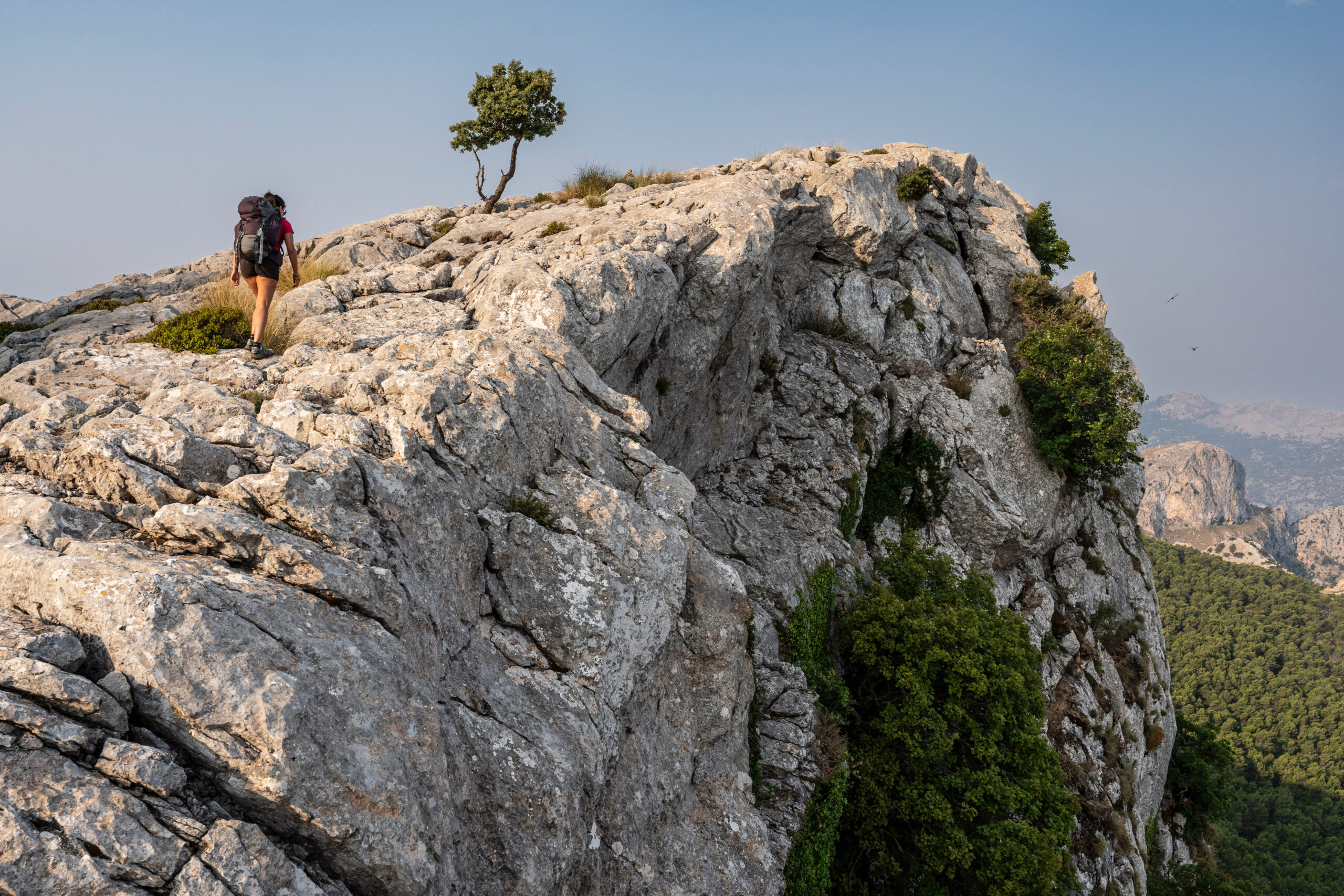
Summit trek
Reach a specific non-technical summit.
The three adventures
Same amount of time in the mountains, three different challenges.
The thru-hike
A thru-hike is the continuous end-to-end hiking of an established long-distance trail in a single trip. The path is built and usually waymarked; the challenge is doing it day after day, for weeks or months, while managing resupply, food, water, and weather. This is the world of the Triple Crown – the Appalachian Trail (~3,500 km / 2,190 mi), the Pacific Crest Trail (~4,265 km / 2,650 mi), and the Continental Divide Trail (~5,000 km / 3,100 mi) – plus trails like New Zealand’s Te Araroa and the Camino. Shorter thru-hikes such as the Colorado Trail (~800 km / 500 mi) deliver the same lifestyle in a single summer.
Examples: Appalachian Trail, Pacific Crest Trail, Continental Divide Trail, Te Araroa, Colorado Trail.
The high route
A high route is an unmarked, often off-trail line that deliberately stays high, linking passes, basins, and ridges rather than following a built path. It is usually far shorter than a thru-hike but asks for a different skill set entirely: route-finding, comfort on loose talus and easy scrambling, and the judgment to manage terrain and weather without blazes. The Sierra High Route is the archetype, paralleling the John Muir Trail but staying above timberline (roughly 2,700-3,500 m / 9,000-11,500 ft), about a third on trail and the rest across country. A strong thru-hiking resume alone does not prepare you for it.
Examples: Sierra High Route, Wind River High Route, Pyrenean Haute Route, the glaciated Chamonix-Zermatt Haute Route.
The summit trek
A summit trek is a multi-day walk whose whole purpose is reaching a specific, non-technical summit or high point. The route is usually an established trekking path, so the limiting factor is not distance or navigation but thin air: success depends on acclimatizing well and moving slowly enough to let your body adapt. Kilimanjaro (5,895 m / 19,341 ft) is the classic, along with trekking peaks like Mera Peak and Toubkal, and viewpoint objectives like Kala Patthar near Everest. The goal is the top, and getting down safely.
Examples: Kilimanjaro, Mera Peak, Toubkal, Kala Patthar and Everest Base Camp, Damavand.
Head to head
The same trip dimensions, side by side. Figures are typical ranges that vary by objective.
| Thru-hike | High route | Summit trek | |
|---|---|---|---|
| Core test | Endurance, logistics | Navigation, mountain sense | Altitude, acclimatization |
| Goal | Finish the trail end to end | Complete a high, off-trail line | Reach a specific summit |
| Typical length | Hundreds to thousands of km | Tens to a few hundred km | Tens of km over several days |
| Typical time | Weeks to months | Days to ~2 weeks | ~1 to 3 weeks |
| Trail | Established, often waymarked | Unmarked, largely off-trail | Established trekking route |
| Key skill | Stamina, resupply, pacing | Route-finding, terrain judgment | Acclimatization, slow pacing |
| Altitude | Usually moderate | Moderate to high | High is the point |
| Where you sleep | Camp, resupply in towns | Camp, occasional hut | Huts, teahouses, or camps |
| Best for | Long time off, endurance lovers | Navigators, wild-country seekers | A named summit on a schedule |
Which one fits you?
Start with what you want to test and how much time you have. The rest follows.
Choose a thru-hike if
- You have weeks or months free, and the idea of a long simple rhythm – walk, eat, sleep, repeat – appeals rather than exhausts you.
- The draw is finishing something iconic and covering huge distance, more than technical terrain or altitude.
- You are happy on an established path and would rather build endurance and resupply skill than navigate off-trail.
- You want a big goal you can train for mostly with time on your feet.
Choose a high route if
- You already have solid backcountry miles and want a harder, richer challenge in less time.
- You love map and terrain, and the idea of choosing your own line above the treeline excites you more than following blazes.
- You are comfortable, or want to become comfortable, on loose talus, easy scrambling, and remote ground.
- You want immersion and solitude over distance and mileage counts.
Choose a summit trek if
- You want a clear, named objective – a specific summit – within one to three weeks.
- The appeal is going high and testing how your body handles altitude, not covering long distances or navigating.
- You are happy on an established route with huts, teahouses, or camps and porter or guide support.
- You are willing to move slowly and acclimatize patiently, because altitude, not fitness alone, decides the outcome.
How they overlap
These are lenses, not rigid boxes. The best trips often blend two or all three.
Real journeys rarely sit perfectly in one category, and that is part of the fun. The John Muir Trail is an established thru-hike that stays high like a route, which is why it is a favorite step toward true high routes. Nepal’s Great Himalaya Trail is simultaneously a thru-hike and a high route, a months-long line that stays in serious mountains the whole way. And a summit trek is often bolted onto a longer route: many trekkers top out on a trekking peak partway through a bigger circuit, combining altitude with the journey. Use the three types to understand what a given trip will demand of you – endurance, navigation, or altitude, and often a mix – then train and plan for that specific blend rather than assuming all long hikes are the same.
Before you commit, be honest about
- Time – a thru-hike needs a season; a high route or summit trek fits a normal holiday.
- Skills – off-trail navigation for a route, altitude know-how for a summit trek, endurance and resupply for a thru-hike.
- Fitness type – sustained daily walking, mountain travel, or slow high-altitude effort are different kinds of fit.
- Support – solo self-sufficiency versus huts, teahouses, guides, or porters.
- What success means to you – a finish line, a wild line, or a summit.
High route vs thru-hike vs summit trek FAQ
The questions hikers ask most when choosing between them.
What is the difference between a high route and a thru-hike?
A thru-hike is the continuous end-to-end hiking of an established, usually waymarked long trail, where the challenge is endurance and logistics over long distances. A high route is a shorter, often unmarked and off-trail line that stays high, where the challenge is route-finding and mountain judgment. A strong thru-hiking resume does not automatically prepare you for a high route’s navigation.
What is a summit trek?
A multi-day walk whose objective is a specific non-technical summit or high point, such as Kilimanjaro, Mera Peak, or Toubkal, or a viewpoint like Kala Patthar. Its defining challenge is altitude and acclimatization rather than distance or navigation. Success means reaching the top and getting down safely.
Which is hardest?
They are hard in different ways. A thru-hike is hardest for endurance and mental stamina, a high route for navigation and mountain skill on rugged ground, and a summit trek for altitude, where thin air rather than distance is the limit. Choose the kind of difficulty that appeals to you.
Do I need mountaineering skills for a high route?
Not always, but you need more than trail fitness: confident off-trail navigation, comfort on loose talus and easy scrambling, and terrain judgment without a marked path. Glaciated high routes like the classic Chamonix-Zermatt Haute Route do require rope, crampon, and glacier skills or a guide.
Can one trip combine all three?
Yes. The John Muir Trail is a thru-hike that stays high like a route; the Great Himalaya Trail is both a thru-hike and a high route; and a summit trek is often added to a longer route by topping out on a trekking peak partway through. The three types describe what a trip demands, not rigid boxes.
📋 How this guide is built
This comparison is written by Travis Ludlow, Founder and Head of Research, from established hiking and trekking definitions, published route data, and our team’s own trekking and summit-trek experience, including Kilimanjaro and multi-day trekking in Patagonia and Iceland. We describe the categories and typical ranges rather than inventing precise figures, which vary by route and source. Safety reviewed by Dawson Ludlow, Climbing & Mountaineering Lead and Wilderness First Aid certified. Match your training and support to the specific trip you choose.
Sources and further reading
- Appalachian Trail Conservancy and Pacific Crest Trail Association for thru-hike definitions and distances.
- Published route descriptions of the Sierra High Route and other classic high routes.
- Backpacking and route-hiking literature on the difference between trails and routes.
- National-park and operator information for summit treks such as Kilimanjaro and Nepal trekking peaks.
- Figures are commonly cited ranges; confirm current data before planning.
Keep Exploring the Long-Distance Trail Collection
Continue from trail-type definitions into the long-distance trails collection and planning guides.
Long-distance hubThe Great Long-Distance Trails of the World →Was this helpful?
Global Summit Guide is an independent mountaineering resource founded in 2026. The team combines first-hand trekking and climbing experience with in-depth research and professional health and nutrition review to help climbers choose objectives, prepare properly, and stay safe.
Health, altitude, and nutrition content is reviewed by Taylor Ludlow (Registered Nurse) and Brigg Hoopes (Nutritionist).
What We Don't Know Yet
Mountain information changes quickly. This box explains the limits of what this page can responsibly promise.
- Route conditions, trailhead access, crevasse exposure, stream crossings, and rescue access may vary from published planning guidance.
- Comparisons simplify complex decisions; the better mountain depends on current conditions, skills, timing, budget, and risk tolerance.
- Visa, passport, vaccination, border, insurance, and local transportation rules may change before your trip.
Verify current conditions with official land managers, guide services, local forecasts, and current route reports before booking or climbing.
Mountaineering, rock and ice climbing, glacier travel, and high-altitude activity are inherently dangerous and can result in serious injury or death. The information on Global Summit Guide is provided for general informational and educational purposes only and is not a substitute for professional instruction, qualified guiding, proper equipment, or your own judgment and experience.
Route conditions, weather, snowpack, permits, regulations, and hazards change constantly and may differ from what is described here. Details may be incomplete, out of date, or contain errors. Always verify current information with local authorities, certified guides, and official sources before making any decision in the mountains.
Nothing on this site is medical, legal, or financial advice. Our fitness, acclimatization, altitude, and nutrition content is general in nature; consult a qualified physician before beginning any strenuous exercise program or exposing yourself to high altitude.
You are solely responsible for your own safety and decisions. To the fullest extent permitted by law, Global Summit Guide and its team accept no liability for any loss, injury, damage, or expense arising from use of, or reliance on, this information. By using this site you acknowledge these risks and accept these terms.
Some links on this site may be affiliate links. If you buy through them we may earn a small commission at no extra cost to you; this never affects our recommendations.
Global Summit Guide recommendation path
Next Best Mountain to Research
Use these recommendations to continue the right planning path instead of stopping on one page.
Use current permit, weather, route, and operator information before booking or climbing.
Explore Travel Options for Your Destination
Once your mountain, dates and route are taking shape, compare flights, hotels and other travel options that fit the trip.
Affiliate link. We may earn a commission at no additional cost to you.