
Last updated July 4, 2026

Aconcagua vs Cotopaxi: Building Toward the Andes’ Highest
Cotopaxi and Aconcagua aren’t rivals — they’re two points on the same climb toward high altitude. Cotopaxi is the accessible glaciated summit where you learn how your body handles thin air; Aconcagua, more than a kilometre higher, is the goal you build toward. Here’s how they compare, and why the order pays off.
Cotopaxi (5,897 m) is one of the most accessible high-altitude glaciated summits in the Andes; Aconcagua (6,961 m) is the highest peak outside Asia and a serious multi-week expedition. Climbing Cotopaxi first — ideally with Chimborazo close behind — is how many climbers confirm they’re ready for Aconcagua before committing the time and money it demands.
Climb first: Cotopaxi — a short, accessible glaciated climb that tests your response to altitude.
The goal: Aconcagua — over 1,000 m higher, a 2–3 week expedition at extreme altitude.
The twist: Cotopaxi is the more technical climb (glacier travel); Aconcagua is the harder objective (altitude and endurance, non-technical route).
Ideal sequence: Cotopaxi → Chimborazo → Aconcagua.
On this page
Why Cotopaxi first
The value of Cotopaxi isn’t the climbing — it’s what it tells you about yourself at altitude.

Cotopaxi (5,897 m) — Ecuador’s Avenue of the Volcanoes.
Aconcagua’s Normal Route is often described as a “walk-up,” and technically that’s fair — there’s no roped climbing and no glacier travel. But that description hides the real difficulty: it is brutally high and long, and it fails climbers not because they can’t climb, but because they can’t cope with two to three weeks of effort above 4,000 metres, topping out near 7,000. The only way to know how you’ll handle that is to go high first.
Cotopaxi is where you find out. In a single accessible trip you climb a glaciated volcano to nearly 5,900 metres, spend a night starting in the small hours, and learn how your body responds to real altitude, cold, and fatigue. If you move well on Cotopaxi and feel strong near 6,000 metres, that’s meaningful evidence you’re ready to invest in Aconcagua. If you struggle, you’ve learned it on a one-day climb rather than halfway through an expensive expedition. Add Chimborazo (6,263 m) and you’ve stood above 6,000 metres before Aconcagua ever enters the plan.
Cotopaxi: the warm-up
One of the Andes’ most accessible glaciated summits — and its most photographed volcano.
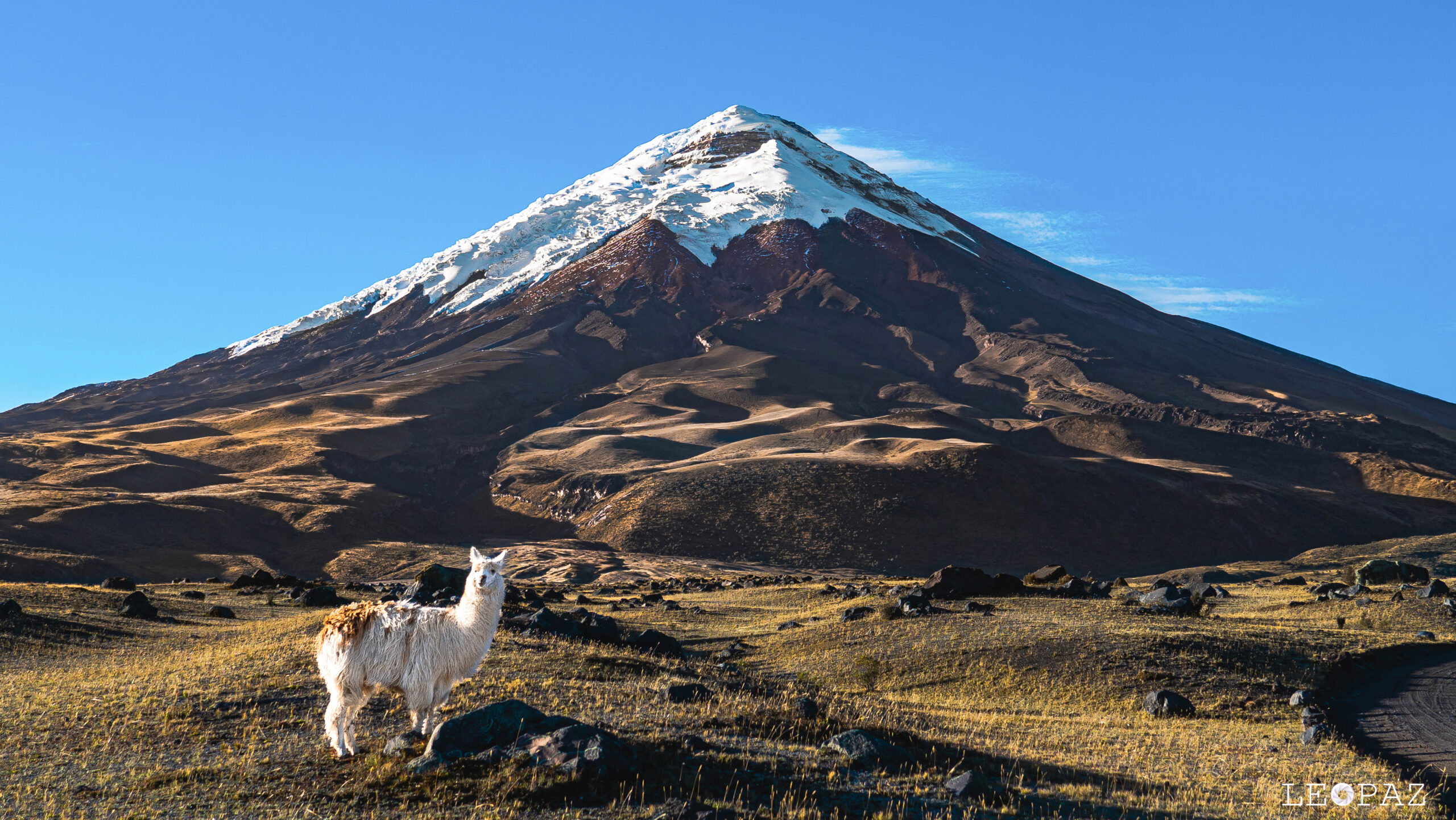
Cotopaxi’s near-perfect glaciated cone.
Cotopaxi is an active, near-perfectly symmetrical volcano south of Quito and the classic first glaciated summit of the Andes. The climb starts from the José Ribas refuge and follows glaciated slopes through the night to reach the crater rim at dawn. It’s a genuine glacier ascent — crampons, ice axe, and roped travel are required — but it’s non-technical and short, which is exactly why it works as an introduction to high-altitude climbing. Read the full Cotopaxi climb guide for routes, season, permits, and gear.
Aconcagua: the goal
The highest peak in the Americas — and a genuine test of high-altitude endurance.
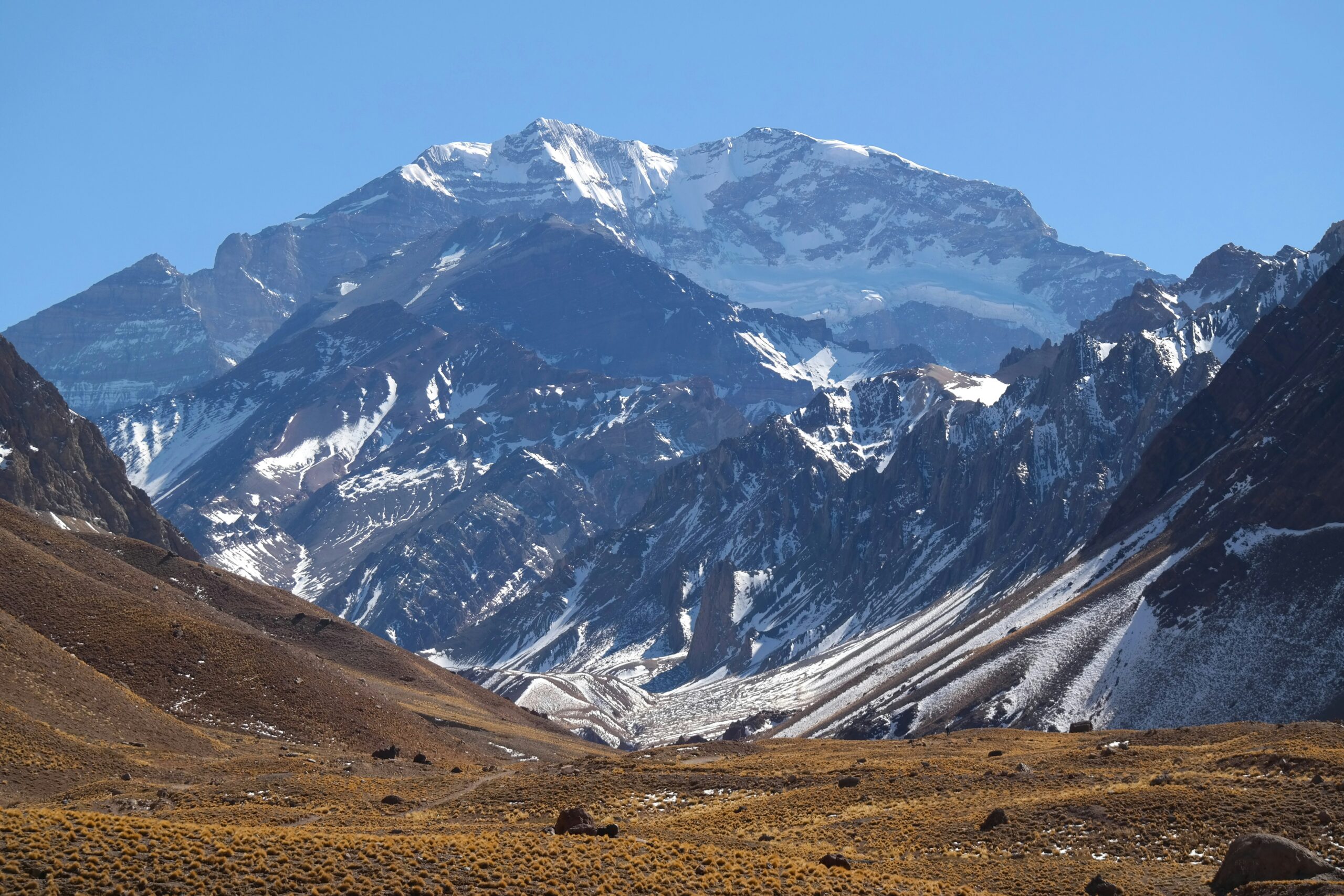
Aconcagua (6,961 m) — the highest summit in the Americas.
Aconcagua is the highest mountain outside Asia and one of the Seven Summits. Its Normal Route, staged from base camp at Plaza de Mulas through a series of high camps, is non-technical — but the altitude is relentless, the weather violent, and the expedition long. Success comes down to acclimatization, endurance, and patience over two to three weeks. Because it’s such a commitment, most climbers arrive having already proven themselves on peaks like Cotopaxi. Our Aconcagua climb guide covers the Normal and Polish Traverse routes; if you’re planning seriously, see our Aconcagua operators guide and the permits and cost breakdown.
Side by side
How the two peaks compare across what actually matters.
| Cotopaxi | Aconcagua | |
|---|---|---|
| Elevation | 5,897 m (19,347 ft) | 6,961 m (22,838 ft) |
| Location | Ecuador — Avenue of the Volcanoes | Argentina — the high Andes |
| Trip length | 1–2 days on the mountain (part of a ~1 week Ecuador trip) | A 2–3 week expedition |
| Normal route | José Ribas refuge → glaciated summit climb | Plaza de Mulas → Normal Route through high camps |
| Technical demand | Glacier travel: crampons, ice axe, rope | Non-technical — but extreme altitude and self-sufficiency |
| Altitude demand | Moderate–high (5,897 m) | Very high (6,961 m) — the whole challenge |
| Key challenge | Your first glaciated high-altitude summit | Sustained extreme altitude, cold, wind, endurance |
| Guided cost | Lower — usually part of an Ecuador package | High — a multi-week guided expedition |
| Best as | A first high-altitude glaciated summit | The goal: a first 6,000 m-class objective |
Sequencing the Andes
A realistic path from a first glaciated summit to the roof of the Americas.
The standard Andean progression is clean. Start with Cotopaxi to learn glaciated climbing and test yourself near 5,900 metres. Add Chimborazo (6,263 m), Ecuador’s highest, to bank time above 6,000 metres on familiar ground. Then commit to Aconcagua (6,961 m), arriving with the altitude experience, fitness, and confidence the expedition demands. Many climbers spread this over more than one season — there’s no prize for rushing it, and Aconcagua’s cost and length make readiness worth confirming first.
Wherever you are on that ladder, respect the altitude. Read our acclimatization guide, and if you’re weighing Aconcagua against other Seven Summits, our Aconcagua vs Denali comparison and the Andes Giants collection map out the wider picture.
Frequently asked questions
Should you climb Cotopaxi before Aconcagua?
Yes — Cotopaxi (5,897 m) is a common altitude and expedition warm-up for Aconcagua (6,961 m). A short, accessible glaciated climb, it lets you test how you handle high altitude, cold, and expedition rhythm before Aconcagua’s far longer and higher ascent. Many climbers add Chimborazo (6,263 m) as a second step.
Is Cotopaxi good preparation for Aconcagua?
It’s good preparation for the altitude and expedition experience, though not for technical skills — Aconcagua’s Normal Route is non-technical, while Cotopaxi involves real glacier travel. Cotopaxi’s main value is confirming that you cope well near 6,000 metres before the far bigger commitment of Aconcagua.
How much harder is Aconcagua than Cotopaxi?
Much harder overall, despite being less technical. It’s over 1,000 metres higher, takes 2–3 weeks rather than a day or two, and demands sustained effort at extreme altitude in cold and wind. The difficulty is endurance and altitude, not climbing skill.
Do you need technical climbing skills for Aconcagua?
No — Aconcagua’s Normal Route is non-technical, essentially a very high-altitude trek and scramble with no glacier travel or roped climbing. The challenge is coping with extreme altitude, weather, and the length of the expedition. Cotopaxi is actually the more technical of the two.
Which is more technical, Cotopaxi or Aconcagua?
Cotopaxi. It’s a glaciated volcano requiring crampons, an ice axe, and roped glacier travel. Aconcagua’s Normal Route is a non-technical high-altitude ascent — harder because of its height and length, not its climbing.
How long and how expensive is an Aconcagua expedition?
A guided Aconcagua expedition typically runs 2–3 weeks and is a significant financial commitment covering permits, guides, logistics, and support. It’s far more costly and time-intensive than a Cotopaxi climb — one more reason climbers use Cotopaxi to confirm they’re ready before booking.
How we built this
This comparison is research-based. Our team is preparing to climb Cotopaxi but has not yet climbed either peak. It synthesizes established route information, operator and permit practice, and published elevation and altitude-safety data, cross-checked against each mountain’s guide on this site. Altitude and health guidance is reviewed by Taylor Ludlow, RN. Conditions and volcanic status change — always verify locally and with a qualified operator before committing.
Building toward Aconcagua?
Start on Cotopaxi, confirm you thrive at altitude, then commit to the highest peak in the Americas.
Read the Aconcagua guide →Was this helpful?
🏔Related peaks nearby
🧭Explore & compare
Global Summit Guide is an independent mountaineering resource founded in 2026. The team combines first-hand trekking and climbing experience with in-depth research and professional health and nutrition review to help climbers choose objectives, prepare properly, and stay safe.
Health, altitude, and nutrition content is reviewed by Taylor Ludlow (Registered Nurse) and Brigg Hoopes (Nutritionist).
What We Don't Know Yet
Mountain information changes quickly. This box explains the limits of what this page can responsibly promise.
- Comparisons simplify complex decisions; the better mountain depends on current conditions, skills, timing, budget, and risk tolerance.
- Visa, passport, vaccination, border, insurance, and local transportation rules may change before your trip.
- Route conditions, snowpack, closures, and weather can change quickly after this page is updated.
- Permit rules, fees, quotas, and reservation windows may change between review cycles.
- Operator availability, pricing, guide ratios, and cancellation terms can change by season.
Verify current conditions with official land managers, guide services, local forecasts, and current route reports before booking or climbing.
Mountaineering, rock and ice climbing, glacier travel, and high-altitude activity are inherently dangerous and can result in serious injury or death. The information on Global Summit Guide is provided for general informational and educational purposes only and is not a substitute for professional instruction, qualified guiding, proper equipment, or your own judgment and experience.
Route conditions, weather, snowpack, permits, regulations, and hazards change constantly and may differ from what is described here. Details may be incomplete, out of date, or contain errors. Always verify current information with local authorities, certified guides, and official sources before making any decision in the mountains.
Nothing on this site is medical, legal, or financial advice. Our fitness, acclimatization, altitude, and nutrition content is general in nature; consult a qualified physician before beginning any strenuous exercise program or exposing yourself to high altitude.
You are solely responsible for your own safety and decisions. To the fullest extent permitted by law, Global Summit Guide and its team accept no liability for any loss, injury, damage, or expense arising from use of, or reliance on, this information. By using this site you acknowledge these risks and accept these terms.
Some links on this site may be affiliate links. If you buy through them we may earn a small commission at no extra cost to you; this never affects our recommendations.
Global Summit Guide recommendation path
Next Best Mountain to Research
Use these recommendations to continue the right planning path instead of stopping on one page.
Use current permit, weather, route, and operator information before booking or climbing.
Explore Travel Options for Your Destination
Once your mountain, dates and route are taking shape, compare flights, hotels and other travel options that fit the trip.
Affiliate link. We may earn a commission at no additional cost to you.