
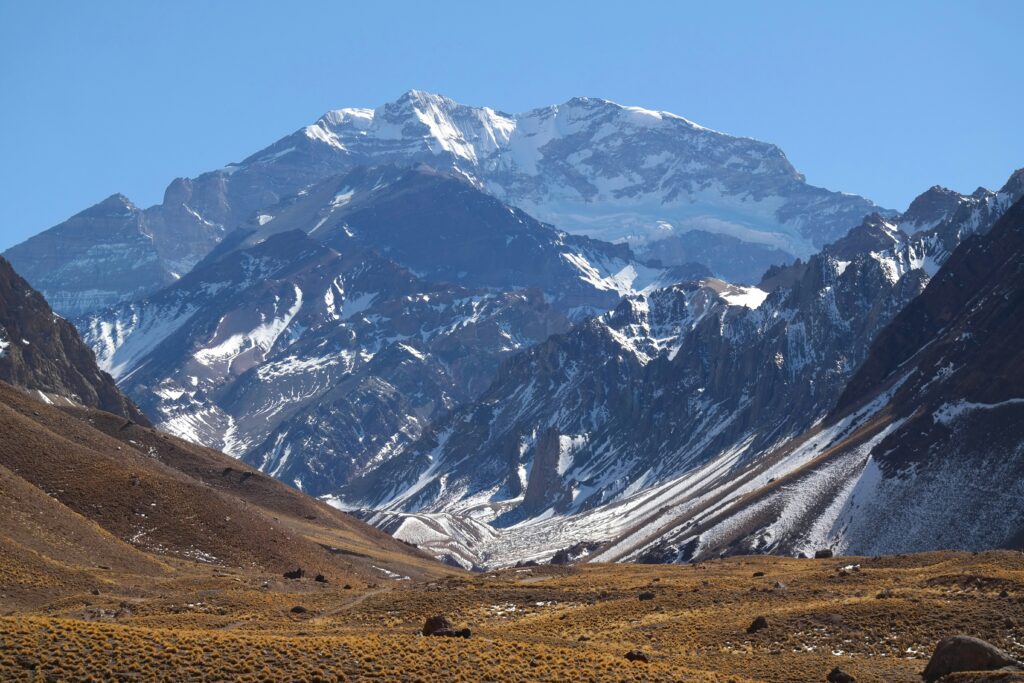
Best Aconcagua Operators 2026: Compare 10 Trek Companies
Aconcagua is the highest mountain outside the Himalayas — South America’s Seven Summits anchor and the testing ground for climbers progressing toward 8,000-meter peaks. The commercial market splits cleanly between Argentine specialist operators based in Mendoza, who actually run every climb on the mountain, and international Western operators who subcontract those Argentine operators while providing English-speaking lead guides at premium pricing. This is the honest 2026 comparison of the ten operators that matter most, evaluated against the same eight criteria we apply to every mountain on the site.
compared
range
categories
compared
The fundamental Aconcagua decision is structural: do you climb with an Argentine specialist or with an international Western operator. The Argentine specialists (Inka, Grajales, Aymara, Acomara) run the mountain themselves at $4,500–$7,500 with deep local infrastructure, decades of summit experience, and Spanish-language guide leadership with English-capable senior staff. The international operators (Alpine Ascents, IMG, RMI, Mountain Madness, Adventure Consultants, Madison) bring American or international lead guides, English-language client services, and Seven Summits portfolio continuity at $7,500–$11,000+. Both paths produce summits; they deliver materially different expedition experiences and price points. This page helps you choose the right one.
Every operator was evaluated against the eight criteria framework from our operators hub, adapted for Aconcagua’s specific context: AAGM (Argentine Mountain Guides Association) and UIAGM/IFMGA international certifications in place of generic guide credentials, mule team welfare standards in place of porter welfare, and Mendoza-based operational depth as a structural variable. Pricing is 2026-verified against operator websites and current Aconcagua Provincial Park permit fee schedules. Summit success rates are operator-reported and triangulated with Aconcagua Provincial Park annual statistics where available. Estimates are flagged as such. Next scheduled review: October 2026.
Mount Aconcagua 2026 at a Glance
The baseline facts shaping the 2026 commercial Aconcagua landscape — essential context before evaluating any individual operator or route.
Aconcagua’s overall summit success rate (~30–40%) is significantly lower than Kilimanjaro’s because the altitude is higher and the weather window is more variable. Commercial guided expeditions on the Normal Route average 50–65% success, with the best operators reaching 70%+ in good weather years. The dominant variables are weather discipline (willingness to wait at high camps for proper summit windows) and acclimatization profile (operators who run 18+ day programs have meaningfully higher success than those running 14–16 day compressed programs).
Every commercial Aconcagua expedition is operationally run from Mendoza, Argentina — there is no other way. The Argentine specialist operators (Inka, Grajales, Aymara, Acomara) own and operate the camp infrastructure, mule trains, base camp services, and guide teams that international operators subcontract. When you book with Alpine Ascents, IMG, or RMI for Aconcagua, you are paying for an American lead guide, English-language client services, and Seven Summits brand continuity layered on top of an Argentine ground operation. The premium pricing is real and reflects real services, but the operational quality on the mountain is anchored by the Argentine specialist underneath. This is not a criticism of international operators — it is the structural reality of commercial Aconcagua. Climbers choosing between these tiers should understand which services they’re paying the premium for.
The 3 Aconcagua Routes: Which One to Choose
Aconcagua offers three primary commercial routes, all leading to the same summit but with materially different terrain, technical demands, and crowd levels. The Normal Route accounts for approximately 90% of commercial climbs.
The standard commercial route via the Horcones Valley and Plaza de Mulas base camp. Non-technical (no rope work, no glacier travel), follows established camps to the summit. The right choice for first-time Aconcagua climbers and the route 90% of commercial expeditions take. Crowded in peak season but well-supported with extensive operator infrastructure.
Approaches via the Vacas Valley and traverses the Polish Glacier on the east face, joining the Normal Route below the summit. Requires prior glacier travel and crampon experience. Less crowded than the Normal Route, with stronger scenic value. The right choice for experienced climbers who want a more challenging line without committing to the Direct Polish Glacier.
Approaches via the Vacas Valley but rejoins the Normal Route at high camp without traversing the Polish Glacier itself. Quieter approach (much less crowded than Horcones), longer mule approach, similar technical demands to Normal Route. Good choice for climbers who want solitude and scenic variation without technical commitment.
The classic technical route up the east face’s full Polish Glacier. Steep ice, serious objective hazards, no commercial guiding outside private custom expeditions. For experienced alpinists climbing independently or in small private parties. Not appropriate for commercial booking and not covered in this comparison.
For 90% of climbers attempting Aconcagua commercially, the answer is the Normal Route. It is the appropriate choice for first-time Aconcagua climbers, for climbers using Aconcagua as preparation for 8,000m peaks, and for anyone whose primary goal is the summit rather than route-specific challenge. The Polish Glacier Traverse is a strong choice for experienced glacier-traveling climbers who want a more interesting line. The Vacas Valley is the best choice for climbers who want quieter trail approaches without technical commitment. The Direct Polish Glacier is not a commercial route — climbers attempting it should be experienced alpinists working independently.
The Six “Best For” Verdicts
Six use-cases, six distinct operator recommendations. These are the short-answer verdicts for the most common Aconcagua operator search intents. Detailed justification for each pick follows in the operator deep-dives below.
35+ years of Aconcagua-specific operations, deepest Argentine specialist guide team, transparent pricing, comprehensive route portfolio. The default recommendation for serious Aconcagua climbers.
Mendoza-based veteran with competitive pricing, established camp infrastructure, and strong English-capable senior guide team. The clearest value alternative to Inka without compromising standards.
Strongest combination of teaching culture, comprehensive pre-trip preparation, and Seven Summits portfolio continuity for first-time high-altitude climbers wanting English-language guide leadership.
IMG’s Aconcagua program integrates seamlessly with their Everest, Denali, and other Seven Summits offerings. Best operator continuity for climbers building a multi-peak portfolio with one company.
Smaller team sizes, owner-led emphasis, and personalized expedition style. The boutique alternative to institutional international operators for climbers who specifically value smaller-scale operations.
Strong technical guiding heritage, capable of running Polish Glacier Traverse and Vacas Valley routes with experienced lead guides. The best choice for climbers wanting non-Normal-Route alternatives.
Side-by-Side: All 10 Operators at a Glance
Every operator ranked against the most decision-critical Aconcagua variables: pricing, base location, guide certification, primary route, and best-fit client type. Detailed profiles for each operator follow below.
| Operator | 2026 Price | Base | Type | Route specialty | Best fit for |
|---|---|---|---|---|---|
| Inka Expediciones Est. 1991 |
$5,200–$7,500 | Mendoza, Argentina | Argentine | Normal, Polish, Vacas Full portfolio |
Serious climbers, value |
| Grajales Expediciones Est. 1995 |
$4,500–$6,500 | Mendoza, Argentina | Argentine | Normal Route focus Polish Traverse |
Value, English-capable |
| Alpine Ascents Intl. Est. 1986 |
$8,950 | Seattle, WA | International | Normal Route 21-day standard |
First-timers, Seven Summits |
| Mountain Madness Est. 1984 |
$8,400 | Seattle, WA | International | Normal & Polish Technical capability |
Technical routes, boutique |
| International Mountain Guides Est. 1986 |
$8,400 | Ashford, WA | International | Normal Route 21-day standard |
Seven Summits progression |
| Aymara Est. 1995 |
$5,500–$7,200 | Mendoza, Argentina | Argentine | Normal Route Custom programs |
Customization, private |
| Adventure Consultants Est. 1991 |
$10,250 | Wanaka, NZ | International | Normal Route 20-day standard |
NZ/Australia climbers |
| Acomara Est. 2003 |
$4,900–$6,800 | Mendoza, Argentina | Argentine | Normal & Vacas Smaller groups |
Budget value, smaller groups |
| RMI Expeditions Est. 1969 |
$8,995 | Ashford, WA | International | Normal Route Higher guide ratio |
Rainier progression, premium |
| Madison Mountaineering Est. 2011 |
$8,750 | Seattle, WA | International | Normal Route Boutique scale |
Boutique, owner-led |
Operator type indicator. Argentine specialists own Mendoza-based ground infrastructure; international operators provide Western lead guides while subcontracting Argentine ground operations. All operators meet Aconcagua Provincial Park licensing requirements. Prices reflect 2026 standard 18–21 day Normal Route programs; technical routes and customizations vary. Verify with operator before booking.
The most important column is operator type — Argentine specialist or international Western. Argentine specialists ($4,500–$7,500) own and operate the camp infrastructure that international operators ($7,500–$11,000+) subcontract. The price gap reflects American/international guide leadership, English-language client services, and Seven Summits brand continuity — not fundamentally different operational quality on the mountain. Inka and Grajales at the top of the Argentine tier deliver operations equivalent or superior to Alpine Ascents and IMG at the international tier; the question is whether you specifically want English-language lead guidance and Western brand recognition. For climbers with prior international expedition experience, an Argentine specialist is almost always the better value; for first-time international expedition climbers, the international operator’s pre-trip support infrastructure is genuinely worth the premium.
The 10 Aconcagua Operators in Depth
Five Argentine specialists, five international Western operators. The Argentine specialists actually run every climb on the mountain; the international operators subcontract them while providing English-language guide leadership and pre-trip support infrastructure. Both paths produce summits at materially different price points and expedition styles.
Inka Expediciones
Mendoza-based Argentine specialist with 35+ years of Aconcagua-specific operations, the deepest Argentine guide team, and the most comprehensive route portfolio. The default for serious Aconcagua climbers.
Inka Expediciones has been running commercial Aconcagua expeditions since 1991, making it one of the longest-tenured Argentine specialist operators on the mountain. The company has put more climbers on the Aconcagua summit than any other operator in the commercial market, and its base camp infrastructure at Plaza de Mulas is among the most established. The Inka guide team includes climbers with hundreds of personal Aconcagua summits each, and senior guides hold AAGM (Argentine Mountain Guides Association) certification, which is the IFMGA-equivalent national standard.
The pricing at $5,200 for a standard 21-day Normal Route program is approximately 40% lower than equivalent international operator pricing while delivering operationally superior on-mountain experience. The company also runs Polish Glacier Traverse and Vacas Valley programs, and supports custom private climbs for groups wanting non-standard configurations. For climbers who don’t specifically need English-language lead guides or Western brand continuity, Inka is the cleanest value proposition on Aconcagua. Senior guides are English-capable, written communications are bilingual, and the company has decades of experience working with North American and European clients.
- 35+ years of continuous Aconcagua operations
- Deepest Argentine specialist guide team
- Industry-leading summit volume
- Comprehensive route portfolio (Normal, Polish, Vacas)
- 40% lower pricing than international operators
- Less polished pre-trip support than international ops
- Lead guide language defaults to Spanish
- No Seven Summits portfolio continuity
- Independent travel to Mendoza required
- Less North American marketing presence
Grajales Expediciones
Mendoza-based veteran with competitive pricing, established Plaza de Mulas camp infrastructure, and strong English-capable senior guide team. The clearest value alternative to Inka.
Grajales Expediciones is the second major Argentine specialist on Aconcagua after Inka, with three decades of operations and established camp infrastructure at Plaza de Mulas. The company runs Normal Route programs from $4,500 with 17-day configurations up to $6,500 for premium 21-day expeditions, with Polish Glacier Traverse programs at modest premiums. The English-capable senior guide team makes Grajales accessible to North American and European clients without requiring Spanish proficiency, and the company has long-standing relationships with international travel agencies that book Aconcagua expeditions.
The trade-offs versus Inka are subtle: slightly less institutional history (1995 vs 1991), slightly less route portfolio depth, slightly less marketing presence in North America. The on-mountain operational quality is comparable, and pricing is consistently competitive with Inka or modestly lower for similar programs. For climbers choosing between Argentine specialists, the decision typically comes down to specific guide assignment and program timing rather than fundamental quality differences — both are legitimate top-tier choices in the Argentine specialist category.
- Three decades of continuous operations
- Strong English-capable senior guide team
- Competitive pricing with Inka
- Established Plaza de Mulas infrastructure
- Long-standing international travel agency relationships
- Less institutional history than Inka
- Less route portfolio depth
- Less marketing presence in North America
- Independent travel to Mendoza required
- No Seven Summits portfolio continuity
Alpine Ascents International
Seattle-based AMGA-accredited operator with the strongest combination of teaching culture, comprehensive pre-trip preparation, and Seven Summits portfolio continuity at international-tier pricing.
Alpine Ascents International runs Aconcagua as part of its full Seven Summits portfolio, applying the same teaching culture and pre-trip preparation infrastructure that distinguishes the company on Denali and other expedition peaks. The Aconcagua program at $8,950 represents Alpine Ascents’ standard premium pricing and includes American or international AMGA-certified lead guides working alongside Argentine ground operators. For first-time international expedition climbers who specifically want the comprehensive pre-trip support, fitness benchmarks, and gear guidance that Alpine Ascents provides, the premium over Argentine specialists is genuinely valuable.
The Seven Summits portfolio continuity is the company’s strongest structural advantage on Aconcagua. Many Alpine Ascents climbers do Mount Rainier or Aconcagua first, then Denali, then Everest with the same operator culture and often the same guide team. For climbers committed to a multi-year multi-peak progression, this continuity is meaningful. The trade-off versus Argentine specialists is the $3,500–$4,000 premium for what is operationally a similar on-mountain experience — the Alpine Ascents lead guide adds genuine value for first-time climbers; for climbers with prior international expedition experience, the value calculation is less clear.
- Strongest pre-trip preparation infrastructure
- Teaching culture throughout expedition
- Seven Summits portfolio continuity
- AMGA-certified American lead guides
- English-language client services
- Premium pricing vs Argentine specialists
- Operational quality anchored by Argentine subcontractor
- Less Aconcagua-specific institutional depth than Inka
- Strict cancellation policy
- Less route flexibility than Argentine operators
Mountain Madness
Seattle-based operator with strong technical guiding heritage capable of running Polish Glacier Traverse and Vacas Valley routes with experienced lead guides. Best for non-Normal-Route alternatives.
Mountain Madness’s technical guiding heritage extends from its founding in 1984 through current operations across Aconcagua, Mexican volcanoes, Bolivia, and other technical-mountaineering destinations. On Aconcagua, this translates into genuine capability to run Polish Glacier Traverse and Vacas Valley routes with experienced technical guides, not just the Normal Route that most international operators default to. For climbers wanting a non-Normal-Route Aconcagua experience with English-language lead guidance, Mountain Madness is the strongest international choice.
The pricing at $8,400 for the standard Normal Route and $9,200 for Polish Glacier Traverse sits in the mid-tier of international operator pricing — meaningfully below Adventure Consultants ($10,250) and modestly below Alpine Ascents ($8,950). The smaller institutional scale (compared to Alpine Ascents and IMG) means more direct guide-leader access for clients. For climbers committed to international operator branding but wanting technical route flexibility, Mountain Madness is the cleanest choice; for climbers focused on the standard Normal Route experience, equivalent operational quality exists at IMG and Alpine Ascents.
- Polish Glacier Traverse and Vacas Valley capability
- Technical guiding heritage
- Smaller institutional scale
- Direct guide-leader access
- Mid-tier international pricing
- Less Aconcagua-specific volume than Argentine ops
- Less institutional polish than Alpine Ascents
- Legacy reputation issues from 1990s
- Less Seven Summits portfolio than IMG
- Premium over Argentine specialists for Normal Route
International Mountain Guides (IMG)
Ashford-based operator with full Seven Summits portfolio, integrated multi-peak operator continuity, and strong American lead guide leadership at competitive international pricing.
International Mountain Guides runs Aconcagua as part of its full Seven Summits and 8,000-meter peak portfolio, with the company’s institutional depth on Everest, Denali, Cho Oyu, and other international expedition peaks providing operator continuity that few competitors can match. For climbers building a multi-year Seven Summits progression, IMG offers the broadest peak coverage of any international operator, and many IMG Aconcagua climbers do Denali first or are planning Everest afterward with the same company.
The Aconcagua program at $8,400 sits in the mid-tier of international operator pricing — competitive with Mountain Madness and below Alpine Ascents and Adventure Consultants. American lead guides work alongside Argentine ground operators (typically subcontracting through Inka or Grajales), with the IMG culture emphasizing teaching and conservative weather decisions. The trade-off versus Alpine Ascents International is similar pricing for somewhat less polished pre-trip preparation infrastructure but stronger institutional 8,000-meter peak credentials. IMG is the right choice for climbers explicitly planning Everest with the same company; Alpine Ascents is the right choice for climbers prioritizing pre-trip support and teaching culture.
- Full Seven Summits and 8,000m portfolio
- Strong Everest credentials for progression
- American lead guides with Aconcagua experience
- Competitive international pricing
- Institutional climbing heritage
- Less polished pre-trip support than Alpine Ascents
- Less Aconcagua-specific depth than Argentine ops
- Premium over Argentine specialists
- Less route flexibility than Mountain Madness
- Subcontracted ground operations
Aymara
Mendoza-based Argentine specialist emphasizing custom and private programs, smaller-group expeditions, and flexible itinerary configuration for groups wanting tailored experiences.
Aymara is a Mendoza-based Argentine specialist emphasizing customization and smaller-group programs over the larger scheduled-departure model that Inka and Grajales primarily run. The company’s private climb structure makes it particularly well-suited to groups of 4–6 climbers traveling together who want a tailored itinerary, specific guide assignment, and program configuration that doesn’t fit standard scheduled departures. Private programs at approximately $7,200 per climber are competitive with international operator pricing while delivering Argentine specialist on-mountain quality.
The trade-off versus Inka and Grajales is institutional scale — Aymara runs fewer total annual expeditions and has less marketing presence. For solo travelers or pairs joining scheduled departures, Inka and Grajales typically have more frequent programming. For private groups specifically, Aymara’s customization flexibility is a real differentiator. The English-capable senior guide team and AAGM certification standards match the top-tier Argentine specialists.
- Strong customization and private program flexibility
- Smaller-group expedition structure
- Argentine specialist on-mountain quality
- English-capable senior guides
- Competitive private climb pricing
- Less scheduled-departure frequency for solo climbers
- Smaller institutional scale than Inka/Grajales
- Less marketing presence in North America
- Less route portfolio depth
Adventure Consultants
New Zealand-based international operator with strong Pacific Rim client base and established Aconcagua programs. Premium pricing reflecting NZ guide infrastructure and brand positioning.
Adventure Consultants is the major New Zealand-based international expedition operator, founded in 1991 and based in Wanaka. The company runs Aconcagua as part of its broader portfolio including Everest, Denali, Vinson, and other international peaks, with a strong Pacific Rim client base — Australian and New Zealand climbers form a meaningful share of the company’s expedition rosters. For climbers based in Australia or New Zealand, Adventure Consultants offers operator continuity and pre-trip support that North American operators cannot match.
The Aconcagua program at $10,250 sits at the upper end of international operator pricing — meaningfully above Alpine Ascents and IMG. The premium reflects New Zealand guide infrastructure, IFMGA-equivalent NZMGA certification standards, and the company’s institutional brand positioning. For North American climbers without specific Pacific Rim ties, equivalent operational quality exists at IMG, Alpine Ascents, or Mountain Madness at $1,500–$2,000 lower pricing. The decision favoring Adventure Consultants is typically about NZ/Australia geographic alignment rather than fundamental operational differences on the mountain.
- Strong NZ/Australia geographic alignment
- NZMGA-certified guide team
- Full international peak portfolio
- Pacific Rim client services
- Institutional climbing heritage
- Premium pricing vs other international operators
- Less Aconcagua-specific depth than Argentine ops
- Less North American marketing presence
- Subcontracted Argentine ground operations
- Geographic distance from Mendoza adds coordination
Acomara
Mendoza-based Argentine specialist with smaller scheduled-departure groups, competitive pricing, and Normal Route and Vacas Valley specialty. The budget Argentine option that maintains operational standards.
Acomara is one of the newer Argentine specialist operators on Aconcagua, founded in 2003 with a focus on smaller scheduled-departure groups and competitive pricing in the value tier. The company runs Normal Route and Vacas Valley programs with group sizes typically 6–10 climbers — meaningfully smaller than Inka or Grajales scheduled departures. For climbers seeking Argentine specialist operational quality at the bottom of the legitimate operator pricing range, Acomara is the cleanest choice.
The trade-offs versus Inka and Grajales are real: less institutional history (2003 vs 1991/1995), less route portfolio depth, less Polish Glacier Traverse capability, and smaller marketing presence internationally. The on-mountain operational quality is comparable for Normal Route programs, and pricing is consistently the most competitive in the legitimate Argentine specialist tier. Climbers attracted to pricing below Acomara’s tier should assume reduced operational standards or insufficient acclimatization itineraries — this is where the responsible-operator floor sits in the Argentine specialist market.
- Most competitive pricing in legitimate Argentine tier
- Smaller scheduled-departure groups
- Solid Normal Route and Vacas Valley programs
- Argentine specialist on-mountain quality
- Represents the budget floor for responsible operators
- Less institutional history than Inka/Grajales
- Less route portfolio depth
- No Polish Glacier Traverse capability
- Less North American marketing
- Less premium service infrastructure
RMI Expeditions
Pacific Northwest institutional standard operator with the strongest Mount Rainier feeder pipeline, premium guide ratios, and Aconcagua programs as part of broader Seven Summits portfolio.
RMI Expeditions runs Aconcagua as part of its broader Seven Summits and expedition mountaineering portfolio, with the company’s distinctive structural advantage being the Mount Rainier feeder pipeline — many RMI Aconcagua clients have already done multiple Mount Rainier seminars with the same operator culture and often the same guide team. For climbers building a progressive American mountaineering pathway (Mount Rainier seminars → Aconcagua → Denali → international peaks), RMI offers operator continuity that no other Aconcagua operator can match.
The Aconcagua program at $8,995 sits in the mid-to-upper range of international operator pricing, with the company’s premium guide-to-client ratios on Denali less consistently applied to Aconcagua programs (Aconcagua expeditions typically run 1:3 ratios rather than RMI’s 1:2 Denali standard). For climbers without specific RMI Mount Rainier history, equivalent operational quality exists at IMG and Alpine Ascents at similar or lower pricing; for climbers committed to RMI’s progressive pathway, the operator continuity is genuinely valuable.
- Mount Rainier feeder pipeline continuity
- 55+ year institutional history
- Strong American expedition mountaineering brand
- Pre-Aconcagua Rainier training integration
- AMGA-certified American lead guides
- Premium pricing vs Argentine specialists
- Standard 1:3 ratio on Aconcagua (not 1:2 like Denali)
- Less Aconcagua-specific volume than Argentine ops
- Strict cancellation policy
- Less route flexibility than Argentine operators
Madison Mountaineering
Seattle-based boutique operator with smaller team sizes, owner-led emphasis, and personalized expedition style. The boutique alternative to institutional international operators.
Madison Mountaineering applies its signature boutique-scale approach to Aconcagua, with deliberately smaller team sizes (typically 6–8 climbers) than the larger institutional international operators. Founded in 2011 by Garrett Madison with 13+ Everest expeditions of personal experience, the company emphasizes owner-led expeditions and direct guide-leader relationships with clients rather than the large-scale institutional model that Alpine Ascents and IMG operate.
The Aconcagua program at $8,750 sits in the mid-tier of international operator pricing, comparable to IMG and below Alpine Ascents, while delivering the boutique scale and personalized expedition style that distinguishes Madison across its portfolio. For climbers who specifically value smaller team sizes and direct access to senior leadership during the expedition, Madison is the cleanest international boutique choice on Aconcagua. For climbers prioritizing institutional infrastructure or Seven Summits portfolio scale, Alpine Ascents and IMG offer more of those specific benefits.
- Deliberately smaller team sizes (6–8)
- Owner-led expeditions with personal stake
- Direct guide-leader client access
- Mid-tier international pricing
- Strong technical guiding heritage from Everest
- Less Aconcagua-specific volume than Argentine ops
- Smaller institutional scale than Alpine Ascents/IMG
- Less polished pre-trip support than larger operators
- Fewer scheduled departures than major international ops
- Premium over Argentine specialists for Normal Route
Frequently Asked Questions About Aconcagua Operators
How much does it cost to climb Aconcagua in 2026?
2026 commercial Aconcagua expeditions range from approximately $4,500 with budget Argentine operators to $11,000+ with premium American operators. Argentine specialists (Inka Expediciones, Grajales, Aymara, Acomara) range from $4,500 to $7,500 for full Normal Route programs. International Western operators (Alpine Ascents, IMG, RMI, Mountain Madness, Adventure Consultants, Madison) range from $7,500 to $11,000 for comparable itineraries with American or international guide leadership. The price excludes the climbing permit ($1,200–$1,500 USD high season), international flights, gear, and tips. Realistic all-in budget: $7,000–$15,000 depending on operator tier.
Which Aconcagua route is best for first-time climbers?
The Normal Route (also called the Northwest Route or Horcones Valley approach) is the standard commercial route and the right choice for first-time Aconcagua climbers. The route is non-technical, requires no rope work or technical climbing skills, and follows established camps from Confluencia through Plaza de Mulas to high camps and the summit. Standard 18–21 day programs on the Normal Route have summit success rates of 50–65% with major operators. The Polish Glacier Traverse is more technical and requires prior glacier travel experience; the Vacas Valley approach is longer and quieter but rarely chosen by first-timers. Choose the Normal Route unless you have specific technical experience justifying alternatives.
Do I need prior climbing experience for Aconcagua?
Yes, in practice. While Aconcagua’s Normal Route is technically non-technical (no rope work, no glacier travel), the altitude (6,961m / 22,838ft) and physical demands require prior high-altitude experience. Most operators require a prior summit of a 5,000m+ peak (Kilimanjaro, Mexican volcanoes, Mount Rainier with altitude history) before Aconcagua approval. The 18–21 day expedition involves carrying loads between camps, sustained physical effort at altitude, and weather exposure. First-time high-altitude climbers should not attempt Aconcagua as their first major peak — Kilimanjaro is the standard prerequisite for testing altitude tolerance before committing to Aconcagua.
Argentine operator vs international Western operator: which is better?
Often the Argentine operators are the better choice. Argentine specialists like Inka Expediciones and Grajales Expediciones have decades of Aconcagua-specific operational experience, established camp infrastructure, deep guide teams with hundreds of summits each, and pricing that’s 30–40% lower than international Western operators for comparable services. International operators (Alpine Ascents, IMG, RMI) typically subcontract Argentine ground operators to actually run the climb while providing American or international lead guides. The premium pricing of international operators reflects guide-team brand and English-language client services rather than fundamentally different operational quality on the mountain. For climbers who specifically value English-language guidance, Seven Summits portfolio continuity, or pre-trip support infrastructure, international operators justify their premium; for climbers focused on operational quality at competitive pricing, Argentine specialists are the cleaner choice.
Which is the best Aconcagua operator overall?
Inka Expediciones is our top recommendation as the strongest combination of Aconcagua-specific operational depth, transparent pricing, comprehensive program offerings (Normal Route, Polish Glacier, Vacas Valley), porter and mule welfare standards, and guide team experience. The company has been running commercial Aconcagua expeditions since 1991 and has put more climbers on the summit than any other operator. For climbers who specifically want international Western operator branding, Alpine Ascents International and IMG are the strongest options at premium pricing; for climbers who want the cleanest value option without compromising operational standards, Grajales Expediciones is the strongest Argentine alternative to Inka.
When is the best time to climb Aconcagua?
The Aconcagua climbing season runs from mid-November through mid-March, with the peak window from mid-December to early February. December and January offer the most stable weather, longest daylight, and warmest temperatures — they are also the most crowded periods. November and March attempts face colder weather and shorter weather windows but lower climber traffic. Mid-December to mid-January is the standard commercial operator window for the Normal Route. Climbers selecting departure dates should prioritize weather-window flexibility over specific calendar preferences — Aconcagua’s notoriously high winds can extend any expedition by 5–7 days at high camps.
How long should an Aconcagua expedition be?
Standard commercial Aconcagua expeditions on the Normal Route are 18–21 days, including travel days from Mendoza and weather contingency. Some operators offer compressed 15–17 day programs for fitter climbers with prior altitude experience. The 18–21 day standard reflects realistic acclimatization (multiple rotations between Plaza de Mulas and higher camps), load-carrying between camps, and 3–5 days of weather hold time at high camps. First-time Aconcagua climbers should not book shorter than 19 days. Climbers with prior 6,000m+ experience can consider 17-day programs, but should plan for the full 21 days off work since weather can extend any expedition.
What is the Aconcagua summit success rate?
Aconcagua’s overall summit success rate is approximately 30–40% across all climbers (independent and guided combined). Commercial guided expeditions on the Normal Route typically average 50–65% summit success, with the best operators reaching 70%+ in good weather years. The dominant variable is weather — Aconcagua’s high winds can extend expeditions or close summit windows entirely. Operators with strong weather-decision culture and willingness to wait at high camps for proper windows have meaningfully higher success rates than operators that push climbers up in marginal conditions. Inka Expediciones and Grajales Expediciones consistently report some of the highest commercial summit rates in the Argentine specialist field.
The Aconcagua decision framework rests on a single structural question: Argentine specialist or international Western operator? For most serious climbers with prior international expedition experience, the answer is Inka Expediciones — 35+ years of Aconcagua-specific operational depth at 40% lower pricing than equivalent international operators. Grajales Expediciones is the closest alternative with comparable operational quality and English-capable guide leadership. For first-time international expedition climbers who specifically value English-language pre-trip support and Western brand recognition, Alpine Ascents International delivers the strongest teaching culture and Seven Summits continuity at premium pricing — the $3,500–$4,000 premium over Argentine specialists is genuinely worth it for first-timers but not for experienced climbers. The wrong answer is choosing an international operator because you didn’t realize the Argentine specialists deliver superior operational quality at lower pricing — that misunderstanding is the single most common Aconcagua decision mistake, and it’s the gap this comparison page exists to close. Choose the Normal Route, choose the operator type that matches your experience level and language preferences, and budget for at least 19 days on the mountain regardless of which operator you book.
Sources and Verification
This comparison was built from operator websites, 2026 program documents, Aconcagua Provincial Park permit and statistics data, and AAGM/AMGA accreditation registries. Pricing and program specifics will be re-verified before the October 2026 austral summer planning window.
- Aconcagua Provincial Park — Official permit fees, route information, and climbing statistics.
- Argentine Mountain Guides Association (AAGM) — National guide certification standards.
- Inka Expediciones — 2026 Aconcagua program documentation.
- Grajales Expediciones — 2026 Normal Route and Polish Traverse programs.
- Aymara — Custom and private climb operations.
- Acomara — Smaller-group Argentine specialist.
- Alpine Ascents International — 2026 Aconcagua program details.
- International Mountain Guides — Aconcagua and Seven Summits portfolio.
- Mountain Madness — Polish Glacier Traverse capability.
- Adventure Consultants — NZ-based Aconcagua programs.
Fact-checked April 23, 2026 · Next scheduled review: October 2026
Related Aconcagua & Operator Resources
Every Major Peak Has Its Own Operator Comparison
The framework you just learned — eight variables, structural understanding of operator types, honest ranking — applies across the Seven Summits and beyond. Browse operator comparisons for 86 mountains across 10 regions.