
Last updated September 22, 2026
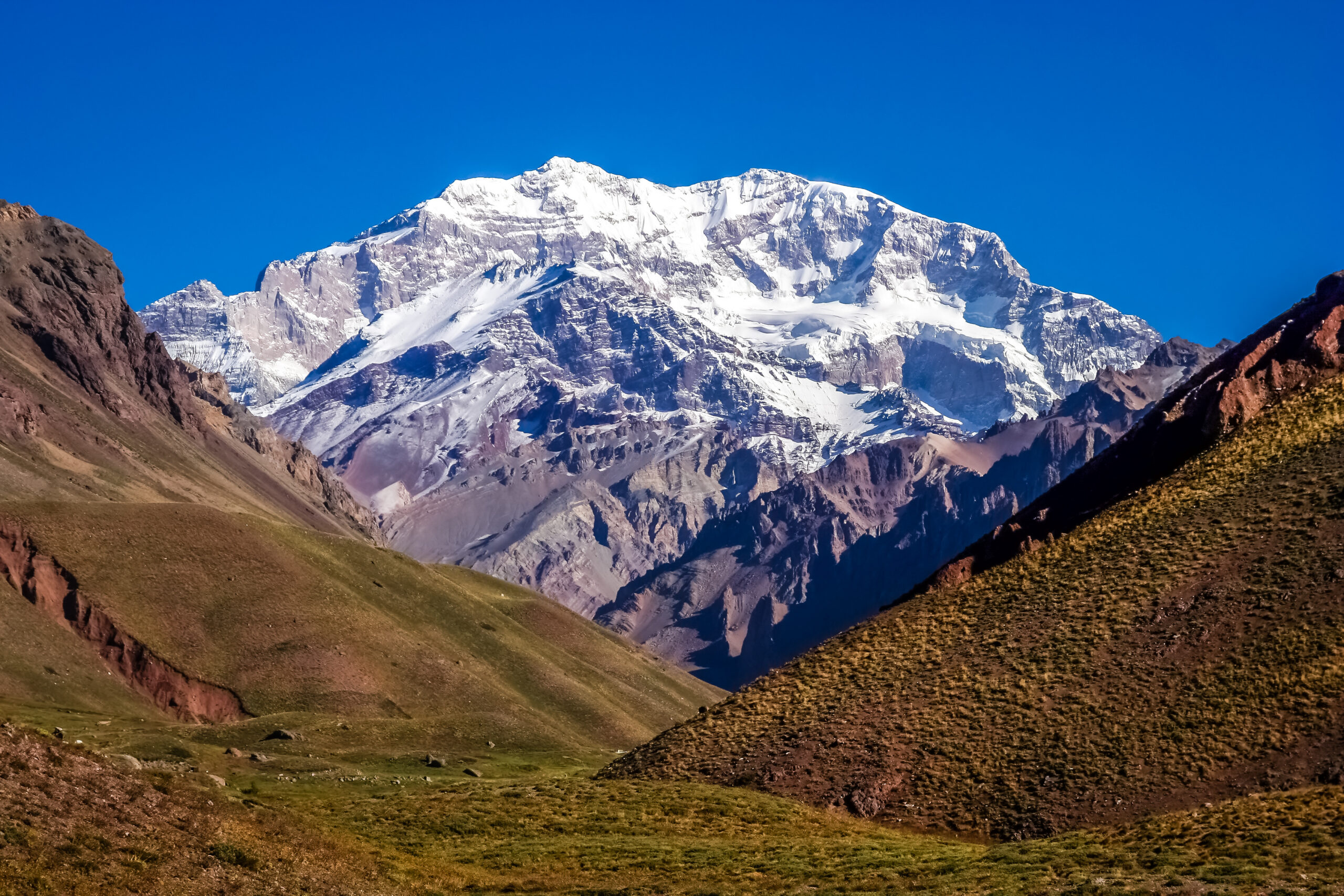
Aconcagua route comparison: Normal Route vs Polish Glacier Traverse vs Polish Direct
South America’s highest peak has three routes that matter – two non-technical commercial lines and one serious alpine ice climb. Here they are side by side, by approach valley, base camp, duration, success rate, and cost. The honest headline: on Aconcagua, the route you pick matters far less than how long your expedition is and how well you have prepared for 6,961 m.
Program length first, route second – and on Aconcagua the route barely changes your odds.
About 90% of climbers take the Normal Route (Ruta Normal) from the Horcones Valley to Plaza de Mulas – the established line, the best-supported base camp, and the right first Aconcagua for nearly everyone. The Polish Glacier Traverse is the connoisseur’s alternative: the Vacas Valley approach to a far quieter Plaza de Argentina, similar non-technical climbing, two or three days longer. The Polish Direct up the true east-face glacier is technical alpine ice, climbed privately by experienced alpinists – not a commercial booking.
Both commercial routes converge above roughly 6,200 m and share the same summit push, so they produce a similar climb up high. What decides summits is a proper 17-21 day expedition and prior altitude experience – not which valley you walked in through. Pick the route to match your days and your preparation, and never a compressed program.
Where it is
Mendoza Province, western Argentina, near the Chilean border – staged from the city of Mendoza.
Aconcagua (Cerro Aconcagua, “the Stone Sentinel”) is a 6,961 m (22,838 ft) peak in the Andes of Mendoza Province, Argentina – the highest mountain in the Americas and the highest anywhere outside Asia, and the South American cornerstone of the Seven Summits. Expeditions stage from the city of Mendoza, entering the park at either the Horcones Valley (Normal Route) or Punta de Vacas for the Vacas Valley (Polish routes). It sits within Aconcagua Provincial Park; see the full Aconcagua climb guide and the progression plan for the path to it.
Master route comparison
All three routes side by side – two commercial lines and one technical alpine objective.
| Route | Approach valley | Base camp | Duration | Grade | Best for |
|---|---|---|---|---|---|
| Normal Route (Ruta Normal) | Horcones | Plaza de Mulas (4,300 m) | 17-20 days | Non-technical | ~90% of all climbers |
| Polish Glacier Traverse | Vacas | Plaza de Argentina (4,200 m) | 20-21 days | Non-technical | Solitude seekers |
| Polish Direct (east face) | Vacas | Plaza de Argentina (4,200 m) | 21+ days | Technical ice/snow | Experienced alpinists only |
Route 1 · the Normal Route
~90% of climbs – the canonical Argentine standard via Plaza de Mulas.
Normal Route (Ruta Normal) via Plaza de Mulas
From the Horcones entrance at 2,800 m (9,185 ft), the line climbs through Confluencia (3,395 m) to Plaza de Mulas base camp at 4,300 m (14,100 ft), then a chain of high camps to the summit. A proper program runs 17-20 days built around “climb high, sleep low” acclimatization carries – compress it and success collapses.
Mendoza to the park entrance
Arrival in Mendoza, gear check and permit briefing, then transport to Penitentes or Puente del Inca at the Horcones entrance.
Horcones to Confluencia to Plaza Francia
Hike in to Confluencia (3,395 m) with an acclimatization day toward Plaza Francia (4,000 m) below the south face – the first altitude check before committing to base camp.
Plaza de Mulas and rest days
An 8-10 hour hike to base camp at 4,300 m (mules carry gear), then acclimatization hikes toward Cerro Bonete (5,000 m) or Cerro Manso (5,400 m) over several days.
Carries to the high camps
Climb-high-sleep-low carries to Camp Canada (4,900 m) and Nido de Condores (5,400 m), moving up as the body adapts. Climbers without prior high-altitude experience often turn back here.
Summit push from Camp Colera
Move to Camp Colera (5,900 m), then a midnight-to-1 a.m. start for the roughly 3,500 ft push to the 6,961 m summit – 6-10 hours up, back to high camp by mid-afternoon. Build in a weather buffer day.
Descent to Mendoza
Down through the high camps to Plaza de Mulas over 1-2 days, mules out with the gear, and the return drive to Mendoza.
Advantages
- Strongest operator support and the shortest timeline (17-20 days)
- Plaza de Mulas base camp with a park physician on site
- Fastest rescue response and daily helicopter operations
- Non-technical; mule support for gear
Trade-offs
- The most crowded route; base camp feels like a small town
- Peak-season traffic at the high camps in weather windows
- Less remote, less of an alpine adventure
- Popularity draws underprepared climbers onto the mountain
Route 2 · the Polish Glacier Traverse
~8% of climbs – the quieter Vacas Valley alternative, without the technical glacier.
Polish Glacier Traverse (Vacas Valley / False Polish)
From Punta de Vacas (2,400 m), a 3-4 day approach through Pampa de Lenas and Casa de Piedra reaches Plaza de Argentina base camp at 4,200 m – a longer walk-in that doubles as natural acclimatization. Above base camp the route climbs through Camp 1 (5,000 m) and Camp 2 (5,900 m), traverses around the right side of the Polish Glacier, and crosses to the Normal Route near 6,200 m, below the Independencia hut (6,300 m). From there the summit push matches the Normal Route. Its draw is solitude: Plaza de Argentina holds roughly 20-50 climbers in peak season against Plaza de Mulas’s 200-400, and you get Polish Glacier scenery without the ice climbing of the Direct.
Advantages
- Far less crowded than the Normal Route
- Polish Glacier views and a more remote alpine feel
- Longer approach gives natural acclimatization
- Similar non-technical demands to the Normal Route
Trade-offs
- Longer expedition (20-21 days) and higher approach cost
- Plaza de Argentina is less developed; limited medical services
- Fewer operators and less rescue infrastructure
- The longer timeline punishes tight vacation windows
Route 3 · the Polish Direct
~1% of attempts – technical alpine ice, private parties only.
Polish Direct (True Polish Glacier, east face)
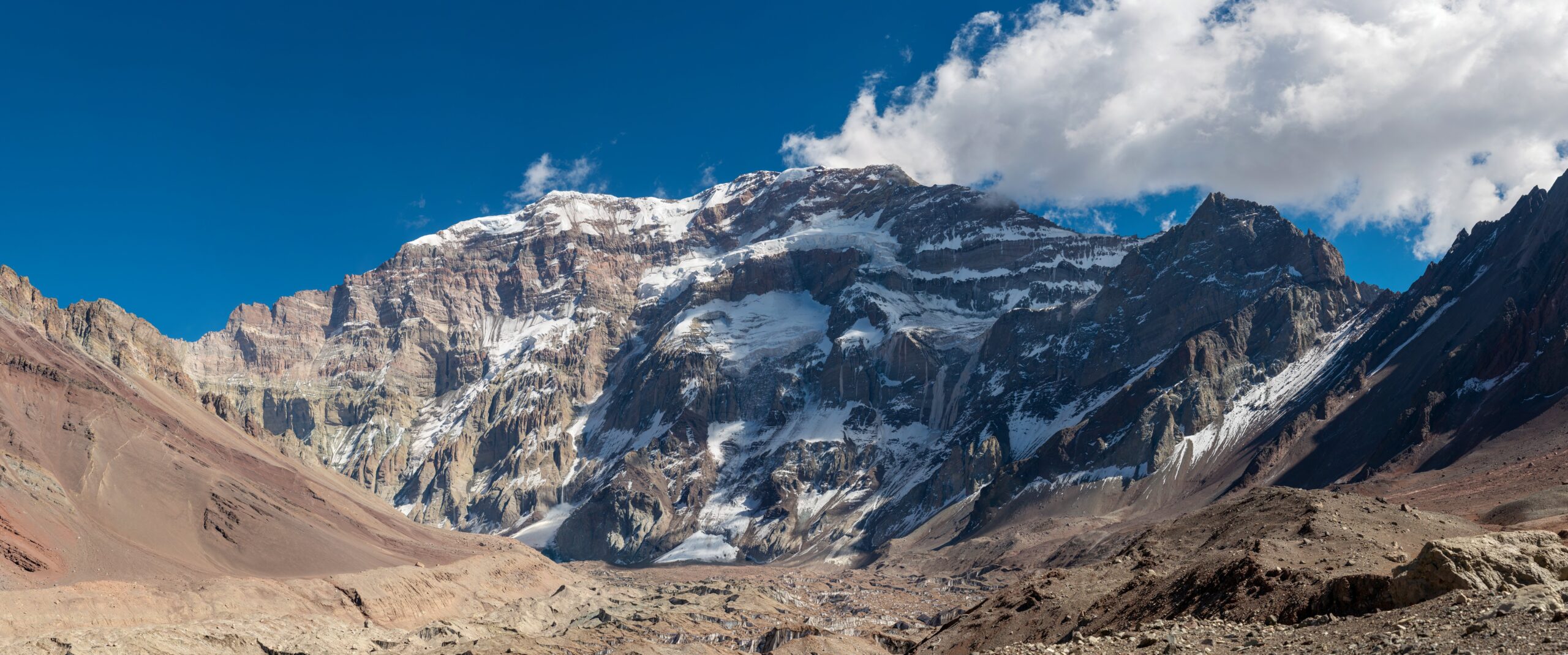
The Polish Direct climbs sustained 45-55 degree ice with steeper sections, serac-fall and avalanche exposure, and full technical commitment – usually in light-and-fast alpine style rather than expedition style. No major operator runs scheduled departures on it; the demands and objective hazard make commercial guiding impractical, so climbers organize private expeditions with trusted partners. It fits only alpinists with extensive prior 6,000 m+ technical experience, ideally who have already summited Aconcagua by a standard route – the altitude compounds the technical difficulty. If it is the Polish Glacier you want to experience, take the Traverse.
Advantages
- A true technical alpine challenge on premier glacier ice
- Real alpine-style commitment, far from the crowds
- A distinctive Aconcagua for experienced teams
Trade-offs
- No commercial guiding available
- Serious objective hazard (serac fall, avalanche)
- Not appropriate for a first Aconcagua at any experience level
- Higher fatality risk than the commercial routes
Plaza de Mulas vs Plaza de Argentina
Your route decides your base camp – and they are two different worlds.
| Base camp feature | Plaza de Mulas (Normal Route) | Plaza de Argentina (Polish routes) |
|---|---|---|
| Elevation | 4,300 m / 14,100 ft | 4,200 m / 13,800 ft |
| Peak-season population | 200-400 climbers + staff | 20-50 climbers + staff |
| Medical services | Park physician on site | Limited or none |
| Communications | Satellite internet, operator radios | Limited satellite comms |
| Dining | Multiple operator dining tents | Single small dining presence |
| Helicopter / rescue | Daily operations, faster response | On-call only, longer response |
| Character | Small mountain town | Remote expedition camp |
Common failure patterns
Most Aconcagua failures are about preparation and program length, not the route.
| Failure mode | What goes wrong |
|---|---|
| Route before program length | Fixating on the Polish Traverse without accounting for its 20-21 days, then compressing it. Decide days first, route second – with 17-18 days, take the Normal Route. |
| Aconcagua as a first 6,000 m peak | Arriving with no prior extreme-altitude experience. Climbers without prior 18,000+ ft (5,500 m) time fail far more often; break that ceiling on Orizaba or Cotopaxi first. |
| Booking a compressed program | 14-16 day trips are cheaper but skip the acclimatization carries; the $500-1,500 saving is small next to a failed climb and a return trip. |
| Underestimating the cold | Summit-day temps at Camp Colera drop below -20 °F with windchill past -40 °F. Boots and bags that worked on lower peaks fail here; test cold-weather gear before you arrive. |
| No weather buffer days | Aconcagua can shut down summit attempts for 3-7 days. Book a 19-21 day window so weather does not force a bad summit-day decision. |
| Mistaking non-technical for easy | No rope work does not mean easy: altitude at 22,838 ft, a 17-21 day grind, cold, and sustained aerobic work at extreme altitude are why overall success is only 30-40%. |
Route by priority
Match the line to what you want – assuming a proper 17-21 day expedition and prior 18,000+ ft experience.
Normal Route
The canonical first-attempt choice: strongest support, most developed base camp, fastest rescue, shortest timeline. If Aconcagua is a Seven Summits step or altitude prep, the climb is the goal – default here.
Polish Glacier Traverse
The connoisseur’s choice: Plaza de Argentina at a tenth of Plaza de Mulas’s population and a more remote feel, for climbers who have the extra days. A common pick for a second Aconcagua.
Polish Direct (private)
For experienced alpinists with 6,000 m+ technical background and trusted partners, organized privately – not a commercial booking. Want the glacier’s scenery without the ice climb? Take the Traverse.
Permits & 2026 cost
Argentina prices independence at a premium – and mandates rescue insurance.
The 2026 Aconcagua Provincial Park permit runs about $1,170 USD assisted or $1,640 unassisted, with a surcharge structure (about $470) that actively penalizes independent climbing, plus mandatory rescue insurance covering helicopter evacuation to 7,000 m regardless of route. The climbing season is the austral summer – broadly mid-November to mid-March, with December to February the stable peak window. Guided expedition pricing:
| Program | Typical range (USD) | Notes |
|---|---|---|
| Argentine operator | $4,500-7,500 | Inka Expediciones, Grajales and other Mendoza specialists |
| International operator | $7,500-11,000+ | Alpine Ascents, Mountain Madness and similar |
| Park permit (2026) | $1,170 / $1,640 | Assisted / unassisted, plus mandatory rescue insurance |
Planning your Aconcagua expedition?
Start with the Aconcagua progression plan to build the altitude base, compare guides in the Aconcagua operators comparison, and carry comprehensive high-altitude cover (insurance above 6,000 m). For flights into Mendoza and pre/post-expedition lodging, compare options through the Global Summit Guide Expedia travel shop.
Disclosure: the Expedia link is an affiliate link; we may earn a small commission at no extra cost to you, and it never affects our recommendations.
Aconcagua Progression Compare OperatorsAconcagua route FAQ
The questions climbers search most.
What is the standard route?
The Normal Route (Ruta Normal) via the Horcones Valley and Plaza de Mulas – about 90% of climbs. Non-technical, 17-20 days, from Horcones (2,800 m) through Plaza de Mulas (4,300 m) and the high camps to the 6,961 m summit.
Which route is best for first-timers?
The Normal Route – strongest support, best base camp, fastest rescue, all of which matter at 6,961 m first-time altitude. The Polish Traverse suits those wanting less crowding with extra days; the Polish Direct is technical and not for a first Aconcagua.
What is the Polish Glacier Traverse?
The Vacas Valley Route (False Polish): Punta de Vacas to Plaza de Argentina (4,200 m), traversing around the Polish Glacier without climbing it, rejoining the Normal Route near 6,200 m. Non-technical, much quieter, 20-21 days. About 8% of climbs.
What is the Polish Direct?
The technical ice route up the full east-face Polish Glacier – sustained 45-55 degree ice, serac hazard, no commercial guiding. For experienced alpinists in private parties only. Want the glacier’s scenery without the climb? Take the Traverse.
Plaza de Mulas or Plaza de Argentina?
Your route decides it. Plaza de Mulas (4,300 m) is a small city with a physician, dining, satellite internet, and daily helicopter ops; Plaza de Argentina (4,200 m) is far smaller and less developed. The high camps are shared once the routes converge near 6,200 m.
How long, and when should I climb?
17-20 days for the Normal Route, 20-21 for the Polish Traverse, with weather buffer days. Season is the austral summer, mid-November to mid-March, with December to February the stable peak window.
What is the success rate?
About 30-40% overall; roughly 60-75% for well-run Normal Route programs and 55-70% for the Polish Traverse. Altitude preparation and program length drive the number far more than the route – prior 18,000+ ft experience is the difference.
What does it cost, and what permits do I need in 2026?
The park permit is about $1,170 assisted or $1,640 unassisted, plus mandatory rescue insurance to 7,000 m. Guided trips run ~$4,500-7,500 (Argentine operators) or $7,500-11,000+ (international). Peso volatility can shift pricing, so verify current rates.
How we built this comparison
- Built from Aconcagua Provincial Park permit and medical-service data, current 2026 operator programs (Inka Expediciones, Grajales, Alpine Ascents, Mountain Madness, Aventuras Patagonicas), and published trip reports, cross-checked for route, base camp, permits, and cost.
- The park does not publish route-by-route success statistics; the ~90% Normal Route and ~8% Polish Traverse shares and the success ranges are best-available triangulations from operator programs and trip reports, not official per-route figures.
- The Polish Glacier and its traverse line have receded and shifted over recent decades, so current-season glacier conditions change the exact routing; Argentine peso volatility moves USD pricing between seasons.
- Research-based, reviewed twice yearly. Route review by Dawson Ludlow. Our team has not climbed every line described here.
Last updated: July 17, 2026 · Editor: Travis Ludlow · Route review: Dawson Ludlow. Verify current permits, operator pricing, glacier conditions, and weather before booking or climbing.
Confidence: Medium – route structure and permits stable; per-route success rates and glacier routing shift year to year.Choose the days, then the route
For most climbers the answer is the Normal Route on a full 17-20 day program. Want solitude and have the time? The Polish Glacier Traverse. Either way, the summit is won on acclimatization and weather discipline, not the line on the map – and never on a compressed schedule.
Aconcagua Climb Guide All Route ComparisonsWas this helpful?
🏔Related peaks nearby
🧭Explore & compare
Global Summit Guide is an independent mountaineering resource founded in 2026. The team combines first-hand trekking and climbing experience with in-depth research and professional health and nutrition review to help climbers choose objectives, prepare properly, and stay safe.
Health, altitude, and nutrition content is reviewed by Taylor Ludlow (Registered Nurse) and Brigg Hoopes (Nutritionist).
What We Don't Know Yet
Mountain information changes quickly. This box explains the limits of what this page can responsibly promise.
- Guide-company prices, departure dates, guide ratios, included services, and cancellation rules can change without notice.
- Weather, snowpack, avalanche risk, road access, and route conditions can change quickly and may be different on your climbing dates.
- Route conditions, trailhead access, crevasse exposure, stream crossings, and rescue access may vary from published planning guidance.
- Fitness and altitude response vary by person; no guide, itinerary, or training plan can guarantee acclimatization or summit success.
- Comparisons simplify complex decisions; the better mountain depends on current conditions, skills, timing, budget, and risk tolerance.
Verify current conditions with official land managers, guide services, local forecasts, and current route reports before booking or climbing.
Mountaineering, rock and ice climbing, glacier travel, and high-altitude activity are inherently dangerous and can result in serious injury or death. The information on Global Summit Guide is provided for general informational and educational purposes only and is not a substitute for professional instruction, qualified guiding, proper equipment, or your own judgment and experience.
Route conditions, weather, snowpack, permits, regulations, and hazards change constantly and may differ from what is described here. Details may be incomplete, out of date, or contain errors. Always verify current information with local authorities, certified guides, and official sources before making any decision in the mountains.
Nothing on this site is medical, legal, or financial advice. Our fitness, acclimatization, altitude, and nutrition content is general in nature; consult a qualified physician before beginning any strenuous exercise program or exposing yourself to high altitude.
You are solely responsible for your own safety and decisions. To the fullest extent permitted by law, Global Summit Guide and its team accept no liability for any loss, injury, damage, or expense arising from use of, or reliance on, this information. By using this site you acknowledge these risks and accept these terms.
Some links on this site may be affiliate links. If you buy through them we may earn a small commission at no extra cost to you; this never affects our recommendations.
Global Summit Guide recommendation path
Next Best Mountain to Research
Use these recommendations to continue the right planning path instead of stopping on one page.
Use current permit, weather, route, and operator information before booking or climbing.