
Last updated June 8, 2026
Climbing Annapurna I: The First 8,000er & the Deadliest of the Giants
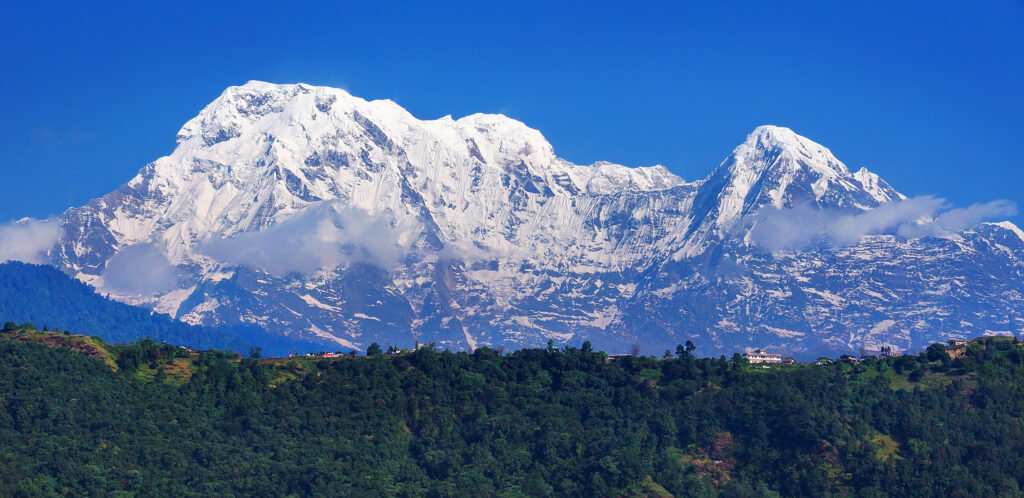
At 8,091 meters (26,545 ft), Annapurna I is the world’s tenth-highest mountain and carries a unique place in mountaineering history: it was the first 8,000-meter peak ever climbed, reached on June 3, 1950 by French climbers Maurice Herzog and Louis Lachenal — three years before Everest. The name Annapurna comes from Sanskrit anna (food) and purna (full) — “Goddess of the Harvests” — and refers to the Hindu goddess of food and nourishment. For decades the mountain held the highest fatality-to-summit ratio of any 8,000er at approximately 32%; modern infrastructure has reduced this to roughly 16-20% as of early 2026, but Annapurna remains among the three most dangerous principal 8,000ers alongside K2 and Nanga Parbat. This guide covers the Northwest Ridge standard route, the 2026 permit structure following Nepal’s September 2025 $3,000 increase, the Sickle serac zone that defines the mountain’s mortality profile, and the 2025 spring season that produced April 6-7 summit waves led by Imagine Nepal and others.
(26,545 ft)
permit fee
(through 2025)
ever climbed
Annapurna I Location & Current Conditions
Live 7-day forecast at Annapurna Base Camp elevation (4,190m) in the Annapurna Sanctuary and interactive terrain map of the Annapurna Himal region in north-central Nepal.
Annapurna I · Gandaki Province, Nepal
28.5956°N, 83.8203°EBase Camp Weather
Elev: 4,190 mAnnapurna I is the mountain that opened the 8,000-meter era of climbing. On June 3, 1950, French climbers Maurice Herzog and Louis Lachenal reached the summit — three years before Everest — becoming the first humans to stand on an 8,000m peak. Both suffered catastrophic frostbite during the retreat and Herzog lost his fingers and toes. The ascent remains one of the defining achievements of 20th-century mountaineering, and Herzog’s book Annapurna is among the best-selling mountaineering accounts ever written. But Annapurna also earned another distinction: for decades it held the highest fatality-to-summit ratio of any principal 8,000er, around 32%. Modern commercial infrastructure, improved forecasting, and helicopter access have pulled the death rate down to roughly 16-20% through 2025, but the avalanche exposure on the Northwest Ridge, the famous Sickle seracs between Camp 2 and Camp 3, and the 3,000m South Face still place Annapurna among the three most dangerous 8,000ers. The 2025 spring season produced a compressed summit wave on April 6-7 led by Imagine Nepal, reminding climbers that when Annapurna offers a window, teams must move fast.
All 2026 figures in this guide — permit fees, regulations, expedition costs, and logistics — were verified against the official Nepal Department of Tourism fee schedule. Historical climbing data draws on The Himalayan Database (Elizabeth Hawley’s canonical expedition archive), the American Alpine Club Publications, and ExplorersWeb Annapurna coverage. The 1950 first-ascent narrative draws from Maurice Herzog’s Annapurna and Jonatan Garcia’s first-hand route analysis. Inline expedition facts have been cross-referenced against at least two independent sources. Fact-check date: April 18, 2026.
Annapurna I at a Glance
Before diving into routes, logistics, and the 2026 permit structure, here are the essential facts every Annapurna I climber should know about the Goddess of the Harvests.
Why Annapurna I Is One of the Three Deadliest 8,000ers
Annapurna I’s reputation is not historical relic. For decades the mountain held the worst fatality-to-summit ratio among the principal 8,000ers at approximately 32%. Modern infrastructure has pulled the rate down to roughly 16-20% through 2025, but Annapurna remains alongside K2 and Nanga Parbat as one of the three most dangerous 8,000m peaks. Understanding why is essential before committing to an expedition.
The Sickle Serac Zone
The standard Northwest Ridge route passes beneath a massive overhanging serac feature called the Sickle, located between Camp 2 (~5,600m) and Camp 3 (~6,600m). Pieces of the serac routinely collapse with no warning, regardless of weather or time of day. Climbers must cross this zone twice per rotation — once ascending, once descending — accepting objective risk that competent alpine skill cannot mitigate. The Sickle is the single feature most responsible for Annapurna’s historical fatality rate.
A Historical 32% Death Rate
Through approximately 2012, Annapurna’s cumulative death-to-summit ratio held at around 32% — the worst among all principal 8,000ers. Improved forecasting, helicopter rescue capacity, and better rope-fixing coordination have reduced the rate to approximately 16-20% through early 2026, but Annapurna still sits alongside K2 and Nanga Parbat in the top three deadliest 8,000ers. Climbers approaching Annapurna are entering a mortality environment fundamentally different from Cho Oyu or Manaslu.
The 3,000m South Face
Annapurna’s South Face — first climbed by Don Whillans and Dougal Haston during Chris Bonington’s 1970 British expedition — rises approximately 3,000 meters from base to summit. It is widely regarded as one of the most difficult mountain faces on Earth and is not a commercial objective under any circumstances. Climbers attempting the South Face operate in a category of objective hazard exposure that has produced multiple fatalities including Ian Clough, killed by a falling serac during the descent of the 1970 expedition.
Unpredictable Weather Windows
Annapurna’s spring weather pattern is less predictable than Manaslu’s autumn windows or Everest’s May window. Teams often wait weeks for marginal summit opportunities, and windows can close abruptly mid-summit-push. The 2025 April 6-7 summit wave was made possible by a brief favorable window that required teams to move fast when the route opened. Climbers must budget 2-3 weeks of Base Camp patience and accept that summit attempts may be unsuccessful despite full preparation.
Descent Fatigue & Visibility Issues
Annapurna has a documented pattern of descent fatalities from exhaustion, poor visibility, and route-finding errors. The upper face terrain above Camp 3 is broken by crevasses, seracs, and variable snow conditions that make descent navigation dangerous when climbers arrive tired and disoriented after 10+ hour summit days. Fatalities on descent account for a disproportionate share of Annapurna’s mortality record. Climbers must reserve energy for descent specifically.
Elite Climbers Have Died Here
Annapurna’s victim list reads like a roll call of top Himalayan climbers: Briton Ian Clough (1970), Briton Alex MacIntyre (1982), Frenchman Pierre Béghin (1992), Kazakh Anatoli Boukreev (1997), Spaniard Iñaki Ochoa (2008), Korean Park Young-seok (2011), and Finn Samuli Mansikka (2015). The mountain punishes even elite climbers, reinforcing that Annapurna’s hazards are genuinely irreducible rather than a function of climber skill level.
Steep, Sustained Ice Climbing
Unlike Cho Oyu or Manaslu where upper routes involve moderate snow, Annapurna’s standard route features 45-55° ice ramps with short sections up to 70° between Camp 2 and Camp 3. Climbers need genuine technical ice climbing capability — not just fixed-line ascending — to move efficiently through the upper face. Slower climbers maximize exposure time under the Sickle, compounding the avalanche risk that kills on this mountain.
Trekker Deaths Too
Annapurna is dangerous even for non-climbers. The October 2014 snowstorm near Annapurna and Dhaulagiri killed at least 43 people on the Annapurna Circuit trek — most were trekkers caught by an unexpected blizzard at Thorong La pass (5,416m). The disaster underscored that even without technical climbing exposure, the Annapurna region’s weather can turn catastrophic. For expeditioners, the message is that weather margins here are thinner than Nepal’s eastern 8,000m peaks and demand conservative decision-making throughout.
Who Can Realistically Climb Annapurna I?
Annapurna I is not a preparation peak. It is late-career territory in a 14 eight-thousanders progression — climbed typically after Cho Oyu, Manaslu, Dhaulagiri, and often Makalu or Lhotse first. The mountain’s avalanche exposure rewards experienced judgment, and its technical ice climbing demands skills that less-serious 8,000m peaks do not develop. Understanding the actual prerequisites helps aspiring Annapurna climbers assess whether the mountain is within reach or still years of progression away.
Minimum Experience Prerequisites
Reputable Annapurna operators typically require the following experience before accepting clients:
- Multiple successful 8,000m summits — ideally 2-3 prior ascents including at least one technical peak (Makalu or Kangchenjunga preferred; Everest alone is not sufficient preparation)
- Strong technical ice climbing — comfort on sustained 45-55° ice and short sections up to 70°
- Proven fixed-line and jumar competence on steep technical terrain
- Avalanche awareness training — formal avalanche education and demonstrated judgment on snow stability
- Exceptional aerobic fitness — Annapurna’s long summit days reward efficient movement through hazard zones
- Cold-weather tolerance below -30°C — summit-day temperatures routinely fall below -35°C with wind chill
- Mature expedition judgment — the willingness to retreat when conditions demand it, even from advanced positions
- Bivouac capability — Annapurna’s weather has stranded experienced climbers at altitude; self-rescue skills matter
Annapurna I Is Appropriate For:
Experienced 14-8000ers project climbers. Annapurna is commonly among the last 8,000m peaks climbed in 14-peak projects, alongside K2 and Nanga Parbat. Climbers arriving at Annapurna should have earned that position through years of progression.
Climbers who have already summited Cho Oyu and Manaslu or Dhaulagiri. The standard progression includes at minimum Cho Oyu, Manaslu, and ideally Dhaulagiri or Makalu before Annapurna. The mountain is not a replacement for any of those preparation peaks.
Climbers with strong technical alpine backgrounds. Those coming from alpine climbing traditions — sustained steep ice, mixed terrain, bivouac skills — find Annapurna’s character aligned with their experience. Climbers whose 8,000m experience is limited to snow-walking routes face a very different mountain on Annapurna.
Annapurna I Is Not Appropriate For:
First-time 8,000m climbers. Annapurna as a first 8,000m attempt is dangerous enough that no reputable operator will accept this. The mortality rate alone disqualifies first-timers from consideration.
Climbers whose only 8,000m experience is Everest’s trade route. Everest-only summiters lack the technical ice experience and avalanche judgment Annapurna demands. The South Col route is a walk compared to Annapurna’s North Face.
Climbers uncomfortable with irreducible risk. The Sickle seracs do not respond to skill, fitness, or judgment. Climbers who need to feel in control of their exposure should not climb Annapurna — there is no route choice that eliminates the avalanche risk.
Climbers without dedicated avalanche training. Annapurna rewards climbers who can read snow conditions, predict avalanche cycles, and time movement through hazard zones. Climbers without formal avalanche education are at elevated risk.
A realistic progression to Annapurna typically spans 10-15 years of serious mountaineering: 3-4 years building technical alpine skills, 3-4 years on 6,000-7,000m peaks, 2-3 successful 8,000m summits including at least one technical peak, and proven avalanche judgment from formal training and field experience. Climbers who attempt Annapurna as a first or second 8,000m peak face the mountain’s full mortality profile — approximately one climber dies for every five to six who summit in the modern era. This is not hyperbole; it is the recorded ratio.
Annapurna in the 14-Peak Progression
Annapurna is not one of the Seven Summits — the highest peaks of each continent — because Asia’s representative in that framework is Mount Everest. However, Annapurna occupies a pivotal role in the 14 eight-thousanders progression as one of the three most serious 8,000ers. Climbers aiming to complete all 14 eight-thousanders typically save Annapurna for later in their career — alongside K2 and Nanga Parbat — rather than approaching it as an early preparation peak.
Annapurna as Late-Career 14-Peak Objective
Climbers targeting all 14 eight-thousanders generally approach Annapurna after building substantial experience on Cho Oyu, Manaslu, Dhaulagiri, Makalu, and often Nanga Parbat or K2. The mountain’s objective hazards reward deep expedition judgment, making Annapurna a late-career climb for most 14-peak aspirants. Everest climbers seeking Seven Summits completion do not typically climb Annapurna — the risk/reward calculus does not favor it as Everest preparation.
Why Annapurna Is Usually Last
Among 14-peak aspirants, Annapurna is frequently saved for the final phase of the project alongside K2 and Nanga Parbat. The reasoning is consistent across generations of Himalayan climbers:
- Irreducible objective hazard. Unlike most 8,000m peaks where skill and judgment reduce risk significantly, Annapurna’s Sickle seracs produce mortality that doesn’t respond to climber competence. Taking this risk earlier in a progression wastes accumulated experience.
- Technical ice demands. The 45-55° ice ramps reward climbers who have built technique over years. Early-career climbers lack the efficient movement that shortens exposure in hazard zones.
- Weather-window judgment. Annapurna’s compressed spring windows reward climbers who have learned on Manaslu, Cho Oyu, and other peaks how to read commercial rope-fixing timing, team-coordination opportunities, and marginal weather.
- Descent management. Annapurna’s descent fatality pattern punishes inexperience with retreat logistics. Climbers who have already descended from summit positions on Makalu, Dhaulagiri, or K2 are far better prepared.
For climbers pursuing the Seven Summits framework specifically, Annapurna is not part of that collection — Mount Everest is Asia’s representative. Annapurna is also rarely used as Everest preparation because the technical character and risk profile differ too significantly. Most Seven Summits climbers use Cho Oyu, Manaslu, or Lhotse as their final 8,000m preparation before Everest. For detailed Seven Summits planning, see our complete Seven Summits guide and Your Path to the Seven Summits planning tool.
Annapurna I History: The First 8,000er and the Mountain That Followed
Annapurna’s climbing history spans over seven decades — from the 1950 French first ascent that opened the 8,000-meter era, through the 1970 South Face revolution, the 1987 first winter ascent, and the 2025 spring summit wave. Understanding this history provides essential context for the mountain’s character.
The 1950 French First Ascent
Annapurna I was first climbed on June 3, 1950 by French climbers Maurice Herzog and Louis Lachenal, members of a French expedition led by Herzog. The team included Lionel Terray, Gaston Rébuffat, Marcel Ichac, Jean Couzy, Marcel Schatz, Jacques Oudot, and Francis de Noyelle. The expedition made Annapurna the first 8,000-meter peak ever climbed — preceding the 1953 Everest ascent by three years.
The climb was extraordinary on several counts. The team located the mountain itself only after extensive reconnaissance (Annapurna had not been properly surveyed), identified the North Face line, and summited without supplementary oxygen using early alpine techniques. Herzog and Lachenal reached the summit in marginal weather and began the descent almost immediately.
The descent nearly killed both summiters. Herzog lost his gloves on the summit and suffered catastrophic frostbite; during the retreat, both Herzog and Lachenal endured amputations of fingers and toes performed in rudimentary conditions by expedition doctor Jacques Oudot. Herzog’s book Annapurna — published in 1951 and selling over 11 million copies in multiple languages — became one of the most influential mountaineering accounts ever written and introduced the 8,000m challenge to the general public.
Annapurna’s 1950 summit preceded the ascents of all other 8,000m peaks: Everest (1953), Nanga Parbat (1953), K2 (1954), Cho Oyu (1954), Makalu (1955), Kangchenjunga (1955), Lhotse (1956), Manaslu (1956), Gasherbrum II (1956), Broad Peak (1957), Gasherbrum I (1958), Dhaulagiri (1960), and Shishapangma (1964). The 1950-1964 era is known as the “Golden Age of Himalayan mountaineering” — and Annapurna opened it. Herzog’s team proved the 8,000m barrier could be crossed, and the rush to climb the remaining 13 peaks followed immediately.
The 1970 South Face Revolution
After the 1950 standard route, Annapurna’s next landmark came 20 years later with the 1970 South Face expedition led by Chris Bonington. The 3,000m South Face had been considered unclimbable since it was first photographed — a sustained vertical wall of rock, ice, and objective hazard at scale never before attempted on an 8,000m peak.
On May 27, 1970, Don Whillans and Dougal Haston reached the summit via the South Face — the first ascent of the wall and a landmark in Himalayan climbing history. The expedition established that 8,000m peaks could be climbed by major technical faces, not just standard ridgeline routes. The climb cost the life of Ian Clough, killed during the descent when a serac collapsed. The South Face continues to rank among the most difficult mountain faces on Earth.
Other Landmark Ascents
1978 First all-American & first all-female summit team: The American Women’s Himalayan Expedition led by Arlene Blum succeeded on October 15, 1978 with summiters Vera Komarkova, Irene Miller, and Sherpas Mingma Tsering and Chewang Ringjing. Tragically, the second summit attempt resulted in the deaths of Alison Chadwick-Onyszkiewicz and Vera Watson. The 1978 expedition remains a landmark in women’s high-altitude climbing.
February 3, 1987 — First winter ascent: Polish climbers Jerzy Kukuczka and Artur Hajzer made the first winter ascent of Annapurna I — part of the legendary Polish winter Himalayan program that opened cold-season climbing on most 8,000m peaks.
Spring 2021 record season: A record 67 climbers reached the summit of Annapurna — made possible by a huge logistical operation involving aerial resupplies to Camp 4, heavy use of supplementary oxygen, and extraordinary weather luck. Many summiters then caught helicopter rides to Dhaulagiri to attempt a second summit. Some in the climbing community were critical of the commercialization, with Basque climber Jonatan Garcia remarking, “Do they really think they climbed Annapurna? Definitely not my Annapurna.”
October 2013 Lafaille Route solo: Swiss climber Ueli Steck reportedly soloed the Lafaille route on the main South Face in approximately 28 hours round trip from Base Camp — one of the most impressive Himalayan climbs ever reported, though significant doubts about the claim later emerged.
Annapurna 2025 Spring Summit Wave
The 2025 spring Annapurna season produced a compressed summit wave on April 6-7. Imagine Nepal led by Mingma Sherpa reported the first summit of the spring 8,000-meter season on April 6, 2025, with Dipan Gurung and Phinjo Dorjee Sherpa guiding client Zhao Yiyi to the top. The team was also responsible for fixing the route — making their summit the key turning point of the entire season.
A larger summit wave followed immediately, with multiple operators reporting climbers on top during April 6-7. The Himalayan Database recorded a Kyrgyz expedition reaching the summit via Annapurna I’s North Face on April 7, 2025. ExplorersWeb covered the 2025 season extensively, noting that climbers learned avalanche judgment, patient timing, rope fixing, pacing, and descent discipline were all essential to safely use the brief windows Annapurna provides.
Annapurna I’s Climbing Routes: Northwest Ridge & Technical Alternatives
Annapurna I has seen more than a dozen distinct route lines over its climbing history, but only one — the Northwest Ridge / North Face — is the commercial standard. The technical alternatives (South Face, East Ridge, Central Rib) are reserved for elite alpinists and are essentially never attempted by commercial teams. This guide focuses on the standard route since it is the only realistic option for most climbers.
| Route | Country Access | Base Camp Elev | Key Features | Share | Character |
|---|---|---|---|---|---|
| Northwest Ridge (North Face) | Nepal (Sanctuary) | 4,190 m | 1950 French line, Sickle serac zone | ~85%+ | Standard commercial |
| Dutch Rib Variation | Nepal | 4,190 m | North Face spur, avoids some Sickle paths | ~8-12% | Conditional variation |
| South Face | Nepal | ~4,130 m | 1970 Bonington line, 3,000m vertical wall | <2% | Elite alpine only |
| East Ridge / Central Rib | Nepal | Variable | Historical alpine-style objectives | <1% | Elite alpine only |
Northwest Ridge / North Face (Standard)
The standard Annapurna I commercial route follows variations on the 1950 French first-ascent line on the North Face, reaching the summit via the Northwest Ridge. Climbers approach from Pokhara, either by helicopter directly to Base Camp at 4,190m or by jeep to Dana on the Kali Gandaki followed by helicopter or trek to Base Camp.
The route establishes Camp 1 at approximately 5,200m, Camp 2 at 5,600m, Camp 3 at 6,600m, and Camp 4 at 7,400m before the summit push. The critical hazard zone lies between Camp 2 and Camp 3, where climbers must cross beneath the overhanging Sickle seracs — the objective hazard that has produced most of Annapurna’s fatalities. This section includes sustained 45-55° ice ramps with short passages up to 70°.
Summit day from Camp 4 typically departs around 7:00 PM for a long night climb, reaching the summit after 10-12 hours of steep snow and ice climbing. Most successful 2025 summit teams departed Camp 3 at 7:00 PM and reached the summit between 7:00 and 10:00 AM the following morning. The Dutch Rib variation is sometimes used when conditions favor a spur above the bergschrund that stays out of reach of certain Sickle avalanche paths.
Dutch Rib Variation
The Dutch Rib is a variation of the standard North Face route that climbs up and left of the bergschrund onto a spur, reaching Camp 3 via a more technical but objectively less hazardous line than the direct French approach. Basque climber Juan Oiarzabal, who summited Annapurna twice (and holds 26 total 8,000m summits), first climbed the standard French route in 1999 and returned in 2010 via the German route variation nearby.
The Dutch Rib stays largely out of reach of powder-snow avalanches from the main Sickle — but climbers still face serac fall exposure where the route crosses a plateau beneath hanging ice above. The route features 45-55° steep ramps with short 70° sections that demand all the stamina climbers can muster at altitude. The line is only 400 vertical meters on its crux section but is not direct — climbers pay for reduced avalanche exposure with more technical climbing.
Commercial expeditions typically default to the standard French line and shift to the Dutch Rib variation only when season conditions make the direct route clearly more hazardous. The decision is made by lead Sherpa teams based on snow stability, recent avalanche activity, and current serac behavior.
South Face & Technical Alternatives
Annapurna’s South Face rises approximately 3,000 meters from its base and is widely regarded as one of the most difficult mountain faces on Earth. The 1970 British expedition led by Chris Bonington produced the first ascent via the center of the face, with Don Whillans and Dougal Haston reaching the summit on May 27, 1970. Ian Clough was killed during the descent by a falling serac. The Lafaille route — a line on the main South Face soloed by Ueli Steck in October 2013 (with subsequent controversy) — is among the hardest Himalayan climbs ever reported.
The East Ridge and various Central Ridge variations offer alternative approaches attempted by experienced alpine-style teams. Tomaž Humar’s October 2007 solo of the South Face to Roc Noir and Annapurna East (8,047m) is another landmark in solo Himalayan climbing. These routes are rarely attempted in modern climbing and are not offered by any commercial operator.
For commercial clients, the Northwest Ridge standard (or Dutch Rib variation) is the only realistic option. Climbers researching Annapurna for guided climbing should not consider the technical alternatives — they demand elite alpine experience, minimal support, and acceptance of extraordinary objective risk.
2026 Annapurna I Permits, Fees & Nepal Regulations
Annapurna I climbing permits are administered by the Nepal Department of Tourism under the same framework that governs all of Nepal’s 8,000m peaks. The 2026 permit structure reflects the significant fee increase that took effect on September 1, 2025, with Annapurna’s spring permit rising from $1,800 to $3,000 — a 67% increase matching the proportional hike applied to Lhotse, Kangchenjunga, Manaslu, Dhaulagiri, and Makalu.
Effective September 1, 2025, Nepal raised climbing permit fees for all 8,000m peaks. Annapurna’s spring permit rose from $1,800 to $3,000 per climber — a 67% increase matching the proportional hikes applied to all Nepali 8,000ers except Everest (which jumped from $11,000 to $15,000). Nepal cited safety, environmental protection, overcrowding management, and rescue infrastructure funding as justifications. The new fees are considered final for 2026 — expeditions applying now should budget the updated rates.
2026 Annapurna I Permit Fees
Foreign climbers:
- Spring (March-May): $3,000 per climber — the overwhelming majority of Annapurna permits are issued in this category
- Autumn (September-November): $1,500 per climber — rare attempts
- Winter (December-February) & Monsoon (June-August): $750 per climber — specialized attempts only
Nepali climbers: Reduced rates proportionally lower than foreign fees.
Key Regulatory Requirements
Beyond the permit fee, several Nepal regulations govern 8,000m expeditions:
- Permit validity: 55 days from issuance
- Mandatory licensed guide: 1 guide per 2 climbers required on peaks above 8,000m since 2025
- Liaison officer: Nepal government Liaison Officer accompanies each expedition
- GPS tracking: Climbers required to carry GPS tracking devices per 2025 regulations
- Helicopter rescue insurance: Effectively mandatory given remote Base Camp location and Annapurna’s objective hazards
- Biodegradable waste bags: Mandatory for human waste
- Annapurna Conservation Area Project (ACAP) fee: approximately $30 per climber
- TIMS (Trekkers’ Information Management System): typically bundled in expedition package
Access Logistics
Annapurna access is streamlined compared to Makalu or Kangchenjunga due to Pokhara’s proximity and helicopter infrastructure:
- International flight to Kathmandu: Tribhuvan International Airport
- Kathmandu to Pokhara: 30-minute flight or 6-7 hour drive via the Prithvi Highway
- Pokhara to Base Camp: Two main options — helicopter direct to Base Camp at 4,190m (1 hour), or jeep to Dana on the Kali Gandaki followed by helicopter or trek to Base Camp
- Traditional trek approach: Modi Khola valley from Nayapul through Chhomrong and Machapuchare Base Camp to the Annapurna Sanctuary — rarely used by commercial expeditions in 2026 due to time constraints
The helicopter approach is both faster and safer during the narrow spring weather windows. Most modern commercial operators build helicopter transfers directly into the expedition package, making Annapurna one of the more time-efficient 8,000m peaks to approach logistically (though compressed by its still-demanding climbing timeline).
Annapurna I Expedition Costs in 2026
Annapurna I expeditions cost more than Manaslu or Cho Oyu due to helicopter-access logistics, higher Sherpa wages reflecting the route’s objective hazards, and smaller commercial operator pools. Understanding the full cost picture helps climbers budget realistically.
Standard Expedition: $32,000–$50,000
A standard commercial Annapurna I expedition in 2026 costs $32,000-$50,000 per climber for a full 5-7 week Nepal-side program. This tier includes the $3,000 permit, helicopter transfers to Base Camp, ACAP conservation fees, Liaison Officer, Base Camp services with meals and tents, fixed-line contribution, moderate Sherpa support (typically 1 Sherpa per 2 climbers), essential oxygen supply (3-4 bottles), and logistics management. Operators running annual Annapurna programs include Imagine Nepal, Seven Summit Treks, 14 Peaks Expedition, Madison Mountaineering, and Elite Exped.
Premium Expedition: $50,000–$75,000+
Premium Annapurna packages run $50,000-$75,000+ with enhanced Sherpa ratios (often 1:1), more oxygen bottles (5-6), dedicated weather forecasting from Meteotest Bern or similar services, comprehensive helicopter insurance, Western expedition leadership, and smaller team sizes. Given Annapurna’s mortality profile, many climbers prefer premium service despite the higher cost — the additional Sherpa support, oxygen reserves, and weather forecasting measurably improve summit success and safety margins.
Additional Required Costs Beyond Expedition Fee
- Personal 8,000m climbing gear: $6,000-$12,000 for a complete kit
- International flights to Kathmandu: $1,200-$3,000 round trip
- Helicopter rescue insurance: $500-$1,200 (effectively mandatory on Annapurna)
- Comprehensive expedition insurance: $1,000-$2,500
- Summit bonus for Sherpa: $1,500-$3,000 per climber
- Base Camp staff tips: $400-$800
- Extra oxygen beyond included: $500-$700 per cylinder
- Satellite phone rental: $300-$600
- Kathmandu and Pokhara hotel nights: $200-$500
Total realistic Annapurna I budget: $40,000-$65,000 (standard), $60,000-$95,000+ (premium). Annapurna is typically more expensive than Manaslu or Cho Oyu and comparable to Makalu — the helicopter transfers and heightened safety infrastructure add meaningful costs above less-hazardous 8,000m peaks.
Annapurna I Gear Checklist
Annapurna gear requirements mirror other 8,000m peaks but with three distinctive emphases: avalanche transceivers are strongly recommended given Sickle-zone exposure; a helmet is mandatory for Camp 2-3 serac and rockfall protection; and comprehensive backup headlamp systems matter given typical 7:00 PM summit departures from Camp 4. Operators supply group equipment, fixed lines, oxygen, and Base Camp gear.
Death Zone Clothing
- Full down suit (Himalaya-grade, 800-fill, -40°C rated)
- 2-3 sets base layers (merino wool or synthetic)
- Heavyweight fleece mid-layer
- Windproof/water-resistant hardshell jacket and pants
- Expedition mitts + liner gloves (2+ pairs of mitts)
- Balaclava + buff for face protection
- Category 4 glacier sunglasses + goggles for wind
8,000m Boot System
- 8,000m double/triple boots (La Sportiva Olympus Mons, Scarpa Phantom 8000, Millet Everest)
- Insulated overboots (if not triple boot)
- 4-5 pairs heavy-duty socks
- Sock liners (multiple pairs)
- Chemical foot warmers (emergency backup)
Technical Climbing Equipment
- Climbing harness (alpine style, rated for extreme conditions)
- Climbing helmet (mandatory — rockfall and serac-debris protection)
- Semi-automatic 12-point crampons compatible with 8,000m boots
- Two ice tools (upper route features steep ice to 70°)
- Ascender (jumar) + backup ascender
- Belay/rappel device
- 10-12 locking carabiners + 8-10 non-locking
- Personal quickdraws, slings, prusik cords
Oxygen System
- Oxygen mask (Summit Oxygen or Topout)
- Regulator matched to operator’s bottles
- 3-4 oxygen bottles standard (many climbers prefer 5-6 for Annapurna)
- Spare mask parts (valves, seals)
- Oxygen typically begins at Camp 3 or Camp 4
Sleep System
- Down sleeping bag rated to -40°C
- Closed-cell foam pad + inflatable pad combination
- Compression stuff sack
- Silk or thermal liner for additional warmth at higher camps
Hydration & Nutrition
- Insulated water bottles (Nalgene with parka sleeves) — hydration bladders freeze
- Water purification tablets (chlorine dioxide)
- High-calorie expedition food (6,000-7,000 cal/day summit push)
- Gels and easy-digest foods for long summit days
- Electrolyte supplements
Avalanche & Self-Rescue Kit
- Avalanche transceiver (strongly recommended for Sickle zone)
- Avalanche probe and shovel
- Personal first aid kit with altitude medications
- Blister and frostbite prevention supplies
- Emergency bivy bag
- Headlamp + 4-5 spare battery sets (critical for Annapurna’s long summit nights)
- Satellite messenger (Garmin inReach or similar)
- GPS device (mandatory per Nepal 2025 regulations)
Documents & Electronics
- Nepali tourist visa (typically obtained on arrival)
- Climbing permit documents
- Annapurna Conservation Area Project (ACAP) permit
- Travel insurance documents (high-altitude + body recovery)
- Medical certificate
- Solar charger + cold-resistant power bank
- Camera (with spare cold-resistant batteries)
- Watch with altimeter
The Sickle: Annapurna’s Defining Hazard Feature
No feature defines Annapurna more than the Sickle — the massive overhanging serac formation on the North Face that climbers must cross to reach the summit. Understanding the Sickle is essential to understanding how Annapurna expeditions differ from less hazardous 8,000m peaks.
What the Sickle Is
The Sickle is a distinctive curved hanging-ice feature on Annapurna’s North Face, located above the route between Camp 2 (~5,600m) and Camp 3 (~6,600m). The name comes from its sickle-shaped profile when viewed from below. The feature consists of overhanging seracs — blocks of glacial ice that have advanced to the edge of cliff terrain and sit poised to collapse. Pieces routinely break off and fall onto the climbing route below, producing avalanches that have killed climbers across multiple decades of Annapurna climbing history.
Why It Cannot Be Avoided
The Sickle threat is what climbing safety professionals call “irreducible objective hazard” — a risk that cannot be eliminated by skill, timing, or judgment:
- Unpredictable collapse timing. Serac failures occur during storms and on calm, sunny days — there is no reliable warning system.
- No safe crossing time. Climbers have been struck during dawn, mid-morning, afternoon, and night. Unlike rockfall (which correlates weakly with solar warming), serac collapse is driven by glacial creep and has no clear daily pattern.
- Route geometry forces exposure. The standard route crosses directly beneath the Sickle’s potential fall line. No reasonable variation eliminates exposure — only the Dutch Rib reduces it partially.
- Speed is the only partial mitigation. Climbers who move faster spend less time in the hazard zone, but even rapid crossings cannot guarantee safety against a collapse at the wrong moment.
How Experienced Climbers Manage the Sickle
Climbers who have successfully summited Annapurna share consistent principles for managing Sickle exposure:
- Cross pre-dawn when possible. While collapse timing is not strictly predictable, cold overnight temperatures slightly reduce ice-failure probability. Most summit-day teams cross the Sickle zone in darkness.
- Move efficiently, do not stop in the zone. Every minute in the hazard zone is exposure time. Climbers who stop to adjust gear, rest, or photograph add risk multiplicatively.
- Space teams to reduce cluster exposure. If multiple rope teams are crossing, avoid bunching up. A well-timed serac collapse hitting a clustered team could kill all members simultaneously.
- Commit to the crossing mentally. Indecision in the hazard zone — turning back mid-crossing — often maximizes exposure time. Climbers commit to the decision before entering.
- Accept the irreducible risk or don’t climb. Climbers who need to feel in control of their exposure should not climb Annapurna. The Sickle does not respond to skill or caution — accepting this is part of the decision to attempt the mountain.
Basque climber Jonatan Garcia, who summited Annapurna in an all-free small-team attempt without fixed lines or oxygen, described the Sickle section: “That is hazardous because of serac fall. However, the most common danger comes next, as one gets closer to the wall and heads toward a characteristic cone-shaped couloir, with a great serac on top. This serac is usually loaded with snow and pieces of it break off and fall from time to time.” His account reinforces that Annapurna’s hazards are direct, constant, and unavoidable — the mountain rewards climbers who enter with clear-eyed acceptance of its character.
Annapurna I Safety, Mortality & Risk Management
Annapurna I’s historical death rate ran approximately 32% at its worst and has declined to roughly 16-20% through early 2026. The mountain still sits alongside K2 and Nanga Parbat in the top three deadliest principal 8,000ers. Understanding where Annapurna deaths actually occur — and what climbers can and cannot control — is essential for realistic planning.
Annapurna Mortality Patterns
Through early 2026, approximately 72+ climbers have died on Annapurna against approximately 365+ successful summits (as of 2022, with additional summits and deaths through 2025). The mountain’s fatality-to-summit ratio has declined significantly in recent years — from approximately 32% through older-era statistics to under 20% from 2012 onward — placing Annapurna now just under the most recent fatality rate estimates for K2 (~24%).
Where Annapurna Deaths Occur
- Sickle serac collapse: The dominant fatality cause — avalanches triggered by serac failures between Camp 2 and Camp 3
- Descent falls: Exhausted climbers descending technical ice in deteriorating conditions
- Weather-related events: The October 2014 storm near Annapurna and Dhaulagiri killed at least 43 people (mostly trekkers on Thorong La pass)
- Altitude illness: HAPE and HACE account for a smaller but present portion of deaths
- Summit-ridge falls: Exhausted summit-day climbers on the narrow upper ridge
- South Face casualties: Elite climbers attempting technical faces (Clough 1970, MacIntyre 1982, Béghin 1992)
Why Elite Climbers Have Died Here
Annapurna’s victim list includes some of the most experienced Himalayan climbers in history:
- Ian Clough (1970): Killed during descent of the South Face first ascent expedition when a serac collapsed
- Alex MacIntyre (1982): Killed by rockfall during alpine-style attempt
- Pierre Béghin (1992): Fell to his death during descent from a high altitude alpine-style attempt
- Anatoli Boukreev (1997): Killed in avalanche on Christmas Day 1997 during winter attempt
- Iñaki Ochoa (2008): Died of altitude illness high on the mountain; Denis Urubko attempted rescue
- Park Young-seok (2011): Disappeared on south face attempt
- Samuli Mansikka (2015): Died during Annapurna expedition
The elite-climber death list reinforces that Annapurna’s hazards are genuinely irreducible. Skill and experience reduce error-related mortality on most mountains; on Annapurna, the dominant causes (serac collapse, descent exhaustion on technical terrain, irreducible weather exposure) affect experienced and inexperienced climbers similarly.
Safety Principles for Annapurna
Experienced Annapurna climbers emphasize these principles:
- Accept the irreducible risk or don’t climb. Climbers who cannot psychologically accept the Sickle exposure should choose a different 8,000m peak.
- Use supplemental oxygen. Given Annapurna’s technical ice and avalanche exposure, faster movement through hazard zones is a measurable safety advantage.
- Move as early as possible through the hazard zone. Pre-dawn crossings reduce exposure to serac failures correlated with solar warming.
- Don’t stop under the Sickle. Every minute in the hazard zone is exposure time that compounds avalanche risk multiplicatively.
- Respect April weather windows strictly. When the window closes, retreat; when it opens, move fast.
- Build descent energy reserves. Annapurna’s descent fatality pattern demands that climbers reserve 30-40% of summit-day energy for retreat.
- Coordinate with rope-fixing teams. Annapurna’s fixed-line infrastructure varies — verify rope status before committing to summit push, as the 2025 Imagine Nepal route-fixing team demonstrated.
- Carry satellite communication. Helicopter rescue from Base Camp is possible; rescue from the upper mountain is not. Self-sufficiency matters.
When to Climb Annapurna I
Annapurna’s climbing calendar is tightly constrained by Himalayan weather patterns and the mountain’s specific North Face exposure. Spring is the overwhelming standard season, with autumn seeing minimal activity and winter reserved for extreme specialized attempts.
Spring (Late March–Early May): Primary Season
Virtually all successful Annapurna summits occur between late March and early May. The pre-monsoon spring offers the best combination of settled weather, longer daylight, and manageable temperatures at extreme altitude. Summit windows typically open between April 1 and April 25 based on jet stream patterns, with most successful expeditions timing attempts for early-to-mid April.
The 2025 season’s main summit wave concentrated on April 6-7, 2025 with Imagine Nepal leading the route-opening summit on April 6, followed by multiple operator summits on April 6-7 and the Kyrgyz expedition on April 7. This pattern — a compressed summit wave of 2-3 days during a brief favorable window — is typical of Annapurna. Climbers must arrive at Base Camp by late March to allow full acclimatization rotations before April windows open.
Autumn (October–November): Minimal Climbing
Post-monsoon autumn sometimes sees Annapurna attempts, but success rates are low. Post-monsoon snow conditions on the Sickle zone are often more unstable than spring, and shorter windows reduce summit probability. Commercial operators rarely offer autumn Annapurna programs, focusing autumn capacity on Manaslu, Cho Oyu, and Dhaulagiri instead.
Winter (December–February): Elite Specialized Only
Annapurna was first climbed in winter on February 3, 1987 by Polish climbers Jerzy Kukuczka and Artur Hajzer — part of the Polish winter Himalayan program that opened cold-season climbing on most 8,000m peaks. Winter Annapurna remains elite specialized climbing with extreme cold (summit windchill below -50°C), short daylight, sustained high winds, and increased avalanche danger. Anatoli Boukreev was killed on Annapurna during a Christmas Day 1997 winter attempt. Winter Annapurna is not a commercial opportunity.
Monsoon (June–September): Not Feasible
Summer monsoon climbing is impossible due to continuous precipitation, severe avalanche hazard, and complete absence of summit weather windows.
Realities of the Summit Window
Key considerations for Annapurna summit timing:
- Window structure: Annapurna tends to produce 1-3 viable summit windows (2-3 days each) across the April period — shorter and more compressed than Makalu or Manaslu windows
- Route condition variability: Snow depth, serac activity, and rope status can dramatically affect climbing feasibility from season to season
- Jet stream patterns: Early-April jet stream typically blocks summit attempts; windows open as jet stream lifts or diverts
- Monsoon arrival: Late-May attempts face rapidly growing monsoon risk — climbers should be off the mountain by mid-May
- Ready-state required: Climbers must be fully acclimatized before windows open — teams still rotating often miss the compressed opportunities
- Rope-fixing timing: Watch which operator is leading rope-fixing each spring; the route-opening team’s summit day typically triggers the broader commercial wave within 24-48 hours
Five Notable Annapurna I Expeditions from 2025
A look at five different Annapurna I efforts from 2025, followed by practical lessons climbers learned about avalanche risk, timing, rope fixing, pacing, and descent discipline. These expedition snapshots show how Annapurna in 2025 demanded careful avalanche judgment, patient timing, and enough discipline to come down safely after one of the most dangerous summit pushes in the Himalaya.
Imagine Nepal — First Spring 8,000er Summit of 2025
First Spring SummitImagine Nepal reported the first Annapurna I summit of the spring 2025 8,000-meter season on April 6, led by Dipan Gurung and Phinjo Dorjee Sherpa with client Zhao Yiyi. The ascent stood out because the same team had also been responsible for fixing the route, which made their summit a key turning point for the entire season. When the rope-fixing team tops out, the commercial window opens — and Imagine Nepal’s April 6 summit triggered the broader summit wave that followed within 24 hours.
Multi-Team Summit Wave
Summit ReachedA larger summit wave followed immediately after the Imagine Nepal first success, with multiple operators reporting climbers on top during April 6 and 7. The surge illustrated a familiar Annapurna pattern: once the route is opened and the weather holds briefly, teams move fast because no one expects the mountain to stay friendly for long. Teams that had been waiting at Base Camp, fully acclimatized and with gear staged at Camp 3 or Camp 4, capitalized on the window efficiently.
Kyrgyz Expedition — North Face Success
Summit ReachedThe Himalayan Database records a Kyrgyz expedition reaching the summit via Annapurna I’s North Face on April 7, 2025. This climb added another layer to the season by showing that not all major Annapurna activity was concentrated on the same commercial line, and that smaller independent teams could also use the brief April windows successfully when properly acclimatized and positioned before the window opened.
Commercial Multi-Operator Coordination
Summit ReachedThe 2025 spring season demonstrated the importance of coordinated rope-fixing across multiple operators. Teams that arrived prepared and patient — waiting for the route-opening team to complete the fixed-line system — fared better than teams that attempted to push fixing obligations onto smaller groups. Imagine Nepal’s role as route-fixer drove the season, and operators that coordinated with the rope-fixing timing produced more successful summits than those that tried to force early attempts.
Descent Incident Patterns Continue
Caution RequiredConsistent with Annapurna’s historical pattern, several teams across the 2025 season reported near-incidents or equipment failures during descent from summit, reinforcing that Annapurna’s mortality tends to concentrate in retreat rather than ascent. The season’s climbers collectively reinforced descent discipline as a primary safety consideration — climbers should reserve 30-40% of summit-day energy specifically for the descent, including the dangerous Sickle-zone re-crossing.
What Climbers Learned on Annapurna I in 2025
These advice notes reflect the most practical lessons that stood out from the 2025 Annapurna season:
Avalanche judgment is irreducible. The Sickle zone between Camp 2 and Camp 3 continues to produce objective hazards that no amount of fixed-line infrastructure can eliminate. Climbers must accept that crossing this zone requires risk tolerance beyond standard 8,000m commercial climbing. Neither skill nor caution nor timing eliminates the threat — only speed of crossing partially mitigates it.
Timing is everything on Annapurna. The 2025 April 6-7 summit wave capitalized on a brief favorable window. Teams that waited for the route to be fully opened and the weather to align were far more successful than teams that tried to push through marginal conditions. When Annapurna offers a window, teams must move — when it closes, they must retreat.
Rope-fixing leadership determines the season. Imagine Nepal’s route-opening role in 2025 was central to the broader summit success. Teams planning Annapurna in 2026 should understand whether their operator is part of the rope-fixing coordination or is relying on other operators’ work. The rope-fixing team usually summits first, and the commercial wave follows within 24-48 hours.
Pace matters more than absolute speed. Teams that moved efficiently through the Sickle zone without stopping — but without rushing into exhaustion at altitude — had better outcomes than teams that either moved too slowly (maximizing exposure) or too fast (depleting energy reserves for descent). Sustainable pace is the goal.
Descent discipline determines survival. Annapurna’s mortality history shows fatalities concentrated in retreat. Climbers must reserve at minimum 30-40% of summit-day energy for the descent, including the dangerous Sickle-zone re-crossing. The summit is the halfway point, not the destination.
Annapurna still commands respect. Despite improved infrastructure, the mountain remains alongside K2 and Nanga Parbat in the top three deadliest 8,000ers. Every 2025 summit team treated Annapurna with the caution it deserves — there is no safe version of this climb, only well-managed exposure to irreducible hazard.
Annapurna I Planning Guides
For climbers actively preparing an Annapurna I expedition, these detailed planning guides cover routes, costs, timing, gear, and training — the core knowledge required to assemble a successful 5-7 week commitment.
Frequently Asked Questions About Climbing Annapurna I
How dangerous is Annapurna I?
Annapurna I is historically the deadliest of the principal 8,000m peaks. The cumulative fatality-to-summit ratio peaked around 32% and has declined to approximately 16-20% through early 2026 thanks to improved forecasting, fixed-line coordination, and helicopter rescue capacity. The mountain still sits alongside K2 and Nanga Parbat as one of the three most dangerous 8,000ers. The dominant hazard is avalanche exposure on the standard Northwest Ridge between Camp 2 and Camp 3, where climbers cross beneath massive overhanging seracs along a feature known as the Sickle. These seracs collapse regardless of climber skill or weather. The 3,000m South Face — one of the most difficult mountain faces on Earth — is attempted only by elite alpine-style teams. Elite climbers have died here including Ian Clough (1970), Alex MacIntyre (1982), Pierre Béghin (1992), Anatoli Boukreev (1997), Iñaki Ochoa (2008), Park Young-seok (2011), and Samuli Mansikka (2015). Annapurna demands prior 8,000m experience and is not appropriate for first-time Himalayan climbers despite being the tenth-highest peak.
How much does it cost to climb Annapurna I in 2026?
A complete 2026 Annapurna I expedition costs $32,000 to $75,000+ per climber. Commercial operators charge $32,000-$50,000 for standard programs and $50,000-$75,000 for premium expeditions with higher Sherpa-to-client ratios. The 2026 Nepal permit fee for spring (March-May) Annapurna I is $3,000 — up from $1,800 before Nepal’s September 1, 2025 fee increase across all 8,000m peaks except Everest. Additional costs include helicopter transfers to Base Camp (standard on Annapurna due to approach logistics), ACAP conservation permit, mandatory liaison officer, rope-fixing contributions, comprehensive insurance with helicopter rescue coverage ($1,500-$3,500), personal gear ($6,000-$12,000), international flights, oxygen supplies ($3,000-$6,000), and summit bonuses. Total realistic budget: $40,000-$65,000 standard, $60,000-$95,000+ premium. Given Annapurna’s mortality profile, most climbers choose premium tier despite higher cost.
What is the best route to climb Annapurna I?
The standard commercial route on Annapurna I is the Northwest Ridge / North Face approach, with the Dutch Rib variation often used when conditions favor a spur away from the Sickle seracs. The 1950 French first-ascent line opened by Maurice Herzog and Louis Lachenal took the North Face. The route climbs through Camps 1-4 on the north face with the critical hazard zone between Camp 2 (~5,600m) and Camp 3 (~6,600m), where climbers pass beneath the overhanging Sickle seracs. The South Face — Bonington/Whillans/Haston 1970 first ascent — is a 3,000m wall considered one of the most difficult climbs in the world and is not a commercial objective. The East Ridge and various technical alternatives remain elite alpine-style objectives. For commercial clients, the Northwest Ridge and its Dutch Rib variation are the only viable lines.
When is the best time to climb Annapurna I?
Spring (late March through early May) is the primary climbing season for Annapurna I, aligning with pre-monsoon weather windows in the Nepal Himalaya. The 2025 spring season saw Imagine Nepal lead the first summit on April 6, 2025 with Dipan Gurung, Phinjo Dorjee Sherpa, and client Zhao Yiyi, followed by a multi-team summit wave on April 6-7 including a Kyrgyz expedition that succeeded via the North Face on April 7. Autumn (October-November) is a secondary option but sees fewer commercial expeditions due to shorter windows and post-monsoon snowpack instability. Winter (December-February) is reserved for elite specialized climbing — Annapurna was first climbed in winter on February 3, 1987 by Polish climbers Jerzy Kukuczka and Artur Hajzer. Monsoon climbing (June-September) is not feasible. Climbers should arrive at Base Camp by late March to allow full acclimatization rotations before April windows.
How long does an Annapurna I expedition take?
A complete Annapurna I expedition takes 5-7 weeks from arrival in Nepal through final descent. Typical timeline: Days 1-3 arrive Kathmandu, expedition briefing. Days 4-5 fly Kathmandu to Pokhara. Days 6-7 helicopter transfer from Pokhara or drive to Dana, then helicopter to Annapurna Base Camp at 4,190m. Weeks 3-5 acclimatization rotations between Base Camp and high camps — Camp 1 (~5,200m), Camp 2 (~5,600m), Camp 3 (~6,600m), Camp 4 (~7,400m). Week 5-6 summit push during April weather windows. Descent and return to Kathmandu 4-6 days. Most modern commercial expeditions now use helicopter transfers instead of the traditional 7-10 day trek to significantly shorten total expedition time compared to other Nepal 8,000ers.
Who first climbed Annapurna I?
Annapurna I was first climbed on June 3, 1950 by French climbers Maurice Herzog and Louis Lachenal as members of a French Annapurna expedition led by Herzog. The team included Lionel Terray, Gaston Rébuffat, Marcel Ichac, Jean Couzy, Marcel Schatz, Jacques Oudot, and Francis de Noyelle. Annapurna I was the first 8,000-meter peak ever climbed — preceding Mount Everest’s 1953 ascent by three years — making it one of the landmark achievements of 20th-century mountaineering. The ascent came at significant cost: both Herzog and Lachenal suffered severe frostbite that required amputations during the dramatic retreat. Herzog’s book Annapurna remains one of the best-selling mountaineering accounts ever written. The South Face was first climbed on May 27, 1970 by Don Whillans and Dougal Haston during a British expedition led by Chris Bonington.
Why is Annapurna called the Goddess of Harvests?
The name Annapurna derives from the Sanskrit words anna (meaning food or grain) and purna (meaning full or complete) — literally “full of food” or “everlasting food.” Annapurna is the Hindu goddess of food, nourishment, and agriculture, considered an avatar of the goddess Durga and one of the consorts of Shiva. She is revered as the goddess who sustains all life through the provision of food. The mountain takes her name, reflecting the spiritual significance of the peak to both Hindu and Buddhist communities in the Annapurna region. The entire massif lies within the Annapurna Conservation Area, Nepal’s first and largest protected region at 7,629 square kilometers. The Annapurna Circuit and Annapurna Sanctuary treks are among the most famous trekking routes in the world.
Can a beginner climb Annapurna I?
No — Annapurna I is emphatically not appropriate for beginners. The mountain’s death rate (historically 32%, currently ~16-20%) reflects sustained objective hazards that demand experienced 8,000m climbers. Minimum recommended prerequisites: multiple prior 8,000m summits (ideally 2-3 successful ascents before attempting Annapurna), extensive experience on technical alpine terrain including steep ice and mixed climbing, strong avalanche judgment skills, competent fixed-line work with ascenders, excellent endurance for long summit days, bivouac capability, and extremely mature expedition judgment. Climbers should approach Annapurna only after completing at minimum Cho Oyu and Manaslu, and ideally Dhaulagiri or Makalu. The avalanche exposure between Camp 2 and Camp 3 punishes any weakness in climber fitness or pacing. Even elite climbers have died on Annapurna — Annapurna is late-career territory, not a preparation peak.
What is the Sickle on Annapurna?
The Sickle is a massive overhanging serac feature on Annapurna I’s North Face, located above the standard Northwest Ridge route between Camp 2 (~5,600m) and Camp 3 (~6,600m). The Sickle is named for its distinctive curved shape when viewed from below. The feature routinely sheds large ice and snow blocks with no warning — regardless of weather conditions or time of day — and collapses cannot be predicted or mitigated by climber skill. The Sickle is the single feature most responsible for Annapurna’s historical fatality rate. Climbers must cross beneath the Sickle twice per rotation (once ascending, once descending) and again on summit push — each crossing accepting objective risk that competent alpine technique cannot reduce. The Dutch Rib variation on the North Face is sometimes used when conditions favor a spur route above the bergschrund that stays out of reach of some Sickle avalanche paths, though the variation still involves exposed climbing.
Where is Annapurna I located?
Annapurna I is located in north-central Nepal in the Annapurna Himal sub-range of the Nepal Himalaya, in Gandaki Province. Coordinates: 28.5956°N, 83.8203°E. The mountain is approximately 175 km northwest of Kathmandu and sits within the Annapurna Conservation Area, Nepal’s first and largest protected region (7,629 km²). Annapurna I is the highest peak of the Annapurna Massif, which includes Annapurna II (7,937m), Annapurna III (7,555m), Annapurna IV (7,525m), Gangapurna (7,455m), and Annapurna South (7,219m). The Kali Gandaki Gorge — considered the world’s deepest gorge — separates Annapurna from the Dhaulagiri massif 34 km to the west. Manaslu sits approximately 38 km east of Annapurna. Access is typically via Pokhara (Nepal’s second-largest city), then helicopter or jeep/trek through the Modi Khola valley or from the Dana roadhead on the Kali Gandaki side to reach Annapurna Base Camp at 4,190m.
Explore Related Peak Guides & Skills
Annapurna is one of the most dangerous 8,000m peaks and is typically climbed as part of a serious 14-peak progression. The guides below cover related peaks, the broader 14 eight-thousanders context, and the technical skills climbers must master before attempting Annapurna.
Annapurna Rewards Mountain-Ready Climbers
Annapurna is the 10th-highest mountain on Earth and the first 8,000er ever climbed — but it remains among the three deadliest. Use our planner to map Annapurna into a coherent 14-peak progression, choosing the right prerequisite climbs before committing to the Goddess of the Harvests.
This peak is one of the 14 mountains on Earth above 8,000 meters
The 14 eight-thousanders are the only mountains on Earth that rise above 8,000m — the altitude where the human body enters the Death Zone. See the complete collection ranked by elevation, with death rates, first ascent history, and the Messner/Kukuczka/Nims Purja completion records.
View All 14 Eight-Thousanders →🏔 Part of the 14 Eight-Thousanders
One of the 14 mountains on Earth above 8,000m. See the complete collection with death rates, first ascents, and the 14 Peaks Challenge history.
View All 14 Eight-Thousanders →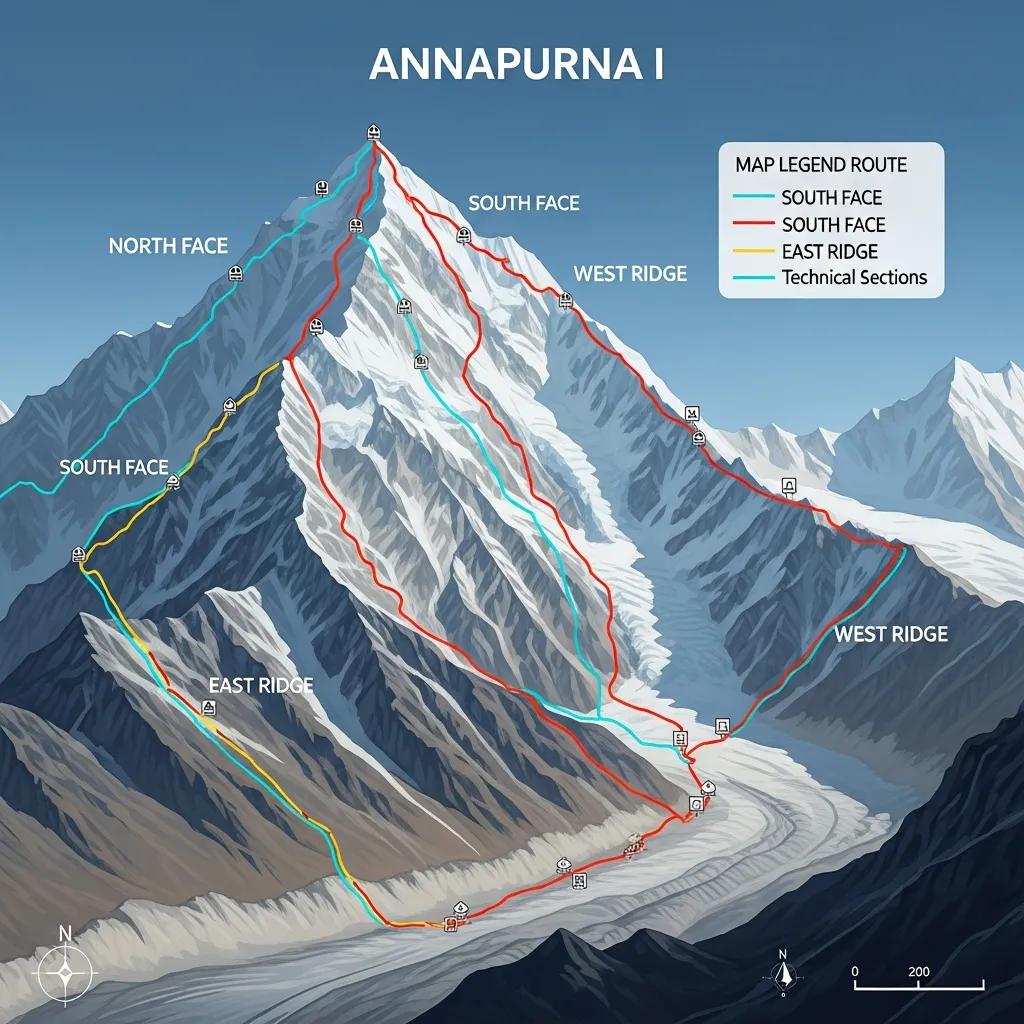
Was this helpful?
🏔Related guides
🧭Explore & compare
Global Summit Guide is an independent mountaineering resource founded in 2026. The team combines first-hand trekking and climbing experience with in-depth research and professional health and nutrition review to help climbers choose objectives, prepare properly, and stay safe.
Health, altitude, and nutrition content is reviewed by Taylor Ludlow (Registered Nurse) and Brigg Hoopes (Nutritionist).
What We Don't Know Yet
Mountain information changes quickly. This box explains the limits of what this page can responsibly promise.
- Permit availability, reservation windows, quotas, and official fee rules may change after this page is updated.
- Weather, snowpack, avalanche risk, road access, and route conditions can change quickly and may be different on your climbing dates.
- Route conditions, trailhead access, crevasse exposure, stream crossings, and rescue access may vary from published planning guidance.
- Total trip cost can change with flights, lodging, guide pricing, permits, gear rentals, transportation, and exchange rates.
- Fitness and altitude response vary by person; no guide, itinerary, or training plan can guarantee acclimatization or summit success.
Verify current conditions with official land managers, guide services, local forecasts, and current route reports before booking or climbing.
Mountaineering, rock and ice climbing, glacier travel, and high-altitude activity are inherently dangerous and can result in serious injury or death. The information on Global Summit Guide is provided for general informational and educational purposes only and is not a substitute for professional instruction, qualified guiding, proper equipment, or your own judgment and experience.
Route conditions, weather, snowpack, permits, regulations, and hazards change constantly and may differ from what is described here. Details may be incomplete, out of date, or contain errors. Always verify current information with local authorities, certified guides, and official sources before making any decision in the mountains.
Nothing on this site is medical, legal, or financial advice. Our fitness, acclimatization, altitude, and nutrition content is general in nature; consult a qualified physician before beginning any strenuous exercise program or exposing yourself to high altitude.
You are solely responsible for your own safety and decisions. To the fullest extent permitted by law, Global Summit Guide and its team accept no liability for any loss, injury, damage, or expense arising from use of, or reliance on, this information. By using this site you acknowledge these risks and accept these terms.
Some links on this site may be affiliate links. If you buy through them we may earn a small commission at no extra cost to you; this never affects our recommendations.
Global Summit Guide recommendation path
Next Best Mountain to Research
Use these recommendations to continue the right planning path instead of stopping on one page.
Use current permit, weather, route, and operator information before booking or climbing.