
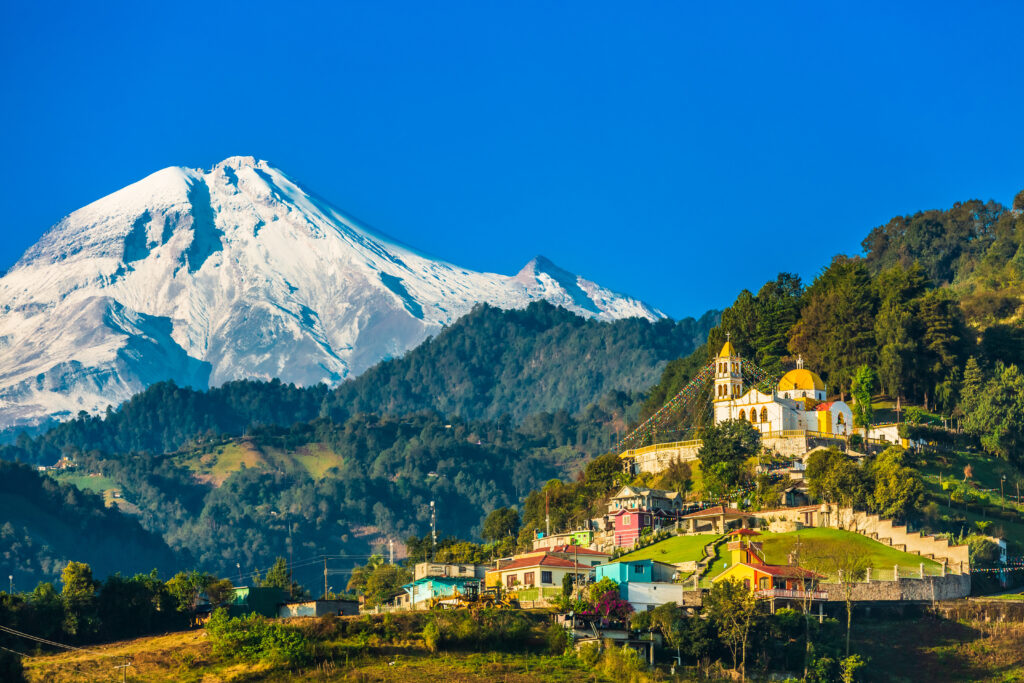
Best Pico de Orizaba Operators: 4 Commercial Operators Compared for 2026
Pico de Orizaba (5,636m / 18,491 ft) is Mexico’s highest peak and North America’s third-highest after Denali and Mount Logan. The mountain’s Citlaltépetl name in Nahuatl means “Star Mountain” — a dormant volcano with the highest glacier in Mexico (the Jamapa Glacier) accessible via the Tlachichuca approach. The standard Jamapa Glacier route is non-technical glacier travel with very few crevasses, making Orizaba the most accessible 5,000m+ peak in North America for climbers building toward Aconcagua, Denali, or international 6,000m+ commercial expeditions. The commercial operator field spans Mexican-direct heritage operators through Servimont (Reyes family three-generation logistics and guide service) and Summit Orizaba (Joaquin Canchola family hostel-based framework), American premium operators through RMI Expeditions (with Servimont partnership) and Mountain Madness with comprehensive Mexico Volcanoes programs combining Orizaba with Iztaccihuatl. Climate-driven Jamapa Glacier deterioration is increasing concern for late-season climbs.
18,491 ft / Mexico’s highest
price range
(with Iztaccihuatl)
season (dry)
Pico de Orizaba occupies a structurally specific position in North American commercial mountaineering: the most accessible 5,000m+ peak in North America, the standard Aconcagua altitude tolerance preparation peak, and the dominant high-altitude introduction objective for climbers building international expedition capability. The mountain’s 5,636m elevation provides genuine high-altitude experience — only 51% of sea-level oxygen at the summit — while the Jamapa Glacier route’s non-technical character (very few crevasses, primarily glacier travel) keeps commercial accessibility broad. The Tlachichuca approach via the historical climbing town with established hut and hostel infrastructure delivers structured commercial framework. For climbers building toward Aconcagua’s 6,961m summit or international 6,000-7,000m commercial expeditions, Orizaba delivers structurally specific altitude tolerance preparation at approximately 5-15% of Aconcagua commercial cost. This comparison evaluates 4 commercial Pico de Orizaba operators against the eight criteria framework.
Pico de Orizaba is widely regarded as the most accessible 5,000m+ peak in North America for several structural reasons. The Jamapa Glacier route is non-technical glacier travel with very few crevasses (relatively crevasse-free compared to Mount Rainier or Denali). The compressed 7-10 day commercial timeline fits standard vacation schedules. Mexico City international airport access is direct from major US gateway cities. Costs are meaningfully lower than equivalent altitude Andes or Asian climbs ($200-$4,500 range). The mountain serves as natural Aconcagua altitude tolerance preparation — many serious Aconcagua aspirants attempt Orizaba 6-12 months before targeting Aconcagua’s 6,961m summit. The skills overlap includes high-altitude physiological adaptation above 5,000m, basic crampon and ice axe technique on glaciated terrain, multi-day expedition logistics, and Latin American commercial expedition culture familiarity.
The Jamapa Glacier on Pico de Orizaba is experiencing accelerating climate-driven retreat, particularly visible in late-season ice conditions. The glacier is becoming progressively icier as snow cover diminishes through the climbing season — late-season climbs (February-March) increasingly encounter blue ice requiring more sustained crampon technique than the historical relatively-soft snow conditions. Climbers should evaluate operator guide capability for ice climbing technique and verify current Jamapa Glacier conditions during booking inquiry. Operators emphasize early-season climbs (November-January) and early-morning summit attempts (1-2 AM start) to access more stable conditions before afternoon ice softening. Climate-driven season compression is increasingly affecting Orizaba commercial framework — climbers should expect operator framing that addresses route condition variability rather than commercial optimism about consistent glacier conditions.
4 operators evaluated against the eight criteria framework. Pricing is 2026-estimated and should be verified directly with operators. The structural diversity between operators reflects different commercial models — Mexican-direct heritage operators (Servimont, Summit Orizaba) deliver logistics-focused frameworks at meaningfully lower pricing while American operators (RMI, Mountain Madness) deliver full-service Mexico Volcanoes programs combining Orizaba with Iztaccihuatl. The Servimont-RMI partnership is structurally important — many American operator commercial programs execute through Servimont logistics infrastructure on the ground. Twice-yearly review cycle. Next scheduled review: September 2026.
Why Pico de Orizaba? The Standard 5,000m+ North American Training Peak
Pico de Orizaba occupies a structurally distinctive position in North American commercial mountaineering:
Mexico’s highest peak; North America’s third-highest. Pico de Orizaba (5,636m / 18,491 ft) is Mexico’s highest peak and North America’s third-highest after Denali (6,190m) and Mount Logan (5,959m). The mountain’s Citlaltépetl name in Nahuatl means “Star Mountain” — a dormant stratovolcano with the highest glacier in Mexico (the Jamapa Glacier covering the upper north and east faces). The peak’s prominence (4,922m) ranks 7th globally — the highest peak in central Mexico dominates the surrounding plains with extraordinary visual presence.
Most accessible 5,000m+ peak in North America. Orizaba’s structural accessibility derives from multiple factors:
- Non-technical Jamapa Glacier route — very few crevasses, primarily glacier travel with crampon and ice axe technique
- Compressed 7-10 day commercial timeline — fits standard vacation schedules vs Aconcagua’s 18-21 days
- Direct Mexico City international airport access from major US gateway cities
- Established Tlachichuca infrastructure — historical climbing town with established hut, hostel, and 4WD transport network
- Accessible commercial pricing — Mexican-direct logistics from $200-$500, full-service American operator programs $2,500-$4,500
- Standard combined Mexico Volcanoes framework — Iztaccihuatl (5,230m) and La Malinche (4,461m) acclimatization in single trip
Standard Aconcagua altitude tolerance preparation peak. Orizaba’s structural role as Aconcagua preparation peak is institutional within American commercial mountaineering. The 5,636m summit develops genuine altitude tolerance — only 51% of sea-level oxygen at the summit — that translates directly to subsequent Aconcagua acclimatization framework. Many serious Aconcagua aspirants attempt Orizaba 6-12 months before targeting Aconcagua’s 6,961m summit. The skills overlap includes high-altitude physiological adaptation above 5,000m, basic crampon and ice axe technique on glaciated terrain, multi-day expedition logistics from base camp / hut framework, and Latin American commercial expedition culture familiarity.
The Tlachichuca historical climbing infrastructure. Tlachichuca is the historical commercial climbing base for Pico de Orizaba — a small town at the base of the mountain with established commercial infrastructure including Servimont (Reyes family operation since 1968), Joaquin Canchola Hostel / Summit Orizaba (Canchola family operation), 4WD vehicle network providing transport up the rough road to Piedra Grande Hut at 14,000 ft, and integrated logistics for international climbers. The Tlachichuca infrastructure framework is structurally distinctive — most international 5,000m+ peaks lack comparable established climbing town infrastructure.
Standard Iztaccihuatl combination framework. Most American commercial Pico de Orizaba programs combine Orizaba with Iztaccihuatl (5,230m). The combined framework matters structurally — Iztaccihuatl provides natural acclimatization above 5,000m before the Orizaba summit attempt, dramatically improving summit success probability; single-trip cost-efficiency vs separate expeditions; integrated Mexico City logistics; and two North American 5,000m+ summits in single trip. La Malinche (4,461m) is often added as a third acclimatization peak. Standard American Mexico Volcanoes commercial programs run 7-10 days covering all three peaks.
November-March primary climbing season. Pico de Orizaba’s commercial climbing season runs November through March, with peak season December-January offering most stable conditions. Mexico’s rainy season runs May-October making summer climbs structurally inappropriate due to fog, rain, and thunderstorm hazards. December-January typically delivers cold but stable conditions with snow cover on the Jamapa Glacier supporting crampon technique. February-March can deliver excellent conditions but with progressive glacier ice exposure as snow cover diminishes — climate-driven late-season ice conditions are increasingly significant operational consideration.
2026 Pico de Orizaba Operator Awards
Four operators selected to represent the structural diversity of the Pico de Orizaba commercial operator field — Mexican-direct heritage flagship, American premium operator with Mexican partnership, Mexican-direct family alternative, and American boutique operator. Each delivers structurally distinct value for different client priorities.
Servimont
Servimont is the Tlachichuca-based Mexican-direct commercial logistics and guide service — a three-generation Reyes family operation serving Pico de Orizaba commercial expeditions for over five decades. The operator delivers structurally distinctive value as the dominant Mexican-direct logistics infrastructure on Pico de Orizaba — many American premium operators (RMI Expeditions explicitly partners with Servimont) execute commercial programs through Servimont’s ground operations including Tlachichuca lodging at Servimont Lodge, 4WD transport from Tlachichuca to Piedra Grande Hut at 14,000 ft, and integrated mountain logistics support.
Servimont’s commercial framework includes fully supported trip services (ground transport, 4×4, all meals, lodge, expedition climbing logistics, acclimatization program), guide services for Pico de Orizaba and surrounding Mexican volcanoes (Iztaccihuatl, La Malinche, Nevado de Toluca), glacial traverse seminar for technical skill development, and cultural/sightseeing tours of pre-Hispanic ruins and colonial Mexican cities. Pricing for Mexican-direct logistics-only services typically runs $200-$500; guided programs typically $800-$1,800. For climbers prioritizing direct relationship with Mexican-direct heritage commercial framework with comprehensive Tlachichuca infrastructure, Servimont delivers structurally specific value.
Read Servimont profile →RMI Expeditions
RMI Expeditions delivers premium American commercial Pico de Orizaba operations through the integrated Mexico Volcanoes program combining Pico de Orizaba (5,636m) with Iztaccihuatl (5,230m). RMI’s structurally distinctive value is the Servimont partnership — the operator explicitly identifies Servimont as Mexican ground partner, providing Mexican logistics infrastructure access through American expedition leadership. The combined Mexico Volcanoes program delivers two North American 5,000m+ summits in single 9-day expedition with American IFMGA-style guide leadership, RMI’s own US-imported climbing equipment for expedition standards consistency, integrated Mexico City logistics, and private vehicle transport between peaks.
For American climbers prioritizing premium expedition framework with familiar US operator infrastructure, integrated Mexico Volcanoes program structure, and operator continuity to subsequent Aconcagua, Denali, or international expeditions, RMI delivers structurally specific value. The 9-day combined Mexico Volcanoes program typically prices around $3,500-$4,500 reflecting premium American operator overhead plus integrated travel coordination from US gateway cities. RMI’s broader portfolio includes Aconcagua, Denali, Everest, Cho Oyu, and broader international expeditions providing comprehensive operator continuity from Mexico Volcanoes through international objectives.
Read RMI Expeditions profile →Summit Orizaba (Canchola Hostel)
Summit Orizaba is the Tlachichuca-based Mexican-direct alternative to Servimont — a family-run operation owned and operated by Joaquin Canchola Limon and his daughter Maribel. The operator runs a structurally distinctive 10-room hostel with three shared bathrooms (with plenty of hot water), courtyard/parking lot for gear sorting, and rooftop with excellent views and photo opportunities. Summit Orizaba’s commercial framework includes Tlachichuca accommodation with breakfast and dinner included, 4WD transport from Tlachichuca to Piedra Grande Hut, large 20L water jugs and US canister fuel availability (a rarity in Mexico), and Cuidador (tent guard/liaison person) service for minimal additional cost.
For climbers prioritizing Mexican-direct family-run framework with structurally distinctive hostel infrastructure rather than Servimont’s lodge format, Summit Orizaba delivers appropriate alternative. The pricing structure is comparable to Servimont — basic logistics typically $200-$400; guided expeditions $800-$1,800. Joaquin Canchola Limon’s institutional climbing experience supports refined guide service; the family-run operation produces structurally distinctive personalized service through smaller commercial scale. Summit Orizaba serves climbers who prefer alternative to Servimont’s larger commercial framework while maintaining Mexican-direct heritage operator standards.
Read Summit Orizaba profile →Mountain Madness
Seattle-based Mountain Madness operates Pico de Orizaba commercial programs through American boutique commercial framework alongside broader international expedition portfolio. Mountain Madness’s structurally distinctive value is the boutique commercial scale — smaller team sizes than larger American operators (RMI, AAI) producing refined guide-client relationship development through smaller group dynamics. The operator’s Mexico Volcanoes program combines Pico de Orizaba with Iztaccihuatl in standard 8-9 day commercial framework with American IFMGA-style guide leadership.
For climbers prioritizing American boutique commercial framework with broader international expedition portfolio continuity, Mountain Madness delivers structurally appropriate fit. The operator’s broader commercial portfolio includes Aconcagua, Ecuador volcanoes, Bolivia (Bolivian Climber program), Nepal trekking peaks, Ama Dablam, and broader international expeditions — climbers building international expedition operator continuity find Mountain Madness’s portfolio scope appropriate for multi-year progression. Pricing for the Mexico Volcanoes commercial program typically runs $3,000-$4,000 reflecting American boutique operator overhead alongside integrated international travel coordination.
Read Mountain Madness profile →2026 Pico de Orizaba Cost Breakdown
Mexican-direct logistics-only services ($200-$500)
Mexican-direct logistics-only services (Servimont, Summit Orizaba) typically include Tlachichuca accommodation (1-2 nights pre-climb, 1 night post-climb), 4WD transport from Tlachichuca to Piedra Grande Hut and return, breakfast and dinner during Tlachichuca stays. Climbers handle their own climbing, guides hired separately if desired. Total all-in budget for Mexican-direct logistics-only including international travel, food, climbing equipment rental, and discretionary spending typically runs $1,500-$2,500. This framework suits experienced climbers with prior glacier mountaineering capability who don’t require guided ascent.
Mexican-direct guided programs ($800-$1,800)
Mexican-direct guided programs typically include logistics-only inclusions plus Mexican guide service for the Pico de Orizaba ascent and acclimatization peaks. The guided framework is structurally distinctive — Mexican guides bring institutional Mexican volcano expertise and Spanish-language commercial framework at meaningfully lower pricing than American operator alternatives. Total all-in budget with international travel typically runs $2,500-$3,500. This framework suits climbers seeking guided ascent at accessible pricing with comfort working within Mexican commercial operator culture.
American operator full-service Mexico Volcanoes programs ($2,500-$4,500)
American operator full-service Mexico Volcanoes programs (RMI, Mountain Madness, AAI) typically include integrated travel coordination from US gateway cities, American IFMGA-style guide leadership, US-imported climbing equipment standards, integrated Mexico City logistics, combined Pico de Orizaba + Iztaccihuatl program structure, and (often) La Malinche acclimatization addition. The 7-10 day program structure delivers two North American 5,000m+ summits with comprehensive American expedition culture framework. Total all-in budget typically runs $4,000-$6,500 including international travel and ancillary costs.
Pricing context within North American commercial
Pico de Orizaba pricing positioning within North American commercial mountaineering framework:
- Mount Hood: $400-$800 (Oregon, 11,249 ft)
- Mount Rainier: $1,500-$3,500 (Washington, 14,410 ft)
- Pico de Orizaba: $200-$4,500 (this comparison; 5,636m)
- Aconcagua: $4,500-$9,000 (Argentina, 6,961m)
- Denali: $9,000-$15,000 (Alaska, 6,190m)
- Cho Oyu: $22,000-$45,000 (Tibet, 8,188m)
For Aconcagua aspirants, Pico de Orizaba delivers altitude tolerance preparation at approximately 5-15% of Aconcagua commercial cost — many serious Aconcagua aspirants attempt Orizaba 6-12 months before targeting Aconcagua’s 6,961m summit. The accessible cost framework supports altitude tolerance development without commercial commitment exceeding subsequent Aconcagua investment.
Tlachichuca infrastructure costs
The Tlachichuca commercial infrastructure produces structurally distinctive cost framework — climbers can access established commercial logistics at meaningfully lower pricing than international alternatives. Standard Tlachichuca round-trip transport (Tlachichuca to Piedra Grande Hut and return): Servimont approximately MXN $850 (~$50 USD); Summit Orizaba approximately MXN $700 (~$40 USD). Tlachichuca accommodation: $50-$150 per night with breakfast and dinner included. Piedra Grande Hut: free to stay (climbers must bring their own equipment, food, and fuel). The cost framework is structurally accessible compared to international alternatives.
Mexico City international travel logistics
Mexico City Benito Juárez International Airport (MEX) provides direct international flight access from major US gateway cities (Los Angeles, Houston, Dallas, Atlanta, New York, Chicago, Miami, Denver, Seattle). Standard international flight costs from US gateway cities typically run $400-$800 round-trip. Mexico City to Tlachichuca transport options include Servimont/Summit Orizaba airport transfer (~$200 per group), Antonio Guzman private driver service (~$100 per person), or public bus via Puebla CAPU bus station ($30-$50). The compressed travel logistics framework supports cost-effective expedition framework.
Who Should Climb Pico de Orizaba in 2026?
Strong fit — climbers building toward Aconcagua commercial expeditions
For climbers building toward Aconcagua commercial expeditions, Pico de Orizaba delivers structurally specific altitude tolerance preparation. The 5,636m elevation develops genuine high-altitude physiological adaptation above 5,000m, basic crampon and ice axe technique on glaciated terrain, multi-day expedition logistics from base camp / hut framework, and Latin American commercial expedition culture familiarity. Many serious Aconcagua aspirants attempt Orizaba 6-12 months before targeting Aconcagua’s 6,961m summit — the structural progression supports refined Aconcagua altitude tolerance development.
Strong fit — climbers seeking accessible 5,000m+ North American introduction
For climbers seeking accessible 5,000m+ peak introduction without international travel complexity beyond Mexico, Pico de Orizaba delivers structurally specific value. The non-technical Jamapa Glacier route, compressed 7-10 day commercial timeline, direct Mexico City international airport access, and established Tlachichuca infrastructure produce the most accessible 5,000m+ commercial framework in North America. The combined Mexico Volcanoes program (Orizaba + Iztaccihuatl + La Malinche) delivers comprehensive Mexican volcano experience in single trip.
Strong fit — value-conscious climbers prioritizing Mexican-direct commercial framework
For value-conscious climbers prioritizing Mexican-direct commercial framework with accessible pricing, Servimont and Summit Orizaba deliver structurally specific value. The Mexican-direct logistics-only framework ($200-$500) represents meaningfully lower pricing than American operator alternatives ($2,500-$4,500) for what is structurally similar on-mountain experience. Mexican-direct guided programs ($800-$1,800) deliver guided ascent at accessible pricing for climbers comfortable with Mexican commercial operator culture and Spanish-language commercial framework.
Strong fit — climbers building international expedition operator continuity
For climbers building international expedition operator continuity with American operators, Pico de Orizaba’s American operator field provides structural progression continuity. RMI runs Aconcagua, Denali, Everest, Cho Oyu, and broader international expeditions; Mountain Madness runs Aconcagua, Ecuador volcanoes, Bolivia, Nepal trekking peaks, Ama Dablam, and broader international portfolio. Climbers prioritizing single-operator progression from Pico de Orizaba through international objectives find structurally appropriate fit through American operator alternatives.
Less optimal — climbers seeking technical climbing experience
Pico de Orizaba’s Jamapa Glacier route is non-technical glacier travel rather than technical climbing. Climbers seeking technical climbing skill development should consider Mount Rainier (Kautz Glacier, Liberty Ridge) or alpine technical objectives rather than Pico de Orizaba. The Jamapa Glacier ice climbing skill demands have increased with climate-driven glacier deterioration but the route fundamentally remains non-technical glacier travel rather than technical climbing.
Less optimal — climbers without prior 4,000m+ altitude experience
Despite the structural accessibility, Pico de Orizaba’s 5,636m altitude exceeds Mount Rainier by over 1,200m and demands genuine altitude tolerance. Climbers without prior 4,000m+ altitude experience face physiological risk including HAPE and HACE — only 51% of sea-level oxygen at the summit. The standard combined Mexico Volcanoes program with Iztaccihuatl (5,230m) and La Malinche (4,461m) acclimatization peaks provides natural altitude tolerance development, but climbers should arrive with prior 4,000m+ altitude experience (Colorado 14ers, Mount Whitney, Mount Rainier) before the standard 7-10 day program.
Less optimal — climbers requiring fixed-departure scheduling certainty
Pico de Orizaba’s variable seasonal conditions (climate-driven glacier deterioration, weather variability) can affect commercial program scheduling. American operators (RMI, Mountain Madness) typically publish fixed departure dates with bookable schedule certainty. Mexican-direct operators (Servimont, Summit Orizaba) may operate with more flexible scheduling that requires direct booking inquiry for departure availability. Climbers requiring rigid international flight scheduling around Mexico Volcanoes commercial programs should evaluate operator departure framework during booking inquiry.
Less optimal — climbers prioritizing late-season warmer weather
Late-season Pico de Orizaba climbs (February-March) increasingly encounter climate-driven Jamapa Glacier ice conditions requiring more sustained crampon technique than historical relatively-soft snow conditions. Climbers prioritizing warmer weather should evaluate operator guide capability for ice climbing technique and verify current Jamapa Glacier conditions during booking inquiry. Early-season climbs (November-January) with cold but stable snow cover typically deliver better commercial framework.
Frequently Asked Questions About Pico de Orizaba Operators
How much does Pico de Orizaba cost in 2026?
Pico de Orizaba commercial expeditions in 2026 range $200-$4,500 depending on operator structure and program scope. Mexican-direct logistics-only services (Servimont, Summit Orizaba) typically run $200-$500 covering accommodation, transport to Piedra Grande Hut, and basic logistics. Mexican-direct guided programs typically run $800-$1,800 for 4-7 day expeditions. American operator full-service Mexico Volcanoes programs (RMI, Mountain Madness, AAI) typically run $2,500-$4,500 for 7-10 day Orizaba + Ixta combined programs including international travel coordination, US-based guides, and integrated Mexico City logistics. Total all-in budget after international travel and ancillary costs typically runs $1,500-$6,500 depending on operator framework.
Why is Pico de Orizaba considered an accessible 5,000m+ training peak?
Pico de Orizaba (5,636m / 18,491 ft) is widely considered the most accessible 5,000m+ peak in North America for several structural reasons. The Jamapa Glacier route is non-technical glacier travel with very few crevasses (relatively crevasse-free compared to Mount Rainier or Denali). The compressed 7-10 day commercial timeline fits standard vacation schedules. Mexico City international airport access is direct from major US gateway cities. Costs are meaningfully lower than equivalent altitude Andes or Asian climbs. The mountain serves as natural Aconcagua altitude tolerance preparation — many serious Aconcagua aspirants attempt Orizaba 6-12 months before targeting Aconcagua’s 6,961m summit.
What is the climate-driven Jamapa Glacier deterioration situation?
The Jamapa Glacier on Pico de Orizaba is experiencing accelerating climate-driven retreat, particularly visible in late-season ice conditions. The glacier is becoming progressively icier as snow cover diminishes through the climbing season — late-season climbs (February-March) increasingly encounter blue ice requiring more sustained crampon technique than the historical relatively-soft snow conditions. Some recent reports document the glacier is retreating significantly faster than 20th-century baselines. Climbers should evaluate operator guide capability for ice climbing technique and verify current Jamapa Glacier conditions during booking inquiry. Operators emphasize early-season climbs (November-January) and early-morning summit attempts (1-2 AM start) to access more stable conditions before afternoon ice softening.
When is the best time to climb Pico de Orizaba?
Pico de Orizaba’s primary commercial climbing season runs November through March, with peak season December-January offering most stable conditions. Mexico’s rainy season runs May-October making summer climbs structurally inappropriate due to fog, rain, and thunderstorm hazards. December-January typically delivers cold but stable conditions with snow cover on the Jamapa Glacier supporting crampon technique. February-March can deliver excellent conditions but with progressive glacier ice exposure as snow cover diminishes. April-May approach the rainy season with increasing weather variability. The Mount Rainier-style climate-driven season compression is increasingly affecting late-season Orizaba conditions.
Should I combine Pico de Orizaba with Iztaccihuatl?
Combining Pico de Orizaba (5,636m) with Iztaccihuatl (5,230m) is the standard American operator commercial framework — RMI Mexico Volcanoes, AAI Mexico Volcanoes, and Mountain Madness Mexico Volcanoes programs all combine both peaks. The combined framework matters structurally for several reasons. Iztaccihuatl provides natural acclimatization above 5,000m before the Orizaba summit attempt, dramatically improving summit success probability. The combined 7-10 day program delivers two North American 5,000m+ summits in single trip, single international flight cost-efficiency, and integrated Mexico City logistics. La Malinche (4,461m) is often added as a third acclimatization peak in standard American operator programs. Mexican-direct operators offer more flexible single-peak Orizaba options.
Should I book a Mexican-direct operator or an American operator?
The choice depends on client priorities. Mexican-direct operators (Servimont, Summit Orizaba) deliver Mexican-direct heritage commercial framework at meaningfully lower pricing ($200-$1,800 vs $2,500-$4,500 American operators). Climbers comfortable with Mexican commercial operator culture and basic Spanish-language framework benefit from accessible pricing and direct relationships with Tlachichuca-based operations. American operators (RMI, Mountain Madness, AAI) deliver familiar US-based booking infrastructure, integrated travel coordination, English-language client engagement, US guide leadership, and integrated Mexico Volcanoes program structure including Iztaccihuatl. The on-mountain Pico de Orizaba experience is structurally similar across operators — Servimont provides ground operations for both Mexican-direct and many American operator commercial programs. For value-conscious climbers, Mexican-direct delivers meaningful savings; for climbers prioritizing American operator continuity, the pricing premium reflects structural value-add.
Where is Tlachichuca and why is it the climbing base?
Tlachichuca is a small town in Puebla State, Mexico, located at approximately 2,600m / 8,500 ft elevation at the western base of Pico de Orizaba. The town serves as the historical commercial climbing base for Pico de Orizaba expeditions due to several structural factors: established commercial infrastructure (Servimont since 1968, Summit Orizaba/Canchola Hostel), 4WD vehicle network providing transport up the rough road to Piedra Grande Hut at 14,000 ft (the standard high camp / base camp on the north side), accessible from Mexico City (3-hour drive) via Puebla, and integrated logistics for international climbers. The Piedra Grande Hut is free to stay but climbers must bring their own equipment, food, and fuel — the Tlachichuca operators handle pre-positioning for guided clients.
Pico de Orizaba (5,636m / 18,491 ft) is Mexico’s highest peak and North America’s third-highest after Denali and Mount Logan — the most accessible 5,000m+ peak in North America and the dominant Aconcagua altitude tolerance preparation peak through structurally distinctive Tlachichuca commercial infrastructure with Mexican-direct heritage operators (Servimont since 1968, Summit Orizaba) alongside American premium operators (RMI Expeditions, Mountain Madness). For climbers prioritizing Mexican-direct heritage commercial framework, Servimont delivers three-generation Reyes family expertise with comprehensive Tlachichuca infrastructure (Servimont Lodge, 4WD transport network, integrated mountain logistics) at accessible pricing ($200-$1,800 depending on logistics-only or guided framework). For American climbers prioritizing premium expedition framework with familiar US operator infrastructure, RMI Expeditions delivers structurally distinctive value through explicit Servimont partnership combining Mexican logistics infrastructure access with American expedition leadership in 9-day combined Mexico Volcanoes program (Orizaba + Iztaccihuatl, $3,500-$4,500). For climbers prioritizing Mexican-direct family-run framework, Summit Orizaba (Joaquin Canchola family) delivers structurally distinctive hostel-based alternative to Servimont’s lodge format with comparable pricing and personalized service. For climbers prioritizing American boutique commercial framework, Mountain Madness delivers smaller team sizes than larger American operators with broader international expedition portfolio continuity ($3,000-$4,000 typical pricing). For Aconcagua aspirants, Pico de Orizaba delivers structurally specific altitude tolerance preparation at approximately 5-15% of Aconcagua commercial cost — many serious Aconcagua aspirants attempt Orizaba 6-12 months before targeting Aconcagua’s 6,961m summit. Climate-driven Jamapa Glacier deterioration is increasing operational concern — late-season climbs (February-March) increasingly encounter blue ice requiring more sustained crampon technique. The choice between operators should be driven by client priorities: maximum Mexican-direct value (Servimont or Summit Orizaba), American premium expedition framework (RMI or Mountain Madness), or Mexican-direct family-run alternative (Summit Orizaba). Verify current 2026 pricing, Jamapa Glacier conditions, departure availability, and specific program inclusions directly with operators close to departure dates.
Sources and Verification
This comparison was built from publicly available information about commercial Pico de Orizaba operators, Mexican commercial registration framework, and industry reference sources. Pricing should be verified directly with operators before booking. Climate-driven Jamapa Glacier conditions are evolving — verify current route conditions close to departure dates. Next scheduled review: September 2026.
- Servimont — Mexican-direct heritage commercial logistics and guide service.
- Summit Orizaba — Mexican-direct family-run commercial framework documentation.
- RMI Expeditions Mexico Volcanoes — American premium combined Mexico Volcanoes program documentation.
Fact-checked April 29, 2026 · Next scheduled review: September 2026
Pico de Orizaba and North American Operator Resources
Pico de Orizaba: Standard Aconcagua Preparation Peak
Pico de Orizaba delivers structurally specific Aconcagua altitude tolerance preparation at approximately 5-15% of Aconcagua commercial cost. The most accessible 5,000m+ peak in North America develops the high-altitude physiological adaptation required for Aconcagua’s 6,961m summit success.