
Last updated September 12, 2026
How to Climb Gran Paradiso: Routes, Huts & the Easiest 4,000m Peak in Italy
Italy’s highest “sovereign” peak at 4,061 m. The most-recommended first 4,000m climb in the Alps. Glacier travel + final ridge scramble from Rifugio Chabod or Rifugio Vittorio Emanuele II. The classic Mont Blanc acclimatization climb.
Gran Paradiso is the highest mountain located entirely within Italy — a 4,061-meter (13,323-foot) granite-gneiss peak rising from the Graian Alps on the border between the Aosta Valley and Piedmont regions. While Italy shares higher summits with neighboring countries (Mont Blanc at 4,809m with France, the Matterhorn at 4,478m with Switzerland, Dufourspitze at 4,634m with Switzerland), Gran Paradiso is the only 4,000m+ peak whose summit lies entirely on Italian territory — making it Italy’s “highest sovereign peak.” The mountain anchors Gran Paradiso National Park, Italy’s oldest national park (established 1922 to protect the Alpine ibex population that had been hunted nearly to extinction). For mountaineers, Gran Paradiso occupies a uniquely useful position in the Alpine progression: graded F+ in the French Alpine system — one of the easiest 4,000m peaks anywhere in the Alps — it is universally recommended as the first 4,000m climb for aspiring alpinists, the classic acclimatization peak before Mont Blanc attempts, and a rewarding standalone objective combining moderate glacier travel with stunning national park wildlife (ibex herds, chamois, golden eagles, occasional lynx). This guide covers both Normal Routes (Rifugio Chabod and Rifugio Vittorio Emanuele II), 2026 IFMGA guide pricing, the summit day timeline, equipment requirements, the Mont Blanc acclimatization use case, and why Gran Paradiso is genuinely beginner-friendly without being trivial.
Gran Paradiso Location & Live Weather
Gran Paradiso is located in the Graian Alps in northwestern Italy, on the border between the Aosta Valley (Valle d’Aosta) and Piedmont (Piemonte) regions. The summit coordinates are 45.5144°N, 7.2697°E. Climbers approach via the Valsavarenche valley from the village of Pont (1,960m for Vittorio Emanuele approach) or Pravieux (1,834m for Chabod approach). The nearest international airports are Turin Caselle (TRN) at approximately 1.5 hours by car and Geneva (GVA) at approximately 2 hours via the Mont Blanc Tunnel.
Weather data from Open-Meteo at coordinates 45.5144°N, 7.2697°E. Summit conditions at 4,061m are typically 20-25°C colder than Aosta Valley readings; consult guide-recommended weather services (Meteo Valle d’Aosta, ARPA Piemonte) for technical climbing forecasts.
Gran Paradiso At a Glance
| Summit elevation | 4,061 m (13,323 ft) — highest mountain entirely in Italy |
|---|---|
| Prominence | 1,888 m (6,194 ft) — qualifies as “Ultra” prominence peak |
| Location | Graian Alps, on border between Aosta Valley (Valle d’Aosta) and Piedmont (Piemonte) regions, northwestern Italy |
| Coordinates | 45.5144°N, 7.2697°E |
| Geographic significance | Italy’s highest sovereign peak (highest summit entirely on Italian soil); 7th highest peak in the Graian Alps; centerpiece of Gran Paradiso National Park |
| Park established | 1922 — Italy’s first and oldest national park; created to protect the Alpine ibex from extinction |
| First ascent | September 4, 1860 — John Cowell & W. Dundas (British) with guides Michel Payot and Jean Tairraz |
| Alpine grade | F+ (Facile-plus) on the French Alpine system — one of the easiest 4,000m peaks in the Alps |
| Standard duration | 2 days (hike to hut Day 1; summit and descent Day 2) |
| Technical character | Glacier travel (PD-level) + 60-meter rocky scramble on final summit ridge |
| Best season | Mid-June through mid-September (summer Alpine season) |
| Two huts | Rifugio Vittorio Emanuele II (2,732m) — larger, historic; Rifugio Chabod (2,750m) — newer, quieter |
| 2026 guide cost | €450-€900 per climber for standard 2-day IFMGA-guided climb |
| Permits required | None — no national park entry fee or climbing permit (unusual for major Alpine peaks) |
| Primary use case | First 4,000m peak for aspiring alpinists; Mont Blanc acclimatization climb; standalone moderate Alpine objective |
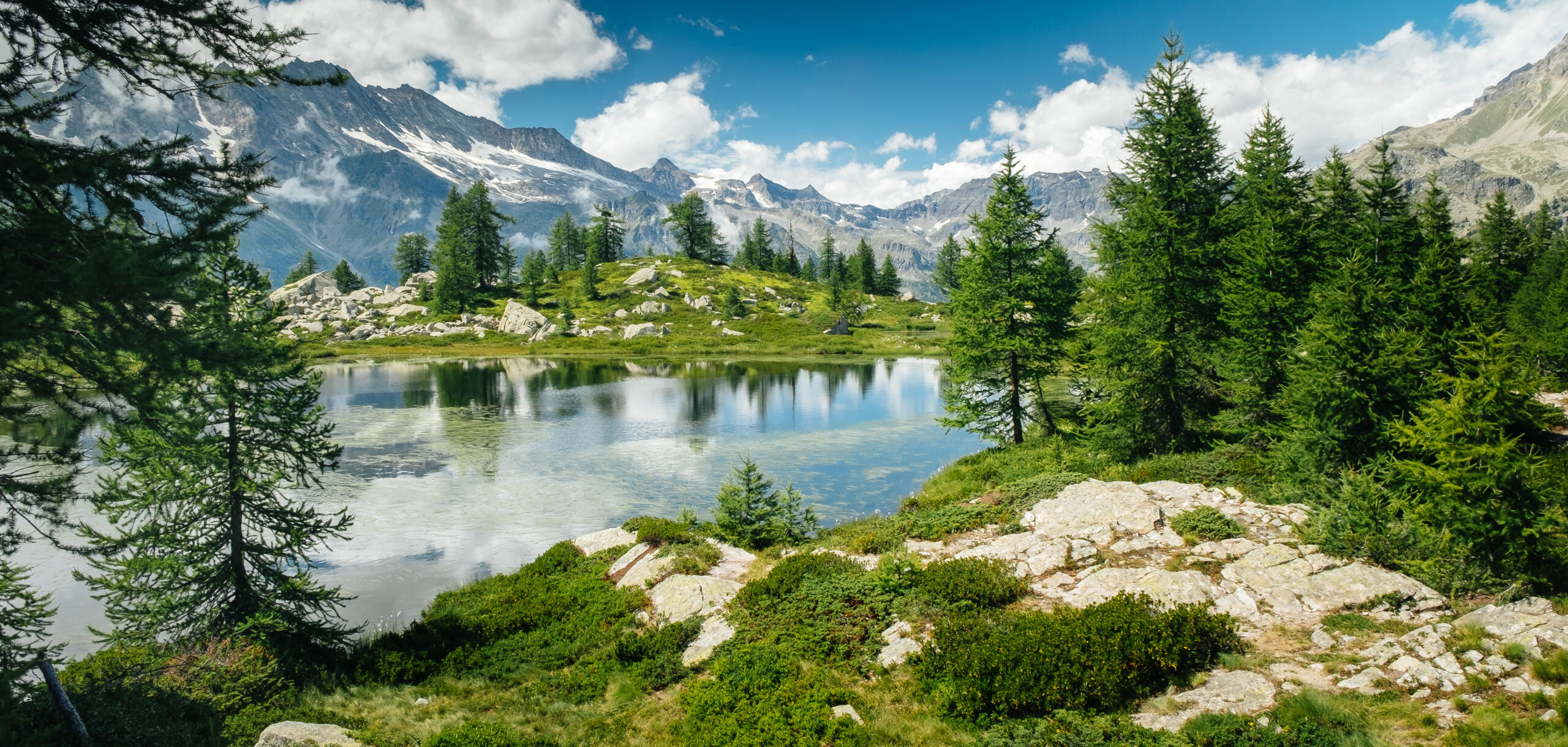
Why Gran Paradiso Is the Most-Recommended First 4,000m Peak
Among the approximately 82 peaks above 4,000 meters in the Alps, Gran Paradiso has developed a distinct reputation as the optimal entry point. Three factors drive that consensus: technical accessibility, logistical simplicity, and Mont Blanc compatibility.
Technical Accessibility — F+ Grade
Gran Paradiso is graded F+ (Facile-plus) on the French Alpine system — the second-easiest grade in the standard Alpine rating system. The route involves no technical ice climbing, no fixed-rope work, no avalanche-prone steep sections, and no exposed traverses requiring advanced technical skills. The principal technical elements are: rope-team glacier travel across the Laveciau and Gran Paradiso glaciers (low-angle 25-30°, with manageable crevasse fields); approximately 1,300-1,400 meters of elevation gain on summit day; and a final 60-meter rocky scramble on the summit ridge requiring hands-on technique but no protection placement. Climbers with prior crampon and ice axe practice — even just a single Alpine introduction course — have the baseline skills to attempt Gran Paradiso with an IFMGA guide. The Schiena d’Asino (Hogsback) ridge where both Normal Routes converge is sometimes airy but well-trodden and not technically exposed in a fall-consequence sense.
Logistical Simplicity
Gran Paradiso’s logistical profile is unusually straightforward for a major Alpine peak. No climbing permits are required — climbers simply book a hut night, drive to the trailhead, and ascend. There are no national park entry fees for climbers (the park charges nothing for mountaineering access). The two huts — Rifugio Vittorio Emanuele II and Rifugio Chabod — are well-run, well-stocked Italian Alpine Club (CAI) refuges with half-board meals, dormitory bunks, and on-mountain hut wardens who can advise on summit conditions. Equipment rental is widely available in Aosta, Cogne, and Chamonix. The trailhead at Pont/Pravieux is accessible by car in approximately 1.5-2 hours from Turin or Geneva airports. By contrast, Mont Blanc requires reservations months in advance for limited refuge spots; Aconcagua requires expensive Argentine permits and 12-15 days; Denali requires Alaska Park Service registration and 14-21 days. Gran Paradiso can realistically be added to a European trip with two weeks’ notice.
Mont Blanc Acclimatization Compatibility
The geographic and logistical proximity of Gran Paradiso to Mont Blanc makes the two peaks a natural progression sequence. From Aosta or Chamonix, Gran Paradiso is approximately 1-1.5 hours’ drive, allowing climbers to combine them in a single 5-7 day trip. The 4,061m altitude provides genuine acclimatization stimulus — climbers who summit Gran Paradiso have demonstrated their body’s tolerance for 4,000m+ altitude and gained the lower-oxygen exposure that substantially improves their Mont Blanc summit chances. Most experienced Mont Blanc guides explicitly recommend or require a Gran Paradiso (or comparable 4,000m peak) acclimatization climb before attempting Mont Blanc’s 4,809m summit. Skipping acclimatization on Mont Blanc produces substantially lower success rates and substantially higher AMS-driven turnarounds, particularly for climbers travelling from sea-level countries.
The honest framing. Gran Paradiso is the most beginner-friendly 4,000m peak in the Alps — but “beginner-friendly” does not mean “easy.” The route involves real glacier travel with real crevasses, real altitude exposure at 4,000+ meters, real summit-day endurance demands (8-10 hours active), and real consequences for poor weather decisions or inadequate equipment. Climbers should approach Gran Paradiso as a genuine Alpine objective requiring proper preparation: appropriate gear, IFMGA guide engagement for first-timers, acclimatization to at least 3,000m before the climb if possible, and weather-window flexibility. The peak’s “easy 4,000er” reputation is accurate relative to harder peaks — but should not be confused with “any hiker can do it without preparation.” Climbers who treat Gran Paradiso with appropriate respect will find it one of the most rewarding mountain experiences in the Alps.
Who Can Realistically Climb Gran Paradiso?
Gran Paradiso’s accessibility makes it suitable for a broader range of climbers than most 4,000m Alpine peaks — but accessibility does not mean universal suitability. Understanding who Gran Paradiso fits helps climbers make realistic decisions about preparation and timing.
Gran Paradiso Is Appropriate For:
First-time 4,000m climbers with prior multi-day hiking experience and basic Alpine skills. Climbers with experience hiking 4-6 days at altitude (Tour du Mont Blanc, Haute Route trekking, Dolomite via ferrata circuits) and prior crampon or ice axe practice can succeed on Gran Paradiso with an IFMGA guide. The mountain is specifically designed in the Alpine progression as the bridge between trekking and 4,000m mountaineering.
Mont Blanc aspirants needing acclimatization. Climbers attempting Mont Blanc should plan to climb Gran Paradiso (or a comparable 4,000m peak) 3-7 days before their Mont Blanc attempt. The acclimatization stimulus substantially improves summit success rates and reduces AMS risk on Mont Blanc’s higher altitude.
Experienced trekkers progressing to alpinism. Strong hikers with substantial altitude tolerance (prior climbs of Mount Kilimanjaro, Aconcagua acclimatization climbs, or Himalayan trekking peaks) often find Gran Paradiso a natural progression into technical Alpine mountaineering — the altitude is familiar but the glacier and ridge skills are new.
Aosta Valley wildlife enthusiasts and national park visitors. The combination of accessible 4,000m summit + Italy’s oldest national park + abundant ibex, chamois, and golden eagle populations makes Gran Paradiso uniquely appealing to climbers who value the natural-history dimension of mountain travel alongside the summit objective.
Gran Paradiso Is Not Appropriate For:
Complete beginners with no Alpine experience whatsoever. Climbers who have never worn crampons, never been on a glacier, never carried a heavy pack at altitude, and have no concept of rope-team movement are not ready for Gran Paradiso even with a guide. Such climbers should first complete an introductory Alpine course (typically 3-5 days in Chamonix or the Bernese Alps) before attempting Gran Paradiso.
Climbers with significant cardiovascular disease or uncontrolled hypertension. Altitude at 4,000m produces substantial cardiac stress. Climbers with prior cardiac events, current arrhythmias, uncontrolled hypertension, or recent respiratory illness should consult a cardiologist before attempting Gran Paradiso.
Climbers expecting a “hike” without technical commitment. The glacier travel and final scramble are real technical elements. Climbers who arrive expecting trail-walking with a guide will be unprepared for the actual character of the climb. Gran Paradiso is moderate alpinism, not high-altitude hiking.
Climbers without weather-window flexibility. Alpine weather is variable. Climbers booking single-date attempts from abroad must accept the possibility that their guide cancels or postpones based on summit conditions. Fixed-date itineraries without flexibility are not appropriate for any 4,000m Alpine peak, including Gran Paradiso.
Gran Paradiso’s Role in the Alpine Climbing Progression
Gran Paradiso occupies a specific and well-defined position in the Alpine climbing progression — the bridge between trekking-grade altitude exposure and serious technical mountaineering. Understanding where it fits helps climbers contextualize the climb in their broader Alpine ambitions.
| Stage | Peak / Experience | Elevation | Why this position |
|---|---|---|---|
| Entry | Easy Dolomite via ferratas (Masare, Sentiero degli Alpini) | 2,500-2,800m | Cable technique, exposure tolerance, scrambling |
| Introduction | Easy Alpine glaciated peaks (Breithorn, Allalinhorn) | 4,000-4,200m | First 4,000m peaks; cable-car access reduces commitment |
| First Independent 4,000m | Gran Paradiso (Italian Alps) | 4,061m | First 4,000m peak requiring full approach and hut night; standard sequence position |
| Step Up | Mont Blanc (4,809m, Goûter Route) | 4,809m | Western Alps classic; longer, higher, more committing |
| Technical | Matterhorn (Hörnli Ridge) | 4,478m | Sustained technical rock + ice climbing; substantial step up |
| Advanced | Eiger Mittellegi Ridge, Dent Blanche | 3,970-4,357m | Sustained Alpine ridge climbing |
| Expedition | Aconcagua, Denali, Himalayan peaks | 6,000m+ | Multi-week expedition mountaineering |
Climbers who specifically aim to climb the seven highest peaks in the Alps (the “82 4000ers” project or the official UIAA list of 82 official 4,000m Alpine summits) often start with Gran Paradiso as their first or second peak — it provides the foundational 4,000m experience without the technical complexity of harder Alpine objectives.
Gran Paradiso History: From Royal Hunting Reserve to National Park
Gran Paradiso’s history is uniquely intertwined with three narratives: 19th-century Alpine exploration, the Italian royal house’s hunting traditions, and the modern conservation movement that produced Italy’s first national park. Below are the substantial historical milestones.
The Gran Paradiso massif has been recognized in local Aosta Valley culture for centuries. The mountain’s name derives, via the French Grand Paradis, from the Aosta Valley patois “Granta Parey” — originally meaning “large wall” rather than “great paradise.” The mistranslation to “paradise” became established in Italian and French mapping and has persisted as the standard name. Local Valdôtain hunters knew the peak’s lower slopes for generations before formal Alpine climbing began.
King Victor Emmanuel II of Sardinia (later Italy’s first king after unification in 1861) noticed the exceptional natural beauty and abundant Alpine ibex population of the Gran Paradiso area. In 1856, he designated the peak and surrounding territory as a royal hunting reserve — protecting the area from agricultural development and providing legal status that would later become the foundation of the national park. The royal reserve was the precondition that made conservation possible: by limiting access and use, it preserved the ibex population that other Alpine areas had lost to overhunting.
The first recorded ascent of Gran Paradiso took place on September 4, 1860, when British climbers John Cowell and W. Dundas reached the summit accompanied by Chamonix guides Michel Payot and Jean Tairraz. The ascent followed approximately what is now the Vittorio Emanuele Normal Route. The 1860 date places Gran Paradiso among the earliest Alpine 4,000m first ascents — predating most Western Alps first ascents that would follow during the “Golden Age of Alpinism” through the 1860s. The expedition was part of the broader pattern of British alpinists pioneering routes across the Alps in collaboration with Chamonix and other French/Italian guide families.
Throughout the 1870s, 1880s, and 1890s, climbing parties established and refined the Normal Routes from both Pont and Pravieux. The Rifugio Vittorio Emanuele II was built during this period, named for the king who had created the royal reserve. The route became part of the standard Alpine progression for British and continental European climbers, with Gran Paradiso particularly favored as a less-crowded alternative to Mont Blanc.
On December 3, 1922, King Victor Emmanuel III (grandson of Victor Emmanuel II) formally donated the royal hunting reserve to the Italian government to establish Gran Paradiso National Park — Italy’s first national park. The donation was specifically motivated by concern for the Alpine ibex population, which had been hunted to near-extinction across most of the Alps. The Gran Paradiso reserve held one of the only remaining viable ibex populations in Europe, and the king’s donation ensured that population’s survival. Today’s substantial Alpine ibex populations across the Alps descend significantly from the Gran Paradiso reservoir. The park currently protects approximately 70,000 hectares straddling the Aosta Valley and Piedmont, with substantial populations of ibex, chamois, marmots, golden eagles, ermine, and recently-reintroduced lynx.
In 1972, Gran Paradiso National Park was formally twinned with France’s Vanoise National Park, which sits directly across the French-Italian border. The two parks together form one of the largest protected wilderness areas in Western Europe at approximately 1,250 square kilometers. The twinning facilitated transboundary wildlife management — particularly for ibex herds that move between the two parks — and established a model for international Alpine conservation cooperation that has been replicated in other transboundary mountain areas.
Throughout the second half of the 20th century, Gran Paradiso developed its modern reputation as the “easy 4,000er” — the standard first 4,000m climb for European alpinists and the standard Mont Blanc acclimatization peak. The Rifugio Federico Chabod was built in the 1980s, providing the second Normal Route option. Italian Alpine Club (CAI) huts on the mountain accommodate tens of thousands of climbers each summer. By the late 1990s and 2000s, Gran Paradiso was being marketed by Alpine guide services across Europe as the entry-level 4,000m experience for climbers planning Mont Blanc, Matterhorn, or higher Himalayan objectives.
Like all Alpine glaciated peaks, Gran Paradiso’s glaciers — particularly the Laveciau and Gran Paradiso glaciers crossed by the Normal Routes — have undergone substantial retreat during recent decades. The 2022 heat wave that produced the Marmolada serac collapse also affected Gran Paradiso’s glacier stability, though without catastrophic events. Guides increasingly assess glacier conditions daily during the climbing season, and some sections of the historical routes have shifted slightly to account for changing crevasse fields. Gran Paradiso has not experienced the dramatic climbing-pattern disruption that Marmolada has, but it remains subject to the same broader climate-driven Alpine transformation.
Gran Paradiso continues to be the most-recommended first 4,000m climb in the Alps. Annual climbing volume remains substantial, with the summer season (mid-June through mid-September) seeing thousands of guided and independent ascents. The mountain’s permit-free access, established IFMGA guide network in Aosta and Chamonix, well-maintained hut infrastructure, and proximity to Mont Blanc continue to support its central role in the Alpine progression sequence.
The Two Normal Routes of Gran Paradiso
Gran Paradiso has two principal Normal Routes — both Alpine grade F+, both 2-day itineraries, and both convergent at the Schiena d’Asino (Hogsback) before the final summit ridge. Climbers choose between the routes based on hut character, scenery preference, and crowd avoidance. Below is a detailed comparison.
| Route | Hut Elevation | Approach Time | Summit Day Time | Best For |
|---|---|---|---|---|
| Rifugio Vittorio Emanuele II | 2,732 m | ~2-2.5 hrs from Pont (1,960m) | ~3.5-4 hrs hut to summit | Historic hut; better food; busier; most popular |
| Rifugio Federico Chabod | 2,750 m | ~2.5-3 hrs from Pravieux (1,834m) | ~4-4.5 hrs hut to summit | Newer hut; quieter; slightly more scenic; less crowded |
| Classic Loop (both) | Both | Variable | ~9-10 hrs | Ascend from one, descend to other; full experience |
Route 1: The Vittorio Emanuele Normal Route
The Vittorio Emanuele Normal Route is the original and most popular Gran Paradiso climbing route, with the Rifugio Vittorio Emanuele II serving as the historic mountain hut named for the king who established the original royal hunting reserve in 1856. The route is slightly shorter and more direct than the Chabod alternative, making it the preferred choice for most first-time climbers, larger guided groups, and climbers prioritizing the classic Gran Paradiso experience.
The Vittorio Emanuele itinerary:
- Day 1 (Approach): Start at Pont Valsavarenche (1,960m), the trailhead at the head of the Valsavarenche valley. Hike approximately 2-2.5 hours via well-maintained mule track climbing 775 meters to Rifugio Vittorio Emanuele II (2,732m). Wildlife sightings (ibex, chamois, marmots) common throughout the approach. Arrive at hut by early-to-mid afternoon for half-board dinner, hut briefing on Day 2 conditions, and early sleep (~21:00).
- Day 2 (Summit and Descent): Wake at approximately 04:00-04:30 for early breakfast. Depart hut by 05:00-05:30 with headlamps. Cross moraine and reach the Laveciau Glacier. Rope up for glacier travel; ascend low-angle (25-30°) glacier with manageable crevasse fields. Join the Schiena d’Asino (Hogsback) ridge where the route converges with the Chabod approach. Continue along the ridge to the base of the final summit pyramid. Climb the 60-meter rocky scramble to the summit (4,061m) with its Madonna statue. Total summit day from hut: approximately 8-9 hours round trip.
Route 2: The Chabod Normal Route
The Chabod Normal Route uses the newer Rifugio Federico Chabod as its overnight base — a hut built in the 1980s that offers a quieter, less-crowded alternative to the Vittorio Emanuele. The approach starts from Pravieux (1,834m), slightly below the Pont trailhead used by the Vittorio Emanuele route, and gains approximately 890 meters to the hut. The Chabod approach features substantial larch forest sections and exceptional ibex sighting opportunities — guides frequently note that the Chabod side has the best wildlife viewing of any Alpine refuge approach.
What makes the Chabod route distinctive: Substantially fewer climbers (perhaps 30-40% of total Gran Paradiso traffic versus the Vittorio Emanuele’s 60-70%); newer hut infrastructure with renovated dormitories; more scenic approach through larch forest with the north face of Gran Paradiso visible during the climb; slightly longer summit-day from the hut (4-4.5 hours versus 3.5-4 hours from Vittorio Emanuele) due to the route crossing the Laveciau Glacier more substantially.
The Chabod route is particularly recommended for climbers who value scenery and solitude, smaller guided groups (1-2 climbers + guide), and those who specifically want the more contemplative Alpine experience versus the busy classic-route atmosphere.
Route 3: The Classic Loop (Both Huts)
The Classic Loop ascends from one hut and descends to the other — typically Chabod up, Vittorio Emanuele down (or the reverse) — providing the most complete Gran Paradiso experience. Most guides offering 2-3 day programs incorporate the loop format because it visits both classic huts, both approach trails, and provides substantially varied scenery. The loop typically requires transport logistics (car shuttle between Pravieux and Pont, or longer return walk on the third day).
The Classic Loop is particularly appropriate for climbers planning multi-day Aosta Valley trips, climbers wanting the full Gran Paradiso experience versus a single-day-style ascent, and climbers using the climb as a substantial Mont Blanc acclimatization period (the extra day provides additional altitude exposure).
The Gran Paradiso Summit Day: Hour-by-Hour
Gran Paradiso summit day from either hut typically takes 8-10 hours round trip, beginning before dawn with headlamps and finishing back at the hut by early-to-mid afternoon. Below is the standard hour-by-hour pattern from Rifugio Vittorio Emanuele II — the most common starting point — with notes on Chabod variations.
Standard Gran Paradiso Summit Day — Rifugio Vittorio Emanuele II (2,732m) to Summit (4,061m)
Weather window discipline. Gran Paradiso summit day requires stable weather windows. Afternoon thunderstorms are common in the Italian Alps during the summer climbing season, and the exposed summit ridge is particularly dangerous in lightning conditions. The standard pre-dawn start exists specifically to complete the summit and begin descent before afternoon storms develop. Climbers and guides routinely turn back at the Schiena d’Asino or below if weather deteriorates — the summit is not worth the lightning risk. A well-timed climb finishes the summit by 09:30-10:00 and descends below the summit ridge well before noon. Climbers should accept that weather may force the guide to cancel or turn back, and plan flexible itineraries that accommodate this possibility.
Gran Paradiso Costs in 2026: Guides, Huts, and Total Budget
Gran Paradiso is substantially less expensive than Mont Blanc, Matterhorn, or any major Himalayan or American peak — there are no climbing permits, no national park entry fees, and the logistics are simple. The primary cost components are guide fees, hut accommodation, equipment rental, and transportation. Most climbers complete a full 3-night trip for €700-€2,500 depending on guide tier and origin.
2026 Guide Fees
| Service / Group Size | 2026 Price (per person) | What’s Included |
|---|---|---|
| 2-day guided ascent / private 1 climber | €700-€900 | 1:1 guide ratio; full personalization; weather flexibility |
| 2-day guided ascent / 2 climbers | €450-€600/person | 1:2 guide ratio; standard option for couples or friends |
| 2-day guided ascent / 3-4 climbers | €350-€450/person | 1:3 or 1:4 guide ratio; most economical option |
| 3-day program with extra training | €550-€800/person | Includes Alpine training day plus 2-day climb |
| Mont Blanc + Gran Paradiso combo (5-7 days) | €2,200-€3,500/person | Full acclimatization program plus Mont Blanc attempt |
| All-inclusive 2-day (hut + equipment + guide) | €650-€850/person | Includes hut half-board and basic equipment rental |
2026 Total Trip Budget
| Cost Component | 2026 Amount (EUR) | Notes |
|---|---|---|
| Guide fee (2-day, group of 2-3) | €450-€600 | Standard recommended option |
| Hut half-board (1 night) | €60-€80 | CAI hut rates 2026 |
| Hotel in Aosta Valley (2-3 nights pre/post) | €160-€450 | Mid-range hotels in Aosta or Cogne |
| Equipment rental (harness, crampons, ice axe, helmet) | €40-€80/day | If not owned; Aosta or Chamonix shops |
| Mountaineering boots rental | €20-€40/day | If not owned; specific to climber’s foot |
| Meals and supplies (excl. hut half-board) | €60-€150 | Trip total; Italian Alpine valley dining is reasonable |
| Transportation (rental car + fuel from Turin/Geneva) | €120-€280 | For 3-4 day trip |
| International flights to TRN, GVA, or MXP | €100-€800 | Substantial range by origin and season |
| Alpine rescue insurance | €20-€80 | Essential — helicopter rescue in Italian Alps is expensive without insurance |
| Total realistic 2026 trip budget (European climber) | €800-€1,800 | 3-night trip including 2-day climb |
| Total realistic 2026 trip budget (North American climber) | $1,800-$3,500 | Including transatlantic flights |
Comparison context. Gran Paradiso’s cost profile is substantially lower than other major Alpine 4,000m peaks. Mont Blanc via the Goûter Route typically costs €1,500-€2,500 per climber for the guided portion alone. The Matterhorn via the Hörnli Ridge runs €1,800-€3,000+ due to its technical difficulty. Gran Paradiso’s €450-€900 standard pricing makes it the most economical first 4,000m experience in the Alps — and the absence of climbing permits, park fees, or technical equipment requirements substantially reduces auxiliary costs that inflate other Alpine peak budgets.
Gran Paradiso Gear Checklist
Gran Paradiso requires standard Alpine 4,000m peak equipment — glacier travel gear, crampon-compatible boots, layered clothing for variable Alpine conditions, and the personal items for a 2-day trip with one hut night. Most reputable Aosta Valley and Chamonix guide services include group gear (rope, screws, slings) and offer rental for personal items if not owned.
Glacier Travel Equipment
- Mountaineering boots — crampon-compatible (semi-automatic or automatic crampons); Scarpa Triolet or equivalent
- Crampons — 10 or 12-point steel; appropriately fitted to boots
- Ice axe — general mountaineering axe, 50-65cm depending on climber height
- Climbing harness — alpine harness with adjustable leg loops
- Climbing helmet — UIAA-certified; protects against rockfall and impact
- Carabiners (2-3 locking) — for rope-team attachment and clipping
- Belay device with double-rope capability — typically guide-supplied for guided climbs
Clothing System
- Base layer — merino wool or synthetic; long sleeve top and bottoms
- Mid-layer — fleece or light synthetic insulation
- Hard shell jacket — Gore-Tex or equivalent waterproof/windproof
- Insulated jacket (lightweight) — down or synthetic puffy for summit and rest stops
- Trekking pants — durable mountain pants with stretch; soft-shell ideal
- Warm hat — covers ears for summit-zone temperatures
- Sun hat or cap — UV protection for approach hike
- Glove system — lightweight gloves for approach + warmer gloves for glacier and summit
- Snow gaiters — for snow on the approach and glacier
Pack and Sleep System
- Backpack 35-45L — climbers carry their own gear; lighter pack better than heavier
- Hut sleeping bag liner — required at most CAI huts (hut provides blankets)
- Camp clothes for hut — light clothing for evening at the refuge
- Toiletries for hut night — basic; huts have shared bathrooms
Hydration, Nutrition, and Personal Items
- Water (2-3L for summit day) — Italian Alpine water sources unreliable above 2,500m; carry sufficient
- Energy bars, gels, sandwiches — bring favorites; hut packed lunch typical
- Sunscreen SPF 50+ — substantial UV exposure on glacier and at altitude
- Sunglasses — glacier-rated Category 3-4; essential to prevent snow blindness
- Headlamp — essential for pre-dawn summit start; cold-resistant batteries
- Trekking poles — strongly recommended for approach and descent
- Personal first aid — blister care, ibuprofen, electrolyte tablets
- Identification and rescue insurance documentation — Italian Alpine Rescue (Soccorso Alpino) coverage essential
- Mobile phone — emergency contact; coverage generally available in Aosta Valley but variable above 3,500m
- Camera — summit photos and substantial wildlife sighting opportunities throughout the climb
When to Climb Gran Paradiso: Season-by-Season Analysis
Gran Paradiso has a defined Alpine summer climbing season running approximately mid-June through mid-September. Outside this window, conditions are typically too winter-like or too unstable for the standard Normal Routes. Within the summer season, conditions vary substantially by month.
Mid-June to Early July: Early Season
Early summer typically produces excellent conditions for Gran Paradiso, with snow cover still substantial on the glacier, crevasses well-covered, and cooler temperatures reducing afternoon storm risk. Trade-offs: trails may have residual snow patches; some refuges only open in mid-June; less reliable weather windows than peak summer. Ideal for climbers wanting cold-stable glacier conditions and minimal crowd density.
Mid-July to Mid-August: Peak Season
The peak Alpine summer season brings the most reliable weather, the longest daylight hours (sunrise around 05:30, sunset around 21:00), and the warmest temperatures. Trade-offs: substantially heavier hut crowds (book months ahead for peak August); higher afternoon thunderstorm risk; crevasse fields more visible as snow bridges thin. Hottest temperatures of the year may stress glacier stability — climbers should check guide recommendations for summit day weather.
Late August to Mid-September: Late Season — The Sweet Spot
Late August through mid-September is widely considered the optimal Gran Paradiso window. Cooler temperatures stabilize the glacier; afternoon thunderstorms become less frequent; crowds taper substantially from peak August levels; rock conditions on the final scramble are reliable; and refuges remain fully operational. Climbers prioritizing both safety and comfort should target this window. Wildlife activity (particularly ibex during the late-summer rutting period) is also exceptional.
Mid-September to Early October: Closing Season
The final weeks of the climbing season see decreasing daylight, increasing weather variability, and progressive refuge closures. By late September, weather windows become substantially shorter and most guide services wind down operations for the year. Last-week-of-season climbs in early October can offer exceptional crowd-free experiences for climbers willing to accept weather flexibility, but are increasingly limited by hut closure dates.
Winter (November-May): Off-Season
Gran Paradiso is not generally climbed by the Normal Routes during winter — conditions become too severe and the established huts are typically closed (winter rooms may be available at some refuges). Ski mountaineering tours up Gran Paradiso are popular among advanced ski alpinists in spring (April-May) when stable snow conditions allow ascent and ski descent.
Gran Paradiso 2025 Season Retrospective
The 2025 Gran Paradiso season continued the long-established pattern of high climbing volume, strong success rates, and the mountain’s continuing role as the Alps’ premier first-4,000m peak. Below are the substantial patterns and observations from the most recent year.
Pattern 1: Continued High Climbing Volume
The 2025 season saw substantial climbing activity consistent with multi-year patterns. The Rifugio Vittorio Emanuele II and Rifugio Chabod both operated at capacity throughout July and August, with substantial advance booking required for weekend slots. Mont Blanc acclimatization climbs remained the dominant use case among guided climbers from Chamonix and Aosta, with most major Alpine guide services offering integrated Gran Paradiso + Mont Blanc programs.
Pattern 2: Strong Summer Weather Windows
2025 produced a substantially favorable summer weather pattern for Alpine climbing across the Italian Alps, with extended stable periods in mid-July, early August, and late August enabling high summit success rates. The 2025 conditions contrasted favorably with the more disrupted 2022 and 2023 seasons that had been affected by the broader European heat-wave patterns.
Pattern 3: Glacier Conditions Stable Compared to Marmolada
While glacier retreat continues to affect all Alpine peaks, Gran Paradiso’s glaciers did not experience the catastrophic instability that has redefined Marmolada climbing. Daily glacier assessment by IFMGA guides became standard practice across the Italian Alps post-2022, and Gran Paradiso operations continued without substantial route disruption. Some crevasse-field repositioning was noted, but the Normal Routes remained substantially as historically described.
Pattern 4: Continued Wildlife Recovery
The Gran Paradiso National Park reported continued strong populations of Alpine ibex (estimated 3,000-4,000 in the park), chamois, marmots, and golden eagles. The 2025 season saw exceptional ibex sighting opportunities for climbers on both the Vittorio Emanuele and Chabod approaches, reinforcing Gran Paradiso’s combined climbing-and-wildlife appeal that distinguishes it from purely technical Alpine peaks.
Pattern 5: Permit-Free Access Maintained
Unlike Mont Blanc (which has begun considering capacity restrictions) and some Dolomite areas (where parking and access fees are increasing), Gran Paradiso maintained its permit-free, fee-free climbing access through 2025. The Italian National Park Service continued the long-standing policy of free climbing access while enforcing wildlife protection and camping restrictions. This accessibility profile continues to distinguish Gran Paradiso as the most logistically simple major Alpine 4,000m peak.
The substantial 2025 lesson. Gran Paradiso in 2025 demonstrated that the mountain’s long-established climbing profile remains stable in an era of Alpine change. Glacier retreat continues, climate patterns shift, and neighboring peaks (Marmolada most notably) face substantial route disruption — but Gran Paradiso continues to offer the same fundamental climbing experience it has offered for decades: F+ Alpine grade, 2-day itinerary, permit-free access, IFMGA guide availability, and the optimal first-4,000m experience for aspiring alpinists. Climbers planning 2026 ascents can expect substantially the same mountain that 2025 climbers experienced.
Frequently Asked Questions About Climbing Gran Paradiso
How much does it cost to climb Gran Paradiso in 2026?
Gran Paradiso guided ascents in 2026 cost approximately €450-€900 per climber for a standard 2-day IFMGA-guided climb from Pont Valsavarenche, depending on group size, hut choice, and inclusions. Standard 2-day all-inclusive programs (guide, hut half-board, group equipment) typically run €550-€750 per climber for groups of 2-4. Private 1:1 guiding adds approximately €200-€400 to the package. The mountain hut overnight (Rifugio Chabod or Rifugio Vittorio Emanuele II) costs approximately €60-€80 per person with half board. Equipment rental for climbers without their own gear (harness, crampons, ice axe, helmet, mountaineering boots) runs €40-€80 per day. There are no national park entry fees or climbing permits required. A complete trip budget including international flights, 3-4 nights accommodation in Aosta Valley or Chamonix, transfers, and meals typically runs €1,200-€2,500 for European climbers and $2,000-$3,500 for North American climbers.
What is the best route to climb Gran Paradiso?
The Normal Route from Rifugio Vittorio Emanuele II is the most popular and most-recommended route for first-time Gran Paradiso climbers, with the Rifugio Chabod alternative offering a quieter and slightly more scenic option. Both routes start at Pont Valsavarenche (1,960m for Vittorio Emanuele, 1,834m for Chabod), take approximately 2.5 hours to reach their respective huts, and converge at the Schiena d’Asino (Hogsback) before continuing to the summit. The Vittorio Emanuele Route is approximately 30 minutes shorter from hut to summit (3.5-4 hours) versus the Chabod Route (4-4.5 hours). Both routes are graded F+ — easy mountaineering — but require glacier travel skills, crampons, ice axe, harness, and a short 60-meter rocky scramble on the final summit ridge. Many climbers do the classic loop: ascend from one hut, descend to the other.
How difficult is Gran Paradiso?
Gran Paradiso is graded F+ (Facile-plus) in the French Alpine system — making it one of the easiest 4,000m peaks in the entire Alps. The Normal Route involves approximately 2,100-2,250 meters of total elevation gain split across two days; a straightforward hike to the hut on Day 1; a pre-dawn glacier crossing on Day 2 with low-angle snow and ice (typically 25-30°); and a 60-meter rocky scramble on the final summit ridge that involves easy hands-on scrambling. Climbers need basic crampon and ice axe technique, comfort with rope-team glacier travel, and reasonable fitness for a long summit day (8-10 hours active). Gran Paradiso does not require technical ice climbing, rock climbing, or advanced mountaineering skills — it is specifically designed as the “first 4,000m peak” before climbers move on to Mont Blanc, Matterhorn, or higher peaks.
What is the highest mountain entirely in Italy?
Gran Paradiso at 4,061 meters (13,323 feet) is the highest mountain located entirely within Italy. Mont Blanc (4,809m) is higher but shares its border with France; the Matterhorn (4,478m) shares its border with Switzerland; Dufourspitze of the Monte Rosa group (4,634m) shares its border with Switzerland. Gran Paradiso is the only 4,000m+ peak whose summit lies entirely on Italian territory — making it Italy’s highest “independent” or “sovereign” peak. The mountain sits in the Graian Alps on the border between the Aosta Valley and Piedmont regions, with its summit and surrounding massif protected within Gran Paradiso National Park, Italy’s oldest national park (established 1922).
Is Gran Paradiso a good Mont Blanc acclimatization climb?
Gran Paradiso is widely considered the best acclimatization climb for Mont Blanc, and many guided Mont Blanc programs include Gran Paradiso (or a comparable 4,000m peak) as a mandatory acclimatization element. At 4,061m, Gran Paradiso provides substantial high-altitude exposure for climbers who haven’t previously been above 3,500m, allowing the body to adapt to lower oxygen partial pressure before attempting Mont Blanc’s 4,809m summit. The standard combined itinerary is a 5-7 day program: 2 days on Gran Paradiso for acclimatization, 1-2 days of additional Alpine training, then 2-3 days for the Mont Blanc attempt via the Goûter Route or Trois Monts Route. Climbers who skip acclimatization face substantially higher AMS risk, lower summit success rates, and increased likelihood of the guide cancelling the summit push.
Which is better: Rifugio Chabod or Rifugio Vittorio Emanuele II?
Both huts are excellent CAI (Club Alpino Italiano) refuges that serve as effective bases for Gran Paradiso summit attempts, and the route difficulty from either is comparable. The Vittorio Emanuele II is the historic original hut (named for the king who established the royal hunting reserve), larger, busier, with strong Italian cuisine reputation, and serves as the default for most guided groups — book early for peak season. The Chabod is newer (built in the 1980s), smaller, quieter, slightly more scenic (better north-face views of Gran Paradiso), and easier to book in peak season. The summit-day climb from Chabod takes approximately 30 minutes longer than from Vittorio Emanuele. Many climbers do the classic loop ascending from one and descending to the other to experience both. Choice between them is largely a preference question between historic-busy (Vittorio Emanuele) and quiet-scenic (Chabod).
Do I need a permit to climb Gran Paradiso?
No climbing permits or national park entry fees are required for Gran Paradiso. Climbers simply book a hut reservation, drive to the trailhead, and ascend. This permit-free access is unusual for major Alpine 4,000m peaks — Mont Blanc has begun considering access restrictions; some Dolomite areas charge parking and access fees; American peaks like Denali require Park Service registration. Gran Paradiso has maintained free climbing access throughout the Gran Paradiso National Park’s history, reflecting the original royal hunting reserve’s heritage of open access for legitimate mountain users. Climbers are expected to follow standard national park regulations (no camping outside designated areas, no wildlife disturbance, no fires outside hut zones) but no formal permit process exists.
When is the best time of year to climb Gran Paradiso?
The climbing season runs from approximately mid-June through mid-September, with late August through mid-September widely considered the optimal window. Late summer provides the most stable weather, reduced afternoon thunderstorm risk, cooler temperatures that stabilize the glacier, and substantially reduced crowd density compared to peak July-August. Mid-July through mid-August is the peak season with maximum weather reliability but heaviest hut booking competition. Early June and early October offer crowd-free experiences but with substantial weather variability. Winter ski mountaineering ascents are possible in April-May for experienced ski alpinists. Climbers should target late August or early September for the best balance of weather, conditions, and experience quality.
Can I climb Gran Paradiso without a guide?
Gran Paradiso can be climbed without a guide by experienced alpinists with appropriate skill sets and current equipment. Climbers planning unguided ascents should have: prior glacier travel experience including rope-team movement and crevasse rescue capability; established crampon and ice axe technique; comfort with Alpine weather assessment and decision-making; full personal equipment in good condition; up-to-date route information from current trip reports or hut wardens. For first-time 4,000m climbers and climbers from outside the Alpine region, engaging an IFMGA-certified guide substantially improves safety, learning, and current condition awareness — the cost is not substantially higher than DIY rental and accommodation expenses when factoring in equipment, training, and risk management. Most international climbers visiting Gran Paradiso for the first time choose guided ascents.
How fit do I need to be to climb Gran Paradiso?
Gran Paradiso requires substantial Alpine fitness — but not exceptional cardiovascular capacity. The substantial preparation framework: 8-12 weeks of progressive training before the climb. Build to weekly weighted hikes (5-7 hours with 12-15kg pack) at moderate elevation. Include 2-3 cardiovascular sessions per week (running, cycling, or stair climbing at 45-60 minutes). Add strength training emphasizing legs (squats, lunges, step-ups) and core stability. The substantial preparation benchmark: ability to hike 6-7 hours with 12kg pack at altitude, plus comfortable additional energy reserves for the technical summit day. Climbers with prior multi-day Alpine trekking experience (Tour du Mont Blanc, Haute Route, Dolomite via ferrata circuits) typically arrive well-prepared. Climbers without recent altitude exposure should consider arriving 2-3 days early in Aosta Valley for acclimatization hikes before the climb. Fitness alone is insufficient — proper technique, gear, and weather judgment matter as much as cardiovascular capacity.
Gran Paradiso Detailed Planning Guides
Sources & Further Reading
- Gran Paradiso National Park Official Site (Parco Nazionale del Gran Paradiso) — park history, regulations, wildlife protection
- Club Alpino Italiano (CAI) — Rifugio Vittorio Emanuele II and Rifugio Federico Chabod operational information
- UIAA — Alpine grading systems (F+ definition and route classification)
- Wikipedia — Gran Paradiso (elevation, first ascent, geological data)
- British Mountaineering Council (BMC) — IFMGA guide Stuart MacDonald’s Gran Paradiso route notes
- Explore-Share, Peakshunter, Esprit Montagne, Blackbird Mountain Guides — guide-published 2025-2026 route descriptions and pricing
- SummitPost — Gran Paradiso climber’s log and historical trip reports
- Italian Alpine Rescue (Soccorso Alpino e Speleologico) — rescue protocols for Italian Alps
- Soccorso Alpino Valle d’Aosta — regional Alpine rescue information
- Aosta Valley Tourism Board — Aosta Valley travel and accommodation information
- ARPA Piemonte and Meteo Valle d’Aosta — Alpine weather forecasting services
Last updated: May 23, 2026. Next scheduled review: July 2026 (mid-season conditions check).
Current-source note: use F as the official normal-route reference.
The Valle d’Aosta regional mountaineering source currently grades the Gran Paradiso normal ascent from Vittorio Emanuele II F — Easy. Some guidebooks and commercial summaries use F+ as a conservative shorthand. Either way, this is an alpine grade, not a hiking grade: the route crosses active glacier terrain and finishes with an easy but exposed passage protected by fixed anchors.
Which Gran Paradiso Route Should You Choose?
Both standard approaches reach the same 4,061-meter summit. The practical choice is which hut, glacier line and descent format best fit your schedule and experience.
| Route | Grade | Scale / length | Crux | Objective hazard | Descent | Hut / base | Best fit | Current access note |
|---|---|---|---|---|---|---|---|---|
| Vittorio Emanuele II Classic normal route | F official | Day 1: 4.99 km, +773 m, ~2:35 to hut. Day 2: ~1,330 m summit gain; current hut reference ~3:30–4:30 ascent. | Terminal crevasse / upper frozen slope, then the final easy but exposed summit passage with fixed protection. | Crevasses, weakening snow bridges, warming glacier, altitude and exposed summit terrain. | Normal descent reverses the ascent line. Current hut reference: roughly 2–3:30 back to hut. | Rifugio Vittorio Emanuele II ~2,735 m 120 beds | Default first Gran Paradiso. Best for climbers wanting the classic, slightly shorter normal-route structure. | Start at Pont, trail 1. Staffed 2026 summer season: May 21–September 13. |
| Federico Chabod Second standard approach | Easy alpine | Day 1: 5.799 km, +884 m, ~2:45 to hut. Current guided traverse example: +1,310 m / -1,270 m, 6–8 hr Chabod → summit → Vittorio. | Laveciau glacier navigation, crevasses and the same exposed final summit passage. | Hidden/open crevasses, snow bridges, glacier warming, weather and summit congestion. | Reverse toward Chabod or cross the summit and descend toward Vittorio Emanuele, depending on itinerary and conditions. | Rifugio Federico Chabod ~2,710 m 85 beds | Climbers wanting the Chabod glacier approach, another hut experience or a hut-to-hut itinerary. | Start near Praviou, official trail 5 / 10A. Staffed 2026 summer season: May 28–September 20. |
| Chabod → summit → Vittorio Emanuele Two-hut traverse | Same normal summit terrain | Current guide-program reference: ~6–8 hr from Chabod, over the summit, to Vittorio Emanuele. | Maintaining efficient glacier movement before and after the exposed summit finish. | Two glacier systems, route condition changes, fatigue and a longer cumulative mountain day. | Finish at Vittorio Emanuele and descend to Pont separately, or reverse the traverse if current conditions favor it. | Uses both Chabod and Vittorio Emanuele. | Best full experience. Useful for climbers who want more acclimatization and a genuine hut-to-hut Alpine itinerary. | Requires more logistics because the Chabod and Pont trailheads are not the same starting point. Check both hut calendars first. |
Choose Vittorio Emanuele II
This is the clearest classic normal-route choice: official regional information is detailed, the hut is the mountain’s principal traditional base, and summit-day timing is slightly shorter.
Choose Chabod
Use Chabod when you specifically want its glacier approach, when its later-season hut calendar fits better, or when your guide prefers it for current conditions.
Traverse Between the Two Huts
Ascending from one side and descending toward the other turns Gran Paradiso into a more complete Alpine itinerary and avoids simply retracing every step.
The Hut Calendar Matters Right Now
Gran Paradiso is late enough in its summer season that the two normal-route bases no longer have identical operating windows. Check the guardian directly before committing to a route.
The hut’s official 2026 calendar lists May 21–September 13 for the summer season. After that date, do not assume normal staffed hut services are available.
Chabod’s official 2026 calendar extends one week later than Vittorio Emanuele, which can materially change a late-season route choice.
Hut opening, glacier condition and a safe summit route are separate questions. Ask the guardian or a qualified local guide about crevasses, snow bridges, recent tracks, summit ice and the safest descent.
Choose the Hut, Then Verify the Mountain
Once the route is selected, the remaining decisions are current hut operation, glacier competence, summit weather and whether the climb fits your progression.
Use Gran Paradiso as a Progression Peak
Gran Paradiso works best as the bridge between hiking and longer or more technical Alpine objectives. Use the next mountain to add one new variable at a time: altitude, glacier complexity, endurance or exposed climbing.
Was this helpful?
🏔Related peaks nearby
🧭Explore & compare
Global Summit Guide is an independent mountaineering resource founded in 2026. The team combines first-hand trekking and climbing experience with in-depth research and professional health and nutrition review to help climbers choose objectives, prepare properly, and stay safe.
Health, altitude, and nutrition content is reviewed by Taylor Ludlow (Registered Nurse) and Brigg Hoopes (Nutritionist).
What We Don't Know Yet
Mountain information changes quickly. This box explains the limits of what this page can responsibly promise.
- Route conditions, trailhead access, crevasse exposure, stream crossings, and rescue access may vary from published planning guidance.
- Route conditions, snowpack, closures, and weather can change quickly after this page is updated.
- Permit rules, fees, quotas, and reservation windows may change between review cycles.
- Operator availability, pricing, guide ratios, and cancellation terms can change by season.
- Your fitness, altitude response, risk tolerance, and experience level may change what is safe or realistic.
Verify current conditions with official land managers, guide services, local forecasts, and current route reports before booking or climbing.
Mountaineering, rock and ice climbing, glacier travel, and high-altitude activity are inherently dangerous and can result in serious injury or death. The information on Global Summit Guide is provided for general informational and educational purposes only and is not a substitute for professional instruction, qualified guiding, proper equipment, or your own judgment and experience.
Route conditions, weather, snowpack, permits, regulations, and hazards change constantly and may differ from what is described here. Details may be incomplete, out of date, or contain errors. Always verify current information with local authorities, certified guides, and official sources before making any decision in the mountains.
Nothing on this site is medical, legal, or financial advice. Our fitness, acclimatization, altitude, and nutrition content is general in nature; consult a qualified physician before beginning any strenuous exercise program or exposing yourself to high altitude.
You are solely responsible for your own safety and decisions. To the fullest extent permitted by law, Global Summit Guide and its team accept no liability for any loss, injury, damage, or expense arising from use of, or reliance on, this information. By using this site you acknowledge these risks and accept these terms.
Some links on this site may be affiliate links. If you buy through them we may earn a small commission at no extra cost to you; this never affects our recommendations.
Global Summit Guide recommendation path
Next Best Mountain to Research
Use these recommendations to continue the right planning path instead of stopping on one page.
Use current permit, weather, route, and operator information before booking or climbing.
Search Flights, Hotels & Rental Cars
Have the mountain or destination picked? Use Expedia to compare the flights, lodging and rental cars that fit your actual trip dates. For mountain travel, consider arriving early enough for delays and adding a buffer night after the climb before a fixed flight home.
Compare current flight, hotel and car options.
Affiliate disclosure: Global Summit Guide may earn a commission if you book through this link, at no additional cost to you.