
Last updated September 16, 2026
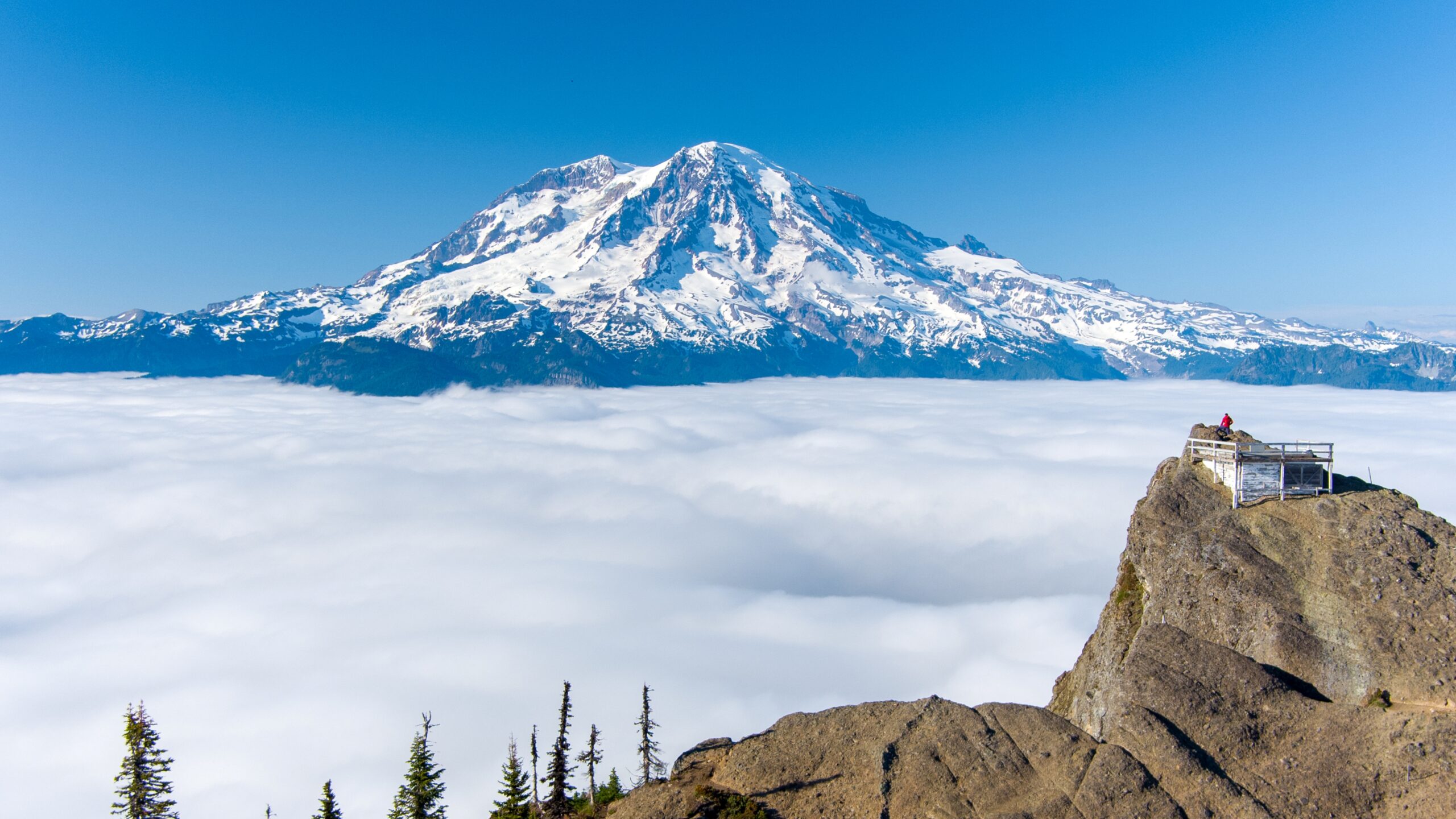
Mount Rainier expedition update
Where Rainier stands this season, plus the Disappointment Cleaver route, the NPS climbing permit, glacier hazards, and safety. A single-mountain page in our Expedition Updates directory. Elevations in feet (metres).
In season now. Peak summer conditions.
Rainier’s climbing season runs late June through early September, and late July sits in the prime window. The standard Disappointment Cleaver route is being climbed and guided daily, though the exact line shifts week to week as crevasses open, so late-July conditions differ from late August.
Rainier is a serious glacier climb, not a walk-up: a summit success rate near 50 percent, about 9,000 ft of gain, and its own violent weather. It is the classic first big glacier climb for American mountaineers, and the training ground for Denali and beyond.
Summit (4,392 m)
The most heavily glaciated peak in the contiguous US.
Climbing season
In season now; the peak window is July and August.
Summit rate
Weather and crevasse conditions turn many teams back.
Rainier rises alone above the Cascades southeast of Seattle, an active, ice-clad stratovolcano with more than two dozen glaciers. This page is the update view: where the mountain sits in its season, the route, and the rules that matter. For the full how-to on operators, cost, gear, and preparation, see our Mount Rainier climb guide and routes guide, and for the wider picture, the Expedition Updates dashboard.
Current status and the season
Where the mountain is today, and how the window works.
Right now Rainier is in the heart of its season. Guide services are running Disappointment Cleaver programs daily, and independent teams are moving through Camp Muir for midnight summit pushes. The window runs from late June, once the upper mountain has consolidated, through early September, when opening crevasses, rockfall, and retreating snow bridges make the standard route harder and guide services begin winding down. The catch on Rainier is that the route is a living thing: the exact line through the Ingraham Glacier and over the Cleaver changes across the summer, so a report from late July is not a description of late August.
The Disappointment Cleaver
The standard route, and the main alternative.
Disappointment Cleaver (standard)
From Paradise at 5,400 ft, the route climbs the Muir Snowfield to Camp Muir at 10,080 ft (3,072 m), where teams rest before a midnight start. Above Muir it crosses the Cowlitz Glacier, traverses the Ingraham Glacier, and climbs the rocky Cleaver rib to the upper mountain and the crater rim. Summit day is roughly 4,500 to 5,500 ft of gain. This is the most climbed and most guided line, and the exact path shifts as crevasses open through the season.
Emmons Glacier (main alternative)
On the northeast side, the Emmons-Winthrop route climbs from the White River trailhead to Camp Schurman, then up the broad Emmons Glacier. It is less crowded than the Cleaver and a fine objective for teams with solid glacier skills. For the full route breakdown, see the Mount Rainier routes guide.
Weather and conditions
Rainier makes its own weather. Here is a live read.
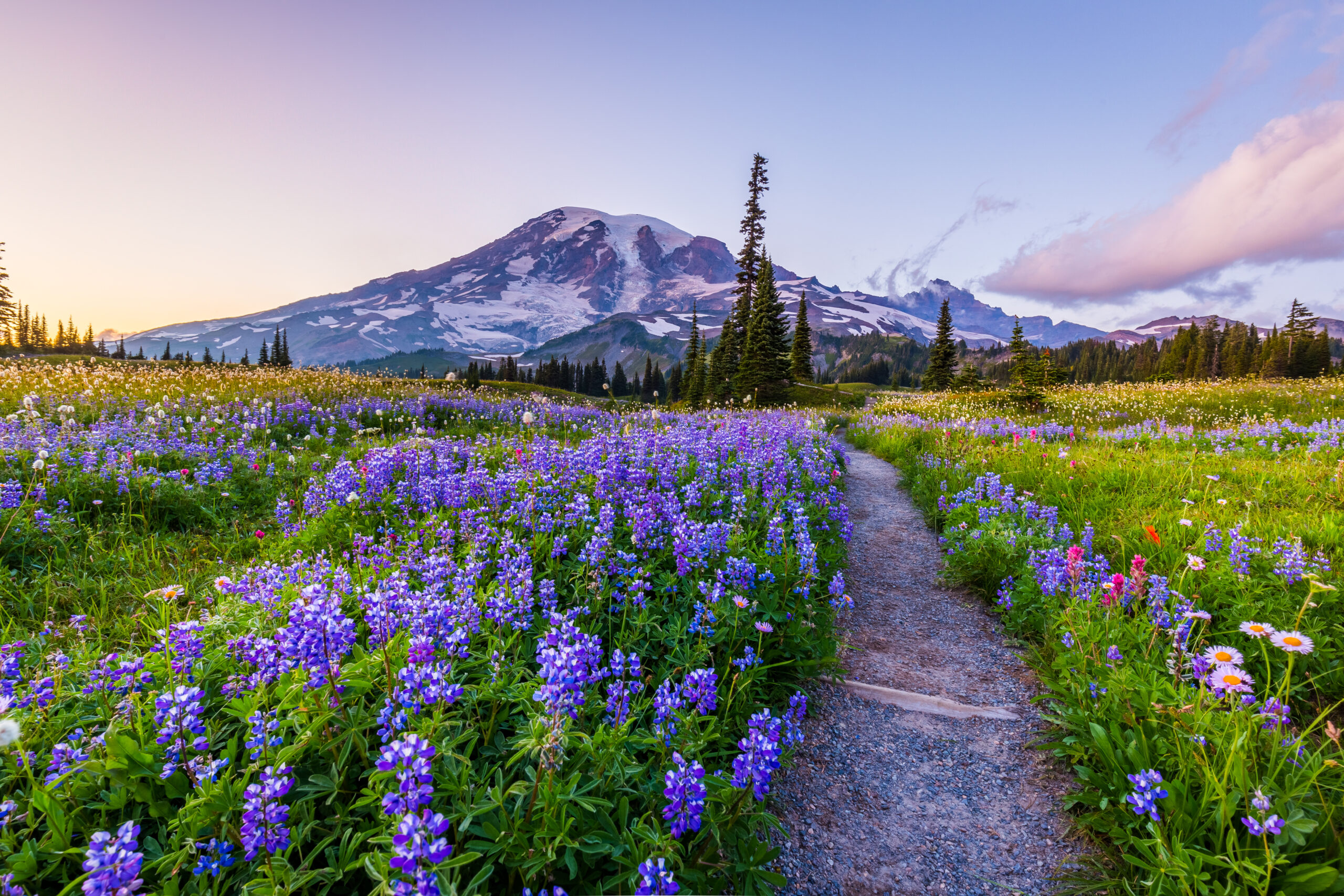
Rainier is tall enough and close enough to the Pacific to generate its own storms, and the summit can be socked in while the lowlands are clear. Cloud caps over the peak are a classic warning sign. Even in peak season, a forecast window can close fast, which is one reason the summit rate stays near half. The live map below shows current wind and conditions for the massif; use it as a starting point and rely on the National Park Service ranger blog and a dedicated forecast for any real decision.
For a fuller explanation of reading a mountain forecast, see mountain weather for climbers, and check avalanche awareness for climbers for early and late-season snow.
Permits and access
The NPS rules every Rainier climber works within.
Mount Rainier is a national park, and climbing above the glaciers is permitted and reserved. A climbing permit is required for glacier travel or travel above about 10,000 ft, booked through recreation.gov, and overnight camps such as Camp Muir are managed through the wilderness reservation system. The permit funds the ranger and rescue program on the mountain.
| Item | 2026 cost |
|---|---|
| Climbing permit (per climber) | ~$61 |
| Park entrance fee | Additional, per vehicle |
| Guided Disappointment Cleaver program | ~$1,400 to $2,800 |
What you need to climb
- Climbing permit – reserved on recreation.gov for glacier travel or above ~10,000 ft.
- Overnight reservation – Camp Muir, Ingraham Flats, or Camp Schurman via the wilderness system.
- Glacier competence – crampons, ice-axe self-arrest, a rope team of three or more, and crevasse rescue.
- A helmet – rockfall on the Cleaver is a real hazard, especially later in the day.
Safety and hazards
Why Rainier is respected, and where the risk sits.
Rainier’s hazards are glacier and weather driven: crevasse falls, collapsing snow bridges, serac fall on the Disappointment Cleaver, rockfall as the day warms, avalanches early and late in the season, and storms that build fast. The mountain has caused around 100 deaths since 1897, averaging four to six climbers a year, and the 1981 serac collapse on the Cleaver killed 11, still the worst single mountaineering accident in US history. The protective habits are the usual ones: move early, rope up, carry rescue gear and know it, and turn around when the weather or the clock says so.
Above Camp Muir, Rainier is crevassed glacier the whole way, with overhead serac hazard on the Cleaver. Roped travel and practiced crevasse rescue are non-negotiable, and helmets matter. This page is not medical or safety advice; build your skills with our glacier travel basics and acclimatization guides and a qualified guide.
Rainier by the numbers
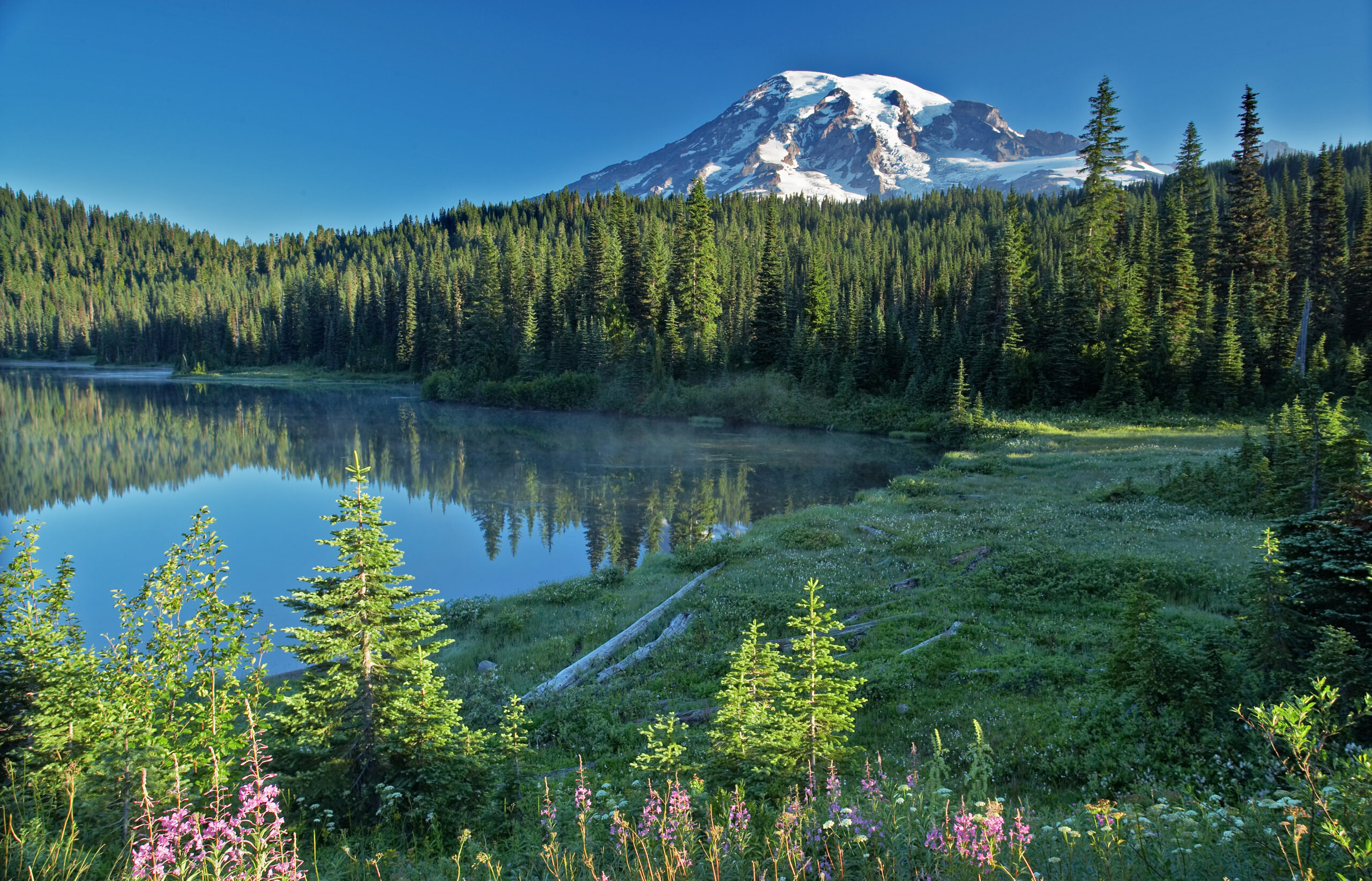
The context behind a single season, from grounded records.
First verified ascent
Hazard Stevens and Philemon Van Trump, August 17.
Route gain
Paradise to summit via Camp Muir and the Cleaver.
Glaciers
The most heavily glaciated peak in the contiguous US.
Rainier is the standard training peak for bigger glaciated objectives. Our Rainier progression plan lays out the build-up, the Cascade Volcanoes collection covers its neighbours, and for climbers eyeing Alaska, Rainier is the classic step before Denali.
Cascades expedition updates
Rainier’s neighbours in the range, each with its own update page. Back to the full Expedition Updates dashboard.
Rainier update FAQ
The questions climbers ask most about timing, permits, and conditions.
When is the Mount Rainier climbing season?
Late June through early September, with July and August the peak window, and the mountain is in season now. The Disappointment Cleaver line shifts through the summer as crevasses open and guides re-route, so conditions in late July differ from late August. Early and late in the season carry more avalanche and rockfall risk.
Do I need a permit to climb Mount Rainier?
Yes. A climbing permit is required for glacier travel or travel above about 10,000 ft, reserved through recreation.gov, and it runs around $61 per climber for 2026 plus the park entrance fee. Overnight camps such as Camp Muir are managed through the wilderness reservation system. Fees and reservation rules change, so confirm current details with the National Park Service.
What is the standard route on Rainier?
The Disappointment Cleaver, climbed from Paradise at 5,400 ft up the Muir Snowfield to Camp Muir at 10,080 ft (3,072 m), then across the Cowlitz and Ingraham Glaciers and up the Cleaver to the crater rim. It is the most climbed and most guided line. The Emmons Glacier via Camp Schurman is the main alternative on the northeast side.
How hard is Mount Rainier to climb?
It is a serious glacier climb, not a hike: roughly 9,000 ft of gain over about 15 miles round trip, with a summit success rate near 50 percent because weather and conditions turn many teams back. It demands crampons, practiced ice-axe self-arrest, rope-team travel, and crevasse-rescue skill, which is why it is the classic first big glacier climb for American mountaineers.
Do I need a guide for Mount Rainier?
First-time climbers are strongly advised to go with a guide service such as RMI, IMG, or Alpine Ascents, or with an experienced team. Guided Disappointment Cleaver programs run three to five days and cost roughly $1,400 to $2,800, including guiding, group gear, and hut access. Independent climbers need proven glacier skills and their own rescue capability.
What is the current status of Rainier?
As of late July the 2026 season is in full swing and the mountain is in season. Conditions on the Disappointment Cleaver change week to week as crevasses open through the summer. Check the National Park Service ranger climbing blog and the Northwest Avalanche Center, plus this page, before you commit to a plan.
📋 How this update is built
This page is compiled by Travis Ludlow, Founder and Head of Research at Global Summit Guide, from US National Park Service data, the ranger climbing blog, and published season reporting, with sources named below. It was reviewed for safety by Dawson Ludlow, our Climbing & Mountaineering Lead (Wilderness First Aid), whose highest first-hand summit is Kilimanjaro. Where our team has no first-hand experience of Rainier, we report the cited records rather than personal anecdote, and we confirm fees and rules against the NPS.
Sources and further reading
- US National Park Service, Mount Rainier – climbing permits, the ranger climbing blog, and route conditions.
- Recreation.gov – Mount Rainier climbing permit and wilderness camp reservations.
- Northwest Avalanche Center – Cascade snowpack and avalanche forecasts.
- Our own Mount Rainier climb guide and Mount Rainier routes guide.
- We report published figures and named sources rather than posting unverified live conditions.
Planning a Rainier climb?
Start with the full Mount Rainier climb guide, work through the Rainier progression plan, and read how to choose an expedition operator before you book a guide service. For flights and lodging around Seattle and Ashford, browse travel on Expedia.
Disclosure: the Expedia link above is a sponsored affiliate link. We may earn a commission at no extra cost to you.
Mount Rainier: Plan the Whole Climb
Permits, routes, difficulty, weather and logistics all decide the day. Start with the main guide, then go deeper below.
Was this helpful?
🏔Related peaks nearby
🧭Explore & compare
Global Summit Guide is an independent mountaineering resource founded in 2026. The team combines first-hand trekking and climbing experience with in-depth research and professional health and nutrition review to help climbers choose objectives, prepare properly, and stay safe.
Health, altitude, and nutrition content is reviewed by Taylor Ludlow (Registered Nurse) and Brigg Hoopes (Nutritionist).
What We Don't Know Yet
Mountain information changes quickly. This box explains the limits of what this page can responsibly promise.
- Permit availability, reservation windows, quotas, and official fee rules may change after this page is updated.
- Guide-company prices, departure dates, guide ratios, included services, and cancellation rules can change without notice.
- Weather, snowpack, avalanche risk, road access, and route conditions can change quickly and may be different on your climbing dates.
- Route conditions, trailhead access, crevasse exposure, stream crossings, and rescue access may vary from published planning guidance.
- Total trip cost can change with flights, lodging, guide pricing, permits, gear rentals, transportation, and exchange rates.
Verify current conditions with official land managers, guide services, local forecasts, and current route reports before booking or climbing.
Mountaineering, rock and ice climbing, glacier travel, and high-altitude activity are inherently dangerous and can result in serious injury or death. The information on Global Summit Guide is provided for general informational and educational purposes only and is not a substitute for professional instruction, qualified guiding, proper equipment, or your own judgment and experience.
Route conditions, weather, snowpack, permits, regulations, and hazards change constantly and may differ from what is described here. Details may be incomplete, out of date, or contain errors. Always verify current information with local authorities, certified guides, and official sources before making any decision in the mountains.
Nothing on this site is medical, legal, or financial advice. Our fitness, acclimatization, altitude, and nutrition content is general in nature; consult a qualified physician before beginning any strenuous exercise program or exposing yourself to high altitude.
You are solely responsible for your own safety and decisions. To the fullest extent permitted by law, Global Summit Guide and its team accept no liability for any loss, injury, damage, or expense arising from use of, or reliance on, this information. By using this site you acknowledge these risks and accept these terms.
Some links on this site may be affiliate links. If you buy through them we may earn a small commission at no extra cost to you; this never affects our recommendations.
Global Summit Guide recommendation path
Next Best Mountain to Research
Use these recommendations to continue the right planning path instead of stopping on one page.
Use current permit, weather, route, and operator information before booking or climbing.