
Last updated September 19, 2026

Best Peaks After Mount Rainier: 7 Next Climbs by Goal
Rainier gives you meaningful glacier travel, a major vertical day, cold starts and real weather exposure. It does not automatically give you 6,000–7,000 meter acclimatization, Denali-style self-sufficiency or fast technical ridge movement. Your next mountain should close one of those gaps.
What Should You Climb After Mount Rainier?
Choose Aconcagua if you need altitude and expedition patience. Choose Denali if you already have independent glacier competence and need cold, load hauling and multiweek expedition systems. Choose Pico de Orizaba if you want a shorter step above 5,500 meters before a bigger expedition.
For Europe, Mont Blanc adds Alpine hut logistics and current objective-hazard management, while the Matterhorn is a technical-ridge goal that demands much faster rock-and-mixed movement than Rainier. In Nepal, Mera Peak emphasizes Himalayan altitude; Island Peak adds fixed-line technique and a steeper summit headwall.
Rainier is evidence—not a universal credential.
Mount Rainier National Park describes the mountain as a technical glacier climb with more than 9,000 feet of total route gain and required glacier-rope skills. A normal Rainier climb can show that a climber functions well on a large glaciated peak. It does not, by itself, demonstrate Denali expedition self-sufficiency, near-7,000-meter altitude tolerance or Matterhorn-level technical efficiency.
Rainier Opens Several Different Climbing Worlds
The next step can stay in North America, move into the Andes, shift into the Alps or use Nepal to add Himalayan altitude and fixed-line systems.
Rainier → Seven Next Objectives
Use the map for travel direction only. Each mountain has its own acclimatization, permit, guide and seasonal system.
What a Strong Rainier Climb Actually Tells You
The answer depends on the route, guide model and how much of the climbing system you personally understood and executed.
Rainier Can Demonstrate
- Long movement days on a large glaciated mountain.
- Rope-team discipline and crevasse awareness.
- Movement in crampons with an ice axe.
- Cold pre-dawn starts and consequential descent fatigue.
- How you respond around 4,400 meters.
Rainier Does Not Automatically Demonstrate
- Independent crevasse rescue under heavy expedition loads.
- Three weeks of winter-style camp systems and sled hauling.
- Reliable performance above 5,500–7,000 meters.
- Fast movement on exposed alpine rock and mixed ridges.
- Fixed-line systems used on many Himalayan peaks.
Guided Rainier and independent Rainier are not identical evidence.
A guided climber can gain excellent movement and altitude experience without personally owning the full route-finding, anchor, rescue, camp and leadership system. Before Denali in particular, assess what you can execute without a guide—not only which summit appears on the résumé.

Aconcagua Adds the Problem Rainier Cannot Simulate: Living and Climbing Near 7,000 Meters.
The normal route uses little of Rainier’s glacier skill. That is exactly why it is useful: it isolates acclimatization, expedition patience, heavy carries, cold and a very high summit.
Seven Next Peaks After Rainier
“Transfer” means how directly Rainier experience helps. “Gap” is the capability the next objective exposes most clearly.
| Objective | Elevation | Rainier transfer | Primary new gap | Trip shape | Best fit after Rainier |
|---|---|---|---|---|---|
| Aconcagua | 6,961 m | Cold, endurance, mountain systems | Near-7,000 m acclimatization + expedition patience | ~18–21 days | Altitude / Seven Summits path |
| Denali | 6,190 m | Glacier skills transfer strongly | Self-sufficiency, sleds, heavy loads, fixed lines, severe cold | ~17–21+ days | Experienced independent glacier climber |
| Pico de Orizaba | 5,636 m | Crampons, cold start, summit endurance | Higher altitude and condition-dependent snow/ice | Short climb inside longer acclimatization | Shorter international bridge |
| Mont Blanc | ~4,806 m | Glacier, altitude and summit-day systems | Alpine hut logistics, rockfall timing, route decisions | 5–9 day strong program | First Alps progression |
| Matterhorn | 4,478 m | Fitness, cold, crampon familiarity | Fast exposed rock/mixed movement and complex descent | Preparation climbs + weather window | Experienced alpinist only |
| Mera Peak | 6,476 m | Glacier familiarity and summit pacing | Himalayan altitude and 15–18 day rhythm | 15–18 days typical | Altitude-first Nepal path |
| Island Peak | 6,189 m | Glacier and crampon foundation | Fixed lines, steeper headwall and high-altitude descent systems | 14–19 days typical | Technical-first Nepal path |
Four Directions Matter More Than One Universal Ladder
After Rainier, the next climb should be chosen by the capability you want to add.
Aconcagua or Orizaba
Choose this path when your glacier foundation is acceptable but you do not yet know how you perform above 5,500–6,500 meters.
Denali
Choose Denali only when you can add independent glacier rescue, sled hauling, winter-camp systems, fixed-line movement and multiweek self-management.
Mont Blanc → Matterhorn
Mont Blanc fits a glacier-and-Alps transition. Matterhorn belongs later, after dedicated rock, mixed-terrain and fast-descent preparation.
Mera or Island Peak
Mera emphasizes altitude on comparatively straightforward glaciated terrain. Island Peak adds fixed-line technique and a steeper technical summit section.
Aconcagua vs. Pico de Orizaba After Rainier
Both add altitude, but one is a full expedition and the other can fit inside a much shorter international progression trip.
Aconcagua · 6,961 m
The Normal Route normally avoids glacier-rope travel, so Rainier’s technical skills are not the main reason to choose it. The value is acclimatization near 7,000 m, heavy carries, wind, cold, camp patience and a multiweek expedition schedule.
Aconcagua GuidePico de Orizaba · 5,636 m
Orizaba is useful when you want more altitude without committing to three weeks. Rainier experience transfers to crampons, cold starts and summit endurance, but the Jamapa-side surface can change substantially by season.
Pico de Orizaba Guide
Denali Is Not “Rainier, but Taller.”
The West Buttress adds heavy packs and sleds, multiweek camps, fixed lines, colder conditions and far more responsibility for your own team systems.
Rainier Is a Useful Denali Foundation—Not a Complete Denali Résumé
The glacier overlap is real. The expedition gap is larger than many climbers expect.
What Denali adds
- Heavy pack + sled hauling: loads change rope-team movement and crevasse-rescue mechanics.
- Multiweek self-sufficiency: teams live and make decisions on the mountain for roughly three weeks.
- Fixed-line movement: the upper West Buttress adds systems not normally used on standard Rainier routes.
- 6,190 m altitude: far above Rainier’s summit.
- Cold and weather: Alaska expedition systems matter every day.
Aconcagua is useful before Denali—but not mandatory for everyone.
Aconcagua can provide high-altitude and expedition-duration evidence before Denali. A climber with extensive independent glacier work, winter camping and expedition systems may build those gaps another way. The question is whether the missing capabilities are closed.
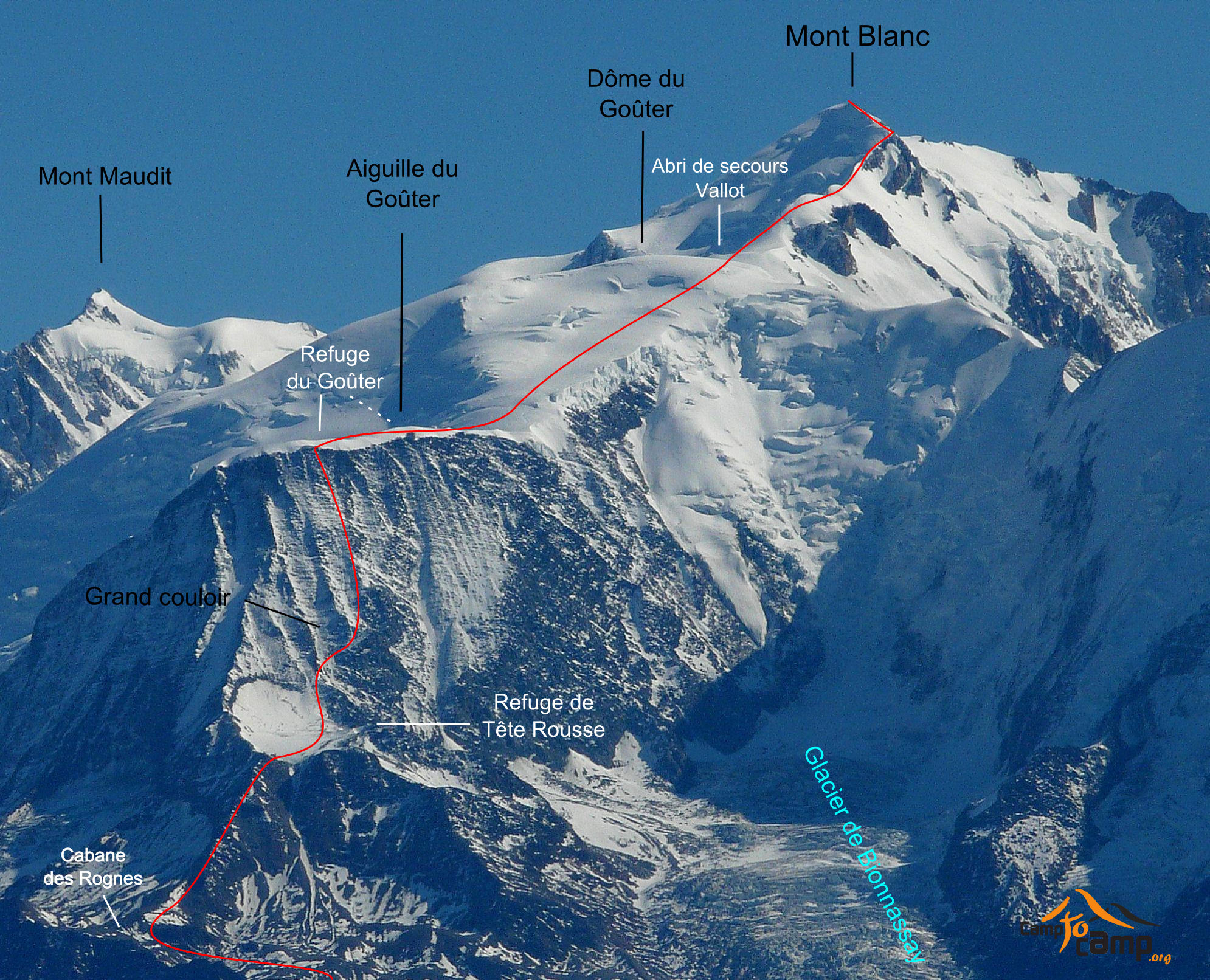
Mont Blanc First; Matterhorn Only After Dedicated Technical Preparation
The two peaks are often mentioned together, but they test very different capabilities.
Mont Blanc · ~4,806 m
Rainier’s glacier movement, cold starts and endurance transfer well. The new layer is Alpine hut culture, more compressed acclimatization, Grand Couloir rockfall exposure and current-condition decisions.
Mont Blanc GuideMatterhorn · 4,478 m
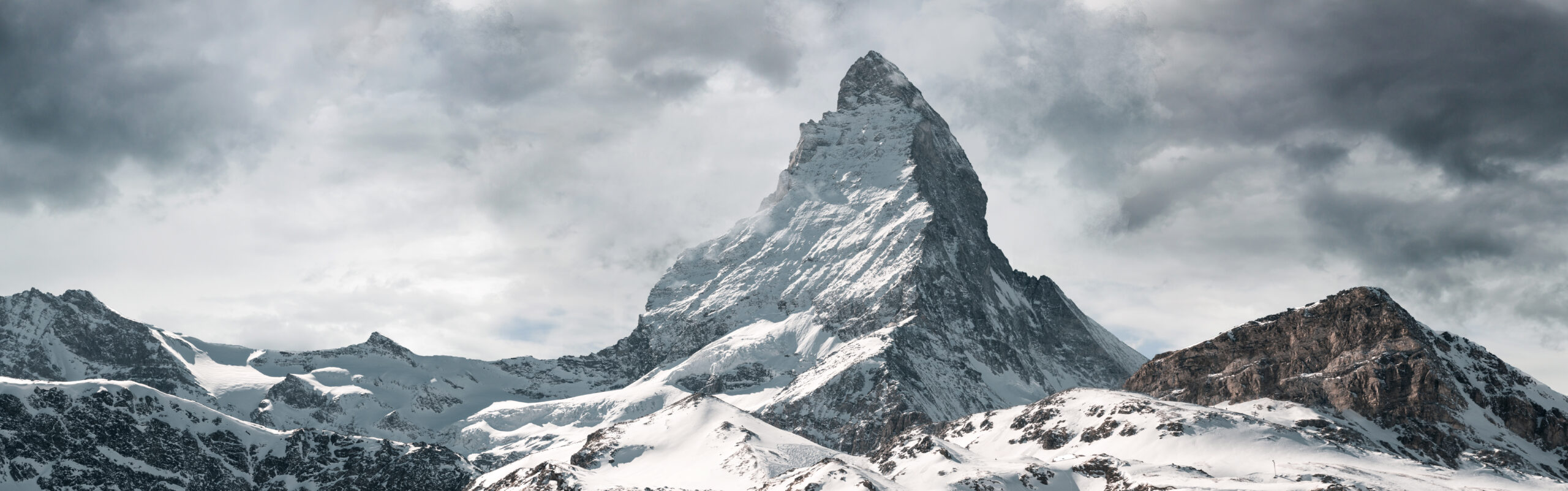
The Hörnli Ridge rewards fast movement on exposed rock and mixed terrain, efficient crampon transitions, route-finding and a controlled descent on the same complex ridge. Rainier fitness helps; it does not replace the specific alpine-rock résumé.
Matterhorn Guide
Island Peak Adds a System Rainier Usually Does Not: Steep Fixed-Line Movement at 6,000 Meters.
The glacier foundation transfers. The headwall, ascender/rappel workflow and Himalayan altitude create the new learning load.
Mera Peak vs. Island Peak After Rainier
Choose Mera when the main question is altitude. Choose Island when the main question is fixed-line technique.
Mera Peak · 6,476 m
Mera’s standard route is comparatively straightforward by Himalayan standards. Its main value after Rainier is the much higher sleeping and summit altitude plus a 15–18 day Nepal expedition rhythm.
Mera Peak GuideIsland Peak · 6,189 m
Island Peak combines glacier travel with a steeper fixed-line headwall and an exposed summit section. It is a better technical bridge toward fixed-line Himalayan objectives, but it also asks you to perform that technique above 6,000 m.
Island Peak Guide
Mera Is Useful After Rainier Because the Technical Load Stays Modest While the Altitude Jumps Dramatically.
That makes it easier to learn what 6,000-meter physiology feels like without simultaneously adding Matterhorn-level rock climbing or Denali-level expedition self-sufficiency.
Do Not Choose the Next Mountain From the Summit Photo
Choose it from the capability you can already demonstrate and the one you need next.
Glacier competence
Can you travel roped, recognize crevasse terrain and participate meaningfully in rescue systems rather than simply follow a guide?
Descent reserve
Did you finish Rainier with enough control to descend safely, or did the summit consume nearly all available energy?
Altitude evidence
Rainier tells you something at 4,392 m. It does not tell you how you will function for days above 5,000 m.
Independent systems
For Denali, can your team run glacier, camp, stove, rescue, navigation and emergency systems without commercial infrastructure?
Technical movement
For the Matterhorn, do you move efficiently on exposed alpine rock and mixed terrain without creating a dangerously slow descent?
Trip tolerance
Are you prepared for the actual expedition length: a week, two weeks or three weeks—not only the summit day?
Four Sensible Ways to Build From Rainier
These are capability sequences, not mandatory checklists.
| Goal | Possible sequence | Why it works | What still needs separate training |
|---|---|---|---|
| Denali | Rainier → winter/glacier expedition practice → Denali | Keeps the progression focused on self-sufficiency and load systems | Sled hauling, fixed lines, cold camps, team rescue |
| Seven Summits / altitude | Rainier → Orizaba or Aconcagua → Denali | Adds higher-altitude evidence before Alaska | Denali-specific expedition systems |
| Alps | Rainier → Alpine training / Mont Blanc → Matterhorn | Moves from glacier systems into faster rock-and-mixed terrain | Technical rock speed, route finding, descent efficiency |
| Himalaya | Rainier → Mera or Island Peak → larger Himalayan objective | Adds 6,000 m altitude and Nepal expedition systems | Peak-specific fixed lines, camps and technical climbing |
After Mount Rainier FAQ
Direct answers to the most common progression questions.
What is the best mountain to climb after Mount Rainier?
There is no single best next peak. Aconcagua is strongest for altitude and expedition experience, Denali for major self-supported glacier expedition skills, Orizaba for a shorter altitude bridge, Mont Blanc for an Alps transition, and Mera or Island Peak for a first Himalayan direction.
Can I climb Denali after Rainier?
Rainier is valuable preparation, but a Rainier summit alone is not enough evidence for Denali. West Buttress teams should already be competent in crevasse rescue, fixed-line movement, winter camping, heavy pack-and-sled hauling, altitude pacing and self-sufficient expedition decision-making.
Should I climb Aconcagua before Denali?
Aconcagua is a useful way to gain high-altitude and multiweek expedition experience before Denali, but it does not teach Denali’s glacier, sled or winter-camp systems. It is a useful bridge, not a universal prerequisite.
Is Mont Blanc a good next climb after Rainier?
Yes for climbers who want an Alpine glacier objective. Rainier skills transfer well, but Mont Blanc adds hut logistics, faster acclimatization, current-condition decisions and objective hazards such as Grand Couloir rockfall.
Is the Matterhorn a natural next step after Rainier?
Not without additional technical preparation. The Hörnli Ridge requires fast movement on exposed alpine rock and mixed terrain plus an efficient descent.
Mera Peak or Island Peak after Rainier?
Choose Mera Peak if the main goal is 6,000-meter Himalayan altitude on comparatively straightforward glaciated terrain. Choose Island Peak if you want fixed-line movement, a steeper headwall and a more technical summit-day system.
Is Pico de Orizaba a good bridge after Rainier?
Yes. Orizaba raises the summit to 5,636 meters and preserves crampon, cold-start and summit-endurance overlap without requiring a three-week expedition.
Does summiting Rainier prove I am ready for bigger mountains?
It proves only what you actually demonstrated on Rainier. Bigger mountains may require independent rescue, much higher altitude, technical rock, fixed lines or weeks of self-sufficiency that Rainier did not test.
The Comparison Is Built Around Capability Gaps
Stable route characteristics are separated from fast-changing weather, glacier conditions, permits and commercial products.
Freshness rule
Recheck current route conditions, glacier change, hut status, permits, guide requirements, weather and access before booking. This page compares progression value; it is not a substitute for current mountain-specific planning.
Rainier, Altitude, Expedition Systems & Final Trip Planning
Use this page to choose the direction, then move into the mountain or preparation page that owns the next decision.

Rainier Is the Pivot. Your Goal Decides the Direction.
Do not climb the next mountain because it appears next on somebody else’s list. Use Rainier as evidence, identify the gap, and choose the mountain that closes it.
Was this helpful?
🏔Related guides
🧭Explore & compare
Global Summit Guide is an independent mountaineering resource founded in 2026. The team combines first-hand trekking and climbing experience with in-depth research and professional health and nutrition review to help climbers choose objectives, prepare properly, and stay safe.
Health, altitude, and nutrition content is reviewed by Taylor Ludlow (Registered Nurse) and Brigg Hoopes (Nutritionist).
What We Don't Know Yet
Mountain information changes quickly. This box explains the limits of what this page can responsibly promise.
- Visa, passport, vaccination, border, insurance, and local transportation rules may change before your trip.
- Route conditions, snowpack, closures, and weather can change quickly after this page is updated.
- Permit rules, fees, quotas, and reservation windows may change between review cycles.
- Operator availability, pricing, guide ratios, and cancellation terms can change by season.
- Your fitness, altitude response, risk tolerance, and experience level may change what is safe or realistic.
Verify current conditions with official land managers, guide services, local forecasts, and current route reports before booking or climbing.
Mountaineering, rock and ice climbing, glacier travel, and high-altitude activity are inherently dangerous and can result in serious injury or death. The information on Global Summit Guide is provided for general informational and educational purposes only and is not a substitute for professional instruction, qualified guiding, proper equipment, or your own judgment and experience.
Route conditions, weather, snowpack, permits, regulations, and hazards change constantly and may differ from what is described here. Details may be incomplete, out of date, or contain errors. Always verify current information with local authorities, certified guides, and official sources before making any decision in the mountains.
Nothing on this site is medical, legal, or financial advice. Our fitness, acclimatization, altitude, and nutrition content is general in nature; consult a qualified physician before beginning any strenuous exercise program or exposing yourself to high altitude.
You are solely responsible for your own safety and decisions. To the fullest extent permitted by law, Global Summit Guide and its team accept no liability for any loss, injury, damage, or expense arising from use of, or reliance on, this information. By using this site you acknowledge these risks and accept these terms.
Some links on this site may be affiliate links. If you buy through them we may earn a small commission at no extra cost to you; this never affects our recommendations.
Global Summit Guide recommendation path
Next Best Mountain to Research
Use these recommendations to continue the right planning path instead of stopping on one page.
Use current permit, weather, route, and operator information before booking or climbing.
Search Flights, Hotels & Rental Cars
Have the mountain or destination picked? Use Expedia to compare the flights, lodging and rental cars that fit your actual trip dates. For mountain travel, consider arriving early enough for delays and adding a buffer night after the climb before a fixed flight home.
Compare current flight, hotel and car options.
Affiliate disclosure: Global Summit Guide may earn a commission if you book through this link, at no additional cost to you.