
Last updated September 10, 2026
Mount Rainier Summit Success Rate 2026: North America’s Premier Glaciated Training Peak — Why the 54 Percent Rate Reflects Pacific Weather, Not Difficulty
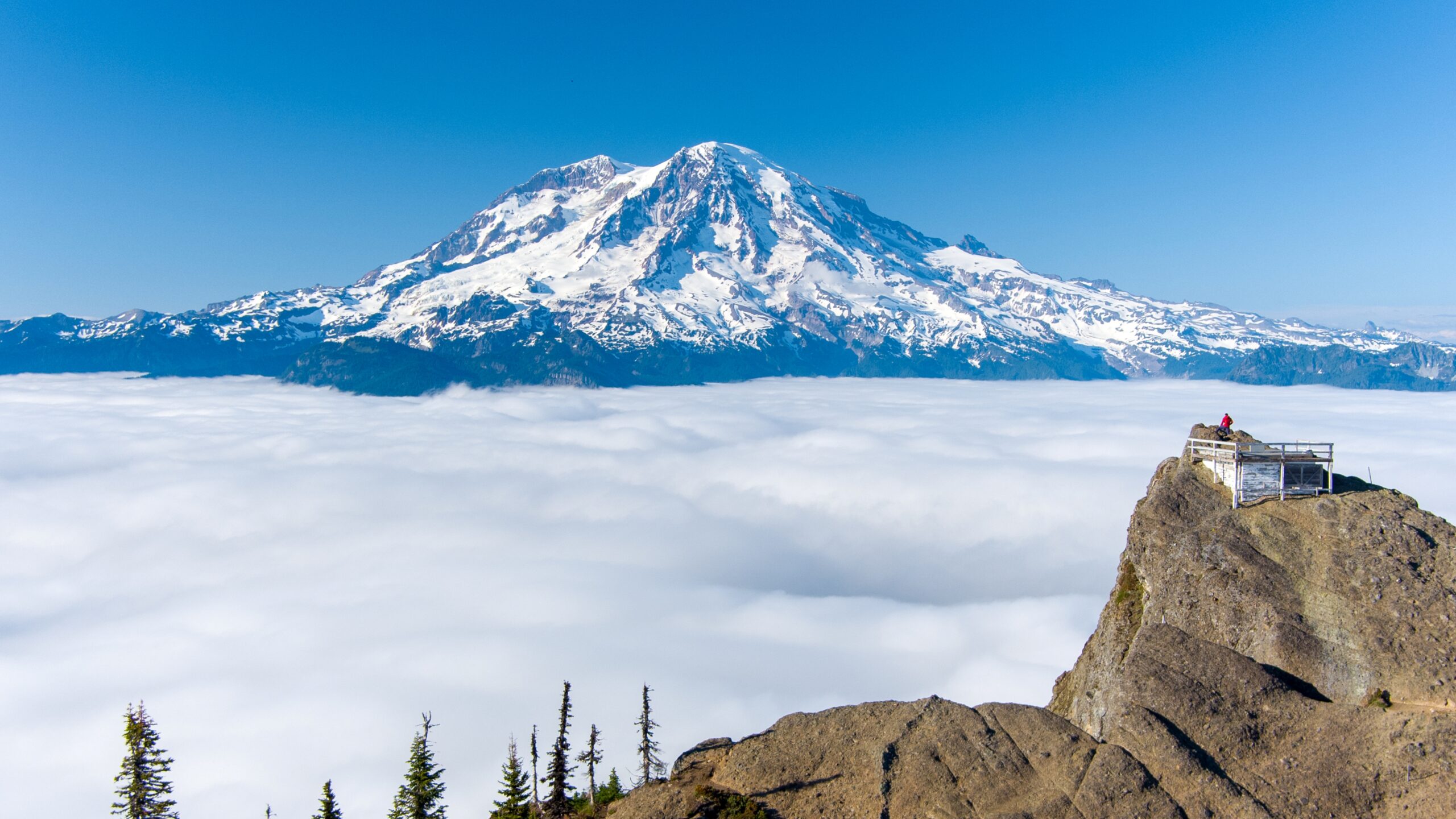
The most heavily glaciated peak in the contiguous United States and the premier training ground for high-altitude mountaineering in North America. Generally, Rainier’s 54 percent overall success rate reflects Pacific weather unpredictability more than technical difficulty. Specifically, the mountain is generous to well-prepared climbers and unforgiving to those who underestimate it. Notably, Rainier occupies a unique dual role — both the first serious glaciated peak for North American climbers and the proving ground for Denali and Aconcagua aspirants.
Rainier as a Training Ground and a Test
Rainier occupies a unique position in North American mountaineering. Generally, it occupies two roles at once. The most popular serious glaciated peak in the lower 48. And the most common proving ground for climbers preparing for Denali, Aconcagua, and beyond. Specifically, its 54 percent overall success rate is deceptively moderate — on a good-weather day with a prepared team, Rainier is very achievable. Notably, on a bad-weather day the same route becomes a serious undertaking that has turned back elite climbers.
The mountain’s dual role is the defining structural feature of its climbing data. Generally, the prior-Cascade-volcano cohort succeeds at 74 percent on Rainier while first-time glacier climbers succeed at only 30 percent. The 44 percentage point gap mirrors the experience differential seen on Mont Blanc. Specifically, this is the steepest experience gradient among North American glaciated peaks. Notably, the same skills that distinguish a successful Rainier attempt are the exact skills that determine outcomes on Denali and Aconcagua. Crampon confidence, rope team movement, and multi-day expedition rhythm all transfer directly.
How to read these numbers. Success is defined as reaching the Columbia Crest at 4,392m. Generally, data covers all NPS summit permit holders 2005-2025. Specifically, the guided rate reflects RMI, IMG, Alpine Ascents, and other NPS-permitted guiding programs. Notably, the independent rate covers self-organised teams. Winter expeditions are excluded from these averages — they represent a fundamentally different mountain in terms of conditions and risk.
The Headline Rainier Numbers
| Metric | Rate | Notes |
|---|---|---|
| Overall summit success rate | ~54% | All routes, all months; NPS permit holders 2005-2025 |
| NPS-guided success rate | ~68% | RMI, IMG, Alpine Ascents and other permitted operators; predominantly DC route |
| Independent success rate | ~46% | Self-organised teams; 22-point gap reflects crevasse knowledge and turnaround discipline |
| Disappointment Cleaver (DC) | ~57% | Standard route; 80%+ of all permitted attempts; high camp at Camp Muir (3,077m) |
| Emmons Glacier | ~50% | Second most popular; high camp at Camp Schurman (3,332m); variable crevasse year to year |
| Liberty Ridge | ~28% | Committing technical alternative; Carbon Glacier headwall; experienced alpinists only |
| Prior Cascade volcano summit cohort | ~74% | Best-performing experience tier; familiarity with Pacific weather and glacier travel |
| Rescue incident rate | 1 in 80 | Per season; NPS-assisted rescue including helicopter evacuation |
| Fatality rate | 1 in 450 | Among all NPS summit permit holders; concentrated in independent climbing population |
| 2026 expedition cost (all-in) | $300-$2,200 | Independent floor vs guided ceiling for 2-3 day ascent |
Success Rate by Month
June and July represent Rainier’s statistical peak. Generally, these months combine the most stable Pacific high-pressure windows with firm snow bridges over the crevasse zones on the Disappointment Cleaver route. Specifically, May attempts require stronger independent navigation skills as seasonal crevasse patterns are less established and snow bridges less reliable. Notably, August sees more frequent afternoon thunderstorms and icier surface conditions as the snowpack consolidates. October through April sees very limited permitted attempts outside winter technical expeditions.
| Month | Success Rate | Conditions |
|---|---|---|
| May | ~48% | Early season; less established crevasse patterns; snow bridges variable; experienced teams favoured |
| June | ~60% | Statistical peak begins; firm snow bridges; most stable Pacific weather; popular guided window |
| July | ~65% | Peak window continues; warmest temperatures; busiest month; Camp Muir at capacity |
| August | ~55% | Icier surfaces as snowpack consolidates; afternoon thunderstorms more frequent; crevasse openings widen |
| September | ~48% | Autumn Pacific storms returning; thinning crowds; experienced climbers favour this window |
The last week of June and first two weeks of July consistently produce the highest summit rates across all routes and experience levels. Generally, teams that camp at Muir or Emmons Flats and wait for a confirmed high-pressure window outperform those on fixed-date schedules by a significant margin. Patience is the highest-leverage discipline on Rainier. Specifically, the data on this is unambiguous: weather window discipline is the single highest-leverage timing decision on Rainier. Notably, the 22-point guided-versus-independent gap is partly explained by guides’ stricter adherence to this discipline.
The weather-window strategy. Generally, the optimal Rainier plan books a 4-5 day expedition window targeting the last week of June or first two weeks of July. Specifically, the team camps at Camp Muir for 1-2 days while monitoring the NPS ranger station’s daily weather briefings. Notably, the team only commits to the summit push when the high-pressure window is confirmed for the following 24 hours. Climbers on fixed 2-day schedules (arrive Saturday, summit Sunday) face significantly worse success rates because they cannot afford to wait. Rainier’s Pacific weather frequently does not cooperate with rigid schedules.
Success Rate by Route
Rainier has three established routes with meaningfully different success rates. Generally, the DC route’s higher success rate reflects its better-documented conditions and the concentration of guiding services that maintain detailed crevasse route knowledge. Specifically, the Emmons is technically comparable but requires stronger independent navigation skills and carries more variable crevasse hazard year to year. Notably, Liberty Ridge is a committing technical route reserved for experienced alpinists, with very low attempt volume.
The 7-point gap between the DC and Emmons routes reflects three primary factors. Generally, the first is concentration of guiding services on the DC, which maintain real-time crevasse route conditions that independent climbers cannot easily replicate. Specifically, the second is the more stable conditions tracking on the DC due to higher traffic. Notably, the third is the rescue infrastructure proximity. Camp Muir has a permanent NPS ranger station while Camp Schurman does not. The difference affects both summit-day decision-making and rescue response times. The Emmons is not technically harder; it is operationally more demanding.
Liberty Ridge is not a casual choice. Generally, Liberty Ridge is a serious alpine objective requiring extensive prior technical experience. Specifically, the Carbon Glacier headwall combines steep snow and ice climbing with serious objective hazard from seracs above the route. Notably, the 28 percent success rate reflects a self-selected experienced climber population. The rate for unqualified parties attempting Liberty Ridge would be much lower if they were not turned back by ranger station vetting at registration. The route has fatalities every few years, almost always involving serac collapse or weather-driven incidents. Liberty Ridge is appropriate only for climbers with multiple prior AD-grade alpine routes including ice and mixed terrain.
Guided vs Independent
The 22-point guided-versus-independent gap on Rainier is driven primarily by crevasse route knowledge and weather judgment. Generally, RMI and IMG guides maintain real-time route conditions on the DC that independent teams cannot easily replicate. Specifically, their turnaround discipline is stricter than most self-organised teams manage in the moment. Notably, the gap also reflects the Camp Muir ranger station’s daily weather guidance. Guides actively integrate this into their decision-making. Independent climbers more often default to their own forecast interpretations.
| Factor | NPS-Permitted Guided | Independent |
|---|---|---|
| Summit success rate | ~68% | ~46% |
| Crevasse route conditions | Updated daily by active guides on the route | Self-researched via trip reports; often outdated |
| Turnaround discipline | Strict turnaround times enforced regardless of summit proximity | Summit fever more common; turnaround harder to maintain |
| Camp Muir ranger briefing | Guide attends and integrates into team plan | Climber-attended; integration variable |
| Rope team experience | Guide manages spacing and pace | Team-managed; experience-dependent |
| Weather window judgment | Cascade-experienced guide makes the call | Team uses forecasts; variable accuracy |
| Typical 2026 cost (all-in) | $1,200-$2,200 (2-3 day ascent) | $300-$600 (permit fees plus gear) |
| Best for | First glacier climb; first Rainier attempt; Denali preparation | Experienced climbers with prior Cascade volcano summits |
The guided premium on Rainier reflects three primary factors. Generally, the first is real-time crevasse route conditions that guides maintain through daily route work. Specifically, the second is strict turnaround discipline that guides enforce regardless of summit proximity — independent teams often lack the structure to enforce this in the moment. Notably, the third is integration of Camp Muir ranger station weather guidance. The briefing is the most valuable free resource on the mountain — but only useful if climbers actually attend and adjust plans accordingly.
Recommendation for first Rainier attempts. Hire a guide. Generally, the cost differential ($900-$1,600) is small relative to the headline expedition cost (flights, gear, time off work). Specifically, reputable 2026 operators include RMI Expeditions (the largest and longest-running Rainier operator), International Mountain Guides (IMG), Alpine Ascents International, and American Alpine Institute. Notably, see our Mount Rainier operators comparison for detailed evaluation criteria. For climbers with prior Cascade volcano summits and confident glacier travel skills, independent climbing is viable and saves $900-$1,600 — particularly via the less-crowded Emmons Glacier route.
Success Rate by Experience Level
Rainier’s experience-level data reflects its dual role as both a first glaciated peak and a serious high-altitude training objective. Generally, the difference between a climber doing their first glacier day and one with a prior Cascade volcano summit is significant. Specifically, the gap is nearly 44 percentage points despite the routes being technically similar. Notably, this gap mirrors the experience gradient seen on Mont Blanc. The same underlying principle applies: prior glaciated-peak experience is the strongest single predictor of success on technical alpine peaks.
| Prior Experience | Success Rate | Why |
|---|---|---|
| First glacier climb, no prior crampon or rope experience | 30% | Rainier’s crevasse zones and steep slopes demand prior glacier travel skills; without crampon and rope confidence, technical sections become dangerous rather than merely demanding |
| Prior glacier day trip (roped, crampon-proficient) | 52% | Meaningful foundation; one prior glacier day significantly improves outcomes — crampon confidence in poor visibility directly affects pace and safety |
| Prior high-camp glacier overnight (Baker, Hood) | 64% | Strong predictor; overnight experience on a glaciated peak prepares climbers for Rainier’s summit day demands — the 5am start, the cold, the sustained pace from Muir |
| Prior summit of another major Cascade volcano | 74% | Best-performing cohort; familiarity with Pacific weather patterns, glacier travel, and multi-day mountain logistics provides a decisive advantage |
Prior Cascade volcano experience is the decisive technical factor on Rainier. Generally, climbers with prior Cascade volcano summits reach 74 percent — meaningfully higher than first-time glacier climbers at 30 percent. Specifically, the transferable skills are crampon confidence in poor visibility, rope team movement on roped terrain, Pacific weather pattern recognition, and the multi-day mountain logistics rhythm. Notably, Mount Baker (3,286m) and Mount Hood (3,429m) are the optimal preparation peaks for first-time Cascade volcano climbers planning Rainier. Both expose climbers to the conditions and skills Rainier demands without the same scale of commitment.
The Denali preparation pathway. Generally, Mount Rainier is the standard training peak for Denali. Specifically, the prior-Cascade-volcano cohort that succeeds at 74 percent on Rainier is also the cohort that succeeds at high rates on Denali, Aconcagua, and similar peaks. Notably, RMI Expeditions runs dedicated Denali Prep courses on Rainier that have placed thousands of climbers on Denali’s summit since the 1970s. The optimal North American progression is: Mount Baker or Mount Hood → Mount Rainier → Denali or Aconcagua. Skipping Rainier and attempting Denali directly produces measurably worse outcomes, even for fit climbers — the glaciated peak skill set requires actual practice on glaciated peaks.
Most Common Turnaround Reasons
Five dominant turnaround reasons account for nearly all failed Mount Rainier summits. The data comes from NPS ranger incident reports and RMI/IMG expedition exit data covering 2010-2025 on the Disappointment Cleaver route. Generally, Pacific weather is the single biggest factor by a meaningful margin. Specifically, altitude illness from the rapid gain is a close second. Notably, each of the five turnaround reasons has prep-time interventions that meaningfully reduce its likelihood.
Weather — Pacific storm systems
Rainier sits in the direct path of Pacific weather systems. Storms can arrive within 6 hours of a clear forecast window. Summit day timing is the single most consequential planning decision on this mountain. Mitigation: target the last week of June or first two weeks of July. Build flexibility into the schedule to wait at Muir for a confirmed window. Never commit to summit push without 24-hour high-pressure confirmation.
Altitude illness (AMS)
The rapid 3,300m gain from Paradise trailhead to the summit in a single push is physiologically steep. AMS onset between Camp Muir and the crater rim is the most common medical turnaround trigger. Mitigation: spend two nights at Camp Muir before the summit push. Complete a pre-climb acclimatisation hike to high altitude in the week before departure. Consider Mount Adams or Mount Baker as preparation peaks.
Exhaustion — fitness below standard
Summit day from Camp Muir is 7-10 hours of continuous movement. Cardiovascular fitness is the limiting factor more often than technical skill. The Muir snowfield approach on day one reveals fitness gaps early. Mitigation: train with sustained aerobic base, weighted pack hill repeats, weekend long-day hikes with elevation. Target the fitness benchmark of climbing 1,500m in 6-8 hours at sea level.
Crevasse hazard — route closures
Annual route changes around developing crevasse systems can significantly alter the DC route, sometimes mid-season. Teams without current conditions information face unexpected technical complexity. Mitigation: check NPS climbing report and RMI route conditions before departure; attend the Camp Muir ranger briefing; book guided programs that maintain real-time route knowledge.
Voluntary — equipment or partner decision
Boot-crampon incompatibility, partner illness, or personal risk assessment above the Cleaver. The NPS turnaround time system for guided teams contributes positively to this figure — disciplined turnarounds become voluntary rather than emergency. Mitigation: verify boot-crampon fit at home; pre-trip team discussions about risk thresholds and turnaround criteria.
The 64 percent rule. Weather (38 percent) and altitude illness (26 percent) together account for 64 percent of all Mount Rainier turnarounds. Generally, both are addressable. Specifically, the weather factor responds to the late-June through mid-July window plus Camp Muir patience for a confirmed high-pressure window. Notably, the altitude factor responds to two nights at Camp Muir before the summit attempt and a prior glaciated-peak acclimatisation in the weeks before departure. Climbers who optimise across these two factors typically see individual success rates closer to the 74 percent prior-Cascade-volcano cohort baseline than the 54 percent overall mountain rate.
Rescue Incident Frequency
Mount Rainier National Park maintains a skilled ranger rescue team with helicopter access to high camps in favourable conditions. Generally, the rescue rate of 1 in 80 is moderate relative to the mountain’s technical demands. Specifically, the rate reflects both the quality of NPS rescue operations and the self-selection of climbers who invest in the permit process. Notably, rescue incidents are concentrated in the independent climbing population — particularly among teams attempting the Emmons Glacier without prior glacier experience.
| Safety Metric | Rate | Notes |
|---|---|---|
| Assisted rescue rate | 1 in 80 climbers | Per season; NPS-assisted rescue including helicopter evacuation |
| Fatality rate | 1 in 450 climbers | Among all NPS summit permit holders; moderate by mountaineering standards |
| Average rescue cost | ~$8,000 | NPS helicopter rescue plus hospital; not covered by standard travel insurance |
| Helicopter access | To high camps in favourable weather | NPS-operated; one of the most capable national park rescue teams in the US |
| Most common rescue cause | Crevasse falls | Concentrated in independent teams attempting Emmons without prior glacier experience |
| NPS ranger stations | Camp Muir (permanent); Camp Schurman (seasonal) | Daily weather briefings; route conditions updates; the most valuable free resource on the mountain |
Rescue incidents are concentrated in the independent climbing population. Generally, the pattern reflects the gap in crevasse route knowledge and turnaround discipline between guided and independent climbers. Specifically, crevasse falls and weather-related incidents account for the majority of serious rescues. Notably, the Emmons Glacier route sees a disproportionate share of independent climber incidents. The route has fewer rescue resources along its approach and more variable year-to-year crevasse conditions.
Climbing insurance is strongly advised. Generally, comprehensive travel and climbing insurance is essential for all Mount Rainier attempts. Specifically, the average $8,000 NPS helicopter rescue cost is not covered by standard travel insurance. Notably, dedicated providers offer compliant Rainier coverage. Options include Global Rescue, World Nomads Explorer Plus, the American Alpine Club (AAC) expedition policy popular with US climbers, and Ripcord Travel Insurance. Verify your specific policy explicitly names US-domestic mountaineering, includes NPS rescue cost coverage, and covers helicopter evacuation. See our mountaineering insurance comparison for the full breakdown.
Historical Success Rate Trend
Rainier’s success rates have fluctuated significantly with Pacific weather patterns. Generally, the period shows a slight decline in the 2018-2023 window correlated with more frequent early-summer storm systems arriving from the Pacific. Specifically, the DC route success rate has remained more stable than the more weather-exposed Emmons Glacier route, which shows wider year-to-year variance. Notably, the 2024-2025 seasons show partial recovery as Pacific weather patterns shifted, suggesting the 2018-2023 decline was weather-driven rather than structural.
| Period | Rolling Avg Success Rate | Key Notes |
|---|---|---|
| 2005-2009 | ~56% | Baseline era; moderate Pacific weather variability; growing guided expedition volume |
| 2010-2014 | ~60% | Best modern period; sustained run of stable June weather windows; peak rates across both routes |
| 2015-2017 | ~56% | Mature commercial era; success rates stable; weather patterns returning to baseline |
| 2018-2023 | ~50% | Decline period; more frequent early-summer Pacific storm systems; weather-driven not structural |
| 2024-2025 | ~54% | Partial recovery; Pacific weather patterns shifted; current baseline established |
The 2010-2014 period produced some of Rainier’s best success rates in the modern data set. Generally, this correlates with a sustained run of stable June weather windows. Specifically, the 2018-2023 decline is weather-driven rather than structural — there is no long-term climate trend yet statistically distinguishable from normal weather variability on Rainier. Notably, the 2024-2025 partial recovery supports the weather-variability hypothesis. Unlike Mont Blanc’s structural permafrost-driven rockfall acceleration, Rainier’s variability appears to reflect normal Pacific weather oscillation patterns.
Mount Rainier Success Rate FAQ
What is the Mount Rainier summit success rate in 2026?
The Mount Rainier summit success rate in 2026 runs approximately 54 percent across all NPS summit permit holders 2005-2025. NPS-permitted guided programs reach approximately 68 percent. Independent climbers reach 46 percent — a 22 percentage point gap driven primarily by crevasse route knowledge and weather judgment discipline. The Disappointment Cleaver (DC) route runs 57 percent, the Emmons Glacier route runs 50 percent, and the technical Liberty Ridge runs 28 percent. The 54 percent headline is deceptively moderate. On a good-weather day with a prepared team Rainier is very achievable. On a bad-weather day the same route becomes a serious undertaking that has turned back elite climbers. The rate reflects Pacific weather unpredictability more than technical difficulty.
Why is Mount Rainier the most common training peak for Denali?
Three structural reasons make Mount Rainier the premier glaciated training peak in North America. The first is altitude: 4,392m provides genuine high-altitude exposure without the cold and commitment of Denali. The second is the glacier travel skill set — Rainier’s crevasse zones, rope team movement, and crampon technique are direct preparation for Denali, Aconcagua, and Himalayan peaks. The third is the multi-day expedition format — Camp Muir or Camp Schurman provide the high-camp logistics experience that translates directly to Denali’s 14,200ft and 17,200ft camps. RMI Expeditions runs Denali Prep courses specifically on Rainier that have placed thousands of climbers on Denali’s summit since the 1970s. The prior-Cascade-volcano cohort succeeds at 74 percent on Rainier and shows meaningfully better Denali outcomes than climbers who skip the Cascade preparation.
Should I climb Rainier guided or independently?
If this is your first glaciated peak attempt, hire a guide. Guided programs through RMI, IMG, or Alpine Ascents succeed at 68 percent while independent climbers succeed at 46 percent — a 22 percentage point gap. The gap reflects three factors. Real-time crevasse route knowledge that guides maintain daily on the DC. Strict turnaround time discipline that self-organised teams find harder to enforce. And the value of the Camp Muir ranger station’s weather guidance. Typical guided programs cost $1,200-$2,200 all-in for a 2-3 day ascent while independent climbs cost $300-$600 (permit fees plus food). For climbers with prior glacier experience the cost differential matters more than the success rate gap. Experienced glaciated-peak climbers should consider independent climbing. First-timers should always go guided.
What month is best to climb Mount Rainier?
The last week of June and first two weeks of July consistently produce the highest summit rates. This window combines the most stable Pacific high-pressure systems with firm snow bridges over the crevasse zones on the Disappointment Cleaver route. May attempts require stronger independent navigation skills as seasonal crevasse patterns are less established and snow bridges are less reliable. June success rates run approximately 60 percent and July reaches approximately 65 percent. August sees more frequent afternoon thunderstorms and icier surface conditions as the snowpack consolidates. September attempts drop to approximately 48 percent as autumn storms begin arriving from the Pacific. Teams that camp at Muir or Emmons Flats and wait for a confirmed high-pressure window before committing to summit push outperform fixed-date schedules by a significant margin.
How does prior experience affect Rainier success rates?
Significantly. The gap between first-time glacier climbers and those with prior Cascade volcano experience is 44 percentage points. Climbers with no prior glacier experience succeed at 30 percent. Climbers with a single prior guided glacier day reach 52 percent. Climbers with prior glacier overnight experience (Mount Baker or Mount Hood, for example) reach 64 percent. Climbers with a prior Cascade volcano summit succeed at 74 percent — the highest cohort. The pattern is clear: even one day of prior glacier travel before Rainier dramatically improves outcomes. The transferable skills are crampon confidence in poor visibility, rope team movement on roped terrain, and the multi-day mountain logistics rhythm. Mount Baker and Mount Hood are the optimal preparation peaks for first-time Cascade volcano climbers planning Rainier.
What is the biggest reason climbers fail on Mount Rainier?
Pacific storm systems. Weather accounts for 38 percent of all Mount Rainier turnarounds — the dominant failure mode. Rainier sits in the direct path of Pacific weather systems, and storms can arrive within 6 hours of a clear forecast window. Altitude illness accounts for 26 percent of turnarounds — the rapid 3,300m gain from Paradise trailhead to the summit in a single push is physiologically steep. Exhaustion from underestimated fitness demands drives 20 percent (summit day from Camp Muir is 7-10 hours of continuous movement). Crevasse hazard route closures cause 10 percent. Voluntary equipment or partner issues account for 6 percent. The weather-and-altitude combination drives 64 percent of all failed summits — both are addressable through timing discipline and at least one prior glacier day before Rainier.
Is Mount Rainier easier than Mount Denali?
Yes, significantly. Rainier serves as the standard training peak for Denali — climbers do Rainier first, then progress to Denali after proving their glaciated peak skills. The differences are clear. Altitude (Denali 6,190m vs Rainier 4,392m). Cold (Denali summit -40°C vs Rainier -15°C typical). And expedition length (Denali 21-day expedition vs Rainier 2-3 day ascent). Rainier’s 54 percent success rate is slightly higher than Denali’s 51 percent. The routes have comparable technical demands, but Denali’s altitude and cold create additional failure modes that don’t exist on Rainier. For most climbers, the right progression is: Mount Baker or Mount Hood → Mount Rainier → Mount Aconcagua or Denali. See our Rainier vs Denali comparison for the full breakdown.
How dangerous is climbing Mount Rainier?
Mount Rainier has a moderate safety profile relative to its technical demands. The rescue rate runs approximately 1 in 80 climbers per season requiring NPS-assisted rescue. The fatality rate runs approximately 1 in 450 climbers — moderate by mountaineering standards. Rescue incidents are concentrated in the independent climbing population, particularly among teams attempting the Emmons Glacier without prior glacier experience. Crevasse falls and weather-related incidents account for the majority of serious rescues. Mount Rainier National Park maintains a skilled ranger rescue team with helicopter access to high camps in favourable conditions. The average NPS rescue cost runs approximately $8,000 and is not covered by standard travel insurance. Comprehensive climbing insurance covering helicopter evacuation is strongly advised for all Rainier attempts.
Sources and Methodology
Data Sources
This page aggregates data across the following authoritative sources:
- Mount Rainier National Park NPS Annual Climbing Report — the primary permit and incident data source 2005-2025.
- RMI Expeditions summit data — the largest and longest-running Rainier guiding company, with 2010-2025 published outcomes.
- International Mountain Guides (IMG) Cascade program — guided expedition outcomes.
- Alpine Ascents International — Rainier program operator-published outcomes.
- American Alpine Institute — Rainier guided program outcomes.
- American Alpine Club (AAC) Annual Accidents in North American Mountaineering — incident analysis for Rainier expeditions.
- Washington Trails Association mountain reports — trail and route conditions from regular Pacific Northwest climbers.
- NPS Camp Muir Ranger Station weather and incident logs — daily route conditions and incident response data.
- Mountain Rescue Association (MRA) Pacific Northwest reports — coordinated regional rescue data.
- Cascade Climbers community trip reports — independent climber outcomes and route conditions.
Methodology note. Where operator-reported rates differ meaningfully from NPS aggregate data, we use the NPS aggregate as the headline figure and call out operator-specific data separately. Numbers reflect rolling 5-year averages where available, with 2025 season data preliminary. The Mount Rainier dataset is one of the largest in the success-rate database (approximately 10,000 annual permit holders) — confidence intervals are correspondingly narrow. Climbers with verified Mount Rainier expedition results willing to contribute data are invited to contact our editorial team. Published: April 22, 2026. Last updated: May 28, 2026. Next scheduled review: November 2026 (post-2026 climbing season).
Continue Your Rainier Research
Plan Your Rainier Climb Around the Numbers
Four climber-controlled variables move Mount Rainier success rates the most. The late-June to mid-July timing window. NPS-permitted guided over independent (22-point swing). Camp Muir patience for a confirmed weather window. And at least one prior glaciated-peak day before the trip. Generally, climbers who optimise across all four typically run 74 percent success rates — matching the prior-Cascade-volcano cohort baseline.
View the Rainier Progression Plan →Mount Rainier: Plan the Whole Climb
Permits, routes, difficulty, weather and logistics all decide the day. Start with the main guide, then go deeper below.
Was this helpful?
🏔Related safety data
🧭Explore & compare
Global Summit Guide is an independent mountaineering resource founded in 2026. The team combines first-hand trekking and climbing experience with in-depth research and professional health and nutrition review to help climbers choose objectives, prepare properly, and stay safe.
Health, altitude, and nutrition content is reviewed by Taylor Ludlow (Registered Nurse) and Brigg Hoopes (Nutritionist).
What We Don't Know Yet
Mountain information changes quickly. This box explains the limits of what this page can responsibly promise.
- Permit availability, reservation windows, quotas, and official fee rules may change after this page is updated.
- Weather, snowpack, avalanche risk, road access, and route conditions can change quickly and may be different on your climbing dates.
- Route conditions, trailhead access, crevasse exposure, stream crossings, and rescue access may vary from published planning guidance.
- Total trip cost can change with flights, lodging, guide pricing, permits, gear rentals, transportation, and exchange rates.
- Gear requirements can change by season, route variation, weather window, personal cold tolerance, and guide-service requirements.
Verify current conditions with official land managers, guide services, local forecasts, and current route reports before booking or climbing.
Mountaineering, rock and ice climbing, glacier travel, and high-altitude activity are inherently dangerous and can result in serious injury or death. The information on Global Summit Guide is provided for general informational and educational purposes only and is not a substitute for professional instruction, qualified guiding, proper equipment, or your own judgment and experience.
Route conditions, weather, snowpack, permits, regulations, and hazards change constantly and may differ from what is described here. Details may be incomplete, out of date, or contain errors. Always verify current information with local authorities, certified guides, and official sources before making any decision in the mountains.
Nothing on this site is medical, legal, or financial advice. Our fitness, acclimatization, altitude, and nutrition content is general in nature; consult a qualified physician before beginning any strenuous exercise program or exposing yourself to high altitude.
You are solely responsible for your own safety and decisions. To the fullest extent permitted by law, Global Summit Guide and its team accept no liability for any loss, injury, damage, or expense arising from use of, or reliance on, this information. By using this site you acknowledge these risks and accept these terms.
Some links on this site may be affiliate links. If you buy through them we may earn a small commission at no extra cost to you; this never affects our recommendations.
Global Summit Guide recommendation path
Next Best Mountain to Research
Use these recommendations to continue the right planning path instead of stopping on one page.
Use current permit, weather, route, and operator information before booking or climbing.