
Last updated October 5, 2026
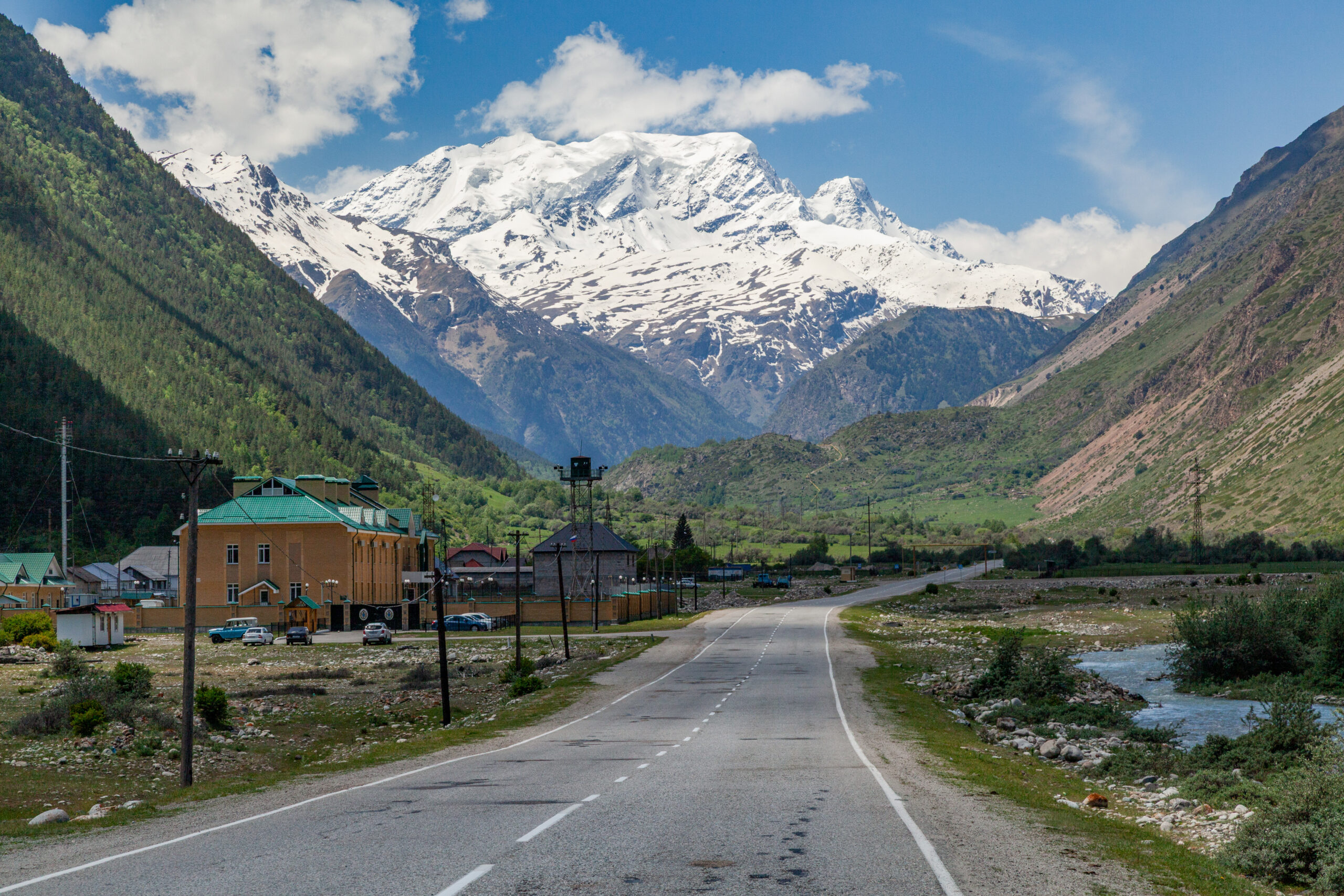
Mount Elbrus Summit Success Rate: What the Data Actually Shows
There is no current auditable dataset that supports one permanent mountain-wide Elbrus success percentage. What we do have are operator-specific South Route cohorts, historical expedition reports, route differences and current rescue records. This guide separates those evidence types so a climber can use the numbers without pretending they measure the same population.
What is the Mount Elbrus summit success rate?
No single defensible mountain-wide percentage is currently available. Publicly documented commercial South Route programs have reported very high client success in specific cohorts—for example, Alpine Ascents says it has averaged about 95% since 2000, Adventure Peaks reported 180 of 185 clients (99%) in 2015–2017 and about 95% across its 2018–2020 South-side trips, and Mountain Professionals says its long-running Elbrus program has averaged about 95%. Those figures describe selected guided programs with their own screening, itinerary, weather flexibility and client populations. They should not be converted into a claim such as “Elbrus has a 72% success rate” for all climbers.
The Useful Number Is the Cohort, Not a Fake Global Average
Summit-success data becomes useful only when the population is defined: which operator, which route, which years, which clients and what counted as a summit attempt.
Most Published Success Data Comes From the South Side
Elbrus statistics are not route-neutral. The South Route uses the Azau–Mir–Garabashi lift system and commercial huts, while the North Route is a longer and less-supported expedition. Mixing those populations into one percentage hides the reason their outcomes differ.
Success-data geography
The route infrastructure changes both the client population and the effort required to reach the summit.

Infrastructure Makes Elbrus Accessible—and Makes the Statistics Easy to Misread
South-side cable cars, huts and optional snowcat transport reduce approach effort. That can raise the success of a well-run guided cohort without telling us what percentage of every independent, north-side, winter or unregistered climber reaches the summit.
Published Elbrus Operator Cohorts
These are useful because the population is at least partly defined. They are still marketing-reported program outcomes rather than an independently audited mountain census.
| Source | Published result | Population / dates | What it supports | What it does not support |
|---|---|---|---|---|
| Alpine Ascents | ~95% summit success | Company says since 2000; program is a guided commercial cohort | Its long-running itinerary has historically produced high client success | A 95% success rate for all Elbrus climbers |
| Adventure Peaks | 180 of 185 clients (99%) | South Route clients, 2015–2017 | A clearly bounded historical company cohort | A current universal Elbrus probability |
| Adventure Peaks | ~95% average | Reported across 30 South-side trips in 2018–2020 | High outcomes persisted in another operator-defined period | A result directly transferable to another itinerary or independent climber |
| Mountain Professionals | ~95% | Operator says its trips have averaged approximately 95% since it began operating Elbrus expeditions in 2005 | A second long-running program reporting high guided success | A denominator-wide mountain statistic |
| Russian EMERCOM | Rescue / fatal incident reports | Event-by-event operational records | Specific incidents and rescue response are independently verifiable | A summit success percentage without total-attempt denominator data |
How to read a 95% operator rate
It means roughly 95% of that operator’s counted clients reached the defined summit during the reporting period, using that operator’s itinerary and guide system. It does not mean an independent climber has a 95% personal probability, and it does not mean 95% of everyone who attempts Elbrus succeeds.
The Cable Car Changes the Population Before Summit Day Begins
The South Route is the dominant commercial line. Climbers can use lift infrastructure to reach the Garabashi zone high on the mountain, then complete acclimatization hikes before a summit attempt. Some commercial itineraries also use snowcat transport to shorten summit day.
That changes both effort and selection. A guided South Route cohort may include clients who would never choose a self-supported North Route, while the itinerary itself can include spare summit days, structured acclimatization and local route knowledge.

Four Variables That Change Elbrus Summit Outcomes
These factors are supported by route design and operator practice even when exact percentage effects cannot be measured across every climber.
How fast did you get high?
Elbrus’s lift system makes rapid altitude gain possible. A strong program uses that infrastructure for acclimatization rather than treating it as permission to rush directly toward the summit.
Itinerary quality matters more than lift access alone.Can the itinerary wait?
Alpine Ascents explicitly credits spare summit days and multiple high-camp reservations as part of its historical success. A rigid trip loses options when Caucasus weather closes the window.
Extra time is an outcome variable, not wasted itinerary.South is not North
The South Route’s lift, hut and rescue infrastructure creates a fundamentally different expedition from the more self-supported North Route.
Do not transfer a South Route operator percentage to a North Route plan.What system surrounds the client?
Guide ratio, weather judgement, acclimatization schedule, turnaround discipline and spare days can all change a commercial cohort’s outcome.
Compare itinerary design before comparing claimed success percentages.Fitness still matters
A non-technical route can still require a long, cold summit day above 5,000 metres. Aerobic durability and efficient crampon movement preserve decision quality late in the day.
“Accessible” does not mean effortless.Cold and navigation competence
Whiteout, wind and low temperature become more consequential on a broad glaciated volcano where visual references can disappear quickly.
Good weather can make Elbrus look easier than it is.
Every Percentage Describes a Particular Group of Climbers
A guided team with spare weather days, structured acclimatization and local route knowledge is not the same statistical population as an independent climber on a compressed schedule. The page should say which population the number belongs to every time.
Russian Rescue Reports Confirm the Mountain Still Produces Serious Incidents
Event reports are strong evidence for individual rescues and fatalities. They are not a substitute for a denominator, so this rebuild uses them for safety context rather than converting them into a “1 in X climbers” rate.
| 2026 event | What the official record says | What we can infer |
|---|---|---|
| July 6–7 | Russian EMERCOM reported recovery of a deceased climber from about 5,500 m; the route had not been registered. | Fatal incidents occur high on the normal mountain during the main climbing season. |
| July 11 | An unregistered group requested help during descent around 4,900 m; one climber died. | Descent incidents belong in the risk picture, not just summit-day ascent statistics. |
| July 25–27 | Multiple rescue operations occurred around the Elbrus saddle / upper mountain, including fatalities; bad weather affected recovery operations. | Weather can complicate both climbing and rescue response even in peak season. |
| August 2 | An unregistered climber with a leg injury was rescued around 5,100 m. | Non-fatal injury and evacuation demand are part of Elbrus’s current operational reality. |
| August 17 | A registered group of eight failed to check in on time, prompting a search on the south slope. | Registration can improve the rescue system’s awareness, but it does not eliminate mountain risk. |
Why this page no longer publishes “1 in 95 rescued” or “1 in 430 fatalities”
Those ratios require a defensible denominator representing the same population and time period as the incident count. We could verify individual rescue records, but not a complete and auditable climber-attempt denominator supporting those exact ratios. The responsible choice is to remove them.

Snowcat Use Can Change What “Summit Day” Means
Some South Route commercial programs use snowcat support above the lift system, while others require clients to climb more of the upper mountain under their own power. A success percentage without the itinerary can therefore compare unlike experiences.
When evaluating an operator claim, ask where summit day begins, how many acclimatization rotations are included, whether snowcat support is routine or optional, and how many spare weather days are built into the schedule.
Claims Removed From the Previous Version
The previous page used precise figures that looked authoritative but could not be reproduced from public source data. This rebuild preserves the search intent while removing unsupported precision.
| Previous claim | Why it was removed | Replacement |
|---|---|---|
| 72% overall Elbrus success | No auditable all-climber denominator located | No single mountain-wide rate; use bounded operator cohorts |
| 79% guided vs 61% independent | No reproducible dataset supporting those exact populations and percentages | Compare operator program results separately from independent climbers |
| 75% South / 62% North / 48% West | Mixed route claims lacked a consistent audited source base | Describe route-system differences and cite specific operator South Route cohorts |
| Monthly success percentages | No denominator-backed month-by-month dataset located | Discuss season and weather without inventing monthly probabilities |
| Success by prior experience tier | No auditable cohort source for exact 52 / 68 / 76 / 86% ladder | Explain why prior altitude experience matters without attaching unsupported percentages |
| Rescue / fatality ratios | Incident records exist, but the matching total-attempt denominator was not verified | Use official incident reports as event evidence only |

A High Success Operator Cohort Does Not Make the Mountain Low-Risk
Elbrus’s standard route lacks steep technical climbing, but the summit remains above 5,600 metres on a glaciated mountain exposed to wind, cold and rapid visibility loss. Outcome statistics should never replace current-condition judgement.
How Global Summit Guide Should Grade Elbrus Success Data
The question is not whether a percentage exists online. The question is whether the percentage has a defined numerator, denominator, date range and population.
Audited population data
A transparent attempt denominator and summit numerator covering a clearly defined population and period. We did not locate this for all Elbrus climbers.
Defined operator cohort
Company reports with a clear client count, result and date range—such as Adventure Peaks’ 180 of 185 clients in 2015–2017.
Operator percentage
A company publishes a multi-year percentage but not the underlying denominator. Useful as program evidence, weaker for comparison.
Mountain-wide estimate
A generalized “Elbrus success rate” without a reproducible dataset. Treat as context only—not a fact to headline.
The denominator test
Before publishing any summit success percentage, ask: success among whom? All registered climbers? One operator’s clients? South Route guided clients? People who reached high camp? People who actually started summit day? Different denominators can produce very different percentages.
The Best Use of Success Data Is to Improve the Itinerary
The published high-success operator programs have a pattern: deliberate acclimatization, guide systems, spare weather time and logistics that reduce avoidable fatigue. Those are more actionable than a mountain-wide percentage.
For a climber, the useful questions are: Have I performed well above 4,500 metres before? Can I move efficiently in crampons? Does the itinerary include enough acclimatization? Is there a backup weather day? What is the turnaround system in a whiteout?

Answers Without False Precision
The central rule is simple: use a percentage only when its population is defined.
What is the Mount Elbrus summit success rate?
There is no current auditable mountain-wide percentage covering all Elbrus climbers. Specific commercial South Route programs have reported client success around 95% or higher in defined historical cohorts, but those figures should not be generalized to every climber, route or season.
Do guided climbers have a higher success rate on Elbrus?
Several established guided programs publish very high client success, but a reliable mountain-wide guided-versus-independent comparison requires comparable denominators that are not publicly available. The guided advantage is better discussed through itinerary structure, acclimatization, weather judgement and route support.
Which Elbrus route has the highest summit success?
The South Route dominates commercial climbing and is where the strongest published operator success cohorts come from. Its cable-car, hut and optional snowcat infrastructure reduce approach effort. That does not justify assigning one permanent South Route success percentage to all climbers.
Is a 95% Elbrus success rate realistic?
It is realistic as a reported result for a specific high-performing commercial program. Alpine Ascents, Adventure Peaks and Mountain Professionals have each published approximately 95% or better results for particular cohorts or multi-year programs. It is not a mountain-wide probability.
Why did Global Summit Guide remove the old 72% figure?
We could not reproduce a public, auditable dataset with a matching numerator and denominator that supported 72% across all registered Elbrus climbers. The new methodology keeps operator-specific evidence separate from mountain-wide estimates.
What most improves the chance of summiting Elbrus?
A well-paced acclimatization schedule, enough aerobic endurance for summit day, competent crampon movement, spare weather time, conservative turnaround decisions and an itinerary appropriate to the route all improve the quality of the attempt. Exact percentage gains for each factor are not publicly auditable mountain-wide.
Does the cable car make Elbrus easy?
No. It removes substantial approach effort on the South Route, but the West Summit is still 5,642 metres high on a glaciated mountain exposed to cold, wind, altitude and whiteout. Mechanical access can also let climbers gain altitude very quickly, so acclimatization remains essential.
Where the Rebuilt Numbers Come From
This page intentionally prefers source populations that can be identified over a more impressive-looking but unverifiable global percentage.
Evidence reviewed September 20, 2026. Operator success claims should be reread on the source site before future updates because company methodology and active programs can change.
If the Denominator Is Missing, Do Not Turn the Percentage Into a Mountain Fact.
Elbrus can produce very high summit rates inside well-designed South Route commercial programs. That is valuable evidence. The accurate way to publish it is as operator-cohort data—with dates, route and population attached—not as a universal probability for every climber who steps onto the mountain.
Success Rates Across the Caucasus Range
Elbrus success rates (60-75% on the standard South Side) sit in the middle of the Caucasus difficulty spectrum. Generally, Mount Kazbek runs 55-75% with similar weather sensitivity but more technical glacier travel. Specifically, the Bezengi Wall peaks (Dykh-Tau, Shkhara, Koshtan-Tau) post substantially lower rates — perhaps 30-50% — due to their sustained technical difficulty.
The complete Caucasus Mountains collection covers all 10 peaks with difficulty assessments, success rate context, and acclimatization progressions across the range.
Caucasus Mountains Collection →Mount Kazbek →Was this helpful?
🏔Related safety data
🧭Explore & compare
Global Summit Guide is an independent mountaineering resource founded in 2026. The team combines first-hand trekking and climbing experience with in-depth research and professional health and nutrition review to help climbers choose objectives, prepare properly, and stay safe.
Health, altitude, and nutrition content is reviewed by Taylor Ludlow (Registered Nurse) and Brigg Hoopes (Nutritionist).
What We Don't Know Yet
Mountain information changes quickly. This box explains the limits of what this page can responsibly promise.
- Fitness and altitude response vary by person; no guide, itinerary, or training plan can guarantee acclimatization or summit success.
- Visa, passport, vaccination, border, insurance, and local transportation rules may change before your trip.
- Route conditions, snowpack, closures, and weather can change quickly after this page is updated.
- Permit rules, fees, quotas, and reservation windows may change between review cycles.
- Operator availability, pricing, guide ratios, and cancellation terms can change by season.
Verify current conditions with official land managers, guide services, local forecasts, and current route reports before booking or climbing.
Mountaineering, rock and ice climbing, glacier travel, and high-altitude activity are inherently dangerous and can result in serious injury or death. The information on Global Summit Guide is provided for general informational and educational purposes only and is not a substitute for professional instruction, qualified guiding, proper equipment, or your own judgment and experience.
Route conditions, weather, snowpack, permits, regulations, and hazards change constantly and may differ from what is described here. Details may be incomplete, out of date, or contain errors. Always verify current information with local authorities, certified guides, and official sources before making any decision in the mountains.
Nothing on this site is medical, legal, or financial advice. Our fitness, acclimatization, altitude, and nutrition content is general in nature; consult a qualified physician before beginning any strenuous exercise program or exposing yourself to high altitude.
You are solely responsible for your own safety and decisions. To the fullest extent permitted by law, Global Summit Guide and its team accept no liability for any loss, injury, damage, or expense arising from use of, or reliance on, this information. By using this site you acknowledge these risks and accept these terms.
Some links on this site may be affiliate links. If you buy through them we may earn a small commission at no extra cost to you; this never affects our recommendations.
Global Summit Guide recommendation path
Next Best Mountain to Research
Use these recommendations to continue the right planning path instead of stopping on one page.
Use current permit, weather, route, and operator information before booking or climbing.