
Last updated May 29, 2026
Vinson Massif Summit Success Rate 2026: Why the Most Logistically Demanding Seven Summit Has the Highest Success Rate
Vinson Massif inverts the normal relationship between mountain difficulty and expedition cost. Generally, at 4,892m with a non-technical standard route, it is among the least technically demanding peaks in the success-rate database. Yet at $40,000-$60,000 all-in, it is the most expensive. Notably, the 77 percent success rate is among the highest in commercial mountaineering. The high rate reflects climber self-selection, ALE’s continuous weather monitoring, and the operational excellence of Antarctic Logistics & Expeditions. The primary hazard is not the mountain; it is Antarctica itself.
Where the Logistics Are the Mountain
Vinson Massif inverts the normal relationship between mountain difficulty and expedition cost. Generally, at 4,892m with a non-technical Branscomb Glacier standard route, the mountain is among the least technically demanding in the success-rate database. Yet at $40,000-$60,000 all-in, it is the most expensive peak commonly climbed. Specifically, the cost reflects not the mountain but the infrastructure required to operate in one of the most remote and hostile environments on Earth. The chain includes the Ilyushin flight from Punta Arenas to Union Glacier. Add the ALE base camp at 80 degrees south and the season-long support that makes the attempt possible at all. Notably, no independent commercial access to the Antarctic interior exists — every climber arrives via ALE.
How to read these numbers. Success is defined as reaching the true summit at 4,892m. Generally, all Vinson expeditions operate under ALE coordination from Union Glacier — there is no independent access to the Antarctic interior. Specifically, the guided rate reflects fully contracted guiding programs with certified mountain guides. Notably, some climbers operate semi-independently from Union Glacier but still under ALE’s operational umbrella with shared weather monitoring and base camp services.
The Headline Vinson Numbers
| Metric | Rate | Notes |
|---|---|---|
| Overall summit success rate | ~77% | All teams 1966-2025; weighted across guided and semi-independent |
| Fully guided programs | ~84% | Contracted guiding with certified mountain guides |
| Semi-independent | ~62% | Teams operating without contracted guide from Union Glacier |
| Normal Route (Branscomb Glacier) | ~79% | Standard route from Low Camp (2,800m) via Branscomb Glacier |
| West Ridge (Technical) | ~38% | Rarely attempted; serious mixed terrain; very small sample |
| Rescue incident rate | 1 in 140 | Lowest of any peak in the success-rate database |
| Fatality rate | 1 in 900 | Also the lowest of any peak in the database |
| Annual climbers | ~150 | Antarctic summer season (November-January) |
| 2026 expedition cost (all-in) | $40K-$60K | Includes ALE flight from Punta Arenas; operator and gear vary |
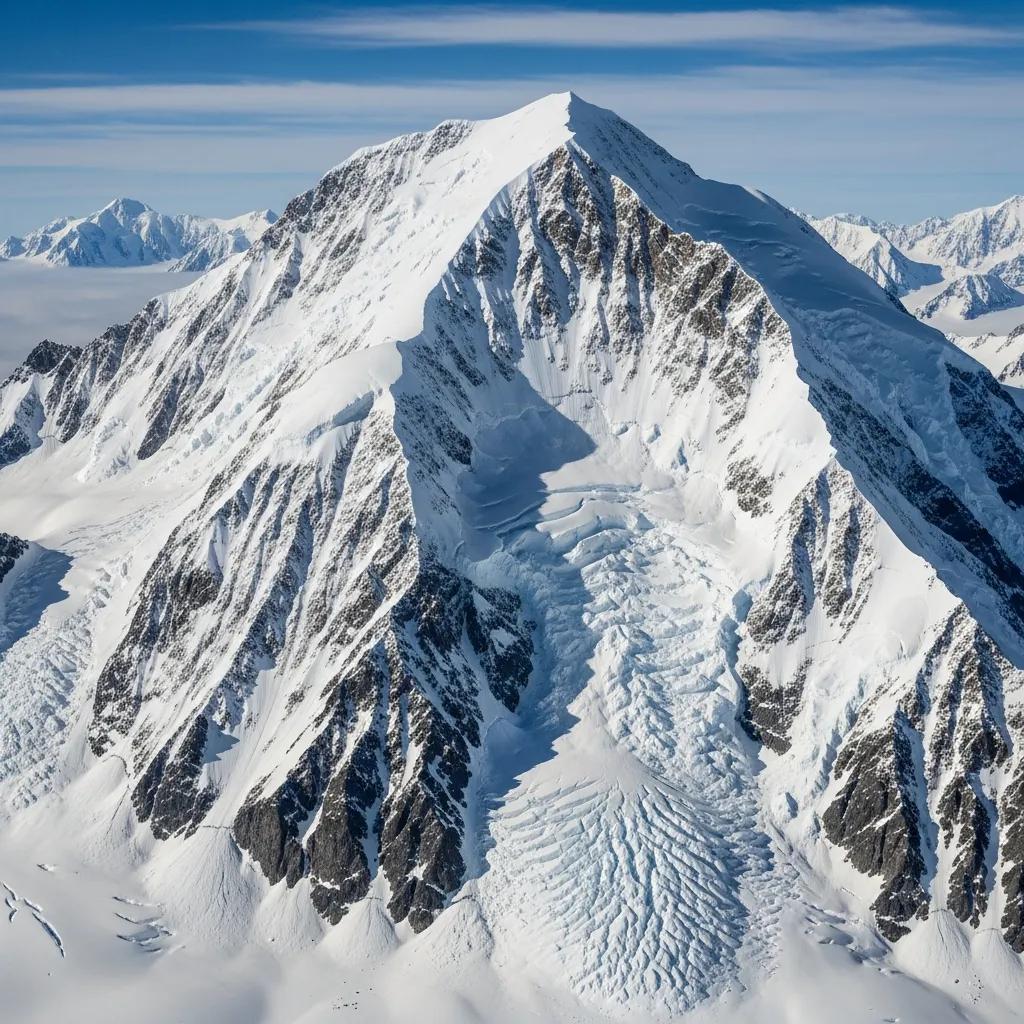
Success Rate by Month
The Vinson climbing season runs late November to mid-January — the Antarctic summer, when 24-hour daylight and the most stable weather windows coincide. Generally, December is the statistical peak. The month combines the highest sun angle with the most settled katabatic wind patterns on the upper mountain. Specifically, the season is entirely constrained by ALE flight operations from Punta Arenas to Union Glacier. Early November and late January are transition periods with very limited expedition slots. Notably, every attempt is weather-window dependent, and ALE monitors conditions continuously from Union Glacier.
| Month | Success Rate | Conditions |
|---|---|---|
| Mid-November | ~71% | Early season; coldest temperatures; less stable weather windows; first ALE flights |
| December | ~82% | Statistical peak; highest sun angle; most settled katabatic patterns; busiest month |
| Early January | ~76% | Late-season; conditions still good but team fatigue accumulates at Union Glacier |
| Late January | ~65% | Antarctic summer ending; weather degrading; ALE flight schedule wind-down |
The December window is the most coveted and most contested. Generally, teams that arrive at Union Glacier in late November are best positioned to exploit the first stable December windows. Specifically, weather on Vinson moves quickly. A 72-hour window that looks clean can deteriorate to 60 km/h katabatic winds within hours. Notably, ALE’s continuous weather monitoring from Union Glacier is the primary forecasting resource for all teams. Both fully guided and semi-independent teams use the same data, making the operational quality of forecasting consistent across the climbing pool.
Timing strategy. The optimal arrival in Punta Arenas is approximately November 25 to December 3. Generally, this positions your team for the December 5-20 prime window, capturing the highest-probability summit days. Specifically, ALE flight slots fill 12-18 months in advance, with December departures booked first. Notably, teams that delay arrival into mid-December often find themselves competing with other operators for the same narrow weather windows. Early arrival is the simplest way to reduce competitive pressure on summit-day decisions.
Success Rate by Route
Vinson has one regularly-climbed route and several rarely-attempted technical lines. Generally, the Normal Route on the Branscomb Glacier accounts for over 99 percent of annual ascents. Specifically, the route is non-technical by high-altitude standards but demands cold-weather competence and glacier travel skills that should not be underestimated in the Antarctic context. Notably, the technical variants are statistical curiosities — pursued by elite alpinists in numbers too small to support robust success-rate analysis.
The Normal Route’s challenge is not its technical grade but its environment. Generally, temperatures at High Camp regularly reach -40 Celsius with windchill. Specifically, summit-day winds can exceed 80 km/h with very little warning. Notably, the 24-hour daylight removes the usual alpine-start advantage that climbers expect from temperate-zone mountaineering. Teams instead rely on weather windows rather than cold-temperature snow stability to time their summit pushes.
What makes the Normal Route “non-technical” misleading. The technical grade of the Branscomb Glacier route is genuinely modest — comparable to a guided Mount Rainier ascent in technical terms. Generally, the route involves crevassed glacier travel with fixed ropes on the headwall above Low Camp, then a non-technical summit ridge. Specifically, the elements that make Vinson hard are environmental, not technical. Cold management and gear systems matter most. Multi-day patience for weather and disciplined decision-making at the limit of cold-weather endurance separate successful Vinson climbers from those who turn back. Notably, climbers who arrive expecting Rainier-like difficulty and underestimate the cold-weather demands account for a meaningful share of failed summits.
Guided vs Semi-Independent
All Vinson climbers arrive via ALE. Generally, the meaningful distinction is between two access models. Fully contracted guiding programs and teams that operate semi-independently from Union Glacier with their own rope teams and gear. Specifically, purely independent climbing on Vinson does not exist. ALE’s coordination framework, weather monitoring, and base camp services cover all teams regardless of guiding status. Notably, the success-rate gap between the two categories runs 22 percentage points.
| Factor | Fully Guided | Semi-Independent |
|---|---|---|
| Summit success rate | ~84% | ~62% |
| Guide judgment on weather | Certified guide makes call | Team makes call using ALE briefing |
| ALE weather briefings | Yes (used by all guiding companies) | Yes (same briefings available) |
| Cold-weather management | Guide-led with Antarctic-specific protocols | Team-led; cold injury more common |
| Premature summit push risk | Low — guides hold for windows | Higher in marginal conditions |
| 2026 typical cost (all-in) | $42K-$58K | $35K-$45K (ALE logistics only) |
| Operators | Alpenglow, Adventure Consultants, IMG, Alpine Ascents, Madison, RMI, ALE Guiding | Direct ALE booking; team brings own guides or none |
The guided premium on Vinson reflects guide judgment more than logistical access. Generally, both fully guided and semi-independent teams use the same ALE flight, the same Union Glacier base camp, and the same continuous weather monitoring. Specifically, the difference shows up in three places. First, decision-making at the limit of the weather window — guides hold for confidence rather than push in marginal conditions. Second, cold-weather management — guides bring Antarctic-specific layering and gear-testing protocols. Third, rescue coordination — guides have pre-arranged escalation paths with ALE’s medical staff at Union Glacier.
Recommendation for first-time Vinson climbers. Go fully guided. Generally, the cost differential ($7,000-$13,000) is small relative to the headline expedition cost, and the 22-point success rate improvement is the highest-ROI investment available. Specifically, the operators that consistently deliver high Vinson success rates include several names. Alpenglow Expeditions, Adventure Consultants, Alpine Ascents International, Madison Mountaineering, IMG, RMI, and ALE’s own guiding division. Notably, see our Vinson operators comparison for detailed operator evaluation criteria.
Success Rate by Experience Level
Vinson’s experience data reflects the mountain’s non-technical character. Generally, altitude experience is irrelevant at 4,892m — the elevation is well below the AMS threshold that drives turnarounds on Aconcagua or Denali. Specifically, technical climbing skills matter less than cold-weather competence and glacier travel confidence. Notably, the gap between experience levels on Vinson is driven by prior Antarctic or extreme cold exposure, not climbing grade. Cold management is the dominant transferable skill.
| Prior Experience | Success Rate | Why |
|---|---|---|
| No prior glacier or cold-weather experience | 58% | Achievable on a well-guided program; cold-weather management, crampon use, and glacier travel create vulnerability on summit day when conditions deteriorate rapidly |
| Prior glacier travel and crampon experience | 76% | Most directly transferable preparation; crampon confidence and glacier travel skills reduce the Branscomb Glacier learning curve significantly |
| Prior summit above 4,000m with winter/alpine experience | 84% | Strongest predictor; cold-weather layering, frostbite prevention, and extreme-cold psychological demands translate directly to Vinson |
| Prior Seven Summits experience (other continental highpoints) | 90% | Best-performing cohort; proven equipment systems, expedition logistics experience, appropriate mental preparation for multi-week remote operations |
Vinson rewards cold-weather competence above all else. Generally, the strongest predictor of Vinson success is not altitude experience or technical climbing ability. It is prior exposure to extreme cold and the gear-testing discipline that comes from operating in -30 to -40 Celsius conditions. Specifically, climbers who arrive having tested their layering system, glove combinations, boot warmth, and stove operation in genuine Antarctic-equivalent temperatures succeed at meaningfully higher rates. Buying gear specifically for the trip without prior cold-weather testing is the opposite approach. Notably, this is why Denali climbers (who experience similar cold) often outperform Aconcagua climbers (higher altitude but warmer temperatures) on Vinson despite lower altitude experience.
The non-negotiable prep skill: cold management. Generally, a single multi-day glacier trip in genuine winter conditions is the strongest preparation for Vinson. Mount Baker in February, Rainier in May, or an extended ski-mountaineering course in the Alps in March all qualify. Specifically, climbers who arrive having tested their full gear system in temperatures below -20 Celsius for multiple consecutive days handle the Antarctic environment dramatically better. Weekend day-trips do not transfer well to a multi-week Antarctic expedition. Notably, ALE-affiliated operators offer pre-expedition gear consultations and rental of the most-specialised pieces — down suits, mukluks, vapor-barrier liners. Personal gear systems tested in advance are still strongly preferred for confidence and fit at the limit of cold tolerance.
Most Common Turnaround Reasons
Five dominant turnaround reasons account for nearly all failed Vinson summits. The data comes from ALE season reports and guiding company post-expedition summaries covering 2005-2025 on the Normal Route. Generally, weather alone drives over half of all failed summits — by far the dominant failure mode. Specifically, the failure modes on Vinson are environmental rather than technical, reflecting the mountain’s character as Antarctic-logistics-meets-modest-climb. Notably, each of the five has prep-time interventions that meaningfully reduce its likelihood.
Weather — Antarctic katabatic winds and storms
Katabatic winds descending from the polar plateau can reach 100 km/h with little warning. Summit-day decisions on Vinson are almost entirely weather-driven. The technical terrain is straightforward, but wind and cold exposure above High Camp can be fatal in deteriorating conditions. Mitigation: arrive early in December window, build multiple summit-day windows into the expedition timeline, use ALE continuous weather monitoring as primary forecasting resource.
Cold injury — frostbite on extremities
Summit temperatures of -40 Celsius with windchill are the primary physiological hazard. Frostbite on fingers and toes is the most common injury requiring turnaround. Inadequate glove systems and boot insulation are the most preventable causes. Mitigation: test full glove and boot systems in -20 to -30 Celsius conditions before departure. Verify boot warmth with double-layer mukluk-style systems. Carry redundant glove combinations.
ALE flight schedule constraints
Limited ALE flight slots and the short Antarctic summer season create fixed departure deadlines. Teams that exhaust their weather holds waiting for a summit window sometimes run out of time before conditions permit a safe attempt. Mitigation: book December slots, build buffer days into the expedition plan, prioritise early-season arrival at Union Glacier to maximise weather window options.
Exhaustion — load carrying in extreme cold
Carrying heavy loads in -30 Celsius temperatures while wearing the full Antarctic layer system is far more demanding than equivalent effort in temperate mountain environments. Many climbers underestimate this metabolic cost. Mitigation: train with weighted packs in cold conditions, build expedition-specific fitness for sustained sub-zero exertion, practise camp routines while wearing full Antarctic kit.
Equipment failure in extreme cold
Equipment failures at Antarctic temperatures occur at higher rates than on temperate peaks. Bindings, zips, stove systems, and communication devices can force turnarounds that would be easily resolved at less extreme temperatures. Mitigation: cold-test all critical equipment before departure, carry redundant systems for stoves and communications, prefer field-tested gear over new purchases.
The 76 percent rule. Weather (52 percent) and cold injury (24 percent) together account for 76 percent of all Vinson turnarounds. Generally, both are environmental rather than technical failure modes. Specifically, both reduce dramatically with proper preparation. Patience for weather windows on the operational side, gear testing in genuinely cold conditions on the personal side. Notably, climbers who optimise across these two factors typically see individual success rates closer to the 90 percent Seven Summits cohort baseline. That is meaningfully above the 77 percent overall mountain rate.
Rescue Incident Frequency
ALE operates the most sophisticated private rescue infrastructure in any mountain environment. Generally, ALE’s rescue operation has three pillars. Dedicated Twin Otter ski-plane aircraft capable of landing at high altitude on skis. Continuous weather monitoring from Union Glacier. Satellite communication with every expedition team. Specifically, the rescue rate of 1 in 140 is the lowest of any peak in the success-rate database. The rate reflects both ALE’s operational excellence and the conservative weather-window management that characterises well-run Antarctic expeditions. Notably, the fatality rate of 1 in 900 is also the lowest of any peak in the database.
| Safety Metric | Rate | Notes |
|---|---|---|
| Assisted rescue rate | 1 in 140 climbers | Per season; includes Twin Otter evacuations and ground assistance |
| Fatality rate | 1 in 900 climbers | Lowest of any peak in the success-rate database |
| ALE emergency evacuation cost | ~$85,000 | Estimated cost without insurance; mandatory expedition insurance required |
| Helicopter ceiling | Twin Otter ski-plane to high camps | ALE Twin Otters can land on skis at Low Camp (2,800m) and higher in optimal conditions |
| Most common rescue scenario | Frostbite | Cold injury requiring medical treatment; almost always attributable to inadequate gear |
| Insurance requirement | Mandatory | Standard travel insurance does not cover Antarctica; dedicated expedition insurance required |
Vinson’s safety profile reflects ALE’s operational excellence and the self-selected pool of climbers. Generally, only experienced and well-funded climbers reach Antarctica at all, and the operational standards ALE maintains exceed those of any other mountain environment. Specifically, cold injury requiring medical treatment is the most common serious incident on Vinson — almost always attributable to inadequate glove or boot systems. Notably, comprehensive travel and expedition insurance covering Antarctic medical evacuation and repatriation is essential. Standard travel policies do not cover Antarctica.
Antarctic-specific insurance is mandatory. Generally, standard travel insurance and even most mountaineering-specific policies exclude Antarctica or cap coverage well below the $85,000 estimated cost of an ALE emergency evacuation. Specifically, dedicated providers offer compliant Vinson coverage. Options include Global Rescue (Premium tier or higher), Ripcord Rescue Travel Insurance, World Nomads Explorer Plus with Antarctic add-on, and AAC’s expedition policy. Notably, verify your specific policy explicitly names Antarctica, includes high-altitude mountaineering, and covers medical evacuation and repatriation from 4,892m. See our mountaineering insurance comparison for the full breakdown.
Historical Success Rate Trend
Vinson’s success rate has improved steadily since ALE’s establishment of organised logistical support in the late 1980s. Generally, the modern rate has remained stable since 2005 as ALE’s operational procedures have matured. Specifically, the most significant single improvement was ALE’s introduction of continuous weather monitoring from Union Glacier in the 1990s. The shift transformed summit-day decision-making across all expeditions. Notably, the establishment of ALE’s Union Glacier operations represents the single largest structural improvement in Vinson’s success rate data.
| Period | Rolling Avg Success Rate | Key Notes |
|---|---|---|
| 1966-1986 | ~45% | Pre-ALE era; logistically improvised expeditions; small sample |
| 1987-1995 | ~58% | ALE Union Glacier operations establishing; logistics maturing |
| 1996-2004 | ~71% | Continuous weather monitoring transforms summit-day decisions |
| 2005-2014 | ~76% | Mature operations era; modern guiding standards established |
| 2015-2024 | ~78% | Continued stability; minor improvements from gear and forecasting |
The stable plateau since 2005 reflects mature operations. Generally, ALE’s procedures are well-established and the mountain’s hazards are well-understood. Specifically, future improvements are unlikely to be dramatic. The remaining failure modes (Antarctic weather variance, climber gear systems, individual cold tolerance) are not easily improved by operational changes. Notably, climate change has not meaningfully affected Vinson success rates the way it has on glaciated equatorial peaks like Aconcagua’s Polish Glacier route. The Antarctic interior remains a stable cold-weather climbing environment.
Vinson Massif Success Rate FAQ
What is the Vinson Massif summit success rate in 2026?
The Vinson Massif summit success rate runs approximately 77 percent across all expeditions from 1966 to 2025 — among the highest in commercial mountaineering. Fully guided programs reach approximately 84 percent while semi-independent teams operating from ALE’s Union Glacier base camp reach approximately 62 percent. The high rate reflects three structural factors. Climber self-selection means only experienced and well-funded climbers reach Vinson at all. ALE’s continuous weather monitoring and conservative operational standards add a second factor. The third is the relatively short technical climb once the long Antarctic logistical chain is complete. Climbers who reach Union Glacier successfully tend to summit — most failures stem from weather windows rather than climbing difficulty itself.
Why is Vinson Massif so expensive if the climb itself isn’t technical?
Vinson costs $40,000-$60,000 all-in not because of mountain difficulty but because of Antarctic logistics. Antarctic Logistics & Expeditions (ALE) operates the only commercial access to the interior. The link is a privately operated Ilyushin Il-76 cargo aircraft from Punta Arenas, Chile to the Union Glacier ice runway at 80 degrees south. The flight alone runs approximately $20,000-$25,000 per person. The remaining costs cover ALE’s full operation. Union Glacier base camp services, Twin Otter ski-plane transfer to Vinson base camp, fuel, and dedicated weather monitoring. Add satellite communications and the season-long support infrastructure required to operate in the most remote environment on Earth. No independent access exists — every climber must arrive through ALE.
What month has the best Vinson summit success rate?
December has the highest Vinson Massif summit success rate at approximately 82 percent. The climbing season runs late November through mid-January — the Antarctic summer, when 24-hour daylight and the most stable weather windows coincide. December combines the highest sun angle with the most settled katabatic wind patterns. Surface temperatures at high camp reach approximately -25 to -30 Celsius — the warmest of the climbing season. Mid-November runs approximately 71 percent due to early-season cold and less stable windows. Early January runs approximately 76 percent. Late January drops to approximately 65 percent as Antarctic summer ends. The December window is the most coveted and most contested among ALE-coordinated teams.
Is Vinson technically difficult to climb?
No — Vinson is among the least technically demanding peaks of the Seven Summits. The standard Branscomb Glacier route (Normal Route) is non-technical glacier travel with fixed ropes on steeper sections above High Camp at 3,900m. The standard 3-4 day ascent from Low Camp involves glacier travel, fixed-rope ascent on the headwall above Low Camp, and a relatively non-technical summit ridge. The challenge is not the technical grade but the environment. Temperatures at High Camp regularly reach -40 Celsius with windchill, and summit-day winds can exceed 80 km/h with very little warning. The 24-hour daylight also removes the usual alpine-start advantage that climbers expect from temperate-zone mountaineering.
How does prior experience affect Vinson summit success rates?
Significantly. The gap between altitude novices and experienced Seven Summits climbers runs 32 percentage points. Climbers with no prior glacier or cold-weather experience succeed at approximately 58 percent. Climbers with prior glacier travel and crampon experience reach 76 percent. Climbers with prior summits above 4,000m in winter or alpine conditions succeed at 84 percent. Climbers attempting Vinson as a Seven Summits objective after multiple other continental highpoints succeed at approximately 90 percent — the highest of any cohort. The transfer effect is cold-weather competence rather than altitude tolerance: Vinson tests gear systems and cold management more than physiology.
What is the rescue rate and fatality rate on Vinson Massif?
Vinson Massif has the lowest rescue and fatality rates of any major peak in the success-rate database. The rescue rate runs approximately 1 in 140 climbers per season requiring ALE-assisted evacuation, and the fatality rate runs approximately 1 in 900 climbers. These rates reflect ALE’s conservative operational standards, continuous weather monitoring from Union Glacier, and the small, self-selected pool of climbers who attempt the peak. ALE operates dedicated Twin Otter ski-plane rescue capability and satellite communication with every expedition team. The setup is the most sophisticated private rescue infrastructure in any mountain environment. Comprehensive expedition insurance covering Antarctic medical evacuation and repatriation is essential. Standard travel policies do not cover Antarctica, and an ALE emergency evacuation costs approximately $85,000.
Can I climb Vinson Massif independently?
Not in the traditional sense. All access to the Antarctic interior runs through Antarctic Logistics & Expeditions (ALE). No commercial alternative exists for reaching Union Glacier or Vinson base camp. Climbers can choose between two access models. Fully guided programs contract with operators like Alpenglow Expeditions, Adventure Consultants, IMG, Alpine Ascents, Madison Mountaineering, RMI, Mountain Madness, or directly with ALE’s guiding division. Semi-independent climbs operate from Union Glacier with their own gear and rope teams but still under ALE’s coordination umbrella. Semi-independent expeditions succeed at approximately 62 percent vs 84 percent for fully guided programs. The gap reflects guide judgment on weather windows and cold-weather management rather than logistical access.
What is the biggest reason climbers fail on Vinson Massif?
Weather. Antarctic katabatic winds and summit-day storms account for 52 percent of all Vinson turnarounds — by far the dominant failure mode. Katabatic winds descending from the polar plateau can reach 100 km/h with little warning, and summit-day decisions are almost entirely weather-driven. The technical terrain is straightforward, but wind and cold exposure above High Camp can be fatal in deteriorating conditions. Cold injury (primarily frostbite to fingers and toes) accounts for 24 percent of turnarounds — driven by inadequate glove systems and boot insulation. ALE flight schedule constraints account for 14 percent of turnarounds when teams exhaust their weather-hold budget without a summit window opening.
Sources and Methodology
Data Sources
This page aggregates data across the following authoritative sources:
- Antarctic Logistics & Expeditions (ALE) — official season reports, weather monitoring data, evacuation records 1987-2025.
- American Alpine Club Annual Accidents — incident analysis for Antarctic expeditions 2005-2025.
- British Antarctic Survey expedition records — pre-ALE-era data 1966-1987.
- Vinson Massif expedition database (7summits.com) — community-maintained climber summit records.
- Alpenglow Expeditions — operator-published success rates and trip reports.
- Adventure Consultants Vinson program — guided expedition outcomes.
- IMG Vinson program — published success rates from guided expeditions.
- Alpine Ascents International Vinson program — guided expedition outcomes.
- Madison Mountaineering Vinson program — guided expedition outcomes.
- ALE Guiding — direct ALE guided program success rates.
- Wilderness Medical Society — cold injury incident rates for high-altitude polar environments.
Methodology note. Where operator-reported rates differ meaningfully from aggregate season data, we use the aggregate rate as the headline figure and call out operator-specific data separately. Numbers reflect rolling 10-year averages where available, with 2025-26 season data preliminary. Climbers with verified Vinson expedition results willing to contribute data are invited to contact our editorial team. Published: March 15, 2026. Last updated: May 28, 2026. Next scheduled review: April 2027 (post-2026-27 Antarctic season).
Continue Your Vinson Research
Plan Your Vinson Climb Around the Logistics
Four climber-controlled variables move Vinson success rates the most. December timing over November or late January, fully guided over semi-independent. Add prior glacier and cold-weather experience and personal gear systems tested in -20 to -30 Celsius conditions before departure. Generally, climbers who optimise across all four typically run 90 percent success rates — close to the Seven Summits veteran cohort.
View the Vinson Climb Guide →Was this helpful?
🏔Related safety data
🧭Explore & compare
Global Summit Guide is an independent mountaineering resource founded in 2026. The team combines first-hand trekking and climbing experience with in-depth research and professional health and nutrition review to help climbers choose objectives, prepare properly, and stay safe.
Health, altitude, and nutrition content is reviewed by Taylor Ludlow (Registered Nurse) and Brigg Hoopes (Nutritionist).
What We Don't Know Yet
Mountain information changes quickly. This box explains the limits of what this page can responsibly promise.
- Weather, snowpack, avalanche risk, road access, and route conditions can change quickly and may be different on your climbing dates.
- Route conditions, trailhead access, crevasse exposure, stream crossings, and rescue access may vary from published planning guidance.
- Total trip cost can change with flights, lodging, guide pricing, permits, gear rentals, transportation, and exchange rates.
- Fitness and altitude response vary by person; no guide, itinerary, or training plan can guarantee acclimatization or summit success.
Verify current conditions with official land managers, guide services, local forecasts, and current route reports before booking or climbing.
Mountaineering, rock and ice climbing, glacier travel, and high-altitude activity are inherently dangerous and can result in serious injury or death. The information on Global Summit Guide is provided for general informational and educational purposes only and is not a substitute for professional instruction, qualified guiding, proper equipment, or your own judgment and experience.
Route conditions, weather, snowpack, permits, regulations, and hazards change constantly and may differ from what is described here. Details may be incomplete, out of date, or contain errors. Always verify current information with local authorities, certified guides, and official sources before making any decision in the mountains.
Nothing on this site is medical, legal, or financial advice. Our fitness, acclimatization, altitude, and nutrition content is general in nature; consult a qualified physician before beginning any strenuous exercise program or exposing yourself to high altitude.
You are solely responsible for your own safety and decisions. To the fullest extent permitted by law, Global Summit Guide and its team accept no liability for any loss, injury, damage, or expense arising from use of, or reliance on, this information. By using this site you acknowledge these risks and accept these terms.
Some links on this site may be affiliate links. If you buy through them we may earn a small commission at no extra cost to you; this never affects our recommendations.
Global Summit Guide recommendation path
Next Best Mountain to Research
Use these recommendations to continue the right planning path instead of stopping on one page.
Use current permit, weather, route, and operator information before booking or climbing.