
Last updated October 8, 2026
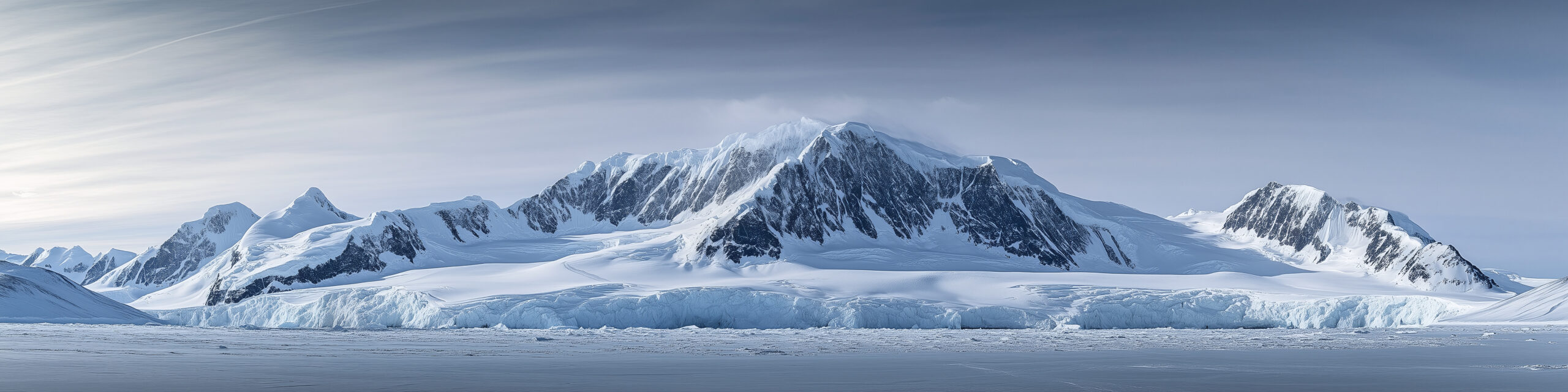
How to Climb Mount Vinson: The Complete Antarctica Expedition Guide
Mount Vinson is not the highest, steepest, or most technical of the Seven Summits. It may be the least forgiving of sloppy preparation. Every flight, fuel drum, tent, meal, rescue plan, and pair of warm gloves must work at the far end of the planet.
Vinson is a moderate climb inside an exceptional logistics problem.
The standard Branscomb Shoulder route is achievable for a competent glacier climber with strong cold-weather systems. It is not a beginner trek. You must travel roped on glaciers, ascend fixed lines, haul a sled, camp on snow, organize equipment in wind, and keep moving when small errors become cold injuries.
ALE’s published 2026 guided program is 12 days and $57,900. That number does not include every flight, hotel, insurance policy, personal item, or delay you may absorb. Build the expedition around margin: margin in skills, gloves, fitness, time, and money.
Is Mount Vinson the right expedition for you?
The route is not the only test. Vinson rewards climbers who are organized, self-managing, and steady in cold conditions.
People often describe Vinson as “one of the easier Seven Summits.” That phrase needs a boundary around it. The standard route avoids difficult rock climbing and sustained steep ice. The altitude is lower than Aconcagua, Denali, and Everest. Commercial teams use an established camp system and fixed lines. Those facts make the climbing movements more approachable than the technical ground on Carstensz Pyramid or the altitude of Everest.
They do not make Antarctica easy. At home, a broken zipper is inconvenient. At High Camp, it can expose a hand to frostbite. A slow crampon transition can leave the entire rope standing in wind. A poorly managed water bottle becomes a block of ice. A climber who cannot sleep under continuous daylight may begin summit day already depleted.
A strong Vinson candidate
Has climbed roped on glaciers, practiced crevasse rescue, used ascenders on fixed ropes, camped for several nights on snow, and completed long summit days while carrying a pack. This climber does not need to be an elite alpinist, but should be efficient enough that a guide is refining rather than teaching every basic skill.
A weak Vinson candidate
Has only trekked non-glaciated peaks, depends on guides to organize personal equipment, has never worn crampons for a full day, or has not tested a complete hand-and-foot system below 0°F (-18°C). Money can buy logistics; it cannot replace practiced movement.
Use the dedicated what to climb before Vinson progression guide to identify the best preparation peaks. For many climbers, Rainier or Baker builds glacier competence, Aconcagua tests expedition pacing, and Denali provides the closest rehearsal for hauling, cold, and camp discipline.
Why Vinson feels unlike every other Seven Summit
The mountain is only one part of the expedition. The continent controls the schedule.
Access is an aviation chain, not a road approach
There is no trailhead, village, lodge, or helicopter market waiting below Vinson. Commercial climbers assemble in Punta Arenas, Chile. The group and equipment are checked before a weather-dependent intercontinental flight lands on a naturally occurring blue-ice runway at Union Glacier. A ski-equipped aircraft then carries the team deeper into the Ellsworth Mountains to Vinson Base Camp.
That chain explains the cost and the uncertainty. The aircraft must have acceptable conditions at departure, en route, and on the ice. A clear sky above your hotel does not mean the runway is open. Climbers may wait in Punta Arenas before departure, at Union Glacier before the base-camp transfer, or at Vinson for a summit window.
The sun does not set
During the climbing season, 24-hour daylight changes both movement and recovery. The light can help teams use a broad weather window without racing darkness. It can also make sleep difficult. An eye mask is not a luxury item, and a disciplined bedtime matters even when the tent glows like late afternoon.
Cold is operational, not decorative
Vinson’s cold is often discussed as a dramatic temperature number. The more useful question is what the cold does to a routine. Adhesives fail. Batteries drain. Plastic stiffens. Metal sticks to damp skin. Gloves removed “for a second” stay off too long. Snow must be melted for every liter of water. The successful climber builds procedures that work while tired and gloved.
From Punta Arenas to Vinson Base Camp
Understand the sequence before you book nonrefundable travel or promise a return date.
Arrive in Punta Arenas early. Build at least one buffer day before the operator’s required arrival. Delayed luggage containing custom boots or expedition mittens can end a climb before Antarctica.
Briefing and gear inspection. ALE states that a representative conducts a personal gear check in Punta Arenas. Treat the list as a minimum system, not a shopping suggestion.
Weather call. The group receives instructions when the flight window becomes viable. You must be ready to move, but delays are normal enough to be part of the plan.
Fly to Union Glacier. The intercontinental aircraft lands on blue ice. Union Glacier is the logistics hub, with communications, meals, accommodation, weather operations, and links to deep-field aircraft.
Transfer to Vinson Base Camp. Ski aircraft move climbers to the Branscomb Glacier. Weather can hold the transfer even after the team has reached Antarctica.
Climb, return, and wait again. Reaching Base Camp does not guarantee an immediate flight to Union Glacier, and reaching Union Glacier does not guarantee an immediate flight to Chile.
Union Glacier and Vinson Base Camp are not interchangeable. Union Glacier is the central logistics camp. Vinson Base Camp is a mountain camp on the Branscomb Glacier. ALE notes that Vinson Base Camp maintains daily communications with climbing parties, Union Glacier, and Chile through multiple systems. That network is a major reason modern Vinson expeditions can operate conservatively, but it does not turn the mountain into an easily evacuated resort.
The Branscomb Shoulder route
The standard line is straightforward by expedition standards, but every stage has a distinct job.
Nearly all commercial climbers use the Branscomb Shoulder route. The route travels from Vinson Base Camp to Low Camp, climbs the headwall on fixed lines to High Camp, and then crosses the upper mountain to the summit ridge. For a separate analysis of the standard route and the rarely attempted technical alternatives, use the Vinson Massif route comparison.
Vinson Base Camp — approximately 2,100 m
The aircraft leaves the team with equipment, food, fuel, sleds, and the first uninterrupted view of the mountain. Base Camp is where fast airport habits must become deliberate expedition habits. Gear is redistributed, loads are protected, and the team confirms movement and communication procedures.
Base Camp to Low Camp — approximately 2,800 m
This leg introduces the daily rhythm: rope spacing, sled control, temperature regulation, eating on the move, and efficient transitions. The grade may feel friendly, but towing a sled across soft snow can turn a moderate day into a significant workload. Crevasse hazard means the rope is a working safety system, not a group accessory.
Low Camp to High Camp — approximately 3,700–3,900 m
The headwall is the route’s clearest technical test. Climbers ascend fixed ropes with an ascender while managing crampons, pack weight, spacing, and cold hands. Depending on the expedition plan, teams may carry supplies before moving camp. Smooth rope technique saves more energy than brute strength.
High Camp to summit — 4,892 m
The final day is not technically extreme, but it is long, cold, and exposed to wind. Teams travel across broad snow terrain before gaining the summit ridge. Conditions determine pace and turnaround. The summit itself is a place to confirm judgment, take photographs efficiently, and begin the return while every climber is still functioning well.
| Stage | Main work | Primary risk | What good preparation looks like |
|---|---|---|---|
| Base Camp | Sorting, systems, rest | Disorganization, missing gear | Every item has a known place and purpose |
| Low Camp move | Roped glacier travel, sled haul | Crevasses, overheating, fatigue | Consistent rope spacing and steady pacing |
| Headwall | Fixed-rope ascent with pack | Cold hands, inefficient ascender use | Practiced changeovers while wearing gloves |
| High Camp | Recovery and summit preparation | Poor sleep, dehydration, wind exposure | Immediate camp routine and protected equipment |
| Summit day | Long climb and return | Wind, cold injury, late turnaround | Conservative pacing and honest self-reporting |
A realistic Mount Vinson itinerary
The sequence matters more than the calendar. Weather may move rest and carry days.
Fly to Union Glacier. Arrival, camp orientation, meal, equipment protection, and the first night on the continent.
Fly to Vinson Base Camp. Set camp, organize loads, review rope systems, and adjust to the environment.
Move or carry toward Low Camp. Roped travel and sled hauling. The exact strategy depends on team strength and weather.
Establish Low Camp. Recover, hydrate, and protect equipment before the headwall phase.
Carry on the fixed lines. Cache equipment or move loads higher while rehearsing headwall systems.
Rest or weather day. A real rest day is part of performance, not a lost day.
Move to High Camp. Ascend fixed ropes with the personal and group equipment required above.
Summit window. Attempt the summit only when the team and weather align.
Second summit window or descent. Flexibility is built into responsible planning.
Descend to Base Camp. Fixed-rope descent demands concentration; the expedition is not over at the summit.
Return to Union Glacier when aircraft can fly.
Fly to Punta Arenas when conditions permit. Keep contingency days outside the advertised itinerary.
The official itinerary should be read as an operational framework, not a promise that Day 8 will be summit day. A strong team may move quickly and then wait for aircraft. A slow system may consume the weather window. Your best contribution is to arrive fit enough that the guide can choose days based on weather rather than on your recovery deficit.
Season, weather, and the cold that matters
The austral summer provides daylight and access, not warmth in the ordinary sense.
The commercial season runs in the Antarctic summer, broadly late November through January. ALE describes Union Glacier as a seasonal operation and lists Mount Vinson programs within this window. The period offers continuous daylight and the best practical aviation conditions, yet wind and cloud can still close the runway or make summit travel unreasonable.
Why the thermometer is only part of the forecast
A calm -20°F (-29°C) day can be manageable with the right system. A warmer number paired with wind can be more damaging. The summit ridge and High Camp expose climbers to convective heat loss, while sweat created under an oversized parka can chill the body later. The objective is not to wear every layer. It is to stay dry, protect exposed skin, and add insulation before stopping.
| Condition | Effect on the expedition | Best response |
|---|---|---|
| Strong wind | Rapid cooling, difficult tent work, poor visibility | Protect skin, secure camp, delay exposed movement |
| Low cloud | Aircraft or navigation constraints | Maintain readiness without pressuring operations |
| Soft snow | Higher sled-hauling effort and slower travel | Reduce surges and keep a sustainable rope pace |
| 24-hour sunlight | Sleep disruption, dehydration, sun exposure | Eye mask, strict routine, sunscreen, steady fluids |
| Very dry air | Respiratory irritation and unnoticed fluid loss | Drink consistently and protect face and airway |
Skills you should own before Antarctica
A guide can manage the expedition. You still need to manage yourself.
Glacier systems
- Roped travel with reliable spacing
- Self-arrest and crampon movement
- Crevasse rescue fundamentals
- Safe travel around camps and aircraft
Fixed-line systems
- Ascending with a mechanical ascender
- Passing anchors without detaching unsafely
- Descending fixed ropes under control
- Managing carabiners while wearing gloves
Cold campcraft
- Anchoring a tent in snow
- Protecting boot liners and batteries
- Melting water without contaminating fuel or food
- Preventing moisture from accumulating in insulation
Expedition behavior
- Fast, calm transitions
- Honest communication about cold and fatigue
- Personal organization in a shared tent
- Patience during weather delays
Before booking, compare your background with operator prerequisites rather than the easiest language found in a sales page. A guided expedition is not a course disguised as a summit attempt. Climbers who need instruction should take a glacier seminar or winter mountaineering course first.
Training for Mount Vinson
Train for work output, not a heroic gym day.
Vinson fitness has four parts: aerobic capacity, uphill endurance, load tolerance, and the ability to repeat effort after sleeping in a tent. Your training should make movement economical enough that you can still operate at camp.
A practical 20-week build
| Phase | Weeks | Priority | Example work |
|---|---|---|---|
| Foundation | 1–6 | Aerobic consistency and movement quality | Four easy aerobic sessions, two strength sessions, one moderate hike |
| Volume | 7–12 | Long uphill work and pack comfort | Progressive stairs, incline treadmill, weekend elevation, controlled strength |
| Specificity | 13–17 | Back-to-back climbing days and sled simulation | Long pack day followed by moderate recovery hike; tire drag where appropriate |
| Peak | 18–19 | Final high-volume rehearsal | Two-day mountain block with expedition boots, gloves, and fueling system |
| Taper | 20 | Freshness and health | Reduced volume, light intensity, mobility, sleep, travel preparation |
Strength sessions should support the climb rather than compete with it. Prioritize step-ups, split squats, deadlift patterns, calf strength, trunk stability, and pulling strength for sled and fixed-line work. The final weeks are not the time to chase a personal record under a barbell.
For a more specific progression, use the dedicated Mount Vinson training guide. Linking the training page here keeps this hub focused on expedition planning while giving the detailed program its own search intent.
Build a cold-weather system, not a pile of expensive clothing
Every item must work with the item below it and the task being performed.
ALE publishes trip-specific equipment lists and conducts a gear check in Punta Arenas. Follow the current list supplied for your departure. The purpose of this section is to explain the logic behind the system, not replace the operator document.
Feet
- Double or triple expedition boots approved by the operator
- Compatible crampons adjusted before travel
- Dry liner management and spare socks
- Camp insulation that does not compromise circulation
Hands
- Thin work liners for dexterity
- Insulated climbing gloves
- Expedition mitts with secure leashes
- Spare dry system carried where it remains accessible
Body
- Moisture-moving base layers
- Breathable active insulation
- Windproof shell system
- Expedition parka or down suit sized over all layers
Sleep and electronics
- Expedition sleeping bag and two-pad system
- Eye mask for continuous daylight
- Batteries stored warm and duplicated
- Simple camera system operable with gloves
The hand system deserves a rehearsal
Many gear lists identify three layers for the hands. Fewer climbers practice the sequence. You should be able to clip a mitt, remove it without dropping it, operate a zipper or ascender in the correct glove, replace the mitt, and repeat the process in wind. A beautiful mitten stored inside your pack is not a hand system.
Protect the boot liners
Boot liners should not freeze into rigid shells overnight. Follow your guide’s routine for keeping liners warm and dry. Do not assume a tent vestibule is safe storage. The morning after a careless boot decision can end with toes that never warm.
The complete category-by-category list belongs in the Vinson Massif gear guide. Also review the broader high-altitude layering guide and mountaineering boots guide before purchasing a system.
What a Mount Vinson expedition really costs
The listed program price is the center of the budget, not the edge.
ALE’s official Mount Vinson page lists a 12-day trip at $57,900 in 2026. Programs sold by other guide companies may add leadership, pre-trip support, brand overhead, or a different service package while using the same underlying Antarctic logistics network.
| Budget line | What to include | Planning note |
|---|---|---|
| Expedition fee | ALE aviation, Union Glacier and Vinson services, guiding according to package | Confirm exactly what the operator includes and excludes |
| International travel | Flights to Punta Arenas and baggage | Use flexible fares and allow early arrival |
| Punta Arenas | Hotel, meals, local transport, delay nights | Weather can add nights before or after Antarctica |
| Personal gear | Boots, parka, mitts, sleep system, duffels | Renting some items may be sensible; fit-critical items should be owned and tested |
| Insurance | Trip interruption, medical and evacuation coverage that fits the activity | Read exclusions for altitude, mountaineering, Antarctica, and weather delay |
| Tips and incidentals | Guide gratuities, communication, excess baggage, food, replacements | Create a cash and card plan before departure |
| Contingency | Rebooking, additional lodging, missed connections | Do not spend the final dollar on the advertised fee |
The separate Mount Vinson cost guide should carry the detailed price comparison and annual updates. The Mount Vinson operator comparison explains how commercial companies differ even though the Antarctic air bridge and deep-field infrastructure are concentrated through ALE.
Safety, evacuation, and the limits of rescue
Modern communications improve response. Distance still controls what is possible.
Crevasses
The standard route travels over glaciers. Roped movement, spacing, and rescue systems remain essential even when a track is established. Snow bridges change, and a familiar route is not a permanent road.
Cold injury
Frostnip and frostbite are preventable only while climbers speak early. Guides need to know when a toe remains numb, a face patch will not warm, or a glove has become wet. Hiding a problem to protect the summit attempt is the behavior most likely to destroy it.
Altitude
At 4,892 m, Vinson is high enough for acute mountain sickness, impaired sleep, and reduced performance. The route does not provide a Himalayan acclimatization calendar. Your guide controls the ascent profile, but no schedule makes a sick climber safe. Headache, nausea, poor coordination, unusual breathlessness, and declining judgment deserve attention.
Aircraft dependence
An evacuation may require movement to a place where aircraft can land, suitable weather, an available aircraft, and coordination through the logistics network. That is more capability than early expeditions possessed, but it is not an on-demand urban helicopter service.
Review the dedicated Vinson summit success-rate analysis for the statistical view. Treat any historical percentage as context, not a personal probability. Your result is shaped by your team, health, preparation, season, and weather.
Climbing responsibly in Antarctica
The privilege of reaching Vinson carries standards beyond ordinary Leave No Trace.
Antarctica is governed through the Antarctic Treaty System and environmental protocols rather than conventional national park rules. Commercial activities are planned and authorized through national procedures, environmental assessments, advance notifications, contingency planning, and waste-management requirements. IAATO visitor guidance is direct: do not leave litter or garbage, secure belongings and waste, avoid disturbing wildlife or scientific work, and follow the instructions of the expedition staff.
On Vinson, responsible behavior is practical. Mark equipment so it cannot become windblown debris. Pick up tape, cord, food packaging, and broken plastic immediately. Use the toilet and waste systems supplied by the operator. Do not remove rocks, fossils, ice, or historic material. Keep a clean camp that does not force others to recover your gear.
Frequently asked questions
Direct answers for climbers comparing Vinson with other expedition peaks.
How hard is Mount Vinson?
Moderate technically, serious environmentally. Expect roped glacier travel, fixed lines, crampons, sled hauling, winter camping, altitude, and severe cold. It is easier than Denali in many technical and load-carrying respects, but it still requires real mountaineering competence.
How much does Mount Vinson cost?
ALE lists its 2026 guided Mount Vinson trip at $57,900 for 12 days. Other operators may charge more. Add travel to Chile, hotels, insurance, equipment, tips, excess baggage, and delay contingency.
How long should I reserve?
The listed itinerary may be 12 days, but your total trip needs buffer before and after. Weather delays can occur in Punta Arenas, Union Glacier, at Base Camp, or after the climb.
Can I climb Vinson without a guide?
Experienced teams may arrange logistics within the Antarctic operating framework, but independent does not mean independent access. Deep-field aviation, environmental authorization, communications, and contingency planning remain essential. For most Seven Summits climbers, a guided program is the sensible choice.
Is Vinson colder than Denali?
Both can produce life-threatening cold. Denali is higher and often demands heavier load hauling over a longer climb. Vinson’s polar environment, wind, aviation dependence, and exposure at High Camp make cold management central even though the standard route is shorter.
What is the best preparation climb?
There is no single answer. Rainier or Baker can build glacier skills, Aconcagua develops expedition pacing and altitude experience, and Denali is the strongest rehearsal for sled hauling and cold camp systems. The best choice fills the largest gap in your experience.
Why is Vinson so expensive?
The mountain sits deep in Antarctica. Specialized intercontinental aircraft, a blue-ice runway, ski-plane transfers, fuel, staff, communications, food, camps, weather operations, and emergency planning must be established for a short season.
Are there animals on the Vinson route?
No meaningful wildlife encounter should be expected in the interior Ellsworth Mountains. Vinson is far from the coastal ecosystems associated with penguins and seals. The experience is ice, rock, wind, sky, and human logistics.
The Vinson planning library
This canonical guide is the hub. These supporting pages answer narrower questions without forcing this page to duplicate them.
Sources and verification method
This guide was rebuilt after auditing Global Summit Guide’s live Vinson cluster to prevent overlap. Route, cost, itinerary, equipment-check, camp, and communications information was checked against Antarctic Logistics & Expeditions. Environmental guidance was checked against IAATO and Antarctic Treaty visitor standards. Supporting Global Summit Guide pages retain the detailed jobs of route comparison, cost, gear, training, operator comparison, progression, and summit statistics.
Primary sources: ALE Mount Vinson program; ALE Antarctic equipment lists; ALE Vinson Base Camp; International Association of Antarctica Tour Operators.
Conditions, prices, aircraft, guide rosters, inclusions, and environmental requirements can change. Verify current documents with your selected operator before paying a deposit or purchasing equipment.
Build the skills before you buy the flight
Start with your weakest requirement: glacier travel, cold-weather camping, fixed-line movement, expedition fitness, or financial contingency. Vinson becomes realistic when the entire system is ready.
Choose a preparation climb Compare Vinson operatorsThis peak is one of Antarctica’s major mountaineering objectives
Antarctica is the most remote mountaineering region on Earth. See the complete Antarctic peaks collection covering all 10 major mountain objectives across the Ellsworth Mountains (5 of 6 highest peaks), Transantarctic Mountains, Marie Byrd Land volcanoes, Ross Island (Mount Erebus’s active lava lake), and the South Shetland Islands — plus ALE logistics, Antarctic Treaty compliance, and the November-January climbing window.
View Antarctic Peaks Collection →🏔 Part of Antarctica’s Peaks
One of 10 major Antarctic mountains. See the complete collection with ALE logistics, Vinson to Erebus, and the Nov-Jan climbing window.
View All Antarctic Peaks →Vinson Massif belongs to both Antarctica’s Peaks and the Seven Summits
As Antarctica’s highest peak (4,892m), Vinson Massif is the Seven Summit for the Antarctic continent and the headline objective of Antarctic mountaineering. The Seven Summits requires climbing the highest peak on every continent; Antarctica’s Peaks collection covers all 10 major Antarctic mountaineering objectives across the Ellsworth Mountains, Transantarctic Mountains, Ross Island, and beyond.
Seven Summits → Antarctic Peaks →Was this helpful?
🏔Related guides
🧭Explore & compare
Global Summit Guide is an independent mountaineering resource founded in 2026. The team combines first-hand trekking and climbing experience with in-depth research and professional health and nutrition review to help climbers choose objectives, prepare properly, and stay safe.
Health, altitude, and nutrition content is reviewed by Taylor Ludlow (Registered Nurse) and Brigg Hoopes (Nutritionist).
What We Don't Know Yet
Mountain information changes quickly. This box explains the limits of what this page can responsibly promise.
- Visa, passport, vaccination, border, insurance, and local transportation rules may change before your trip.
- Route conditions, snowpack, closures, and weather can change quickly after this page is updated.
- Permit rules, fees, quotas, and reservation windows may change between review cycles.
- Operator availability, pricing, guide ratios, and cancellation terms can change by season.
- Your fitness, altitude response, risk tolerance, and experience level may change what is safe or realistic.
Verify current conditions with official land managers, guide services, local forecasts, and current route reports before booking or climbing.
Mountaineering, rock and ice climbing, glacier travel, and high-altitude activity are inherently dangerous and can result in serious injury or death. The information on Global Summit Guide is provided for general informational and educational purposes only and is not a substitute for professional instruction, qualified guiding, proper equipment, or your own judgment and experience.
Route conditions, weather, snowpack, permits, regulations, and hazards change constantly and may differ from what is described here. Details may be incomplete, out of date, or contain errors. Always verify current information with local authorities, certified guides, and official sources before making any decision in the mountains.
Nothing on this site is medical, legal, or financial advice. Our fitness, acclimatization, altitude, and nutrition content is general in nature; consult a qualified physician before beginning any strenuous exercise program or exposing yourself to high altitude.
You are solely responsible for your own safety and decisions. To the fullest extent permitted by law, Global Summit Guide and its team accept no liability for any loss, injury, damage, or expense arising from use of, or reliance on, this information. By using this site you acknowledge these risks and accept these terms.
Some links on this site may be affiliate links. If you buy through them we may earn a small commission at no extra cost to you; this never affects our recommendations.
Global Summit Guide recommendation path
Next Best Mountain to Research
Use these recommendations to continue the right planning path instead of stopping on one page.
Use current permit, weather, route, and operator information before booking or climbing.
Search Flights, Hotels & Rental Cars
Have the mountain or destination picked? Use Expedia to compare the flights, lodging and rental cars that fit your actual trip dates. For mountain travel, consider arriving early enough for delays and adding a buffer night after the climb before a fixed flight home.
Compare current flight, hotel and car options.
Affiliate disclosure: Global Summit Guide may earn a commission if you book through this link, at no additional cost to you.