
Last updated October 4, 2026

Easiest Mountains to Climb: 12 Beginner-Friendly Summits That Actually Make Sense
The easiest mountain is not automatically the best first mountain. This guide separates genuinely simple hiking summits from higher, longer objectives that are non-technical but still serious, then compares route, altitude, permits, season, cost and the next skill each mountain teaches.
Mount Kosciuszko is the easiest major summit here. Fuji is the best famous step up.
Mount Kosciuszko is the cleanest answer if your goal is a famous summit with very little technical complexity. In normal summer conditions, the Thredbo route starts after a chairlift and follows a maintained 13 km return walk to Australia’s highest point. It gives a beginner a real summit day without forcing altitude, scrambling or expedition logistics.
If you want your first mountain to teach more, choose differently. Yr Wyddfa and Ben Nevis teach weather and navigation. Mount Fuji introduces meaningful altitude, a long ascent and regulated access. Mount Elbert is a strong first 14er. Toubkal and Kinabalu add guided international logistics. Whitney and Kilimanjaro belong at the serious end of a beginner progression even though their standard routes are non-technical.
That is the central rule of this page: technical ease and overall ease are not the same thing. A trail can require no rope or ice axe and still demand excellent fitness, altitude judgment, weather discipline or a difficult permit process.
Summer hiking summit · 2,228 m · no technical climbing.
3,776 m · regulated summer trails · altitude becomes real.
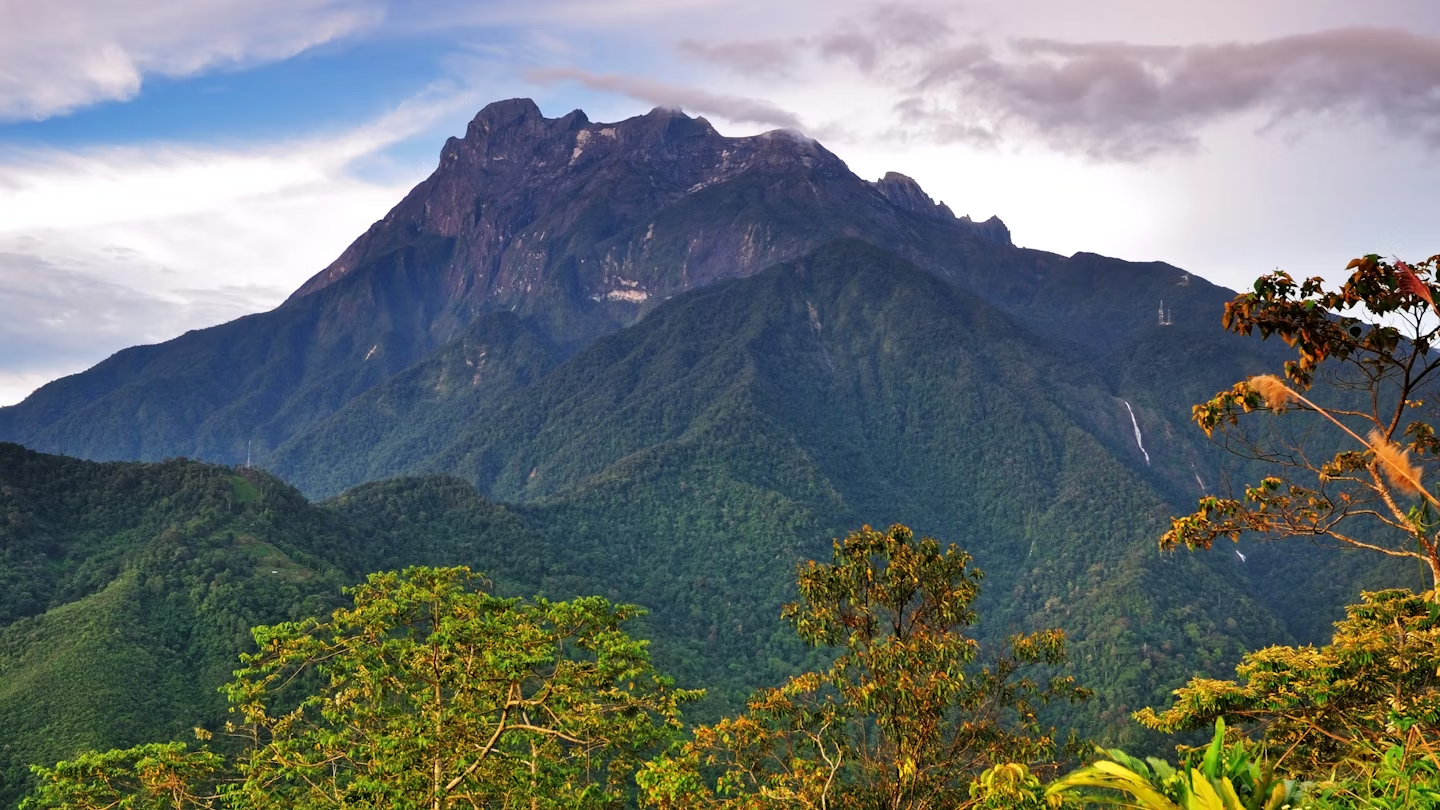
4,095 m · guided 2D1N structure · strong step toward bigger peaks.
5,895 m · non-technical, but not an “easy” mountain medically or logistically.
Choose the right first summit
How this ranking works: we score the normal hiking-season route, not the mountain’s hardest line. We weigh technical skill, route-finding, exposure, physical effort, altitude, access friction, mandatory permits/guides, cost and how forgiving the objective is when a beginner is slower than expected. A mountain can rank lower even when its path is technically simple because altitude or endurance raises the real consequence.
Choose the experience you want to learn
The smartest first summit is the one that adds one or two new variables, not six at once.
Mount Kosciuszko
Best when you want a famous summit, straightforward trail, modest altitude and low technical commitment.
Open the Kosciuszko guide →Pico Ruivo
Madeira’s highest point from Achada do Teixeira is short, maintained and visually huge. Weather and trail status still matter.
Yr Wyddfa / Ben Nevis
British mountains are low by global standards but excellent for learning wind, rain, cloud, pacing and descent navigation.
Open the Ben Nevis guide →Mount Fuji
No technical climbing in season, but 3,776 m brings cold, altitude, crowds, regulated gates and a much longer day.
Open the Mount Fuji guide →Mount Elbert
The standard summer route is a hike, but 14,440 ft makes acclimatization and early thunderstorm timing part of the plan.
Jebel Toubkal
A 2-3 day High Atlas summit with a simple summer route, mandatory local-guide structure and genuine 4,000 m altitude.
Open the Toubkal guide →Mount Kinabalu
Strong infrastructure, mandatory regulated access and a 2D1N format make it a clean introduction to a guided high summit.
Open the Kinabalu guide →Whitney / Kilimanjaro
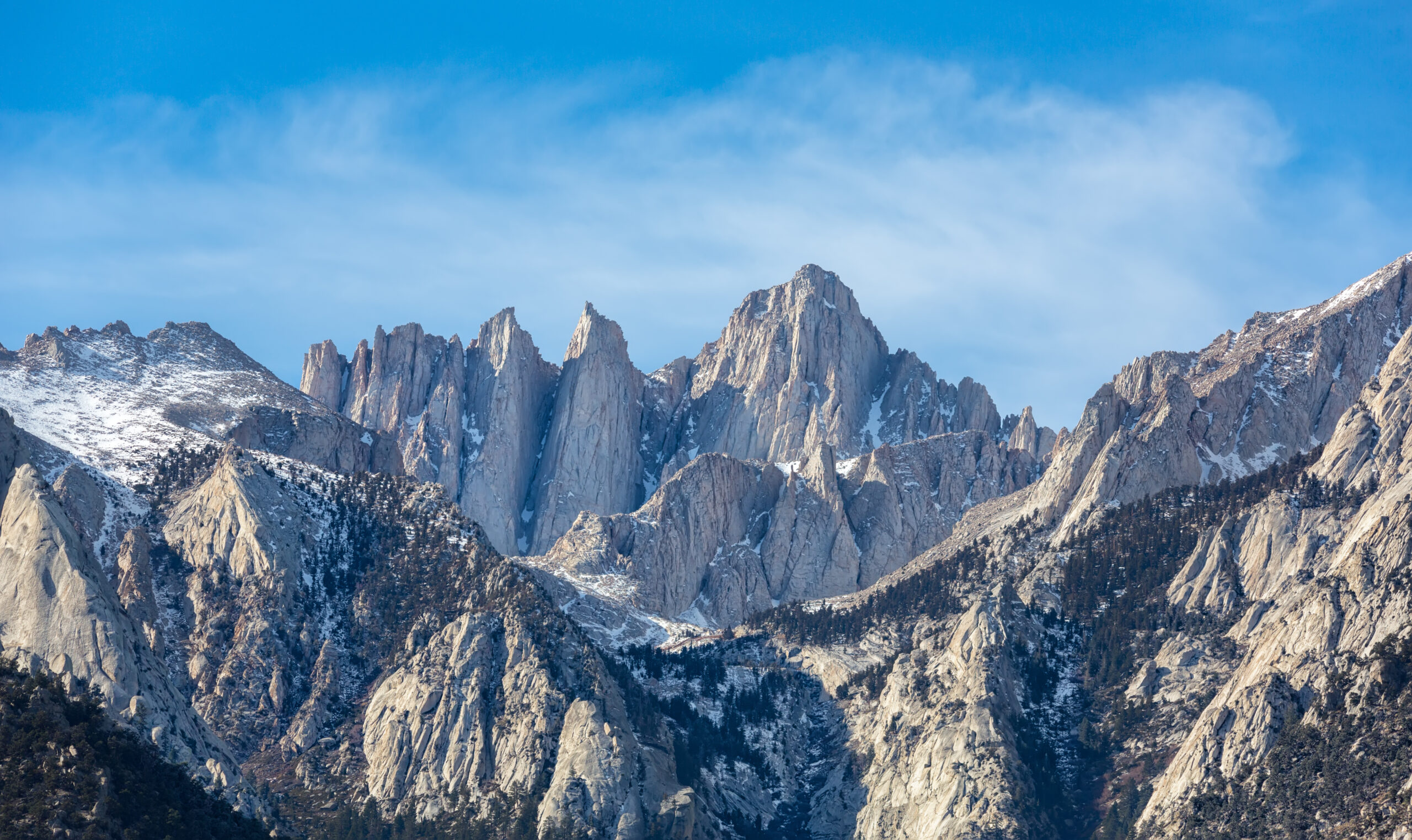
Neither is a casual beginner mountain. They belong here because their normal routes are non-technical and form excellent later-stage goals.
Open the Mount Whitney guide →12 beginner-friendly mountains compared
Route numbers are normal-season planning values. Conditions, closures and official access rules always override a table.
| Mountain | Elevation | Normal beginner route | Typical commitment | Main difficulty | Permit / guide | Cost profile | Best season |
|---|---|---|---|---|---|---|---|
| Mount Kosciuszko | 2,228 m | Thredbo chairlift route | 13 km RT / 4-5 hr | Weather, distance | No climbing permit; park/chairlift logistics | Low-moderate | Dec-Apr |
| Pico Ruivo | 1,862 m | PR 1.2 from Achada do Teixeira | 5.6 km RT / ~1.5-3 hr | Wind, wet path, steep terrain | PR reservation + current access fee | Low | Year-round when open |
| Yr Wyddfa | 1,085 m | Llanberis Path | Long half/full day | Weather, pace, crowding | No summit permit | Low | Late spring-early fall |
| Ben Nevis | 1,345 m | Mountain Track | Full day | Weather, navigation, descent | No summit permit | Low | Late spring-early fall |
| Mount Fuji | 3,776 m | Yoshida Trail | 1-2 days | Altitude, cold, volcanic gravel | 2026: JPY 4,000 hiking fee; regulated entry | Moderate | Official summer season |
| Galdhopiggen | 2,469 m | Spiterstulen hiking route | Full day | Long ascent, alpine weather | No guide on Spiterstulen route; glacier rope team from Juvasshytta | Low-moderate | Summer |
| Mount Teide | 3,715 m | Montana Blanca + summit access | Half/full day | Altitude, sun, dry terrain | Final summit section controlled | Low-moderate | Most of year, conditions dependent |
| Mount Elbert | 4,401 m | Northeast Ridge | Full day | Altitude, vertical gain, storms | No ordinary hiking permit | Low | Summer-early fall |
| Jebel Toubkal | 4,167 m | Imlil – refuge – summit | 2-3 days | Altitude, long ascent | Licensed local guide required on standard approach | Moderate guided | Spring-fall for hiking conditions |
| Mount Kinabalu | 4,095 m | Ranau Summit Trail | 2D1N | Steep stairs, altitude, pre-dawn summit | Regulated permit + guide/booking system | Higher guided | Drier months; book ahead |
| Mount Whitney | 4,421 m | Mount Whitney Trail | 22 mi RT / 12-14 hr day hike | Endurance + altitude | Wilderness permit required year-round | Permit low; trip moderate | Usually Jul-late Sep snow-free |
| Kilimanjaro | 5,895 m | Lemosho / Machame trekking routes | 6-9 days | Extreme altitude, recovery, pacing | Park/operator structure required | High | Main dry-season windows |
The easiest mountains split into three very different categories
This is the distinction most generic lists miss. Route grade alone cannot tell you whether a mountain is beginner-friendly.
No technical climbing on the normal fair-weather routes. The main learning goals are pacing, footwear, weather, navigation and turnaround judgment.
Best for: a first real summit.Still hiking objectives in normal conditions, but altitude, full-day duration, regulation, seasonal snow or alpine exposure increase the planning load.
Best for: fit hikers ready to add one major variable.The route may not require climbing technique, but endurance, altitude, mandatory logistics and trip cost make these poor choices for an unprepared first timer.
Best for: later beginner progression.The 12 easiest mountains to climb – with the catch for each
The ranking favors forgiving normal-season routes and clear beginner value, then moves toward high-altitude objectives that are easy only in the technical sense.
Mount Kosciuszko
In normal summer conditions, Kosciuszko is the most forgiving major summit on this list. The standard Thredbo route starts at the top of the Kosciuszko Express chairlift and follows maintained alpine track and mesh walkways. The elevation is high enough to feel mountainous without creating the same acclimatization problem as a 4,000 m peak.
The catch is weather. Australia’s high country can turn cold, windy and low-visibility quickly, and the route is generally snowbound in winter. If your first goal is simply to learn what a planned summit day feels like – early start, pack, weather check, pacing, turnaround and a real high point – Kosciuszko is hard to beat.
Best for: true first summit, families, Seven Summits beginners. Next lesson: move to a longer route or a higher peak rather than repeating the same difficulty.
Pico Ruivo
Pico Ruivo is Madeira’s highest summit and one of the best scenery-to-effort beginner peaks anywhere. The official PR 1.2 route from Achada do Teixeira is 2.8 km each way and currently listed as moderate. The trail climbs through steep volcanic terrain to broad views over Madeira’s central massif.
Short does not mean consequence-free: cloud, wind and wet stone can change footing quickly, and classified Madeira PR trails now require reservations. This is a strong first summit for travelers who want dramatic terrain without high altitude or a full-day physical commitment.
Best for: travel-first hikers and a low-risk confidence builder. Current rule: book the classified PR trail and check status immediately before hiking.
Yr Wyddfa (Snowdon)
Yr Wyddfa is a better first mountain than its height suggests. The Llanberis Path is the longest, most gradual of the common summit routes and has straightforward access from Llanberis. The mountain teaches a critical beginner lesson: low elevation does not prevent wind, rain, fog or cold.
That makes it more educational than an easy fair-weather hill. You learn to start with a forecast, carry a real waterproof layer, control pace and make decisions when cloud hides the summit. The Sherpa’r Wyddfa bus network also makes it unusually practical without a car.
Best for: beginners who want mountain judgment without altitude. Avoid: treating the railway, crowds or modest elevation as proof that conditions are harmless.
Ben Nevis
Ben Nevis is technically straightforward on the Mountain Track in normal summer conditions, but it is not a casual tourist path. The climb starts near sea level, creates a substantial vertical day and frequently finishes in cloud, wind or rain. Above the Half Way Lochan, snow or poor visibility can make the line harder to follow.
That combination makes Ben Nevis one of the most useful early progression peaks. You can practice pacing, map/GPS discipline and conservative descent decisions without needing climbing equipment. If the summit plateau disappears into cloud, knowing where not to descend matters as much as knowing where to go up.
Best for: fit beginners after one easier summit. Primary lesson: navigation and weather are climbing skills even on a path.
Mount Fuji
Fuji is where the list stops being purely easy and starts becoming progression. There is no rope work on the normal in-season trails, but the climb reaches real altitude, often starts before dawn, can be cold near the summit and uses loose volcanic gravel that makes the descent tiring. The Yoshida Trail remains the most infrastructure-rich first-timer option.
In 2026 all four trails required a JPY 4,000 hiking fee. Entry was restricted from 2 p.m. to 3 a.m. for climbers without hut accommodation, and Yoshida used a 4,000-person daily cap. The official season has now ended, so future climbers need to check the next announced system rather than assuming 2026 rules repeat unchanged.
Best for: a first 3,000 m+ summit. Primary lesson: altitude and cold can make a hiking trail feel like a much bigger mountain.
Galdhopiggen
Norway’s highest peak is beginner-friendly only when you understand the two standard approaches. From Spiterstulen, the classic route is a long mountain hike that avoids the Styggebreen glacier. From Juvasshytta, the approach is shorter but crosses the glacier and therefore uses an organized roped group or guide structure.
That makes Galdhopiggen an unusually useful teaching mountain: the same summit can be a straightforward long hike or a first taste of glacier systems depending on the route. Do not call the whole mountain “easy” without naming the approach.
Best for: hikers ready for a full alpine day. Primary lesson: route choice can change the skill category of the same mountain.
Mount Teide
Teide is technically simple compared with alpine climbing, but it combines dry terrain, strong sun, wind and enough altitude to surprise visitors who ride or hike rapidly to the upper mountain. The classic full approach climbs from Montana Blanca toward La Rambleta; the final Telesforo Bravo summit section is managed separately.
The main planning trap is assuming a cable-car ticket or lower-trail access automatically equals summit permission. It does not. Teide is a strong beginner mountain for fit hikers who are willing to understand the access system before arrival.
Best for: first high-volcano planning. Primary lesson: permit logistics can be the crux even when technical climbing is absent.
Mount Elbert
Mount Elbert is Colorado’s highest summit and one of the cleanest first-14er choices for fit hikers. The Northeast Ridge is a trail hike in normal summer conditions with no technical climbing, but the day still involves roughly 4,500-4,700 ft of climbing depending on the exact trailhead and mapping method.
Altitude becomes the main separator. A sea-level athlete can still feel terrible above 13,000 ft, and Colorado thunderstorms reward early starts. Elbert is not the first mountain for someone who has never done a long uphill day, but it is an excellent first high-altitude objective after a lower-elevation base.
Best for: first 14er after hiking preparation. Primary lesson: fitness does not equal acclimatization.
Jebel Toubkal
Toubkal is the first mountain on this list that starts to feel like a compact international climbing trip rather than a big day hike. The normal summer route from Imlil is non-technical, uses refuge infrastructure and can be completed in two to three days, but the summit is high enough that acclimatization deserves real attention.
The standard approach operates with a licensed local-guide requirement, which increases cost but also simplifies logistics for beginners. Winter is a different mountain: snow and ice can require crampons, axe competence and much stronger judgment.
Best for: first international 4,000 m trekking summit. Primary lesson: guided logistics do not remove altitude risk.
Mount Kinabalu
Kinabalu combines steep hiking, tropical-to-alpine environmental change and a pre-dawn summit push inside a highly structured booking system. The standard Ranau Summit Trail does not require traditional rock or ice climbing, which is why fit beginners regularly use it as a first 4,000 m objective.
Sabah Parks currently lists an international adult climbing permit of RM400, with additional conservation, guide, lodging and package costs. The real difficulty is the concentrated vertical gain and rapid altitude exposure between the trailhead, Panalaban and Low’s Peak.
Best for: a guided first 4,000 m summit. Primary lesson: a short itinerary can make altitude harder, not easier.
Mount Whitney
Whitney appears on many “easy mountain” lists because the Main Trail is non-technical when snow-free. That is technically true and practically misleading. Recreation.gov describes the standard day hike as roughly 22 miles, more than 6,200 ft of gain and commonly 12-14 hours for fit hikers. At 14,505 ft, altitude compounds the distance.
A wilderness permit is required year-round. The main lottery governs high-demand dates, with a current $15 per-person recreation fee plus reservation fee. Whitney is an excellent progression goal after several long mountain days and deliberate acclimatization – not an ideal first-ever hike.
Best for: experienced hikers taking a first major non-technical US high summit. Primary lesson: route grade can hide huge endurance demand.
Mount Kilimanjaro
Kilimanjaro belongs last because it is only “easy” in one dimension: standard routes do not require technical climbing. Everything else gets bigger. You spend nearly a week or more moving through altitude zones, sleep progressively higher, depend on an operator and crew system, and finish with a long summit night above 5,000 m.
That makes Kilimanjaro one of the best advanced-beginner expedition objectives in the world – and one of the worst examples of why “walk-up” should never mean “easy.” Route duration and acclimatization are more important than choosing the shortest itinerary.
Best for: hikers who have already proven multi-day fitness and want a first expedition-style high summit. Primary lesson: altitude is the mountain.

Pick a mountain that teaches the next skill
A good first summit is not only finishable. It prepares you for the objective after it.
| Skill to learn | Best mountain here | Why | Natural next step |
|---|---|---|---|
| Summit-day basics | Kosciuszko / Pico Ruivo | Low technical barrier lets you focus on pacing, layers, food, water and turnaround time. | Yr Wyddfa or Ben Nevis |
| Weather + navigation | Ben Nevis | Low cloud, wind and a consequential summit plateau make navigation real. | Longer alpine hiking objective |
| First altitude exposure | Fuji / Teide | 3,700 m range is high enough to reveal acclimatization issues without a week-long expedition. | Elbert, Toubkal or Kinabalu |
| First 14er pacing | Mount Elbert | Class 1 route plus 4,000 m altitude separates technical ease from physiological difficulty. | Whitney or higher trekking peak |
| Guided international logistics | Toubkal | Short multi-day structure adds guide, refuge, transfers and altitude without full expedition complexity. | Kinabalu or Kilimanjaro |
| Regulated high-summit system | Kinabalu | Permit, guide, lodging and fixed summit sequence force disciplined trip planning. | Kilimanjaro |
| Long high-altitude endurance | Whitney | Huge mileage and altitude on a non-technical trail expose pacing and fueling weaknesses. | Multi-day expedition trekking |
| Multi-day altitude expedition | Kilimanjaro | Several days of ascent make acclimatization, recovery and crew/operator quality central. | Aconcagua trekking route or glacier-skills progression |
Do not jump from an easy trail straight to 5,895 m
Altitude is not a fitness contest. A better progression adds elevation in stages and gives you a chance to learn how your body responds.
Below 2,500 m
Kosciuszko, Pico Ruivo, Yr Wyddfa, Ben Nevis and Galdhopiggen let you build mountain habits without making altitude the central problem.
3,500-3,800 m
Fuji and Teide introduce real hypoxia while still using hiking routes and strong infrastructure.
4,000-4,500 m
Elbert, Toubkal, Kinabalu and Whitney demand more deliberate acclimatization, early pacing and willingness to turn around.
5,000 m+
Kilimanjaro is a major altitude expedition even without technical climbing. Give the body enough days instead of choosing the shortest package.
The cheapest summit and the easiest trip are not always the same thing
Local trail cost can be tiny while international travel, permits, huts or mandatory guide systems dominate the final budget.
Kosciuszko, Yr Wyddfa, Ben Nevis, Elbert
Once you reach the trail region, the climb itself is inexpensive. Budget is mostly transport, lodging, park/parking fees and food. Kosciuszko can add park entry and chairlift cost.
Pico Ruivo, Fuji, Whitney, Teide
These mountains have specific access systems. Pico Ruivo currently uses PR-trail reservations and a small fee; Fuji had a JPY 4,000 2026 hiking fee; Whitney uses a permit/lottery system; Teide controls final summit access.
Toubkal, Kinabalu, Kilimanjaro
Guide or operator structure becomes a material part of the trip. Compare what is included before judging a quote: permits, refuge/hut, transport, meals, staff, rescue/insurance requirements and extra acclimatization days.
For a first international climb, spending slightly more on a structure that gives you an extra acclimatization day, reliable transfers or a better guide-to-client setup can be better value than choosing the cheapest summit package. Use the Expedition Budget Calculator to separate mountain cost from flights, lodging, gear and contingency.
The same mountain can move two tiers when snow arrives
Use the easy label only for the route and season described here. Shoulder-season snow, ice or closed infrastructure changes the skill set.
British + alpine hiking
Yr Wyddfa, Ben Nevis, Galdhopiggen, Elbert and Whitney are simplest when trails are mostly snow-free. Snow and ice can demand traction, axe skills or winter navigation.
Mount Fuji
Fuji’s summit trails operate inside a defined summer season. Outside it, huts and normal support close and the mountain should not be treated as a beginner hike.
Toubkal + Kilimanjaro
Choose weather windows that align with the route style. Winter Toubkal can become a snow climb; Kilimanjaro is better judged by rainfall patterns and route days than by temperature alone.
Teide + Pico Ruivo
Both can be accessible across much of the year, but wind, closures, wildfire controls, trail maintenance and snow/ice can temporarily override the calendar.
What turns an easy mountain into a bad first experience
Most first-summit problems come from mismatch: the route looks simple, but one hidden variable was ignored.
Confusing non-technical with easy
Whitney and Kilimanjaro prove that a walking route can still be extremely demanding.
Starting too high too fast
A cable car, shuttle or high trailhead can save your legs while increasing the altitude problem.
Ignoring the descent
Many first timers budget energy for the summit but not the hours required to return safely.
Training only on flat cardio
Long uphill and downhill movement creates muscular fatigue a treadmill or bike may not fully reproduce.
Using summer advice in snow
Seasonal snow can instantly invalidate an easy-mountain rating and require technical equipment or a different route.
Missing permit deadlines
Whitney, Teide, Fuji, Kinabalu and Madeira can all punish last-minute planning in different ways.
Buying the shortest itinerary
On high mountains, the cheapest short package can remove the very acclimatization margin that makes the climb reasonable.
Choosing prestige over fit
The right first summit is the mountain that matches your current experience and makes the next objective safer.
A smarter four-step path from first summit to expedition
You do not need to climb these exact mountains. Use the sequence to control how many new problems you add at once.
Easy hiking summit
Kosciuszko, Pico Ruivo or a similar local peak. Learn shoes, pack, pacing, food, weather and turnaround habits.
Longer weather-exposed mountain
Yr Wyddfa or Ben Nevis. Add navigation, a longer day and worse-weather decision making.
First altitude objective
Fuji, Teide or Elbert. Learn what 3,700-4,400 m does to pace, appetite, sleep and judgment.
Guided multi-day high summit
Toubkal, Kinabalu or Kilimanjaro. Add international logistics, recovery, operator quality and multi-day acclimatization.
Easiest mountains to climb: beginner questions
Use these as selection rules, then open the mountain-specific guide before booking travel.
What is the easiest mountain to climb in the world?
Mount Kosciuszko is one of the strongest answers among famous major summits. In normal summer conditions the Thredbo approach uses a chairlift before a maintained 13 km return walking route. There is no technical climbing and the summit is only 2,228 m, so altitude is much less important than on Fuji, Elbert, Whitney or Kilimanjaro.
What is the best first mountain for a beginner?
Choose a mountain that is technically simple, has an obvious retreat, fits your current hiking fitness and does not add major altitude at the same time. Kosciuszko and Pico Ruivo are excellent pure first summits. Yr Wyddfa and Ben Nevis are better if you want a longer mountain day and weather/navigation practice.
What is the easiest Seven Summit?
Mount Kosciuszko is the easiest summit in the Bass version of the Seven Summits. The Messner list replaces it with Carstensz Pyramid/Puncak Jaya, a technical expedition involving exposed rock climbing. The difference is so large that “easiest Seven Summit” only makes sense after you specify which list you mean.
Is Mount Fuji easy to climb?
Fuji is non-technical during the official summer season but is not effortless. The summit is 3,776 m, temperatures can be near freezing around sunrise, the trail is long and loose, and current access includes fees and gate controls. It is a very good first high mountain for a fit hiker who prepares for altitude and cold.
Can a beginner climb a 14er?
Yes, if the route and preparation are appropriate. Mount Elbert is Class 1 on the standard summer trail and is a common first Colorado 14er. But the 14,440-foot summit, major vertical gain and afternoon thunderstorm pattern mean you should already be comfortable with long hiking days and have a plan to acclimatize.
Is Mount Whitney a beginner mountain?
Whitney’s Main Trail is a non-technical hiking route when snow-free, but the usual day trip is around 22 miles with more than 6,000 ft of gain. It is a major endurance and altitude objective. Treat it as a later beginner or intermediate hiking goal rather than your first mountain.
Is Kilimanjaro easy because it does not require climbing skills?
No. Kilimanjaro is technically accessible but physiologically serious. The 5,895 m summit makes acclimatization, route duration, pacing and operator quality more important than rock or ice technique. It is a logical first expedition-style summit after you have already proven your hiking fitness and altitude tolerance.
Which easy mountains require permits, guides or advance booking?
Whitney requires a wilderness permit. Fuji used a mandatory JPY 4,000 hiking fee and regulated trail entry in 2026. Teide controls the final summit section. Madeira requires reservations on classified PR trails. Toubkal uses a licensed-guide requirement on the standard approach. Kinabalu is a regulated guided climb. Rules change, so verify the official source before paying for flights or lodging.
Official rules first, then mountain-specific research
Distances, permits, fees, trail status and seasonal controls can change. This page is for choosing an objective; the final departure check belongs with the authority that manages the route.
- NSW National Parks – Thredbo to Mount Kosciuszko for the 13 km return route, 4-5 hour estimate, Grade 3 status and winter snowbound warning.
- Official Website for Mt. Fuji Climbing for current season status, trail openings, mandatory fees, gate hours and reservation systems.
- Recreation.gov – Mt. Whitney for the 22-mile Main Trail, permit requirement, lottery process and current fee structure.
- Sabah Parks – Kinabalu Park for current climbing-permit and conservation fees.
- Eryri National Park – Llanberis Path for Yr Wyddfa route access and transport information.
- Mountaineering Scotland – Ben Nevis for navigation, cloud, snow and safe-descent guidance on the summit plateau.
- Visit Madeira – PR 1.2 Pico Ruivo for current trail status, 5.6 km return distance, booking and access fee.
- Global Summit Guide – Mount Teide for route ownership, summit-access planning and links to the dedicated permit/weather children.
- Global Summit Guide – Jebel Toubkal for the current standard-route guide requirement, route structure and seasonal distinction.
- Global Summit Guide – Galdhopiggen for Spiterstulen vs Juvasshytta route differences and glacier-crossing context.
- Global Summit Guide – Kilimanjaro for current route, cost, altitude and operator-planning research.
Where route distances vary slightly between mapping systems, trailhead choice or optional spurs, the page uses rounded planning values and explains the route instead of pretending there is one universal number. Time-sensitive rules are dated deliberately so future updates can replace them without rewriting the evergreen selection framework.
Build the next step after choosing a mountain
Use the beginner hub to confirm the right difficulty, then move into readiness, training and altitude before committing to the summit.
Which Easy Mountain Should You Actually Climb First?
“Easy” can mean technically simple, physically short, low altitude, straightforward logistics or forgiving terrain. Choose the mountain that adds only one or two new challenges at a time.
Beginners looking for more progression can move toward Toubkal or Kinabalu before treating Whitney or Kilimanjaro as later-stage non-technical objectives.
A maintained summer walking route, modest altitude and very little technical complexity make Australia’s high point the cleanest answer for a true first major summit.
Explore Mount Kosciuszko →No technical climbing on the normal summer trails, but 3,776 metres introduces altitude, cold, a long summit day and regulated access.
Open the Mount Fuji guide →Lower altitude lets you focus on mountain weather, pacing, navigation, cloud and conservative descent decisions before adding major altitude.
A compact two-to-three-day High Atlas trip combines genuine altitude with a non-technical normal summer route and established local-guide logistics.
Open the Toubkal guide →The regulated two-day format and mandatory guiding structure make Kinabalu a clean step into 4,000-metre altitude without traditional technical mountaineering.
Open the Kinabalu guide →Kilimanjaro is technically non-technical on its trekking routes, but 5,895 metres makes altitude, acclimatization and multi-day endurance the real challenge. It is not an ideal first-ever mountain.
Open the Kilimanjaro guide →| If your goal is… | Start here | What you learn | What comes next |
|---|---|---|---|
| Your first mountain summit | Mount Kosciuszko / Pico Ruivo | Pacing, layers, food, water, weather and turnaround habits | Ben Nevis or Yr Wyddfa |
| Your first high-altitude mountain | Mount Fuji / Teide | How altitude changes pace, appetite, cold and recovery | Mount Elbert or Toubkal |
| Your first 4,000 m summit | Kinabalu / Toubkal | Multi-day logistics, altitude and early summit starts | Whitney or Kilimanjaro |
| Your first Seven Summit | Mount Kosciuszko | Summit-trip basics with the lowest technical barrier | Kilimanjaro when ready for major altitude |
| Your first expedition-style trek | Kilimanjaro | Multi-day acclimatization, recovery, operator logistics and altitude management | Aconcagua-style higher-altitude progression |
For official planning information, see the official Mt. Fuji climbing website and the official Mt. Whitney permit page.
Was this helpful?
🏔Related peaks nearby
🧭Explore & compare
Global Summit Guide is an independent mountaineering resource founded in 2026. The team combines first-hand trekking and climbing experience with in-depth research and professional health and nutrition review to help climbers choose objectives, prepare properly, and stay safe.
Health, altitude, and nutrition content is reviewed by Taylor Ludlow (Registered Nurse) and Brigg Hoopes (Nutritionist).
What We Don't Know Yet
Mountain information changes quickly. This box explains the limits of what this page can responsibly promise.
- Permit availability, reservation windows, quotas, and official fee rules may change after this page is updated.
- Guide-company prices, departure dates, guide ratios, included services, and cancellation rules can change without notice.
- Weather, snowpack, avalanche risk, road access, and route conditions can change quickly and may be different on your climbing dates.
- Route conditions, trailhead access, crevasse exposure, stream crossings, and rescue access may vary from published planning guidance.
- Total trip cost can change with flights, lodging, guide pricing, permits, gear rentals, transportation, and exchange rates.
Verify current conditions with official land managers, guide services, local forecasts, and current route reports before booking or climbing.
Mountaineering, rock and ice climbing, glacier travel, and high-altitude activity are inherently dangerous and can result in serious injury or death. The information on Global Summit Guide is provided for general informational and educational purposes only and is not a substitute for professional instruction, qualified guiding, proper equipment, or your own judgment and experience.
Route conditions, weather, snowpack, permits, regulations, and hazards change constantly and may differ from what is described here. Details may be incomplete, out of date, or contain errors. Always verify current information with local authorities, certified guides, and official sources before making any decision in the mountains.
Nothing on this site is medical, legal, or financial advice. Our fitness, acclimatization, altitude, and nutrition content is general in nature; consult a qualified physician before beginning any strenuous exercise program or exposing yourself to high altitude.
You are solely responsible for your own safety and decisions. To the fullest extent permitted by law, Global Summit Guide and its team accept no liability for any loss, injury, damage, or expense arising from use of, or reliance on, this information. By using this site you acknowledge these risks and accept these terms.
Some links on this site may be affiliate links. If you buy through them we may earn a small commission at no extra cost to you; this never affects our recommendations.
Global Summit Guide recommendation path
Next Best Mountain to Research
Use these recommendations to continue the right planning path instead of stopping on one page.
Use current permit, weather, route, and operator information before booking or climbing.
Start Planning Your Next Mountain Adventure
Found a mountain, hiking region or destination worth exploring? Use Expedia to start comparing the flights, places to stay, rental cars and travel options that can turn the idea into a realistic trip.
Explore current travel options for your next destination.
Affiliate disclosure: Global Summit Guide may earn a commission if you book through this link, at no additional cost to you.