<

Tag: longs peak

  • The greatest mountains in the USA: a climber’s ranking of the 10 best American peaks

    The Greatest Mountains in the USA: A Climber’s Ranking of the 10 Best American Peaks | Global Summit Guide
    Mountain Lists / USA

    The greatest mountains in the USA: a climber’s ranking of the 10 best American peaks

    6,190 m
    Denali (highest)
    96
    US 14ers
    10
    States with major peaks
    Year-round
    Climbing seasons
    Part of the USA peaks series This ranking supports our best mountains in the USA master guide and connects all major American climbing destinations. Master guide →

    The United States contains some of the most varied and dramatic mountain terrain in the world — from Alaska’s massive Denali at 6,190 meters to Hawaii’s Mauna Kea (taller than Everest if measured from the seafloor), through the Cascade volcanoes, the Rocky Mountain 14ers, the Sierra Nevada, the Tetons, and the dramatic peaks of the Northeast. Picking the “greatest” American mountains depends on which axis you measure — height, climbing significance, cultural importance, or sheer drama. This ranking covers the 10 mountains that consistently appear on US climbers’ lifetime lists, with honest assessment of why each one matters and how it fits in the broader American mountaineering landscape. For broader context see our best mountains in the USA master guide.

    How these peaks were ranked honest criteria

    “Greatest” is a contested word when applied to American mountains. A peak’s greatness depends on which axis you weight most heavily:

    • Highest: Denali wins by 1,800+ meters over the next-highest US peak.
    • Most-climbed: Mount Whitney (~30K annual summits) and Mount Rainier (~10K) dominate.
    • Most photographed: The Grand Teton and Mount Rainier compete with Half Dome and El Capitan.
    • Most technically demanding: The Cassin Ridge on Denali, the north faces of the Tetons, and high-altitude routes in the Alaska Range.
    • Most historically significant: Mount McKinley/Denali first ascent, Mount Whitney for the lower 48, and the iconic Yosemite walls.
    • Most extreme weather: Mount Washington holds the official US record for the highest non-tornado wind speed at sea level.
    • Most culturally important: Mount Rushmore (literally carved with presidents), the Grand Canyon, and the Tetons in popular imagination.

    The ranking below uses a composite — peaks that consistently appear on serious US climbers’ lifetime lists, with explanations of what makes each one matter. The order is approximately by overall climbing significance rather than strict elevation. For climbers focused specifically on peak-bagging, the Colorado 14ers and Utah peaks provide structured project lists that complement this ranking.

    The greatest mountains in the USA showing the dramatic American peaks landscape including Denali Mount Rainier and the iconic high country that defines US mountaineering from Alaska to the Cascades to the Rocky Mountains
    From Alaska’s Denali at 6,190 meters to Mount Washington in New Hampshire, the United States contains some of the most varied and dramatic mountain terrain in the world.

    The crown peaks the absolute icons

    1

    Denali

    Alaska · Alaska Range · First climbed 1913 · Grade Alaska Grade 2 on West Buttress
    6,190 m

    Denali (formerly Mount McKinley) is the highest mountain in the United States and the highest peak in North America. The mountain rises 5,500+ meters from its base in the Alaska Range — one of the largest base-to-summit vertical relief profiles on Earth, larger than Everest’s relief from base camp to summit. The standard West Buttress route involves three weeks of glacier expedition climbing at high latitude, severe cold (the coldest mountain in the Seven Summits despite not being the highest), and significant logistics requirements.

    Denali requires real mountaineering skill including glacier travel, rope team management, and cold-weather expedition camping. Most climbers train for several years before attempting Denali, typically through structured progressions on smaller Cascade volcanoes, Aconcagua, or Mexican volcanoes. The full Denali framework is in our Denali climbing guide, with the training framework in our Denali progression plan and route detail in our Denali route comparison. The peak-vs-peak framework against other major mountains is in our Aconcagua vs Denali and Rainier vs Denali comparisons.

    2

    Mount Rainier

    Washington · Cascade Range · First climbed 1870 · Grade Glacier mountaineering
    4,392 m

    Mount Rainier is the most iconic Cascade volcano and the most-climbed major glaciated peak in the contiguous United States. The mountain dominates the Seattle/Tacoma skyline from 80 miles away and contains more glacier ice than all other Cascade volcanoes combined. The standard Disappointment Cleaver and Emmons Glacier routes are graded glacier mountaineering with serious crevasse hazard, requiring full rope team protocols and proper crampon technique.

    Rainier is the standard training mountain for climbers preparing for Denali, Aconcagua, and Himalayan expeditions. Approximately 10,000 climbers attempt the summit each year with summit success rates around 50%. The mountain is the proving ground for nearly every serious American mountaineer. The full Rainier framework is in our Rainier progression plan, with the comparison against Denali in our Rainier vs Denali analysis. The broader Cascade volcano context is also where many climbers begin their American mountaineering progression.

    The iconic peaks recognized worldwide

    3

    Mount Whitney

    California · Sierra Nevada · First climbed 1873 · Grade Class 1 walking trail
    4,421 m

    Mount Whitney is the highest peak in the contiguous 48 states and the standard “first big mountain” for many California-based hikers. The standard Whitney Trail is a 22-mile round-trip day hike that gains 6,100 feet of elevation — long and demanding but technically class 1 walking. Approximately 30,000 climbers attempt the summit each year via the standard trail, with the technical Mountaineers Route adding a class 3 option for more experienced climbers.

    Whitney requires a permit during the high season (May 1 – November 1) with a competitive lottery system. The standard route can be completed in a single day by fit hikers; many climbers prefer a two-day trip with an overnight at Trail Camp. Whitney is part of the Sierra Nevada peak-bagging tradition that includes peaks like Mount Russell, Mount Muir, and the rest of the California 14ers. The Six Pack of Peaks framework in Southern California is a natural training progression — the detailed plan is in our Six Pack of Peaks guide.

    4

    The Grand Teton

    Wyoming · Teton Range · First climbed 1898 · Grade Class 4 on Owen-Spalding
    4,199 m

    The Grand Teton is the highest peak in the Teton Range and one of the most visually iconic mountains in the United States. The dramatic granite spires rising directly from Jackson Hole produce one of the most photographed mountain landscapes in North America. Unlike most US peaks which are accessed via long approach hikes, the Tetons rise vertically from the valley floor with the Grand Teton summit accessible by routes ranging from class 4 walking-and-scrambling to expert technical climbing.

    The standard Owen-Spalding route involves a 14-mile round trip with class 4 scrambling and a short technical summit pitch. Most climbers complete it in 2-3 days with overnight camps. The Exum Ridge offers a class 5.5 alternative for technical climbers. The Tetons sit in the broader Wyoming high country and provide some of the best alpine rock climbing in the United States.

    5

    Mount Hood

    Oregon · Cascade Range · First climbed 1857 · Grade Glacier mountaineering
    3,429 m

    Mount Hood is the highest peak in Oregon and one of the most-climbed major glaciated peaks in the United States, with 10,000 to 15,000 annual climbing attempts. The mountain is visible from Portland and dominates the Oregon skyline. The standard South Side route via the Hogsback is an accessible introduction to glaciated mountaineering with manageable approach times and reliable infrastructure (the Timberline Lodge ski area provides high-elevation starting access).

    Hood requires real mountaineering skills including crampons, ice axe, glacier travel, and avalanche awareness. The route involves crossing the Bergschrund and ascending the Hogsback to the summit. Most climbing accidents on Hood happen on the descent when climbers fatigue and conditions change. The full snow travel context for Hood-style climbs is in our microspikes vs crampons decision guide and our ice axe techniques guide.

    The classic peaks deep American mountaineering

    6

    Longs Peak

    Colorado · Rocky Mountain National Park · First climbed 1868 · Grade Class 3 on Keyhole
    4,346 m

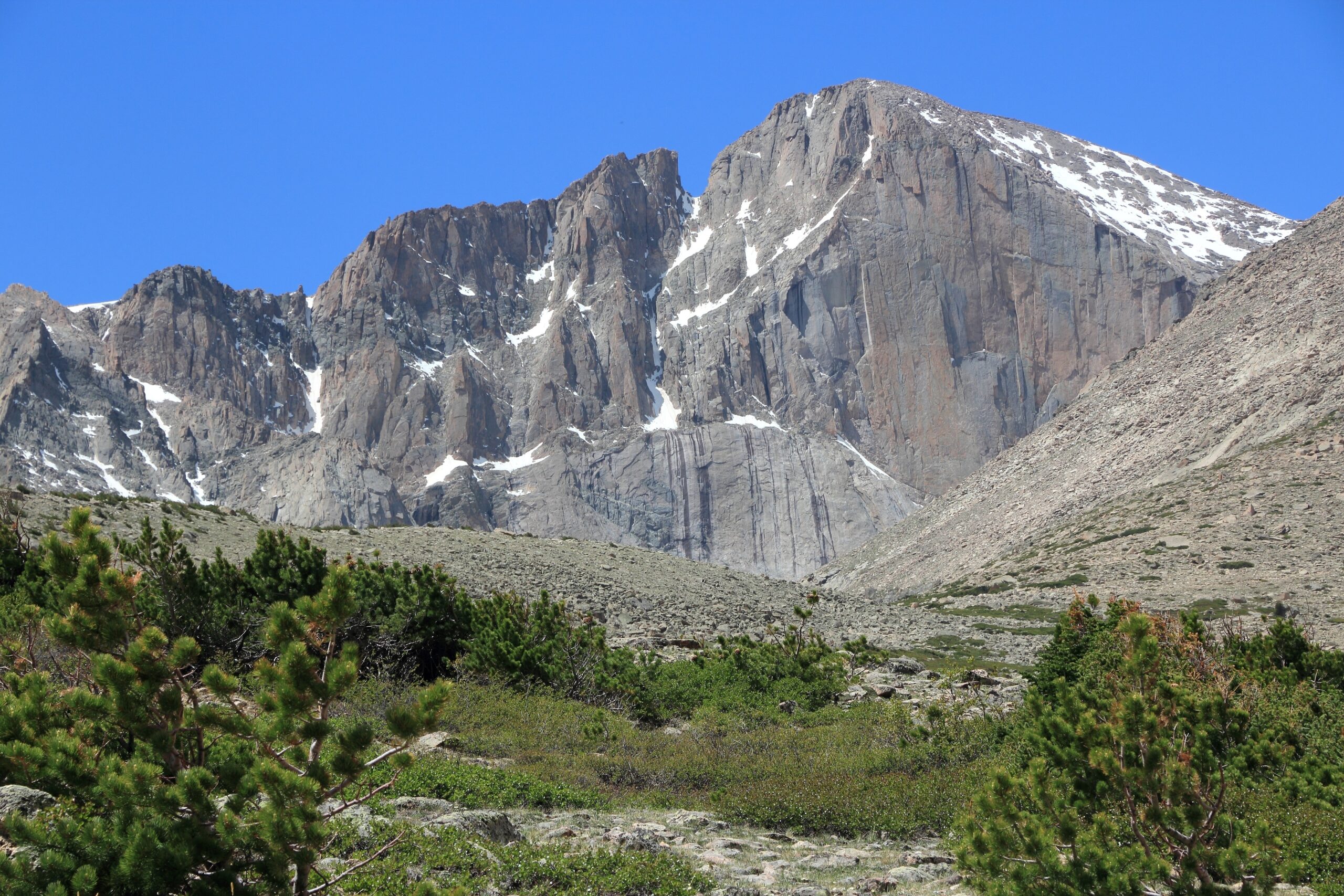
    Longs Peak is the only 14er in Rocky Mountain National Park and one of the most iconic Colorado peaks. The Keyhole Route is class 3 scrambling on exposed rock with several genuinely committing sections — the Ledges, the Trough, the Narrows, and the Homestretch. The summit attempt is a long 15-mile round-trip day hike with 5,000 feet of elevation gain. Most climbers start before 3 AM to beat afternoon thunderstorms.

    Longs Peak has killed approximately 60 climbers in recorded history — high among US 14ers due to the technical scrambling at high altitude combined with weather exposure. The peak is widely considered one of the most rewarding 14ers in Colorado for climbers seeking real mountaineering character rather than walk-up summits. The full Colorado 14ers framework is in our Colorado 14ers guide.

    7

    Mount Washington

    New Hampshire · Presidential Range · First climbed 1642 · Grade Class 1-2 (weather is the difficulty)
    1,917 m

    Mount Washington is the highest peak in the Northeast and one of the most dangerous mountains in the United States despite its modest elevation. The mountain holds the official US record for the highest non-tornado wind speed at sea level (231 mph in 1934) and one of the most extreme weather profiles in the country. Approximately 150 climbers have died on Washington since 1849 — a remarkably high count for a peak that can technically be hiked in a single day.

    The mountain’s deceptive accessibility (an auto road climbs to the summit) hides the genuine danger of its weather. Summer hikers regularly die from hypothermia in unexpected storms. Winter climbing on Washington is some of the most extreme weather mountaineering in the Lower 48. The Presidential Range traverse including Washington and adjacent peaks is one of the most committing extended climbing routes in the eastern United States.

    8

    Mount Shasta

    California · Cascade Range · First climbed 1854 · Grade Glacier mountaineering
    4,322 m

    Mount Shasta is the largest stratovolcano in the contiguous US by volume and one of the most striking peaks in California. Rising dramatically from the surrounding plains in Northern California, Shasta is visible from over 100 miles away and contains seven named glaciers on its upper mountain. The standard Avalanche Gulch route is a long but non-technical glacier climb requiring crampons, ice axe, and basic mountaineering skills.

    Shasta is widely used as a training peak for Rainier and Denali. The summit can be completed in a single very long day from the trailhead or as a two-day climb with a high camp at Helen Lake. Climbers must navigate variable snow conditions, occasional crevasses on certain routes, and afternoon sun on the south-facing standard route. The mountain sits at the northern edge of California where the Cascade volcanoes meet the Klamath ranges.

    Alpine technical peaks advanced objectives

    9

    Mount Saint Elias

    Alaska/Yukon · Saint Elias Range · First climbed 1897 · Grade Alaska Grade 4+
    5,489 m

    Mount Saint Elias is the second-highest peak in the United States and one of the most remote and demanding climbing objectives anywhere in North America. The mountain straddles the Alaska-Yukon border in the Saint Elias Range and rises directly from the Pacific Ocean to its 5,489-meter summit — the largest vertical relief from sea level of any peak in the world. The standard route involves serious glacier travel, severe weather, and weeks of expedition committment.

    Saint Elias is climbed by far fewer parties than Denali and represents the next step beyond Denali for serious American alpinists. The mountain’s combination of remote access, severe weather, and technical climbing makes it one of the few peaks in the lower 48 + Alaska zone that compares to Himalayan or Karakoram objectives. Most climbers who pursue Saint Elias have completed Denali first and seek the mountain as a step toward 8000-meter peaks.

    10

    Mount Foraker

    Alaska · Alaska Range · First climbed 1934 · Grade Alaska Grade 3+
    5,304 m

    Mount Foraker is Denali’s neighbor in the Alaska Range and the third-highest peak in the United States. The mountain rises adjacent to Denali and is often visible from Denali climbers’ high camps, but is dramatically less climbed. Foraker requires technical alpine climbing on its standard Sultana Ridge route — significantly harder than Denali’s West Buttress. Most climbers attempting Foraker have completed multiple Alaska Range expeditions first.

    Foraker represents the technical alpine character of Alaska Range climbing beyond the relatively non-technical Denali standard route. The mountain has killed several elite climbers and is considered among the most demanding peaks in the contiguous US + Alaska region. The Mooses Tooth, Mount Hunter, and other Alaska Range peaks form a portfolio of advanced alpine objectives that natural progression follows Foraker climbing.

    All 10 peaks at a glance

    Rank Peak State Elevation Character
    1DenaliAlaska6,190 mThe crown — highest in North America
    2Mount RainierWashington4,392 mMost iconic Cascade volcano, training peak
    3Mount WhitneyCalifornia4,421 mHighest in lower 48, walking trail
    4Grand TetonWyoming4,199 mMost photographed, granite spire
    5Mount HoodOregon3,429 mMost-climbed glaciated peak
    6Longs PeakColorado4,346 mIconic Colorado 14er, class 3
    7Mount WashingtonNew Hampshire1,917 mMost extreme weather in lower 48
    8Mount ShastaCalifornia4,322 mLargest Cascade volcano by volume
    9Mount Saint EliasAlaska/Yukon5,489 mLargest sea-level relief on Earth
    10Mount ForakerAlaska5,304 mTechnical Alaska Range alpine
    What didn’t make the list

    Several iconic American peaks didn’t make the top 10 ranking but deserve mention: Mount Elbert in Colorado (the highest 14er in the lower 48), Pikes Peak in Colorado (the most-visited mountain), Mount St. Helens in Washington (the famous erupted volcano), Half Dome in Yosemite (the granite icon), Mount Mansfield in Vermont (the highest Eastern peak outside New Hampshire), Mauna Kea in Hawaii (the tallest mountain in the world if measured from seafloor), and the Mount Kineo in Maine. Each could legitimately make a top 15 list. The full peak-by-peak detail is in our best mountains in the USA master guide.

    USA mountains by region where to find each character

    Region Character Highest peak Key climbing destinations
    Alaska RangeExpedition mountaineering, glaciated, remoteDenali 6,190 mDenali, Foraker, Hunter, Mooses Tooth
    Cascade RangeGlaciated volcanoes, accessible from Seattle/PortlandMount Rainier 4,392 mRainier, Baker, Hood, Adams, Shasta
    Sierra NevadaGranite peaks, hiking and technical climbingMount Whitney 4,421 mWhitney, Half Dome, El Capitan, Yosemite peaks
    Rocky MountainsNon-technical to class 4 mountaineering, 14ers traditionMount Elbert 4,401 mLongs Peak, Pikes Peak, Maroon Bells, Colorado 14ers
    Teton RangeGranite spires, alpine rock climbingGrand Teton 4,199 mGrand Teton, Middle Teton, South Teton, Mount Owen
    Wasatch / Uinta (Utah)Diverse Wasatch + remote Uinta high countryKings Peak 4,123 mKings Peak, Mount Timpanogos, Mount Nebo
    White Mountains (NH)Extreme weather at modest elevationMount Washington 1,917 mWashington, Adams, Jefferson, Madison, Lafayette
    Adirondacks (NY)Non-technical hiking, 46er traditionMount Marcy 1,629 mMarcy, Algonquin, Haystack, the 46 high peaks
    Smoky MountainsForested southern AppalachianClingmans Dome 2,025 mClingmans Dome, Le Conte, Mount Cammerer
    Brooks Range (Alaska)Wilderness Arctic mountaineeringMount Isto 2,761 mRemote peaks, limited climber traffic

    The regional diversity in American mountaineering is unmatched globally. A single climber building experience across the Cascades (glaciated volcanoes), Rockies (non-technical to class 4 14ers), Sierras (granite peaks), Tetons (alpine spires), and Alaska Range (expedition mountaineering) develops a portfolio of skills that transfers to nearly any mountain range in the world. The full regional context for several of these areas is covered in our supporting guides: Best Mountains Near Denver, Best Mountains in Utah, SoCal Six Pack of Peaks, and Colorado 14ers.

    A US climbing progression how climbers approach American peaks

    For climbers building toward serious American mountaineering, the typical progression spans 5-10 years and follows a recognizable pattern:

    1. Year 1 — Local hiking peaks: state high points, local 14ers/13ers, day hikes building fitness and altitude experience.
    2. Year 2 — Introduction to mountaineering: Mount Whitney (lower 48 high point), Mount St. Helens, or the easier Cascade peaks. Acquire crampons and ice axe; learn basic technique.
    3. Year 3 — First glaciated peak: Mount Hood, Mount Adams, or Mount Baker. Learn rope team travel and serious glacier protocols.
    4. Year 4 — Major glaciated objective: Mount Rainier as the standard “test piece” before bigger objectives. Most climbers attempt Rainier 2-3 times across multiple seasons.
    5. Year 5 — International or major US: Aconcagua, Cotopaxi, Mexican volcanoes, or the harder Cascade objectives like Mount Shasta and Mount Olympus.
    6. Year 6+ — Expedition mountaineering: Denali as the standard major American expedition objective. Builds toward 7,000-meter peaks abroad.
    7. Advanced — Technical American alpine: the Tetons technical routes, Alaska Range objectives beyond Denali, Yosemite big wall climbing, advanced Sierra Nevada alpine.
    The pattern that makes American mountaineering unique

    Few countries in the world contain the full mountaineering range from class 1 walking trails to expedition-level technical alpine within their borders. American climbers can build a complete career — from first 14er to major expedition — without leaving the United States. This isn’t quite true of any other country except maybe Russia (with the Caucasus + Altai + Kamchatka combination) or China (with its dramatic range). For most US climbers, this regional diversity makes serious mountaineering more accessible than equivalent international objectives.

    Cost framework for US mountaineering honest budgeting

    Trip type Typical cost (USD) Notes
    Mount Whitney day hike (self-guided)$100-$300Permit + accommodations
    Colorado 14er weekend (self-guided)$200-$500Lodging + transport + gear
    Mount Hood guided climb (3 days)$800-$1,5002-day course or guided summit
    Mount Rainier guided climb (4 days)$1,500-$2,500RMI, Mountain Madness, or Alpine Ascents
    Grand Teton guided climb (4 days)$1,800-$2,800Exum Mountain Guides or Jackson Hole Mountain Guides
    Mount Shasta guided climb (3 days)$900-$1,500Multiple operators available
    Denali expedition (3 weeks)$8,000-$15,000RMI, IMG, or Mountain Trip
    Mount Saint Elias expedition$15,000-$30,000+Few operators; mostly private expeditions

    US peaks are dramatically cheaper than equivalent international objectives because of easier logistics and lower permit costs. Denali is probably the best value among major peaks: $8K-$15K for a 6,190-meter expedition compared to $25K-$40K for similar-altitude Himalayan peaks like Cho Oyu. The full cost framework for major peaks is in our Aconcagua cost breakdown and seven summits cost guide for comparison.

    When to climb US mountains seasonal framework

    Region Best season Avoid
    Cascade volcanoesMay-July (firm snow, longer days)Late August (rotten snow, crevasses open)
    Sierra Nevada peaksJuly-September (snow cleared)Winter (avalanche risk, technical)
    Colorado 14ersJuly-September (dry summer)Afternoon thunderstorms – start early
    Grand TetonJuly-September (rock dry)Spring/early summer (still snow on routes)
    Denali / Alaska RangeMay-July (24-hour daylight)August-April (cold, dark, severe weather)
    Mount Washington / NEJune-September hiking; Jan-Mar winter mountaineeringApril-May (rotten snow transitional)
    Utah / WasatchJuly-September high countryWinter for non-skiers
    Mount HoodMay-July (firm snow)Late summer (rotten snow, glacier issues)
    ★ USA Mountains Master Resources

    The complete US mountaineering framework

    Detailed peak profiles, route guides, costs, and the broader American climbing context.

    Master guide →

    The bottom line on the greatest mountains in the USA

    The United States contains some of the most varied mountain terrain in the world, spanning class 1 walking trails to expedition-level technical alpine within a single country. The 10 mountains that consistently appear on serious US climbers’ lifetime lists are Denali (the crown peak), Mount Rainier (the training mountain), Mount Whitney (the lower 48 high point), the Grand Teton (the granite icon), Mount Hood (most-climbed glaciated peak), Longs Peak (the iconic Colorado 14er), Mount Washington (extreme weather at modest elevation), Mount Shasta (largest Cascade volcano), Mount Saint Elias (largest sea-level relief), and Mount Foraker (technical Alaska Range). These peaks span the full range of American climbing experience and provide a progression from beginner-accessible day hikes to advanced expedition mountaineering. The natural climbing progression — from local 14ers and state high points through Cascade volcanoes to Denali — provides world-class preparation for international objectives. American mountains are also dramatically cheaper than equivalent international peaks due to easier logistics and lower permit costs. For climbers building toward serious mountaineering, the US offers everything from the Six Pack of Peaks in Southern California to the Alaska Range — without leaving the country. The full peak-by-peak framework is in our best mountains in the USA master guide, with detailed regional coverage in our Colorado 14ers guide, Utah mountains guide, Denver area mountains, and Six Pack of Peaks.

    Frequently asked questions

    What is the highest mountain in the United States?

    Denali in Alaska is the highest mountain in the United States at 6,190 meters (20,310 feet). Denali is also the highest peak in North America and one of the Seven Summits. The mountain was formerly named Mount McKinley but was officially renamed Denali (its traditional Koyukon name) in 2015. Mount Elbert in Colorado at 4,401 meters is the highest peak in the contiguous 48 states. Mauna Kea in Hawaii is technically taller than Denali when measured from its base on the ocean floor (10,210 m total), but Denali is the highest by elevation above sea level.

    What are the most famous mountains in America?

    The most famous mountains in America include Denali (the highest, in Alaska), Mount Rainier (the most iconic Cascade volcano), Mount Whitney (the highest in the contiguous 48 states), the Grand Teton (the most iconic Wyoming peak), Mount Hood (the most-climbed glaciated peak), Longs Peak in Colorado, Mount Washington in New Hampshire (the most extreme weather), Pikes Peak in Colorado, Half Dome in Yosemite, and El Capitan in Yosemite. These peaks define American mountaineering and represent the range of climbing experiences available in the United States.

    What is the most climbed mountain in the USA?

    Mount Rainier in Washington State is among the most-climbed major glaciated peaks in the USA, with approximately 10,000 climbing attempts annually on its standard routes. For non-technical hiking objectives, Mount Whitney has approximately 30,000 successful summits per year. Mount Hood in Oregon sees 10,000 to 15,000 annual climbing attempts. The most-climbed mountain by total visitor numbers (including non-climbing tourists) is likely Pikes Peak in Colorado due to the cog railway and toll road providing access to the summit. By climbing route attempts requiring mountaineering skill, Mount Rainier leads.

    What is the best mountain to climb in the USA for beginners?

    The best beginner mountain in the USA depends on the climber’s location and goals. For non-technical fitness hiking, Mount Whitney in California offers the highest summit in the lower 48 via a permitted day hike. For introduction to glaciated mountaineering, Mount Hood in Oregon and Mount St Helens in Washington provide accessible objectives with proper instruction. For a multi-mountain progression, the Six Pack of Peaks challenge in Southern California offers structured difficulty progression. For the Eastern US, Mount Washington in New Hampshire provides serious alpine experience at lower elevation. Most climbers start with state high points or local 13ers/14ers before progressing to glaciated peaks.

    How dangerous are mountains in the USA?

    Mountain danger in the USA varies dramatically by peak and conditions. Mount Washington in New Hampshire has approximately 150 recorded fatalities since 1849, ranking it among the most dangerous mountains relative to its modest elevation. Mount Rainier has approximately 80 fatalities and Denali has approximately 100. By absolute numbers, Mount Hood and Mount Rainier have the highest annual fatality counts due to high climber numbers. By relative danger, peaks with severe weather exposure like Mount Washington and remote Alaskan peaks have higher per-climber fatality rates. The hardest mountains to climb framework with empirical safety data is in our most dangerous mountains analysis.

    How much does it cost to climb mountains in the USA?

    Costs vary widely by peak. Day hikes like Mount Whitney cost approximately 100-300 USD including permits and accommodation. Mount Hood and Mount Rainier guided climbs cost 1,500 to 3,500 USD for 3-4 day expeditions. Denali expeditions cost 8,000 to 15,000 USD for the full 3-week climb including permits, guide service, and transport. National park entrance fees apply at most major US peak destinations. The full cost framework for major US peaks varies dramatically based on whether the climb is self-guided, guided commercially, or part of a larger expedition. US peaks generally cost less than equivalent international objectives in the Alps or Andes due to easier logistics.

    What states have the best mountains for climbing?

    The best states for mountain climbing in the USA are Alaska (Denali and the Alaska Range), Washington (Mount Rainier and the Cascade volcanoes), Colorado (the 58 fourteeners and dramatic Rocky Mountain peaks), California (Mount Whitney, the Sierra Nevada, and Mount Shasta), Wyoming (the Grand Teton range), Oregon (Mount Hood, Mount Jefferson, the Cascade peaks), Montana (Glacier National Park and the Beartooth Range), Utah (the Wasatch and Uinta ranges), New Hampshire (Mount Washington and the White Mountains), and Arizona (the San Francisco Peaks including Humphreys Peak). Each state offers distinct climbing character ranging from non-technical hiking to serious mountaineering.

  • How Many 14ers Are in Colorado? The Complete List with Heights and Difficulty

    How Many 14ers Are in Colorado? The Complete List with Heights and Difficulty | Global Summit Guide
    Mountain Lists / Colorado

    How many 14ers are in Colorado? the complete list with heights and difficulty

    58
    Total 14ers
    14,440 ft
    Mount Elbert (highest)
    14,005 ft
    Sunshine Peak (lowest)
    7
    Mountain ranges
    Part of the Colorado mountains series This complete list supports our Colorado 14ers master guide and our best mountains near Denver guide. Master guide →

    Colorado has more peaks above 14,000 feet than any other state — and the question “how many 14ers does Colorado have” has a slightly complicated answer because it depends on how you count. The widely-used number is 58 named peaks, distributed across seven mountain ranges from the Front Range west of Denver to the San Juan Mountains in the southwest corner of the state. The stricter prominence-based count comes to 53. This guide answers the count question definitively, then provides the complete enumerated list with heights, ranges, and difficulty class for all 58. For the full Colorado 14ers framework see our Colorado 14ers master guide and our best mountains near Denver guide.

    The short answer

    Colorado has 58 named peaks above 14,000 feet

    The most widely-used list (used by the Colorado Mountain Club, 14ers.com, and most climbing communities) recognizes 58 named 14ers. A stricter count using a 300-foot topographic prominence rule produces 53 peaks. The difference comes down to whether you count subsidiary summits with limited prominence above their parent peak. Most Colorado climbers use the 58-peak list.

    Why the count varies 53 vs 58

    The disagreement on how to count Colorado’s 14ers comes from a single technical question: what counts as an independent peak versus a subsidiary summit. The standard test is topographic prominence — how much a peak rises above the lowest pass connecting it to a higher peak. The two main conventions:

    • The 300-foot prominence rule (53 peaks) — only peaks with at least 300 feet of clean prominence above the connecting pass count. This is the stricter, more geographically pure definition.
    • The “commonly recognized” rule (58 peaks) — includes named subsidiary summits that climbers historically treat as separate objectives even when they have less than 300 feet of prominence. This is the convention used by the Colorado Mountain Club, 14ers.com, and most climbing communities.

    The five peaks that appear on the 58-peak list but not the 53-peak list are: North Maroon Peak, Conundrum Peak, Mount Cameron, El Diente Peak, and the Crestone Needle/Crestone Peak distinction. Each is a recognizable summit with its own climbing identity even though prominence purists argue it shouldn’t count as an independent peak.

    The convention most climbers use

    The 58-peak list is the canonical Colorado 14er list. When you read “complete the 58 14ers” or see online climbing logs, you’re seeing this list. The 53-peak count appears occasionally in academic mountaineering contexts but is rare in actual climbing community usage.

    The Colorado 14ers organized by mountain range

    Colorado’s 58 14ers are distributed across seven mountain ranges, with the Sawatch and San Juan ranges containing the largest concentrations:

    Mountain range 14ers Highest peak Character
    Sawatch Range15Mount Elbert (14,440 ft)Most 14ers, mostly class 1-2
    San Juan Mountains13Uncompahgre Peak (14,309 ft)Remote, varied difficulty
    Front Range9Grays Peak (14,278 ft)Closest to Denver
    Sangre de Cristo Range10Blanca Peak (14,351 ft)Long approaches, class 2-4
    Elk Mountains7Castle Peak (14,279 ft)Hardest range, class 3-4
    Mosquito Range3Mount Lincoln (14,293 ft)Short, accessible peaks
    Tenmile Range1Quandary Peak (14,265 ft)Single peak near Breckenridge
    Total58Mount Elbert (14,440 ft)Spread across 7 ranges

    The complete list all 58 Colorado 14ers

    Below is the complete enumerated list of all 58 Colorado 14ers, organized by mountain range. Each peak is listed with elevation and difficulty class (1 = walking trail, 2 = hiking with scrambling, 3 = scrambling with exposure, 4 = exposed scrambling near falls). Asterisks (*) mark the five peaks that appear on the 58-peak list but not the stricter 53-peak prominence list.

    Sawatch Range

    15 peaks · Highest concentration of 14ers
    #Peak NameClassElevation
    1Mount Elbert114,440 ft
    2Mount Massive214,428 ft
    3Mount Harvard214,421 ft
    4La Plata Peak214,343 ft
    5Mount Antero214,276 ft
    6Mount Shavano214,231 ft
    7Mount Belford214,203 ft
    8Mount Princeton214,204 ft
    9Mount Yale214,200 ft
    10Tabeguache Peak214,162 ft
    11Mount Oxford214,160 ft
    12Mount Columbia214,077 ft
    13Missouri Mountain214,074 ft
    14Huron Peak214,012 ft
    15Mount of the Holy Cross214,011 ft

    San Juan Mountains

    13 peaks · Remote and varied difficulty
    #Peak NameClassElevation
    16Uncompahgre Peak214,309 ft
    17Mount Wilson414,246 ft
    18El Diente Peak *314,159 ft
    19Mount Sneffels314,150 ft
    20Mount Eolus314,083 ft
    21Windom Peak214,082 ft
    22Sunlight Peak414,059 ft
    23Handies Peak114,048 ft
    24Redcloud Peak214,034 ft
    25Wilson Peak314,017 ft
    26Wetterhorn Peak314,015 ft
    27San Luis Peak114,014 ft
    28Sunshine Peak214,005 ft

    Sangre de Cristo Range

    10 peaks · Long approaches and dramatic ridges
    #Peak NameClassElevation
    29Blanca Peak214,351 ft
    30Crestone Peak314,300 ft
    31Crestone Needle314,203 ft
    32Kit Carson Peak314,171 ft
    33Challenger Point *214,087 ft
    34Humboldt Peak214,070 ft
    35Culebra Peak214,053 ft
    36Ellingwood Point214,047 ft
    37Mount Lindsey214,047 ft
    38Little Bear Peak414,041 ft

    Front Range

    9 peaks · Closest to Denver, most visited
    #Peak NameClassElevation
    39Grays Peak114,278 ft
    40Torreys Peak214,267 ft
    41Mount Evans / Mount Blue Sky114,265 ft
    42Longs Peak314,259 ft
    43Pikes Peak114,115 ft
    44Mount Bierstadt214,065 ft
    45Mount Cameron *214,238 ft
    46Mount Democrat214,148 ft
    47Mount Bross214,172 ft

    Elk Mountains

    7 peaks · Hardest range, technical class 3-4
    #Peak NameClassElevation
    48Castle Peak214,279 ft
    49Conundrum Peak *214,060 ft
    50Maroon Peak (South Maroon)314,163 ft
    51North Maroon Peak *414,019 ft
    52Capitol Peak414,130 ft
    53Snowmass Mountain314,099 ft
    54Pyramid Peak414,025 ft

    Mosquito Range

    3 peaks · Short, accessible, often combined
    #Peak NameClassElevation
    55Mount Lincoln214,293 ft
    56Mount Sherman114,043 ft
    57Mount Democrat (Mosquito side)214,148 ft

    Tenmile Range

    1 peak · Single peak near Breckenridge
    #Peak NameClassElevation
    58Quandary Peak114,265 ft
    A note on the class system

    The Yosemite Decimal System (YDS) classes used above are approximate and based on the standard route up each peak. Many 14ers have harder alternative routes — Longs Peak’s standard Keyhole Route is class 3, but its various technical routes range up to class 5.10+. Conditions also affect difficulty: a class 2 peak in dry summer can become class 4 with snow and ice. Always check current conditions before any 14er attempt.

    The Colorado 14er extremes highest, lowest, hardest, easiest

    Distinction Peak Why
    Highest peakMount Elbert (14,440 ft)Highest in Colorado and the entire Rocky Mountains
    Lowest peakSunshine Peak (14,005 ft)Just 5 feet above the 14,000 ft threshold
    Easiest peakMount Bierstadt (or Mount Sherman)Short, class 2, accessible trailhead
    Hardest peakCapitol PeakClass 4 Knife Edge ridge with severe exposure
    Closest to DenverMount Bierstadt~75 min drive from downtown Denver
    Furthest from DenverWilson Peak / Mount Wilson~6-7 hr drive in southwest Colorado
    Most climbedMount Bierstadt~20,000+ summits per year
    Least climbedCulebra PeakPrivate land, paid permit access only
    Highest range concentrationSawatch Range (15 peaks)Most 14ers in any single Colorado range

    14ers by difficulty class breakdown

    The 58 Colorado 14ers break down roughly this way by class:

    Class Approximate count Examples Skill level required
    Class 1~10 peaksMount Elbert, Pikes Peak, Mt Sherman, Grays Peak, Handies PeakStrong day hiker
    Class 2~30 peaksMount Massive, Mount Harvard, Quandary Peak, Mount BierstadtConfident scrambler
    Class 3~12 peaksLongs Peak, Crestone Peak, Mount Sneffels, Wilson PeakExperienced scrambler with route-finding
    Class 4~6 peaksCapitol Peak, Pyramid Peak, Little Bear, North Maroon, Sunlight, Mount WilsonConfident on exposed terrain, sometimes roped

    Most climbers attempting the 58 peaks build their progression from class 1 and class 2 peaks (Mount Bierstadt, Mount Sherman, Grays/Torreys, Quandary Peak as common starting points), through the class 3 peaks (Longs Peak is often the technical graduation peak for Front Range climbers), to the class 4 peaks last. Capitol Peak, Pyramid Peak, and the Maroon Bells are typically saved for the end because they require both technical confidence and accumulated experience reading mountain conditions. The full Front Range progression context is in our best mountains near Denver guide.

    How long it takes to climb them all

    Completing all 58 Colorado 14ers is a meaningful climbing achievement that most completers take between 5 and 20 years to finish. The realistic timeline distribution:

    • 3-5 years: aggressive completion timeline for fit hikers who climb most weekends throughout the climbing season and prioritize the 14ers as a focused project.
    • 5-10 years: the most common completion timeline for serious 14er climbers who balance the peaks with other life commitments.
    • 10-20+ years: the casual completer pace, climbing 3-5 peaks per year as opportunity permits.
    • Speed records: 14-20 days continuous for the fastest known times. These are not normal completion timelines.

    The reasons completion takes years rather than months:

    • Short climbing season: most 14ers are accessible only from June through September. Each season offers limited weekend windows.
    • Weather windows: afternoon thunderstorms during the standard summer season require climbers to be off summits by 1 PM, limiting attempts.
    • Drive times: the San Juan 14ers and Elk Mountain 14ers are 5-7 hours from Denver, requiring weekend or longer trips.
    • Skill progression: the class 3 and class 4 peaks require prior experience building from easier peaks.
    • Private access: Culebra Peak requires advance booking and paid access through private land.

    Most successful 14er completers follow a roughly similar progression that builds skill, fitness, and experience over time:

    1. First 14er: Mount Bierstadt or Mount Sherman as the gentle introduction to 14,000-foot terrain.
    2. Build the class 1-2 base: Grays + Torreys (combo day), Mount Elbert, Quandary Peak, Mount Massive, Mount Belford + Oxford.
    3. First class 3: Longs Peak via the Keyhole Route is the classic Front Range graduation peak. Crestone Peak in the Sangre de Cristo Range is the alternative.
    4. Build the class 3 portfolio: Crestone Needle, Mount Sneffels, Wilson Peak, Wetterhorn Peak.
    5. First class 4: Pyramid Peak or Little Bear Peak — both committing but accessible class 4 introductions.
    6. The hardest 14ers: Capitol Peak (the famous Knife Edge), North Maroon Peak, Mount Wilson, Sunlight Peak. Most climbers save these for the end.
    7. Logistical outliers: Culebra Peak (private permit), the far San Juan peaks (long drive), and any remaining isolated objectives.
    The peaks that intimidate completers

    Among 14er completers, the peaks most frequently cited as the “hardest” or “scariest” of the list are Capitol Peak’s Knife Edge, the Little Bear Hourglass, the Maroon Bells loose rock, and Sunlight Peak’s summit move. These class 4 peaks require not just technical skill but psychological commitment on exposed terrain where falls would be fatal.

    Why Colorado has so many 14ers vs other states

    Colorado has 58 14ers — more than any other state. The next closest is Alaska with about 21 peaks above 14,000 feet (mostly in the Alaska Range and Wrangell Mountains). California has 12, Washington has 2 (Mount Rainier and one subsidiary peak), and Wyoming has just Gannett Peak at 13,809 ft (not technically a 14er despite often being grouped with them). The geological reasons Colorado has so many 14ers:

    • The Colorado Rockies are a uniquely uplifted region: the Laramide orogeny that built the Rocky Mountains uplifted Colorado terrain to high average elevations — Colorado has the highest mean elevation of any state (6,800 ft average).
    • Multiple parallel ranges: seven distinct mountain ranges in Colorado each have their own 14ers rather than being concentrated in a single range.
    • Erosion patterns: the Colorado Rockies have eroded enough to create distinct peaks rather than continuous high plateaus, while preserving enough elevation to keep peaks above 14,000 ft.
    • Granite and metamorphic core: the bedrock geology produces durable peaks that resist erosion at high elevations.

    Colorado’s 14ers are also generally lower than Alaska’s or California’s highest peaks — Mount Elbert at 14,440 ft is well below Denali (20,310 ft) or Mount Whitney (14,505 ft) — but Colorado has the largest *number* of peaks in the 14,000-14,500 ft range of any state. The broader US peak context is in our best beginner mountains guide and our intermediate climbing guide.

    Colorado 14ers compared to other peak collections

    Collection Number of peaks Region Comparison to Colorado 14ers
    Colorado 14ers58 peaksColoradoThe standard reference
    California 14ers12 peaksSierra Nevada, White MountainsHigher peaks but fewer total
    SoCal Six Pack of Peaks6 peaksSouthern CaliforniaSub-14,000 ft challenge series
    14 Eight-Thousanders14 peaksHimalaya, KarakoramAsian 8,000+ meter peaks, dramatically harder
    Seven Summits7 peaksHighest peak on each continentGlobal high points, expedition climbs
    50 US State High Points50 peaksUSAIncludes 27 Colorado 14ers + others
    Alaska’s High Peaks~21 peaksAlaska Range, WrangellsHigher elevation, far more remote

    The Colorado 14ers are the most popular peak-bagging series in the United States, with active climbing communities, dedicated route-conditions reporting, and a 100+ year history of completion attempts. The framework for understanding how Colorado 14ers fit into broader peak progression is in our SoCal Six Pack training plan for the regional alternative, and our 14 eight-thousanders complete list for the global high-altitude comparison.

    How to start your Colorado 14er journey

    If you are considering starting the Colorado 14ers, the practical advice from completers:

    • Start with Mount Bierstadt or Mount Sherman. Both are class 1-2, short (7-10 miles round trip), and have accessible trailheads. They establish whether 14er climbing is for you.
    • Train for altitude. Climbing at 14,000 feet is physiologically demanding. Build cardiovascular fitness with regular hiking before attempting 14ers. The acclimatization framework is in our altitude acclimatization guide.
    • Start early. 4-6 AM trailhead departures are standard for 14ers. Summer afternoon thunderstorms make 1 PM the absolute latest time to be on summits.
    • Watch the weather. Mountain-Forecast.com and NOAA point forecasts for specific peaks. Check the day before and morning of.
    • Tell someone your plan. Leave detailed plan with someone who will alert authorities if you don’t check in.
    • Carry the gear. Layers, water, headlamp, first aid, navigation. Even on “easy” 14ers.
    • Build progression patience. Don’t attempt class 3-4 peaks until you have multiple class 1-2 peaks under your belt. The skills transfer but the consequence of error doesn’t.
    The honest safety reality

    Colorado 14ers kill several climbers every year, most commonly from lightning strikes on exposed ridges, falls on steep technical terrain, and hypothermia from unexpected weather. The 14ers feel approachable because so many people climb them — but they are real mountains with real consequences. Respect the weather windows. Turn around when needed. The mountain will be there next weekend.

    ★ Colorado 14ers Master Guide

    The full Colorado 14ers framework

    Detailed peak profiles, route guides, seasonal recommendations, and the complete climbing framework for Colorado’s 58 fourteeners.

    Read the master guide →

    The bottom line on Colorado 14ers

    Colorado has 58 named peaks above 14,000 feet, distributed across seven mountain ranges from the Front Range west of Denver to the San Juan Mountains in the southwest. The list uses the widely-accepted 58-peak convention; a stricter prominence-based count produces 53 peaks. The highest is Mount Elbert at 14,440 feet (also the highest peak in the entire Rocky Mountain range). The lowest is Sunshine Peak at 14,005 feet. Most climbers complete the 58 peaks across 5-20 years, building from class 1-2 Sawatch Range peaks through class 3 Sangre de Cristo objectives to the hardest class 4 peaks in the Elk Mountains. Colorado 14ers are the most popular peak-bagging series in the United States and a standard rite of passage for Colorado-based climbers. The full peak-by-peak framework is in our Colorado 14ers master guide, with the closer Front Range context in our best mountains near Denver guide.

    Frequently asked questions

    How many 14ers are in Colorado?

    Colorado has 58 named peaks above 14,000 feet using the most commonly accepted definition, though counts range from 53 to 58 depending on which prominence criterion is applied. The most widely-used list (used by the Colorado Mountain Club and 14ers.com) recognizes 58 peaks. A stricter prominence-based count produces 53 peaks. The 58 peaks are distributed across the Front Range, Sawatch, Mosquito, Tenmile, Sangre de Cristo, Elk, and San Juan ranges, with the Sawatch Range containing the most 14ers of any single range.

    What is the highest 14er in Colorado?

    Mount Elbert at 14,440 feet (or 14,433 ft depending on the survey used) is the highest peak in Colorado and the highest peak in the entire Rocky Mountains. Located in the Sawatch Range near Leadville, Mount Elbert is widely considered one of the easier major 14ers, with a class 1 standard route accessible to fit hikers. Mount Massive at 14,428 feet is the second-highest peak in Colorado, also in the Sawatch Range. Mount Harvard at 14,421 feet is third. The three highest peaks all sit in the Sawatch Range within roughly 30 miles of each other.

    What is the easiest 14er in Colorado?

    Mount Bierstadt at 14,065 feet is widely considered the easiest 14er in Colorado, with a 7-mile round trip class 2 standard route from Guanella Pass. Other commonly-cited easy 14ers include Mount Sherman (Mosquito Range, class 1-2), Quandary Peak East Ridge (Tenmile Range, class 1), Grays Peak and Torreys Peak (Front Range, class 1-2, often combined), and Mount Elbert (class 1 despite being the highest peak). The “easiest” designation depends on length, elevation gain, technical difficulty, and trailhead accessibility — Bierstadt scores well on most metrics for first-time 14er climbers.

    What is the hardest 14er in Colorado?

    Capitol Peak in the Elk Range at 14,130 feet is widely considered the hardest standard 14er in Colorado due to its committing class 4 climbing on the famous Knife Edge ridge. Other notoriously hard 14ers include Pyramid Peak (class 4, loose rock), Little Bear Peak (class 4, Hourglass section), Crestone Needle (class 3 with exposure), the Maroon Bells North and South Maroon (class 4 with rotten rock), and Sunlight Peak (class 4 summit move). Hardness depends on the metric used — pure technical difficulty, length, objective hazards like rockfall, or psychological exposure all produce different rankings.

    What are the Colorado 14ers by class?

    Colorado 14ers are rated using the Yosemite Decimal System for difficulty class. Class 1 (about 15-20 peaks) are walking trails like Mount Bierstadt and Mount Elbert. Class 2 (about 20 peaks) involve hiking with some scrambling, like Mount Sherman and Grays Peak. Class 3 (about 15 peaks) require non-technical scrambling with hands required for balance, like Longs Peak and Crestone Peak. Class 4 (about 5-10 peaks) involve exposed scrambling where falls would be serious, like Capitol Peak, Pyramid Peak, and Little Bear. The class system is approximate and varies somewhat between sources.

    How long does it take to climb all 58 Colorado 14ers?

    Most climbers who complete all 58 Colorado 14ers take between 5 and 20 years to do so. Aggressive hikers can complete the full list in 3 to 5 years with dedicated weekend trips throughout each climbing season. The fastest known speed records for the 58 peaks span just 14 to 20 days continuously, but those records are physically extraordinary and not the typical timeline. The average completer climbs 5 to 10 peaks per year, building up to harder peaks as fitness and experience accumulate. The class 4 peaks in the Elk Range typically come last because they require the most prior experience.

    What is the difference between 53 and 58 Colorado 14ers?

    The difference between the 53-peak and 58-peak Colorado 14er counts comes down to prominence — how much a peak rises above the lowest pass connecting it to a higher peak. The stricter 300-foot prominence rule produces a count of 53 peaks. The looser convention (used by the Colorado Mountain Club and 14ers.com) recognizes 58 peaks including some lower-prominence summits like North Maroon Peak, Conundrum Peak, Mount Cameron, El Diente, and the Crestone Needle/Crestone Peak distinction. The 58-peak list is more widely cited and is the convention used by most climbing communities.

  • Mountains near Denver: a hiker’s guide to the Front Range and closest peaks

    Mountains Near Denver: The Hiker’s Guide to the Front Range and Closest Peaks | Global Summit Guide
    Regional Guides / Colorado

    Mountains near Denver: a hiker’s guide to the Front Range and closest peaks

    14,265 ft
    Mount Evans / Blue Sky
    ~75 min
    Closest 14er drive
    200 mi
    Front Range length
    10+
    14ers within 2 hrs
    Part of the Colorado mountains series This Denver-area guide supports our best mountains near Denver master guide and our complete Colorado 14ers guide. Master guide →

    Denver sits at 5,280 feet, calls itself the Mile High City, and looks out on roughly 200 miles of Front Range mountains visible on most clear days. That kind of access is unusual — no other major US city has dozens of named peaks, multiple 14ers, and a national park all within a two-hour drive. This guide answers the questions Denver-area hikers and visitors actually ask: which mountains can you see from the city, what is the closest 14er, where do you start if you are new to Colorado peaks, and what are the best day-hike objectives within 2 hours of downtown. For the deeper deep-dive on individual peaks, see our best mountains near Denver master guide and our complete Colorado 14ers guide.

    What mountains can you see from Denver

    On any clear day, the western horizon from Denver shows a continuous wall of mountains stretching from north to south, technically the Front Range of the Rocky Mountains. From downtown you can identify roughly 30 named peaks if you know what you are looking for. The most prominent visible peaks, north to south:

    The best Denver-area viewpoints for seeing the mountains are Lookout Mountain in Golden (a 30-minute drive from downtown that puts you directly above the city looking west), Sloan Lake just northwest of downtown, Mount Falcon Park, and the upper floors of downtown buildings facing west. The clearest viewing days are typically after weather systems pass through and clear the air, particularly the morning after rain or snow when haze drops to near zero.

    The viewing reality from downtown

    The peaks visible from Denver are not as close as they look. Mount Evans appears to loom right over the city but is actually 35 miles west. Longs Peak is 50 miles northwest. The apparent closeness is an optical effect of the dry mountain air and the height of the peaks above the surrounding terrain. The mountains are real, they are accessible, but they take 1 to 2 hours of driving to actually reach.

    The closest mountains to Denver

    Different definitions of “closest” produce different answers. If you mean closest named mountain by drive time, Lookout Mountain wins. If you mean closest meaningful mountain experience, the foothills peaks west of Golden and Evergreen are 30-45 minutes from downtown. If you mean closest 14er (peak above 14,000 feet), Mount Bierstadt and Mount Evans tie at roughly 75 minutes. Here are the closest peaks in each category:

    1

    Lookout Mountain (Golden)

    The closest named mountain · Drive-up via Lariat Loop · Easy walking trails · Buffalo Bill Museum and grave site at summit
    7,377 ft
    ~30 minutes from downtown
    2

    Mount Falcon Park

    The closest hiking-only mountain · Multi-trail park · 3-7 mile loops · Castle ruins and Denver views
    7,851 ft
    ~35 minutes from downtown
    3

    Bergen Peak

    The closest substantial summit · 9.4 mile round trip · 1,900 ft gain · Real mountain feel close to the city
    9,708 ft
    ~45 minutes from downtown
    4

    Chief Mountain

    Short summit hike with big views · 3 mile round trip · 985 ft gain · Excellent intro to higher altitude
    11,709 ft
    ~1 hour from downtown
    5

    Mount Bierstadt

    The closest 14er · 7 mile round trip from Guanella Pass · 2,850 ft gain · The standard Denver-area first 14er
    14,065 ft
    ~75 minutes from downtown
    6

    Mount Evans / Mount Blue Sky

    Closest 14er by car · Drive-up to ~14,130 ft via Mount Evans Scenic Byway · Final 100 ft on foot · Seasonal road (May-September)
    14,265 ft
    ~75 minutes from downtown

    The 14ers closest to Denver

    Colorado has 58 named peaks above 14,000 feet (or 53 depending on which counting convention you use). Most are far from Denver — the highest concentrations are in the Sawatch Range to the southwest near Leadville (Mount Elbert, Mount Massive, and others) and in the San Juan Range to the southwest near Lake City and Silverton. But several 14ers are within 1.5 to 2 hours of Denver and are the natural targets for Denver-based hikers building toward bigger objectives. The complete framework is in our Colorado 14ers guide.

    14er Elevation Drive from Denver Difficulty Notes
    Mount Bierstadt14,065 ft~75 minClass 2 (easy)The classic Denver first 14er
    Mount Evans / Blue Sky14,265 ft~75 minClass 1 (drive-up)Drive to ~14,130 ft, walk last 100 ft
    Grays Peak14,278 ft~90 minClass 1 (easy)Often combined with Torreys
    Torreys Peak14,267 ft~90 minClass 2 (moderate)Combined Grays+Torreys = single day
    Longs Peak14,259 ft~1.5 hrClass 3 (hard)The Keyhole Route, technical
    Pikes Peak14,115 ft~1.5 hrClass 1 (drive/cog)Drive, cog railway, or 13 mi trail
    Quandary Peak14,265 ft~1.75 hrClass 1 (easy)Near Breckenridge
    Mount Sherman14,036 ft~2 hrClass 2 (easy)One of Colorado’s easiest 14ers
    The standard Denver 14er progression

    Most Denver-area hikers build a Colorado 14er progression in this order: Mount Bierstadt (easy, accessible, classic first 14er) → Grays + Torreys (combo hike, two 14ers in one day) → Quandary Peak (easy class 1, near Breckenridge) → Longs Peak (the technical graduation peak with class 3 scrambling). This sequence builds altitude tolerance, navigation skills, and confidence on increasingly committing terrain across a single hiking season.

    The best day hikes not requiring 14er commitment

    Not every Denver-area mountain experience needs to be a 14er. The Front Range has dozens of excellent day hikes that deliver real mountain experience without the altitude exposure, distance, or technical commitment of 14er routes. These work well for visitors with limited time, hikers building fitness, families, and anyone wanting a meaningful mountain day without the full 14er undertaking.

    1

    Bear Peak (Boulder)

    5.5 mile loop · 2,500 ft gain · One of Boulder’s iconic summits · 360-degree views of Front Range
    8,461 ft
    ~45 min from Denver
    2

    Royal Arch (Boulder Flatirons)

    3.4 mile round trip · 1,400 ft gain · Natural sandstone arch and iconic Flatirons views
    6,920 ft
    ~45 min from Denver
    3

    Devils Head Lookout

    2.8 mile round trip · 940 ft gain · Last manned fire lookout in Colorado · Views from 9,748 ft
    9,748 ft
    ~1 hour from Denver
    4

    Mount Sanitas (Boulder)

    3.1 mile loop · 1,300 ft gain · Boulder’s most popular workout hike · Mountain views without long drive
    6,863 ft
    ~45 min from Denver
    5

    Twin Sisters Peaks (RMNP)

    7.4 mile round trip · 2,500 ft gain · Spectacular views of Longs Peak · Best Longs Peak viewing summit
    11,428 ft
    ~1.75 hr from Denver
    6

    St. Mary’s Glacier

    2 mile round trip · 700 ft gain · Year-round small glacier · Photogenic alpine lake at the base
    10,800 ft
    ~1 hour from Denver

    When to hike mountains near Denver

    Colorado mountain hiking is genuinely four-season but with sharp seasonal patterns. Understanding the seasons saves you wasted trips and improves your odds of finding the conditions you want.

    Season Conditions What’s open What to watch
    March – AprilFoothills clear, high country snowyFoothills, lower trailsMud season, road closures above 9,000 ft
    MaySnow lingers high, foothills greenLower 14ers, foothillsPostholing on high trails, lingering ice
    JuneSnow recedes, wildflowers startMost 14ers accessible mid-monthLingering snow on north-facing
    JulyPeak seasonEverything openAfternoon thunderstorms (start early!)
    AugustPeak season continuesEverything openMonsoon thunderstorms, crowds
    SeptemberStable weather, aspens turnEverything open, fewer crowdsFirst storms typically late month
    OctoberFirst snow, transitionalFoothills, some 14ersRoad closures begin (Mount Evans road)
    November – FebruaryWinter, snow on high trailsFoothills snowshoeing, lower trailsAvalanche risk on high terrain

    The single most important seasonal pattern is the afternoon thunderstorm that builds almost daily during July and August. Front Range 14ers and high peaks routinely produce lightning storms starting around 1 PM through 4 PM. Standard protocol is to start summit attempts at 4-6 AM and be off the high terrain by noon. Climbers and hikers who ignore this pattern have been struck by lightning every season. The mountain weather framework is in our mountain weather guide.

    Getting to the mountains from Denver

    Destination Route Drive time Best for
    Golden / Lookout MountainUS-6 or I-70 W to Exit 256~30 minQuick scenic drive, families
    Idaho Springs / Mount Evans areaI-70 W to Exit 240~45 minMount Evans road access
    Georgetown / Guanella PassI-70 W to Exit 228~75 minMount Bierstadt, Grays, Torreys
    Estes Park / RMNPUS-36 NW via Lyons~90 minLongs Peak, RMNP, Twin Sisters
    Pikes Peak / Colorado SpringsI-25 S~90 minPikes Peak, Manitou Incline
    Boulder Flatirons / Bear PeakUS-36 N~45 minBoulder hiking
    Breckenridge / QuandaryI-70 W to Exit 203~1.75 hrQuandary, Tenmile Range
    Aspen / Maroon Bells (further)I-70 W to CO-82~3.5 hrIconic photos, weekend trips

    I-70 west is the primary mountain corridor and gets congested on weekend mornings during summer and ski season. The local saying is “leave Denver by 5 AM or stay home” for weekend 14er trips. Returning to Denver Sunday afternoon eastbound on I-70 routinely takes 2-3 times the normal drive time due to weekend traffic. Many Denver hikers do Friday afternoon or early Saturday morning trips to avoid the worst congestion.

    The altitude reality for visitors

    Denver altitude affects visitors more than people expect

    Denver sits at 5,280 feet, which is meaningfully above sea level. Visitors arriving from coastal cities may feel mild altitude effects in Denver itself — headache, fatigue, shortness of breath on stairs. The 14ers and high peaks above Denver are at 11,000 to 14,300 feet, which is genuinely high altitude where altitude sickness becomes a real concern. Visitors planning a 14er attempt within their first 2-3 days in Colorado are at meaningfully higher risk of altitude sickness than acclimated locals. The altitude framework is in our altitude sickness guide.

    Practical altitude planning for visitors:

    • Day 1-2 in Colorado: stay below 9,000 ft. Drink water aggressively, avoid alcohol, walk around Denver and adjust.
    • Day 3-4: try a moderate altitude hike (Chief Mountain at 11,709 ft, or Twin Sisters at 11,428 ft) to test how your body responds.
    • Day 5+: 14er attempts become reasonable if you have not experienced altitude symptoms at moderate altitude.
    • Critical: if you feel headache, nausea, fatigue, or dizziness at moderate altitude, descend. Going higher will make it worse, not better. The acclimatization framework is in our altitude acclimatization explainer.

    What to wear and bring on Front Range hikes

    Colorado mountain weather changes fast. A warm sunny morning at the trailhead can be snow, hail, and lightning at the summit two hours later. The standard 10 essentials apply, but a few items matter more in Colorado than in other ranges:

    • Layers, not bulk: a base layer, mid-layer (fleece or puffy), and waterproof shell handle nearly all Colorado mountain weather. Pack all three even on hot July mornings.
    • Sun protection: Colorado sun at altitude burns fast. SPF 30+ sunscreen, sunglasses, and a brimmed hat are not optional.
    • Water: dry air at altitude dehydrates you faster than you notice. Carry 2-3 liters for any 14er day, more for longer hikes.
    • Trekking poles: the descents from 14ers destroy knees. Poles take 20-30% of the impact load off your knees.
    • Microspikes or crampons (off-season): from October through June, snow and ice on north-facing slopes persists. The framework for which to use is in our snow travel gear guide.
    • Headlamp: for early starts and unexpected late descents. Even on summer day hikes.
    • First aid kit: small but real — Band-Aids, ibuprofen, electrolytes, blister treatment.

    Safety in the Colorado mountains honest assessment

    The Colorado Front Range is generally safe for prepared hikers but produces several mountain-related deaths every year. The most common causes:

    1. Lightning strikes on exposed ridges during afternoon thunderstorms (Longs Peak, Mount Evans, Bierstadt, Grays/Torreys).
    2. Falls on steep technical terrain (Longs Peak Keyhole Route, off-trail scrambling).
    3. Hypothermia from unexpected weather (summer climbers caught in snow storms).
    4. Getting lost after dark on descents when fatigue compounds navigation errors.
    5. Altitude sickness escalating to high-altitude pulmonary edema (HAPE) or cerebral edema (HACE) in extreme cases.

    The five rules that prevent most Colorado mountain incidents:

    1. Start early — 4-6 AM trailhead departures for 14ers, off summit by noon.
    2. Check weather — Mountain-Forecast.com and NOAA point forecasts for specific peaks.
    3. Tell someone your plan — leave detailed plan with someone who will alert authorities if you do not check in.
    4. Turn around when needed — the mountain will be there next weekend. Bad weather, sickness, or fatigue all mean turn around.
    5. Carry the gear — water, layers, headlamp, first aid. Even on “easy” hikes.

    Where Front Range hiking fits in the broader progression

    For climbers building toward bigger mountains, the Colorado Front Range serves a specific and valuable role. The 14ers between Denver and Colorado Springs are accessible enough to climb several in a single hiking season, varied enough to build different skill sets (class 1 walking on Mount Evans, class 2 trails on Bierstadt, class 3 scrambling on Longs Peak), and altitude-rich enough to build genuine acclimatization tolerance. The standard progression that includes Colorado 14ers as a step:

    1. Build base fitness: Front Range day hikes, foothill peaks, and shorter trail running.
    2. First 14er: Mount Bierstadt as the introduction to 14,000-foot terrain.
    3. Build the 14er portfolio: Grays + Torreys, Quandary, Mount Sherman as additional easier 14ers.
    4. Technical 14er graduation: Longs Peak via the Keyhole Route — the standard “hardest accessible” 14er from Denver.
    5. Beyond Colorado: Rainier as the introduction to true expedition climbing. Framework in our Rainier progression plan.
    6. Major peaks: Denali and Aconcagua as the next-step expedition mountains.

    This progression works because Colorado 14ers build the foundational skills nearly any North American mountaineer needs: altitude tolerance, navigation, weather decision-making, multi-hour endurance, and confidence on increasingly committing terrain. Climbers who complete several Colorado 14ers are well-positioned for the broader Cascade and Alaska Range progression. The full framework is in our best mountains near Denver master guide and the broader Colorado-specific detail is in our Colorado 14ers guide.

    ★ Master Denver Mountains Guide

    The full Front Range climbing framework

    Detailed peak profiles, route guides, seasonal recommendations, and the complete Colorado 14ers progression from beginner to expert.

    Read the master guide →

    The bottom line on mountains near Denver

    Denver sits at the eastern edge of one of the most accessible high-altitude mountain regions in the United States. The Front Range stretches 200 miles north to south along the city’s western horizon, with dozens of named peaks, multiple 14ers, and Rocky Mountain National Park all within 1 to 2 hours of downtown. The closest 14er is Mount Bierstadt at roughly 75 minutes drive. The most accessible drive-up 14er is Mount Evans / Mount Blue Sky via the seasonal scenic byway. The technical graduation peak is Longs Peak with its class 3 Keyhole Route. Most Denver-area hikers progress from foothill day hikes through easier 14ers to harder objectives across multiple hiking seasons, building the foundation for bigger climbing objectives outside Colorado. Whether you are a Denver local building your local hiking portfolio or a visitor wanting one great mountain day, the Front Range has the right peak for nearly any fitness level. The full peak-by-peak detail is in our best mountains near Denver master guide, with the complete Colorado 14ers framework in our Colorado 14ers guide.

    Frequently asked questions

    What mountains can you see from Denver?

    From Denver you can see roughly 200 miles of the Front Range of the Rocky Mountains stretching north to south along the western horizon. The most prominent visible peaks are Longs Peak (14,259 ft) to the northwest in Rocky Mountain National Park, Mount Evans (14,265 ft, recently renamed Mount Blue Sky) directly west, Pikes Peak (14,115 ft) to the south near Colorado Springs, and Mount Bierstadt (14,065 ft) adjacent to Mount Evans. On a clear day you can identify dozens of named peaks from downtown Denver, with the best viewpoints being elevated locations like Lookout Mountain in Golden or Sloan Lake.

    What is the closest mountain to Denver?

    Lookout Mountain in Golden is the closest named mountain to Denver, at roughly 7,377 feet elevation and only 30 minutes drive from downtown. For a more substantial mountain, Mount Falcon at 7,851 feet and Bergen Peak at 9,708 feet are both within 45 minutes of Denver. The closest 14er (peak above 14,000 feet) is Mount Bierstadt at roughly 1 hour and 15 minutes drive from Denver via I-70 to Guanella Pass. Mount Evans (Mount Blue Sky) is similar distance via the Mount Evans Scenic Byway when seasonally open.

    What is the closest 14er to Denver?

    Mount Bierstadt at 14,065 feet is the closest 14er to Denver by drive time, taking roughly 1 hour and 15 minutes via I-70 west to Georgetown and then south on Guanella Pass Road. Mount Evans (Mount Blue Sky) at 14,265 feet is similar distance via the Mount Evans Scenic Byway when seasonally open (typically late May through September). Both peaks have established hiking trails and are climbable in a day from Denver. Grays Peak and Torreys Peak (both 14,278 ft and 14,267 ft respectively) are about 1.5 hours from Denver and can be combined in a single hike.

    How far are the mountains from Denver?

    The foothills of the Front Range begin roughly 15 to 30 minutes drive west of Denver, with Lookout Mountain in Golden at 30 minutes from downtown. The first 14ers (peaks above 14,000 feet) are 1 to 1.5 hours drive west via I-70. Rocky Mountain National Park (Longs Peak) is approximately 1.5 hours drive northwest. Pikes Peak near Colorado Springs is about 1.5 hours south. Most of the named Front Range mountains visible from Denver are within a 1 to 2 hour drive, making Denver one of the most mountain-accessible major US cities.

    What are the best mountains to climb near Denver?

    The best mountains to climb near Denver depend on your fitness and experience. For beginners, Mount Falcon (7,851 ft), Bergen Peak (9,708 ft), and Chief Mountain (11,709 ft) offer accessible day hikes. For experienced hikers seeking 14er objectives, Mount Bierstadt (14,065 ft) is the most accessible 14er near Denver, followed by Mount Evans/Blue Sky (14,265 ft), Grays and Torreys Peaks (combined 14er day at 14,278 and 14,267 ft), and Longs Peak (14,259 ft, the hardest of the close-to-Denver 14ers with class 3 climbing on the Keyhole Route).

    Can you see the mountains from downtown Denver?

    Yes, you can clearly see the Front Range mountains from downtown Denver on most days. The mountains run north-south along the entire western horizon and are visible from elevated locations like the upper floors of downtown buildings, Sloan Lake just northwest of downtown, and any westward-facing street with clear sight lines. The best viewing days are after weather systems clear the air, typically the day after rain or snow. The mountains appear roughly 30 to 60 miles away depending on which peaks you are looking at, with Mount Evans/Blue Sky being the most prominent from downtown views.

    What is the Front Range of Colorado?

    The Front Range is the easternmost range of the Rocky Mountains in Colorado, running approximately 200 miles north-south along the eastern edge of the Rockies adjacent to the high plains. The range is named for being the first mountains travelers encounter coming from the east. The Front Range includes Rocky Mountain National Park in the north, the peaks west of Denver including Mount Evans and Bierstadt, the Mount Evans wilderness, and Pikes Peak to the south near Colorado Springs. Multiple 14ers (peaks above 14,000 feet) are located in the Front Range, all accessible within 2 hours of Denver.

Language »