The Best Mountains to Climb in California: Mt. Whitney, Mt. Shasta & 12 14ers (2026)
California’s four mountain ranges contain Mt. Whitney (14,505ft, the highest peak in the contiguous United States), Mt. Shasta (14,179ft, the iconic glaciated Cascade volcano), 12 ranked 14ers (second only to Colorado), and California’s most diverse climbing terrain — from Yosemite’s Half Dome to Southern California’s San Jacinto. This complete state guide ranks the 10 best California peaks with route details, range breakdowns, the famous Whitney permit lottery, and the protocol for choosing your first California objective.
California offers the most geographically diverse and technically varied mountain climbing of any US state — anchored by Mt. Whitney (14,505ft, the highest peak in the contiguous United States) and Mt. Shasta (14,179ft, the glaciated Cascade volcano) in two completely different mountain ranges. Generally, California’s mountain landscape divides into four major ranges with distinct character: the Sierra Nevada (California’s dominant range with 400 miles of crest and 11 of the state’s 14ers including Mt. Whitney), the Cascade Range (northern California, containing Mt. Shasta and Lassen Peak as the southernmost active Cascade volcanoes), the Transverse Ranges (Southern California, containing Mt. San Gorgonio as Southern California’s highest peak), and the Peninsular Ranges (Southern California, containing Mt. San Jacinto accessible via the Palm Springs Aerial Tramway). Specifically, California has 12 ranked 14ers — the second-most of any US state after Colorado (53 14ers) — but California’s peaks range from technically straightforward (Mt. Langley, the most accessible at Class 1-2) to extremely committing (the Palisades group with Class 4-5 alpine rock climbing requiring rope, harness, and technical skills). Notably, California climbing combines the most committing permit logistics of any US state (Mt. Whitney’s competitive February lottery system, Half Dome’s preseason cable permits, Mt. Shasta’s summit passes) with the most diverse seasonal access (Sierra Nevada summer-focused, Cascade snow-climbing season, Southern California year-round access). This guide ranks the 10 best mountains to climb in California across all difficulty levels — from Mt. San Jacinto’s Palm Springs Tramway accessibility to Mt. Whitney’s permit-lottery challenge to North Palisade’s Class 4 alpine rock — with route details, range characteristics, the 4-step protocol for choosing your first California peak, and how California’s mountain culture differs from other Western states.
Key Takeaways
- Mt. Whitney (14,505ft) is the highest peak in the contiguous United States — located in the Sierra Nevada, accessed via the Whitney Portal trail with a competitive February permit lottery through Recreation.gov.
- California has 12 ranked 14ers — second only to Colorado (53), with 11 in the Sierra Nevada and 1 in the Cascade Range (Mt. Shasta).
- Mt. Shasta (14,179ft) is the iconic Cascade Range glaciated volcano — the southernmost major Cascade peak and a serious mountaineering objective requiring snow/ice climbing skills.
- 4 major mountain ranges: Sierra Nevada (Whitney, Williamson, Palisades, Russell, Langley), Cascade Range (Shasta, Lassen), Transverse Ranges (San Gorgonio, San Bernardino Mountains), Peninsular Ranges (San Jacinto).
- The Whitney permit lottery is California’s defining climbing logistic — applications open in early February for the following season with ~30% success rate for primary dates.
- California’s climbing seasons vary dramatically by range — Sierra Nevada June-October, Cascade snow climbing April-July, Southern California ranges year-round access.
- Half Dome’s cable route requires preseason lottery permits via Recreation.gov — separate from Whitney permits, with similar competitive demand.
- 4 difficulty tiers in California: Beginner (Mt. San Jacinto via tramway, Mt. Langley Class 1-2), Moderate (Mt. Whitney Class 1, Mt. San Gorgonio), Hard (Mt. Shasta with glaciers, Mt. Russell Class 3), Expert (Mt. Williamson, North Palisade Class 4 alpine).
- California has the most diverse mountain culture of any US state — from Yosemite Valley climbing to Sierra alpine to Cascade volcanism to Southern California sky islands.
Why Climb in California?
California offers the most geographically diverse and technically varied mountain climbing of any US state — combining the highest peak in the contiguous United States (Mt. Whitney at 14,505ft), the iconic Cascade volcano Mt. Shasta (14,179ft), 12 ranked 14ers second only to Colorado, and four completely distinct mountain ranges spanning from the Pacific Coast to the Mojave Desert borderlands. Generally, California’s mountain landscape provides climbers with progression objectives spanning every difficulty tier: from Mt. San Jacinto’s Palm Springs Aerial Tramway access (allowing climbers to reach 8,500 feet via cable car before hiking) to North Palisade’s serious Class 4 alpine rock climbing requiring rope and technical skills. Specifically, California’s defining climbing characteristics include the Mt. Whitney permit lottery system (the most competitive permit lottery for any US mountain), the geographic spread across 800+ miles of mountain ranges from northern Cascade Mt. Shasta to southern Peninsular Mt. San Jacinto, the seasonal diversity (Sierra Nevada peaks summer-focused vs Southern California ranges year-round vs Mt. Shasta optimized for spring snow climbing), and the cultural diversity (Yosemite Valley big wall climbing, Sierra Nevada alpine, Cascade volcanism, Southern California sky islands). Notably, California mountain climbing requires more advance planning than any other US state due to permit complexity — Whitney attempts require February applications four months before climbing, Half Dome cable permits require preseason lottery, and Mt. Shasta climbs require ranger station check-ins. For climbers willing to navigate the permit complexity, California offers America’s most diverse single-state mountain climbing opportunity.
The 4 California Mountain Ranges
California’s mountains organize across four major ranges, each with distinct geological character, climbing demands, and seasonal access patterns. Generally, climbers should consider not just individual peaks but which range matches their experience level, available time, and travel base. Specifically, the Sierra Nevada demands summer alpine skills, the Cascade Range demands snow/ice mountaineering skills, the Transverse Ranges offer year-round access with moderate difficulty, and the Peninsular Ranges provide unique tramway-accessible high-altitude experiences.
The Sierra Nevada is California’s dominant mountain range, extending approximately 400 miles north-south through eastern California and containing Mt. Whitney (the highest peak in the contiguous United States) plus 10 additional ranked 14ers, the entire Yosemite high country, and the Lake Tahoe area. Generally, the range is accessible from multiple gateway towns: Lone Pine (Mt. Whitney access), Bishop (Palisades and Owens Valley), Mammoth Lakes (Mammoth area and Mono Lake region), Yosemite Village and Tuolumne Meadows (Yosemite peaks), and South Lake Tahoe (northern Sierra). Specifically, the Sierra Nevada’s high crest contains Mt. Whitney (14,505ft), Mt. Williamson (14,379ft), North Palisade (14,248ft), Mt. Sill (14,159ft), Mt. Russell (14,094ft), Split Mountain (14,064ft), Mt. Langley (14,032ft), Mt. Tyndall (14,019ft), Middle Palisade (14,019ft), and Mt. Muir (14,019ft) — 10 of California’s 12 14ers concentrated in approximately 30 miles of the southern Sierra crest. Notably, the eastern Sierra escarpment creates dramatic terrain with Owens Valley sitting at 4,000ft directly below 14,000ft+ summits — over 10,000 feet of relief in just a few miles. The Sierra Nevada’s climbing season runs roughly June through October with prime conditions in July-September; high passes including Tioga Pass typically open late May to early July depending on snowpack.
The Cascade Range extends from northern California into Oregon, Washington, and British Columbia, with the California portion containing Mt. Shasta (14,179ft) and Lassen Peak (10,457ft) — the southernmost major active Cascade volcanoes. Generally, California’s Cascade peaks are fundamentally different from the Sierra Nevada — volcanic stratovolcanoes built by individual eruption sequences over hundreds of thousands of years, with glaciated upper mountains requiring snow/ice mountaineering skills rather than the rock and tundra of Sierra peaks. Specifically, Mt. Shasta is climbed via the standard Avalanche Gulch route — a Class 2-3 snow climb requiring ice axe, crampons, and helmet for the snowfield section above the Helen Lake high camp at 10,400ft. Mt. Shasta’s prime climbing season runs April through July when snow conditions are firm and stable; later season climbs require navigating exposed scree and loose rock as the snow melts out. Notably, Lassen Peak is much more accessible than Shasta — the standard route is a 5-mile round-trip Class 1 hike from a high trailhead — but lacks Shasta’s serious mountaineering character. The Cascade peaks are accessible from Mt. Shasta City (Shasta) and Redding (Lassen). The Cascade volcanoes also extend the California 14er count by one (Shasta) and contribute to California’s geographic diversity beyond just the Sierra Nevada.
The Transverse Ranges in Southern California are named for their unusual east-west orientation (most North American ranges run north-south), creating a distinctive Southern California mountain system. Generally, the Transverse Ranges contain Mt. San Gorgonio (11,503ft, Southern California’s highest peak), Mt. Baldy (10,064ft, the iconic Los Angeles area summit officially named Mt. San Antonio), San Gabriel Peak, and many other prominent Southern California summits. Specifically, the ranges include the San Bernardino Mountains (containing San Gorgonio), the San Gabriel Mountains (containing Mt. Baldy and the Angeles National Forest peaks), and the Santa Monica Mountains (the lower-elevation coastal range north of Los Angeles). Notably, the Transverse Ranges are accessible from Los Angeles, San Bernardino, and Riverside as gateway towns, with most peaks climbable as day hikes from the major Southern California population centers. The ranges offer year-round climbing access with snow conditions December through April creating winter mountaineering opportunities on San Gorgonio and Baldy. The Transverse Ranges’ proximity to 20+ million Southern California residents makes them some of the most-climbed peaks per capita in the United States.
The Peninsular Ranges in Southern California extend from the Transverse Ranges south through Baja California, with the California portion containing Mt. San Jacinto (10,839ft) as the dominant high peak. Generally, Mt. San Jacinto is unique among major American peaks — the Palm Springs Aerial Tramway provides direct vehicle-like access from Palm Springs (approximately 2,500 feet of elevation at the valley floor) to Mountain Station at approximately 8,500 feet, eliminating the lower 6,000 feet of approach that would otherwise be required. Specifically, from Mountain Station, climbers hike approximately 11 miles round-trip to the San Jacinto summit through a wilderness area that includes some of California’s most distinctive sky island ecosystems — pine and fir forests existing as biological islands above the Sonoran Desert below. Notably, the dramatic ecosystem transition from desert floor to alpine summit in just a few miles creates a unique climbing experience available nowhere else in the contiguous United States. The Peninsular Ranges also contain Cuyamaca Peak (6,512ft), Volcan Mountain, and several other prominent Southern California summits, but Mt. San Jacinto’s tramway access and elevation make it the dominant climbing objective of the range. Accessible year-round from Palm Springs.
The 10 Best Mountains to Climb in California
The 10 mountains below represent the best climbing in California across all four ranges and four difficulty levels. Generally, climbers should match peak selection to experience — Mt. San Jacinto via tramway is accessible to almost anyone while North Palisade requires technical alpine rock climbing skills. Specifically, the rankings consider summit prestige, route quality, range representation, and overall climbing significance within California mountaineering culture.
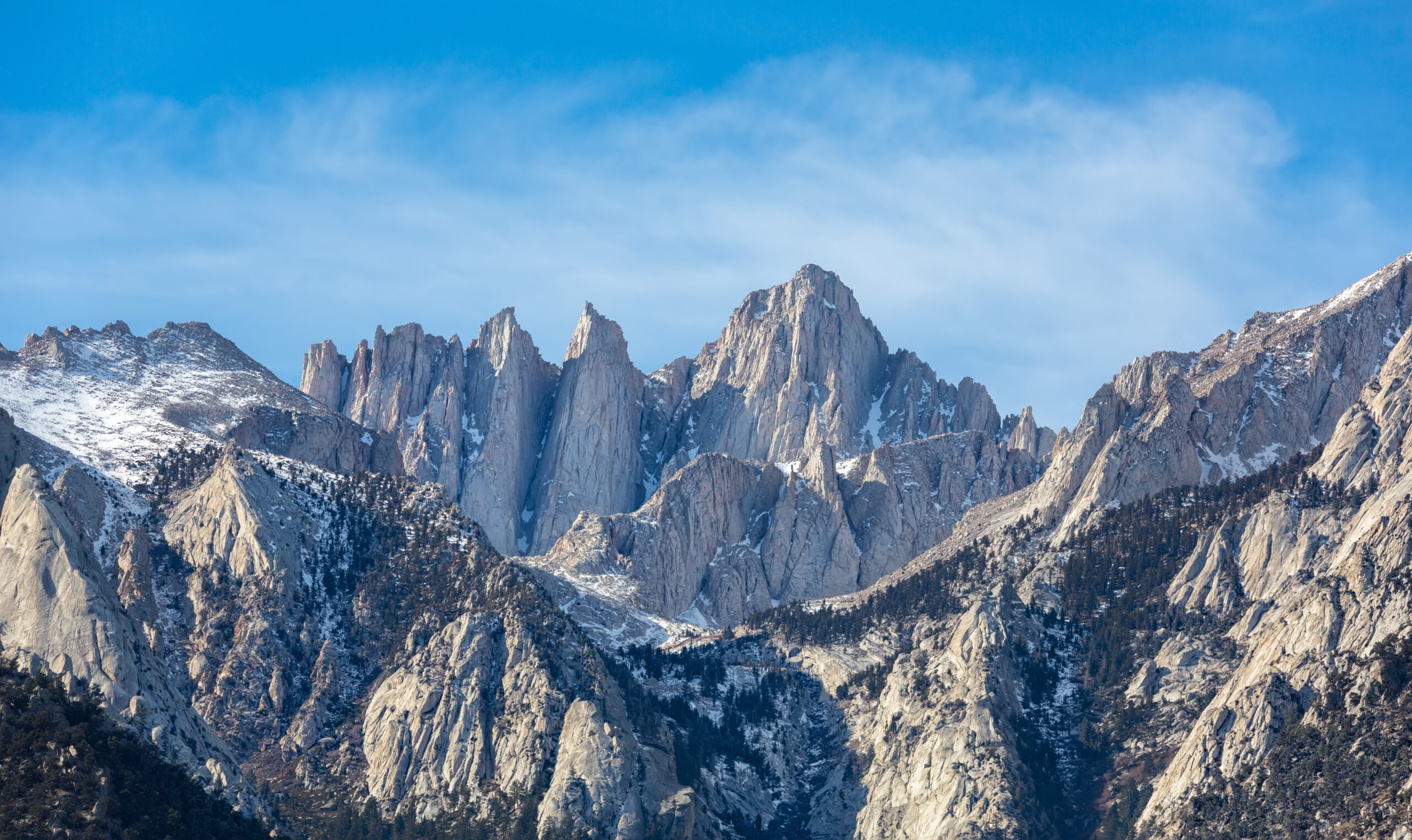
Mt. Whitney is the highest peak in the contiguous United States and California’s most iconic summit objective. Generally, the standard route from Whitney Portal (8,360ft) is a 22-mile round-trip Class 1 hike with 6,100 feet of elevation gain — typically completed as a single very long day hike (12-16 hours) or as a 2-3 day backpacking trip with overnight camp at Trail Camp (12,000ft) or Outpost Camp (10,360ft). Specifically, the route involves no scrambling or technical climbing beyond standard mountain hiking — the famous 99 switchbacks climb from approximately 12,000ft to 13,600ft on a well-maintained Class 1 trail. Notably, the Mt. Whitney permit lottery through Recreation.gov opens in early February each year for the following climbing season — approximately 30% of applicants receive primary date selections for the highly competitive summer window. The lottery applies to both day-use and overnight permits and was established in 2003 to manage environmental impact from heavy traffic. Despite the Class 1 rating, Mt. Whitney has only a 35-40% summit success rate for day-hike attempts due to altitude, fatigue, and weather.
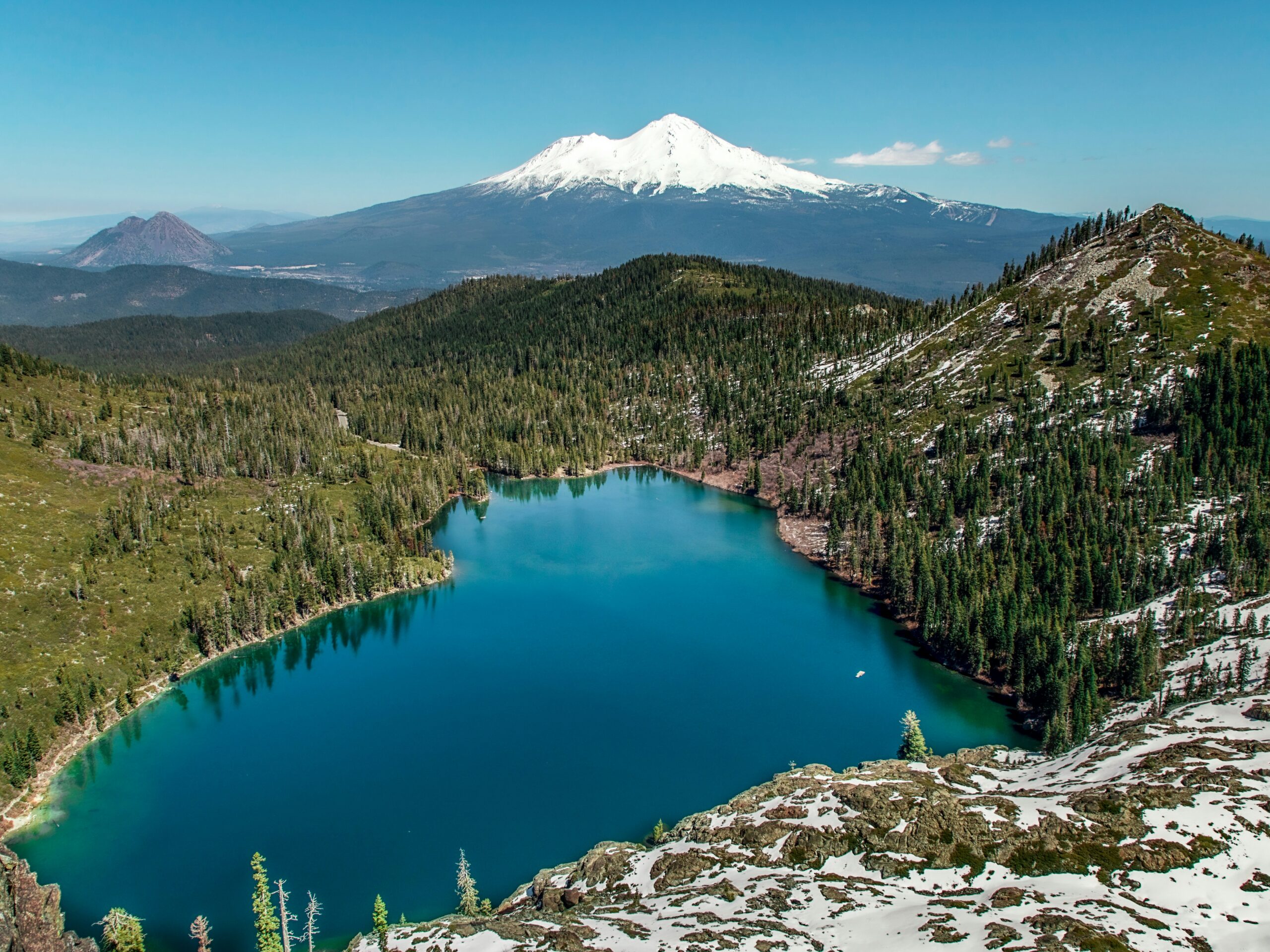
Mt. Shasta is California’s iconic Cascade Range volcano and the southernmost major active Cascade stratovolcano. Generally, the standard Avalanche Gulch route is approximately 11 miles round-trip with 7,300 feet of elevation gain — typically completed as a 2-day climb with overnight camp at Helen Lake (10,400ft) or Horse Camp (8,000ft). Specifically, the route involves Class 2-3 snow climbing through the Avalanche Gulch couloir between Helen Lake and Red Banks (13,400ft), requiring ice axe, crampons, and helmet — significantly more technically demanding than Mt. Whitney’s Class 1 trail despite the lower elevation. Notably, Mt. Shasta’s prime climbing season runs April through July when firm snow conditions allow safest passage through Avalanche Gulch. Later season climbs require navigating exposed scree and loose rock as the snow melts out — making mid-summer attempts significantly more challenging than spring snow climbs. The Mt. Shasta Wilderness Permit ($25-$30) is required and available at the Mt. Shasta Ranger Station — not lottery-based but requires payment and registration before climbing.
Mt. Williamson is California’s second-highest peak and one of the most technically demanding 14ers in the state. Generally, the standard West Side route from George Creek is approximately 18 miles round-trip with 9,000+ feet of elevation gain — typically completed as a 2-3 day backpacking trip due to the extreme elevation gain and technical character. Specifically, the route involves Class 3 scrambling on the upper mountain with significant route-finding challenges through loose rock and complex terrain. Notably, despite being California’s second-highest peak, Mt. Williamson is significantly less famous than Mt. Whitney due to its technical difficulty, more remote access, and lack of permit-based promotion. The peak is regulated under the Bighorn Sheep Zoological Area closure during summer (July 15-December 15) to protect bighorn sheep lambing — climbers must time their attempts carefully or face significant closure restrictions. Mt. Williamson is appropriate only for experienced climbers comfortable with sustained Class 3 scrambling, navigation, and multi-day Sierra backpacking.
North Palisade is the highest peak in the Palisades group — a cluster of Sierra Nevada 14ers including Mt. Sill, Middle Palisade, Split Mountain, and others that offer California’s most technically demanding 14er climbing. Generally, the U-Notch Couloir is the standard route — approximately 14 miles round-trip with 6,500+ feet of elevation gain, typically completed as a 2-3 day climb requiring rope, harness, helmet, and technical alpine rock skills. Specifically, the route involves Class 4 climbing on the upper mountain with significant exposure and complex route-finding through the U-Notch and summit pyramid. Notably, the Palisades group requires technical alpine climbing experience beyond standard 14er hiking — most climbers attempt these peaks only after building Sierra Nevada experience on easier 14ers or hiring guides. The Palisades Glacier (the southernmost named glacier in the United States) provides historical alpine character that distinguishes these peaks from other California 14ers. Bishop is the standard gateway town for Palisades climbs.
Mt. Russell is a Sierra Nevada 14er located directly north of Mt. Whitney, often climbed by experienced climbers wanting a Class 3 alternative to the more famous Whitney standard route. Generally, the standard East Ridge route is approximately 14 miles round-trip with 6,500 feet of elevation gain from the Whitney Portal trailhead — typically completed as a 2-day climb with overnight camp at Upper Boy Scout Lake or Iceberg Lake. Specifically, the route involves Class 3 ridge climbing with route-finding challenges and some exposure — significantly more committing than Whitney’s Class 1 trail despite the lower elevation. Notably, Mt. Russell appeals specifically to climbers wanting Sierra alpine character without the technical commitment of the Palisades or the permit lottery complexity of Mt. Whitney. The peak doesn’t require a permit lottery (unlike Whitney) but does require Whitney Zone day-use permits — significantly more available than Whitney summit permits. Climbers attempting Russell often combine it with Mt. Carillon (13,565ft) or other nearby Sierra peaks in multi-summit trips.
Mt. Langley is California’s most accessible 14er and the recommended starting point for climbers attempting their first California 14,000-foot summit. Generally, the standard route from Horseshoe Meadows Trailhead via Cottonwood Lakes is approximately 21 miles round-trip with 4,200 feet of elevation gain — typically completed as a 2-3 day backpacking trip with overnight camp at Cottonwood Lakes (11,000ft). Specifically, the route involves a well-defined trail through the Cottonwood Lakes basin with Class 1-2 hiking and scrambling on the upper mountain — no technical climbing or significant exposure. Notably, Mt. Langley is the southernmost California 14er and offers significantly easier permit logistics than Mt. Whitney — wilderness permits are required for overnight camping but no lottery system is required. The peak appeals to climbers building California 14er experience, those who couldn’t secure Whitney lottery permits, and those wanting a less competitive Sierra Nevada 14er experience. Lone Pine is the gateway town, the same as for Mt. Whitney attempts.
Half Dome is Yosemite National Park’s most iconic summit and one of the most recognizable climbs in American mountaineering — featured in countless photographs, films, and climbing culture references. Generally, the standard cable route from Happy Isles Trailhead is approximately 16 miles round-trip with 4,800 feet of elevation gain — typically completed as a single very long day hike (10-14 hours). Specifically, the route involves a Class 1 trail through the Mist Trail and Vernal Falls to the base of Half Dome, then the famous cable section — two parallel metal cables and wooden cross-boards that allow non-technical climbers to ascend the steep granite final 400 feet to the summit. Notably, the cable route is only available during the summer season when National Park Service crews install the cables (typically late May through early October). Half Dome requires preseason permit lottery applications via Recreation.gov, separate from the Mt. Whitney lottery and with similar competitive demand. Despite the cable assist, Half Dome involves serious exposure on the final granite slabs — the cables provide handholds but climbers are exposed above 400 feet of nearly vertical granite.
Mt. Lyell is the highest peak in Yosemite National Park and one of the few remaining glaciated Sierra Nevada peaks. Generally, the standard route from Tuolumne Meadows is approximately 27 miles round-trip with 5,400 feet of elevation gain — typically completed as a 3-4 day backpacking trip with extensive Lyell Canyon approach. Specifically, the route involves Class 2-3 climbing on the upper mountain plus crossing the Lyell Glacier with crampons and ice axe — the southernmost glacier in the Sierra Nevada and a rare alpine glacier feature in California. Notably, Mt. Lyell appeals specifically to climbers wanting Yosemite National Park’s highest summit and an alpine glacier experience — both increasingly rare in the warming Sierra. The Lyell Glacier has shrunk significantly in recent decades and may eventually disappear, making Mt. Lyell ascents while glacier features remain a particularly meaningful Sierra objective. Tuolumne Meadows is the gateway, accessible only when Tioga Pass is open (late May through October depending on snowpack).
Mt. San Jacinto offers one of the most distinctive climbing experiences in American mountaineering — accessible via the Palm Springs Aerial Tramway that lifts climbers from the Sonoran Desert floor (approximately 2,500ft at the Valley Station) to Mountain Station at approximately 8,500 feet, eliminating the lower 6,000 feet of approach. Generally, from Mountain Station, the standard route is approximately 11 miles round-trip with 2,300 feet of elevation gain — significantly easier than other California high peaks due to the tramway’s elevation gain assistance. Specifically, the route involves a well-defined trail through Mt. San Jacinto State Park, with Class 1-2 hiking to the summit. Notably, Mt. San Jacinto’s sky island ecosystem creates one of the most dramatic biological transitions in California climbing — the route passes from Sonoran Desert (palms, cacti, ocotillo) at the tramway base through pine and fir forests on the upper mountain to alpine tundra near the summit. The peak is climbable year-round (the tramway operates daily including winter holidays). Palm Springs is the gateway, just 2 hours east of Los Angeles.
Mt. San Gorgonio is Southern California’s highest peak and the highest summit in the Transverse Ranges. Generally, the standard route via the Vivian Creek Trail from Forest Falls is approximately 19 miles round-trip with 5,500 feet of elevation gain — typically completed as a single long day hike (9-13 hours) or as an overnight backpacking trip with camping at High Creek Camp (9,000ft). Specifically, the route involves a Class 1-2 well-defined trail climbing through pine and fir forests to alpine terrain near the summit — no technical climbing or significant exposure. Notably, Mt. San Gorgonio is accessible year-round (with snow conditions December through April creating winter mountaineering opportunities) and serves as Southern California’s most popular high-altitude summit objective. The peak is climbable from multiple trailheads including the Vivian Creek standard route and the South Fork Trail (longer alternative). San Bernardino and Redlands are the gateway towns, just 1.5 hours east of Los Angeles, making San Gorgonio one of the most accessible major American summits for urban climbers.
Quick Comparison Table
| # | Peak | Elevation | Range | Distance RT | Difficulty |
|---|---|---|---|---|---|
| 1 | Mt. Whitney | 14,505ft | Sierra Nevada | 22 mi | Class 1 + permit lottery |
| 2 | Mt. Shasta | 14,179ft | Cascade | 11 mi | Class 2-3 + snow |
| 3 | Mt. Williamson | 14,379ft | Sierra Nevada | 18 mi | Class 3 |
| 4 | North Palisade | 14,248ft | Sierra Nevada | 14 mi | Class 4 alpine |
| 5 | Mt. Russell | 14,094ft | Sierra Nevada | 14 mi | Class 3 East Ridge |
| 6 | Mt. Langley | 14,032ft | Sierra Nevada | 21 mi | Class 1-2 (easiest CA 14er) |
| 7 | Half Dome | 8,839ft | Sierra Nevada (Yosemite) | 16 mi | Class 3 + cables, lottery |
| 8 | Mt. Lyell | 13,114ft | Sierra Nevada (Yosemite) | 27 mi | Class 2-3 + glacier |
| 9 | Mt. San Jacinto | 10,839ft | Peninsular | 11 mi (tramway) | Class 1-2 |
| 10 | Mt. San Gorgonio | 11,503ft | Transverse | 19 mi | Class 1-2 |
How to Choose Your First California Mountain
Choosing the right California mountain combines honest experience assessment, range preference, permit logistics, and seasonal planning. Generally, climbers should follow the 4-step protocol below rather than defaulting to Mt. Whitney as a first California objective (Whitney’s permit lottery often forces alternative selections anyway). Specifically, the protocol prevents the most common California mountain mistakes: underestimating Whitney’s distance, ignoring permit deadlines, and confusing California’s range diversity.
The 4-Step Protocol for Choosing Your First California Mountain
- Identify your honest experience level. Beginners: Mt. San Jacinto (10,839ft via Palm Springs Aerial Tramway and easy hike), Mt. Langley (14,032ft, California’s easiest 14er via Cottonwood Lakes), or smaller Sierra peaks like Mt. Dana (13,061ft in Yosemite). Intermediate hikers: Mt. Whitney (14,505ft, Class 1 trail but requires permit lottery), Mt. San Gorgonio (11,503ft Class 1-2), Half Dome (8,839ft via cables, requires permit). Advanced climbers: Mt. Shasta (14,179ft Class 2-3 with glacier travel), Mt. Russell (14,094ft Class 3 East Ridge), Mt. Lyell (13,114ft requires glacier travel). Expert technical climbers: Mt. Williamson (14,379ft technical Class 3-4), North Palisade (14,248ft Class 4 alpine rock).
- Choose your range based on travel base and season. Sierra Nevada — California’s dominant range with 11 14ers including Mt. Whitney, accessible from Lone Pine (Whitney), Bishop (Palisades), Mammoth Lakes (northern Sierra), Yosemite Valley (Half Dome, Yosemite peaks). Cascade Range — northern California containing Mt. Shasta and Lassen Peak, accessible from Mt. Shasta City and Redding. Transverse Ranges — Southern California containing Mt. San Gorgonio and Mt. Baldy, accessible from San Bernardino and LA. Peninsular Ranges — Southern California containing Mt. San Jacinto, accessible from Palm Springs.
- Navigate the permit system early. Mt. Whitney requires applying through Recreation.gov lottery in February for the following summer — extremely competitive with approximately 30% success rate for primary dates. Half Dome requires preseason lottery permits via Recreation.gov for the cable route. Mt. Shasta requires summit passes ($25-$30) at the Mt. Shasta Ranger Station — not lottery-based but requires payment. Most other California peaks including Mt. Langley, Mt. San Jacinto, and Mt. San Gorgonio do not require summit-specific permits but may require wilderness area permits for overnight backpacking. Start planning permits 4-6 months in advance.
- Plan around California’s diverse seasons. Sierra Nevada: typically June through October with prime conditions in July-September; Mt. Whitney’s trail-clear season runs roughly mid-July through September. Mt. Shasta: April through September for traditional snow climbing, with the Avalanche Gulch standard route requiring snow conditions for safest passage. Yosemite high country: Tioga Pass opens late May to early July depending on snowpack; high-elevation Yosemite peaks accessible roughly July through early October. Southern California peaks: year-round access for San Jacinto and San Gorgonio with snow conditions December through April. California’s geographic diversity means seasonal planning is more complex than most US states.
The California Permit System: A Climber’s Logistical Guide
California has the most complex permit system for mountain climbing of any US state — driven by the combination of high climbing demand, environmental protection requirements, and a patchwork of federal, state, and local management authorities. Generally, climbers planning California mountain attempts must navigate three primary permit categories: peak-specific lottery permits (Mt. Whitney, Half Dome), peak-specific paid permits (Mt. Shasta), and wilderness area overnight permits. Specifically, the timing requirements vary dramatically — Mt. Whitney requires February applications for summer climbing while Mt. San Jacinto requires no advance planning beyond the day-of tramway ticket.
| Peak | Permit Type | Cost | Application Window | Success Rate |
|---|---|---|---|---|
| Mt. Whitney | Recreation.gov lottery | $6 lottery + $15/person | Early February | ~30% |
| Half Dome (cables) | Recreation.gov lottery | $10 lottery + $10/person | March preseason | ~25-50% varies |
| Mt. Shasta | Wilderness summit pass | $25-$30 | Day-of at ranger station | 100% (no lottery) |
| Mt. Langley | Wilderness overnight permit | ~$15 | Recreation.gov advance | Generally available |
| Mt. Russell | Whitney Zone day-use | $15/person | Recreation.gov advance | Generally available |
| Mt. San Jacinto | State park hiking | $11 tramway + free hiking | Day-of | 100% (no lottery) |
| Mt. San Gorgonio | Free with wilderness sign-in | Free | Day-of | 100% (no lottery) |
Whitney lottery strategy: The February application is the most critical step for any Mt. Whitney attempt. Apply for multiple potential dates, consider weekday options over weekends (better odds), and have backup plans (Mt. Langley, Mt. Russell, or Sierra alternatives) if Whitney permits don’t come through. Walk-up cancellations at the Eastern Sierra Inter-Agency Visitor Center are unpredictable but occasionally available.
Common Mistakes California Mountain Climbers Make
Avoid These Common California Mountain Mistakes
- Missing the Whitney permit lottery deadline. The Recreation.gov lottery opens for a limited window in early February each year — climbers who miss this window face significantly reduced chances of climbing Mt. Whitney that season. Set calendar reminders for the February lottery and have your application ready with multiple date preferences.
- Treating Mt. Whitney like a “walk-up” 14er. Despite the Class 1 trail rating, Mt. Whitney’s 22-mile distance and 14,505ft summit elevation create one of the most physically demanding day hikes in American mountaineering. The 35-40% summit success rate for day-hike attempts reflects this difficulty — proper acclimatization, training, and overnight permits significantly improve summit chances.
- Attempting Mt. Shasta without snow climbing experience. Mt. Shasta’s standard Avalanche Gulch route requires ice axe, crampons, and helmet for the Class 2-3 snowfield section. Climbers without prior snow climbing experience routinely turn back at Helen Lake or fail to summit due to inadequate skills. Build snow climbing experience on smaller objectives before attempting Shasta, or hire a guide service like Shasta Mountain Guides.
- Underestimating California’s geographic spread. California’s mountains span 800+ miles from northern Mt. Shasta to southern Mt. San Jacinto — climbing trips to different ranges often require significant additional travel time. Plan California climbing trips around specific ranges rather than expecting to visit multiple ranges in a single weekend.
- Ignoring the Mt. Williamson bighorn sheep closure. Mt. Williamson is closed July 15-December 15 each year to protect bighorn sheep lambing in the Bighorn Sheep Zoological Area. Climbers attempting Williamson must time their summer attempts before the July 15 closure or wait until December 15 (winter conditions) — closure violations can result in significant penalties.
- Confusing Mt. Whitney with Mt. Whitney Portal. Mt. Whitney Portal is the trailhead and recreation area at 8,360 feet — Mt. Whitney is the 14,505-foot summit 11 miles up the trail. Many first-time California climbers confuse these two locations during trip planning.
- Skipping acclimatization at Lone Pine or Whitney Portal. Sea-level Californian climbers (and especially out-of-state visitors) who attempt Mt. Whitney within 24 hours of arriving at elevation routinely fail to summit. Spend 1-2 nights at Lone Pine (3,700ft) or Whitney Portal (8,360ft) before summit attempts.
- Treating Half Dome cables as a casual hike. Half Dome’s 16-mile round-trip distance and 4,800 feet of elevation gain create a very long day, and the cable section involves serious exposure with falls possible. Multiple climbers die on Half Dome each decade — proper preparation, gloves for the cables, and good weather are essential.
What We Don’t Know
Honest limitations of any California mountain guide
The 10 peaks featured represent a curated selection, not California’s full mountain inventory. California contains hundreds of named summits above 10,000 feet across four major ranges. The 10 peaks selected reflect range representation, difficulty progression, and prestige significance — but the Sierra Nevada alone contains dozens of peaks above 13,000 feet worth climbing. Climbers planning systematic California peak-bagging should consult specialized resources like the Sierra Club Lower Peaks Committee, SummitPost California database, and Andy Lewicky’s SierraDescents.com.
California’s 14er count has some prominence-rule variations. The standard 12-14er count uses the 300-foot prominence rule. Some sources count 15 California 14er summits if subpeaks with less prominence are included; other sources count 14 by including White Mountain Peak (sometimes excluded from “Sierra Nevada 14er” lists). The 12 ranked 14ers cited in this guide use the strictest prominence-based definition.
Permit system policies evolve. The Mt. Whitney lottery, Half Dome cable permit lottery, and Mt. Shasta summit pass system have all evolved since their original implementations. Application windows, success rates, fee structures, and registration requirements change year-to-year. Climbers should verify current policies through Recreation.gov and the Mt. Shasta Ranger Station before planning trips.
Climate change affects California climbing. California’s mountain glaciers (Lyell Glacier in Yosemite, the Palisades Glacier in the southern Sierra) have shrunk significantly in recent decades and continue retreating. Mt. Shasta’s snow conditions have become less predictable, with traditional April-July snow climbing seasons starting earlier and ending later. Sierra Nevada wildfire smoke increasingly affects summer climbing visibility and air quality. The standard climbing seasons cited in this guide may shift further in coming years.
Bighorn sheep closure dates and zones can change. The Mt. Williamson bighorn sheep zoological area closure is managed by California Department of Fish and Wildlife and USFS Inyo National Forest — exact closure dates, boundary areas, and enforcement have varied over the years. Climbers should verify current closure status before attempting Williamson or other Sierra peaks in bighorn sheep management areas.
Access road conditions can deteriorate. Tioga Pass (Yosemite high country access), Onion Valley Road (Kings Canyon eastern Sierra access), and other key California mountain access roads can close seasonally or experience deterioration affecting climbing logistics. Verify road status through Caltrans QuickMap, USFS, and Yosemite National Park before committing to specific trip plans.
California Mountain FAQ
What is the highest mountain in California?
Mt. Whitney (14,505 feet / 4,421 meters) is the highest mountain in California and the highest peak in the contiguous United States. Mt. Whitney is located in the Sierra Nevada range on the boundary between Inyo and Tulare Counties, approximately 13 miles west of Lone Pine. Mt. Whitney is climbed via the standard Whitney Portal trail — a 22-mile round-trip Class 1 day hike or overnight backpack with 6,100 feet of elevation gain, requiring a permit obtained through the Recreation.gov lottery system that opens in February each year. Despite being the highest peak in the lower 48 states, Mt. Whitney is technically straightforward via the standard route — the difficulty lies in the long distance, significant altitude, and competitive permit lottery rather than technical climbing demands.
How many 14ers are in California?
California has 12 ranked 14ers (peaks above 14,000 feet with sufficient prominence) — the second-most of any US state after Colorado (53 ranked 14ers). California’s 14ers concentrate in two areas: the Sierra Nevada range (11 14ers) and the Cascade Range (1 14er, Mt. Shasta). The California 14ers are: Mt. Whitney (14,505ft), Mt. Williamson (14,379ft), White Mountain Peak (14,252ft), North Palisade (14,248ft), Mt. Shasta (14,179ft), Mt. Sill (14,159ft), Mt. Russell (14,094ft), Split Mountain (14,064ft), Mt. Langley (14,032ft), Mt. Tyndall (14,019ft), Middle Palisade (14,019ft), and Mt. Muir (14,019ft). California’s 14ers range from technically straightforward (Mt. Langley, Class 1-2) to extremely committing (the Palisades group with Class 4-5 alpine rock climbing).
How hard is Mt. Whitney to climb?
Mt. Whitney via the standard Whitney Portal trail is technically straightforward Class 1 hiking but logistically demanding due to the long distance and altitude. The standard route is 22 miles round-trip with 6,100 feet of elevation gain — typically completed as a single very long day hike (12-16 hours) or as a 2-3 day backpacking trip with overnight camp at Trail Camp (12,000ft). The route involves no scrambling, technical climbing, or exposure beyond standard mountain hiking — the difficulty stems from sustained high-altitude effort. Despite the Class 1 rating, Mt. Whitney has approximately a 35-40% summit success rate for day-hike attempts due to altitude effects, fatigue, and weather. Climbers who acclimatize for 1-2 nights at Whitney Portal (8,360ft) or higher significantly improve their summit chances.
What are the main mountain ranges in California?
California has four major mountain ranges relevant to climbing. The Sierra Nevada is California’s dominant range — extending approximately 400 miles north-south through eastern California and containing 11 of the state’s 12 14ers including Mt. Whitney. The Cascade Range extends from northern California into Oregon and Washington and contains Mt. Shasta (14,179ft) plus Lassen Peak (10,457ft), the southernmost active Cascade volcano. The Transverse Ranges in Southern California contain Mt. San Gorgonio (11,503ft, Southern California’s highest peak) plus Mt. Baldy (10,064ft). The Peninsular Ranges in Southern California contain Mt. San Jacinto (10,839ft, accessible via the Palm Springs Aerial Tramway). California also has minor ranges including the Klamath Mountains, Coast Ranges, and White Mountains containing White Mountain Peak (the third-highest California summit).
Do I need a permit to climb Mt. Whitney?
Yes, climbing Mt. Whitney requires a permit obtained through the Recreation.gov lottery system. The lottery opens in early February each year for the following climbing season (May through November), with applicants paying a non-refundable application fee plus per-person permit fees if selected. The Whitney lottery is highly competitive — approximately 30% of applicants receive their preferred dates, with peak summer weekends often receiving 10+ applications for each available permit. The permit system applies to both day-use attempts and overnight permits. Climbers who don’t receive permits through the lottery can try Recreation.gov’s daily walk-up cancellation lottery at the Eastern Sierra Inter-Agency Visitor Center in Lone Pine, but cancellation availability is unpredictable.
What are the best mountains to climb in California?
The best mountains to climb in California span four ranges and all difficulty levels: Mt. Whitney (14,505ft — highest in contiguous USA, Class 1 with permit lottery), Mt. Shasta (14,179ft — Cascade volcano with glaciated routes), Mt. Williamson (14,379ft — California’s 2nd-highest, technical), North Palisade (14,248ft — Class 4 Sierra alpine), Mt. Russell (14,094ft — adjacent to Whitney, Class 3), Mt. Langley (14,032ft — California’s most accessible 14er), Half Dome (8,839ft — Yosemite’s iconic cable route), Mt. Lyell (13,114ft — Yosemite’s highest), Mt. San Jacinto (10,839ft — Palm Springs Tramway access), and Mt. San Gorgonio (11,503ft — Southern California’s highest peak). Climbers should match peak selection to skills, permit availability, and seasonal access. California climbing is the most geographically diverse of any US state.
Sources and Methodology
Numbered Source References
This California mountain guide synthesizes data from federal land management authorities, USGS topographic records, and California-specific climbing community resources.
- USGS topographic and elevation data. United States Geological Survey — official source for California peak elevations including Mt. Whitney (14,505ft), Mt. Shasta (14,179ft), and all other California summits.
- Recreation.gov. Official source for Mt. Whitney permit lottery and Half Dome cable permits — the federal interagency recreation permit system.
- USFS Inyo National Forest. Authority for Mt. Whitney Zone access, Whitney Portal trailhead, and surrounding Sierra Nevada wilderness areas including bighorn sheep zoological closures.
- Mt. Shasta Ranger Station (USFS Shasta-Trinity National Forest). Authority for Mt. Shasta summit pass permits, current route conditions, and Avalanche Gulch standard route information.
- Yosemite National Park (NPS). Official authority for Half Dome cable route permits, Yosemite high country access via Tioga Pass, and all Yosemite peaks including Mt. Lyell.
- Mt. San Jacinto State Park. Authority for San Jacinto wilderness regulations and Palm Springs Aerial Tramway integration.
- USFS San Bernardino National Forest. Authority for Mt. San Gorgonio and other Transverse Ranges peaks.
- SummitPost California database. SummitPost — community-driven database with detailed California route information.
- Sierra Descents.com. Andy Lewicky’s California climbing site — long-running California-focused climbing resource.
- Internal Global Summit Guide research. Cross-referenced with our existing coverage including the Best Mountains in the USA hub.
Methodology note. Quarterly review cycle — next review September 2026 (post-summer climbing season). Elevation data uses NAVD88 / NAPGD2022 standards. Permit application windows and policies verified current as of June 2026; climbers should confirm current status via Recreation.gov before applying.
Continue Your California Mountain Research
California Offers America’s Most Diverse State Mountain Climbing
Generally, California’s four mountain ranges deliver complete mountain progression — Mt. San Jacinto via tramway for tramway-access climbers, Mt. Langley for first 14er attempts, Mt. Whitney for the lottery-winning standard 14er, Mt. Shasta for Cascade snow climbing, North Palisade for technical alpine rock. Specifically, California has 12 ranked 14ers (second only to Colorado) and the most complex permit system in American climbing. Notably, California climbing requires more advance planning than any other US state — start permit applications 4-6 months ahead.
← Back to USA Mountain Hub