
Last updated October 16, 2026
Best Mountains to Climb in Wyoming
Grand Teton’s technical rock. Gannett Peak’s glaciated wilderness. Middle Teton’s immense vertical. Cloud Peak’s high-country hiking. Devils Tower’s iconic trad routes. Compare twelve Wyoming climbs by the experience—and skills—they demand.
By Global Summit Guide · Research-based ranking with original Middle + South Teton field experience (August 2026)
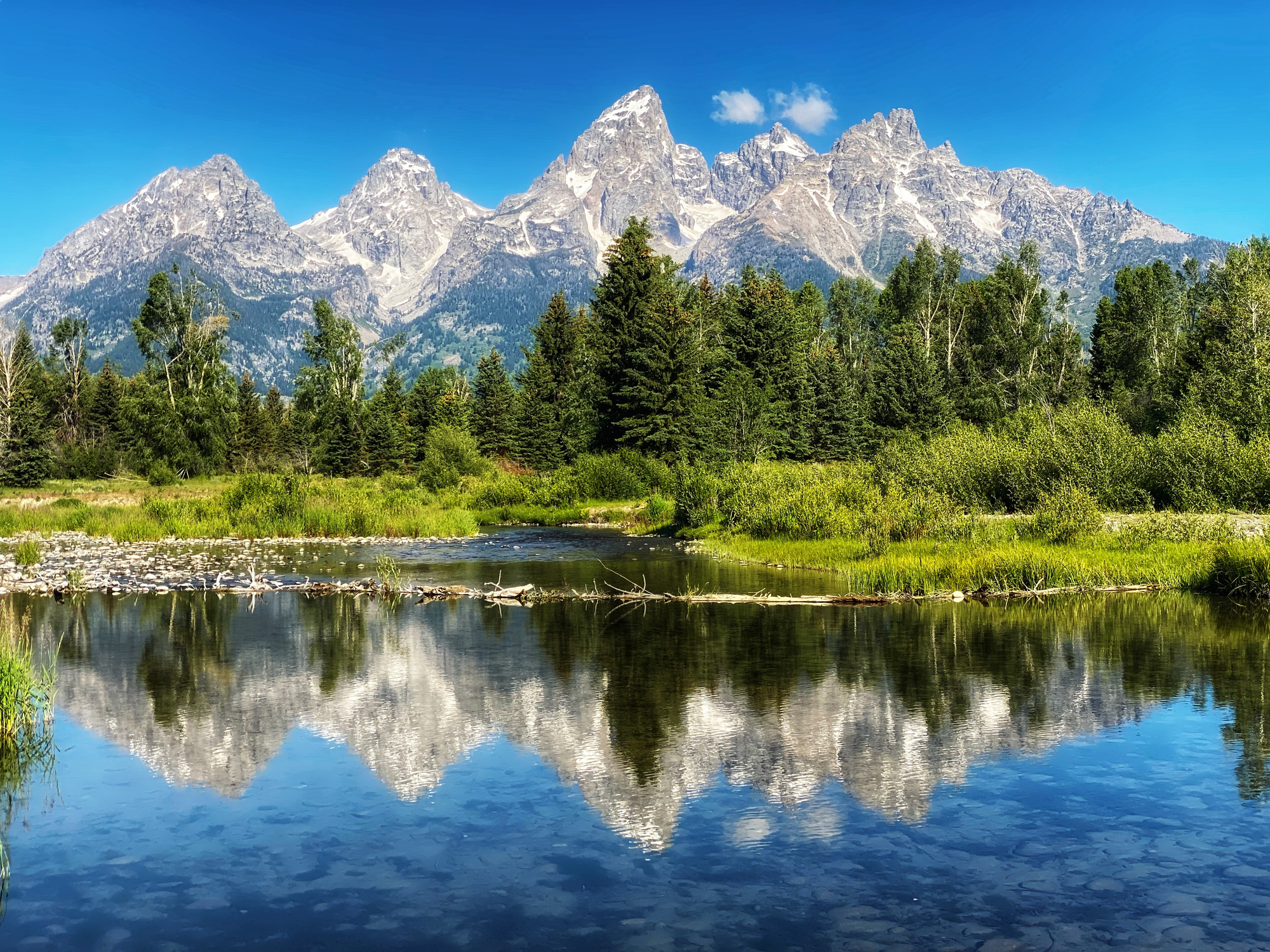
Which mountain should you climb in Wyoming?
Grand Teton is the best overall Wyoming climb. It combines true alpine rock, exposure, route-finding and a technical descent. Gannett Peak is the strongest wilderness expedition and the state’s highpoint. Middle Teton is a natural stepping stone toward larger Teton objectives. Cloud Peak is the standout nontechnical summit; Devils Tower is the world-class trad-rock choice.
These are editorial picks by climbing experience, not by height, permit difficulty or statistical danger. The best objective changes with your background: a strong backpacker can still be unprepared for roped Teton rock, and a competent trad climber can still need glacier training for Gannett.
Wyoming has no 14,000-foot peaks. Height alone is a poor way to rank these twelve climbs.
Wyoming’s 12 best mountains, compared
This is a quick-selector, not a promise that any route is safe in a given season. The difficulty column describes the usual character of commonly discussed routes; snow, conditions and line choice can change it completely.
| Mountain / recommendation | Elevation | Range | Experience | Typical difficulty | Guide |
|---|---|---|---|---|---|
| 01 Grand TetonBest overall climb | 13,775 ft | Teton Range | Technical alpine rock | Low 5th class on Owen–Spalding; harder alternatives | Read → |
| 02 Gannett PeakBest expedition & Wyoming highpoint | 13,804 ft | Wind River Range | Remote glacier expedition | Glacier and steep snow/ice, route dependent | Read → |
| 03 Middle TetonBest progression summit | 12,804 ft | Teton Range | Alpine scramble; snow in some seasons | Class 3 on common SW couloir in dry conditions; snow alters difficulty | Read → |
| 04 Mount MoranBest serious Teton alternative | ~12,600 ft | Teton Range | Remote technical rock | Technical climbing; line dependent | Read → |
| 05 Fremont PeakBest Wind River scramble | 13,750 ft | Wind River Range | Backpacking and high scrambling | Class 3 on common scrambling lines; route dependent | Read → |
| 06 South TetonBest paired central-Teton objective | 12,514 ft | Teton Range | High alpine scramble | Scrambling and seasonal snow, route dependent | Read → |
| 07 Cloud PeakBest nontechnical high summit | 13,167 ft | Bighorn Mountains | Nontechnical summit; major backcountry | Typically Class 2 talus route, conditions dependent | Read → |
| 08 Devils TowerBest pure rock objective | ~5,100 ft summit elevation | Black Hills region | Traditional rock climbing | Trad multipitch; varies widely by route | Read → |
| 09 Wind River PeakBest southern Winds summit | 13,192 ft | Southern Wind River Range | High wilderness scramble | Class 2 to 3 on common lines, route dependent | Read → |
| 10 Black Tooth MountainBest step above Cloud Peak | ~13,005 ft | Bighorn Mountains | Exposed Bighorn scramble | Scrambling with more route-finding than Cloud Peak | Read → |
| 11 Francs PeakBest quiet Absaroka summit | 13,153 ft | Absaroka Range | Remote alpine hiking | Generally nontechnical on standard terrain; route dependent | Read → |
| 12 Static PeakBest easier Teton peak | 11,303 ft | Teton Range | Long alpine hike/scramble | Mostly hiking and scrambling near summit | Read → |
Approximate elevations are for general comparison; USGS/agency datums and summit survey revisions can yield slightly different figures. Grand Teton and Gannett do not share the same climbing style.
The two Wyoming classics demand different skills.
Grand Teton makes you solve an exposed rock and descent problem. A competent climber must route-find, protect or move on difficult terrain, rappel correctly and return before weather reduces the margin.
Gannett Peak makes your party live in the wilderness longer, travel on glaciers and carry a self-rescue plan. The most challenging part may be a snow bridge, an ice slope or the remoteness of the exit—not any one technically difficult move.
Neither is “better” because it is taller or more serious. The right progression is built around your weakest essential skill.
Read our deeper Grand Teton climb guide and Gannett Peak expedition guide.

The 12 best mountains to climb in Wyoming
Each pick is evaluated on the quality of the experience, skill progression, approach commitment and distinctive Wyoming character. The ranking is subjective by design. Some routes are technical; others are best understood as hikes or scrambles.
Grand Teton
Grand Teton delivers Wyoming’s most complete alpine-rock experience: a steep valley-to-summit day, exposed rock climbing, shifting weather and a route that must be reversed or descended by rappel. The standard Owen–Spalding is described as low-fifth-class climbing, but technical difficulty is only one part of the undertaking. The Exum Ridge alternatives require a different level of rock ability and efficient multipitch movement.
Who it suits: Choose this if you already have real rock-climbing and rappel competence and want the classic Wyoming alpine summit. A guide can help, but fitness alone is not adequate preparation.
Read the full climb guide →- Elevation
- 13,775 ft
- Climbing style
- Technical alpine rock
- Commitment
- One very long day or overnight
- Safety concern
- Exposure, route-finding, rockfall, storms and technical descent
Gannett Peak
The state highpoint asks a completely different question from Grand Teton. Long Wind River approaches lead into remote glacier country where snow bridges, crevasses, the Gooseneck vicinity and descent timing require trained partners and contingency days. A technical rope team may have relatively moderate individual climbing moves and still be on a substantially more consequential expedition than a harder rock route near a roadside trailhead.
Who it suits: Choose this for a major wilderness objective once glacier travel, crevasse rescue and high-camp systems are established team skills.
Read the full climb guide →- Elevation
- 13,804 ft
- Climbing style
- Remote glacier expedition
- Commitment
- Usually multi-day wilderness expedition
- Safety concern
- Crevasses, snow bridges, remote rescue, crossings and storms
Middle Teton
Middle Teton is the bridge between strenuous hiking and the technical Grand. Garnet Canyon delivers real gain before the upper mountain, where dry rock, steep snow and rockfall seasonality can change the character of a nominally moderate route. The southwest couloir is not a casual trail: navigation matters, and other people above can dislodge rocks.
Who it suits: Choose this when scrambling competence and a substantial descent reserve are more developed than basic hiking endurance. See the firsthand field report below for one unusually strong recorded performance, not an itinerary to copy.
Read the original Middle + South Teton report →- Elevation
- 12,804 ft
- Climbing style
- Alpine scramble; snow in some seasons
- Commitment
- Long summit day
- Safety concern
- Loose rock, route choice, early snow and afternoon weather
Mount Moran
Mount Moran rises above Jackson Lake with a more isolated feel than the Grand. Classic technical routes including the CMC Route require proficient rope teams, long alpine movement, route-finding and the ability to make a difficult descent after the summit. Some approaches involve special boating or route logistics, so do not mistake the beautiful lake access for an easy objective.
Who it suits: A better choice for experienced alpine-rock climbers who already know how to handle complex exits, not a first roped climb.
Explore planning & route context →- Elevation
- ~12,600 ft
- Climbing style
- Remote technical rock
- Commitment
- Long technical day or overnight
- Safety concern
- Remote approach, complex descent, rockfall and weather
Fremont Peak
Fremont Peak rewards the trip as much as the top. The lakes and scenery around Titcomb Basin establish the setting before the ridge and summit-day navigation begin. It is a strong objective for hikers developing high-alpine scrambling judgment without choosing the glaciated Gannett itinerary. Other lines on Fremont can be much more technical, so route selection is essential.
Who it suits: The Gannett guide gives useful regional context, but do not use a Gannett route description as a Fremont route plan.
Explore planning & route context →- Elevation
- 13,750 ft
- Climbing style
- Backpacking and high scrambling
- Commitment
- Usually backpacking plus summit day
- Safety concern
- Remoteness, loose rock, lightning, talus and snow
South Teton
South Teton is not just an add-on: it stands as a worthwhile independent summit with a less famous, quieter identity than Middle and Grand Teton. The approach and upper routes can still involve long stretches of loose or complex terrain, especially if snow remains. Linking two central-Teton summits increases the need to protect a weather and energy margin for the descent.
Who it suits: The GSG Middle + South double-summit report is valuable because it shows how enormous a “two summit” Teton day can become for even a very efficient climber.
Read the original Middle + South Teton report →- Elevation
- 12,514 ft
- Climbing style
- High alpine scramble
- Commitment
- Long day; longer combined with Middle
- Safety concern
- Loose rock, fatigue, exposure and descent decisions
Cloud Peak
Cloud Peak is the strongest choice for backpackers who want a big Wyoming summit without mandatory roped rock or glacier systems on the usual route. The Bighorn approach, boulder travel near the top, high altitude and exposure to afternoon weather still demand a real backcountry plan. No-technical-gear does not mean no consequence, especially if a storm meets you above treeline.
Who it suits: Confirm wilderness registration and current local fire restrictions with the Bighorn National Forest before departure.
Explore planning & route context →- Elevation
- 13,167 ft
- Climbing style
- Nontechnical summit; major backcountry
- Commitment
- Backpacking or extremely long day
- Safety concern
- Talus, isolation, navigation and thunderstorms
Devils Tower
Devils Tower is on the list because its rock climbing has national significance, not because its summit altitude is high. The Tower’s striking columns host classic traditional climbing, where gear placement, route selection, multipitch transitions and rappels are fundamental. It is a different discipline from a long backpacking summit, and altitude-based rankings do the Tower a disservice.
Who it suits: Climbers must register free of charge before going above the boulder field. NPS requests a voluntary climbing pause for June to respect the site’s importance to associated Native American communities; check raptor-related route closures year-round.
Check NPS climbing registration and closures →- Elevation
- ~5,100 ft summit elevation
- Climbing style
- Traditional rock climbing
- Commitment
- Day climb after route selection
- Safety concern
- Protection quality, rope systems, descent and seasonal closures
Wind River Peak
Wind River Peak is a rewarding alternative for travelers based around the southern Winds and the Lander side of the range. The trip supplies a high summit with a great deal of wild terrain but generally does not demand the same glacier systems as Gannett. It is especially attractive to capable backpackers looking for a remote next step after more established Colorado or Wyoming trails.
Who it suits: Verify the chosen approach, recent snow and the relevant wilderness and forest regulations rather than relying on a single “normal route” description.
Explore planning & route context →- Elevation
- 13,192 ft
- Climbing style
- High wilderness scramble
- Commitment
- Long backcountry trip or hard day
- Safety concern
- Navigation, remoteness, talus and storms
Black Tooth Mountain
Black Tooth is a sharper, more intricate Bighorn objective than Cloud Peak and can make a useful progression step for scramblers who are comfortable with route-finding and non-trivial exposure. Rock quality and exact line selection matter enormously. Treat online class labels as route-specific summaries, not a substitute for a current map and a clear descent plan.
Who it suits: This is not a sensible upgrade for someone whose Cloud Peak experience consisted only of hiking and easy talus.
Explore planning & route context →- Elevation
- ~13,005 ft
- Climbing style
- Exposed Bighorn scramble
- Commitment
- Backpacking and summit day
- Safety concern
- Loose, exposed rock and retreat complexity
Francs Peak
Francs Peak gives the list a different geological and geographic personality: broad Absaroka ridges, volcanic rock and expansive wilderness. More than a graded climbing challenge, the attraction is a high summit far from the Teton corridor. Route descriptions vary by approach, and the extra remoteness deserves more respect than a low scramble grade might suggest.
Who it suits: Check land status and approach access carefully, and be conservative in thunderstorms on the exposed upper mountain.
Explore planning & route context →- Elevation
- 13,153 ft
- Climbing style
- Remote alpine hiking
- Commitment
- Long backcountry day or overnight
- Safety concern
- Isolation, weather, loose volcanic terrain
Static Peak
Static Peak gives prepared hikers a substantial Teton summit without the rope-system requirements of Grand Teton. The Death Canyon/Static Peak Divide approach is the classic setting, with significant elevation and long time above the trees. Its biggest current logistical wrinkle is the 2026–27 Death Canyon road and trailhead construction; old trailhead descriptions can understate distance or become unusable.
Who it suits: NPS reports the old Death Canyon Trailhead closed during the construction project. Confirm an allowable alternate access route immediately before your trip.
Check current NPS road and trailhead status →- Elevation
- 11,303 ft
- Climbing style
- Long alpine hike/scramble
- Commitment
- Long day; access dependent
- Safety concern
- Weather, exposure and 2026–27 trailhead changes
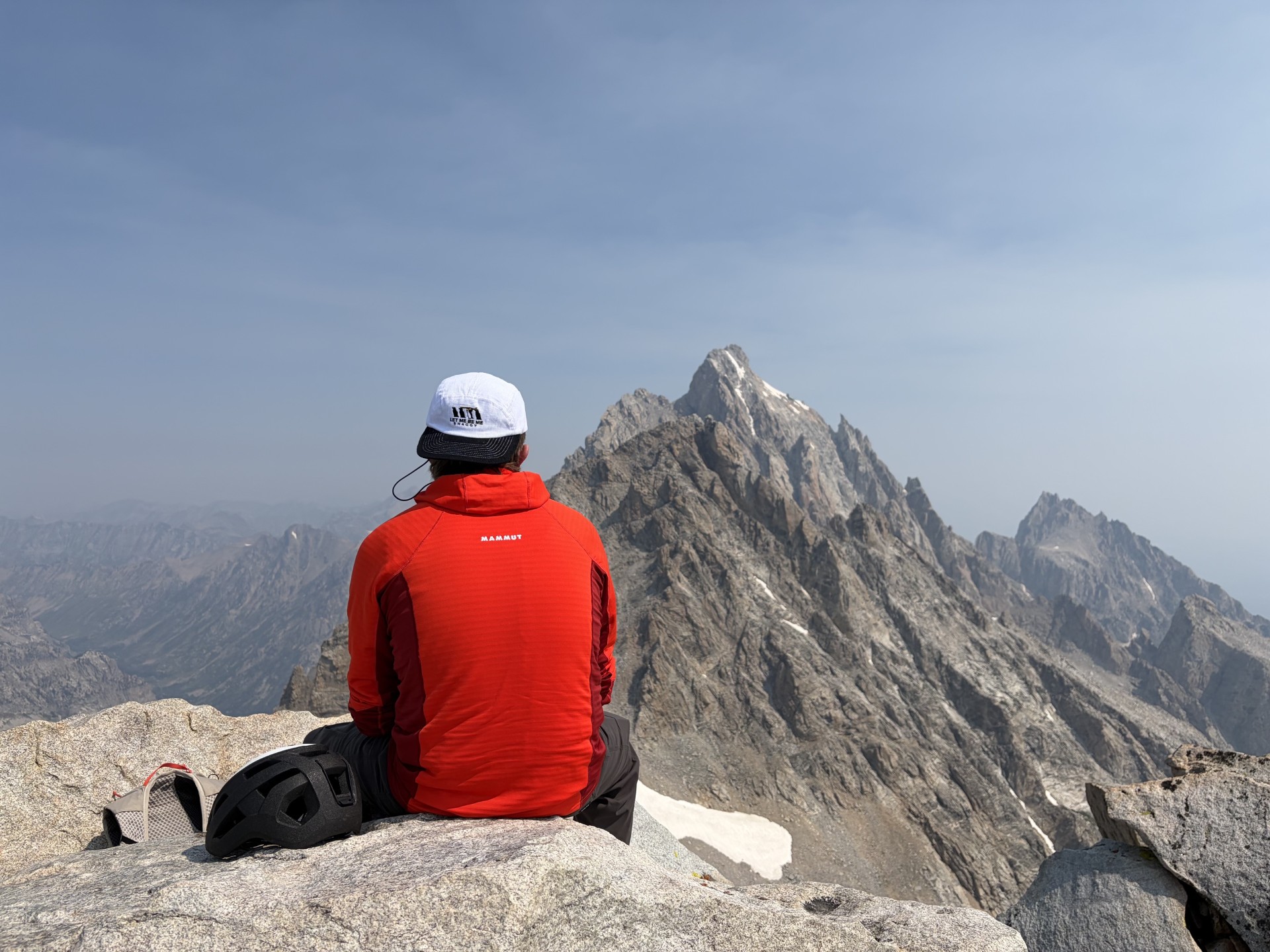
Middle + South Teton in a single day.
On August 9, 2026, Dawson Ludlow linked Middle and South Teton. That field report belongs in this ranking because it conveys what Wyoming’s central-Teton climbs demand when vertical gain, navigation and descent fatigue accumulate—something an elevation chart cannot show.
This is an individual recorded achievement, not a recommended route pace for visitors. The actual route, prevailing conditions, technical decisions and current park information control any trip plan.
Read Dawson’s field report →What 15.2 miles and 7,546 feet of gain tell us
The numbers matter because they expose the mismatch between hiking mileage and alpine workload. A 15-mile hike at low elevation is not the same effort as a 15-mile day involving thousands of feet of Teton climbing and complex terrain.
The lesson is descent margin, not a speed target.
The record represents an unusually efficient day by one trained participant. Strong climbers can encounter different snow coverage, rockfall, crowding or storms on another date and take many more hours. A recreational itinerary should not be reverse-engineered from this elapsed time.
Think of the second summit as a separate decision: Is the weather margin still wide? Can everyone descend difficult terrain with concentration? How many hours of daylight remain? Do all participants have reserves of food, fluid, layers and judgment?
When in doubt, one summit with a controlled descent is the better mountain decision.
Read the full first-hand Middle + South Teton report for original photos and the provided activity record.
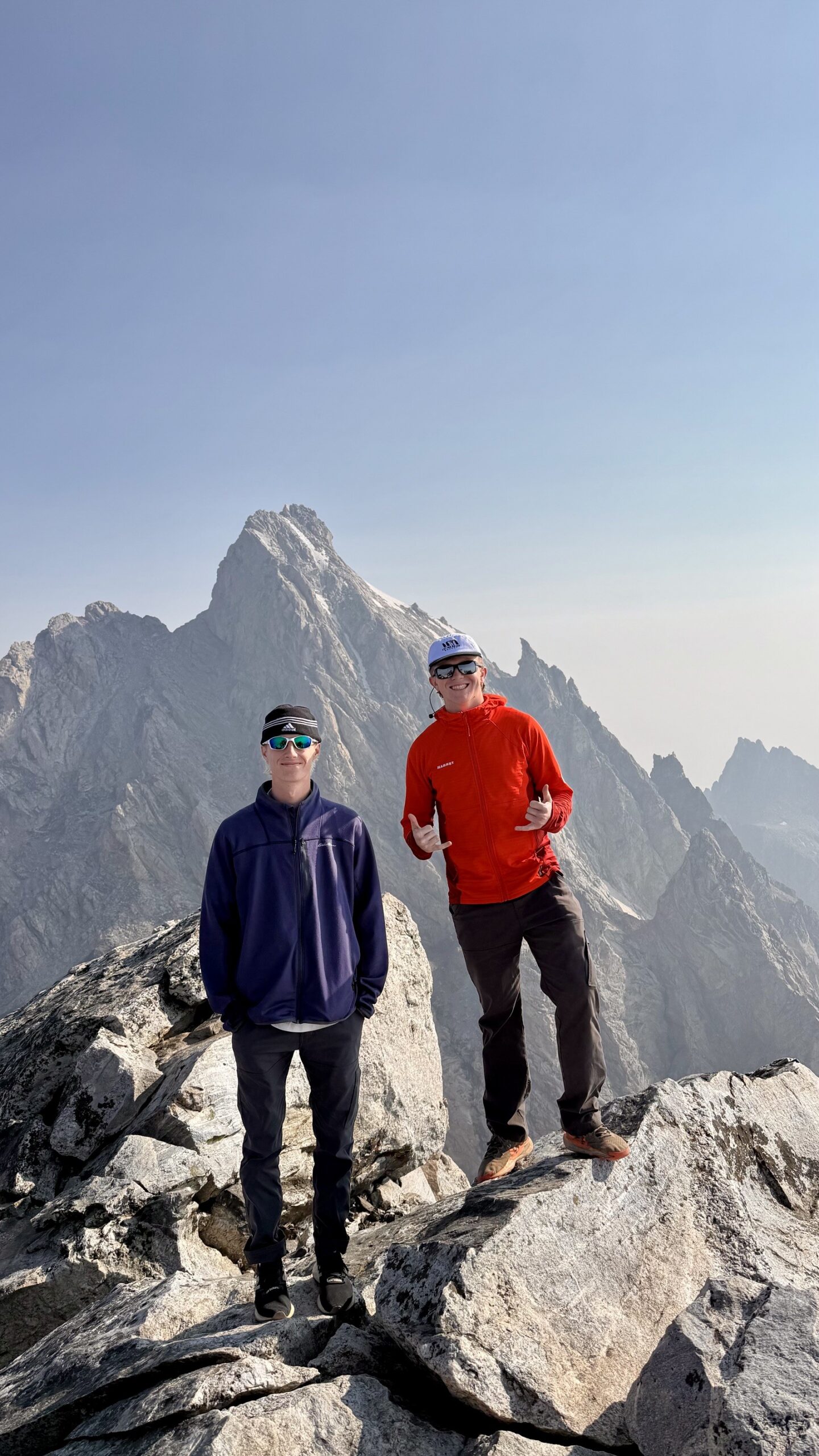
A Wyoming gear list must change with your route.
A Cloud Peak hiking setup should not be confused with a Grand Teton rope-and-rappel kit or a Gannett glacier team’s gear. That difference is one reason a serious gear recommendation belongs after the climb comparison, not above it.
- Big hikes: durable footwear, layers, navigation, rain protection and a sensible emergency kit.
- Teton alpine scrambles: helmet when terrain warrants, route-specific snow equipment, proven scrambling footwear and extra descent layers.
- Technical rock: harness, helmet, rope, protection, anchors and rappelling equipment matched to the actual route and competent team.
- Glacier expeditions: the technical glacier-travel kit and practiced rescue systems for every rope-team member.
Choose the Wyoming range before the summit.
Teton Range
Grand, Middle and South Teton, Moran and Static bring dramatic vertical relief, frequent route-finding, alpine weather and serious descents. The best range for strong rock climbers developing into alpine mountaineers.
Explore Grand Teton →Wind River Range
Gannett Peak, Fremont Peak and Wind River Peak span glacier expeditions, lakeside backpacking and demanding scrambling. The best range for people who value wilderness commitment as much as a summit.
Explore Gannett Peak →Bighorn Mountains
Cloud Peak and Black Tooth place alpine talus, remoteness, route-finding and weather first. A compelling step up for hikers, but steeper Bighorn scrambling deserves respect.
Compare climbing ratings →Absaroka Range
Francs Peak and the surrounding highlands bring volcanic rock, broad ridges and a more remote sense of the Rockies. Less technical does not eliminate commitment or navigational difficulty.
Browse mountains →Devils Tower / Black Hills
Devils Tower is the outlier in every good way. It is primarily a multipitch traditional climbing challenge, with cultural considerations and formal NPS registration.
Check NPS climbing rules ↗Wyoming wilderness means distance is part of the grade.
Wind River peaks may be less technically complex than a Teton rock route, yet far harder to abandon quickly. Expedition food, weather windows, remote access and the time needed to help an injured teammate can outweigh the grade of an isolated summit pitch.
If that is your preferred climbing style, move from Fremont-type scrambling and a competent backpacking system toward Gannett only after learning real glacier travel. A rope by itself provides no crevasse rescue skill.

See the mountains behind the ranking.


These are identified photographs of Fremont Peak, Mount Moran, and Devils Tower—not generic mountain images assigned to destination names. Their credited source pages are linked in each caption.
Build a progression that Wyoming actually rewards.
A one-size-fits-all ranking is not a progression plan. Every mountain asks you to bring specific skills before arriving. Trad-rock progression and glacier progression are distinct, even when both are called “mountaineering.”
| Stage | Wyoming objectives | Skills to prove | Ready to move up when… |
|---|---|---|---|
| 1 · Big backcountry days | Static Peak, Cloud Peak, Francs Peak | Develop pacing, navigation, weather checks, high-elevation movement, self-sufficiency and a descent reserve. | You reliably finish long backcountry days with good judgment and unused margin. |
| 2 · More consequential scrambling | Fremont Peak, Black Tooth, Wind River Peak | Learn to select safe lines, reverse terrain, handle rockfall and recognize when snow changes a nominal grade. | You can retreat or descend difficult scrambling without a guide showing every move. |
| 3 · Steep central-Teton days | Middle Teton, South Teton | Manage Teton vertical and exposure while keeping route-finding, food, water, daylight and storm margins. | You still move methodically late in the day; the summit is not the end of your plan. |
| 4 · Technical alpine rock | Grand Teton, Mount Moran | Practice rock movement, rope systems, protection where necessary, anchor checks and efficient rappels. | Your rope and descent systems are established in lower-consequence terrain before the climb. |
| 5 · Glacier expedition | Gannett Peak | Build roped glacier travel, snow/ice systems, crevasse rescue and self-sufficiency for multi-day remote terrain. | Every partner can perform essential rescue tasks, not just follow a stronger leader. |
| Separate track · Multipitch trad | Devils Tower | Build crack climbing, placements, anchors, multipitch communication, rope management and rappelling skill. | You have extensive trad experience on less committing climbs and can obey NPS regulations. |
Use the mountain difficulty ratings explainer and Grand Teton difficulty and safety guide to separate rope-dependent movement from exposed scrambling.
Wyoming climbing permits, closures and access
There is no single Wyoming climbing permit. The park, national forest, wilderness and monument rules are different. Recheck the appropriate agency immediately before travel.
| Area / activity | Planning rule | What you must verify |
|---|---|---|
| Grand Teton · day climb | No separate climbing permit is normally required by NPS for day climbing. | Check current closures, conditions, and parking. A park entrance fee is separate. |
| Grand Teton · overnight climbing | Backcountry overnight camping and bivouac require the appropriate permit; climbing-related/Garnet Canyon permit pickup has specific procedures. | Reserve or obtain the required permit, confirm designated zones and issue location. |
| Death Canyon / Static Peak | The former Death Canyon trailhead is closed for reconstruction in 2026–27; alternate approaches may add mileage. | Check the current NPS project status before choosing an approach or travel day. |
| Devils Tower · technical climbing | Climbers and scramblers above the boulder field must register at the NPS climbing kiosk; no charge. | Respect the voluntary June climbing closure and current raptor/wildlife closures. |
| Cloud Peak Wilderness | U.S. Forest Service publishes a required wilderness-use registration and specific campsite/fire restrictions. | Confirm current Cloud Peak Wilderness requirements with the managing forest. |
| Wind River approaches to Gannett | Regulations depend on trailhead and forest/wilderness jurisdictions; eastern and western approaches differ. | Verify access, food storage, land status, group limitations and glacier conditions with the relevant land managers. |
Best time to climb Wyoming’s mountains
Most high objectives favor summer conditions, but “summer” is not a route condition. Snow often persists on Teton routes into July, and thunderstorms can develop quickly. Wind, smoke and overnight temperatures can change a carefully planned summit day.
| Peak or group | Common planning window | Main variables |
|---|---|---|
| Grand Teton rock routes | Generally July–September | Dry rock, old snow on ledges, early-season ice, short-afternoon storm window. |
| Middle / South Teton | Mid-summer to early fall | Snow or loose-rock route choice; long approach and early summit timing. |
| Gannett Peak | Mainly summer | Glacier snow-bridge conditions, crossings, weather, long wilderness approach. |
| Fremont / Wind River 13ers | Mid-summer to early fall | High-country snow, thunderstorms, water crossings, smoke and access. |
| Cloud Peak / Bighorns | Summer to early fall | Snowmelt, rock and talus travel, exposed afternoon summit weather. |
| Devils Tower | Spring and fall often favorable | Heat, storms, route closures, voluntary June climbing closure. |
| Static Peak | Summer–early fall; access dependent | Death Canyon construction and longer alternative approaches in 2026–27. |
Check access
Trailhead roads, overnight permits, wildfires, food storage, bear information and current closures.
Grand Teton conditions ↗Check the mountain forecast
Mountain-specific lightning risk, freezing level, wind, snow, summit clouds and descent window—not only valley weather.
Read mountain weather →Reassess the retreat
The descent route, daylight left, fatigue, weather change and the weakest team member determine the turnaround decision.
Grand Teton season guide →Plan the specific Wyoming mountain.
This statewide ranking is where you choose an objective. The individual GSG guides are where you evaluate a route, permit, training requirement or operator. That separation makes the decision clearer and protects each page’s search intent.
Wyoming climbing FAQs
What is the best mountain to climb in Wyoming?
Grand Teton is our best overall alpine climb because it combines substantial elevation gain, exposed rock, route-finding and a technical descent. Gannett Peak is our best wilderness expedition, Cloud Peak the standout nontechnical high summit and Devils Tower our top traditional rock-climbing landmark.
What is the highest mountain in Wyoming?
Gannett Peak is Wyoming’s highpoint, commonly reported at approximately 13,804 feet (4,207 metres) in current regional guides. Exact elevations vary a little by source and survey datum. Grand Teton is lower at approximately 13,775 feet.
Does Wyoming have any 14,000-foot peaks?
No. Wyoming has no 14ers. Gannett Peak is the state highpoint, and its elevation is below 14,000 feet.
Can a beginner climb Grand Teton?
Grand Teton is not a beginner hiking summit. The common Owen–Spalding line involves roped climbing terrain, exposed movement, complex route-finding and rappels. A professionally guided trip can help appropriately prepared novices with climbing instruction and route logistics, but fitness alone is not sufficient.
Is Gannett Peak more difficult than Grand Teton?
They are difficult in different ways. Grand Teton is a technical alpine-rock objective with a challenging descent. Gannett is a remote glacier expedition with crevasse, weather and self-rescue concerns. The right answer depends on your rock, ice, glacier and wilderness background.
What is the easiest mountain on this Wyoming list?
Static Peak is generally a more approachable Teton summit than Grand Teton, while Cloud Peak is a popular nontechnical high-country objective. Neither is a short or risk-free walk; both require substantial effort, and Death Canyon access construction affects Static Peak planning in 2026–27.
Do you need a permit to climb Grand Teton?
NPS does not require a separate climbing permit for a day ascent. Overnight backcountry camping or a climbing bivouac requires the appropriate park permit, and there are specific rules for Garnet Canyon.
Does Devils Tower require a climbing permit?
Yes, mandatory free registration at the NPS climbing kiosk is required for anyone climbing or scrambling above the boulder field. The park also asks climbers to voluntarily avoid climbing in June out of respect for Native American cultural traditions; additional route closures can apply.
What is the best season for Grand Teton and the Wind River Range?
Many conventional summer objectives are planned from roughly July through September, depending on snow and route conditions. Snow can remain high into July, and thunderstorms, rockfall, wind and crossings can change a route even during the nominal peak season.
Which Wyoming mountains prepare you for harder alpine climbs?
Cloud Peak and Static Peak can develop long-day fitness; Fremont, Middle and South Teton add scrambling and route-finding. Grand Teton builds technical rock and rappelling demands; Gannett adds glacier, rope-team and wilderness systems. Each skill track needs dedicated practice beyond summit counting.
Is the Middle + South Teton 7-hour day a recommended itinerary?
No. It is an original field record for one unusually efficient August 2026 outing. Different fitness, weather, snow, route or team circumstances can extend the outing dramatically. Build your own timing around conditions and a conservative descent reserve.
How we ranked Wyoming’s climbing objectives
Ranking method
We weigh the experience, quality of the climb, progression value, geographic variety, skill requirements and expedition commitment. Height is shown but does not determine the list order. We distinguish traditional rock climbing, roped alpine terrain, scrambling and backpacking.
We retain first-hand observations only when identified as such. The August 9, 2026 Middle + South Teton outing is a sourced GSG field report with original photographs and the supplied activity record; the other summaries are researched guide content, not claimed personal ascents by the author.
Current sources and update rules
Park and forest regulations, roadworks, closures, campground rules and wilderness restrictions change more quickly than this editorial ranking. Consult the official managing agency just before visiting, especially for Death Canyon, Devils Tower and Garnet Canyon overnight permits.
Route grades and elevations may vary by line, condition, source and measurement datum. Serious alpine decisions require current local conditions, topographic maps, weather forecasts and competent partners or guides.
Primary source links
NPS · Grand Teton climbing and mountaineering · NPS · Backcountry permits · NPS · Road construction (2026–27) · NPS · Devils Tower climbing and registration · NPS · Devils Tower closures · USFS · Cloud Peak Wilderness rules · GSG · Original Middle + South Teton field report
Editorial update: October 16, 2026. Source verification is not a real-time trailhead or conditions check. The historical field-report date and figures are preserved from the existing Global Summit Guide article.
The best Wyoming summit is the one your skills make possible.
Grand Teton for technical alpine rock, Gannett for wilderness and glaciers, Middle Teton for high-vertical progression, Cloud Peak for an immense backcountry hike, and Devils Tower for classic trad rock. Pick the experience that calls to you—then make the route, skills and descent plan match.
Was this helpful?
🏔Related peaks nearby
🧭Explore & compare
Global Summit Guide is an independent mountaineering resource founded in 2026. The team combines first-hand trekking and climbing experience with in-depth research and professional health and nutrition review to help climbers choose objectives, prepare properly, and stay safe.
Health, altitude, and nutrition content is reviewed by Taylor Ludlow (Registered Nurse) and Brigg Hoopes (Nutritionist).
What We Don't Know Yet
Mountain information changes quickly. This box explains the limits of what this page can responsibly promise.
- Visa, passport, vaccination, border, insurance, and local transportation rules may change before your trip.
- Route conditions, snowpack, closures, and weather can change quickly after this page is updated.
- Permit rules, fees, quotas, and reservation windows may change between review cycles.
- Operator availability, pricing, guide ratios, and cancellation terms can change by season.
- Your fitness, altitude response, risk tolerance, and experience level may change what is safe or realistic.
Verify current conditions with official land managers, guide services, local forecasts, and current route reports before booking or climbing.
Mountaineering, rock and ice climbing, glacier travel, and high-altitude activity are inherently dangerous and can result in serious injury or death. The information on Global Summit Guide is provided for general informational and educational purposes only and is not a substitute for professional instruction, qualified guiding, proper equipment, or your own judgment and experience.
Route conditions, weather, snowpack, permits, regulations, and hazards change constantly and may differ from what is described here. Details may be incomplete, out of date, or contain errors. Always verify current information with local authorities, certified guides, and official sources before making any decision in the mountains.
Nothing on this site is medical, legal, or financial advice. Our fitness, acclimatization, altitude, and nutrition content is general in nature; consult a qualified physician before beginning any strenuous exercise program or exposing yourself to high altitude.
You are solely responsible for your own safety and decisions. To the fullest extent permitted by law, Global Summit Guide and its team accept no liability for any loss, injury, damage, or expense arising from use of, or reliance on, this information. By using this site you acknowledge these risks and accept these terms.
Some links on this site may be affiliate links. If you buy through them we may earn a small commission at no extra cost to you; this never affects our recommendations.
Global Summit Guide recommendation path
Next Best Mountain to Research
Use these recommendations to continue the right planning path instead of stopping on one page.
Use current permit, weather, route, and operator information before booking or climbing.
Search Flights, Hotels & Rental Cars
Have the mountain or destination picked? Use Expedia to compare the flights, lodging and rental cars that fit your actual trip dates. For mountain travel, consider arriving early enough for delays and adding a buffer night after the climb before a fixed flight home.
Compare current flight, hotel and car options.
Affiliate disclosure: Global Summit Guide may earn a commission if you book through this link, at no additional cost to you.