
Last updated September 17, 2026
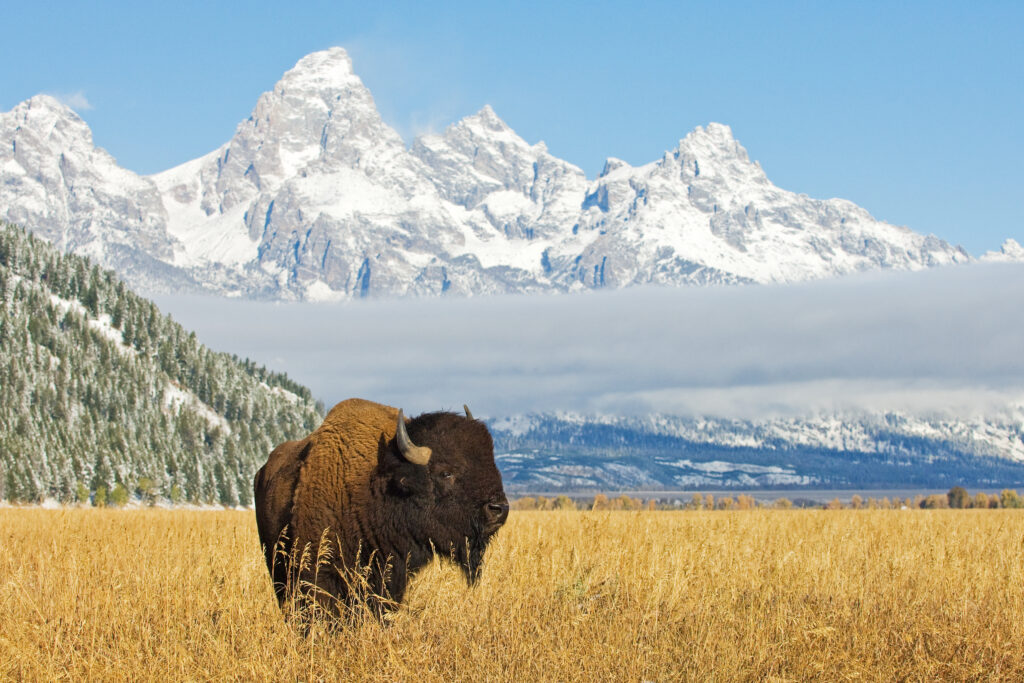
Grand Teton Weather & Best Climbing Season: July, August & September
For classic Grand Teton rock routes, late July through August is the most dependable general window. September can be excellent when routes are dry and the forecast is stable. Snow often remains in the mountains into mid-July, while afternoon thunderstorms are common in July and August.
Grand Teton Current Weather & Conditions
Do not use this evergreen page as your final forecast. Start with the National Park Service current-conditions page, then open the National Weather Service forecast linked there. The NPS climbing page adds current mountain-condition context.
When Is the Best Time to Climb Grand Teton?
| Window | Typical role | Main advantage | Main risk |
|---|---|---|---|
| June–early July | Early alpine season | Snow travel can simplify some loose terrain | Lingering snow, ice, cold, mixed conditions |
| Late July | Transition to core rock season | Improving dry-rock odds | Thunderstorms + residual snow |
| August | Core classic-route window | Best overall dry-rock consistency | Afternoon thunderstorms and traffic |
| September | Shoulder-season opportunity | Cool, often crisp climbing and less traffic | Shorter days, cold snaps, early snow/verglas |
| October+ | Winter-transition climbing | Specialist conditions | Rapidly increasing snow, ice and cold |
Verdict: for most first-time Grand Teton climbers targeting Owen-Spalding or Upper Exum in predominantly dry rock conditions, late July through August is the best general planning window. September is a legitimate alternative, but only when the current forecast and route conditions support it.
Grand Teton Weather by Month
Still an alpine climb
Expect substantial snow in the mountains, colder upper-route conditions and more need for snow/ice judgment. Rock-route assumptions from August do not transfer cleanly.
Rapid transition
Snow can remain into mid-month. Later July often improves for rock climbing, but afternoon thunderstorm risk becomes a central scheduling factor.
Classic rock season
Usually the strongest combination of dry approaches, dry upper-route rock and longer established access—but afternoon storms remain common.
Potentially excellent
Stable fall days can produce superb climbing. The penalty is shorter daylight and a faster transition to cold, snow or verglas after a frontal passage.
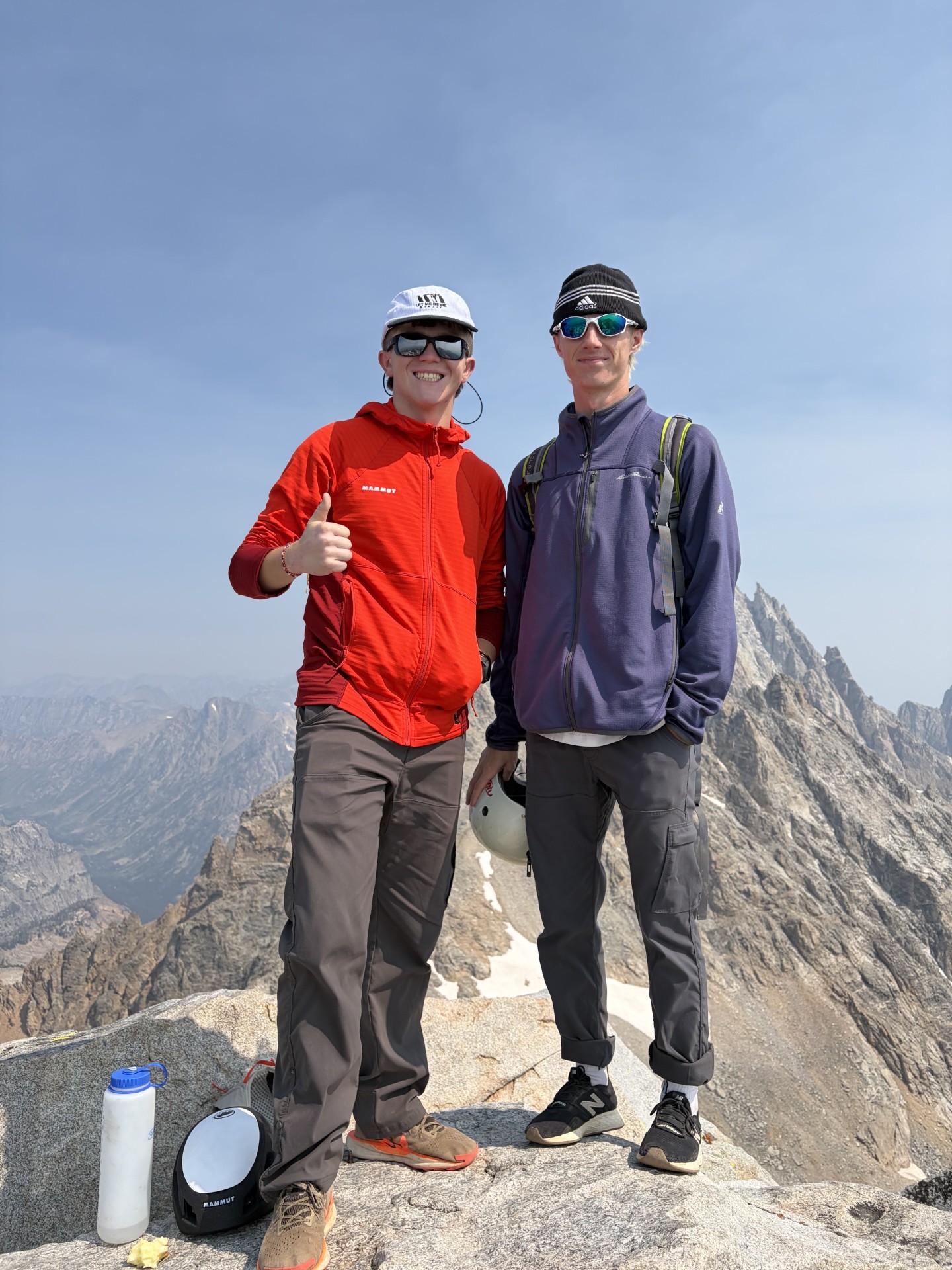
Good Weather Margin Is Part of Route Efficiency.
Fast movement matters because it keeps the team ahead of deterioration. The point is not to race the mountain—it is to preserve time for route-finding, transitions, rappels and weather decisions.
Interpret Weather by Elevation
| Zone | Planning reality | Weather implication |
|---|---|---|
| Jackson / valley | Useful for broad regional pattern | Can be much warmer and calmer than the mountain |
| Lupine Meadows / lower approach | Long hiking approach | Warm daytime conditions can hide upper-mountain cold |
| Lower Saddle | ~11,600 ft staging zone | Wind, freezing temperatures and rapid cloud changes matter more |
| Upper mountain | Exposed technical terrain | Lightning, wet rock, hail, wind and verglas become route problems |
Grand Teton Thunderstorms & Lightning
The National Park Service describes afternoon thundershowers as common in July and August. On technical Teton terrain, the issue is not merely getting wet: lightning, hail, wet rock, slower rappels and loss of visibility can all compound simultaneously.
Look beyond rain percentage
Check thunderstorm timing, instability, wind and cloud-base expectations.
Preserve morning margin
Early starts are useful because they create time before the common afternoon-convection window.
Watch development
Forecast confidence does not replace what the sky is doing above the route.
No universal noon rule
Turnaround should reflect actual weather, position, pace and descent exposure—not one clock time used for every day.
Snow, Ice & Verglas Change the Route
NPS notes that snow often remains in the mountains until mid-July. Residual snow in Garnet Canyon, the Lower Saddle approach and shaded upper-route features can change footwear, traction and route-finding requirements.
| Condition | What changes |
|---|---|
| Continuous approach snow | Traction and snow-travel competence may become central |
| Icy chimneys / shaded cracks | Low-grade rock climbing can become much more serious |
| Fresh summit snow | Route-finding, friction and rappel stations may all be affected |
| Verglas | A dry-rock route can become inappropriate even under clear skies |
Use the Mountaineering Ice Axe Guide when early-season snow travel becomes part of the objective, but do not treat gear possession as a substitute for the required skill.
Owen-Spalding vs Exum in Marginal Weather
| Route | Weather sensitivity | Planning implication |
|---|---|---|
| Owen-Spalding | Wet/icy low-fifth-class terrain, exposed traverse and technical descent | The shortest standard technical line is still serious when wet or iced |
| Upper Exum | Longer sustained ridge exposure | Requires enough stable weather margin for the full upper ridge |
| Lower + Upper Exum | More climbing and more time exposed | Needs the largest weather and daylight margin of the common classic options |
For actual route selection, use the Owen-Spalding vs Exum Ridge comparison. This page owns the weather layer, not the full route decision.
Grand Teton Weather Go / No-Go Checklist
| When | Check | Decision |
|---|---|---|
| 72 hours | Regional pattern, NPS conditions, snow/route reports, major front timing | Is the climb still plausible? |
| 24 hours | NWS mountain forecast, thunderstorm timing, wind, freezing level, precipitation | Choose start time and route plan |
| Morning of | Radar, cloud development, overnight rain/snow, wind and observed conditions | Go, delay, downgrade route or cancel |
| On route | Cloud growth, thunder, rain, pace and descent margin | Continue only while margin remains |
Finish the Grand Teton Plan
Grand Teton Climbing Guide
Route family, difficulty, timing and complete planning path.
Open parent →RoutesGrand Teton Routes
Owen-Spalding, Upper Exum, Lower Exum and harder-line context.
Compare routes →LogisticsPermits & Logistics
Garnet Canyon, Lower Saddle and overnight permit planning.
Plan logistics →SafetyDifficulty & Safety
Exposure, route-finding, technical descent and readiness.
Assess readiness →GearGrand Teton Gear List
Adjust clothing and technical equipment to actual route conditions.
Build gear list →Deep recoveryOwen-Spalding vs Exum
Choose the route once the weather window is understood.
Compare routes →Deep recoveryMountain Weather for Climbers
Learn how to interpret forecast models, wind, precipitation and uncertainty.
Read weather framework →Deep recoveryIce Axe Guide
Relevant when early-season snow becomes part of the route system.
Review snow gear →Final PrepFinal 72-Hour Checklist
Convert the forecast into a final departure decision.
Run final prep →JourneyMy Climb
Save the route, start time, forecast, turnaround triggers and final conditions.
Save Grand Teton plan →How This Weather Guide Should Be Used
Evergreen layer
- Typical seasonal windows.
- Snow persistence.
- Summer thunderstorm pattern.
- Route-weather interaction.
- 72-hour decision framework.
Current layer
- NPS current conditions.
- National Weather Service forecast.
- Recent ranger and route reports.
- Actual morning cloud, wind and precipitation.
- Current snow or verglas on the route.
The current layer always overrides the evergreen calendar.
Grand Teton Weather FAQ
What is the best month to climb Grand Teton?
Late July through August is the strongest general dry-rock window. September can also be excellent with a stable forecast.
Does snow remain in summer?
Yes. NPS notes that mountain snow often remains until mid-July.
Are thunderstorms common?
Yes. NPS says afternoon thundershowers are common in July and August.
Is September good?
Often, but colder nights, shorter days and early snow or verglas require more conservative forecast screening.
Is noon always the turnaround time?
No. Use actual forecast, cloud growth, lightning risk, pace and route position rather than one universal clock rule.
What forecast should I use?
Start with NPS current conditions and the National Weather Service forecast surfaced through the park’s weather resources.
Does route choice change with weather?
Yes. Longer Exum variants require more weather margin, while wet or icy Owen-Spalding terrain can also become substantially more serious.
When should I make the final decision?
Recheck at 72 hours, 24 hours, the morning of the climb and continuously while on route.
Choose the Window from Current Conditions—not the Calendar Alone.
Late July and August are the strongest general planning months, but the actual climb depends on snow, thunderstorms, wind, freezing level, route condition and your team’s pace on that specific day.
Grand Teton Is in the Late-Season Decision Window.
September can still produce excellent Grand Teton climbing, but the calendar no longer provides much margin by itself. The current NWS Teton Mountains forecast for September 17–18 includes showers and thunderstorms, with the possibility of severe thunderstorms Friday afternoon. Treat this as a dated snapshot, not a forecast for your future climbing day.
Allow More Time Before You Even Reach the Trailhead.
Current park construction does not close the standard Lupine Meadows approach to Grand Teton, but it can affect travel around the park and make a tight pre-dawn schedule less forgiving.
Death Canyon Road & Trailhead
NPS lists the Death Canyon Road and trailhead as closed to all use in the current September construction update. This is not the normal Grand Teton summit trailhead, but it matters for broader Teton trip planning.
Moose-Wilson Road Segment
The section between the Laurance S. Rockefeller Preserve and Moose is currently closed to all use, which can change driving plans from the south/west side of the park.
Moose + North Park Road
NPS currently lists a roughly 20-minute delay at the Moose Entrance roundabout and timed delays on North Park Road. Build extra buffer into any early-morning approach drive.
What Changes After the Core July–August Window?
The main page already explains the month-by-month season. This table isolates the late-season variables most likely to change an otherwise normal Owen-Spalding or Exum plan.
| Variable | Core summer tendency | September shift | What to verify |
|---|---|---|---|
| Daylight | Longer margin | Shorter usable day | Start time, technical-route pace and descent buffer. |
| Overnight temperature | Usually milder | Colder nights and stronger freeze potential | Freezing level and whether wet rock can refreeze. |
| Precipitation type | Often rain/hail in convective storms | Greater chance that a cold system produces snow or ice aloft | Summit-level temperature, recent precipitation and route reports. |
| Thunderstorms | Common summer concern | Still possible; frontal weather also becomes important | NWS Teton Mountain forecast, radar and cloud development. |
| Rock condition | Dry rock more common | Can switch quickly between excellent and icy/wet | Recent ranger reports and actual upper-mountain observations. |
| Traffic | Higher | Often lower | Do not trade fewer climbers for inadequate weather margin. |
Grand Teton Live Weather & Conditions Sources
This is the evergreen anchor for the page: fixed links to live sources, rather than embedding a weather reading that will be wrong tomorrow.
Turn the Forecast Into a Grand Teton Climbing Decision
Weather should change the route, equipment, start time or climbing day when necessary. Use the next guide that matches the decision the forecast creates.
Was this helpful?
🏔Related conditions
🧭Explore & compare
Global Summit Guide is an independent mountaineering resource founded in 2026. The team combines first-hand trekking and climbing experience with in-depth research and professional health and nutrition review to help climbers choose objectives, prepare properly, and stay safe.
Health, altitude, and nutrition content is reviewed by Taylor Ludlow (Registered Nurse) and Brigg Hoopes (Nutritionist).
What We Don't Know Yet
Mountain information changes quickly. This box explains the limits of what this page can responsibly promise.
- Permit availability, reservation windows, quotas, and official fee rules may change after this page is updated.
- Weather, snowpack, avalanche risk, road access, and route conditions can change quickly and may be different on your climbing dates.
- Route conditions, trailhead access, crevasse exposure, stream crossings, and rescue access may vary from published planning guidance.
Verify current conditions with official land managers, guide services, local forecasts, and current route reports before booking or climbing.
Mountaineering, rock and ice climbing, glacier travel, and high-altitude activity are inherently dangerous and can result in serious injury or death. The information on Global Summit Guide is provided for general informational and educational purposes only and is not a substitute for professional instruction, qualified guiding, proper equipment, or your own judgment and experience.
Route conditions, weather, snowpack, permits, regulations, and hazards change constantly and may differ from what is described here. Details may be incomplete, out of date, or contain errors. Always verify current information with local authorities, certified guides, and official sources before making any decision in the mountains.
Nothing on this site is medical, legal, or financial advice. Our fitness, acclimatization, altitude, and nutrition content is general in nature; consult a qualified physician before beginning any strenuous exercise program or exposing yourself to high altitude.
You are solely responsible for your own safety and decisions. To the fullest extent permitted by law, Global Summit Guide and its team accept no liability for any loss, injury, damage, or expense arising from use of, or reliance on, this information. By using this site you acknowledge these risks and accept these terms.
Some links on this site may be affiliate links. If you buy through them we may earn a small commission at no extra cost to you; this never affects our recommendations.
Global Summit Guide recommendation path
Next Best Mountain to Research
Use these recommendations to continue the right planning path instead of stopping on one page.
Use current permit, weather, route, and operator information before booking or climbing.
Search Flights, Hotels & Rental Cars
Have the mountain or destination picked? Use Expedia to compare the flights, lodging and rental cars that fit your actual trip dates. For mountain travel, consider arriving early enough for delays and adding a buffer night after the climb before a fixed flight home.
Compare current flight, hotel and car options.
Affiliate disclosure: Global Summit Guide may earn a commission if you book through this link, at no additional cost to you.