<
Home · Mountains · Africa’s Highest Peaks · Mount Cameroon

How to Climb Mount Cameroon: West Africa’s Highest Peak & the Race of Hope

West Africa’s highest mountain at 4,040 m — an active stratovolcano rising from the Gulf of Guinea coast to over 4,000m within 30 kilometers. Site of one of Africa’s most iconic mountain races (the annual 38km Race of Hope), home of the Bakweri people, and a non-technical multi-ecosystem trek from Buea.

4,040m
Summit Elevation
#1
West Africa Highest
2-3 days
Standard Itinerary
10+
Eruptions Since 1900
West Africa’s Highest Peak · Active Stratovolcano · “Mongo ma Ndemi” · Africa’s #4 Highest Mountain · View Africa’s Highest Peaks Collection →

Mount Cameroon is the highest mountain in West Africa — a 4,040-meter (13,255-foot) active stratovolcano rising from the coastal plains of southwestern Cameroon next to the Gulf of Guinea. Known locally as “Mongo ma Ndemi” (Mountain of Greatness) in the Duala language and “Fako” by the resident Bakweri people, Mount Cameroon is the fourth-highest peak in Africa overall (after Kilimanjaro, Mount Kenya, and Mount Stanley/Margherita), the 31st most prominent mountain in the world, and one of the most active volcanoes on the African continent. The mountain rises directly from sea level to over 4,000m within approximately 30 kilometers — one of the most dramatic elevation transitions of any major peak in Africa. Mount Cameroon is climbed primarily via the historic Guinness Trail from the town of Buea (~870m), with a sustained 2-3 day non-technical trek passing through tropical rainforest, savannah, alpine scrub, and volcanic scree to the summit caldera. The climb requires no technical equipment, no ropes or crampons, and no climbing experience — but the sustained vertical gain (over 3,170m from Buea to summit), high humidity, and altitude make it a substantial physical undertaking. The mountain also hosts the famous Race of Hope, an annual 38-kilometer extreme running race from Buea to summit and back held since 1973. This guide covers the Guinness Trail and alternative routes, 2026 guide and operator costs, hut system logistics, the active stratovolcano eruption history (eight confirmed eruptions in the last century), Bakweri cultural significance, the Race of Hope tradition, and why Mount Cameroon is one of the most accessible major peaks in Africa for climbers seeking an authentic African mountain experience without expedition complexity.

Mount Cameroon Location & Live Weather

Mount Cameroon is located in the Southwest Region of Cameroon, near the Gulf of Guinea coast in the Fako Division. The summit coordinates are 4.2167°N, 9.1725°E. Climbers approach the mountain from the city of Buea (~870m), located on the eastern slopes — approximately 3 hours by road from Douala (Cameroon’s largest city and primary international gateway via Douala International Airport, DLA). Buea is the regional capital of Southwest Cameroon with substantial climbing infrastructure including hotels, restaurants, equipment shops, and the Mount Cameroon Inter-Communal Ecotourism Organisation (MCIEO) registration office.

Current Temp
Loading…
Wind
Conditions
Forecast

Weather data from Open-Meteo at coordinates 4.2167°N, 9.1725°E. Summit conditions at 4,040m are typically 20-25°C colder than Buea valley readings. Mount Cameroon experiences substantial coastal moisture; the western flank is one of the wettest places in Africa, with Debundscha at the mountain’s base recording over 10,000mm of annual rainfall.

Mount Cameroon At a Glance

Summit elevation4,040 m (13,255 ft) — highest peak in West Africa; some sources cite 4,095m
Local namesMongo ma Ndemi (“Mountain of Greatness,” Duala language); Fako (Bakweri language and surrounding administrative division)
LocationSouthwest Region of Cameroon, Fako Division, next to Buea city and the Gulf of Guinea coast
Coordinates4.2167°N, 9.1725°E
Geographic significanceHighest mountain in West Africa; 4th highest in Africa (after Kilimanjaro, Mount Kenya, Mount Stanley); 31st most prominent peak in the world; one of the most active volcanoes in Africa
Volcano typeActive stratovolcano of basaltic-to-trachybasaltic composition; only currently active polygenetic volcano on the Cameroon Volcanic Line
Last confirmed eruption2000 (May 28 – June 19); possible unconfirmed eruption in 2012
Prominence3,901 m (12,799 ft) — Ranked 31st most prominent mountain in the world; “Ultra” and “Ribu” classification
First ascent (recorded)Joseph Merrick, 1840s — Jamaican-born Baptist missionary; first European/non-African recorded ascent
Technical characterNon-technical hiking; sustained steep trekking through multiple ecological zones; no ropes, crampons, or technical climbing
Standard duration2-3 days (Day 1 Buea to Hut 2; Day 2 summit and descent; Day 3 if used)
Trail distance12.7 km (8 mi) one way; 3,170m total elevation gain from Buea
Best seasonNovember through March (Cameroon dry season); avoid wet season (April-October)
2026 cost range$200-$600 per climber for 2-3 day guided trek including park fees and porter support
Mandatory guidesYes — Mount Cameroon Inter-Communal Ecotourism Organisation (MCIEO) licensed guides required for all climbers
Race of HopeAnnual extreme race held since 1973; 38km Buea-summit-Buea; men’s record ~4h22m
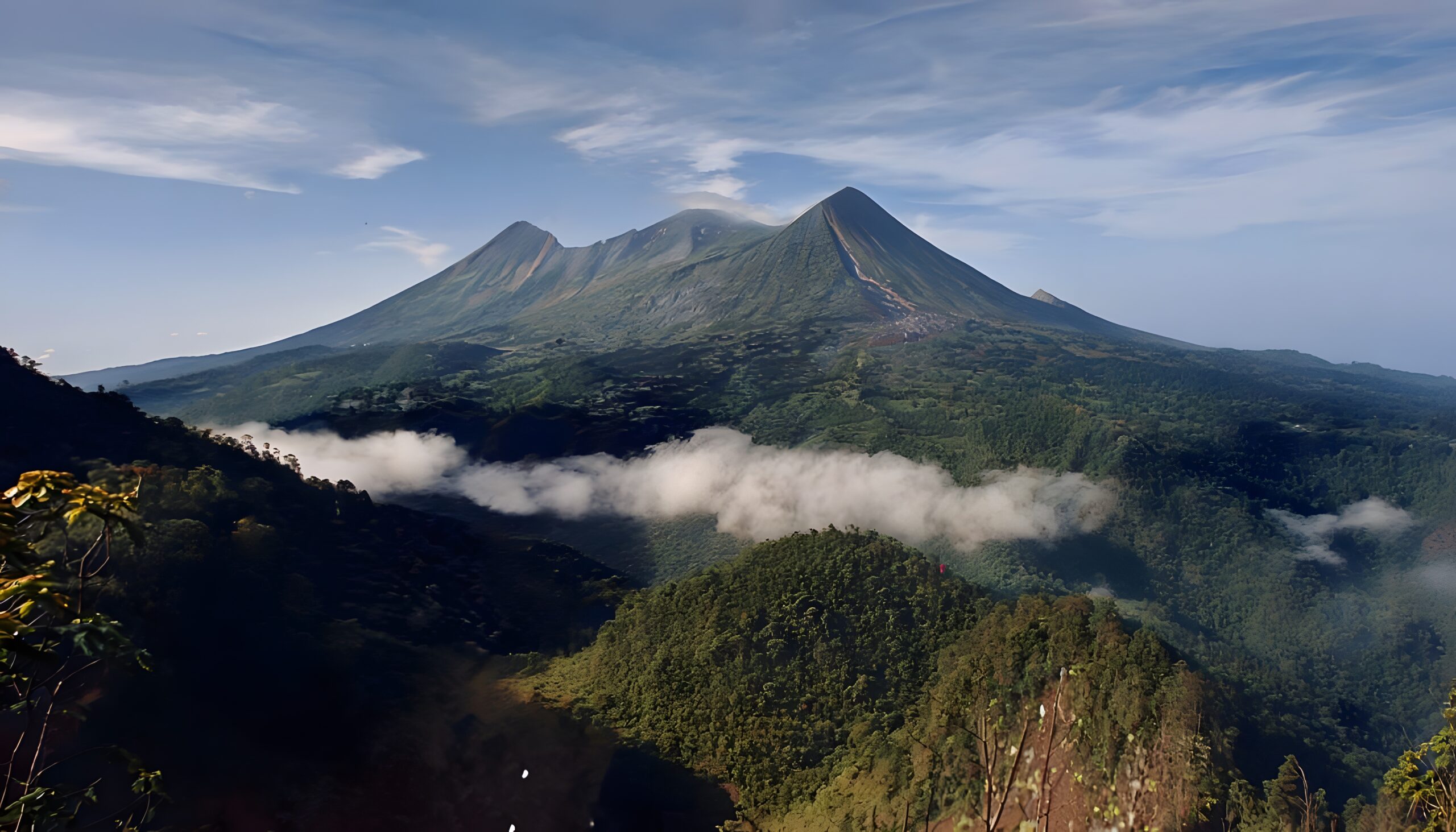
Mount Cameroon — West Africa's highest peak at 4,040m, an active stratovolcano rising from the Gulf of Guinea coast
Mount Cameroon — West Africa’s highest peak at 4,040m, an active stratovolcano rising from the Gulf of Guinea coast within 30 kilometers of the Atlantic Ocean, with Buea visible on its eastern slopes.

Why Mount Cameroon Is One of Africa’s Most Accessible Major Peaks

Mount Cameroon occupies a distinctive position in African mountaineering — substantially less famous than Kilimanjaro, less politically complex than Mount Stanley in the Rwenzoris, less remote than Ras Dashen in Ethiopia, but providing a genuinely accessible major-peak experience with substantially less infrastructure overhead than any of the higher African mountains. Three factors define Mount Cameroon’s distinctive appeal.

Non-Technical Accessibility

Unlike Mount Stanley (which requires technical glacier and rock climbing skills), Mount Kenya (with its technical Batian peak), or any of the 4,000m+ peaks requiring substantial mountaineering equipment, Mount Cameroon is a sustained hike — non-technical from start to finish on all standard routes. Climbers need no ropes, no crampons, no ice axe, no technical climbing experience. The trail is well-maintained, the hut system provides basic shelter, and the route is climbable by any reasonably fit person who can manage sustained multi-day hiking with substantial elevation gain. This accessibility makes Mount Cameroon a substantially good choice for first-time African mountain travelers, charity climbers, and trekkers building experience toward higher African objectives like Kilimanjaro.

Multiple Ecological Zones Compressed into One Climb

Mount Cameroon’s rapid elevation transition from coastal lowlands to 4,040m produces one of the most dramatic ecological zonations of any African climb. Climbers pass through: tropical rainforest (sea level to ~1,800m); montane forest with substantial endemic species (1,800-2,400m); savannah and grassland zones (2,400-3,000m); alpine scrub with specialized high-altitude plants (3,000-3,500m); and barren volcanic scree from recent lava flows (3,500m to summit). The same compression of biomes that takes weeks of travel across East Africa’s Rift Valley is experienced in approximately 12 kilometers of single-trail ascent on Mount Cameroon. The biodiversity is substantial — Mount Cameroon and its surrounding lowland forest host species including Preuss’s monkey, the drill (a close relative of mandrills), African forest elephants on the lower slopes, and substantial endemic plant species found only on this mountain.

Volcanic Character and Cultural Depth

Mount Cameroon’s active stratovolcano status — with eight confirmed eruptions in the last century and recent activity in 1999, 2000, and possibly 2012 — gives the climb a substantially distinctive geological character not found on most major African peaks. Climbers cross black volcanic scree from the 1959, 1999, and 2000 eruptions; pass sulfur blowholes near the summit; and observe more than 100 cinder cones on the mountain’s flanks. The mountain’s cultural significance to the Bakweri people — who consider Mount Cameroon the home of the deity Efasa-Moto and conduct cultural festivals and rituals connecting community life to the mountain — adds substantial depth to the climbing experience beyond the physical achievement. Climbers engaging with local Bakweri guides gain access to oral history, geological observation, and cultural context that substantially enriches the trek.

The honest framing. Mount Cameroon is one of the most accessible major peaks in Africa — but accessibility does not mean trivial. The climb involves over 3,170 meters of elevation gain across 12.7 km of trail (one way), substantial humidity in the rainforest zone, cold and exposed conditions above 3,500m, and sustained physical effort that challenges most climbers at altitude. The lack of technical difficulty does not eliminate the need for proper preparation: good fitness, appropriate clothing for substantial temperature ranges (warm humid lowlands to cold windy summit), trail-running shoes or hiking boots with good traction on volcanic scree, sufficient water (the upper mountain has no reliable water sources), and acceptance of basic hut conditions for overnight stays. Climbers who treat Mount Cameroon with appropriate respect will find it one of the most rewarding non-technical mountain experiences in Africa.

Who Can Realistically Climb Mount Cameroon?

Mount Cameroon’s accessibility makes it suitable for a broader range of climbers than most African major peaks — but the sustained physical demand still requires honest assessment of fitness and preparation.

Mount Cameroon Is Appropriate For:

Fit hikers with multi-day trekking experience. Climbers with prior experience hiking 3-5 consecutive days at moderate elevation (Tour du Mont Blanc, Inca Trail, Annapurna trekking) and reasonable cardiovascular fitness can succeed on Mount Cameroon. The mountain demands sustained effort but no exotic skills beyond the basic discipline of multi-day hiking with adequate water and pacing.

First-time African mountain travelers building toward Kilimanjaro. Mount Cameroon is substantially well-suited as preparation for a future Kilimanjaro attempt. The 4,040m summit provides genuine altitude exposure (lower than Kilimanjaro’s 5,895m but in the substantial altitude range where AMS can develop), the multi-day hut format mirrors the basic Kilimanjaro experience, and the substantial elevation gain develops the legs and cardiovascular base needed for the higher Tanzanian mountain. Climbers using Mount Cameroon as a pre-Kilimanjaro training peak gain substantial preparation at a fraction of the cost.

Charity climbers and group expeditions. Mount Cameroon’s modest cost ($200-$600 per climber), substantial accessibility (no technical skills required, mandatory local guides handle logistics), and dramatic scenery make it an excellent destination for organized group climbs, university expeditions, and charity fundraising trips. The Race of Hope’s 50+ year tradition has built substantial local infrastructure for accommodating group climbing arrangements.

Adventure travelers seeking authentic African experience. Mount Cameroon offers a substantially less-commercialized African mountain experience than Kilimanjaro — fewer climbers, more authentic engagement with the local Bakweri community, and a substantially more affordable budget. Climbers prioritizing cultural immersion alongside the climbing achievement find Mount Cameroon a substantially rewarding destination.

Race of Hope endurance athletes. The annual Race of Hope attracts a specific subset of climbers — extreme endurance athletes who attempt the full 38 km Buea-summit-Buea circuit in a single day. The race format requires substantially higher fitness than standard trekking but represents a unique African mountain running achievement.

Mount Cameroon Is Not Appropriate For:

Climbers with limited multi-day hiking experience and no altitude exposure. Despite the absence of technical climbing requirements, Mount Cameroon’s 3,170 meters of cumulative elevation gain across 12.7 km of trail is substantially demanding. Complete beginners should build basic multi-day trekking experience before attempting Mount Cameroon.

Climbers with significant cardiovascular disease or uncontrolled hypertension. The altitude at 4,040m produces measurable cardiac stress. Climbers with prior cardiac events, current arrhythmias, uncontrolled hypertension, or significant respiratory illness should consult a physician before attempting Mount Cameroon.

Climbers attempting the wet season (April-October). Mount Cameroon’s western flank receives some of the heaviest rainfall in Africa (Debundscha at the mountain’s base records over 10,000mm annually). Wet season climbing involves substantially compromised trail conditions, reduced visibility, increased risk of flash flooding on the lower trails, and a generally unpleasant experience. Climbers should target the November-March dry season for substantially better conditions.

Solo climbers attempting independent ascent. Mount Cameroon climbing requires a mandatory licensed guide from the Mount Cameroon Inter-Communal Ecotourism Organisation (MCIEO). Independent climbing without a registered guide is not permitted under Cameroonian park regulations and could result in park entry refusal, fines, or rescue complications in case of emergency. The guide requirement is substantially enforced — climbers should arrange guide engagement through verified MCIEO contacts before arriving in Buea.

Mount Cameroon’s Role in the African Mountain Progression

Mount Cameroon occupies a specific position in the African climbing progression — the accessible non-technical 4,000m+ peak that bridges casual trekking and serious African mountaineering. Understanding where it fits helps climbers contextualize their broader African mountain ambitions.

StagePeak / ExperienceElevationWhy this position
EntryLower African peaks (Toubkal, Atlas Mountains)4,167mHighest in North Africa; non-technical introduction
Accessible 4,000mMount Cameroon4,040mHighest in West Africa; non-technical; affordable; ecologically diverse
Step UpRas Dashen (Ethiopia)4,533mHighest in Ethiopia; non-technical but remote
Continental IconicMount Kilimanjaro (Tanzania)5,895mAfrica’s highest; non-technical; substantial altitude exposure
Technical AfricaMount Kenya (Point Lenana)4,985mNon-technical trekking peak option; Batian/Nelion for technical
Glaciated AfricaMount Stanley / Margherita Peak5,109mRwenzoris; glaciated; substantial technical challenge
African Volcanic SpecialtyMount Nyiragongo (DRC)3,470mActive lava lake; specialty volcanic objective

Climbers building an African peak portfolio often start with Mount Cameroon or Toubkal as accessible introductions, progress through Kilimanjaro as the iconic central objective, then consider technical African peaks (Mount Kenya Batian, Mount Stanley) for substantial mountaineering challenges.

Mount Cameroon History: From Hannon’s 5th Century BC Observation to the Race of Hope

Mount Cameroon has one of the longest recorded human observation histories of any African mountain — first documented by the Carthaginian navigator Hannon in approximately the 5th century BC, who observed an active eruption from the sea during a coastal exploration. The mountain’s documented climbing history begins in the mid-19th century with Joseph Merrick’s pioneering 1840s ascent, and continues through the modern era of organized ecotourism climbing centered on the Mount Cameroon Inter-Communal Ecotourism Organisation.

~450 BC
Hannon’s Eruption Observation — Recorded History Begins

The Carthaginian navigator Hannon recorded an observation of Mount Cameroon erupting in approximately the 5th century BC during a coastal exploration of West Africa. Hannon’s account, preserved in the “Periplus of Hannon,” describes a flaming mountain rising from the coast — almost certainly Mount Cameroon. This makes Mount Cameroon one of the earliest documented active volcanoes in human historical record and the only African volcano whose ancient eruption activity is documented in classical Mediterranean sources. The 5th century BC observation establishes Mount Cameroon’s active status as having been continuous across at least 2,500 years of recorded history.

Pre-1800s
Bakweri Cultural Tradition

The Bakweri people, who inhabit the eastern and southern slopes of Mount Cameroon, have recognized the mountain across generations of oral history as the home of the deity Efasa-Moto. The Bakweri name “Fako” for the mountain — also adopted as the name for the surrounding administrative division — reflects substantial cultural integration of the peak into community identity. Cultural festivals, rituals, and traditional rulers (“Chiefs of Buea” and surrounding villages) maintain the mountain’s spiritual significance. The Bakweri tradition includes specific protocols for climbing the mountain, traditional medicine practices using mountain plants, and the belief that volcanic eruptions reflect the activity and emotions of Efasa-Moto.

1650-1800s
Pre-Modern Eruption Record

Historical records document Mount Cameroon eruptions in 1650, 1807, 1825, 1838, 1852, 1865, 1866, 1868, and 1871 — a substantially active 19th-century eruption sequence. European missionaries and traders in coastal West Africa observed and recorded these events, contributing to the modern understanding of Mount Cameroon’s long-term volcanic behavior pattern. The substantial frequency of eruptions throughout the 19th century established Mount Cameroon as substantially the most active volcano on the Cameroon Volcanic Line.

1840s
First Recorded Ascent — Joseph Merrick

Jamaican-born Baptist missionary Joseph Merrick is credited with the first recorded climb of Mount Cameroon during the 1840s, though specific date documentation is limited. Merrick, who was based on Fernando Po (now Bioko Island, Equatorial Guinea) and later Cameroon, became the first European/non-African individual to document a summit ascent. The Merrick ascent established Mount Cameroon in the broader European geographic literature and opened the mountain to subsequent European exploration. Substantial climbing activity by European expeditions followed in the late 19th and early 20th centuries during the German colonial period (Cameroon was a German protectorate from 1884 to 1916).

1909
First 20th-Century Eruption

The 1909 eruption marked the first major Mount Cameroon volcanic event of the 20th century. The eruption produced substantial lava flows on the mountain’s flanks and demonstrated continuing volcanic activity that would persist throughout the 1900s. Subsequent eruptions in 1922 (which produced a lava flow reaching the Atlantic coast), 1925, 1954, 1959, and 1982 established Mount Cameroon’s status as one of Africa’s most active volcanoes.

1973
Mount Cameroon Race of Hope Established

The Mount Cameroon Race of Hope was first held in 1973 — an annual extreme mountain race from Buea to the summit and back, covering approximately 38 kilometers and 3,170 meters of vertical gain. The race was originally sponsored by Guinness Cameroon (giving the standard climbing trail its enduring “Guinness Trail” nickname) and has continued annually since. The race attracts elite international and local athletes, with course records reaching approximately 4 hours 22 minutes for men and 5 hours 22 minutes for women — remarkable times given the elevation gain involved. The Race of Hope has become one of the most iconic mountain running events in Africa and substantially supports the regional climbing economy.

1982
1982 Eruption

The 1982 eruption produced basanite lavas similar to earlier flows, with geochemical analysis showing evolution from more-evolved to less-evolved lava across the eruption sequence. The 1982 event continued the substantial 20th-century pattern of intermittent active volcanism.

March 28 – April 22, 1999
1999 Eruption — Major Lava Flow Event

The 1999 eruption (March 28 – April 22) was the most consequential modern Mount Cameroon volcanic event. Activity occurred at two sites: an upper vent at approximately 2,650m (more explosive, strombolian activity) and a lower vent at approximately 1,500m (more effusive, larger lava production). The lower-vent lava flow extended approximately 9.2 km, severing the only arterial coastal highway, forcing the evacuation of approximately 600 residents from Bakingili village, and stopping only 200 meters from the Atlantic coast. Total lava production was approximately 80 million cubic meters. The 1999 eruption caused substantial agricultural damage, contamination of water supplies, and short-term disruption to commerce between coastal communities. The eruption provided substantial scientific data on Mount Cameroon’s magma plumbing system, with subsequent analysis indicating pre-eruptive storage at 20-39 km depth with shallow magma pockets at 3-12 km during the active phase.

May 28 – June 19, 2000
2000 Eruption — Summit Region Activity

The 2000 eruption (May 28 – June 19) followed almost exactly one year after the 1999 event. Activity occurred at higher elevations than the 1999 eruption — an upper site near the summit at approximately 4,095m and a lower site at approximately 3,300m. The 2000 eruption produced approximately 6 million cubic meters of lava, substantially less than the 1999 event, but the summit-region location made it visible from substantial distances and produced striking visual displays. The 1999-2000 eruption sequence has become substantially significant in modern Mount Cameroon volcanology, providing the best-documented active eruption data of any African volcano.

2012
Possible Unconfirmed 2012 Activity

An unconfirmed short-lived eruption has been reported for 2012, though documentation remains substantially limited compared to the 1999-2000 events. Some scientific sources include the 2012 event in the Mount Cameroon eruption sequence; others omit it pending more definitive documentation. The possible 2012 activity reinforces Mount Cameroon’s status as a substantially active volcano with continued eruption potential.

2017-2026
Anglophone Crisis and Climbing Disruption

The Anglophone Crisis affecting English-speaking Southwest and Northwest Cameroon regions (beginning in 2016-2017) has substantially affected Mount Cameroon climbing tourism. Periodic security restrictions, road closures, and travel advisories have reduced international climber volumes compared to pre-2017 levels. Climbers planning Mount Cameroon trips should check current travel advisories from their home country and consult with established Buea-based operators about current safety conditions. Many climbers continue successful ascents during stable periods, but the regional political situation requires substantial pre-trip due diligence that was not necessary during the 2000-2015 climbing era.

2026
Modern Climbing Period

Mount Cameroon climbing in 2026 continues as a substantially accessible African mountain destination for adventurous travelers willing to navigate the regional political context. The Mount Cameroon Inter-Communal Ecotourism Organisation (MCIEO) maintains professional guide standards, the Guinness Trail remains substantially well-maintained, and the annual Race of Hope continues to be held each February. Climber volumes remain below pre-Anglophone Crisis peaks but the mountain has retained its distinctive position as West Africa’s premier non-technical climbing objective.

The Routes of Mount Cameroon

Mount Cameroon has one dominant standard route and two main alternative routes, all non-technical and accessible to fit hikers. Approximately 90% of climbers use the Guinness Trail (also called the Mann Spring Trail) from Buea. Below is a route overview.

RouteStartDistance (one way)DaysBest For
Guinness Trail / Mountaineer RouteBuea (~870m)12.7 km / 8 mi2-3 days standard; 1 day for raceStandard route; ~90% of climbers
Mapanja CircuitBuea up, Mapanja down~20 km circuit3-4 daysClimbers wanting full ecological experience
Mann Spring VariationMann SpringVariable3 daysAlternative starting point; less common
Race of HopeBuea38 km round trip1 day (race)Elite endurance athletes only

Route 1: The Guinness Trail (Mountaineer Route)

12.7 km one way · 3,170m elevation gain · 2-3 day standard · The classic route from Buea

The Guinness Trail — also called the Mountaineer Route or the Mann Spring Trail — is the standard and most-popular climbing route on Mount Cameroon, used by approximately 90% of all climbers. The trail starts at “Old Bicec” near Buea (approximately 870m elevation), ascending through a sequence of huts and ecological zones to the summit at 4,040m. Total trail distance is approximately 12.7 km one way (8 miles), with approximately 3,170 meters of total elevation gain.

The Guinness Trail standard 2-day itinerary:

  • Day 1: Buea to Hut 2 (5-8 hours, ~10 km). Depart Buea (~870m) typically by mid-morning. Initial section through farmland and lower rainforest transitions to dense tropical rainforest. Reach Hut 1 at approximately 1,850m (~3-4 hours from trailhead). Continue through the Intermediate Hut at approximately 2,255m to Hut 2 at approximately 2,850m. Arrive at Hut 2 by mid-to-late afternoon. Basic dormitory accommodation; bring sleeping bag and warm clothing.
  • Day 2: Summit and descent (8-12 hours). Pre-dawn start (typically 04:00-05:00) for summit attempt. Ascend from Hut 2 (2,850m) through Hut 3 at approximately 3,760m, then to the summit at 4,040m. Substantial elevation gain in cold conditions; sustained black scree terrain in the upper sections. Reach summit typically 3-5 hours from Hut 2. After summit photos and weather assessment, descend back to Hut 2 (2-3 hours) and continue down to Buea the same day (2-4 hours from Hut 2). Total Day 2 effort: 8-12 hours.
  • Optional Day 3: Some climbers prefer to descend only to Hut 2 on summit day and continue to Buea on Day 3, providing substantial recovery time after the demanding summit day.
Start
Buea ~870m
Distance
12.7 km one way
Elevation gain
~3,170m
Duration
2-3 days

Route 2: The Mapanja Circuit

~20 km circuit · 3-4 days · Full ecological diversity experience

The Mapanja Circuit ascends via the standard Guinness Trail from Buea but descends via a different trail through the village of Mapanja on the southern flank of the mountain. The circuit format provides substantially more varied scenery, exposure to additional ecological zones, and the cultural experience of passing through traditional Bakweri villages on the descent. The longer duration (3-4 days versus 2-3 days for out-and-back Guinness Trail) substantially expands the trekking experience and provides better acclimatization.

Why climbers choose Mapanja Circuit: Substantial scenic variety; cultural engagement with Bakweri villages; substantially better acclimatization profile; less retracing of the same trail. Trade-offs: Higher cost due to logistical complexity; substantial additional day on the mountain; ending point at Mapanja requires transport back to Buea or onward to Limbe coast.

Format
Circuit (up Guinness, down Mapanja)
Distance
~20 km circuit
Duration
3-4 days
Best for
Cultural + ecological depth

Route 3: The Race of Hope (Annual Race Format)

38 km round trip · 1 day · Elite endurance athletes only

The Race of Hope is not a standard climbing route but an annual extreme endurance race held every February since 1973. The race covers the full Guinness Trail from Buea to summit and back — approximately 38 km total with 3,170m of vertical gain and 3,170m of descent in a single day. The race attracts both elite international athletes (East African runners, European mountain runners) and substantial local Cameroonian participation. Current course records are approximately 4 hours 22 minutes for men and 5 hours 22 minutes for women. The Race of Hope is substantially appropriate only for highly trained mountain runners with prior ultra-running experience.

Format
Single-day race
Distance
38 km round trip
When
Annually in February
For
Elite mountain runners

The Mount Cameroon Summit Day: Hour-by-Hour from Hut 2

Mount Cameroon summit day from Hut 2 (2,850m) is the substantially most demanding portion of the standard 2-3 day climb — beginning before dawn, ascending approximately 1,200 vertical meters to the summit at 4,040m, then descending all the way back to Buea (or to Hut 2 for a third-night option). Below is the standard hour-by-hour pattern for a typical Day 2.

Standard Mount Cameroon Summit Day — Hut 2 (2,850m) to Summit (4,040m) and Descent

04:30
Wake-up at Hut 2. Quick breakfast — typically simple porridge, bread, hot tea or coffee. Final layering preparation. Substantial discomfort common due to limited sleep at altitude and basic hut conditions.
05:00
Depart Hut 2 with headlamps. Cool morning temperatures (typically 5-10°C at this elevation). Initial section through alpine scrub vegetation transitioning to bare scree and volcanic terrain.
06:30
Mid-ascent. Approximately 3,300m elevation. Sunrise typically arriving. Substantial views opening up toward the Atlantic coast and Bioko Island visible on clear days. The terrain becomes increasingly barren — black volcanic scree from the 1959-2000 eruption sequence.
08:00
Reach Hut 3 (~3,760m). Brief rest at the highest hut. Temperatures cooler; substantial wind exposure begins. Substantial altitude effects becoming apparent — slower pace, deeper breathing.
09:00
Final ascent toward summit. The terrain above Hut 3 is substantially easier on the feet — a moderate-angle “cinder path” through volcanic scree. Despite easier footing, the altitude effects substantially compound fatigue.
10:00
SUMMIT — 4,040 m / 13,255 ft. West Africa’s highest point. Substantial 360-degree views — on clear days, climbers can see Buea, the coastal city of Limbe, the Atlantic Ocean, and the island of Bioko (Equatorial Guinea) across the Gulf of Guinea. Cool windy conditions; maximum 20-30 minutes at summit for photos, food, and weather assessment.
10:30
Begin descent. Substantial transition from ascent fatigue to descent caution. Black scree slopes allow some “scree-skiing” on the descent — sliding through loose material for substantially faster downward progress.
12:30
Back at Hut 2 (2,850m). Brief rest, lunch (often pasta or rice with simple sauce), gear repacking. Most climbers continue descent the same day.
13:30
Begin descent to Buea. Reverse the Day 1 ascent — through Intermediate Hut (~2,255m), Hut 1 (~1,850m), back into the rainforest zone, then through farmland to Buea.
17:00
Return to Buea (~870m). Total Day 2 effort: approximately 12 hours from Hut 2 wake-up to Buea arrival. Substantial cumulative fatigue. Most climbers proceed directly to Buea hotel accommodation for shower, meal, and celebration. Cameroonian pasta or palm-wine traditions optional.

The summit day weather discipline. Mount Cameroon weather can change rapidly. The mountain’s coastal location and the substantial moisture-bearing winds from the Gulf of Guinea produce frequent cloud build-up by late morning even during the dry season. The pre-dawn summit-day start is substantially essential — early starts maximize the probability of clear summit views before midday cloud accumulation. Climbers attempting late starts often reach the summit in white-out conditions, sacrificing the substantial views that justify the demanding ascent. Guides routinely insist on 04:30-05:00 wake-ups for substantial reason — the early discipline pays off in summit-view quality and in completing the substantial descent during daylight.

Mount Cameroon Costs in 2026: Guides, Logistics, and Total Budget

Mount Cameroon is one of the most affordable major African peak climbs — substantially less expensive than Kilimanjaro, Mount Kenya, or any of the higher African mountains. The total trip budget for an international climber typically runs $800-$2,000 including international flights — substantially less than comparable East African climbing.

2026 Climbing Costs

Service / Group Size2026 Price (per person)What’s Included
Standard 2-3 day climb / group of 2-4$250-$450/personMCIEO licensed guide, porter support, hut overnight fees, basic meals, park entry
Solo climber 2-3 day climb$400-$600Single climber pays full guide and porter costs without group cost-sharing
Mapanja Circuit 3-4 day climb$400-$650/personExtended itinerary with additional day; circuit logistics
Race of Hope registration~$50-$100Annual race entry fee; substantial preparation expenses additional
Private vehicle transfer Buea-Douala$60-$120One-way; shared taxi substantially cheaper at ~$15

2026 Total Trip Budget

Cost Component2026 Amount (USD)Notes
Mount Cameroon climbing package (2-3 days, group)$250-$450Standard guided climb from Buea
International flights to Douala (DLA)$800-$1,800Substantial variation by origin; Air France, Brussels Airlines, Royal Air Maroc common
Cameroon tourist visa$70-$140Required for most nationalities; obtain in advance
Douala-Buea transport$20-$100Shared taxi to private vehicle range; ~3 hours each direction
Buea hotels (2-4 nights)$60-$320Mid-range hotels at $30-$80/night
Meals in Buea$50-$150Cameroonian cuisine substantially affordable
Equipment purchases (if needed)$100-$300Sleeping bag, headlamp, basic layers; limited rental in Buea
Tips for guide and porters$30-$80Standardized expectations; substantially important to crew livelihoods
Travel insurance$50-$150Recommended; some policies exclude Cameroon — verify coverage
Total realistic 2026 trip budget$1,400-$3,400Including international flights from North America/Europe
Regional African climber budget$300-$700Substantially lower without international flights

Comparison context. Mount Cameroon’s cost profile is substantially lower than other major African peak climbs. Kilimanjaro 7-8 day expeditions typically run $2,800-$6,500 including park fees alone. Mount Kenya 5-day climbs typically run $1,500-$3,000. Mount Stanley in the Rwenzoris runs $2,500-$5,000+ due to substantial logistics complexity. Mount Cameroon’s $250-$600 climbing cost makes it the most affordable major African mountain experience — substantially appealing for climbers prioritizing authentic African mountain travel over the higher-profile commercialized peaks.

Mount Cameroon Gear Checklist

Mount Cameroon gear requirements are substantially simpler than higher-altitude or technical African peaks — no crampons, no ice axe, no ropes, no expedition equipment. The principal demands are layered clothing for substantial temperature ranges (warm humid lowlands to cold windy summit), good hiking footwear, sufficient water capacity, and basic sleeping equipment for hut overnights. Climbers should arrive in Buea with their own equipment — rental availability is substantially limited.

Footwear

  • Hiking boots or trail running shoes — broken in; ankle support beneficial; good traction on volcanic scree essential
  • Camp shoes — sandals or Crocs for hut comfort
  • Hiking socks — 3-4 pairs Merino wool
  • Sock liners — substantially reduce blister risk on sustained descent

Clothing System

  • Base layer — long sleeve top and bottoms (merino or synthetic)
  • Mid-layer — fleece or light synthetic insulated jacket
  • Insulated jacket — lightweight down or synthetic for summit and Hut 2 evenings
  • Hard shell jacket — Gore-Tex or equivalent; substantial precipitation possible even in dry season
  • Hard shell pants — for wind and rain on summit day
  • Trekking pants — durable; quick-dry fabric beneficial
  • T-shirts (2-3) — synthetic or merino for lower-elevation rainforest sections
  • Warm hat — covers ears; essential for summit night cold
  • Sun hat — wide brim for UV protection at altitude
  • Gloves — lightweight; warmth for summit and Hut 2 evenings

Pack and Sleep System

  • Backpack 45-60L — climbers typically carry personal gear; porters available for additional load
  • Sleeping bag — rated to -5°C minimum for summit nights; lighter for general hut use
  • Sleeping bag liner — adds warmth and hygiene benefit
  • Daypack — small daypack for summit day with water and snacks
Mount Cameroon volcanic terrain — active stratovolcano with eruption history including 1999 and 2000 lava flows visible on the upper slopes
Mount Cameroon’s volcanic character — climbers cross black volcanic scree from the 1959, 1999, and 2000 eruptions on the way to the summit, with more than 100 cinder cones visible across the mountain’s flanks, making it one of Africa’s most geologically active climbing destinations.

Hydration, Nutrition, and Personal Items

  • Water capacity (3L minimum) — water sources unreliable above 2,000m; carry sufficient
  • Water purification tablets or filter — backup for water from natural sources
  • Energy bars and snacks — bring favorites; limited local availability of high-energy hiking foods
  • Sunscreen SPF 50+ — substantial equatorial UV at altitude
  • Lip balm with SPF — substantial UV and wind exposure
  • Sunglasses — UV protection essential at altitude
  • Headlamp with spare batteries — essential for pre-dawn summit start
  • Trekking poles — substantially recommended for descent on volcanic scree
  • Personal first aid kit — blister treatment, ibuprofen, anti-diarrheal, electrolyte tablets
  • Insect repellent — essential for lower-elevation rainforest sections
  • Anti-malarial medication — Cameroon is in a malaria zone; consult travel medicine specialist
  • Yellow fever vaccination certificate — required for entry to Cameroon
  • Passport and Cameroon visa — verify before departure

When to Climb Mount Cameroon: Season-by-Season Analysis

Mount Cameroon weather is dominated by the West African coastal monsoon pattern, producing a substantially distinct wet/dry season cycle that determines climbing windows. Choosing the right season is essential for both safety and experience quality.

November to March: Dry Season — Optimal Climbing

The Cameroon dry season runs November through March, providing the substantially best climbing conditions. Trails are dry, visibility is substantially better, summit views are most reliable, and the substantial coastal rainfall pattern recedes. Temperatures at the summit remain cool (5-15°C daytime; 0-5°C nighttime) but precipitation is substantially reduced compared to the wet season. December-February is the absolute peak of the dry season with the most reliable conditions. The Race of Hope is held during this window (typically late February) to take advantage of optimal trail conditions.

April-May: Transition Period

April and May represent the substantial transition from dry to wet season, with increasing precipitation and substantially compromised trail conditions. Climbing is still possible during this period but weather windows become more variable. Climbers booking late-April or early-May trips should accept the possibility of substantial rain during their climb.

June-September: Wet Season — Not Recommended

The West African wet season produces some of the heaviest rainfall in Africa on Mount Cameroon’s western flank — Debundscha at the mountain’s base records over 10,000mm of annual rainfall, making it one of the wettest places in Africa. Wet-season climbing involves substantially saturated trails, reduced visibility, increased risk of flash flooding on lower trail sections, slippery volcanic scree on the upper mountain, and a generally substantially unpleasant experience. Most reputable operators discourage wet-season climbs, and climbers attempting Mount Cameroon during this window should accept the substantial weather compromise.

October: Transition Back to Dry

October represents the substantial transition from wet to dry season, with decreasing precipitation and trails beginning to dry. Late October can provide acceptable climbing conditions ahead of the peak dry season, with substantial reduction in international climber crowds compared to December-February. Climbers willing to accept some residual wet-season effects can use October for substantially less-crowded climbing.

Mount Cameroon 2025 Season Retrospective

The 2025 Mount Cameroon season continued the post-COVID and ongoing Anglophone Crisis-affected pattern of moderate climber volume, with climbing primarily focused on the December-February dry season window. Below are the substantial patterns from the 2025 season.

Pattern 1: Continued Moderate Climber Volume

The 2025 season saw substantial climber volumes recovering from earlier pandemic and security-disruption lows, but remaining below pre-2017 peak levels. International climbers from Europe, North America, and increasingly Asia continued to make the trip, with substantial regional African climber participation (particularly from Nigeria, Ghana, and South Africa) maintaining baseline volume during all seasons. The Mount Cameroon Inter-Communal Ecotourism Organisation continued professional operations supporting the climbing economy.

Pattern 2: 2025 Race of Hope Held Successfully

The 2025 Race of Hope was held as scheduled in late February 2025, attracting substantial international and local participation. The race continued its long tradition since 1973 and reinforced Buea’s status as a substantial African mountain running destination. Course conditions during the 2025 race were substantially favorable, and the event was held without major incident.

Pattern 3: No Major Eruption Activity

The 2025 season produced no significant Mount Cameroon volcanic activity beyond background seismic monitoring. Continued earthquake clusters at the summit and on the northwest and southeast flanks were recorded by the Cameroon Volcanological and Geophysical Observatory, but no eruptive events occurred. The substantial volcanic monitoring infrastructure provides ongoing assessment for any future eruption risk.

Pattern 4: Ongoing Anglophone Crisis Impact

The Anglophone Crisis affecting Cameroon’s English-speaking regions continued to substantially affect climbing tourism in 2025. Periodic road closures, security advisories, and travel restrictions reduced international climber volumes below pre-crisis levels. Climbers planning 2026 trips should consult current travel advisories from their home country (US State Department, UK Foreign Office, Canadian Global Affairs) and verify current conditions with established Buea-based operators before final booking.

Pattern 5: Volcanic Tourism Interest

2025 saw substantial international interest in Mount Cameroon’s volcanic character, with several geological tourism groups and university expeditions using the mountain as a destination for combined climbing and geological education. The substantial visible evidence of the 1999-2000 eruption sequence — including the lava flow that stopped near the coastal highway — remains a substantial point of interest for climbers with geological interests.

The substantial 2025 lesson. Mount Cameroon in 2025 continued the pattern of substantial accessibility, modest cost, and authentic African mountain experience that defines the peak — but with the continuing context of regional security considerations that climbers must navigate. The mountain itself remains substantially the same accessible 4,040m non-technical objective it has been for decades, but the political and security environment requires substantial pre-trip due diligence that earlier climbing eras did not require. Climbers willing to navigate the context find Mount Cameroon a substantially rewarding destination; those uncomfortable with security uncertainty should consider Toubkal or other accessible African peaks instead.

Frequently Asked Questions About Climbing Mount Cameroon

How much does it cost to climb Mount Cameroon in 2026?

Mount Cameroon climbs in 2026 cost approximately $200-$600 per climber for a 2-3 day guided trek from Buea, depending on group size and route choice. Standard 2-3 day guided programs typically run $250-$450 per climber for groups of 2-4, including mandatory guide, porter support, hut fees, basic food, and park entry. Solo climbers pay approximately $400-$600. Mount Cameroon National Park requires a mandatory guide for all climbers. A complete trip budget including international flights to Douala, transport to Buea, hotel accommodation, meals, and the climb typically runs $1,400-$3,400 for North American or European climbers and substantially less for regional African climbers.

What is the highest mountain in West Africa?

Mount Cameroon at 4,040 meters (13,255 feet) is the highest mountain in West Africa and the fourth-highest mountain in Africa overall, after Mount Kilimanjaro (5,895m), Mount Kenya (5,199m), and Mount Stanley/Margherita Peak (5,109m). Some sources cite Mount Cameroon’s elevation as 4,095m. The mountain is located in the Southwest Region of Cameroon next to the city of Buea, near the Gulf of Guinea coast. Mount Cameroon rises from coastal lowlands to over 4,000m within approximately 30 kilometers. Locally known as “Mongo ma Ndemi” (Mountain of Greatness) in Duala, or “Fako” by the Bakweri people.

Is Mount Cameroon an active volcano?

Yes, Mount Cameroon is one of the most active volcanoes in Africa — a basaltic-to-trachybasaltic stratovolcano with approximately 7-8 confirmed eruptions in the last century. Documented modern eruptions include 1909, 1922, 1925, 1954, 1959, 1982, 1999, and 2000, with a possible (unconfirmed) short-lived event in 2012. The 1999 eruption produced a 9.2 km lava flow that severed the coastal highway and forced evacuation of approximately 600 residents. The 2000 eruption produced activity at both summit-region vents (~4,095m) and lower-elevation vents (~3,300m). The volcano has more than 100 cinder cones aligned along its NE-SW axis. For climbers, the volcanic character is part of the experience — routes pass through volcanic scree, sulfur blowholes, and lava flow fields — but the climbing season produces minimal eruption risk.

What is the Mount Cameroon Race of Hope?

The Mount Cameroon Race of Hope (or Guinness Mount Cameroon Race) is an annual extreme mountain running race covering approximately 38 kilometers from Buea (~870m) to the summit (4,040m) and back. Held annually in late February since 1973, the race attracts international and local athletes attempting the full ascent and descent in a single day. The race covers approximately 3,170 meters of vertical gain in approximately 19 kilometers of ascent. Course records: men’s record approximately 4 hours 22 minutes, women’s record approximately 5 hours 22 minutes. The race is one of the most iconic mountain running events in Africa.

What is the best route to climb Mount Cameroon?

The Guinness Trail (Mountaineer Route) is the standard and most-popular climbing route, used by approximately 90% of all climbers. The route starts from Buea (~870m), ascending through Hut 1 (~1,850m), Intermediate Hut (~2,255m), Hut 2 (~2,850m), Hut 3 (~3,760m), to the summit at 4,040m. Total trail distance is approximately 12.7 km one way with approximately 3,170 meters of total elevation gain. The Guinness Trail is non-technical — no ropes, crampons, or technical climbing required — but is sustained steep hiking through varied terrain. Standard 2-3 day itinerary: Day 1 Buea to Hut 2; Day 2 summit and descent; Day 3 if used. Alternative routes include the Mapanja Circuit for substantially more varied scenery.

When is the best time to climb Mount Cameroon?

The Cameroon dry season runs November through March, providing the substantially best climbing conditions. December-February is the absolute peak with most reliable conditions. Trails are dry, visibility is good, summit views are most reliable. The Race of Hope is held in late February. April-May represents the transition to wet season with increasing precipitation. June-September is the wet season — substantially heavy rainfall (Debundscha at the mountain’s base records over 10,000mm annually), saturated trails, reduced visibility, and a substantially unpleasant climbing experience. Wet-season climbing is not recommended. October represents transition back to dry season with acceptable conditions and reduced crowds.

Do I need a guide to climb Mount Cameroon?

Yes — Mount Cameroon requires a mandatory licensed guide from the Mount Cameroon Inter-Communal Ecotourism Organisation (MCIEO). Independent climbing without a registered guide is not permitted under Cameroonian park regulations and could result in park entry refusal, fines, or rescue complications. The guide requirement is substantially enforced. Climbers should arrange guide engagement through verified MCIEO contacts or established Buea-based operators before arriving. Beyond the regulatory requirement, local guides provide substantial value: route knowledge, cultural context about Bakweri traditions, weather assessment, porter coordination, and safety oversight in case of altitude or injury issues. The mandatory guide fee is substantially modest ($30-$60/day) and represents excellent value for the comprehensive support provided.

How fit do I need to be to climb Mount Cameroon?

Mount Cameroon requires substantial multi-day endurance fitness but no exotic skills. The substantial preparation framework: 8-12 weeks of progressive training before the climb. Build to weekly weighted hikes (5-7 hours with 8-12kg pack) on hilly terrain. Include 2-3 cardiovascular sessions per week (running, cycling, stair climbing). Add strength training emphasizing legs and core. The substantial preparation benchmark: ability to hike 8 hours with 10-12kg pack including substantial vertical gain. Climbers with prior multi-day trekking experience (Inca Trail, Tour du Mont Blanc, Annapurna trekking) typically arrive substantially well-prepared. Complete beginners should build basic multi-day trekking experience before attempting Mount Cameroon. The 3,170m total elevation gain across 12.7 km of trail is substantially demanding, even on non-technical terrain.

Is it safe to travel to Cameroon for climbing?

Cameroon travel safety has been substantially affected by the Anglophone Crisis affecting the English-speaking Southwest and Northwest regions since 2016-2017 — including Buea and the Mount Cameroon area. The situation has produced periodic road closures, security advisories from major Western governments (US State Department, UK Foreign Office), and disrupted tourism. However, many climbers continue successful Mount Cameroon ascents during stable periods. Climbers should: check current travel advisories from their home country before booking; consult with established Buea-based operators about current safety conditions; consider comprehensive travel insurance that covers Cameroon (some policies exclude); avoid travel during periods of acute regional instability; and follow guide and local operator guidance about specific routes and timing. Climbers with substantial international travel experience generally navigate the context successfully; those uncomfortable with security uncertainty should consider Toubkal or other accessible African peaks instead.

What ecological zones does Mount Cameroon’s trail cross?

Mount Cameroon’s trail crosses an unusually wide range of ecological zones in a compressed distance — one of the substantially most diverse single-trail experiences of any major African mountain. From base to summit: tropical rainforest (Buea to ~1,800m) with substantial biodiversity including forest elephants on lower slopes, Preuss’s monkey, and the drill (a close mandrill relative); montane forest (1,800-2,400m) with substantial endemic species including the Mount Cameroon francolin; savannah and grassland (2,400-3,000m); alpine scrub (3,000-3,500m) with specialized high-altitude plants; and barren volcanic scree from recent eruptions (3,500m to summit). This compression of biomes — equivalent to ecological transitions that take weeks of travel across East Africa’s Rift Valley — is one of the substantial distinctive features of climbing Mount Cameroon.

Mount Cameroon Detailed Planning Guides

Sources & Further Reading

  • Mount Cameroon Inter-Communal Ecotourism Organisation (MCIEO) — Buea-based licensed guide organization and climbing logistics
  • Cameroon Ministry of Tourism and Leisure (MINTOUR) — official tourism information and permits
  • Smithsonian Global Volcanism Program — Mount Cameroon eruption history and geological data
  • Cameroon Volcanological and Geophysical Observatory (CVGO) — volcanic monitoring data
  • Wikipedia — Mount Cameroon (elevation, geological data, eruption history)
  • Suh, C.E. et al. (2003) “The 1999 and 2000 eruptions of Mount Cameroon: eruption behaviour and petrochemistry of lava.” Bulletin of Volcanology, 65(4), 267-281.
  • Wantim, M.N. et al. — “Forensic assessment of the 1999 Mount Cameroon eruption” — academic analysis of eruption impacts
  • Cameroon Athletics Federation — Mount Cameroon Race of Hope official records and information
  • P600.org and Country Highpoints — independent climbing trip reports and route descriptions
  • WhereSidewalksEnd.com — 2025 Mount Cameroon climbing trip report
  • U.S. State Department, UK Foreign Office, Canadian Global Affairs — current Cameroon travel advisories
  • News coverage of 1999-2000 eruptions and Race of Hope events

Last updated: May 23, 2026. Next scheduled review: September 2026 (pre-peak season).

Language »