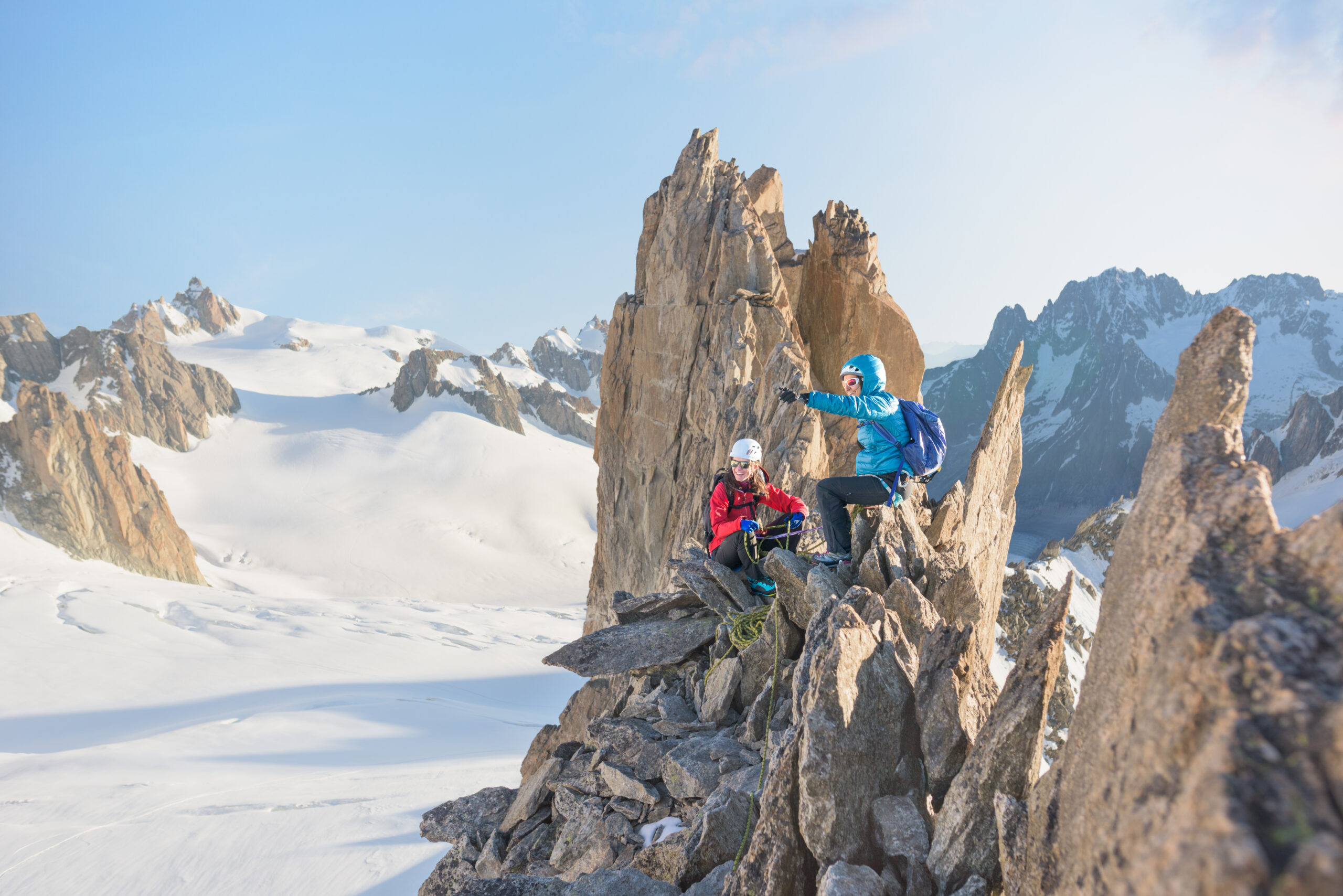
Positive femele mountain climbers having a break on Aiguille d’Entreves mountain ridge
Conquer Peaks: Your Global Summit Guide for Mountain Climbing
The master index for every guide on Global Summit Guide — 71 in-depth guides organized into 12 thematic clusters covering beginner progression, the Seven Summits, Everest, Kilimanjaro, altitude physiology, gear, technical mountaineering, and regional expeditions. Whether you’re researching your first 5,000 m peak or planning an 8,000 m project, this is the starting point.
guides
clusters
covered
tiers
Mountain climbing rewards careful preparation more than almost any other adventure pursuit. The peaks are demanding, the conditions unpredictable, and the difference between a memorable summit and a serious incident usually comes down to decisions made weeks — sometimes months — before you ever set foot on the mountain. This hub is the orientation document we wish every climber had before their first major objective: a complete index of every guide on Global Summit Guide, organized so you can find what you need without wading through a 200-post blog archive.
Every guide on Global Summit Guide is built from primary climbing databases — the Himalayan Database, American Alpine Club / American Alpine Journal, UIAA standards, regional park authorities (NPS, TANAPA, Argentine Provincial Parks), and current operator publications. Guides are grouped into 12 thematic clusters matching how climbers actually research: by experience tier, by specific peak, by skill area, and by region. Every cluster has an anchor guide (marked ★) that serves as the natural entry point if you’re new to that cluster’s topic. Fact-check date: April 19, 2026.
What This Hub Actually Is
Most mountaineering sites are organized chronologically — latest blog post at the top, older posts buried below. That works for news. It doesn’t work for climbers researching a specific peak or skill.
Global Summit Guide is built differently. The 71 guides indexed below are organized by how climbers actually use them: by current experience level, by the peak you’re targeting, by the skill you’re trying to build. If you’re planning Kilimanjaro, you don’t need to wade through Everest content to find what you need. If you’re training for altitude, the physiology guides live together. If you’re debating which 6,000 m peak should be your first, the Seven Summits and Beginner Progression clusters sit next to each other.
Three design principles shape the hub:
- Every guide stands alone — you can land on any one of the 71 guides without reading anything else and still get a complete answer.
- Every guide links back here — no orphan pages, no dead ends. Wherever you land, you can navigate up to this hub and laterally to sibling guides.
- Clusters reflect real use cases — not arbitrary categories. A climber planning Everest reads differently than a beginner choosing their first climb; the hub reflects that.
If you’re brand new to the site, scroll to the Progression Ladder below — it maps the natural reading sequence from complete beginner to expedition-level climber. If you’re researching a specific topic, use the sidebar Table of Contents or jump directly to the relevant cluster in Section 03.
The 12 Clusters at a Glance
Each cluster is a coherent research area — a set of guides that belong together because climbers use them together. The table below summarizes all 12; the detailed cluster sections follow.
| # | Cluster | Guides | Primary tier | Anchor guide |
|---|---|---|---|---|
| 01 | Seven Summits & Flagship | 3 | Intermediate → Expert | Seven Summits Guide |
| 02 | Beginner Progression | 5 | Beginner | Mountaineering for Beginners |
| 03 | Technical & Expert | 5 | Expert | Top 50 Technical Objectives |
| 04 | Non-Technical Treks | 8 | All levels | Top 50 Non-Technical Peaks |
| 05 | Everest | 3 | Expert | How to Climb Everest |
| 06 | Kilimanjaro | 7 | Beginner → Intermediate | Kilimanjaro Climbing Guide |
| 07 | Other Seven Summits Peaks | 7 | Intermediate → Advanced | Denali / Mont Blanc / Aconcagua |
| 08 | Altitude, Training & Physiology | 10 | All levels | Altitude Acclimatization Explained |
| 09 | Gear & Equipment | 7 | All levels | Mountain Climbing Gear List |
| 10 | Regional Guides | 6 | Varies | Greatest Alps Compared |
| 11 | Japan & Local (Fuji, Utah) | 6 | Beginner | Mount Fuji Climb Guide |
| 12 | Planning, Safety & Weather | 4 | All levels | Mountain Climbing Costs |
Total: 71 guides across 12 clusters. Every guide appears in exactly one cluster.
Every Guide, Organized by Cluster
The anchor guide for each cluster (marked ★) is the best starting point if you’re new to the cluster’s topic. All other guides can be read in any order.
Seven Summits & Flagship Collections
The Seven Summits (the highest peak on each of the seven continents) is mountaineering’s most famous collection — approximately 600 recorded completions since Dick Bass became the first completer in 1985. These guides explain the collection itself, how to plan the project, and which peak makes the right first step.
Beginner Progression
For climbers just entering the sport. These guides answer the foundational questions: what’s the difference between hiking and mountaineering, which peak should I attempt first, and how do I actually use a guide to plan a climb. Start here if you haven’t yet completed a 4,000 m+ objective.
Technical & Expert Mountaineering
For climbers with multiple 6,000 m+ summits and proven technical skills. These guides cover the world’s hardest objectives, standardized route data formats, and the technical peaks that separate serious mountaineers from weekend climbers.
Non-Technical Treks & Classic Trails
Some of the world’s most famous alpine experiences are treks, not climbs — TMB around Mont Blanc, Everest and K2 Base Camp, Torres del Paine, the Annapurna Circuit. These guides cover the classic long trails accessible to fit hikers without technical mountaineering skills.
Everest
Mount Everest (8,849 m) is the most consequential climb on Earth. These guides cover everything from current 2026 season changes through complete cost breakdowns to route-by-route selection. For training and EBC trekking, see Clusters 04 and 08.
Kilimanjaro
Kilimanjaro (5,895 m) is Africa’s highest, the highest free-standing mountain on Earth, and the most popular gateway to high-altitude climbing. These guides cover every route, current costs, training plans, and the realistic timeline for each variant.
Other Seven Summits Peaks
The remaining Seven Summits plus Mont Blanc (the classic European alpine peak): each with its own character, season, logistics, and technical demands. These guides cover route selection, costs, and first-person expedition reporting on each peak.
Altitude, Training & Physiology
Every 6,000 m+ climber needs to master altitude. These guides cover the physiology of acclimatization, the full spectrum of altitude illness (AMS, HACE, HAPE), structured training programs, frostbite and breathing techniques — the skills that separate people who make it to the summit from those who turn around sick.
Gear & Equipment
Most gear failures happen because climbers buy the right equipment for the wrong climb. These guides match gear categories to specific peak requirements, with buyer’s guides updated annually as brands refresh lineups. Start with the master Gear List if you’re assembling a kit from scratch.
Regional Guides (Alps, Andes, Atlas, Oceania, Cultural)
Beyond the named peaks of the Seven Summits, entire mountain ranges anchor their own climbing cultures. These guides cover the Alps, Andes, Atlas, the Oceania peaks beyond Australia, and the sacred mountains of multiple traditions — all with distinct seasons, logistics, and cultural considerations.
Japan & Local Peaks (Fuji, Utah)
Not every great climb requires international travel. Japan’s Mount Fuji is a classic cultural summit accessible to fit hikers; Utah’s Wasatch and Timpanogos ranges offer genuine alpine experience within two hours of Salt Lake City. These guides cover the peaks that let you build skills close to home.
Planning, Safety & Weather
These guides don’t belong to a single peak or region — they’re the cross-cutting decisions every climber faces. How to budget a multi-year project, how to read a mountain forecast, how to stay out of avalanche terrain, and what’s changed in the broader mountaineering landscape this season.
Progression: From Beginner to Expert
Most climbers work through these tiers sequentially, though some skip ahead with proven prior experience. Each tier lists the handful of guides we’d read first if we were starting at that level today.
Hiking experience, no technical skills. Looking for first 4,000–5,000 m objectives.
2–4 prior trips. Comfortable with crampons. Targeting 5,000–6,000 m peaks like Kilimanjaro or Aconcagua.
Proven 6,000 m+ experience. Pursuing Denali, Aconcagua, Mont Blanc, and the Seven Summits project.
7,000 m+ summits and technical climbing. 8,000 m expeditions, Nepal’s technical peaks, polar objectives.
Progression is measured in years, not months. Most climbers spend 1–2 years at Tier 1, 2–3 years at Tier 2 before their first major 6,000 m peak, 3–5 years at Tier 3 completing progressively harder Seven Summits, and ongoing years at Tier 4 for technical or 8,000 m objectives. Skipping tiers dramatically elevates risk — the progressions exist for sound physiological and skills-building reasons.
Frequently Asked Questions
What is the Global Summit Guide hub?
The Global Summit Guide hub is the master index page that organizes every guide on the site — 71 in total — into 12 thematic clusters. It serves as the starting point for climbers researching a specific peak, planning their first major climb, or progressing through a multi-year mountaineering project. Every other guide on the site links back to this hub, and the hub links forward to every guide.
Which guide should I start with?
Start with the cluster that matches your current goal. Complete beginners should start with the Beginner Progression cluster — specifically Mountaineering for Beginners and 10 Best Mountains to Climb for Beginners. Climbers planning a first major peak should look at the Seven Summits & Flagship cluster, then drill into the relevant peak-specific cluster (Kilimanjaro, Everest, or Other Seven Summits Peaks). Climbers building skills should read the Altitude & Physiology cluster alongside the Gear cluster.
How are the 12 clusters organized?
Clusters are organized by the way climbers actually use guides: by experience level (Beginner Progression, Technical & Expert), by specific peak (Everest, Kilimanjaro, Other Seven Summits Peaks), by skill area (Altitude & Physiology, Gear), by objective type (Non-Technical Treks, Seven Summits & Flagship), and by region (Regional Guides, Japan & Local). A single guide may naturally touch multiple clusters but is listed once, in its primary cluster.
Do I need to read the guides in any particular order?
No. Each guide is written to stand alone. That said, most climbers benefit from working broad-to-narrow: start with a flagship overview (Seven Summits Guide or Mountaineering for Beginners), then read the peak-specific guide for your target climb, then drill into the skill-specific guides (Altitude Acclimatization, Gear List, Training for High Altitude). The Progression Ladder section above maps a typical reading sequence by experience tier.
How often are the guides updated?
Every guide is reviewed at least twice per year. Peak-specific guides (Everest, Kilimanjaro, Aconcagua, Denali) are updated each climbing season to reflect current permit fees, operator pricing, route changes, and season-specific trends. Gear guides are refreshed annually. The most recent update date for each guide is shown on the guide itself, and every guide cites its source databases (Himalayan Database, AAJ, UIAA, national park authorities) for fact-checking.
Where can I find information about a specific peak not listed?
The 71 guides in this hub cover the most-climbed and most-searched peaks. If you’re researching a lesser-known peak, check the Regional Guides cluster first — it covers the Alps, Andes, Atlas, Nepal’s technical peaks, Oceania, and culturally significant summits. The Peak Profile Template in the Technical & Expert cluster is also useful for structuring your own research on any peak not covered.
Authoritative Sources & Further Reading
Every guide in this hub is researched and fact-checked against the primary databases and authorities that document mountaineering activity, route information, and expedition statistics:
- The Himalayan Database — Authoritative source for 8,000 m peak statistics, originally compiled by Elizabeth Hawley
- American Alpine Club & American Alpine Journal — Annual record of North American and international climbing expeditions
- UIAA (International Mountaineering and Climbing Federation) — Global climbing standards, route grading, and stewardship
- NPS Denali National Park — Official Denali permits, route data, and seasonal statistics
- TANAPA (Tanzania National Parks Authority) — Kilimanjaro regulations and fee structure
- Argentine Provincial Park Authority — Aconcagua permitting and seasonal summit data
- Wilderness Medical Society — Practice guidelines for altitude illness diagnosis and treatment
- Leave No Trace Center for Outdoor Ethics — Backcountry stewardship principles for alpine environments
- Peer-reviewed altitude physiology research (acclimatization, hydration, supplemental oxygen)
- Operator pre-trip briefings: International Mountain Guides, RMI Expeditions, Mountain Madness, Alpine Ascents
Choose Your Mountain — Plan Your Next Climb
This hub is the navigation layer. When you’re ready to commit to a specific objective, start with the Beginner Progression cluster if you’re new, the Seven Summits cluster if you’re planning a multi-year project, or the peak-specific clusters (Everest, Kilimanjaro, Other Seven Summits Peaks) for your target climb.