
Last updated September 10, 2026
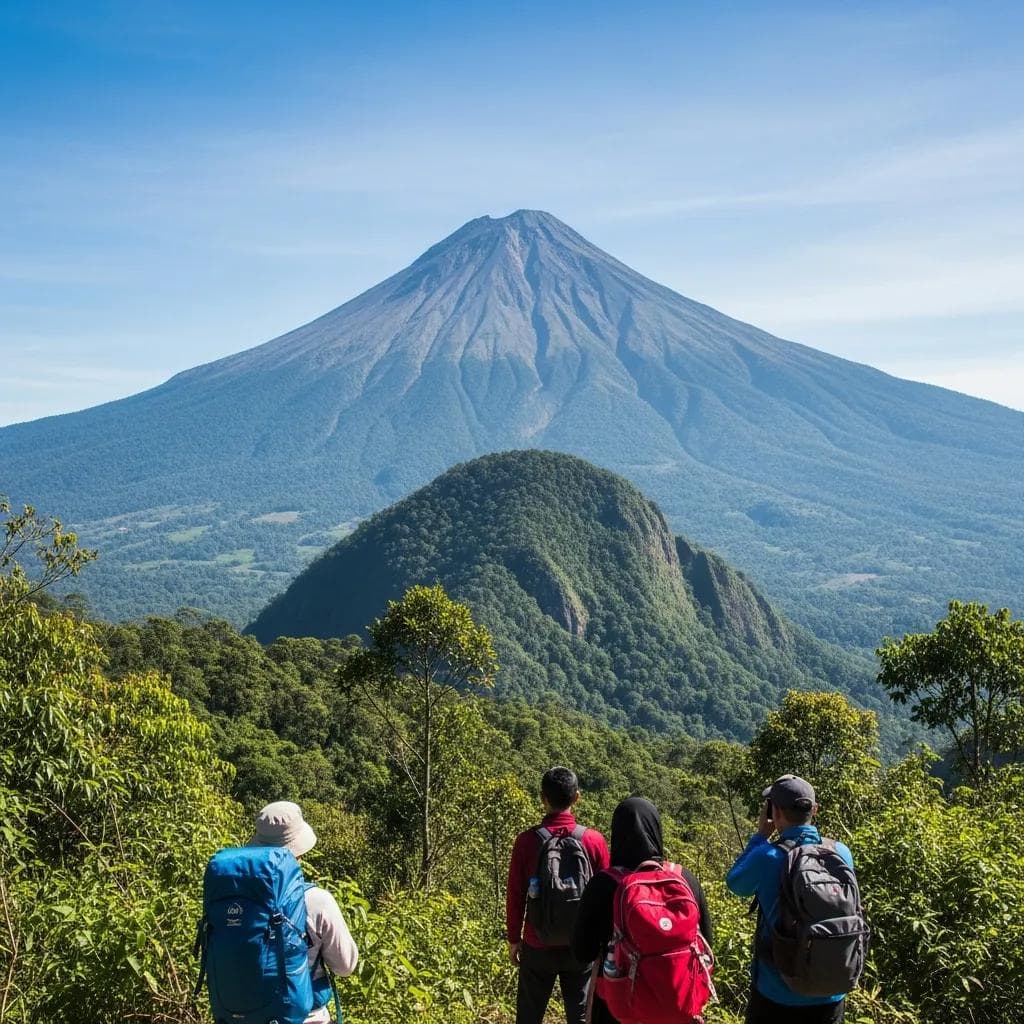
Sacred Mountains of the World: Peaks People Worship, Climb & Refuse to Climb
Some mountains are climbed as pilgrimage. Some are approached but never summited. Some are places of revelation, divine dwelling, ancestry, ceremony or memory. This collection begins with a simple rule: before asking how to climb a sacred mountain, ask what the mountain means to the people who hold it sacred.
A sacred mountain is not automatically a mountain to climb.
The mountains in this collection ask for different kinds of movement. At Mount Kailash, the pilgrimage circles the mountain and leaves the summit alone. At Uluru, the respectful modern visit stays on the ground around the rock rather than climbing it. Mount Fuji, Mount Tai, Croagh Patrick and Mount Sinai preserve traditions in which going upward is itself part of pilgrimage.
Other peaks sit somewhere between those models. Mount Shasta, Mount Agung, Mount Ararat and Mount Olympus are climbed, but climbing does not erase the religious or cultural meaning already present. Mount Athos, Nanda Devi and Bear Butte remind visitors that sacred landscapes can carry access rules and responsibilities that are not reducible to hiking difficulty.
That division matters because cultural research and personal reflection do different jobs. A guide to Mount Athos should tell you what the Holy Mountain is, why its monastic traditions matter and what restrictions shape a visit. A reflection on solitude should not pretend to speak for Orthodoxy, Buddhism, Islam, Hinduism, Indigenous religion or any other tradition. One side of this collection listens to communities and history; the other speaks openly in one author’s voice.
The result is not a ranking of religions or a list of “most spiritual” mountains. There is no meaningful scale on which Kailash is more sacred than Bear Butte, or Sinai more sacred than Uluru. Sacredness is a relationship between people, story, practice and place. The collection is organized to help travelers recognize that relationship before they arrive with a summit plan already fixed.
Decide what kind of visit is appropriate before planning the route.
The same action can carry opposite meanings on different mountains. A summit can be the pilgrimage on one peak and the disrespect on another.
Walk around the mountain
Mount Kailash is the defining example. The mountain is not a summit objective; the journey is the circuit around it.
Climb because going upward is part of worship
Fuji, Mount Tai, Croagh Patrick, Sinai and Sri Pada each connect ascent with pilgrimage in different traditions.
Let the summit remain untouched
Machapuchare and Uluru show why the most respectful mountain experience may deliberately stop below the top.
An open route is not an empty landscape
Shasta, Agung, Ararat and Olympus can be climbing objectives and sacred places at the same time.
18 mountains and sacred landscapes to explore
Every card below links directly to its completed guide. These pages are not a summit checklist; together they show how differently human communities have understood mountains as holy ground.
Mount Kailash
The flagship sacred mountain: a pilgrimage is made around the mountain rather than to its summit. The kora makes restraint—not conquest—the central mountain act.
Machapuchare
The unmistakable Fishtail above the Annapurna region. Its modern climbing story is defined by a boundary: approach and admire the mountain without claiming the summit.
Mount Sinai
A mountain of revelation in the Abrahamic traditions, paired with Saint Catherine’s Monastery and the long tradition of ascending before dawn.
Adam's Peak / Sri Pada
A famous dawn pilgrimage built around the sacred footprint at the summit and a remarkable overlap of religious traditions.
Croagh Patrick
Ireland’s holy mountain and a living pilgrimage associated with Saint Patrick, including the long-standing Reek Sunday tradition.
Mount Athos
A monastic peninsula and Holy Mountain where access is inseparable from religious practice, community rules and the centuries-old avaton tradition.
Uluru
The clearest modern example of a sacred place becoming more meaningful when visitors stop treating the summit as the objective. The climb closed permanently in 2019.
Mount Tai / Tai Shan
China’s Eastern Great Mountain: thousands of stone steps, temples, inscriptions and imperial ritual turn the classic climb into a journey through sacred history.
Mount Fuji
Japan’s highest mountain is also a place of worship and pilgrimage. Its modern summer climbing system sits on top of centuries of sacred ascent.
Mount Ararat
A high volcanic summit shaped by the Noah’s Ark tradition and by its deep place in Armenian identity, memory and religious imagination.
Kilimanjaro & Mount Meru
Africa’s highest mountain and nearby Meru belong to living East African landscapes with cultural meaning that predates modern expedition tourism.
Mount Olympus
The home of the Olympian gods in Greek tradition and one of the world’s clearest examples of a mountain becoming sacred through divine dwelling.
Nanda Devi
The ‘bliss-giving goddess’ is both a mountain and a protected sacred landscape, where conservation and reverence now shape what access means.
Mount Shasta
A major Cascade volcano with living significance for Indigenous peoples and a separate modern spiritual culture that has grown around the mountain.
Mount Agung
Bali’s highest and holiest mountain, tied to Mount Meru cosmology and the great temple complex of Besakih on its slopes.
Jabal al-Nour / Cave of Hira
The mountain above Mecca containing the Cave of Hira, traditionally associated with the first Qur’anic revelation to the Prophet Muhammad.
Mount Tabor
Traditionally associated with the Transfiguration of Jesus, making the mountain a place where landscape, scripture and pilgrimage meet.
Bear Butte / Black Hills
A living sacred landscape where visitors encounter prayer offerings, ceremony and Indigenous traditions that call for restraint, quiet and respect.
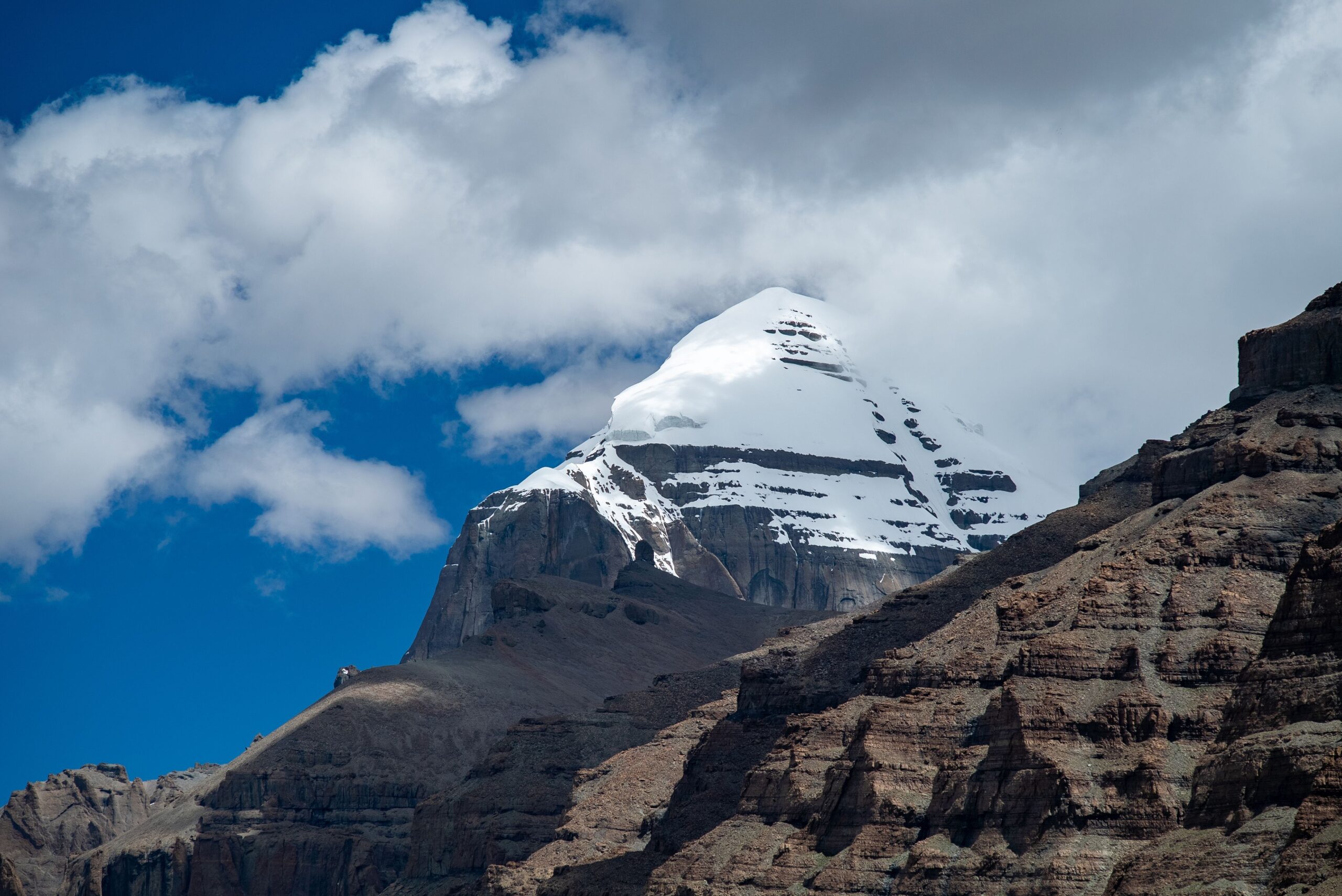
The absence of a summit attempt can be the whole point.
Modern mountaineering usually treats the top as the center of the story. Sacred mountains can reverse that logic. On Mount Kailash, meaning is expressed through circumambulation. On Machapuchare, the untouched summit has become part of the mountain’s identity. On Uluru, the climb’s closure asks visitors to replace a summit goal with listening and cultural understanding.
The stories differ. The patterns repeat.
No single explanation covers every tradition, but several themes return across cultures that developed far apart from one another.
The mountain as the home of gods or sacred beings
Olympus as the home of the Olympians, Kailash as the abode of Shiva in Hindu tradition, and sacred beings associated with other high places turn elevation into divine geography.
The mountain as a place where heaven speaks
Sinai, Jabal al-Nour and Mount Tabor each connect a high place with a defining moment of revelation or encounter in religious tradition.
The mountain organizes the world around it
Mount Tai’s place in the Five Great Mountains and Agung’s role in Balinese sacred geography show how a mountain can orient more than a map.
Walking becomes a spiritual practice
Kailash, Fuji, Sri Pada, Croagh Patrick, Sinai and Tai Shan all turn distance, effort or ascent into part of the religious experience.
The mountain is a relationship, not an object
Uluru, Bear Butte, Shasta and other Indigenous sacred landscapes cannot be understood only through geology or recreation.
Reverence sometimes establishes a boundary
Kailash, Machapuchare and Uluru make the collection’s hardest lesson explicit: access to a place does not create an entitlement to stand on top of it.
Sacred mountains are universal. Sacred-mountain traditions are not interchangeable.
The resemblance between traditions can be striking, but respect begins by resisting the temptation to collapse them into one generic idea of “mountain spirituality.” Each mountain belongs to a particular people, history and way of understanding the world.
Kailash, Machapuchare and Nanda Devi place limits at the center of the story.
Mount Kailash is approached through circumambulation rather than summit climbing. Machapuchare is defined partly by the absence of a completed recognized ascent. Nanda Devi joins sacred identity with a protected sanctuary. These are three different histories, but all interrupt the usual assumption that a mountaineer’s highest form of engagement is reaching the top.
Fuji and Tai Shan make ascent itself part of a much older cultural road.
Mount Fuji carries Shinto and Buddhist pilgrimage traditions into a modern summer climbing system used by large numbers of hikers. Mount Tai is lower but historically dense: stone stairs, gates, temples, imperial ritual and inscriptions make the physical climb part of the cultural landscape. Neither mountain is best understood by elevation or trail difficulty alone.
Sinai, Hira, Tabor and Ararat connect mountains with revelation, scripture and memory.
Mount Sinai is traditionally connected with Moses and the giving of the commandments. Jabal al-Nour is associated in Islam with the first revelation received by the Prophet Muhammad. Mount Tabor is traditionally linked with the Transfiguration in Christianity, while Ararat carries the Noah tradition and deep Armenian significance. The landscapes are different; what links them is the role of mountains in sacred memory.
Uluru, Bear Butte and Shasta require visitors to think beyond recreation.
Uluru is a particularly clear lesson because the former climb is now permanently closed and the visitor experience is organized around Aṉangu culture and the land itself. Bear Butte remains a place of prayer and ceremony for Plains peoples. Mount Shasta carries Indigenous sacred traditions alongside later spiritual movements. The responsible visitor does not treat these histories as colorful additions to a hiking itinerary.
Olympus, Athos and Croagh Patrick show three very different relationships between faith and ascent.
Mount Olympus belongs to the sacred imagination of ancient Greece and is also a modern mountain objective. Mount Athos is an active Orthodox monastic landscape where entry itself is regulated. Croagh Patrick remains a climbed Christian pilgrimage mountain. Grouping all three under “Europe” is useful geographically, but their correct visitor posture is completely different.
Kilimanjaro, Meru and Agung remind climbers that famous routes existed inside cultural landscapes first.
Kilimanjaro and nearby Mount Meru are now internationally known trekking objectives, but their East African cultural context did not begin with tourism. Mount Agung is Bali’s holiest mountain and remains embedded in Balinese Hindu sacred geography. A commercially organized climb is still a visit to someone else’s meaningful place.

There is also a second question: what do the mountains do to us?
The Sacred Peaks guides look outward—toward culture, tradition, access and pilgrimage. Faith & the Mountains looks inward. It begins with one climber’s conviction that high places can point toward God while leaving room for readers who experience the same awe differently.
A reflective companion to the Sacred Peaks
This series is intentionally personal. It does not turn Global Summit Guide into a religious website or ask the reader to adopt the author’s belief. It simply refuses to pretend that awe, mortality, gratitude and the spiritual pull of mountains are irrelevant to why many people climb.
Why We Climb: The Mountains & the Sacred
A personal reflection on why high places feel different: awe, smallness, gratitude, God, and an invitation that does not require the reader to share the author’s beliefs.
Stewardship of Creation: Leave No Trace as Care
Wilderness ethics reframed as gratitude: not merely minimizing impact, but caring for a place because receiving it creates responsibility.
Read the reflection →Solitude & Silence in the High Places
A reflection on quiet, distance from ordinary life and the kind of attention that becomes possible when the mountain strips away distraction.
Read the reflection →Humility & Mortality on the Mountain
Limits, risk, turning around and mortality—not as reasons to avoid mountains, but as reasons to approach them with honesty.
Read the reflection →Gratitude at the Summit
A summit considered as something received rather than conquered: a brief moment shaped by weather, companions, effort, luck and thanks.
Read the reflection →Respect starts before the trailhead
The correct behavior changes by place. These principles are deliberately conservative: the mountain’s custodians and current local rules always outrank a generic mountain guide.
Know which community or tradition holds the place sacred and what story, practice or relationship gives the landscape meaning.
A route can be physically possible without being culturally appropriate. If local custodians ask visitors not to climb, that request matters.
Temples, shrines, prayer flags, offerings and processions are not props. Move quietly, avoid blocking ritual spaces and ask before photographing people.
Do not collect stones, offerings, plants, devotional items or other material from a sacred landscape simply because it looks abandoned.
Religious restrictions, conservation closures and temporary ceremonial limits are part of the visit. A summit objective does not override them.
The stewardship reflection connects low-impact travel with gratitude: protect the place that gave you the experience.
Where to begin
Choose by the question you are trying to answer, not by elevation.
| If you want to understand… | Start here | Then read |
|---|---|---|
| Why a summit can remain unclimbed | Mount Kailash | Machapuchare + Uluru |
| Sacred ascent as pilgrimage | Mount Fuji | Mount Tai + Sri Pada |
| Abrahamic mountain traditions | Mount Sinai | Jabal al-Nour + Mount Tabor + Ararat |
| Living Indigenous sacred landscapes | Uluru | Bear Butte + Mount Shasta |
| Sacred volcanoes people still climb | Mount Agung | Fuji + Kilimanjaro |
| Why climbers feel drawn upward | Why We Climb | Solitude + Humility + Gratitude |

Not every high place is waiting to be conquered.
A mountain can be a route, a god’s dwelling, an ancestor, a place of revelation, a pilgrimage, a protected sanctuary or several of those at once. The practical information matters—but meaning comes first.
Culture and access are kept separate on purpose
A religious tradition can be ancient while the access rule governing a modern visitor can change quickly. Each individual guide is the place to check current permits, closures, seasonal rules and route logistics.
Represent the tradition accurately
We distinguish belief, oral tradition, mythology, religious history and documented management rules instead of flattening them into one category called “legend.”
Current rules belong in the individual guide
A permanent cultural boundary is different from a temporary closure, permit system or seasonal hazard. The individual mountain guides carry the operational detail.
Visit rather than conquer
For sacred landscapes, ordinary mountaineering language can distort the relationship local people have with the mountain. The writing follows the place rather than forcing every peak into a summit narrative.
Sacred mountains, climbing and pilgrimage
The practical answer always depends on the mountain. Use the individual guide for current access after the cultural context is clear.
What makes a mountain sacred?
A mountain becomes sacred through the meaning a community gives to it: divine dwelling, revelation, pilgrimage, ancestry, creation stories, burial, ritual, spiritual guardianship or the mountain’s place in a wider sacred geography. Different traditions can assign very different meanings to the same physical act of going upward.
What is the most famous sacred mountain pilgrimage?
Mount Kailash is one of the world’s most significant mountain pilgrimages because Hindu, Buddhist, Jain and Bön traditions all revere it. The sanctioned religious journey is the kora around the mountain rather than an ascent of the summit.
Which sacred mountains should not be climbed?
Some sacred places are explicitly closed or culturally inappropriate to summit. Mount Kailash, Machapuchare and Uluru are central examples in this collection. Other mountains may allow climbing while still requiring route-specific cultural protocols, permits or seasonal restrictions.
Can a mountain be sacred and still be climbed?
Yes. Mount Fuji, Mount Tai, Croagh Patrick, Mount Sinai, Mount Olympus, Mount Ararat, Mount Shasta and Mount Agung all show different versions of sacred ascent. The important distinction is whether local tradition and current management welcome the climb, restrict it or ask visitors to experience the mountain another way.
Is Sacred Mountains of the World a religious section?
It is a mountain and pilgrimage collection that takes religious belief seriously without asking readers to share one faith. The Sacred Peaks guides explain why particular mountains matter to the communities that revere them. Faith & the Mountains is a separate reflective series written in a personal voice.
How should I visit a sacred mountain respectfully?
Learn what the place means before arriving, follow climbing and access restrictions, give worshippers room, dress appropriately at religious sites, avoid removing natural or devotional objects, ask before photographing people or ceremonies, stay on designated routes and accept that not reaching a summit may be the respectful choice.
Why include Uluru if it is not a mountain-climbing objective?
Because the purpose of this collection is not to create a summit checklist. Uluru demonstrates one of the collection’s central ideas: a sacred high place can be most fully respected by walking around it, listening to its custodians and refusing the summit.
What is Faith & the Mountains?
Faith & the Mountains is the reflective half of this collection. It begins with Why We Climb: The Mountains & the Sacred and continues through essays on stewardship, solitude, humility and gratitude. The writing is personal, but the section explicitly welcomes readers of every belief and none.
Where should I start?
Start with Mount Kailash if you want the clearest example of pilgrimage without summiting, Mount Fuji or Mount Tai if you want a sacred ascent, Uluru or Machapuchare if you want to understand why restraint matters, or Why We Climb if you are more interested in what mountains awaken in us.
Choose a mountain. Learn what it means before deciding what to do there.
Start with the sacred peak that drew you here, or begin with the reflective heart of the collection and ask a different question: why do the high places keep calling us upward?
Continue through the larger mountain library
Sacred Mountains belongs to the Mountain Collections system. Compare another collection, or move into two practical pages that connect directly to sacred Fuji and Shasta.
Walk the Pilgrimage Trails of the World
Many of these sacred peaks are reached by pilgrimage – and the great pilgrim routes are a collection of their own. Step across to the Pilgrimage Trails of the World below.
Was this helpful?
Global Summit Guide is an independent mountaineering resource founded in 2026. The team combines first-hand trekking and climbing experience with in-depth research and professional health and nutrition review to help climbers choose objectives, prepare properly, and stay safe.
Health, altitude, and nutrition content is reviewed by Taylor Ludlow (Registered Nurse) and Brigg Hoopes (Nutritionist).
What We Don't Know Yet
Mountain information changes quickly. This box explains the limits of what this page can responsibly promise.
- Permit availability, reservation windows, quotas, and official fee rules may change after this page is updated.
- Weather, snowpack, avalanche risk, road access, and route conditions can change quickly and may be different on your climbing dates.
- Route conditions, trailhead access, crevasse exposure, stream crossings, and rescue access may vary from published planning guidance.
Verify current conditions with official land managers, guide services, local forecasts, and current route reports before booking or climbing.
Mountaineering, rock and ice climbing, glacier travel, and high-altitude activity are inherently dangerous and can result in serious injury or death. The information on Global Summit Guide is provided for general informational and educational purposes only and is not a substitute for professional instruction, qualified guiding, proper equipment, or your own judgment and experience.
Route conditions, weather, snowpack, permits, regulations, and hazards change constantly and may differ from what is described here. Details may be incomplete, out of date, or contain errors. Always verify current information with local authorities, certified guides, and official sources before making any decision in the mountains.
Nothing on this site is medical, legal, or financial advice. Our fitness, acclimatization, altitude, and nutrition content is general in nature; consult a qualified physician before beginning any strenuous exercise program or exposing yourself to high altitude.
You are solely responsible for your own safety and decisions. To the fullest extent permitted by law, Global Summit Guide and its team accept no liability for any loss, injury, damage, or expense arising from use of, or reliance on, this information. By using this site you acknowledge these risks and accept these terms.
Some links on this site may be affiliate links. If you buy through them we may earn a small commission at no extra cost to you; this never affects our recommendations.
Global Summit Guide recommendation path
Next Best Mountain to Research
Use these recommendations to continue the right planning path instead of stopping on one page.
Use current permit, weather, route, and operator information before booking or climbing.
Explore Travel Options for Your Destination
Once your mountain, dates and route are taking shape, compare flights, hotels and other travel options that fit the trip.
Affiliate link. We may earn a commission at no additional cost to you.