
Last updated September 9, 2026
Stewardship of Creation: Leave No Trace as Care
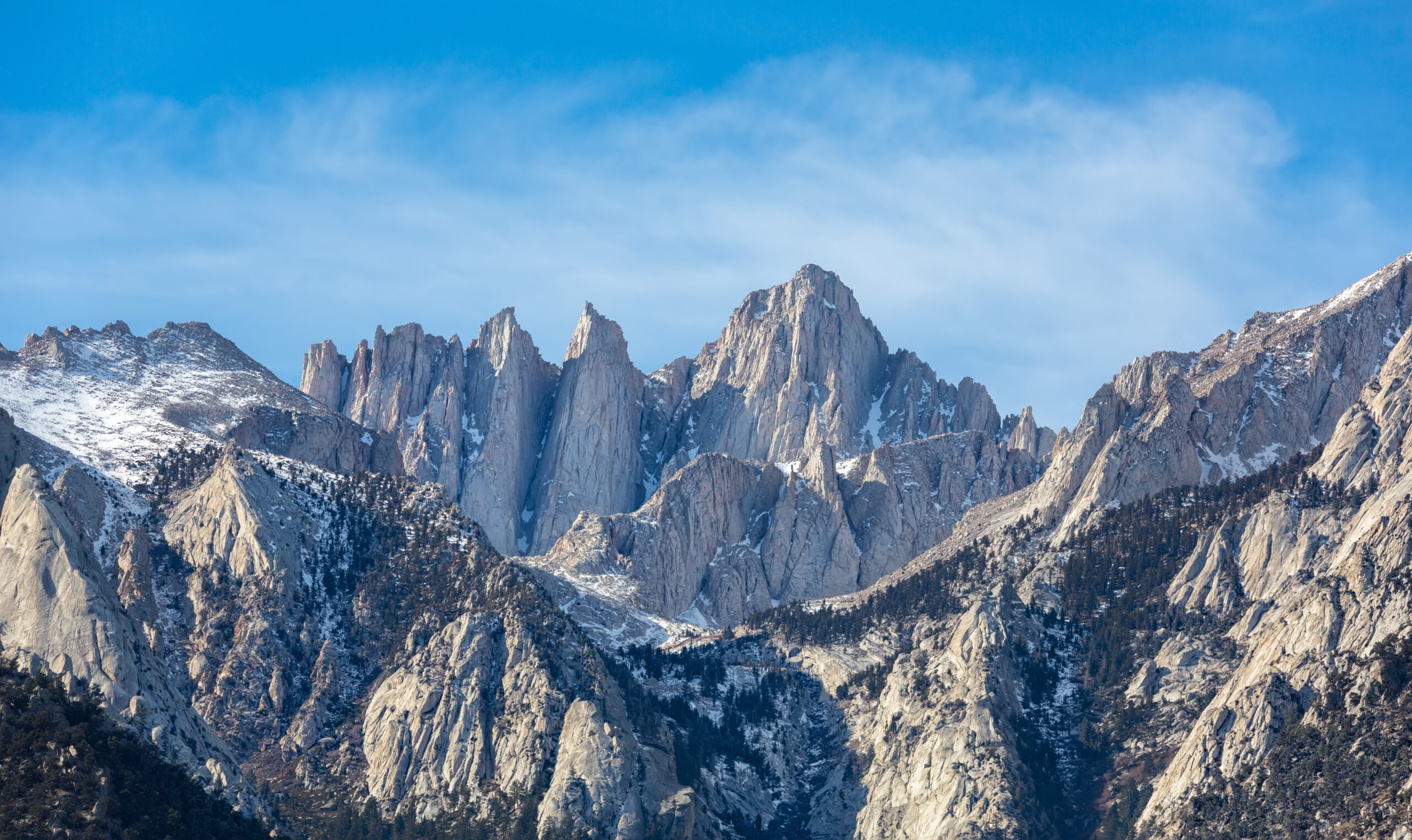
Leave No Trace can be taught as a list of outdoor practices. I think it becomes something deeper when care for a mountain begins with gratitude: I was allowed to come here, I did not make this place, and my visit should not make it poorer for the person who comes after me.
Stewardship begins when gratitude becomes responsibility.
I have never stood in a mountain landscape and felt that I had created anything around me. I may have trained for months. I may have driven the road, carried the pack, studied the route and earned every step of the climb. But the mountain itself was there before I arrived. The snow, granite, trees, water, wind and light were not my achievement.
That realization changes the way I think about outdoor ethics. If the wilderness is only a place I use, then Leave No Trace can feel like a list of restrictions attached to recreation. If the wilderness is something I have received, then restraint feels different. Packing out my trash is not simply compliance. Staying on the trail is not merely following a rule. Leaving a stone, flower or artifact where I found it is not a lost souvenir. Each choice becomes a small way of saying: I am grateful this place exists, and I do not need to possess it to value it.
Receiving a place is different from consuming it.
I do not think gratitude is sentimental. It changes behavior precisely because it changes what I believe I am entitled to take.
Mountaineering has a vocabulary of achievement: summit, ascent, objective, record, route, speed, grade. Those words are useful. They describe real effort. But they can quietly train us to see a mountain primarily as something that exists for our accomplishment.
I understand the appeal because I feel it too. A summit gives a trip direction. A route gives training a purpose. Standing on a high point after a hard climb can be unforgettable. But there is a difference between working hard to reach a summit and imagining that effort gives me ownership over the place. It does not.
When I think of creation as a gift, the mountain stops being scenery arranged around my goals. It becomes something I enter for a few hours or a few days. I borrow the trail. I borrow the campsite. I borrow the clean water, the quiet morning, the view and the privilege of moving through a landscape that existed before I knew its name.
The biblical language of stewardship has always struck me as a useful counterweight to ownership. In Genesis, humanity is placed in the garden not simply to enjoy it, but to work it and care for it. The idea is not that nature can never be touched. Human beings travel, build, cultivate, climb and use resources. The deeper claim is that receiving something good creates responsibility for how we treat it.
That is the part I want to carry into the mountains. I can enjoy a place fully without behaving as if everything I can reach belongs to me.
The place does not owe me a souvenir.
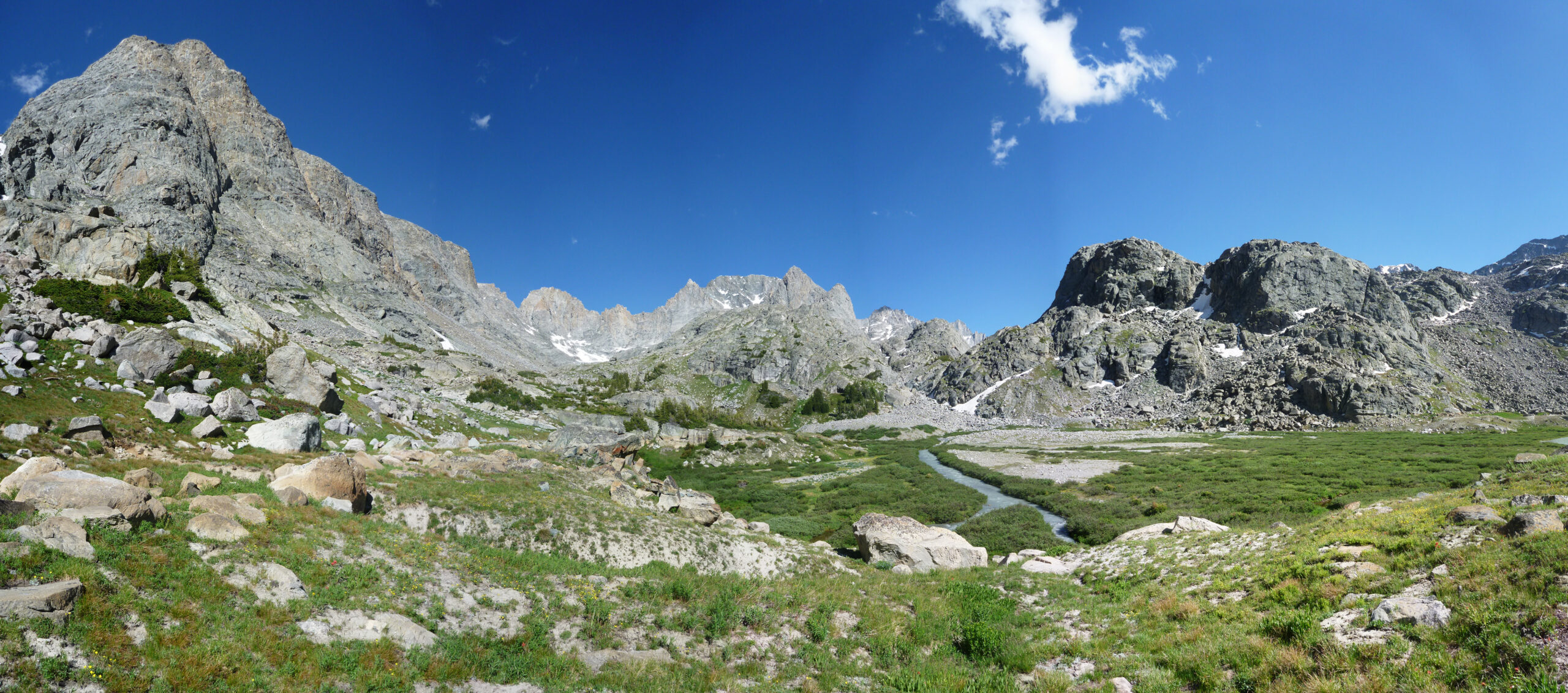
One of the quiet disciplines of stewardship is learning to leave beauty where it is. A flower is not more meaningful because I picked it. A rock does not become more mine because I carried it home. A photograph can remember the moment without removing part of the place.
The same action feels different when the motive changes.
Rules matter. Land managers need them because millions of individual choices accumulate. But lasting stewardship needs more than fear of a citation.
Not because dirt is sacred, but because repeated footsteps become damage.
A single shortcut can feel harmless. Thousands of people making the same decision widen trails, cut switchbacks and press fragile ground into a permanent scar. Care learns to see the cumulative effect of an individual choice.
My convenience should not become someone else’s cleanup.
Food wrappers, tape, broken gear, toilet paper and scraps all tell the next person that my trip mattered more than their experience. Carrying waste back down is a small act of responsibility with an obvious moral logic.
Admiration does not require possession.
Rocks, antlers, flowers, archaeological objects and devotional items are part of the place. The mountain does not become richer because my shelf at home becomes fuller.
Wild animals are not part of the entertainment package.
Feeding, crowding or chasing wildlife for a photograph changes behavior and can put animals and people at risk. Care accepts distance.
Other people came for something too.
A summit can be joyful without becoming a stage. Music, shouting and drones can turn another person’s rare quiet into background noise they did not choose.
Stewardship is specific.
Human-waste systems, fire rules, food storage, camping zones, permits and closures change by mountain. Good intentions do not replace current land-manager guidance.
Care often looks like choosing not to do something.
Mountains reward action, so restraint can feel strangely unsatisfying. Yet many of the most important outdoor decisions are decisions to stop, wait, go around or leave something alone.
There is a form of selfishness that hides inside capability. I can scramble up that closed slope. I can camp on that soft meadow. I can cut across the switchback. I can build another fire ring. I can leave a marker. I can fly the drone. I can keep the interesting rock. The question is not whether I am physically capable of doing those things.
Stewardship introduces a second question: should I?
That question belongs in climbing for reasons beyond conservation. Good mountaineering already teaches restraint. We turn around when weather closes in. We abandon a summit when a partner is struggling. We accept that a route can be unsafe even after we have invested money and months of training. The ability to stop is not weakness; it is judgment.
The same virtue applies to the landscape. Sometimes the best evidence that I love a place is that I am willing to limit myself inside it.
A practical language for the care we say we value
Leave No Trace describes its Seven Principles as a way to think about our impact and reduce it. I like that word: principles. They are not a substitute for local rules; they are a framework for making better choices.
The official framework covers planning, durable travel and camping surfaces, waste, leaving natural and cultural objects where they are, fire impacts, wildlife and consideration for other visitors. Rather than reproduce the full educational system here, I would use the official Leave No Trace Seven Principles as the source and then ask what each principle looks like on the specific mountain I am visiting.
A poorly planned trip can create impacts long before anyone drops litter. Wrong camping assumptions, inadequate waste supplies, illegal fires, poor food storage and an avoidable rescue can all begin with not learning the place before entering it.
Rock, established trail and designated camps generally tolerate use better than fragile vegetation or undisturbed ground. The exact instruction varies by environment, so local guidance should decide where feet and tents belong.
Food scraps and human waste do not disappear just because they are biodegradable. High-use mountains increasingly have route-specific requirements. Know them before the trailhead.
The discipline of leaving what I find is one of the clearest expressions of gratitude. I can take the memory and leave the mountain intact.
In dry, alpine, desert and high-use environments, a stove or no-fire camp may be the wiser choice. Fire restrictions are not suggestions when conditions make ignition dangerous.
Animals do not need food, pursuit or a close-up photograph from me. A respectful encounter can be short, quiet and far away.
Courtesy is environmental ethics too. Noise, congestion, dogs, drones, group size and trail behavior can determine whether someone else experiences a place as peaceful or chaotic.
A general ethic becomes useful only when paired with the land manager, community and cultural guidance for the mountain in front of me.

A quiet mountain can be damaged without a single piece of trash.
If a trail becomes hostile, noisy, crowded by inconsiderate groups or dismissive of local communities, something has been lost even when the ground looks clean. Stewardship includes the human experience of the place.
The wilderness is not empty just because I came for solitude.
Mountain ethics sometimes speak as if the only relationship is between a visitor and an ecosystem. In many places, there are also guides, rangers, residents, Indigenous communities, pilgrims and other climbers whose relationship with the land is older or deeper than mine.
I need that reminder because mountain travel can make a visitor self-centered without intending to. I have an objective. I have a schedule. I drove a long distance or flew across the world. I have weather constraints. I want the photograph. I want the summit. Those facts are real, but none of them move me to the front of a moral line.
Stewardship asks me to notice the people whose work keeps the trail open and whose home begins where my vacation starts. It means treating a ranger’s closure as information rather than an obstacle. It means paying attention to local rules instead of assuming that experience elsewhere makes me exempt. It means treating guides and porters as people rather than equipment attached to a trip price.
It also means sharing space well. On a popular mountain, the person behind me may have trained for a year to see the same sunrise. The family at the overlook may be experiencing the mountains for the first time. The pilgrim near a shrine may not be there for recreation at all. Consideration is not a small courtesy; it is part of leaving a place whole.
Stewardship becomes especially important when the mountain means more than recreation.
The Sacred Mountains of the World collection exists partly because ordinary climbing language can fail us on places where the summit is not the center of the story.
On a sacred mountain, care begins with learning before doing. What does this place mean? Who considers it sacred? Are there ceremonies, shrines, offerings, routes, closures or summit traditions I need to understand? Is climbing welcomed, tolerated, regulated or specifically discouraged?
Those questions matter on famous sacred landscapes such as Mount Shasta, and they matter even more clearly at places such as Bear Butte, where visitors may encounter active prayer and ceremony. They also matter on mountains where the respectful relationship is not a summit at all.
Stewardship here becomes more than ecological minimalism. I can leave no wrapper and still behave badly. I can stay on the path and still photograph a ceremony without permission. I can pack out everything I carried and still treat somebody else’s holy place as my personal adventure set.
The deeper ethic is humility: I am entering a place whose meaning I did not invent.
Good intentions need systems.
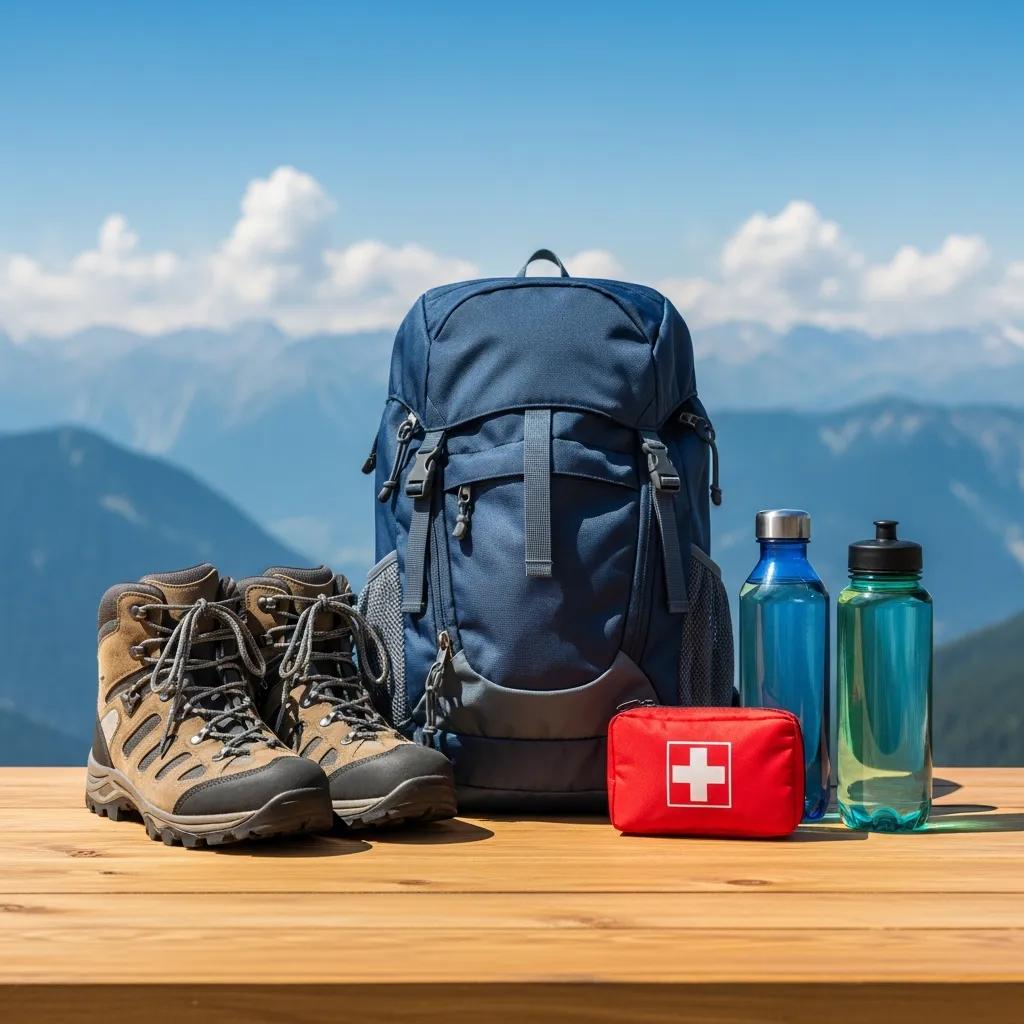
Gratitude is the motive. Preparation is how that motive survives contact with a real trip. Waste bags, food storage, a stove, route research, permits, campsite knowledge and enough emergency gear all make it easier to care for a place when conditions become inconvenient.
Turn stewardship into a short pre-trip habit
I do not need a complicated ritual. I need a few questions asked early enough that the answers can change what goes in the pack and how I behave.
What does the land manager require?
Check current camping, waste, fire, food-storage, dog, drone, group-size and closure rules. Do not assume last year’s practices are still current.
What surface can handle my feet and tent?
Know whether the route uses established trail, rock, snow, desert crust, meadow or fragile alpine vegetation. Choose durable ground according to local guidance.
How will every piece of waste leave with me?
Plan ordinary trash and the less pleasant categories before leaving home. A system that works only when everything goes perfectly is not a system.
Whose home or sacred place am I entering?
Read more than the route description. Cultural knowledge changes how a respectful person photographs, speaks, camps, climbs and responds to restrictions.
What convenience am I willing to surrender?
Stewardship usually costs something small: carrying waste farther, walking the switchback, camping elsewhere, skipping a fire, lowering the volume or leaving an object untouched.
What would I want the next person to find?
That question is simple enough to use almost anywhere. Clean ground. Undisturbed wildlife. Quiet when appropriate. A trail that still looks like a trail. A place that does not announce my visit.
I do not want my love of mountains to become a reason they are diminished.
The better I know a place, the easier it is to love it. The harder question is whether that love becomes visible in what I am willing to protect.
I want to keep climbing. I want to see more mountains, stand in more wild places and come home with stories. I do not think enjoying creation is opposed to caring for it. In many ways, enjoyment is what teaches us that care is necessary.
But love becomes shallow if it only takes. If I say a mountain restores me, gives me perspective, brings me peace or turns my thoughts toward God, then I should be willing to ask what I give in return. Often the answer is not dramatic. Carry the trash. Stay on the durable path. Leave the flower. Respect the closure. Give the animal space. Lower the noise. Learn the local story. Pick up the wrapper that was not mine.
None of those acts will appear in a summit photo. That may be why they matter.
I like that definition because it does not require perfection. It asks for attention. It asks me to notice what my presence changes and to reduce the damage I can avoid. It asks me to leave enough beauty unclaimed that another person can encounter the place without seeing evidence that I was there first.
And for me, it adds one more thought: if creation points beyond itself toward a Creator, then caring for what has been made is not separate from gratitude. It is one way gratitude becomes visible.
Keep the reflection and the field guidance connected
This page is deliberately reflective. Use current land-manager instructions for the mountain itself and the official Leave No Trace material for the full outdoor-ethics framework.
Leave No Trace
The official Seven Principles and educational resources are the practical foundation for reducing outdoor impact.
Read the official Seven Principles →Gear & Safety
Use the GSG preparation hub to connect responsible intent with the equipment, planning and safety systems a real mountain trip requires.
Open Gear & Safety →USA Peak Bagging
The beginner guide includes practical trail etiquette and Leave No Trace considerations for high-use summit lists.
Read the peak-bagging guide →Stewardship, creation care and Leave No Trace
The ethical framework is broad. The operational answer always becomes local once a specific mountain, park or wilderness area is chosen.
What does stewardship of creation mean?
Stewardship of creation means receiving the natural world as something entrusted to our care rather than something we own without limits. In a mountain setting, that changes ordinary choices: where we walk, what we leave behind, how we treat wildlife, whether we disturb sacred or fragile places, and whether another person can experience the place without first cleaning up after us.
Is Leave No Trace a religious idea?
Leave No Trace is an outdoor-ethics framework, not a religious program. This reflection places its practical principles inside a personal faith-based understanding of gratitude and stewardship. A reader does not need to share that faith to practice the same habits of restraint and care.
What are the Leave No Trace 7 Principles?
Leave No Trace organizes outdoor ethics around planning ahead, using durable surfaces, managing waste, leaving natural and cultural objects in place, reducing fire impacts, respecting wildlife and being considerate of other people. For the official wording and current educational guidance, use Leave No Trace directly.
Why connect gratitude with Leave No Trace?
Gratitude changes the motive. If a mountain, canyon or forest is experienced as a gift rather than a consumable backdrop, caring for it stops feeling like a list of restrictions. The practical behavior may look the same, but the reason becomes more personal: I want the place to remain whole because I am thankful I was allowed to experience it.
Does staying on trail really matter in alpine terrain?
Yes. Alpine soils and vegetation can be unusually slow to recover, and repeated shortcuts can widen routes, accelerate erosion and create social trails. Current local land-manager rules always control, but staying on durable established surfaces is one of the simplest ways to reduce cumulative impact.
Is packing out trash enough?
No. Waste is only one part of responsible mountain travel. Campsite selection, human-waste rules, food storage, wildlife disturbance, noise, fire restrictions, cultural-site respect, trail widening and removing rocks or artifacts can all matter. The right practice also changes by environment and land manager.
What should climbers do differently on sacred mountains?
Learn what the mountain means to the people who hold it sacred before treating it as an objective. Follow access restrictions, do not disturb offerings or ceremonial spaces, ask before photographing people, stay out of closed areas and accept that the respectful choice may be to stop below the summit.
Where can I learn the practical side of mountain stewardship?
Use the Global Summit Guide Gear & Safety hub for practical preparation and the USA Peak Bagging guide for a beginner-focused Leave No Trace section. For the official outdoor-ethics framework, use Leave No Trace's own Seven Principles and educational resources.
Leave the place worthy of gratitude.
The mountain does not need proof that I was there. A good visit can end with a summit, a turnaround or a quiet walk back to the trailhead—and with as little evidence of my passing as I can reasonably leave behind.
Continue the reflection—and carry it back onto the trail
Move through the other Faith & the Mountains essays, then use the two practical recovery links for real-world trail and sacred-land stewardship.
Was this helpful?
Global Summit Guide is an independent mountaineering resource founded in 2026. The team combines first-hand trekking and climbing experience with in-depth research and professional health and nutrition review to help climbers choose objectives, prepare properly, and stay safe.
Health, altitude, and nutrition content is reviewed by Taylor Ludlow (Registered Nurse) and Brigg Hoopes (Nutritionist).
What We Don't Know Yet
Mountain information changes quickly. This box explains the limits of what this page can responsibly promise.
- Visa, passport, vaccination, border, insurance, and local transportation rules may change before your trip.
- Route conditions, snowpack, closures, and weather can change quickly after this page is updated.
- Permit rules, fees, quotas, and reservation windows may change between review cycles.
- Operator availability, pricing, guide ratios, and cancellation terms can change by season.
- Your fitness, altitude response, risk tolerance, and experience level may change what is safe or realistic.
Verify current conditions with official land managers, guide services, local forecasts, and current route reports before booking or climbing.
Mountaineering, rock and ice climbing, glacier travel, and high-altitude activity are inherently dangerous and can result in serious injury or death. The information on Global Summit Guide is provided for general informational and educational purposes only and is not a substitute for professional instruction, qualified guiding, proper equipment, or your own judgment and experience.
Route conditions, weather, snowpack, permits, regulations, and hazards change constantly and may differ from what is described here. Details may be incomplete, out of date, or contain errors. Always verify current information with local authorities, certified guides, and official sources before making any decision in the mountains.
Nothing on this site is medical, legal, or financial advice. Our fitness, acclimatization, altitude, and nutrition content is general in nature; consult a qualified physician before beginning any strenuous exercise program or exposing yourself to high altitude.
You are solely responsible for your own safety and decisions. To the fullest extent permitted by law, Global Summit Guide and its team accept no liability for any loss, injury, damage, or expense arising from use of, or reliance on, this information. By using this site you acknowledge these risks and accept these terms.
Some links on this site may be affiliate links. If you buy through them we may earn a small commission at no extra cost to you; this never affects our recommendations.
Global Summit Guide recommendation path
Next Best Mountain to Research
Use these recommendations to continue the right planning path instead of stopping on one page.
Use current permit, weather, route, and operator information before booking or climbing.