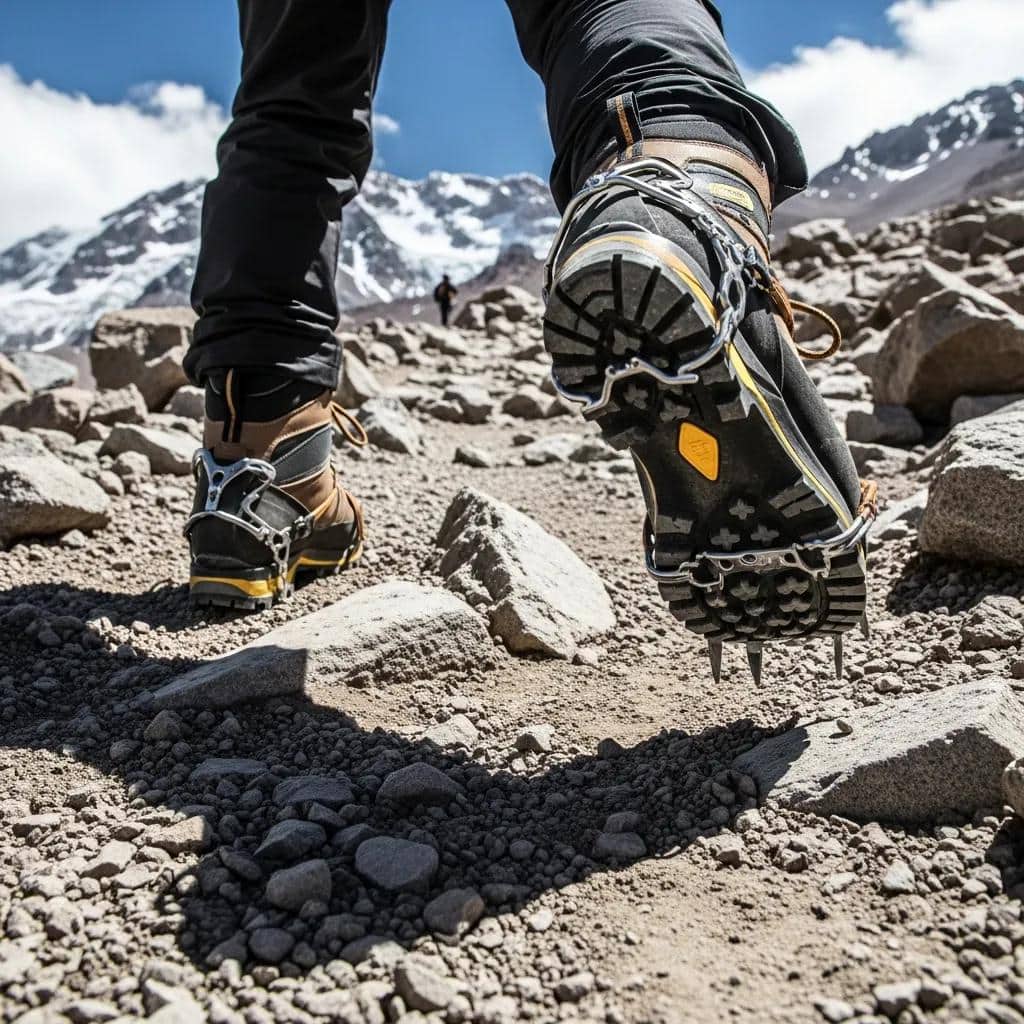
Mount Mulhacén is the highest mountain in Spain at 3,479 meters (11,414 feet), the highest peak in the Sierra Nevada range, and the highest point on the entire Iberian Peninsula. Despite holding these distinctions, Mulhacén attracts far less international attention than the Pyrenees to the north or the famous Alps further northeast — which makes it one of the most underrated European peaks for climbers seeking a major summit without crowds. The standard summer route is a non-technical class 1 hike, but the mountain transforms into a serious alpine objective in winter. This guide covers the routes, difficulty, seasons, and how to actually climb Mulhacén. For broader context see our Mount Mulhacén master page.
Why Mulhacén matters and what most people miss
Most international climbers headed to Spain or the Iberian Peninsula go straight to the Pyrenees. The Pyrenees are more famous, have more developed climbing infrastructure, and contain Aneto at 3,404 meters — widely cited as “Spain’s high mountain.” That citation is wrong. Aneto is the highest peak in the Pyrenees, but the highest peak in Spain is in Andalusia, 700 kilometers south, in the Sierra Nevada range.
Mulhacén at 3,479 meters is 75 meters higher than Aneto and 100+ meters higher than every other peak in the Pyrenees. Three of the four highest mountains in mainland Spain are in the Sierra Nevada — Mulhacén, Pico del Veleta (3,396 m), and La Alcazaba (3,371 m). The Sierra Nevada is the actual high mountain region of Spain. This is widely misunderstood even by Spanish climbers who don’t live in Andalusia.
The technicality worth knowing
The 3,479-meter Mulhacén distinction applies to mainland Spain specifically. Pico del Teide on Tenerife in the Canary Islands is higher at 3,715 meters, but the Canary Islands are a Spanish territory in the Atlantic Ocean, not part of continental Spain. By any standard definition of “mainland Spain” or “continental Spain,” Mulhacén holds the crown. By “all Spanish territory,” Teide does. Both peaks are legitimate Spanish high points depending on which framing you use.
The geography Sierra Nevada and Mulhacén’s position
The Sierra Nevada range stretches approximately 80 kilometers east-west through the Andalusia region of southern Spain. The range sits in the provinces of Granada and Almería, with the highest peaks concentrated in the western half of the range above the city of Granada. Mulhacén occupies the central position in this western cluster.
Geographic detail
Fact
Elevation
3,479 m (11,414 ft)
Range
Sierra Nevada
Region
Andalusia, southern Spain
Province
Granada
Distance from Granada city
~40 km southeast
Distance from Mediterranean coast
~50 km south
National park
Sierra Nevada National Park
Coordinates
37.0533° N, 3.3127° W
Named after
Muley Hacén, second-to-last Nasrid king of Granada (15th century)
Iberian Peninsula rank
Highest point
European rank (highest country point)
Among the highest 15-20 country high points in Europe
The mountain has two distinct sides — the gentler southern flank used by the standard route, and the dramatic northern face which drops nearly 2,000 meters down to the Genil river valley. The northern face is one of the largest faces in mainland Spain and contains technical alpine routes climbed in winter and spring.
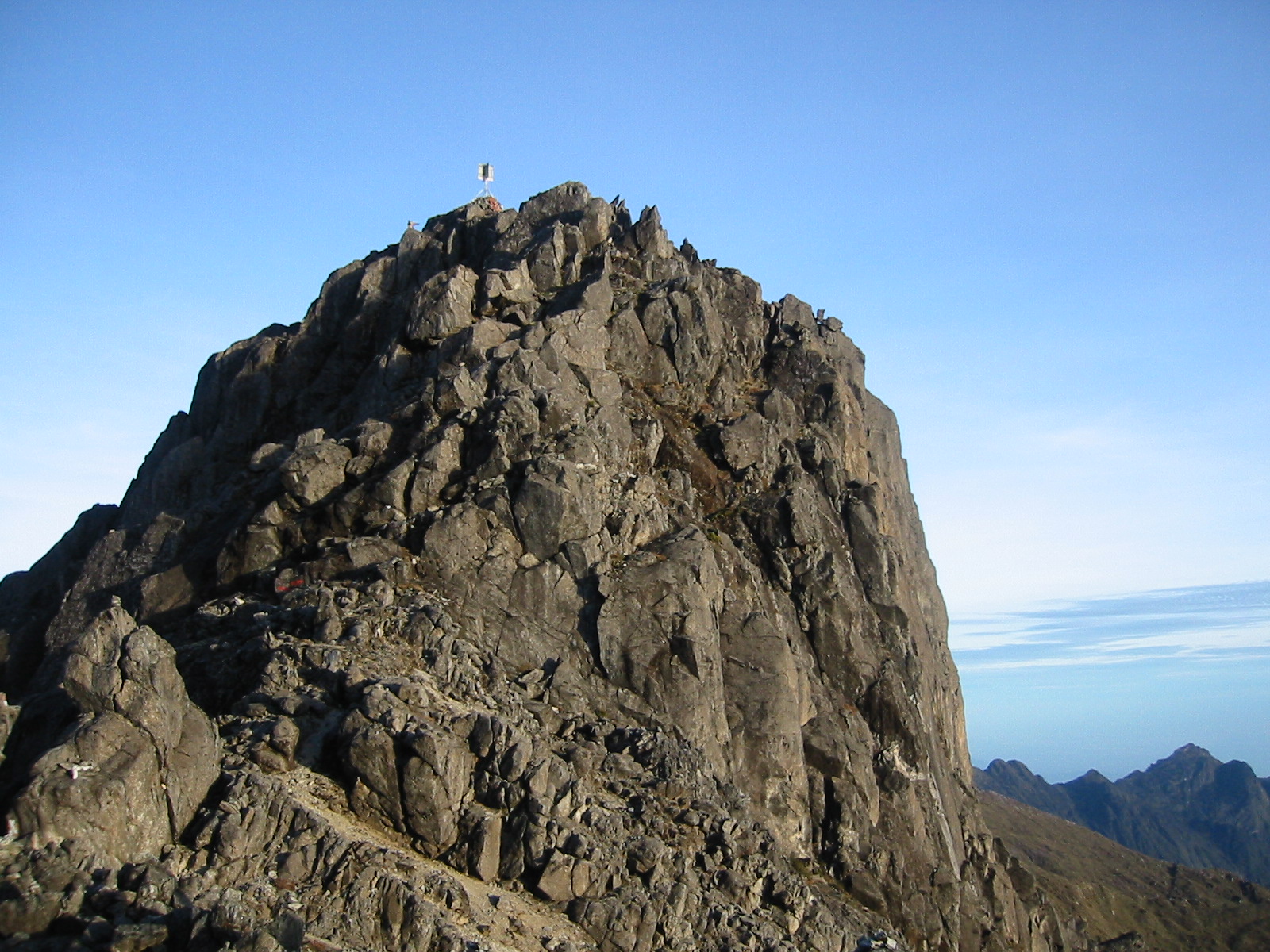
Mount Mulhacén in the Sierra Nevada range of Andalusia — the highest mountain in mainland Spain at 3,479 meters and the highest point on the entire Iberian Peninsula.
The climbing routes how people actually summit Mulhacén
There are three primary approaches to the Mulhacén summit, each with different character and difficulty. The standard summer route is non-technical; the other two add length, complexity, or technical demands.
1. South Route via Hoya del Portillo
Class 1 / Walking
Trailhead: Hoya del Portillo (2,150 m) · Distance: ~20 km round trip · Elevation gain: 1,329 m · Duration: 8-12 hours day trip OR 2 days with refuge stay
The standard route and the only realistic option for most climbers. From the Hoya del Portillo trailhead in Trevélez (reachable by park shuttle during summer), the trail climbs gradually through high alpine terrain to the Refugio Poqueira hut at 2,500 m, then continues up to the Mulhacén summit ridge. The path is well-marked, well-trodden, and requires no technical skills. The summit ridge involves easy walking on broken rocky terrain. Most international climbers use this route.
2. North Approach from Sierra Nevada Ski Area
Class 2 / Long hike
Trailhead: Hoya de la Mora at the ski area (~2,500 m) · Distance: ~28 km round trip · Elevation gain: ~1,200 m · Duration: 10-14 hours day trip
The northern approach from the Sierra Nevada ski station above Granada. The route traverses several peaks including Pico del Veleta (3,396 m) before reaching Mulhacén, making it the natural choice for climbers wanting to combine multiple Sierra Nevada summits in a single trip. Longer than the south route and with more vertical loss/regain due to traversing peaks, but offers more dramatic scenery. Requires more route-finding than the standard south approach.
3. North Face Technical Routes
PD to D / Alpine
Approach: Genil valley · Vertical: ~1,800 m face · Duration: Multi-day winter alpine · Skills: Crampons, ice axe, rope team
The north face of Mulhacén drops nearly 1,800 meters to the Genil river valley and contains multiple alpine routes climbed in winter and spring. These are real alpine objectives requiring full mountaineering equipment, glacier travel skills (in heavy snow years), and serious commitment. Spanish climbers have developed dozens of variant lines on the north face since the 1970s. Most are PD to D in difficulty – comparable to easier alpine routes in the Pyrenees but with smaller infrastructure for rescue. Not recommended for first-time Mulhacén climbers.
How difficult is Mulhacén honest assessment
The honest answer depends entirely on which season and which route you choose. The same mountain has dramatically different difficulty profiles across the year:
Season
Difficulty
What it requires
July – September
Easy hike
Basic fitness, day pack, water, sun protection
June
Easy to moderate
Snow may linger on upper sections — microspikes useful
Summer Mulhacén is comparable to Mount Kilimanjaro‘s Marangu route — long but non-technical, altitude is the main challenge.
Spring Mulhacén is comparable to the easier Pyrenees peaks like Aneto in May — snowy but moderate.
Winter Mulhacén is comparable to a winter Welsh 3000er or a winter Scottish Munro — serious but manageable with the right skills.
The North Face routes are comparable to PD-D routes in the Alps but in a less-developed region with more limited rescue.
The single biggest gotcha
Most international visitors plan for “Spain’s highest mountain” expecting something serious, then arrive to find a moderate hiking trail. Conversely, climbers who attempt Mulhacén in winter without proper preparation often underestimate it because of summer trip reports. The same name covers two very different mountains across the year.
Logistics and access how to actually get there
Getting to the trailhead
Most climbers fly into Málaga Airport (AGP) or Granada Airport (GRX). Málaga has significantly more international flights and is approximately 2.5 hours by car or bus from the trailhead. Granada is closer at 1 hour but has fewer flight connections. From Granada city, drive or take regional bus south to the village of Trevélez or the Hoya del Portillo trailhead.
During the high season (June 1 – October 31), vehicle access to the upper Sierra Nevada is restricted. Park shuttles operate from Capileira and Hoya del Portillo to the higher trailhead points. Reservations are required during peak season — book through the Sierra Nevada National Park visitor center website.
Where to stay
Accommodation
Position
Notes
Granada city
Pre/post climb base
Many hotels, restaurants. 1-1.5 hours to trailhead.
Trevélez village
Closest village
Highest village in mainland Spain. Several hotels and rural inns.
Capileira village
Park access point
Whitewashed Alpujarras village. Park shuttle origin.
Refugio Poqueira
2,500 m on mountain
Mountain hut. Reservation essential. ~€20/night.
Refugio Felix Mendez
3,100 m on mountain
Unstaffed emergency shelter near summit.
Sierra Nevada Ski Area
Northern approach
Hotels at 2,100-2,500 m, used for north approach.
The Refugio Poqueira hut at 2,500 m is the most common overnight base for two-day Mulhacén climbs. The hut is staffed during summer with meals available, dormitory-style accommodation, and a friendly atmosphere typical of Spanish mountain refuges. Book through the Federación Andaluza de Montañismo (FAM) website well in advance — summer weekends often fill 2-3 months ahead.
Costs
Cost category
Range (EUR)
Notes
Sierra Nevada park access
Free
No entry fee for the park
Park shuttle to Hoya del Portillo
€8-12
Required during high season
Refugio Poqueira (night + meals)
€40-55
Dinner + breakfast + dormitory bed
Trevélez village hotel (per night)
€60-100
Pre/post climb accommodation
Granada city hotel (per night)
€70-150
Hub accommodation
Guided climb (optional)
€150-300
Per person for 1-2 day guided trip
Total typical 2-day budget
€200-400
Excluding international transport
Mulhacén is dramatically cheaper than equivalent peaks in the Alps. A complete two-day climb costs less than a single guided day on Mont Blanc. The combination of accessibility, low cost, and the “highest in Spain” distinction makes Mulhacén excellent value for European peak baggers.
When to climb Mulhacén season by season
Period
Conditions
Recommendation
December – February
Full winter — snow, ice, cold winds
Mountaineering objective only
March – April
Late winter — variable snow conditions
Best for spring ski mountaineering
May – early June
Snow melting — wet, variable
Skip if possible — transitional
Late June
Spring conditions, snow lingers on top
Acceptable with microspikes
July – August
Hot at base, cool at summit, stable
Peak season — most climbers
September
Best window — stable, cooler, less crowded
Optimal for most climbers
October
Cool, possible first snow
Excellent but unpredictable
November
First serious snow — transitional
Skip unless prepared for winter
September is widely considered the best month for international visitors: stable weather, cooler temperatures than July-August, fewer crowds at the refuge, and reliable trail conditions. July and August work but the lower-elevation approach hikes can be uncomfortably hot.
Weather note
The Sierra Nevada has a Mediterranean mountain climate with hot dry summers and cold snowy winters. Afternoon thunderstorms are common in July and August — start early to be off the summit by 2 PM during these months. Winter wind exposure on the summit can be severe; the peak is among the windiest locations in Spain.
Mulhacén vs other Spanish peaks in context
Peak
Elevation
Range
Difficulty (summer)
Mulhacén
3,479 m
Sierra Nevada
Class 1 hike
Aneto
3,404 m
Pyrenees
Class 2-3, glacier crossing
Pico del Veleta
3,396 m
Sierra Nevada
Class 1 hike
La Alcazaba
3,371 m
Sierra Nevada
Class 2-3, route-finding
Posets
3,375 m
Pyrenees
Class 2-3
Monte Perdido
3,355 m
Pyrenees
Class 3, glacier
Pico del Teide
3,715 m
Tenerife (Canary Islands)
Class 1 hike, permit required
Mulhacén is the easiest 3,400+ meter peak in Spain to climb on its standard summer route — easier than Aneto (which requires glacier crossing) and easier than Monte Perdido (technical scrambling). This makes it the natural choice for climbers wanting to claim a major Spanish high point without technical mountaineering. The full Pico del Teide framework is in our broader peak coverage.
Combining Mulhacén with other peaks trip-planning options
Most international climbers spend 3-7 days in southern Spain when visiting Mulhacén. The mountain pairs naturally with several other objectives and activities:
Mulhacén + Pico del Veleta: the second-highest Sierra Nevada peak (3,396 m) can be combined with Mulhacén in a 2-3 day trip via the north approach. Both summits in one trip is the natural Sierra Nevada peak-bagging objective.
Mulhacén + La Alcazaba: the third-highest Sierra Nevada peak adds technical interest with class 2-3 scrambling. Combined trips take 3-4 days.
Mulhacén + Granada/Alhambra: the most common pairing for cultural visitors. 2 days mountain + 2-3 days exploring Granada including the Alhambra palace complex.
Mulhacén + Las Alpujarras: the white villages on the southern slope of the Sierra Nevada (Capileira, Pampaneira, Trevélez) make excellent multi-day cultural extensions.
Mulhacén + Mediterranean coast: the Costa Tropical and Costa del Sol are 1-2 hours south of the mountain. Climbers often combine Mulhacén with coastal time before or after.
Safety considerations honest assessment
Mulhacén has a low fatality rate by mountain standards. Most deaths on the peak in recent decades have involved winter alpine objectives on the north face rather than the standard summer route. The standard route safety considerations are primarily:
Altitude: 3,479 m is high enough to cause altitude sickness in some climbers, particularly those arriving from sea level (Málaga or Granada) within 48 hours. Drink water aggressively, avoid alcohol the night before, descend if symptoms develop.
Sun and heat: summer days at high elevation produce intense solar radiation. Sun protection, hydration, and early starts matter. Heat exhaustion is more common than altitude sickness on summer Mulhacén climbs.
Afternoon thunderstorms: July-August storms are predictable. Start early, be off the summit by 1-2 PM, do not climb during active thunderstorm activity.
Lightning: the exposed summit ridge is a serious lightning risk during storms. Most lightning incidents in the Sierra Nevada have occurred on the upper ridges of Mulhacén and Veleta.
Winter conditions: if you climb between November and May, treat Mulhacén as a real mountaineering objective. The mountain has killed climbers who underestimated winter conditions.
Refuge bookings: failing to secure refuge bookings during peak season can force climbers into uncomfortable choices (long day trip or bivvying).
Who should climb Mulhacén honest fit assessment
Mulhacén is excellent for you if…
You want a major European high point without technical climbing
You are visiting Spain or Europe and want to add a meaningful mountain to your trip
You collect country high points (Mulhacén is mainland Spain’s high point)
You enjoy combining mountain trips with cultural travel (Granada/Alhambra/Alpujarras)
You want a lower-cost alternative to Mont Blanc or other Alps objectives
You appreciate less crowded mountains than the Alps
You have intermediate hiking fitness — Mulhacén is genuinely easier than most major European peaks
Mulhacén might not fit if…
You want technical climbing — the standard route is hiking, not climbing
You strongly prefer well-developed Alpine commercial infrastructure
You want a peak with a major glacier crossing or alpine ridge — Mulhacén has neither in summer
You only have time for one Spanish peak and want technical climbing — Aneto in the Pyrenees may fit better
★ Mulhacén Master Guide
The complete Mulhacén framework
Full mountain detail including history, geology, and the broader Sierra Nevada climbing context.
Mount Mulhacén at 3,479 meters is the highest mountain in Spain, the highest point on the Iberian Peninsula, and one of Europe’s most underrated major peaks. The mountain offers a non-technical class 1 hike on its standard south route during the summer season (June-October), making it accessible to fit hikers without prior technical mountaineering experience. Winter and spring conditions transform Mulhacén into a serious alpine objective requiring full mountaineering equipment and skills. Total trip costs are dramatically lower than equivalent Alps peaks — a complete two-day climb typically costs €200-400 excluding international travel. The peak pairs naturally with cultural visits to Granada, the Alhambra, and the white villages of Las Alpujarras, making it one of the best combined climbing-and-cultural trips in Europe. For climbers building a portfolio of European high points or seeking a meaningful Spanish peak without the crowds of the Alps or Pyrenees, Mulhacén consistently rates as one of the most rewarding objectives in southwestern Europe. The full mountain framework is in our Mount Mulhacén master page.
Frequently asked questions
What is the highest mountain in Spain?
Mount Mulhacén is the highest mountain in Spain at 3,479 meters (11,414 feet). The peak sits in the Sierra Nevada range in Andalusia in southern Spain, near the city of Granada. Mulhacén is also the highest point in mainland Spain and the highest peak on the entire Iberian Peninsula. The mountain is named after Muley Hacén, the second-to-last Nasrid king of Granada, who according to legend was buried near the summit in the 15th century. Mulhacén is significantly higher than peaks in the more famous Pyrenees range to the north.
How high is Mulhacén?
Mulhacén is 3,479 meters (11,414 feet) high. It is the highest peak in mainland Spain, the highest in the Sierra Nevada range, and the highest mountain on the Iberian Peninsula. Pico del Teide on Tenerife in the Canary Islands is technically higher at 3,715 meters but is located on a Spanish territorial island in the Atlantic rather than on mainland Spain. By the standard definition of “mainland Spain” or “continental Spain,” Mulhacén holds the high point. The peak is approximately 70 percent the height of Mont Blanc and significantly higher than the Pyrenees’ Aneto at 3,404 meters.
Where is Mulhacén located?
Mulhacén is located in the Sierra Nevada range in the Andalusia region of southern Spain, approximately 40 kilometers southeast of the city of Granada. The peak sits within Sierra Nevada National Park (Parque Nacional de Sierra Nevada), one of Spain’s largest national parks. The mountain is the highest point in the province of Granada and lies in the western part of the Sierra Nevada range, near the southern edge of the Iberian Peninsula. The Mediterranean coast is approximately 50 kilometers south of the summit.
How difficult is climbing Mulhacén?
Mulhacén is generally considered a moderate hike rather than a technical climb. The standard summer route from the Hoya del Portillo trailhead is a class 1 walking trail that requires no technical climbing skills – just basic fitness, altitude acclimatization, and weather awareness. Most fit hikers can complete the standard route in a single day or with one overnight in a refuge. Winter conditions (November through May) transform the mountain into a serious mountaineering objective requiring crampons, ice axe, and avalanche awareness. The summer climb is comparable in difficulty to Mount Kilimanjaro on the Marangu route – long but non-technical.
How long does it take to climb Mulhacén?
Mulhacén can be climbed in a single long day from the Hoya del Portillo trailhead during the summer months, typically taking 8 to 12 hours round trip depending on fitness. Most climbers prefer a two-day trip with an overnight stay at the Refugio Poqueira hut, which splits the elevation gain into manageable sections. The two-day approach is the most popular for international visitors. From the Hoya del Portillo trailhead at 2,150 meters, the summit involves approximately 1,329 meters of vertical gain over 20 kilometers round trip. Faster routes from the northern Sierra Nevada ski area can shorten the trip significantly.
When is the best time to climb Mulhacén?
The best time to climb Mulhacén is from late June through mid-October, with July through September being the most reliable months. Snow lingers on the upper mountain into June in normal years. Summer days are warm but the high elevation keeps temperatures cool at the summit. July and August can be hot at lower elevations and produce afternoon thunderstorms. September and early October often offer the most stable weather. Winter climbs (November-May) are possible but require full mountaineering equipment and skills – the mountain becomes a meaningful alpine objective during these months with snow, ice, and severe wind exposure.
Is Mulhacén higher than the Pyrenees?
Yes, Mulhacén at 3,479 meters is higher than any peak in the Pyrenees. The highest peak in the Pyrenees is Aneto at 3,404 meters, which is 75 meters lower than Mulhacén. This often surprises visitors because the Pyrenees are the more famous Spanish mountain range, but the Sierra Nevada in southern Spain actually contains the country’s highest summits. Three of the top four highest mountains in mainland Spain are in the Sierra Nevada: Mulhacén (3,479 m), Pico del Veleta (3,396 m), and La Alcazaba (3,371 m). Only Aneto in the Pyrenees breaks into this top group.
Do you need a permit to climb Mulhacén?
No special climbing permit is required to hike Mulhacén during the summer season. The mountain sits within Sierra Nevada National Park where general park rules apply, but no permit fee or reservation is needed for standard day hikes or overnight trips. The Refugio Poqueira hut where most overnight climbers stay does require advance booking, particularly during peak season (July-August). Vehicle access to the upper trailheads is restricted from June through November, with park shuttles required from Hoya del Portillo. These access restrictions can change year to year – check the Sierra Nevada National Park website before planning a trip.
Mount Wilhelm Climb Guide: Route, Itinerary & Safety
Mount Wilhelm is Papua New Guinea’s highest mountain and a non-glaciated high-altitude trek rather than a technical alpine climb. The standard Keglsugl route is achievable for a fit hiker—but the rapid ascent to 4,509 metres, pre-dawn rocky summit terrain, wet weather, remote medical support and current Highlands travel-advisory environment make the planning more serious than the technical grade suggests.
By Travis Ludlow · Global Summit GuideOfficial tourism and government travel sources checked September 17, 2026
The direct answer
Mount Wilhelm is a strenuous high-altitude trek with simple climbing—but complicated travel.
The standard route climbs from the Keglsugl/Gembogl side in Simbu Province through wet montane forest to the Piunde–Aunde lake basin, then leaves in darkness for the rocky summit. Papua New Guinea Tourism describes the mountain as accessible but explicitly advises using a guide.
Official tourism material gives 2–3 days as a typical mountain climb, while Betty’s Place offers 3- and 4-day guided packages. For an international visitor arriving from low elevation, a 3- or 4-day schedule is the better planning baseline because it creates more room for acclimatization and weather.
The mountain itself is not the only decision. Current U.S. travel advice places Papua New Guinea at Level 3 overall and says not to travel to the Highlands region outside Mount Hagen and Goroka. Australia advises a high degree of caution nationally and highlights additional Highlands concerns. Those advisories can affect insurance, transport and booking decisions even when the trail itself is open.
Technical styleNon-glaciated trek
Main routeKeglsugl → Piunde → summit
GuidePNG Tourism advises one
Summit startPre-dawn
Best planning windowJune–September
Main challengeAltitude + logistics
Current travel-advisory check: the U.S. State Department currently lists the Highlands region outside Mount Hagen and Goroka as Level 4 “Do Not Travel.” Mount Wilhelm lies in the Highlands. Australia currently advises a high degree of caution in Papua New Guinea overall and says to reconsider travel to Mount Hagen. Travelers should review the exact current advisory wording, operator security plan and insurance exclusions before paying nonrefundable trip costs.
Location & geographic context
Where is Mount Wilhelm?
Mount Wilhelm rises in Papua New Guinea’s Bismarck Range, with the standard climbing approach coming from the Keglsugl/Gembogl side of Simbu Province.
Country high pointPapua New Guinea4,509 m / 14,793 ft.
RangeBismarck RangeCentral Highlands of New Guinea.
Standard accessKeglsugl / GemboglReached by road from Kundiawa.
Lake staging areaPiunde & AundeGlacial-basin base area around 3,500–3,600 m.
Regional gatewayGoroka / KundiawaPNG Tourism describes access via Goroka and road travel through Kundiawa.
The route begins in a wet tropical mountain environment
Mount Wilhelm changes ecosystems quickly—from rainforest to alpine rock.
The lower approach is often wet and muddy, while the summit push can be cold enough for frost or occasional snow. That tropical-to-alpine transition is one of the mountain’s defining planning problems: the same trip demands serious rain protection, warm pre-dawn layers and secure footing on wet rock.
The route: village road-end to lake camp to summit
Official PNG Tourism describes Keglsugl as the established side and places the base area near Piunde and Aunde lakes.
~2,800 m
Keglsugl / Betty’s Place area
The road-access end of the normal climbing chain. Confirm guide, porter, land-access, transport and hut arrangements before walking.
Organize & start
3,400–3,600 m
Piunde–Aunde lake basin
PNG Tourism describes roughly 3–5 hours from the lower area to the lake camp. The route crosses forest and open highland terrain before reaching basic mountain huts.
Sleep & acclimatize
~4,000 m
Upper rocky terrain
The summit push begins before dawn. Terrain becomes rockier and more exposed to cold, cloud and slippery conditions. Route-finding becomes more important after dark or in mist.
Pace & navigation
4,509 m
Mount Wilhelm summit
Official tourism guidance gives approximately 4–7 hours from base camp to the summit. Clear early-morning views can deteriorate as cloud builds later in the day.
Summit, then descend
Back to ~2,800 m
Descent to Keglsugl
PNG Tourism gives roughly 6–8 hours for the full summit-to-trailhead descent. Wet rock, fatigue and muddy forest make the descent a substantial part of summit day.
Finish with margin
Route ownership: this page gives the complete planning framework. For the Keglsugl stages, Ambullua alternative and route-specific detail, use the dedicated Mount Wilhelm Routes Guide.
The pacing decision
Three days or four days?
Official sources show both shorter and longer formats. The best choice depends less on fitness than on altitude history and travel fatigue.
Day
3-day mountain plan
4-day mountain plan
Why it matters
Day 1
Keglsugl → lake camp
Keglsugl → lake camp
You may move from relatively low travel elevation to ~3,500 m quickly.
Day 2
Summit → lake camp or lower
Acclimatization / recovery at lake camp
The fourth-day version creates a buffer before the 4,509 m summit.
Day 3
Descend / complete mountain
Summit → lake camp
Separating summit day from the full return can reduce fatigue.
Day 4
—
Descend to Keglsugl
Useful for sea-level visitors or anyone arriving after long international travel.
Choose 3 days when
You already know you acclimatize well.
A shorter schedule can suit climbers who arrive rested, have recent altitude exposure and are comfortable accepting less weather and acclimatization margin.
Choose 4 days when
You are arriving from low elevation.
The extra day does not guarantee acclimatization, but it is a more conservative way to handle the jump from international travel to a summit above 4,500 metres.
Original planning visual
How quickly the altitude stacks up
The mountain’s technical simplicity can hide a compressed altitude profile. This is the key reason to think carefully about itinerary length.
~2,800 mKeglsugl
~3,500 mPiunde
~3,600 mAunde area
~4,000 mUpper route
4,509 mSummit
Schematic elevation profile for planning only. Approximate intermediate elevations vary by hut, track and recorded source; it is not a topographic route profile.
The summit is rocky—not glaciated
No rope does not mean no mountain judgment.
Mount Wilhelm does not normally require glacier equipment or technical climbing hardware on the standard route. But darkness, wet rock, cold, altitude, cloud and fatigue can still turn simple scrambling into consequential terrain. A local guide is valuable because the risk is often navigation and judgment rather than technical difficulty.
The right description is “non-technical but consequentially remote,” not “easy.”
Altitude
4,509 m arrives quickly.
The itinerary can move a visitor from low elevation to sleeping near 3,500 m in a short period. Headache, nausea, poor sleep and reduced pace are real planning concerns even without technical climbing.
Weather
Equatorial does not mean warm on top.
Expect rain lower down, cold before sunrise, wet rock and rapidly forming cloud. Official tourism guidance favors June through September but still describes higher terrain as cold.
Navigation
The summit push starts in darkness.
Cloud and darkness can obscure the line on the upper mountain. A guide who knows the route is more useful than a generic GPS track when visibility deteriorates.
Descent
Wet footing compounds after the summit.
Official estimates place the summit-to-trailhead return at roughly 6–8 hours. That means much of the fall risk comes after the highest point, when fatigue is already accumulating.
Remoteness
Evacuation is not an Alpine hut problem.
Medical facilities and transport are limited compared with mainstream trekking destinations. A minor problem can become a major logistics problem if the group has no communications or evacuation plan.
Travel chain
The mountain begins before the trailhead.
Domestic flights, Highlands road travel, landowner arrangements, local guides, vehicle reliability and security conditions all determine whether the climbing plan functions.
September 2026 travel context
Travel advice is part of the climb plan
The page should not label Mount Wilhelm “safe” or “unsafe” for an individual traveler. It should show the current advisory facts that may affect travel, insurance and logistics.
Source
Current advice
Mount Wilhelm planning consequence
United States
PNG Level 3 overall; Highlands region outside Mount Hagen and Goroka listed Level 4 “Do Not Travel.”
Review the exact advisory and insurer response before booking Highlands road travel.
Australia
Exercise a high degree of caution in PNG overall; higher levels apply in some areas, including “reconsider” advice for Mount Hagen.
Use reputable transport, verify local security conditions and confirm medical evacuation coverage.
United Kingdom
Against all but essential travel to Hela, Southern Highlands and most of Enga; additional caution advised across the Highlands.
Simbu is not currently in the UK’s named all-but-essential list, but local conflict and road conditions still require current local checks.
Insurance check: government advice can affect whether a travel policy will cover cancellation, medical evacuation or incidents in the Highlands. Ask the insurer in writing whether the exact route and advisory level remain covered.
Local logistics
Guides, Betty’s Place & the Keglsugl system
Official tourism sources identify Betty’s Place as a long-running gateway operation that works with local communities, guides and porters.
Official tourism guidance
Use a local guide.
Papua New Guinea Tourism says Mount Wilhelm is accessible but “far from an easy climb” and advises trekkers to use a guide. It points travelers toward local accommodation and guide arrangements rather than a permit-heavy commercial expedition system.
Betty’s Place
A practical gateway rather than a luxury lodge.
PNG Tourism describes Betty’s Place, formerly Betty’s Lodge, as a family-run guesthouse serving the Mount Wilhelm area since 1987. It can arrange three- or four-day guided climb packages, local guides, porters and 4×4 transport.
Road logistics
Goroka → Kundiawa → mountain area.
PNG Tourism describes domestic flight access to Goroka, followed by road travel through Daulo Pass to Kundiawa. The mountain is then reached by Highlands roads toward Gembogl and Keglsugl.
Land & community relationships
Local access is part of the route system.
Australian travel guidance tells trekkers to ensure trekking companies have arrangements with landowners and a safety plan. This is more useful than assuming a generic “permit” covers every local access issue.
There is no defensible universal $3,000–$7,000 price. The useful approach is to separate the local mountain package from the international trip total.
Cost layer
Current evidence
What to verify
Local package example
PNG Tourism currently lists one 3-night Mount Wilhelm package from K2,563 per person.
Current inclusions, transport origin, guide, food, porter support and whether the offer is still available for your dates.
Betty’s Place package
Official tourism listing says 3- and 4-day guided packages are available by enquiry.
Current written quote, group size, vehicle transfer, lodge nights, guide/porter pay and landowner-related charges.
Domestic PNG travel
International visitors generally require domestic air and Highlands road transport.
Port Moresby connection, Goroka or other gateway, secure road transport and buffer days.
International travel
Varies too much by origin to publish as one durable number.
Airfare, extra hotel nights, visa/eVisa rules, travel insurance and disruption costs.
Booking rule: request one dated written quote that states exactly what is included. Do not compare a local three-night mountain package with an international all-in itinerary as though they are the same product.
A mountain with visible wartime history
Aircraft wreckage on the mountain is a reminder that the route has a human history too.
World War II wreckage remains part of Mount Wilhelm’s landscape. Historical context adds interest to the climb, but the mountain should not be reduced to a scenic summit checklist; local communities, land access and the Highlands travel environment are part of the experience.
F-7A wreckage on Mount Wilhelm · Nomadtales · CC BY 2.1 AU.
Weather & season
June through September is the primary drier window
The mountain is equatorial, so “dry season” does not mean dry trail every day. It means comparatively better odds of stable travel and footing.
Period
Planning character
Main issue
June–September
Primary window
Official PNG Tourism identifies these months as drier and more stable; still prepare for rain, cold and cloud.
October–November
Transitional
Rainfall generally increases and road/trail conditions may deteriorate.
December–March
Wetter period
More persistent rain, slippery track and travel disruption risk.
April–May
Improving
Possible climbing, but June–September remains the cleaner planning target in current tourism guidance.
Do not publish an exact Mount Wilhelm summit-success percentage without a dataset. Better weather can improve the odds of reaching the summit, but there is no audited mountain-wide record that supports the older 60–75% claim.
Gear strategy
Pack for wet rainforest and a freezing pre-dawn summit
Mount Wilhelm does not normally require a technical mountaineering rack. The important system is waterproofing, warmth, lighting and reliable trekking footwear.
Footwear
Waterproof hiking boots
Choose strong wet-rock traction and enough support for a long descent. Technical double boots are normally unnecessary on the standard route.
Rain
Waterproof shell + dry storage
Protect insulation, sleep clothing and electronics from persistent moisture. A dry sleeping system matters more than shaving pack weight.
Cold
Warm summit layers
Official tourism guidance notes below-freezing conditions can occur at night. Carry insulation, warm hat and gloves for the pre-dawn climb.
Night movement
Reliable headlamp + spare power
The route commonly begins around midnight or 1 a.m. Lighting is a core navigation tool, not a convenience.
Camp
Sleeping bag and pad
Lake-camp facilities are basic. Confirm exactly what your operator or lodge provides before assuming bedding or pads are included.
Communication
Offline plan + emergency option
Mobile coverage can be patchy outside major PNG cities. Agree on communications and evacuation procedures before leaving the road system.
The precise answer depends on whether “Oceania” is being used as a geographic region, a political-country grouping or a specific Seven Summits list.
Peak
Elevation
Why it matters
Seven Summits context
Puncak Jaya / Carstensz Pyramid
4,884 m
Higher peak on the western, Indonesian side of New Guinea.
Messner-list Oceania summit.
Mount Wilhelm
4,509 m
Highest mountain in the independent country of Papua New Guinea.
Alternative Oceania high-point objective; not standard Messner or Bass summit.
Mount Kosciuszko
2,228 m
Highest point on mainland Australia.
Bass-list Australia/Oceania summit.
Best wording: Mount Wilhelm is Papua New Guinea’s highest mountain. Avoid calling it the undisputed highest point in Oceania without explaining the Puncak Jaya and Kosciuszko frameworks.
First recorded ascent
Leigh Vial and two Papua New Guinean companions reached the summit in 1938
Historical summaries often shorten the ascent to Vial’s name alone. A fuller account recognizes the local companions who were part of the summit party.
15 August 1938
The first recorded ascent
Papua New Guinea Association historical material records patrol officer Leigh Grant Vial making the first recorded ascent on August 15, 1938. Later summaries identify two Papua New Guinean staff members as part of the ascent.
Local names
The mountain existed long before its colonial name.
Mount Wilhelm is also known through local Kuman-language names including Enduwa Kombuglu or related spellings. The modern English name comes from the German colonial period.
Sources & verification
What owns the facts on this page
Operational facts come from Papua New Guinea Tourism and current government travel advice. Historical claims use dedicated PNG historical sources.
Papua New Guinea Tourism — Mount Wilhelm
Primary source for elevation, Keglsugl access, typical timings, best months, terrain character and local-guide recommendation.
Instead of inventing an all-in dollar range, this page cites a current PNG Tourism three-night package listing from K2,563 per person and directs readers to current lodge/operator quotes.
Papua New Guinea Association historical material records Leigh Vial’s August 15, 1938 ascent and later PNGAA material notes that two Papua New Guinean staff accompanied him.
No mountain-wide summit-success percentage is published because there is no audited denominator-controlled Mount Wilhelm dataset supporting one. This page also avoids claiming a universal legal guide requirement when the official source’s wording is a strong safety recommendation.
Search-intent answers
Mount Wilhelm climbing FAQ
These visible answers match the FAQ schema and focus on the questions that matter before booking.
How high is Mount Wilhelm?
Mount Wilhelm is 4,509 metres / 14,793 feet and is the highest mountain in Papua New Guinea.
How difficult is Mount Wilhelm?
It is generally a non-glaciated high-altitude trek rather than a technical mountaineering route. The main difficulties are rapid altitude gain, a dark rocky summit ascent, rain, cold, cloud, route finding and remote logistics.
How long does it take?
PNG Tourism describes a typical two- to three-day climb, while Betty’s Place advertises three- and four-day guided packages. For many international travelers, three or four days is a more conservative planning baseline.
What is the standard route?
The standard route approaches from the Keglsugl/Gembogl side, climbs through montane forest to the Piunde and Aunde lake basin, then makes a pre-dawn summit ascent over rocky upper terrain.
Do I need a guide?
PNG Tourism advises climbers to use a guide and notes that local guiding can be arranged through accommodation or local trekking contacts. Betty’s Place works with surrounding communities and arranges guides and porters.
What is the best time to climb?
June through September is the primary drier-season window in official PNG Tourism guidance. Rain and cloud remain possible year-round.
How much does it cost?
There is no single all-in price. PNG Tourism currently lists one three-night package from K2,563 per person, while Betty’s Place offers three- and four-day packages by enquiry. International flights, domestic travel, insurance and extra hotel nights can materially change the total trip cost.
Is Mount Wilhelm one of the Seven Summits?
Not on the standard Messner or Bass lists. The Messner list uses Puncak Jaya / Carstensz Pyramid and the Bass list uses Mount Kosciuszko. Mount Wilhelm is Papua New Guinea’s national high point and an alternative Oceania objective.
Is Mount Wilhelm safe to visit right now?
Travel risk needs to be checked against current government advice. As of September 2026, the U.S. advises against travel to the Highlands region outside Mount Hagen and Goroka, while Australia advises a high degree of caution in PNG overall and higher caution in some Highlands areas. Verify the exact current wording, operator security plan and insurance coverage before booking.
The Mount Wilhelm rule
Treat it as a serious remote trek, not an easy 4,500-metre checkbox.
The climbing is relatively simple. The judgment is not. A strong Mount Wilhelm plan combines a conservative altitude schedule, a local guide, early summit timing, waterproof and cold-weather systems, secure Highlands transport, current travel-advisory review and a clear evacuation plan.
Route detail, gear, Oceania peaks & altitude planning
This page owns the practical Mount Wilhelm climb plan. Use the pages below for route detail, broader mountain context, regional comparisons and preparation tools.
Nepal’s Technical Peaks Complete Guide 2026 — The 12 Himalayan Climbing Objectives Between Trekking Peaks and 8,000ers
The middle tier of Himalayan climbing — Nepal’s technical peaks between 5,800 and 7,200 meters that teach actual Himalayan alpinism without the $75K+ cost or extreme consequence of 8,000er work. Generally, this collection covers Ama Dablam, Baruntse, Pumori, Cholatse, Thamserku, Island Peak, Mera Peak, and the peaks that define Himalayan climbing progression for serious but not elite climbers. Specifically, this guide profiles 12 technical peaks with verified 2026 NMA permit fees following the September 2025 regulatory update, IFAS difficulty grades, summit rate data from the Himalayan Database, and detailed operator pricing across Nepal-based and Western providers. Notably, this is the tier that produces the next generation of serious Himalayan climbers — the curriculum between trekking introduction and elite 8,000er expedition work.
Last updated May 25, 2026 — verified 2026 NMA permit fees, September 2025 Ministry of Tourism regulatory update, Himalayan Database summit statistics, and current operator pricing across Nepal-based and Western providers
Nepal’s mountains divide into three coherent tiers — trekking peaks for mountaineering introduction, 8,000-meter expedition peaks for elite high-altitude climbing, and the technical middle tier covered in this guide. Generally, the collection of peaks between 5,800 m and 7,200 m forms Nepal’s real alpinism curriculum. Specifically, Ama Dablam, Baruntse, Pumori, Cholatse, Thamserku, Island Peak, Mera Peak, and their siblings teach the actual skills of Himalayan climbing including fixed rope ascending, mixed terrain movement, extended altitude endurance, and expedition logistics. Notably, this tier delivers serious Himalayan climbing experience without the $75K+ cost or extreme consequence of 8,000er work — making it the natural progression for climbers building toward elite objectives.
This guide answers what climbers need to know about Nepal’s technical peaks. Which peak suits your current experience level? What separates Ama Dablam from Island Peak in actual climbing demands? How do permit costs compare across NMA trekking peaks versus Ministry of Tourism expedition peaks? Notably, we’ll cover concrete details: the three-tier Nepal peak structure with regulatory implications, complete 12-peak comparison table with IFAS grades and current costs, flagship Ama Dablam deep-dive, gateway peaks (Island Peak and Mera Peak) decision framework, serious technical peaks (Baruntse, Pumori, Cholatse), lesser-known peaks (Kyajo Ri, Chulu West, Himlung Himal), NMA permit costs and 2025 regulatory changes, and seasonal planning across all four climbing windows.
Nepal’s Three-Tier Peak Structure
Understanding Nepal’s three-tier peak structure determines permit requirements, cost, guide requirements, and where each peak sits in climber progression. Generally, the structure follows Nepal’s regulatory framework distinguishing trekking peaks (under 6,500 m, NMA permits), technical peaks (mixed authority, 5,800-7,200 m), and expedition peaks (above 6,999 m, Ministry of Tourism). Specifically, climbers should understand which tier their target peak falls into before planning permits or operator engagement.
Tier 1
NMA Trekking Peaks
33 peaks · Under 6,500 m · Group A & B
Licensed by the Nepal Mountaineering Association. Examples include Island Peak (6,189 m), Mera Peak (6,476 m), Lobuche East (6,119 m), Kwangde, Pokalde, Naya Kanga, and others. Permits $250-$400. Most introductory climbs grade PD to AD. Guided climbs cost $1,500-$3,500.
Tier 2 — THIS GUIDE
Technical Peaks
The middle tier · 5,800-7,200 m
Examples include Ama Dablam (6,812 m), Baruntse (7,129 m), Pumori (7,161 m), Cholatse (6,440 m), Thamserku, Kyajo Ri, Chulu West, Himlung Himal. NMA or Ministry of Tourism permits depending on peak. Expedition-style climbs cost $6,500-$20,000.
Tier 3
8,000er Expedition Peaks
8 peaks · Above 8,000 m
The 8 Nepalese 8,000ers include Everest, Kanchenjunga, Lhotse, Makalu, Cho Oyu, Dhaulagiri, Manaslu, and Annapurna. Ministry of Tourism permits cost $3,000-$15,000. Full expedition logistics run $35,000-$230,000+ for guided 2026 climbs.
The critical distinction. Trekking peaks serve as acclimatization and introduction. 8,000ers demand specialized expedition capability. The technical middle tier is where Nepal teaches climbers to become real Himalayan alpinists — climbing fixed-rope routes with guide support, developing multi-week expedition endurance, and operating in the 6,000-7,000 m range that forms the majority of interesting peaks worldwide. Notably, skipping this tier is the most common mistake in Himalayan progression. Climbers who jump directly from trekking peaks to 8,000ers commonly fail because of inadequate technical climbing skills and expedition management experience.
Nepal’s technical peaks span the Khumbu region of eastern Nepal plus Central Nepal’s Annapurna and Manang districts. Generally, the Khumbu holds the famous peaks visible during the Everest Base Camp trek — Ama Dablam, Pumori, Thamserku, Cholatse, Island Peak, and Lobuche East. Notably, the Annapurna region adds Chulu West and Himlung Himal as alternative climbing destinations away from Khumbu crowds.
Complete 12-Peak Comparison Table
The complete Nepal Technical Peaks list appears below — organized by IFAS grade from easiest (F) through hardest (D+). Generally, climbers should reference this table when selecting their next Nepal climbing objective. Specifically, the table shows elevation, IFAS difficulty grade, permit type, 2026 cost range, expedition duration, and current summit rate where available. Notably, this comparison table is the core decision tool for matching peak to climber experience — the audit gap the previous version missed.
#
Peak
Elevation
Grade
Permit
2026 Cost
Duration
Summit Rate
1
Mera Peak
6,476 m
F/PD
NMA
$1,800-$3,200
18-22 days
~85%
2
Lobuche East
6,119 m
PD
NMA
$1,500-$2,800
14-18 days
~80%
3
Chulu West
6,419 m
PD+
NMA
$2,200-$4,000
20-24 days
~75%
4
Island Peak (Imja Tse)
6,189 m
PD+
NMA
$1,800-$3,500
16-20 days
~75%
5
Himlung Himal
7,126 m
PD+
MoT
$6,500-$11,000
28-32 days
~70%
6
Kyajo Ri
6,186 m
AD
NMA
$2,500-$4,500
18-22 days
~65%
7
Thamserku
6,623 m
AD+
MoT
$5,500-$9,000
22-26 days
~55%
8
Baruntse
7,129 m
AD+
MoT
$7,500-$15,000
25-28 days
~60%
9
Cholatse
6,440 m
D
MoT
$6,000-$10,000
20-24 days
~50%
10
Ama Dablam
6,812 m
D / 5.7
MoT
$6,500-$15,000
25-30 days
~70%
11
Pumori
7,161 m
D+
MoT
$9,000-$16,000
25-30 days
~40%
12
Burke Khang (emerging)
6,942 m
TD
MoT
$8,000-$14,000
26-30 days
varies
Reading the Grade Column
The IFAS (International French Adjectival System) grading scale provides standard alpine difficulty ratings used across European and Nepal climbing. Generally, climbers should match their experience to the appropriate grade level rather than jumping ahead. Specifically, the IFAS grades map to:
IFAS Grade
Translation
Technical Demand
F
Facile (Easy)
Glacier walking, basic snow slopes. No technical climbing.
Sustained moderate climbing with short steep sections requiring fixed rope.
AD
Assez Difficile (Fairly Difficult)
Sustained 45-55° slopes, technical sections, real climbing skills required.
AD+
Assez Difficile Plus
Sustained 50-60° slopes, mixed terrain, exposure on key sections.
D
Difficile (Difficult)
Sustained steep climbing 55-65°, technical rock, significant exposure.
D+
Difficile Plus
Very sustained difficult climbing with technical mixed sections.
TD
Très Difficile (Very Difficult)
Continuously technical climbing, multi-pitch rock and ice.
The Decision Framework — Which Peak Should You Climb?
Selecting the right Nepal technical peak depends on three factors: current climbing experience, altitude exposure history, and budget commitment. Generally, climbers should match their first Nepal technical peak to actual current capabilities rather than aspirational goals. Specifically, the recommended progression framework follows a clear logic:
The “Three Peaks” combination strategy. Generally, a popular 4-week progression combines Mera Peak + Island Peak + Lobuche East in a single expedition. First, Mera Peak provides acclimatization through gradual altitude gain. Then Island Peak adds technical practice with the steep ice headwall. Finally, Lobuche East provides additional altitude experience. Specifically, the combined “Three Peaks” itinerary costs $3,500-$5,500 guided over 25-30 days. Notably, many climbers do this as their entry into serious Nepal climbing before moving on to Ama Dablam or Himlung Himal. The combination delivers maximum experience per trip cost.
The Two Most Common Progression Paths
Most serious Nepal climbing progression follows one of two paths. Generally, climbers choose between technical-focused and altitude-focused progression depending on their ultimate objective. Specifically, the two standard paths produce different skill development:
Three Peaks (Mera/Island/Lobuche) → Ama Dablam → Baruntse
3-4 years
Climbers with prior international mountaineering
Ama Dablam (“Mother’s Necklace”) at 6,812 m anchors the Khumbu region as the most iconic technical peak in Nepal. Generally, the distinctive pyramid shape dominates the approach to Everest Base Camp, making it one of the most photographed peaks in the world. Notably, the Southwest Ridge standard route combines 5.7 rock climbing on the famous Yellow Tower with sustained fixed-rope ascending on steep snow and ice.
Flagship Peak — Ama Dablam
Ama Dablam — The Definitive Nepal Technical Peak
Khumbu Region · Eastern Nepal · “Mother’s Necklace”
6,812 m
Elevation
D / 5.7
IFAS Grade
$6.5-15K
2026 Cost
25-30 days
Duration
Ama Dablam (“Mother’s Necklace” in Sherpa) is the most iconic peak in the Khumbu region and the definitive technical objective in Nepal outside the 8,000ers. Generally, the distinctive pyramid shape dominates the approach to Everest Base Camp, making it one of the most photographed peaks in the world. Specifically, the Southwest Ridge standard route is graded D (Difficile) requiring technical rock climbing on the Yellow Tower up to 5.7, sustained fixed-rope climbing, and extended exposure on narrow ridges above 6,000 m. Notably, the peak is typically attempted as the culmination of a Nepal technical peak progression — climbers often complete Island Peak or Lobuche East first for 6,000 m experience.
Ama Dablam Route Structure
Base camp sits at 4,600 m with two higher camps used during summit pushes. Generally, the climbing structure progresses through several distinct stages. First, Camp 1 establishes at 5,700 m below the main ridge. Then Camp 2 sits at 6,000 m on the ridge proper. Also Camp 3 (used by some operators) at 6,300 m provides a final acclimatization point. Specifically, summit day from Camp 2 takes 10-14 hours through the famous Yellow Tower rock section, the Grey Tower mixed climbing, the Mushroom Ridge snow traverse, and the final summit cone.
Climbers selecting an Ama Dablam operator should evaluate several factors. Generally, Nepali operators (Nepal Alpine Expeditions, 8K Expeditions, Asian Trekking) provide lowest cost with strong local expertise. Specifically, mid-tier operators (Seven Summit Treks, Imagine Nepal) offer balance of cost and Western communication standards. Notably, Western operators (Alpine Ascents International, Mountain Professionals, Adventure Consultants) provide highest cost with extensive pre-trip support and English-speaking guides. Generally, climbers should match operator choice to their experience level — first-time Himalayan climbers benefit from Western operator support while experienced climbers can save considerably with Nepali operators.
Summit Statistics
Ama Dablam summit rate is approximately 70% in favorable weather, with fatality rate around 2%. Generally, the favorable summit rate reflects the well-established fixed-rope route plus experienced guide infrastructure. Specifically, summit failures typically result from weather windows, AMS at high camps, or technical inability rather than route conditions. Notably, expedition duration is 25-30 days from Kathmandu arrival to Kathmandu departure — making it one of the more time-committing objectives relative to altitude.
Gateway Technical Peaks — Island Peak and Mera Peak
The two most-climbed gateway peaks in Nepal serve different progression purposes. Generally, Island Peak provides technical practice while Mera Peak provides altitude experience. Specifically, most serious climbers eventually climb both. Notably, the two peaks combine well in single 4-week expeditions with proper sequencing.
Island Peak (Imja Tse) — Technical Practice + Everest Views
Khumbu Region · Eastern Nepal
6,189 m
Elevation
PD+
IFAS Grade
$1.8-3.5K
2026 Cost
16-20 days
Duration
Island Peak gets its English name from its island-like appearance rising from the Imja Valley. Generally, the standard route is graded PD+ with a steep headwall ice section requiring fixed rope and jumar, plus a summit ridge traverse on snow and ice. Specifically, this makes Island Peak the preferred introductory 6,000 m peak for climbers who want to practice technical skills before bigger objectives. Notably, the peak is commonly combined with the Everest Base Camp trek — adding 3-4 days for the summit attempt after reaching EBC. Approach via Chhukhung, high camp at 5,600 m, summit day 8-12 hours. Guided climbs cost $1,800-$3,500 including permit, guide, gear, and porters. Fatality rate approximately 1%.
Mera Peak — Highest Altitude, Forgiving Terrain
Hinku Valley · Eastern Nepal
6,476 m
Elevation
F / PD
IFAS Grade
$1.8-3.2K
2026 Cost
18-22 days
Duration
Mera Peak is Nepal’s highest-altitude trekking peak — taller than Island Peak but technically easier, rated F/PD. Generally, the climb is primarily glacier travel with gentle snow slopes, culminating in a short steep section (30-40°) just below the summit. Specifically, the approach through the Hinku Valley avoids the Everest trekking route’s crowds. Notably, the peak is the preferred first 6,000 m experience for climbers without prior technical climbing background — its forgiving terrain lets climbers focus on altitude adaptation without managing complex technical moves. Summit views from 6,476 m include five 8,000ers (Everest, Lhotse, Makalu, Cho Oyu, Kanchenjunga). Guided climbs cost $1,800-$3,200.
Serious Technical Peaks — Baruntse, Pumori, and Cholatse
The graduate-level technical peaks in Nepal demand prior 6,000 m experience, strong technical skills, and serious expedition commitment. Generally, these peaks form the next progression step after Ama Dablam for climbers building toward elite objectives. Specifically, Pumori rivals Ama Dablam for technical demand while Baruntse provides the natural 7,000m stepping stone to 8,000ers.
Baruntse — The 7,000m Training Ground
Mahalangur Himal · Eastern Nepal
7,129 m
Elevation
AD+
IFAS Grade
$7.5-15K
2026 Cost
25-28 days
Duration
Baruntse is the natural stepping stone to 8,000 m peaks. Generally, at 7,129 m, Baruntse delivers full expedition-style altitude experience without the extreme costs of 8,000ers. Specifically, the Southeast Ridge standard route is graded AD+ with sustained snow and ice to 60°, several technical sections, and a committing summit day. Notably, Baruntse is popular with climbers preparing for Everest or other 8,000ers as proof of 7,000 m capability. Expedition duration 25-28 days, operator costs $7,500-$15,000. The approach through the Hongu Valley is remote and spectacular, distinct from the Khumbu traffic patterns.
Pumori — The Everest-View Technical Peak
Khumbu Region · Eastern Nepal
7,161 m
Elevation
D+
IFAS Grade
$9-16K
2026 Cost
25-30 days
Duration
Pumori sits directly across from Everest Base Camp and is known for its technical Southeast Ridge. Generally, the standard route is graded D+ with sustained steep ice and mixed terrain. Specifically, the peak’s fatality rate around 4% is notably higher than Ama Dablam because of avalanche hazard on the standard routes. Notably, Pumori is less commonly attempted than Ama Dablam but considered more technical. Pumori requires major prior technical experience — not an appropriate first Nepal peak. Most climbers attempt it after Ama Dablam or a 7,000 m peak elsewhere. Expedition cost $9,000-$16,000, duration 25-30 days.
Cholatse — The Khumbu’s Hidden Technical Gem
Khumbu Region · Eastern Nepal
6,440 m
Elevation
D
IFAS Grade
$6-10K
2026 Cost
20-24 days
Duration
Cholatse is a connoisseur’s peak — less famous than Ama Dablam but equally technical in its own way. Generally, the Southwest Ridge is graded D with sustained mixed climbing and exposed ridge traverses. Specifically, the peak sees far fewer ascents than Ama Dablam but offers similar technical challenge. Notably, Cholatse suits climbers who want Ama Dablam-level technical difficulty without the crowds. Expedition cost $6,000-$10,000, duration 20-24 days. Best climbed in October-November.
Nepal’s permit system regulates climbing across two distinct authorities. Generally, the Nepal Mountaineering Association (NMA) handles trekking peaks under 6,500 m while the Ministry of Tourism manages expedition peaks above 6,500 m. Notably, the September 2025 regulatory update reinforced guide requirements, insurance verification, GPS tracking on some peaks, and biodegradable waste management standards.
Lesser-Known but Excellent — Kyajo Ri, Chulu West, Himlung
Beyond the famous peaks, Nepal offers remarkable technical objectives that see far fewer climbers. Generally, these peaks reward climbers who want real Himalayan experience without tourist-route congestion. Specifically, three lesser-known peaks deserve attention from intermediate climbers.
Kyajo Ri — Technical Peak Near Namche
Khumbu Region · Eastern Nepal · Opened 2003
6,186 m
Elevation
AD
IFAS Grade
$2.5-4.5K
2026 Cost
18-22 days
Duration
Kyajo Ri is a newer NMA trekking peak that opened in 2003. Generally, the peak combines technical rock and mixed climbing in a less-visited valley. Specifically, the standard Southwest Face route is graded AD with genuine rock climbing sections. Notably, Kyajo Ri provides a strong alternative to the crowded Island Peak and Mera Peak circuit for climbers wanting Khumbu region access without tourist density.
Chulu West — Annapurna Region Trekking Peak
Manang District · Central Nepal
6,419 m
Elevation
PD+
IFAS Grade
$2.2-4K
2026 Cost
20-24 days
Duration
Chulu West combines excellent altitude experience with access from the Annapurna Circuit trek. Generally, the peak is graded PD+ with moderate snow slopes and a short technical section near the summit. Specifically, Chulu West is a strong choice for Annapurna-region climbers wanting to combine trekking and climbing in a single expedition. Notably, the Annapurna region access provides cultural and scenic variety distinct from the Khumbu-focused alternatives.
Himlung Himal — 7,000m Peak with Moderate Difficulty
Manang District · Central Nepal · Near Tibet Border
7,126 m
Elevation
PD+
IFAS Grade
$6.5-11K
2026 Cost
28-32 days
Duration
Himlung is increasingly popular as a 7,000 m objective with moderate technical demands. Generally, the peak is graded PD+ with mostly snow and ice slopes. Specifically, Himlung provides excellent 8,000er preparation without the extreme commitment of Baruntse or more technical 7,000ers. Notably, the remote location near the Tibet border adds cultural appeal — climbers experience Tibetan-influenced villages during the approach. Himlung represents the best “first 7,000m peak” option for climbers building altitude experience with lower technical demands.
NMA Permits and 2026 Logistics
Nepal’s permit system distinguishes trekking peaks (NMA) from expedition peaks (Ministry of Tourism). Generally, understanding the permit structure affects cost, timeline, and what operators can legally offer. Specifically, the September 2025 regulatory update introduced several mandatory requirements that affect 2026 climbing planning.
Permit Costs by Peak Type and Season
Peak / Type
Spring (Mar-May)
Autumn (Sep-Nov)
Winter/Summer
Authority
Group A NMA (Ama Dablam, Baruntse, Pumori)
$400-$500
$400-$500
$200-$250
MoT
Group B NMA (Island, Mera, Lobuche)
$250-$400
$250-$400
$125-$200
NMA
8,000m peaks (Everest)
$15,000
$7,500
$3,750
MoT
Other 8,000ers (Cho Oyu, Manaslu)
$1,800
$900
$450
MoT
What the September 2025 Regulatory Update Changed
Several major changes from the September 2025 update affect technical peak climbers. Generally, the changes reinforce existing safety requirements while adding new tracking and environmental standards. Specifically, the key changes include several mandatory provisions:
Mandatory guide requirements reinforced — no solo or unsupported climbing on permitted peaks. Independent climbing is not legally permitted on technical peaks.
Insurance requirements verified at permit application — high-altitude rescue coverage now required. Coverage minimums increased.
GPS tracking required on some expedition peaks — 8,000 m+ mandatory, technical 7,000ers encouraged. Affects Ama Dablam, Baruntse, Pumori, Himlung.
Biodegradable waste management required on all peaks — operators must provide waste collection systems. Refundable garbage deposits enforced.
Climber-to-guide ratios codified — most technical peaks require 1:1 to 2:1 climber-to-guide. Ama Dablam typically requires 1:1 or 2:1 depending on experience.
Insurance coverage minimums raised — high-altitude guide insurance raised from NPR 1.5 million to NPR 2 million (~$15,000 USD coverage minimum).
Ama Dablam specific 2026 requirements. Generally, the Ama Dablam permit application now requires several documents at submission. First, certified climbing resume showing 6,000m experience. Then a medical certificate. Also a Liaison Officer fee deposit (~$3,000 per team). Plus proof of high-altitude rescue insurance. Finally, a $2,000 refundable garbage deposit. Notably, climbers should begin permit applications 2-3 months before climbing dates because of processing time and document verification requirements. Late applications during peak season frequently face delays.
Seasonal Planning — When to Climb
Nepal’s seasons strongly determine climbing feasibility on technical peaks. Generally, post-monsoon October-November is the prime season for most peaks. Specifically, pre-monsoon April-May is the secondary window. Notably, winter and summer climbing requires specialized planning for most peaks.
Season
Months
Conditions
Best For
Post-Monsoon (Primary)
October-November
Clear, cold, stable weather; minimal precipitation; longer daylight than winter
Ama Dablam, Baruntse, Pumori, Cholatse, all technical peaks
Pre-Monsoon (Secondary)
April-May
Warmer temperatures; more afternoon storms; higher avalanche risk
Most peaks but less stable than autumn; preferred for some 7,000m peaks
Winter (Specialized)
December-February
Extreme cold but stable weather; short days limit summit windows
Only experienced cold-weather climbers; Island Peak and Mera Peak possible
Monsoon (Avoid)
June-September
Constant precipitation; high avalanche hazard; poor visibility
Not suitable for most technical peaks
Why October-November is the prime season. Generally, the post-monsoon window produces optimal climbing conditions for several reasons. First, the monsoon precipitation has ended creating clear weather patterns. Then daytime temperatures are cold but not extreme. Also avalanche risk decreases as snowpack stabilizes. Plus visibility is exceptional with cleared mountain views. Finally, daylight remains sufficient for summit pushes through mid-November. Notably, the window narrows rapidly after mid-November as winter conditions arrive — climbers should plan summit attempts in the first three weeks of October through mid-November for maximum weather safety.
Frequently Asked Questions About Nepal’s Technical Peaks
What are Nepal’s technical climbing peaks?
Nepal’s technical climbing peaks are mountains between trekking peaks (under 6,500 m) and the 8,000-meter expedition peaks. These peaks form the middle tier where climbers learn actual Himalayan alpinism — fixed rope ascending, mixed terrain movement, extended altitude endurance. The 12 technical peaks include Ama Dablam (6,812 m), Baruntse (7,129 m), Pumori (7,161 m), Cholatse (6,440 m), Thamserku (6,623 m), Island Peak (6,189 m), Mera Peak (6,476 m), Lobuche East (6,119 m), Kyajo Ri (6,186 m), Chulu West (6,419 m), and Himlung Himal (7,126 m). These peaks require real climbing skills but not the expedition logistics or extreme cost of 8,000ers. NMA-classified peaks cost $250-$400 in permit fees while Ministry of Tourism expedition peaks like Ama Dablam cost $400-$500.
How hard is Ama Dablam to climb?
Ama Dablam (6,812 m) is graded D (Difficile) on the IFAS scale and is considered one of Nepal’s most technical peaks for its size. The standard Southwest Ridge route requires technical rock climbing on the Yellow Tower up to 5.7, sustained fixed-rope ascending on steep snow and ice, extended exposure on narrow ridge sections above 6,000 m, and acclimatization to 6,800 m over typically 3-4 weeks. Ama Dablam has approximately 2% fatality rate — safer than most 8,000ers but considerably more dangerous than trekking peaks. The peak is typically attempted after climbers complete Island Peak or Mera Peak. Guided expeditions cost $6,500-$15,000 with operators like Asian Trekking, Nepal Alpine Expeditions, and Alpine Ascents International. The November-December season is preferred for stable weather.
What is the difference between Mera Peak and Island Peak?
Mera Peak (6,476 m) and Island Peak (6,189 m) are Nepal’s most popular NMA trekking peaks but serve different purposes. Mera Peak is taller but technically easier — rated F/PD (Facile to Peu Difficile) with mostly glacier travel and one short ice face near the summit. Mera Peak is the better choice for first 6,000 m experience as introduction to altitude climbing. Island Peak is shorter but more technical — rated PD+ with a steep ice section requiring fixed rope and jumar, plus a summit ridge traverse. Island Peak is the better choice for climbers wanting to practice technical skills before Ama Dablam. Both peaks cost similar ($250-$400 NMA permit plus $1,500-$3,500 for guided climb). Many expeditions combine them — Mera first for acclimatization and altitude, Island Peak second for technical practice.
How much does it cost to climb Ama Dablam?
A guided Ama Dablam expedition in 2026 costs $6,500-$15,000 depending on operator, group size, and included services. Typical cost breakdown includes Nepal Ministry of Tourism permit $400 (spring/autumn) or $200 (winter/summer), Sagarmatha National Park entry $30, Khumbu Pasang Lhamu Rural Municipality fee $17, Liaison Officer fees (~$3,000 per team), guide fees and Sherpa support $2,500-$4,000, base camp and porterage logistics $1,200-$2,000, food, tents, fixed rope, and optional oxygen $800-$1,500. Budget Nepali operators run at the lower end ($6,500-$9,000); Western operators like Alpine Ascents run $12,000-$15,000 for more services. Plus international flight to Kathmandu $1,200-$2,500. Plus travel insurance with high-altitude rescue coverage $200-$500. Total trip cost including flights and pre/post trek is typically $8,000-$18,000.
When is the best time to climb Nepal’s technical peaks?
The two best seasons for climbing Nepal’s technical peaks are post-monsoon (October-November) and pre-monsoon (April-May). Post-monsoon October-November is preferred for most technical peaks including Ama Dablam, Pumori, and Baruntse — clear, cold, stable weather with minimal precipitation and longer daylight than winter. Pre-monsoon April-May also works for most peaks but brings warmer temperatures, more afternoon storm activity, and avalanche hazard from winter snowpack warming. Winter climbing (December-February) is possible on lower peaks but brings extreme cold and shorter days. Monsoon season (June-September) is unsuitable for most technical peaks because of constant precipitation, avalanche hazard, and poor visibility. Plan 3-4 weeks for most technical peak expeditions including approach trek, acclimatization, summit push, and weather contingency.
Do I need a guide for Nepal trekking peaks?
Yes, Nepal requires all climbers on NMA-permitted trekking peaks and Ministry of Tourism expedition peaks to use registered guides. The September 2025 regulatory update reinforced existing rules requiring licensed sirdar/guide and appropriate Sherpa support for all climbing activities above trekking peak status. Independent climbing is not legally permitted on these peaks. Climber-to-guide ratios vary by peak. NMA trekking peaks like Island Peak and Mera Peak typically have 4:1 or 2:1 climber-to-guide ratios. Expedition peaks like Ama Dablam and Baruntse use 1:1 or 2:1 depending on experience. Highly technical routes or winter climbs typically require 1:1 ratios. The guide requirement adds $1,500-$4,000 to expedition cost but provides essential local knowledge, rescue capability, and regulatory compliance. Attempting to climb without proper permits risks permit seizure, fines, and future restrictions on return visits.
What is the NMA permit for Nepal climbing peaks?
The Nepal Mountaineering Association (NMA) permit system regulates climbing on designated trekking peaks in Nepal. NMA categorizes peaks into Group A (27 peaks above 6,500 m requiring Ministry of Tourism permits) and Group B (peaks under 6,500 m requiring NMA permits). NMA trekking peak permits cost $250-$400 depending on peak and season, with spring (March-May) being the highest fee. Permit application requires several documents. First, a certified climbing resume showing relevant experience. Then a medical certificate. Also a licensed Nepali guide and climbing crew. Plus proof of travel insurance including high-altitude rescue coverage. Finally, a $2,000+ refundable security deposit in some cases. Applications are submitted through registered trekking agencies in Kathmandu. Processing time is 2-7 days for most peaks. Permit revenue supports Nepal’s mountaineering infrastructure and conservation programs.
Which Nepal peak is best for first 6000m climb?
Mera Peak (6,476 m) is widely considered the best first 6,000 m peak for climbers progressing beyond trekking. Several factors support this recommendation. First, it’s technically moderate — mostly glacier travel and gentle snow slopes with one short ice section near the summit. Then it has an excellent acclimatization profile — the approach takes 10-12 days of steady altitude gain before summit push. Also it delivers full Himalayan experience — base camp and high camp structure, guide-led teams, fixed rope where needed. Plus strong commercial infrastructure — many operators run Mera Peak expeditions year-round. Finally, it’s affordable — total trip cost $1,800-$3,500 including permits and guides. Island Peak (6,189 m) is the alternative with more technical demands — better for climbers with prior mountaineering experience. Lobuche East (6,119 m) combines nicely with the Everest Base Camp trek for climbers wanting to add a peak to a trekking trip. Avoid Ama Dablam as a first 6,000 m peak.
What changed in Nepal’s September 2025 permit update?
Several major changes from the September 2025 update affect technical peak climbers. The changes reinforce existing safety requirements while adding new tracking and environmental standards. Key changes include mandatory guide requirements reinforced — no solo or unsupported climbing on permitted peaks. Insurance requirements verified at permit application — high-altitude rescue coverage now required. GPS tracking required on some expedition peaks — 8,000 m+ mandatory, technical 7,000ers encouraged. Biodegradable waste management required on all peaks — operators must provide waste collection systems. Climber-to-guide ratios codified — most technical peaks require 1:1 to 2:1 climber-to-guide. Insurance coverage minimums raised — high-altitude guide insurance increased from NPR 1.5 million to NPR 2 million. Nepal also introduced the FastClimb Premium Summit+ permit for Everest at $12,000 surcharge over the standard $15,000 permit cost — allowing wealthy climbers to skip bottlenecks.
How do I choose between Nepali and Western operators?
Climbers selecting between Nepali and Western operators for technical peaks should evaluate several factors. Nepali operators (Nepal Alpine Expeditions, 8K Expeditions, Asian Trekking, Imagine Nepal, Pioneer Adventure) provide lowest cost ($6,500-$9,000 for Ama Dablam) with strong local expertise. They typically include all permits, food, base camp setup, and English-speaking guides. Western operators (Alpine Ascents International, Mountain Professionals, Adventure Consultants, Climbing the Seven Summits) provide highest cost ($12,000-$15,000 for Ama Dablam) with extensive pre-trip support, Western communication standards, comprehensive medical screening, and detailed gear lists. The decision often comes down to climbing experience — first-time Himalayan climbers benefit from Western operator support and communication. Experienced climbers can save considerably with Nepali operators. Mid-tier operators (Seven Summit Treks, 8K Expeditions) offer balance between cost and Western communication standards at $9,000-$12,000 for Ama Dablam.
Reference texts: Trekking Peaks of Nepal (O’Connor), Nepal: A Trekker’s Guide (McGuinness), Freedom of the Hills (The Mountaineers)
Climbing association records from the Nepal Mountaineering Association Alpine Club and international climbing federations
Access Nepal Tour and Hop Nepal — Verified 2026 Ama Dablam permit cost data
The Everest Holiday and Green Valley Nepal Treks — Verified 2026 NMA permit fee structures
Summit Climb — Operator-side Ama Dablam permit and Liaison Officer fee information
Last updated: May 25, 2026. Next scheduled update: November 2026 (verify autumn 2026 season completion data, current permit fee structure, and any additional regulatory changes).
Start Your Nepal Technical Peak Progression
Nepal’s technical peaks form the curriculum that produces real Himalayan climbers. Generally, climbers should start with Mera Peak or Island Peak for first 6,000 m experience, then progress through Ama Dablam as the definitive technical objective before considering 7,000 m peaks like Baruntse or Himlung Himal. Notably, the September 2025 regulatory update reinforces guide requirements and insurance verification — climbers should plan permit applications 2-3 months ahead and verify all requirements before committing to operator contracts.
Mountain Climbing Costs 2026: What It Costs From Rainier to Everest
Mountain climbing can cost a few hundred dollars for local objectives, about $3,000–$12,000 for many guided first-expedition peaks, and $40,000–$80,000 for most Everest climbs before ultra-premium options. The useful number is not a single “average mountaineering cost.” It is the operator price plus permits, personal gear, travel, insurance, tips, preparation and contingency.
Current 2026 published examples include $3,475 for a three-day Mount Rainier climb, $7,100 for Aconcagua, $12,250 for Denali, €2,580 for a Mont Blanc 1:2 package and a typical $40,000–$80,000 Everest spend.
Named 2026 operator examplesPackage price kept separate from total tripPermit / gear / travel costs separatedPer-peak detail handed to cost pages
Reviewed August 19, 2026 · Alpine Ascents + RMI + Compagnie des Guides de Chamonix + Alan Arnette 2026 Everest analysis
$3,475Rainier 3-day published example
$7,100Aconcagua published example
$12,250Denali published example
$40K–$80KTypical Everest spend
$399KPublished ultra-premium Everest example
By Travis Ludlow · Founder & Head of Research · Cost review: Walker Ludlow
Prices are source-specific snapshots; always reconfirm the exact operator package before paying
The direct answer
How much does mountain climbing cost?
There is no useful single average. A guided Mount Rainier climb can cost about $3,475, a current Aconcagua program about $7,100–$9,800 depending on operator, Denali about $12,250 with a major U.S. guide service, and most Everest climbers pay roughly $40,000–$80,000 before the ultra-premium end of the market.
The climb invoice is only one line.
A complete mountain budget also includes permits, gear, flights, ground transport, insurance, training or prerequisite peaks, tips and a contingency reserve.
On a first technical expedition, those outside costs can be large enough to move the trip into a different budget tier.
The most reliable way to compare mountains is therefore: first compare published operator prices, then compare what those prices include, and only then build the all-in trip budget.
Local / day objective: hundreds to low thousands.
First guided glacier peak: roughly $3K–$6K package.
Expedition peak: roughly $7K–$13K package.
Remote logistics peak: tens of thousands.
Everest: most pay ~$40K–$80K.
Ultra-premium Everest: can exceed $200K by a wide margin.
A climbing career is a cost ladder
Five Mountain-Climbing Cost Levels
The purpose of the tiers is to show how logistics and technical systems grow—not to force every mountain into one fixed price.
1 · Local objective$0–$1,000+Local hikes, scrambling peaks and self-guided day objectives. Main costs: transport and basic gear.2 · Guided starter$3,000–$6,000+Rainier-style glacier climbs, courses and first guided technical objectives.3 · Expedition peak$7,000–$15,000+Aconcagua, Denali and similar multi-week or highly supported expeditions.4 · Remote / 8,000 m$20,000–$70,000+Major logistics, high-altitude staff, fixed ropes, oxygen on some peaks and long expeditions.5 · Everest / premium$40,000–$399,000+Huge support range—from lean commercial Everest to private ultra-premium programs.
These are planning tiers, not market quotations. A peak can cross tiers depending on operator, route, guide ratio, private support, oxygen allocation and whether flights or gear are included.
Named current products are more useful than vague ranges
2026 Mountain-Climbing Prices by Peak
These are representative published operator prices—not market-wide averages and not all-in travel budgets.
Peak
Published 2026 example
Operator / model
What the number represents
Mount Rainier
$3,475
Alpine Ascents · 3-day Muir
Guided climb including guide fees, park/climbing fees, Seattle transport and group equipment; excludes personal gear, Seattle hotel, lunches, insurance and tips.
Kilimanjaro
$5,900
Alpine Ascents · Machame climb-only
Premium U.S.-operator example. Local operators can price substantially differently.
Mont Blanc
€2,580 pp
Chamonix Guides · 5-day Duo 1:2
Guide, two half-board hut nights and lifts; excludes valley lodging, lunches, personal gear and travel.
Aconcagua
$7,100
Alpine Ascents · Normal / Vacas
Guided expedition package; separate personal porter costs may apply.
Aconcagua
$9,800
RMI · 23-day expedition
Different operator/inclusion structure; climbing permit is not included.
Denali
$12,250
Alpine Ascents
Published guided expedition price before personal gear and travel.
Vinson
$55,500
Alpine Ascents · 2025–26 program
Antarctic expedition product where aviation and polar logistics dominate.
Everest
$40K–$80K typical
2026 market analysis
Alan Arnette’s broad typical spend; Nepalese median ~$45,250 and international-guide median ~$76,000.
Everest
$399,000
CTSS Formula
Published ultra-premium Everest example with extensive private support and pre-acclimatization.
The table is intentionally selective.
Detailed pricing belongs on each mountain’s cost page, where permits, operators, route differences and currency can be updated without turning this hub into a duplicate of every peak-specific guide.
The number on the operator page is the starting point
The real climbing budget is a stack.
Guide fee + permits + gear + travel + insurance + preparation + tips + contingency = the trip you actually have to fund.
The formula matters because two $10,000 expeditions can produce very different finished budgets.
One may include permits, hotels and group equipment; another may exclude the permit, airport transfers, personal porters and several thousand dollars of specialized gear.
Eight lines build almost every climbing budget
Where the Money Goes
The ranges below are planning categories, not claims that every climb reaches the maximum.
Category
What it covers
Why it grows
Operator / guide
Guide time, logistics, camps, group equipment, staff
Trip length, guide ratio, remoteness and support level
Tips are not wages. Staff wages, summit bonuses, tips and operator service prices are different money flows.
Keep them separate when comparing expeditions.
Gear accumulates as objectives get colder and higher
How Gear Changes the Budget
A climber upgrading an existing kit spends far less than someone building from zero.
These are the items most likely to make a “cheap” expedition expensive after booking.
Prerequisite climbsDenali or Everest readiness is built on earlier expeditions that also cost money.Extra hotel nightsWeather, flights and early descents create nights not in the base package.Gear replacementBoots, gloves, sleeping bags and shells wear out between major objectives.Excess baggageExpedition duffels and technical equipment can trigger airline charges.Personal portersAconcagua and Himalayan load support can sit outside the published package.Single supplementPrivate rooms can add hundreds or thousands across long trips.Cancellation / interruptionRigid mountain bookings create financial exposure when travel fails.Repeat attemptThe most expensive hidden cost is paying for the mountain again.
First serious mountain
What Should a First Guided Glacier Climb Cost?
Rainier gives a useful 2026 benchmark because the guide market and published inclusions are unusually transparent.
Published climb
$3,475
Alpine Ascents’ three-day Muir program includes guide fees, NPS climbing/entrance fees, Seattle transport and group equipment.
Common additions
Gear + hotel + food
Personal equipment, Seattle lodging, lunches, insurance and guide gratuities are excluded.
Training version
$4,595
An eight-day Rainier mountaineering course costs more because it buys instruction and progression, not only a summit attempt.
The next jump is duration and self-sufficiency
Aconcagua & Denali Budget Benchmarks
These mountains show why “expedition cost” is different from a short guided climb.
RMI’s current Aconcagua price explicitly excludes the climbing permit, and personal porters cost extra.
That is exactly why operator invoices cannot be compared without reading the inclusion list.
Denali adds another cost layer through expedition duration, cold-weather equipment and the expectation of significant self-sufficiency.
$15,000 permit · oxygen · weeks of support · huge service spread
Everest is not one price.
Most people pay roughly $40,000–$80,000, but the same mountain now supports ultra-premium products approaching $400,000.
2026 Everest market
Why Everest Has the Widest Price Spread
Permit, oxygen and expedition infrastructure create a high floor; guide model and private support create the enormous ceiling.
2026 Everest price signal
Amount
Meaning
Most climbers
$40K–$80K
Alan Arnette’s 2026 broad spending range.
Nepalese guide-service median
$45,250
2026 median in Arnette’s operator analysis.
International guide-service median
$76,000
2026 Nepal-side median with international guide service.
Ultra-premium example
$399,000
CTSS Formula published example with extensive private support.
Everest is therefore a poor mountain for a single “average cost” headline.
A $45,000 Nepalese-guided product and a $399,000 private product are not simply expensive and more expensive versions of the same package; they are different service models.
The cheaper package is not automatically cheaper after the exclusions are added.
1 · Normalize the product
Same route? Same trip length? Same guide ratio? Same number of acclimatization days?
2 · Normalize inclusions
Permit, hotels, local flights, meals, porters, oxygen, lifts, group gear and rescue systems.
3 · Add personal costs
Flights, insurance, equipment, tips, single rooms, baggage and contingency.
4 · Check cancellation terms
Deposits and weather/fitness Plan B rules can change the economic risk substantially.
5 · Check staff model
Guide credentials, support ratios and high-altitude staffing can explain major price differences.
6 · Compare the finished budget
Only after all of the above should you decide which trip is actually less expensive.
Price can correlate with support, but price alone is not a safety score. Alan Arnette found that 23 of 26 Everest member deaths in 2023–2024 were with operators charging below the median price, while also noting that larger operators have more members and therefore require careful per-capita interpretation.
Use price as one due-diligence signal, not a substitute for evaluating the operator.
Continue planning
Mountain Cost & Budget Library
Use this hub for cross-mountain budget comparison, then open the individual cost guide for the detailed price breakdown of a specific objective.
These answers use current published examples rather than one universal average.
How much does mountain climbing cost?
It ranges from hundreds of dollars for local objectives to thousands for guided glacier climbs and tens of thousands for major expeditions. Current 2026 examples include $3,475 for an Alpine Ascents Mount Rainier climb, $7,100 for its Aconcagua program, $12,250 for Denali and roughly $40,000–$80,000 for most Everest climbers.
How much does a first guided mountain climb cost?
A current three-day Mount Rainier Muir climb with Alpine Ascents is $3,475. Personal gear, Seattle lodging, some meals, insurance and gratuities are additional.
Current major U.S.-operator examples include $7,100 with Alpine Ascents and $9,800 with RMI. The packages differ, and RMI’s published price does not include the climbing permit.
How much does Denali cost?
Alpine Ascents currently lists its Denali expedition at $12,250 before personal equipment and travel. Other guide services may price differently.
How much does Everest cost in 2026?
Alan Arnette’s 2026 market analysis says most climbers pay roughly $40,000–$80,000. His median is about $45,250 for Nepalese guide service and $76,000 for international guide service on the Nepal side. Ultra-premium products can cost several hundred thousand dollars.
What are the biggest hidden climbing costs?
Prerequisite climbs, personal gear, insurance, extra hotel nights, baggage, personal porters, tips, cancellation losses and the cost of returning for another attempt are the most important expenses outside the advertised operator fee.
Is a cheaper guide company less safe?
Price alone is not a safety score. Lower prices can reflect fewer inclusions, lower guide ratios, different staffing or simply lower overhead. Evaluate qualifications, support, oxygen policy where relevant, rescue planning, insurance and cancellation terms alongside price.
How should I compare climbing prices?
First compare the same route, duration and guide ratio. Then normalize permits, accommodation, local transport, group gear, meals, porters, oxygen and rescue support. Finally add your own flights, gear, insurance, tips and contingency.
Sources & methodology
How This Cost Comparison Is Built
The hub uses representative published prices to anchor each tier and sends mountain-specific detail to dedicated cost pages.
Published operator prices are labeled as examples, not market averages.
Package price is kept separate from all-in travel cost.
Tips are not described as staff wages.
Per-peak price detail stays on dedicated mountain cost pages.
Price is not used as a stand-alone safety rating.
All current prices should be reconfirmed before booking.
The cost rule to remember
Compare the finished trip, not the sticker price. A $7,000 expedition with a permit, hotels and local transport included can be cheaper than a $6,000 expedition that excludes them.
The mountain-budget takeaway
Start With the Published Guide Price. Finish With the Trip You Actually Have to Fund.
Rainier, Aconcagua, Denali and Everest live in different cost worlds because the logistics grow with altitude, duration and remoteness.
Use the operator quote as the first line—not the whole budget.
Alpine Peak Quick Reference Cards for Climbers (2026) | Global Summit Guide
Cluster 03 · Technical & Expert · Updated April 2026
Alpine Peak Quick Reference Cards for Climbers
The bookmarkable scannable reference for 20 major alpine climbing peaks worldwide — grade, cost, season, operators, permit info, and key stats in one-glance card format. The companion to narrative peak guides for when you just need the specs.
Global Summit GuideA guide in Cluster 03 · Technical & ExpertView master hub →
This is the specs-only companion to the Global Summit Guide’s narrative peak coverage. When you need to compare peaks at a glance — grade, altitude, cost, season, operators — without reading 3,000-word profiles, these cards deliver the essential information in one-scroll format. Bookmark this page. Most serious climbers return to it while planning expeditions rather than re-reading full guides.
⊛
How to use this reference
Cards are organized by region, then by altitude within region. Grade color-codes follow the International French Adjectival System — see legend below. Costs reflect 2026 operator pricing for guided climbs from reputable providers; budget operators run 20–40% less, premium operators 40–80% more. For narrative depth on any peak, follow the link from the peak name to its dedicated guide. For broader progression context see our Top 50 Technical Objectives anchor. Fact-check date: April 19, 2026.
Alpine Grade Legend: What the Colors Mean
Every reference card includes a color-coded IFAS grade pill in its top-right corner. Here’s what each grade actually means for planning purposes.
OperatorsAltezza Travel, Alpine Ascents, Thomson Safaris, Zara Tours, Shah Tours
PermitsPark fees $1,100–$1,300 included
Fatality~0.03%; altitude illness primary risk
More peaks to come in future updates. Currently featuring 20 peaks across 6 regions. Additional peaks to be added in 2026 updates: Elbrus, Vinson Massif, Carstensz Pyramid, Kosciuszko (Seven Summits completion), plus the expanded Nepal technical peak collection and Andes alternatives.
Cost Overview by Peak Tier
Fast reference for budgeting — peak cost ranges organized by expense tier. Use alongside individual reference cards for expedition planning.
Cost Tier
Peak Examples
Typical Range
What’s Included
Budget ($1,500–$3,500)
Kilimanjaro, Elbrus, Island Peak, Mera Peak, Mont Blanc self-guided
$1.5K–$3.5K
Guides, permits, basic logistics; international flight separate
Mid ($3,500–$10,000)
Aconcagua, Denali West Buttress, Ama Dablam budget, Huascarán, Alpamayo
$3.5K–$10K
Guided expedition, full support, expedition duration
Serious ($10,000–$35,000)
Ama Dablam premium, Denali Cassin, Baruntse, Pumori, Fitz Roy
Everything — premium operators with Sherpa 1:1 and oxygen
See our Mountain Climbing Costs framework for complete budget breakdown across all tiers including gear, training, insurance, and hidden costs.
Quick Reference FAQ: Your Common Questions Answered
What are the key specifications I need to know before climbing a peak?
The essential specifications for evaluating an alpine peak before committing to a climb are: (1) Altitude in meters and feet, which determines acclimatization needs and physiological demand. (2) Technical grade using IFAS (PD, AD, D, TD, ED) and supplementary grades for rock (YDS 5.x), ice (WI 1-6), and mixed (M1-M8). (3) Typical expedition duration — from 2-day alpine climbs to 60+ day Himalayan expeditions. (4) Permit requirements and costs — varies widely from $0 in some regions to $15,000 for Everest spring. (5) Best climbing seasons. (6) Operator cost ranges and recommended providers. (7) Fatality rate and summit rate statistics. (8) Key objective hazards (serac fall, avalanche, rockfall, storm exposure). Quality decision-making requires all eight data points, which is why reference cards format this data in scannable format for comparison across peaks.
How do alpine climbing grades compare across regions?
Alpine climbing grades use different systems across regions but generally follow similar progressions. International French Adjectival System (IFAS) is primary: F (Facile/Easy), PD (Peu Difficile), AD (Assez Difficile), D (Difficile), TD (Très Difficile), ED (Extremely Difficult), ABO (Abominably Difficult). North American National Climbing Classification System (NCCS) runs Grade I-VII roughly corresponding to commitment levels. Yosemite Decimal System (YDS) 5.x is used for rock sections across regions. Water Ice (WI) 1-6 and Mixed (M) 1-8+ are international standards. Regional variations: Russian grades are notoriously strict (a Russian 4B ~ IFAS D+); European guidebooks often grade conservatively; North American guidebooks traditionally grade optimistically. For cross-region comparison, use IFAS as the common framework alongside YDS for rock and WI for ice. Most quality reference sources provide multi-system grades for major routes.
Which alpine peaks are best for intermediate climbers?
The best alpine peaks for intermediate climbers (2-5 years of mountaineering experience) are: (1) Mont Blanc via Goûter Route (AD+) — Europe’s highest peak with established infrastructure and moderate technical demands. (2) Matterhorn Hörnli Ridge (AD) — iconic alpine climbing with fixed protection on key sections. (3) Denali West Buttress (AD+) — serious altitude and cold experience at non-extreme technical grade. (4) Aconcagua Normal Route (F/PD) — 6,961 m of altitude without technical demands. (5) Kilimanjaro Machame Route — 5,895 m hiking peak for first high-altitude experience. (6) Island Peak or Mera Peak in Nepal — 6,000m+ technical peaks with excellent support. (7) Mount Baker or Mount Rainier DC Route — accessible North American snow-and-ice peaks. These peaks combine meaningful challenge with sufficient support infrastructure that intermediate climbers can succeed with proper preparation. Avoid TD/ED objectives (K2, Eiger North Face, Ama Dablam, Aconcagua Polish Glacier) until 5+ years of dedicated alpine experience.
What is the cheapest major alpine peak to climb?
The cheapest major alpine peaks to climb in 2026 are: (1) Kilimanjaro (5,895 m) at $1,800-$4,500 total including trip — Africa’s highest peak, non-technical, commercial infrastructure. (2) Mount Elbrus (5,642 m) at $1,500-$3,500 including travel — Europe’s highest peak, two-route options (South and North). (3) Island Peak Nepal (6,189 m) at $1,800-$3,500 — NMA trekking peak with full support. (4) Mera Peak Nepal (6,476 m) at $1,800-$3,200 — highest NMA trekking peak. (5) Mont Blanc via Goûter (4,810 m) at $1,200-$3,000 if self-guided or $3,500-$5,500 with guide. (6) Aconcagua Normal Route (6,961 m) at $3,500-$6,500 for budget operators. For serious climbers working on progression, combining Kilimanjaro, Elbrus, Island Peak, and Aconcagua provides diverse altitude and terrain experience for total cost under $15,000 including international flights. Everest ($50,000-$230,000) and K2 ($35,000-$55,000) represent the expensive end of the spectrum.
When is alpine climbing season in different regions?
Alpine climbing seasons vary by region and hemisphere: (1) European Alps — mid-June to mid-September primary season; winter climbing December-February for hard objectives. (2) Himalaya/Karakoram — post-monsoon September-November primary (Everest May); pre-monsoon April-May secondary. (3) Alaska — May through early July primary; peak conditions in June. (4) Aconcagua — December-February (Southern Hemisphere summer). (5) Patagonia — November-March with brief weather windows; most active January. (6) Andes (Peru/Bolivia) — May-August dry season. (7) Antarctica — November-January polar summer (Vinson). (8) Denali — May 15 to July 5 classic window. (9) North American Cascades/Rockies — July-early September. (10) Japan (Mt Fuji) — July-early September official season. Planning expeditions requires matching chosen peak to its season, which often dictates annual schedule for serious climbers. See the reference cards for peak-specific season recommendations.
Do you need a guide for alpine peaks?
Whether you need a guide for alpine peaks depends on regulation, peak type, and climber experience. Legally required guides: (1) Nepal — all NMA and Ministry of Tourism peaks require licensed guides by the September 2025 regulations. (2) Kilimanjaro — all climbs require licensed guides and porter teams. (3) Aconcagua — park regulations require registered guides for most climbers. (4) Denali — independent climbs allowed but require permit and demonstrated experience. Self-guided options: (1) European Alps — no guide legally required for most peaks though hut system encourages professional support. (2) North American peaks — Rainier, Baker, Hood, etc. accessible without guides. (3) Patagonia — independent climbing common for experienced teams. Recommended guiding: First-time alpine climbers on any peak benefit from professional guides regardless of legal requirements. Cost adds $1,500-$4,000 to small peaks, $15,000-$40,000 to major expeditions. For progression from moderate to serious alpine climbing, use guides on first 2-3 peaks then progress to self-guided climbs within your experience tier.
Which Alpine peak is best for a first technical climb?
The best first technical alpine climb depends on experience and goals. Top options: (1) Mont Blanc via Goûter Route — Europe’s highest peak, AD+ grade, manageable technical demands, excellent infrastructure. The “classic first 4,000 m” for many climbers. (2) Matterhorn Hörnli Ridge — iconic AD grade, requires confident scrambling and some technical moves, significant exposure. (3) Weisshorn East Ridge — AD+ with good rock and ice experience, less crowded than Matterhorn. (4) Piz Bernina Biancograt — D grade classic with beautiful snow ridge climbing. (5) Grossglockner Austria — PD+ introduction for central European climbers. (6) Monte Rosa Dufourspitze Normal Route — PD+ with excellent altitude experience at 4,634 m. Avoid TD/ED grades as first alpine climbs — Eiger North Face, Grandes Jorasses Walker Spur, Cerro Torre Compressor Route all require extensive prior experience. See our Greatest Alps Mountains Compared guide for detailed peak comparisons.
How do I choose between guided and independent alpine climbing?
Choose between guided and independent alpine climbing based on: (1) Experience level — first 2-3 alpine climbs on any peak benefit from guides; after 10+ climbs, many climbers shift to independent or peer partnerships. (2) Peak difficulty — for AD and below, independent climbing with experienced partners is often appropriate; for D and above, consider guides or expert partners. (3) Objective hazards — peaks with serious objective hazards (Ama Dablam, any 8,000er, Denali) benefit from guided support for safety infrastructure. (4) Logistics complexity — Himalayan expeditions and Patagonia often require professional logistics management. (5) Budget — guided climbs add $1,500-$40,000; independent climbing saves this cost but requires equal or better skills. (6) Legal requirements — Nepal, Kilimanjaro, some parks require guides regardless of personal preference. The transition from guided to independent climbing is itself a skill milestone — most serious climbers maintain “guided progression + independent application” pattern, using guides to acquire skills on harder terrain then applying them independently on similar terrain.
Authoritative Sources & Further Reading
Specifications reflect current 2026 operator pricing, permit fees, and peak information from primary sources:
International Federation of Mountain Guides Associations (IFMGA) — ifmga.info — Grading standards and guide certification
American Mountain Guides Association (AMGA) — amga.com — North American guide certification
The Himalayan Database — himalayandatabase.com — Himalaya/Karakoram statistics
Nepal Mountaineering Association (NMA) — nepalmountaineering.org — Nepal permit structure and fees
Denali National Park Service — nps.gov/dena — Denali permit and climbing regulations
Parque Nacional Aconcagua — Mendoza, Argentina park authority
Kilimanjaro National Park Authority (KINAPA) — park fees and regulations
Operator websites: Alpine Ascents International, IMG (International Mountain Guides), Madison Mountaineering, Mountain Professionals, Climbing the Seven Summits, Furtenbach Adventures, 8K Expeditions, Seven Summit Treks, Asian Trekking, RMI Expeditions
Reference texts: Freedom of the Hills (The Mountaineers), Alpine Climbing: Techniques to Take You Higher (Houston & Cosley), individual peak guidebooks
This guide is one of 71 across 12 thematic clusters on Global Summit Guide. The master hub organizes every guide by experience tier, specific peak, skill area, and region.
{
“@context”: “https://schema.org”,
“@type”: “Article”,
“headline”: “Top 50 Technical Mountaineering Objectives 2026: Ranked by Alpine Grade Across 6 Regions — Curated List with Real Difficulty Criteria”,
“description”: “The definitive 2026 ranking of the world’s 50 most technical mountaineering objectives — organized by region with verified alpine grades (F through ED), specific route descriptions, and concrete criteria explaining what makes each climb technical. Unlike generic ‘hardest mountains’ lists that combine fame, fatality rates, and altitude, this ranking applies consistent technical criteria: sustained alpine grade above AD, specific technical sections requiring advanced skills (mixed climbing, ice climbing, big wall climbing, alpine ice), and demonstrable route difficulty. Covers the legendary objectives: Cerro Torre, Eiger North Face, Latok I North Ridge, Gasherbrum IV, Masherbrum, the Ogre (Baintha Brakk), K2, Nanga Parbat Rupal Face, plus 42 more across the Greater Ranges, Alps, Patagonia, Alaska, Andes, and lesser-known objectives. Decision frameworks help climbers identify the right progression path from intermediate alpine experience through career-defining test pieces.”,
“image”: “https://globalsummitguide.com/wp-content/uploads/2026/03/climbers-wearing-mountaineering-boots-on-rocky-terrain-highlighting-footwear-for-aconcagua-expeditions-16e4199f-ed7d-441c-84b8-a098a80b92f2.jpg”,
“author”: {“@type”: “Organization”, “name”: “Global Summit Guide Editorial Team”},
“publisher”: {“@type”: “Organization”, “name”: “Global Summit Guide”},
“datePublished”: “2026-05-25”,
“dateModified”: “2026-05-25”
} {
“@context”: “https://schema.org”,
“@type”: “FAQPage”,
“mainEntity”: [
{“@type”: “Question”, “name”: “What makes a mountaineering objective ‘technical’?”, “acceptedAnswer”: {“@type”: “Answer”, “text”: “A technical mountaineering objective requires advanced climbing skills and specialized equipment beyond basic glacier travel. Specifically, technical climbing involves sustained sections of alpine grade AD (Assez Difficile) or harder according to the standard French alpine grading system. The criteria include continuous use of ropes, harnesses, helmets, ice axes, and crampons, with technical climbing techniques required throughout most of the route. Generally, technical objectives involve one or more of these elements: mixed climbing (combining rock and ice), steep ice climbing above 60 degrees, big wall climbing with multiple pitches of vertical or overhanging terrain, sustained rock climbing on alpine rock walls, and complex route-finding through serac fields or icefalls. Notably, technical climbing differs from non-technical mountaineering where well-defined trails and basic glacier walking dominate the experience. A peak like Kilimanjaro reaches 5,895m but isn’t technical because the standard route requires only hiking skills. Generally, peaks like Cerro Torre at just 3,128m qualify as extremely technical because the entire route demands rock and ice climbing skills.”}},
{“@type”: “Question”, “name”: “What alpine grading system ranks technical climbs?”, “acceptedAnswer”: {“@type”: “Answer”, “text”: “The French Alpine Grading system provides the standard scale for technical mountaineering objectives. The grades progress from easy to extreme: F (Facile / Easy) involves easy glacier travel with some rock scrambling, often climbable without ropes except on glacier sections. Generally, PD (Peu Difficile / Little Difficult) requires technical climbing sections and glaciers of higher difficulty plus some short steep terrain. Then AD (Assez Difficile / Fairly Difficult) demands physically demanding climbing for experienced alpine climbers with steep exposed climbing sections or snow/ice slopes over 50 degrees. Additionally, D (Difficile / Difficult) involves sustained rock climbing, ice climbing, or snow travel requiring huge commitment. Next, TD (Très Difficile / Very Difficult) means highly technical climbs with long distances, remote locations, and hard multi-pitch climbing. Finally, ED (Extrêmement Difficile / Extremely Difficult) represents the most difficult climbs in the world with continuous difficulties. Notably, ED is further subdivided into ED1, ED2, ED3, ED4 for the most extreme objectives. Specifically, this guide focuses on peaks with sustained sections at AD grade or harder.”}},
{“@type”: “Question”, “name”: “What is the hardest technical mountain in the world?”, “acceptedAnswer”: {“@type”: “Answer”, “text”: “There’s genuine debate among elite alpinists about which mountain represents the hardest technical objective. Notably, K2 climber Steve Swenson has suggested that Gasherbrum IV is probably harder than K2, and that some of the Latok Peaks may be the hardest in the world. Generally, the leading contenders include Latok I North Ridge in the Karakoram (Pakistan) where decades of attempts by world-class alpinists failed to complete this 2,400m route until the 2018 line by Hayden Kennedy’s team, Cerro Torre in Patagonia (Argentina/Chile) considered by Reinhold Messner as ‘a shriek turned to stone’ combining technical rock climbing with sustained ice climbing, Gasherbrum IV in Pakistan whose West Face represents one of the most technical routes ever climbed at 8000m altitude, and Masherbrum NE Face remaining an unclimbed crown jewel objective. Specifically, comparison is difficult because peaks present different challenges. K2 is about 2.5 times higher than Cerro Torre with thin air and avalanche danger, while Cerro Torre is more technically demanding but lacks altitude problems. Generally, the consensus identifies a small cluster of objectives in the Karakoram, Patagonia, and Alaska as the world’s hardest technical mountains.”}},
{“@type”: “Question”, “name”: “How is this list different from ‘hardest mountains’ lists?”, “acceptedAnswer”: {“@type”: “Answer”, “text”: “Most ‘hardest mountains’ lists conflate technical difficulty with fame, fatality rates, altitude, and accessibility. Notably, this Top 50 ranking applies consistent technical criteria specifically. Generally, the ranking criteria include: sustained alpine grade AD or harder verified through climber reports, specific technical sections documented in route descriptions, multi-discipline climbing requirements (mixed, ice, rock, alpine), historical first ascent significance demonstrating technical breakthrough, and accessibility to expert climbers (excluding objectives so remote they remain effectively unclimbed). Specifically, the Top 50 includes some peaks not typically appearing on ‘hardest’ lists because they’re less famous despite extreme technical difficulty. Notably, lesser-known objectives like Trango Tower Eternal Flame route, the Walker Spur on Grandes Jorasses, or Mount Robson Emperor Face appear because of objective technical merit rather than public reputation. Generally, fame-based lists overweight peaks like Everest where the standard route is technically moderate but the altitude and commercial fame creates perceived difficulty. The technical objective approach instead focuses on what climbing skills the route actually demands.”}},
{“@type”: “Question”, “name”: “Do I need to climb all 50 peaks on this list?”, “acceptedAnswer”: {“@type”: “Answer”, “text”: “No — the Top 50 list serves as a curated reference of significant technical objectives rather than a checklist for completion. Generally, the world’s most prolific elite alpinists complete perhaps 15-25 objectives from this caliber over decades of climbing. Notably, lifetime climbing goals should match individual skill level, available time, and personal interests rather than attempting comprehensive completion. Specifically, the decision frameworks in this guide help climbers identify which 3-8 objectives match their current level and aspirations. Generally, the progression path for serious alpinists typically follows: build skills on AD-grade alpine routes (Eiger Mittelegi Ridge, Aiguille Verte, Piz Bernina Biancograt), advance to D-grade objectives (Walker Spur, Matterhorn Hörnli Ridge, Mont Blanc Royal Traverse), then move to TD objectives (Cassin Ridge on Denali, Bonatti Pillar on Petit Dru), and only attempt ED objectives after demonstrating mastery on the harder TD-grade routes. Notably, many climbers find lifelong satisfaction climbing the AD-D range without ever attempting the ED extremes. Specifically, the 50 objectives represent a survey of what’s possible at the highest levels rather than a required pilgrimage.”}}
]
} .tto-page { font-family: ‘Outfit’, sans-serif; color: #122a44; line-height: 1.65; max-width: 1200px; margin: 0 auto; padding: 0; }
.tto-page h1, .tto-page h2, .tto-page h3, .tto-page h4 { font-family: ‘DM Serif Display’, serif; font-weight: 400; color: #0a1929; line-height: 1.15; }
.tto-page p { font-size: 1.02rem; margin-bottom: 1.1em; }
.tto-page a { color: #2e5986; text-decoration: none; border-bottom: 1px solid rgba(46,89,134,0.3); }
.tto-page a:hover { color: #d4913a; border-bottom-color: #d4913a; }
.tto-hero { position: relative; min-height: 580px; background: linear-gradient(135deg, rgba(10,25,41,0.85) 0%, rgba(18,42,68,0.75) 100%), url(‘https://globalsummitguide.com/wp-content/uploads/2026/03/climbers-wearing-mountaineering-boots-on-rocky-terrain-highlighting-footwear-for-aconcagua-expeditions-16e4199f-ed7d-441c-84b8-a098a80b92f2.jpg’); background-size: cover; background-position: center; color: #f5e4c8; padding: 70px 40px; display: flex; flex-direction: column; justify-content: center; overflow: hidden; }
.tto-hero::before { content: ”; position: absolute; top: -100px; right: -100px; width: 400px; height: 400px; background: radial-gradient(circle, rgba(212,145,58,0.35) 0%, transparent 70%); pointer-events: none; }
.tto-hero-content { max-width: 900px; position: relative; z-index: 2; }
.tto-hero-breadcrumb { font-size: 0.85rem; color: rgba(245,228,200,0.7); margin-bottom: 14px; letter-spacing: 1px; text-transform: uppercase; }
.tto-hero-breadcrumb a { color: rgba(245,228,200,0.85); border-bottom: none; }
.tto-hero h1 { font-size: 3.4rem; color: #f5e4c8; margin: 0 0 20px; line-height: 1.05; }
.tto-hero h1 em { color: #d4913a; font-style: italic; }
.tto-hero-tagline { font-size: 1.15rem; color: rgba(245,228,200,0.92); margin-bottom: 32px; max-width: 760px; }
.tto-stat-grid { display: grid; grid-template-columns: repeat(4, 1fr); gap: 20px; margin-top: 24px; }
.tto-stat { background: rgba(245,228,200,0.08); border: 1px solid rgba(212,145,58,0.3); border-radius: 8px; padding: 18px 16px; backdrop-filter: blur(4px); }
.tto-stat-num { font-family: ‘DM Serif Display’, serif; font-size: 1.9rem; color: #d4913a; line-height: 1; margin-bottom: 6px; }
.tto-stat-label { font-size: 0.78rem; color: rgba(245,228,200,0.85); text-transform: uppercase; letter-spacing: 0.8px; }
.tto-hub-strip { background: #122a44; color: rgba(245,228,200,0.85); padding: 14px 40px; font-size: 0.86rem; text-align: center; }
.tto-hub-strip a { color: #d4913a; border-bottom: none; }
.tto-hub-strip a:hover { color: #f5e4c8; }
.tto-main { display: grid; grid-template-columns: 1fr 280px; gap: 50px; padding: 60px 40px; }
.tto-content h2 { font-size: 2.2rem; margin-top: 60px; margin-bottom: 20px; padding-bottom: 12px; border-bottom: 2px solid #d4913a; }
.tto-content h2:first-child { margin-top: 0; }
.tto-content h2 em { color: #d4913a; font-style: italic; }
.tto-content h3 { font-size: 1.5rem; margin-top: 32px; margin-bottom: 14px; color: #0a1929; }
.tto-content h4 { font-size: 1.2rem; margin-top: 24px; margin-bottom: 10px; color: #122a44; }
.tto-sidebar { font-size: 0.92rem; }
.tto-sidebar-card { background: #f8f4ec; border-radius: 10px; padding: 22px; margin-bottom: 22px; position: sticky; top: 20px; }
.tto-sidebar-card h4 { margin: 0 0 14px; font-size: 1.1rem; color: #0a1929; border-bottom: 1px solid #d4c8a8; padding-bottom: 8px; }
.tto-sidebar-card ul { margin: 0; padding-left: 18px; }
.tto-sidebar-card li { margin-bottom: 6px; font-size: 0.88rem; }
.tto-sidebar-facts { background: #0a1929; color: #f5e4c8; border-radius: 10px; padding: 22px; margin-bottom: 22px; }
.tto-sidebar-facts h4 { color: #d4913a; margin: 0 0 14px; font-size: 1rem; border-bottom: 1px solid rgba(212,145,58,0.3); padding-bottom: 8px; }
.tto-sidebar-facts dl { margin: 0; }
.tto-sidebar-facts dt { color: rgba(245,228,200,0.7); font-size: 0.78rem; text-transform: uppercase; letter-spacing: 0.5px; margin-top: 10px; }
.tto-sidebar-facts dd { margin: 2px 0 0; font-size: 0.95rem; color: #f5e4c8; }
.tto-table { width: 100%; border-collapse: collapse; margin: 24px 0; font-size: 0.92rem; }
.tto-table th { background: #0a1929; color: #f5e4c8; padding: 12px 14px; text-align: left; font-weight: 500; font-size: 0.82rem; letter-spacing: 0.5px; text-transform: uppercase; }
.tto-table td { padding: 11px 14px; border-bottom: 1px solid #e8e2d4; vertical-align: top; }
.tto-table tr:nth-child(even) td { background: #fbf7ef; }
.tto-callout-info { background: #e8f0f7; border-left: 4px solid #2e5986; padding: 18px 22px; border-radius: 6px; margin: 24px 0; }
.tto-callout-info strong { color: #2e5986; }
.tto-callout-warning { background: #fdf3e8; border-left: 4px solid #b86a15; padding: 18px 22px; border-radius: 6px; margin: 24px 0; }
.tto-callout-warning strong { color: #b86a15; }
.tto-callout-danger { background: #fde8e3; border-left: 4px solid #a83a2b; padding: 18px 22px; border-radius: 6px; margin: 24px 0; }
.tto-callout-danger strong { color: #a83a2b; }
.tto-peak-card { background: #f8f4ec; border-radius: 12px; padding: 24px; margin: 20px 0; border-left: 5px solid #d4913a; }
.tto-peak-card h3 { color: #0a1929; margin-top: 0; margin-bottom: 6px; font-size: 1.4rem; }
.tto-peak-rank { display: inline-block; background: #0a1929; color: #d4913a; padding: 3px 10px; border-radius: 4px; font-family: ‘DM Serif Display’, serif; font-size: 0.85rem; margin-right: 8px; vertical-align: middle; }
.tto-peak-meta { color: #b86a15; font-weight: 600; font-size: 0.88rem; margin-bottom: 14px; }
.tto-peak-card p { font-size: 0.95rem; margin-bottom: 0.8em; }
.tto-peak-specs { display: grid; grid-template-columns: repeat(4, 1fr); gap: 8px; margin: 14px 0 0; padding-top: 12px; border-top: 1px solid #d4c8a8; }
.tto-spec { background: #ffffff; padding: 8px 10px; border-radius: 4px; border: 1px solid #e8e2d4; }
.tto-spec-label { font-size: 0.65rem; color: #8b7a4e; text-transform: uppercase; letter-spacing: 0.3px; margin-bottom: 2px; }
.tto-spec-val { font-family: ‘DM Serif Display’, serif; font-size: 0.92rem; color: #0a1929; }
.tto-feature-img { margin: 32px 0; border-radius: 10px; overflow: hidden; box-shadow: 0 4px 20px rgba(10,25,41,0.12); }
.tto-feature-img img { width: 100%; display: block; }
.tto-feature-img figcaption { padding: 12px 18px; background: #f8f4ec; font-size: 0.85rem; color: #5a4f30; font-style: italic; }
.tto-faq { margin: 30px 0; }
.tto-faq-item { background: #f8f4ec; border-radius: 8px; margin-bottom: 12px; padding: 0; }
.tto-faq-item summary { padding: 18px 24px; cursor: pointer; font-family: ‘DM Serif Display’, serif; font-size: 1.1rem; color: #0a1929; list-style: none; }
.tto-faq-item summary::after { content: ‘+’; float: right; color: #d4913a; font-size: 1.4rem; line-height: 0.8; }
.tto-faq-item[open] summary::after { content: ‘−’; }
.tto-faq-item div { padding: 0 24px 20px; font-size: 0.95rem; }
.tto-related { background: #f8f4ec; padding: 26px; border-radius: 10px; margin: 30px 0; }
.tto-related h4 { margin-top: 0; margin-bottom: 16px; color: #0a1929; }
.tto-related ul { margin: 0; padding-left: 20px; }
.tto-related li { margin-bottom: 8px; font-size: 0.95rem; }
.tto-sources { background: #fbf7ef; border: 1px solid #e8d8ad; padding: 22px 26px; border-radius: 8px; margin: 30px 0; font-size: 0.9rem; }
.tto-sources h4 { margin-top: 0; color: #5a4f30; }
.tto-sources ul { margin: 0; padding-left: 20px; }
.tto-sources li { margin-bottom: 6px; }
.tto-updated-banner { background: #d4913a; color: #0a1929; padding: 12px 24px; border-radius: 6px; font-weight: 600; text-align: center; font-size: 0.95rem; margin: 24px 0; }
.tto-region-block { background: linear-gradient(135deg, #122a44 0%, #1e3a5f 100%); color: #f5e4c8; padding: 28px; border-radius: 10px; margin: 28px 0; }
.tto-region-block h3 { color: #d4913a; margin-top: 0; }
.tto-region-block p { color: rgba(245,228,200,0.92); }
.tto-decision-block { background: #fbf7ef; border: 2px solid #d4913a; padding: 24px; border-radius: 10px; margin: 28px 0; }
.tto-decision-block h4 { margin-top: 0; color: #b86a15; }
.tto-decision-row { display: grid; grid-template-columns: 200px 1fr; gap: 16px; padding: 10px 0; border-bottom: 1px solid #e8d8ad; }
.tto-decision-row:last-child { border-bottom: none; }
.tto-decision-level { color: #0a1929; font-weight: 600; font-family: ‘DM Serif Display’, serif; font-size: 1rem; }
.tto-decision-targets { color: #5a4f30; font-size: 0.93rem; }
.tto-decision-targets strong { color: #0a1929; }
.tto-final-cta { background: linear-gradient(135deg, #122a44 0%, #1e3a5f 100%); color: #f5e4c8; padding: 36px 32px; border-radius: 12px; margin: 40px 0 0; text-align: center; }
.tto-final-cta h3 { color: #d4913a; margin: 0 0 12px; font-size: 1.6rem; }
.tto-final-cta p { color: rgba(245,228,200,0.9); font-size: 1rem; margin: 0 0 22px; max-width: 600px; margin-left: auto; margin-right: auto; line-height: 1.6; }
.tto-cta-button { display: inline-block; background: #d4913a; color: #0a1929; padding: 14px 28px; border-radius: 6px; font-weight: 600; text-decoration: none; border: none !important; font-size: 1rem; }
.tto-cta-button:hover { background: #f5e4c8; color: #0a1929; }
@media (max-width: 900px) {
.tto-main { grid-template-columns: 1fr; padding: 40px 20px; }
.tto-hero { padding: 40px 20px; min-height: auto; }
.tto-hero h1 { font-size: 2.2rem; }
.tto-stat-grid { grid-template-columns: repeat(2, 1fr); }
.tto-peak-specs { grid-template-columns: repeat(2, 1fr); }
.tto-decision-row { grid-template-columns: 1fr; }
.tto-sidebar-card { position: static; }
}
Home · Mountain Lists · Top 50 Technical Mountaineering Objectives
Top 50 Technical Mountaineering Objectives 2026: Ranked by Alpine Grade Across 6 Regions — Curated List with Real Difficulty Criteria
Most “hardest mountains” lists combine fame, fatality rates, altitude, and accessibility into a single ranking. The result produces inconsistent rankings that overweight peaks like Everest. The Everest standard route is technically moderate despite the mountain’s fame. This Top 50 ranking instead applies consistent technical criteria. First, sustained alpine grade AD (Assez Difficile) or harder. Then specific technical sections documented in route descriptions. Also, multi-discipline climbing requirements combining mixed, ice, rock, and alpine techniques. Finally, demonstrable difficulty according to elite climber consensus. Notably, the ranking covers six geographic regions — Greater Ranges (Karakoram and Himalaya), Patagonia, Alaska, the Alps, the Andes, and lesser-known objectives. Generally, this guide differs from general “hardest” lists by focusing specifically on what technical climbing skills each route actually demands, rather than fame or perceived difficulty. The decision frameworks help climbers identify which 3-8 objectives match their current experience level and progression path.
Last updated May 25, 2026 — verified 2026 route conditions, recent first ascents and notable repeats, current alpine grades according to consensus references, including recent breakthroughs on Latok I, K2 winter ascents, and Karakoram big walls
The world of technical mountaineering features a relatively small number of objectives that elite climbers consider truly significant. Notably, the Top 50 represents a curated survey of these significant peaks and routes rather than an exhaustive catalog. Generally, three challenges complicate any ranking. First, technical difficulty differs from popular reputation. Peaks like Everest appear on “hardest” lists despite technically moderate standard routes. The altitude and commercial fame drive their inclusion rather than climbing skill required. Second, technical objectives often involve specific routes on mountains rather than the mountain itself — the Eiger has both moderate routes and the legendary Nordwand. Third, alpine grades vary by source, with consensus emerging slowly through climber reports and guidebook references.
This ranking applies consistent criteria to identify what genuinely qualifies as a Top 50 technical objective. Generally, the curation logic includes five criteria. First, sustained alpine grade AD or harder verified through multiple climber reports. Then specific technical sections documented in route descriptions and first ascent reports. Also, multi-discipline climbing requirements (mixed, ice, rock, alpine snow/ice). Additionally, historical first ascent significance demonstrating technical breakthrough rather than just exploration. Finally, accessibility to expert climbers rather than effectively unclimbed objectives. Notably, the result excludes some famous peaks (Kilimanjaro, Mauna Kea, Mount Kosciuszko) that lack technical character. Specifically, the result includes some less-famous objectives (Trango Tower, Mount Robson Emperor Face, Walker Spur on Grandes Jorasses) that deserve recognition based on technical merit.
The guide answers what serious alpinists actually need. Which technical objectives represent the consensus “hardest” picks among elite climbers? What alpine grades distinguish AD from D, D from TD, and TD from ED objectives? How do peaks rank within each geographic region? Which objectives suit climbers at each experience level from intermediate alpine through career-defining test pieces? Notably, we’ll cover concrete route details: specific alpine grades, key technical features, first ascent significance, and what makes each route technically distinctive. Generally, climbers shouldn’t view the Top 50 as a completion checklist — the world’s most prolific elite alpinists complete perhaps 15-25 objectives from this caliber over decades of climbing.
Ranking Methodology & Curation Criteria
The Top 50 ranking applies five specific criteria consistently across all entries. Generally, peaks must meet multiple criteria rather than just one — a peak famous for altitude alone wouldn’t qualify without technical merit. Notably, these criteria distinguish technical objectives from peaks famous for other reasons.
Criterion 1: Sustained Alpine Grade AD or Harder
The French Alpine Grading system provides the foundation. Specifically, the grades progress from easy to extreme. F (Facile / Easy) involves easy glacier travel with some rock scrambling — often climbable without ropes except on glacier sections. Then PD (Peu Difficile / Little Difficult) requires technical climbing sections and glaciers of higher difficulty plus some short steep terrain. Additionally, AD (Assez Difficile / Fairly Difficult) demands physically demanding climbing for experienced alpine climbers with steep exposed sections or snow/ice slopes over 50°. Generally, D (Difficile / Difficult) involves sustained rock climbing, ice climbing, or snow travel requiring huge commitment. Then TD (Très Difficile / Very Difficult) means highly technical climbs with long distances, remote locations, and hard multi-pitch climbing. Finally, ED (Extrêmement Difficile / Extremely Difficult) represents the most difficult climbs in the world with continuous difficulties, further subdivided into ED1, ED2, ED3, and ED4.
Technical objectives typically demand multiple climbing disciplines. Generally, qualifying objectives require some combination of skills. First, mixed climbing combines rock and ice on the same pitches. Then there’s pure ice climbing on steep alpine ice or water ice formations. Additionally, big wall climbing involves vertical or overhanging terrain across multiple pitches. Also, sustained alpine rock climbing demands skill on mountain rock walls. In addition, alpine snow and ice climbing happens on slopes over 50°. Finally, complex route-finding navigates serac fields or icefalls. Notably, peaks requiring just one discipline (pure rock climbing at low altitude, for example) typically don’t qualify as alpine objectives even if technically difficult.
Criterion 3: Multi-Day Commitment
Technical alpine objectives generally involve multi-day commitments rather than single-day routes. Specifically, qualifying objectives typically require six elements. First, base camp establishment for days or weeks. Then multiple high camps on the route. Also, glacier approaches taking days. Additionally, sustained climbing days of 12+ hours. Plus weather-window flexibility built into the schedule. Finally, self-sufficient expedition capability. Generally, single-day routes that don’t require this commitment level fall into rock climbing or technical scrambling categories rather than alpine mountaineering.
Criterion 4: First Ascent or Repeat Significance
Each Top 50 entry includes routes with documented historical significance. Notably, first ascent dates often reflect when technical mountaineering reached the level needed. Specifically, key milestones span the century. First, the 1865 first ascent of Matterhorn marked an early Alpine breakthrough. Then in 1938, the first ascent of Eiger North Face represented a major advance in mixed climbing. Additionally, the 1953 first ascent of Everest pushed altitude possibilities. Later, the 1970s and 1980s saw Latok and Cerro Torre first ascents establishing modern technical alpinism. Finally, the 2000s-2020s brought repeat ascents on previously thought “impossible” objectives. Generally, the first ascent context distinguishes serious technical objectives from peaks where the standard route lacks technical character.
Criterion 5: Accessibility to Expert Climbers
Top 50 objectives must be technically achievable by elite climbers, however demanding. Generally, some theoretical objectives remain effectively unclimbed despite high-profile attempts. Notably, Masherbrum’s Northeast Face represents the most famous unclimbed “crown jewel” objective in alpinism — included in the survey but acknowledged as remaining open. Specifically, the inclusion criteria require either successful ascent by elite climbers, partial ascent providing route knowledge, or multiple credible attempts demonstrating the route is approachable. Generally, effectively impossible objectives don’t earn ranking despite their technical merit.
Why this list differs from generic “hardest mountains” rankings. Generally, most “hardest mountains” lists conflate technical difficulty with fame, fatality rates, altitude, and accessibility. Notably, this approach produces inconsistent rankings. Some lists overweight altitude — Everest appears as #1 despite a technically moderate standard route. Others overweight fame — Matterhorn ranks high despite the Hörnli Ridge being moderate AD-grade. Specifically, the Top 50 instead focuses on technical climbing skills the route actually demands. Generally, fame-based lists also undervalue lesser-known objectives where world-class alpinists test themselves. Notably, peaks like Trango Tower, Mount Robson Emperor Face, or the Walker Spur on Grandes Jorasses deserve recognition for technical merit but rarely appear on general “hardest” lists. Specifically, this ranking includes 8 such “underappreciated” objectives where technical difficulty exceeds public reputation. Conversely, peaks like Kilimanjaro and Mount Kosciuszko don’t qualify despite their inclusion on other popular lists — the standard routes lack technical character regardless of altitude or fame.
Technical mountaineering demands specialized gear and skills well beyond general hiking — including stiff B2/B3 mountaineering boots, technical crampons, ice tools, helmets, harnesses, and the multi-discipline climbing capability needed for the world’s hardest objectives. The Top 50 ranking applies consistent alpine grading criteria to identify which mountains genuinely qualify as technical objectives — distinguishing routes that demand advanced climbing skills from peaks famous for altitude or commercial fame alone.
Decision Framework by Experience Level
The Top 50 includes objectives spanning a wide difficulty range. Generally, climbers should match objectives to current skill level rather than aspirational goals. Notably, attempting objectives beyond current capability creates genuine danger and often results in retreat or rescue.
Recommended Objectives by Experience Level
Intermediate Alpine (AD grade prepared)
Best starting objectives: Mont Blanc Royal Traverse, Matterhorn Hörnli Ridge, Piz Bernina Biancograt, Aiguille Verte, Lyskamm Traverse, Mt. Cook Linda Glacier. Notably, these objectives at AD-D grade provide career foundation experience. Generally, climbers should master several AD-grade alpine routes before progressing to higher grades.
Advanced Alpine (D grade competent)
Career-building objectives: Eiger Mittelegi Ridge, Walker Spur on Grandes Jorasses, Aconcagua Polish Glacier, Denali West Buttress, Pisco-Vallunaraju traverses, Aiguille de la Brenva. Generally, the D-grade level represents serious commitment to alpine climbing as a primary discipline. Notably, completing 5+ D-grade routes prepares climbers for occasional TD-grade attempts.
Expert Alpine (TD grade experienced)
Test piece objectives: Cassin Ridge on Denali, Bonatti Pillar on Petit Dru, Ama Dablam Southwest Ridge, Cerro Torre Standard Route, Alpamayo French Direct, Cordillera Blanca technical peaks. Notably, the TD grade demands sustained excellence across multiple climbing disciplines. Generally, climbers reach this level after 8-12 years of progressive alpine experience.
Elite Alpine (ED grade capable)
Career-defining objectives: Eiger Nordwand (North Face), Cerro Torre Compressor Route, Mt. Robson Emperor Face, Trango Tower Eternal Flame, K2 Cesen Route, Annapurna South Face direct lines. Specifically, the ED grade represents world-class alpine climbing capability. Generally, fewer than 1,000 climbers worldwide operate at this level confidently.
World-Class Alpine (ED2-ED4 expert)
Cutting-edge objectives: Latok I North Ridge complete, Gasherbrum IV West Face, Nanga Parbat Rupal Face, K2 winter ascent, Masherbrum Northeast Face (still unclimbed). Notably, these objectives represent the absolute pinnacle of technical alpine climbing. Generally, fewer than 50 climbers worldwide attempt this level seriously.
Region 1: Greater Ranges (Karakoram & Himalaya) — 14 Objectives
The Greater Ranges contain the world’s highest peaks and many of the most technical climbing objectives. Generally, the Karakoram in particular features extreme technical objectives because of the combination of altitude (often above 7,000m) and steep granite walls or sustained mixed climbing terrain. Notably, the Himalaya proper contains both 8000m peaks (where altitude dominates) and 6000-7000m technical objectives where pure climbing difficulty matters more.
Karakoram & Himalaya Significance
Generally, the Greater Ranges represent the natural home of elite technical alpinism. The combination of altitude, weather severity, remote logistics, and extreme technical terrain creates objectives unmatched elsewhere. Notably, the Karakoram contains four of the world’s hardest peaks: K2, Gasherbrum IV, Latok I, and Masherbrum. Specifically, the Himalaya provides both pure altitude objectives (Everest, Cho Oyu) and technical objectives (Ama Dablam, Jannu, Annapurna South Face).
Latok I North Ridge represents what many elite alpinists consider the hardest technical objective in the world. Notably, the 2,400m route saw decades of failed attempts by world-class teams before Hayden Kennedy’s team’s partial ascent in 2018. Generally, the route combines extreme technical difficulty with extreme remoteness, severe weather, and limited rescue options. Specifically, Steve Swenson — who has climbed K2 and reached high on Gasherbrum IV — suggests Latok I may be the hardest mountain in the world.
Grade
ED4
Country
Pakistan
Range
Karakoram
Style
Alpine mixed
#2Gasherbrum IV West Face — Pakistan
7,925m · ED4 · “The Shining Wall” · 1985 first ascent · Karakoram
Gasherbrum IV’s West Face stands as one of the most technical routes ever climbed at 8000m altitude. Notably, the 1985 Polish first ascent by Voytek Kurtyka and Robert Schauer represented breakthrough technical climbing in the Greater Ranges. Generally, Steve Swenson has suggested Gasherbrum IV is probably harder than K2. Specifically, the West Face combines sustained mixed climbing on a 2,500m wall with altitude challenges of an 8000m attempt. This fusion of technical difficulty and altitude matches few objectives.
K2 represents the most technical of the fourteen 8000m peaks. Generally, the Cesen Route (Basque Route) provides the most direct line on the mountain, while the standard Abruzzi Ridge offers another serious objective. Notably, K2’s combination of steep technical climbing throughout the entire route, severe weather windows, and the highest fatality rate among 8000ers earns its “Savage Mountain” reputation. Specifically, the climbing involves sustained ice and mixed climbing above 7,000m, the famous Black Pyramid rock section, the Bottleneck couloir below the summit, and serac danger throughout.
Grade
ED2
Country
Pakistan
Rank
2nd highest
Fatality
~24%
#4Masherbrum Northeast Face — Pakistan
7,821m · UNCLIMBED · “Crown Jewel of Alpinism” · Karakoram
Masherbrum’s Northeast Face remains the most famous unclimbed objective in alpinism. Notably, the face has resisted multiple expert attempts. Generally, the combination of 3,500m of vertical relief, sustained extreme technical climbing, serac danger, and limited weather windows creates an objective beyond current capabilities. Specifically, climbers like David Lama, Hansjörg Auer, and Jess Roskelley have made notable attempts. The face represents the contemporary equivalent of what the Eiger Nordwand was in the 1930s — a recognized “impossibility” that future generations may eventually solve.
Grade
Unclimbed
Country
Pakistan
Wall height
3,500m
Status
Open project
#5Nanga Parbat Rupal Face — Pakistan
8,126m · ED3 · Biggest face on Earth · 4,600m vertical · Karakoram
Nanga Parbat’s Rupal Face represents the largest mountain face on Earth — 4,600m of vertical relief from base to summit. Notably, the 1970 first ascent by the Messner brothers ended in tragedy with Günther Messner’s death. Generally, the route involves sustained mixed climbing through technical terrain at extreme altitude. Specifically, the Rupal Face has seen multiple variations and direct lines climbed since the original ascent. The 2009 first winter ascent attempts (eventually successful in 2016 on the Diamir Face) demonstrated continued evolution of technical climbing at this scale.
Trango Tower’s Eternal Flame route stands as one of the most famous big wall objectives in the Karakoram. Notably, the route involves sustained granite big wall climbing at altitude — 1,300m of vertical climbing on the world-class granite of the Trango Group. Generally, the route requires multi-day climbing with portaledge bivouacs and combines free climbing with aid sections. Specifically, the first ascent by Wolfgang Güllich’s team in 1989 represented breakthrough big wall climbing at altitude.
Grade
ED2
Country
Pakistan
Wall
1,300m granite
Style
Big wall
#7Baintha Brakk (The Ogre) — Pakistan
7,285m · ED3 · Famous 1977 first ascent · Sustained mixed · Karakoram
Baintha Brakk — known as “The Ogre” — represents one of the legendary objectives of modern alpinism. Notably, Chris Bonington and Doug Scott’s 1977 first ascent involved a famous epic descent after Scott broke both legs in a fall. Generally, the mountain remained unrepeated for 24 years until the 2001 second ascent. Specifically, the standard route involves sustained mixed climbing through technical terrain with multiple difficult pitches. The Bonington-Scott climb’s brutal descent has become one of the most famous mountaineering survival stories of all time.
Jannu in eastern Nepal earned the reputation as “the hardest 7000er” through decades of technical attempts. Notably, the Northwest Face features extreme mixed climbing with multiple severe technical sections. Generally, the 1962 first ascent by Lionel Terray’s French team established the mountain’s significance. Specifically, the standard north face line and the more recent direttisima routes combine altitude (above 7,500m sustained climbing) with extreme technical difficulty. The 2025 first ascent of the central north face by Aleš Češen and Luka Stražar’s team represented modern breakthrough alpinism.
Annapurna I’s South Face — climbed by Chris Bonington’s team in 1970 — represented breakthrough alpinism on an 8000m peak. Notably, the 3,000m face requires sustained mixed climbing through avalanche-prone terrain. Generally, the route remains one of the most respected ED-grade lines on any 8000er. Specifically, the South Face features serac danger, technical mixed climbing pitches, and the high altitude exposure typical of 8000m climbing. The 1970 first ascent established that direct lines on 8000m faces were feasible — opening the era of modern technical climbing at altitude.
Cholatse in the Khumbu region offers excellent technical objectives despite modest altitude. Notably, the North Face combines sustained ice climbing with mixed sections on a steep alpine face. Generally, the peak provides a technical objective that doesn’t require permits for full 7000m+ peaks. Specifically, the 1982 first ascent established the mountain’s significance. Repeat attempts have created multiple variations. These include direct lines and the popular Northeast Face route used by serious technical climbers.
Grade
ED2
Country
Nepal
Region
Khumbu
Style
Ice/mixed
#11Ama Dablam Southwest Ridge — Nepal
6,812m · TD/ED1 · Famous Khumbu skyline · Himalaya
Ama Dablam represents the most recognizable technical peak in the Khumbu — the famous skyline visible from Everest Base Camp. Notably, the Southwest Ridge serves as the standard route, involving sustained mixed climbing with iconic features including the Yellow Tower and Mushroom Ridge. Generally, the peak is technically accessible to advanced climbers but requires real alpine competence. Specifically, the climbing involves fixed ropes on key sections, technical mixed climbing through the Yellow Tower, and the famous Mushroom Ridge crux below the summit.
Grade
TD/ED1
Country
Nepal
Crux
Yellow Tower
Region
Khumbu
#12Thalay Sagar — India
6,904m · ED3 · Granite spire · Garhwal Himalaya
Thalay Sagar in India’s Garhwal Himalaya represents one of the most striking granite peaks in the Greater Ranges. Notably, the steep granite walls require sustained big wall climbing combined with alpine ice and snow. Generally, the peak has seen multiple cutting-edge attempts and ascents through the decades since the 1979 first ascent. Specifically, the North Face direct lines remain among the most demanding objectives in Indian Himalaya — combining technical rock climbing with high-altitude alpine commitment.
Changabang’s West Face represents one of the most legendary alpine objectives in the Indian Himalaya. Notably, the 1976 first ascent by Pete Boardman and Joe Tasker took 25 days in alpine style on the 1,600m granite wall. Generally, the climb represented a breakthrough in commitment and technical climbing. Specifically, recent ascents including the 2022 second ascent after 46 years (Joll, Ladiges, Scholes) demonstrate the route’s enduring difficulty. The Indian government’s Nanda Devi Sanctuary closure (1982-1996) restricted access for many years, contributing to the mountain’s mystique.
Meru’s Shark’s Fin route gained worldwide fame through the 2015 Jimmy Chin documentary “Meru” which won the Sundance Audience Award. Notably, the 2011 first ascent by Conrad Anker, Jimmy Chin, and Renan Ozturk required multiple attempts over years. Generally, the route involves sustained big wall climbing combined with alpine objective hazards including weather and altitude. Specifically, the route features the famous “Shark’s Fin” — a massive overhanging granite feature requiring sustained aid and free climbing techniques.
Grade
ED3
Country
India
Famous
Meru documentary
First ascent
2011
Region 2: Patagonia — 5 Objectives
Patagonia represents the most technically demanding climbing relative to altitude. Generally, the peaks remain modest by Himalayan standards (Cerro Torre at 3,128m) but the technical climbing equals or exceeds anything in the Greater Ranges. Notably, the combination of granite spires, sustained ice climbing, severe weather, and short weather windows creates objectives that demand absolute technical mastery.
Patagonia Climbing Significance
Generally, Patagonia tests pure technical climbing skill without the altitude problems of the Greater Ranges. The compact climbing zones around El Chaltén (Argentina) and Torres del Paine (Chile) contain granite peaks of legendary difficulty. Notably, the short weather windows often last only 24-72 hours — requiring climbers to move efficiently when conditions allow. Specifically, the rime ice and gusting Patagonian winds create unique technical challenges that don’t exist elsewhere in similar concentration.
Cerro Torre stands as one of the most technically demanding peaks in the world despite modest altitude. Notably, Reinhold Messner called it “a shriek turned to stone.” Generally, the original 1959 Cesare Maestri claim has been controversial. Maestri’s partner died on descent. Then in 1970, Maestri’s compressor route involved hundreds of placed bolts. Specifically, the bolt removal in 2012 by Jason Kruk and Hayden Kennedy restored the route to its original technical character. The mountain combines sustained granite climbing with severe ice and weather — climbing styles switching between rock and ice throughout the route.
Grade
ED3
Country
Argentina/Chile
Height
3,128m
Style
Mixed granite/ice
#16Fitz Roy Compressor / Casarotto Route — Argentina
Fitz Roy (also called Cerro Chaltén) features multiple cutting-edge routes on its massive granite walls. Notably, the Casarotto Route and other classic lines represent serious big wall climbing in extreme Patagonian conditions. Generally, the mountain offers more route options than Cerro Torre, but the climbing remains demanding throughout. Specifically, the famous Fitz Roy Skyline traverse climbs all peaks in the Fitz Roy chain in single push. This route has become a legendary objective combining multiple Top 50 peaks in committing single climbs.
Torre Egger is named after Toni Egger who died on the disputed 1959 Cerro Torre ascent. The spire represents one of the most technical objectives in the Cerro Torre group. Notably, the spire features sustained mixed climbing with sections of rime ice and granite. Generally, the peak is often climbed in conjunction with traverses of the entire Cerro Torre group. Specifically, the modern alpine-style ascents of the complete traverse (Cerro Standhardt + Punta Herrón + Torre Egger + Cerro Torre) represent some of the most committing climbs ever completed.
Cerro Standhardt provides another iconic spire in the Cerro Torre group. Notably, the peak offers somewhat more accessible technical climbing than the larger Cerro Torre and Torre Egger objectives. Generally, the standard route involves sustained granite climbing with ice sections. Specifically, the peak often serves as a “warm-up” for climbers approaching the harder Cerro Torre objectives, though “warm-up” is relative — the climbing remains technically demanding throughout.
The Central Tower of Paine in Chilean Patagonia represents big wall granite climbing at scale. Notably, the South Face features a 1,000m vertical granite wall climbed by various cutting-edge routes. Generally, the 1963 first ascent by Don Whillans and Chris Bonington established the mountain’s significance. Specifically, modern free climbing routes including the famous “Riders on the Storm” represent demanding alpine big wall objectives globally. The climbing combines sustained free climbing with legendary Patagonian weather.
Grade
ED2
Country
Chile
Wall
1,000m
First ascent
1963
Region 3: Alaska — 5 Objectives
Alaska contains some of the most technically demanding objectives in North America. Generally, the combination of latitude (subarctic conditions), altitude (Denali at 6,190m feels like a 7000m peak), and self-sufficient logistics creates climbing experiences unique to the region. Notably, the Alaska Range, Saint Elias Range, and the Cordillera Talkeetna contain numerous Top 50 caliber objectives.
Alaska Range Significance
Generally, Alaska tests cold weather alpine climbing skills more than any other region. The subarctic latitude means peaks of 6,000m operate in the temperature range of much higher Himalayan peaks. Notably, climbers must be completely self-sufficient — no fixed ropes, no Sherpa support, no high camps established by operators. Specifically, the Alaska Range climbing season is short (typically May-June) and weather windows can extend or contract dramatically.
The Cassin Ridge on Denali represents one of the most committing technical objectives in North America. Notably, Riccardo Cassin and team established the route in 1961 — pioneering alpine-style climbing on Denali. Generally, the route involves sustained mixed climbing with technical pitches throughout. Specifically, the climbing combines several elements. First, steep ice and technical mixed sections. Then standard altitude challenges of Denali. Additionally, temperatures drop below -30°C even in mid-summer. Also, weather windows require fast efficient climbing. Finally, the multi-day commitment defines any Denali objective.
Mount Huntington is often called “the most beautiful peak in Alaska” — a steep granite peak resembling Cerro Torre or the Aiguilles of Chamonix. Notably, Lionel Terray’s 1964 French team made the first ascent via the Northwest Ridge. Generally, the more demanding West Face routes (Bibler-Klewin “The Phantom Wall” and other lines) represent ED-grade alpine objectives. Specifically, the technical climbing combines steep ice, mixed climbing, and granite — all on a peak under 4,000m where the climbing matters more than the altitude.
Grade
ED2
Country
USA
Region
Alaska Range
First ascent
1964
#22Moose’s Tooth — Alaska, USA
3,150m · ED2 · “Ham and Eggs” famous ice route · Alaska Range
Moose’s Tooth in the Ruth Gorge area features sustained ice climbing on routes including the famous “Ham and Eggs” couloir. Notably, the routes combine 1,500m+ of sustained ice climbing with mixed sections. Generally, the area contains multiple Top 50 caliber objectives within close proximity. Specifically, the climbing involves several challenges. First, alpine ice grades up to AI4-5. Then mixed climbing on the upper sections. Additionally, standard Alaska Range cold weather challenges. Finally, approach difficulty, weather windows, and self-sufficient base camp operations.
Mount Hunter (Begguya in Athabaskan) features multiple cutting-edge alpine routes on its North Buttress and other aspects. Notably, the routes combine sustained ice climbing with mixed sections in the cold Alaska Range environment. Generally, the peak provides serious commitment for ED-grade climbers without requiring the high-altitude objectives elsewhere. Specifically, classic routes including the Moonflower Buttress represent respected ice climbing objectives in Alaska. The climbing combines steep alpine ice with mixed sections. Multi-day committing climbing defines these routes.
Mount Saint Elias rises 5,500m directly from sea level — one of the greatest vertical rises on Earth. Notably, the mountain straddles the Alaska-Yukon border. Generally, the South Ridge represents a sustained alpine route with extreme weather exposure and complex logistics. Specifically, the 1897 first ascent by the Duke of the Abruzzi’s team established the peak’s significance. Modern repeats remain rare because of the difficult logistics and technical commitment required.
Grade
TD+
Country
USA/Canada
Vertical rise
5,500m
First ascent
1897
Region 4: The Alps — 10 Objectives
The Alps contain the longest tradition of technical climbing of any range. Notably, alpine grading itself was developed and refined in the Alps over a century. Generally, the range features more accessible technical objectives than the Greater Ranges — meaning climbers can attempt Top 50 caliber routes without expedition-style logistics. Specifically, the Alps provide career-building objectives at every alpine grade.
Alps Climbing Tradition
Generally, the Alps invented technical mountaineering as a discipline. The Golden Age of Alpinism in the 1850s-1860s established first ascents on the major peaks, while the 1930s saw breakthrough mixed climbing on the great north faces. Notably, the modern era continues to see cutting-edge routes — particularly winter ascents and direttisima routes on classic faces. Specifically, the Alpine cable car infrastructure and hut system make these objectives more accessible than equivalent objectives in remote ranges.
The Eiger North Face — known as the Nordwand or “Mordwand” (Murder Wall) — represents the most legendary technical objective in the Alps. Notably, more than 60 climbers have died attempting the route. Generally, the 1938 first ascent by Anderl Heckmair’s team represented a major advance in mixed climbing. Specifically, the 1,800m north face features sustained mixed climbing, rockfall danger, rapid weather changes, and famously difficult route-finding. Modern fast ascents in good conditions take 6-12 hours, but the wall remains genuinely dangerous because of objective hazards.
The Walker Spur on Grandes Jorasses ranks as one of the great north face routes in the Alps. Notably, Riccardo Cassin’s 1938 first ascent established the line. Generally, the 1,200m route combines sustained mixed climbing with sections of pure ice. Specifically, the route features iconic pitches including the Rebuffat crack, the Black Slabs, and the upper mixed terrain — all in committing high-altitude alpine environment. The route remains a benchmark test piece for advanced alpine climbers attempting their first major ED-grade objective.
The Matterhorn’s North Face represents one of the three great north faces of the Alps (with Eiger and Grandes Jorasses). Notably, Franz and Toni Schmid made the first ascent in 1931. Generally, the standard Hörnli Ridge is moderate AD-grade, but the North Face features sustained mixed climbing on shaded terrain. Specifically, the 1,200m face involves snow, ice, and mixed sections with significant rockfall danger. Generally, the North Face climbing differs dramatically from the popular Hörnli Ridge — much more technical, much more committing, and far less frequently attempted.
Grade
ED1
Country
Switzerland/Italy
Face height
1,200m
First ascent
1931
#28Petit Dru Bonatti Pillar — France
3,733m · TD+/ED1 · 1955 Bonatti solo · Granite big wall · Mont Blanc
Petit Dru’s Bonatti Pillar represents one of the most famous solo achievements in alpinism. Notably, Walter Bonatti made the solo first ascent in 1955 over six days — a legendary climbing achievement. Generally, the granite pillar offers sustained big wall climbing on quality granite. Specifically, multiple rockfall events have changed the route conditions significantly since the 1955 ascent. The Petit Dru area has seen multiple cutting-edge routes through the decades, all benefiting from the Chamonix base infrastructure and cable car access.
Piz Badile’s Northeast Face represents one of the iconic granite climbs in the Alps. Notably, Riccardo Cassin’s 1937 first ascent established the line through 800m of sustained granite climbing. Generally, the climb provides one of the best TD-grade big wall objectives in the Alps. Specifically, the climbing features iconic crack systems, slab sections, and exposed positions throughout. The route serves as a classic progression objective for climbers building toward harder big wall climbs elsewhere — including the Patagonia and Karakoram big walls.
Civetta’s Northwest Face represents the iconic Dolomites big wall climbing. Notably, Emil Solleder’s 1925 first ascent up the Solleder route established the line through 1,100m of sustained limestone climbing. Generally, the wall features iconic Dolomites characteristics including yellow limestone, sustained vertical climbing, and complex route-finding. Specifically, multiple variations and direct lines have been climbed in the decades since 1925 — making Civetta one of the most thoroughly explored big walls in the Dolomites. The climb earned the nickname “Solleder” for the route, and is widely considered essential for serious Dolomites climbers.
The Tre Cime (Three Peaks) of Lavaredo feature among the most iconic Dolomites climbing. Notably, Emilio Comici’s 1933 first ascent of the Cima Grande North Face established direct-line climbing as a Dolomites style. Generally, the three faces offer multiple Top 50 caliber routes including the Comici route, the Cassin route on the Cima Ovest, and various direct variations. Specifically, the limestone walls feature sustained vertical climbing on iconic terrain — well-photographed and well-traveled but no less technically demanding for that.
Grade
TD+
Country
Italy
Iconic year
1933
Style
Vertical limestone
#32Mont Blanc Royal Traverse — France/Italy
4,810m · TD · Three Monts traverse · Mont Blanc Massif
The Mont Blanc Royal Traverse represents one of the great long alpine traverses in the Alps. Notably, the route climbs Mont Blanc du Tacul, Mont Maudit, and Mont Blanc in succession. Generally, the traverse involves sustained AD-D grade climbing with serious commitment to a long day or two-day push. Specifically, the route covers extensive distance at altitude, requiring efficient movement through complex glaciated terrain. This route provides a “graduation” objective for climbers progressing from intermediate to advanced alpine experience.
Grade
TD
Country
France/Italy
Length
3 summits
Style
Long traverse
#33Aiguille de la Brenva — Italy
4,304m · TD+ · 1933 Brenva Spur · Mont Blanc Italian side
The Brenva Spur on Mont Blanc’s Italian side represents a classic long alpine route. Notably, the line was pioneered by Graham Brown’s team in the 1933 Brenva ascent. Generally, the route involves sustained mixed climbing with significant objective hazards from seracs on the upper sections. Specifically, the climb requires efficient movement through committing terrain — the upper sections cannot easily be retreated from because of the route configuration. This route serves as one of the great Italian-side Mont Blanc objectives.
The Couturier Couloir on Aiguille Verte represents one of the most respected ice climbing objectives in the Mont Blanc Massif. Notably, the 1,100m couloir features sustained alpine ice with gradients up to 55°. Generally, the route serves as a classic D+/TD- objective for climbers progressing toward harder alpine ice routes. Specifically, the climb involves sustained ice climbing on a steep gully, technical sections requiring solid ice tool placements, and the standard Mont Blanc Massif weather and snow conditions concerns.
Grade
D+/TD-
Country
France
Couloir
1,100m ice
Gradient
Up to 55°
Region 5: Andes — 8 Objectives
The Andes contain technical objectives spanning Bolivia, Peru, Ecuador, Chile, and Argentina. Notably, the Cordillera Blanca in Peru contains the highest concentration of technical alpine climbing in South America. Generally, the range features both extreme altitude objectives (Aconcagua at 6,961m) and pure technical climbing on lower peaks (Alpamayo, Huascarán technical routes).
Andes Climbing Significance
Generally, the Andes provide technical objectives at altitudes intermediate between Alps and Himalaya. Notably, the Cordillera Blanca in Peru contains 17 peaks above 6,000m within a 130km mountain corridor — concentrating technical climbing in a compact area. Specifically, the climbing style emphasizes ice and snow climbing more than the rock-dominated Patagonia or the mixed climbing of the Alps. Additionally, the dry climate during the climbing season (May-August) provides more reliable conditions than the variable Patagonian weather.
Alpamayo is often called the most beautiful mountain in the world — a perfect ice pyramid in Peru’s Cordillera Blanca. Notably, the French Direct route on the Southwest Face features sustained alpine ice with multiple technical sections. Generally, the climbing involves five fluted ice ribs with gradients up to 70°. Specifically, the route serves as a benchmark TD+ objective for climbers progressing toward harder South American objectives. The peak appears as the visual inspiration for the North Face logo.
Grade
TD+
Country
Peru
Range
Cordillera Blanca
Gradient
Up to 70°
#36Aconcagua Polish Glacier Direct — Argentina
6,961m · D+/TD- · Highest in Americas · Cordillera de los Andes
The Polish Glacier Direct on Aconcagua represents the technical alternative to the standard Normal Route. Notably, the route involves sustained ice climbing on the East face glacier. Generally, the route grades D+/TD- with technical sections requiring solid ice climbing skills. Specifically, the climbing involves a 1,000m+ glacier with technical bands, crevasse navigation, and the standard altitude challenges of climbing above 6,000m. The Polish Glacier Direct provides the most technical of the standard Aconcagua routes — though serious technical routes on the South Face represent significantly harder objectives.
Aconcagua’s South Face represents the most demanding aspect of the Western Hemisphere’s highest peak. Notably, the 3,000m face features sustained mixed climbing with significant objective hazards including rockfall. Generally, the 1954 first ascent established the line — and modern repeats remain rare. Specifically, the climbing combines technical mixed sections with the altitude challenges of operating above 6,500m. The face provides a serious commitment objective for ED-grade climbers seeking high-altitude technical climbing in South America.
Grade
ED2
Country
Argentina
Face
3,000m
First ascent
1954
#38Huascarán North Face — Peru
6,768m · TD+ · Highest in Peru · Cordillera Blanca
Huascarán represents the highest peak in Peru and the highest tropical mountain in the world. Notably, the standard route is moderate, but technical routes on the North Face represent serious TD+ objectives. Generally, the climbing involves sustained ice climbing through complex glaciated terrain. Specifically, the upper sections feature significant objective hazards including serac collapse and avalanche-prone slopes. The 1970 Yungay disaster illustrates the genuine hazards of climbing in this area. An avalanche from Huascarán’s north face killed 20,000+ people in the valley below.
Siula Grande gained worldwide fame through Joe Simpson’s book and film “Touching the Void” — documenting the 1985 first ascent and Simpson’s miraculous survival after falling into a crevasse. Notably, the West Face represents the route of Simpson and Simon Yates’ first ascent. Generally, the Cordillera Huayhuash contains multiple technical peaks including Yerupaja and the Jirishanca. Specifically, the area provides excellent technical objectives at moderate altitude with the legendary Peruvian Andean ice climbing conditions.
Yerupajá earned the nickname “El Carnicero” (The Butcher) because of its forbidding technical character. Notably, the peak features sustained steep ice climbing on multiple aspects. Generally, the 1950 first ascent by an American team established the standard route. Specifically, the climbing involves significant sustained ice with gradients up to 60° on the standard route. The peak represents one of the more demanding Cordillera Huayhuash objectives — combining altitude with technical ice climbing.
Grade
TD+
Country
Peru
Summit
6,635m
Nickname
“El Carnicero”
#41Pumasillo — Peru
6,070m · TD · Cordillera Vilcabamba · Andean ice
Pumasillo in the Cordillera Vilcabamba represents a technical objective in a less-traveled Peruvian range. Notably, the peak features steep ice climbing through sustained terrain. Generally, the 1957 first ascent established the standard line. Specifically, the climb provides serious technical climbing without the crowds of the more popular Cordillera Blanca peaks. The 6,070m summit involves multiple high camps and sustained ice climbing on the upper sections.
Grade
TD
Country
Peru
Range
Vilcabamba
First ascent
1957
#42Illimani South Face — Bolivia
6,438m · TD+ · Above La Paz · Bolivian Andes
Illimani’s South Face represents the technical alternative to the standard Normal Route used by most Aconcagua-style climbers. Notably, the face features sustained mixed climbing with technical sections. Generally, the climbing combines altitude challenges with technical alpine difficulty. Specifically, the mountain rises directly above La Paz — providing one of the most striking urban-adjacent climbing experiences in the world. The South Face climbing involves serious commitment with limited rescue options compared to the popular Normal Route.
Grade
TD+
Country
Bolivia
Summit
6,438m
View
Above La Paz
Region 6: Lesser-Known Objectives — 8 Underappreciated Peaks
The final region covers technical objectives that elite climbers value highly but rarely appear on general “hardest” lists. Notably, these peaks demonstrate that significant technical climbing exists outside the famous concentration zones. Generally, the inclusion criteria emphasize technical merit verified through climber reports rather than public reputation.
Why Lesser-Known Objectives Matter
Generally, elite alpinists often prefer less-famous objectives because they avoid crowds, offer first ascent or repeat opportunities, and provide pure climbing experiences without commercial infrastructure. Notably, peaks in less-traveled ranges like the New Zealand Southern Alps, Norwegian Stetind, Tien Shan, Caucasus, and Antarctica deserve recognition. Specifically, this section highlights 8 objectives where technical difficulty exceeds public reputation — providing alternative goals for climbers wanting to escape the commercial circuits.
#43Mount Robson Emperor Face — Canada
3,954m · ED2 · “Wapta Icefield giant” · Canadian Rockies
Mount Robson’s Emperor Face represents one of the most demanding objectives in the Canadian Rockies. Notably, the face features sustained mixed climbing with significant objective hazards. Generally, the standard route on Robson is moderate, but the Emperor Face climbing requires advanced skills throughout 2,500m of vertical relief. Specifically, multiple winter ascents have demonstrated the route remains a benchmark Canadian Rockies test piece. The peak provides serious commitment for climbers preparing for harder objectives in remote ranges.
Grade
ED2
Country
Canada
Face
2,500m vertical
Range
Canadian Rockies
#44Aoraki/Mount Cook Caroline Face — New Zealand
3,724m · TD+ · NZ Southern Alps · Sustained mixed
Aoraki/Mount Cook features multiple technical objectives despite modest altitude. Notably, the Caroline Face represents the most challenging aspect of New Zealand’s highest peak. Generally, the 1,500m face combines mixed climbing with serious objective hazards including avalanche and rockfall. Specifically, recent winter ascents have established new lines on the face. The peak provides excellent technical climbing in a sub-Antarctic environment — climbers experience cold weather conditions similar to higher peaks in less remote settings.
Grade
TD+
Country
New Zealand
Native name
Aoraki
Face
1,500m
#45Mount Tutoko — New Zealand
2,723m · TD · Fjordland granite · Coastal alpine
Mount Tutoko in New Zealand’s Fjordland National Park represents technical climbing in a unique environment. Notably, the granite mountain rises directly from the rainforest and coast. Generally, the technical climbing combines sustained granite climbing with the standard New Zealand sub-Antarctic weather conditions. Specifically, the modest altitude (2,723m) belies the technical difficulty — the climbing involves serious commitment with limited rescue options in the remote Fjordland environment.
Stetind is Norway’s national mountain — a granite obelisk rising 1,392m from the Atlantic Ocean. Notably, the modest altitude belies significant technical difficulty. Generally, the standard route involves sustained granite climbing on sea-level approached terrain. Specifically, the climb features iconic exposure and serious commitment despite the modest absolute height. The peak represents what elite climbers value: pure climbing skill rather than altitude challenges.
Grade
TD
Country
Norway
Height
1,392m
Style
Granite obelisk
#47Khan Tengri North Ridge — Kazakhstan/Kyrgyzstan
7,010m · TD+ · “Marble Mountain” · Tien Shan
Khan Tengri (Lord of the Sky) in the Tien Shan range represents Central Asia’s most technical 7000er. Notably, the marble-veined granite gives the peak its distinctive appearance. Generally, the North Ridge route involves sustained alpine climbing with technical sections. Specifically, the climbing combines altitude challenges (genuine 7000m climbing) with mixed terrain throughout. The route serves as a Top 50 caliber objective in a range that doesn’t see Western climbers as frequently as the Himalaya or Karakoram.
Grade
TD+
Country
Kazakhstan/Kyrgyzstan
Summit
7,010m
Range
Tien Shan
#48Mount Belukha — Russia (Altai)
4,506m · TD · Sacred Altai peak · Siberian alpine
Mount Belukha represents the highest peak in the Altai mountains of Siberia. Notably, the peak holds sacred status in local Altai culture. Generally, technical routes on the North Face involve sustained ice climbing with mixed sections. Specifically, the climbing combines remote Siberian conditions with technical alpine difficulty. The peak serves as Russia’s most significant alpine objective outside the Caucasus.
Grade
TD
Country
Russia
Range
Altai
Status
Sacred peak
#49Mount Vinson South Face — Antarctica
4,892m · TD · Antarctic continent · Sentinel Range
Mount Vinson’s South Face represents the technical alternative to the standard West Face route. Notably, the climbing involves sustained mixed climbing at extreme polar latitudes. Generally, the logistics are brutally expensive ($35,000-50,000 for guided expeditions) due to the Antarctic Logistics Expeditions monopoly. Specifically, the technical climbing combines moderate alpine grades with the extreme cold and remote logistics of Antarctica. The peak qualifies for the Top 50 more through logistical commitment than pure technical difficulty.
Mount Ushba in the Georgian Caucasus represents the “Caucasian Matterhorn” — a distinctively twin-peaked mountain demanding sustained technical climbing. Notably, the North Face features sustained ice and mixed climbing through approximately 1,000m of vertical relief. Generally, the peak provides excellent technical climbing in a range that receives few Western climbers. Specifically, the climbing combines moderate altitude (4,710m) with high technical difficulty on the steep north faces. The peak qualifies as a true Top 50 objective for climbers willing to venture beyond famous ranges.
Grade
TD+
Country
Georgia
Range
Caucasus
Face
1,000m
The Top 50 technical objectives span six geographic regions with consistent alpine grading criteria. Generally, the ranking emphasizes climbing skills required over fame or fatality rates — Greater Ranges peaks dominate the most technical positions, with Patagonia, Alaska, Alps, Andes, and lesser-known objectives providing alternative progression paths. Notably, ED-grade objectives concentrate in Pakistan (Karakoram), Patagonia, and Alaska, while TD-grade objectives appear across all regions.
Top 50 Summary Tables by Region and Grade
Summary references help climbers identify objectives matching specific criteria. Generally, the tables group peaks by region and grade for quick reference. Notably, this format allows climbers to compare options at their target grade level across different geographic regions.
Summary by Region
Region
Peaks
Grade Range
Best Known Objectives
Greater Ranges (Karakoram/Himalaya)
14
TD+ to ED4
Latok I, Gasherbrum IV, K2, Masherbrum, Nanga Parbat, Trango Tower, The Ogre, Jannu
Patagonia
5
TD/ED1 to ED3
Cerro Torre, Fitz Roy, Torre Egger, Cerro Standhardt, Torres del Paine
Alaska
5
TD+ to ED2
Denali Cassin Ridge, Mt. Huntington, Moose’s Tooth, Mt. Hunter, Mt. Saint Elias
The Alps
10
D+/TD- to ED1
Eiger Nordwand, Walker Spur, Matterhorn N. Face, Petit Dru, Piz Badile, Civetta
The Andes
8
TD to ED2
Alpamayo, Aconcagua S. Face, Huascarán, Siula Grande, Yerupajá, Illimani
Eiger Nordwand, Walker Spur, Matterhorn N. Face, Ama Dablam
ED2 (Elite Alpine)
~10
K2, Trango Tower, Mt. Huntington, Fitz Roy, Aconcagua S. Face
ED3 (World-Class)
~4
Cerro Torre, Torre Egger, Annapurna S. Face, Jannu, Thalay Sagar
ED4 (Absolute Elite)
~3
Latok I, Gasherbrum IV, Changabang W. Face
Unclimbed
~1
Masherbrum NE Face
The progression path through Top 50 technical objectives. Notably, climbers should master multiple AD-grade routes before progressing to D-grade, several D-grade before TD-grade, and demonstrate excellence at TD before attempting ED-grade objectives. Generally, this progression takes 10-20 years for serious alpine climbers — the world’s most prolific elite alpinists complete perhaps 15-25 objectives from this Top 50 caliber over decades of climbing.
Frequently Asked Questions About Technical Mountaineering Objectives
What makes a mountaineering objective ‘technical’?
A technical mountaineering objective requires advanced climbing skills and specialized equipment beyond basic glacier travel. Specifically, technical climbing involves sustained sections of alpine grade AD (Assez Difficile) or harder according to the standard French alpine grading system. The criteria include continuous use of ropes, harnesses, helmets, ice axes, and crampons, with technical climbing techniques required throughout most of the route. Generally, technical objectives involve several disciplines. First, mixed climbing combines rock and ice. Then steep ice climbing above 60 degrees. Also, big wall climbing across multiple pitches of vertical or overhanging terrain. Additionally, sustained rock climbing on alpine rock walls. Finally, complex route-finding through serac fields or icefalls. A peak like Kilimanjaro reaches 5,895m but isn’t technical because the standard route requires only hiking skills.
What alpine grading system ranks technical climbs?
The French Alpine Grading system provides the standard scale for technical mountaineering objectives. The grades progress from easy to extreme: F (Facile / Easy) involves easy glacier travel with some rock scrambling. PD (Peu Difficile / Little Difficult) requires technical climbing sections and glaciers of higher difficulty plus some short steep terrain. AD (Assez Difficile / Fairly Difficult) demands physically demanding climbing for experienced alpine climbers with steep exposed sections or snow/ice slopes over 50 degrees. D (Difficile / Difficult) involves sustained rock climbing, ice climbing, or snow travel requiring huge commitment. TD (Très Difficile / Very Difficult) means highly technical climbs with long distances, remote locations, and hard multi-pitch climbing. ED (Extrêmement Difficile / Extremely Difficult) represents the most difficult climbs in the world, further subdivided into ED1, ED2, ED3, and ED4.
What is the hardest technical mountain in the world?
There’s genuine debate among elite alpinists about which mountain represents the hardest technical objective. K2 climber Steve Swenson has suggested that Gasherbrum IV is probably harder than K2, and that some of the Latok Peaks may be the hardest in the world. Several leading contenders emerge. First, Latok I North Ridge in the Karakoram resisted decades of attempts by world-class alpinists until Hayden Kennedy’s team’s 2018 line. Then there’s Cerro Torre in Patagonia, which Reinhold Messner called “a shriek turned to stone.” Additionally, Gasherbrum IV features a West Face among the most technical routes ever climbed at 8000m altitude. Finally, Masherbrum NE Face remains an unclimbed crown jewel objective. K2 is about 2.5 times higher than Cerro Torre with thin air and avalanche danger, while Cerro Torre is more technically demanding but lacks altitude problems.
How is this list different from ‘hardest mountains’ lists?
Most “hardest mountains” lists conflate technical difficulty with fame, fatality rates, altitude, and accessibility. This Top 50 ranking applies consistent technical criteria specifically. The ranking criteria span five areas. First, sustained alpine grade AD or harder verified through climber reports. Then specific technical sections documented in route descriptions. Also, multi-discipline climbing requirements covering mixed, ice, rock, and alpine. Additionally, historical first ascent significance demonstrating technical breakthrough. Finally, accessibility to expert climbers (excluding objectives so remote they remain effectively unclimbed). The Top 50 includes some peaks not typically appearing on “hardest” lists because they’re less famous despite extreme technical difficulty. Lesser-known objectives like Trango Tower Eternal Flame route, the Walker Spur on Grandes Jorasses, or Mount Robson Emperor Face appear because of objective technical merit rather than public reputation.
Do I need to climb all 50 peaks on this list?
No — the Top 50 list serves as a curated reference of significant technical objectives rather than a checklist for completion. The world’s most prolific elite alpinists complete perhaps 15-25 objectives from this caliber over decades of climbing. Lifetime climbing goals should match individual skill level, available time, and personal interests rather than attempting comprehensive completion. The decision frameworks in this guide help climbers identify which 3-8 objectives match their current level and aspirations. The progression path for serious alpinists follows four stages. First, build skills on AD-grade alpine routes. Then advance to D-grade objectives. Next, move to TD objectives. Finally, attempt ED objectives only after demonstrating mastery on harder TD-grade routes. Many climbers find lifelong satisfaction climbing the AD-D range without ever attempting the ED extremes.
Which region has the most technical objectives?
The Greater Ranges (Karakoram and Himalaya) contain the most Top 50 objectives with 14 entries spanning grades from TD+ to ED4. The region features the world’s most extreme objectives including Latok I, Gasherbrum IV, K2, and Masherbrum. Pakistan’s Karakoram contains a particularly high concentration of extreme objectives — combining altitude, technical difficulty, and remote logistics that create unique challenges. The Alps follow with 10 entries spanning D+/TD- to ED1, providing accessible technical climbing tradition. The Andes feature 8 objectives. Patagonia has 5 (small region but concentrated technical difficulty). Alaska also has 5 entries. Lesser-Known Objectives round out the list with 8 entries from various ranges.
What experience do I need before attempting Top 50 objectives?
Top 50 objectives require extensive alpine climbing experience before any attempt. Generally, the experience progression involves three phases. First, intermediate alpine climbing on AD-grade routes (Mont Blanc Royal Traverse, Matterhorn Hörnli Ridge, Piz Bernina Biancograt) builds foundation over several seasons. Then climbers progress to advanced alpine D-grade routes (Eiger Mittelegi Ridge, Walker Spur, Aconcagua Polish Glacier) for additional seasons. Finally, expert alpine TD-grade routes (Cassin Ridge on Denali, Bonatti Pillar on Petit Dru) prepare climbers for ED objectives. Specifically, climbers should never attempt ED-grade Top 50 objectives without completing several TD-grade climbs first. The progression typically takes 10-20 years of serious alpine climbing — there are no shortcuts to the skill development required for the hardest objectives. Climbing schools and certified mountain guides provide essential mentorship throughout the progression.
Are unclimbed objectives included on the list?
The list includes one famous unclimbed objective: Masherbrum’s Northeast Face (Pakistan) at #4. This face represents the most famous unclimbed objective in current alpinism. Multiple expert attempts include David Lama, Hansjörg Auer, and Jess Roskelley. None have completed the route successfully. The face features 3,500m of vertical relief with sustained extreme technical climbing, serac danger, and limited weather windows. Generally, the ranking includes Masherbrum’s NE Face for one reason. The face represents the contemporary equivalent of what the Eiger Nordwand was in the 1930s. Future generations may eventually solve this recognized objective. Other unclimbed faces exist but lack the focused attempts and partial knowledge that make Masherbrum’s NE Face the iconic “open project” of modern alpinism.
How do I find guides for technical objectives?
Top 50 technical objectives require certified mountain guides for all but expert climbers operating independently. Generally, the IFMGA (International Federation of Mountain Guides Associations) certifies mountain guides at the highest international level. Specifically, qualified guides for technical objectives include AMGA (American) certified mountain guides, ACMG (Canadian) certified mountain guides, and various European federations. For Himalayan and Karakoram objectives, established expedition operators like International Mountain Guides, Mountain Madness, Alpine Ascents International, and Madison Mountaineering offer guided technical climbs. The cost varies dramatically by objective — guided technical climbs on Top 50 objectives typically run $15,000-100,000+ depending on the peak and support level required. Climbers should verify guide certifications and recent technical climb experience before committing to expensive expeditions.
Has the ranking changed in recent years?
Yes — the Top 50 ranking evolves as new ascents establish or change the difficulty understanding of specific routes. Notably, recent developments include several major ascents. First, the 2018 partial ascent of Latok I North Ridge by Hayden Kennedy’s team changed the route from “unclimbed” to “extreme but possible.” Additionally, winter ascents of major 8000ers have established new difficulty benchmarks. Then in 2022, a second ascent of Changabang West Face after 46 years confirmed the route’s enduring difficulty. Finally, ongoing repeats of major routes establish consistent grading, and recent winter ascents in Patagonia and Alaska establish new test pieces. Specifically, the ranking reflects modern climber consensus rather than purely historical records. Some routes have seen their grades adjusted upward or downward. The changes reflect accumulated climber reports. Generally, the absolute hardest objectives (Latok I, Gasherbrum IV, Masherbrum NE Face) remain stable at the top of the ranking.
The Mountaineers — “Freedom of the Hills” technical climbing reference
Documentary sources: “North Face” (2008), “Meru” (2015), “Touching the Void” (2003), “K2: Touching the Sky” (2015)
Last updated: May 25, 2026. Next scheduled update: January 2027 (verify recent first ascents, route condition changes, and notable technical breakthroughs).
Ready to Plan Your First Top 50 Objective?
The Top 50 represents technical objectives spanning every alpine experience level. Generally, the right starting objective depends on current skill level and progression path. The 10 Hardest Mountains companion guide provides additional context on famous peaks, while the specific mountain guides linked above provide detailed planning information for individual objectives.
50 real summits · hiking routes · trekking peaks · no glacier climbing on the normal seasonal route
Top 50 Non-Technical Peaks to Hike & Trek: From First Summits to Kilimanjaro
This is the list the old page promised but did not actually deliver: 50 mountain summits whose normal hiking-season route can be completed without roped climbing or glacier travel. The ranking starts with accessible trail peaks and reaches serious high-altitude treks such as Toubkal, Damavand and Kilimanjaro.
Kilimanjaro is the best overall non-technical big mountain because it provides a genuine multi-day expedition and 5,895-metre summit without technical climbing. Mount Fuji is the best iconic first international summit, Jebel Toubkal is the best short high-altitude trek, Mount Kosciuszko is the easiest famous continental summit, and Mount Whitney is the best high-altitude U.S. trail summit.
Best overallKilimanjaro
First internationalMount Fuji
Short altitude trekToubkal
Easiest famous peakKosciuszko
U.S. high trailMount Whitney
Europe high summitMulhacén
Non-technical is a route-and-season description, not a safety rating. Winter snow, ice, closed trails, volcanic restrictions or a different route can turn several mountains on this list into technical objectives. This page excludes Rainier, Hood, Mont Blanc, Elbrus, Aconcagua and other mountains whose normal summit planning commonly involves glacier, crampon, rope or technical mountaineering systems.
The boundary matters
What Counts as a Non-Technical Mountain Here?
The current live page defines non-technical too broadly. This rebuild uses a stricter route-based standard.
Included
Trail & trekking summits
Walking routes, steep trails, scree, rough talus and limited hands-on balance moves can qualify if pitched climbing is not normally required.
Included
High altitude
A mountain can be medically serious and still non-technical. Kilimanjaro and Damavand prove that altitude and technical climbing are separate variables.
Seasonal
Summer-only classification
Toubkal, Taranaki, Bogong and Toluca can be hiking peaks in one season and crampon/ice-axe objectives in another.
Excluded
Normal glacier routes
Rainier, Hood, Elbrus and similar objectives are excluded because the standard summit problem involves glacier or steep-snow mountaineering systems.
Excluded
Pitched rock or via ferrata
Grand Teton, Carstensz, Matterhorn and other peaks with normal-route technical rock systems belong on different lists.
Reader rule
Verify the exact route
A mountain name is not a difficulty grade. Always verify the trail, season and current land-manager conditions for the route you actually plan to hike.
Iconic does not have to mean technical
Fuji Is a Better First Mountain Than Many Climbers Realize.
The normal climbing-season trails teach altitude pacing, cold management and summit-day discipline without forcing a new climber to learn rope systems at the same time.
Choose by the skill you want to build
Which Non-Technical Peak Should You Start With?
Do not choose only by elevation. Choose a mountain that adds one new problem at a time.
Stage
Good examples
Main skill
Move on when…
1 · First summit
Monadnock · Pen y Fan · Kosciuszko · Batur
Pacing, layers, food, navigation habits
You finish with enough reserve to handle a wrong turn or weather change.
2 · Long mountain day
Ben Nevis · Table Mountain · Scafell Pike · Guadalupe Peak
Longer vertical, rough ground, weather judgment
You can sustain pace and still descend well after several hours.
3 · High trail summit
Elbert · Fuji · Whitney · Mulhacén · Teide
Altitude, early starts, exposed weather
You understand how your body performs above 3,000–4,000 m.
4 · Multi-day trek
Toubkal · Kinabalu · Rinjani · Wilhelm · Roraima
Recovery, packing, multi-day rhythm
You can eat, sleep and recover while still performing the next day.
5 · Big non-technical expedition
Kilimanjaro · Damavand
Very high altitude, cold, long summit push
You can manage high-altitude symptoms conservatively and turn around without summit pressure.
Ranked for overall mountain experience, scenery, progression value, summit significance and how much challenge is available without technical climbing.
Kilimanjaro is the benchmark for how serious a non-technical mountain can be. Standard routes require no rock-climbing system, but altitude, cold, multi-day fatigue and the summit-night pace make it a genuine expedition. It ranks first because it delivers enormous mountain scale without requiring technical climbing skills.
Fuji’s main-season trails are established, heavily traveled and non-technical, yet the mountain still teaches altitude pacing, early starts, cold-weather layering and summit-day discipline. It is one of the cleanest first international mountain experiences for a fit hiker.
Toubkal combines a straightforward summer route, a refuge-based itinerary and genuine 4,000-metre altitude within easy reach of Marrakech. In winter it becomes a snow-and-crampon mountain, so its non-technical ranking applies to normal dry-season trekking conditions.
Kosciuszko is the easiest globally famous summit in the ranking. Summer routes are maintained walking tracks rather than climbs. It earns a high ranking because it is accessible, scenic and part of the Seven Summits story—not because it is physically hard.
The Mount Whitney Trail reaches the highest point in the contiguous United States without technical climbing in normal summer conditions. The challenge is distance, nearly 6,000 feet of ascent, permit logistics and altitude—not ropes or exposed rock moves.
Best U.S. high-altitude trail summitResearch current local route conditions
Mulhacén is mainland Spain’s highest mountain and a superb example of a summit whose difficulty comes from elevation, distance and weather rather than technical terrain. Summer approaches range from shorter high starts to longer village-based trekking itineraries.
The Mountain Track is non-technical but should never be called easy. Navigation above the cloud line, rain, wind and rapid temperature change create the real challenge. Ben Nevis is an excellent introduction to the difference between simple terrain and serious mountain weather.
Best UK high-point hikeResearch current local route conditions
Rank 08 of 50Normal hiking-season route
Sabah, Malaysia
Sabah, Malaysia
Mount Kinabalu
Best for: Best tropical high-altitude summit
Elevation4,095 m
StyleGuided summit trek
Technical gearNone normally
Rank#8
Kinabalu combines rainforest, mountain huts and a granite summit plateau in a highly organized trekking format. The normal summit trail is non-technical; optional via ferrata products are a separate activity and are not part of this ranking.
Best tropical high-altitude summitResearch current local route conditions
Rank 09 of 50Normal hiking-season route
Tenerife, Spain
Tenerife, Spain
Pico del Teide
Best for: Best Atlantic island high summit
Elevation3,715 m
StyleVolcanic summit trail
Technical gearNone normally
Rank#9
Teide offers a remarkable high-altitude volcanic landscape with cable-car and hiking options. The summit path itself is hiking terrain in normal conditions, but access rules and volcanic weather deserve more attention than the short final distance suggests.
Best Atlantic island high summitResearch current local route conditions
Rank 10 of 50Normal hiking-season route
New Zealand
New Zealand
Mount Taranaki
Best for: Best serious summer volcano hike
Elevation2,518 m
StyleSteep volcanic hike
Technical gearNone normally
Rank#10
Taranaki is non-technical only in appropriate summer conditions. The route is steep, loose and exposed to rapidly changing maritime weather; winter transforms the mountain into an alpine objective. It ranks highly because it feels like a real summit while still remaining a hike in season.
Best serious summer volcano hikeResearch current local route conditions
Rank 11 of 50Normal hiking-season route
South Africa
South Africa
Table Mountain
Best for: Best city-to-summit mountain
Elevation1,085 m
StyleSteep trail hike
Technical gearNone normally
Rank#11
Table Mountain’s Platteklip Gorge route is a steep hiking trail rather than a technical climb. Its combination of Cape Town access, weather, heat, scenery and immediate summit reward makes it one of the world’s best first major urban mountain hikes.
Best city-to-summit mountainResearch current local route conditions
Rank 12 of 50Normal hiking-season route
Wales
Wales
Yr Wyddfa / Snowdon
Best for: Best Welsh summit progression
Elevation1,085 m
StyleMountain path hike
Technical gearNone normally
Rank#12
Several established walking routes reach the highest point in Wales without technical climbing. The mountain is ideal for learning route choice, wind and visibility management before moving into rougher British mountain terrain.
Best Welsh summit progressionResearch current local route conditions
Rank 13 of 50Normal hiking-season route
England
England
Scafell Pike
Best for: Best England high-point hike
Elevation978 m
StyleRocky mountain walk
Technical gearNone normally
Rank#13
England’s highest summit is reached by walking routes, but rough rock, poor visibility and navigation errors make it a more serious day than the modest elevation suggests. It belongs here as a classic progression from maintained trails into real mountain walking.
Best England high-point hikeResearch current local route conditions
Rank 14 of 50Normal hiking-season route
Ireland
Ireland
Carrauntoohil
Best for: Best Irish high summit
Elevation1,038 m
StyleSteep mountain hike
Technical gearNone normally
Rank#14
Carrauntoohil’s common approaches are hiking and scrambling terrain rather than roped climbing. Wet rock, steep ground and cloud are the central hazards, making it a strong lesson in why non-technical does not equal low consequence.
Best Irish high summitResearch current local route conditions
Colorado’s highest mountain is reached by established Class 1 hiking routes. Altitude, thunderstorms and long vertical gain are the challenge. Elbert is a logical first high summit for a strong hiker who wants to experience 14,000 feet without technical terrain.
Barr Trail is unusually long for a non-technical summit route and creates a major endurance challenge. Highway and cog-rail access add logistical options, but hikers should treat the full trail as a genuine high-altitude mountain day rather than a tourist walk.
Quandary’s standard route is one of Colorado’s classic first-fourteener hikes. It is still high, exposed to weather and crowded enough that trailhead and wildlife management matter. The summit is a useful bridge between ordinary hiking and high-altitude peak bagging.
Bierstadt is a strong introductory 14er because the standard route is relatively short and technically straightforward. The final boulder section and altitude are enough to make it feel like a real summit without requiring climbing systems.
Arizona’s high point rises through forest to an exposed alpine ridge. The route is a trail hike, but wind, altitude and lightning can make the upper mountain serious. It is a strong step before attempting longer 14,000-foot walk-ups.
Texas’s high point is a straightforward trail hike with substantial vertical gain. Heat, wind and water management replace snow and altitude as the central planning problems, making it a useful contrast to alpine non-technical peaks.
Mount Washington is famous because its weather can be disproportionately severe for its elevation. Summer hiking routes require no technical climbing, but wind, cold rain and poor visibility make it a powerful training mountain for conservative decision-making.
Best weather-skills hikeResearch current local route conditions
Rank 22 of 50Normal hiking-season route
New Hampshire, USA
New Hampshire, USA
Mount Monadnock
Best for: Best classic first summit
Elevation3,165 ft / 965 m
StyleRocky day hike
Technical gearNone normally
Rank#22
Monadnock is one of the most useful true beginner peaks in the ranking: short enough for a first summit, rocky enough to feel mountainous, and popular enough that route information is abundant.
Best classic first summitResearch current local route conditions
Rank 23 of 50Normal hiking-season route
California, USA
California, USA
Lassen Peak
Best for: Best California volcano walk-up
Elevation10,457 ft / 3,187 m
StyleVolcanic trail hike
Technical gearNone normally
Rank#23
Lassen’s summer trail climbs a real Cascade volcano without the glacier and snow systems of Shasta, Rainier or Hood. Snow early in the season changes that equation, so the non-technical classification is seasonal.
Best California volcano walk-upResearch current local route conditions
New Mexico’s high point is a long but straightforward trail summit in summer. Altitude and thunderstorms are the key problems, making it an excellent non-technical introduction to 13,000-foot hiking.
Mauna Kea’s summit area is accessible by road, but hiking from lower visitor facilities turns it into a serious altitude outing. The terrain is non-technical; cultural sensitivity, altitude and rapidly changing high-elevation weather matter more.
Best sea-island altitude contrastResearch current local route conditions
Rank 26 of 50Normal hiking-season route
Dominican Republic
Dominican Republic
Pico Duarte
Best for: Best Caribbean high-point trek
Elevation3,098 m
StyleTropical mountain trek
Technical gearNone normally
Rank#26
The Caribbean’s highest summit is reached by long non-technical trails, commonly over multiple days. Heat, rain, mud and total distance define the experience rather than technical climbing.
Best Caribbean high-point trekResearch current local route conditions
Rank 27 of 50Normal hiking-season route
Costa Rica
Costa Rica
Cerro Chirripó
Best for: Best Central American national-park trek
Elevation3,820 m
StyleHigh tropical trek
Technical gearNone normally
Rank#27
Costa Rica’s highest point is a demanding but non-technical trail summit. The normal itinerary combines humid lower forest, cooler high-elevation terrain and a long final summit day.
Best Central American national-park trekResearch current local route conditions
Rank 28 of 50Normal hiking-season route
Guatemala
Guatemala
Acatenango
Best for: Best volcano-camping experience
Elevation3,976 m
StyleVolcanic overnight trek
Technical gearNone normally
Rank#28
Acatenango is famous for its views of erupting Volcán Fuego. The standard trip is a steep non-technical trek, usually with an overnight camp. Altitude, loose volcanic terrain and cold summit conditions are the real difficulties.
Best volcano-camping experienceResearch current local route conditions
Rank 29 of 50Normal hiking-season route
Guatemala
Guatemala
Tajumulco
Best for: Best Central American high point
Elevation4,220 m
StyleHigh volcano hike
Technical gearNone normally
Rank#29
The highest mountain in Central America is a non-technical volcano trek in normal dry conditions. Its altitude is meaningful even though the route is walking terrain.
Best Central American high pointResearch current local route conditions
Rank 30 of 50Normal hiking-season route
Mexico
Mexico
Nevado de Toluca
Best for: Best high-altitude Mexican hike
Elevation4,680 m
StyleHigh volcanic hike
Technical gearNone normally
Rank#30
Toluca provides serious altitude with trail and ridge hiking around a spectacular crater. Snow or ice can make the mountain technical, so this ranking applies to stable dry-season hiking conditions on appropriate routes.
Best high-altitude Mexican hikeResearch current local route conditions
Rank 31 of 50Normal hiking-season route
Venezuela / Guyana / Brazil
Venezuela / Guyana / Brazil
Mount Roraima
Best for: Best otherworldly trekking summit
Elevation2,810 m
StyleMulti-day plateau trek
Technical gearNone normally
Rank#31
Roraima is less about a single summit point than the journey onto its vast tepui plateau. The standard trekking approach is non-technical, but remoteness, rain, mud and multi-day logistics make it a genuine expedition-style hike.
Best otherworldly trekking summitResearch current local route conditions
Rank 32 of 50Normal hiking-season route
Brazil
Brazil
Pico da Bandeira
Best for: Best southeastern Brazil high hike
Elevation2,892 m
StyleMountain trail hike
Technical gearNone normally
Rank#32
One of Brazil’s highest summits, Pico da Bandeira is reached by established hiking trails and is often climbed for sunrise. The mountain delivers altitude and mountain atmosphere without technical climbing.
Best southeastern Brazil high hikeResearch current local route conditions
Rank 33 of 50Normal hiking-season route
Iran
Iran
Mount Damavand
Best for: Highest non-glaciated-style trek in the ranking
Elevation5,610 m
StyleHigh volcanic trek
Technical gearNone normally
Rank#33
Damavand’s standard summer route is technically straightforward but extremely high. Altitude, sulfur exposure near the summit, cold and current travel/access realities make it unsuitable for beginners despite the walking terrain.
Highest non-glaciated-style trek in the rankingResearch current local route conditions
Rank 34 of 50Normal hiking-season route
Iran
Iran
Tochal
Best for: Best Tehran-accessible summit
Elevation3,964 m
StyleHigh trail / ridge hike
Technical gearNone normally
Rank#34
Tochal rises directly above Tehran and can be approached by long hiking routes or partially assisted by lifts. In summer it is a non-technical high summit; winter turns the mountain into a snow objective.
Best Tehran-accessible summitResearch current local route conditions
Rank 35 of 50Normal hiking-season route
Philippines
Philippines
Mount Pulag
Best for: Best Philippines sunrise summit
Elevation2,926 m
StyleHighland trail trek
Technical gearNone normally
Rank#35
Pulag is known for grassland ridges and a sea-of-clouds sunrise. Standard routes are trekking terrain, though weather, mud and local permit/guide systems still require planning.
Best Philippines sunrise summitResearch current local route conditions
Rank 36 of 50Normal hiking-season route
Philippines
Philippines
Mount Apo
Best for: Best Philippines high-point expedition
Elevation2,954 m
StyleMulti-day tropical trek
Technical gearNone normally
Rank#36
The Philippines’ highest mountain is a multi-day hiking objective through forest, volcanic terrain and high ridges. It is non-technical on standard trekking routes but more committing than its elevation alone suggests.
Best Philippines high-point expeditionResearch current local route conditions
Rinjani is one of Southeast Asia’s classic trekking mountains. The route is walking terrain, but extreme scree, steep ascent, long days and exposed volcanic landscape make it physically hard.
Batur is the opposite end of the Indonesian spectrum from Rinjani: short, popular and accessible. It ranks lower overall because the summit challenge is modest, but it is an excellent first volcanic hike.
Fansipan can be reached by cable car, but trekking routes still offer a substantial humid mountain journey. The summit route is non-technical in normal conditions and useful for travelers who want a high Southeast Asian objective without climbing systems.
Best Vietnam high-point trekResearch current local route conditions
Rank 40 of 50Normal hiking-season route
South Korea
South Korea
Hallasan
Best for: Best organized East Asian summit hike
Elevation1,947 m
StyleNational-park trail hike
Technical gearNone normally
Rank#40
Hallasan’s summit routes are maintained hiking trails with strong national-park infrastructure. Seasonal weather and time cutoffs matter, but the terrain itself makes it one of the cleanest non-technical summits in East Asia.
Best organized East Asian summit hikeResearch current local route conditions
Rank 41 of 50Normal hiking-season route
Taiwan
Taiwan
Yushan / Jade Mountain
Best for: Best Taiwan high summit
Elevation3,952 m
StyleHigh trail trek
Technical gearNone normally
Rank#41
Yushan’s normal hiking route reaches nearly 4,000 metres without roped climbing. Permits, altitude, early starts and steep trail sections create the planning challenge.
Best Taiwan high summitResearch current local route conditions
Mount Wilhelm is a remote trekking summit rather than a technical climb on its standard route. Weather, remoteness, slippery terrain and altitude make it far more serious than a maintained tourist trail.
Victoria’s highest mountain is a long summer bushwalk with meaningful vertical gain. In winter it becomes a navigation and snow problem, so its non-technical status belongs to summer conditions.
Madeira’s highest point is linked by dramatic maintained paths and tunnels through steep volcanic terrain. The trail is non-technical, but exposure, wind and wet surfaces deserve respect.
Best island-ridge hiking summitResearch current local route conditions
Rank 45 of 50Normal hiking-season route
Italy
Italy
Mount Vesuvius
Best for: Best famous easy volcano
Elevation1,281 m
StyleVolcanic crater hike
Technical gearNone normally
Rank#45
Vesuvius is more geological experience than major mountain challenge, but its iconic crater, access and historic significance make it one of the best easy volcano summits for travelers.
Best famous easy volcanoResearch current local route conditions
Rank 46 of 50Normal hiking-season route
Sicily, Italy
Sicily, Italy
Mount Etna
Best for: Best active-volcano trekking experience
Elevation3,357 m
StyleVolcanic trekking
Technical gearNone normally
Rank#46
Etna offers hiking and guided high-crater experiences on a constantly changing active volcano. Route access can be restricted by eruptions, gases or civil-protection rules, so ‘non-technical’ does not mean self-directed access is always appropriate.
Best active-volcano trekking experienceResearch current local route conditions
Rank 47 of 50Normal hiking-season route
Kenya
Kenya
Point Lenana, Mount Kenya
Best for: Best African trekking peak below Kilimanjaro
Elevation4,985 m
StyleHigh-altitude trekking summit
Technical gearNone normally
Rank#47
Point Lenana is the trekking summit of Mount Kenya; Batian and Nelion are technical rock climbs and are not included here. Lenana offers a superb high-altitude hut/camp trek, but occasional ice or snow can change equipment needs.
Best African trekking peak below KilimanjaroResearch current local route conditions
Best for: Best Kilimanjaro acclimatization mountain
Elevation4,566 m
StyleMulti-day volcanic trek
Technical gearNone normally
Rank#48
Meru is commonly used before Kilimanjaro because it delivers altitude, refuge/camp rhythm and a dramatic summit ridge in a shorter trip. The normal trekking route is non-technical in ordinary conditions but more exposed than Kilimanjaro’s main trails.
Ras Dashen combines the Simien Mountains landscape with a high non-technical summit. The standard journey is a trek rather than a climb, though remoteness, logistics and regional travel conditions require current verification.
Pen y Fan is intentionally last, not because it is poor, but because the ranking grows from simple mountain walking to huge high-altitude treks. It is an excellent place to build pacing, weather habits and summit confidence before moving onto longer British or international objectives.
Best low-risk mountain starting pointResearch current local route conditions
Europe proves height is not the only variable
Mulhacén, Toubkal and Ben Nevis Teach Three Different Versions of Mountain Walking.
Altitude, weather and route length can each make a mountain serious even when no climbing rope appears in the pack.
Turn the list into a travel decision
Best Regions for Non-Technical Mountain Trips
A cluster trip often gives better progression than flying across the world for one summit.
Africa
Kilimanjaro + Meru + Toubkal
Build from shorter altitude trekking into a genuine multi-day 5,895 m expedition.
The ranking prioritizes mountain experience and progression, not just which trail is easiest.
Ranking factors
Non-technical integrity: the primary seasonal route does not normally require rope or glacier systems.
Mountain quality: scenery, summit character and sense of achievement.
Progression value: what the mountain teaches before a harder objective.
Global significance: high points, famous volcanoes and culturally important summits receive weight.
Accessibility: reliable public route information and realistic travel logistics matter.
Known limits
Winter can invalidate a non-technical classification.
Volcano closures can change without notice.
Trail permits and guide rules are time-sensitive.
Some mountains have technical alternate routes even when the listed normal route is a hike.
Altitude can make an easy trail medically serious.
Boundary rule: if your chosen route requires glacier travel, pitched rock climbing, a via ferrata system, mandatory crampon technique or technical snow protection, use a route-specific mountaineering guide rather than this list.
Know when you have left the hiking category
The Next Mountain Should Add One New System—not Five.
Once ropes, technical rock, glacier travel or steep snow become part of the normal route, move into the appropriate mountaineering progression instead of stretching the definition of “non-technical.”
Non-technical mountain questions
Frequently Asked Questions
Direct answers to the questions that define whether a mountain belongs on this list.
What does non-technical mountain mean?
In this guide, non-technical means the normal route can ordinarily be completed in its primary hiking season without ropes, pitched rock climbing, glacier travel or mandatory crampon technique. It does not mean the mountain is easy, safe, low-altitude or suitable in winter.
What is the best non-technical mountain to climb?
Kilimanjaro is the best overall non-technical big mountain because it delivers a true multi-day high-altitude expedition without requiring technical climbing skills. Mount Fuji is the strongest iconic first international summit, and Kosciuszko is the easiest famous continental high point.
What is the easiest mountain on the list?
Mount Kosciuszko and Pen y Fan are among the easiest terrain-wise. Difficulty still changes with weather, route choice and season.
What is the highest non-technical mountain on this list?
Mount Kilimanjaro at 5,895 m is the highest peak in this ranking. Mount Damavand at about 5,610 m is another very high walking-route mountain in normal summer conditions.
Can a non-technical mountain become technical?
Yes. Snow, ice, winter weather, route changes or a different summit line can transform a hiking route into a mountaineering objective. Toubkal, Taranaki, Bogong, Teide, Toluca and several others are good examples.
Why are Mount Rainier and Mount Hood not on this list?
Their normal summit routes are mountaineering routes involving snow, glacier or steep-snow systems where crampons, ice axes, rope teams or other technical skills are commonly part of the standard climb. They are excellent mountains, but they do not fit this page's non-technical boundary.
Is Kilimanjaro really non-technical?
Yes on its standard trekking routes in the climbing-technical sense: it does not require roped rock or glacier climbing. It is still physically and medically serious because of rapid altitude gain, cold and multi-day fatigue.
Which peak is best for a first high-altitude trek?
Toubkal, Mount Fuji and Mount Elbert are strong intermediate steps. Kilimanjaro is a larger commitment but is often the best first multi-day high-altitude expedition for a well-prepared trekker.
Do I need a guide for non-technical peaks?
Sometimes. A route can be technically straightforward while local law, park rules, remoteness or logistics make a guide mandatory or strongly advisable. Always verify current rules for the exact mountain and season.
How should I progress from hiking into mountaineering?
Move from maintained trail summits to longer non-technical mountains, then to seasonal snow objectives, then to a formal first glacier climb. Build navigation, weather judgment and emergency skills before adding technical terrain.
Start with walking. Progress by adding one problem at a time.
You Can Build Years of Mountain Experience Before You Ever Need a Rope.
Use Kosciuszko, Fuji, Toubkal, Whitney, Colorado’s walk-up 14ers and Kilimanjaro as a progression—not a checklist. When dry trails stop teaching you enough, add snow skills deliberately and then move toward glacier or technical alpine objectives.
Use this matrix when the full ranking gives you too many good choices.
Every mountain below is classified only by its normal hiking-season route.
“Non-technical” means ropes, pitched rock climbing and glacier travel are
not normally required—it does not mean easy, safe or suitable in winter.
Best overallKilimanjaro Big expedition feel without technical climbing.Best first internationalMount Fuji Iconic, organized and ideal for learning altitude pacing.Best short altitude trekJebel Toubkal A compact introduction to a 4,000 m summit.Easiest famous summitMount Kosciuszko Low technical and logistical barriers in summer.Best U.S. high trailMount Whitney A major altitude and endurance day without technical terrain.
Typical trip is a broad planning window, not a guaranteed route time.
Cost / access: Low = ordinary day-hike logistics; Moderate = permits, reservations, transport or common guide requirements; High = multi-day, remote or normally guided expedition logistics.
All 50 in one scan
50 Best Non-Technical Mountains Compared
The ranking order stays exactly the same as the main list above.
This table adds the decision variables readers need to turn the ranking into an actual trip.
This matrix does not create a second ranking. It summarizes the existing
50-peak order using decision variables that are easier to compare.
Normal hiking-season route only.
No mandatory glacier travel or pitched climbing in the listed classification.
Difficulty includes altitude, endurance, weather and logistics.
Seasonal snow can invalidate the non-technical classification.
Access requirements should always be rechecked before booking or travel.
Source hierarchy
How to verify a mountain before you go
Use this ranking to choose an objective. Then verify the exact route with the
relevant national park, land manager, hut or refuge, guide authority and current
local conditions. A mountain name alone never guarantees that today’s route is
still non-technical.
Global Summit Guide mountain pages are used for deeper route, altitude,
seasonal and planning context where a dedicated child guide exists.
Go deeper on the strongest choices
Start With These Five Non-Technical Mountain Guides
These are the strongest child guides behind the top of the ranking.
Each owns the route-specific planning that this 50-mountain comparison should not duplicate.
Season rule: this entire ranking depends on the normal hiking-season route.
Snow, ice, volcanic closures, damaged trails, permit changes or choosing a different route
can move a mountain out of the non-technical category. Verify the exact route and date before departure.
The distinction that matters most
Non-Technical Does Not Mean Easy
The mountains in this ranking share one defining feature: their normal hiking-season summit routes do not ordinarily
require roped climbing, pitched rock climbing or glacier travel.
That tells you almost nothing about how physically demanding,
high-altitude, remote, weather-exposed or logistically complicated
the trip may be.
Mount Kosciuszko and Kilimanjaro can both be correctly described as
non-technical, yet they occupy completely different ends of the
commitment spectrum. One is a developed alpine walk; the other is a
multi-day expedition to 5,895 metres.
Axis 1Terrain
Trail, scree, talus, volcanic gravel or hands-on scrambling.
Axis 2Altitude
A 5,000–6,000 m trek can be medically serious without technical climbing.
Axis 3Endurance
Distance, vertical gain, summit-day length and multi-day recovery.
Axis 4Environment
Wind, cold, heat, thunderstorms, volcanic hazards and route exposure.
Axis 5Logistics
Permits, guides, huts, park access, transport and rescue remoteness.
The seasonal boundary
When Does a Non-Technical Peak Become a Mountaineering Objective?
The mountain name does not determine the classification. The exact route,
date and conditions do.
Condition
Still within this list?
What changes
Dry maintained trail
Usually yes
Normal hiking systems: footwear, weather protection, navigation,
hydration and emergency planning.
Steep scree or talus
Often yes
Movement becomes slower and falls become more consequential, but
ropes may still be unnecessary.
Seasonal snow requiring traction
Depends
Once safe travel requires practiced crampon technique, ice-axe use
or self-arrest skills, the dry-season hiking classification may no
longer apply.
Glacier crossing
No
Rope-team travel, crevasse rescue and glacier judgment move the
objective into mountaineering.
Pitched rock climbing
No
Harnesses, ropes, protection and technical climbing competence
change the nature of the route.
Via ferrata system required
No for this ranking
The route now depends on technical protection equipment and a
specialized movement system.
Winter ascent of a summer hiking peak
Reassess completely
Avalanche terrain, ice, navigation, wind slab and snow travel can
create a fundamentally different mountain.
Examples from this ranking: Toubkal, Taranaki, Teide, Mount Bogong and Nevado de Toluca can fit this
non-technical list in appropriate hiking-season conditions and become very
different objectives when snow or ice arrives.
Use the ranking as progression
Three Better Ways to Choose Than Simply Picking #1
Kilimanjaro ranks first overall, but it is not automatically the correct
first mountain for every hiker.
New to mountains
Choose Low Complexity First
Kosciuszko, Pen y Fan, Monadnock, Batur and similar objectives let you
learn pacing, clothing, food, navigation and weather decisions before
altitude becomes a major variable.
Ready for altitude
Add Height Without Adding Ropes
Fuji, Elbert, Toubkal, Whitney, Mulhacén and Teide let a strong hiker
discover how altitude changes pace and recovery while remaining on
non-glacier normal routes in appropriate conditions.
Ready for a major expedition
Add Days Before Technical Systems
Kilimanjaro, Damavand, Rinjani, Roraima, Meru and Point Lenana introduce
multi-day recovery, high camps, logistics and sustained mountain living
before ropes become the central challenge.
The progression principle: add one major new problem at a time. A hiker who already understands long
days can add altitude. A hiker comfortable with altitude can add multiple
days. Once those systems are dependable, add snow, glacier or technical
climbing deliberately.
Continue from non-technical hiking
Choose the Right Next Layer of Mountain Difficulty
This page owns the broad 50-peak non-technical ranking. These supporting
pages answer narrower beginner, progression, difficulty and technical-skill
questions without competing with that intent.
Ranking-protection update · October 4, 2026: added a five-axis difficulty framework, clarified the seasonal line between
hiking and mountaineering, strengthened progression links, and added
structured data for the existing visible FAQ and 50-peak ranking.
Terrain assessment, snowpack evaluation, and the three essential rescue tools — beacon, probe, shovel. Plus the training path that actually works, survival statistics every climber should know, and the decision framework that keeps mountaineers alive in snow terrain. Written for climbers, not recreational skiers.
Global Summit GuideA guide in Cluster 12 · Planning, Safety & WeatherView master hub →
Avalanches are the leading cause of winter mountaineering deaths worldwide — more than falls, more than hypothermia, more than altitude illness. The terrifying part isn’t just the burial; it’s the statistical clock. After 18 minutes buried, survival rate drops from 91% to under 50%. Professional rescue almost never arrives in time. This guide covers the terrain recognition, rescue gear, and training that let mountaineers in avalanche country survive when the worst happens — not by avoiding snow terrain, but by operating in it with competence.
⊛
How this guide was built
Content reflects current curricula from the American Institute for Avalanche Research and Education (AIARE), the Canadian Avalanche Association (CAA), and European avalanche research institutes. Survival statistics come from the Swiss Federal Institute for Snow and Avalanche Research (SLF) and the Colorado Avalanche Information Center (CAIC). Gear recommendations reflect 2026 product availability and reviewed specifications. Reviewed by AIARE Level 2 certified instructors. Fact-check date: April 19, 2026.
The Three Essential Avalanche Rescue Tools (Beacon, Probe, Shovel)
Every climber in avalanche terrain carries three specific items. Missing any one renders the others useless. A beacon without a probe and shovel is a $400 luxury — you can’t dig someone out with your hands in compressed avalanche debris, and you can’t pinpoint a location without a probe once the beacon narrows the search.
01
Avalanche Beacon
$350–$500
Locates buried climbers
A transceiver worn on your body that constantly transmits a signal on 457 kHz. If you’re buried, partners switch theirs to receive mode and follow the signal to your location. Modern digital beacons display direction arrows and distance in meters, reducing search time from the 10+ minutes required by older analog beacons to 2–5 minutes.
Mammut Barryvox · BCA Tracker S / T3 · Ortovox Diract Voice · Pieps Powder BT
02
Probe
$60–$120
Pinpoints exact burial location
A collapsible aluminum or carbon rod (240–320 cm extended) used to precisely locate a buried climber once the beacon has narrowed the search to within about 1 meter. Probe strikes confirm burial depth and direction to dig. Carbon probes are faster to deploy than aluminum — every second matters in rescue.
A metal-bladed collapsible shovel with a sturdy shaft. Avalanche debris is compressed to roughly ice density — plastic shovels shatter, hands do almost nothing. Dig downhill of the probe strike; follow the tool-parallel-to-slope technique taught in AIARE courses. Budget at least 5–15 minutes to dig out a typical burial.
The single biggest mistake mountaineers make is buying the three rescue tools and never training with them. A fully-equipped rescuer who has never practiced takes 25+ minutes to execute a rescue that a trained rescuer completes in 7–10 minutes. That difference is almost exactly the survival window. Buy the gear, then take an AIARE 1 course, then practice every month during snow season with your climbing partners. Skill decays fast without practice.
How to Use an Avalanche Beacon: The Search Sequence
Using an avalanche beacon competently is a learned skill, not an intuitive one. The sequence below is the standard companion-rescue protocol taught by AIARE. Read it; then take the course; then practice it until it’s automatic.
01
Confirm the avalanche has stopped
Watch the victim’s last seen point. Wait for debris to stop moving and secondary slides to settle. Do not enter the slide path if there’s remaining hazard — another slide can bury rescuers. Scan for airway signs (hand, foot, gear) before committing.
02
Switch all beacons to SEARCH mode
Every remaining team member switches their beacon from transmit to search. Check that yours is in receive mode before entering the debris field — otherwise you’ll confuse your own signal with the victim’s. Most modern beacons have a physical switch or prominent button.
03
Signal search — locate the signal
Walk in a grid pattern across the debris field until your beacon picks up a signal (typically 40–60 m range for modern digital beacons). Follow direction arrows and distance readings. This phase usually takes 1–3 minutes of walking.
04
Coarse search — narrow to within 3 m
Once you have a signal, follow the direction indicator while watching distance decrease. Move at a deliberate walking pace. When you get to 3 m, slow down — rushing causes you to overshoot.
05
Fine search — pinpoint within 1 m
Below 3 m, reduce your pace to a slow shuffle. Hold the beacon close to the snow surface and move it in a methodical cross pattern. The lowest distance reading is the closest point. Mark that spot with a ski pole or gear.
06
Probe — confirm exact location and depth
Probe in a spiral pattern around the pinpoint, working outward. Leave the probe in place when you strike the victim — it marks the spot and shows depth. Probe strike confirms you’re over a body, not a boulder or tree.
07
Shovel — strategic excavation
Dig downhill of the probe, creating a V-shape trench that lets you reach the victim without collapsing snow onto them. In deep burials, multiple rescuers should shovel in rotation — the lead shoveler tires in 2–3 minutes and should swap. Expose airway first, then excavate torso.
Target time for complete sequence from avalanche stop to airway exposed: 7–10 minutes for a trained team. Untrained teams frequently take 20+ minutes — which is past the 91% survival window.
What Terrain Is Most Dangerous for Avalanches?
Most avalanche deaths involve human choice — climbers moving into identifiable dangerous terrain when safer alternatives existed. Learning to recognize hazardous terrain features is the single highest-leverage skill in avalanche safety.
30–45° Slopes
Peak fatality angle: 38°
The most dangerous slope angle range. Steeper slopes avalanche more frequently but often sluff before building dangerous slabs. Slopes under 30° rarely slide. The 38° peak fatality angle reflects this: steep enough to produce devastating slides, gentle enough to appear climbable.
Convex Rolls
Where slabs initiate
Where a slope transitions from less steep to more steep. Tension fractures start at convex rolls — the snow above is being pulled downhill while the snow below remains anchored. Most slab avalanches initiate here.
Leeward Slopes
Wind-loaded slabs
Downwind of ridgelines where wind deposits snow into thick, cohesive slabs. Slabs on leeward slopes are denser and more unstable than naturally-fallen snow. Wind loading from 30 km/h+ winds redistributes snow dramatically in hours.
Terrain Traps
Amplify small slides
Features below a slope that trap debris and deepen burials: gullies, cliffs, tree stands, large rocks. A small avalanche on a gentle slope can bury a climber 3+ meters deep if they end up in a gully. Always consider what’s below a slope, not just the slope itself.
Recent Slide Paths
Structural evidence
Obvious debris piles, stripped trees, or bare rock from recent avalanches. This slope has slid recently and could slide again — the persistent weak layer that caused the first slide is often still present. Also means you’re in known avalanche terrain.
Cornices
Trigger mechanism
Overhanging snow formations on ridgelines. Cornice collapses trigger large avalanches on the slope below — climbers safely on a slope can die from cornice-triggered slides above them. Stay well off cornices and aware of slopes below them.
Open Slopes > 30°
Unbroken runout
Large, uninterrupted slopes with no terrain features (trees, rocks) to slow a slide. Even moderate avalanches on these slopes produce devastating debris flows. Dense timber or complex terrain slows avalanches significantly.
Shallow Snowpack Areas
Weak layer exposure
Rocky areas with thin snow cover where weak layers are closer to the surface and more easily triggered. Common avalanche start zones on otherwise-stable slopes. Especially hazardous in early season and after cold, dry snowpack periods.
AIARE terrain categories
AIARE uses three categories for avalanche terrain assessment: Simple (gentle angles, low consequence, clear runout), Challenging (moderate angles, some consequence, requires judgment), and Complex (steep angles, significant consequence, demands expertise). Most mountaineering accidents occur in Challenging terrain — not Complex — because climbers overestimate their ability to manage moderate-looking hazards.
How Long Can You Survive Buried in an Avalanche?
Every climber needs these numbers in their head. They drive every decision about gear, training, and companion rescue urgency.
< 18 min
91%
Survival rate
18–35 min
34%
Survival rate
35–90 min
20%
Survival rate
90–120 min
< 10%
Survival rate
> 2 hrs
~0%
Survival rate
What drives the cliff at 18 minutes
The primary cause of avalanche death is asphyxiation from carbon dioxide buildup, not direct trauma or hypothermia. In the first few minutes, the buried victim breathes remaining air pockets. By 18–20 minutes, exhaled CO₂ accumulates in the confined space faster than oxygen can be obtained. Victims with air pockets (space between face and snow) survive 2–3 times longer than victims buried directly in compressed snow.
Why professional rescue almost never helps
Organized rescue teams typically arrive 60+ minutes after an avalanche, even in well-resourced mountain regions. By that time, survival rate is below 20%. The math is brutally clear: companion rescue is the only rescue that works. Every minute between the avalanche and the first probe strike costs survival probability.
▲
The air pocket factor
Victims who manage to create an air pocket in front of their face during burial have 3-5x longer survival windows than victims buried directly face-down in compressed snow. This is why the “hands in front of face” technique is taught in avalanche safety courses. During the avalanche itself, attempting to create space around your airway can be the difference between life and death — even if you can’t swim to the surface.
AIARE Avalanche Training: Which Course Do You Need?
Avalanche safety training isn’t optional for mountaineers in snow terrain. AIARE (American Institute for Avalanche Research and Education) is the US standard; Canada’s CAA courses and various European national certifications are equivalents.
Entry level
AIARE 1
3 days · 24 hours
$400–$700
Covers
Terrain recognition, basic snowpack assessment, group decision-making, companion rescue with beacon/probe/shovel. The minimum qualification for any mountaineering in avalanche terrain. Most guide services require AIARE 1 for winter clients.
Intermediate
AIARE 2
4 days · 32 hours
$700–$1,100
Covers
Professional-level snowpack analysis, weather integration, complex terrain decisions, multi-party rescue scenarios. Recommended for climbers operating in remote terrain without guide support. Prerequisite: AIARE 1 + field experience.
Advanced
Rescue Course
1–2 days · 8–16 hours
$200–$400
Focus
Pure rescue skill refinement — timed scenarios, multi-victim burials, rescue leadership. Best taken annually as a skill refresher. Complements AIARE 1 or 2; doesn’t replace comprehensive training.
The ongoing practice requirement
Avalanche rescue skill decays rapidly without practice. A climber who took AIARE 1 five years ago and never practiced is functionally untrained in an actual rescue. Monthly beacon practice sessions with climbing partners during snow season maintain the skill. Most guide services and climbing clubs organize rescue practice days — use them.
Avalanche hazard is dynamic — the same slope can be safe one day and lethal the next. Understanding the timing patterns lets you plan around peak risk periods.
The 24-72 hour post-storm rule
The most dangerous window for avalanches is the 24 to 72 hours following significant snowfall (10+ cm new snow). The fresh snow creates a slab over older snowpack; the bond between layers takes time to stabilize. Most backcountry avalanche fatalities occur in this window. Waiting 3 days after a storm significantly reduces hazard — a discipline that saves more climbers than all the fancy gear combined.
Additional high-risk conditions
Rapid warming periods — The first warm day after a cold spell makes wet avalanches likely. Afternoon temperatures above 0 °C on slopes in direct sun raise wet-slide risk dramatically.
Wind events — Sustained winds of 30 km/h+ redistribute snow, creating wind-loaded slabs on leeward slopes. Hazard can change within hours.
Spring transitions — Warming temperatures progressively destabilize winter snowpack. April-May in North America and September-October in the Southern Alps are notably hazardous.
Afternoon hours — Solar heating weakens snow bonds through the day. Morning climbs are generally safer than afternoon climbs on sunny slopes.
End of a dry spell after a weak layer — A buried weak layer that survives multiple snowfalls becomes a “persistent weak layer” — a ticking time bomb that can produce large avalanches weeks after the original storm.
Avalanche danger scale
Danger Level
Meaning
Typical conditions
Most fatalities occur here?
1 · Low
Generally stable
Old snowpack, no recent storms
Rare
2 · Moderate
Heightened awareness
Slight instability in specific terrain
Some
3 · Considerable
Careful terrain choice
Human-triggered avalanches likely
Yes — most fatalities
4 · High
Dangerous conditions
Natural avalanches probable
Some (fewer climbers out)
5 · Extreme
Avoid all avalanche terrain
Widespread natural avalanches
Very few — climbers stay home
Counterintuitively, most avalanche deaths occur at Level 3 (Considerable) danger, not Level 5 (Extreme) — because climbers correctly stay out of avalanche terrain on Extreme days but underestimate the risk on Considerable days. Take Level 3 warnings seriously.
Where to check avalanche forecasts
Major regional avalanche forecast services:
avalanche.org — Aggregator for 25+ US avalanche centers including CAIC (Colorado), NWAC (Cascades), Utah Avalanche Center
avalanche.ca — Avalanche Canada national forecasts
Lawine.org — Swiss Federal Institute (SLF) forecasts for Alps
Avalanches.org — European Avalanche Warning Services aggregator
Avalanche Safety FAQ: Your Common Questions Answered
What are the three essential avalanche rescue tools?
The three essential avalanche rescue tools are the beacon (avalanche transceiver), the probe, and the shovel. The beacon is worn on your body and transmits a signal when the avalanche is moving; if you are buried, your partners switch their beacons to receive mode and follow the signal to your location. The probe is a collapsible rod used to pinpoint your exact position under the snow once the beacon narrows the search area. The shovel is used to dig you out rapidly — typically 1 to 2 meters of compressed avalanche debris must be removed. All three tools are non-negotiable for any mountaineering in avalanche terrain. A beacon without a probe and shovel is useless because you cannot dig someone out with your hands in compressed avalanche debris. Total cost for complete kit: $400 to $700.
How do you use an avalanche beacon?
An avalanche beacon is worn under your outer layer against your body, on all day, in transmit mode. If a partner is buried in an avalanche, you switch your beacon from transmit to search mode. The beacon displays direction arrows and distance in meters to the buried beacon. Walk the direction indicated, following the signal path. As distance decreases below 3 meters, slow down and orient the beacon carefully to pinpoint the signal. Once at approximately 1 meter distance, use your probe to precisely locate the buried climber, then shovel from downhill of the probe. Practice regularly — the skill degrades without monthly refresher training. Modern digital beacons (Mammut Barryvox, BCA Tracker, Ortovox Diract) cost $350–$500 and are vastly easier to use than older analog beacons.
What terrain is most dangerous for avalanches?
The most dangerous avalanche terrain features are: (1) Slopes between 30 and 45 degrees — this angle range produces the vast majority of avalanche fatalities, with 38 degrees being the peak. (2) Terrain traps like gullies, cliffs, trees, and rocks below the slope, which can kill buried climbers even in small avalanches. (3) Convex rolls where the slope steepens — tension fractures start here. (4) Leeward (downwind) slopes where wind deposits snow creating unstable slabs. (5) Recent avalanche paths showing obvious debris or stripped trees. (6) Cornices on ridges that can break off and trigger slides below. (7) Terrain above 3,000 meters with recent storm snow. Safer terrain includes slopes under 30 degrees, ridgelines and wind-scoured areas, dense timber, and areas you can see have already avalanched this season. The AIARE terrain categories are Simple, Challenging, and Complex — most mountaineering accidents occur in Challenging terrain.
What is an AIARE avalanche course?
AIARE (American Institute for Avalanche Research and Education) is the primary avalanche safety certification in the United States. AIARE 1 is a 3-day introductory course covering terrain recognition, basic snowpack assessment, group decision-making, and companion rescue with beacon/probe/shovel. AIARE 2 is an advanced 4-day course covering professional-level snowpack analysis, weather integration, and complex terrain decisions. AIARE courses cost $400–$700 in the United States and are offered by certified providers in every major mountain region. International equivalents include Canada’s Canadian Avalanche Association (CAA) courses and Europe’s various national certification bodies. An AIARE 1 course is considered the minimum qualification for mountaineering in avalanche terrain — most guide services require it for winter mountaineering clients.
What should you do if caught in an avalanche?
If caught in an avalanche: (1) Try to escape off the side of the slide if possible — avalanches move fastest in the middle. (2) Discard heavy gear like backpacks only if necessary — they can also help mark your position. (3) Attempt swimming motions to stay near the surface. (4) As the avalanche slows, make an air pocket in front of your face by creating space with your arms. (5) If possible, reach one hand upward — it may help partners locate you and can serve as a reference point when buried. (6) Conserve oxygen by staying calm and breathing slowly. (7) Do not call out until you hear rescuers nearby — sound does not travel well through snow and yelling wastes oxygen. Survival statistics: 91% survival rate if rescued within 18 minutes, dropping to 34% after 35 minutes due to asphyxiation. This is why companion rescue matters more than professional rescue — professional rescue almost never arrives in time.
How long can you survive buried in an avalanche?
Avalanche burial survival statistics from the Colorado Avalanche Information Center and international avalanche research: 91% of buried victims survive if rescued within 18 minutes. Survival drops to 34% by 35 minutes due to asphyxiation, the primary cause of avalanche death. After 90 minutes, survival rate drops to under 10%. Beyond 2 hours, survival becomes extremely rare. The critical factors are: (1) Whether the victim has an air pocket — makes a 10x difference in survival time. (2) Burial depth — shallower burials allow faster rescue. (3) Whether a beacon is worn — beacon-equipped victims are rescued an average of 15+ minutes faster. (4) Companion rescue capability — professional rescue almost always arrives too late. This is why every mountaineer in avalanche terrain must carry beacon, probe, and shovel, and must be trained to perform companion rescue within 15 minutes.
Do you need an avalanche airbag for mountaineering?
Avalanche airbags (BCA Float, Mammut Protection, Black Diamond JetForce) reduce burial risk but are not universally required for mountaineering. Research from the Swiss Federal Institute suggests airbags reduce mortality by approximately 11% in avalanche incidents. They work by inflating a large balloon during the avalanche, increasing the victim’s volume-to-density ratio so they stay closer to the surface. Airbags are more standard in backcountry skiing than mountaineering because skiers typically travel heavier and faster through avalanche terrain. For mountaineers, airbags are recommended for: winter climbing in known avalanche zones, ski mountaineering objectives, and climbs during elevated avalanche hazard. Cost is $800–$1,200 for complete systems. For many mountaineers, budget priority should go to beacon-probe-shovel and AIARE training first; airbags are an upgrade once the basics are mastered.
When is avalanche risk highest for climbers?
Avalanche risk for mountaineers is highest during: (1) The 24 to 72 hours following significant snowfall (10+ cm new snow) — the primary risk window. (2) Rapid warming periods, especially the first warm day after a cold spell — wet avalanches become likely. (3) High winds that create wind-loaded slabs on leeward slopes — 30 km/h+ winds redistribute snow dangerously. (4) Spring conditions when warming destabilizes winter snowpack. (5) The hour of the day matters — mornings are safer than afternoons when solar heating weakens snow bonds. (6) Late in the climbing day when temperatures have peaked. Always check the local avalanche forecast before any winter or spring climb — avalanche.org covers the United States, avalanche.ca covers Canada, and various national services cover European and other regions. Forecasts rate danger on a 1-5 scale; most fatalities occur at Considerable (3) level, not Extreme (5), because climbers stay home on Extreme days.
Authoritative Sources & Further Reading
Content reflects current curricula from major avalanche safety organizations and peer-reviewed research:
American Institute for Avalanche Research and Education (AIARE) — aiare.org — Course curricula and certification standards
Canadian Avalanche Association (CAA) — avalancheassociation.ca — Canadian equivalent certification
Swiss Federal Institute for Snow and Avalanche Research (SLF) — slf.ch — Peer-reviewed avalanche survival research
Colorado Avalanche Information Center (CAIC) — avalanche.state.co.us — US survival statistics and incident reporting
Avalanche.org — US avalanche forecast network aggregator
Avalanche Canada — avalanche.ca — Canadian avalanche forecast service
European Avalanche Warning Services (EAWS) — avalanches.org — European standards and forecasts
American Alpine Club — Accidents in North American Climbing — Annual incident analysis
Reference texts: Staying Alive in Avalanche Terrain (Tremper), Snow Sense (Fredston and Fesler), Freedom of the Hills (The Mountaineers)
This guide is one of 71 across 12 thematic clusters on Global Summit Guide. The master hub organizes every guide by experience tier, specific peak, skill area, and region.
How to Use Global Summit Guides Effectively (2026) | Global Summit Guide
Cluster 02 · Beginner Progression · Updated April 2026
How to Use Global Summit Guides Effectively
The meta-guide to navigating 71 guides across 12 thematic clusters — hub-and-spoke structure, research workflow, cluster selection, and how to build a personal climbing plan from the full library. If the volume of the site feels overwhelming, this is your map through it.
Global Summit GuideA guide in Cluster 02 · Beginner ProgressionView master hub →
Global Summit Guide contains 71 guides totaling roughly 250,000 words of mountaineering content. Browsing randomly produces interesting reading but rarely actionable planning. The site is built to reward a specific navigation pattern — hub to cluster to anchor to specific spoke — and this guide walks through exactly how to use that pattern, whether you’re a new climber orienting yourself, a specific-peak researcher, or someone planning a multi-year project.
⊛
What this guide covers
This is a navigation and workflow guide, not a content guide — you won’t learn anything about specific peaks here. You will learn how the site is structured, which cluster applies to which question, and how to sequence your reading so you end up with a concrete climbing plan rather than scattered knowledge. Readers who use this workflow typically research a peak in 5–8 targeted sessions rather than bouncing between unrelated articles for weeks. Fact-check date: April 19, 2026.
01 · How the Site Is Structured
Global Summit Guide uses a hub-and-spoke architecture. Every guide on the site fits into one of 12 thematic clusters; every cluster has one anchor guide (the comprehensive entry point) and several sibling guides (deeper dives on specific aspects of the cluster’s topic). The master hub — the Conquer Peaks page — indexes every guide and cluster in one place.
The navigation hierarchy
Master hub — Organized by cluster, with ★ marking each cluster’s anchor guide. Start here when you don’t yet know which topic you need.
Cluster anchor — Comprehensive entry guide for one topic area. Covers the basics plus links to every sibling guide. Start here when you know your topic but need orientation.
Sibling guide — Deeper dive on one specific aspect of the cluster’s topic. These go into detail the anchor can’t cover.
Cross-cluster reference — Every spoke links to relevant guides in other clusters (gear guides from Cluster 09, altitude science from Cluster 08, etc.). Follow these when your research question spans clusters.
The three consistent tie-backs on every spoke
Every spoke guide contains three separate links back to the master hub: the Hub Strip right below the hero (gold band with star marker), the Internal Links grid with the hub marked ★ as the first link, and the Guide CTA block at the bottom of the article. If you’re ever lost in the site, one of these three is always within scroll distance — just click the hub and navigate fresh.
◆
Anchor-first is the rule, not the exception
Regardless of what brought you to a cluster, read the anchor first. Siblings are written assuming you’ve already absorbed the anchor’s framework; reading siblings alone can produce real confusion. The Kilimanjaro cost guide, for instance, references route-selection decisions covered in the Kilimanjaro Climbing Guide anchor — starting with the cost guide makes you miss the context that makes the cost conversation meaningful.
02 · The 12 Clusters, Explained
Each cluster covers one coherent topic area. The cluster boundaries were drawn to make cross-cluster reference useful — when you’re researching Kilimanjaro (Cluster 06), you’ll predictably need altitude science (Cluster 08), gear (Cluster 09), and weather/safety (Cluster 12). The clusters are ordered below roughly by how a new reader might approach them.
All 12 cluster tiles above link back to the master hub, where each cluster is expanded with its full list of guides. Click any cluster that matches what you’re researching.
03 · The Three Reading Paths
Most readers fall into one of three patterns. Each has a recommended starting sequence that builds foundation before drilling into specifics.
Path A · New to mountaineering
You’ve hiked but never climbed
Goal: foundational understanding of what mountaineering is, whether it fits your life, and what your first concrete steps should be.
This is the most common research pattern — you’ve decided on a peak and want to understand everything needed to climb it. The workflow below typically produces a complete climb plan in 5–8 focused reading sessions.
Find the peak’s cluster
Every major peak has a home cluster on the master hub. Kilimanjaro lives in Cluster 06 (7 dedicated guides). Everest lives in Cluster 05 (3 guides). Aconcagua, Denali, Vinson, Elbrus, and Carstensz are consolidated in Cluster 07. Mount Fuji and Utah peaks are in Cluster 11. Alps peaks are in Cluster 10. Scan the master hub for your peak name to find its cluster.
Start at: Master hub
Read the peak’s anchor guide
The cluster’s anchor — titled something like “[Peak] Climbing Guide” or “How to Climb [Peak]” — is the comprehensive entry point. It covers routes, costs, seasons, operators, difficulty, and links to every sibling in the cluster. Don’t skip this even if you want specific information — the anchor provides the frame that makes specialized guides meaningful.
Example anchors: Kilimanjaro Climbing Guide · How to Climb Mount Everest · Aconcagua Routes Guide · Denali Climbing Guide
Drill into cluster siblings
Each cluster has specialized siblings addressing specific questions. For Kilimanjaro: a cost guide, monthly climate guide, route-by-route timing guide, training program, 7-day Lemosho trip report, and packing guide. Choose the siblings that match your current research questions — you probably don’t need all of them in your first pass.
Essential: Acclimatization · Sickness recognition · Training program
Cross-reference gear (Cluster 09)
The master gear list is the starting point. For specific items, drill into boots, crampons, sleeping bags, and other category-specific guides. Match gear choices to your peak’s demands — expedition boots aren’t needed for Kilimanjaro, but are non-negotiable for Denali.
Drill order:Master list → boots → hardware → sleep system
Close with Planning & Safety (Cluster 12)
The Mountain Climbing Costs guide frames budget by experience level. The weather guide covers mountain-specific forecasting. Cluster 12 ties the project together with the realistic logistical framing — permits, insurance, rescue coverage, and cost contingencies.
Final step: Budget framework · Weather · Logistics
Total reading time for a complete peak research workflow: typically 5–8 hours spread across multiple sessions over 2–4 weeks. This is not a single sitting — mountaineering research rewards digestion time between readings.
05 · Building a Climbing Plan
Once your research is done, converting it to an actual plan requires explicit planning steps. The site is structured to support this — most guides end with “Next Steps” or “Your Action Plan” sections. The sequence below is how committed climbers typically convert research into action.
The six-step planning sequence
Define your objective specifically. Not “I want to climb Kilimanjaro” but “I want to climb Kilimanjaro via the 8-day Lemosho route in August 2027 with a reputable mid-tier operator, summit-rate target 85%+.” The specificity drives every subsequent decision.
Honest self-assessment. Use the readiness checklist from the Mountaineering for Beginners guide or the first-peak framework from Seven Summits for Beginners. Where do you actually stand on fitness, skills, altitude experience, and budget?
Identify skill gaps. What does the peak require that you don’t currently have? Usually this breaks down into training gaps, technical skill gaps, and altitude-experience gaps. Map each to a specific remediation — training program, introductory course, intermediate peak to build calibration.
Budget the project. Use the Mountain Climbing Costs framework to produce a realistic total. Include training-peak costs, gear acquisition phased over 12–18 months, insurance, and contingency for a failed summit attempt that requires a re-try.
Select your operator. The peak’s main guide lists reputable operators. Contact 3 for quotes and pre-trip briefings. Ask about guide-to-client ratios, cancellation policies, and weather contingency protocols.
Execute on timeline. A 12-month climbing plan typically has: training base (months 1–6), intermediate peak (month 5 or 6), gear acquisition (ongoing), operator booking (month 3), final training (months 7–11), climb (month 12).
★
Common planning mistake
The single most common planning error is skipping the intermediate peak. Climbers research Kilimanjaro extensively, book it, train hard — then arrive with no prior experience above 4,000 m. The result is a much lower summit rate than training alone predicts. An intermediate peak (Colorado 14er, Mexican volcano, Rainier) bridges the gap between training and your goal climb. Don’t skip it.
06 · Updates & Review Cycles
Every guide on Global Summit Guide shows its update cadence explicitly — you can see exactly how current the information is on any page.
Where to find update dates
Three places on every guide: the Published date and Last Updated date in the byline at the top of the article, and a full Sources block at the end of every article showing published date, last updated, next review, and the editorial team responsible. If a “Next Review” date has passed, the information has been held to standard through that review cycle even if it hasn’t been visibly updated in the interim.
How frequently guides are updated
Cluster anchors and master hub — Reviewed every 90 days minimum
Seven Summits and Everest clusters — Most frequent updates because of fast-changing operator and permit environments
Foundational guides (skills, physiology, definitions) — Updated when authoritative sources change their guidance, which is infrequent
If you notice information on the site that conflicts with current operator documentation or authoritative sources, the editorial team is reachable through the about page. Corrections are prioritized.
Frequently Asked Questions
How is the Global Summit Guide site organized?
Global Summit Guide uses a hub-and-spoke structure. A single master hub — the Conquer Peaks page — indexes every guide on the site, organized into 12 thematic clusters. Each cluster covers one major topic area (Seven Summits, Beginner Progression, Technical Mountaineering, Everest, Kilimanjaro, altitude physiology, gear, regional guides, etc.) and contains 3–10 individual spoke guides. Within each cluster, one guide is designated the anchor — the comprehensive entry point that links to every sibling in the cluster. Readers navigate by starting at the hub to find their cluster, reading the anchor for orientation, then drilling into specific spoke guides as needed.
Where should I start if I’m new to mountaineering?
Start with the Cluster 02 anchor: Mountaineering for Beginners: Complete Getting Started Guide. This covers what mountaineering actually is, whether it fits your life, core skills to build first, a realistic first-year progression, phased gear strategy, and how to find reputable instruction. Then read the Hiking vs Trekking vs Mountaineering guide to confirm you understand discipline boundaries. Then the 10 Best Mountains to Climb for Beginners for specific first-peak recommendations. Finally, the altitude acclimatization guide and mountain climbing gear list round out the foundational knowledge. This four-guide sequence gives you the research foundation to start planning concrete next steps.
How do I research a specific peak using this site?
The recommended research workflow is: (1) Find the peak’s cluster — Kilimanjaro has its own dedicated cluster with 7 guides, Everest has 3 guides, and each Seven Summits peak has at least one comprehensive guide. (2) Read the peak’s main guide first — typically titled [Peak] Climbing Guide or [Peak] Routes Guide — which covers routes, costs, difficulty, seasons, and operators. (3) Read any specialized guides in the cluster — training programs, packing lists, trip reports, cost breakdowns. (4) Cross-reference with cross-cluster guides — altitude acclimatization (Cluster 08), gear lists (Cluster 09), weather and safety (Cluster 12). A complete peak research workflow typically touches 5–8 guides across 3–4 clusters.
How do I build a climbing plan using Global Summit Guide?
A useful climbing plan workflow: Step 1 — Define your objective (specific peak and target timeline) using the cluster anchor for that peak category. Step 2 — Honest self-assessment against the Mountaineering for Beginners readiness checklist or the Seven Summits for Beginners first-peak framework. Step 3 — Map your skill gaps to specific training requirements using the altitude training program guide and peak-specific training guides. Step 4 — Budget the project using the Mountain Climbing Costs guide’s framework by level. Step 5 — Identify specific operators using the peak’s dedicated guide’s operator list. Step 6 — Gear inventory and acquisition using the master gear list plus category-specific buying guides (boots, crampons, sleeping bags). The full workflow typically consumes 15–20 guides across multiple reading sessions spread over weeks.
What are the 12 clusters on Global Summit Guide?
The 12 thematic clusters are: (01) Seven Summits & Flagship — the Seven Summits project framework and individual peak overviews. (02) Beginner Progression — getting started in mountaineering, first peaks, and discipline definitions. (03) Technical & Expert — advanced objectives and technical climbing. (04) Non-Technical Treks — trekking objectives and non-technical peak lists. (05) Everest — dedicated coverage of climbing Mount Everest. (06) Kilimanjaro — complete Kilimanjaro resource library. (07) Other Seven Summits peaks — Aconcagua, Denali, Vinson, Elbrus, Carstensz coverage. (08) Altitude, Training & Physiology — altitude science and training programs. (09) Gear & Equipment — buyer’s guides and gear strategy. (10) Regional Guides — Alps, Andes, Rockies, and other range-specific content. (11) Japan & Local/Utah — regional niche guides. (12) Planning, Safety & Weather — cost frameworks, safety protocols, and weather systems.
How often is the site updated?
Every guide on Global Summit Guide has a visible “Last Updated” date and a “Next Review” date shown in the Sources block at the end of each article. Major guides are reviewed and updated quarterly at minimum, with price-sensitive guides (costs, operator fees, permit prices) updated whenever significant changes occur. The Seven Summits and Everest clusters are the most frequently-updated because they reference rapidly-changing cost structures and operator policies. Cluster anchor guides and the master hub are reviewed at least every 90 days to ensure all internal links remain valid and all cross-cluster references stay current.
Editorial Standards & Site Information
Global Summit Guide editorial practice reflects the following standards:
Hub-and-spoke content architecture — Adopted for topical depth while maintaining navigational clarity
Quarterly review cycles — Every guide reviewed minimum every 90 days for accuracy and link integrity
Certified guide review — Technical content reviewed by AMGA-certified and IFMGA-certified mountain guides
Source transparency — Every guide lists authoritative sources used (operators, official park authorities, medical/physiology bodies, AAC)
Update visibility — Published date, Last Updated date, and Next Review date visible on every article
Correction policy — Reader-reported corrections prioritized, with changes visible in the updated date
No hidden affiliate relationships — Operator recommendations are editorial, not sponsored
Editorial team contact — Available through the About page
Now that you know the site structure, the master hub is your launching point for any climbing research project. Bookmark it — you’ll use it more than any other page on the site.
Mountaineering for Beginners: Complete Getting Started Guide (2026) | Global Summit Guide {
“@context”: “https://schema.org”,
“@type”: “Article”,
“headline”: “Mountaineering for Beginners: Complete Getting Started Guide”,
“description”: “The honest starter guide to mountaineering — what it is, whether it’s right for you, the core skills, first-year progression, phased gear strategy, and how to find reputable instruction.”,
“image”: “https://globalsummitguide.com/wp-content/uploads/2026/02/mountaineering-for-beginners.jpg”,
“author”: {“@type”: “Organization”,”name”: “Global Summit Guide Editorial Team”,”url”: “https://globalsummitguide.com/about/”},
“publisher”: {“@type”: “Organization”,”name”: “Global Summit Guide”,”url”: “https://globalsummitguide.com”,”logo”: {“@type”: “ImageObject”,”url”: “https://globalsummitguide.com/wp-content/uploads/2026/02/global-logo-new-2.png”,”width”: “300”,”height”: “100”}},
“datePublished”: “2026-02-15T08:00:00-07:00”,
“dateModified”: “2026-04-19T12:00:00-06:00”,
“mainEntityOfPage”: {“@type”: “WebPage”,”@id”: “https://globalsummitguide.com/mountaineering-for-beginners-complete-getting-started-guide/”},
“isPartOf”: {“@type”: “CollectionPage”,”@id”: “https://globalsummitguide.com/#hub”,”name”: “Conquer Peaks: Your Global Summit Guide for Mountain Climbing”}
} {“@context”:”https://schema.org”,”@type”:”FAQPage”,”mainEntity”:[
{“@type”:”Question”,”name”:”What’s the difference between hiking and mountaineering?”,”acceptedAnswer”:{“@type”:”Answer”,”text”:”Hiking happens on established trails with minimal technical demands — sturdy shoes and basic fitness are enough. Mountaineering involves ascending peaks using technical techniques: rope work, crampons, ice axes, glacier travel, and route-finding on snow, ice, or steep terrain. The distinction isn’t about elevation or difficulty — it’s about whether the terrain requires specialized equipment and skills to move safely. A Colorado 14er via a non-technical trail is hiking (even at 14,000 ft); a 3,000 m alpine peak via a glaciated route is mountaineering. Most climbers progress from hiking to scrambling (off-trail but non-technical) to mountaineering over 1-3 years as skills develop.”}},
{“@type”:”Question”,”name”:”How do I start mountaineering as a complete beginner?”,”acceptedAnswer”:{“@type”:”Answer”,”text”:”Start with a formal skills course before attempting any technical climb. Reputable mountaineering schools (AMGA-certified in the US, IFMGA/UIAGM internationally) run week-long introductory courses on peaks like Mount Baker, Mount Rainier, or the Cascade volcanoes that teach the foundational skills: crampon use, ice axe technique, self-arrest, roped glacier travel, and crevasse rescue. These courses typically cost $1,500-$3,000. Starting with a course rather than trying to self-teach dramatically shortens the learning curve and builds the safety foundations you’ll need for every future climb. Most successful mountaineers can trace their start to a specific introductory course.”}},
{“@type”:”Question”,”name”:”What mountaineering skills do beginners need first?”,”acceptedAnswer”:{“@type”:”Answer”,”text”:”The foundational mountaineering skill set covers six areas, typically learned in order: snow travel (kick-stepping, French technique, glissading), ice axe use (proper grip, self-arrest, self-belay), crampon technique (front-pointing vs French technique, transitions), basic rope skills (figure-eight, clove hitch, basic knots, belaying), glacier travel (roped team movement, crevasse detection, basic crevasse rescue), and decision-making (weather assessment, turnaround calls, risk evaluation). Most formal courses teach these in 5-7 days. Additional skills like technical rock climbing, ice climbing, and avalanche assessment come later based on your specific climbing goals.”}},
{“@type”:”Question”,”name”:”How fit do I need to be to start mountaineering?”,”acceptedAnswer”:{“@type”:”Answer”,”text”:”Baseline fitness for beginner mountaineering is the ability to hike 6-8 hours carrying a 10-15 kg pack over significant elevation gain (2,000+ ft) without exhaustion — a level most committed recreational hikers can reach in 3-6 months of structured training. More demanding objectives require more fitness, but you don’t need to be an elite athlete to start. The fitness most mountaineering rewards is endurance-based: sustained aerobic capacity, leg strength under load, and the ability to keep moving when tired. Pure runners and pure lifters both struggle initially; the balanced profile develops with practice. Our complete altitude training program guide covers structured training schedules.”}},
{“@type”:”Question”,”name”:”How much does it cost to start mountaineering?”,”acceptedAnswer”:{“@type”:”Answer”,”text”:”Total first-year cost for a committed beginner is approximately $3,500-$6,500 including a formal skills course ($1,500-$3,000), essential gear you’ll actually need ($1,500-$2,500), and one or two guided peak attempts ($500-$1,500 depending on peak). You do NOT need $5,000 of gear on day one — most introductory courses rent boots, crampons, ice axes, and harnesses, letting you experience these items before buying. Year 1 gear purchases should focus on layering, a quality pack, headlamp, and basic safety items. Boots and hardware can wait until you know you’re committing to the sport. Our mountain climbing costs guide has full budget frameworks by level.”}},
{“@type”:”Question”,”name”:”How long before I can climb a major peak?”,”acceptedAnswer”:{“@type”:”Answer”,”text”:”Realistic timelines: 6-12 months of training and 2-3 guided day-climbs before attempting a peak like Mount Baker (3,286 m) or Mount Hood (3,429 m). 1-2 years before Kilimanjaro (5,895 m) or Elbrus (5,642 m). 2-4 years before Aconcagua (6,961 m) or Denali (6,190 m). 5-10 years before an 8,000 m peak or Everest. These are average paths — motivated climbers with strong fitness bases and good instruction can move faster; climbers balancing limited training time move slower. The timeline matters less than the progression logic: each peak builds skills needed for the next. Skipping steps dramatically increases risk and often failure rates.”}}
]} *,*::before,*::after{box-sizing:border-box;margin:0;padding:0}
:root{
–pine:#0a1929;–forest:#122a44;–moss:#1e3a5c;–sage:#3a6b9c;
–mist:#dde5ee;–snow:#f4f6f9;–stone:#485460;–pebble:#8a95a3;
–ink:#0f1a26;–cream:#fafaf7;–white:#ffffff;
–amber:#b8701f;–gold:#d4913a;–gold-light:#f5e4c8;
–denali:#1e3a5c;–denali-mid:#2e5986;–denali-light:#e8eef5;
–ready:#2d6e4e;–ready-light:#e8f1ec;
–danger:#a83a2b;–danger-light:#f5e8e5;
–caution:#b86a15;–caution-light:#f7ece0;
–great-black:#2b2318;–great-black-light:#e8e3d8;
–serif:’DM Serif Display’,Georgia,serif;–sans:’Outfit’,system-ui,sans-serif;
}
html{scroll-behavior:smooth}
body{font-family:var(–sans);background:var(–cream);color:var(–ink);line-height:1.75;font-size:17px;-webkit-font-smoothing:antialiased}
h1,h2,h3,h4{font-family:var(–serif);font-weight:400;line-height:1.2}
a{color:var(–denali-mid);text-decoration:underline;text-underline-offset:3px;transition:color .15s}
a:hover{color:var(–amber)}
.btn{display:inline-flex;align-items:center;gap:8px;padding:13px 26px;border-radius:6px;font-family:var(–sans);font-size:15px;font-weight:500;text-decoration:none;transition:all .2s ease}
.btn-primary{background:var(–gold);color:var(–pine)}
.btn-primary:hover{background:#bd8030;transform:translateY(-1px);text-decoration:none}
.breadcrumb{background:var(–pine);padding:10px 0;font-size:13px}
.breadcrumb__inner{max-width:1200px;margin:0 auto;padding:0 24px;display:flex;align-items:center;gap:8px;color:rgba(255,255,255,.5);flex-wrap:wrap}
.breadcrumb a{color:rgba(255,255,255,.65);text-decoration:none}
.breadcrumb a:hover{color:var(–gold)}
.breadcrumb__sep{color:rgba(255,255,255,.25)}
.breadcrumb__current{color:rgba(255,255,255,.85)}
.article-header{background:linear-gradient(135deg,var(–pine),var(–forest));padding:52px 0 44px;color:var(–white)}
.article-header__inner{max-width:1200px;margin:0 auto;padding:0 24px}
.article-header__label{font-size:11px;font-weight:600;letter-spacing:.14em;text-transform:uppercase;color:var(–gold);margin-bottom:18px;display:flex;align-items:center;gap:10px}
.article-header__label::before{content:”;width:36px;height:2px;background:var(–gold)}
.article-header h1{font-size:clamp(30px,4.4vw,52px);color:var(–white);max-width:1000px;margin-bottom:20px}
.article-header h1 em{font-style:italic;color:var(–gold)}
.article-header__sub{font-size:17px;color:rgba(255,255,255,.82);font-weight:300;max-width:900px;line-height:1.7;margin-bottom:28px}
.byline{display:flex;flex-wrap:wrap;align-items:center;gap:20px 28px;padding:18px 22px;background:rgba(255,255,255,.06);border:1px solid rgba(255,255,255,.1);border-radius:10px;margin-bottom:28px;font-size:13.5px}
.byline__item{display:flex;align-items:center;gap:8px;color:rgba(255,255,255,.85)}
.byline__item strong{color:var(–white);font-weight:500}
.byline__label{font-size:10px;letter-spacing:.1em;text-transform:uppercase;color:var(–gold);font-weight:600;margin-right:4px}
.byline__item a{color:rgba(255,255,255,.85);text-decoration:underline;text-underline-offset:2px}
.byline__item a:hover{color:var(–gold)}
.hero__stats{display:grid;grid-template-columns:repeat(4,1fr);gap:18px;max-width:900px}
.hero__stat{padding:16px 20px;background:rgba(10,25,41,.4);border:1px solid rgba(255,255,255,.12);border-radius:10px}
.hero__stat-num{font-family:var(–serif);font-size:30px;color:var(–gold);line-height:1;margin-bottom:4px}
.hero__stat-lbl{font-size:11px;letter-spacing:.08em;text-transform:uppercase;color:rgba(255,255,255,.72);font-weight:500}
.hub-strip{background:var(–gold-light);border-bottom:1px solid rgba(212,145,58,.3);padding:12px 0}
.hub-strip__inner{max-width:1200px;margin:0 auto;padding:0 24px;display:flex;align-items:center;gap:16px;flex-wrap:wrap;font-size:13px}
.hub-strip__label{font-family:var(–serif);color:var(–pine);font-weight:600;font-size:14px;display:flex;align-items:center;gap:8px}
.hub-strip__label::before{content:’★’;color:var(–gold);font-size:13px}
.hub-strip__cluster{color:var(–stone);font-weight:400}
.hub-strip__cluster strong{color:var(–pine);font-weight:600}
.hub-strip__link{margin-left:auto;color:var(–pine);font-weight:500;text-decoration:none;font-size:11px;letter-spacing:.08em;text-transform:uppercase;padding:6px 12px;background:var(–white);border:1px solid rgba(212,145,58,.35);border-radius:6px;transition:all .15s}
.hub-strip__link:hover{background:var(–pine);color:var(–gold-light);border-color:var(–pine)}
@media(max-width:700px){.hub-strip__link{margin-left:0}.hub-strip__inner{gap:10px}}
.page-wrap{max-width:1200px;margin:0 auto;padding:0 24px;display:grid;grid-template-columns:1fr 300px;gap:56px;align-items:start}
.sidebar{padding-top:52px}
.sidebar__block{background:var(–white);border:1px solid var(–mist);border-radius:12px;padding:22px;margin-bottom:20px}
.sidebar__block–dark{background:var(–pine);color:var(–white);border-color:var(–pine)}
.sidebar__block–dark .sidebar__label{color:rgba(255,255,255,.4)}
.sidebar__block–gold{background:var(–gold-light);border-color:rgba(212,145,58,.3)}
.sidebar__toc{position:sticky;top:24px;max-height:calc(100vh – 48px);overflow-y:auto}
.sidebar__label{font-size:11px;font-weight:600;letter-spacing:.1em;text-transform:uppercase;color:var(–pebble);margin-bottom:14px}
.toc-list{list-style:none;display:flex;flex-direction:column;gap:2px}
.toc-link{display:block;padding:7px 10px;border-radius:6px;text-decoration:none;color:var(–stone);font-size:13px;border-left:2px solid transparent;transition:all .15s;line-height:1.4}
.toc-link:hover{color:var(–denali-mid);background:var(–snow);border-left-color:var(–denali-light);text-decoration:none}
.quickfact-row{display:flex;justify-content:space-between;align-items:baseline;padding:10px 0;border-bottom:1px solid rgba(255,255,255,.08);font-size:13px;gap:12px}
.quickfact-row:last-child{border-bottom:none}
.quickfact-row__name{color:rgba(255,255,255,.72);font-weight:300}
.quickfact-row__val{color:var(–gold);font-weight:500;font-family:var(–serif);font-size:15px;text-align:right}
.sidebar__block–gold h4{font-family:var(–serif);font-size:17px;color:var(–pine);margin-bottom:8px;line-height:1.3}
.sidebar__block–gold p{font-size:13px;color:var(–stone);font-weight:300;margin-bottom:14px;line-height:1.55}
.sidebar__cta-btn{display:flex;align-items:center;justify-content:center;gap:6px;padding:11px 16px;background:var(–pine);color:var(–white);border-radius:6px;text-decoration:none;font-size:13px;font-weight:500}
.sidebar__cta-btn:hover{background:var(–denali-mid);color:var(–white);text-decoration:none}
.article{padding:52px 0 80px}
.article section{scroll-margin-top:24px}
.article__lead{font-size:19px;color:var(–stone);font-weight:300;line-height:1.75;border-left:3px solid var(–gold);padding-left:22px;margin-bottom:48px}
.article__lead em{color:var(–pine);font-style:italic}
.article h2{font-size:clamp(24px,3.2vw,34px);color:var(–pine);margin-top:64px;margin-bottom:18px}
.article h2:first-child{margin-top:0}
.article h2 em{font-style:italic;color:var(–denali-mid)}
.article h3{font-size:21px;color:var(–pine);margin-top:32px;margin-bottom:12px}
.article p{color:var(–stone);margin-bottom:18px;font-weight:300}
.article p strong{color:var(–ink);font-weight:500}
.article p em{color:var(–pine);font-style:italic;font-weight:400}
.article ul,.article ol{color:var(–stone);font-weight:300;margin:0 0 20px 22px}
.article li{margin-bottom:8px;line-height:1.7}
.section-rule{border:none;border-top:1px solid var(–mist);margin:48px 0}
.stats-panel{background:var(–white);border:1px solid var(–mist);border-radius:14px;padding:28px 32px;margin:32px 0;display:grid;grid-template-columns:repeat(3,1fr);gap:24px 32px}
.stats-panel__item{border-left:3px solid var(–gold);padding-left:16px}
.stats-panel__label{font-size:11px;letter-spacing:.08em;text-transform:uppercase;color:var(–pebble);font-weight:600;margin-bottom:6px}
.stats-panel__value{font-family:var(–serif);font-size:24px;color:var(–pine);line-height:1.15;margin-bottom:4px}
.stats-panel__sub{font-size:13px;color:var(–stone);font-weight:300;line-height:1.4}
.callout{border-radius:10px;padding:22px 24px;margin:28px 0;display:flex;gap:18px;align-items:flex-start}
.callout–insight{background:var(–denali-light);border:1px solid rgba(46,89,134,.15)}
.callout–gold{background:var(–gold-light);border:1px solid rgba(212,145,58,.25)}
.callout–danger{background:var(–danger-light);border:1px solid rgba(168,58,43,.2)}
.callout–caution{background:var(–caution-light);border:1px solid rgba(184,106,21,.25)}
.callout–methodology{background:var(–great-black-light);border:1px solid rgba(43,35,24,.2)}
.callout__icon{flex-shrink:0;font-size:22px;line-height:1}
.callout__body{flex:1}
.callout__title{font-family:var(–serif);font-size:17px;margin-bottom:6px;color:var(–pine)}
.callout__text{font-size:14.5px;color:var(–stone);font-weight:300;line-height:1.7;margin:0}
.callout__text a{color:var(–denali-mid);font-weight:500} /* Skill cards */
.skill-grid{display:grid;grid-template-columns:repeat(2,1fr);gap:14px;margin:24px 0}
.skill-card{background:var(–white);border:1px solid var(–mist);border-radius:10px;padding:18px 20px;border-left:3px solid var(–denali-mid)}
.skill-card__num{font-family:var(–serif);font-style:italic;font-size:22px;color:var(–gold);line-height:1;margin-bottom:6px}
.skill-card__title{font-family:var(–serif);font-size:17px;color:var(–pine);margin-bottom:6px;line-height:1.25}
.skill-card__desc{font-size:13.5px;color:var(–stone);font-weight:300;line-height:1.55} /* Timeline/progression */
.timeline{margin:28px 0;border-left:2px solid var(–gold);padding-left:24px;padding-bottom:4px}
.timeline-item{margin-bottom:24px;position:relative}
.timeline-item::before{content:”;position:absolute;left:-31px;top:4px;width:12px;height:12px;border-radius:50%;background:var(–gold);border:3px solid var(–cream)}
.timeline-item__period{font-size:11px;letter-spacing:.1em;text-transform:uppercase;color:var(–gold);font-weight:700;margin-bottom:4px}
.timeline-item__title{font-family:var(–serif);font-size:18px;color:var(–pine);margin-bottom:8px;line-height:1.25}
.timeline-item__desc{font-size:14.5px;color:var(–stone);font-weight:300;line-height:1.65} /* Gear phase */
.phase-grid{display:grid;grid-template-columns:repeat(3,1fr);gap:16px;margin:28px 0}
.phase-card{background:var(–white);border:1px solid var(–mist);border-radius:12px;padding:22px 24px}
.phase-card–phase1{border-top:4px solid var(–ready)}
.phase-card–phase2{border-top:4px solid var(–denali-mid)}
.phase-card–phase3{border-top:4px solid var(–caution)}
.phase-card__period{font-size:10px;letter-spacing:.1em;text-transform:uppercase;color:var(–pebble);font-weight:700;margin-bottom:4px}
.phase-card__title{font-family:var(–serif);font-size:18px;color:var(–pine);margin-bottom:10px;line-height:1.2}
.phase-card__list{list-style:none;margin:0;padding:0;font-size:13.5px;line-height:1.7;color:var(–stone);font-weight:300}
.phase-card__list li{padding-left:18px;position:relative;margin-bottom:6px}
.phase-card__list li::before{content:’▸’;position:absolute;left:0;color:var(–gold);font-size:11px;top:3px} /* Mistakes */
.mistakes{display:grid;grid-template-columns:repeat(2,1fr);gap:14px;margin:24px 0}
.mistake{background:var(–caution-light);border:1px solid rgba(184,106,21,.25);border-radius:10px;padding:16px 18px}
.mistake__name{font-family:var(–serif);font-size:16px;color:var(–pine);margin-bottom:4px;line-height:1.3}
.mistake__name::before{content:’⚠ ‘;color:var(–caution);font-weight:700}
.mistake__fix{font-size:13px;color:var(–stone);font-weight:300;line-height:1.55}
.mistake__fix strong{color:var(–ink)} .faq{margin:28px 0}
.faq__item{background:var(–white);border:1px solid var(–mist);border-radius:10px;margin-bottom:12px;overflow:hidden;transition:border-color .15s}
.faq__item:hover{border-color:rgba(46,89,134,.35)}
.faq__item[open]{border-color:var(–denali-mid);box-shadow:0 4px 20px rgba(11,31,53,.06)}
.faq__summary{padding:18px 24px;cursor:pointer;font-family:var(–serif);font-size:17px;color:var(–pine);display:flex;justify-content:space-between;align-items:center;gap:16px;list-style:none;user-select:none}
.faq__summary::-webkit-details-marker{display:none}
.faq__summary::after{content:’+’;font-family:var(–sans);font-size:24px;color:var(–denali-mid);font-weight:300;line-height:1;transition:transform .2s}
.faq__item[open] .faq__summary::after{content:’−’}
.faq__body{padding:0 24px 22px}
.faq__body p{font-size:15px;color:var(–stone);font-weight:300;line-height:1.75;margin:0}
.internal-links{background:var(–snow);border-radius:12px;padding:28px 30px;margin:32px 0}
.internal-links__label{font-size:11px;font-weight:600;letter-spacing:.1em;text-transform:uppercase;color:var(–pebble);margin-bottom:16px}
.internal-links h3{font-family:var(–serif);font-size:22px;color:var(–pine);margin-bottom:8px;margin-top:0}
.internal-links__grid{display:grid;grid-template-columns:repeat(2,1fr);gap:12px;margin-top:20px}
.internal-link{display:flex;align-items:center;padding:14px 16px;background:var(–white);border:1px solid var(–mist);border-radius:8px;font-size:14px;font-weight:500;color:var(–denali-mid);text-decoration:none;transition:all .15s}
.internal-link:hover{border-color:var(–denali-mid);background:var(–denali-light);transform:translateX(2px);text-decoration:none}
.internal-link::after{content:’→’;margin-left:auto;color:var(–pebble)}
.internal-link:hover::after{color:var(–denali-mid)}
.internal-link–hub{background:var(–gold-light);border-color:rgba(212,145,58,.3);color:var(–pine);font-weight:600}
.internal-link–hub::before{content:’★’;color:var(–gold);margin-right:8px}
.internal-link–hub:hover{background:var(–pine);color:var(–gold-light);border-color:var(–pine)}
.related-grid{display:grid;grid-template-columns:repeat(3,1fr);gap:18px;margin:28px 0}
.related-card{background:var(–white);border:1px solid var(–mist);border-radius:12px;padding:22px;text-decoration:none;display:block;transition:all .2s}
.related-card:hover{border-color:rgba(46,89,134,.35);box-shadow:0 4px 20px rgba(0,0,0,.06);text-decoration:none}
.related-card__type{font-size:10px;font-weight:600;letter-spacing:.1em;text-transform:uppercase;color:var(–pebble);margin-bottom:8px}
.related-card__title{font-family:var(–serif);font-size:17px;color:var(–pine);margin-bottom:6px;line-height:1.3}
.related-card__desc{font-size:13.5px;color:var(–stone);font-weight:300;line-height:1.55}
.guide-cta{background:linear-gradient(135deg,var(–pine),var(–denali));border-radius:16px;padding:44px;margin:48px 0;display:grid;grid-template-columns:1fr auto;gap:32px;align-items:center}
.guide-cta__label{font-size:11px;font-weight:600;letter-spacing:.12em;text-transform:uppercase;color:var(–gold);margin-bottom:12px}
.guide-cta h2{font-family:var(–serif);font-size:clamp(22px,2.8vw,30px);color:var(–white);margin:0 0 12px;padding:0}
.guide-cta p{font-size:15px;color:rgba(255,255,255,.72);font-weight:300;line-height:1.7;margin:0}
.guide-cta p a{color:var(–gold)}
.sources-block{background:var(–snow);border-radius:12px;padding:28px 32px;margin:32px 0;border:1px solid var(–mist)}
.sources-block h3{font-family:var(–serif);font-size:20px;color:var(–pine);margin-top:0;margin-bottom:12px}
.sources-block p{font-size:14.5px;color:var(–stone);line-height:1.7;margin-bottom:16px;font-weight:300}
.sources-block ul{margin:0;padding-left:22px;font-size:13.5px;color:var(–stone);font-weight:300;line-height:1.7}
.sources-block li{margin-bottom:6px}
.sources-block a{color:var(–denali-mid);font-weight:500}
.sources-block__meta{display:flex;flex-wrap:wrap;gap:16px 24px;padding-top:16px;margin-top:16px;border-top:1px solid var(–mist);font-size:12.5px;color:var(–pebble)}
.sources-block__meta strong{color:var(–ink);font-weight:500}
@media(max-width:960px){
.page-wrap{grid-template-columns:1fr}.sidebar{display:none}
.hero__stats{grid-template-columns:repeat(2,1fr)}
.stats-panel{grid-template-columns:repeat(2,1fr)}
.skill-grid,.phase-grid,.mistakes{grid-template-columns:1fr}
.internal-links__grid,.related-grid{grid-template-columns:1fr}
.guide-cta{grid-template-columns:1fr}.byline{gap:12px 18px}
}
@media(max-width:600px){.hero__stats{grid-template-columns:1fr 1fr}.stats-panel{grid-template-columns:1fr}}
Anchor Guide · Cluster 02 · Updated April 2026
Mountaineering for Beginners: Complete Getting Started Guide
The honest starter guide to mountaineering — what it actually is, whether it’s right for you, the core skills you’ll need to build, a realistic first-year progression, how to buy gear without wasting money, and where to find reputable instruction. Written for someone who hikes confidently but has never roped up or used crampons.
Global Summit GuideA guide in Cluster 02 · Beginner ProgressionView master hub →
Most beginner mountaineering content tries to excite you. This guide tries to calibrate you. If you’ve spent a decade hiking and are now drawn to something harder — the high alpine, peaks that require equipment and skills — the honest question isn’t whether you can start mountaineering (you probably can). The question is whether the commitment the sport actually requires — skills, time, money, risk tolerance — fits your life. If it does, here’s the framework for starting well. If it doesn’t, better to know now than five thousand dollars into an expedition that goes wrong.
⊛
How this guide was built
Skills progression and course recommendations reflect AMGA (American Mountain Guides Association) certification standards, IFMGA/UIAGM international guide curricula, and pre-course briefings from major US mountaineering schools — Alpine Ascents, RMI Expeditions, American Alpine Institute, Mountain Madness, and Mountain Trip. Training guidance is drawn from peer-reviewed altitude physiology research and the American Alpine Club‘s educational materials. Fact-check date: April 19, 2026.
01 · What Mountaineering Actually Is
Mountaineering is ascending peaks using technical techniques and equipment — rope work, crampons, ice axes, harnesses, and route-finding on snow, ice, or steep rock. The boundary that separates mountaineering from hiking isn’t elevation or distance. It’s whether the terrain requires specialized gear and skills to move safely.
A Colorado 14er on a non-technical trail — even at 14,000 ft — is hiking. A 3,000 m Cascade volcano via a glaciated route is mountaineering. The difference is that the glaciated route crosses crevasses, demands crampons for icy sections, and requires roped team movement to protect against a fall into a hidden crevasse. Those demands are what define the sport.
The continuum of outdoor objectives
Most climbers progress through a rough sequence: hiking (established trails) → trekking (multi-day hiking, sometimes at altitude) → scrambling (off-trail but hands-free, no gear) → mountaineering (technical equipment and skills required). Our dedicated hiking vs trekking vs mountaineering guide covers these distinctions in detail. You don’t have to move through every stage — some climbers transition straight from hiking to mountaineering through a formal course — but understanding where you are on that continuum clarifies what you need to learn next.
Why the distinction matters
Mountaineering’s technical requirements exist because the terrain is genuinely more consequential than hiking. A fall on a steep snow slope without an ice axe can accelerate into an uncontrolled slide; a fall into a crevasse without rope protection can be fatal; a summit-day storm without weather-reading skills can trap you above the safe descent window. Every piece of gear and every skill in mountaineering exists to manage a specific category of risk that hiking doesn’t produce. Understanding this from day one shapes how seriously you’ll take the skills-learning phase.
02 · Is Mountaineering Right for You?
Before committing to courses or gear, the honest self-assessment matters. Mountaineering asks for specific things — not all of them physical — and climbers who don’t have them tend to wash out quickly.
The commitments the sport actually requires
Physical base. Can you hike 6–8 hours with a 10–15 kg pack over 2,000+ ft of gain without needing a recovery day? If not, that’s the first milestone — and it’s achievable in 3–6 months of consistent training, not a lifetime.
Financial flexibility. $3,500–$6,500 for your first year, primarily in a skills course and essential gear. $2,000–$5,000 per year for subsequent years depending on goals. Not trivial, but nowhere near the Seven Summits tier.
Time commitment. 4–8 hours per week of training during active prep periods, plus 1–2 weeks per year for actual climbing objectives. Weekend training is the baseline for most committed beginners.
Risk tolerance. Mountaineering produces consequential injuries and occasional fatalities every season, even among well-trained climbers. If any level of real risk is unacceptable, mountaineering may not be the right sport.
Comfort with discomfort. Cold, wet, tired, hungry, slightly scared, above your comfort zone — this is most of what mountaineering feels like most of the time. The summit moments are brief; the discomfort is the medium.
Judgment and humility. The mountaineering skill that matters most isn’t physical or technical — it’s knowing when to turn around. Climbers who summit at all costs don’t last long in the sport.
◆
The simplest fit test
Spend one long weekend hiking in adverse conditions — cold, wind, rain, heavier pack than usual — and see if you enjoyed the hard parts afterward. Mountaineers who thrive in the sport come back from Type 2 fun days energized; mountaineers who wash out remember only the discomfort. That internal reaction is the best predictor of whether the sport will stick, regardless of your current fitness level.
03 · The Core Skills You’ll Build First
Beginner mountaineering rests on a defined set of foundational skills. A competent introductory course will teach most of them in 5–7 days. These are the skills that make every subsequent climb safer, and the skills gaps that cause most beginner incidents.
01
Snow travel technique
Kick-stepping efficiently on firm snow, French technique (flat-footing) on moderate slopes, plunge-stepping on descent, and controlled glissading when appropriate. Foundation for every glaciated climb.
02
Ice axe & self-arrest
Proper grip orientations (cane, piolet, dagger), self-arrest from four body positions, self-belay on moderate slopes. This is the skill that prevents a slip from becoming a slide.
03
Crampon technique
Fitting crampons correctly, French technique on moderate slopes, front-pointing on steeper ground, the critical transitions between techniques. Catching a crampon on your pants is how most beginners fall.
04
Basic rope skills
Figure-eight knot, clove hitch, rewoven figure-eight, tying into a harness, basic belaying with a device, rappelling. The foundation for every roped climb and crevasse rescue.
05
Glacier travel
Roped team spacing, short-roping on easy ground, reading crevasse patterns, basic crevasse rescue systems (Z-pulley or drop-loop). Non-negotiable before any glaciated climb.
06
Navigation
Map and compass, altimeter use, GPS as backup not primary, maintaining orientation in whiteout conditions. You’ll navigate back down in weather you didn’t expect when you started up.
07
Weather reading
Pressure trends, cloud formations that predict deterioration, mountain-specific forecasts (vs valley forecasts), recognizing the signs a summit window is closing. See our mountain weather guide for deeper coverage.
08
Decision-making
Setting turnaround times and actually honoring them, assessing risk honestly when tired, recognizing summit fever in yourself and teammates. The most consequential skill in the sport, and the hardest to teach.
Avalanche awareness is a ninth skill that becomes essential as soon as you climb outside formal course environments on winter or snow-covered objectives. Our avalanche safety guide covers terrain evaluation, conditions assessment, rescue fundamentals, and the specific avalanche training courses (Level 1/AIARE) every climber should take before backcountry snow travel.
04 · Your First Year: A Realistic Progression
A committed first-year beginner, training consistently and climbing with appropriate guides, can go from zero to a non-technical 5,000 m peak in about 12 months. Here’s what that looks like month by month.
Months 1–3 · Foundation
Physical base & research
Build hiking fitness with weighted pack work 2–3× per week. Start reading broadly — trip reports, skills manuals (Mountaineering: The Freedom of the Hills is the classic text), this site’s altitude and gear guides. No climbs yet; you’re calibrating your body and your knowledge base.
Months 4–5 · Skills course
Formal introductory course
5–7 day introductory course on a peak like Mount Baker or Mount Rainier. Covers all eight foundational skills in an actual alpine environment with certified instruction. Cost: $1,500–$3,000 including gear rental. This is the most important investment of your first year.
Months 6–8 · First objectives
Your first moderate peaks
Guided or semi-guided attempts on accessible peaks — Mount Adams, Mount Hood, Glacier Peak, Mount Saint Helens. These are 2–3 day climbs that let you apply course skills on real objectives. Build a portfolio of 2–4 moderate summits over this period.
Months 9–12 · First big peak
Your first 5,000 m+ objective
By month 12, you’re ready for a first major altitude objective — Kilimanjaro (5,895 m, non-technical), Mexico’s Pico de Orizaba (5,636 m), or Mount Rainier (4,392 m) if you want a technically demanding cap to the year. This is the peak that demonstrates you’ve completed the beginner progression.
See our 10 Best Mountains to Climb for Beginners guide for specific first-peak recommendations with routes and logistics. If you’re curious about where a structured progression leads, the Seven Summits for Beginners guide covers the next major objective most committed beginners set their sights on.
05 · Gear: Buy in Phases, Not All at Once
The most expensive beginner mistake is buying $5,000 of gear before you know what you need. Introductory courses rent boots, crampons, ice axes, and harnesses — letting you try equipment before committing. Build your kit in phases, keyed to when you’ll actually use each item.
Your first mountaineering course matters more than any gear decision. Good instruction compresses months of trial-and-error into a week; bad instruction teaches habits you’ll spend years unlearning. Use certification standards and reputable schools to find the right fit.
Certification matters
In the United States, look for guides certified by the American Mountain Guides Association (AMGA). Internationally, the IFMGA/UIAGM designation (International Federation of Mountain Guides Associations) is the gold standard — a fully-certified IFMGA guide has passed rigorous alpine, rock, and ski assessments. Not every good guide is IFMGA-certified, but the credential reliably filters for quality. AMGA-certified guides meet a similar standard for North American terrain.
Major US mountaineering schools
Alpine Ascents International — Seattle-based, strong introductory programs on Mount Baker and Mount Rainier. Premium pricing but excellent instructor quality.
RMI Expeditions — Mount Rainier-focused with programs worldwide. The largest US mountaineering school by volume.
The course instructor’s specific experience on your objective (not just mountaineering broadly), the student-to-instructor ratio (1:4 is typical, 1:6 is pushing it), what’s included vs what you pay extra for, the cancellation and weather policies, and references from recent clients in your experience bracket. A good school will answer all of these clearly; a sketchy one will evade them.
Mountaineering fitness is specific. Pure runners get crushed by weighted pack hikes; pure lifters run out of endurance at hour 4; pure rock climbers don’t have the leg-endurance base. The right training builds the exact profile the sport rewards: long-duration aerobic capacity, leg strength under load, and the ability to keep moving when tired.
The four training pillars
Aerobic base (3–4 sessions/week). Long, slow efforts — 60–120 minutes of moderate-effort hiking, cycling, or running. This builds the mitochondrial density and cardiovascular base that lets you sustain 8-hour summit days.
Weighted pack hikes (1–2 sessions/week). Steep trails with a pack gradually increasing from 10 kg to 20+ kg. Simulates actual climbing loads. The single most specific training for mountaineering.
Leg strength (2 sessions/week). Squats, lunges, step-ups, single-leg deadlifts, and calf raises. Not bodybuilding — endurance-strength work in moderate-rep ranges (8–15 reps).
Stairs and hill repeats (1 session/week). Sustained vertical effort, ideally with a pack. Simulates the continuous uphill work of summit days when you can’t hike hills outdoors.
A beginner climber training 4–5 hours per week across these four pillars for 4–6 months will arrive at a beginner mountaineering course physically prepared. More ambitious objectives require more training — our complete high-altitude training program covers structured schedules for specific peaks. The altitude acclimatization guide covers the physiology that fitness alone can’t solve.
08 · Common Beginner Mistakes
Patterns in how beginners get into trouble are remarkably consistent. Knowing them in advance doesn’t make you immune — but it helps you recognize when you’re making one.
Buying gear before taking a course
Fix: Rent or borrow for your first course. Let the course itself reveal what fits your body and style before spending $2,000+ on boots and hardware you might regret.
Skipping the formal skills course
Fix: YouTube is not a mountaineering school. Book a 5–7 day AMGA-certified course. Self-taught beginners consistently miss foundational skills that cause later incidents.
Jumping to altitude too fast
Fix: Respect the progression. Your body’s altitude response is only partially predictable from fitness. Climb something at 5,000 m before committing to a 6,000 m peak.
Climbing solo too early
Fix: Stay with guides, courses, or experienced partners for your first 5–10 climbs. Solo mountaineering requires judgment that only comes from accumulated partnered experience.
Ignoring weather forecasts
Fix: Check mountain-specific forecasts (not valley forecasts) for 5–7 days before every climb. Be willing to cancel. Most climbing incidents correlate with climbers pushing into bad weather they had warning about.
Refusing to turn around
Fix: Set a hard turnaround time before you leave high camp. Honor it even if the summit looks close. The mountain will still be there next season; injuries may not heal fully.
09 · Your Next Steps
If you’ve read this far and the sport still fits, here’s the concrete next action. Not someday — this week.
This week: Start the baseline fitness test. Plan a weighted pack hike on the steepest local terrain you have access to. 10 kg pack, 2,000 ft gain, measure your time and how you feel at the top.
This month: Book a reputable introductory course 3–6 months out. Having the date on the calendar focuses training in a way that vague intention doesn’t.
This quarter: Start the 4-pillar training routine above. Consistency matters more than peak intensity — 4 hours a week every week beats 10 hours a week once a month.
Across the year: Use this hub’s other clusters. Altitude physiology, gear strategy, weather, and avalanche safety each deserve focused reading.
Year-end: Book your first 5,000 m peak. Kilimanjaro is the default choice; our first-peak decision guide walks through alternatives.
The climbers who make it in mountaineering aren’t the strongest or the bravest. They’re the ones who start slow, learn properly, build consistently, and stay humble about what the sport asks of them. That’s entirely a choice, and it’s the choice that opens the whole pipeline of what’s possible.
Frequently Asked Questions
What’s the difference between hiking and mountaineering?
Hiking happens on established trails with minimal technical demands — sturdy shoes and basic fitness are enough. Mountaineering involves ascending peaks using technical techniques: rope work, crampons, ice axes, glacier travel, and route-finding on snow, ice, or steep terrain. The distinction isn’t about elevation or difficulty — it’s about whether the terrain requires specialized equipment and skills to move safely. A Colorado 14er via a non-technical trail is hiking (even at 14,000 ft); a 3,000 m alpine peak via a glaciated route is mountaineering. Most climbers progress from hiking to scrambling (off-trail but non-technical) to mountaineering over 1–3 years as skills develop.
How do I start mountaineering as a complete beginner?
Start with a formal skills course before attempting any technical climb. Reputable mountaineering schools (AMGA-certified in the US, IFMGA/UIAGM internationally) run week-long introductory courses on peaks like Mount Baker, Mount Rainier, or the Cascade volcanoes that teach the foundational skills: crampon use, ice axe technique, self-arrest, roped glacier travel, and crevasse rescue. These courses typically cost $1,500–$3,000. Starting with a course rather than trying to self-teach dramatically shortens the learning curve and builds the safety foundations you’ll need for every future climb. Most successful mountaineers can trace their start to a specific introductory course.
What mountaineering skills do beginners need first?
The foundational mountaineering skill set covers six areas, typically learned in order: snow travel (kick-stepping, French technique, glissading), ice axe use (proper grip, self-arrest, self-belay), crampon technique (front-pointing vs French technique, transitions), basic rope skills (figure-eight, clove hitch, basic knots, belaying), glacier travel (roped team movement, crevasse detection, basic crevasse rescue), and decision-making (weather assessment, turnaround calls, risk evaluation). Most formal courses teach these in 5–7 days. Additional skills like technical rock climbing, ice climbing, and avalanche assessment come later based on your specific climbing goals.
How fit do I need to be to start mountaineering?
Baseline fitness for beginner mountaineering is the ability to hike 6–8 hours carrying a 10–15 kg pack over significant elevation gain (2,000+ ft) without exhaustion — a level most committed recreational hikers can reach in 3–6 months of structured training. More demanding objectives require more fitness, but you don’t need to be an elite athlete to start. The fitness most mountaineering rewards is endurance-based: sustained aerobic capacity, leg strength under load, and the ability to keep moving when tired. Pure runners and pure lifters both struggle initially; the balanced profile develops with practice. Our complete altitude training program guide covers structured training schedules.
How much does it cost to start mountaineering?
Total first-year cost for a committed beginner is approximately $3,500–$6,500 including a formal skills course ($1,500–$3,000), essential gear you’ll actually need ($1,500–$2,500), and one or two guided peak attempts ($500–$1,500 depending on peak). You do NOT need $5,000 of gear on day one — most introductory courses rent boots, crampons, ice axes, and harnesses, letting you experience these items before buying. Year 1 gear purchases should focus on layering, a quality pack, headlamp, and basic safety items. Boots and hardware can wait until you know you’re committing to the sport. Our mountain climbing costs guide has full budget frameworks by level.
How long before I can climb a major peak?
Realistic timelines: 6–12 months of training and 2–3 guided day-climbs before attempting a peak like Mount Baker (3,286 m) or Mount Hood (3,429 m). 1–2 years before Kilimanjaro (5,895 m) or Elbrus (5,642 m). 2–4 years before Aconcagua (6,961 m) or Denali (6,190 m). 5–10 years before an 8,000 m peak or Everest. These are average paths — motivated climbers with strong fitness bases and good instruction can move faster; climbers balancing limited training time move slower. The timeline matters less than the progression logic: each peak builds skills needed for the next. Skipping steps dramatically increases risk and often failure rates.
Authoritative Sources & Further Reading
This beginner’s guide reflects the curricula and standards established by North American and international mountaineering certification bodies:
American Mountain Guides Association (AMGA) — US certification standards and instructor curricula
IFMGA/UIAGM — International Federation of Mountain Guides Associations, gold-standard international certification
American Alpine Club — Educational materials, Climbing magazine, annual accident reports
Mountaineering: The Freedom of the Hills (The Mountaineers, current edition) — The foundational instructional text for the sport
Wilderness Medical Society — Practice guidelines for altitude illness, cold injury, and wilderness first aid
AIARE (American Institute for Avalanche Research and Education) — Level 1/2 avalanche certification standards
Course curricula and pre-course briefings: Alpine Ascents International, RMI Expeditions, American Alpine Institute, Mountain Madness, Mountain Trip, International Mountain Guides
Peer-reviewed sports physiology research on mountaineering-specific training programming
Outdoor Industry Association — Participation and safety statistics
This guide is one of 71 across 12 thematic clusters on Global Summit Guide. The master hub organizes every guide by experience tier, specific peak, skill area, and region — return anytime to navigate to your next topic.