
Last updated May 20, 2026
Mount Kosciuszko Climb Guide: Australia’s Highest Peak, the Thredbo Chairlift & the Bass Seven Summit (2026)
On 12 March 1840, Polish explorer Paul Edmund de Strzelecki — accompanied by James Macarthur and Indigenous guides Charlie Tarra and Jacky — made the first recorded European ascent of the mountain. The summit plaque now honestly admits the rest: “It is highly unlikely that Strzelecki was the first person to climb Mount Kosciuszko.” Ngarigo, Walgalu, and Yuin peoples had been climbing here for at least 4,000 years. Today 100,000+ people reach the summit each year — many via chairlift. Here’s the verified 2026 planning data.
Acknowledgement of Country. Mount Kosciuszko and the surrounding Snowy Mountains region are the traditional lands of the Ngarigo, Walgalu, and Yuin peoples, who have maintained spiritual and cultural connection to these mountains for at least 4,000 years. Thirteen different Aboriginal tribes historically converged on the peaks to harvest bogong moths, conduct ceremonies, and trade. The Ngarigo name for the mountain is Kunama Namadgi (“snow mountain”), submitted in 2019 as a proposed dual name for the peak. Climbers visiting Mount Kosciuszko should approach the landscape with awareness of its continuing Indigenous significance — this is sacred ground long before and after European naming.
The History of Mount Kosciuszko
Mount Kosciuszko sits on the Main Range of the Snowy Mountains in Kosciuszko National Park, New South Wales, approximately 6 hours south of Sydney and 3 hours south of Canberra. At 2,228 meters, it is the highest point on the Australian mainland and Oceania’s Seven Summit representative under the Bass classification. The mountain has three significant names: Kunama Namadgi (Ngarigo, meaning “snow mountain”), Tar-gan-gil (an earlier recorded Indigenous name), and Mount Kosciuszko (the 1840 Strzelecki naming).
~4,000 Years Before European Contact: Indigenous Heritage
The Ngarigo, Walgalu, and Yuin Indigenous peoples have maintained cultural connections to the Snowy Mountains for at least 4,000 years. Thirteen different Aboriginal tribes historically converged on the peaks in summer to harvest the bogong moth (Agrotis infusa) — a high-protein food source that migrates to aestivate in cool crevices on the mountains during the hottest months. The annual gathering was as much social and ceremonial as nutritional, with neighboring tribes meeting at the mountains for trade, ceremony, marriage arrangements, and dispute resolution.
The Ngarigo name Kunama Namadgi (“snow mountain”) reflects the mountain’s defining feature — Australia’s only naturally snow-capped peaks. In 2019, the Ngarigo community submitted the name to the Geographical Names Board of New South Wales as a proposed dual name for the peak, alongside the existing Strzelecki designation. The summit plaque now explicitly acknowledges Indigenous prior visitation: “It is highly unlikely that Strzelecki was the first person to climb Mount Kosciuszko.”
12 March 1840: The Strzelecki First Recorded Ascent
The first recorded European ascent was made on 12 March 1840 by Polish explorer Paul Edmund de Strzelecki (1797-1873), accompanied by pastoralist James Macarthur and Indigenous guides Charlie Tarra and Jacky. The expedition climbed via what is now known as Hannel’s Spur from Geehi Valley — Australia’s biggest single vertical ascent at approximately 1,800 meters (5,900 ft) through four distinct biodiversity zones.
James Macarthur’s field diary from 9-12 March 1840 provides the primary documentary evidence of the climb. The party departed their Geehi Valley camp on 9 March in temperatures exceeding 90°F (32°C) with limited water available. Strzelecki made the final summit push largely alone after Macarthur turned back. He returned to camp after dark “bruised from several falls” — per Lt. Colonel Hugh Powell’s 1973 analysis Strzelecki’s ascent of Mount Kosciusko 1840.
Strzelecki named the peak Mount Kosciuszko after Polish-Lithuanian military leader and freedom fighter Tadeusz Kościuszko (1746-1817), who led the 1794 Polish uprising against Russia and Prussia and had also served as a brigadier general in the American Revolutionary War. Strzelecki saw a resemblance between the mountain’s silhouette and the Kościuszko Mound in Kraków, Poland. The spelling was anglicized over time — Strzelecki’s original spelling included the Polish diacritical marks (Kościuszko) that have since been simplified to the current Australian usage.
The naming twist. Strzelecki’s surveying was less precise than his sentiment. In the 1880s, surveyor R.D. Barrow determined that Strzelecki had actually named the wrong peak — the mountain he climbed and named “Kosciuszko” was actually what is now called Mount Townsend (2,209m), the second-highest peak in Australia. The true highest peak, just to the south, was unnamed. To preserve the patriotic naming, authorities simply swapped the names, transferring the “Kosciuszko” designation to the actually-highest peak. The mountain modern climbers now ascend as “Mount Kosciuszko” may not be exactly the peak Strzelecki stood on.
1840-1900: Pastoral Era and the Snowy Mountains Schemes
Through the second half of the 19th century, the Snowy Mountains region developed as pastoral country — cattle grazing summer high country was an established pattern by the 1850s. Strzelecki’s name for the mountain was confirmed in official Australian maps by 1860. The high country accommodated drovers, gold prospectors, and a small but steady stream of recreational climbers.
1944: Kosciusko State Park Established
In 1944, the New South Wales government established Kosciusko State Park (the original spelling) to protect the alpine catchment. The park was significantly expanded in 1967 with the renaming to Kosciuszko National Park — adopting the Polish-accented spelling closer to the original. The 6,900 km² national park now protects the Snowy Mountains alpine ecosystem, the headwaters of the Snowy, Murray, and Murrumbidgee rivers, and the broader cultural landscape.
1949-1974: The Snowy Mountains Hydro-Electric Scheme
The Snowy Mountains Scheme — one of the largest hydroelectric engineering projects in the world — was constructed in the Snowy Mountains region from 1949 to 1974. The project employed over 100,000 workers including significant numbers of post-war European migrants who reshaped Australian cultural demographics. While the Scheme’s tunnels and dams are mostly distant from Mount Kosciuszko’s summit area, the project profoundly affected the broader region’s accessibility and infrastructure — including roads that climbers now use to reach Thredbo and Charlotte Pass.
1976: The First Modern Chairlift
The original chairlift from Thredbo Village to Eagles Nest at 2,037m was constructed in 1976, opening Mount Kosciuszko to mass tourism for the first time. The chairlift dramatically reduced the climbing time and physical demand of the summit walk — making Kosciuszko accessible to families, older adults, and casual hikers. The modern Kosciuszko Express Chairlift replaced the original system and continues to operate today.
April 1985: Dick Bass Completes the First Seven Summits
On a day in April 1985, Texas businessman Dick Bass (1929-2015) summited Mount Kosciuszko to complete the first-ever ascent of all Seven Summits under his own classification. Bass had conceived the Seven Summits concept with partner Frank Wells as an achievable project for committed amateur mountaineers. Bass summited Everest just days later — on 30 April 1985 at age 55 — becoming the oldest person to summit Everest at that time (a record held for 17 years). His 1986 book Seven Summits, co-authored with Wells and Rick Ridgeway, became the foundational text for the Seven Summits concept and remains the primary source for the Bass classification.
7 May 1986: Pat Morrow Completes the First Messner-List Seven Summits
Just over a year after Bass, Canadian climber Pat Morrow summited Carstensz Pyramid on 7 May 1986 to become the first person to complete the Messner-list Seven Summits. Reinhold Messner had proposed substituting Carstensz for Kosciuszko shortly after Bass’s completion, arguing that New Guinea’s continental geology justified Carstensz as the true Oceania high point. Morrow’s choice — climbing both lists — established the modern Seven Summits practice of completing both peaks for comprehensive recognition.
2010-2025: Mass Tourism and Indigenous Recognition
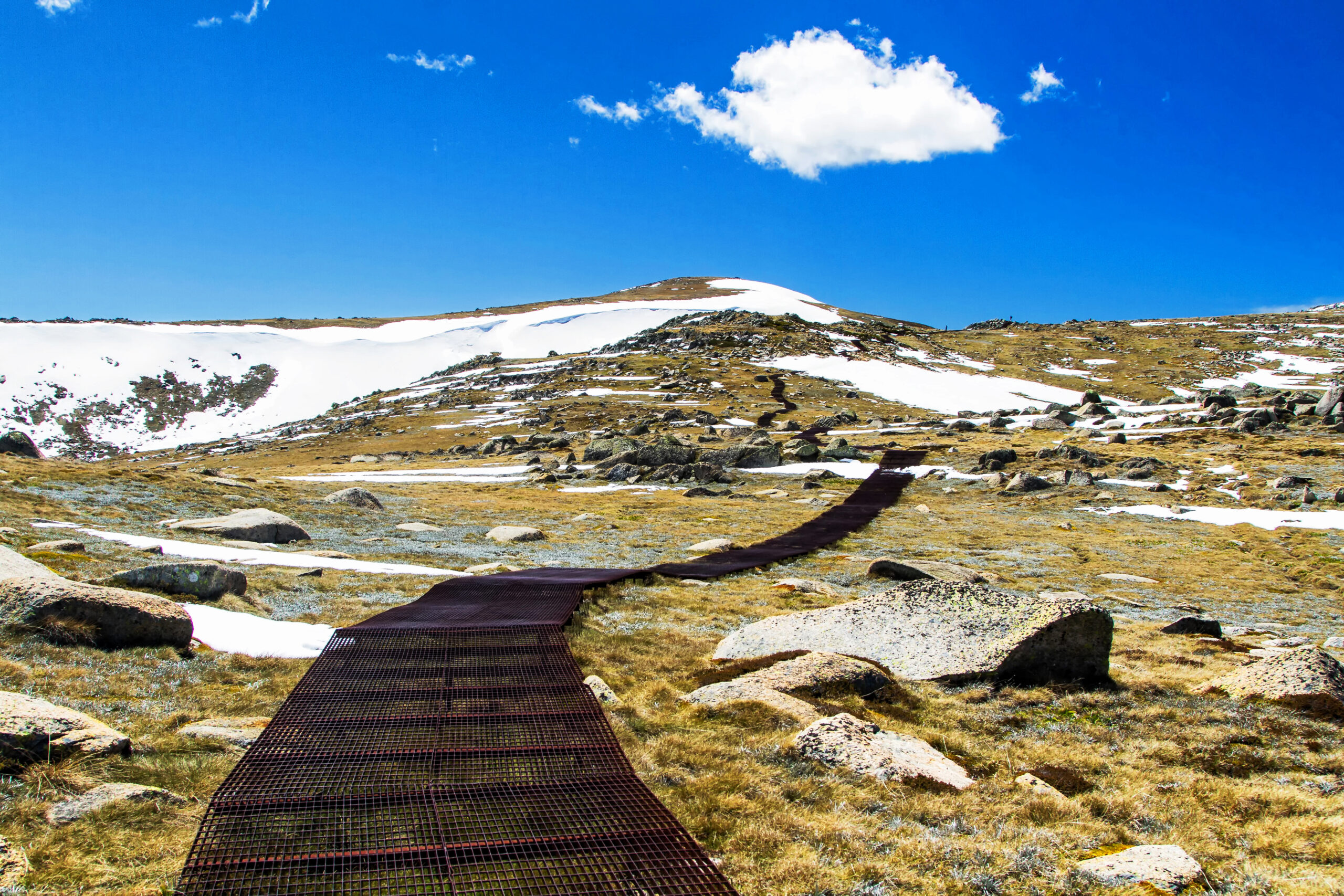
Through the 2010s and 2020s, annual Kosciuszko summiter counts have climbed past 100,000 per year, making the trail Australia’s most walked mountain route. The summit area infrastructure — metal mesh walkways protecting fragile alpine vegetation, modernized chairlift facilities, updated trail markings — has evolved to accommodate the high traffic. In 2019, the Ngarigo community formally submitted the Kunama Namadgi dual-naming proposal. The summit plaque was updated with explicit acknowledgment of Indigenous prior visitation. The mountain’s identity has shifted from “Strzelecki’s discovery” to “Australia’s shared mountain with millennia of human history.”
Kosciuszko or Carstensz? The Oceania Seven Summit Debate
The Seven Summits has two competing classifications for Oceania’s representative peak, and the difference matters for any Seven Summits climber planning their project.
The Bass list (Dick Bass, 1985) identifies Mount Kosciuszko (2,228m) as Australia’s representative — it is the highest peak on the Australian mainland and qualifies as the continent’s high point by straightforward geographic definition. Bass climbed Kosciuszko in April 1985 to complete his Seven Summits project.
The Messner list (Reinhold Messner, proposed 1986) replaces Kosciuszko with Carstensz Pyramid (4,884m) in Indonesian Papua — arguing that the island of New Guinea sits on the Australian continental plate and therefore Carstensz is the true continental high point. Messner criticized Kosciuszko’s inclusion on the grounds that the peak doesn’t require mountaineering skill.
The modern resolution: Most dedicated Seven Summits climbers now complete both peaks to satisfy both classifications. The cost of adding Kosciuszko to a Seven Summits project is minimal — a single day within any Australia trip. Carstensz is the harder, more expensive, more genuinely mountaineering objective. Both peaks together represent the Oceania category comprehensively.
Which one counts for “your” Seven Summits? If you’re climbing for personal satisfaction, either list is valid — pick the one that fits your skills and budget. If you’re pursuing formal Seven Summits certification through organizations like the Seven Summit Quest or the Explorers Club, verify their specific requirements before booking — most accept the Messner list as more rigorous, but recognition varies. The “double list” approach — completing both Kosciuszko and Carstensz — is the safest path to comprehensive recognition.
Mount Kosciuszko Historical Timeline
Indigenous peoples have maintained spiritual and cultural connection to the Snowy Mountains. Thirteen tribes converged annually to harvest bogong moths, conduct ceremony, and trade.
Polish explorer Paul Edmund de Strzelecki with James Macarthur and Indigenous guides Charlie Tarra and Jacky reach the summit via Hannel’s Spur — Australia’s biggest vertical ascent at 1,800m.
Strzelecki names the peak after Polish-Lithuanian military leader Tadeusz Kościuszko (1746-1817), seeing a silhouette resemblance to the Kościuszko Mound in Kraków.
Surveyor R.D. Barrow determines Strzelecki had actually climbed what is now Mount Townsend. Authorities transfer the “Kosciuszko” name to the actually-highest peak to preserve the patriotic naming.
NSW government creates the state park to protect the alpine catchment.
One of the largest hydroelectric projects in the world transforms regional infrastructure. Roads built for the Scheme become climbing access routes.
State park expanded and renamed to its current designation with the Polish-accented spelling.
Original chairlift from Thredbo Village to Eagles Nest opens. Transforms Kosciuszko from wilderness peak to mass-tourism summit accessible by chairlift.
Texas businessman summits Kosciuszko to complete the first-ever Seven Summits under his own classification. Days later summits Everest at age 55 (then the oldest ever).
Canadian climber tops Carstensz Pyramid to become the first to complete the alternative Messner list, establishing the modern double-list tradition.
Ngarigo community submits formal proposal to the Geographical Names Board of NSW for the dual Ngarigo name. Summit plaque updated with explicit acknowledgment of Indigenous prior visitation.
The mountain becomes Australia’s most walked mountain trail. Metal mesh walkways extended to protect alpine vegetation from high foot traffic.
The Three Main Routes
Mount Kosciuszko offers three established walking routes to the summit, each appropriate for different fitness levels and goals. Unlike other Seven Summits where the “standard route” question is essentially settled, Kosciuszko genuinely accommodates multiple meaningful options.
| Route | Distance | Time | Difficulty |
|---|---|---|---|
| Thredbo Chairlift Route (Standard) | 13 km return | 4-5 hours | ● Open · Easy / Family-Friendly |
| Charlotte Pass Summit Walk | 19 km return | 5-8 hours | ● Open · Moderate Day Hike |
| Hannel’s Spur (Strzelecki Route) | 15.5 km one-way · 1,800m vertical | 2-3 day overnight | ● Open · Demanding Wilderness |
| Winter Ascents (Jun-Oct) | Varies | Full day to multi-day | ● Snowbound · Alpine Skills Required |
Thredbo Chairlift Route — The Standard Day Hike
Approach: Drive to Thredbo Village in Kosciuszko National Park (6 hours south of Sydney, 3 hours south of Canberra). Pay the NPWS park entry fee ($17 AUD per vehicle per day summer, $29 AUD winter) at the park gate.
Stage 1 — Chairlift: Take the Kosciuszko Express Chairlift from Thredbo Village (1,365m) to Eagles Nest at 2,037m. The 15-20 minute chairlift ride covers approximately 670 vertical meters — eliminating the steepest part of the climb. Roundtrip chairlift tickets cost approximately $44 AUD adult. Operating hours: typically 9 AM to 5 PM in summer, but check Thredbo Resort for current schedules and wind closure status.
Stage 2 — The metal mesh walkway: From Eagles Nest, follow the metal mesh walkway and management trail 6.5 km one-way (13 km return) to the summit. The route is well-marked, never exposed, and gains approximately 300m of elevation from the chairlift top to the summit. The metal mesh exists specifically to protect fragile alpine vegetation from the 100,000+ annual footsteps — staying on the walkway is essential.
Route highlights: The route passes the Rawson Pass toilets (yes, there’s a public bathroom at 2,108m — the highest public toilet in Australia), then climbs to the summit cairn at 2,228m. The final approach offers panoramic views of the Main Range, Lake Cootapatamba, and the broader Snowy Mountains.
Total time: 4-5 hours round trip walking, plus chairlift transit. Family-friendly with children as young as 6-8 routinely completing the route in summer.
Charlotte Pass Summit Walk — The Longer Path
Approach: Drive to Charlotte Pass at the end of the Kosciuszko Road — the highest village in Australia at 1,837m. Note that Kosciuszko Road closes between Perisher and Charlotte Pass during winter; the route is summer-only by vehicle.
The route: Walk approximately 9.5 km one-way (19 km return) along the historic Charlotte Pass to Mount Kosciuszko management trail. The route follows what was the original 1909 road to the summit — a wide, well-graded path that climbs gradually through alpine meadows past Rawson Pass.
Route highlights: Charlotte Pass offers a longer, quieter alternative to the Thredbo route with significantly more solitude. Routes joins the main Thredbo line at Rawson Pass for the final summit push. Climbers seeking the full alpine experience without the chairlift typically prefer this option.
Total time: 5-8 hours round trip depending on pace. Recommended for fit hikers comfortable with longer walking days. No technical difficulty but the distance is real.
Hannel’s Spur — The Historic Strzelecki Route
The original route: Hannel’s Spur is the route Paul Edmund de Strzelecki, James Macarthur, and Indigenous guides Charlie Tarra and Jacky climbed on 12 March 1840 — making the first recorded European ascent. The route ascends approximately 1,800 meters of vertical gain from Geehi Valley (around 400m) to the summit at 2,228m — Australia’s biggest single vertical ascent.
Route character: The track climbs through four distinct biodiversity zones: wet forest, dry sclerophyll, sub-alpine, and alpine. Approximately 15.5 km one-way, typically completed as a 2-3 day overnight expedition with camping in the upper sub-alpine zone. The route is rugged, infrequently maintained, demanding, and far more remote than the standard routes.
Modern status: Open but rarely used. Climbers seeking the historic Kosciuszko experience that the 1840 team — and Ngarigo ancestors for millennia — used choose Hannel’s Spur. The route demands self-sufficiency, navigation skills, multi-day wilderness camping experience, and the willingness to climb 1,800m vertical without chairlift assistance. This is the antithesis of the Thredbo chairlift experience.
Why it matters: For Seven Summits climbers who feel the chairlift route undermines the integrity of the Kosciuszko “summit,” Hannel’s Spur offers an alternative — climbing the same route Strzelecki climbed, in approximately the same way, with the same vertical demand. Some climbers see this as the “proper” way to claim Kosciuszko on their Bass-list Seven Summits.
NPWS Fees, Access & Logistics
Mount Kosciuszko is the cheapest Seven Summit by a wide margin. No climbing permit, no guide requirement, no expedition logistics — just a day-hike park entry and basic walking gear. The biggest cost is typically the travel to reach Thredbo or Charlotte Pass from major Australian cities.
| Item | Cost (AUD) | Notes |
|---|---|---|
| NPWS park entry fee — Summer | $17 per vehicle / day | Standard summer rate (Dec-May) |
| NPWS park entry fee — Winter | $29 per vehicle / day | Higher winter rate (Jun-Oct) due to snow operations |
| NPWS annual pass | ~$190 | Worth considering for multi-day visits or repeat trips |
| Kosciuszko Express Chairlift (Thredbo) | ~$44 adult roundtrip | Approximate 2026 rates; verify directly with Thredbo Resort |
| Climbing permit | $0 | No permit required |
| Guide fees | $0 | No guide required; self-guided is standard |
| Personal Locator Beacon (PLB) rental | $0 | FREE rental at Snowy Region, Perisher Valley, Tumut, and Khancoban Visitor Centres |
| Trip intention form | $0 | Free; strongly encouraged before departing |
| Thredbo Village lodging (per night) | $150-$400 | Higher in winter ski season; varies widely |
| Sydney → Thredbo car rental (3-4 day) | $200-$400 | ~6-hour drive each way |
| Canberra → Thredbo car rental (2-3 day) | $150-$300 | ~3-hour drive each way; closer alternative |
| Day-hike-only budget (no lodging) | $60-$100 per person | Park fee + chairlift + lunch + fuel |
| Realistic Seven Summits-tick budget | $300-$800 per person | Including 1-2 nights lodging, car rental, fuel, meals |
The free PLB program is uniquely Kosciuszko. NSW NPWS offers free Personal Locator Beacon rental at the Snowy Region Visitor Centre in Jindabyne, Perisher Valley Office, Tumut Visitor Centre, and Khancoban Visitor Centre. All hikers are strongly encouraged to carry one. The program reflects the genuine alpine conditions — even casual day-hikers benefit from emergency satellite communication. Combined with a free trip intention form at the trailhead, the PLB program is one of the most accessible safety infrastructures of any major mountain. Use it.
Chairlift wind closures strand hikers. The Kosciuszko Express Chairlift operates from approximately 9 AM but closes in high winds — and wind-driven closures can be unpredictable. Hikers who took the chairlift up and find it closed for their return descent must walk down the Merritts Nature Track (4 km, 2-3 hours down). Budget flexibility for potential chairlift closures, particularly for hikers with rigid travel schedules. Check Thredbo Resort’s chairlift status before committing to the route, and consider walking down by default if you’re uncertain about wind conditions.
Best Time to Climb & Alpine Weather
Mount Kosciuszko has two completely different climbing seasons: summer (December-April) is a day-hike walk-up; winter (June-October) is a serious alpine objective requiring full winter skills. Spring (October-November) and autumn (April-May) are transition periods with variable conditions.
| Period | Window | Conditions | Watch For |
|---|---|---|---|
| Peak Summer | December – February | Warmest; chairlift operating; mostly snow-free | Crowds on summit trail; thunderstorms; rapid weather changes possible |
| Shoulder Summer | March – April | Cooler; fewer crowds; autumn colors | Earlier sunset; cold mornings; possible snow flurries |
| Late Autumn / Pre-Winter | May | Variable; first significant snowfalls usually occur | Chairlift seasonal closure; rapidly changing conditions |
| Winter | June – October | Snowbound; ski resort operations; alpine winter conditions | No summit-route snow poles; full winter alpine skills required |
| Spring | November | Snowmelt; trails reopening; wildflowers | Lingering snowpack; cold mornings; chairlift schedule transitions |
Alpine weather kills experienced hikers. Despite the modest elevation, the Snowy Mountains produce genuine alpine weather with rapid changes. Documented cases include mid-summer walks starting at 27°C and ending at 4°C within hours. Snow can fall at any time of year including January and February. The summit ridge experiences high winds that close the chairlift regularly. Hikers have died on Kosciuszko from hypothermia, exposure, and weather-related emergencies even in summer. Australian alpine conditions are not forgiving just because the peak is 2,228m rather than 6,000m+. Carry full weather protection year-round — windproof shell, warm layer, gloves, hat — regardless of the forecast at Thredbo Village.
Winter Kosciuszko is a different mountain. From June through October, the standard trail is “generally snowbound.” There are no snow poles marking the summit route — navigation requires map, compass, GPS, and prior alpine experience. Temperatures drop well below freezing with wind chills substantially lower. Kosciuszko Road closes between Perisher and Charlotte Pass during winter. All 2WD vehicles must carry snow chains on winter park roads. Winter ascents require cross-country skis or snowshoes plus full alpine winter competence. This is not a “day hike” in winter conditions — winter Kosciuszko ascents are genuine alpine mountaineering objectives that have killed prepared and unprepared parties alike.
Essential Gear Checklist
Mount Kosciuszko’s gear demands depend entirely on the season. Summer day-hike gear is genuinely minimal; winter gear is full alpine mountaineering kit. The categories below cover both seasons — choose based on your planned dates.
Summer Day-Hike Essentials
- Hiking boots or trail runners with grip
- Light hiking pants + moisture-wicking t-shirt
- Windproof shell jacket (even on warm days)
- Light fleece or warm layer in pack
- Hat + sunglasses + sunscreen (high SPF — Australian sun is intense)
- 2 liters water minimum; food/snacks
- Map (NPWS Kosciuszko Walking Tracks guide)
Safety Essentials (All Seasons)
- Personal Locator Beacon (FREE rental from NPWS visitor centres)
- First aid kit with blister care
- Whistle + emergency space blanket
- Headlamp + spare batteries (sunset can come earlier than expected)
- Trip intention form completed and filed
- Fully charged phone in waterproof case
Winter Mountaineering Kit (Jun-Oct)
- Cross-country skis or snowshoes (mandatory above snow line)
- Insulated mountaineering boots
- Down/synthetic insulated jacket + waterproof shell
- Winter pants with side zips + base layers
- Mittens or warm gloves + balaclava + winter hat
- Goggles for windy/whiteout conditions
- Map, compass, GPS — there are no snow poles marking the route
- Avalanche transceiver, probe, shovel (for off-piste touring)
Hannel’s Spur Multi-Day Kit
- 50-65L pack for overnight gear
- Lightweight 3-season tent (alpine-rated)
- Sleeping bag rated to expected overnight low + sleeping pad
- Stove + fuel + cookware for 2-3 day expedition
- Water purification (filter or tablets)
- Food for 2-3 days plus extra emergency rations
- Multi-day hiking poles for the steep ascent
Difficulty & The “Easy Seven Summit” Reality
Mount Kosciuszko’s reputation as “the easy Seven Summit” is largely accurate — and partially misleading. The Thredbo chairlift route in summer is genuinely accessible to families and casual hikers. But the mountain accommodates four different difficulty levels depending on route and season, and the wrong combination can produce serious risk.
Difficulty by route & season:
- Summer Thredbo Chairlift Route — genuinely easy. Family-friendly day hike on metal mesh walkway. The lowest-difficulty Seven Summit experience by a substantial margin.
- Summer Charlotte Pass Route — moderate day hike. Real distance (19 km return) but no technical difficulty. Comparable to a long state-park trail elsewhere in the world.
- Summer Hannel’s Spur — demanding multi-day wilderness ascent. 1,800m vertical, 15.5 km one-way, remote, route-finding required. Comparable to backcountry routes in the Cascades or Rockies.
- Winter Any Route — serious alpine winter objective. Snowbound, no summit-route markings, full alpine skills required. Comparable to winter ascents of moderate Cascade volcanoes.
The danger of underestimating Kosciuszko: The reputation as “the easy Seven Summit” creates risk when climbers arrive unprepared. Documented dangers include:
- Sudden weather changes. Mid-summer temperatures dropping from 27°C to 4°C within hours have been recorded.
- Hypothermia from inadequate clothing. Hikers in cotton t-shirts and shorts caught in afternoon storms have died.
- Lightning exposure. The exposed summit ridge offers no shelter; afternoon thunderstorms in summer are routine.
- Lost-on-the-walkway scenarios. Fog and whiteout conditions can disorient hikers even on the marked metal mesh path.
- Winter snowbound deaths. Multiple winter fatalities documented over the decades — climbers who would never attempt Denali or Vinson casually have died on Kosciuszko in winter.
Treat the mountain with appropriate respect regardless of route. Carry the safety essentials. Use the free PLB. File a trip intention form. The mountain doesn’t care about its Seven Summits ranking.
What Kosciuszko rewards: Climbers seeking the most accessible Seven Summit, families wanting an Australian alpine experience, older adults completing a Seven Summits project at age 65+, time-constrained climbers ticking the Bass-list Oceania peak during business travel, and Seven Summits double-listers pursuing both Bass and Messner classifications. As preparation for higher peaks, Kosciuszko offers limited value — the altitude (2,228m) and walking demand don’t replicate the conditions of Aconcagua, Denali, or Everest. But as a Seven Summits objective in its own right, the mountain delivers a genuine Australian alpine summit experience with deep Indigenous heritage and a meaningful first ascent story.
Frequently Asked Questions
Mount Kosciuszko rises to 2,228 meters (7,310 feet), making it the highest peak on the Australian mainland. It is Oceania’s representative in the Seven Summits under the Bass classification (Dick Bass, 1985). The Reinhold Messner classification substitutes Carstensz Pyramid (4,884m) in Indonesian Papua. The Ngarigo name for the mountain is Kunama Namadgi (“snow mountain”). Despite its modest elevation compared to other Seven Summits, Kosciuszko produces genuine alpine weather and has caused fatalities from hypothermia and exposure even in summer conditions.
The first recorded European ascent was made on 12 March 1840 by Polish explorer Paul Edmund de Strzelecki with pastoralist James Macarthur and Indigenous guides Charlie Tarra and Jacky. The expedition climbed via Hannel’s Spur — Australia’s biggest vertical ascent at approximately 1,800 meters. However, the summit plaque explicitly acknowledges that “it is highly unlikely that Strzelecki was the first person to climb Mount Kosciuszko.” Ngarigo, Walgalu, and Yuin Indigenous peoples had been visiting the Snowy Mountains peaks for ceremony and the seasonal bogong moth harvest for at least 4,000 years before European contact.
Mount Kosciuszko is Oceania’s Seven Summit representative under the Bass classification — the original 1985 Seven Summits list created by Dick Bass. The competing Messner classification substitutes Carstensz Pyramid (4,884m) in Indonesian Papua on the grounds that New Guinea sits on the Australian continental plate. Dick Bass climbed Kosciuszko himself in April 1985 to complete his Seven Summits project. Many dedicated Seven Summits climbers complete both peaks to satisfy both lists — Kosciuszko as the Bass-list Oceania peak (day hike) and Carstensz as the Messner-list peak (8-12 day technical expedition).
Mount Kosciuszko is by far the cheapest Seven Summit. The NSW NPWS park entry fee is $17 AUD per vehicle per day in summer and $29 AUD per vehicle per day in winter. The Thredbo Express Chairlift to the trailhead at 2,037m costs approximately $44 AUD adult roundtrip. No guides are required and no climbing permits are needed. Total day-hike budget (park fee + chairlift + lunch + transport): under $100 AUD per person. The biggest cost is typically the travel to reach Thredbo or Charlotte Pass from Sydney (6 hours) or Canberra (3 hours).
The Thredbo Chairlift route is the standard line, accounting for the majority of the 100,000+ annual summiters. From Thredbo Village, climbers take the Kosciuszko Express Chairlift to Eagles Nest at 2,037m, then walk 6.5 km one-way (13 km return) along a metal mesh walkway and management trail to the 2,228m summit. The route takes 4-5 hours round trip on gentle terrain with approximately 300m of elevation gain from the chairlift top. The metal mesh walkway protects fragile alpine vegetation from the high foot traffic. Children as young as 6-8 routinely complete this route in summer.
The summer climbing season runs December through April, with the Kosciuszko Express Chairlift operating for hikers and the metal mesh walkway snow-free. January and February are the warmest months but also the most crowded. March and April offer thinner crowds with autumn colors. From June through October the mountain transforms into a serious alpine winter objective — the track is snowbound, there are no snow poles marking the summit route, and winter ascents require cross-country skis or snowshoes plus full alpine navigation and avalanche-awareness competence. Snow can fall at the summit at any time of year including mid-summer.
No climbing permit is required. Hikers pay an NSW National Parks and Wildlife Service (NPWS) park entry fee of $17 AUD per vehicle per day in summer or $29 AUD in winter. Filling out a free trip intention form at the trailhead is encouraged. A free Personal Locator Beacon (PLB) is available for rental at the Snowy Region Visitor Centre in Jindabyne, Perisher Valley Office, Tumut Visitor Centre, and Khancoban Visitor Centre — all hikers are strongly encouraged to carry one. The chairlift requires a separate ticket from Thredbo Resort.
Yes. Two non-chairlift routes exist. The Charlotte Pass Summit Walk is 19 km return on a well-graded management trail — a 5-8 hour day hike with no chairlift needed. The historic Hannel’s Spur route — the line Strzelecki climbed in 1840 — is a 15.5 km one-way, 1,800m vertical, 2-3 day overnight wilderness ascent from Geehi Valley. Hannel’s Spur is Australia’s biggest single vertical ascent and remains one of the most demanding routes up any Seven Summit. Climbers who feel the chairlift undermines the Kosciuszko summit integrity often choose Hannel’s Spur as the “proper” Bass-list ascent.
Mount Kosciuszko is in Kosciuszko National Park on the Main Range of the Snowy Mountains, New South Wales, Australia. Coordinates: 36.4559°S, 148.2637°E. The mountain is approximately 6 hours south of Sydney by road and 3 hours south of Canberra. The main trailheads are Thredbo Village (for the chairlift route) and Charlotte Pass (for the longer summit walk). The mountain is the traditional country of the Ngarigo, Walgalu, and Yuin Indigenous peoples, who have maintained cultural connections to the Snowy Mountains for at least 4,000 years.
Mount Kosciuszko Map & Live Weather
Mount Kosciuszko’s summit coordinates: 36°27’21″S 148°15’49″E (-36.4559°S, 148.2637°E). The map below shows the summit’s position in Kosciuszko National Park. Live weather is shown for Thredbo Village (1,365m) — the main trailhead. Summit conditions are typically 5-8°C colder than Thredbo.
Was this helpful?
🏔Related peaks nearby
🧭Explore & compare
Global Summit Guide is an independent mountaineering resource founded in 2026. The team combines first-hand trekking and climbing experience with in-depth research and professional health and nutrition review to help climbers choose objectives, prepare properly, and stay safe.
Health, altitude, and nutrition content is reviewed by Taylor Ludlow (Registered Nurse) and Brigg Hoopes (Nutritionist).
What We Don't Know Yet
Mountain information changes quickly. This box explains the limits of what this page can responsibly promise.
- Permit availability, reservation windows, quotas, and official fee rules may change after this page is updated.
- Weather, snowpack, avalanche risk, road access, and route conditions can change quickly and may be different on your climbing dates.
- Route conditions, trailhead access, crevasse exposure, stream crossings, and rescue access may vary from published planning guidance.
- Total trip cost can change with flights, lodging, guide pricing, permits, gear rentals, transportation, and exchange rates.
- Comparisons simplify complex decisions; the better mountain depends on current conditions, skills, timing, budget, and risk tolerance.
Verify current conditions with official land managers, guide services, local forecasts, and current route reports before booking or climbing.
Mountaineering, rock and ice climbing, glacier travel, and high-altitude activity are inherently dangerous and can result in serious injury or death. The information on Global Summit Guide is provided for general informational and educational purposes only and is not a substitute for professional instruction, qualified guiding, proper equipment, or your own judgment and experience.
Route conditions, weather, snowpack, permits, regulations, and hazards change constantly and may differ from what is described here. Details may be incomplete, out of date, or contain errors. Always verify current information with local authorities, certified guides, and official sources before making any decision in the mountains.
Nothing on this site is medical, legal, or financial advice. Our fitness, acclimatization, altitude, and nutrition content is general in nature; consult a qualified physician before beginning any strenuous exercise program or exposing yourself to high altitude.
You are solely responsible for your own safety and decisions. To the fullest extent permitted by law, Global Summit Guide and its team accept no liability for any loss, injury, damage, or expense arising from use of, or reliance on, this information. By using this site you acknowledge these risks and accept these terms.
Some links on this site may be affiliate links. If you buy through them we may earn a small commission at no extra cost to you; this never affects our recommendations.
Global Summit Guide recommendation path
Next Best Mountain to Research
Use these recommendations to continue the right planning path instead of stopping on one page.
Use current permit, weather, route, and operator information before booking or climbing.
Search Flights, Hotels & Rental Cars
Have the mountain or destination picked? Use Expedia to compare the flights, lodging and rental cars that fit your actual trip dates. For mountain travel, consider arriving early enough for delays and adding a buffer night after the climb before a fixed flight home.
Compare current flight, hotel and car options.
Affiliate disclosure: Global Summit Guide may earn a commission if you book through this link, at no additional cost to you.