
Last updated September 15, 2026
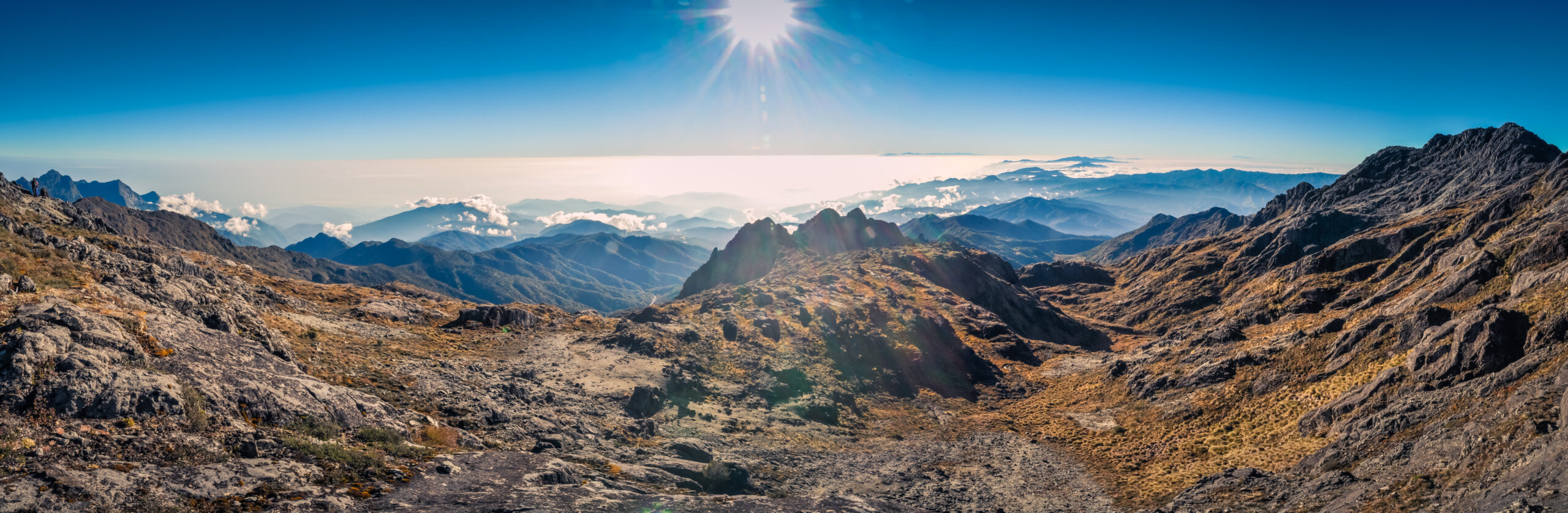
Mount Wilhelm Climb Guide: Papua New Guinea’s 4,509 m Summit
Mount Wilhelm is a non-glaciated high-altitude trek rather than a technical mountaineering route. The climb is attainable for a fit, properly equipped hiker—but the rapid ascent, darkness, cloud, remote Highlands transport, limited medical support and current travel-advisory environment make planning more consequential than the technical grade suggests.
What is climbing Mount Wilhelm actually like?
Mount Wilhelm is Papua New Guinea’s highest mountain at 4,509 meters. The standard route starts near Keglsugl and Betty’s Place, climbs through rainforest to the Piunde and Aunde lake area, then makes a pre-dawn rocky summit ascent.
It normally does not require ropes, crampons or glacier travel, but it is not a casual hike. The summit-day effort, rapid altitude gain, freezing night temperatures, dense cloud, wet rock and difficult evacuation make a local guide, conservative itinerary and current risk review essential parts of the plan.
Current travel-advisory status must be checked before booking
This is not a routine destination-risk footnote. Government advisories distinguish Papua New Guinea overall from specific Highlands areas, and the Mount Wilhelm route lies outside the principal urban gateways.
The current U.S. advisory lists Papua New Guinea at Level 3 overall and identifies the Highlands region—other than the towns of Mount Hagen and Goroka—as a Level 4 “Do Not Travel” area. Mount Wilhelm and Keglsugl are in the Highlands outside those towns.
Smartraveller advises a high degree of caution for Papua New Guinea and says travelers should reconsider their need to travel to Mount Hagen. It also highlights violent crime, civil unrest and limited medical facilities.
Mount Wilhelm planning at a glance
The complete decision framework before flights or deposits.
| Planning factor | Practical answer | What must be verified |
|---|---|---|
| Elevation | 4,509 m / 14,793 ft | Personal altitude history and medical considerations |
| Normal route | Keglsugl / Betty’s Place to Piunde–Aunde lakes, then summit | Current trail, hut, land-access and guide arrangements |
| Technical level | Non-glaciated trek with rocky scrambling and route finding | Whether current conditions introduce ice, severe mud or other hazards |
| Mountain duration | Official guidance often describes 2–3 days; 3–4 days is more prudent for many international travelers | Exact operator itinerary and whether an acclimatization day is included |
| Best planning window | June through September | Short-term forecast and local observations immediately before departure |
| Local guide | Strongly recommended | Name, experience, guide ratio, communication and emergency process |
| Transport | Operator-arranged Highlands road transfer, commonly through Kundiawa/Gembogl | Gateway, vehicle, road status, daylight travel and security plan |
| Main mountain risks | Altitude, hypothermia, cloud, wet rock, darkness, navigation and delayed evacuation | Turnaround criteria and communication/evacuation options |
| Broader travel risk | Current advisories materially affect the trip | Official advisory, operator assessment, insurer approval and refund terms |
The Keglsugl route and travel chain
From Papua New Guinea’s gateways to the lake camp and summit.
The main guide summarizes the standard climb. For the Keglsugl route stages, Ambullua alternative, summit-day terrain and route-specific questions, continue to the Mount Wilhelm routes guide.
Trailhead to lake camp
The route climbs from near Betty’s Place through wet montane forest and increasingly open alpine grassland. Official PNG tourism guidance places the lake/base area around 3,500 meters and gives roughly three to five hours for this stage.
Lake camp to summit
The summit attempt commonly begins in darkness. The upper route is rocky and may involve hands-on movement. Official guidance gives approximately four to seven hours from base camp to the summit, depending on conditions and pace.
Summit to trailhead
PNG Tourism gives approximately six to eight hours for the descent to the trailhead. Fatigue, slippery ground and changing visibility make the descent a major part of the day rather than an afterthought.
Three days or four days?
The faster itinerary is possible; the better itinerary depends on acclimatization and travel margin.
Three-day mountain plan
- Arrive at Keglsugl/Betty’s and finalize gear.
- Trek to the lake camp.
- Pre-dawn summit attempt and long descent.
Best suited to: a traveler who has already acclimatized in the Highlands, has strong recent trekking fitness and accepts little schedule flexibility.
Four-day mountain plan
- Arrive and organize at Betty’s Place.
- Trek to the lake camp.
- Acclimatization/rest day around the lakes.
- Summit attempt and descent, or split the descent if the operator’s program allows.
Best suited to: most international travelers arriving from lower elevations.
Highlands transfer and Betty’s Place
Travel during daylight with the operator’s arranged vehicle, review the advisory situation, confirm communications, meet the guide and check every cold-weather item.
Keglsugl to the lake camp
Climb through rainforest and alpine grassland. Hydrate, move slowly and monitor altitude symptoms rather than racing to the hut.
Acclimatization at Piunde/Aunde
Use an extra day for rest, short walks and symptom monitoring. This does not guarantee acclimatization, but it reduces the compression of the standard schedule.
Pre-dawn summit and full descent
Follow the guide through darkness and cloud-prone rocky terrain. Turn around for symptoms, weather, visibility or pace, then descend conservatively.
Road, weather and domestic-flight disruption can cascade. Preserve at least one meaningful buffer day after returning from the mountain.
Difficulty: technically moderate, logistically serious
The climb’s risk profile is not captured by the phrase “nontechnical trek.”
| Dimension | Assessment | Why it matters |
|---|---|---|
| Technical climbing | Usually no glacier, fixed ropes or pitched rock climbing | Technical equipment is not the central barrier, but rocky hands-on movement can occur. |
| Altitude | Significant at 4,509 m | A rapid ascent from the Highlands to the lake camp and summit can trigger acute mountain sickness. |
| Fitness | Strong hiking endurance required | The summit attempt and descent form one long day, often after poor sleep at altitude. |
| Weather | Fast-changing equatorial mountain conditions | Cold, rain, frost, cloud and very low visibility can develop quickly. |
| Navigation | Local route knowledge is important | Darkness, fog and indistinct upper terrain increase route-finding risk. |
| Evacuation | Slow and logistically difficult | Advanced medical care is limited outside major centers; rescue capability should not be assumed. |
| Travel environment | Current advisories are material | The mountain cannot be evaluated separately from the road, regional and insurance situation. |
Headache plus nausea, dizziness, unusual fatigue or sleep disturbance may indicate acute mountain sickness. Worsening symptoms, confusion, ataxia or breathing difficulty require descent and emergency action—not a slower summit push.
Use the altitude acclimatization guide, the AMS risk calculator and the mountaineering fitness standards to identify preparation gaps before paying a deposit.
Weather and the best time to climb
A stable seasonal framework is more useful than the broken low-resolution weather script on the old page.
April–May
Possible shoulder period. Expect variable rain, muddy approach conditions and less reliable visibility.
June–September
Primary window. Official PNG Tourism identifies these as the best months, but cold, rain and cloud remain possible.
October–early November
Possible with local confirmation. Reliability can deteriorate as the wetter period approaches.
Late November–March
Wet-season planning is generally less favorable because of rain, mud, cloud and road complications.
Early starts can provide a better chance of completing the upper route before daytime cloud and weather build. The start time is not a guarantee of visibility or safety; it must be chosen by the local guide using current conditions and team pace.
Access, Betty’s Place and local guiding
Mount Wilhelm is a community-supported Highlands journey, not a trailhead reached by ordinary rental car.
Common access chain
- International arrival through Port Moresby
- Domestic flight to a Highlands gateway
- Operator-arranged road travel through Kundiawa and Gembogl/Keglsugl
- Betty’s Place or another established local arrangement
- Local guide and porter team to the lakes and summit
PNG Tourism describes Kundiawa as roughly 60 kilometers from the trailhead and Goroka as another practical regional gateway. Road time changes with conditions.
What Betty’s Place provides
Papua New Guinea Tourism identifies Betty’s Place as a family-run Mount Wilhelm gateway operating since 1987. It advertises three- and four-day guided climb packages, lodge accommodation, full-board options and transport arrangements, with four-wheel-drive access encouraged.
Use a reputable operator’s named driver and vehicle, avoid improvised public transport and unnecessary night road travel, and get the gateway, pickup point, transfer duration, security process and contingency plan in writing.
For route-specific guide questions and how the Keglsugl and Ambullua sides differ, see the complete Mount Wilhelm route comparison.
What does Mount Wilhelm cost?
Use a written inclusion checklist instead of an unsupported universal dollar range.
Mountain package
- Local guide and guide ratio
- Porters and weight allowance
- Betty’s/lodge nights
- Lake-camp accommodation
- Meals and drinking-water plan
- Landowner or community fees
Highlands logistics
- Domestic flights
- Airport pickup
- 4WD transfer and fuel
- Driver accommodation
- Delay and rerouting costs
- Daylight-only transport policy
Risk and protection
- Medical and evacuation insurance
- Advisory exclusions
- Satellite or emergency communication
- Nonrefundable deposits
- Cancellation for unrest or road closure
- Post-climb buffer nights
The quote should show currency, group size, vehicle capacity, taxes, local fees, meals, porter loads, emergency communication, cancellation terms and what happens if the operator cannot reach the mountain because of security, road, weather or flight disruption.
Mount Wilhelm Trip Readiness Planner
This tool identifies unresolved planning gaps. It does not declare the destination safe, approve travel or predict a summit.
Is Mount Wilhelm the highest mountain in Oceania?
It is Papua New Guinea’s national high point; the continental label depends on the list.
Highest mountain in the independent country of Papua New Guinea and a major country-highpoint objective.
Higher on the Indonesian side of New Guinea and the Messner-list Seven Summit for Oceania.
Australia’s mainland high point and the Oceania/Australia summit used by the Bass list.
Mount Wilhelm should not be marketed as the undisputed highest mountain in Oceania. The precise and useful statement is: Mount Wilhelm is Papua New Guinea’s highest mountain and one of the region’s most significant country highpoints.
The Oceania Icons mountain collection compares Papua New Guinea, Australia and New Zealand objectives and explains how Mount Wilhelm, Puncak Jaya and Kosciuszko fit into the region’s different climbing traditions.
Continue to the Puncak Jaya climb guide, the Seven Summits guide or the country highpoints collection for the three separate list-making intents.
Mount Wilhelm gear essentials
Pack for wet rainforest, freezing pre-dawn altitude and basic overnight facilities.
Footwear and traction
Waterproof hiking boots with reliable wet-rock grip, gaiters where useful and trekking poles for muddy descent. Technical crampons are not normally standard equipment, but current conditions must be checked.
Cold and rain protection
Base layers, insulating midlayer, warm jacket, waterproof shell and pants, warm hat, gloves and spare dry clothing protected inside waterproof bags.
Night and camp equipment
Reliable headlamp with spare power, suitable sleeping bag and pad, personal water treatment, high-energy food, sun protection, first-aid supplies and any prescribed medication.
Use the complete Mount Wilhelm gear list before packing, and review the mountaineering route-finding guide to understand why a headlamp and local guide remain essential on a nontechnical route.
Mount Wilhelm and Oceania internal-link cluster
The page now guides readers from the mountain overview into route detail, gear, altitude, risk, regional comparisons and operator selection.
Priority contextual links
Mount Wilhelm Routes — Keglsugl stages and Ambullua alternativeOceania Icons — regional peaks and high-point contextClimb preparation
Mount Wilhelm gear listAltitude acclimatization explainedAMS risk calculatorMountaineering fitness standardsMount Wilhelm FAQ
Direct answers for route, difficulty, guide, season, cost, safety and Oceania questions.
How hard is Mount Wilhelm?
Mount Wilhelm is usually a nontechnical trek rather than a roped climb, but it is strenuous. The standard Keglsugl route combines muddy rainforest trail, a rapid rise to a lake camp around 3,500 to 3,600 meters, a pre-dawn rocky ascent and a summit at 4,509 meters. Altitude, cold, cloud, wet rock, route finding and remote logistics are the main difficulties.
How long does it take to climb Mount Wilhelm?
Papua New Guinea Tourism describes a typical two- to three-day mountain climb, while many international travelers should plan three or four days from the trailhead. A four-day version allows a separate lake-camp acclimatization day and is more suitable for travelers arriving from low elevation.
What is the standard route on Mount Wilhelm?
The established route begins near Keglsugl and Betty’s Place in Simbu Province, climbs through mountain rainforest to the Piunde and Aunde lake area, then follows rocky upper terrain during a pre-dawn summit attempt. The less-used Ambullua approach is longer and more demanding.
Do I need a guide for Mount Wilhelm?
A local guide is strongly recommended. The route is not highly technical, but darkness, dense cloud, unmarked terrain, changing weather and limited emergency support make local route knowledge important. A guide also coordinates land access, lodging, porters and community arrangements.
When is the best time to climb Mount Wilhelm?
June through September is the primary drier-season planning window identified by Papua New Guinea Tourism. April, May, October and early November may still work, but conditions are generally less reliable. Rain, fog, cold and rapid cloud development remain possible at any time.
How much does it cost to climb Mount Wilhelm?
There is no reliable universal Mount Wilhelm price. Costs depend on group size, gateway, vehicle, guide and porter arrangements, food, lodge nights, base-camp support and whether the trip includes Mount Giluwe or cultural touring. Travelers should request a dated written quote with every inclusion, landowner fee, transfer and cancellation term listed.
Is Mount Wilhelm the highest mountain in Oceania?
Mount Wilhelm is the highest mountain in the independent country of Papua New Guinea at 4,509 meters. Puncak Jaya, or Carstensz Pyramid, is higher at 4,884 meters on the Indonesian side of New Guinea and is normally treated as the highest peak in geographic Oceania on the Messner Seven Summits list. Mount Kosciuszko is used on the Bass list.
What are the main risks on Mount Wilhelm?
The principal mountain risks are acute mountain sickness, hypothermia, dense cloud, wet and slippery terrain, route-finding errors, delayed evacuation and limited medical support. The broader trip also requires careful review of current Papua New Guinea and Highlands travel advisories.
Can I climb Mount Wilhelm independently?
The absence of a technical climbing permit does not make independent travel prudent. Local guiding, land access, road transport, accommodation and community arrangements are integral to the climb. Current government travel advisories and insurance terms may also materially affect whether the trip should proceed.
What should I pack for Mount Wilhelm?
Bring waterproof hiking footwear, rain shell and pants, insulating layers, warm hat and gloves, a reliable headlamp with spare power, a suitable sleeping bag, trekking poles, sun protection, water treatment and personal altitude and first-aid supplies. Use the dedicated Mount Wilhelm gear list for a complete packing plan.
Sources, verification and editorial boundaries
- Official Mount Wilhelm information: Papua New Guinea Tourism for elevation, route sequence, timing, season, access and local-guide guidance.
- Local gateway: the official PNG Tourism listing for Betty’s Place, including its family operation, three- and four-day packages, accommodation and transport role.
- Travel advisories: current U.S. Department of State and Australian Smartraveller pages. These must be rechecked immediately before booking and departure.
- Costs: the old universal U.S.-dollar range was removed. This page uses an inclusion checklist because local packages, vehicle costs, currencies and advisory-related contingencies change.
- Weather: the malformed live-weather script was removed. Seasonal planning is stable; current mountain weather must come from the guide and suitable forecast sources.
- Experience: Global Summit Guide has not climbed Mount Wilhelm. The page is research-based and does not imply firsthand route knowledge.
- Local review opportunity: a named Keglsugl guide or Betty’s Place representative should review the route, transfer and cost sections when available.
PNG Tourism: Mount Wilhelm · PNG Tourism: Betty’s Place · U.S. travel advisory · Australian travel advice
Build the access and risk plan before the summit plan.
Mount Wilhelm’s technical terrain is only one part of the climb. A complete plan begins with current advisories, a reputable local guide, written transport and insurance arrangements, altitude margin and a realistic delay buffer.
Study the routeCheck the trip planExplore Oceania peaksWas this helpful?
🏔Related peaks nearby
🧭Explore & compare
Global Summit Guide is an independent mountaineering resource founded in 2026. The team combines first-hand trekking and climbing experience with in-depth research and professional health and nutrition review to help climbers choose objectives, prepare properly, and stay safe.
Health, altitude, and nutrition content is reviewed by Taylor Ludlow (Registered Nurse) and Brigg Hoopes (Nutritionist).
What We Don't Know Yet
Mountain information changes quickly. This box explains the limits of what this page can responsibly promise.
- Weather, snowpack, avalanche risk, road access, and route conditions can change quickly and may be different on your climbing dates.
- Route conditions, trailhead access, crevasse exposure, stream crossings, and rescue access may vary from published planning guidance.
- Total trip cost can change with flights, lodging, guide pricing, permits, gear rentals, transportation, and exchange rates.
- Fitness and altitude response vary by person; no guide, itinerary, or training plan can guarantee acclimatization or summit success.
- Visa, passport, vaccination, border, insurance, and local transportation rules may change before your trip.
Verify current conditions with official land managers, guide services, local forecasts, and current route reports before booking or climbing.
Mountaineering, rock and ice climbing, glacier travel, and high-altitude activity are inherently dangerous and can result in serious injury or death. The information on Global Summit Guide is provided for general informational and educational purposes only and is not a substitute for professional instruction, qualified guiding, proper equipment, or your own judgment and experience.
Route conditions, weather, snowpack, permits, regulations, and hazards change constantly and may differ from what is described here. Details may be incomplete, out of date, or contain errors. Always verify current information with local authorities, certified guides, and official sources before making any decision in the mountains.
Nothing on this site is medical, legal, or financial advice. Our fitness, acclimatization, altitude, and nutrition content is general in nature; consult a qualified physician before beginning any strenuous exercise program or exposing yourself to high altitude.
You are solely responsible for your own safety and decisions. To the fullest extent permitted by law, Global Summit Guide and its team accept no liability for any loss, injury, damage, or expense arising from use of, or reliance on, this information. By using this site you acknowledge these risks and accept these terms.
Some links on this site may be affiliate links. If you buy through them we may earn a small commission at no extra cost to you; this never affects our recommendations.
Global Summit Guide recommendation path
Next Best Mountain to Research
Use these recommendations to continue the right planning path instead of stopping on one page.
Use current permit, weather, route, and operator information before booking or climbing.
Explore Travel Options for Your Destination
Once your mountain, dates and route are taking shape, compare flights, hotels and other travel options that fit the trip.
Affiliate link. We may earn a commission at no additional cost to you.