
Last updated September 7, 2026
Mount Taranaki Hiking Guide: Summit Climb, Pouākai & Best Routes
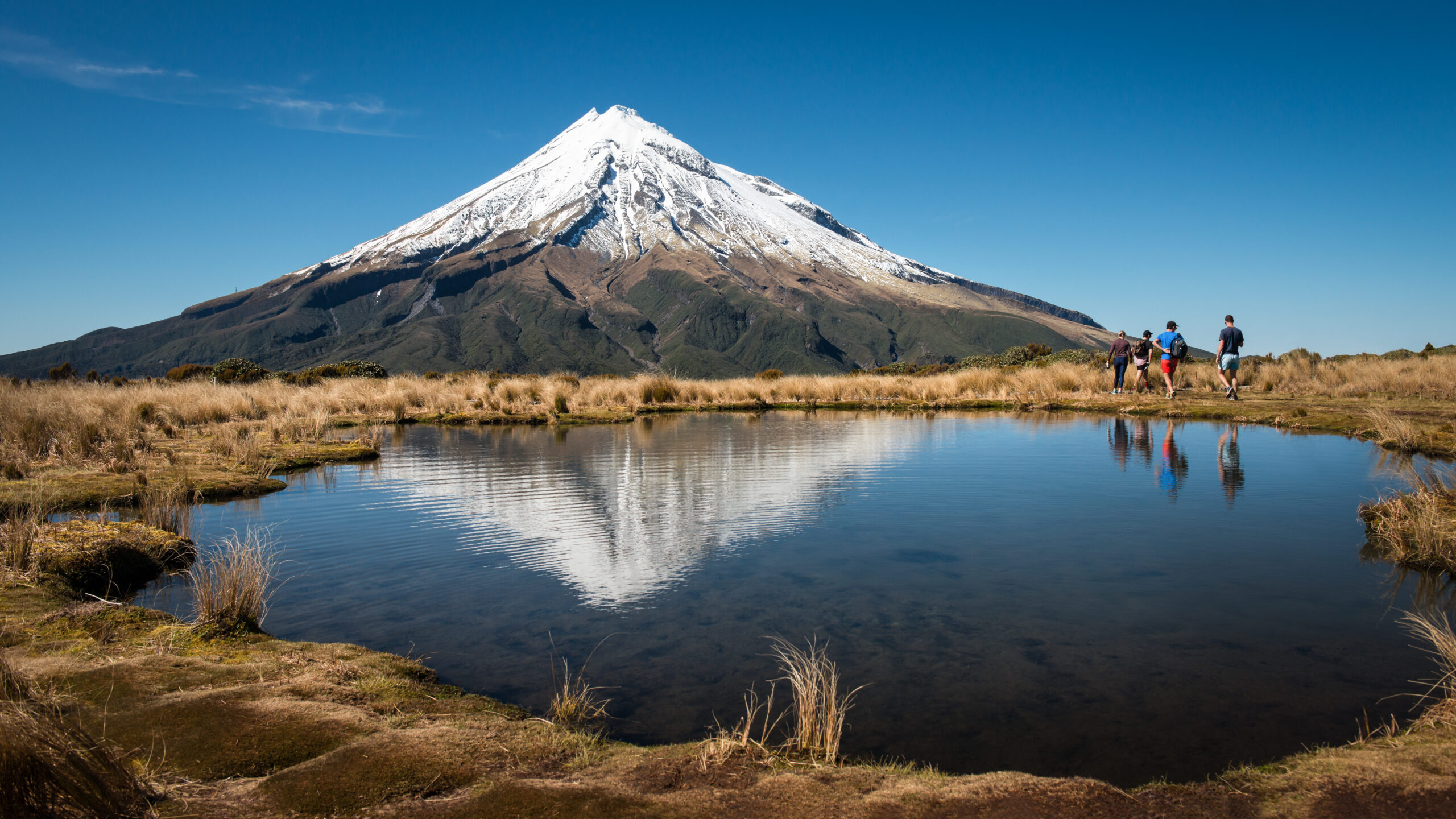
For most hikers, the best Taranaki experience is the Pouākai Crossing or the Mangorei Track to Pouākai tarns—not the summit. The 2,518 m summit climb is a demanding alpine day with roughly 1,572 m of vertical gain, steep scoria, scrambling and an icy crater. Non-mountaineers should target January–April; outside that window, the upper mountain becomes a snow, ice and avalanche objective.
Which Mount Taranaki Hike Should You Do?
Choose the Pouākai Crossing if you want the best full-day hike. It gives you Taranaki views, the Ahukawakawa wetland, cliffs, waterfalls and the famous tarns over a 19 km backcountry route.
Choose the Mangorei Track to Pouākai tarns if you want the classic reflection view with a simpler out-and-back format. Choose the Pouākai Circuit if you want a 2–3 day hut-based trip. Choose the summit climb only if you are fit, comfortable with steep loose terrain and—in winter—already have real mountaineering skills.
Best Mount Taranaki Hikes Compared
| Route | Distance / time | Best for | Difficulty | Key issue |
|---|---|---|---|---|
| Mangorei Track to Pouākai tarns | Several hours uphill; out-and-back | Classic reflection view | Moderate–strenuous | Long stair/boardwalk climb |
| Pouākai Crossing | 19 km · 7.5–9.5 hr | Best all-around day hike | Strenuous backcountry tramp | One-way transport + mud/weather |
| Pouākai Circuit | 25 km · 2–3 days | Overnight hiking | Moderate–high backcountry skill | Hut booking + stream/weather issues |
| Taranaki Summit Climb | ~12.6 km RT · ~9 hr | Fit experienced hikers in summer | Very strenuous / alpine | Scoria, scrambling, crater ice |
| Around the Mountain Circuit | Multi-day | Remote circumnavigation | Challenging | Rivers, weather, route complexity |
Pouākai Crossing
A 19 km one-way backcountry hike linking North Egmont with Mangorei Road.
DOC rates the Pouākai Crossing as a challenging day walk that normally takes 7 hours 30 minutes to 9 hours 30 minutes. The route crosses rough, muddy and sometimes icy terrain, enters an alpine environment and includes the Boomerang Slip rockfall zone. It also reaches the Ahukawakawa wetland and Pouākai tarns—the most photographed viewpoint on the mountain. citeturn128633view1
North Egmont
DOC says there is less climbing when walking toward Mangorei Road rather than reversing the crossing.
Alpine Lookout
If you cannot see the maunga or do not have the gear for conditions, DOC recommends turning back rather than committing to the alpine section.
Pouākai Tarns
Fine weather can produce the famous reflection view; remain on boardwalks to protect the fragile wetland.
One-Way Shuttle
Arrange transport between North Egmont and Mangorei Road before starting.
You Do Not Need the Summit to Get the Best View of the Mountain.
For many travelers, the stronger Taranaki trip is hiking beside the maunga through wetlands, forest and volcanic terrain rather than standing on top of it.
Pouākai Circuit
The 25 km Pouākai Circuit is DOC’s premier 2–3 day tramp in Te Papa-Kura-o-Taranaki. It links North Egmont, Holly Hut, Ahukawakawa, Pouākai Hut and the surrounding alpine landscapes. Both huts require bookings. The trail can be steep, wet and muddy, with winter snow and ice and several waterways that can become difficult after heavy rain. citeturn945592search0
| Section | DOC time | Distance | Planning note |
|---|---|---|---|
| North Egmont → Holly Hut | 3–4 hr | 7.5 km | Alpine section + Boomerang Slip |
| Holly Hut → Pouākai Hut | 2–3 hr | 4.5 km | Ahukawakawa wetland; optional Pouākai Trig |
| Pouākai area → North Egmont / exit | Route-dependent | Remaining circuit | Weather and track condition matter |
Taranaki Maunga Summit Climb
This is not simply a harder version of Pouākai.
The standard summit route starts at North Egmont at roughly 946 m and climbs to the 2,518 m summit, a vertical gain of about 1.6 km. DOC advises allowing around nine hours. North Egmont to Tahurangi Lodge takes roughly 1.5–2 hours; the upper 2.3 km from the lodge to the summit takes another 3–4 hours and includes steep scoria, the rocky Lizard section, a narrow ledge and crater ice. citeturn128633view0
| Decision point | What changes | Turn around if… |
|---|---|---|
| Tahurangi Lodge | The route becomes much harder above here | Your group is already depleted or weather is deteriorating |
| Top of stairs / scoria | Exposure to weather increases | Confidence, visibility or conditions are declining |
| The Lizard | Scrambling + exposure | You are behind your predetermined time |
| Crater | Ice may exist year-round | You cannot cross safely with the equipment/skills available |
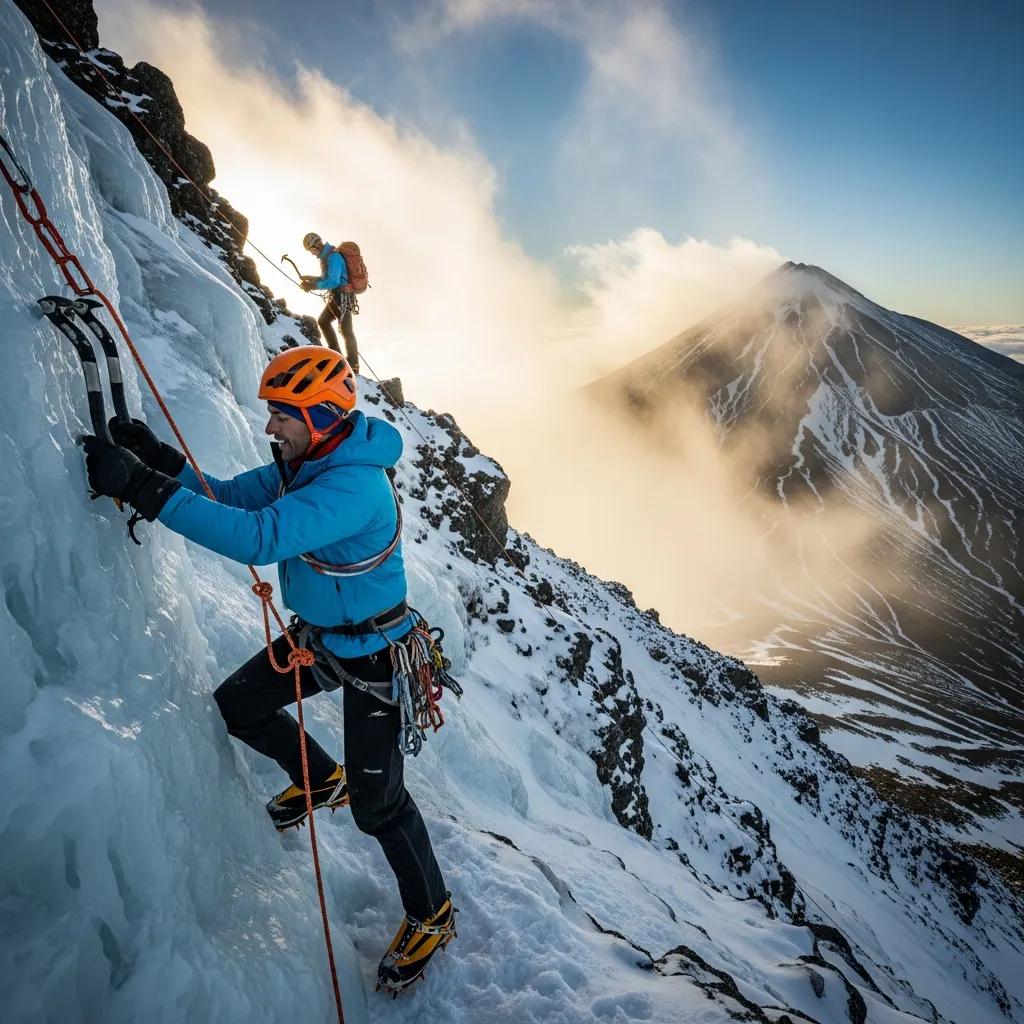
Winter Taranaki Is Mountaineering, Not Hiking.
Snow, hard ice, avalanche terrain and sub-zero weather change the objective completely. The calendar—not the mountain name—determines whether this is a hike or an alpine climb.
Best Time to Hike Mount Taranaki
| Season | Best objective | What to expect |
|---|---|---|
| January–April | Summit climb + Pouākai | Best non-mountaineer summit window; weather still volatile |
| May–September | Lower hikes unless mountaineering-trained | Snow, ice, avalanche conditions on upper mountain |
| October–December | Pouākai / lower routes; summit depends on lingering snow | Transition toward summer; conditions vary sharply |
DOC specifically recommends January through April for fit non-mountaineers attempting the summit. The Around the Mountain Circuit is generally best from October through April. Pouākai routes can be used more broadly, but snow, flooding and alpine weather can still make them much harder outside summer. citeturn128633view0turn945592search5
North Egmont Access in 2026
New Plymouth
North Egmont is roughly a 30-minute drive from New Plymouth and is the natural base for summit and Pouākai planning.
Do Not Assume Space
2026 construction makes arrival logistics more important than on an ordinary trailhead.
Check Conditions
DOC explicitly recommends talking with staff about current summit weather and track conditions before climbing.
No Freedom Camping at North Egmont
Use permitted alternatives such as Stratford Plateau or Mangorei Road where appropriate.
How to Visit Taranaki Respectfully
Taranaki Maunga is a spiritual ancestor for Taranaki Māori. DOC asks summit visitors not to stand directly on the summit peak and not to camp, cook, toilet or litter in the summit area. The simplest rule is to treat the mountain as a place with cultural meaning, not merely a recreational object. citeturn128633view0
Do Not Stand on the Highest Point
Follow DOC cultural guidance around the summit area.
Stay on Boardwalks
The Pouākai tarns and Ahukawakawa environments are fragile.
Treat Significant Water Sources Respectfully
DOC notes several springs along the circuit have cultural significance and should not be walked through or washed in.
Learn Before You Go
Use the North Taranaki Visitor Centre to understand both conditions and local cultural guidance.
Current DOC facts checked
- Summit route timing and elevation
- January–April non-mountaineer summit season
- May–December winter/alpine requirements
- Pouākai Crossing distance and time
- Pouākai Circuit distance, huts and conditions
- 2026 North Egmont parking construction
Recheck before the hike
- NIWA mountain forecast
- NZ Avalanche Advisory when snow is present
- DOC track alerts
- North Egmont parking / shuttle status
- Hut bookings
- Stream and flooding conditions after heavy rain
Mount Taranaki Hiking FAQ
What is the best hike on Mount Taranaki?
For most hikers, the Pouākai Crossing is the strongest all-around day hike because it combines mountain views, wetlands, cliffs and waterfalls without requiring the summit climb.
How hard is the Mount Taranaki summit climb?
It is a very strenuous alpine day with about 1,572 m of vertical gain, steep scoria, scrambling on the Lizard and possible ice in the crater.
When is the best time to hike Mount Taranaki?
For non-mountaineers attempting the summit, DOC recommends January through April. Lower Pouākai routes have a broader season but remain weather-dependent.
How long is the Pouākai Crossing?
About 19 km, normally taking 7.5–9.5 hours.
How long is the Pouākai Circuit?
About 25 km and usually 2–3 days.
Can beginners climb Mount Taranaki?
The summit is not a beginner hike. The Mangorei Track to Pouākai tarns is the better introductory option.
Do I need crampons and an ice axe?
From May through roughly November or December, DOC says crampons, ice axe and helmet are essential on the summit route, plus the skills to use them.
What is changing at North Egmont in 2026?
Parking is limited until December because of visitor-centre construction, so carpooling or shuttle use is recommended.
Choose the Hike That Matches the Season—not the Photo You Came to Get.
Pouākai delivers the mountain’s iconic views without requiring the summit. The summit is a separate alpine objective whose difficulty changes dramatically with snow, ice and weather.
Mount Taranaki & the Peaks of New Zealand
The perfect cone of Taranaki is one of NZ’s classics. Explore the country’s peaks and the Oceania collection below.
Was this helpful?
🏔Related peaks nearby
🧭Explore & compare
Global Summit Guide is an independent mountaineering resource founded in 2026. The team combines first-hand trekking and climbing experience with in-depth research and professional health and nutrition review to help climbers choose objectives, prepare properly, and stay safe.
Health, altitude, and nutrition content is reviewed by Taylor Ludlow (Registered Nurse) and Brigg Hoopes (Nutritionist).
What We Don't Know Yet
Mountain information changes quickly. This box explains the limits of what this page can responsibly promise.
- Route conditions, trailhead access, crevasse exposure, stream crossings, and rescue access may vary from published planning guidance.
- Visa, passport, vaccination, border, insurance, and local transportation rules may change before your trip.
- Route conditions, snowpack, closures, and weather can change quickly after this page is updated.
- Permit rules, fees, quotas, and reservation windows may change between review cycles.
- Operator availability, pricing, guide ratios, and cancellation terms can change by season.
Verify current conditions with official land managers, guide services, local forecasts, and current route reports before booking or climbing.
Mountaineering, rock and ice climbing, glacier travel, and high-altitude activity are inherently dangerous and can result in serious injury or death. The information on Global Summit Guide is provided for general informational and educational purposes only and is not a substitute for professional instruction, qualified guiding, proper equipment, or your own judgment and experience.
Route conditions, weather, snowpack, permits, regulations, and hazards change constantly and may differ from what is described here. Details may be incomplete, out of date, or contain errors. Always verify current information with local authorities, certified guides, and official sources before making any decision in the mountains.
Nothing on this site is medical, legal, or financial advice. Our fitness, acclimatization, altitude, and nutrition content is general in nature; consult a qualified physician before beginning any strenuous exercise program or exposing yourself to high altitude.
You are solely responsible for your own safety and decisions. To the fullest extent permitted by law, Global Summit Guide and its team accept no liability for any loss, injury, damage, or expense arising from use of, or reliance on, this information. By using this site you acknowledge these risks and accept these terms.
Some links on this site may be affiliate links. If you buy through them we may earn a small commission at no extra cost to you; this never affects our recommendations.
Global Summit Guide recommendation path
Next Best Mountain to Research
Use these recommendations to continue the right planning path instead of stopping on one page.
Use current permit, weather, route, and operator information before booking or climbing.
Search Flights, Hotels & Rental Cars
Have the mountain or destination picked? Use Expedia to compare the flights, lodging and rental cars that fit your actual trip dates. For mountain travel, consider arriving early enough for delays and adding a buffer night after the climb before a fixed flight home.
Compare current flight, hotel and car options.
Affiliate disclosure: Global Summit Guide may earn a commission if you book through this link, at no additional cost to you.