
Last updated September 7, 2026
Mount Wilhelm gear list: the complete equipment guide for png’s highest peak
Mount Wilhelm is one of the few 4,500+ meter mountains in the world where the gear list reads more like a trekking packing list than an alpine climbing roster. Best-of-PNG and other established operators state the principle directly: “Mt Wilhelm is a non-technical climb and no special gear is required. Light hiking boots or sturdy trainers are adequate footwear.” What you do need is a system that handles tropical rain at 2,600 m, alpine cold at 3,560 m base camp, and sub-freezing pre-dawn temperatures on the 4,509 m summit ridge — all within a single 36-hour stretch.
This guide covers every category of equipment for the standard Keglsugl route ascent. We start with boots, then move through the layering system designed for the tropical-to-alpine temperature range, then sleeping gear (which most operators emphasize as the single most critical “alpine” item), then daypack contents and electronics, then what Betty’s Place and the Lake Piunde A-frame hut provide. We finish with a section on what NOT to bring — because the gear list for Mount Wilhelm is much shorter than for technical 4,500 m peaks elsewhere, and bringing unnecessary equipment is the most common gear mistake on PNG’s highest peak.
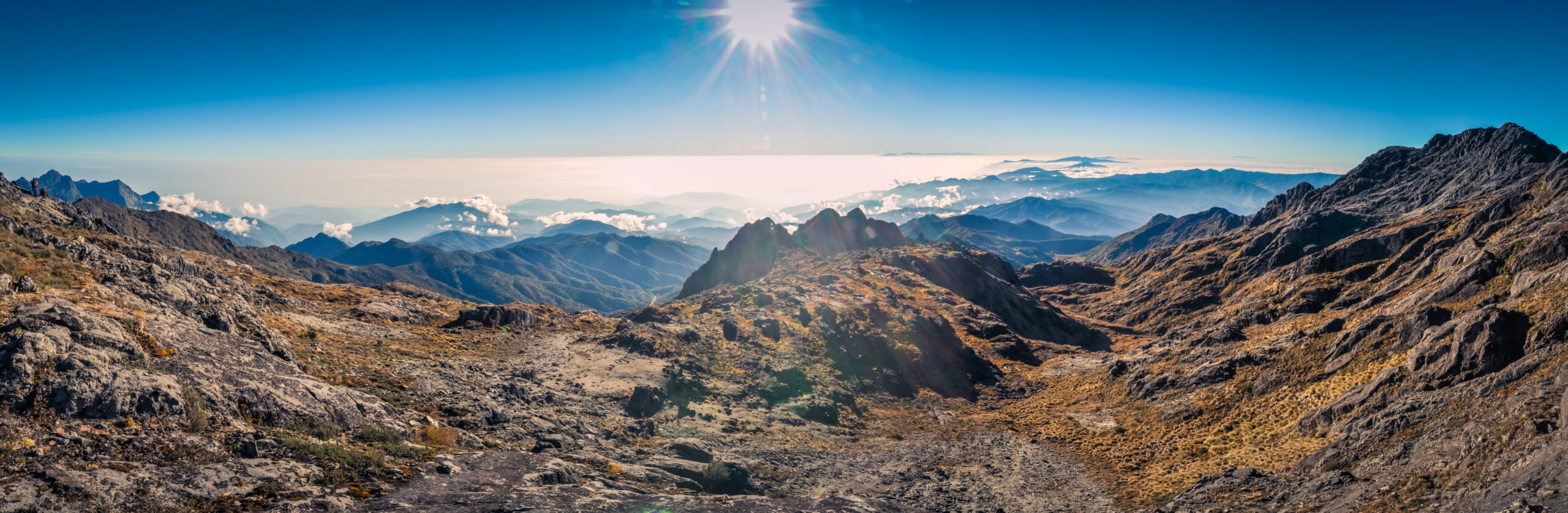
The full gear list at a glance
The summary table below covers every essential item for the 3-4 day Keglsugl route ascent. Each item is detailed in its own section below with product recommendations and notes on substitutions. Priority levels are Essential (don’t leave without it), Strong (skip only if you have good reason), Recommended (most climbers bring it), and Optional (nice-to-have).
| Item | Spec | Priority | Notes |
|---|---|---|---|
| Hiking boots | Mid-weight waterproof, broken-in | Essential | Salomon Quest 4, Lowa Renegade GTX, Scarpa Zodiac |
| Sleeping bag | -5 °C comfort or warmer | Essential | Western Mountaineering UltraLite, Rab Neutrino 400 |
| Sleeping pad | Inflatable, R-value 3+ | Essential | Therm-a-Rest NeoAir XLite, Sea to Summit Comfort Light |
| Rain shell jacket | 3-layer waterproof | Essential | Patagonia Torrentshell 3L, Marmot Minimalist |
| Rain pants | Waterproof with side zips | Essential | Marmot PreCip Eco, OR Apollo Pants |
| Insulated jacket | Down or synthetic, 200-400 g fill | Essential | Rab Microlight Alpine, Patagonia Nano Puff Hoody |
| Fleece mid-layer | 100-200 weight | Essential | Patagonia R1, Mountain Hardwear Polartec |
| Base layer top | Merino or synthetic, long sleeve | Essential | Smartwool 250, Icebreaker 200 Oasis |
| Base layer bottom | Merino or synthetic long johns | Essential | For summit-day extra warmth |
| Hiking pants | Quick-dry or softshell | Essential | Prana Stretch Zion, Mountain Hardwear AP |
| Warm hat | Beanie, wool or synthetic | Essential | For pre-dawn summit |
| Sun hat | Brimmed for tropical sun | Essential | For descent in sun |
| Gloves | 2 pairs — liner and warm | Essential | Mountain Equipment Couloir |
| Hiking socks | 3 pairs merino, mid-weight | Essential | Smartwool, Darn Tough Hiker |
| Daypack | 30-40 L | Essential | Osprey Stratos 36, Deuter Speed Lite 30 |
| Headlamp | 300+ lumens, spare batteries | Essential | 01:00 summit start |
| Water bottles | 2 L total capacity | Essential | Nalgene + insulated thermos |
| Water purification | Tablets or filter | Essential | For Lake Piunde water |
| Glacier sunglasses | Category 3 or 4 | Essential | UV protection at 4,500 m |
| Sunscreen + lip balm | SPF 50, with SPF lip | Essential | Equatorial UV exposure |
| First aid kit | Personal, with altitude meds | Essential | Diamox, ibuprofen, blister care |
| Trekking poles | Adjustable, collapsible | Recommended | Helpful on steep descent |
| Trash bags | Several heavy-duty | Strong | Dry storage in wet conditions |
| Camera | Compact with spare batteries | Recommended | Cold drains batteries fast |
| Buff or neck gaiter | For sun and warmth | Strong | Dual-purpose |
What’s notably absent from this list
Compared to a typical 4,500 m peak gear list elsewhere in the world, the Mount Wilhelm packing list is missing: crampons, ice axe, harness, helmet, rope, fixed-rope hardware, glacier rescue gear, mountaineering boots (B2/B3), and most of the technical climbing rack. This is not because the mountain is small — it isn’t — but because the standard Keglsugl route is genuinely non-technical. Bringing technical climbing gear to Mount Wilhelm is the most common gear mistake among first-time visitors who pattern-match from their experience on Alpine or Himalayan trekking peaks. Leave the climbing kit at home.
1. Hiking boots (broken-in, mid-weight)
Mid-weight waterproof hiking boots
EssentialMount Wilhelm’s terrain is the standard PNG highland mix: muddy montane forest trails for the first half, then increasingly rocky alpine grassland and rock-scrambling above the lakes. The boot needs three properties: waterproof construction for the persistent tropical rain, good ankle support for the rocky scrambling above Lake Aunde, and aggressive lugged tread for grip on wet rock and muddy slopes. A modern mid-weight hiking boot is the right choice — not a sneaker, not a trail runner, not an alpine mountaineering boot.
Recommended models
- Salomon Quest 4 GTX — the standard mid-weight hiking boot for highland trekking, durable and waterproof
- Lowa Renegade GTX Mid — slightly lighter, good ankle support, well-broken-in for most owners
- Scarpa Zodiac Plus GTX — slightly heavier, more ankle support, well-suited to rocky terrain
- La Sportiva Trango Trek — heavier alpine boot, overkill but works
- Merrell Moab Speed 2 Mid GTX — lighter and more flexible, good for fast hikers
What not to bring
- B2 or B3 mountaineering boots (La Sportiva Trango Tower, Scarpa Mont Blanc Pro) — far too stiff for the long approach hike
- Trail running shoes — inadequate ankle support for the rocky scrambling above Lake Aunde
- Unbroken-in boots — the 3-4 hour hut approach plus 6+ hour summit day demands blister-free comfort. Wear them for at least 50 km of training
- “Approach shoes” like Scarpa Crux — designed for rock approach, inadequate waterproofing for PNG rain
2. The sleeping system
Alpine sleeping bag (most-emphasized item by PNG operators)
EssentialThe single piece of gear that PNG tour operators emphasize most consistently is the alpine sleeping bag. Lake Piunde base camp sits at 3,560 m, regularly drops below freezing pre-dawn, and the A-frame hut is unheated and uninsulated. A summer 3-season bag will be inadequate — climbers report sleepless cold nights when they have brought the wrong bag. The standard recommendation is a bag with comfort temperature to -5 °C minimum, with -10 °C providing a safety margin.
Recommended sleeping bags
- Western Mountaineering UltraLite (-7 °C comfort, 850-fill down) — the gold standard for fit-and-go alpine bags
- Rab Neutrino 400 (-7 °C comfort, 800-fill down) — slightly heavier but excellent value
- Mountain Hardwear Phantom 0F (-18 °C comfort, 800-fill down) — overkill for Mount Wilhelm but works for combined-trip plans
- Sea to Summit Spark SpIII (-9 °C comfort, 850-fill down) — lightweight, expensive, top-tier
Synthetic alternative
Down loft can degrade in PNG’s humid environment if the bag gets wet. Synthetic alternatives like the Mountain Hardwear HyperLamina Spark or Patagonia Hybrid Sleeping Bag work well, though they are heavier and bulkier than equivalent-warmth down bags. If you have a high-quality down bag and protect it carefully in a dry sack, down is still the better choice.
Sleeping pad
An inflatable sleeping pad with R-value of 3 or higher is essential for insulation from the cold hut floor. The Therm-a-Rest NeoAir XLite (R-value 4.2) is the standard lightweight choice; the Sea to Summit Comfort Light Insulated (R-value 3.7) is slightly more comfortable. Closed-cell foam pads (Therm-a-Rest Z-Lite) work as a backup or supplement but are bulkier. The A-frame hut at Lake Piunde provides wooden bunks but no mattresses — bring a pad.
3. The layering system
Tropical-to-alpine 5-layer system
EssentialThe Mount Wilhelm climber dresses for a temperature range of roughly 30 °C in a single 24-hour cycle: 20-25 °C in tropical rain at the lower trailhead, 5-10 °C at Lake Piunde base camp, and -5 to -10 °C pre-dawn on the summit. The layering system below handles this range without the climber overheating during the approach or freezing on the summit.
Base layer
Long-sleeve merino or synthetic base layer top and bottom. Smartwool Merino 250 or Icebreaker 200 Oasis are the standard merino choices; Patagonia Capilene Midweight is the standard synthetic. Bring one set for hiking, one clean set for sleeping. The merino versions resist odor better and feel less clammy in damp conditions — strongly recommended for PNG.
Mid layer
A 100 or 200-weight fleece or active mid-layer. Patagonia R1 Air Hoody, Mountain Hardwear Polartec Power Grid, or Arc’teryx Delta LT all work well. The mid-layer stays on during the cold sections of the climb (base camp, summit day) and comes off during the warmer lower sections.
Insulated jacket
A down or synthetic insulated jacket with 200-400 g of fill is essential for the summit and the cold evenings at base camp. Rab Microlight Alpine, Patagonia Down Sweater Hoody, or Mountain Equipment Lightline for down options; Patagonia Nano Puff Hoody or Arc’teryx Atom AR for synthetic. Given PNG’s humidity, synthetic insulation is a defensible choice — but a high-quality down jacket protected in a dry bag is still lighter and warmer per gram.
Rain shell — most-tested layer
The PNG highlands receive frequent rain, and the standard summit day often involves rain showers on the descent. A fully waterproof 3-layer shell jacket is essential — not a water-resistant softshell, not a packable wind-shell. Patagonia Torrentshell 3L, Marmot Minimalist, or Arc’teryx Beta AR all work. Pit zips for ventilation and a hood that fits over a warm hat are critical features.
Rain pants
Waterproof rain pants with side zips for crampon-free on-and-off application. Marmot PreCip Eco Pants or Outdoor Research Apollo Pants work well. The PNG rain is heavy enough that the rain pants will see real use during the approach and descent.
Hiking pants
Quick-dry hiking pants or softshell pants worn over the base layer for the approach and most of the climbing day. Prana Stretch Zion, Patagonia Quandary Pants, or Mountain Hardwear AP Pant are standard.
Gloves and headwear
Two pairs of gloves: lightweight liner gloves (Mountain Equipment Tour or Patagonia Capilene Lightweight) for the approach and a warm insulated pair (Mountain Equipment Couloir or Black Diamond Lightweight ScreenTap) for the cold summit. One warm wool/synthetic beanie for the summit, one brimmed sun hat or visor for the descent in tropical sun. A Buff or neck gaiter is dual-purpose for warmth and sun.
4. Daypack, water, and food
The “everything else” section
EssentialDaypack
A 30-40 liter daypack handles both the base camp move (sleeping bag, pad, food, extra clothing) and the summit day (water, food, summit-day clothing, headlamp). Osprey Stratos 36, Deuter Speed Lite 30, or Black Diamond Speed 30 are standard. With a porter carrying the heavy gear (sleeping bag, food, cooking equipment), most climbers can fit their daypack contents in a 25-30 L pack.
Water
Two-liter capacity minimum: a 1 L hard-sided Nalgene bottle and a 1 L insulated thermos for hot drinks on the cold summit day. Water purification is essential for the Lake Piunde water source — drop-in chlorine tablets (Aquatabs), a Steripen UV purifier, or a Sawyer Squeeze filter all work. Boiled water is also safe but takes fuel and time. The guide will typically provide hot water in the morning before the summit start.
Food
Commercial trips provide all three daily meals; the only food you need to carry yourself is summit-day energy food. Plan for 600-800 g of climbing food: energy bars (Clif, Larabar, Honey Stinger), gels, sandwiches packed by the guide, chocolate, dried fruit, nuts, and trail mix. Salty snacks (cheese, crackers, salted nuts) help with electrolyte balance on the long summit day. Pack everything in waterproof zip-lock bags.
Electronics
Modern rechargeable headlamp with at least 300 lumens is essential for the 01:00 summit start. Petzl Actik Core, Black Diamond Spot 400, or Biolite Headlamp 425 are standard. Always carry spare batteries — a 01:00 start means at least 5 hours of climbing in darkness. A compact camera (or smartphone) for summit photos. A small power bank (5,000-10,000 mAh) for phone and headlamp charging at Betty’s Place (limited generator power) or via solar at the hut. There is no reliable mobile signal above Keglsugl.
Trekking poles
Adjustable collapsible trekking poles (Black Diamond Trail Pro, Leki Cressida) are strongly recommended for the steep descent from the summit and for the muddy approach trail. Many guides also use poles. Not essential but the most-recommended optional item.
5. Sun, eye, and personal protection
Equatorial UV protection
EssentialMount Wilhelm sits within 6 degrees of the equator, and the UV exposure at altitude is intense. UV protection is non-negotiable.
- Glacier sunglasses — Category 3 (for descent and cloudy days) or Category 4 (for the summit on bright sun days). Side shields recommended. Julbo Cham, Smith Embark, or Adidas Terrex Pro work well at this elevation.
- Sunscreen SPF 50+ — applied generously before sunrise on the summit day. The descent at 09:00-11:00 from the summit is when most sunburn happens.
- SPF lip balm — applied frequently. Lips are the most-burnt and least-attended-to skin on Mount Wilhelm.
- Brimmed sun hat — for the descent and for the lower-trail sections in tropical sun.
- Light Buff or neck gaiter — face and neck sun protection on the descent.
First aid kit (personal)
A small personal first aid kit with:
- Altitude medication — Diamox (acetazolamide) on prescription from your doctor; some climbers take 125-250 mg twice daily starting the day before the climb
- Pain relief — ibuprofen and paracetamol
- Blister care — Compeed, Leukotape, moleskin
- Antihistamines — for insect bites in the lower forest
- Antidiarrheal medication — Imodium, plus oral rehydration salts
- Personal medications — in original containers with prescriptions
- Malaria prophylaxis — consult your travel doctor; some routes through lower PNG carry malaria risk, though Mount Wilhelm itself is too high for mosquito-borne disease
What Betty’s Place and the Lake Piunde hut provide
The two accommodations on the standard route — Betty’s Place in Keglsugl and the A-frame hut at Lake Piunde base camp — have very different service levels. Understanding what each provides helps clarify what you need to bring.
| Betty’s Place (Keglsugl) | Lake Piunde A-frame hut |
|---|---|
| Comfortable rooms with bedding | Wooden bunks, NO mattresses or bedding |
| Sheets and blankets provided | Bring full sleeping system (bag + pad) |
| Full meals (home-style) | Cook your own or guide prepares |
| Drinking water and hot tea | Lake water (must be purified) |
| Garden surroundings, sit-down lounge | Covered cooking area, basic |
| Hot shower (limited) | NO running water |
| Electricity by generator (limited hours) | NO electricity |
| Guide and porter coordination | NO services — bring own porter/guide |
| Weather briefing | NO formal briefing |
| Standard 2-star lodge level | 1-star — basic shelter only |
The A-frame hut is base camp, not a guesthouse
First-time visitors sometimes expect the Lake Piunde A-frame hut to operate like an SAC Alpine hut or a Himalayan teahouse — with hot meals, blankets, and a hut warden. It does not. The hut is more accurately understood as a basic covered shelter with wooden bunk frames and a covered cooking area. Climbers are essentially camping under a roof. Your sleeping bag, sleeping pad, food (cooked by the guide), water (purified from the lake), and warm clothing are all critical. Bring everything you would bring on a 3,500 m camping trip.
What to NOT bring
Mount Wilhelm’s gear list is unusual in that the most common mistake is bringing too much technical gear, not too little. The following items appear on Alpine or Himalayan trekking peak gear lists but are not needed on Mount Wilhelm:
- Crampons — no glacier or permanent snow on the route
- Ice axe — no ice or steep snow climbing
- Climbing harness — no roped sections
- Helmet — though one Tari resident died from rockfall in 2007, helmets are not standard issue
- Rope — no roped climbing or rappels
- Glacier sunglasses Category 4 — Category 3 is adequate at 4,509 m without snow reflection
- Double mountaineering boots (B2/B3) — far too stiff for the long approach and rocky scrambling
- Expedition down parka — overkill for the temperatures encountered
- Heavy expedition sleeping bag (-20 °C or warmer) — -5 to -10 °C comfort is sufficient
- Climbing shoes or approach shoes — not technical enough to warrant either
- Avalanche transceiver, probe, or shovel — no avalanche risk on the standard route
- Gaiters — generally not needed; rain pants with elasticated ankles suffice
The packing principle is straightforward: think “high-altitude tropical trek”, not “alpine mountaineering”. The gear required is the gear required for a serious 3-4 day backpacking trip to 4,500 m in a wet equatorial climate. Anything beyond that adds weight, complexity, and porter cost without improving the experience.
The final pre-departure check
The night before you fly to Goroka, lay everything out and verify:
- Boots are waterproof-treated and well broken-in
- Sleeping bag stuffed and compressed in a waterproof stuff sack
- Headlamp has fresh batteries plus a spare set
- Rain shell and rain pants are accessible from the top of the daypack
- Water purification system is tested and the user knows how to operate it
- Personal medications (especially Diamox if used) are in carry-on luggage, not checked
- Travel insurance with medical evacuation coverage from PNG is in place and the policy number is on your phone
- Betty’s Place booking confirmation, Air Niugini flight confirmation, and the guide’s contact details are saved on your phone offline
- Cash in PGK (Papua New Guinea Kina) for tips, hut fees, and incidentals — PNG operates mostly on cash outside major cities
If you have arranged the climb through an established PNG operator (Escape Trekking Adventures, Trek-Papua, NoRoads, Best-of-PNG, or similar), the operator will run a kit review at Betty’s Place on the evening of Day 1 and tell you what to leave behind. Independent climbers should communicate with the guide network at Keglsugl in advance — Betty’s Place is the standard intermediary for these arrangements.
Mount Wilhelm rewards a thoughtful, minimal kit and an early start. The simplicity of the gear list is one of the mountain’s defining characteristics — there is no other contender for the highest peak of an entire continent (under most classifications) where the equipment required is so close to a standard hiking kit. Pack light, pack right, and aim for the 07:00 summit window.
Other parts of the Mount Wilhelm guide
Gear is one of six topics covered in the full Mount Wilhelm climbing guide. Each sub-guide goes deep on one aspect of the climb.
Routes Guide
The Keglsugl standard route via Lake Piunde and the rare Ambullua northern alternative — what to expect on PNG’s highest peak.
Gear List
The complete equipment list for the non-technical climb — boots, sleeping system, tropical-alpine layering, and what Betty’s Place provides.
Permits & Logistics
Coming soon — PNG visa, Air Niugini flights to Goroka, 4WD transfer to Keglsugl, hut fees, and Betty’s Place booking.
Training Plan
Coming soon — fitness preparation for a 6-hour pre-dawn ascent to 4,509 m on rocky terrain.
Weather & Best Season
Coming soon — the daily weather cycle, the dry-season window, and why the 01:00 start is non-negotiable.
Difficulty & Safety
Coming soon — why “non-technical” doesn’t mean easy, the historical accident record, and the seven safety rules for climbing Mount Wilhelm.
Mount Wilhelm gear — frequently asked questions
What gear do I need to climb Mount Wilhelm?
Mount Wilhelm is a non-technical climb requiring no specialized mountaineering equipment — no ropes, crampons, ice axes, harnesses, or helmets. The essential gear list covers: sturdy mid-weight hiking boots or light mountaineering boots, an alpine-rated sleeping bag (comfort to -5 °C minimum), a full waterproof rain shell jacket and pants, warm insulating layers including a down or synthetic jacket for the summit, base layers, fleece mid-layer, warm hat and gloves, headlamp with spare batteries for the 01:00 start, 30-40 L daypack, water bottles or hydration bladder (2 L capacity), sun protection including glacier sunglasses, and personal medication and first aid kit. Tour operators consistently emphasize that “warm windproof clothes and an alpine sleeping bag are essential”, while specialized climbing gear is not required.
What boots are needed for Mount Wilhelm?
Light hiking boots or sturdy trainers are adequate footwear for Mount Wilhelm — no technical mountaineering boots are required. Best-of-PNG operator documentation specifically states that “light hiking boots or sturdy trainers are adequate footwear” for the non-technical climb. The recommended choice is mid-weight waterproof hiking boots with good ankle support and aggressive tread for the wet rocky sections above Lake Aunde. Modern options like the Salomon Quest 4, La Sportiva Trango Trek, Lowa Renegade GTX, or Scarpa Zodiac are well-suited. Trail runners and approach shoes can work for experienced climbers with strong ankles, but the rocky scrambling above Lake Aunde and the boggy sections through the lower forest favor a proper hiking boot. Boots must be well-broken-in before the trip.
What kind of sleeping bag do I need for Mount Wilhelm?
An alpine-rated sleeping bag with comfort temperature to -5 °C is essential for Lake Piunde base camp at 3,560 m. Pre-dawn temperatures at base camp regularly drop below freezing, and the A-frame hut is unheated. Recommended models include the Mountain Hardwear Phantom 0F (-18 °C comfort), Western Mountaineering UltraLite (-7 °C comfort), Rab Neutrino 400 (-7 °C comfort), or comparable 800-fill down bags with 350-450 g of fill. Synthetic alternatives (Patagonia Hybrid Sleeping Bag, Mountain Hardwear HyperLamina) work well in PNG’s humid environment where down loft can degrade. Best-of-PNG and Travel PNG operators consistently emphasize the alpine sleeping bag requirement — a 3-season summer bag will be inadequate at the base camp temperature.
Do I need a porter for Mount Wilhelm?
Porters are highly recommended for Mount Wilhelm and are typically included in commercial trip packages. Standard commercial packages from operators like Escape Trekking Adventures and the Best of PNG include one or two porters per climber, who carry the heavy loads (sleeping bags, food, cooking equipment, extra clothing) between Keglsugl and Lake Piunde base camp. Porters come from local villages in the Keglsugl, Goroka, and Kundiawa areas and are paid above-award wages with provided uniforms, sleeping equipment, and first aid kits. The standard recommendation is one porter per two climbers with a maximum carry weight of 20-25 kg per porter. Independent climbers should arrange porters through Betty’s Place lodge or directly with the local guides at Keglsugl.
What clothing do I need for Mount Wilhelm?
Mount Wilhelm requires a four-to-five layer clothing system to handle the wide temperature range from warm tropical lowlands to sub-freezing pre-dawn summit conditions. The system should include: synthetic or merino base layers (top and bottom), a fleece or synthetic mid-layer, an insulated jacket (down or synthetic, 200-400 g fill), a fully waterproof rain shell jacket, waterproof rain pants, hiking pants (softshell or quick-dry), warm hat and lightweight liner gloves plus warm insulated gloves, and warm socks (2-3 pairs of merino or synthetic). The PNG highlands receive heavy rain frequently, and the daily weather cycle means climbers often experience tropical heat in the morning approach and sub-zero conditions on the summit ridge. Pack for both conditions on the same day.
What does Betty’s Place provide?
Betty’s Place (also called Betty’s Lodge) in Keglsugl provides basic guesthouse accommodation, full meals, and guide arrangement services for Mount Wilhelm climbers. The lodge offers comfortable rooms with bedding (sheets and blankets), home-style meals (typically Day 1 dinner and Day 4 breakfast), drinking water and hot tea, garden surroundings, and local guidance from staff with decades of Mount Wilhelm experience. The lodge provides booking and coordination of local guides and porters from Keglsugl, Goroka, and Kundiawa. The lodge does NOT provide technical climbing equipment, sleeping bags, hiking boots, or personal clothing — these must be brought from home or rented in Port Moresby or Goroka. Hot showers are available but limited; electricity is via generator at limited hours. Reservations strongly recommended in peak season (June-November).
Mount Wilhelm Gear & the Peaks of Oceania
Gear is one piece of a Wilhelm climb. See the full guide and Oceania’s other summits below.
Was this helpful?
🏔Related gear guides
🧭Explore & compare
Global Summit Guide is an independent mountaineering resource founded in 2026. The team combines first-hand trekking and climbing experience with in-depth research and professional health and nutrition review to help climbers choose objectives, prepare properly, and stay safe.
Health, altitude, and nutrition content is reviewed by Taylor Ludlow (Registered Nurse) and Brigg Hoopes (Nutritionist).
What We Don't Know Yet
Mountain information changes quickly. This box explains the limits of what this page can responsibly promise.
- Weather, snowpack, avalanche risk, road access, and route conditions can change quickly and may be different on your climbing dates.
- Gear requirements can change by season, route variation, weather window, personal cold tolerance, and guide-service requirements.
- Visa, passport, vaccination, border, insurance, and local transportation rules may change before your trip.
Verify current conditions with official land managers, guide services, local forecasts, and current route reports before booking or climbing.
Mountaineering, rock and ice climbing, glacier travel, and high-altitude activity are inherently dangerous and can result in serious injury or death. The information on Global Summit Guide is provided for general informational and educational purposes only and is not a substitute for professional instruction, qualified guiding, proper equipment, or your own judgment and experience.
Route conditions, weather, snowpack, permits, regulations, and hazards change constantly and may differ from what is described here. Details may be incomplete, out of date, or contain errors. Always verify current information with local authorities, certified guides, and official sources before making any decision in the mountains.
Nothing on this site is medical, legal, or financial advice. Our fitness, acclimatization, altitude, and nutrition content is general in nature; consult a qualified physician before beginning any strenuous exercise program or exposing yourself to high altitude.
You are solely responsible for your own safety and decisions. To the fullest extent permitted by law, Global Summit Guide and its team accept no liability for any loss, injury, damage, or expense arising from use of, or reliance on, this information. By using this site you acknowledge these risks and accept these terms.
Some links on this site may be affiliate links. If you buy through them we may earn a small commission at no extra cost to you; this never affects our recommendations.
Global Summit Guide recommendation path
Next Best Mountain to Research
Use these recommendations to continue the right planning path instead of stopping on one page.
Use current permit, weather, route, and operator information before booking or climbing.