
Last updated September 17, 2026
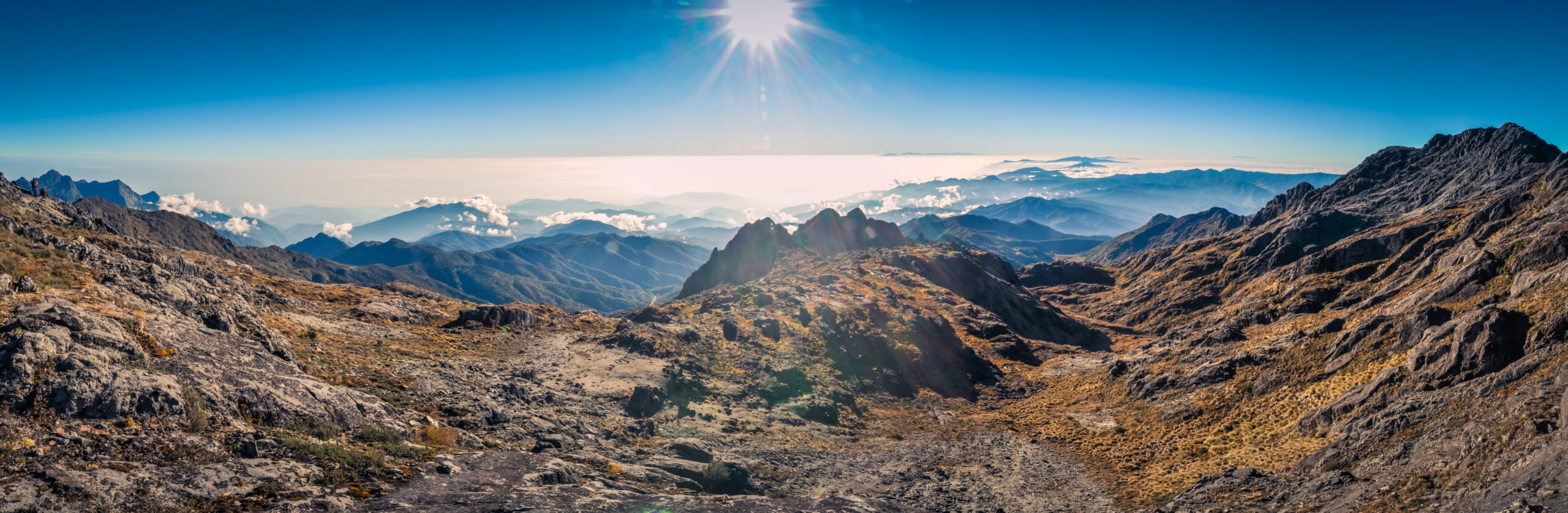
Mount Wilhelm Routes: Kegsugl Standard Route vs Ambullua Traverse
Most climbers should use the Kegsugl side. It is the established Mount Wilhelm route, with road access, Betty’s Place, lake-camp infrastructure and a direct pre-dawn summit climb. The Ambullua side is a real second route—but it is a longer, tent-based, community-supported traverse that requires much more logistics.
There Are Two Useful Route Concepts—but Only One Is the Normal Choice.
The Kegsugl route—often spelled Keglsugl in older sources—is the standard climb. Papua New Guinea Tourism describes good road access from Kundiawa, huts and lodges near the mountain, a 3–5 hour trek to the lake/base area, then a 4–7 hour pre-dawn ascent to the 4,509 metre summit.
The Ambullua / Korel Khu route approaches from the Western Highlands side. Current local information describes it as more isolated, longer, steeper in total elevation gain and dependent on tents, guides, porters, track fees and pre-arranged handover logistics if you descend through Kegsugl.
Kegsugl vs Ambullua at a Glance
These are not two equivalent commercial alternatives. Kegsugl is the established standard route; Ambullua is a longer community-supported traverse for trekkers deliberately seeking the remote side of the mountain.
| Factor | Kegsugl / Keglsugl | Ambullua / Korel Khu | Planning implication |
|---|---|---|---|
| Role | Standard ascent | Remote alternative / through trek | First-time international visitors normally start with Kegsugl. |
| Access | Road approach via Kundiawa and Gembogl area | Western Highlands / Delima and Upper Jimi side | Ambullua needs much more local coordination. |
| Accommodation | Betty’s Place + simple lake/base-camp hut arrangements | Guesthouse start + tent camps + basic bush shelters | Ambullua requires an expedition-style camp plan. |
| Typical route length | 3–4 day guided mountain package is common | Current local through itinerary: 5 trekking days, plus acclimatisation day recommended | Ambullua is not a weekend substitute. |
| Water | Available at several standard-route points; confirm treatment | Several long sections have limited or no easy water access | Ambullua requires more deliberate water carries. |
| Terrain | Forest → grassland → lake basin → rocky summit terrain | Forest → steep spurs → high ridges → alpine valley → summit ridge | Ambullua adds isolation and repeated camp moves. |
| Guide support | PNG Tourism says climbers should always use a guide | Local Ambullua operators require guide/porter support | Neither side should be treated as an unsupported GPS hike. |
| Best fit | Most climbers | Experienced trekkers seeking remoteness and cultural depth | Choose by logistics tolerance, not novelty. |
Route Orientation: Simbu Side vs Western Highlands Side
The standard route approaches from the south/southeast via Kegsugl. Ambullua approaches from the opposite side and is designed as a multi-day traverse rather than a simple out-and-back.
Kegsugl to Piunde/Aunde to the Summit
Official PNG Tourism timing is more useful than the old page’s fixed 01:00-to-07:00 script. A pre-dawn start is normal, but the exact departure time belongs to the guide and current conditions.
~2,800 m to ~3,500 m · 3–5 hours. The trail climbs through mountain forest and open grassland toward the Piunde and Aunde lake basin. Simple hut accommodation is available in the upper area.
~3,500 m to 4,509 m · 4–7 hours. Begin before sunrise. The upper route is colder, darker and rockier, with slow movement more important than technical climbing ability.
4,509 m to ~2,800 m · 6–8 hours. The descent is long. Wet rock, cloud, tired legs and the return through the lake basin make this a major part of the climb.
Planning profile only. Elevations are approximate and this diagram is not a navigation tool.
Pre-Dawn Is a Weather Strategy—not a Sacred Clock Time.
Official PNG guidance says summit attempts generally begin before sunrise so climbers can use calmer early conditions and clearer views. Your guide should set the actual start from current weather, team pace, footing and turnaround margin—not from a fixed 01:00 rule copied from an old itinerary.
Ambullua / Korel Khu Is a Traverse, Not a Shortcut.
The local route has been revitalized in recent years. The current community itinerary is detailed enough to treat it as a genuine second route—but it deserves its own expedition plan.
9.5 km · +1,350 m cumulative gain
Leave the guesthouse through gardens, follow the Kon River, then climb steeply through mossy rainforest to a small spur-top camp. Water planning matters because supply is not continuous.
2.6–3.7 km · +1,350–1,550 m cumulative gain
A short-distance but steep day through shrinking alpine forest into open heath and grassland. Local information describes two possible camps, both basic.
6.5 km · +950 m cumulative gain
Climb onto a major Bismarck Range ridge, then undulate across high terrain to the Seeku glacial valley. Water is limited between camps.
8.6 km · +1,050 m cumulative gain
Start before dawn, scramble onto the main summit ridge, reach Mount Wilhelm, then descend the Kegsugl side. Guide and porter handover to the Simbu side must be arranged in advance.
5 km · ~700 m descent
Finish through alpine grassland and mossy forest to Betty’s Place. The local itinerary recommends staying there before onward travel.
What Makes Mount Wilhelm Routes Difficult
The technical grade is modest. The environmental and logistical complexity is not.
4,509 m Summit
The standard route moves quickly from the Highlands roadhead to a lake camp around 3,500 m and then almost another 1,000 m to the summit.
Wet Rock & Steep Upper Terrain
PNG Tourism describes rocky upper slopes. Rain and dense cloud increase the consequences of slips and route-finding mistakes.
Cloud Can Arrive Fast
Official guidance says sudden cloud can reduce visibility to only a few metres. This is a strong argument for local guiding even without technical climbing.
Below-Freezing Nights
Higher elevations can fall below freezing at night even though the mountain rises in the tropics.
Evacuation Is Not Immediate
Road, communications and medical access are part of the route risk. Do not plan the climb as if rescue resembles a front-country trail system.
Highlands Advisory Context
Government travel advisories materially affect access, insurance and operator logistics before you ever reach the trail.
Best Season & Summit Timing
June through September is the primary drier window identified by PNG Tourism, but equatorial mountains remain wet, cold and unpredictable.
| Period | Typical role | Main concern | Route-planning implication |
|---|---|---|---|
| June–September | Primary drier season | Cold nights, cloud, occasional rain | Best baseline window, not a guarantee of dry rock. |
| October–November | Shoulder period | Increasing instability and rain | Use current local guidance; allow weather margin. |
| December–March | Wetter period | Heavy rain, mud, poor visibility | Higher chance of difficult footing and disrupted logistics. |
| Pre-dawn summit | Normal strategy | Darkness + cold | Headlamp, warm layers and guide-led pacing are essential. |
| Late morning / afternoon | Descent period | Cloud and rain can build | Do not waste the early weather margin on a late start. |
Which Mount Wilhelm Route Should You Use?
The decision is less about technical difficulty than about how much logistical complexity and isolation you actually want.
You Want the Established Mount Wilhelm Climb
- This is your first Mount Wilhelm trip.
- You want Betty’s Place and established guide support.
- You have limited trekking days.
- You prefer hut/base-camp infrastructure over tent camps.
- Your goal is the summit rather than a wilderness traverse.
You Want the Journey as Much as the Summit
- You are comfortable with remote multi-day trekking.
- You want a community-supported Western Highlands approach.
- You can carry a larger food and camp logistics margin.
- You can arrange guides, porters, track fees and handover logistics.
- You have enough time for acclimatisation plus five trekking days.
Separate Official Standard-Route Data From Local Ambullua Detail.
The standard route is supported by current PNG Tourism material. The Ambullua section uses the route’s current community-based source because national tourism pages provide far less detail on that side.
Primary route sources
What was deliberately changed
- Uses official timing ranges instead of a universal 01:00/07:00 schedule.
- Removes the unsupported “99% use Kegsugl” claim.
- Updates Ambullua from a generic four-day label to the current five-day through-itinerary.
- Removes a long accident chronology that was not necessary to answer route intent.
- Separates mountain difficulty from current destination-security planning.
- Treats maps and the elevation profile as orientation only, not navigation.
Mount Wilhelm Routes FAQ
The FAQ keeps route decisions separate from outdated folklore and fixed-clock rules.
What is the standard Mount Wilhelm route?
The standard climb uses the Kegsugl/Keglsugl side in Simbu Province, generally via Betty’s Place, the Piunde/Aunde lake area and a pre-dawn rocky summit ascent.
How long does the standard route take?
PNG Tourism gives 3–5 hours from Betty’s Place to the base area, 4–7 hours from base camp to the summit and 6–8 hours from the summit to the trailhead. Local packages commonly span three or four days.
What is the Ambullua route?
It is the remote Western Highlands approach through Delima and the Upper Jimi side. Current local guidance uses a five-day through-itinerary to summit Mount Wilhelm and descend the Kegsugl side.
Do I need a guide?
PNG Tourism says climbers should always use a guide. The Ambullua community also requires local guide support, and porter arrangements are part of that route.
Is Mount Wilhelm technical?
The standard route is generally nontechnical, but the upper mountain is steep, rocky and potentially slippery. Altitude, darkness, cloud and evacuation difficulty are more important than rope skills.
What is the best season?
June through September is the main drier-season window identified by PNG Tourism. Conditions can still change rapidly.
Where do you sleep?
Standard-route climbers commonly use Betty’s Place plus the lake/base-camp hut area. Ambullua requires several tent camps and basic local shelters.
What should I know about the current travel advisory?
As of September 17, 2026, the U.S. State Department says not to travel to the Highlands region outside Mount Hagen and Goroka. Check your government advice, insurer and local operator before making a nonrefundable booking.
Continue the Mount Wilhelm Planning Cluster
Use the parent guide for the whole expedition, then open the equipment, altitude and regional pages that answer the next planning decision.
Use Kegsugl for the Mountain. Use Ambullua When You Want the Expedition.
The standard side already delivers rainforest, high lakes, darkness, altitude and a 4,509-metre summit. Ambullua adds days of isolation, camps, water planning, porter logistics and a true cross-mountain journey.
Mount Wilhelm Routes & the Peaks of Oceania
The routes are one piece of a Wilhelm climb. See the full guide and Oceania’s other summits below.
Was this helpful?
🏔Related peaks nearby
🧭Explore & compare
Global Summit Guide is an independent mountaineering resource founded in 2026. The team combines first-hand trekking and climbing experience with in-depth research and professional health and nutrition review to help climbers choose objectives, prepare properly, and stay safe.
Health, altitude, and nutrition content is reviewed by Taylor Ludlow (Registered Nurse) and Brigg Hoopes (Nutritionist).
What We Don't Know Yet
Mountain information changes quickly. This box explains the limits of what this page can responsibly promise.
- Route conditions, trailhead access, crevasse exposure, stream crossings, and rescue access may vary from published planning guidance.
- Comparisons simplify complex decisions; the better mountain depends on current conditions, skills, timing, budget, and risk tolerance.
- Visa, passport, vaccination, border, insurance, and local transportation rules may change before your trip.
Verify current conditions with official land managers, guide services, local forecasts, and current route reports before booking or climbing.
Mountaineering, rock and ice climbing, glacier travel, and high-altitude activity are inherently dangerous and can result in serious injury or death. The information on Global Summit Guide is provided for general informational and educational purposes only and is not a substitute for professional instruction, qualified guiding, proper equipment, or your own judgment and experience.
Route conditions, weather, snowpack, permits, regulations, and hazards change constantly and may differ from what is described here. Details may be incomplete, out of date, or contain errors. Always verify current information with local authorities, certified guides, and official sources before making any decision in the mountains.
Nothing on this site is medical, legal, or financial advice. Our fitness, acclimatization, altitude, and nutrition content is general in nature; consult a qualified physician before beginning any strenuous exercise program or exposing yourself to high altitude.
You are solely responsible for your own safety and decisions. To the fullest extent permitted by law, Global Summit Guide and its team accept no liability for any loss, injury, damage, or expense arising from use of, or reliance on, this information. By using this site you acknowledge these risks and accept these terms.
Some links on this site may be affiliate links. If you buy through them we may earn a small commission at no extra cost to you; this never affects our recommendations.
Global Summit Guide recommendation path
Next Best Mountain to Research
Use these recommendations to continue the right planning path instead of stopping on one page.
Use current permit, weather, route, and operator information before booking or climbing.
Explore Travel Options for Your Destination
Once your mountain, dates and route are taking shape, compare flights, hotels and other travel options that fit the trip.
Affiliate link. We may earn a commission at no additional cost to you.