
Last updated May 26, 2026
Most Scenic Mountains to Climb 2026: 30 Peaks Ranked by Visual Beauty Across 6 Regions — Real Aesthetic Curation
Most “beautiful mountains” lists mix climbable peaks with unclimbable ones, conflate aesthetics with difficulty, and rarely explain ranking criteria. This guide ranks the 30 most scenic climbable mountains using four consistent aesthetic criteria. First, classical pyramidal silhouettes like Alpamayo, Matterhorn, and Ama Dablam. Then iconic granite spires like Fitz Roy and Cerro Torre. Also perfectly conical volcanoes like Mount Fuji, Mt. Cook, and Rainier. Finally, dramatic settings combining peaks with reflective lakes or distinctive surroundings. Notably, the ranking includes only mountains climbers can actually attempt — distinguishing fully accessible peaks (Mont Blanc, Fuji, Half Dome) from elite technical objectives few will summit (Cerro Torre, Alpamayo). Generally, this guide differs from generic “beautiful mountains” lists by separating scenic appeal from climbing difficulty, providing climbers with clear targets matched to their skill level and travel plans.
Mountains earn “most scenic” rankings through specific visual qualities rather than fame, altitude, or difficulty. Notably, the 1960s German surveyor team who first crowned Alpamayo “most beautiful mountain in the world” applied geometric symmetry and proportion criteria. The peak’s exact pyramidal proportions make it photographically distinctive from every angle. Generally, this curation logic extends to other consistently-ranked scenic peaks. Ama Dablam features the hanging glacier necklace. The Matterhorn presents its iconic Alpine pyramid silhouette. Cerro Torre shows the rime-capped granite spire. Mount Fuji displays the perfect volcanic cone. Mount Cook offers glaciated dramatic presence in the Southern Alps.
The ranking applies five specific aesthetic criteria consistently across all 30 entries. Specifically, the criteria span five dimensions. First, classical aesthetic shape — pyramidal or distinctive silhouette versus generic massif. Then dramatic prominence above surrounding terrain — peaks rising directly from valleys or oceans rank higher than peaks within similar-elevation ranges. Also distinctive features — recognizable elements like hanging glaciers, granite spires, or volcanic craters. Additionally striking surroundings — reflective lakes, photogenic foregrounds, or sacred cultural settings. Finally, color contrast — snow against sky, granite against vegetation, or volcanic features against clouds. Notably, the result includes some mountains famous for different reasons in other contexts — Matterhorn ranks high here for shape, not climbing difficulty.
The guide answers what climbers planning trips actually need. Which mountains genuinely deserve “most scenic” recognition? How do scenic mountains rank within each geographic region? Which scenic peaks suit your climbing experience level? What logistical considerations affect each peak’s accessibility? Notably, we’ll cover several concrete details. First, peak-by-peak aesthetic analysis. Then regional groupings for trip planning. Also climbing access status (open, restricted, or prohibited). Additionally accessibility level matched to climber skill. Finally, decision frameworks for choosing scenic peaks based on travel plans and experience.
Aesthetic Ranking Methodology
The most scenic ranking applies five specific criteria consistently across all 30 entries. Generally, peaks must meet multiple criteria rather than just one — a peak with classical shape but no distinctive surroundings ranks lower than peaks excelling across all five dimensions. Notably, these criteria distinguish genuinely scenic mountains from peaks famous for other reasons.
Criterion 1: Classical Aesthetic Shape
The most scenic mountains feature distinctive silhouettes recognizable from photographs alone. Generally, the ranking favors specific shape categories. First, classical pyramidal forms like Alpamayo, Matterhorn, and Pico Cao Grande. Then graceful curved peaks like the Mount Fuji volcanic cone. Also iconic granite spires like Fitz Roy, Cerro Torre, and Mount Thor. Finally, dramatic asymmetric forms like Half Dome’s split silhouette and Mount Assiniboine’s pyramidal facade. Specifically, mountains without distinctive silhouettes — even very tall or famous ones — rank lower regardless of other qualities. Notably, K2 ranks lower on scenic lists than the Matterhorn because the Matterhorn’s pyramidal shape is more visually distinctive despite K2’s greater altitude and fame.
Criterion 2: Dramatic Prominence
Mountains rising directly from low-elevation surroundings impress visually more than peaks within similar-elevation ranges. Generally, this prominence factor explains why Mount Fuji (3,776m rising from sea-level Japan) ranks higher than Everest from Tibet plateau views (8,849m but rising from already-high terrain). Specifically, peaks with high prominence include several iconic examples. Mount Cook rises from the Southern Alps. Kilimanjaro rises from African plains. Mount Saint Elias rises 5,500m from sea level. Mount Fitz Roy presents a 3,405m granite spire above Patagonian flatlands. Notably, prominence creates the dramatic visual impact that makes mountains photogenic from base areas — climbers want peaks worth visiting before climbing.
Criterion 3: Distinctive Features
Each top-ranked scenic mountain features recognizable distinctive elements. Generally, the features span five categories. First, hanging glaciers — Ama Dablam’s “necklace,” Mount Cook glaciers. Then rime ice formations — Cerro Torre’s mushroom-like ice cap. Also unique geological structures — Half Dome’s vertical face, Mount Thor’s overhanging cliff, Devil’s Tower hexagonal columns. Additionally seasonal foliage and weather — Mount Fuji with cherry blossoms or snow cap. Finally, dramatic ridges or aretes — Matterhorn’s four ridges, Mount Assiniboine’s pyramidal facades. Specifically, these distinctive features make individual peaks identifiable in photographs even without captions.
Criterion 4: Striking Surroundings
Scenic mountains gain significant ranking points from their surroundings. Generally, the most photographed mountains pair with iconic foreground elements. Specifically, the Matterhorn benefits from Riffelsee reflection lake photography. Mount Fuji pairs with the Chureito Pagoda cherry blossom view. Mount Assiniboine reflects in Lake Magog. Aoraki/Mount Cook centers Aoraki National Park’s dark sky reserve. Kirkjufell pairs with the famous waterfall foreground and aurora borealis backdrop. Notably, isolated scenic mountains without striking surroundings rank lower than peaks with iconic photographic compositions.
Criterion 5: Color and Light Contrast
Light, color, and seasonal variation enhance scenic mountains. Generally, snow-capped summits against blue sky create the classic mountain photograph. Specifically, year-round snow peaks (Mount Cook, Mount Fuji volcanic cone, Cerro Torre) maintain visual drama across seasons. Notably, seasonal mountains like Half Dome (granite against fall foliage) and Mount Rainier (snow against summer alpine meadows) offer different aesthetic experiences depending on visit timing. Generally, peaks lacking dramatic color contrast — uniformly gray rocky summits without snow or distinctive features — rank lower in scenic rankings regardless of other qualities.
Why this list differs from generic “beautiful mountains” rankings. Generally, most “beautiful mountains” lists conflate aesthetics with difficulty, fame, or accessibility — and frequently include unclimbable peaks. Specifically, this Top 30 ranking instead applies consistent aesthetic criteria while limiting selections to mountains climbers can actually attempt. Notably, this excludes some famously beautiful mountains. Mount Kailash has climbing prohibited by Chinese authorities for religious reasons. Then Machapuchare holds sacred status in Nepal — permanently closed to climbing. Finally, remote Greenland peaks like Mount Thor and Ulvetanna remain inaccessible to most climbers. Generally, the result provides genuine targets matched to actual climbing trip planning rather than aspirational viewing-only lists.
Decision Framework by Skill Level
The 30 most scenic mountains span every climbing skill level — from non-technical trekking peaks to elite technical objectives. Generally, climbers should match scenic targets to their actual capability rather than aspirational goals. Notably, attempting peaks beyond current skill level creates genuine danger and often results in retreat.
Scenic Mountains by Climbing Skill Level
Region 1: The Andes — 6 Scenic Objectives
The Andes contain some of the world’s most aesthetically perfect mountains. Generally, the Cordillera Blanca in Peru concentrates several top-ranked scenic peaks within a single mountain range. Notably, Alpamayo holds the unofficial title “most beautiful mountain in the world” — a designation that originated with 1960s German surveyors and continues across climbing publications.
Why the Andes Dominate Scenic Rankings
Generally, the Andes feature several geographic factors that produce exceptional scenic mountains. The Cordillera Blanca’s compact mountain corridor contains 17 peaks above 6,000m within 130km — providing dramatic prominence and visual density. Notably, the equatorial latitude combined with high altitude produces year-round snow caps creating visual drama. Specifically, the steep western face of the Andes drops dramatically to coastal lowlands — creating prominent peaks visible from far away.
#1Alpamayo — Peru
Alpamayo represents the consensus top pick across multiple climbing publications. Notably, a 1960s German surveyor team officially crowned Alpamayo “most beautiful mountain in the world” — and the designation continues today. Generally, the perfect geometric pyramid features fluted snow ridges that look “like edible Viennetta” from certain angles. Specifically, the southwest face’s convergent fluting creates lines that seemingly point toward the summit. Climbing requires TD+ alpine ice skills on the standard French Direct route — making Alpamayo an expert-level scenic objective.
#2Huayna Potosí — Bolivia
Huayna Potosí offers one of the most accessible high-altitude scenic peaks. Generally, the mountain rises dramatically northwest of La Paz at 6,088m — providing prominence views from the Bolivian capital. Notably, the standard route ranks AD grade with sustained snow climbing on the upper sections. Specifically, the peak draws the title “easiest 6,000er in the world” — making it accessible to fit climbers with basic mountaineering experience. The dramatic glaciated ridges and proximity to La Paz urban infrastructure create unique climbing logistics combining city accommodation with mountain expedition.
#3Pequeño Alpamayo — Bolivia
Pequeño Alpamayo (Little Alpamayo) named for resembling the Peruvian Alpamayo offers a smaller but equally aesthetic scenic peak. Generally, the snow pyramid with 55° inclination provides striking visual symmetry. Notably, the peak sits in the Condoriri massif — providing scenic backdrop including the famous Condoriri formation (the “Head and Wings” rock cluster). Specifically, Pequeño Alpamayo serves as an excellent intermediate scenic peak between trekking and serious mountaineering. The first ascent by South African Irene and Keith Whitelock occurred in August 1962.
#4Illimani — Bolivia
Illimani rises directly above La Paz as the city’s most recognizable mountain landmark. Generally, the 6,438m peak’s distinctive five-summit ridge creates dramatic skyline visible from anywhere in the Bolivian capital. Notably, the proximity to urban infrastructure makes Illimani accessible despite its altitude. Specifically, the standard route involves moderate alpine climbing — accessible to climbers with intermediate experience. The peak’s combination of urban-adjacent dramatic setting and accessible difficulty makes it a scenic objective worth multiple visits.
#5Cotopaxi — Ecuador
Cotopaxi represents one of the world’s most aesthetically perfect volcanic cones. Generally, the symmetric snow-capped form makes Cotopaxi visible from Quito on clear days. Notably, the standard climbing route is glacier-based and accessible to climbers with basic mountaineering experience. Specifically, the perfect geometric volcanic cone shape pairs with the dramatic Avenue of the Volcanoes setting — providing scenic context combining Cotopaxi with surrounding peaks like Chimborazo and Antisana. The peak’s recent volcanic activity (eruptions 2015-2016, 2022) requires checking current safety status.
#6Pico Bolívar — Venezuela
Pico Bolívar offers Venezuela’s most scenic high-altitude objective. Notably, the rocky summit pyramid rises from the Sierra Nevada de Mérida — a less-traveled but spectacular Andean range. Generally, the standard route involves moderate rock climbing combined with glacier travel on the higher sections. Specifically, the peak provides views across the Venezuelan Andes and on clear days extends to the Llanos plains far below. The peak honors Simón Bolívar — the South American independence leader — making it a culturally significant scenic objective.
Region 2: The Himalaya — 6 Scenic Objectives
The Himalaya contain several of the world’s most aesthetically distinctive mountains. Generally, the range concentrates on dramatic prominence — peaks rising directly from Indo-Gangetic plains create extraordinary visual impact. Notably, Ama Dablam consistently appears alongside Alpamayo and the Matterhorn in “most beautiful mountain” rankings across climbing publications.
Himalayan Scenic Character
Generally, the Himalaya’s scenic mountains feature several shared qualities. First, dramatic prominence rising from low-altitude approaches. Then distinctive shapes — Ama Dablam’s hanging glacier, Nuptse’s pyramidal summit, Kanchenjunga’s five peaks. Finally, cultural significance — sacred status enhancing scenic perception. Notably, the trekking access to Himalayan peaks creates exceptional viewing opportunities even for climbers who don’t summit. Specifically, the Everest Base Camp trek alone provides scenic mountain views rivaling any climbing experience.
#7Ama Dablam — Nepal
Ama Dablam ranks as the Himalaya’s most scenic peak across multiple sources. Generally, the name means “Mother’s Necklace” in Sherpa language — referring to the hanging glaciers that drape the south face like a necklace ornament. Notably, the dramatic ridge climbing combined with the iconic hanging glaciers create unforgettable photography. Specifically, the peak rises directly above the Everest Base Camp trekking route — providing constant scenic backdrop for climbers approaching higher objectives. Many climbers describe Ama Dablam as more aesthetically striking than Everest itself despite the smaller altitude.
#8Mount Everest — Nepal/Tibet
Everest combines scenic distinction with unmatched cultural significance. Generally, the iconic pyramid summit visible from Kala Patthar or Everest Base Camp represents one of the most photographed mountain views in the world. Notably, the standard South Col route involves expedition-grade climbing rather than scenic accessibility. Specifically, most climbers experience Everest scenically through the trekking approach to Base Camp (5,364m) rather than climbing the mountain itself. The peak’s prominence within the Khumbu Valley setting — surrounded by Nuptse, Lhotse, and Ama Dablam — creates iconic mountain photography contexts.
#9Nuptse — Nepal
Nuptse rises directly south of Everest as the iconic pyramid visible from Everest Base Camp. Generally, the peak’s striking south face combines with proximity to Everest creating one of the world’s most photographed mountain compositions. Notably, the climbing involves serious technical objectives including the famous Nuptse-Lhotse-Everest horseshoe ridgeline. Specifically, while most climbers experience Nuptse only scenically from Base Camp area, the mountain serves as a serious objective for elite climbers seeking technical Himalayan routes. The interplay between Everest, Nuptse, and Lhotse creates the iconic Khumbu skyline.
#10Cholatse — Nepal
Cholatse offers an underrated scenic alternative within the Khumbu region. Generally, the glacier-draped pyramid stands across from Ama Dablam — providing dramatic views from the Gokyo Lakes trek. Notably, the peak attracts fewer climbers than Ama Dablam despite comparable aesthetic merit. Specifically, the north face features sustained mixed climbing for technical climbers, while the standard route provides AD-grade climbing accessible to advanced mountaineers. The Cholatse-Tabuche pair forms one of the most photographed mountain compositions in the Khumbu beyond the Everest cluster.
#11Kanchenjunga — Nepal/India
Kanchenjunga’s five-summit massif creates one of the most distinctive Himalayan silhouettes. Generally, the name “Five Treasures of Snow” refers to the mountain’s five distinct summits visible from approach areas in Sikkim, India and eastern Nepal. Notably, the peak combines extreme altitude (third-highest in the world at 8,586m) with scenic complexity rare in 8000m peaks. Specifically, the eastern Himalayan setting provides striking foregrounds — rolling green Himalayan foothills contrasting with the snow-capped peaks. Climbing requires expedition-grade fitness and technical capability.
#12Laila Peak — Pakistan
Laila Peak’s needlepoint summit makes it one of the most distinctive Karakoram scenic peaks. Generally, the dramatic spire rises from the Hushe Valley — providing striking foregrounds combining steep granite with snow-capped summit. Notably, the first ascent in 1987 by a four-man British team including Simon Yates (made without permits) demonstrated the peak’s accessibility to elite climbers. Specifically, Laila Peak vies with Ama Dablam for the title of most beautiful mountain in Asia. Climbing requires advanced mountaineering capability across the standard route.
Region 3: The Alps — 6 Scenic Objectives
The Alps contain some of the world’s most universally recognized scenic mountains. Generally, the long climbing tradition and accessibility from European population centers makes Alpine peaks the most photographed mountains globally. Notably, the Matterhorn alone appears on more photographs than perhaps any other mountain in the world — its iconic pyramid silhouette serving as the standard for “perfect alpine peak.”
Alpine Scenic Tradition
Generally, the Alps invented “mountain scenic appreciation” as a cultural concept. The 19th-century Romantic movement first celebrated Alpine peaks as aesthetically significant rather than just geographic obstacles. Notably, the modern Alpine infrastructure (cable cars, mountain restaurants, trekking trails) makes scenic peaks accessible to non-climbers in ways unavailable in remote ranges. Specifically, the Alps offer scenic mountains accessible to families and casual photographers without requiring expedition logistics.
#13Matterhorn — Switzerland/Italy
The Matterhorn ranks among the world’s most universally recognized scenic mountains. Generally, the iconic pyramidal shape with four distinct ridges — Hörnli, Lion, Furggen, and Zmutt — creates the visual template for “perfect alpine peak.” Notably, the Riffelsee reflection lake provides one of the most photographed mountain compositions globally. Specifically, the standard Hörnli Ridge route accommodates intermediate alpine climbers with AD-grade climbing experience. Climbers and photographers visit the Matterhorn from Zermatt year-round — the peak rivals Mount Fuji as the most photographed mountain.
#14Mont Blanc — France/Italy
Mont Blanc represents Western Europe’s most scenic and accessible major peak. Generally, the dramatic glaciated summit visible from Chamonix creates one of the most striking Alpine scenes. Notably, Mont Blanc accommodates more climbers than any other 4000er — accessible to fit beginner mountaineers through the standard Goûter Route with mountain hut accommodation. Specifically, the peak’s first recorded ascent in 1786 marked the birth of modern alpinism. The combination of accessibility, infrastructure, and scenic merit makes Mont Blanc the world’s most accessible major scenic objective.
#15Watzmann — Germany
Watzmann represents Germany’s most beautiful and culturally significant mountain. Generally, the six-summit massif rises dramatically above the Berchtesgaden region — creating iconic Bavarian Alps photography. Notably, the peak features a legendary east face with 1,800m vertical relief, providing dramatic scenic backdrop. Specifically, the standard climbing routes accommodate intermediate climbers, while the traverse of all six summits represents a serious alpine objective. Watzmann’s surroundings — Lake Königssee and the Bavarian countryside — create iconic photography compositions combining mountain drama with cultural landscapes.
#16Tre Cime di Lavaredo — Italy
Tre Cime di Lavaredo (Three Peaks of Lavaredo) creates one of the most distinctive mountain silhouettes globally. Generally, the three vertical limestone towers (Cima Grande, Cima Ovest, Cima Piccola) rise from rolling Dolomite meadows providing iconic photography. Notably, the trio appears on countless postcards, books, and travel posters representing the Italian Alps. Specifically, the climbing involves serious technical objectives including the famous Comici route on the Cima Grande North Face. The Tre Cime represents both an accessible viewing destination (trail loops around the base) and a serious climbing objective.
#17Eiger — Switzerland
The Eiger combines dramatic scenic merit with mountaineering history. Generally, the iconic north face (“Nordwand” or “Mordwand” — Murder Wall) creates one of the most dramatic mountain photography subjects in the Alps. Notably, the Jungfraubahn mountain railway transports tourists to the Eigerwand station within the famous face — providing unique scenic access without climbing. Specifically, climbing routes range from the moderate Mittelegi Ridge (D) to the legendary Nordwand (ED1). The peak’s role in alpine climbing history adds cultural weight to its scenic appeal.
#18Mount Assiniboine — Canada
Mount Assiniboine in the Canadian Rockies earns the nickname “Matterhorn of the Rockies” because of its dramatic pyramidal shape. Generally, the peak rises from rolling glacial valleys providing iconic Lake Magog reflection photography. Notably, Assiniboine receives far less attention than more famous Canadian mountains despite arguably better scenic merit. Specifically, the standard route involves moderate alpine climbing accessible to intermediate mountaineers. The remote setting requires multi-day approach via Sunshine Village or Mount Shark trailhead — adding to the scenic experience through extended wilderness exposure.
Region 4: Patagonia — 5 Scenic Objectives
Patagonia contains some of the world’s most dramatic granite spire scenery. Generally, the compact climbing zones around El Chaltén (Argentina) and Torres del Paine (Chile) concentrate iconic granite peaks within small geographic areas. Notably, Patagonian mountains rank exceptionally high on scenic lists because of their distinctive vertical granite forms combined with extreme weather creating dramatic photography conditions.
Patagonian Scenic Character
Generally, Patagonia features unique scenic qualities not found elsewhere. The granite spires (Cerro Torre, Fitz Roy, Torres del Paine) provide dramatic vertical forms unlike rounded glaciated peaks elsewhere. Notably, the rime ice formations on Cerro Torre create photographic moments unavailable anywhere else in the world. Specifically, the southern latitude (49-51°S) produces dramatic skies — long sunset/sunrise periods, southern aurora possibilities, and rapidly changing weather creating photogenic atmospheric conditions.
#19Cerro Torre — Argentina/Chile
Cerro Torre ranks among the world’s most aesthetically distinctive mountains. Generally, Reinhold Messner called the peak “a shriek turned to stone” — capturing its dramatic vertical form. Notably, the rime ice cap that frequently forms on the summit creates surreal photography subjects unavailable elsewhere. Specifically, the granite spire stands 3,128m — modest by Andean standards but extraordinary because of its near-vertical form. Climbing is reserved for elite alpinists with ED-grade capability. Generally, most scenic appreciation happens from El Chaltén town and trekking routes including Laguna Torre.
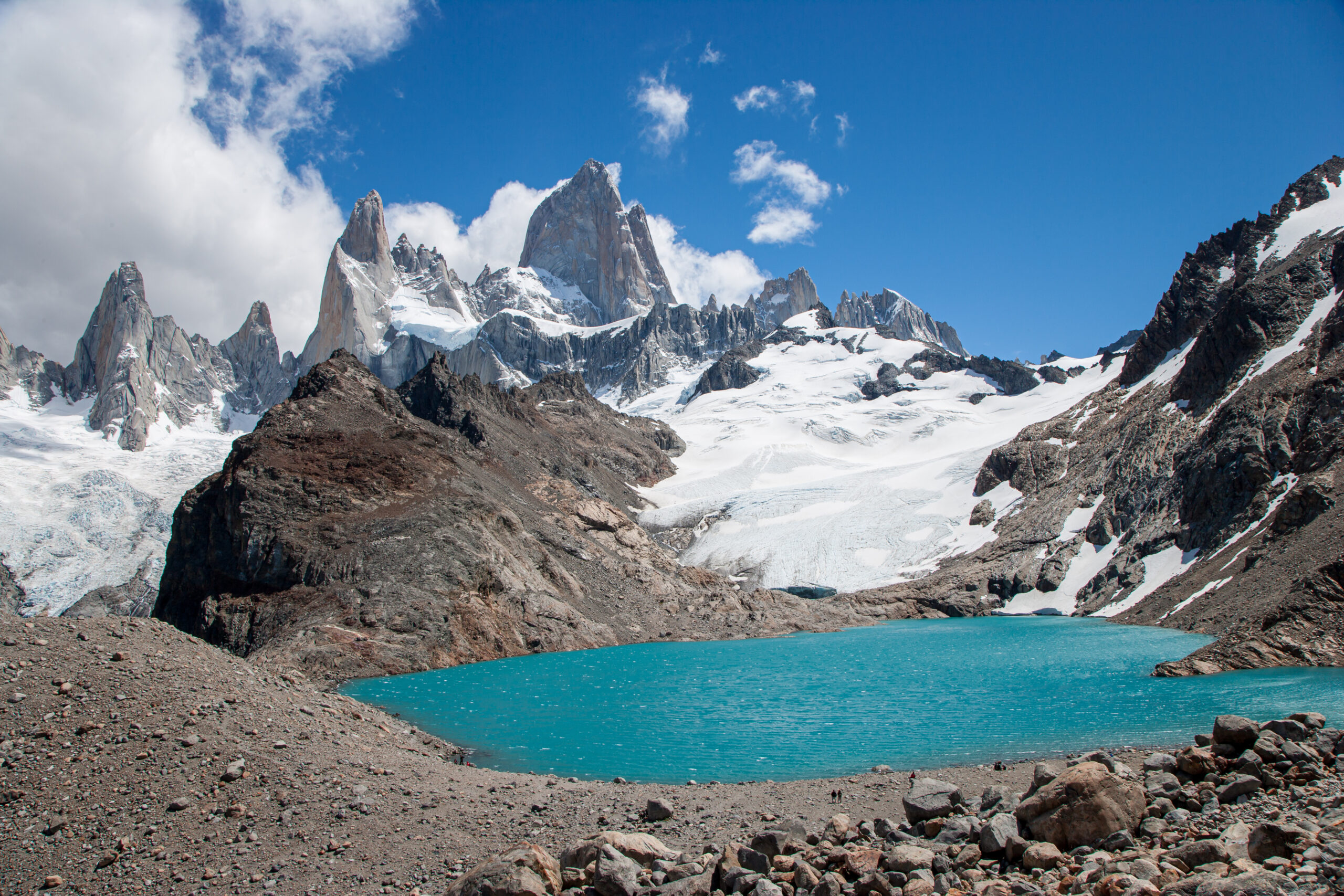
#20Mount Fitz Roy (Cerro Chaltén) — Argentina
Fitz Roy creates the iconic Patagonian skyline visible from El Chaltén. Generally, the granite spires rise dramatically from rolling Patagonian flatlands — providing extraordinary prominence. Notably, the native name “Cerro Chaltén” means “smoking mountain” referring to the lenticular clouds frequently obscuring the summit. Specifically, the peak appears on countless travel publications representing southern Argentina. Climbing requires expert technical capability across the multiple spire summits. Generally, the Laguna de los Tres trekking route provides the most photographed Fitz Roy viewpoint — accessible to fit hikers without climbing skills.
#21Torres del Paine — Chile
The three towers of Torres del Paine — Torre Sur, Torre Central, Torre Norte — create one of the most iconic Patagonian compositions. Generally, the granite peaks rise dramatically from rolling Patagonian terrain providing extraordinary visual impact. Notably, the W Trek and O Circuit hiking routes provide accessible scenic viewing without climbing. Specifically, climbing the central tower involves serious big wall objectives including the famous “Riders on the Storm” route. The park combines scenic mountain photography with possibility of seeing pumas — one of the best wildlife viewing destinations in the world.
#22Torre Egger — Argentina/Chile
Torre Egger represents the underappreciated scenic companion to Cerro Torre. Generally, the peak named after Toni Egger (who died on the disputed 1959 Cerro Torre first ascent) provides striking granite spire scenery combined with the standard Patagonian rime ice conditions. Notably, the modern complete traverse of Cerro Standhardt + Punta Herrón + Torre Egger + Cerro Torre represents elite alpine climbing. Specifically, viewers from the El Chaltén area can see all four spires of the Cerro Torre group simultaneously — creating extraordinary compositional photography opportunities.
#23Cerro Castillo — Chile
Cerro Castillo offers underrated scenic experience in lesser-known Patagonian wilderness. Generally, the castle-like (castillo means “castle”) rock formations rise dramatically from forested valleys along Chile’s famous Carretera Austral. Notably, the peak attracts far fewer climbers than Torres del Paine or El Chaltén areas. Specifically, the four-day Cerro Castillo Trek provides scenic mountain photography rivaling the famous Patagonian destinations. The climbing routes accommodate intermediate to advanced mountaineers across various aspects of the dramatic ridge.
Region 5: North America — 6 Scenic Objectives
North America contains some of the most photographed mountains in the world — particularly across the Canadian Rockies, Pacific Northwest, and California’s Sierra Nevada. Generally, the National Park system makes scenic mountains exceptionally accessible to non-climbers through trail networks and viewpoints. Notably, several iconic peaks like Half Dome can be climbed by fit hikers without technical skills.
North American Scenic Tradition
Generally, North America’s scenic mountains benefit from the world’s most developed national park infrastructure. Yosemite, Banff, Mount Rainier National Park, and Aoraki Mount Cook National Park provide accessible scenic viewing while protecting peak environments. Notably, the American tradition of accessible mountain climbing (Half Dome cables, Mount Rainier guided service) makes scenic objectives reachable for hikers without expedition-grade fitness.
#24Half Dome — USA (California)
Half Dome represents one of the world’s most iconic granite peaks. Generally, the distinctive split silhouette — sheer rock face on one side and rounded dome on the other — creates instantly recognizable scenery. Notably, the Cables Route allows fit hikers to summit during the May-October season without technical climbing skills. Specifically, the climb involves a 16-mile round trip with 4,800 feet of elevation gain — accessible to fit hikers but physically demanding. The permit system (lottery-based) limits daily climbers, preserving the scenic and safety experience.
#25Mount Rainier — USA (Washington)
Mount Rainier represents the most glaciated peak in the lower 48 United States. Generally, the dormant volcano dominates the Seattle/Puget Sound region as a constant scenic backdrop. Notably, the standard Disappointment Cleaver route involves glacier travel accessible to climbers with basic mountaineering experience through guided services. Specifically, the peak’s dramatic prominence — rising 4,000m+ from Puget Sound sea level visible — creates extraordinary visual impact. Climbing requires technical skills including crevasse rescue and rope team travel.
#26Aoraki/Mount Cook — New Zealand
Aoraki/Mount Cook represents New Zealand’s highest peak and one of the world’s most scenic mountains. Generally, the Maori name means “Cloud Piercer” — referring to the peak’s role in piercing the persistent clouds of the Southern Alps. Notably, Aoraki/Mount Cook National Park forms the majority of New Zealand’s only International Dark Sky Reserve — creating unique scenic photography opportunities combining mountain views with stargazing. Specifically, the standard Linda Glacier route accommodates intermediate climbers with basic mountaineering experience.
#27Mount Robson — Canada
Mount Robson stands as the Canadian Rockies’ highest peak with dramatic scenic prominence. Generally, the dramatic 2,500m vertical relief creates extraordinary visual impact from highway and trail viewpoints. Notably, the famous Emperor Face represents one of the most challenging climbs in North America. Specifically, the standard Kain Face route accommodates intermediate to advanced climbers, while the iconic Robson Glacier viewing accommodates non-climbers via the Berg Lake Trail. The peak’s combination of accessibility from highway viewpoints with serious technical climbing creates a layered scenic experience.
#28Devils Tower — USA (Wyoming)
Devils Tower represents one of America’s most distinctive geological mountain formations. Generally, the hexagonal column structure rises 386m from surrounding plains creating extraordinary prominence relative to absolute height. Notably, President Theodore Roosevelt designated Devils Tower as the first US National Monument in 1906 — recognizing its scenic and cultural significance. Specifically, the tower holds sacred status for several Native American tribes — the Lakota, Cheyenne, Arapaho, Crow, and Kiowa peoples. Technical climbing routes ascend the vertical column faces while non-climbers explore the base trail.
#29Grand Teton — USA (Wyoming)
Grand Teton represents the iconic peak of Grand Teton National Park. Generally, the sharp pyramidal summit creates dramatic scenery visible from Jackson Hole and surrounding valleys. Notably, the standard Owen-Spalding Route accommodates intermediate to advanced climbers, while the rugged Exum Ridge represents a serious technical objective. Specifically, the peak’s setting combines dramatic mountain photography with extensive wildlife viewing including bison, elk, moose, and bears. The Grand Teton range provides multiple scenic photography opportunities beyond the main peak — including the Cathedral Group skyline.
Region 6: Notable Outliers — 1 Iconic Peak
Several scenic mountains exist outside the dominant climbing regions covered above. Generally, these notable outliers deserve recognition based on aesthetic merit despite less-traveled locations. Notably, Mount Fuji in Japan represents perhaps the world’s most culturally significant scenic peak — earning its own region category despite being a single peak.
#30Mount Fuji — Japan
Mount Fuji ranks among the world’s most scenic mountains because of its perfect volcanic cone combined with deep cultural significance. Generally, the symmetric snow-capped form has inspired Japanese art and literature for centuries. Notably, Mount Fuji appears on more photographs and artistic works than perhaps any other mountain in the world. Specifically, the peak accommodates approximately 200,000-300,000 climbers annually during the brief July-September official climbing season. The Yoshida Trail provides accessible climbing for fit beginners — making Fuji both the world’s most photographed mountain and an achievable scenic objective.
Summary Tables — Scenic Mountains at a Glance
Reference summaries help climbers identify scenic mountains matching specific criteria. Generally, the tables below organize the 30 peaks by region and by climbing skill level. Notably, this format allows climbers to compare options based on trip planning factors.
Summary by Region
| Region | Peaks | Top Scenic Picks | Skill Range |
|---|---|---|---|
| The Andes | 6 | Alpamayo, Huayna Potosí, Illimani, Cotopaxi | Beginner+ to Expert |
| The Himalaya | 6 | Ama Dablam, Everest, Nuptse, Cholatse, Laila Peak | Advanced to Expedition |
| The Alps | 6 | Matterhorn, Mont Blanc, Watzmann, Tre Cime, Eiger, Assiniboine | Beginner+ to Expert |
| Patagonia | 5 | Cerro Torre, Fitz Roy, Torres del Paine, Torre Egger | Advanced to Elite |
| North America | 6 | Half Dome, Mt. Rainier, Mt. Cook, Mt. Robson, Grand Teton | Hiker to Advanced |
| Notable Outliers | 1 | Mount Fuji | Fit hiker |
| TOTAL | 30 | Six regions covered | All skill levels |
Summary by Climbing Skill Level
| Skill Level | Count | Example Peaks |
|---|---|---|
| Fit Hiker (no technical skills) | 3 | Mount Fuji, Half Dome (Cables), Kilimanjaro-class peaks |
| Beginner Mountaineer | 6 | Mont Blanc, Cotopaxi, Pequeño Alpamayo, Mt. Rainier, Mt. Cook, Huayna Potosí |
| Intermediate Mountaineer | 7 | Matterhorn, Illimani, Watzmann, Mt. Assiniboine, Pico Bolívar, Cerro Castillo |
| Advanced Mountaineer | 7 | Eiger, Mt. Robson, Grand Teton, Cholatse, Laila Peak, Kanchenjunga, Mt. Belukha |
| Expert/Elite Climber | 7 | Alpamayo, Ama Dablam, Cerro Torre, Fitz Roy, Tre Cime, Torres del Paine, Torre Egger |
Common Mistakes — Choosing Scenic Peaks
Climbers planning trips around scenic mountains commonly make several mistakes. Generally, these mistakes result in disappointment or unrealistic objectives. Notably, the corrections below help climbers select scenic peaks matching their actual capability and trip context.
Mistake 1: Confusing scenic appeal with climbing difficulty
Many climbers assume the most scenic peaks are also the hardest to climb. Generally, this conflation produces unrealistic objectives. Specifically, scenic appeal and difficulty don’t align. Some extremely scenic peaks are very accessible — Mount Fuji, Half Dome via Cables, and Cotopaxi standard route all qualify. Then some extremely difficult peaks aren’t particularly scenic — Gasherbrum IV looks like its neighbors, and K2 resembles other 8000ers. Notably, climbers should evaluate scenic appeal separately from technical difficulty when planning trips.
Mistake 2: Targeting unclimbable scenic peaks
Some famously scenic mountains cannot be climbed. Generally, restrictions include religious prohibitions (Mount Kailash, Machapuchare), wilderness preservation rules (some peaks in protected areas), and effective inaccessibility (remote Greenland peaks). Specifically, climbers should research climbing legality and current access status before planning. Notably, scenic appreciation through trekking or photography expeditions remains possible for many restricted peaks even when climbing is prohibited.
Mistake 3: Ignoring viewing access in trip planning
The best scenic mountain experiences often combine climbing with viewing access from base areas. Generally, the famous viewing points (Riffelsee for Matterhorn, Kala Patthar for Everest, Laguna de los Tres for Fitz Roy) provide photography opportunities that summit access cannot match. Specifically, scenic trip planning should include time at viewpoints — not just summit attempts. Notably, photography conditions at viewpoints often exceed summit photography conditions because of weather, light, and foreground elements.
Mistake 4: Underestimating seasonal scenic variation
Scenic mountains look dramatically different across seasons. Generally, winter snow caps versus summer green valleys versus autumn foliage create distinct scenic experiences. Specifically, Mount Fuji during cherry blossom season (April), Mount Cook during winter aurora viewing (June-August), and Half Dome with fall colors (October) provide different scenic photography opportunities. Notably, climbers should research scenic seasonal variation before planning — sometimes the “off-season” scenic experience exceeds the climbing-season experience.
Mistake 5: Missing iconic photography compositions
Many scenic mountains have specific iconic photography compositions known to local photographers. Generally, finding these compositions requires research before visiting. Specifically, the Matterhorn-Riffelsee reflection, the Mount Fuji-Chureito Pagoda framing, the Mount Cook-Hooker Valley reflection, and the Mount Assiniboine-Lake Magog mirror — all require specific timing and positioning. Notably, climbers should research the famous photography compositions for their target peaks before trips to maximize scenic value.
Frequently Asked Questions About Scenic Mountains
What makes a mountain ‘scenic’?
Mountain scenic beauty combines several measurable visual factors that explain why specific peaks consistently appear on “most beautiful” lists. The criteria span five dimensions. First, classical aesthetic shape — pyramidal silhouettes like Alpamayo and Matterhorn rank highest. Then dramatic prominence above surrounding terrain — peaks rising directly from valleys or oceans visually impress more than peaks within similar-elevation ranges. Also distinctive features — the Ama Dablam hanging glacier “necklace,” the Cerro Torre rime ice cap, the Fitz Roy spire cluster. Additionally striking surroundings — Matterhorn reflected in Riffelsee, Mount Fuji with cherry blossoms, Mount Cook in Aoraki National Park’s dark sky reserve. Finally, color contrast — snow-capped summits against blue sky, granite walls against green valleys. The 1960s German surveyor team who first crowned Alpamayo “most beautiful in the world” applied geometric symmetry and proportion criteria — the peak’s exact pyramidal proportions make it photographically distinctive from every angle.
Are these scenic mountains actually climbable?
This list includes only mountains that climbers can legitimately attempt. The ranking distinguishes from generic “beautiful mountains” lists that often include unclimbable peaks for visual impact alone. The 30 mountains span the full difficulty range: completely accessible trekking peaks (Mount Fuji, Mount Cook Linda Glacier, Half Dome cables route), moderate alpine climbs (Matterhorn Hornli Ridge, Mont Blanc, Mt. Rainier), serious technical objectives (Alpamayo, Ama Dablam, Mt. Assiniboine), and elite expert routes (Cerro Torre, Fitz Roy, Cerro Torre Compressor Route). The ranking excludes peaks that climbing is prohibited (Mount Kailash — religious restrictions) or peaks that remain effectively unclimbable (Machapuchare — sacred status restrictions in Nepal). Climbers should match scenic targets to their actual skill level — some of the most scenic peaks demand expert technical climbing capability.
Which is the ‘most beautiful’ mountain in the world?
There’s no objective answer, but several peaks consistently appear in top rankings across multiple sources. Alpamayo (Peru) holds the title most often — a 1960s German surveyor team officially crowned it “most beautiful mountain in the world” and many climbing publications continue using that designation. Alpamayo’s geometric symmetry creates a near-perfect snow pyramid visible from multiple angles. Other consistent top picks include several iconic peaks. Ama Dablam in Nepal earns the “Jewel of the Himalayas” title — visible from the Everest Base Camp trek. The Matterhorn in Switzerland/Italy stands as the iconic Alpine pyramid. Then Cerro Torre in Patagonia features the rime-capped granite spire. Finally, Mount Fuji in Japan offers the perfect volcanic cone. The “most beautiful” designation depends on personal aesthetic preferences and viewing context. Alpamayo wins on geometric purity, Ama Dablam on dramatic positioning, the Matterhorn on universal recognition, Cerro Torre on weather drama, and Mount Fuji on cultural significance combined with form.
How does this list differ from ‘hardest’ mountains lists?
Most mountain rankings combine difficulty, fame, fatality rates, and visual appeal into single lists — producing inconsistent results. This scenic ranking applies aesthetic criteria specifically rather than difficulty metrics. Several mountains appear on both “most scenic” and “hardest” lists (Cerro Torre, Alpamayo, Ama Dablam) because extreme aesthetics often correlate with extreme technicality. However, many scenic mountains aren’t particularly difficult (Mount Fuji is non-technical, Mount Cook standard route is moderate D-grade, Mount Rainier is accessible to fit hikers). Conversely, several extremely difficult mountains aren’t particularly scenic (K2 looks like other massive 8000ers, Gasherbrum IV resembles its neighbors, Mount Saint Elias is impressive but not aesthetically distinctive). This ranking specifically separates scenic appeal from climbing difficulty — providing climbers with peaks chosen for visual beauty rather than just technical challenge.
Which scenic mountains can I climb as a beginner?
Several scenic mountains accommodate beginner climbers with reasonable fitness. The most accessible scenic peaks include several options. Mount Fuji offers the Yoshida Trail — non-technical trekking with mountain hut support. Half Dome has the Cables Route — strenuous day hike with cable assistance. Mount Cook Linda Glacier provides guided basic mountaineering. Mt. Rainier offers guided basic mountaineering with glacier travel skills. Finally, Pequeño Alpamayo in Bolivia is the “easiest 6000er” for fit beginners with basic skills. Several Alpine 4000ers including Mont Blanc Goûter Route, Breithorn, and Gran Paradiso offer scenic climbing accessible to beginner mountaineers with one season of guided experience. The truly elite scenic mountains (Cerro Torre, Fitz Roy, Alpamayo French Direct, Ama Dablam) require years of progressive alpine climbing experience. Beginners should target the moderate scenic peaks first — building toward harder scenic objectives over multiple seasons.
How important is photography equipment for scenic mountain trips?
Photography equipment quality significantly affects scenic mountain experience capture. Generally, smartphone cameras have improved dramatically and produce acceptable scenic photos in good light. However, dedicated photography equipment provides advantages for serious scenic mountain trips. Specifically, a wide-angle lens (24mm or wider) captures sweeping mountain panoramas that smartphones can’t match. A telephoto lens (70-200mm) compresses scenic compositions creating dramatic photographs of distant peaks. Polarizing filters reduce glare and saturate sky/snow contrast. Tripods enable low-light sunrise/sunset photography. Notably, the early morning hours (3-6am local time) typically provide the clearest scenic photography conditions — sometimes before climbing even begins. Climbers should research light conditions at their target scenic peaks before trips.
Are the scenic mountains crowded with photographers?
The famous scenic mountains see significant photographer crowds, particularly at iconic viewpoints. Generally, Mount Fuji’s Chureito Pagoda viewpoint, the Matterhorn’s Riffelsee reflection, Fitz Roy’s Laguna de los Tres, and Yosemite’s Half Dome viewpoints attract photographers in high-volume settings. Specifically, photographer crowds peak during golden hour (sunrise/sunset) and during ideal weather conditions. Notably, less-famous scenic peaks (Mount Robson, Pequeño Alpamayo, Cerro Castillo, Mount Assiniboine) offer scenic experiences with far fewer photographers despite comparable aesthetic merit. Photographers seeking less crowded scenic experiences should target the underrated peaks in the list rather than the famous photography spots.
What’s the best time of year for scenic mountain photography?
Scenic mountain photography timing depends on location, season, and personal aesthetic preferences. Generally, winter typically provides the clearest atmospheric conditions for mountain photography — Mount Fuji visibility peaks November-February with 60-68% clear days, while many Alpine peaks photograph clearest December-February. Spring brings cherry blossoms (Mount Fuji), wildflowers (Sierra Nevada), and snow-melt waterfalls (Yosemite). Summer offers warmest temperatures for high-altitude approach trekking and longest daylight for photography opportunities. Autumn provides foliage contrasts (Yosemite, Banff, Patagonia, Khumbu) creating dramatic scenic photography. Notably, the early morning hours (3-6am) provide the clearest photography conditions year-round across all regions. Climbers should research specific peak photography timing — Aoraki/Mount Cook for example provides exceptional dark sky photography November-February.
Should I visit scenic mountains or climb them?
The choice between visiting scenic mountains versus climbing them depends on goals, experience, and time available. Generally, visiting scenic mountains through trekking, viewpoint photography, and base camp experiences often provides scenic value rivaling actual summit climbs. Specifically, the famous Everest Base Camp trek, the Annapurna Circuit, the Mount Fuji surrounding lakes circuit, and the Aoraki/Mount Cook Hooker Valley track provide world-class scenic experiences without summit attempts. Notably, scenic mountains often photograph better from approach trails than from summits — the dramatic peaks themselves become the photography subjects rather than the climb itself. Some climbers choose scenic mountains specifically for the approach experience — climbing serves as bonus rather than primary goal. The decision depends on personal motivation: peak experience climbers prefer summit attempts, while scenic experience travelers prefer extended viewing access.
Has the scenic mountain ranking changed in recent years?
The scenic mountain consensus remains relatively stable across decades — the same peaks consistently appear on top rankings across multiple sources. Generally, the top picks (Alpamayo, Ama Dablam, Matterhorn, Cerro Torre, Mount Fuji) have appeared on “most beautiful” lists for 50+ years. Specifically, newer considerations have emerged. First, accessibility has improved for some previously remote peaks. Then climate change effects appear — glacier retreat on some peaks changes aesthetic character. Finally, increased restrictions on traditionally climbable peaks like Mount Kailash and Machapuchare have appeared. Notably, several peaks have moved up scenic rankings. Photography and travel documentation has spread their visual qualities globally. The Fitz Roy ranking has risen considerably since the early 2000s when the area’s tourism developed. The overall scenic ranking framework remains stable — visual aesthetics don’t change rapidly.
Most Scenic Mountains Related Resources
Sources & Further Reading
- Advnture — “The most beautiful mountains in the world: from K2 to the Matterhorn and beyond”
- Atlas & Boots — “30 most beautiful mountains in the world”
- Climbing Magazine — “Climbing Alpamayo, World’s Most Beautiful Mountain”
- CNN Travel — “12 iconic mountains – from Mount Fuji to the Matterhorn”
- Ultimate Kilimanjaro — “The World’s 20 Most Beautiful Mountains”
- Matador Network — “17 of the World’s Most Recognizable Mountain Peaks”
- The Passport Kitchen — “The 15 Most Beautiful Mountains in the World”
- Reinhold Messner — Cerro Torre commentary and Patagonia climbing history
- Levi Harrell — Alpamayo climbing photography and route documentation
- 1960s German surveyor team — original “most beautiful mountain in the world” Alpamayo designation
- American Alpine Journal — Annual climbing reports across all regions
- National Geographic — Mountain photography editorial standards
- Rick Steves Travel Forum — “Most beautiful mountain?” community discussion
Last updated: May 25, 2026. Next scheduled update: January 2027 (verify climbing access changes, photography conditions, and new notable peaks in scenic rankings).
Ready to Plan Your Scenic Mountain Trip?
The 30 most scenic mountains span every climbing skill level — from non-technical trekking peaks to elite technical objectives. Generally, climbers should match scenic targets to actual skill level and travel plans. The 10 Hardest Mountains companion guide provides difficulty-focused alternatives, while individual mountain guides linked above provide detailed climbing planning information.
10 Hardest Mountains (companion) →Was this helpful?
Global Summit Guide is an independent mountaineering resource founded in 2026. The team combines first-hand trekking and climbing experience with in-depth research and professional health and nutrition review to help climbers choose objectives, prepare properly, and stay safe.
Health, altitude, and nutrition content is reviewed by Taylor Ludlow (Registered Nurse) and Brigg Hoopes (Nutritionist).
What We Don't Know Yet
Mountain information changes quickly. This box explains the limits of what this page can responsibly promise.
- Route conditions, snowpack, closures, and weather can change quickly after this page is updated.
- Permit rules, fees, quotas, and reservation windows may change between review cycles.
- Operator availability, pricing, guide ratios, and cancellation terms can change by season.
- Your fitness, altitude response, risk tolerance, and experience level may change what is safe or realistic.
- Use this page for planning guidance, then verify current information with official sources and qualified local experts before committing.
Verify current conditions with official land managers, guide services, local forecasts, and current route reports before booking or climbing.
Mountaineering, rock and ice climbing, glacier travel, and high-altitude activity are inherently dangerous and can result in serious injury or death. The information on Global Summit Guide is provided for general informational and educational purposes only and is not a substitute for professional instruction, qualified guiding, proper equipment, or your own judgment and experience.
Route conditions, weather, snowpack, permits, regulations, and hazards change constantly and may differ from what is described here. Details may be incomplete, out of date, or contain errors. Always verify current information with local authorities, certified guides, and official sources before making any decision in the mountains.
Nothing on this site is medical, legal, or financial advice. Our fitness, acclimatization, altitude, and nutrition content is general in nature; consult a qualified physician before beginning any strenuous exercise program or exposing yourself to high altitude.
You are solely responsible for your own safety and decisions. To the fullest extent permitted by law, Global Summit Guide and its team accept no liability for any loss, injury, damage, or expense arising from use of, or reliance on, this information. By using this site you acknowledge these risks and accept these terms.
Some links on this site may be affiliate links. If you buy through them we may earn a small commission at no extra cost to you; this never affects our recommendations.
Global Summit Guide recommendation path
Next Best Mountain to Research
Use these recommendations to continue the right planning path instead of stopping on one page.
Use current permit, weather, route, and operator information before booking or climbing.
Start Planning Your Next Mountain Adventure
Found a mountain, hiking region or destination worth exploring? Use Expedia to start comparing the flights, places to stay, rental cars and travel options that can turn the idea into a realistic trip.
Explore current travel options for your next destination.
Affiliate disclosure: Global Summit Guide may earn a commission if you book through this link, at no additional cost to you.