
Last updated October 4, 2026
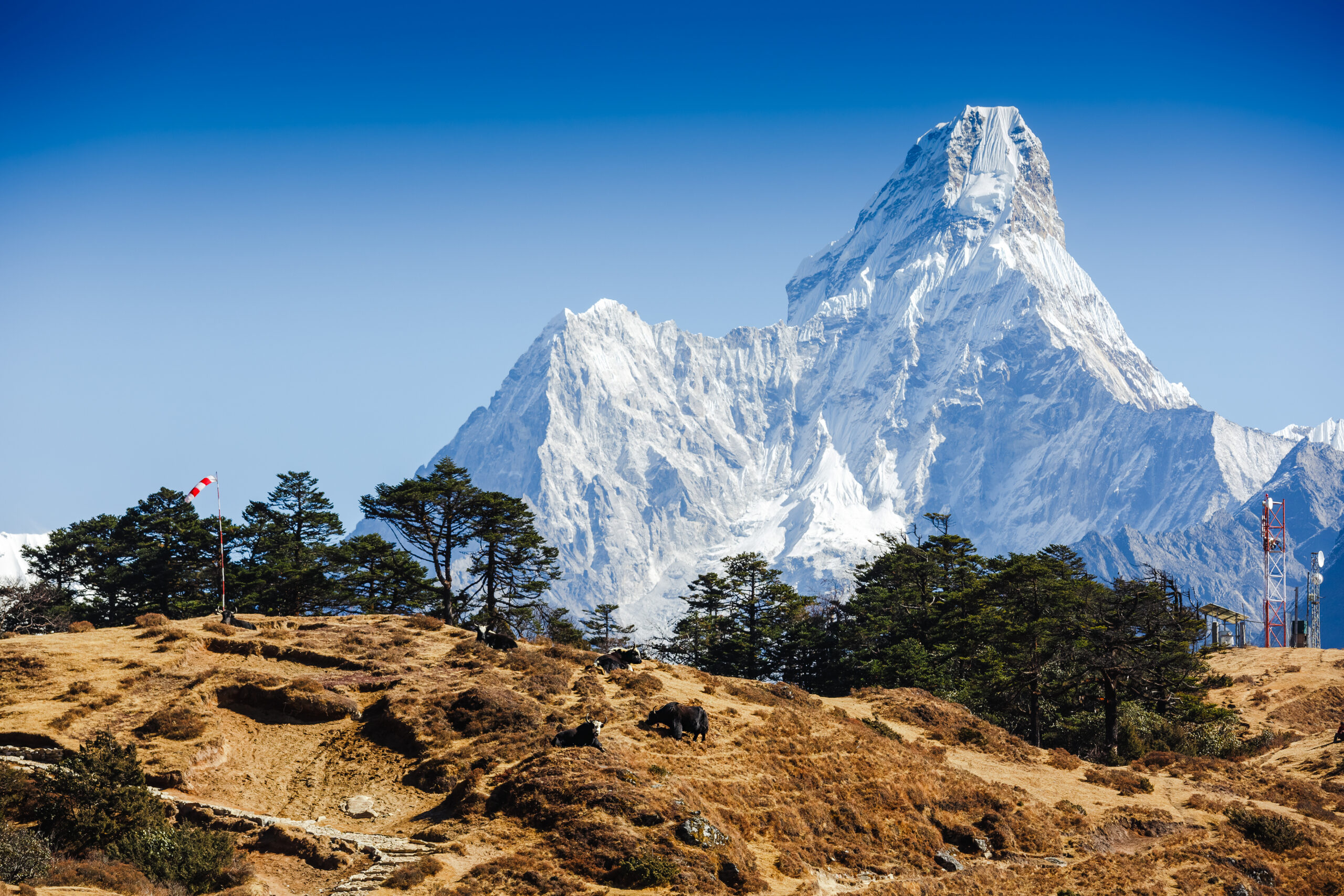
Best Hikes in Nepal: Everest Base Camp, Annapurna, Langtang & Manaslu Treks
Everest Base Camp is the strongest first choice when you want the full high-Himalayan teahouse experience. Choose the Annapurna Circuit for landscape variety, Annapurna Base Camp for a shorter big-mountain route, Langtang for a more compact trip from Kathmandu, and Manaslu when remote terrain and a high pass matter more than easy logistics.
Which Nepal Trek Should You Choose?
Everest Base Camp: choose it for Sherpa villages, teahouse infrastructure, the Khumbu and the strongest first-time Nepal experience.
Annapurna Circuit: choose it when route variety matters more than having one famous destination. Annapurna Base Camp: choose it when you want a shorter route into a close mountain amphitheater.
Langtang Valley: choose it when you want a serious Himalayan trek without a Lukla flight or a long transfer to the far west. Manaslu Circuit: choose it when you are ready for a longer restricted-area trek with more paperwork, more remoteness and the Larkya La crossing.
Choose Nepal by Time, Altitude & Access
The scenery is rarely the problem. Too few days, a rushed altitude profile, a high pass your group is not ready for, or logistics that leave no weather margin cause more trouble.
| Your priority | Best match | Why | Main planning issue |
|---|---|---|---|
| First major Nepal trek | Everest Base Camp | Deep teahouse network, Sherpa villages, Everest region | Altitude + Lukla flight disruption |
| Most landscape variety | Annapurna Circuit | Green valleys, Manang, Thorong La, dry trans-Himalayan terrain | Roads have changed the old circuit |
| Big mountains in fewer days | Annapurna Base Camp | Direct route into the Annapurna Sanctuary | Steep stair days + busy trail periods |
| One-week-plus trip from Kathmandu | Langtang Valley | Road approach, villages, high viewpoints, no Lukla flight | Road time + altitude on optional viewpoints |
| Remote high circuit | Manaslu Circuit | Longer villages-to-pass progression around Manaslu | Restricted permit + Larkya La |
| Lower first trek | Poon Hill | Shorter and much lower than the major high routes | Stairs and hill walking still require fitness |
| Everest region without EBC focus | Gokyo Lakes | Lakes, Ngozumpa Glacier and Gokyo Ri | Still a serious high-altitude route |
| Hardest teahouse route here | Three Passes | Three high passes linking the Khumbu and Gokyo corridors | Weather, snow, altitude + long itinerary |
| Monsoon-season cultural route | Upper Mustang | Rain shadow, dry valleys, monasteries and villages | Restricted-area permit system |
| Compact high Annapurna ridge | Mardi Himal | Shorter route with close Machhapuchhre/Annapurna views | Fast elevation gain if itinerary is compressed |

The Khumbu Is a Better First Choice When the Experience Matters More Than Solitude.
EBC works because the route, villages, lodges, monasteries and altitude progression all form one coherent trip. If you want fewer people or a more demanding high route, Gokyo or Three Passes may fit better.
The 10 Best Hikes & Treks in Nepal
This order favors overall trip quality and usefulness for international trekkers, not raw altitude or physical difficulty.
Everest Base Camp
The route from Lukla through Namche Bazaar, Tengboche, Dingboche, Lobuche and Gorak Shep gives first-time visitors the strongest combination of mountain culture and high-altitude trekking infrastructure.
The weakness is logistics: flights to Lukla need buffer days, and the route becomes medically serious once sleeping elevations rise above 4,000 m.
Annapurna Circuit
The Annapurna Circuit changes character repeatedly: lower valleys, Manang, dry high country, Thorong La and the Kali Gandaki side. That variety is the reason to choose it.
Road development means the route is no longer one fixed traditional circuit. A good itinerary uses walking sections and side trips deliberately rather than simply following the shortest road-linked version.
Annapurna Base Camp
ABC reaches a high basin surrounded by Annapurna South, Hiunchuli, Machhapuchhre and Annapurna I. It delivers a large-mountain finish without the 5,000-meter-plus pass of the Circuit or Khumbu routes.
The walking is not flat. Stone steps and repeated valley climbs can make lower-altitude days physically demanding even though the final altitude is lower than EBC.
Langtang Valley
Langtang removes the Lukla flight and the long westward transfer to Annapurna. The route climbs through forest and Tamang communities toward Kyanjin Gompa beneath the Langtang peaks.
Kyanjin Ri or Tserko Ri can make the trip much higher and harder than the valley-only itinerary, so treat those as separate altitude decisions.
Ghorepani Poon Hill
Poon Hill stays low enough that it works for hikers who do not want their first Nepal trip dominated by altitude. The tradeoff is that the route feels more like a steep hill trek than a high-Himalayan expedition.
It is a practical introduction to teahouse trekking, village-to-village walking and the Annapurna region before committing to a longer high route.
Manaslu Circuit
Manaslu feels more remote because the approach is longer, the villages are smaller and the permit system limits casual entry. The high point is Larkya La rather than a base camp.
It is not simply a quieter Annapurna Circuit. The restricted-area permit, guide requirement, pass weather and evacuation complexity deserve more planning.
Gokyo Lakes
Gokyo replaces the EBC corridor finish with a chain of high lakes, Ngozumpa Glacier and the Gokyo Ri viewpoint. It is still a high-altitude trip with Lukla flight exposure.
It can stand alone or connect to the EBC side by Cho La for a harder itinerary.
Everest Three Passes
Kongma La, Cho La and Renjo La connect the EBC and Gokyo sides into a demanding high route. Snow, wind and pass condition matter more here than on the normal EBC corridor.
The itinerary requires enough days to move around weather rather than treating each pass crossing as a fixed appointment.
Upper Mustang
Upper Mustang is different from the green south side of the Himalaya: dry valleys, eroded cliffs, monasteries and settlements with strong Tibetan cultural influence.
Its rain-shadow location makes it one of Nepal’s better monsoon-season options, but the restricted permit system changes both cost and booking process.
Mardi Himal
Mardi Himal climbs rapidly from forest to an exposed ridge facing Machhapuchhre and Annapurna South. The compact schedule is attractive, but that same compression can push hikers upward faster than expected.
It sits between Poon Hill and ABC: higher and more mountain-focused than Poon Hill, shorter and narrower in scope than Annapurna Base Camp.
Nepal Trek Comparison
Durations are planning ranges. Side trips, road use, guide strategy, weather and acclimatization can change the final itinerary.
| Trek | Typical days | High point | Physical / altitude load | Access issue | Best fit |
|---|---|---|---|---|---|
| Everest Base Camp | 12–14 | Kala Patthar ~5,545 m | Strenuous altitude trek | Lukla flights | First major Nepal trek |
| Annapurna Circuit | 12–18 | Thorong La ~5,416 m | Long + high pass | Road-altered sections | Route variety |
| Annapurna Base Camp | 7–12 | ABC ~4,130 m | Moderate–strenuous | Road/trailhead choices | Shorter mountain basin |
| Langtang Valley | 7–12 | Depends on viewpoint | Moderate; higher with side trips | Road from Kathmandu | Compact major trek |
| Poon Hill | 4–6 | ~3,210 m | Lower altitude, steep hills | Pokhara / road transfer | First short trek |
| Manaslu Circuit | 13–18 | Larkya La ~5,106 m | Strenuous + remote | Restricted permit | Remote circuit |
| Gokyo Lakes | 12–15 | Gokyo Ri ~5,357 m | Strenuous altitude trek | Lukla flights | Khumbu alternative |
| Three Passes | 17–21 | Passes above 5,300 m | Hard | Lukla + pass weather | Experienced trekkers |
| Upper Mustang | 10–16 | Mostly ~3,500–4,200 m corridor | Moderate altitude | Restricted permit | Culture + rain shadow |
| Mardi Himal | 5–7 | ~4,200 m viewpoint | Moderate, fast ascent | Pokhara / trailhead transfer | Short high trek |
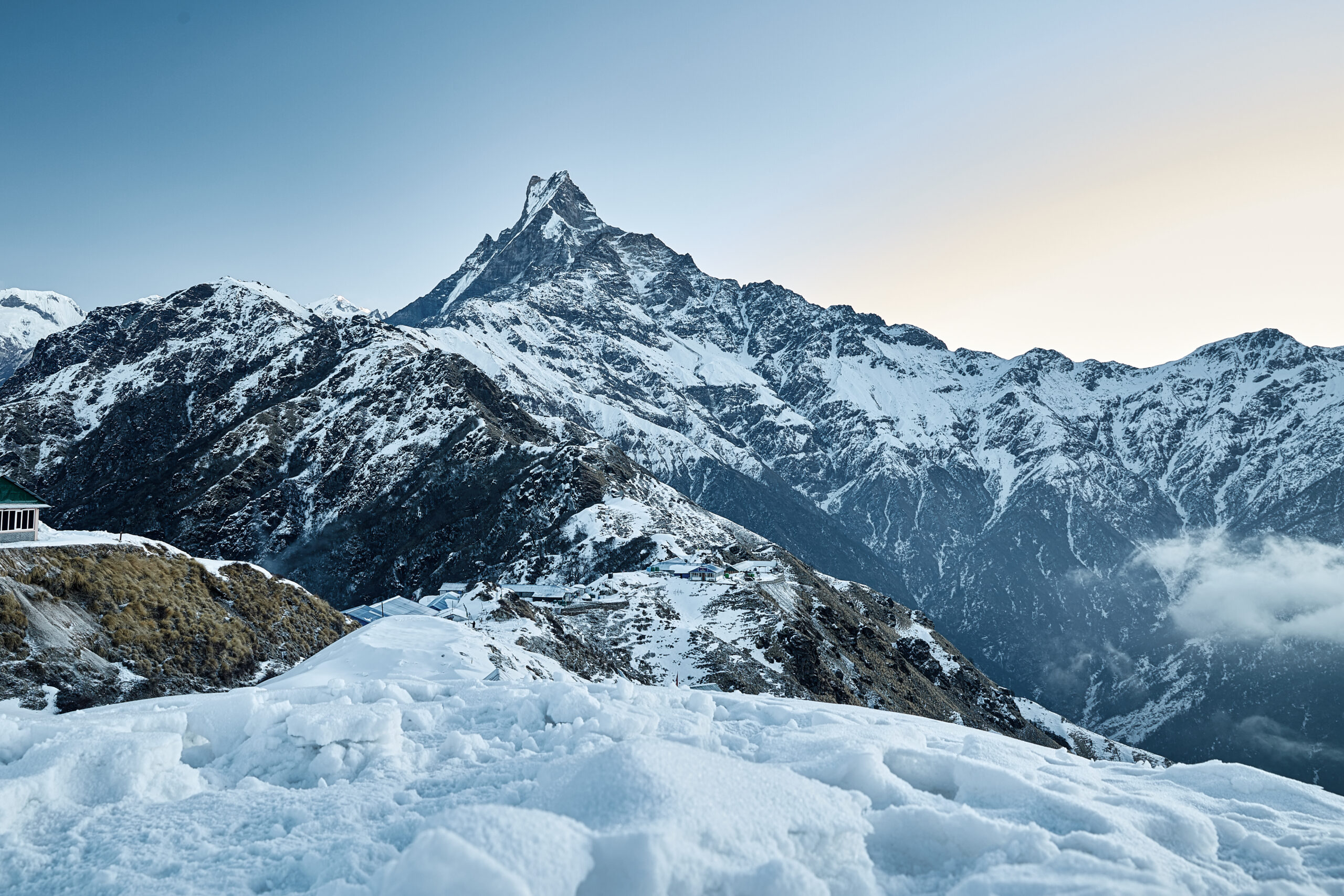
Choose Annapurna When You Want Variety or a Shorter Mountain Finish.
The Circuit is about moving through changing country. ABC is about entering one concentrated mountain basin. Mardi Himal is about reaching a high ridge quickly. Treat them as three separate trip types, not interchangeable Annapurna labels.
Nepal Trekking Guides, TIMS & Permits
Nepal has several overlapping systems: TIMS, protected-area entry, conservation-area entry, restricted-area permits and local charges. They should not be collapsed into one “Nepal permit.”
| Route / system | Current official baseline | Current fee shown | What to verify |
|---|---|---|---|
| TIMS | Agency-issued TIMS + licensed guide on routes named by NTB | NPR 2,000 non-SAARC; NPR 1,000 SAARC | Exact route appears on current NTB list |
| Everest / Sagarmatha | Sagarmatha National Park entry + route/local requirements | NPR 3,000 foreigner park entry | Current Khumbu local charges + checkpoint process |
| Langtang | Langtang National Park + TIMS/guide rule | NPR 3,000 foreigner park entry | Exact Langtang/Gosaikunda itinerary |
| Annapurna / Mardi / Poon Hill | ACAP + applicable TIMS/guide rule | NPR 3,000 foreigner ACAP permit | Which named NTB route your itinerary follows |
| Manaslu | MCAP + restricted-area permit + licensed guide / agency system | MCAP NPR 3,000 foreigner; restricted fee separate | Restricted-zone days + season |
| Upper Mustang | ACAP + restricted-area permit + agency system | DOI route table currently shows USD 50/person/day restricted fee | Current fee at application; itinerary zone |
Season changes the price
The Department of Immigration’s current trekking-route table lists September–November at USD 100 for the first week plus USD 15 per day beyond, and December–August at USD 75 for the first week plus USD 10 per day beyond for the specified Manaslu restricted area.
Use the live DOI route table
The current Department of Immigration route-fee page lists Upper Mustang at USD 50 per person per day. Government pages can lag policy changes, so use the route-specific live table and your registered agency’s application calculation before paying.
What Teahouse Trekking Changes
On the established routes, sleeping in villages instead of carrying a camping system changes the trip from an expedition logistics problem into an altitude-and-walking problem.
Private rooms are simple
Expect basic rooms, thin walls and colder nights as elevation rises. Heated dining rooms are more common than heated bedrooms.
Menus narrow with altitude
Dal bhat, noodles, soup, rice, eggs and simple Western dishes are common. Prices climb as supplies are carried farther from roads.
Charging can become a paid service
Carry a power bank. High villages may charge for device charging, showers or Wi-Fi, and availability can change with power supply.
You still need cold-weather equipment
Teahouses remove the tent and cooking system, not the need for a warm sleeping bag, rain shell, insulation, sun protection and reliable footwear.
Best Time to Trek in Nepal
Spring and autumn remain the main windows for most of the routes on this page. Mustang is the important exception because its rain-shadow climate can make the monsoon months useful.
| Season | Months | Works best for | Main tradeoff |
|---|---|---|---|
| Spring | March–May | EBC, Annapurna, Langtang, Manaslu, Gokyo | Warmer days, but haze and pre-monsoon cloud build |
| Autumn | September–November | Broadest choice across Nepal | Highest demand on major routes |
| Winter | December–February | Lower routes, some EBC/ABC itineraries in stable conditions | Cold, snow and high-pass closures |
| Monsoon | June–August | Upper Mustang and other rain-shadow routes | Wet access elsewhere, landslides, cloud and flight disruption |
Altitude Is the Main Technical Problem for Most Nepal Trekkers
Poon Hill
The easiest altitude profile in this top ten. Fitness and stairs matter more than acclimatization compared with the 5,000-meter routes.
ABC, Mardi & Mustang
These routes can move above 4,000 m. It is still possible to ascend too quickly, especially on compressed itineraries.
EBC, Gokyo, Circuit & Manaslu
High points above 5,000 m make acclimatization days, conservative sleeping elevations and symptom response central to the plan.
Three Passes
Repeated high passes combine altitude with weather exposure and long days. This is not the route for testing whether you tolerate high altitude.
For the physiology and planning side, use Altitude Acclimatization Explained.
Nepal & Himalayan Guides
Everest Base Camp Trek
Itinerary, cost, altitude, Lukla logistics and the EBC route in detail.
Open EBC →Beyond trekkingNepal Trekking Peaks
Move from walking routes into Island Peak, Mera Peak and climbing objectives.
Open trekking peaks →Related climbIsland Peak
Everest-region climbing progression after ordinary teahouse trekking.
Open Island Peak →Related climbMera Peak
High trekking-peak objective in the Hinku Valley for climbers moving beyond normal trails.
Open Mera Peak →AltitudeAltitude Acclimatization
Build sleeping-elevation and rest-day decisions around physiology rather than itinerary marketing.
Understand altitude →Mountain contextManaslu
Separate the Manaslu Circuit trek from the 8,000-meter climbing objective.
Open Manaslu →GearHigh-Altitude Layering
Build a clothing system for cold teahouse mornings, wind and high passes.
Build layers →PlanningMountain Trip Planning
Insurance, flights, operators, buffers, budgets and international trip structure.
Plan the trip →Current Nepal Planning Sources
Route character changes slowly. Permit rules and fees can change quickly.
Nepal Tourism Board
Immigration & Conservation
Frequently Asked Questions
What is the best trek in Nepal?
Everest Base Camp is the strongest first choice if you want a classic high-Himalayan teahouse trek. Annapurna Circuit is better for landscape variety, Langtang for a shorter trip from Kathmandu, and Manaslu for a more remote high circuit.
What is the best short trek in Nepal?
Poon Hill is the lower and easier choice. Mardi Himal is better for stronger hikers who want a shorter route that still climbs into high Himalayan terrain. Langtang Valley also works well for travelers with roughly a week to ten days on trail.
Do you need a guide to trek in Nepal in 2026?
Nepal Tourism Board currently lists a licensed guide and agency-issued TIMS as mandatory on many named routes, including EBC, Gokyo, Three Passes, Langtang, Annapurna Circuit, Poon Hill–ABC, Mardi Himal, Manaslu Circuit and Upper Mustang. Confirm the exact route and current enforcement before departure.
How much does TIMS cost?
The current Nepal Tourism Board TIMS page lists NPR 2,000 for non-SAARC trekkers and NPR 1,000 for SAARC trekkers.
When is the best time to trek in Nepal?
September through November and March through May are the main seasons for most high routes. Winter works better on lower treks, while Upper Mustang can work during the summer monsoon because it lies in the Himalayan rain shadow.
Which Nepal trek is best for beginners?
Poon Hill is the easiest choice in this top ten because it stays lower. Mardi Himal and Langtang can work for fit beginners on conservative itineraries. Everest Base Camp is non-technical but should not be treated as a beginner altitude experiment.
Is Manaslu harder than Everest Base Camp?
Manaslu is usually more complex because it is longer, more remote, uses a restricted-area permit and crosses Larkya La. EBC reaches very high sleeping elevations and depends on Lukla flights. They are difficult in different ways.
Which trek is best during Nepal’s monsoon?
Upper Mustang is the strongest option in this comparison because much of the region lies in a rain shadow. Access travel can still be affected by monsoon weather elsewhere in Nepal, so the route itself being dry does not eliminate transport risk.
Is Annapurna Base Camp easier than Everest Base Camp?
ABC is shorter and reaches a lower maximum altitude, which reduces some acclimatization pressure. It still includes steep stair-heavy days. EBC is longer and higher, so altitude and recovery usually make it the more demanding overall trip.
Pick the Nepal Trek That Fits Your Days, Altitude & Logistics.
Everest Base Camp is the default first choice, not the automatic answer. Annapurna gives you more route variety, Langtang saves travel time, Manaslu adds remoteness, Gokyo changes the Everest-region focus, and Poon Hill gives you a lower-altitude entry point. Once the route is right, verify its current guide, TIMS, protected-area and restricted-permit rules before booking.
Choose a Nepal Trek by the Time You Actually Have.
The best trek is not automatically the most famous one. Start with the number of trail days you can protect, then compare altitude, access and route style. A shorter route with a sensible ascent profile is usually a better trip than compressing a 5,000-meter itinerary to fit a fixed flight home.
What Fits Into 5 Days, 10 Days or Two to Three Weeks?
These are planning windows rather than promises. Acclimatization, weather, road access, side trips and flight delays can all add time.
| Time available | Treks to compare | Altitude profile | Best reason to choose this window |
|---|---|---|---|
| 4–6 trail days | Poon Hill; shorter Mardi Himal itineraries | Lower to moderate / high depending on Mardi turnaround | A compact first Himalayan trip or an add-on to a broader Nepal itinerary. |
| 7–10 trail days | Langtang Valley; Annapurna Base Camp; Mardi Himal | Moderate, with ABC and Mardi moving above 4,000 m | Big mountain scenery without committing most of a three-week vacation to one trek. |
| 12–15 trail days | Everest Base Camp; Gokyo Lakes; many Annapurna Circuit itineraries | High altitude; several options rise above 5,000 m | The classic Nepal trekking window when altitude and logistics can be given proper space. |
| 13–18 trail days | Manaslu Circuit; longer Annapurna Circuit itineraries | High pass + sustained multi-day load | Better for trekkers who want a true circuit and are comfortable with more remote logistics. |
| 17–21 trail days | Everest Three Passes | Very high, with repeated 5,000 m-plus crossings | For experienced high-altitude trekkers who want the most demanding teahouse-style route in this guide. |
| 10–16 trail days in monsoon season | Upper Mustang | Moderate-high rain-shadow terrain | A culturally focused Himalayan route when much of Nepal is affected by summer monsoon weather. |
Use the full route sections above for current duration, access and permit details before treating any itinerary length as fixed.
Six Common Nepal Trekking Goals.
Use these as starting points, not universal rankings. The right choice changes with altitude history, available time, crowd tolerance and whether you want a destination trek or a moving circuit.
Everest Base Camp
Best matched to travelers who want Sherpa villages, famous mountain landmarks and a deep teahouse network—and can protect enough days for acclimatization and Lukla weather buffers.
Annapurna Base Camp
A strong choice when you want a concentrated Himalayan amphitheater without crossing a 5,000-meter pass or committing to the full length of EBC.
Langtang Valley
Reached by road from Kathmandu, Langtang gives a substantial Himalayan trek in a more compact trip while still requiring serious altitude judgment on higher side trips.
Annapurna Circuit
Choose it for changing landscapes, Manang and Thorong La. Modern road development means itinerary design matters more than simply following the historic line end to end.
Manaslu Circuit
More paperwork and a restricted-area system buy access to a quieter, more remote route culminating in the Larkya La crossing.
Everest Three Passes
Repeated high passes, weather exposure and a longer itinerary make this the route to consider after you already know how you perform on demanding high-altitude treks.
Where Nepal’s Major Trekking Regions Sit.
Everest and the Khumbu lie in eastern Nepal; Langtang sits north of Kathmandu; Annapurna and Manaslu are west of the capital; Mustang lies farther northwest in the trans-Himalayan rain shadow.
Recheck the Rule for Your Exact Route.
Nepal’s trekking rules overlap: TIMS, conservation or national-park entry, local charges and restricted-area permits are different systems. Nepal Tourism Board currently lists many major routes under its licensed-guide and agency-issued TIMS framework, while restricted areas use separate Department of Immigration permits.
When Trekking Becomes a Climbing Progression.
A strong Nepal trek can answer an important question: how well do you move, recover and make decisions at altitude? If the next objective is technical climbing rather than another walking route, continue into these Nepal planning guides.
Was this helpful?
🏔Related peaks nearby
🧭Explore & compare
Global Summit Guide is an independent mountaineering resource founded in 2026. The team combines first-hand trekking and climbing experience with in-depth research and professional health and nutrition review to help climbers choose objectives, prepare properly, and stay safe.
Health, altitude, and nutrition content is reviewed by Taylor Ludlow (Registered Nurse) and Brigg Hoopes (Nutritionist).
What We Don't Know Yet
Mountain information changes quickly. This box explains the limits of what this page can responsibly promise.
- Visa, passport, vaccination, border, insurance, and local transportation rules may change before your trip.
- Route conditions, snowpack, closures, and weather can change quickly after this page is updated.
- Permit rules, fees, quotas, and reservation windows may change between review cycles.
- Operator availability, pricing, guide ratios, and cancellation terms can change by season.
- Your fitness, altitude response, risk tolerance, and experience level may change what is safe or realistic.
Verify current conditions with official land managers, guide services, local forecasts, and current route reports before booking or climbing.
Mountaineering, rock and ice climbing, glacier travel, and high-altitude activity are inherently dangerous and can result in serious injury or death. The information on Global Summit Guide is provided for general informational and educational purposes only and is not a substitute for professional instruction, qualified guiding, proper equipment, or your own judgment and experience.
Route conditions, weather, snowpack, permits, regulations, and hazards change constantly and may differ from what is described here. Details may be incomplete, out of date, or contain errors. Always verify current information with local authorities, certified guides, and official sources before making any decision in the mountains.
Nothing on this site is medical, legal, or financial advice. Our fitness, acclimatization, altitude, and nutrition content is general in nature; consult a qualified physician before beginning any strenuous exercise program or exposing yourself to high altitude.
You are solely responsible for your own safety and decisions. To the fullest extent permitted by law, Global Summit Guide and its team accept no liability for any loss, injury, damage, or expense arising from use of, or reliance on, this information. By using this site you acknowledge these risks and accept these terms.
Some links on this site may be affiliate links. If you buy through them we may earn a small commission at no extra cost to you; this never affects our recommendations.
Global Summit Guide recommendation path
Next Best Mountain to Research
Use these recommendations to continue the right planning path instead of stopping on one page.
Use current permit, weather, route, and operator information before booking or climbing.
Search Flights, Hotels & Rental Cars
Have the mountain or destination picked? Use Expedia to compare the flights, lodging and rental cars that fit your actual trip dates. For mountain travel, consider arriving early enough for delays and adding a buffer night after the climb before a fixed flight home.
Compare current flight, hotel and car options.
Affiliate disclosure: Global Summit Guide may earn a commission if you book through this link, at no additional cost to you.