
Last updated October 4, 2026

Mount Fuji vs. Mount Kilimanjaro: Which Summit Suits You?
Kilimanjaro is substantially harder for most climbers. It is 2,119 meters higher, takes several more days and creates a much larger acclimatization problem. Mount Fuji is the shorter and simpler first step: a 1–2 day summit hike during Japan’s tightly regulated summer season. If both are on your list, Fuji first is the more logical progression for most newer hikers.
Is Kilimanjaro Harder Than Mount Fuji?
Yes—by a wide margin for most climbers. Neither standard route is normally a technical mountaineering climb, but the similarity ends there.
Mount Fuji tops out at 3,776 m / 12,388 ft and compresses most of its challenge into one or two days. Kilimanjaro reaches 5,895 m / 19,341 ft and normally requires nearly a week or more on the mountain. That extra 2,119 m changes the physiological problem: pacing, sleep, appetite and acclimatization become central to the climb.
If you are deciding which to do first, Mount Fuji is the better first step for most newer hikers. It is lower, shorter, less expensive and easier to fit into a broader trip. Kilimanjaro is the larger altitude objective.
Mount Fuji vs Kilimanjaro Side by Side
The useful comparison is not “easy versus hard.” It is a short high-elevation hike versus a multi-day high-altitude trek.
| Factor | Mount Fuji | Mount Kilimanjaro | Advantage / difference |
|---|---|---|---|
| Elevation | 3,776 m / 12,388 ft | 5,895 m / 19,341 ft | Kilimanjaro +2,119 m |
| Country | Japan | Tanzania | Different trip styles |
| Status | Japan’s highest mountain | Africa’s highest mountain / Seven Summit | Kilimanjaro larger global objective |
| Normal climbing style | High-elevation hiking | Multi-day high-altitude trekking | Kilimanjaro more committing |
| Technical rope/ice skills | Not normally required in official summer season | Not normally required on standard trekking routes | Neither wins on technical difficulty |
| Typical duration | 1–2 days | Usually 6–9 days | Fuji simpler |
| Guide requirement | No universal guide requirement | Licensed operator/guide required | Fuji simpler |
| Primary difficulty | Steep hiking, rapid altitude gain, cold/weather | Altitude, duration, summit-night fatigue | Kilimanjaro harder |
| 2026 access | Official seasonal gates, ¥4,000 fee, route-specific registration | Park/operator system | Both need planning |
| Trip commitment | Fits inside many Japan itineraries | Usually the central purpose of a Tanzania trip | Fuji easier to add |
| Best first mountain | Better for most newer hikers | Better after some altitude experience | Fuji first |
Why Kilimanjaro Is Harder Than Mount Fuji
Kilimanjaro’s extra altitude and repeated days on the mountain matter far more than technical climbing grade.
Short, steep and compressed
- Large altitude gain over a short itinerary.
- Loose volcanic trail and long descent.
- Cold, wind and fast-changing summit weather.
- Pre-dawn timing for sunrise climbers.
- Crowding can slow the upper mountain.
Altitude accumulates over days
- Summit at 5,895 m.
- Several consecutive trekking days before summit night.
- Sleep, appetite and recovery become part of performance.
- Very long final summit-and-descent cycle.
- The itinerary must give the body time to acclimatize.
Altitude: Fuji Is an Introduction; Kilimanjaro Is a High-Altitude Expedition
What Fuji can teach you
Fuji gives you meaningful exposure above 3,000 m and a real opportunity to learn how your breathing, pacing and appetite change at moderate high altitude.
- Pacing on a long uphill day.
- Cold and wind above tree line.
- How your body feels above 3,000 m.
- How you handle a pre-dawn push.
What Kilimanjaro adds
Kilimanjaro pushes far higher, and the body has to keep recovering while sleeping at altitude for multiple nights. Sea-level fitness does not guarantee good acclimatization.
- Repeated exposure over several days.
- More difficult sleep and recovery.
- Long summit night at extreme altitude.
- Much greater consequence if altitude illness progresses.

Mount Fuji Is a Mountain Day Inside Japan. Kilimanjaro Is Usually the Reason You Go to Tanzania.
That difference changes more than hiking time. It changes cost, recovery, lodging, transport, guide support and how much of the trip can be rearranged if weather changes.
Fuji Is Simpler Logistically—but It Is No Longer a “Just Show Up” Mountain
The Yoshida and Shizuoka-side systems share the same ¥4,000 fee but use different entry procedures.
| 2026 rule | Yoshida Trail | Fujinomiya / Gotemba / Subashiri |
|---|---|---|
| Hiking fee | ¥4,000 | ¥4,000 |
| Restricted entry window | 2 PM–3 AM unless staying in a mountain hut | 2 PM–3 AM unless staying in a mountain hut |
| Daily cap | 4,000 climbers/day | No equivalent 4,000-person cap published for the three Shizuoka routes |
| Advance process | Advance booking recommended; same-day access subject to capacity | FUJI NAVI registration process |
| 2026 opening | July 1–September 10 | Subashiri July 1; Fujinomiya and Gotemba July 10; all close September 10 |
Mount Fuji Climbing Guide → · Compare All Four Fuji Trails →
Fuji Routes and Kilimanjaro Routes Solve Different Problems
On Fuji, route choice mainly changes access, distance and crowds. On Kilimanjaro, route length can also change the amount of time available for acclimatization.
Four official summit trails
Yoshida has the most infrastructure. Fujinomiya starts higher and is shorter. Subashiri begins through forest before joining Yoshida high on the mountain. Gotemba starts lowest and creates the longest ascent.
Compare Fuji routes →Multi-day route families
Lemosho, Machame, Marangu, Rongai, Northern Circuit and related itineraries differ in approach, scenery, camp style and—most importantly for many climbers—how many days they allow before summit night.
Compare Kilimanjaro routes →Fuji Can Be Part of a Trip. Kilimanjaro Usually Is the Trip.
| Planning dimension | Mount Fuji | Kilimanjaro |
|---|---|---|
| Mountain time | Usually 1–2 days | Usually 6–9 days |
| Support team | Independent or guided | Licensed operator / guided trek |
| Accommodation | Optional hut for a two-day plan | Multiple camps or huts depending on route |
| Recovery impact | Large hiking day but short commitment | Several days of cumulative fatigue plus summit/descent |
| International itinerary | Easy to combine with a Japan trip | Usually the central purpose of the Tanzania trip |
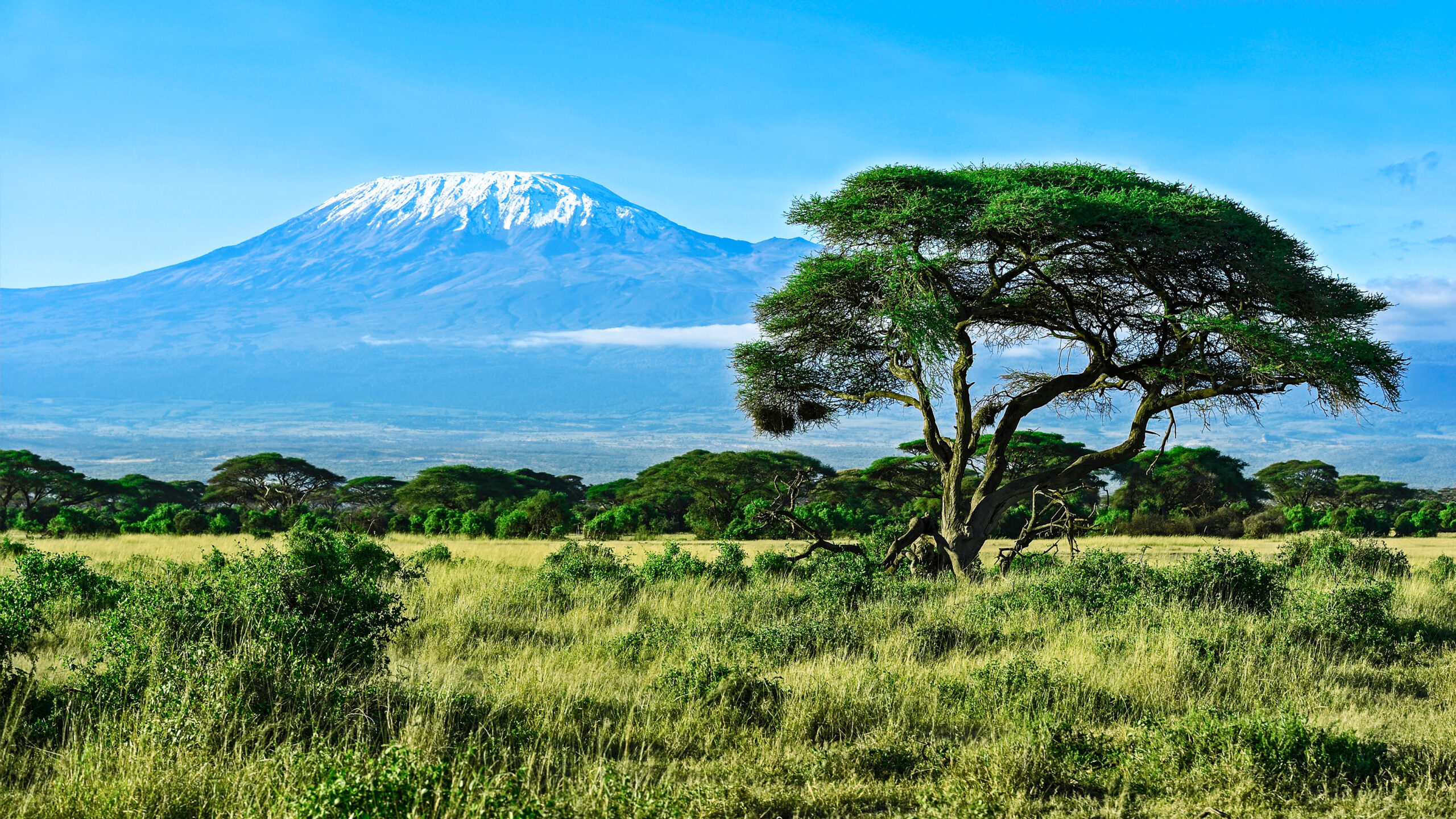
Kilimanjaro Is Non-Technical, but “Non-Technical” Does Not Mean Easy.
The normal routes do not demand advanced rock or ice climbing. The challenge is continuing to hike, eat, sleep and make good decisions while the itinerary carries you toward 5,895 meters.
Which Costs More: Fuji or Kilimanjaro?
Kilimanjaro by a large margin, mainly because it is a guided multi-day national-park climb with crew and expedition logistics.
Fixed fee + travel choices
The official 2026 hiking fee is ¥4,000. Beyond that, cost depends on transport, hut accommodation, food, equipment and whether you hire a guide.
A multi-day guided package
Park charges, crew, meals, camps, transport and operator service are bundled differently by company. The total is normally measured in thousands of dollars rather than hundreds.
For Most Newer Climbers: Fuji First, Kilimanjaro Second
Fuji is experience, not a prerequisite.
A useful first international summit
- How you pace a long uphill day.
- How you handle cold and wind above tree line.
- How you feel above 3,000 m.
- Whether a pre-dawn summit push suits you.
- How you manage simple mountain-trip logistics abroad.
Kilimanjaro is still a new problem
- That you will acclimatize well above 5,000 m.
- That you can recover over several consecutive mountain days.
- That you will tolerate Kilimanjaro summit night.
- That fitness protects you from altitude illness.
- That a 1–2 day climb substitutes for a staged itinerary.
Mount Fuji or Kilimanjaro?
There is no reason every climber must use Fuji as a prerequisite. Choose by goal, time, budget and altitude readiness.
You want the shorter first step
- You have only one or two mountain days.
- You are already traveling in Japan.
- You want a lower-cost international summit.
- You are newer to altitude.
- You value the cultural landscape and sunrise tradition.
You want the bigger altitude objective
- You want Africa’s highest summit.
- You can commit roughly a week or more on the mountain.
- You are prepared to use a licensed guide/operator system.
- You are ready to manage a 5,895 m acclimatization problem.
- You are building a Seven Summits progression.
Continue Your Fuji or Kilimanjaro Plan
Mount Fuji Climbing Guide
Current trail rules, fees, routes, mountain huts and trip planning.
Open Fuji guide →Fuji routesYoshida vs Fujinomiya vs Subashiri vs Gotemba
Choose the right trail based on distance, access and infrastructure.
Compare Fuji routes →Fuji guidingMount Fuji Guide Companies
Compare guided options if you do not want to organize the climb independently.
Compare Fuji guides →KilimanjaroKilimanjaro Climbing Guide
Routes, altitude, park system and complete trip planning.
Open Kilimanjaro →Kili routesKilimanjaro Routes Compared
Choose route length and acclimatization profile.
Compare Kili routes →Kili costKilimanjaro Cost Guide
Current operator, park, tipping and total-trip budget detail.
Build the budget →ProgressionThe Seven Summits
Place Kilimanjaro inside the continental-high-point progression.
Explore Seven Summits →AlternativesBest Beginner Mountains
Compare other first international objectives before committing to a larger altitude expedition.
Explore beginner peaks →Deep recovery 1Acclimatization Explained
Understand why Kilimanjaro’s extra altitude matters more than technical grade.
Read acclimatization guide →Deep recovery 2Mountain Weather
Learn how wind, temperature and cloud change both summit days.
Read weather guide →Deep recovery 3Trip Planning
Build the transport, buffer and booking system around the mountain you choose.
Plan the trip →Official Sources to Check Before Booking
The core height and difficulty comparison is stable. Fees, gate rules, registration systems and park operations should be checked for the season you climb.
Official Mt. Fuji Climbing Website
Use the official portal for trail-opening dates, Yoshida restrictions, Shizuoka registration, fees and emergency closures.
Official Fuji portal →Tanzania National Parks
TANAPA’s Kilimanjaro visitor information confirms the guided-operator requirement and provides current park information.
TANAPA Kilimanjaro →Mount Fuji vs Kilimanjaro FAQ
Is Kilimanjaro higher than Mount Fuji?
Yes. Kilimanjaro is 5,895 m and Mount Fuji is 3,776 m, so Kilimanjaro is 2,119 m, or about 6,952 ft, higher.
Is Kilimanjaro harder than Mount Fuji?
Yes for most climbers. Both normal routes are non-technical, but Kilimanjaro is much higher and requires a multi-day acclimatization trek rather than a one- or two-day summit hike.
Which should I climb first?
Mount Fuji is the better first step for most newer hikers because it is lower, shorter, less expensive and simpler to organize. Kilimanjaro is the larger altitude objective.
Do I need a guide for Mount Fuji?
No universal guide requirement applies to normal in-season Fuji hiking. Climbers still need to comply with the official fee, gate and registration rules for the trail they use.
Do I need a guide for Kilimanjaro?
Yes. Tanzania National Parks states that all Kilimanjaro climbs must be guided by a licensed operator and that solo trekking is not permitted.
How long does each climb take?
Fuji is commonly climbed in one or two days during the official summer season. Kilimanjaro itineraries commonly spend roughly six to nine days on the mountain, depending on route and acclimatization plan.
How much is the Mount Fuji hiking fee in 2026?
The official 2026 hiking fee is ¥4,000 per person per climb on the summit routes.
Is advance reservation mandatory on the Yoshida Trail?
Advance booking is recommended and helps secure access, but current official Yoshida information also provides for same-day handling subject to the 4,000-person daily capacity. The Shizuoka-side trails use the FUJI NAVI process.
Does climbing Fuji prepare you for Kilimanjaro?
It helps as mountain experience but does not guarantee you will acclimatize well on Kilimanjaro. Fuji can teach pacing, cold-weather management and how you feel above 3,000 m; Kilimanjaro adds several days and much greater altitude.
Fuji First for Most. Kilimanjaro When You’re Ready for the Bigger Altitude Commitment.
Mount Fuji is the shorter and simpler international summit. Kilimanjaro is much higher, longer and more expensive, with acclimatization rather than technical climbing as the central challenge. If both are on your list, Fuji is the natural first step—but experience on Fuji is useful preparation, not a requirement.
Was this helpful?
🏔More comparisons
🧭Explore & compare
Global Summit Guide is an independent mountaineering resource founded in 2026. The team combines first-hand trekking and climbing experience with in-depth research and professional health and nutrition review to help climbers choose objectives, prepare properly, and stay safe.
Health, altitude, and nutrition content is reviewed by Taylor Ludlow (Registered Nurse) and Brigg Hoopes (Nutritionist).
What We Don't Know Yet
Mountain information changes quickly. This box explains the limits of what this page can responsibly promise.
- Comparisons simplify complex decisions; the better mountain depends on current conditions, skills, timing, budget, and risk tolerance.
- Route conditions, snowpack, closures, and weather can change quickly after this page is updated.
- Permit rules, fees, quotas, and reservation windows may change between review cycles.
- Operator availability, pricing, guide ratios, and cancellation terms can change by season.
- Your fitness, altitude response, risk tolerance, and experience level may change what is safe or realistic.
Verify current conditions with official land managers, guide services, local forecasts, and current route reports before booking or climbing.
Mountaineering, rock and ice climbing, glacier travel, and high-altitude activity are inherently dangerous and can result in serious injury or death. The information on Global Summit Guide is provided for general informational and educational purposes only and is not a substitute for professional instruction, qualified guiding, proper equipment, or your own judgment and experience.
Route conditions, weather, snowpack, permits, regulations, and hazards change constantly and may differ from what is described here. Details may be incomplete, out of date, or contain errors. Always verify current information with local authorities, certified guides, and official sources before making any decision in the mountains.
Nothing on this site is medical, legal, or financial advice. Our fitness, acclimatization, altitude, and nutrition content is general in nature; consult a qualified physician before beginning any strenuous exercise program or exposing yourself to high altitude.
You are solely responsible for your own safety and decisions. To the fullest extent permitted by law, Global Summit Guide and its team accept no liability for any loss, injury, damage, or expense arising from use of, or reliance on, this information. By using this site you acknowledge these risks and accept these terms.
Some links on this site may be affiliate links. If you buy through them we may earn a small commission at no extra cost to you; this never affects our recommendations.
Global Summit Guide recommendation path
Next Best Mountain to Research
Use these recommendations to continue the right planning path instead of stopping on one page.
Use current permit, weather, route, and operator information before booking or climbing.
Explore Travel Options for Your Destination
Once your mountain, dates and route are taking shape, compare flights, hotels and other travel options that fit the trip.
Affiliate link. We may earn a commission at no additional cost to you.