web analytics

Tag: expedition updates

  • K2 Climbing Season: Late-July Window, Permits & Access

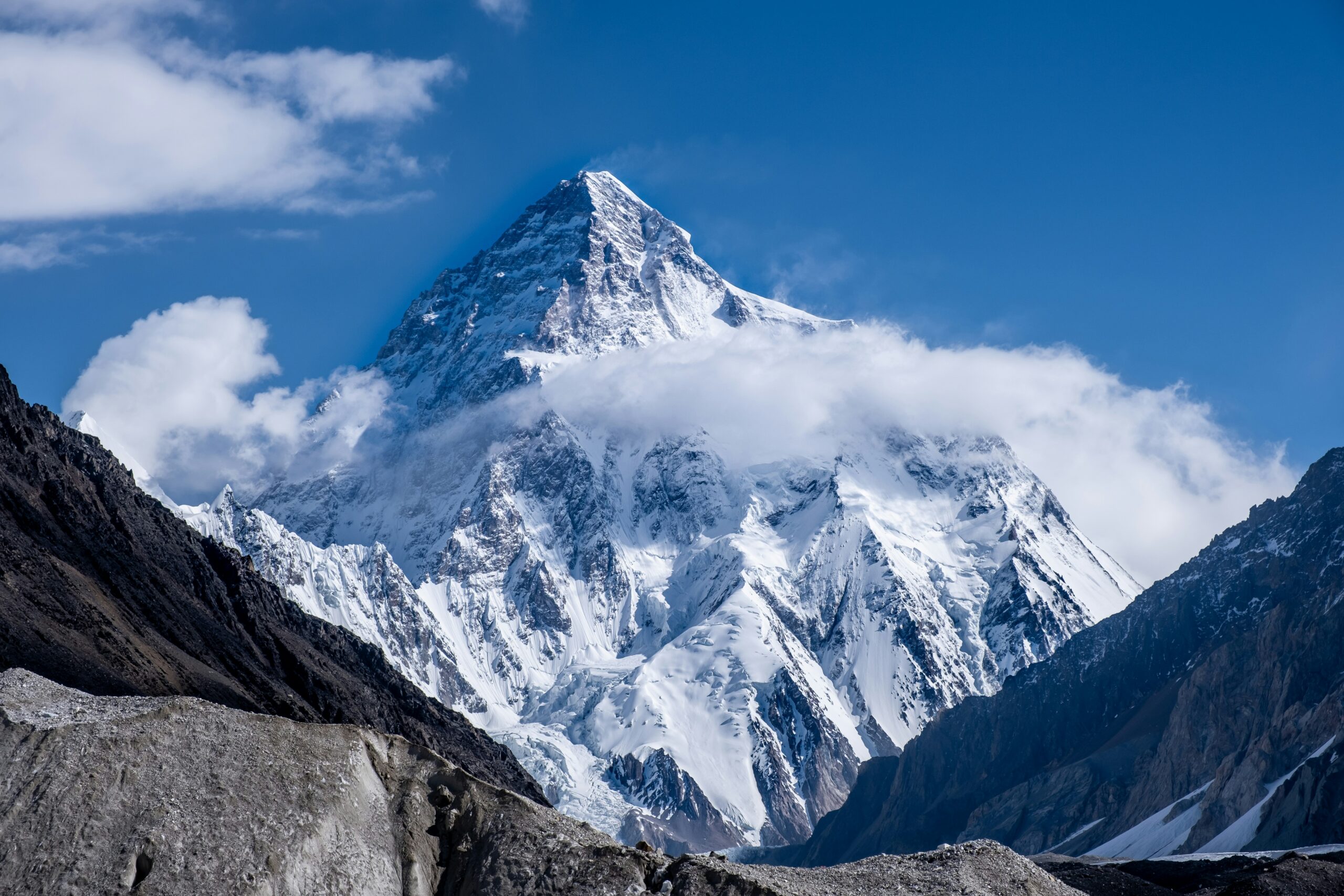
    K2 in Pakistan during the Karakoram summer climbing season
    K2 · 8,611 m · Karakoram summer · permits · access · route fixing

    K2 Climbing Season: Summit Window, Permits, Access & Route Readiness

    K2’s practical expedition season runs from late June through August, but the strongest summit period is usually much shorter—often a few days in late July or early August. Reaching that window requires more than favorable weather: the permit must be approved, the Baltoro approach completed, camps and fixed lines established, climbers acclimatized, and the route ready for both ascent and descent.

    Official GB permit source checked Current K2 royalty schedule cited Weather guide kept separate Live tracker linked for current events

    Reviewed August 16, 2026 · Gilgit-Baltistan Tourism Department + current expedition planning sources · Verify permit paperwork before payment

    Jun–AugPractical expedition season
    Late JulCentral summit period
    $12,000Published K2 royalty · up to 7*
    +$3,000Each additional member*
    8,611 mK2 summit
    By Travis Ludlow · Founder & Head of Research · Safety review: Dawson Ludlow
    *Current published Gilgit-Baltistan schedule; confirm the invoice and expedition-specific fees through your registered Pakistani operator
    The direct answer

    When is the K2 climbing season?

    The normal expedition cycle begins in late June, when teams travel through Skardu and Askole, trek the Baltoro, establish Base Camp and begin route work. July is the core acclimatization and fixing month. The strongest summit opportunity commonly falls in late July, sometimes extending into early August.

    August is not automatically “too late,” but the value of a second window depends on whether the route remains established, camps and oxygen are intact, the team is healthy, and forecasts still offer enough margin for a complete summit-and-descent cycle.

    For temperature, wind, snowfall, monsoon influence and forecast interpretation, use the K2 Weather Guide.

    • Late June: approach and Base Camp establishment.
    • Early July: lower rotations and fixing.
    • Mid July: upper rotations, camps and recovery.
    • Late July: central summit-window period.
    • Early August: possible second opportunity.
    • Afterward: descent can be the correct decision even after weeks of investment.
    The season is a sequence, not a date

    K2 Expedition Calendar

    A commercial expedition may last seven or eight weeks even though the mountain offers only a short final opportunity.

    Late JuneApproach

    Skardu logistics, Askole roadhead, Baltoro trek, Base Camp setup and early route assessment.

    Early JulyLower rotations

    Camp 1/2 movement, acclimatization, load carries and lower-route fixing.

    Mid JulyUpper readiness

    Higher rotations, Camp 3 work, Black Pyramid progress, oxygen/camp staging and recovery.

    Late Jul–Early AugSummit period

    The best chance comes when a usable forecast overlaps with fixed ropes, stocked camps and rested climbers.

    PhaseMain workPrimary uncertainty
    ApproachTravel, permits, roadhead, Baltoro trekFlights, roads, bridges, porter logistics
    Lower rotationsCamps 1–2, rope work, acclimatizationRockfall, snow, heat cycles, illness
    Upper rotationsCamp 3, Black Pyramid, high-altitude recoveryWind, new snow, fixing delays, fatigue
    Summit stagingCamp 4, oxygen, team selection, forecastWindow duration, congestion, cache integrity
    Summit/descentBottleneck, summit, return through technical routeWind trend, turnaround time, queues, oxygen
    A summit opportunity is an intersection

    Five Things Must Align at the Same Time

    Good weather alone does not make K2 ready for a summit push.

    1 · Weather

    Upper wind, snowfall and visibility must provide enough margin for the complete high-altitude cycle.

    2 · Route

    Fixed lines and camps must reach high enough for the team to use the forecast window.

    3 · Team

    Climbers must be acclimatized, healthy and recovered from their final rotations.

    4 · Logistics

    Oxygen, tents, fuel, stoves and caches have to be in place and functioning.

    5 · Descent

    The forecast has to protect the return through the Bottleneck, Black Pyramid and lower ridge.

    Human judgment

    Weeks of waiting create deadline pressure; a disciplined team still has to walk away from a marginal day.

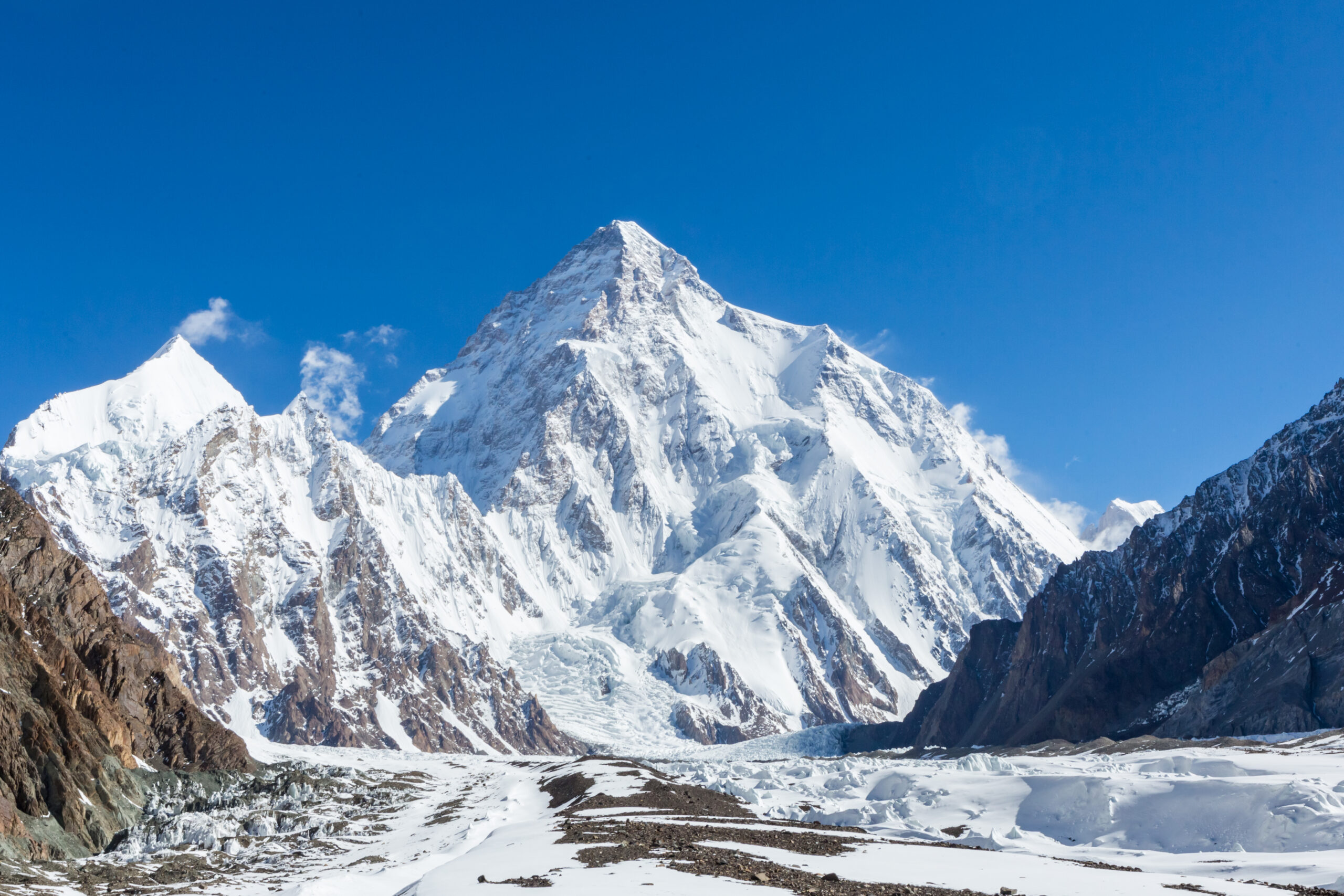
    K2 upper mountain and Abruzzi Spur during the Karakoram climbing season
    The forecast does not climb the route

    Weather, fixing, camps and team readiness must peak together.

    A calm spell can be unusable if snow has buried the route, ropes stop below the Bottleneck, Camp 4 is damaged or the team has not recovered from its final acclimatization rotation.

    Conditions change by thousands of vertical meters

    What “K2 Conditions” Means From Askole to the Summit

    The expedition can lose margin long before a climber reaches the Abruzzi Spur.

    ZoneCondition questionsWhy it matters
    Skardu / AskoleFlights, road status, bridges, landslides, vehiclesDelays consume acclimatization and recovery days.
    Baltoro approachHeat, precipitation, glacial streams, porter movementTeams can arrive at Base Camp already depleted.
    K2 Base CampRest, illness, snow/rain, communicationsRecovery quality determines readiness for rotations.
    Lower AbruzziRockfall, snow cover, fixed-line conditionEarly delays can stall the entire route-building schedule.
    Black PyramidMixed conditions, rope integrity, congestionTechnical climbing slows traffic and increases oxygen/cold exposure.
    Shoulder / Camp 4Wind, snow loading, tent and oxygen-cache conditionSummit plans often unravel here before the Bottleneck.
    Bottleneck / summitSerac exposure, queues, wind, temperature, turnaround timeThe descent through the same terrain remains part of the summit decision.

    For the atmospheric side of these conditions, see K2 Weather by Month.

    Current official Gilgit-Baltistan schedule

    K2 Permit Royalty & Expedition Rules

    Use the current government-published schedule as the starting point, then have your registered Pakistani operator confirm the full invoice.

    Official published itemCurrent GB schedule
    K2 royalty · party up to 7 membersUS$12,000
    Each additional member above 7US$3,000
    Maximum party size under published K2 terms15 members
    Peak coverageOne permit is issued for one peak
    Registered company relationshipRequired for expeditions under current GB guidance
    Insurance documentationRequired before permit issuance for local high-altitude workers under current policy
    Budget beyond the headline royalty. The official permit process also involves environmental/waste fees, insurance and operator administration. Ask for a written breakdown showing which government fees, deposits, liaison/administrative costs and operator charges are included.

    For a detailed cost and paperwork breakdown, use the K2 Permits & Fees Guide.

    Start paperwork well before expedition month

    What the Permit Application Requires

    Gilgit-Baltistan Tourism publishes an online application process handled through the expedition’s registered tour company.

    Core application documents listed by the Tourism Department

    The official FAQ lists an online mountaineering/trekking application followed by royalty/environment payments and insurance documentation. The operator submits the expedition material and coordinates the government process.

    • Application from the tour operator on company letterhead.
    • Route map of the proposed peak or trek.
    • Passport copies for expedition members.
    • Completed visa application information for foreign trekkers/climbers.
    • Occupation details for trekking/expedition members.
    • Copy of the licensed tour operator’s documentation.
    • Royalty / trekking fee receipt as applicable.
    • Waste-management / environmental fee receipt as applicable.
    • Insurance documentation required by current policy.

    Do not plan around a bare minimum deadline.

    Visa processing, expedition paperwork, fee transfers and corrections can consume time. Ask your operator for a dated document checklist and submission schedule months before travel rather than waiting until the Karakoram season begins.

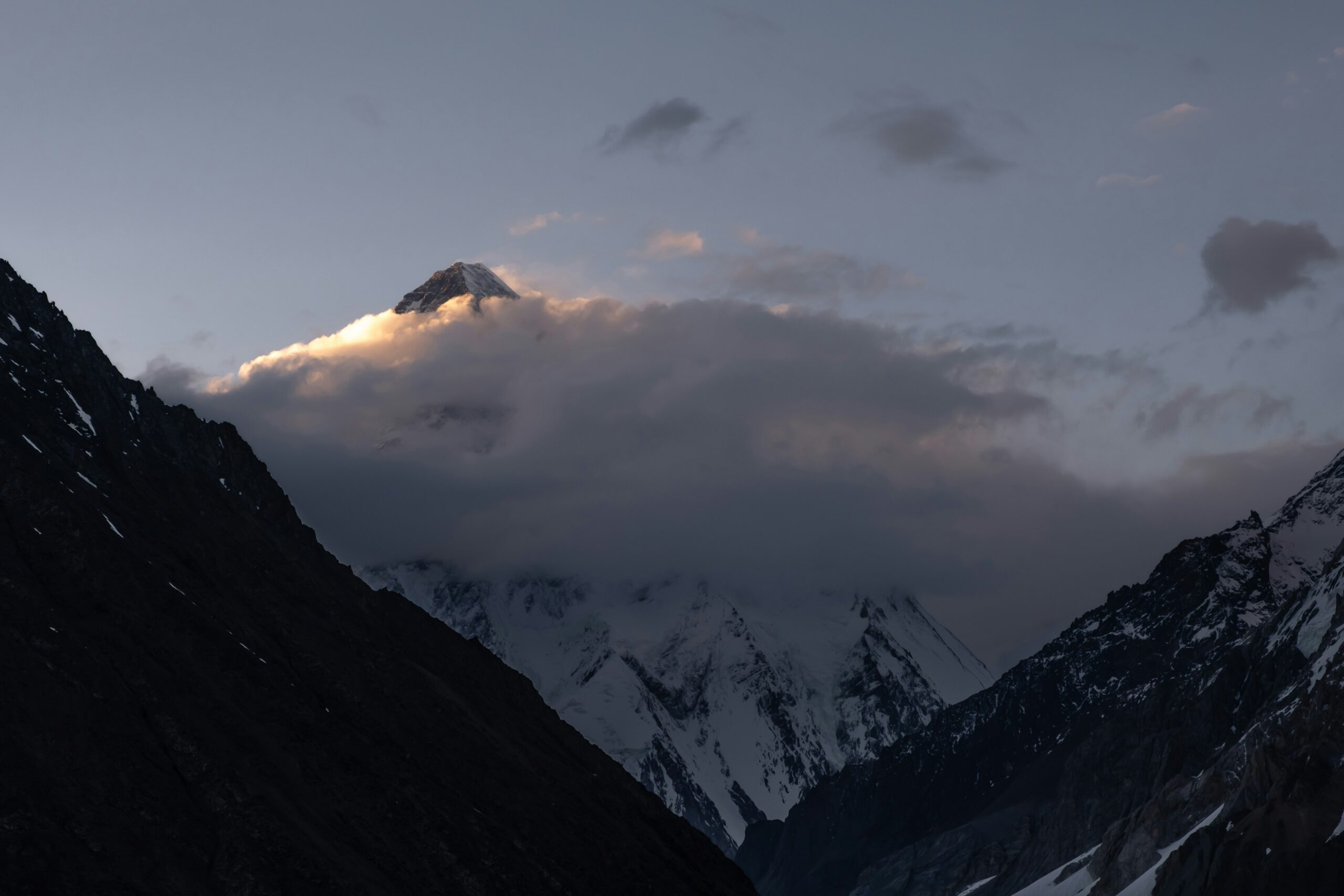
    K2 partly obscured by cloud above the Baltoro approach route
    The approach is part of the season

    K2 has no road to Base Camp.

    International arrival, Skardu logistics, Askole road access and the multi-day Baltoro trek all happen before the first acclimatization rotation. A delay in that chain can consume the margin needed for the summit period.

    Build schedule slack before Base Camp

    Skardu, Askole & Baltoro Access

    The strongest itinerary is not the one that reaches K2 fastest; it is the one that absorbs delays without stealing recovery days.

    Islamabad → Skardu

    Domestic flights are valuable but weather-sensitive. Operators commonly plan road contingencies when schedules matter.

    Skardu → Askole

    Road and bridge conditions in the Shigar/Braldu corridor can change after rain, landslides or infrastructure damage.

    Askole → Base Camp

    The Baltoro trek is a real high-altitude approach through Paiju, Urdukas, Goro and Concordia before the Godwin-Austen Glacier and K2 Base Camp.

    Confirm access close to departure. Ask your operator about current Skardu transport, Askole roadhead, bridges, porter logistics and any administrative briefing that must be completed before the team moves into the Baltoro.
    A usable forecast can arrive too early

    Route Fixing, Shared Lines & Congestion

    K2’s commercial season depends on the route being established quickly enough to use the atmospheric window.

    SectionWhy fixing mattersSeason consequence
    Lower AbruzziEarly ropes establish camp movement and acclimatization flowDelay here pushes every later rotation back.
    House’s ChimneyTechnical bottleneck on the lower routeSlow fixing creates queues before the high mountain.
    Black PyramidSustained technical terrainA major schedule gate for Camp 3 access.
    Shoulder / Camp 4High camps and oxygen must be establishedForecast opportunity is useless without summit staging.
    Bottleneck / TraverseFinal lines control traffic through the key upper hazardLate fixing can compress many teams into the same window.

    Study the terrain in the K2 Routes Guide.

    No summit attempt can be the right outcome

    Seven Ways a K2 Season Can Fail

    Permit approval and weeks at Base Camp do not create an obligation to attempt the summit.

    Access delays

    Flights, roads, bridges or porter logistics consume days before Base Camp.

    Persistent upper wind

    No forecast provides enough calm time for the summit and descent.

    Fresh snow

    A storm leaves unacceptable loading, buried lines or slow trail-breaking.

    Fixing stalls

    The route is not established when the best forecast appears.

    Illness or injury

    Climbers or staff are unable to recover enough for the summit cycle.

    Camp / oxygen failure

    Damaged tents, stoves, caches or cylinders reduce the margin above Camp 3.

    The seventh failure mode is deadline pressure.

    The longer a team waits, the easier it is to reinterpret a marginal forecast as “good enough.” Strong expedition leadership treats sunk cost as irrelevant when conditions no longer support a defensible attempt.

    For dated expedition developments

    Where to Follow the Current K2 Season

    Season patterns are stable; rope fixing, summit pushes and team movements change day by day.

    Use the live season tracker for temporary developments.

    The K2 2026 Season Tracker is the better place for dated information such as team arrivals, current fixing progress, active delays and summit pushes. This guide is designed for the planning framework that remains useful from one season to the next.

    • Current teams at Base Camp.
    • Latest fixing progress.
    • Active summit-window reports.
    • Season incidents and major changes.
    • Temporary access or weather disruptions.
    Useful next steps

    Turn the Season Calendar Into an Expedition Plan

    Two planning decisions matter immediately after choosing the season: the route system and the operator.

    Terrain & fixing

    K2 Routes Guide

    Understand where ropes, camps and congestion shape the timing of a commercial summit push.

    Open Routes →
    Execution

    K2 Operators

    Compare who controls fixing, oxygen, staffing, turnaround authority, rescue planning and permit administration.

    Compare Operators →
    Direct planning answers

    K2 Climbing Season FAQ

    The most common questions involve timing, permits, access and whether the route is ready when the forecast appears.

    What is the K2 climbing season?

    The practical commercial expedition season is late June through August. Most teams spend July acclimatizing and establishing the route, with the strongest summit opportunity usually in late July or early August.

    What is the best month to climb K2?

    July is the central month. Late July is especially important because route fixing, acclimatization and summer weather can finally align. For atmospheric detail, see the separate K2 Weather Guide.

    Can K2 be climbed in August?

    Yes. Early August can provide a second opportunity if the route remains established, the team is healthy and a defensible weather window appears. It should not be treated as guaranteed.

    How much is the K2 climbing royalty?

    Gilgit-Baltistan Tourism currently publishes a K2 royalty of US$12,000 for a party of up to seven members, plus US$3,000 for each additional member. Confirm the full expedition invoice and any additional fees through the registered Pakistani operator.

    Can foreign climbers apply independently?

    Gilgit-Baltistan Tourism states that expeditions must have proper permits and be associated with a registered tour company. Foreign expeditions normally use a licensed Pakistani operator to administer the process.

    Does a K2 permit cover Broad Peak too?

    No assumption should be made that one permit covers both. The current published terms state that a permit is issued for one peak, with another permit required for another peak.

    How early should I start the permit process?

    Start months before travel. The official process requires operator documentation, member information, route material, fees and insurance; visa and administrative timelines can add delays.

    What if the best weather arrives before ropes reach the summit?

    The forecast may be unusable. On K2, weather, route fixing, high camps, oxygen caches and team readiness all have to align before a commercial summit cycle can begin.

    Where can I follow current K2 conditions?

    Use the K2 2026 Season Tracker for dated team arrivals, rope-fixing progress, active delays and summit-window reporting.

    Sources & methodology

    How Global Summit Guide Evaluates the K2 Season

    Government permit rules, stable expedition timing and live field developments are treated as different types of information.

    What changes during the season

    • Skardu and Askole access.
    • Baltoro approach condition.
    • Rope-fixing progress and camp locations.
    • Upper-mountain snow loading and wind.
    • Operator staffing and oxygen caches.
    • Whether the team is healthy enough to use a forecast window.

    Verify before payment and again before departure.

    Government schedules can change, and expedition access is affected by weather, roads and administrative processes. Get the final royalty, fees, paperwork status and access plan in writing from the operator handling your expedition.

    The calendar gets you to K2. Readiness gets you to the window.

    Plan for Late July—But Build Enough Margin to Wait or Walk Away.

    A strong K2 expedition reaches Base Camp early enough to absorb delays, completes acclimatization without exhausting the team, establishes the route before the forecast appears and treats the summit period as an opportunity rather than a deadline.

    Was this helpful?

    Yes
    No
    Thanks for your feedback!
  • Mount Everest Expedition Update 2026: Season, Routes, Permits & Conditions

    Mount Everest and its neighbouring peaks under snow
    Everest is 8,849 m (29,032 ft), the highest point on earth, on the Nepal to Tibet border. This page tracks its season, and links to live weather below.
    Expedition Updates · Himalaya

    Mount Everest expedition update

    Where Everest stands this season, plus routes, weather windows, the new permit rules, and what the 2026 spring season told us. A single-mountain page in our Expedition Updates directory. Elevations in metres (feet).

    Current status Off-season 8,849 m (29,032 ft)

    Off-season now. The spring 2026 season has closed.

    July is the monsoon in the Nepal Himalaya, so Everest is off-season and quiet. The main climbing window is spring (April to May); a smaller autumn window runs September to November. The next real opportunity is a minor autumn 2026 season, then the main spring 2027 season.

    Spring 2026 was, by the reckoning of season chroniclers, a fairly normal year despite early delays and erratic winds. The detail is below, and live weather sits further down the page.

    8,849 m

    Summit (29,032 ft)

    The highest point on earth, in the death zone above 8,000 m.

    Apr to May

    Main season

    Spring pre-monsoon, when the jet stream lifts off the summit.

    South Col

    Standard route

    The Nepal side line; the Tibet North Ridge was closed to foreigners in 2026.

    Everest sits on the border of Nepal and Tibet at the head of the Khumbu, and it is the most watched mountain on earth each spring. This page is the update view: where the mountain is in its calendar right now, what the last season showed, and the practical rules that changed. For the full background guide to routes, history, and preparation, see our Everest guide, and for the wider picture across ranges, the Expedition Updates dashboard.

    Current status and next window

    Where the mountain is today, and when the next real climbing window opens.

    Right now Everest is out of season. The summer monsoon brings heavy snow and unstable conditions to the Nepal Himalaya, and no commercial expeditions run on the standard route in July. The mountain reopens in stages: a modest autumn window (September to November), which sees far fewer climbers than spring, and then the main event, the spring pre-monsoon season (April to May), when the great majority of ascents happen. If you are planning, spring 2027 is the season to build toward, with autumn 2026 an option for those who want a quieter mountain and can accept a lower success rate.

    Planning horizon. Most operators open spring bookings a year or more ahead, and Nepal now caps permit validity at 55 days, so build your acclimatization and travel schedule around a late-April arrival for a mid-to-late-May summit push. Start with altitude acclimatization and fitness standards.

    The 2026 spring season

    The most recent completed season, and what it tells planners.

    The 2026 spring season closed as what independent chroniclers called a fairly normal year, even though the headlines were dramatic. It opened with a problem in the Khumbu Icefall, where a large, unstable serac blocked the route below Camp I and held up operations for weeks while the icefall doctors reworked the line. Winds were awkward through much of May, with an erratic jet stream that kept the summit forecast shifting. Once a window opened, the crowds moved fast: around 1,000 summits were recorded for the season, with roughly 80 percent of them falling between May 17 and 26, and one day alone seeing well over 250 people top out. Those totals are preliminary, and the Himalayan Database publishes the definitive figures later in the year.

    Two access stories shaped the season. Nepal’s higher permit fee, in force since September 2025, took effect for a full season for the first time, and permit numbers held steady while revenue set a record. On the other side of the mountain, China closed the Tibet approach to foreign climbers, which pushed nearly all foreign expeditions onto the Nepal South Col route. A rapid-ascent method using xenon gas to speed acclimatization also drew scrutiny after a small team completed the climb in a matter of days.

    Mount Everest, at the head of the Khumbu on the Nepal to Tibet border. Map: OpenStreetMap contributors.

    Routes and conditions

    The two standard lines, and where each stood this year.

    South Col, Southeast Ridge (Nepal)

    The standard commercial route and the line of the 1953 first ascent. It climbs through the Khumbu Icefall, the Western Cwm, and the Lhotse Face to the South Col at about 7,900 m (25,900 ft), then up past the Balcony and the Hillary Step to the summit. In 2026 this carried nearly all foreign traffic. The Icefall serac early in the season was the main conditions story.

    North Ridge, Northeast Ridge (Tibet)

    The other standard line, from the Tibetan side via the North Col and the ridge above. It avoids the Khumbu Icefall but is colder and more exposed to wind. For the 2026 season China closed this side to foreign climbers, so plan around the Nepal route and confirm the Tibet position before counting on it.

    Weather and summit windows

    How the window works, plus a live forecast for the summit area.

    Everest’s season is dictated by the jet stream. Through winter, jet-stream winds scour the summit at speeds no climber can survive. In spring, as the monsoon approaches from the south, that wind lifts away for short spells, opening the summit windows teams wait for at high camp. Those windows are brief and often bunched, which is why the 2026 summits clustered so tightly in the second half of May. The live map below shows current wind and conditions for the summit area; treat it as a starting point and rely on a dedicated expedition forecast for any real decision.

    Live wind and weather for the Everest summit area. Source: Windy.com. For how to read it, see our mountain-weather guide.

    For a fuller explanation of jet-stream timing, pressure, and reading a mountain forecast, see mountain weather for climbers.

    Permits and access

    The rules changed in 2025. Here is what a foreign climber pays and needs now.

    Nepal raised its Everest royalty on September 1, 2025, the first increase since 2015. For a foreign climber on the standard south route, the spring fee rose from $11,000 to $15,000 per person, with the other seasons increased in step. The royalty is the government fee only; it is separate from operator, Sherpa, oxygen, and logistics costs, which bring a full expedition to roughly $45,000 at the budget end and well over $200,000 for a luxury service.

    Nepal Everest royalty, foreign climber, standard south route, per person (from Sep 1, 2025).
    SeasonRoyalty
    Spring (Mar to May) – main season$15,000
    Autumn (Sep to Nov)$7,500
    Winter (Dec to Feb)$3,750
    Monsoon (Jun to Aug)$3,750

    What else changed

    • Permit validity cut to 55 days – down from 75, so plan a tighter schedule.
    • Guide mandate above 8,000 m – a licensed guide is required, at a ratio of one per two climbers.
    • Waste rules – climbers must carry out their own waste, with biodegradable bags checked at base camp.
    • Tibet side – closed to foreign climbers for the 2026 season; confirm the current position before planning that route.

    Safety and rescue

    What the 2026 season showed about where the risk really sits.

    Season chroniclers recorded around five fatalities on Everest in spring 2026, with a sixth unconfirmed as the season closed, within a normal range for a busy year. Reported causes included a fall on the Lhotse Face below Camp 3 and illness striking a climber during the descent after a successful summit. That pattern is the enduring lesson of the mountain: the descent, when climbers are exhausted, low on oxygen, and past their summit goal, is the highest-risk phase, and most trouble happens on the way down rather than up.

    ⚠ The death zone is not a place to improvise

    Everything above 8,000 m sits in the death zone, where the body cannot acclimatize and every hour without supplemental oxygen erodes judgment and strength. Turn-around times, oxygen planning, and a guide who will enforce both matter more than summit fever. This page is not medical advice; build your altitude plan with our acclimatization guide and a physician.

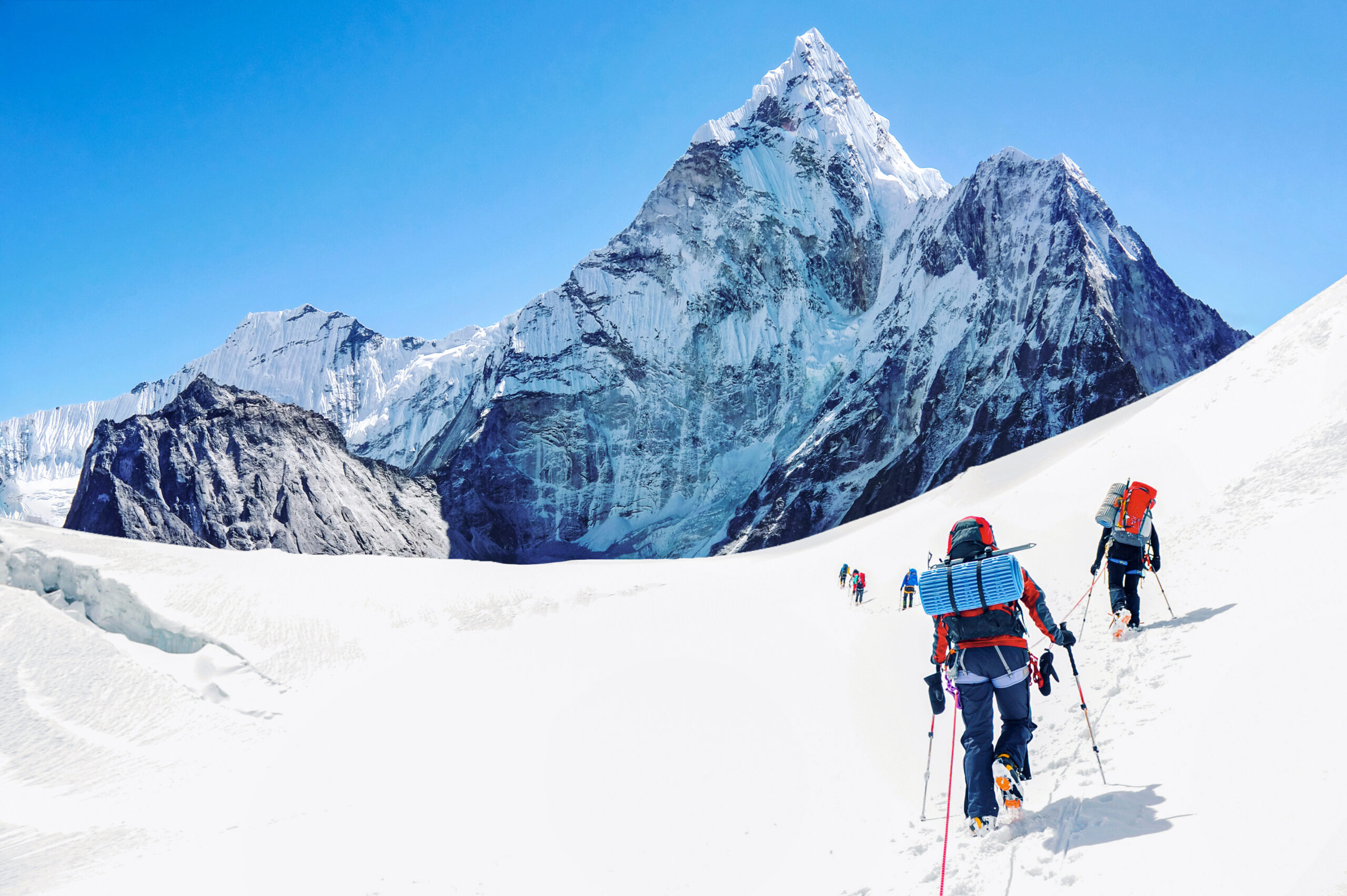
    Climbers on a high snow slope in the Everest region
    Summit windows on Everest are brief and often bunched, which concentrates traffic on a handful of days each May.

    Everest by the numbers

    The context behind a single season, from grounded records.

    1953

    First ascent

    Tenzing Norgay and Edmund Hillary, May 29, via the South Col.

    9,800+

    Ascents from Nepal

    Total summits from the Nepal side since 1953, per the Department of Tourism.

    ~1,000

    Summits in 2026

    Preliminary spring total; the Himalayan Database confirms figures later.

    For how Everest fits a longer climbing progression, and what to build toward before attempting it, our guide to the mountains to climb before the Seven Summits maps a sensible path, and the first-summit training plan is where most climbers start. The Nepal trekking peaks are the usual proving ground for Himalayan altitude before a big objective.

    Everest and the surrounding Himalayan peaks at altitude
    The Everest massif sits among the highest peaks on earth, several of which share its approaches and seasons.

    Everest update FAQ

    The questions planners ask most about timing, cost, and conditions.

    When is the best time to climb Everest?

    Spring pre-monsoon (April to May) is the main season, when the jet stream lifts to open summit windows. Roughly 80 percent of the 2026 summits fell between May 17 and 26, a normal pattern. A smaller autumn window (September to November) exists. July is the monsoon, so the mountain is off-season.

    How much does an Everest permit cost now?

    Since September 1, 2025, Nepal’s royalty for a foreign climber on the standard south route is $15,000 in spring, up from $11,000. Autumn is $7,500 and winter or monsoon is $3,750. Permits are valid for 55 days. With logistics, a full expedition runs from about $45,000 to over $200,000.

    Can you climb Everest from the Tibet side in 2026?

    For the 2026 season China closed its side of Everest to foreign climbers, so nearly all foreign expeditions used the Nepal South Col route. Access on the Tibet side changes year to year, so confirm the current position with your operator and the authorities before planning around it.

    How high is Everest and where is it?

    Everest is 8,849 m (29,032 ft), on the Nepal to Tibet border at the head of the Khumbu. The summit and the upper camps sit in the death zone above 8,000 m, where the body cannot acclimatize and time without oxygen is limited.

    How dangerous was the 2026 spring season?

    Season chroniclers recorded around five fatalities in spring 2026, with a sixth unconfirmed as the season closed, within a normal range for the mountain. Reported causes included a fall on the Lhotse Face and illness during descent. As on most 8000ers, the descent after the summit is the highest-risk phase.

    What is the current status of Everest?

    As of July the mountain is off-season under the monsoon, and the spring 2026 season has closed. The next window is a minor autumn season, then the main spring 2027 season. Check this page and the linked sources for the latest before planning.

    📋 How this update is built

    This page is compiled by Travis Ludlow, Founder and Head of Research at Global Summit Guide, from Nepal Department of Tourism figures, the Himalayan Database, and independent season reporting, with sources named below. It was reviewed for safety by Dawson Ludlow, our Climbing & Mountaineering Lead (Wilderness First Aid), whose highest first-hand summit is Kilimanjaro. Where our team has no first-hand experience of Everest, we report the cited records rather than personal anecdote, and we mark preliminary figures as preliminary.

    Sources and further reading

    • Nepal Department of Tourism, Mountaineering Section – climbing permits, royalty rates, and regulations.
    • The Himalayan Database – the definitive record of Everest ascents and fatalities, published after each season.
    • Kathmandu Post – reporting on the 2025 royalty revision and 2026 permit figures.
    • Alan Arnette – independent Everest season coverage and by-the-numbers analysis for 2026.
    • Sagarmatha Pollution Control Committee – Khumbu waste management and season operations.
    • We report published figures and named sources rather than posting unverified live conditions.

    Planning an Everest expedition?

    Choosing the right team is the biggest decision you will make. Read how to choose an expedition operator and compare teams in our operator directory. For flights and lodging around Kathmandu and Lukla, browse travel on Expedia.

    Disclosure: the Expedia link above is a sponsored affiliate link. We may earn a commission at no extra cost to you.

    Was this helpful?

    Yes
    No
    Thanks for your feedback!
Language »