Global Summit Guide logo featuring mountain imagery, symbolizing hiking and mountaineering resources for trip planning and safety.

Best Mountains for Beginner Climbers: Top 10 Peaks to Start (2026)

Last updated July 18, 2026

Mount Rainier, the most glaciated peak in the contiguous US and a classic entry-level expedition objective
Beginner Progression · 10 Peaks Ranked · 2026

Best mountains for beginner climbers: the top 10 peaks to start

The right first mountain is not the most impressive one you can afford – it is the one that teaches you the most for the least risk. These ten are ranked by accessibility, skill-building value, cost, and summit rate, from weekend training volcanoes in the Cascades to your first 5,000-metre altitude objective. Every peak here has a reputable guide service, an established beginner pathway, and a clear answer to “what will I actually learn?”

The quick answer

Climb smaller first – the big peaks don’t go anywhere.

Best first climb: Mount Baker or Mount Hood – Cascade volcanoes with formal 2-6 day courses that teach every foundation (crampons, self-arrest, rope teams, crevasse rescue). Budget pick: Mount St. Helens ($22 permit). First altitude: Kilimanjaro (non-technical) or Pico de Orizaba (cheaper, adds crampons).

The right first mountain is a calibration peak that teaches your body’s response, your gear preferences, and your risk tolerance – not the biggest summit you can book. Skipping that step to attempt something larger rarely ends well. Do not start with any Seven Summit except Kilimanjaro, and use a guide for your first major mountain – it is the highest-return safety investment in beginner climbing.

10Ranked peaks
3Difficulty tiers
1,917-5,895 mElevation range
$22-6KCost range
~50-90%Summit rates

The 10 peaks compared

Every peak by tier, season, duration, what it teaches, typical summit rate, and cost. Ordered by readiness, not height.

📜 Disclosure: This page contains affiliate links to Expedia. If you click through and make a booking, Global Summit Guide may earn a small commission at no additional cost to you. Editorial recommendations are independent of commission rates. See our full affiliate disclosure for details.
✈ ⛰ 🏨
Plan Your Adventure

Find Hotels, Flights & Trips for the World’s Best Hiking Destinations

The Global Summit Guide Travel Shop on Expedia — curated for outdoor adventurers, mountaineers, and serious hikers. Patagonia to the Alps. Nepal to the Rockies. Curated lodging for every region we cover.

Explore Travel Shop on Expedia →
✓ Curated recommendations  ·  ✓ Same price as direct booking  ·  ✓ Supports our editorial
#PeakLocationElevationTierSeasonDurationTeachesSummitCost
1Mount BakerWA Cascades3,286 m / 10,781 ftStarterJun-Sep5-6 daysAll foundations~75-85%$1,500-2,800
2Mount HoodOR Cascades3,429 m / 11,250 ftStarterApr-Jun2-3 daysAlpine starts~60-80%$700-2,500
3Mount St. HelensWA Cascades2,549 m / 8,363 ftStarterYear-round1 dayWinter basics~85%+$22 permit
4Mount AdamsWA Cascades3,742 m / 12,277 ftEntryJun-Aug2 daysHigh camps~70%$15 permit
5Mount WashingtonNH White Mtns1,917 m / 6,289 ftEntryYear-round1-2 daysWeather judgment~50% (winter)$500-1,500
6Longs PeakCO Front Range4,346 m / 14,259 ftEntryJul-Sep1 long dayScramble + altitude~50%$30 fee
7Mount RainierWA Cascades4,392 m / 14,410 ftEntryJun-Aug4-5 daysExpedition rhythm~50-65%$1,500-4,500
8Mount WhitneyCA Sierra4,421 m / 14,505 ftEntryJul-Sep1-2 daysAltitude calibration~70%$21 permit
9Pico de OrizabaMexico5,636 m / 18,491 ftFirst altitudeNov-Mar7-10 daysAltitude + crampons~60-75%$1,500-3,500
10KilimanjaroTanzania5,895 m / 19,341 ftFirst altitudeJan-Mar, Jul-Oct6-9 daysPure altitude~65-90%$2,500-6,000
Read the tiers, not just the ranks. The list moves through three readiness tiers: starter training peaks climbed locally (Baker, Hood, St. Helens), entry mountaineering objectives (Adams, Washington, Longs, Rainier, Whitney), and a first 5,000 m+ altitude test (Orizaba, Kilimanjaro). Summit rate is a signal, not a promise – Kilimanjaro’s range (65-90%) is set almost entirely by route length, and Rainier’s 50-65% reflects that it is already a real mountain.

Peak by peak

What each mountain actually teaches – and where it fits in your first year.

01 · Starter Tier · #1 pick

Mount Baker

Washington, USA · North Cascades · best first climb

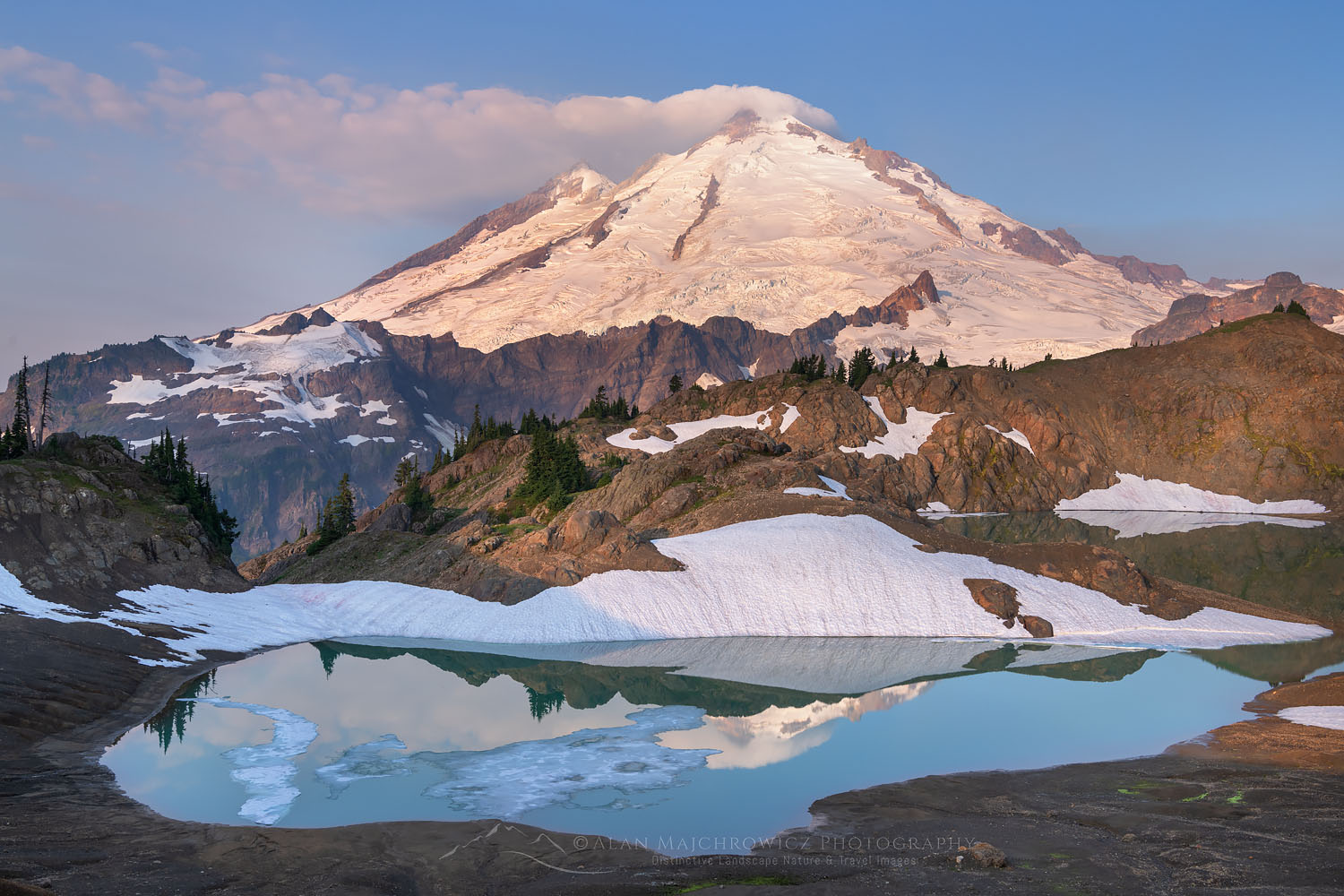
The canonical introductory mountaineering peak in North America. Alpine Ascents, American Alpine Institute, and Mountain Madness all run their core 6-day introductory courses here, teaching every foundational skill – crampon technique, self-arrest, rope-team travel, crevasse rescue – on the Easton and Coleman-Deming glaciers. The summit is a moderate glacier climb with no technical crux; the value is the full week of structured instruction followed by a supervised summit.

SeasonJun-Sep
Duration5-6 days
TeachesAll foundations
Summit~75-85%
Mount Baker's glaciated Ptarmigan Ridge in the North Cascades, Washington
Mount Baker’s glaciated flanks in the North Cascades – the canonical first mountaineering peak in North America, where the major guide services run their week-long introductory courses on real glacier terrain.
02 · Starter Tier

Mount Hood

Oregon, USA · Cascade Range · fast first summit

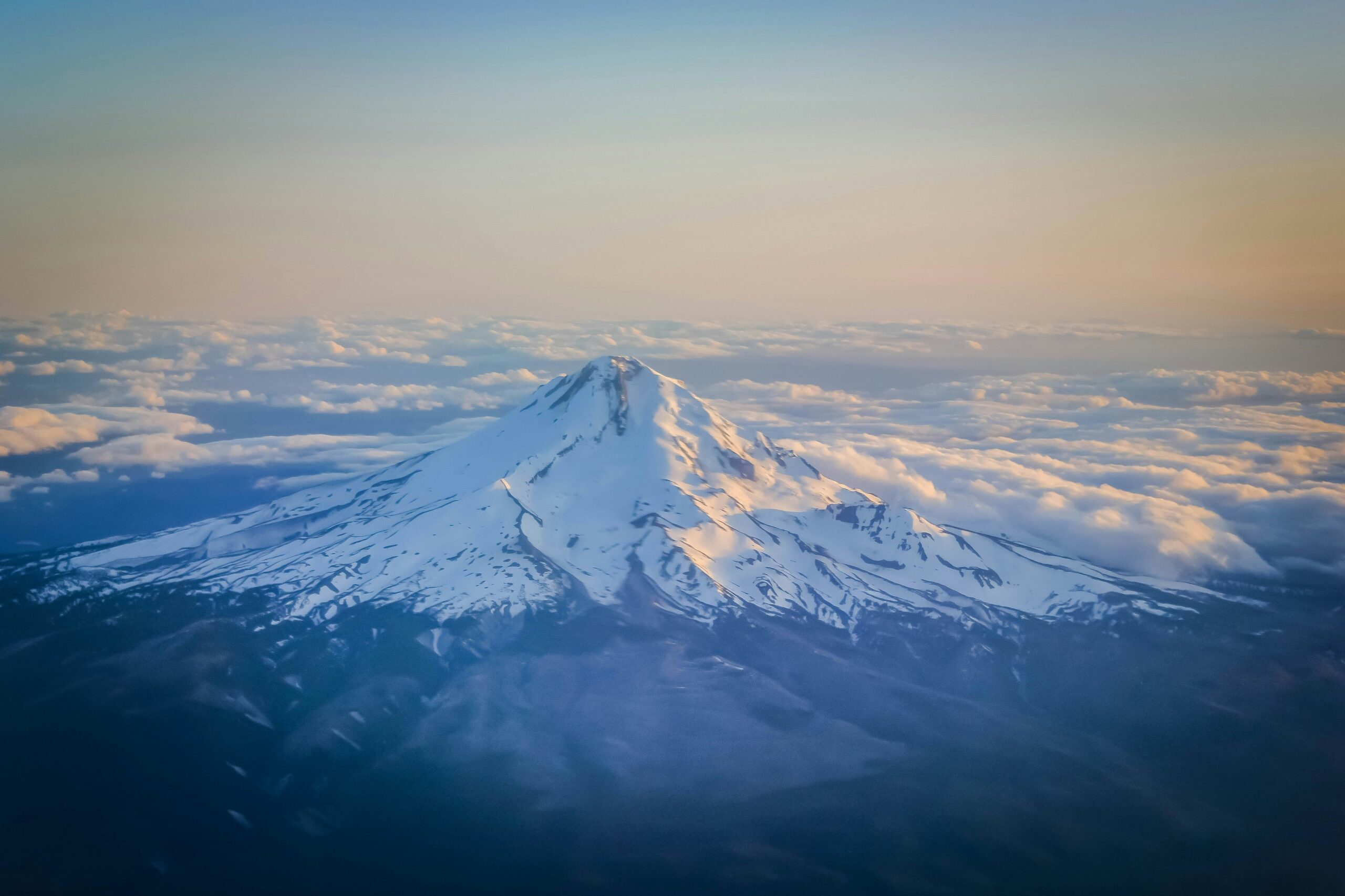
Hood’s South Side route is the shortest real mountaineering climb accessible to beginners – a 2-day push with a midnight alpine start summiting mid-morning. Guide services run 3-day programs combining a skills day with the summit. It teaches crampons, ice axe, roped movement, and the psychological reality of alpine starts in a single weekend. Oregon weather is the main variable – many Hood climbs are cancelled by high wind or icefall.

SeasonApr-Jun
Duration2-3 days
TeachesAlpine starts
Summit~60-80%
03 · Starter Tier · budget

Mount St. Helens

Washington, USA · Cascade Range · active volcano

The most accessible real-mountain climb in the Pacific Northwest. The Monitor Ridge route (summer) is a non-technical slog on scree and ash; the Worm Flows route (winter) introduces crampons, ice axe, and self-arrest in a low-consequence environment. At $22 for a permit and no guide required for fit hikers with basic winter skills, it is the cheapest way to build experience. Book early – summer weekends are competitive.

SeasonYear-round
Duration1 day
TeachesWinter basics
Summit~85%+
04 · Entry Tier

Mount Adams

Washington, USA · second-highest Cascade · first high camp

Adams’ South Spur is the natural next step after St. Helens – a 2-day climb with a high-camp bivy at Lunch Counter (around 2,900 m) and a dawn summit. Non-technical in standard conditions but requires crampons, ice axe, and self-arrest proficiency. No fee beyond the $15 Cascade Volcano Pass. Most fit climbers with prior winter skills can do Adams self-supported – the peak where many Cascade climbers first learn what expedition-style camping feels like.

SeasonJun-Aug
Duration2 days
TeachesHigh camps
Summit~70%
05 · Entry Tier · East Coast

Mount Washington

New Hampshire, USA · White Mountains · weather gauntlet

Short on elevation but infamous for weather – among the worst in the lower 48, with recorded gusts of 372 km/h and full winter conditions even in summer. The summer hike is trivial; the winter traverse on Lion Head or Tuckerman Ravine teaches every fundamental – layering, wind assessment, turnaround discipline, whiteout navigation – in a consequential but accessible environment. The training peak for East Coast climbers without Cascade access.

SeasonYear-round
Duration1-2 days
TeachesWeather judgment
Summit~50% winter
06 · Entry Tier · altitude intro

Longs Peak

Colorado, USA · Rocky Mountain National Park

Longs via the Keyhole is a 14-mile round trip with 1,500 m of gain, including sustained Class 3 scrambling on the Homestretch – the line between hiking and mountaineering. Non-technical in dry summer conditions; a true alpine climb in winter. Free to climb, no permit. The Keyhole teaches altitude response and committed scrambling, and completing Longs is the benchmark for Colorado climbers before bigger peaks. Expect 12+ hour days and alpine starts. See our Colorado 14ers guide.

SeasonJul-Sep
Duration1 long day
TeachesScramble + altitude
Summit~50%
07 · Entry Tier · full expedition

Mount Rainier

Washington, USA · most glaciated US peak · real expedition

The closest US climb to what Denali or Aconcagua actually feels like. The Disappointment Cleaver route combines heavy glaciation, altitude, crevasse navigation, and a true alpine-start summit day. RMI (at Paradise) and IMG run 4-5 day combined skills-and-climb programs – the standard entry path. Do not attempt Rainier as a first-ever climb; complete Baker or Hood first. Beginner-program summit rates average 50-65% precisely because it is already a real mountain.

SeasonJun-Aug
Duration4-5 days
TeachesExpedition rhythm
Summit~50-65%
08 · Entry Tier · highest lower 48

Mount Whitney

California, USA · Sierra Nevada · contiguous US high point

Whitney’s Mountaineer’s Route is California’s training-peak answer – a 2-day climb with basic scrambling, real altitude, and a day-one high camp at Iceberg Lake (3,660 m). The permit lottery is competitive (apply Feb-Mar). The standard Whitney Trail is a 22-mile non-technical day hike; the Mountaineer’s Route adds rock scrambling and route-finding. An excellent altitude-calibration peak for climbers planning Orizaba or Kilimanjaro.

SeasonJul-Sep
Duration1-2 days
TeachesAltitude calibration
Summit~70%
09 · First Altitude Tier

Pico de Orizaba

Mexico · North America’s 3rd-highest · glaciated volcano

The most accessible 5,000 m+ peak in the Americas. The standard route via the Jamapa Glacier combines moderate crampon and ice-axe work with real altitude at a fraction of the Kilimanjaro cost. Typical programs run 7-10 days including acclimatization on La Malinche (4,461 m) and Iztaccihuatl (5,230 m). Mexican operators offer budget options; US operators add premium structure. An excellent first-altitude peak that pairs crampon experience with altitude. See our Orizaba route comparison.

SeasonNov-Mar
Duration7-10 days
TeachesAltitude + crampons
Summit~60-75%
10 · First Altitude Tier · iconic

Kilimanjaro

Tanzania · Africa’s highest · a Seven Summit

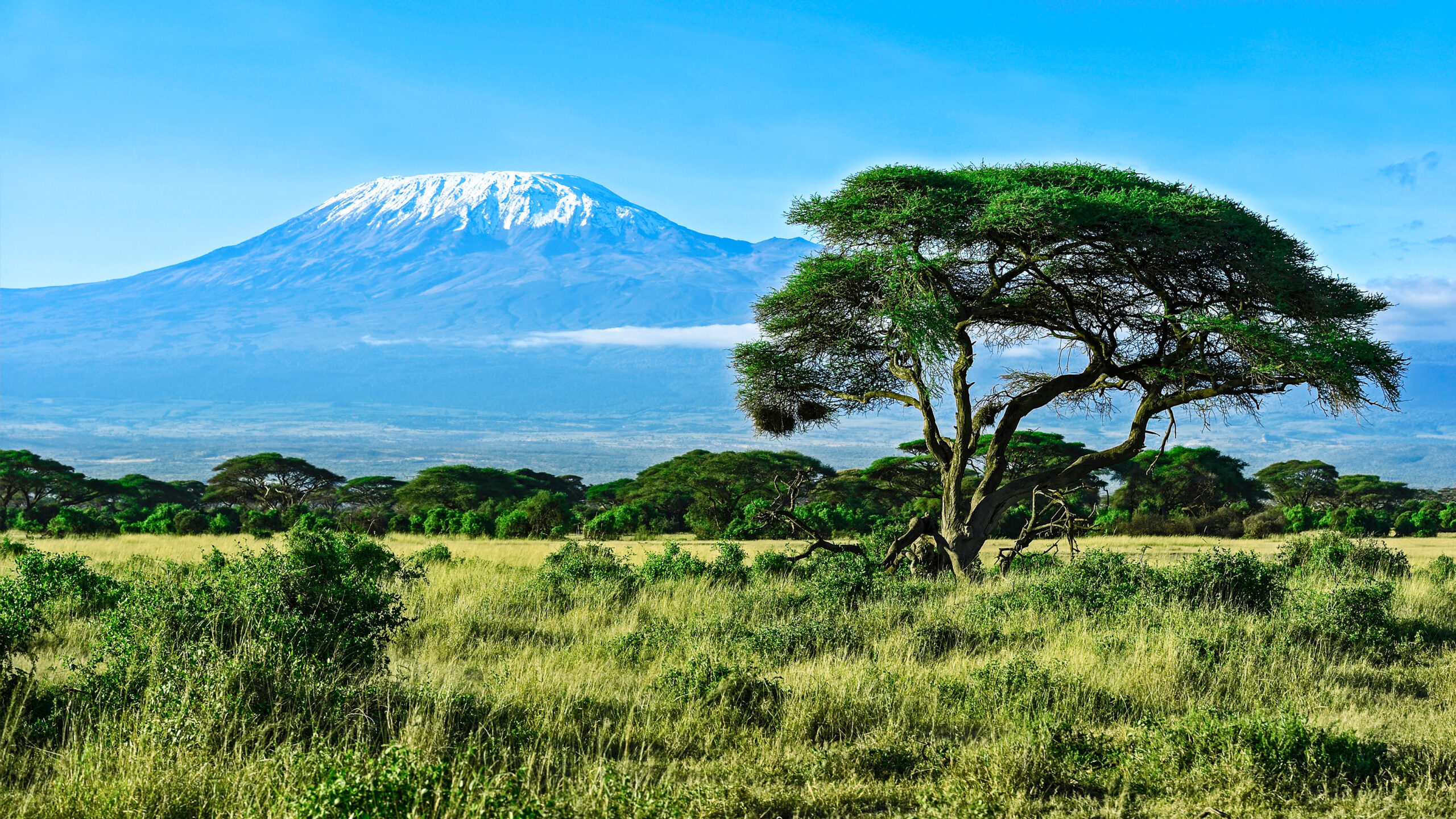
The default first 5,000 m+ peak for international climbers. Non-technical (no crampons, ice axe, or rope), full porter support, and the most mature mountaineering infrastructure in the world. The single biggest summit-rate factor is route duration – an 8-day Lemosho climb summits 85-90%, a 5-day Marangu just 30-50%. Always choose the longest route you can budget, and see Seven Summits for Beginners.

SeasonJan-Mar, Jul-Oct
Duration6-9 days
TeachesPure altitude
Summit~65-90%

Choosing your first peak?

Take the which-mountain-should-you-climb quiz, start with the beginner mountaineering foundation guide, and compare more first summits in best beginner mountains in the world. For flights and lodging near your objective, compare options through the Global Summit Guide Expedia travel shop.

Disclosure: the Expedia link is an affiliate link; we may earn a small commission at no extra cost to you, and it never affects our recommendations.

Take the Quiz Beginner Foundation Guide

How to choose your first peak

The right peak depends on your situation – this mirrors the framework guide services apply on a beginner intake call.

Start with Baker or Hood if

  • You have zero prior mountaineering experience and want formal instruction.
  • You live near the Pacific Northwest or can travel there for a week.
  • You have $1,500-3,000 for a first real climb.
  • You want transferable skills for every future objective.

Start with St. Helens or Washington if

  • You are budget-constrained and want to build skills locally first.
  • You have hiking experience and some winter-travel fundamentals.
  • You want a shorter time commitment than a multi-day course.
  • You are testing whether mountaineering is right for you before a bigger investment.

Start with Kilimanjaro or Orizaba if

  • You already have formal skills training from a previous course.
  • Your primary interest is altitude, not technical climbing.
  • You are planning a Seven Summits project (Kilimanjaro is the default first peak).
  • You have 2+ weeks and $3,000+ for an international trip.
The build-first principle. Most successful mountaineers’ first climb was not their most impressive – it was a calibration peak (Baker, Hood, St. Helens, Longs) that taught their body’s response, gear preferences, and risk tolerance. Skipping that step to attempt something larger rarely ends well. For the full framework, see our mountaineering for beginners guide.

Peaks to avoid as your first climb

The common mistake is picking peaks that are not actually beginner-appropriate despite their marketing and reputation.

  • Any Seven Summit except Kilimanjaro. Aconcagua, Denali, Elbrus, Vinson, and Carstensz all require prior mountaineering experience, prior altitude experience, or both – starting here sharply raises failure and injury risk.
  • Technical rock objectives. The Matterhorn and most European alpine classics need prior rock-climbing skill that mountaineering courses do not teach.
  • Remote expedition peaks. Aconcagua and the Peruvian 6,000 m peaks test expedition-craft beginner programs do not build. Save these for year 2-3.
  • Winter routes on major peaks. Summer Rainier is a beginner-appropriate guided climb; winter Rainier is an expedition that kills experienced climbers. Same peak, very different readiness.

The 5-stage progression

Most climbers move from absolute beginner to confident mountaineer through five stages over roughly 1-3 years.

Fitness foundation (1-3 months). Cardiovascular endurance and leg strength on 5-10 mile day hikes with 1,500-2,500 ft gain. Focus: aerobic capacity, hiking technique, gear familiarity. Cost: $200-500.

Peak-bagging day hikes (3-6 months). Summit-focused hikes with 2,500-4,000 ft gain. Focus: route-finding, weather awareness, sustained-climbing fitness. Cost: $0-500 (most are free).

First major mountain (6-12 months). A non-technical major mountain matched to your region – Whitney, Elbert, Toubkal, Fuji. Use a guide. Focus: altitude management, multi-day logistics, expedition mindset. Cost: $1,500-5,000.

Mountaineering course (12-18 months). A basic 4-7 day course teaching crampon technique, self-arrest, glacier rope teams, crevasse rescue, anchors. Focus: technical fundamentals. Cost: $2,000-5,000 with technical gear (crampons ~$200, axe ~$100, harness ~$80, helmet ~$80).

First glaciated mountain (18-24+ months). Apply your skills on a Cascade volcano (Adams, Hood), Rainier for advanced beginners, or a first European 4,000 m peak (Breithorn, Allalinhorn). Focus: real glaciated terrain, weather windows, safe-descent priority. Cost: $2,500-8,000.

Snow-covered glaciated mountain terrain in the high alpine
Real glaciated terrain is where a mountaineering course pays off – crampons, rope teams, and self-arrest are learned on the mountain, not just in the classroom. It is the last rung before a first 5,000-metre peak.
Beyond stage 5. After a successful glaciated mountain, climbers have the base for first 5,000 m peaks, technical alpine routes, and eventually 6,000 m+ expeditions. Reaching a first 6,000 m peak typically takes 3-5 years of consistent commitment and $15,000-50,000+ across the whole journey. Train for the altitude with our acclimatization guide and fitness standards.

What it costs

The full beginner-to-mountaineer progression runs roughly $7,000-16,000 across 1-3 years – here is where it goes.

InvestmentStage 1-2 (hiking)Stage 3 (first major)Stage 4-5 (mountaineering)
Footwear$120-250 (trail/hiking)$200-400 (waterproof boots)$400-800 (B1/B2 mountaineering)
Layering system$200-400 (synthetic base)$400-800 (+ shell + insulation)$800-1,500 (full alpine)
Backpack$80-200 (day pack)$150-300 (overnight)$300-500 (alpine)
Navigation & safety$100-200 (map, compass, light)$200-500 (+ GPS, emergency)$500-1,000 (technical)
Technical gear$700-1,500 (crampons, axe, harness, helmet)
Mountain experienceFree / $50 permits$1,000-3,000 (guided first major)$2,000-5,000 (course + glaciated peak)
Stage total$500-1,200$2,000-5,000$4,500-10,300
The highest-return line item. A guided first major mountain is the single best money you will spend – it reduces risk and accelerates learning more than any piece of gear. Skimping on instruction to afford a more impressive peak is almost always a false economy. Kit up with our gear checklist, crampons buyer’s guide, and boots guide.

Common beginner mistakes

The recurring errors that cause injuries and deaths – not on the hardest peaks, but the mismatched ones.

  • Choosing too ambitious a first major mountain. Kilimanjaro and Aconcagua are non-technical at altitude – they demand fitness, altitude tolerance, and expedition logistics beginners have not built. Start with sub-4,000 m peaks first.
  • Skipping the guide. Most beginner fatalities occur on unguided attempts. A guide’s weather calls, route-finding, pacing, and emergency response are the highest-return safety investment in the sport.
  • Inadequate acclimatization. AMS affects 50%+ of climbers above 3,000 m; HACE and HAPE can kill quickly. Ascend gradually, gain no more than 300-500 m of sleeping elevation per night above 3,000 m, and take rest days.
  • Ignoring afternoon thunderstorms. Summit by 11:00 AM and descend below treeline by noon, especially in Colorado, the Cascades, and tropical mountains. Lightning kills beginners who ignore timing.
  • Wrong gear for conditions. Hiking boots are not crampon-compatible; cotton is dangerous when wet; down needs a waterproof shell. Rent or borrow technical gear before buying.
  • Ignoring turnaround-time discipline. Set a turnaround time before the summit push and respect it regardless of how close the top looks. Develop this on small mountains first.

Beginner mountains by region

The best first mountain depends heavily on geography – start with accessible peaks in your region before international objectives.

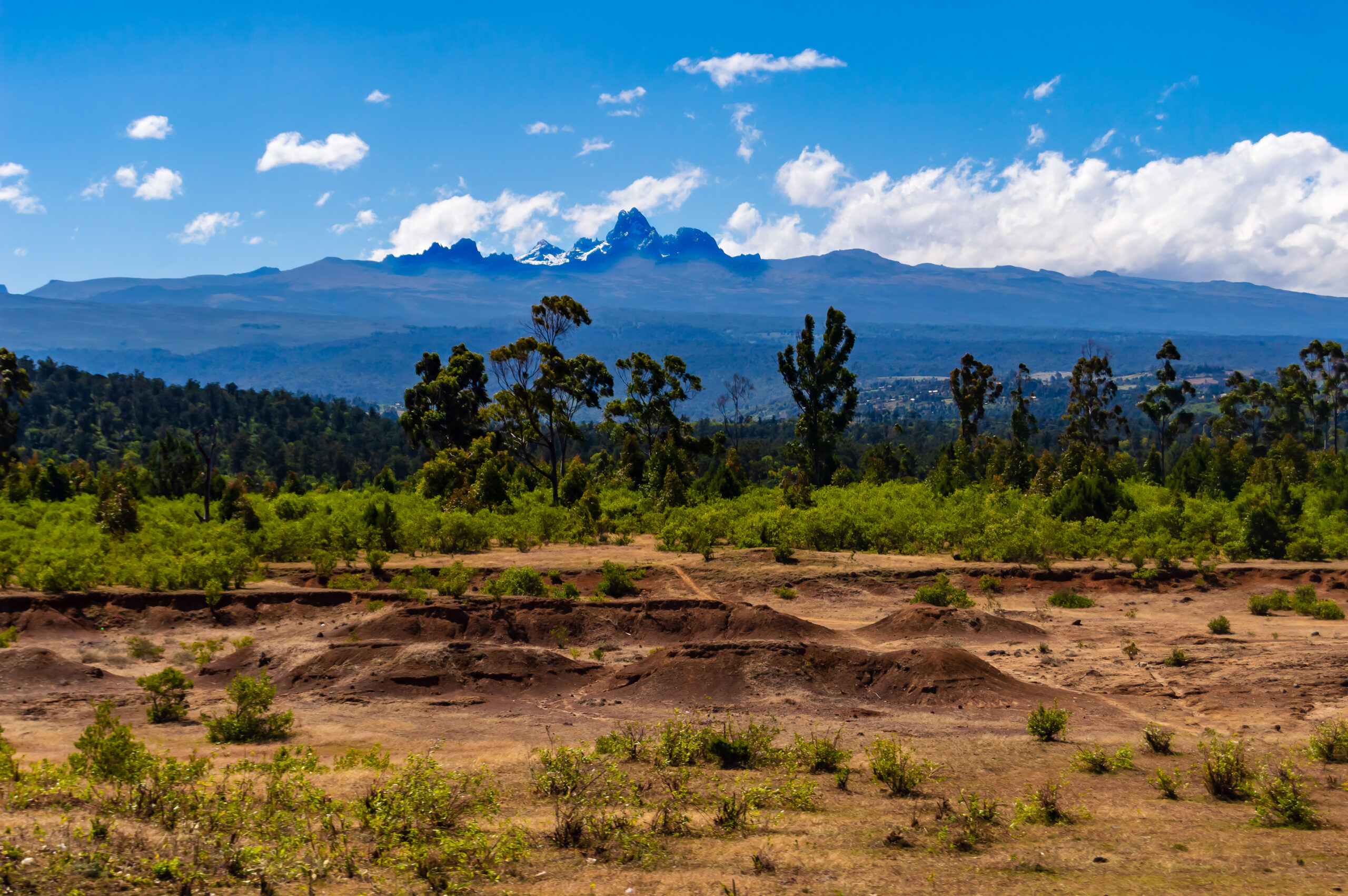
Quick regional starting points: USAColorado 14ers (Elbert, Bierstadt) or Mount Whitney, then Cascade volcanoes (Adams, Hood). UK – Snowdon, then Scafell Pike, then Ben Nevis, then the Alps. Europe – national high points, then Toubkal in Morocco, then the Breithorn or Allalinhorn for a first 4,000 m. Asia – Mount Fuji (Japan) or Kinabalu (Malaysia). Africa – Toubkal or Mount Kenya (Point Lenana) before Kilimanjaro. Australia – Kosciuszko, then New Zealand’s lower peaks, then Kilimanjaro for first altitude. For the full country-by-country breakdown of beginner-friendly peaks, see best beginner mountains in the world and best mountains in the USA.

The universal rule. Complete several local day hikes before your first overnight expedition. International beginner mountains (Kilimanjaro, Aconcagua, Cotopaxi) are achievable but represent real financial and time commitments better suited to a second or third major expedition – not a first. For the simplest summits, see easiest mountains to climb.

Beginner climbing FAQ

The questions first-time climbers search most.

What is the best mountain for a first climb?

Mount Baker and Mount Hood – Cascade volcanoes with formal 2-6 day courses that teach every foundation in a real alpine environment, at $700-3,000. For a first 5,000 m+ objective, Kilimanjaro is the classic non-technical choice and Orizaba a lower-cost alternate. Avoid jumping straight to altitude.

Can a complete beginner climb Mount Rainier?

Only after a formal course first – the same services (RMI, Alpine Ascents, IMG) run the course and Rainier back-to-back as a 5-6 day program. Rainier is heavily glaciated, demands real technique, and produces fatalities each season; beginner summit rates run 50-65%. Do Baker or Hood first.

What is the easiest 5,000 m+ peak for beginners?

Kilimanjaro – non-technical, porter-supported, needing only fitness and altitude tolerance. Orizaba (5,636 m) is a close alternate that adds crampons but has simpler, cheaper logistics. Elbrus is similar but needs glacier skills and has complicated access.

Should I climb locally or travel for my first peak?

Climb locally first when possible – a weekend-accessible peak (Washington NH, Longs, St. Helens, Hood) lets you learn cheaper and lower-stakes and build a cadence of practice days. The exception is if you live without mountaineering terrain, where traveling for a first formal course beats waiting years.

How much should I spend on my first climb?

$700-3,000 for a guided introductory course on Baker or Hood; under $200 self-supported on St. Helens if you have hiking gear; $1,500-6,000 for an international objective (Kilimanjaro, Orizaba). Your first climb should include formal instruction – it pays back on every later climb.

What is the safest mountain for first-timers?

No peak is categorically safe. The lowest-risk have strong guide infrastructure, weather and avalanche forecasting, easy descent routes, and daily operator monitoring: Baker, Hood, Adams, St. Helens, Kilimanjaro. Use more caution on Mount Washington, winter Front Range 14ers, and Rainier without course prep.

What is the easiest mountain to climb in the world?

By non-technical accessibility, Mount Kosciuszko (Australia, 2,228 m – paved road plus trail). Easiest Seven Summit: Kosciuszko or Kilimanjaro. Easiest Colorado 14er: Mount Sherman. Easiest 4,000 m Alpine peak: the Breithorn via the Klein Matterhorn cable car.

How do you start mountain climbing as a beginner?

The five-stage progression: fitness foundation, peak-bagging day hikes, a first major mountain with a guide, a basic mountaineering course, then a first glaciated peak – roughly 1-3 years and $7,000-16,000 total including gear.

Do I need a guide for my first mountain?

Strongly recommended for your first major mountain – weather calls, route-finding, pacing, and emergency response are why most beginner fatalities happen on unguided attempts. After one or two guided climbs plus a formal course, you can begin unguided attempts on familiar terrain.

Methodology & sources

  • Peaks ranked on four beginner-weighted factors: accessibility, skill-building value, realistic cost including instruction, and summit rate on beginner programs.
  • Data compiled from NPS climbing-ranger reports (Rainier, RMNP), USFS permit data (St. Helens, Adams, Baker), the Mount Washington Observatory, Inyo NF (Whitney), TANAPA (Kilimanjaro), AMGA course curricula, and AAC accident reports – plus operator pre-trip briefings from Alpine Ascents, RMI, IMG, American Alpine Institute, and Mountain Madness.
  • Research-based; safety framing reviewed by Dawson Ludlow. Costs, permits, and summit rates change by season and operator – verify before booking.

Last updated: July 18, 2026 · Global Summit Guide Editorial Team.

Confidence: High on peak selection and what each teaches; Medium on exact costs and summit rates, which vary by operator, route, and season.

Global Summit Guide Editorial Team

Research: Travis Ludlow (Founder & Head of Research) · Safety review: Dawson Ludlow

Global Summit Guide is an independent mountaineering resource based in Nephi, Utah, turning complex mountain objectives into clear, actionable guidance. This ranking is research-based – built from certified guide-service programs, national-park and forest-service data, and accident records rather than sponsored placements – and reviewed for safety framing.

Read the editorial mission and team background.

Climb smaller first

Your first mountain should open doors, not close them. Pick a calibration peak that matches your geography, budget, and skills – learn how your body handles altitude and how fast weather changes – and the big peaks will still be there when you are ready.

Find Your First Mountain Start the Foundation Guide

Was this helpful?

Yes
No
Thanks for your feedback!
About Global Summit Guide

Global Summit Guide is an independent mountaineering resource founded in 2026. The team combines first-hand trekking and climbing experience with in-depth research and professional health and nutrition review to help climbers choose objectives, prepare properly, and stay safe.

Travis LudlowFounder & Head of Research · Master's in Business
Dawson LudlowClimbing & Mountaineering Lead
Walker LudlowClimber & Contributor

Health, altitude, and nutrition content is reviewed by Taylor Ludlow (Registered Nurse) and Brigg Hoopes (Nutritionist).

What We Don't Know Yet

Mountain information changes quickly. This box explains the limits of what this page can responsibly promise.

  • Guide-company prices, departure dates, guide ratios, included services, and cancellation rules can change without notice.
  • Weather, snowpack, avalanche risk, road access, and route conditions can change quickly and may be different on your climbing dates.
  • Route conditions, trailhead access, crevasse exposure, stream crossings, and rescue access may vary from published planning guidance.
  • Total trip cost can change with flights, lodging, guide pricing, permits, gear rentals, transportation, and exchange rates.
  • Gear requirements can change by season, route variation, weather window, personal cold tolerance, and guide-service requirements.
Confidence: Medium

Verify current conditions with official land managers, guide services, local forecasts, and current route reports before booking or climbing.

Safety, medical & liability disclaimer

Mountaineering, rock and ice climbing, glacier travel, and high-altitude activity are inherently dangerous and can result in serious injury or death. The information on Global Summit Guide is provided for general informational and educational purposes only and is not a substitute for professional instruction, qualified guiding, proper equipment, or your own judgment and experience.

Route conditions, weather, snowpack, permits, regulations, and hazards change constantly and may differ from what is described here. Details may be incomplete, out of date, or contain errors. Always verify current information with local authorities, certified guides, and official sources before making any decision in the mountains.

Nothing on this site is medical, legal, or financial advice. Our fitness, acclimatization, altitude, and nutrition content is general in nature; consult a qualified physician before beginning any strenuous exercise program or exposing yourself to high altitude.

You are solely responsible for your own safety and decisions. To the fullest extent permitted by law, Global Summit Guide and its team accept no liability for any loss, injury, damage, or expense arising from use of, or reliance on, this information. By using this site you acknowledge these risks and accept these terms.

Some links on this site may be affiliate links. If you buy through them we may earn a small commission at no extra cost to you; this never affects our recommendations.

Global Summit Guide recommendation path

Next Best Mountain to Research

Use these recommendations to continue the right planning path instead of stopping on one page.

Use current permit, weather, route, and operator information before booking or climbing.

Ready to Plan Your Adventure?

Find curated hotels, flights, and vacation packages for your next hiking or mountaineering trip through our Expedia Travel Shop.

Book Your Trip on Expedia →
Affiliate links to Expedia. Same price as direct booking. Disclosure.
Language »