
Last updated September 18, 2026
Karakoram Weather Window: How K2 Summit Timing Really Works
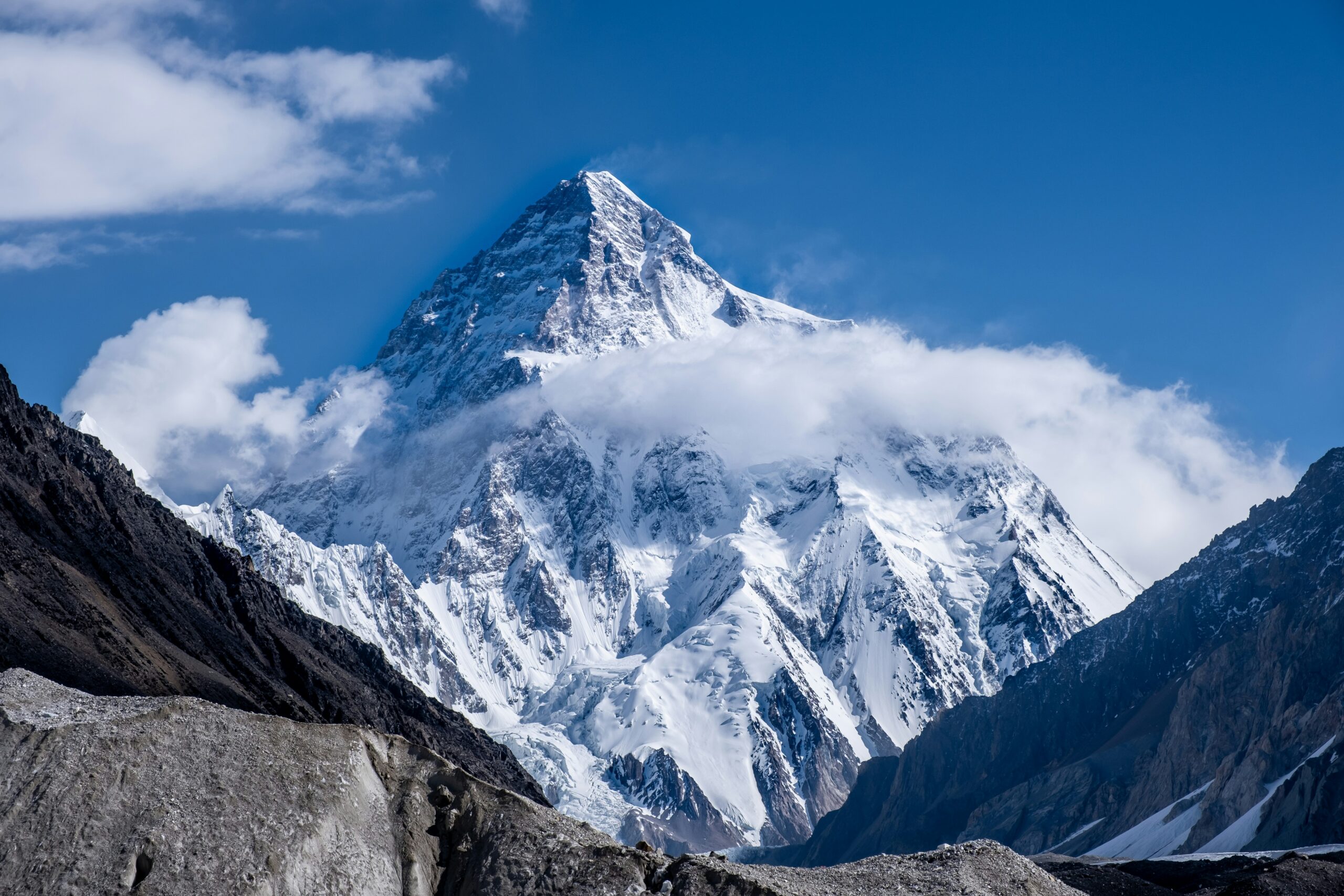
Why do K2, Broad Peak and the Gasherbrums wait all season for a handful of usable days? The answer is more than a forecast: monsoon moisture, jet-stream position, upper-mountain wind, fresh snow, route readiness and descent margin all have to align at once.
When is the Karakoram weather window?
The historical center of the Karakoram 8,000-meter summit window is late July, sometimes extending into early August—but there is no guaranteed date. Meteorologist-supported analysis published by ExplorersWeb describes the last two weeks of July as the typical best period, when the polar jet tends to move north and the monsoon circulation changes enough to reduce upper-mountain wind and precipitation.
A weather window becomes a summit window only when the mountain is ready too. Fixed lines must be high enough, climbers must be acclimatized, snow must be acceptably stable, camps and oxygen/support systems must be in place, and the forecast must leave enough margin for the descent. In some years, that full combination never forms.
How the Karakoram Window Works
Four 8,000ers Share One Tight Baltoro Weather System
K2, Broad Peak, Gasherbrum I and Gasherbrum II sit within a compact part of the central Karakoram. Their summit days can differ, but they often experience the same large-scale wind and storm cycle.
Baltoro · Concordia · K2 & Gasherbrums
The map shows the central cluster. It is for weather/geographic orientation, not climbing navigation.

Regional Calm Does Not Make Every Route Usable.
The Baltoro cluster is compact enough that teams watch the same synoptic weather pattern, but route geometry, snow loading and fixed-line progress decide whether a specific mountain can use the same forecast break.
The Window Is a Temporary Gap Between Bigger Systems
The simplified picture is useful: summer monsoon moisture pushes toward the region while the upper-level jet shifts position. Late July can briefly produce lower wind and less precipitation over the highest peaks.
Monsoon Influence
Warm, moist South Asian air can reach the Karakoram and produce rain at lower elevations and heavy snow higher on the mountains.
Jet-Stream Position
When the strongest upper-level flow lifts away from the peaks, summit wind can fall enough to create a possible climbing period.
Late-July Truce
Historically, the best overlap often occurs in the second half of July. It is a tendency, not an appointment on the calendar.
Useful model, not a complete atmospheric forecast
The monsoon/jet-stream explanation describes the broad seasonal pattern. Specialist forecasters still analyze multiple pressure levels, model runs, wind profiles, precipitation, temperature and mountain-specific effects before an expedition commits upward.
The Window Usually Emerges Late—After Weeks of Preparation
The Karakoram season is built backward from a possible late-July summit cycle. Teams arrive much earlier because route fixing and acclimatization have to be complete before the forecast improves.
| Season phase | Typical expedition work | Weather role | Main failure mode |
|---|---|---|---|
| Late June / early July | Baltoro approach, Base Camp setup, lower route work. | Summer pattern is established but upper wind and snowfall can remain disruptive. | Route progress falls behind before the key period arrives. |
| Early–mid July | Acclimatization rotations, fixing toward higher camps. | Teams look for shorter breaks rather than the final summit window. | Repeated storms or wind prevent enough high exposure and fixing. |
| Late July | Final recovery, forecast watching, summit-cycle positioning. | Historically the strongest probability of a broader usable break. | The forecast improves before the mountain or team is ready. |
| Early August | Late summit attempts or exit decisions. | Some seasons remain usable; others close abruptly. | Warming, instability, fresh snow or renewed wind erodes the remaining margin. |
| After the core window | Teams weigh another attempt against route deterioration and expedition limits. | Possible but increasingly season-specific. | Calendar pressure encourages a push into marginal conditions. |
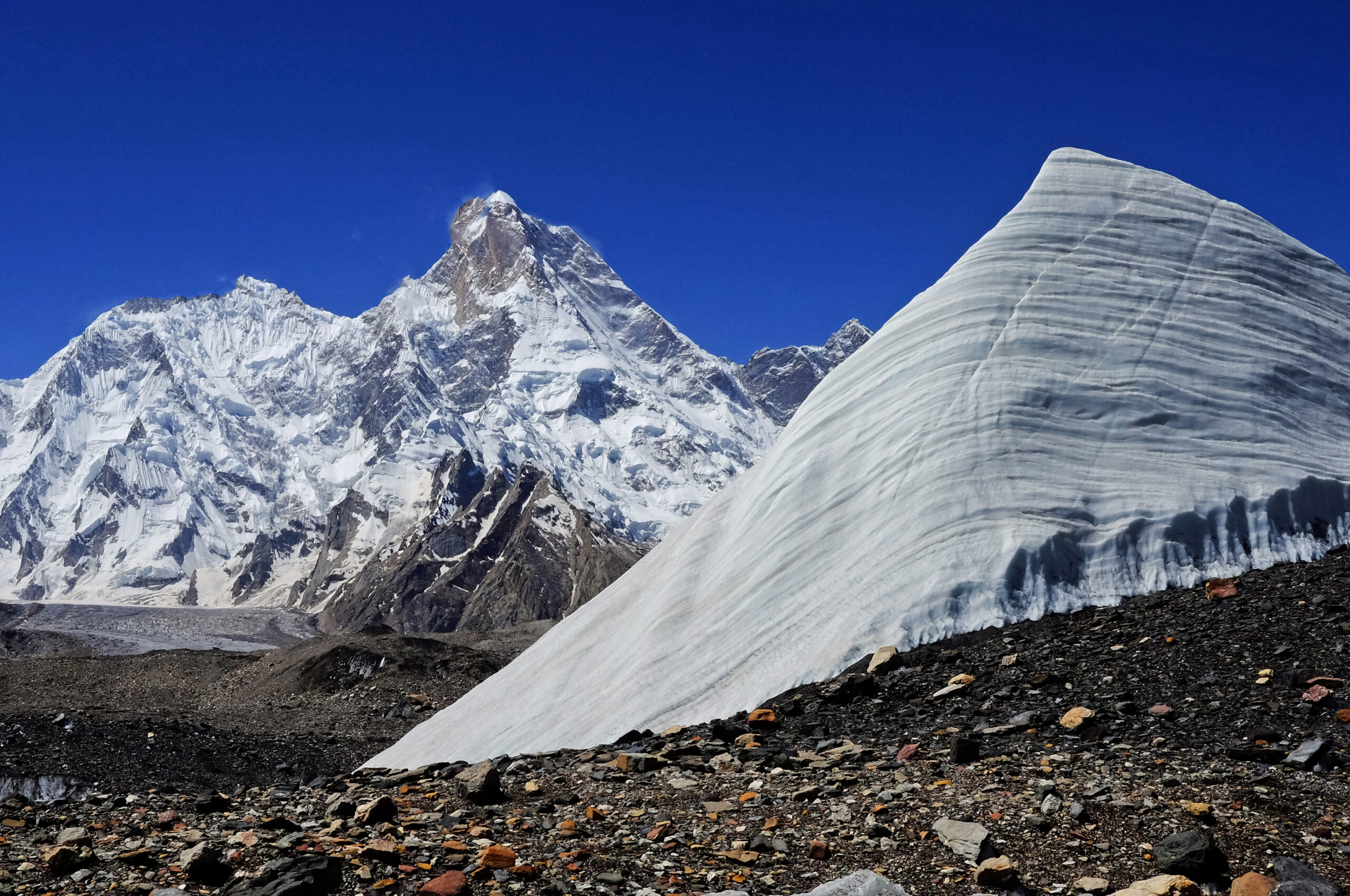
Fresh Snow Can Consume the First Days of a Forecast Break.
After a storm, teams may still need to break trail, assess snow stability, repair camps and extend fixed lines. A favorable forecast is useful only if the route can be climbed and descended within it.
“July 20 to August 10” Is a Historical Pattern, Not a Booking Guarantee
The old page treated that span too much like a fixed prime window. A better interpretation is that late July and early August contain many successful summit dates—but some years move later, and some produce no usable K2 window at all.
Late July Matters
Historical summit timing and meteorological analysis both support the second half of July as the center of the Karakoram 8,000-meter season.
August Can Work
K2 has had successful summer summit days well into August. A late window is unusual enough to matter, but not unprecedented.
Some Years Never Align
ExplorersWeb’s meteorological review found 12 of 30 seasons from 1986–2016 had no K2 summit in the back half of July because weather did not cooperate.
What Expedition Teams Actually Need From a Forecast
There is no single universal “safe wind speed” or one number that defines a summit window. Teams compare several variables and then cross-check the model with what is happening on the mountain.
Sustained wind and gusts strongly affect cold stress, balance, rope work and pace. What is tolerable depends on route exposure, temperature, oxygen use, climber strength and the descent.
Fresh snow changes far more than visibility. It can increase avalanche loading, hide crevasses, slow trail-breaking and bury fixed-line anchors or tents.
Temperature matters together with wind, sun and exposure. A colder calm day and a warmer windy day can create very different frostbite and energy-management problems.
Whiteout or cloud can slow travel, complicate navigation and make descent more difficult even when wind is manageable.
A window is more convincing when multiple model runs and forecasting sources converge. Large run-to-run swings signal greater uncertainty.
The forecast must cover the complete high-camp cycle and descent—not just a calm summit morning.
Forecast farther out = planning signal, not commitment signal
Longer-range guidance helps teams position resources and recovery. Final summit decisions depend on shorter-range specialist forecasts, observed conditions and route readiness. Global model output near Base Camp is not a substitute for summit-altitude forecasting.

Base Camp Sunshine Can Coexist With Unusable Upper-Mountain Wind.
The summit is more than 3,000 vertical meters above K2 Base Camp. Teams care about the atmosphere at the climbing elevations, not simply whether the Baltoro looks calm.
Seven Things Have to Align at the Same Time
This is the most useful correction to the old version of the page: good weather is only one link in the system.
Fixed Lines
The upper route must be established far enough for teams to move and descend efficiently.
Acclimatization
Climbers must already be physiologically ready. The forecast cannot create acclimatization after it arrives.
Wind & Weather
Upper-mountain wind, precipitation, visibility and temperature must support the full high-camp cycle.
Snow Stability
Fresh loading can make a clear forecast unusable until the route settles—or longer.
High-Camp System
Tents, caches, fixed ropes, oxygen and staff must be in place and functioning.
Descent Margin
A window that closes immediately after the predicted summit time is not the same as a window with a safe return margin.
7 · Human priorities
Emergency response, illness, injuries or events on a neighboring mountain can change the expedition even when the forecast improves. The 2026 season demonstrated this clearly.
Why K2, Broad Peak and the Gasherbrums Can Have Different Outcomes
The large-scale forecast may be shared, but a window can be usable on one mountain and not another because route preparation, slope loading and terrain are different.
| Peak | What can delay a weather window | Why the same forecast can produce a different result |
|---|---|---|
| K2 | Slow upper-route fixing, wind exposure, snow loading, rockfall and the need for a long complete high-camp cycle. | The route must be ready high enough before the short calm period begins. |
| Broad Peak | Fresh snow, avalanche conditions and the long summit ridge. | A team may reach high while K2 is still fixing, but the summit ridge can consume the window. |
| Gasherbrum I | Technical upper route, snow condition and smaller teams. | Fewer climbers can mean slower trail-breaking and less redundancy after storms. |
| Gasherbrum II | Fresh snow, crevasses and route work. | Its standard route can sometimes become usable earlier than K2 when conditions cooperate. |

Broad Peak Can Be Climbable While K2 Is Still Waiting—or the Reverse.
The range-scale window creates opportunity. Route-specific snow, traffic, fixing and hazard decide whether a particular peak can use it.
Snow Can Outlast the Storm That Delivered It
This is why “sunny for three days” is an incomplete description of a high-altitude summit window.
Movement Slows
Deep fresh snow can turn a forecast day into route-opening work rather than summit progress.
Loading Persists
New snow can remain unstable after precipitation stops. Clear weather does not instantly reset avalanche risk.
Camps & Lines Suffer
Snow and wind can damage tents, bury caches and force teams to re-establish parts of the route before moving higher.
2026: A Window Can Form Without Producing a K2 Summit
The 2026 summer season is now history, not a live forecast. It is useful precisely because it shows how weather, route progress and human events can fail to align.
K2 finished summer 2026 with no successful summit.
Final season reporting described repeated high winds, fresh and unstable snow, rockfall and slow route development. By July 24, ropes were reported around 7,000 meters, leaving upper-route work to complete as the historical summit period arrived.
A late-July forecast improvement triggered a real summit push, but the forecast deteriorated again. Then the July 30 avalanche on neighboring Broad Peak killed ten climbers and changed the priorities of the small high-altitude community. K2 teams abandoned remaining summit plans and assisted the response. Final August reporting recorded no K2 or Gasherbrum I summit for the summer; Broad Peak and Gasherbrum II had seen successful summits earlier in the season.
The lesson is not that the late-July pattern stopped existing. It is that the complete summit-window chain never aligned on K2.
Plan Around the Pattern—Never Bet the Expedition on the Date
The late-July pattern is useful for expedition architecture. It is not useful as a promise that a summit day will exist on your preferred date.
Build enough early-season time for the Baltoro approach, Base Camp setup and acclimatization before the historical center of the summit season.
Be rested when the forecast improves. A perfect window is wasted if the team has just returned exhausted from a high rotation.
Expedition calendars need room for storm cycles, route work and late attempts. A rigid departure date can become an invisible hazard.
Use specialist high-altitude forecasts and multiple models. Treat broad public weather widgets as context rather than operational summit guidance.
The best historical week does not override current wind, snow stability, route condition or descent margin.

Karakoram Weather Window FAQ
Short answers to the questions that matter most when interpreting the Karakoram summer season.
When is the best weather window for K2?
Historically, the strongest summit period is often in the second half of July, sometimes extending into early August. It is a seasonal tendency, not a fixed annual date.
Why is the Karakoram climbed in summer instead of spring?
The very high Karakoram peaks are normally attempted in the Northern Hemisphere summer because upper-level wind and temperature become comparatively more manageable during the June–August expedition season.
What creates the Karakoram summit window?
The broad seasonal explanation is a temporary alignment in which the strongest jet-stream flow shifts away from the peaks while monsoon-related precipitation becomes less dominant, producing a period with potentially lower wind and less snowfall.
Is there a safe wind-speed cutoff for K2?
No single wind number guarantees safety. Teams consider sustained wind, gusts, temperature, exposure, route terrain, oxygen use, climber condition and the complete descent. Specialist forecasting and on-mountain judgment are required.
Why can a clear forecast still fail?
Fresh snow may remain unstable, the route may not be fixed high enough, climbers may not be acclimatized, camps may be damaged, or the forecast may be too short to cover the ascent and descent.
Do K2, Broad Peak and the Gasherbrums share the same window?
They often share the same large-scale weather pattern because they are clustered around the Baltoro, but local route condition, snow loading and logistics can make the same regional window usable on one peak and not another.
What happened on K2 in 2026?
The completed 2026 summer season ended without a successful K2 summit. Wind, snow, rockfall and slow upper-route progress compressed the remaining opportunity, and the July 30 Broad Peak avalanche caused K2 teams to abandon the final push and assist the response.
Should climbers use public weather apps to time a K2 summit?
Public weather can provide broad context, but summit decisions on an 8,000-meter Karakoram peak require specialist high-altitude forecasting, multiple models and current observations from the route.
Evergreen Meteorology, Dated Expedition Results
The page separates seasonal weather mechanics from individual expedition seasons. A completed year is used as a case study, not as a forecast for the next year.
Operational limit
This page explains the weather-window concept. It is not a summit forecast. K2 and the neighboring 8,000ers require specialist high-altitude forecasting, current route observations and experienced expedition leadership.

Global Summit Guide
This page combines published Karakoram meteorology with dated expedition reporting. Historical weather patterns are presented as planning tendencies, while current-season outcomes are kept in separate trackers and archives.
Karakoram Weather, Peaks, Seasons & Expedition Context
This page owns the weather-window concept. Use the parent guides and peak-specific pages below for route, season, current archive and mountain-by-mountain planning.

The Forecast Opens the Door. The Mountain Decides Whether You Can Use It.
Plan around the late-July pattern, arrive ready before it, and let current wind, snow, route readiness and descent margin—not the calendar—decide whether a summit push is actually viable.
Reading the Karakoram Weather Window
Weather windows govern every Karakoram summit. See the live trackers, the season guides and the range overview below.
Was this helpful?
🏔Related peaks nearby
🧭Explore & compare
Global Summit Guide is an independent mountaineering resource founded in 2026. The team combines first-hand trekking and climbing experience with in-depth research and professional health and nutrition review to help climbers choose objectives, prepare properly, and stay safe.
Health, altitude, and nutrition content is reviewed by Taylor Ludlow (Registered Nurse) and Brigg Hoopes (Nutritionist).
What We Don't Know Yet
Mountain information changes quickly. This box explains the limits of what this page can responsibly promise.
- Weather, snowpack, avalanche risk, road access, and route conditions can change quickly and may be different on your climbing dates.
- Visa, passport, vaccination, border, insurance, and local transportation rules may change before your trip.
- Route conditions, snowpack, closures, and weather can change quickly after this page is updated.
- Permit rules, fees, quotas, and reservation windows may change between review cycles.
- Operator availability, pricing, guide ratios, and cancellation terms can change by season.
Verify current conditions with official land managers, guide services, local forecasts, and current route reports before booking or climbing.
Mountaineering, rock and ice climbing, glacier travel, and high-altitude activity are inherently dangerous and can result in serious injury or death. The information on Global Summit Guide is provided for general informational and educational purposes only and is not a substitute for professional instruction, qualified guiding, proper equipment, or your own judgment and experience.
Route conditions, weather, snowpack, permits, regulations, and hazards change constantly and may differ from what is described here. Details may be incomplete, out of date, or contain errors. Always verify current information with local authorities, certified guides, and official sources before making any decision in the mountains.
Nothing on this site is medical, legal, or financial advice. Our fitness, acclimatization, altitude, and nutrition content is general in nature; consult a qualified physician before beginning any strenuous exercise program or exposing yourself to high altitude.
You are solely responsible for your own safety and decisions. To the fullest extent permitted by law, Global Summit Guide and its team accept no liability for any loss, injury, damage, or expense arising from use of, or reliance on, this information. By using this site you acknowledge these risks and accept these terms.
Some links on this site may be affiliate links. If you buy through them we may earn a small commission at no extra cost to you; this never affects our recommendations.
Global Summit Guide recommendation path
Next Best Mountain to Research
Use these recommendations to continue the right planning path instead of stopping on one page.
Use current permit, weather, route, and operator information before booking or climbing.
Explore Travel Options for Your Destination
Once your mountain, dates and route are taking shape, compare flights, hotels and other travel options that fit the trip.
Affiliate link. We may earn a commission at no additional cost to you.