Global Summit Guide logo featuring mountain imagery, symbolizing hiking and mountaineering resources for trip planning and safety.

Tag: expedition news

  • Karakoram Weather Window Explained: How Teams Time a Summit Push

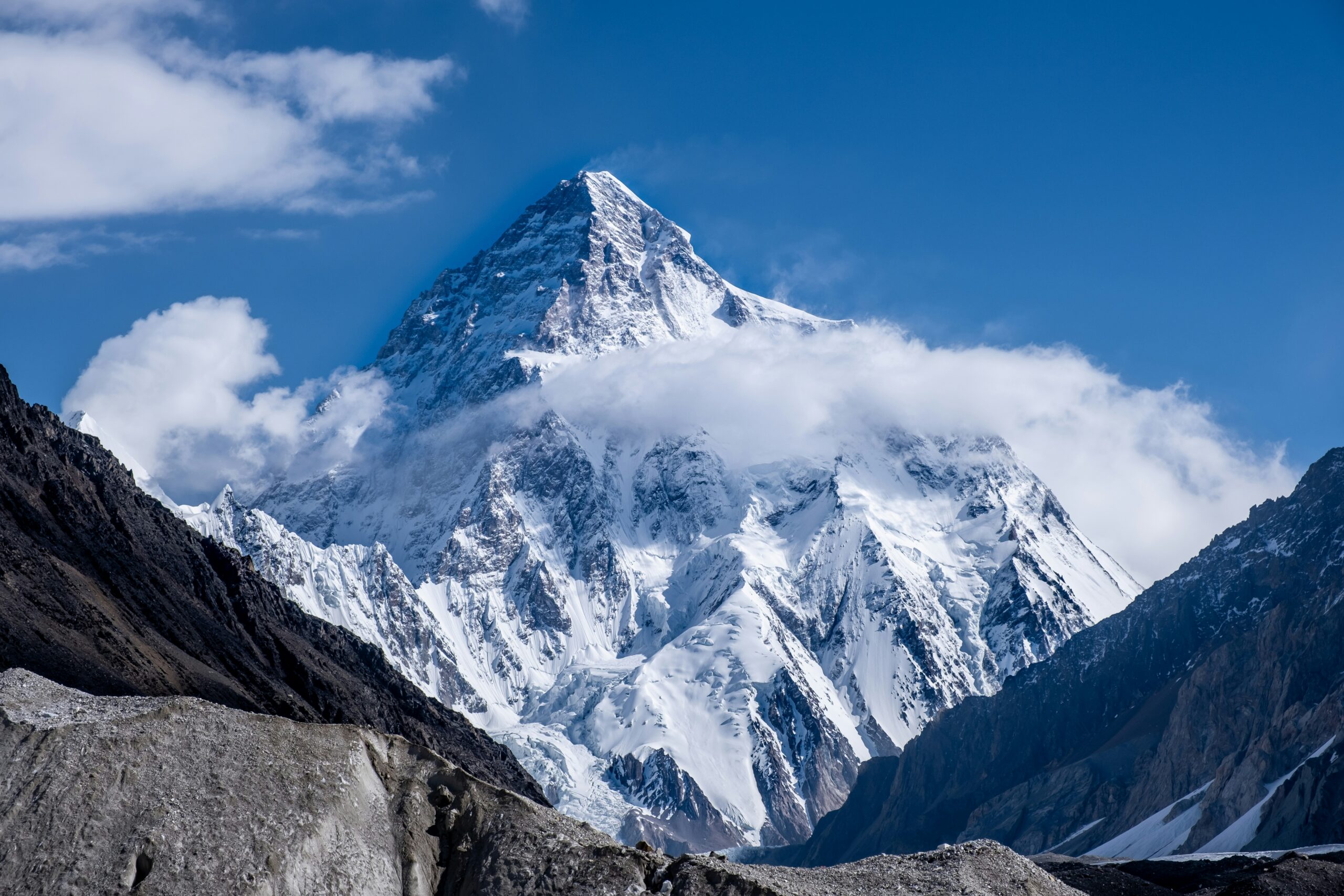
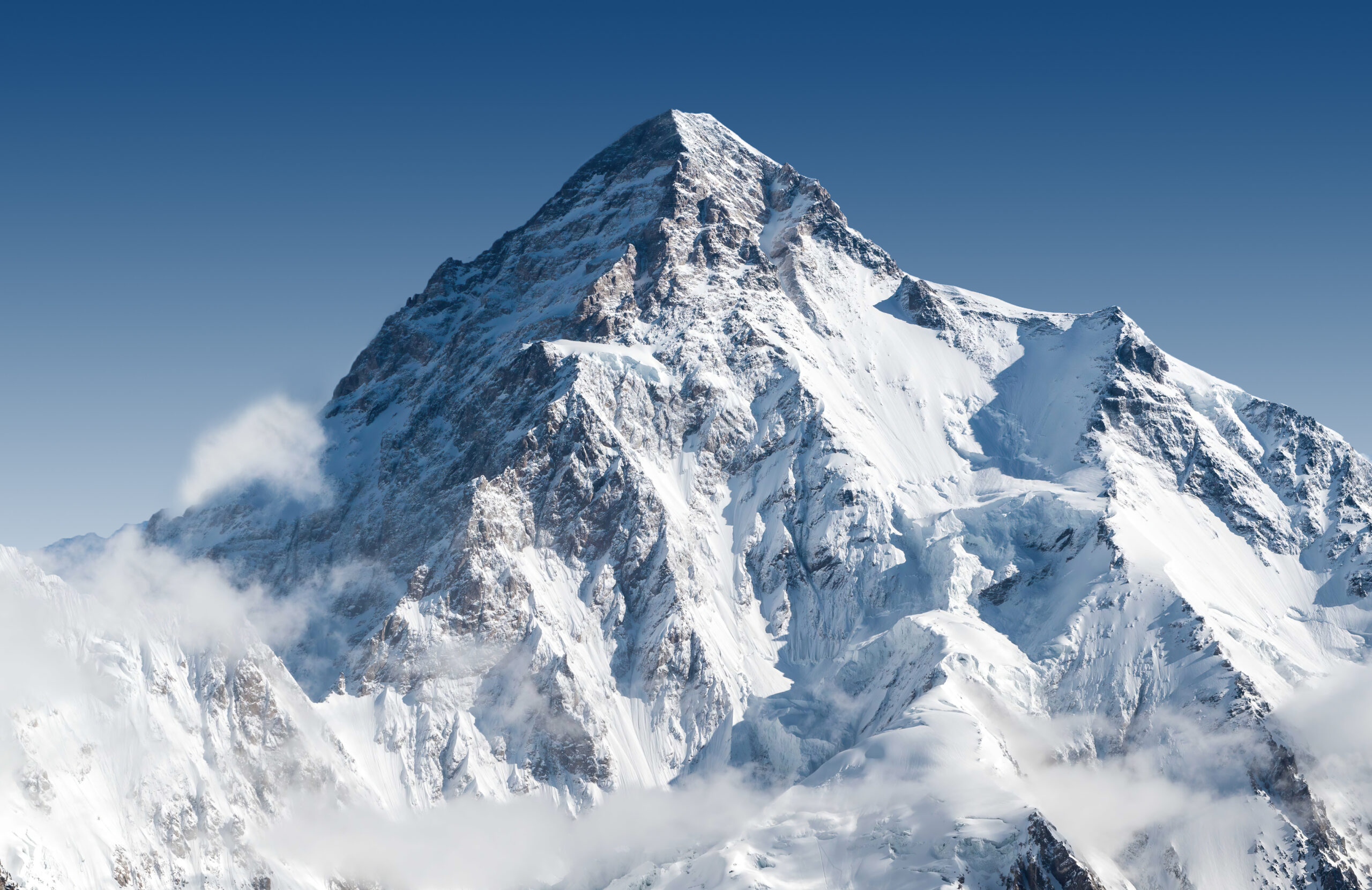
    Majestic view of K2, the Savage Mountain, showcasing its snow-capped peak and surrounding rugged terrain under a clear blue sky, emphasizing the challenges climbers face in high-altitude conditions.
    🇵🇰 Karakoram · Explainer · Summit Window

    Karakoram Weather Window Explained: How Teams Time a Summit Push

    On the 8,000ers of Pakistan, the whole season comes down to a handful of days. Here’s what opens that window, why it’s so short and unreliable, and how expedition teams read the sky to time a summit push on K2 and its neighbours.

    🌦️ The window, in brief

    Every Karakoram 8,000m season hinges on one thing: a short, unreliable weather window in late July. Two giant weather systems — the retreating monsoon and the migrating jet stream — briefly align to drop the wind and precipitation over the peaks. Statistically, nearly all K2 summits fall between about July 20 and August 10, and the true window is often just a few days inside that.

    Right now, in mid-July 2026, teams across K2, Broad Peak, and the Gasherbrums are doing exactly what this article describes: acclimatizing, pre-positioning, and watching the forecast. Follow the live picture in our K2 2026 tracker and Broad Peak & Gasherbrum dispatch.

    Jul 20–Aug 10
    Prime window
    ~−20 °C
    Summit temp (in window)
    39%
    Years with no K2 summits (’86–’16)
    1954
    First K2 summit (Jul 31)

    Why the window exists

    Two weather systems, one brief truce.

    The Karakoram sits further north and deeper inland than the Himalaya, which makes its climate more continental and more violent. For most of the year, the peaks are scoured by jet-stream winds — hurricane-force gusts that make the upper mountain unclimbable and drive off-season summit temperatures toward −60 °C. The season is defined by the brief period when those winds lift.

    Two systems govern it. First, the South Asian monsoon: through June and July, warm, moist air drives north, bringing rain low and heavy snow high. Then, near the end of July, the polar jet stream migrates north and the monsoon slides north with it toward the Tibetan highlands, while the subtropical jet shifts well south of the Karakoram. For a short spell, the peaks are left in relative calm — lower wind, less precipitation, and “manageable” cold around −20 °C on the summit. That truce is the window.

    When it opens

    The last two weeks of July, give or take.

    The best Karakoram climbing weather is typically the last two weeks of July, sometimes starting as early as mid-July and running into early August. It’s not a new discovery — the Italians made the first ascent of K2 on July 31, 1954, squarely inside it, and the pattern has held ever since. Statistically, nearly every K2 summit in history has landed between roughly July 20 and August 10.

    Early–mid JulyMonsoon still active — snow high, rain low. Teams trek in, acclimatize, and fix the lower route.
    ~July 20 onwardJet stream lifts, monsoon retreats. The prime window opens — a few stable days at a time.
    Into early AugustWindow can persist, but warming raises rockfall and instability. Later is riskier.

    Why it’s short & unreliable

    Two systems have to line up — and often don’t.

    Because the window depends on two large systems briefly aligning, it’s fragile. If the monsoon lingers or the jet stream dips back, the window slams shut. The numbers are sobering: between 1986 and 2016, 39% of years — 12 of 30 — produced no K2 summits at all because the weather never cooperated in the back half of July. A whole season of effort can end without a single summit.

    Why forecasts fail hereThe Karakoram is a forecaster’s nightmare: remote, high, and crowded with giant peaks that spin up local wind tunnels and microclimates — including the notorious localized “K2 cloud” that can trap climbers in the high camps. Global models struggle at this altitude and resolution, so forecasts several days out are frequently wrong. Teams buy specialist high-altitude forecasts and still treat any window as provisional until it actually arrives.
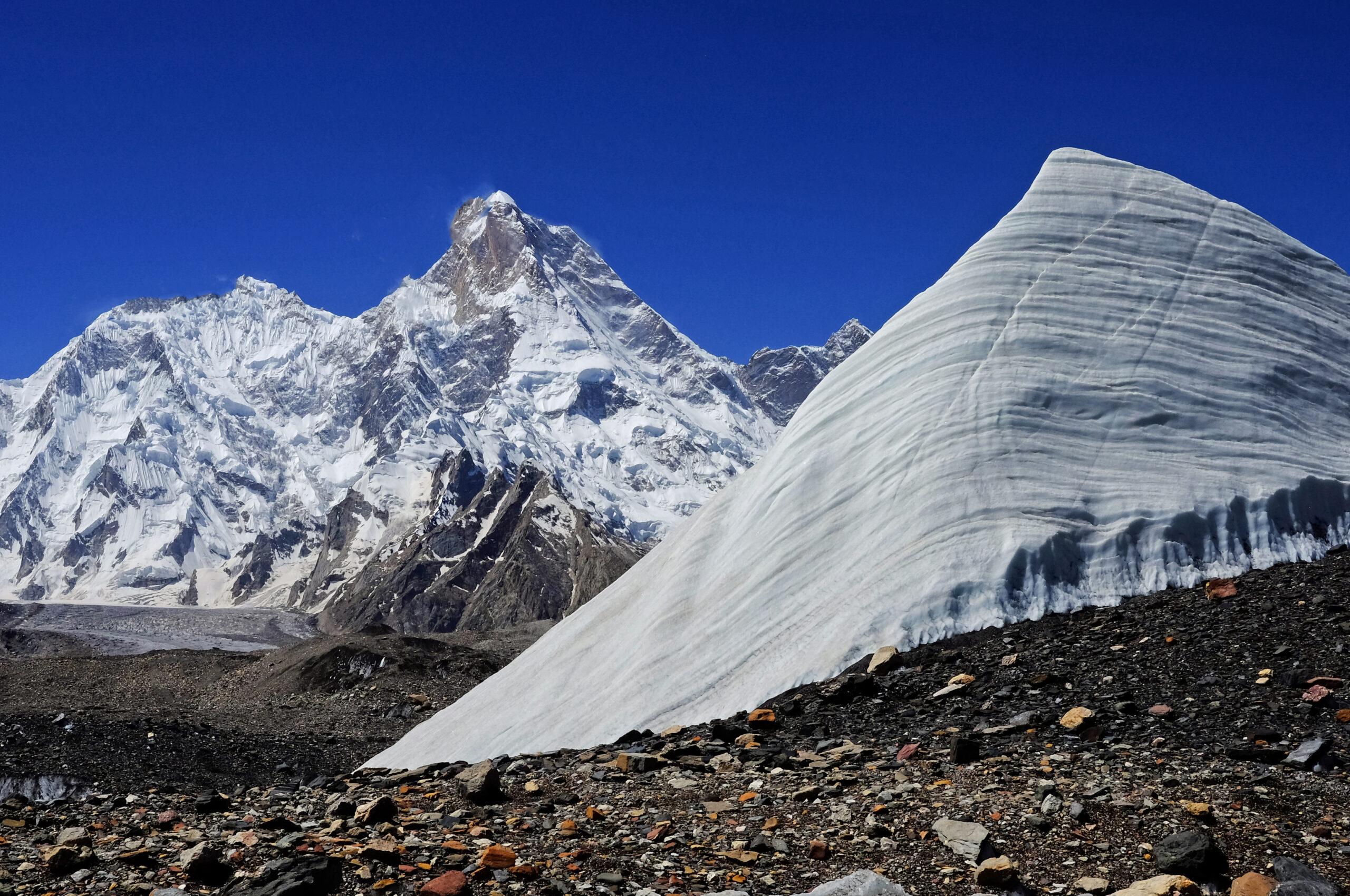
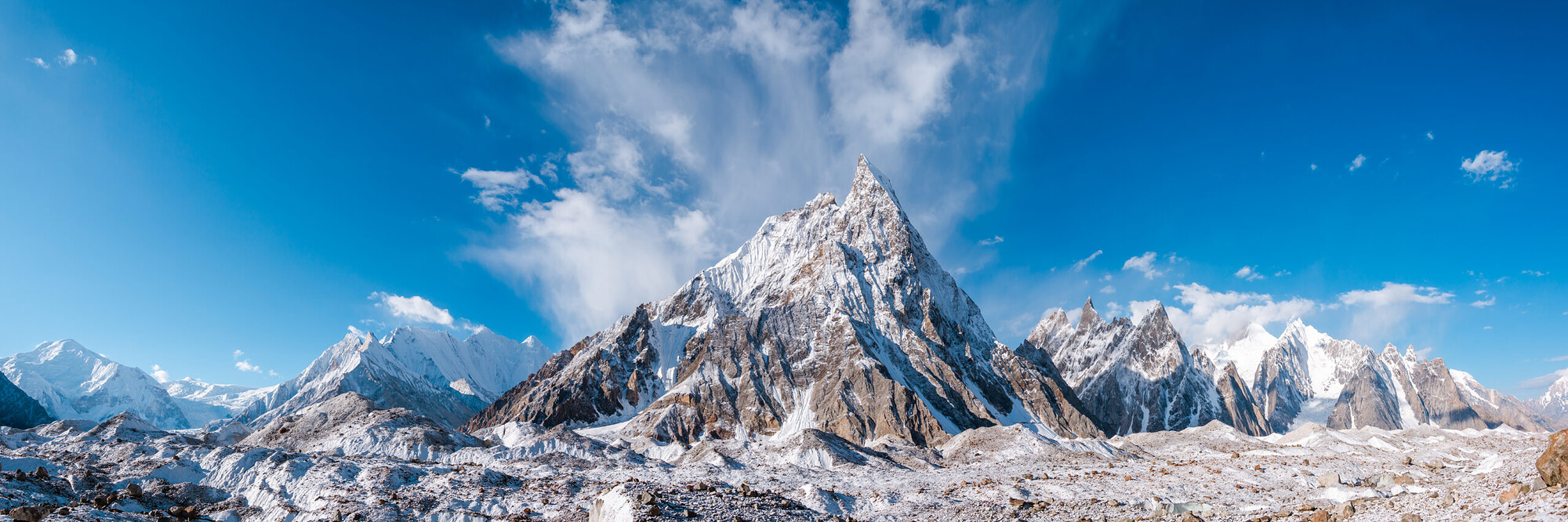
    Gasherbrum I peak and glacier in the Karakoram range, Pakistan climbing expedition.
    The trail-breaking problem. A window in the sky isn’t enough — someone still has to open the route. After heavy monsoon snow, rope-fixers must break trail through deep snow above the high camps before anyone can push to the top, which can eat the first day or two of a precious window.

    How teams time a push

    Acclimatize early, wait, then move fast.

    The choreography is remarkably consistent across the Karakoram’s big peaks:

    1 · AcclimatizeComplete rotations to the high camps early in the season, sleeping progressively higher to adapt — done before the window, not during it.
    2 · Pre-position & watchReturn to Base Camp, rest, and monitor multi-model forecasts, waiting for a stable multi-day window to appear.
    3 · Fix the routeRope-fixers break trail and fix lines through the upper mountain — the deep-snow section above the high camps is the crux of opening the route.
    4 · The pushWhen the window and the fixed route align, teams move fast to the high camps and launch a night-time summit bid, aiming to top out in the morning and descend before it closes.
    Who the window punishes mostAs on Everest, the climbers with the least margin are those going without supplemental oxygen. They benefit from fixed ropes and a broken trail, but they must move fast and avoid the traffic jams that form when everyone launches into the same narrow window — lingering high and cold without oxygen is how no-O2 attempts turn dangerous. It’s one reason the compressed, single-window nature of the Karakoram season carries real risk. See where these peaks rank in our 8,000ers ranked by difficulty.

    Live Karakoram conditions

    The window, in real time — watch it build or break.

    Here’s the concept in action. The 7-day outlook below is modelled data for the K2 region — a general indicator, not a summit-day forecast (teams pay for specialist high-altitude models before committing). Watch for a run of calm, dry days: that’s the shape of a window forming.

    K2 region (~Base Camp, Karakoram)

    Loading live data…
    Fetching the latest forecast…
    A general indicator only. This is modelled data near Base Camp altitude; the 8,000m summits are colder and far windier. The window is defined at the summit, not the valley — which is exactly why teams pay for specialist high-altitude forecasts.

    Reading the window yourself

    What experienced climbers actually watch.

    You don’t need to be a meteorologist, but you do need to know what matters. On the 8,000ers, the two variables that define a window are summit-altitude wind (ideally dropping below ~30–40 km/h) and precipitation (none, ideally, with settled snow). Temperature matters less than wind — it’s the wind that kills. Climbers cross-reference several models rather than trusting one, and treat a forecast more than three or four days out as a rough guide, not a promise.

    🧭 Go deeper

    Frequently asked questions

    When is the Karakoram summit window?

    Roughly the last two weeks of July into early August — statistically nearly all K2 summits fall between about July 20 and August 10, opened by the monsoon retreating and the jet stream migrating north.

    Why is the window so short?

    It depends on two big systems briefly aligning. When the monsoon slides north and the jet stream lifts off the peaks, wind and precipitation drop; when either shifts back, the window closes — often after just a few days.

    Why are forecasts unreliable?

    The Karakoram is remote, high, and full of giant peaks that create local wind tunnels and microclimates like the “K2 cloud.” Global models struggle at this resolution, so multi-day forecasts are often wrong. See mountain weather for climbers.

    How do climbers time a push?

    Acclimatize early, then wait at Base Camp for a stable multi-day window with the route fixed high, then move fast to the high camps for a night-time summit bid — topping out in the morning and descending before it closes.

    How cold is it in the window?

    Around −20 °C on the summit — harsh but survivable — versus about −60 °C off-season, when jet-stream winds make the peak unclimbable.

    About this explainer

    The mechanics here — the monsoon and jet-stream interaction, the late-July window, and the historical summit statistics — are drawn from meteorological analysis of Karakoram summer weather and long-run summit records, and are evergreen. The current-season notes and the live widget reflect conditions as they change; for the day-to-day picture, follow our season trackers.

    This is an educational overview, not operational guidance. Real summit-push decisions rely on specialist high-altitude forecasts and experienced judgment on the ground.

    Travis Ludlow

    Founder & Head of Research, Global Summit Guide

    Travis leads research at Global Summit Guide, where the team tracks the world’s major climbing seasons and maintains guides to more than 500 peaks. This explainer sits alongside our live Karakoram dispatches — the theory here, the day-to-day reality there.

    Watch the window with us

    The theory is here; the drama is on the mountain. Follow the 2026 Karakoram season as teams read the sky and time their push on K2 and its neighbours.

    Follow the K2 season → Broad Peak & Gasherbrum →

    Was this helpful?

    Yes
    No
    Thanks for your feedback!
  • Broad Peak & Gasherbrum: First Summit Pushes of the Karakoram Season

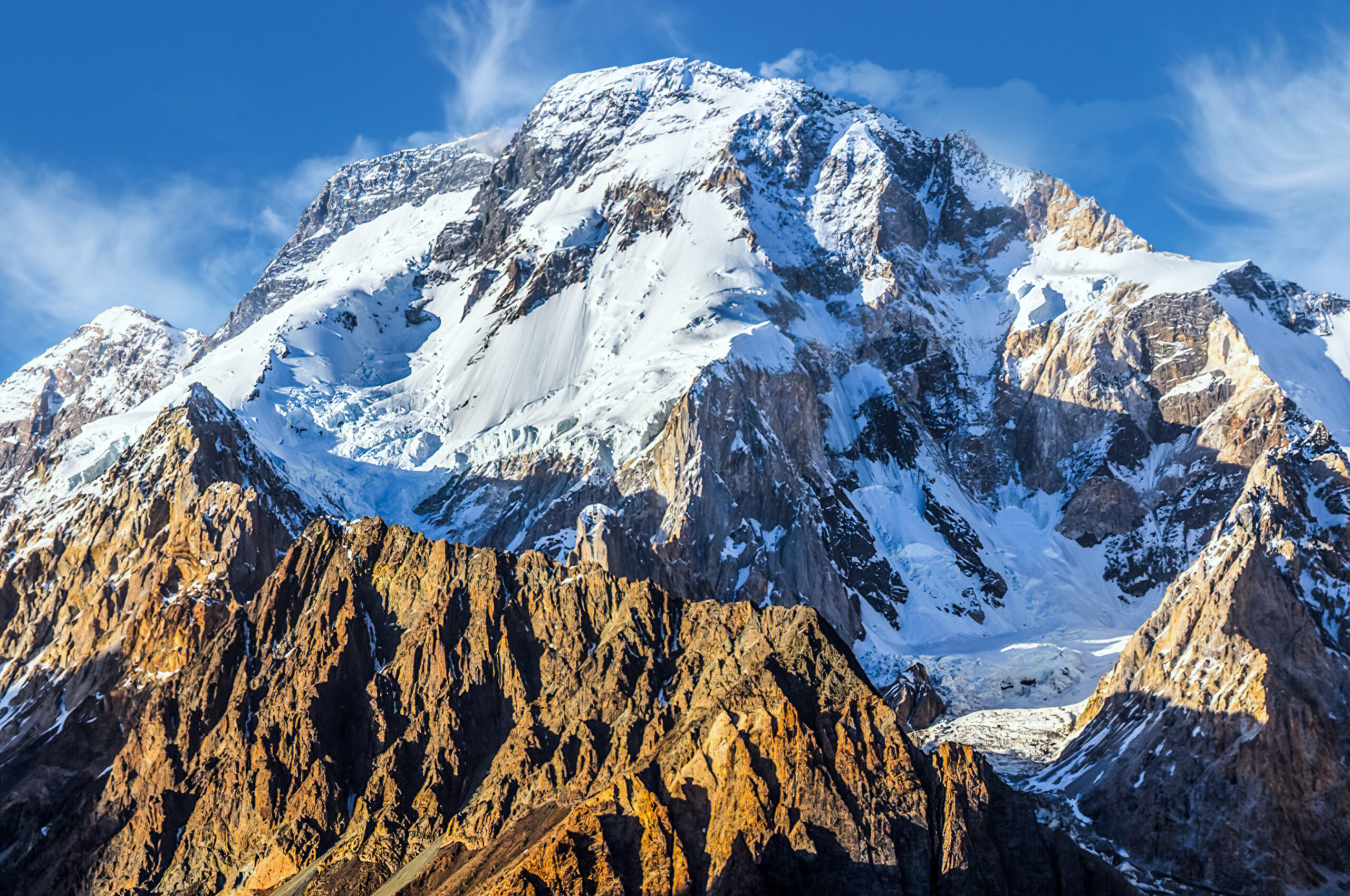
    Snow-covered Broad Peak mountain in Karakoram Range, climbing preparation for K2 expeditions
    🇵🇰 Karakoram · Season Dispatch · 2026

    Broad Peak & Gasherbrum: First Summit Pushes of the Karakoram Season

    Before K2 takes the spotlight, its neighbours go first. Three of the Baltoro’s 8,000ers — Broad Peak, Gasherbrum I, and Gasherbrum II — are where the 2026 Karakoram season opens. Here’s who’s on the mountains, where the ropes are, and when the first summits are likely.

    Where things stand · Jul 11, 2026

    The 2026 Karakoram season is opening on Broad Peak and the Gasherbrums — quietly. It’s a lighter summer than usual in Pakistan, but teams are in position. On Broad Peak, rope-fixing had pushed high on the standard route and a first summit push was poised, only to be postponed by strong wind and fresh snow while teams wait for a cleaner window.

    On the Gasherbrums, commercial and alpine teams have been establishing at base camp after the long Baltoro trek, with a notable number of climbers going without supplemental oxygen. No confirmed 8,000m summits yet — the first of the season would be expected with the next stable weather window, typically mid-to-late July. Meanwhile the Nanga Parbat season over on the Diamir side has been wrapping up.

    This is a live dispatch. Karakoram conditions change by the day; we refresh it as the pushes develop.

    📌 This is the live dispatch — the deep guides are one click awayThis page tracks the 2026 season. For routes, difficulty, cost, and planning on each peak, go straight to the full guides: Broad Peak, Gasherbrum I, and Gasherbrum II — and see where all three sit in our 8,000ers ranked by difficulty.
    8,080 m
    Gasherbrum I (11th)
    8,051 m
    Broad Peak (12th)
    8,035 m
    Gasherbrum II (13th)
    Jul–Aug
    Summit window

    Where they are

    Four of the world’s fourteen 8,000ers, clustered around one glacial junction.

    Broad Peak, Gasherbrum I, Gasherbrum II, and K2 all sit within about 20 km of Concordia, the confluence of the Baltoro and Godwin-Austen glaciers — one of the greatest concentrations of high peaks on Earth. Climbers reach them the same way: fly to Skardu, drive to Askole, then trek roughly a week up the Baltoro. Broad Peak’s base camp sits on the Godwin-Austen Glacier near K2’s; the Gasherbrums share a base camp further up the South Gasherbrum Glacier.

    Broad Peak: 8,051 m Gasherbrum I & II: 8,080 / 8,035 m K2: 8,611 m (nearby) Concordia: Baltoro junction

    Broad Peak: first to move

    The 12th-highest mountain — and often the season’s opening act.

    At 8,051 m, Broad Peak is the 12th-highest mountain in the world, standing about 8 km from K2. First climbed in June 1957 by an Austrian team — Marcus Schmuck, Fritz Wintersteller, Kurt Diemberger, and the legendary Hermann Buhl, who died on nearby Chogolisa days later — it’s long been considered one of the more approachable 8,000ers. That reputation comes with an asterisk: its summit is reached via a long, deceptive ridge with a notorious false summit that repeatedly turns climbers back short of the true top.

    In 2026, Broad Peak has been the pace-setter. Rope-fixing pushed high on the standard route, and a first summit push was ready to go before wind and fresh snow forced a postponement. It’s the familiar Karakoram waiting game — everything set, held back by the sky.

    Full Broad Peak guideRoutes, camps, cost, permits, and the false-summit trap are covered in depth in our complete Broad Peak climb guide.
    Gasherbrum I peak and glacier in the Karakoram range, Pakistan climbing expedition.
    The Gasherbrum group. “Gasherbrum” comes from the Balti rgasha brum — “beautiful mountain.” Two of the massif’s peaks are 8,000ers: Gasherbrum I (the Hidden Peak) and Gasherbrum II, both climbed from a shared base camp up the South Gasherbrum Glacier.

    The Gasherbrums: I & II

    Two 8,000ers, one massif — and very different climbs.

    The Gasherbrum massif holds two of the fourteen 8,000ers, and they’re often confused despite being quite different objectives:

    PeakHeight / rankCharacterFirst ascent
    Gasherbrum I (Hidden Peak)8,080 m · 11thSteeper, more technical; Japanese Couloir from Gasherbrum La1958 (American)
    Gasherbrum II8,035 m · 13thOne of the most accessible 8,000ers; a common first eight-thousander1956 (Austrian)

    In 2026, the Gasherbrums have drawn both commercial groups and elite alpinists. Teams have been establishing at base camp for standard-route attempts, while small alpine parties eye harder objectives on the massif. As on Broad Peak, the first summits hinge entirely on the next weather window.

    🏔️ Go deeper on the Gasherbrums

    Why they share one window

    Same glacier, same weather, same waiting game as K2.

    These peaks don’t just sit next to each other — they run on the same clock. The Karakoram summer offers shorter, less reliable weather windows than Nepal’s Himalaya, so teams across Broad Peak, the Gasherbrums, and K2 all watch the same forecasts and often move within days of one another. Typically the sequence runs Gasherbrum II and Broad Peak first, Gasherbrum I alongside, and K2 last, in its late-July to early-August window.

    That’s also why many climbers pair these peaks with bigger goals: Gasherbrum II and Broad Peak are common stepping stones toward K2. You can follow the top of that pyramid in our 2026 K2 season tracker — the companion to this dispatch — and see the season’s other Pakistan giant in our Nanga Parbat guide.

    Where they rank

    Accessible by 8,000er standards — but never easy.

    It’s tempting to file Broad Peak and Gasherbrum II under “easier 8,000ers,” and by standard-route difficulty they are among the more approachable of the fourteen — well below K2, Annapurna, or Nanga Parbat. But “accessible 8,000er” still means extreme altitude, real objective hazard, and Karakoram weather. Gasherbrum I sits a clear notch harder than GII, and Broad Peak’s false summit has ended more attempts than its grade suggests.

    We don’t re-rank them here — that’s the pillar’s job. For the full hardest-to-easiest picture, with fatality rates and technical grades:

    📊 See the full ranking

    Live Karakoram conditions

    The forecast is the story — these summits wait on the window.

    Every summit push on this page depends on one thing: a stable weather window. The 7-day outlook below is modelled data for the Concordia / Baltoro region — a general indicator, not a summit-day forecast (expedition teams buy specialist high-altitude forecasts before committing). It’s a useful read on whether the next window is building or breaking down.

    Karakoram summit region (~Concordia / Baltoro)

    Loading live data…
    Fetching the latest forecast…
    A general indicator only. This is modelled data near glacier/base-camp altitude — the 8,000m summits are colder and far windier. Teams launch only when a multi-day window of light wind lines up with the route being fixed to the top.

    Frequently asked questions

    Has anyone summited Broad Peak or Gasherbrum in 2026 yet?

    Not as of this update (July 11, 2026). Broad Peak was fixed high with a first push poised but weather-delayed; Gasherbrum teams were still establishing at base camp. The season’s first summits usually come mid-to-late July with the first stable window. We refresh this dispatch as pushes develop.

    When are these peaks climbed?

    In the Karakoram summer only — roughly June through August, with most summits in July and August. Gasherbrum II often sees the season’s first 8,000m summits, followed by Broad Peak and Gasherbrum I, with K2 last.

    Which is easiest — Broad Peak, GI or GII?

    Gasherbrum II is one of the most accessible 8,000ers and a common first eight-thousander. Broad Peak is approachable but has a deceptive false summit. Gasherbrum I is meaningfully steeper and more technical. See our 8,000ers ranked by difficulty.

    How do they relate to K2’s season?

    They share the same Baltoro region, weather, and summer window as K2, and many climbers use Broad Peak or GII to build Karakoram experience before K2. First summits here usually precede K2’s late-July window — follow it in our K2 2026 tracker.

    Are Broad Peak and GII good first 8000ers?

    GII is one of the more common first eight-thousanders, and Broad Peak is often a K2-region acclimatizer. Both are serious expeditions with real hazards, but their moderate grade makes them a genuine step into 8,000m climbing.

    How we track this

    This dispatch is compiled from expedition dispatches, operator updates, and specialist mountaineering coverage (including ExplorersWeb), cross-checked against the standard Karakoram climbing calendar. Fast-moving details — rope-fixing progress, summit pushes, casualties — are reported cautiously and dated, because early base-camp information is often incomplete and evolves.

    Conditions change daily during the season. For the current state of any climb, follow the operators directly; for routes, cost, and planning, our full mountain guides are the authoritative reference.

    Travis Ludlow

    Founder & Head of Research, Global Summit Guide

    Travis leads research at Global Summit Guide, where the team tracks the world’s major climbing seasons and maintains guides to more than 500 peaks. This Karakoram dispatch is updated through the summer; for full route, cost, and difficulty detail, we always point you to the individual mountain guides.

    The Karakoram season is just getting started

    Broad Peak and the Gasherbrums open the summer; K2 closes it. See where these giants rank among the world’s highest, then follow the whole season as it unfolds.

    8,000ers by difficulty → Follow the K2 season →

    Was this helpful?

    Yes
    No
    Thanks for your feedback!
  • K2 2026 Season Tracker: Who’s at Base Camp and What Happens Next

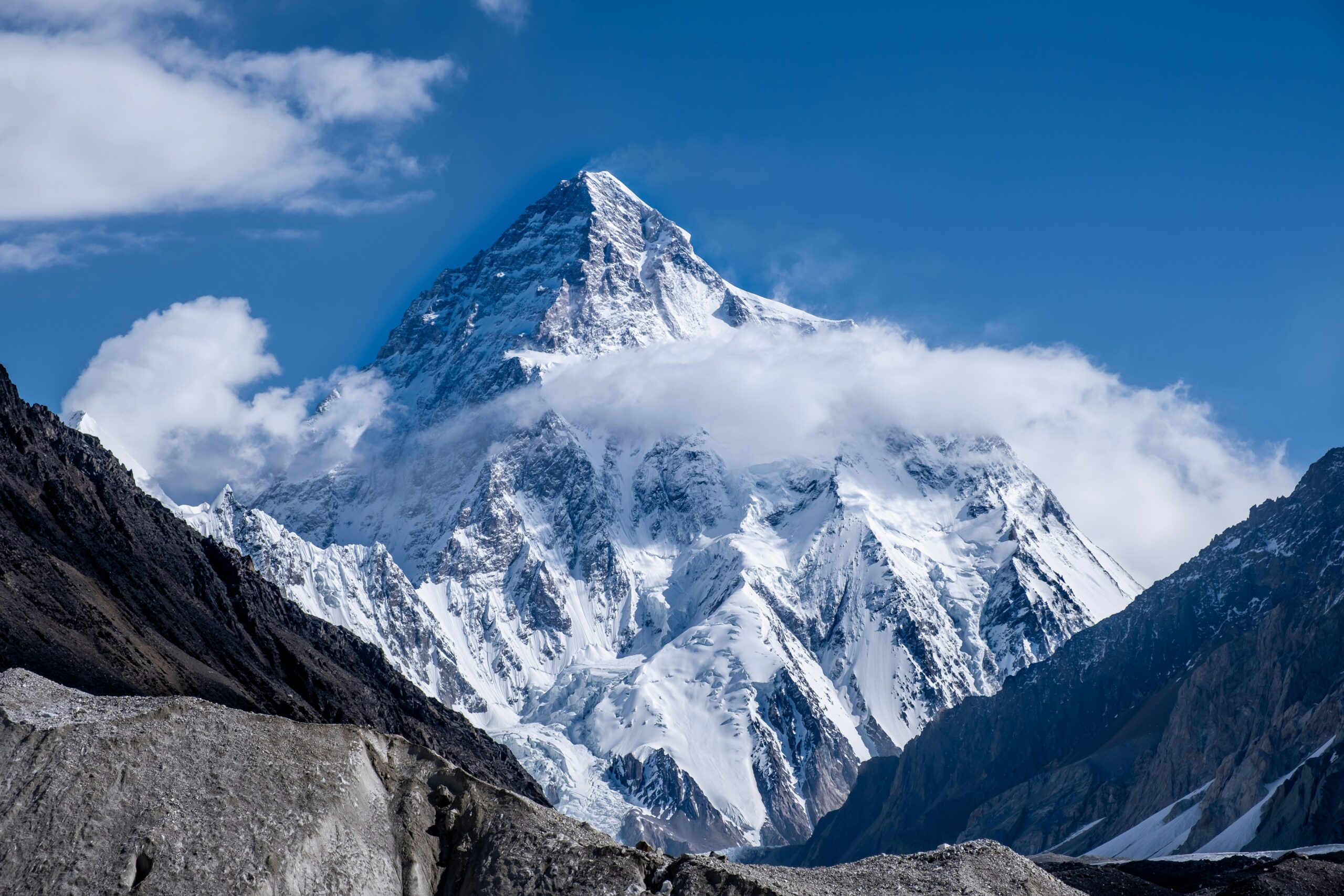
    Majestic view of K2, the Savage Mountain, showcasing its snow-capped peak and surrounding rugged terrain under a clear blue sky, emphasizing the challenges climbers face in high-altitude conditions.
    🇵🇰 Karakoram · Season Tracker · 8,611 m · 2026

    K2 2026 Season Tracker: Who’s at Base Camp and What Happens Next

    The world’s second-highest mountain has one short window a year — and it’s opening now. Here’s where the 2026 season stands on the Savage Mountain: who’s at Base Camp, how far the ropes are fixed, and when the summit push is likely to go. Updated through the Karakoram summer.

    Where things stand · Jul 11, 2026

    The 2026 Karakoram season is underway, and it’s a quieter one than recent years. As of early-to-mid July, most teams are established at K2 Base Camp (~5,150 m) after the long trek up the Baltoro Glacier, and have been running acclimatization rotations up the standard Abruzzi Spur.

    Rope-fixing had reached roughly Camp 2, with progress toward Camp 3 and the upper mountain slowed by spells of rain, snow, and wind. No summits yet — none would be expected this early. The main summit window remains late July to early August, once the route is fixed to the top and the jet stream lifts off the peak.

    This is a live tracker. Conditions in the Karakoram change by the day; we refresh it as the summit push develops.

    📌 Looking to climb K2 yourself — not just follow the season?This page tracks what’s happening on the mountain right now. For the full how-to — operators, cost, permits, day-by-day itinerary, and preparation — start with our complete K2 climb guide, then dig into the guide to all of K2’s climbing routes and the K2 gear list.
    8,611 m
    Summit (28,251 ft)
    #2
    Highest on Earth
    Late Jul–Aug
    Summit window
    Abruzzi
    Standard route

    Where K2 is

    On the China–Pakistan border, deep in the Karakoram — six days’ trek beyond the road.

    K2 straddles the border between Pakistan’s Gilgit-Baltistan and China’s Xinjiang, at the head of the Baltoro Glacier in the heart of the Karakoram. Almost all climbing happens from the Pakistan side: teams fly to Skardu, drive to Askole, then trek roughly a week up the Baltoro past Concordia to K2 Base Camp at about 5,150 m. There are no roads, no helicopters for routine access, and no quick way out — part of what makes K2 so committing.

    Summit: K2 (8,611 m) Base Camp: ~5,150 m, Godwin-Austen Glacier Access: Baltoro Glacier trek via Concordia

    The 2026 season so far

    A lighter crowd, a slow-building route, and a familiar waiting game.

    2026 is shaping up as a quieter Karakoram summer than the busy recent years, with a modest number of climbers spread across K2, Broad Peak, and the Gasherbrums. One recurring theme this season: a notable share of climbers are attempting Pakistan’s 8,000ers without supplemental oxygen or personal Sherpa support, which puts extra weight on getting acclimatization and timing exactly right.

    On K2 itself, the rhythm has followed the usual script. Teams reached Base Camp, held their puja ceremonies, and began pushing up the Abruzzi in rotations to sleep higher and adapt. As of this update, the fixed ropes had reached around Camp 2, with the harder rock of the Black Pyramid and the route to Camp 3 still ahead — and repeatedly stalled by weather. Meanwhile the nearby peaks set the tone: on Broad Peak, rope-fixing teams have been poised for a first summit push but held back by wind and fresh snow, while the Nanga Parbat season over on the Diamir side has been wrapping up.

    Why the wait mattersOn K2 there is effectively one route and one narrow window. When rope-fixing runs late — as it often does — teams get compressed into a single mass summit push instead of staggered days. That raises the odds of crowding at the Bottleneck, the most dangerous point on the mountain. The climbers with the least margin are those going without bottled oxygen, who can’t afford long waits in the cold at 8,000 m+.

    What happens next

    The season now hinges on one thing: a weather window.

    From here, the sequence is almost always the same. The rope-fixing team pushes the line from Camp 2 up through Camp 3 and the upper mountain toward the summit; forecasters watch for the jet stream to lift off the peak; and when a two-to-three-day window appears, teams move fast — Base Camp to the high camps, then a midnight summit push through the Bottleneck at around 8,200 m. Historically the K2 summit day lands somewhere in the last week of July or the first days of August.

    Now → mid-windowFixing & positioning. Ropes extended toward the summit; teams complete final rotations and pre-position at Base Camp, watching the forecast.
    The windowSummit push. A 2–3 day weather window triggers the move to high camps and a night-time summit bid via the Bottleneck and the traverse under the serac.
    AfterDescent & wrap-up. The most dangerous phase — down-climbing tired through the same hazards — followed by the season retrospective.

    We’ll update the status block at the top of this page as the push develops. For the mechanics of the climb itself — the camps, the crux sections, and how the standard route is laid out — see our complete guide to K2’s routes.

    K2 peak partially obscured by clouds at dusk, surrounded by rugged mountain terrain, symbolizing the challenges of K2 expeditions.
    One window a year. The Karakoram summer — roughly late June through August — is the only realistic time to climb K2, and the true summit window is often just a few days inside it. Everything before that is trekking, acclimatizing, and waiting on the weather.

    The route they’re on

    The Abruzzi Spur — the standard line, and the one being fixed now.

    As in most modern seasons, the action is on the Abruzzi Spur, the ridge on the Pakistan side that has been the standard route since the 1954 first ascent. Commercial teams’ Sherpa staff fix the ropes, usually supported by Pakistani high-altitude climbers, and the season’s other big line — the Cesen (Basque) route — joins the Abruzzi around Camp 3. Beyond these, K2’s harder faces and ridges are the domain of a handful of elite alpinists each year rather than the commercial teams.

    We’re deliberately not re-explaining every camp and crux here — that’s covered in depth on the pillar pages. If you want the full picture:

    🏔️ Go deeper on the routes (evergreen guides)

    Why the descent is the danger

    K2’s reputation isn’t hype — and it isn’t the summit that kills.

    K2 is steeper, more technical, and more exposed than Everest, with no easy line to the top. The crux Bottleneck sits directly beneath a hanging serac, and the section that has claimed the most lives isn’t the way up — it’s the exhausted, oxygen-depleted descent back through the same terrain, often in deteriorating afternoon weather. Rockfall low on the mountain and avalanche risk higher up round out a genuinely serious picture. It’s why K2’s historical fatality rate sits far above Everest’s, and why experienced guides talk about “red flags stacking up” as a reason to turn around.

    The numbers behind the reputationK2 has one of the highest death-to-summit ratios of any 8,000 m peak. For the full comparison against Everest and the rest of the 8,000ers, see our death rates by mountain analysis and where K2 lands in our 8,000ers ranked by difficulty.

    Live K2 conditions

    Modelled forecast for the K2 region — a read on the window teams are waiting for.

    The single biggest variable in any K2 season is the weather at altitude. The 7-day outlook below is modelled data for the K2 region — treat it as a general indicator, not a summit-day forecast (expedition teams pay for specialist high-altitude forecasts before committing to a push). Even in July, high temperatures and jet-stream winds swing conditions from perfect to unclimbable within a day.

    K2 region (~Base Camp, Karakoram)

    Loading live data…
    Fetching the latest forecast…
    A general indicator only. This is modelled data near Base Camp altitude — the summit at 8,611 m is a different world, colder and far windier. Teams launch only when a multi-day window of light wind lines up with the route being fixed to the top.

    Thinking of climbing it?

    K2 is a realistic objective for experienced 8,000 m climbers — with a lot of preparation.

    Following the season is one thing; standing on top is another. Commercial operators do run guided K2 expeditions with fixed ropes, oxygen, and Sherpa support, but it remains one of the most serious objectives in guided mountaineering and expects real prior high-altitude experience. If K2 is on your list, our evergreen guides are built to take you from “someday” to a concrete plan:

    🧭 Start your K2 planning here

    And if you’re just here to explore the mountains themselves, K2 is one of more than 500 peaks in our mountain database — compare it against the other giants and find your own next objective.

    Frequently asked questions

    Has anyone summited K2 in 2026 yet?

    Not as of this update (July 11, 2026). Ropes on the Abruzzi Spur had reached roughly Camp 2, with the upper mountain still to be fixed. K2 summits almost always come in the late-July to early-August window, so none would be expected this early. We refresh this tracker as the push develops.

    When is K2 climbed each year?

    Only in the Karakoram summer — roughly late June through August. The true summit window is usually just a few days in late July or early August, when the jet stream lifts off the peak. Everything before that is trekking, acclimatizing, and rope-fixing.

    What route are they using?

    The standard Abruzzi Spur on the Pakistan side, where the commercial teams fix the ropes. The Cesen (Basque) route is the main alternative and joins the Abruzzi around Camp 3. Full detail in our K2 routes guide.

    How many people are climbing K2 in 2026?

    2026 is a quieter season than recent years, with a modest number of climbers across K2, Broad Peak, and the Gasherbrums, and an unusually high share going without supplemental oxygen. Exact permit numbers shift through the season.

    Why is K2 more dangerous than Everest?

    It’s steeper, more technical, and more exposed, with the crux Bottleneck under a hanging serac — and most tragedies happen on the descent, not the summit. Its historical fatality rate is far higher than Everest’s. See our death rates by mountain comparison.

    Can I climb K2 as a client?

    Yes — guided K2 expeditions exist, with fixed ropes, oxygen, and Sherpa support, but K2 demands prior 8,000 m experience. Our full K2 climb guide covers operators, cost, permits, and preparation.

    How we track this

    This tracker is compiled from expedition dispatches, operator updates, and specialist mountaineering coverage (including ExplorersWeb and Alan Arnette), cross-checked against the standard Karakoram climbing calendar. Fast-moving details — rope-fixing progress, summit pushes, casualties — are reported cautiously and dated, because early Base Camp information is often incomplete and evolves.

    Conditions and status change daily during the season. For the current state of any climb, we recommend following the operators directly; for the how-to detail, our evergreen K2 guides are the authoritative reference.

    Travis Ludlow

    Founder & Head of Research, Global Summit Guide

    Travis leads research at Global Summit Guide, where our team tracks the world’s major climbing seasons and maintains in-depth guides to more than 500 peaks. This K2 tracker is a live season dispatch, updated through the Karakoram summer, with safety notes reviewed by Taylor Ludlow, RN. For the full climbing detail, we always point you to our evergreen guides.

    Follow the season, then plan your own

    The K2 window opens once a year, and we track it as it happens. When you’re ready to go from watching to planning, our complete K2 guide and the 8,000ers difficulty ranking will get you started.

    The complete K2 guide → 8,000ers by difficulty →

    Was this helpful?

    Yes
    No
    Thanks for your feedback!
Language »