
Last updated October 5, 2026
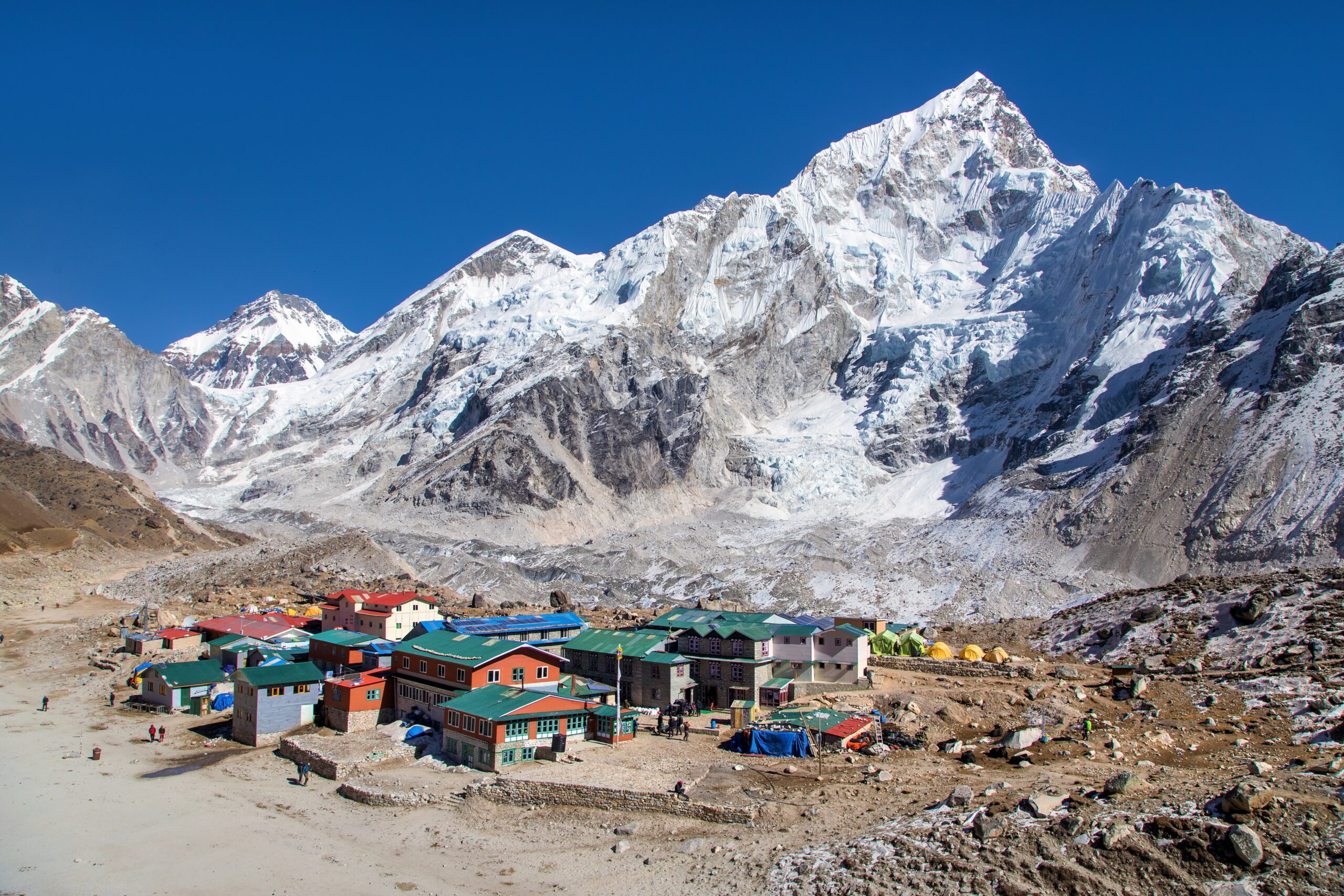
Everest vs Manaslu: Is Manaslu the Best Training Peak for Everest?
Manaslu is lower, shorter and less expensive, but it still requires real 8,000-meter mountaineering skills, high camps, fixed ropes, supplemental oxygen on most commercial expeditions and a true death-zone summit. That makes it one of the strongest Everest rehearsals—but not a miniature Everest.
Manaslu Is an Excellent Everest Rehearsal—but Everest Adds Several Problems Manaslu Cannot Replicate.
Manaslu is one of the strongest 8,000-meter preparation peaks for Everest. It teaches multi-week Himalayan expedition living, acclimatization rotations, fixed-rope movement, oxygen systems, high-altitude Sherpa support and decision-making above 8,000 meters.
Everest is still a much larger undertaking. It is 685.86 meters higher, normally demands a longer expedition and summit push, and on the Nepal route adds repeated exposure to the Khumbu Icefall—an objective hazard with no equivalent on Manaslu’s standard Northeast Face route.
The best way to think about Manaslu is therefore: a real 8,000-meter dress rehearsal, not an Everest substitute.
Everest vs Manaslu at a Glance
The two mountains share many expedition systems, which is precisely why Manaslu can be useful preparation. Their differences explain why a Manaslu summit does not automatically equal Everest readiness.
| Factor | Everest | Manaslu | Why it matters |
|---|---|---|---|
| Elevation | 8,848.86 m / 29,031.7 ft | 8,163 m / 26,781 ft | Everest adds almost 686 m of extreme-altitude exposure. |
| World rank | #1 | #8 | Both are true 8,000ers. |
| Standard Nepal route | South Col | Northeast Face / Northeast Ridge system | Both use fixed ropes and staged high camps. |
| Khumbu Icefall | Yes | No | Major Everest difference |
| Technical competence | Advanced high-altitude mountaineering | Advanced high-altitude mountaineering | Neither should be treated as nontechnical. |
| Dominant objective hazard | Icefall/seracs plus altitude, weather and falls | Avalanche/serac exposure plus altitude and falls | Hazard profiles overlap but are not identical. |
| Typical primary season | Spring | Autumn | Supports autumn-Manaslu → spring-Everest progression. |
| Foreign climbing royalty | $15,000 normal route in spring | $3,000 in autumn | Permit cost alone is dramatically different. |
| Premium operator example | Adventure Consultants: $83,000 classic 2027 | Adventure Consultants: $31,500 2026/27 | Operator examples, not universal market averages. |
| Best role | Goal expedition | Major 8,000m readiness test | Manaslu = rehearsal |

It Is High Enough That the Expedition Systems Become Real.
Manaslu does not simulate death-zone climbing. It is death-zone climbing. That means oxygen management, high-camp recovery, nutrition, fixed-rope efficiency and decision-making above 8,000 meters all become genuine rather than theoretical.
What Manaslu Actually Teaches Before Everest
Its value comes from testing the systems Everest depends on—not simply from putting another 8,000-meter summit on a résumé.
How you function above 8,000 m
Appetite, hydration, judgment and movement all change as oxygen pressure falls. Manaslu provides a real test before adding Everest’s extra height.
High-altitude rope efficiency
Ascending and descending fixed lines while wearing an oxygen system and heavy high-altitude clothing requires efficiency that should already be familiar before Everest.
Using supplemental oxygen under stress
Commercial Manaslu expeditions provide an opportunity to learn your mask, regulator and bottle-change routine before Everest.
Living in high camps
Acclimatization rotations test whether you can sleep, recover and continue eating while altitude steadily suppresses performance.
Working inside a Nepal expedition
Many Manaslu expeditions use the same general operator, high-altitude worker and logistics structures a climber will later encounter on Everest.
Making decisions when the summit feels close
One of the most valuable Everest skills is recognizing when deteriorating conditions, health or timing require descent despite a major investment in the expedition.
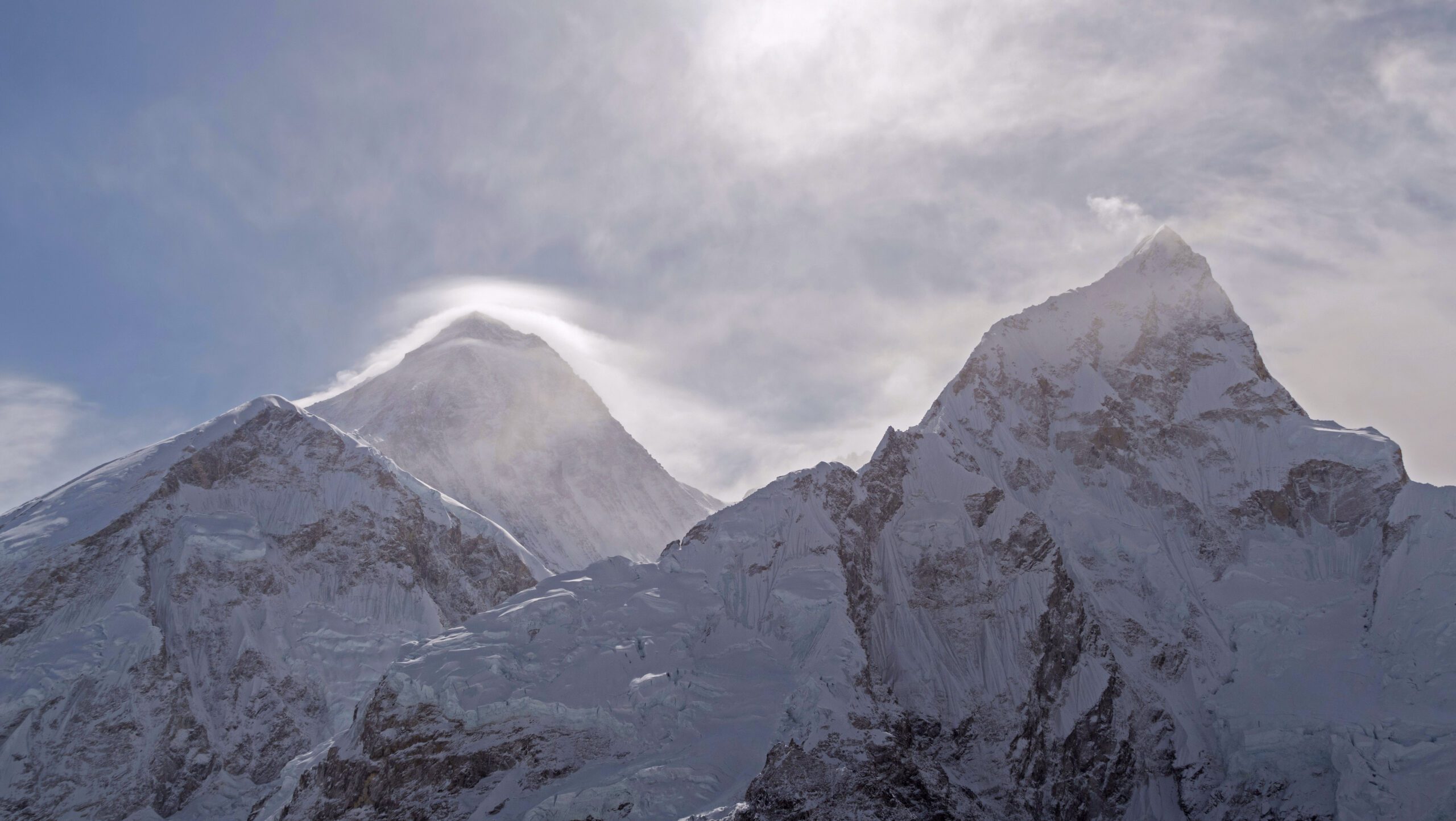
Everest Adds More Than Height.
The higher summit extends time in the death zone, but Everest also adds a larger expedition machine, more traffic, the Khumbu Icefall on the Nepal route and a longer sequence of consequential decisions above the South Col.
Is Everest Harder Than Manaslu?
Yes overall—but not because Manaslu is easy.
Everest’s summit is almost 686 meters higher. At this elevation, that difference is physiologically enormous rather than merely an extra hour of hiking.
Everest asks climbers to remain at extreme altitude longer during the upper-mountain summit sequence and subsequent descent.
Nepal-side Everest climbers repeatedly cross a moving glacier maze of crevasses and seracs. Manaslu has serious objective hazards but no direct equivalent.
Everest generally involves more money, more infrastructure, greater traffic and a longer psychological commitment to one summit attempt.
Manaslu Should Validate Skills You Already Have
A climber should not choose Manaslu simply because an old guide calls it “nontechnical.”
Competent on snow, ice and ropes
Current international operator prerequisites include efficient climbing on snow, ice and rock plus strong cramponing and rope skills such as rappelling and ascending.
Everything above—under greater exposure
Everest assumes those skills are already automatic enough to execute while tired, hypoxic, wearing oxygen and navigating a much larger expedition environment.
If technical competence is still the limiting factor, work through the Complete High-Altitude Mountaineering Training Guide before using an 8,000er as the place to learn foundational systems.
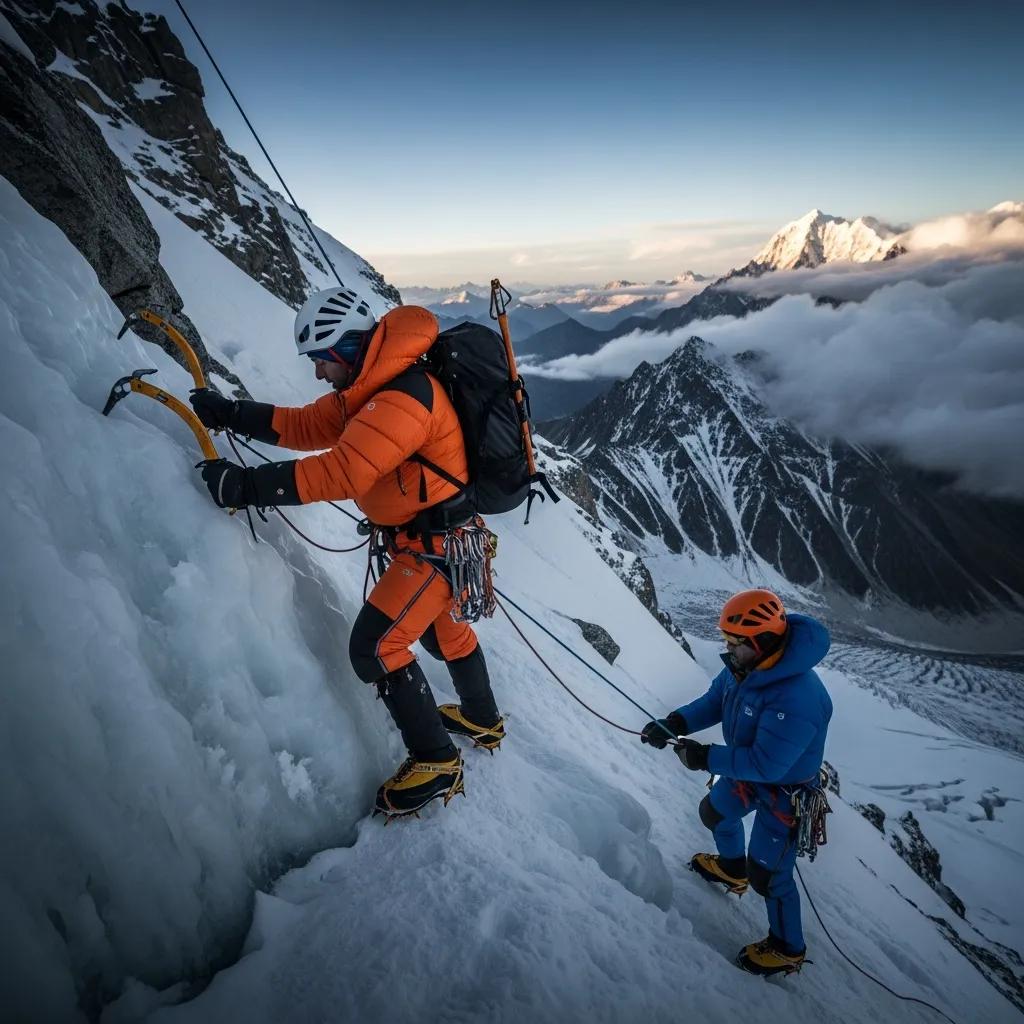
Manaslu Is More Accessible Than Everest—not Beginner Terrain.
Fixed ropes and commercial support reduce some uncertainty. They do not remove steep snow, avalanche exposure, altitude, crevasses or the need to move competently while exhausted.
The Two Mountains Have Different Risk Signatures
Comparing one historical fatality percentage against another is less useful than understanding where uncontrollable exposure concentrates.
Khumbu Icefall + extreme-altitude exposure
On the Nepal route, the moving Khumbu Icefall adds serac and crevasse exposure that cannot be fully controlled by fitness or technical ability.
Above the South Col, prolonged death-zone exposure, cold, wind, traffic and exhaustion dominate the final summit sequence.
Avalanche exposure is central
Manaslu’s modern standard route has a history of serious avalanche incidents. Route conditions, snow loading and movement timing therefore matter enormously.
A lower summit and shorter expedition do not make objective avalanche hazard disappear.
For Everest’s unique objective-hazard problem, see Khumbu Icefall: Why It’s Everest’s Most Dangerous Ground .
What the Extra 685.86 Meters Really Means
At sea level, 686 meters sounds like another hill. Above 8,000 meters, it represents substantially more time at an altitude where recovery is essentially impossible.
Provides the critical test: can you still move, eat, think and manage an oxygen system during a real summit push above 8,000 meters?
Extends that test higher and longer. The body has less margin, movement slows further and errors become increasingly expensive.
A strong Manaslu performance is meaningful Everest evidence. A difficult Manaslu experience is equally valuable evidence that Everest may need to wait.
Autumn Manaslu and Spring Everest Form a Natural Progression
The seasonal separation is one of Manaslu’s strongest advantages as an Everest preparation peak.
Primary commercial season: autumn
Current commercial Manaslu programs are strongly concentrated in September and October after the summer monsoon.
Primary Nepal season: spring
Everest’s main Nepal expedition cycle builds through April toward summit windows in May.
Manaslu Is Cheaper—but Avoid Fake Universal Price Ranges
Support model, operator, oxygen allocation, guide ratio and included logistics can change expedition prices dramatically.
Manaslu · $31,500
Adventure Consultants lists its 2026 and 2027 Manaslu departures at $31,500. This is a premium international-guided example, not a market-wide average.
Everest · $83,000
Adventure Consultants lists its classic 2027 Everest program at $83,000, with faster and combined Everest-Lhotse options priced higher.
| Permit / royalty | Current foreign-climber fee | Season represented |
|---|---|---|
| Everest normal route | $15,000 | Spring |
| Manaslu | $3,000 | Autumn |
Those royalty rates have been effective since September 1, 2025 and therefore apply to current 2026 planning.
Where Manaslu Feels Most Like Everest
The strongest rehearsal value is procedural: climbers learn what it means to live inside a full Nepal 8,000-meter operation.
Long expedition routine
Rest, weather waiting, health management and repeated departures from base camp become part of normal life.
Repeated rotations
Climbers move progressively higher, sleep at altitude and return lower before the final summit push.
Nepali high-altitude teams
Commercial expeditions rely on route preparation, load movement and camp support from highly experienced Nepali teams.
Jumar and descent systems
Efficient clipping, transitions and controlled descent must become routine under high-altitude fatigue.
Mask and regulator routine
Climbers learn what works for their face, sleep system and movement before Everest magnifies the consequences.
Weeks invested in one summit window
Manaslu teaches the emotional discipline of waiting, turning around and making decisions after a major financial and physical investment.
What Manaslu Cannot Reproduce Before Everest
This is the section the old page needed most.
Manaslu cannot reproduce repeated movement through Everest’s shifting icefall, ladders, seracs and large crevasses.
No lower peak can prove how an individual will perform during Everest’s final additional altitude and time above 8,000 meters.
Summit-day pacing can be influenced by queues, rope traffic and large numbers of climbers converging on the same route.
The world’s highest mountain carries a larger logistical, financial and psychological footprint that changes the way climbers experience pressure and decision-making.
Should You Climb Manaslu Before Everest?
For many experienced Himalayan climbers, yes. For others, a different precursor mountain may address the actual weakness better.
Your technical foundations are already strong and the major unanswered question is how you perform during a commercial 8,000-meter expedition and real death-zone summit.
You still need glacier experience, technical rope efficiency, cold-system practice or more time around 6,000–7,000 meters. Fix the missing capability rather than simply chasing the next highest summit.
Your goal is to test 8,000-meter physiology with a historically more straightforward standard route rather than to recreate Nepal expedition logistics as closely as possible.
Recent evidence—not ambition alone—shows that altitude, rope systems, expedition durability, decision-making and recovery are all working at the required level.
For the broader progression question, use What Climbs Should You Do Before Everest? This page should remain specifically about the Manaslu-vs-Everest decision.
For a competency-gated sequence rather than a fixed list of mountains, see the Everest Progression Plan .
Everest vs Manaslu FAQ
The progression questions climbers usually mean when comparing these two Nepal 8,000ers.
Is Manaslu good preparation for Everest?
Yes. Manaslu provides real experience with an 8,000-meter summit, fixed ropes, high camps, acclimatization rotations, supplemental oxygen and commercial Nepal expedition systems. It does not reproduce the Khumbu Icefall or Everest’s additional altitude and death-zone exposure.
Is Everest harder than Manaslu?
Yes overall. Everest is almost 686 meters higher, normally has a longer summit sequence and on the Nepal route adds repeated exposure to the Khumbu Icefall. Manaslu remains a serious technical 8,000-meter climb with significant avalanche risk.
Is Manaslu nontechnical?
No. Current operator prerequisites expect climbers to move competently on snow, ice and rock, use crampons efficiently and handle rope systems such as rappelling and ascending fixed lines.
How much higher is Everest than Manaslu?
Everest is 8,848.86 meters and Manaslu is 8,163 meters, making Everest approximately 685.86 meters higher.
How much does Manaslu cost compared with Everest?
It varies greatly by operator and support model. As one current premium example, Adventure Consultants lists Manaslu at $31,500 and its classic 2027 Everest program at $83,000. These figures should not be treated as universal market averages.
What are the current climbing permit fees for Everest and Manaslu?
Under Nepal’s fee schedule effective September 1, 2025, the foreign-climber royalty for Everest’s normal route is $15,000 in spring. Manaslu’s autumn royalty is $3,000. Other seasons have different rates.
Which is more dangerous, Everest or Manaslu?
The risk profiles differ enough that a single percentage can mislead. Everest adds the Khumbu Icefall and greater death-zone exposure; Manaslu’s standard route has a significant avalanche history. Current conditions and operator decisions matter more than an isolated historical ratio.
Should I climb Manaslu or Cho Oyu before Everest?
Manaslu is particularly useful if you want to rehearse Nepal expedition systems and an autumn-to-spring progression. Cho Oyu may be a better fit when the priority is a more straightforward first 8,000-meter objective. The right choice depends on the capability you still need to prove.
Can I climb Manaslu one autumn and Everest the following spring?
The seasons make that possible, but the decision should depend on recovery and actual Manaslu performance. A summit alone is not enough; review altitude response, technical efficiency, health, pacing and decision-making before committing to Everest.
Research the Mountains Separately Before You Book Either
This page owns the head-to-head decision. Use the mountain guides, operator pages and progression articles for deeper planning.
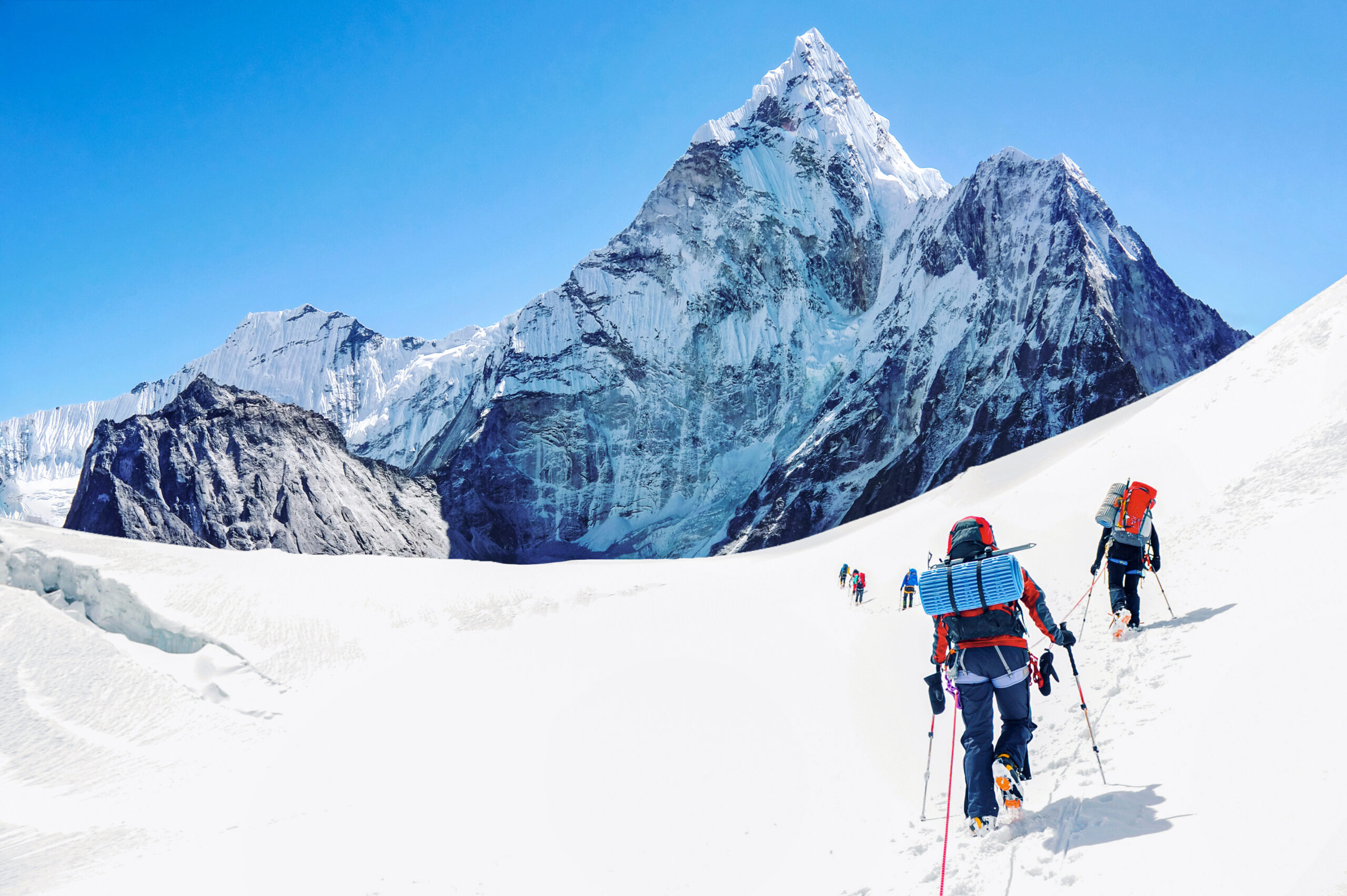
Manaslu Should Tell You Whether Everest Is Next.
If Manaslu confirms that you move efficiently on fixed ropes, tolerate 8,000-meter altitude, manage oxygen well and make good decisions while exhausted, Everest becomes a much more defensible next step. If it exposes weaknesses, the smartest progression is to fix those weaknesses before climbing higher.
Everest vs Manaslu: The Summit & the Rehearsal
Manaslu is widely used as Everest preparation. See both in the full 8000er set and the related comparisons below.
Was this helpful?
🏔Related peaks nearby
🧭Explore & compare
Global Summit Guide is an independent mountaineering resource founded in 2026. The team combines first-hand trekking and climbing experience with in-depth research and professional health and nutrition review to help climbers choose objectives, prepare properly, and stay safe.
Health, altitude, and nutrition content is reviewed by Taylor Ludlow (Registered Nurse) and Brigg Hoopes (Nutritionist).
What We Don't Know Yet
Mountain information changes quickly. This box explains the limits of what this page can responsibly promise.
- Fitness and altitude response vary by person; no guide, itinerary, or training plan can guarantee acclimatization or summit success.
- Comparisons simplify complex decisions; the better mountain depends on current conditions, skills, timing, budget, and risk tolerance.
- Visa, passport, vaccination, border, insurance, and local transportation rules may change before your trip.
Verify current conditions with official land managers, guide services, local forecasts, and current route reports before booking or climbing.
Mountaineering, rock and ice climbing, glacier travel, and high-altitude activity are inherently dangerous and can result in serious injury or death. The information on Global Summit Guide is provided for general informational and educational purposes only and is not a substitute for professional instruction, qualified guiding, proper equipment, or your own judgment and experience.
Route conditions, weather, snowpack, permits, regulations, and hazards change constantly and may differ from what is described here. Details may be incomplete, out of date, or contain errors. Always verify current information with local authorities, certified guides, and official sources before making any decision in the mountains.
Nothing on this site is medical, legal, or financial advice. Our fitness, acclimatization, altitude, and nutrition content is general in nature; consult a qualified physician before beginning any strenuous exercise program or exposing yourself to high altitude.
You are solely responsible for your own safety and decisions. To the fullest extent permitted by law, Global Summit Guide and its team accept no liability for any loss, injury, damage, or expense arising from use of, or reliance on, this information. By using this site you acknowledge these risks and accept these terms.
Some links on this site may be affiliate links. If you buy through them we may earn a small commission at no extra cost to you; this never affects our recommendations.
Global Summit Guide recommendation path
Next Best Mountain to Research
Use these recommendations to continue the right planning path instead of stopping on one page.
Use current permit, weather, route, and operator information before booking or climbing.