
Last updated August 8, 2026
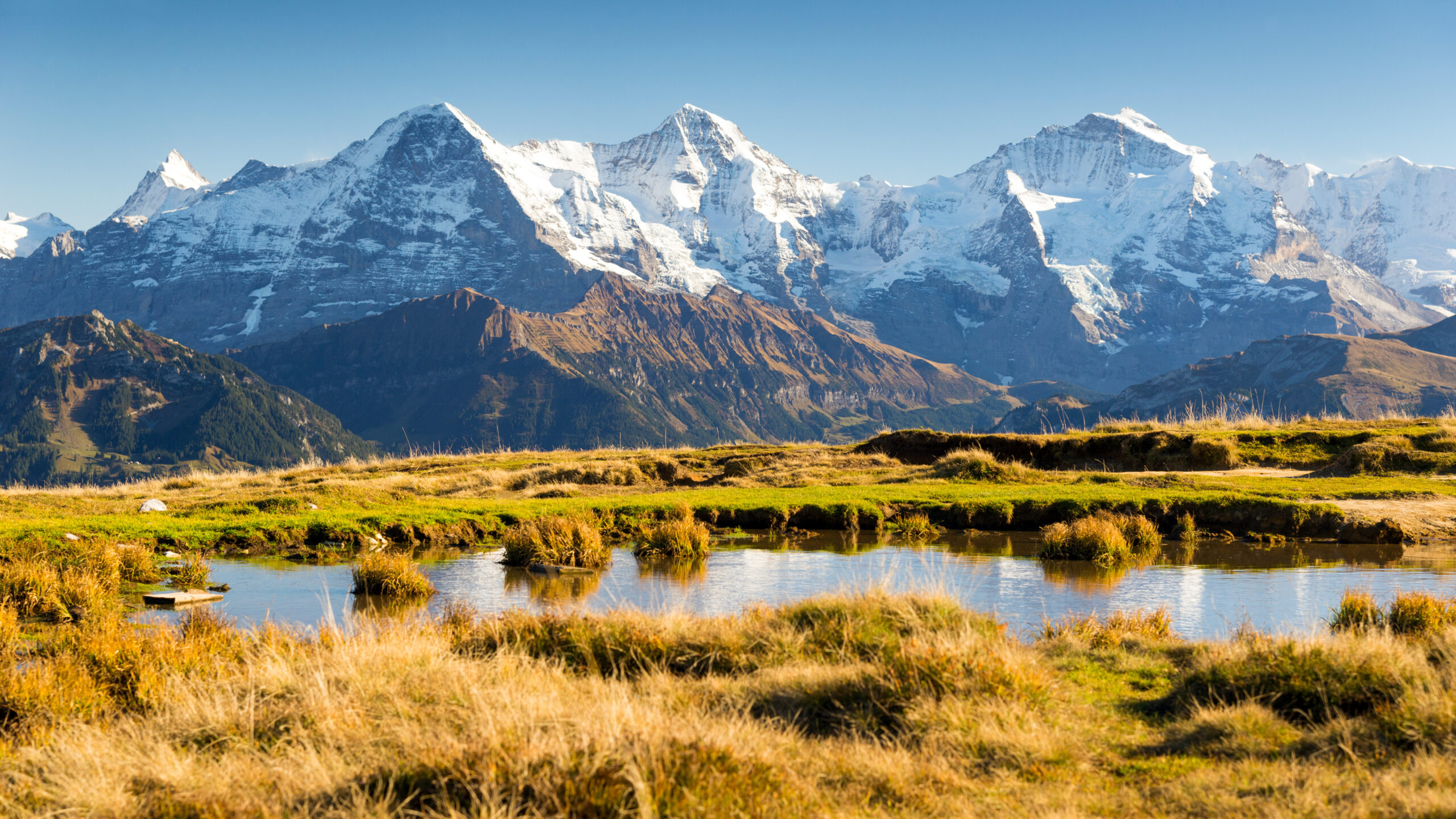
The Eiger: the Nordwand, and the most storied wall in the Alps
At 3,967 m the Eiger is not a tall peak by Alpine standards. Its fame is its North Face, the Eigerwand, the Mordwand, the most storied wall in mountaineering. This expedition update covers the 1938 Heckmair route, the far-less-technical West Flank, the death toll and speed records, and an honest readiness view. Heights in metres (feet).
Updated 27 July 2026 · Compiled by Travis Ludlow · Safety review by Dawson Ludlow · Medical review by Taylor Ludlow, RN
Single-mountain expedition update, compiled from published alpine records, guide and operator route information, and mountaineering history. Our team has not climbed the Eiger; the only first-hand summit anyone on our team claims is Kilimanjaro. This is a planning briefing for experienced alpinists, not a how-to and not a substitute for training or a guide.
Famous for its face, not its height.
At 3,967 m the Eiger is dwarfed by the Alps’ 4,000-metre giants, but the North Face, the Eigerwand and Mordwand, is the most storied wall in mountaineering. The 1938 Heckmair route is a serious, conditions-dependent ED2 climb of 1,800 m. The West Flank is the far-less-technical normal route to the summit. Most climbers who stand on top never touch the face.
- The face: the 1938 Heckmair route, ED2.
- The normal route: the West Flank.
- One of the three great north faces of the Alps.
- A conditions game: climbed frozen to limit rockfall.
- Solo speed record: 2:22:50, Ueli Steck, 2015.
On this page
What the Eiger involves
One mountain, two utterly different climbs: an elite wall that made history, and a serious normal route to the same summit.
The Eiger rises above Grindelwald in the Bernese Oberland, one of a famous trio with the Moench and the Jungfrau. Its summit is 3,967 m, modest for the Alps, but its North Face is anything but. The Eigerwand is a 1,800-metre wall of rock, snow and ice that killed a string of climbers through the 1930s, watched by spectators and the press from the valley, until Anderl Heckmair’s four-man team finally climbed it in 1938. The wall earned a grim nickname, the Mordwand, the murder wall.
Two very different routes matter to a planner. The North Face, by the 1938 Heckmair line, is an ED2 mixed climb and one of the three great north faces of the Alps, an objective for elite alpinists, almost always with a guide. The West Flank is the normal route, a serious but far-less-technical snow and scramble line that most climbers use to reach the summit, and to descend. Knowing which mountain you intend to climb is the first honest question. For the full route detail, see our Eiger climb guide.
Are you ready for the Eiger?
The answer depends entirely on the route. The North Face is elite terrain; the West Flank is a real climb in its own right.
Elite Mixed Ground
The North Face is an ED2 mixed climb on rock, snow and ice, with sections near 80 degrees. It is far beyond a first serious alpine route.
Evidence: prior hard mixed alpine faces.Fast, Or Exposed
The wall rewards speed. Slow parties get caught by afternoon rockfall or a storm high on the face, with no easy escape.
Evidence: efficient movement over long days.Read the Wall
The face is climbed frozen to limit rockfall. Reading conditions and turning back is a core skill, not a footnote.
Evidence: sound go and no-go calls.Know Your Objective
The West Flank and the North Face are different mountains. Match the route to your real record, and hire a guide.
Evidence: an honest self-assessment.| Requirement | Baseline | Why it matters |
|---|---|---|
| North Face grade | ED2, sustained mixed to ~80 degrees | Well beyond a first alpine face; elite terrain. |
| Speed | Fast movement over 1,800 m of wall | Slow parties meet rockfall, storms and forced bivouacs. |
| Conditions judgment | Comfortable calling off in poor conditions | The face is a rockfall and weather game, not a date on a calendar. |
| West Flank fitness | Solid alpine fitness and glacier skills | Even the normal route is a real mountaineering climb. |
| Guiding | A guide who knows the wall | Route-finding on the Nordwand is intricate and consequential. |
| Retreat skill | Able to reverse or escape mid-face | Rescue is limited high on the wall; self-reliance is essential. |
Two mountains, one summit
The single most useful thing a planner can do is separate the North Face from the West Flank. They share a summit and nothing else. Booking the wall when your record fits the normal route is how ambition outruns skill on the Eiger.
The Nordwand rewards cold, and punishes delay
The face is climbed frozen, because warmth turns its loose rock into a firing range. Parties start in the dark to pass the ice fields before the sun, and a slow day or a changing forecast can trap a team high on the wall. On the Eiger, conditions and speed are not details. They are the climb.
The face and the normal route
An elite wall and a serious summit route share the mountain. Choose honestly.
North Face – the 1938 Heckmair Route
The classic and most-climbed line up the North Face, first climbed over three days in 1938 by Heckmair, Harrer, Voerg, and Kasparek. It is a 1,800-metre ED2 mixed climb through a sequence of famous features, and one of the three great north faces of the Alps.
- ED2, sustained mixed to around 80 degrees
- 1,800 m of rock, snow and ice
- Named features: the Hinterstoisser, the ice fields, the White Spider
- Climbed frozen to limit rockfall; elite objective
West Flank and Mittellegi Ridge
The West Flank is the normal route to the summit and the standard descent, a serious but far-less-technical snow and scramble line. The Mittellegi Ridge, from the east, is a classic exposed ridge with a famous hut. These are how most climbers reach the top.
- West Flank: the standard ascent and descent
- Mittellegi: a classic, exposed east ridge
- Real alpine routes, but not the North Face
- A guide is standard for most climbers
| Factor | North Face (Heckmair) | West Flank (normal) |
|---|---|---|
| Character | 1,800 m ED2 mixed wall | Snow and scramble to the summit |
| Difficulty | Elite; sustained to ~80 degrees | Serious, but far less technical |
| Main hazard | Rockfall, storms, exposure | Standard alpine hazards |
| First ascent | 1938: Heckmair, Harrer, Voerg, Kasparek | The historic normal route and descent |
| Who it suits | Elite alpinists, with a guide | Competent alpinists seeking the summit |
| Role | The famous objective | How most climbers reach the top |
The North Face, feature by feature
The Heckmair route climbs a sequence of named features, each a landmark in mountaineering history. An overview, not a topo.
Eigergletscher
Reached by the Jungfrau Railway; many parties bivvy near here the night before.
Hinterstoisser Traverse
The rising traverse that unlocks the lower face, named for the 1936 tragedy.
First, Second and Third Ice Fields
Long ice slopes that set the pace and expose climbers to what falls from above.
Death Bivouac
A ledge named for an early tragedy, a landmark on the upper wall.
The Ramp
A weakness that leads climbers up through the steep central wall.
Traverse of the Gods
An exposed traverse leading toward the wall’s most famous feature.
The White Spider
The Weisse Spinne, an ice field of radiating gullies near the top of the face.
Exit Cracks to the summit
Mixed cracks lead to the summit ice field and the top at 3,967 m.
A wall written into the language
The Hinterstoisser Traverse, the White Spider, the Death Bivouac, the Traverse of the Gods: the Eiger’s features are named for tragedy and triumph, and they read like a history of alpinism. Heinrich Harrer’s book The White Spider took its title from one of them.
A North Face timeline
A fast, competent party climbs the wall in a long single push of roughly 10 to 20 hours, weather and conditions permitting.
Grindelwald and the forecast
Base in Grindelwald, watch the conditions, and wait for a cold, settled window.
Train to Eigergletscher
Ride the Jungfrau Railway to the foot of the wall and bivouac nearby, not at the station.
Very early start
Begin in the dark to climb the lower face and ice fields before the day warms.
The Hinterstoisser and ice fields
Cross the key traverse and climb the long ice fields that set the rhythm of the day.
The Ramp and the Gods
Work up the Ramp and the exposed Traverse of the Gods toward the White Spider.
The White Spider and Exit Cracks
Climb the famous ice field and the mixed cracks to the summit slopes.
Summit, then descend the West Flank
Top out at 3,967 m and descend the far-less-technical West Flank, the normal route.
Back to the valley
Return by the West Flank and the railway to Grindelwald.
Cost and access
The Eiger is unusually accessible for a great wall: a railway reaches its foot. The barrier is skill, not logistics.
| Component | Figure | Note |
|---|---|---|
| Guided North Face | Premium, private | An elite, high-ratio objective; a serious personal commitment with a top guide. |
| Guided West Flank / Mittellegi | More accessible | The usual guided way to the summit, at standard Alpine guiding rates. |
| Train access | Jungfrau Railway fares | The railway reaches Eigergletscher and Kleine Scheidegg at the foot of the wall. |
| Personal gear | Full alpine kit | Technical mixed rack, boots and clothing for a cold, committing wall. |
| Insurance | Policy-dependent | Verify activity, altitude, evacuation and repatriation cover. |
A railway to the foot of the wall
The Jungfrau Railway tunnels through the Eiger and stops at Eigergletscher and Kleine Scheidegg, at the base of the face. That access made the Eiger a public spectacle in the 1930s, and it still lets climbers reach the start quickly and retreat to the valley fast when the weather turns.
Choosing an Eiger guide
For the North Face especially, the guide is the single most important decision. The right questions reveal who truly knows the wall.
Knows This Wall
Ask how many times the guide has climbed the North Face, not just the Alps.
Right Line For You
A good guide steers you to the West Flank if the face is beyond your record.
One To One On The Face
The North Face needs a tight ratio; be wary of anything else.
Waits For The Window
The best guides wait for cold, settled conditions rather than force a date.
Retreat And Rescue
Ask how they handle a mid-face storm, a slow day, or an injury.
Willing To Say No
A serious guide assesses you honestly before agreeing to the face.
How to choose an expedition operator covers the vetting in full, and the operator directory is a place to start.
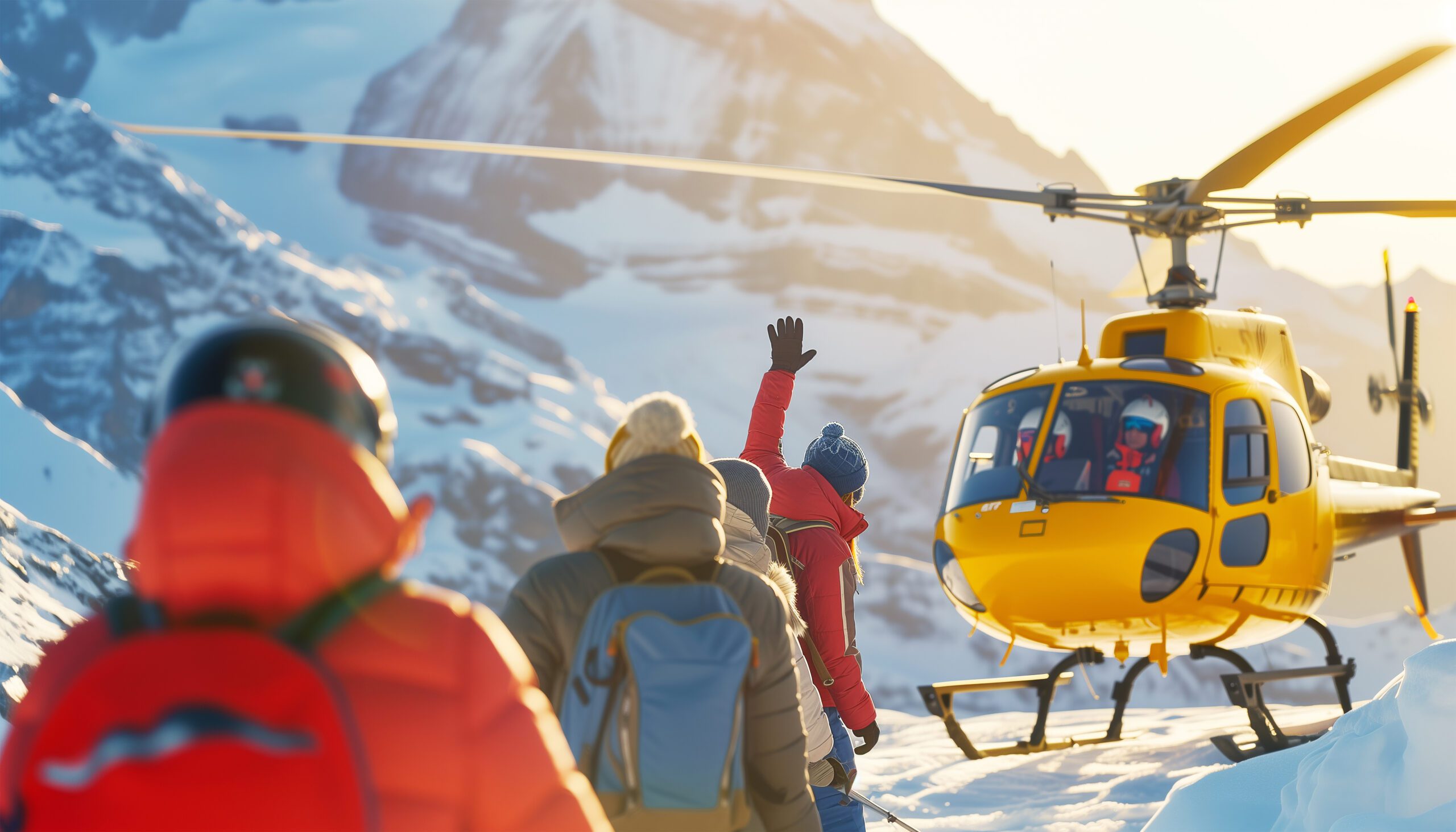
Rescue is possible, but never a plan
The Alps are well served by rescue, and a helicopter can reach parts of the Eiger fast. But high on the North Face, in storm or cloud, no aircraft can help, and a team must be able to reverse the wall or wait it out. Plan to rescue yourself, and treat outside help as the exception.
The toll, and the speed
The North Face is both a graveyard and a stage: the deadliest of the classic walls, and the arena for the sport’s fastest ascents.
| Fact | What it measures | How to use it |
|---|---|---|
| 64+ deaths since 1935 | The North Face toll | Among the deadliest classic climbs in the Alps; treat it as elite. |
| Rockfall | The defining hazard | Why the wall is climbed frozen; warmth loosens the face. |
| Sudden storms | The historic killer | Weather can trap a party high with no easy way down. |
| Steck 2:22:50 | The solo speed record | World-class alpinists move in hours; most parties need many more. |
Season and conditions
The face wants cold; the ridges want summer. In every season the deciding factor is settled weather, not the date.
Prime For The Face
Cold and frozen, with the least rockfall on the North Face.
Still Good
Often the best mix of frozen rock and manageable daylight.
West Flank Season
Warmer, more rockfall on the face; the normal route and ridges come in.
The Real Calendar
Settled cold weather matters more than the month.
The Deciding Risk
A forecast change can turn the wall lethal within hours.
The three great north faces of the Alps
The Eiger belongs to a trio that defined a generation of alpinism.
In the 1930s, three unclimbed north faces stood as the great problems of the Alps: the Eiger, the Matterhorn, and the Grandes Jorasses. The Matterhorn north face fell in 1931 and the Grandes Jorasses in the mid-1930s, leaving the Eiger as the last and most feared. When Heckmair’s team climbed it in 1938, the trilogy was complete, and the idea of the three great north faces entered mountaineering language. We cover its companion in our Matterhorn update.
The three faces still draw the world’s best alpinists, and the same names recur across them: Ueli Steck and Dani Arnold each set speed records on more than one. To place the Eiger among the classic peaks of the range, see our Mont Blanc update and the wider Alps cluster below.
A short history of the North Face
From the tragedies of the 1930s to the first ascent and the modern era of records.
The North Face drew climbers, and killed them, through the 1930s. The 1936 attempt ended in disaster: all four climbers of two roped parties died, among them Toni Kurz, whose slow death within reach of rescuers became one of the sport’s most haunting stories, and Andreas Hinterstoisser, whose name marks the key traverse low on the wall. The face was cast as a suicide mission by a press that could watch it from the valley.
On 24 July 1938, after three days on the wall, Anderl Heckmair, Heinrich Harrer, Ludwig Voerg, and Fritz Kasparek reached the summit and completed the first ascent. Harrer’s later book, The White Spider, made the climb famous. In 1992 Catherine Destivelle made the first solo ascent by a woman. The modern era belongs to speed: Ueli Steck soloed the Heckmair route in 2 hours 22 minutes 50 seconds in 2015, on a wall that once took days, though the face remains deadly for anyone who mistakes those feats for the ordinary climb.
The Alps cluster
The Eiger sits among the classic Alpine updates and the skills that support a serious alpine climb.
Matterhorn
Another of the three great north faces, and a classic ridge climb in its own right.
Read the update ->The high oneMont Blanc
The highest of the Alps, a very different objective a few valleys west.
Read the update ->The neighboursMoench and Jungfrau
The Eiger’s famous companions in the Bernese Oberland trio.
See the guide ->SkillsCrevasse rescue basics
Glacier-travel and rescue skills for the West Flank and the approach.
Learn the skill ->Eiger climb guide
The full North Face and West Flank route, features and cost detail.
->Mountaineering fitness standards
Whether your strength and speed are ready for the wall.
->Avalanche awareness for climbers
Reading snow and slope hazard on and around the face.
->How to choose an expedition operator
Vetting a guide who truly knows the Nordwand.
->Mountaineering insurance for the Alps
Evacuation and rescue cover for a committing wall.
->Mountain weather for climbers
Reading the cold, settled windows the face demands.
->Back to the full Expedition Updates dashboard for every mountain we track.
Where the Eiger fits
The three great faces, the wider Alps, and the mountain’s place in the story of the sport.
The last problems of the Alps
The Eiger, the Matterhorn and the Grandes Jorasses, the three great north faces.
Compare the faces ->The AlpsPeaks and 4000ers
Where the Eiger sits among the classic mountains of the Alps.
Explore the Alps ->The wall in storyThe White Spider
The Eiger’s place in mountaineering history, from tragedy to speed records.
Read the guide ->The Eiger FAQ
The questions climbers ask most about the face, the normal route, the danger, and the season.
How high is the Eiger, and where is it?
The Eiger is 3,967 m (13,015 ft), in the Bernese Oberland of Switzerland, southwest of Grindelwald. It forms a famous trio with its neighbours the Moench and the Jungfrau. By Alpine standards it is not tall: the range’s 4,000-metre giants are all higher. The Eiger’s fame comes from its north wall, not its altitude.
Why is the Eiger so famous?
Because of its North Face, the Eigerwand, a 1,800-metre wall that is the most storied and feared in mountaineering. Through the 1930s a string of climbers died trying to force it, watched by spectators and the press from the valley at Kleine Scheidegg, until a four-man team finally climbed it in 1938. It is one of the three great north faces of the Alps, alongside the Matterhorn and the Grandes Jorasses.
What does Mordwand mean?
Mordwand means murder wall in German, a grim play on Nordwand, the north wall. The nickname stuck during the deadly attempts of the 1930s, when the media cast the face as a suicide mission. At least 64 climbers have died on the North Face since 1935. The name endures, though modern climbers approach the wall with far better equipment, forecasting, and technique.
Who made the first ascent of the North Face?
On 24 July 1938, after a three-day climb, Anderl Heckmair, Heinrich Harrer, Ludwig Voerg, and Fritz Kasparek reached the summit by the North Face. Two roped parties, one Austrian and one German, joined forces on the wall. Their line, the Heckmair route, remains the classic and most-climbed way up the face. Heinrich Harrer later wrote a famous account of the wall, The White Spider.
What is the difference between the West Flank and the North Face?
They are two very different climbs on the same mountain. The West Flank is the normal route, a serious but far less technical snow and scramble line that is also the standard descent, and the way most climbers reach the summit. The North Face is the Heckmair route, an elite ED2 alpine climb of 1,800 m. Most people who stand on the Eiger’s summit never touch the face.
How dangerous is the Eiger North Face?
It is one of the most dangerous classic climbs in the Alps. At least 64 climbers have died on it since 1935, from rockfall, ice fall, avalanches, and sudden storms that can trap a party high on the wall. Rockfall is the defining hazard, which is why the face is usually climbed in cold, frozen conditions. It should be attempted only by very experienced alpinists, ideally with a guide who knows the wall.
What is the speed record on the North Face?
The standing solo record on the Heckmair route is 2 hours 22 minutes 50 seconds, set by the Swiss alpinist Ueli Steck on 16 November 2015, on a wall that took its first-ascent team three days. Dani Arnold soloed it in 2 hours 28 minutes in 2011. These are extraordinary feats by the world’s leading alpinists; a typical fast, competent party takes something more like 10 to 20 hours.
When is the Eiger climbed?
The North Face is usually climbed in cold conditions, often late winter and early spring, when the wall is frozen and rockfall is reduced; summer ascents face more loose rock. The West Flank and the Mittellegi Ridge are summer objectives. In every season the Eiger is a conditions game, and settled cold weather matters more than the calendar.
What experience do you need for the Eiger?
It depends entirely on the route. The North Face demands elite mixed-climbing skill, speed, and conditions judgment, well beyond a first serious alpine climb, and even strong alpinists hire a guide. The West Flank and the Mittellegi Ridge are real mountaineering routes that still require solid alpine skills, fitness, and a guide for most climbers. None of the routes is a walk-up.
How we built this update
What this page is based on, who reviewed it, and what we do not claim to know.
Sources
- Published alpine records for the 1938 first ascent, the death toll, and the speed records.
- Guide and operator route information for the North Face, West Flank, and Mittellegi Ridge.
- Mountaineering history, including Heinrich Harrer’s account of the wall.
- Guidebook grades and conditions guidance for the Bernese Oberland.
- Our own Eiger climb guide for the detailed route and cost.
Review and standards
Compiled by Travis Ludlow and reviewed for safety by Dawson Ludlow, our Climbing and Mountaineering Lead (Wilderness First Aid), whose highest first-hand summit is Kilimanjaro. Health and medical points were reviewed by Taylor Ludlow, RN. We do not fabricate summit experience, quotes, or credentials, and we say plainly when we are reporting rather than recounting.
What we do not claim to know
The Eiger is a conditions climb, and no web page can substitute for a current forecast, a route report, and a guide’s judgment. In particular:
- Conditions on the North Face change quickly; rockfall and storm risk vary by the day.
- Death-toll and record figures come from published sources and are updated over time.
- Guided pricing and availability shift with guides, dates, and conditions.
- Our team has not climbed the Eiger, so we report published records, not personal experience.

Global Summit Guide research
We compile mountain updates from published records and current route and conditions information, review them for safety and medical accuracy, and refresh them each season. We are transparent about what we have and have not climbed, and the Eiger is a research-based briefing, not a personal account.
About our team and standards ->The Eiger rewards the prepared, and only them.
Start with the full route in our Eiger climb guide, weigh yourself against our fitness standards, and read the companion faces in the Matterhorn and Mont Blanc updates. Trips base in Grindelwald and Interlaken, so for lodging and travel there, browse travel on Expedia.
Disclosure: the Expedia link above is a sponsored affiliate link, and we may earn a commission at no extra cost to you. It is the only affiliate link on this page; our route, conditions, and safety guidance is independent.
Was this helpful?
🏔Related peaks nearby
🧭Explore & compare
Global Summit Guide is an independent mountaineering resource founded in 2026. The team combines first-hand trekking and climbing experience with in-depth research and professional health and nutrition review to help climbers choose objectives, prepare properly, and stay safe.
Health, altitude, and nutrition content is reviewed by Taylor Ludlow (Registered Nurse) and Brigg Hoopes (Nutritionist).
What We Don't Know Yet
Mountain information changes quickly. This box explains the limits of what this page can responsibly promise.
- Route conditions, trailhead access, crevasse exposure, stream crossings, and rescue access may vary from published planning guidance.
- Route conditions, snowpack, closures, and weather can change quickly after this page is updated.
- Permit rules, fees, quotas, and reservation windows may change between review cycles.
- Operator availability, pricing, guide ratios, and cancellation terms can change by season.
- Your fitness, altitude response, risk tolerance, and experience level may change what is safe or realistic.
Verify current conditions with official land managers, guide services, local forecasts, and current route reports before booking or climbing.
Mountaineering, rock and ice climbing, glacier travel, and high-altitude activity are inherently dangerous and can result in serious injury or death. The information on Global Summit Guide is provided for general informational and educational purposes only and is not a substitute for professional instruction, qualified guiding, proper equipment, or your own judgment and experience.
Route conditions, weather, snowpack, permits, regulations, and hazards change constantly and may differ from what is described here. Details may be incomplete, out of date, or contain errors. Always verify current information with local authorities, certified guides, and official sources before making any decision in the mountains.
Nothing on this site is medical, legal, or financial advice. Our fitness, acclimatization, altitude, and nutrition content is general in nature; consult a qualified physician before beginning any strenuous exercise program or exposing yourself to high altitude.
You are solely responsible for your own safety and decisions. To the fullest extent permitted by law, Global Summit Guide and its team accept no liability for any loss, injury, damage, or expense arising from use of, or reliance on, this information. By using this site you acknowledge these risks and accept these terms.
Some links on this site may be affiliate links. If you buy through them we may earn a small commission at no extra cost to you; this never affects our recommendations.
Global Summit Guide recommendation path
Next Best Mountain to Research
Use these recommendations to continue the right planning path instead of stopping on one page.
Use current permit, weather, route, and operator information before booking or climbing.