
Last updated August 10, 2026
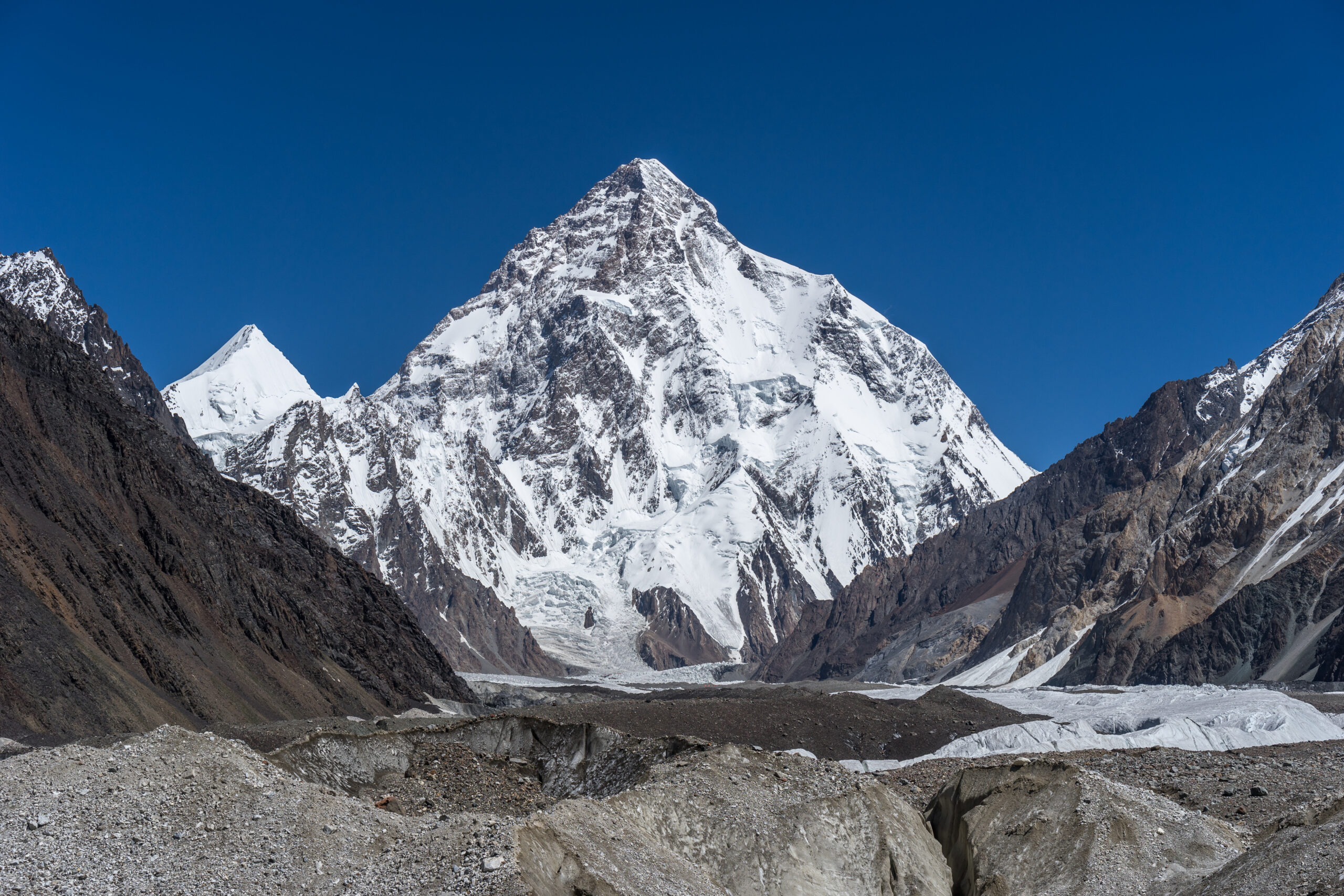
K2: the Savage Mountain, now in the commercial era
The world’s second-highest peak is far harder and deadlier than Everest, with no easy route and the infamous Bottleneck serac hanging over every summit day. Its historic fatality rate of roughly one in four earned its name; a commercial surge since 2021 has cut the modern rate, but not the hazard. This update covers the route, the numbers, and the ethics. Heights in metres (feet).
Updated 27 July 2026 · Compiled by Travis Ludlow · Safety review by Dawson Ludlow · Medical review by Taylor Ludlow, RN
Single-mountain expedition update, compiled from published expedition records, fatality datasets, operator information, and current-season reporting. Our team has not climbed K2; the only first-hand summit anyone on our team claims is Kilimanjaro. This is a planning briefing for experienced climbers, not a how-to and not a substitute for a licensed operator. For live season status, see our K2 tracker.
The mountaineer’s mountain, and it is not Everest.
K2 is steeper, more technical, and far more dangerous than the world’s highest peak, with no easy line and no infrastructure. Its historic death-to-summit ratio, around one in four, earned it the name the Savage Mountain. Commercial expeditions since 2021 have put record numbers on top and cut the modern rate to roughly 9 to 13 percent, but the Bottleneck serac still hangs over every summit, and above 7,000 m there is no rescue.
- Second-highest, and the hardest 8000er to climb.
- Standard route: the Abruzzi Spur.
- The Bottleneck serac is the defining hazard.
- Last 8000er climbed in winter, in 2021.
- Commercial, crowded, and ethically contested.
On this page
What K2 involves
The hardest of the eight-thousanders: a sustained technical climb at extreme altitude, with a killer serac above the final slopes.
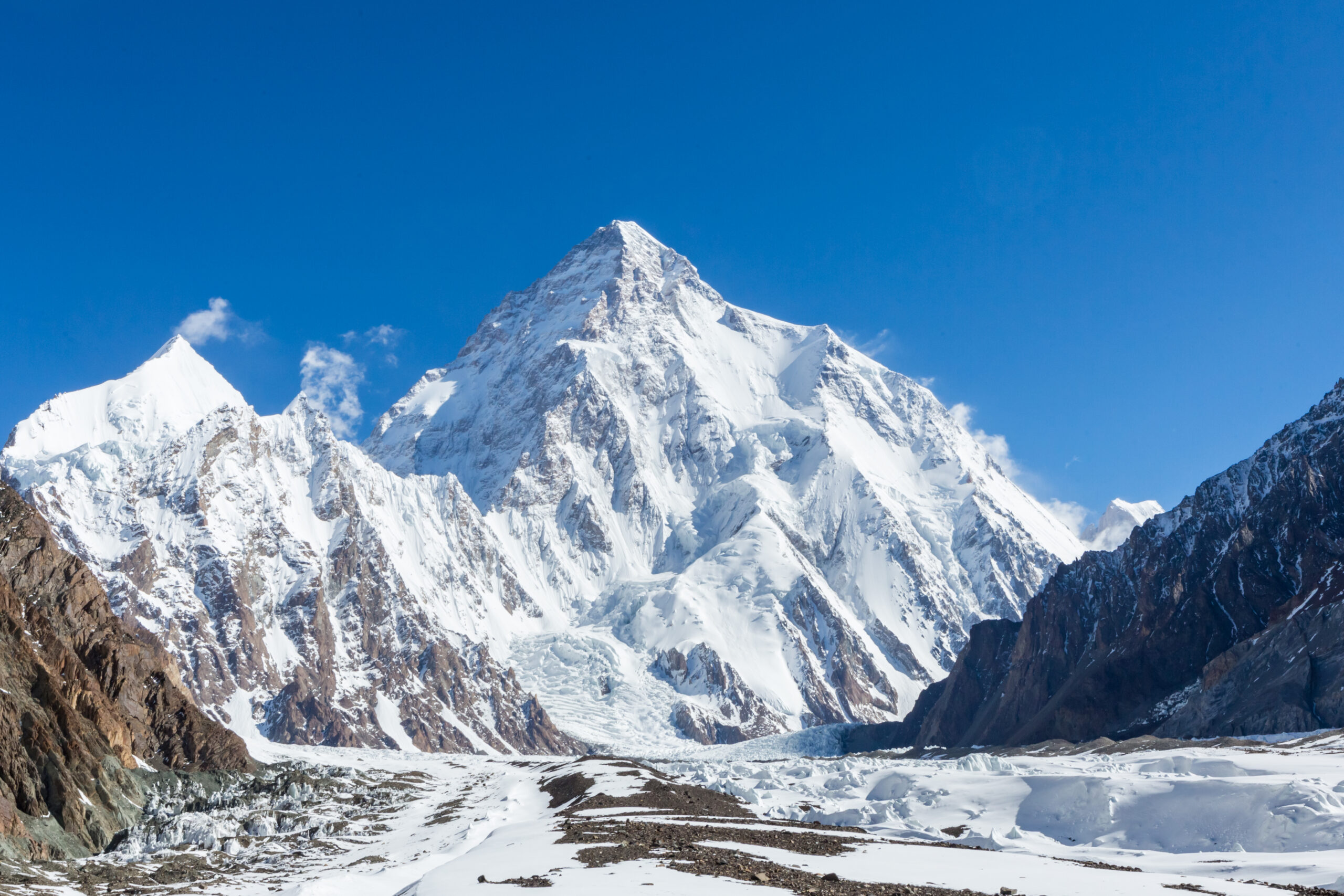
K2 rises to 8,611 m in the Karakoram, on the Pakistan-China border, the second-highest mountain on Earth and, by common agreement, the hardest of the fourteen 8000ers. It is reached by a week-long trek up the Baltoro Glacier, past the Trango Towers to Concordia, which filters out most aspirants before the climbing even begins. There is no teahouse infrastructure and no easy route: the standard Abruzzi Spur is a serious technical climb from bottom to top.
The mountain’s signature hazard is the Bottleneck, a couloir at about 8,200 m overhung by a huge, unstable serac, where the 2008 disaster killed eleven climbers. Teams try to pass it before dawn and before the day warms. Above 7,000 m there is effectively no rescue, so a climber must be able to descend under their own power. For the full route, permit, and cost detail, see our K2 climb guide.
The commercial era, and its ethics
K2 has changed more in the last few years than in the previous fifty, and not everyone agrees it is for the better.
For most of its history K2 was the preserve of small, elite teams, and it stayed deadly: its fatality rate ran around 23 to 25 percent, roughly one death for every four summits. Since about 2021, that has shifted. Operators now fix ropes along the whole Abruzzi Spur and support clients with strong Sherpa teams and supplemental oxygen, mirroring the model that transformed Everest. Record numbers have reached the top, and the modern cumulative death rate has fallen to roughly 9 to 13 percent. Our K2 death-rate analysis breaks down how those figures are built.
That safety gain has come with hard questions. Crowds now compress through the Bottleneck in the few good windows, recreating the traffic-jam hazard seen on Everest, beneath a serac no amount of support can control. High camps accumulate waste. And the ethics came to a head in 2023, when a porter died in the Bottleneck as other climbers continued past him to the summit, a moment that forced the community to confront what the commercial era asks of the people who make it possible. Lower numbers do not mean K2 has become safe, or simple.
Live status lives on the tracker
Conditions, fixing progress, and summit windows change day to day. We keep the real-time picture on our K2 season tracker rather than on this evergreen page, so check there for the current season.
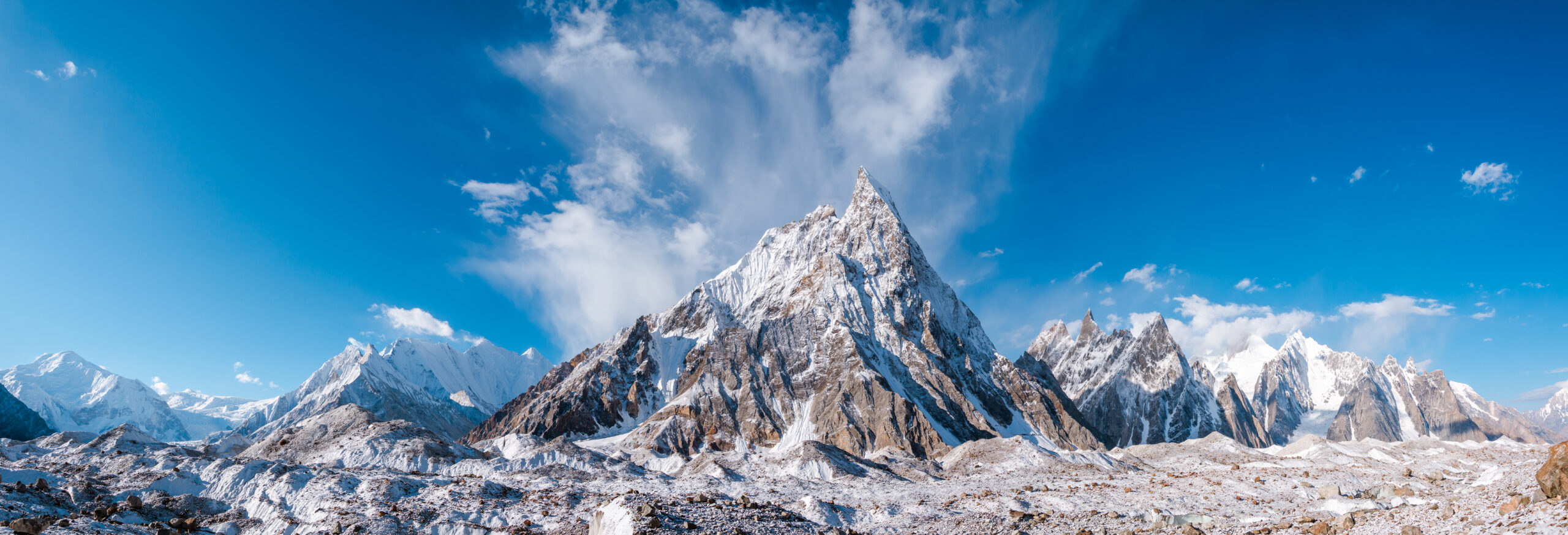
A savage mountain that tries to kill you
The name is not marketing. It comes from a climber who nearly died in a six-man fall in 1953, and the mountain has honored it ever since. Steeper than Everest, battered by Karakoram storms, and crowned by a hanging serac, K2 remains, even in the commercial era, one of the most serious objectives in mountaineering.
Are you ready for K2?
Commercial support does not lower the bar as far as people think. K2 is an expert’s mountain, and the prerequisites are real.
Steep Rock And Ice
K2 demands expert mixed climbing. House’s Chimney and the Black Pyramid turn back anyone who is not fluent on steep, exposed ground.
Evidence: prior hard technical alpine routes.Not A First Big Peak
This is not where you learn altitude. Operators expect prior 8,000-metre experience and proven performance in the death zone.
Evidence: a prior 8000er summit.No Rescue Up High
Above 7,000 m there is effectively no rescue. You must be able to care for yourself and descend under your own power.
Evidence: self-reliance at extreme altitude.Time The Bottleneck
Passing the Bottleneck fast and early, and avoiding traffic beneath the serac, is a decision that saves lives.
Evidence: sound calls under objective hazard.| Requirement | Baseline | Why it matters |
|---|---|---|
| Technical grade | Fluent on steep rock, ice and mixed | The Abruzzi is a sustained technical climb, not a plod. |
| Altitude record | Prior 8000er experience | The death zone here is unforgiving of a first-timer. |
| Self-sufficiency | Able to descend unaided | No helicopter rescue reaches the upper mountain. |
| Rope skills | Fluent on fixed lines | Even supported ascents move fast on fixed ropes throughout. |
| Hazard judgment | Disciplined on the Bottleneck | Timing and traffic under the serac are life-or-death. |
| Fitness | Strong for a long Karakoram trip | The Baltoro trek and the climb are a cumulative test. |
Build the essentials first with fixed lines and jumars and the acclimatization guide, and read the risk honestly in the K2 death-rate analysis.
The Abruzzi Spur and the Cesen
Two serious lines converge on the same crux. Neither is a walk, and both end at the Bottleneck.
Abruzzi Spur – the Southeast Ridge
The 1954 first-ascent route and the line taken by more than three-quarters of climbers, on the Pakistani side. It is a serious, sustained technical climb with named obstacles, House’s Chimney and the Black Pyramid, leading to the shoulder and the Bottleneck beneath the summit serac.
- House’s Chimney and the Black Pyramid
- The shoulder, then the Bottleneck couloir
- Fixed and stocked by commercial teams
- Technical throughout; no easy ground
The Cesen Route
The Cesen, or SSE spur, is the main alternative to the Abruzzi, joining the standard line higher up. It is sometimes used to avoid particular hazards on the lower Abruzzi, but it is no less serious, and it converges on the same Bottleneck crux below the summit.
- A steeper alternative lower down
- Joins the Abruzzi high on the mountain
- Used to manage specific hazards
- Still an expert, committing line
| Factor | Abruzzi Spur | Cesen Route |
|---|---|---|
| Aspect | Southeast ridge, Pakistani side | South-southeast spur |
| Role | The standard route, 1954 first ascent | The main alternative |
| Key features | House’s Chimney, Black Pyramid | Steeper lower spur; joins high |
| Crux | The Bottleneck serac | The Bottleneck serac |
| Who it suits | Most expert teams | Experienced teams, by conditions |
The K2 climb guide covers the Abruzzi camps, permit, and gear in full.
The Abruzzi Spur, base to summit
An overview of the standard route, from Skardu to the summit. For the full detail, see the climb guide.
Skardu
The Gilgit-Baltistan town where the road ends and the trek is staged.
Baltoro Glacier trek
About a week up the glacier, past the Trango Towers to Concordia.
Below The Spur
The expedition base at the foot of the Abruzzi Spur.
~6,600 m
A famous steep crack, one of the first hard obstacles on the route.
~7,000 m
A long, exposed section of steep rock and mixed ground.
High Camp
The launch point for the summit push toward the Bottleneck.
Under The Serac
The crux and the killer: a couloir beneath a huge hanging serac.
The Second-Highest
Above the Bottleneck and the traverse lies the summit of K2.
The Bottleneck decides the day
Everything on summit day is arranged around passing the Bottleneck fast and early, while the serac is coldest and the couloir least crowded. It is the single feature that most shapes how, and whether, a team reaches the top and returns.
A K2 expedition timeline
A K2 expedition runs the better part of two months, most of it trekking, acclimatizing, and waiting for a narrow summit window.
Fly to Islamabad and Skardu
Reach Pakistan and travel to Skardu, the gateway to the Karakoram.
Trek up the Baltoro
Walk about a week up the glacier past the Trango Towers to Concordia and base camp.
Establish base camp
Set up below the Abruzzi Spur at around 5,150 m and organize the climb.
Acclimatization rotations
Climb to the high camps and back to build acclimatization over weeks.
Fix and stock the route
Fixed ropes go in along the spur, and camps are stocked toward the shoulder.
Wait for a window
Rest at base and watch for one of the few safe summit windows.
Summit push
Move to the shoulder, pass the Bottleneck before dawn, and climb to the top.
Descend and trek out
Reverse the spur and the Baltoro back to Skardu.
Cost and access
K2 is a premium 8000er, priced for fixed ropes, oxygen, Sherpa support, and a long Karakoram approach.
| Component | Figure | Note |
|---|---|---|
| Guided expedition | Premium 8000er pricing | Costly: fixed ropes, Sherpa support, oxygen, and Karakoram logistics. |
| Pakistan permit | Gilgit-Baltistan fees | A climbing permit and liaison requirements apply on the Pakistani side. |
| Baltoro logistics | Porters and the trek | A week-long glacier approach adds porters, food, and time. |
| Oxygen and support | Usually included | Most commercial ascents use oxygen and a high climbing-Sherpa ratio. |
| Insurance | High-altitude, remote | Cover for a peak with no realistic high-altitude rescue. |
The Baltoro is part of the climb
The week-long trek up the Baltoro Glacier from Skardu, past the Trango Towers to Concordia and base camp, is one of the great mountain approaches on Earth, and a real filter. It adds porters, time, and cost, but it also builds acclimatization and commitment before the Abruzzi even begins.
Choosing a K2 operator
On K2 the operator’s track record, screening, and ethics matter as much as the price. These are the questions that separate them.
Proven On This Peak
Ask how many times the operator has fixed and summited K2 itself.
Timing And Traffic
How they schedule the summit push to pass the serac early and clear.
Vetted, Experienced
Serious teams require prior 8000er experience, not just a deposit.
Support That Matches
Climbing-Sherpa ratio and oxygen plan for the summit day.
People Over Summits
How the team treats porters and handles emergencies on the route.
Current Season
For the real-time picture, pair the operator with the season tracker.
Compare the field in our K2 operators comparison, pair it with the season tracker, and see the wider vetting in how to choose an operator.
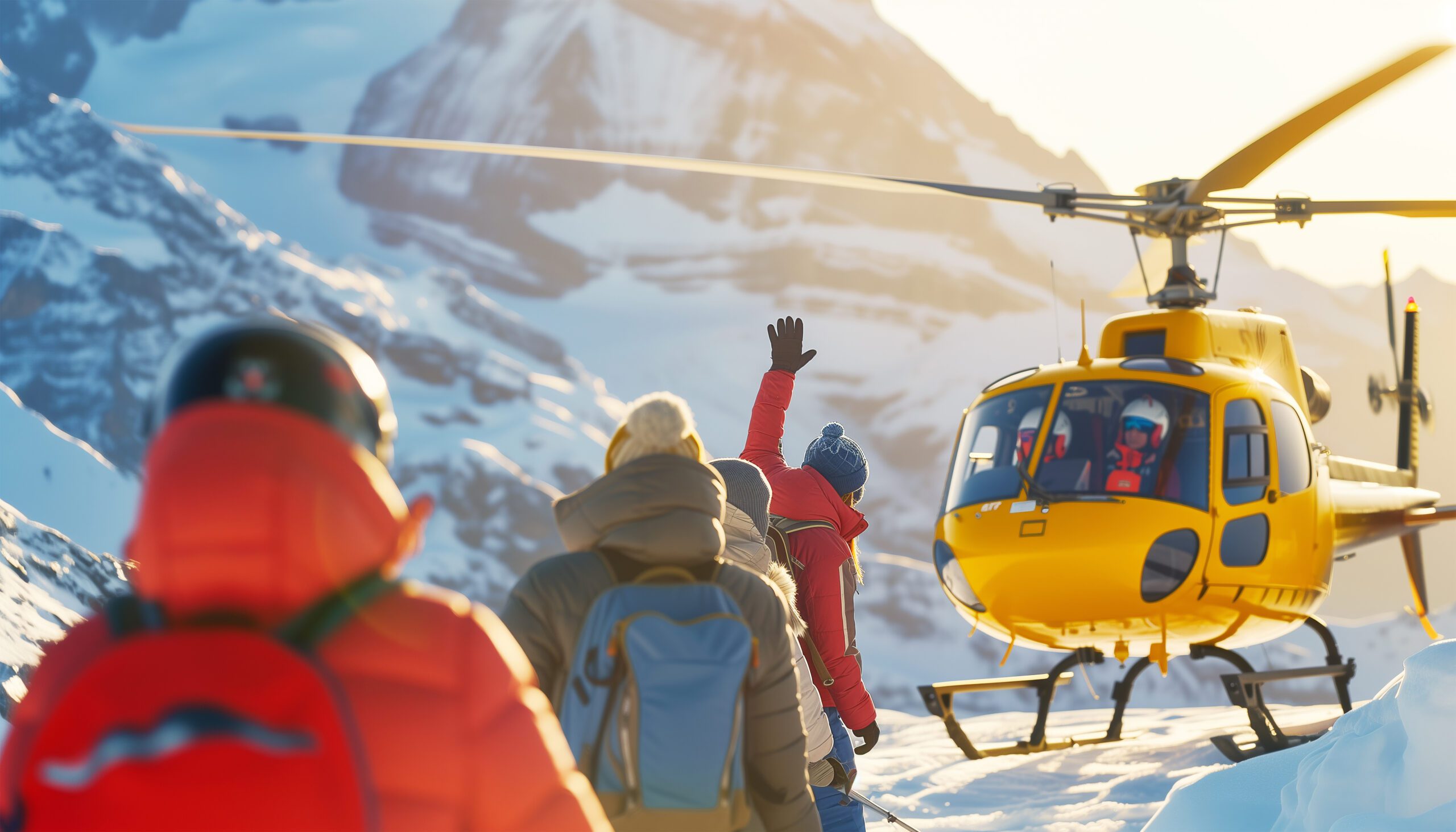
Above the shoulder, there is no rescue
Helicopters cannot operate under rescue load near the top of K2, and the Bottleneck sits at 8,200 m. A climber in trouble high on the mountain is, in practice, on their own or dependent on exhausted teammates. Self-sufficiency is not a virtue here. It is the entire premise of the climb.
The death rate, honestly
K2’s statistics tell two stories at once: a mountain made safer by support, and a hazard that has not changed at all.
| Figure | What it is | How to read it |
|---|---|---|
| Historic ~25% | One death per four summits | The record that earned the Savage Mountain name. |
| Modern ~9-13% | Commercial-era average | Lower, but the objective hazard is unchanged. |
| The Bottleneck serac | Hangs over every summit | Uncontrollable by skill or support; pass it fast and early. |
| No high rescue | Above 7,000 m, on your own | Helicopters cannot reach the upper mountain under load. |
Our K2 death-rate analysis sets out the historic and modern numbers, and why the fall in the rate does not mean the mountain is safe.
Season and location
K2 is a summer-only climb with only a few safe windows a year. For live conditions, we point to the season tracker, not a static forecast.
The season is roughly June to August, and each year offers only a handful of settled summit windows. Because those windows, the fixing progress, and conditions shift constantly, the honest place for real-time weather and status is our K2 season tracker, which we keep current through the season rather than freezing a forecast onto this page.
A short history of K2
From an Italian first ascent to the last great winter prize in the Himalaya and Karakoram.
K2 was first climbed in 1954 by an Italian expedition led by Ardito Desio, with Achille Compagnoni and Lino Lacedelli reaching the summit by the Abruzzi Spur and returning with severe frostbite. The spur itself carries the name of the Duke of the Abruzzi, who reconnoitered it in 1909. A second ascent did not follow until 1977, a measure of how hard the mountain resisted.
For decades one prize remained: a winter ascent. K2 turned back every winter attempt for over thirty years, and it was the last of the fourteen 8000ers left unclimbed in the cold season. On 16 January 2021, an all-Nepali team reached the summit together in winter, singing their national anthem on top, and closed one of mountaineering’s last great chapters. The commercial transformation of the peak followed in the same few years.
The Karakoram cluster
K2 sits among its Karakoram neighbours, the live season tracking, and the skills the Abruzzi demands.
Broad Peak
A Karakoram 8000er sharing the Baltoro approach and Concordia with K2.
Read the update ->Karakoram 8000erGasherbrum I
The Hidden Peak, another great Karakoram giant beyond Concordia.
Read the update ->Choose wellK2 operators
How to pick a team with a real K2 track record.
Compare operators ->Live statusK2 season tracker
The real-time picture of the current K2 season.
Open the tracker ->K2 climb guide
The full Abruzzi Spur route, permit, and cost detail.
->K2 2026 season tracker
Current season status, summit pushes, and weather.
->K2 death rate analysis
The fatality statistics, historic and modern, explained.
->Fixed lines and jumars explained
The rope skill every K2 climber relies on.
->Altitude acclimatization explained
Preparing for the death zone above 8,000 m.
->Mountaineering insurance above 6000m
Cover for a peak with no high-altitude rescue.
->Back to the full Expedition Updates dashboard for every mountain we track.
Where K2 fits
The fourteen 8000ers, its Karakoram neighbours, and the numbers behind its name.
Eight-thousanders
Where K2, the mountaineer’s mountain, sits among the fourteen.
Open the collection ->KarakoramBroad Peak and Gasherbrum
K2’s great neighbours above the Baltoro and Concordia.
Read the updates ->The numbersK2 death rate
The statistics behind the Savage Mountain’s reputation.
See the analysis ->K2 FAQ
The questions climbers ask most about the difficulty, the danger, the commercial era, and the season.
How high is K2, and where is it?
K2 is 8,611 m (28,251 ft), the second-highest mountain on Earth after Everest. It stands in the Karakoram range on the Pakistan-China border, in Gilgit-Baltistan, and is reached by a multi-day trek up the Baltoro Glacier. Its name comes from a nineteenth-century survey; it has no widely used local name, though Chogori is sometimes cited.
Why is K2 called the Savage Mountain, and is it harder than Everest?
Yes, far harder. K2 is steeper, more technical, and more exposed to objective hazard than Everest, with no easy route and no teahouse infrastructure. The nickname dates to 1953, when the American climber George Bell said it was a savage mountain that tries to kill you. Its historic fatality rate, roughly one death for every four summits, earned the name; Everest’s is a fraction of that.
How dangerous is K2 now?
Its historic fatality rate ran around 23 to 25 percent, but a surge of commercial, fixed-rope, oxygen-supported ascents since 2021 has pulled the modern cumulative rate down to roughly 9 to 13 percent. That does not make it safe. The objective hazards are unchanged, above all the hanging serac over the Bottleneck, and above 7,000 m there is effectively no rescue. Our K2 death-rate analysis breaks the numbers down.
What is the Bottleneck?
The Bottleneck is a narrow, steep couloir at about 8,200 m, roughly 400 m below the summit, overhung by a huge unstable serac. It is the most dangerous place on the mountain and the site of the 2008 disaster that killed eleven climbers. Teams try to pass it in the dark, before the day warms, and crowding there in busy seasons has become a serious concern.
What is the standard route?
The Abruzzi Spur, the southeast ridge on the Pakistani side, is the standard route and the 1954 first-ascent line, taken by more than three-quarters of climbers. It is a serious technical climb, with named obstacles including House’s Chimney and the Black Pyramid, before the Bottleneck high on the mountain. The Cesen route is the other main line. Neither is a walk.
When was K2 first climbed, and first climbed in winter?
The first ascent was in 1954 by an Italian expedition led by Ardito Desio, with Achille Compagnoni and Lino Lacedelli reaching the summit by the Abruzzi Spur. K2 was the last of the fourteen 8000ers to be climbed in winter: an all-Nepali team summited on 16 January 2021, sixty-seven years after the first ascent, in one of mountaineering’s last great firsts.
Has K2 really been commercialized?
Yes, and it is contested. Since around 2021, operators have fixed ropes along the whole Abruzzi Spur and supported clients with Sherpa teams and oxygen, mirroring Everest. That has cut the death rate and put record numbers on top, but it has also brought crowding in the Bottleneck, waste at high camps, and hard ethical debate, sharpened by the 2023 death of a porter in the Bottleneck as others continued to the summit.
When is the season, and is there real-time information?
K2 is a summer-only climb, roughly June to August, with only a few safe summit windows each year. Because conditions and summit pushes change day to day, we keep live status on the K2 season tracker rather than on this evergreen page; check there for the current picture.
What experience do you need for K2?
K2 demands expert technical rock and ice skill, prior 8000er experience, and full self-sufficiency; it is not a first or second big mountain. Even with commercial support, climbers must move competently on steep, exposed, mixed ground at extreme altitude, with no realistic rescue high on the peak. Most who lack the skills do not get past the Black Pyramid.
How we built this update
What this page is based on, who reviewed it, and what we do not claim to know.
Sources
- Published expedition records and fatality datasets for K2, historic and modern.
- Operator route, cost, and support information for the Abruzzi Spur.
- Current-season reporting, which feeds our live K2 tracker.
- Reporting on the commercial era, crowding, and the 2023 ethics debate.
- Our own K2 climb guide, death-rate analysis, and operators comparison.
Review and standards
Compiled by Travis Ludlow and reviewed for safety by Dawson Ludlow, our Climbing and Mountaineering Lead (Wilderness First Aid), whose highest first-hand summit is Kilimanjaro. Health and medical points were reviewed by Taylor Ludlow, RN. We do not fabricate summit experience, quotes, or credentials, and we say plainly when we are reporting rather than recounting.
What we do not claim to know
K2 is a fast-changing, high-consequence climb, and no evergreen page can replace live status and a team’s own judgment. In particular:
- Season conditions and summit windows change daily; see the live tracker.
- Fatality and summit figures vary by source and are updated over time.
- Operator offerings, ratios, and pricing shift year to year.
- Our team has not climbed K2, so we report records and current reporting, not personal experience.

Global Summit Guide research
We compile mountain updates from records, datasets, and current reporting, review them for safety and medical accuracy, and refresh them each season. We are transparent about what we have and have not climbed, and K2 is a research-based briefing, paired with our live season tracker.
About our team and standards ->Know the mountain. Respect the numbers.
Start with the full route in our K2 climb guide, follow the season on the K2 tracker, compare teams in the operators comparison, and read the risk in the death-rate analysis. Trips stage through Islamabad and Skardu, so for flights and lodging, browse travel on Expedia.
Disclosure: the Expedia link above is a sponsored affiliate link, and we may earn a commission at no extra cost to you. It is the only affiliate link on this page; our route, risk, and safety guidance is independent.
Was this helpful?
🏔Related peaks nearby
🧭Explore & compare
Global Summit Guide is an independent mountaineering resource founded in 2026. The team combines first-hand trekking and climbing experience with in-depth research and professional health and nutrition review to help climbers choose objectives, prepare properly, and stay safe.
Health, altitude, and nutrition content is reviewed by Taylor Ludlow (Registered Nurse) and Brigg Hoopes (Nutritionist).
What We Don't Know Yet
Mountain information changes quickly. This box explains the limits of what this page can responsibly promise.
- Visa, passport, vaccination, border, insurance, and local transportation rules may change before your trip.
- Route conditions, snowpack, closures, and weather can change quickly after this page is updated.
- Permit rules, fees, quotas, and reservation windows may change between review cycles.
- Operator availability, pricing, guide ratios, and cancellation terms can change by season.
- Your fitness, altitude response, risk tolerance, and experience level may change what is safe or realistic.
Verify current conditions with official land managers, guide services, local forecasts, and current route reports before booking or climbing.
Mountaineering, rock and ice climbing, glacier travel, and high-altitude activity are inherently dangerous and can result in serious injury or death. The information on Global Summit Guide is provided for general informational and educational purposes only and is not a substitute for professional instruction, qualified guiding, proper equipment, or your own judgment and experience.
Route conditions, weather, snowpack, permits, regulations, and hazards change constantly and may differ from what is described here. Details may be incomplete, out of date, or contain errors. Always verify current information with local authorities, certified guides, and official sources before making any decision in the mountains.
Nothing on this site is medical, legal, or financial advice. Our fitness, acclimatization, altitude, and nutrition content is general in nature; consult a qualified physician before beginning any strenuous exercise program or exposing yourself to high altitude.
You are solely responsible for your own safety and decisions. To the fullest extent permitted by law, Global Summit Guide and its team accept no liability for any loss, injury, damage, or expense arising from use of, or reliance on, this information. By using this site you acknowledge these risks and accept these terms.
Some links on this site may be affiliate links. If you buy through them we may earn a small commission at no extra cost to you; this never affects our recommendations.
Global Summit Guide recommendation path
Next Best Mountain to Research
Use these recommendations to continue the right planning path instead of stopping on one page.
Use current permit, weather, route, and operator information before booking or climbing.