
Last updated August 1, 2026
Mount Kosciuszko expedition update
The easiest of the Seven Summits, and the reason the list is contested. This page tracks the Bass versus Messner debate, the two walking routes, the 2026 fees, the summer-versus-winter reality, and a go or no-go checklist. A single-mountain page in our Expedition Updates directory. Elevations in metres (feet).
The one Seven Summit you can walk up, and the one people argue about.
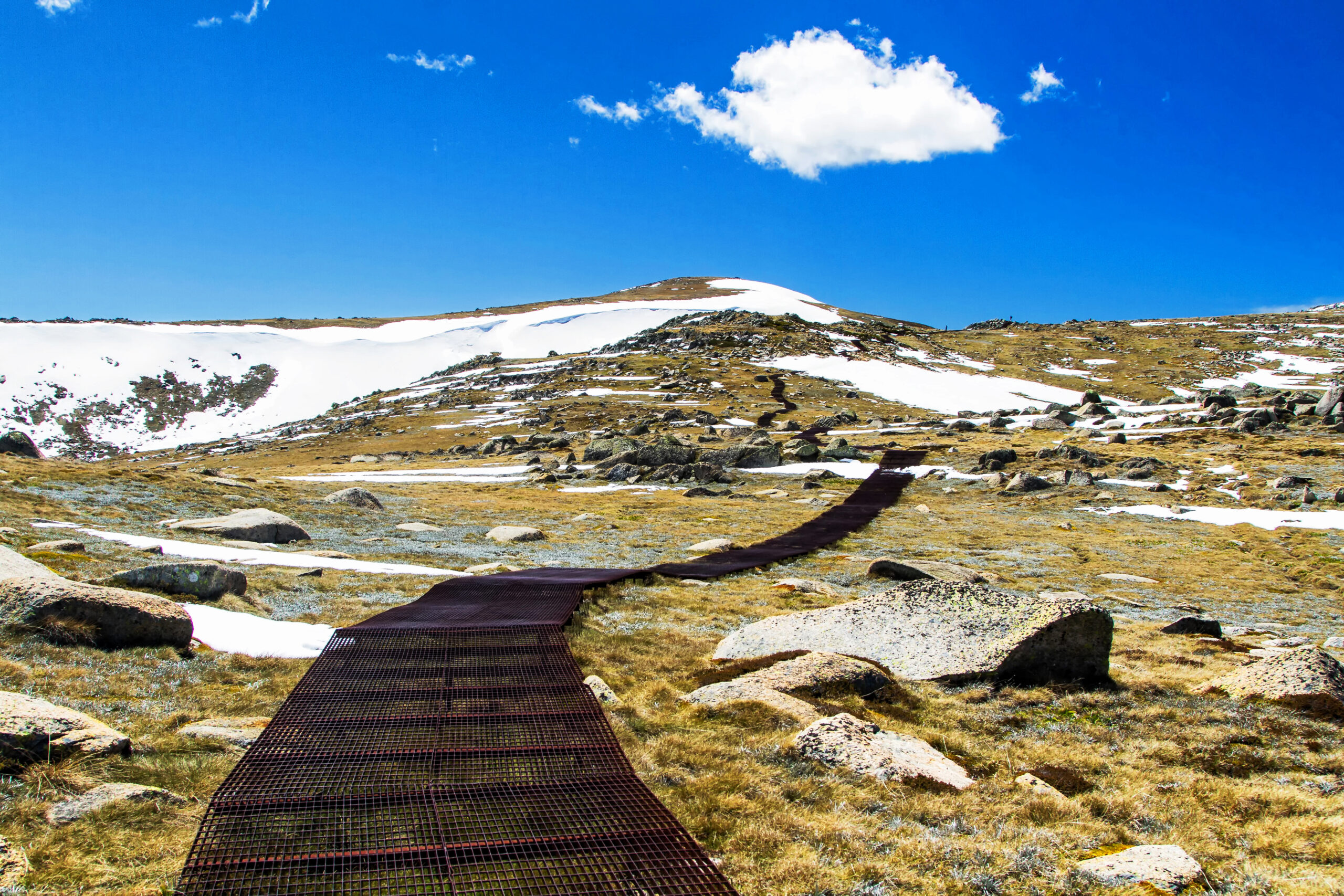
Kosciuszko is the highest point in mainland Australia and the easiest of the Seven Summits by a wide margin: in the warmer months, a chairlift and a 13 km walk on a metal-mesh path. It is the Australia summit on the Bass list. The Messner list replaces it with the technical Carstensz Pyramid, which is why the two lists exist.
That easy summer face hides a serious winter one. Under snow, the exposed plateau brings whiteouts and severe wind chill, and it becomes a genuine alpine objective. A stroll in January is a mountaineering day in July.
Summit (7,310 ft)
The highest mountain in mainland Australia.
Seven Summit
The Messner list uses Carstensz Pyramid instead.
Thredbo walk, return
A 4 to 6 hour walk from the top of the chairlift.
Mount Kosciuszko sits in the Snowy Mountains of Kosciuszko National Park, New South Wales, the gentle high point of an old, worn continent. It draws two very different crowds: day-walkers ticking off Australia’s highest point in an afternoon, and Seven Summits climbers collecting a continental high point on the way to harder peaks. This page owns the current picture, the list debate, the routes, and the seasonal reality. For the full history and route detail, see our Mount Kosciuszko guide.
Season and status
Open all year, but two different mountains.
The Thredbo and Perisher area is open year-round, but the experience splits sharply by season. From roughly November to April the track is clear, the Kosciuszko Express chairlift runs, and the summit is a straightforward walk. From the June to October long weekends it is winter: snow covers the tops, Kosciuszko Road closes between Perisher and Charlotte Pass, snow chains are required in the park, and the summit becomes an alpine outing. The mountain itself is rarely closed, but conditions decide what kind of day you will have.
The Seven Summits debate
Why Kosciuszko is both on the list and argued about.
The Seven Summits are the highest peaks of the seven continents, but there is no single agreed list, because Australia and Oceania can be defined two ways. The Bass list, the original, takes the highest peak of the Australian mainland, which is Kosciuszko. The Messner list takes the highest peak of the wider Australia and Oceania landmass, which is Carstensz Pyramid in New Guinea. The difference is enormous: Kosciuszko is a walk, while Carstensz is a technical rock climb in a remote, difficult region.
The two routes
Chairlift and walkway, or the longer quiet way.
Thredbo route, via the chairlift
The most popular approach. The Kosciuszko Express chairlift carries you from Thredbo to Eagles Nest at about 1,930 m, leaving a walk of roughly 13 km return to the summit on a raised metal-mesh walkway that protects the fragile alpine ground. NSW National Parks rates it Grade 3, moderate, and it takes four to six hours. The hardest part is the final pull from Rawson Pass to the summit.
Charlotte Pass route, the Summit Walk
A longer alternative of 18 to 19 km return, taking six to eight hours, along the old summit road. It skips the chairlift cost and sees far fewer people, at the price of more distance on foot.
Summer stroll or winter mountain
The same summit, two very different levels of risk.
In summer Kosciuszko is a low-risk walk suitable for most reasonably fit people. In winter it is a genuine alpine environment: the exposed summit plateau can be hit by sudden whiteouts and severe wind chill, navigation becomes hard when the walkway is buried, and people have got into serious trouble in bad conditions. Guide companies run introductory winter mountaineering courses here for good reason.
If you go in winter, bring alpine navigation skills, proper cold-weather and snow gear, and the judgment to turn back. Check the forecast, carry the ten essentials, and do not underestimate the plateau in poor visibility. This page is educational and is not a substitute for training.
Cost and access
By far the cheapest of the Seven Summits.
| Item | Cost | Notes |
|---|---|---|
| Park entry, rest of year | Around $17 AUD per vehicle per day | Applies on the Alpine Way and Kosciuszko Road; split among vehicle occupants. |
| Park entry, winter | Around $29 AUD per vehicle per day | June to October long weekends; snow chains are required in the park. |
| Thredbo Express chairlift | Around $50 AUD per adult, return | Lifts you to about 1,930 m and cuts the walk roughly in half. |
| Charlotte Pass route | No chairlift cost | Longer at 18 to 19 km return, 6 to 8 hours, and much quieter. |
Weather and timing
Alpine weather on an otherwise gentle peak.
The Snowy Mountains make their own weather, and snow can fall on Kosciuszko at any time of year, even in summer. The chairlift and the exposed summit are both sensitive to high wind. The live map below shows current conditions; check a mountain forecast and the NSW National Parks alerts before you set out.
How it fits a Seven Summits plan
The easy tick, and the honest question behind it.
For Seven Summits aspirants, Kosciuszko is the easy one, often done as a quick trip around the harder peaks, and it is a lovely walk in its own right. The honest question is only which list you are climbing. If you are following the Bass list, Kosciuszko completes your Australia summit. If you are following the Messner list, or want the achievement no one can argue with, you will also need Carstensz Pyramid. Plan the whole set with our Seven Summits hub and the real-cost breakdown.
Go or no-go checklist
Work through these before you go.
Before you go
- Decide which list you are climbing – Kosciuszko for the Bass list, Carstensz too for the Messner list.
- Pick your route – Thredbo with the chairlift for speed, or Charlotte Pass for a longer, quieter walk.
- Pay the park entry – a Kosciuszko National Park vehicle pass is required; buy it before or at the gate.
- Check the season – a summer walk needs only hiking gear; a winter ascent needs alpine skills and kit.
- Watch the weather – snow and whiteouts can arrive fast on the exposed plateau, even in summer.
- Start early – the chairlift opens at 9am and the summit gets busy; beat the crowds and the wind.
Oceania expedition updates
Kosciuszko’s neighbours across the region, each with its own update page. Back to the full Expedition Updates dashboard.
Mount Kosciuszko update FAQ
The questions people ask most about the list, the walk, and the fees.
Is Mount Kosciuszko one of the Seven Summits?
Yes, on the Bass list, which takes the highest peak of mainland Australia. The alternative Messner list replaces it with Carstensz Pyramid, also called Puncak Jaya, in New Guinea, as the highest point of the wider Australia and Oceania region. Kosciuszko is by far the easiest of all the Seven Summits, essentially a walk, while Carstensz is a technical rock climb, which is why many serious mountaineers regard the Messner list as the more demanding and legitimate version.
How hard is it to climb Mount Kosciuszko?
In the warmer months it is the easiest of the Seven Summits by a wide margin. From the top of the Thredbo chairlift it is a Grade 3, or moderate, walk of about 13 km return on a raised metal-mesh walkway, taking four to six hours, with no technical skill or equipment needed beyond normal hiking gear. In winter it becomes a wholly different proposition, with snow, severe wind chill, and whiteouts turning it into a real alpine objective.
What does it cost to climb Mount Kosciuszko?
The main costs are a Kosciuszko National Park vehicle entry fee, about $17 AUD per day for most of the year and around $29 in winter, and, if you take the Thredbo route, a chairlift return ticket of roughly $50 AUD per adult. The Charlotte Pass route avoids the chairlift cost but is longer. Compared with the tens of thousands of dollars the other Seven Summits demand, Kosciuszko is remarkably cheap.
Which route should I take?
The Thredbo route is the most popular and the quickest: ride the Kosciuszko Express chairlift to Eagles Nest, then walk about 13 km return to the summit on the walkway. The Charlotte Pass Summit Walk is 18 to 19 km round trip, takes six to eight hours, and skips the chairlift cost while offering more solitude. Both are non-technical in summer conditions.
When is the best time to climb Mount Kosciuszko?
For the walk, the warmer months from roughly November to April, when the chairlift runs and the track is clear of snow. Winter, from the June to October long weekends, brings snow, road closures on Kosciuszko Road, and alpine conditions that turn the walk into a mountaineering objective. Guide companies even run introductory winter mountaineering courses on Kosciuszko for exactly that reason.
Do you need a guide or permit for Mount Kosciuszko?
No climbing permit and no guide are needed for the summer walk, which is signed and easy to navigate on the walkway. In winter, alpine navigation skills, the right gear, and avalanche and whiteout awareness are essential, and a guided course or an experienced companion is strongly advisable if you do not have that background.
Is Mount Kosciuszko dangerous?
In summer the standard walk is low-risk and suitable for most reasonably fit people. In winter it is seriously hazardous, because the exposed summit plateau can be swept by sudden whiteouts and extreme wind chill, and walkers have got into trouble there. The real danger on Kosciuszko is underestimating the alpine environment in poor conditions, not the technical difficulty of the climb.
How high is Mount Kosciuszko and where is it?
It is 2,228 m (7,310 ft), the highest mountain in mainland Australia, in the Snowy Mountains within Kosciuszko National Park, New South Wales, about six hours by road from Sydney. It was named in 1840 by the Polish explorer Pawel Edmund Strzelecki, after a national hero, and had long been known to the Ngarigo people.
📋 How this update is built
This page is compiled by Travis Ludlow, Founder and Head of Research at Global Summit Guide, from NSW National Parks and Wildlife Service information, Thredbo Resort details, and Seven Summits references, with sources named below. It was reviewed for safety by Dawson Ludlow, our Climbing and Mountaineering Lead (Wilderness First Aid), whose highest first-hand summit is Kilimanjaro.
Our team has not climbed Mount Kosciuszko, so we report official information and route records rather than personal experience, and we review this page each summer and winter season. Fees, chairlift prices, and road closures change, so confirm the current NSW National Parks and Thredbo details before you go.
Sources and further reading
- NSW National Parks and Wildlife Service – Kosciuszko National Park fees, routes, and current alerts.
- Thredbo Resort – Kosciuszko Express chairlift information and pricing.
- Seven Summits references for the Bass and Messner lists.
- Our own Seven Summits resources.
- We report official information and route records; our team has not climbed Mount Kosciuszko.
Planning a Kosciuszko trip?
Start with our Mount Kosciuszko guide, see where it sits among the rest in our Seven Summits hub, and weigh the harder alternative in our Carstensz Pyramid update. Most visitors stage through Sydney or Canberra to Thredbo, so for flights and lodging, browse travel on Expedia.
Disclosure: the Expedia link above is a sponsored affiliate link. We may earn a commission at no extra cost to you.
Was this helpful?
🏔Related peaks nearby
🧭Explore & compare
Global Summit Guide is an independent mountaineering resource founded in 2026. The team combines first-hand trekking and climbing experience with in-depth research and professional health and nutrition review to help climbers choose objectives, prepare properly, and stay safe.
Health, altitude, and nutrition content is reviewed by Taylor Ludlow (Registered Nurse) and Brigg Hoopes (Nutritionist).
What We Don't Know Yet
Mountain information changes quickly. This box explains the limits of what this page can responsibly promise.
- Weather, snowpack, avalanche risk, road access, and route conditions can change quickly and may be different on your climbing dates.
- Route conditions, trailhead access, crevasse exposure, stream crossings, and rescue access may vary from published planning guidance.
- Gear requirements can change by season, route variation, weather window, personal cold tolerance, and guide-service requirements.
Verify current conditions with official land managers, guide services, local forecasts, and current route reports before booking or climbing.
Mountaineering, rock and ice climbing, glacier travel, and high-altitude activity are inherently dangerous and can result in serious injury or death. The information on Global Summit Guide is provided for general informational and educational purposes only and is not a substitute for professional instruction, qualified guiding, proper equipment, or your own judgment and experience.
Route conditions, weather, snowpack, permits, regulations, and hazards change constantly and may differ from what is described here. Details may be incomplete, out of date, or contain errors. Always verify current information with local authorities, certified guides, and official sources before making any decision in the mountains.
Nothing on this site is medical, legal, or financial advice. Our fitness, acclimatization, altitude, and nutrition content is general in nature; consult a qualified physician before beginning any strenuous exercise program or exposing yourself to high altitude.
You are solely responsible for your own safety and decisions. To the fullest extent permitted by law, Global Summit Guide and its team accept no liability for any loss, injury, damage, or expense arising from use of, or reliance on, this information. By using this site you acknowledge these risks and accept these terms.
Some links on this site may be affiliate links. If you buy through them we may earn a small commission at no extra cost to you; this never affects our recommendations.
Global Summit Guide recommendation path
Next Best Mountain to Research
Use these recommendations to continue the right planning path instead of stopping on one page.
Use current permit, weather, route, and operator information before booking or climbing.